What are you looking for?
About Us Contact Us Careers Get a Free Quote (800) 486-0943
Pick a service
✅ Got Your Own System?
🎬 Home TheatreQuote 🎶 AV SoundQuote 🔑 Access ControlQuote
Now pick your area
Pick your area
Long Island
Hudson Valley
Services available
Pricing & Tools
Pick a service for pricing
🚪 Intercom Pricing 🔔 Buzzer Repair Pricing
Calculators
📹 Camera System Calculator 🚨 Alarm Calculator ⚡ Cabling Quote Builder ✅ Got Your Own System?
Select your area
Lobby panel dead after a summer storm, or fobs still working for people who sold years ago? Book a co-op visit anywhere from Beacon to Red Hook: (845) 640-3835
Home › Co-op Security Systems Hudson Valley › Dutchess County
For Co-op Boards, Shareholders & Managing Agents · Dutchess County, NY

Co-op Security
Systems in
Dutchess County

Lobby Intercoms · Buzzer Repair · Key Fobs · Elevator Readers · Cameras · Package Rooms

Co op security systems in Dutchess County start with a $250 service call for any repair, and a new or building-wide system for a co-op, coop or cooperative apartment building is priced in writing after a free on-site assessment. We work for boards, shareholders and managing agents in Poughkeepsie, Beacon, Wappingers Falls, Fishkill, Hopewell Junction, Hyde Park and the river villages, and we book the visit within 2 hours of your request.

For the board packet, in one paragraph: Dutchess County's co-ops are a small, real market (42 co-op closings in the twelve months through September 2026, per OneKey MLS) spread across city masonry buildings, garden complexes off Route 9 and a few elevator buildings. Most of the security work is at the front door: the intercom, the release and the lock. Repairs open with the $250 service call. Our Dutchess buzzer repair page publishes the component ranges we quote here, from $250–$525 for an apartment station to $850–$2,400 for riser re-termination, and our Dutchess intercom page puts a video intercom for a four- to eight-unit building at $1,200–$3,500. Larger buildings get a written scope after the walk-through. Financing is available through Wisetack, subject to approval.

Last updated November 25, 2026 by Abstract Enterprises Security Systems, NYS license #12000287431 · Sources: OneKey MLS Dutchess County market report (September 2026); Homes.com Dutchess County co-op listings (viewed Nov. 25, 2026); U.S. Census 2020 via CityPopulation; NYS Multiple Residence Law §3; NYS General Business Law §69-m; City of Beacon Code Chapters 77 and 134; Town of Poughkeepsie Code Chapter 91; Dutchess County Government storm update, July 5, 2026; Dutchess County Sheriff's Office, Dec. 24, 2025; News 12 Hudson Valley, Dec. 21, 2024

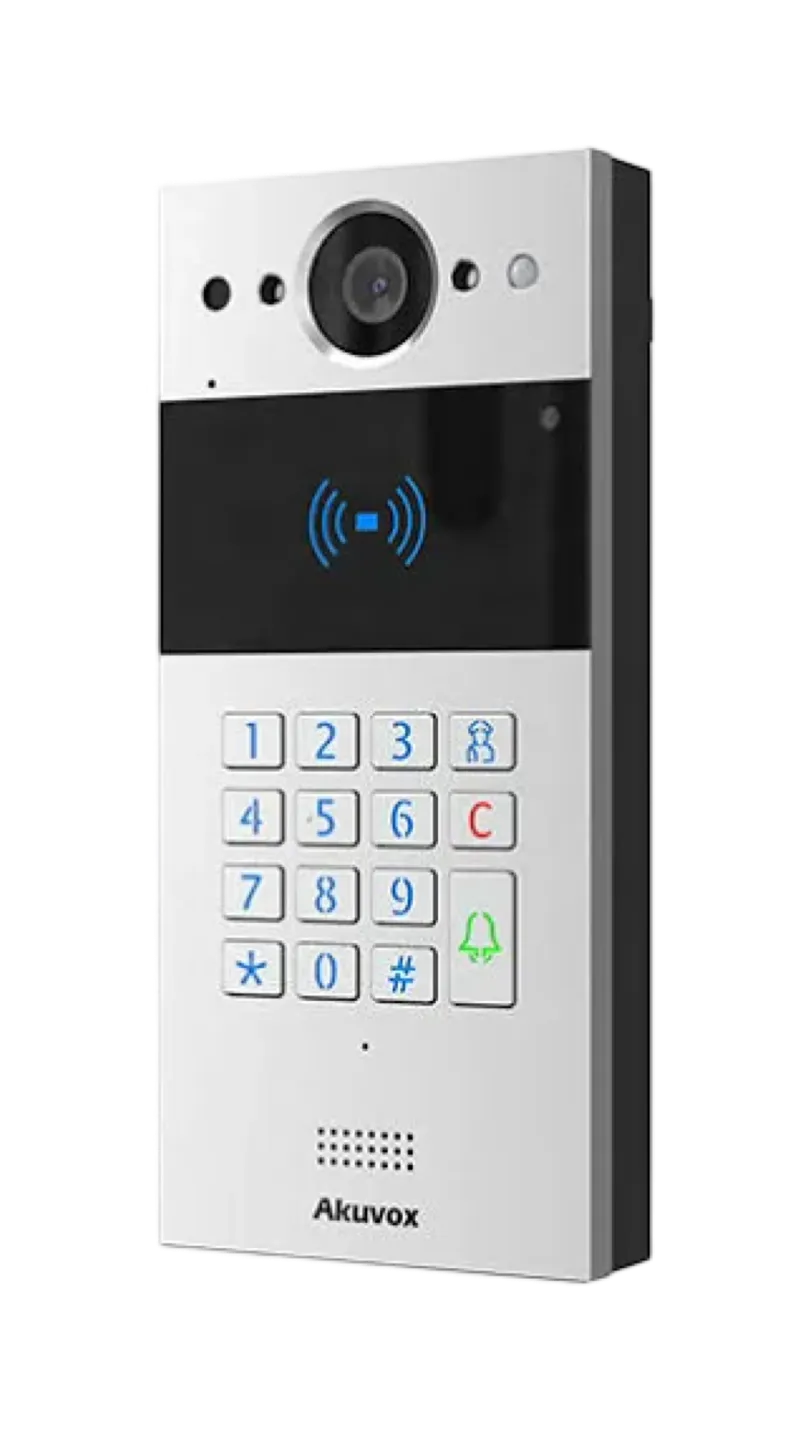
Co-op security systems Dutchess County: product photo of a silver video entry station with a camera lens, a contactless reader area and a twelve-key keypad on a black background
Product photo of a silver keypad door station: camera at the top, a contactless reader band in the middle, a numeric keypad below. A panel like this replaces a worn button box at a walk-up entrance and gives the board codes, fobs and video in one housing. Image from the Abstract Enterprises Security Systems job and product library, not taken at a Dutchess County co-op.
Dutchess County Co-op Request
Town or city, building type and what stopped working

✅
Request Sent!
Thanks. We'll call or text to set a time, normally within 2 hours.
25+
Years Experience
$250
Service Call to Start
100%
Licensed & Insured
4.7★
201 Google Reviews

Owner-operated since 2002 · NYS low-voltage license #12000287431 · Booked within 2 hours, seven days a week, early-day visits first

The County

Dutchess Co-ops Are Few, Old and Spread Out, and That Shapes Every Security Decision

If you sit on a co-op board in Dutchess County, you already know you are a small club. OneKey MLS, the listing service that covers the county, counted 42 co-op closings in the twelve months through September 2026, up from 29 the year before, against 307 condominium closings over the same stretch. The median co-op sold for $114,000. Those numbers say two things about building security for co-ops here. First, each building matters: a board in Poughkeepsie or Beacon is not one of hundreds of similar corporations sharing a vendor pool, and the contractor who knows how its front door is wired may be the only one who ever has. Second, money is tight. A co-op whose apartments trade around a hundred thousand dollars cannot fund security the way a Manhattan tower does, so every dollar has to go to the door, the release or the camera that actually fails.

Where the co-ops sit is just as telling. On the day we wrote this page, a public listing site showed 39 co-op apartments for sale in Dutchess County, and almost all of them were in five places: the City of Poughkeepsie, the Town of Poughkeepsie (the 12603 ZIP code), Hopewell Junction, Beacon and Wappingers Falls, with a few in Hyde Park and the Holmes area near the Putnam line. Several Beacon and Wappingers listings advertised being near the train; several Hopewell Junction and Poughkeepsie listings mentioned shared laundry and parking; one Poughkeepsie listing mentioned elevators. That spread is the starting map for any co-op security plan in the county. It is a mix of city masonry walk-ups and mid-rises, postwar garden complexes with parking lots between the buildings, and a few elevator buildings, rather than one type of building repeated.

Then there is weather and distance. Dutchess sits far enough up the Hudson that winter is real: ice on stoops, salt tracked into vestibules, door closers that slow to a crawl when the lobby is cold. Summer brings thunderstorms that take the power out across whole towns. On July 4, 2026, a severe storm left Central Hudson reporting more than 33,000 outages and NYSEG more than 7,400 across the county, with the worst damage in the City and Town of Poughkeepsie, East Fishkill, LaGrange, Beekman, Union Vale and Pawling. A co-op entry system that cannot ride through a few hours on battery, or that loses its programming every time the power blinks, is a system the board will be paying to fix every summer. And because our office is in the Bronx, a Dutchess job is planned as a trip: we book early-day visits, carry the parts the building is most likely to need, and pair visits in the same part of the county when we can.

Dutchess County facts that change how a co-op security job is done

  • 42 co-op sales, median $114,000: twelve months through September 2026, compared with 307 condo sales at a median of $355,000 (OneKey MLS, Dutchess County, September 2026). Turnover of roughly forty apartments a year spread over a handful of buildings means fob lists and directories change constantly.
  • Cities far below 325,000 people: the 2020 Census counted 297,018 people in the whole county, 31,596 in the City of Poughkeepsie and 14,380 in the City of Beacon (CityPopulation, U.S. Census 2020). New York's Multiple Residence Law applies to "all cities of less than three hundred twenty-five thousand population and to all towns and villages" (MRL §3), so the New York City intercom rules that dominate co-op articles online are not the law that governs a Dutchess building.
  • Beacon treats security changes differently in its historic overlay: the city's preservation chapter excludes from "alteration" any "minor, accessory, utility or security-related changes that do not substantially detract from the historic property" (City of Beacon Code Ch. 134). A visible change to an identified historical feature still goes to the Planning Board.
  • Alarm permits in Beacon: the city requires the user of every alarm system to apply for a permit from the Police Department, and five false alarm notifications in a three-month period can mean revocation (City of Beacon Code Ch. 77).
  • Storm outages: more than 33,000 Central Hudson and 7,400 NYSEG outages after the July 4, 2026 storm (Dutchess County Emergency Management, July 5, 2026).
  • End of the line: Poughkeepsie station is the northern terminus of Metro-North's Hudson Line (Wikipedia), and the co-ops near Beacon, New Hamburg and Poughkeepsie stations house commuters who leave early and come home after dark.
  • A licensed trade statewide: installing, servicing or maintaining security or fire alarm systems as a business requires a Department of State license under General Business Law §69-m. Ours is NYS #12000287431.
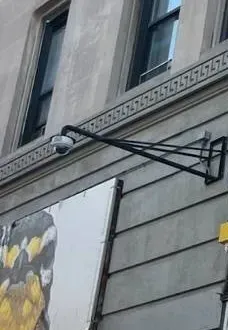
Dutchess County co-op building security: dome camera on a long steel wall arm below a stone cornice with a Greek key band and tall windows
A dome camera held out from a masonry facade on a steel arm, just under a carved cornice band. Older city buildings in Poughkeepsie and Beacon often have stone or brick fronts like this, and an arm mount keeps the drill holes in the mortar and the camera clear of the trim. Photo from the Abstract Enterprises Security Systems job and product library, not taken at a Dutchess County co-op.

The people who call us about a Dutchess co-op

Board presidents of small, self-run co-ops. Many Dutchess co-ops have no full-time managing agent. The president, or whoever on the board has the most patience, is the one fielding complaints that the buzzer does not open the door, that the side door has not latched since March, or that a stranger was sleeping in the vestibule. They need someone who can explain the problem in plain words and price it in a way the rest of the board will accept.

Treasurers. With apartments at these prices, maintenance charges carry the building, and a reserve fund is rarely deep. The treasurer wants to know what is broken now, what will break next, and whether the work can be split across two budget years. We give itemized numbers so the board can make that call; we do not tell a board how to fund it.

Managing agents based elsewhere. When a Dutchess co-op does have an agent, the office is often in another town or another county and handles several properties. The agent's questions are about the certificate of insurance, the arrival window and whether fobs and directory names can be changed from the office instead of a drive up Route 9.

What We Install

What a Dutchess Co-op Board Can Hand to One Security Contractor

A Dutchess co-op usually comes to us with one urgent problem and three quiet ones. The urgent problem is the door that will not open from upstairs. The quiet ones are the fobs nobody has audited, the camera that stopped recording last winter, and the packages piling up in the vestibule. One co-op security contractor can take all of it, and the cards below are the order most boards end up working in. Each system has its own section further down, written for the board, with one link to our Dutchess County page for that service when the super wants the technical detail. We price by door and by entrance, not by apartment, because in a walk-up or a garden complex the number of doors drives the cost far more than the number of shareholders.

01

Lobby intercom replacement

A worn button box swapped for a video panel, with shareholders answering on a wall station, a phone or both.

02

Buzzer and release repairs

Dead floors, a release that hums but never clicks, a handset that crackles: traced to the part and fixed on the $250 visit where possible.

03

Fobs on every common door

Front, side, laundry, storage and lot doors on one credential list, so a fob from a sold apartment is shut off once, everywhere.

04

Readers inside the elevator car

For the few Dutchess co-ops with elevators: a reader in the car so only residents can ride past the lobby.

05

Entrance and mail-area cameras

Cameras that see faces at the door and hands at the mailboxes, recorded on site, with the board deciding who can watch.

06

A place for packages

A fob-controlled package room or lockers instead of boxes stacked inside the vestibule door.

07

Riser cable and a small rack

Riser pairs tested, new Cat6 where the old cable has failed, and a small rack that keeps the building's systems in one labeled place.

08

Storm-ready power

Battery backup on the entry system and recorder, and surge protection where cable leaves the building.

09

Written scopes for the board

Itemized proposals the board can compare line by line with other bids and attach to a shareholder notice.

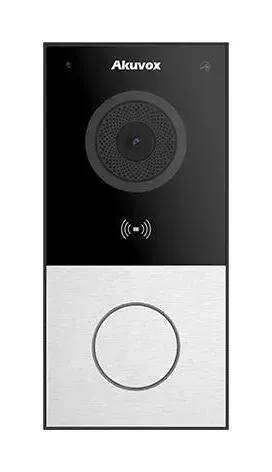
Dutchess County coop intercom: product photo of a slim video door station with a black glass top, camera, contactless reader symbol and one round call button on brushed metal
Product photo of a slim one-button video door station with a built-in reader. On a garden complex where each stair hall serves a handful of apartments, a compact station like this can replace a row of old doorbells at each entrance. Image from the Abstract Enterprises Security Systems job and product library, not taken at a Dutchess County co-op.
Intercoms First

Replacing the Lobby Intercom in a Dutchess County Co-op: How Boards Get to a Decision

The intercom is where nearly every Dutchess co-op conversation starts, because it is the one system every shareholder uses every day and the one that fails in the most public way. A visitor stands at the door, presses the button, and nothing happens upstairs. The board hears about it from a shareholder whose home health aide waited outside in the rain, or from a buyer's agent who could not get a client into the building for a showing. By the time the board calls a co-op intercom contractor, the question is rarely "can you fix it." It is "should we keep fixing it."

Three things decide the answer in this county. The first is the riser: the cable that carries audio and the door-release signal from the lobby to every apartment. In a city walk-up in Poughkeepsie or Beacon that cable may be decades old, run through plaster and lath or down a dumbwaiter shaft. In a 1960s or 1970s garden building it is often cast into block walls or run through basements that flood in a spring thaw. If the pairs test clean, a new lobby panel can usually talk over them and the job stays out of most apartments. If they don't, the board is looking at new cable, which changes the cost and the schedule. The second is what shareholders want at the apartment end: a wall station with a screen, an audio handset like the one they have now, a call to their phone, or a mix. The third is how the building is run. A self-managed co-op where the president changes the directory by hand needs a panel it can program without a laptop and a vendor login; a co-op with a managing agent in another town needs one the agent can reach from the office.

The path most Dutchess boards follow for a co-op intercom upgrade is simple. Someone writes down what the building has: entrances, apartments, floors, what works and what does not, and whether any apartments have been combined or split over the years. One or two contractors walk the building. The proposals come back, and the board compares them line by line: lobby panel, apartment stations or app licenses, door hardware, power, cable, labor. A board that wants a fuller treatment of that process, including how to write a scope of work and compare bids, can read our board guide to co-op intercom upgrades (being prepared). Our intercom installation page for Dutchess County covers the equipment side in more depth and publishes the county's ranges: a video intercom for a four- to eight-unit building runs $1,200–$3,500, and IP systems with smartphone access for larger buildings run $2,500–$8,000 and up.

Funding follows the co-op's own documents and its own habits. Some boards pay for a lobby replacement from reserves, some through an assessment, and some by doing the lobby panel in one budget year and the apartment end in the next. We don't advise on which, and we never tell a board what it can charge shareholders. What we can do is split the proposal the way the treasurer needs it, so the lobby work, the apartment work, the door hardware and any cable replacement each carry their own price. That makes it easy to approve the urgent part now and schedule the rest.

Brands follow the building, not the other way round. We install and service the mainstream multi-unit intercoms, and our comparisons of Akuvox vs ButterflyMX and DoorBird vs 2N lay out how common choices differ on monthly fees, apartment stations and app calling. For a small Dutchess co-op the subscription question often decides the brand. A cloud platform that charges per apartment per month can cost more over ten years than the panel itself, and a board in a building where apartments sell for around a hundred thousand dollars should see that number before it votes. Where a building wants no recurring fee, we propose equipment that runs without one.

Apartment-end choices we see in Dutchess co-ops

What shareholders getWhere it suits Dutchess buildingsWhat the board should weigh
Existing handsets keptCity walk-ups whose riser tests clean and whose handsets still ringCheapest and least disruptive; compatibility with the new panel is tested on site, not assumed from a brochure.
New audio handsetsBuildings with many long-time shareholders who like a phone by the doorNeeds entry to each apartment for the swap; old wall openings may need patching by the building's own painter.
Video wall stationsElevator buildings and co-ops where shareholders asked to see visitorsHighest per-apartment cost and often new cable to each unit; most useful where deliveries and visitors are frequent.
Calls to a phone or appGarden complexes, commuter buildings near the train, apartments with frequent turnoverLittle or no work inside apartments; check whether the platform charges per unit and whether cell signal reaches the lobby.
A mixAlmost every building once shareholders are askedPriced line by line so the board can change the mix without a new proposal.
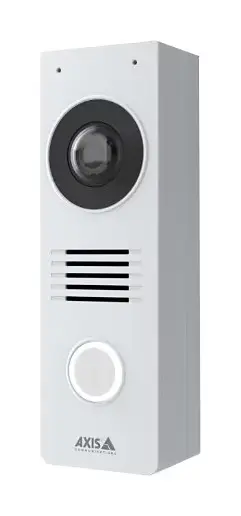
Dutchess County cooperative building intercom: product photo of a tall white video door station with a large camera lens, speaker grille slots and a round lit call button
Product photo of a narrow white video door station: wide camera lens at the top, speaker slots in the middle, a round call button below. Narrow stations like this fit the slim door frames of older walk-ups where a wide directory panel won't. Image from the Abstract Enterprises Security Systems job and product library, not taken at a Dutchess County co-op.
Repairs

When the Buzzer Quits: Repair Visits at Poughkeepsie, Beacon and Route 9 Co-ops

"The buzzer is broken" covers a lot of different faults. In a co-op it can mean a transformer in the basement that overheated during a heat wave, a strike that froze half-open after an ice storm, a riser pair that shorted when a radiator valve leaked, a single handset that a shareholder dropped, or a lobby panel whose buttons have worn smooth. On the phone they all sound the same. On site they take very different amounts of time and money, which is why a co-op intercom repair starts with the $250 service call. We find the fault first. Small fixes are often finished on that visit; anything bigger gets a firm price before parts are ordered.

Our door buzzer repair page for Dutchess County publishes the component ranges we work from here: an apartment station replacement runs $250–$525, a door release relay or button $250–$475, a 24V transformer $325–$650, an electric strike with alignment $450–$950, lobby panel repair or a new faceplate $650–$1,800, and riser pair repair or re-termination $850–$2,400. Those are the numbers a board can plan around. When the fault is in the intercom electronics rather than the buzzer side, our intercom repair service in Dutchess County covers the panel, the amplifier and the apartment stations, and the quote follows the visit, because the price depends on what the visit finds.

Repairs in a co-op need one thing that repairs in a house do not: access to the apartments. When a single apartment cannot hear the lobby, we may need to test at that station and at the stations on either side of it on the riser. When a whole floor is quiet, we may need to open the junction where that floor's wiring meets the riser, which can be inside a closet in somebody's unit. We ask the managing agent or the board to send a notice and to arrange access to the apartments on the affected line before we arrive, so the visit is spent fixing rather than knocking.

Smaller co-ops sometimes do not need a full intercom at all. A six- or eight-apartment building in a river village may be best served by a modern buzzer system with a call button per apartment and a reliable release, and that is a different, cheaper job. Our door buzzer installation page for Dutchess County covers those systems; it puts video buzzer systems for a small building at about $900–$2,300.

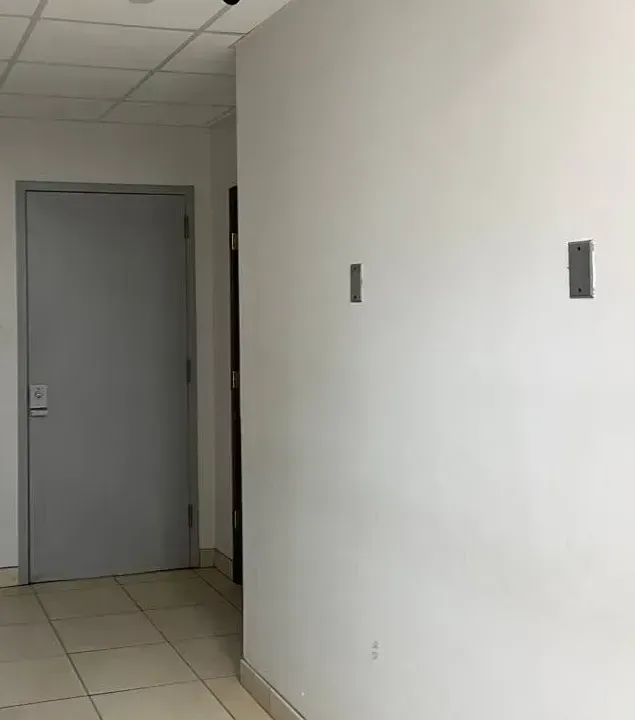
Dutchess County co-op door hardware: grey steel door with a keypad lever lock in a tiled hall, beside a white wall with two blank cover plates
A grey steel door with a keypad lever lock, next to a wall where two blank plates cover boxes left from earlier equipment. Blank plates like these are often the first clue to which system came before, and where its cable still runs. Photo from the Abstract Enterprises Security Systems job and product library, not taken at a Dutchess County co-op.
Key Fobs

Key Fobs and Door Access for Cooperative Apartment Buildings in Dutchess

Keys are the quiet security problem in most Dutchess co-ops. A garden complex built in the 1960s or 1970s may have a key system that has been rekeyed twice and copied hundreds of times. The laundry room key, the storage room key and the side door key are on every shareholder's ring, and on the rings of former shareholders, their adult children, the dog walker, the contractor who renovated a kitchen in 2014, and whoever found the copy someone left under a mat. No board can audit that. Co-op access control solves it by replacing keys on the common doors with fobs or cards that can be turned off one at a time.

The turnover numbers make the case. With roughly forty co-op apartments changing hands a year in the county, and many more changing occupants through sublets the board approves, a key system loses track of who can get in within a season or two. A fob list does not. When an apartment sells, the managing agent or the board's designated member turns off the seller's fobs and issues new ones to the buyer at closing; the door log shows if an old fob is ever tried again. In buildings near the colleges, where a parent may own the apartment and a student lives in it, the same process lets the board give the occupant a fob for the school year and set it to expire in late spring, then reissue it in August.

Most Dutchess co-ops start with the doors that cause trouble rather than every door at once. Typical first doors are the front door (often paired with the new intercom so one panel does both), the door nearest the parking lot, the laundry room and the storage room. A second phase adds the boiler room, the roof door, the bike or stroller room and any gate. Our access control installation page for Dutchess County lists the county's published ranges: $1,900–$6,000 for a single door or gate, $5,000–$18,000 for a multi-door property such as a front lobby, a service door, a basement and a gate, and higher for multi-building campuses. A co-op gets a written quote after the free assessment, itemized by door.

A few decisions belong to the board, not the contractor. Who administers the list: the managing agent, the super, a board member, or a mix with different permission levels? What happens at closing: does the seller hand over fobs, or does the board collect them? How many fobs per apartment, and does a replacement for a lost fob carry a charge? Are vendors, aides and dog walkers given their own fobs with time limits, or let in by shareholders? We set the system up to match the policy, and we suggest the board write that policy down before the first fob is issued.

Privacy questions come up too. New York City's Tenant Data Privacy Act, which governs how owners of certain city buildings handle data from smart access systems, is a city law (Local Law 63 of 2021) and does not follow fobs up the Taconic. That does not mean a Dutchess board should keep door logs forever or share them casually. We recommend the board set a retention period, limit who can see the log, and have the co-op's own attorney review the policy, especially if the board is considering face or fingerprint readers.

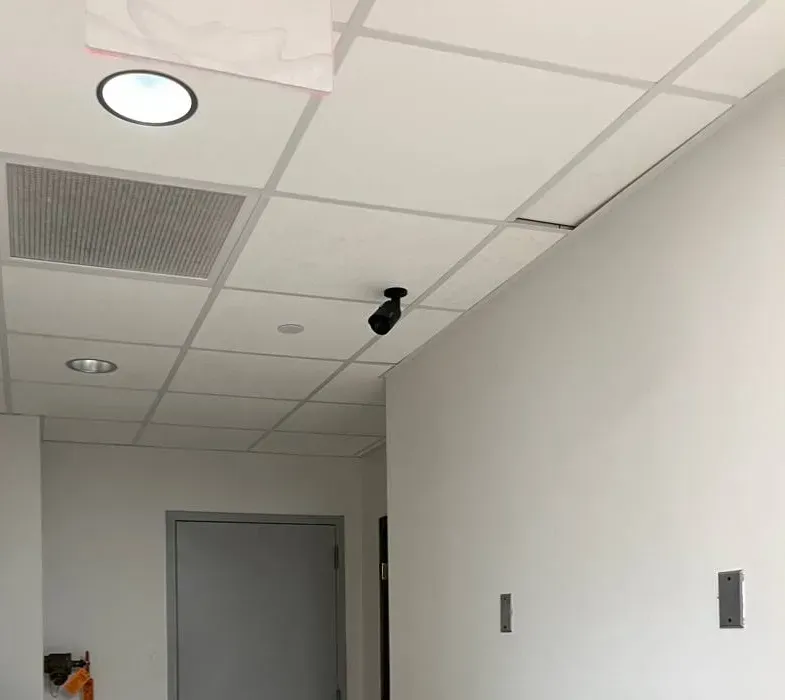
Dutchess County coop access control and cameras: small black camera mounted high on a white wall near a drop ceiling, looking down a short corridor toward a grey steel door
A small black camera high on the wall under a drop ceiling, pointed down a short hall toward a grey steel door, with two blank wall plates nearby. Back halls and service doors like this are where a fob reader and one camera together answer the question of who propped the door. Photo from the Abstract Enterprises Security Systems job and product library, not taken at a Dutchess County co-op.
Elevators

Elevator Readers in the Handful of Dutchess Co-ops That Have Elevators

Most Dutchess co-ops are walk-ups or garden buildings, so elevator access control is a short conversation for most boards here. But the county does have some elevator co-ops, mostly in and around Poughkeepsie, and at least one current Poughkeepsie co-op listing names elevators among the building's features. In those buildings the cab is a security gap. A stranger who follows a shareholder through the lobby door, or who is let in by a careless buzz, can ride to any floor. A reader in the cab closes that gap by requiring a resident fob before the car will travel above the lobby, or before it will stop at certain floors.

The work is shared with the elevator company. We install the reader in the car or at the hall call button, run the traveling cable or use a spare pair in the existing one, and connect our controller to the elevator controller through an interface the elevator maintenance company provides and approves. The elevator company bills its part separately. The system is set so that fire service operation overrides it, which is not optional. Our elevator access control page for Dutchess County publishes the county prices: from $2,295 per car for a Level 1 reader that enables the car, and from $3,825 per car for Level 2 readers such as face or fingerprint.

Boards usually ask two practical questions. First, does every shareholder need a fob just to ride? With car-enable, yes, which means older shareholders who never carried a fob will need one, and visitors will need to be met in the lobby or released from the apartment station. Most intercom panels can send a one-time floor permission with the door release so a visitor can ride to the right floor. Second, what happens if the system fails? It fails to the elevator's normal operation, so the car keeps running; the board loses the restriction, not the elevator.

Cameras

Co-op Security Cameras in Dutchess: Short Version for Boards

Cameras get their own detailed page in our camera series, so this section is short. A co-op security camera plan in Dutchess usually starts with three views: the front entrance, seen from inside so the camera catches faces as people come through the door; the mail area and any package shelf, seen from above so it catches hands; and the door residents use from the parking lot. Garden complexes add a view of each lot entrance and of the walk between buildings; city buildings add the back door and the basement entrance. A dedicated co-op camera page for the county is being prepared. Until then, our general security camera installation page for Dutchess County covers equipment and placement, and our CCTV installation page for Dutchess County covers recorded systems; it puts business CCTV systems at $1,500 to $5,000 and up, with no monthly fees.

The decisions that matter most for a co-op are about policy, not lenses. Who on the board can watch live video, and who can export a clip? How long is footage kept before it records over itself? Will the board hand footage to police on request, or only with a subpoena? Are there any cameras in hallways, and if so, are they aimed so they don't look into apartment doors? We set the recorder up to match whatever the board decides, and we recommend writing the decisions into a short camera policy the board adopts at a meeting. We do not offer legal advice on camera policies; the co-op's attorney should review it.

Two Dutchess details are worth adding. Doorbell cameras already help police here: in December 2025, a City of Poughkeepsie resident's doorbell camera footage helped Dutchess County Sheriff's Office academy recruits locate and detain a man who had just taken a package from a porch on Parker Avenue (Dutchess County Sheriff's Office, Dec. 24, 2025). And exterior cameras in this county need to be specified for cold and for lightning: heaters or cold-rated housings on north-facing walls, and surge protection where camera cable runs outside to a pole or another building.

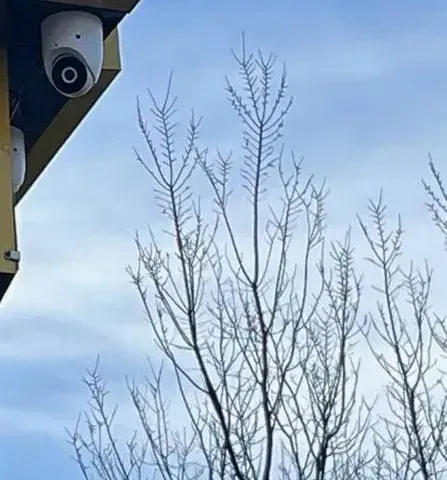
Dutchess County co-op exterior camera: white dome camera mounted under a dark roof eave against a pale blue winter sky and bare tree branches
A white dome camera tucked under a roof eave, with bare winter branches and a pale sky behind it. Mounting under the eave keeps snow and ice off the dome, which matters in a county where exterior cameras spend four months a year in freezing weather. Photo from the Abstract Enterprises Security Systems job and product library, not taken at a Dutchess County co-op.
Packages

Packages, Vestibules and Mailrooms in Dutchess Co-op Buildings

Package theft is not just a city problem. In December 2024, Poughkeepsie police arrested two men in connection with a string of package thefts from porches on South Hamilton Street, after detectives executed a search warrant and found stolen items (News 12 Hudson Valley, Dec. 21, 2024). A year later came the Parker Avenue case above. Co-op buildings face a version of the same problem with a twist: the boxes are usually inside the first door, in a vestibule that anyone who presses enough buttons can be buzzed into.

The fixes we install, in rough order of cost, are these. The first is a camera that watches the vestibule and the mailbox wall from above, recorded on site, so the board has something to give police and so the next thief sees the lens. The second is a change to how the door releases: many older panels let any apartment buzz the door open for anyone, and a new panel with video lets shareholders see who they are letting in. The third is a package room: an existing storage room or part of the basement, given a fob reader and a camera, with couriers let in through a delivery code or a one-time release from the panel. The fourth is smart parcel lockers, which need power and a network connection at the spot where they will stand, and a decision about who pays any locker subscription.

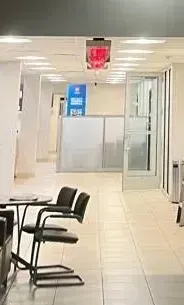
Dutchess County co-op lobby: tiled floor leading to a glass vestibule door under a lit red exit sign, with black chairs along one wall
A bright tiled lobby with a lit exit sign over the glass vestibule and a row of chairs. A space like this is where packages pile up, and where one ceiling camera covering the inner door and the mail wall does most of the work. Photo from the Abstract Enterprises Security Systems job and product library, not taken at a Dutchess County co-op.
Scope

Cabling, Fire Alarm and the Work We Leave to Others in Dutchess Co-ops

Low-voltage cable and the small network behind it

Every modern entry system, fob controller and camera needs cable, and in older Dutchess buildings the cable is often the weakest part. We test the existing intercom riser before proposing anything, because reusing good pairs saves the co-op money and keeps us out of apartments. Where cable has failed, we run new Cat6 for IP panels and cameras, shielded pairs where an audio system stays, and outdoor-rated cable in conduit between buildings in a garden complex. All of it ends in one place: a small wall rack or cabinet with a PoE switch, the recorder, the access controller and a battery backup, labeled so the next technician can read it. Our structured cabling installation page for Dutchess County covers that side of the work in detail. We do not sell IT management or Wi-Fi service to shareholders; the network we build is for the building's security systems.

Fire alarm, only within our scope

Fire alarm work in Dutchess is approved locally. The code enforcement office or fire prevention bureau of the city, town or village reviews drawings and witnesses the acceptance test under the New York State Uniform Code. We handle fire alarm work only within that process and within our licensing, and our fire alarm installation page for Dutchess County explains the local steps. We do not publish fire alarm prices. What every co-op security job does need is a correct tie-in: magnetic locks and some electrified doors must release when the fire alarm goes into alarm, and elevator readers must stand aside during fire service. We coordinate those connections with whoever maintains the building's fire alarm.

Electrical work is the building's electrician

Security systems run on low voltage, and that side is ours. Any new 120-volt circuit, outlet or breaker for a power supply or a gate motor is work for a licensed electrician, and in Dutchess that also means the municipality's electrical permit process. The Town of Poughkeepsie, for example, adopted a new Electrical Inspections chapter in February 2026 that makes it a violation to install or alter wiring for light, heat or power without an approved electrical permit (Town of Poughkeepsie Code Ch. 91). We tell the board early if a circuit is needed, so the electrician can be scheduled before our install date rather than after.

Alarm monitoring and "managed" security

Some co-ops want a burglar alarm on a management office, a storage room or a commercial space. We install alarm systems and offer central-station monitoring through our provider at the two tiers listed on our site: $45 a month with the phone app or $30 a month keypad-only. Check the municipality first: in Beacon, every alarm user needs a Police Department permit, residential alarms must include an attempted telephone callback by the central station before police are notified, and five false alarm notifications in a three-month period can cost the permit (City of Beacon Code Ch. 77). We do not run a virtual doorman or a managed security service. We install the intercom, cameras and access control that a virtual-doorman provider or the building's own staff would use, and we can connect to an existing provider if the board has one.

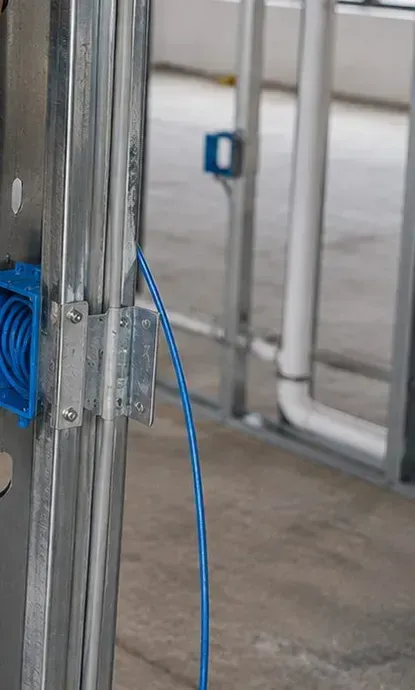
Dutchess County co-op structured cabling: blue low-voltage cable hanging from a blue electrical box mounted on a steel stud in an open wall
Blue low-voltage cable dropping from a blue box fixed to a steel stud, with the wall still open. When a co-op renovates a storage room into a package room or rebuilds a lobby wall, that is the moment to run cable for a reader, a camera and a future panel. Photo from the Abstract Enterprises Security Systems job and product library, not taken at a Dutchess County co-op.
Building Types

Security Plans for Dutchess Building Types, from City Walk-ups to Route 9 Garden Complexes

Dutchess co-ops fall into a few recognizable families. Naming the family is the fastest way for a board to understand what its security plan will look like and where the money will go.

A

City masonry walk-ups

Three- to five-story brick or stone buildings in Poughkeepsie and Beacon, one front door, a vestibule, a basement and an old riser.

B

Garden complexes from the 1960s and 1970s

Two- and three-story buildings around lawns and lots in Wappingers Falls, Fishkill, Hopewell Junction and the Town of Poughkeepsie.

C

Elevator mid-rises

A smaller group of elevator buildings, mostly around Poughkeepsie, with a lobby, a cab and a lot or garage door.

D

River-village buildings

Apartments above shops or in converted older buildings in Hyde Park, Rhinebeck, Red Hook and similar villages.

E

Commuter buildings near the train

Co-ops within walking distance of Beacon, New Hamburg or Poughkeepsie stations, busy at dawn and after dark.

F

Small self-run co-ops

Six to twenty apartments run entirely by volunteer shareholders, with no agent and a small reserve.

City masonry walk-ups in Poughkeepsie and Beacon

These buildings have one door that matters, and that door is usually old: a heavy wood or steel door in a stone or brick frame, a vestibule with mailboxes, and an inner door that may or may not lock. The intercom panel is often surface-mounted beside the door, with a riser running up a hallway chase. The plan here is concentrated: a new panel at the outer door, a strike or maglock that actually holds, a reader so shareholders use fobs instead of keys, one camera over the mailboxes, and a check of the riser. If the building is in Beacon's historic overlay, we photograph the entrance and talk through the panel's size and finish with the board before ordering, since a visible change to an identified historical feature goes to the Planning Board even though most security-related changes do not.

Postwar garden complexes along Route 9 and in the eastern towns

Garden co-ops spread their risk across many small doors. Each stair hall may have its own entry, sometimes with a panel and sometimes with only a key lock. Laundry rooms, storage rooms and a boiler room sit in basements or in a separate building. Parking lots run between buildings, often with poor lighting at the far end. The security plan is spread out too: modest panels or app-based entry at each stair, fobs on every shared room, cameras at the lot entrances and the laundry building, and cable or a wireless link between buildings back to one recorder. The biggest cost driver is distance: how far each stair is from where the equipment will live, and whether existing conduit can be reused.

River-village and mixed-use buildings

In Hyde Park, Rhinebeck, Red Hook and similar villages, a cooperative apartment building may sit above stores or be a converted older structure. The residential entrance is often a side door beside a storefront, shared walls carry other businesses' cable, and the building's main breaker panel may be in a shop's back room. The plan keeps the residential door and its cameras separate from any commercial system, and it starts with a careful survey of where power and cable can actually reach.

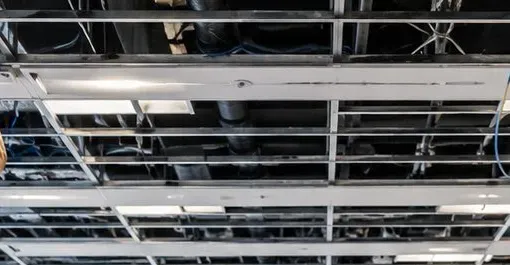
Dutchess County co-op cabling: open drop-ceiling grid with tiles removed, showing bundles of blue and grey cable and pipes above
A drop ceiling with its tiles out, exposing cable bundles, pipe and the grid that holds it all. In garden-complex basements and city cellars, this is where years of old intercom, phone and camera cable pile up, and sorting live runs from dead ones is part of every survey. Photo from the Abstract Enterprises Security Systems job and product library, not taken at a Dutchess County co-op.
Weather & Travel

Winter, River Storms and a Two-Hour Drive: Planning Dutchess Co-op Work Around All Three

Two things set Dutchess apart from the city co-ops we serve: the weather is harder on equipment, and the county is a drive from our Bronx office. Both shape how a sensible board schedules work.

Cold

Cold slows door closers, thickens lubricant in strikes and makes metal parts contract, so a door that latched in September may stop latching in January. Exterior panels with touchscreens get sluggish below freezing unless they are rated for it. Our approach in this county is to choose exterior-rated hardware for any door that faces the weather, set closers on a cold day if we can, and add a door-position switch so the system reports a door that didn't latch. Panels go under a hood or in a recessed box, out of drip lines, so meltwater from a canopy doesn't run down the face and freeze in the speaker.

Storms and power

The July 4, 2026 storm is a good test case. With more than 40,000 Central Hudson and NYSEG outages across the county, any co-op whose entry system had no battery backup lost its intercom and, depending on the lock, either locked everyone out or left the door free. We size battery backup for the entry panel, the access controller and the recorder so the building can ride through several hours, and we set fail-safe or fail-secure locking on each door deliberately, with the fire code and the board's priorities in mind. Where a co-op has a standby generator, we discuss putting the security equipment on it. Lightning is the other storm risk: cable that runs outside to a lot camera, a gate or another building can carry a surge back into the rack, so those runs get surge protection at both ends.

Distance from the Bronx

Our office is at 460 E Fordham Road in the Bronx, and Poughkeepsie is a long drive up the Taconic or Route 9. We are honest about what that means. We book every request within 2 hours and schedule seven days a week, first come, first served once paid, with early-day visits for Dutchess so the technician has the full day on site. We don't promise same-day arrival and we don't run a 24-hour service. To make the drive count, we ask for photos of the panel, the door and the basement equipment before the visit, so the van carries the parts the building is most likely to need; we pair visits to co-ops in the same part of the county; and for installations we plan consecutive days rather than scattered ones. For a board, the practical advice is to call when a problem first appears, not when the door finally stops working on a Friday evening in February.

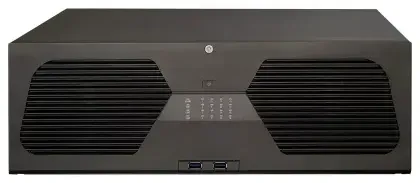
Dutchess County co-op camera recorder: product photo of a large black rack-mount network video recorder with vented side panels and a row of small status lights
Product photo of a large rack-mount recorder with vented side panels and front status lights. On a garden complex that records every building in one place, a recorder like this sits in the head-end rack on battery backup, so a summer outage doesn't erase the hours the board most needs. Image from the Abstract Enterprises Security Systems job and product library, not taken at a Dutchess County co-op.
Board Process

From Complaint to Contract: How a Dutchess Co-op Board Moves a Security Project

A security upgrade in a co-op is a board decision, and the steps are the same whether the building has eight apartments or eighty. What differs in Dutchess is who does each step. In a self-run co-op, the president or a building committee chair writes the scope, collects bids, presents them at a meeting and signs. In a managed building, the agent does most of that and the board votes. Either way, the board's decision is protected by the business judgment rule the Court of Appeals set out in Levandusky v. One Fifth Avenue Apartment Corp. (1990), which applies across the state: so long as the board acts for the purposes of the cooperative, within its authority and in good faith, courts generally do not substitute their judgment for the board's. That is a reason to document the process, not to skip it.

Approval

Most proprietary leases and bylaws let the board approve repairs and replacements of common elements, which is what a lobby panel, a strike or a fob reader is. Larger projects may need a budget vote, and some co-ops have spending limits above which shareholders must approve. We don't interpret your documents; your attorney or managing agent does. What we provide is a proposal clear enough for whatever vote is required: a description of the work, a line-by-line price, the equipment list, the schedule and what shareholders will notice.

Alteration agreements and work inside apartments

When the job includes new apartment stations or cable into units, the board needs access, and some co-ops ask the contractor to sign the building's alteration or contractor agreement. We read and sign reasonable agreements as part of the award. For shareholders who have renovated, we may find their wall station was moved, removed or buried behind new cabinets; the proposal notes those apartments so the board can decide who pays for anything unusual.

Certificates of insurance

Managing agents and boards rightly want a certificate of insurance before work starts. We issue the certificate when the job is awarded, naming the co-op corporation, the managing agent and anyone else the agent requires as additional insured. We don't send certificates with a bid reply, since the named parties and limits depend on who awards the work.

Shareholder notices

Shareholders should hear about the work from the board, not from a technician in the hallway. We supply the dates, the hours the door will be affected, which apartments need access and what shareholders will need to do afterward (collect a fob, download an app, test their station). The board or agent sends the notice. For a lobby panel swap the front door is usually off the intercom for a few hours, not days, and we arrange a temporary arrangement for deliveries and visitors during that window.

Bids and RFPs

We respond to board bid requests and written RFPs from Dutchess co-ops and their managing agents. We don't provide client references or name the buildings we've worked in; our Google reviews (4.7 stars across 201 reviews) are public, and the board is welcome to read them. We are a licensed New York State low-voltage contractor, NYS #12000287431, insured for general liability.

Compliance notes for Dutchess co-op security work

  • Housing law: Dutchess cities, towns and villages fall under the Multiple Residence Law, not the Multiple Dwelling Law that carries New York City's intercom requirement (MRL §3). Ask the co-op's attorney what the building's own documents and local code require.
  • Installer licensing: security and fire alarm installation as a business requires a Department of State license (GBL §69-m). Ask every bidder for the number and check it.
  • Historic overlay in Beacon: security-related changes that don't substantially detract from a historic property are excluded from "alteration," but a change in design or outward appearance of an identified historical feature needs a certificate of appropriateness from the Planning Board (Beacon Code Ch. 134).
  • Alarm permits: Beacon requires a Police Department alarm permit for every alarm user (Beacon Code Ch. 77); other municipalities have their own rules, and we check before monitoring goes live.
  • Electrical permits: line-voltage work is the building's electrician's, under the municipality's permit rules, such as the Town of Poughkeepsie's 2026 Electrical Inspections chapter (Ch. 91).
  • Egress: every locked door must still open freely from inside. Maglocks get a request-to-exit device and release on power loss and fire alarm; we don't install hardware that traps people.
  • No legal advice: we describe what the sources say; the co-op's attorney decides what applies to the building.
Your Questions Answered

Dutchess Co-op Boards Ask, We Answer

These are questions that come up when Dutchess boards, supers and managing agents talk to us about a building. They're grouped by topic. Price, fobs, elevators and cameras are covered in their own sections above, so they aren't repeated here.

Old wiring and old equipment

Our 1970s garden buildings have intercom cable cast behind block walls. Can a new system reuse it?

Often, yes, and finding out is the first thing we do. Cable buried in block can't be pulled out or replaced without cutting, so its condition decides the shape of the whole project. We test each pair from the panel location to the apartment end: continuity, shorts between pairs, and leakage to ground, which shows up when water has reached the cable somewhere along its run. Two-wire and IP-over-two-wire intercom systems are designed to run over old pairs like these, and they let a board install video at the door and new stations in apartments without opening a single wall.

If some pairs have failed, the answer is usually mixed: reuse the good pairs, and for the apartments on failed pairs either run new cable along the surface in a small raceway or give those apartments app calling instead of a wall station. The proposal lists which apartments fall into which group. What we won't do is promise reuse before testing; a quote that assumes the old cable is fine and then adds new cable halfway through the job is the kind of surprise a board never forgives.

Can the old intercom stay in place as a backup after the new one goes live?

Usually not as a working system, and it rarely helps. The old and new systems would need separate power, separate wiring to the door release and separate apartment stations, and shareholders would be confused about which one to answer. More importantly, two systems connected to the same lock can interfere: one holds the door while the other tries to release it.

What does make sense is keeping a few things from the old system. The riser cable, if it tests well, is often reused. The door hardware, if it is sound, stays. And old apartment stations can be left on the wall, disconnected, until the shareholder or the building's painter removes them, so nobody has a hole in the wall on installation day. For a real backup, the board's best option is battery backup on the new system and a key or code that works if the network goes down.

Shareholders and daily use

Can residents open the door hands-free when they're carrying groceries up an icy walk?

Yes, with the right reader. Long-range readers and phone-based credentials can open a door when the resident is close to it, without pulling out a fob. Some panels can also unlock on a phone tap from the parking lot. For residents who prefer a fob, a reader mounted at hand height on the handle side of the door, rather than across the vestibule, makes a big difference with full arms.

Two cautions for Dutchess winters. A hands-free door that unlocks for anyone with a credential nearby can let a door release while a resident is just walking past, so we set the range short and add a door-position switch. And the door still has to close and latch on its own in the cold, which is a closer adjustment, not an electronics setting. A board can trial a hands-free reader on one door before deciding whether to add it everywhere.

Our panel calls shareholders' cell phones, but some older residents use flip phones. Will they still get the calls?

If the panel places an ordinary phone call, yes. Many entry panels can dial a regular phone number for each apartment, landline or mobile, and any phone that can take a call can answer and press a digit to open the door. App-only systems are different: the shareholder needs a smartphone with the app installed and logged in. For a building with a mix of residents, we propose a panel that can do both, so the board can set each apartment to app, phone number or a wall station.

Check the panel's own line. Panels that dial out need either a cellular module or an internet connection with a calling service, and some calling services charge per month or per minute. We include that cost in the proposal so the board sees it before choosing.

Scheduling and planning

When a door fails in January at our Wappingers Falls complex, should the board fix it now or wait for a thaw?

Fix the part that keeps the building secure now; schedule cosmetic or exterior-intensive work for milder weather. A front door that won't lock, or a release that won't open, is a safety and security problem that shouldn't wait. Most of those repairs (a strike, a power supply, a relay, a closer adjustment) are done indoors or at the door frame and are fine in any season.

What benefits from waiting is exterior work that involves sealants, outdoor conduit, surface-mounted panels on a masonry face, or trenching between buildings. Sealant and anchors set better above freezing, and digging is impossible when the ground is frozen. A common plan is a winter repair to make the door work, followed by a spring project that replaces the panel and adds the fobs the board has been meaning to add.

Can a co-op test a new panel at one entrance before committing every building?

Yes, and for a garden complex with many entrances it is often the smartest way to start. We install the new panel, reader and hardware at one stair or one building, the board and shareholders live with it for a few weeks, and the board then decides whether to roll it out everywhere, change the apartment-end choice, or stop. The pilot is priced as its own job, and the equipment stays in place as part of the full project if the board goes ahead.

The one thing to plan for is the head end. If the full project will record every building or manage every fob from one controller, the pilot needs a controller that can grow, not a single-door unit that will be thrown away later. We spec that in the pilot quote so the board isn't paying for the same backbone twice.

Our Beacon co-op wants a camera on the sidewalk side of the entrance. Can it point at the street?

A camera mounted on the co-op's own building and aimed at its entrance will usually capture some of the sidewalk, and that is normal for an entrance camera. What the board should avoid is aiming it to watch the street, neighbors' windows or a neighboring business. We frame the view on the door, the steps and the approach, and we can mask parts of the image so the recorder doesn't store windows across the street.

In Beacon's historic overlay, a small camera is generally a security-related change rather than an alteration under the city's preservation chapter, but a large housing or a visible conduit run across an ornamental facade is worth showing the board before installation. Where we can, we run cable inside and mount on mortar joints rather than stone.
Equipment

The Hardware Behind a Dutchess Co-op Security System

Boards don't need to become experts in equipment, but it helps to know the names of the parts on a proposal. These are the pieces we install most often in Dutchess co-ops, and what each one is for.

01

Entry panels

Button, keypad or touchscreen directories with video and a built-in reader, chosen for exterior cold and the size of the existing opening.

02

Stair-hall door stations

Compact one- to six-button stations for garden-complex entrances, with hoods to keep meltwater off the face.

03

Apartment stations

Audio handsets, video wall screens, or calls to a phone or app, in whatever mix the board approves.

04

Fob readers and the controller

Fob and card readers, keypads and the controller that keeps the credential list and the door log.

05

Strikes, maglocks and exit devices

The hardware that holds the door, sized to the frame and always free to open from inside.

06

Door-position switches

Small sensors that tell the system whether a door actually closed, so a door left on the latch shows up.

07

Cameras and recorders

Domes and turrets for vestibules and mail areas, cold-rated cameras outside, and an on-site recorder.

08

Power and surge protection

Battery backup sized for storm outages, and surge protectors where cable leaves the building.

09

Racks and labels

A small wall rack or cabinet with a PoE switch, everything labeled, and a printed map left with the board.

AI Overview Reality Check

What AI Gets Wrong About Co-op Security Systems in Dutchess County

Board members increasingly ask an AI assistant before they call anyone. The answers are fluent and often half-right, because most of what's online about co-op security is written about Manhattan. Here are the claims we hear most from Dutchess boards, and what the record actually says.

1. "Co-ops are a New York City thing; there aren't really any in Dutchess."

There are fewer, not none. OneKey MLS counted 42 co-op closings in Dutchess County in the twelve months through September 2026, up 44.8 percent from 29 the year before, at a median price of $114,000. On the day we checked, a public listing site showed 39 Dutchess co-ops for sale, mostly in Poughkeepsie, Hopewell Junction, Beacon and Wappingers Falls. The buildings are real, the boards are real, and their security problems are the same ones city boards have, just in different buildings.

2. "New York law requires every co-op to have a working lobby intercom."

The well-known intercom rule is Multiple Dwelling Law §50-a, which covers certain class A multiple dwellings in cities of 325,000 people or more. Poughkeepsie and Beacon are far smaller, and every Dutchess town and village falls under the Multiple Residence Law instead (MRL §3). That doesn't mean a Dutchess co-op can let the intercom rot. The proprietary lease, house rules, local property maintenance code and simple liability all push the other way. It means the board's answer comes from its own attorney reading its own documents, not from an article about Manhattan.

3. "Your fob system has to follow the Tenant Data Privacy Act."

The Tenant Data Privacy Act is New York City Local Law 63 of 2021. It applies to certain buildings in the city and stops at the city line. A Dutchess co-op isn't covered by it, though a sensible board will still adopt a written data and retention policy for door logs and camera footage and have counsel review it, particularly before choosing biometric readers.

4. "In a historic district like Beacon's, you can't change any entry hardware."

Beacon's preservation chapter says the opposite for most security work. It excludes from "alteration" any "minor, accessory, utility or security-related changes that do not substantially detract from the historic property," and it allows ordinary maintenance and repair that doesn't change design or outward appearance (Beacon Code Ch. 134). A change to the design or outward appearance of an identified historical feature still needs a certificate of appropriateness from the Planning Board, so a board planning a large new panel on an ornamental entrance should ask before ordering.

5. "A building intercom costs $1,200 to $8,500."

That's a national consumer range from a home-services site, and it describes houses and small buildings in general. A Dutchess co-op's number depends on entrances, apartments, cable condition and the apartment-end choice. Our own published Dutchess ranges are more useful as a starting point: a video intercom for a four- to eight-unit building at $1,200–$3,500, IP systems with smartphone access for larger buildings at $2,500–$8,000 and up, and repairs that start with a $250 service call. Anything building-wide gets a written quote after a free walk-through.

6. "Any electrician can install a building security system."

Installing, servicing or maintaining security or fire alarm systems as a business in New York requires a license from the Department of State (GBL §69-m). An electrician's license covers line-voltage work; it doesn't by itself cover alarm and security installation as a business. A board should ask every bidder for the security license number and check it.

Talk Through Your Dutchess Co-op With a Technician

A short call is often enough to tell whether the building needs a repair visit, a survey for the board, or nothing yet.

Get In Touch

Ask for a Written Proposal for Your Dutchess Co-op

Tell us where the co-op is, what kind of building it is and what keeps going wrong. A few lines about the town, the entrances and the apartments are enough to set up the right visit: a free survey for anything new, the $250 service call for anything broken. Prefer to talk? Call or text (845) 640-3835.

✅

Request Sent!

Thanks. Look for a call or text from (845) 640-3835 about a time that suits the building.

How It Works

How a Dutchess Co-op Security Job Runs, Step by Step

Whether it is one lobby panel in Beacon or every stair hall in a Hopewell Junction complex, the job follows the same eight steps. Larger properties repeat the last three for each phase the board approves.

01

Describe the building

Tell us the town, the building type, how many entrances and apartments, and what stopped working or what the board wants. Photos of the panel, the door and the basement equipment help.

02

A time within 2 hours

We call back with a time inside two hours of your request. Dutchess visits are early-day; a repair visit is the $250 service call, and a survey for a new system costs nothing.

03

Walk every door

With the super, we walk the front and side doors, stair halls, mail area, laundry and storage rooms, lot doors and the equipment rooms.

04

Test the cable and hardware

Riser pairs, runs between buildings, strikes and closers are tested so the proposal says exactly what can be reused.

05

Itemized written proposal

Entrances, apartment-end options, fobs, cameras, power and cable each get their own line, ready for the board or the shareholders' meeting.

06

Board vote, then the order

After the vote, the managing agent receives our certificate of insurance, the deposit is paid and equipment is ordered; special-order items are scheduled when they arrive.

07

Notice first, then install

The board sends the shareholder notice we supply, and we work building by building around the house rules and the weather.

08

Program, test and hand over

Directory names loaded, fobs enrolled, cameras checked with the super, and the co-op keeps every password and a labeled equipment map.

Field Notes

Field Notes: The First Ten Minutes Inside a Dutchess Co-op

The first stop on a Dutchess walk-through is the front door, and we start by doing what a visitor does: press a button and wait. Then we do what a shareholder does: use a key or fob, push the door and let go. In a surprising number of older buildings, the intercom isn't the problem at all. The door closer is set so slowly, or the frame has shifted so far, that the door doesn't reach the strike. That is a twenty-minute fix, and it changes everything the board thought it needed.

The second stop is wherever the power supply lives. In city walk-ups that is usually a basement or a meter room; in garden complexes it can be a closet in the laundry building. We look for heat damage, water marks, and the tell-tale sign of a system that has been repaired by several companies over the years: two or three power supplies doing the same job, each added when the last one failed. Consolidating them is often part of the proposal.

The third is the riser or the run between buildings. We test a sample of pairs before we write a word, and if the building is in good shape, we say so. A board that has been told for years that it needs a full replacement is sometimes relieved to hear that a new lobby panel over the old cable will serve for another decade.

Where We Work

Dutchess Co-op Security, Town by Town

We take co-op work anywhere in Dutchess County. These are the places co-op listings cluster, and what tends to shape security work in each.

City of Poughkeepsie

The county seat and the end of the Hudson Line, with masonry walk-ups and a few elevator buildings near downtown, the waterfront and the Walkway Over the Hudson approach. One front door, an old riser and packages in the vestibule are the usual starting points.

Town of Poughkeepsie

Garden complexes and mid-rises in the 12603 ZIP code, around the colleges and along Route 9 and Route 55. Many entrances, shared laundry and parking, and fob lists that need regular housekeeping.

Beacon

A small city at the south end of the county with a Metro-North station and a Historic District and Landmark Overlay Zone. Co-op listings here often mention the train, and entrance work sometimes needs a look at the preservation rules first.

Wappingers Falls and the Town of Wappinger

Garden co-ops off Route 9 and near New Hamburg station, with lots between buildings and stair-hall entrances that each need a panel or an app.

Fishkill and Hopewell Junction

East of the river along I-84 and Route 52, where co-op listings mention laundry and parking. Lot cameras, laundry-room fobs and between-building cable runs are typical.

Hyde Park, Rhinebeck and Red Hook

River towns and villages north of Poughkeepsie with smaller, older buildings, some above shops, where a quiet panel and careful cable routing matter more than features.

Pawling, Holmes and the Harlem Valley

The eastern edge of the county along the Harlem Line, with a few co-op listings near the Putnam line and longer drives that we plan as early-day visits.

Millbrook and the central towns

Fewer co-ops and more single buildings; we survey them on the same trip as other central-county work when we can.

Pricing

What Co-op Security Work Costs in Dutchess County

The first number a Dutchess board sees depends on whether something is broken. If it is, the job starts with the $250 service call: we come out, find the fault, and either fix it on that visit or give a firm price for the repair. If the board wants something new, a replacement or a building-wide project, the job starts with a free on-site assessment and a written, itemized proposal. We don't publish package prices or per-apartment prices for co-ops, because in Dutchess the number of doors, the state of the cable and the distance between buildings decide most of the cost. The ranges below are the ones already published on our Dutchess County service pages; where two of our pages show different ranges for similar work, the quote after the site visit is what counts.

What the co-op needsHow it is priced in Dutchess
Any intercom, buzzer, strike, reader or camera repairThe $250 service call to diagnose; small fixes often finished on the visit, bigger ones priced before parts are ordered
Common buzzer and intercom partsApartment station $250–$525; release relay or button $250–$475; 24V transformer $325–$650; electric strike with alignment $450–$950; lobby panel repair $650–$1,800; riser pair repair $850–$2,400 (our Dutchess buzzer repair page)
Video intercom for a small co-op$1,200–$3,500 for a four- to eight-unit building; IP systems with smartphone access for larger buildings $2,500–$8,000 and up (our Dutchess intercom installation page); written quote after the free assessment
Key fob access control$1,900–$6,000 for a single door or gate; $5,000–$18,000 for a multi-door property (our Dutchess access control page); itemized by door
Elevator access controlFrom $2,295 per car for a Level 1 reader, from $3,825 per car for Level 2; elevator company's work billed by that company
Entrance, mail-area and lot camerasCamera count and placement set during the survey; recorded business systems run $1,500 to $5,000 and up on our Dutchess CCTV page
Equipment the co-op already boughtLabor quoted by phone or text, booked once the deposit is in
Fire alarmNo published prices; local approval process and a written quote per building

Financing is available through Wisetack, subject to approval. Full terms — including 50% deposit, one-year parts-only warranty on Abstract Enterprises Security Systems-supplied products, and the late-fee schedule — are set out in the service agreement. Our labor warranty is the one on our warranty page; longer coverage is a paid add-on, and manufacturer warranties stay with the manufacturer.

Getting Started

Co-op Security Projects & Pricing: Where Dutchess Boards Usually Start

None of these is a fixed-price package. They are the three starting points we see most often in the county, each priced on the building after the service call or the walk-through.

1

Make the front door work

The $250 service call on the door that fails most: release, strike, closer, power supply. The board gets a written list of what else we saw, with prices, to decide on later.

2

Front door plus the shared rooms

A new lobby or stair panel with video, fobs on the laundry and storage rooms, and one camera over the mailboxes. The most common first project for a walk-up or a small garden co-op.

3

Whole property in phases

Every entrance, every shared door, the lot and the package area, scoped once and installed building by building on a schedule the board sets, with one recorder and one fob list.

If the co-op has already bought the equipment

We install equipment a co-op supplies. The labor is quoted by phone or text without a walk-through, and the job is booked once the deposit is paid. The equipment itself, its compatibility and its warranty stay with whoever sold it, so we suggest the board check with us before buying, especially for outdoor panels that will face a Dutchess winter.

Complete Services

More Help for Dutchess Co-op Boards and Supers

Building network installation

Switches and network gear for building security systems in Dutchess.

Parking lot cameras

Camera layouts for co-op lots, carports and driveways.

Buzzer repair price list

Published ranges for the most common buzzer and intercom repairs.

Intercom pricing

How intercom systems are priced, from audio to app-based.

Buzzer repair across the Hudson Valley

For managing agents with buildings in several counties.

Free written quote

Describe the co-op and get a written plan back.

FAQ

Dutchess County Co-op Security Systems FAQ

How can listing agents show an apartment for sale without a shareholder handing over keys?
+

With a modern entry system, the shareholder or the managing agent can issue the listing agent a temporary code or phone credential that works only on the front door and only during set hours, and that expires on its own after the sale. Every use is logged. That beats a key left with the super or under a mat, and it lets the board see when the building was entered for showings. Older button panels can't do this, which is one reason boards in buildings with frequent sales upgrade.

How do we let movers in on a closing day without giving out a master fob?
+

Set up a time-limited credential for the moving company that opens only the front door and, if the building has one, the service or lot door, for the hours of the move. Where the elevator has a reader, the same credential can be allowed to call the car. The managing agent or a board member creates it the day before and it stops working that evening. If the panel can't do time limits, the shareholder or super releases the door for the crew from the panel or an app instead.

Our longtime super is retiring and is the only one who knows the wiring. What should the board do before he leaves?
+

Book a walk-through with him while he is still there. We trace and label the power supplies, the riser junctions, the door hardware and any cable he knows about, and we write it all into a short map the board keeps with its records. We also collect the passwords and administrator logins for the panel, fob system and recorder, and set them up in the co-op's name rather than his. A day spent on this now saves the board several service calls spent rediscovering the same wiring later.

Can the board stop one apartment from releasing the front door if that shareholder keeps buzzing in strangers?
+

On most modern panels, yes. The administrator can turn off the door-release permission for a single apartment while leaving its calls working, so the shareholder can still talk to visitors but has to come down to let them in. The change takes a minute from the admin screen and can be reversed just as quickly. Whether to do it, and how to tell the shareholder, is a board decision under the co-op's house rules; we only set the system to match. Older audio systems can't separate the two functions without rewiring that apartment's station.

Can the lobby directory have a button that calls the super or the management office instead of an apartment?
+

Yes. Most directory panels can list a non-apartment entry, such as Superintendent, Management Office or Deliveries, that rings a phone number, an app account or a station in the super's apartment. On a button panel, one button is set aside for it; on a touchscreen it appears at the top of the list. The number it calls can be changed for evenings and weekends, so a visitor who needs the super doesn't ring a shareholder by mistake.

Water drips from the canopy onto our entry panel every thaw. Will that ruin it?
+

Over time, yes. Meltwater that runs down the face of a panel gets into the speaker, the buttons and the camera window, then freezes and expands at night. The fix is to move the panel out of the drip line if the door allows it, add a hood or a recessed back box, seal the top edge, and choose a panel rated for outdoor exposure. If the canopy's gutter is the source, the building's roofer or handyman should fix that too. We note the drip line on the survey so it is dealt with in the same project.

Can the security proposal be presented at the annual shareholders' meeting?
+

Yes. We write proposals so they can be read by people who weren't at the walk-through: what is wrong now, what we propose, what each part costs, what shareholders will notice during the work and what they will need to do afterward. Many boards attach it to the meeting notice and take questions there. If the board wants, we can provide a one-page summary for the shareholder packet alongside the full itemized proposal for the board's records.

Our boiler room has an old alarm panel that no one can disarm. Can you take it out?
+

Yes. We identify what the panel is, check whether anything is still connected to it, such as a monitored line, a siren or a link to the fire alarm, and remove it safely once we are sure it isn't doing a life-safety job. If it turns out to be part of the fire alarm system, it stays, and we tell the board who maintains it. Removal is priced after the $250 service call, and we leave the board a note of what was removed and what remains.

Do smart parcel lockers need power and network where the board wants them?
+

Most do. Electronic lockers usually need a standard outlet and either a wired network connection or a reliable cellular signal at the spot where they will stand, and many charge a monthly fee for their software. Before the board picks a model, we check the location for power, cable and signal, and we can run the network cable and a camera to watch the lockers. The outlet itself is a job for the building's electrician if one isn't already there.

A parent bought one of our apartments for a college student. Who should hold the fob and the app account?
+

The shareholder of record decides, within the board's rules. Many boards issue fobs to the occupant the board has approved and keep the shareholder as the contact for the account. Fobs and app access for the student can be set to expire at the end of the school year and reissued in the fall, so a fob doesn't stay live after someone moves out. Whatever the board decides, we set the system to match and show the managing agent how to make the change each year.

Who helps shareholders who can't get the intercom app working on their phones?
+

We do, along with the super or managing agent we train. On handover day we leave a short instruction sheet for shareholders, and we show the super how to resend an invitation or reset an account. After that, tech support is free: a shareholder or the super can text us a photo of the screen and we walk them through it. Shareholders who would rather not use an app can have the panel call an ordinary phone number instead, if the chosen panel supports it.

How do we choose between replacing apartment handsets now or waiting until each unit sells?
+

It depends on whether the old handsets will work with the new lobby panel. If they do, many boards keep them and let each apartment upgrade at sale or when a handset fails, which spreads the cost. If they don't, waiting isn't an option, because those apartments would lose the ability to answer the door. We test compatibility during the survey, and the proposal prices both paths so the board can compare them.

All Areas Served

Co-op Security Systems Elsewhere in the Hudson Valley and New York

Dutchess is one of six counties in our Hudson Valley coverage. The overview for the whole region is co-op security systems in the Hudson Valley. County pages for Westchester (being prepared), Rockland (being prepared), Orange and Putnam co-ops sit alongside this one. Managing agents who also run buildings in the city or on Long Island can start at co-op security across New York City, or go straight to co-ops in Manhattan, Brooklyn, Queens, the Bronx and Staten Island, or to Long Island co-ops and Nassau County co-ops, and Suffolk County co-ops (being prepared). Or begin at the Abstract Enterprises Security Systems home page.