Tower Garages · Lobbies & Doorman Desks · Package Rooms · Garden Courts · Station-Side Lots · Elevator Cabs
Co op security camera installation in Westchester County starts at $1,099 for four house-brand cameras and a recorder, installed, which is the opening package on our Westchester camera price list; any camera a cooperative adds past those four is priced after we have walked the building with the super and agreed on its exact spot. Abstract Enterprises Security Systems is a New York State licensed low-voltage contractor, and in Westchester most of our co-op camera work is in the elevator buildings and garden complexes of Yonkers, Mount Vernon, New Rochelle, White Plains and the Hartsdale side of Greenburgh, with village buildings in Bronxville, Scarsdale, Tarrytown and the river towns in between.
Quick answer: A Westchester co-op board books a free walk of the lobby, halls, package room, laundry, garage and lot, and gets back a numbered camera plan it can vote on: why each camera is there, where the locked recorder goes, how many days of video it keeps and which directors, staff and agent get their own logins. Four cameras with a recorder start at $1,099 installed. Concealed wiring adds $200 per camera for runs up to 100 feet; longer runs are priced on site. The system records video only, never sound, never into apartments, and the cooperative corporation holds every password. Requests are booked within 2 hours, seven days a week, with early-day visits.
Last updated November 27, 2026 · Written by the Abstract Enterprises Security Systems team, NYS license #12000287431 · Sources relied on: Westchester County government (About Westchester); Westchester County Department of Public Safety; OneKey MLS Westchester market report (Oct 2026); Homes.com co-op listing counts (Nov 2026); Wikipedia, Law enforcement in Westchester County; The Journal News (Feb 2026); Scarsdale10583 (Feb 2026); Westchester County Human Rights Commission co-op disclosure law; Westchester County Consumer Protection; NY Multiple Residence Law §3; NYC Local Law 63 of 2021; GBL §69-m and 19 NYCRR Part 195; NY Penal Law §§250.00, 250.05, 250.45; NY Labor Law §203-c; Levandusky v. One Fifth Ave. Apt. Corp. (1990); CooperatorNews (2025); FirstService Residential (Sept 2024)

One owner at the helm since 2002 · Several thousand installations · Visit scheduled 2 hours after you reach us · Questions: (914) 877-2578
People outside the county tend to picture Westchester as houses on large lots. The cooperative market says otherwise. The OneKey MLS report for Westchester counted 1,581 co-op sales in the twelve months through October 2026, against 1,250 condominium sales over the same stretch, with a twelve-month median co-op price of $240,000. Co-ops are not a niche here. They are the most common way to own an apartment in the county, and the boards that run them are buying the same things any building owner buys: cameras, entry systems, fobs and the cable that ties them together.
Where those co-ops sit is just as telling. On the day we checked in November 2026, Homes.com showed 466 co-ops for sale across the whole county, and 199 of them were in Yonkers. Mount Vernon had 85, New Rochelle 59, White Plains 48, and the Town of Greenburgh, which takes in Hartsdale, Elmsford and the river villages, had 28, with 19 listings under a Hartsdale address. Listing counts move every week and they are not a census, but the shape is clear: roughly two of every five co-ops on the Westchester market were in a single city, and most of the rest were in the cities and hamlets that border it. A camera plan for a typical Westchester co-op is therefore a plan for an elevator building with a garage or a lot, not a plan for a lawn.
The listings also tell us what a board is protecting. Homes.com's Yonkers and White Plains pages showed buildings advertising garages, parking, elevators, laundry rooms, storage and, in White Plains, doormen. New Rochelle listings mentioned pools and water views on the Sound side. Mount Vernon's included garages, storage and the phrase “near train,” which in that city usually means the Fleetwood or Mount Vernon West stations on the Harlem Line. Greenburgh's mentioned pools and garages alongside elevators. Every one of those features is a place a camera may belong, and every one has its own problem: a garage ramp, a package shelf, a laundry door, a pool gate.
The call almost never starts with “we want cameras.” It starts with something that went wrong. A shareholder came down to the garage and found her car's exhaust cut open. Packages vanished from the vestibule of a building with no doorman. Somebody has been sleeping in the stairwell between the garage and the lobby. The recorder in the super's office stopped showing three cameras months ago and nobody noticed until the police asked for video. A board member walked the property after a burglary down the block and realized nobody could say what the old cameras actually covered. We build the plan from those problems outward, and a camera that does not answer one of them does not go on the drawing.

Most of the cooperatives we walk in the county fit one of six patterns. They are not legal categories; they are the shapes that change where cameras go, how cable gets to them and what the recorder has to keep. A board that recognizes its own building in this list already knows half of what the first phase will look like.
This is the Yonkers co-op people picture first: ten to twenty stories, a few hundred apartments, a lobby with a mailroom off to one side, and a garage under or behind the building with its own ramp and gate. Many sit along the city's main avenues and parkway corridors, close to bus routes and a short drive from the Metro-North stations. The camera work concentrates at three choke points: the street door and vestibule, the garage gate and ramp, and the door between the garage and the elevator lobby. Everything else, from the trash rooms to the laundry, comes after those three are covered well. Cable in these towers usually runs up an existing riser or along the garage ceiling, which makes the job cleaner than the building's size suggests.
Fleetwood in Mount Vernon, Bronxville, the Garth Road corridor in Eastchester and parts of Scarsdale have five- and six-story masonry co-ops from the 1920s and 1930s within a few minutes' walk of a station. A local history published by Scarsdale10583 in February 2026 described the thirteen residential buildings on Garth Road, just south of the Scarsdale station, as nearly all cooperatively owned. These buildings have plaster walls, ornamental lobbies, small vestibules, a basement laundry and often no garage at all. The cameras have to be small and well placed, the cable has to hide in closets, basements and existing chases, and the board usually cares as much about how the lobby looks afterward as about what the camera sees.
Along Central Avenue in Hartsdale and in pockets of Greenburgh, White Plains and New Rochelle, co-ops combine low garden buildings with one or two mid-rises on a shared property, sometimes with a pool, a lot that wraps around the buildings and separate laundry rooms in each basement. The difficulty here is distance. A recorder in one building has to receive video from buildings a few hundred feet away, and the walkways between them are where people actually move. These properties need a site plan, not just a floor plan, before anyone counts cameras.
White Plains, and to a lesser degree New Rochelle and Yonkers, have elevator co-ops with a staffed lobby desk, a package room behind it and a garage shared with visitors or a commercial tenant. Here the cameras serve the staff as much as the board. The desk needs a clear live view of the doors it cannot see from its chair, the package room needs coverage that holds up when the desk is unattended for a minute, and the recorder needs separate accounts so a doorman can watch live without being able to export or delete anything.
New Rochelle's waterside co-ops, and a handful in Larchmont, Mamaroneck and Rye, add sun glare off the water, salt air and sometimes a pool or a marina-side lot. Cameras on the water side need wide dynamic range and corrosion-resistant hardware, and anything near the pool or a boat area needs careful masking so the board is recording the gate and the deck entrance, not people swimming.
Tarrytown, Irvington, Dobbs Ferry, Ossining and Peekskill have co-ops built into slopes, with the lobby on one street, a garage or lot on a lower street and long exterior stairs or paths between them. The hill decides the cable route. Video from a lower-level lot may travel up an exterior wall, through a garage ceiling or across a wireless link rather than through the building, and the plan has to show which.

Westchester has no single police force. A Wikipedia summary of law enforcement in the county counts forty-five local police agencies, and notes that some smaller communities have consolidated or contracted their policing: the Town of Cortlandt's department was disbanded, with patrol by the State Police backed up by the county police, and Mount Kisco's department merged into the Westchester County Police, which now patrols the village. The county's Department of Public Safety lists municipal patrol in Mount Kisco and Cortlandt among its own duties. Everywhere else, a co-op's camera footage will usually end up with the city, town or village department that covers its address.
For a board, the practical point is that a camera system is only useful to a detective if the clip arrives quickly, in a format the department can play, with a time stamp that matches reality. That is not a legal issue; it is a setup issue, and it is decided on installation day. We set every recorder to take its time from an internet time server, label each camera with a plain name that matches the plan (“Garage ramp, looking down,” not “Camera 7”), and show the managing agent how to export a clip with its player so a department can open it without special software.
Most requests arrive by phone or email from a detective or a patrol officer to the managing agent or the super. The board's footage policy should already say who handles it, so nobody improvises. In practice the agent or a named director finds the event, exports it, writes down which camera, which date and which minutes were copied, and keeps that note with the board's records. Anything beyond a routine request, such as a subpoena or a request for weeks of footage, goes to the co-op's attorney before anything is handed over. We do not hand footage to anyone ourselves; the video belongs to the corporation.
An officer comparing a co-op garage clip with a traffic camera or a neighbor's doorbell will line them up by time. A recorder that has drifted twelve minutes makes that comparison hard and invites doubt about the whole clip. A recorder that has lost its date after a power cut is worse. Automatic time sync, a battery backup and a yearly check of the clock cost almost nothing and are worth more in an investigation than an upgrade from 4 to 8 megapixels.
Some departments invite property owners to register cameras or share access. That is a board decision, not a default, and it is entirely separate from installing the system. A board that wants to consider it should read the department's terms with its attorney and decide which cameras, if any, would be included. Nothing we install sends video anywhere outside the building unless the board sets it up to.

If one space in a Westchester co-op generates more camera calls than any other, it is the garage. In February 2026 The Journal News asked the Yonkers and New Rochelle police departments about car-related crime in the Lower Hudson Valley, and its reporting opened with the observation that police and local repair shops had noticed a rise in thefts of catalytic converters and other vehicle-related thefts. A converter can be cut out from under a parked car in a couple of minutes, and the cars most often targeted are the ones that sit still overnight in the same place: exactly the cars in a co-op garage.
Cameras do not make a two-minute theft impossible. What they do is give the board and the police a vehicle, a direction of travel, a time and sometimes a face, and they change the behavior of people who check for cameras before they commit to a garage. Getting those results takes a plan built around how cars and people actually move through the space.
The most valuable garage camera looks at the vehicle gate from inside, aimed where cars slow down to wait for the door. That is where a camera gets the sharpest view of a front plate and of the driver's side window. A second camera near the bottom of the ramp, looking up, shows anyone who walks in behind a car while the gate is open, which is the most common way strangers get into a garage that otherwise requires a remote or a fob. On a curving ramp we add a camera at the turn so there is no blind section between the street and the parking floor.
A garage that is well covered but connects to the elevator lobby through an unwatched door is only half done. A camera facing that door, inside the garage, shows who entered the building from below. A second camera on the elevator side shows who came down. In towers where the garage stair also serves as a fire stair, we keep the camera on the corridor side so nothing interferes with the stair itself.
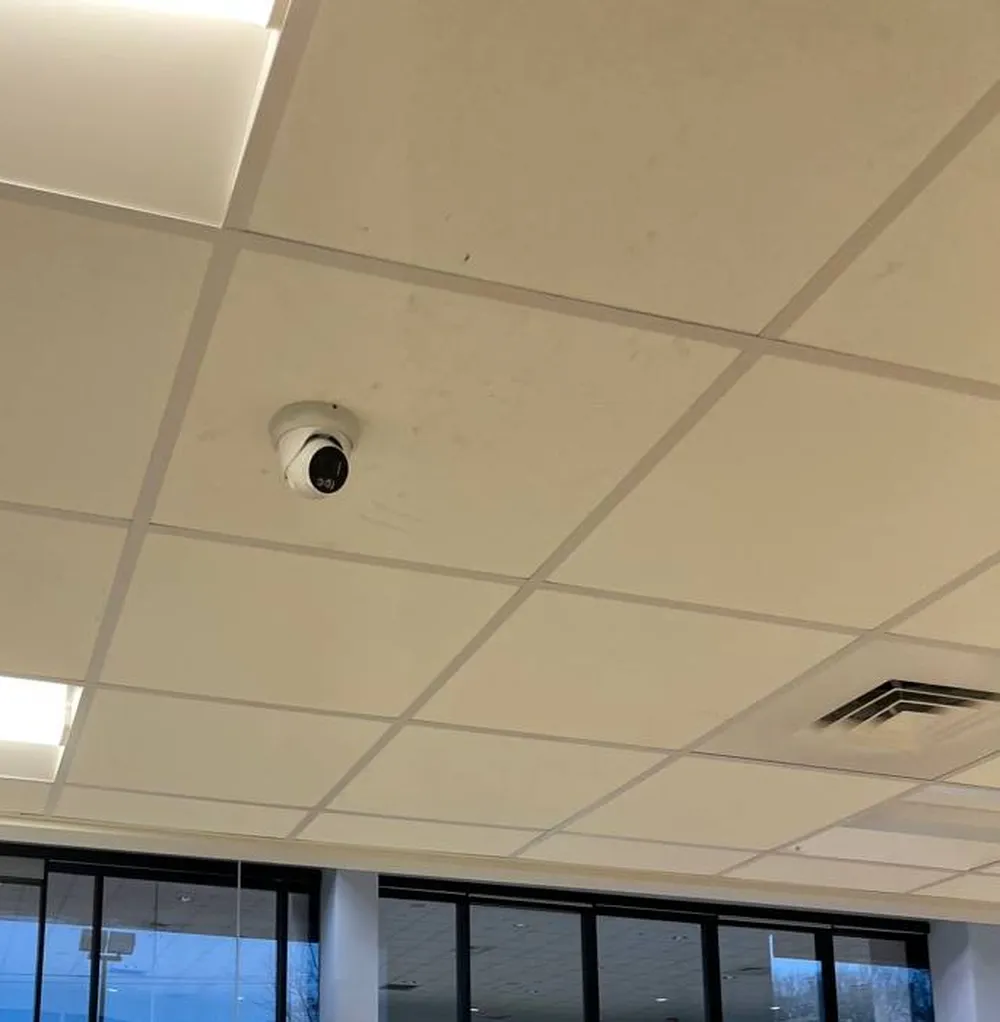
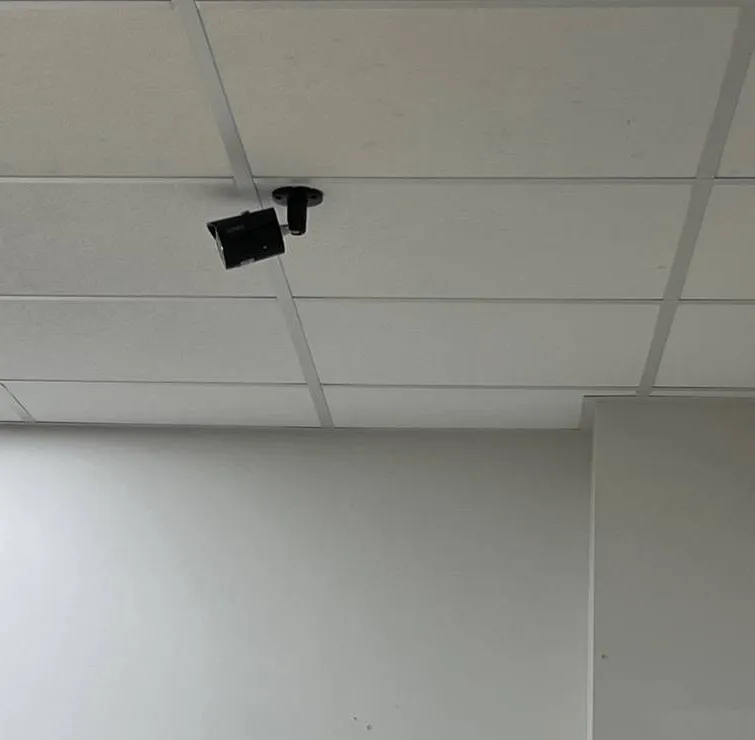
Garage columns hide cars. Rather than adding a camera behind every column, we mount cameras at the ends of each drive aisle, looking down the length of the row, so every car is seen from the front or the back as it moves. Ceiling height decides the camera body: a low garage ceiling calls for a compact dome or turret that a tall van will not clip, and for vandal-resistant housings within reach.
Garden-and-mid-rise campuses usually have open lots instead of garages. Those lots are lit by a few fixtures on the buildings and poles, and the night picture depends on that light. Where lighting is thin we recommend cameras with built-in illuminators on the lot entrance and leave the board to decide, with its electrician, whether to add fixtures. We do not do electrical work, so any new light or outlet is the building's electrician's job, and we say so on the plan.
A few downtown co-ops lease their garage to a parking company or share it with a commercial tenant. That raises a question the board should settle before the drawing is final: whose cameras cover the garage, who sees the video and who pays when a camera is hit by a car. We draw the co-op's cameras to cover the corporation's own doors and the routes its residents use, and leave the operator's booth and cash handling to the operator's own system unless the lease says otherwise.

The lobby is where a co-op's cameras earn their keep every day, not only after an incident. Shareholders want to know their deliveries are safe, staff want to see the doors they cannot see from the desk, and the board wants a record of who entered the building. In Westchester's elevator co-ops the lobby is often generous in size but complicated in shape: a vestibule, an inner door, a mailroom alcove, a package room, a seating area and the elevator bank, sometimes on two levels because of the hill.
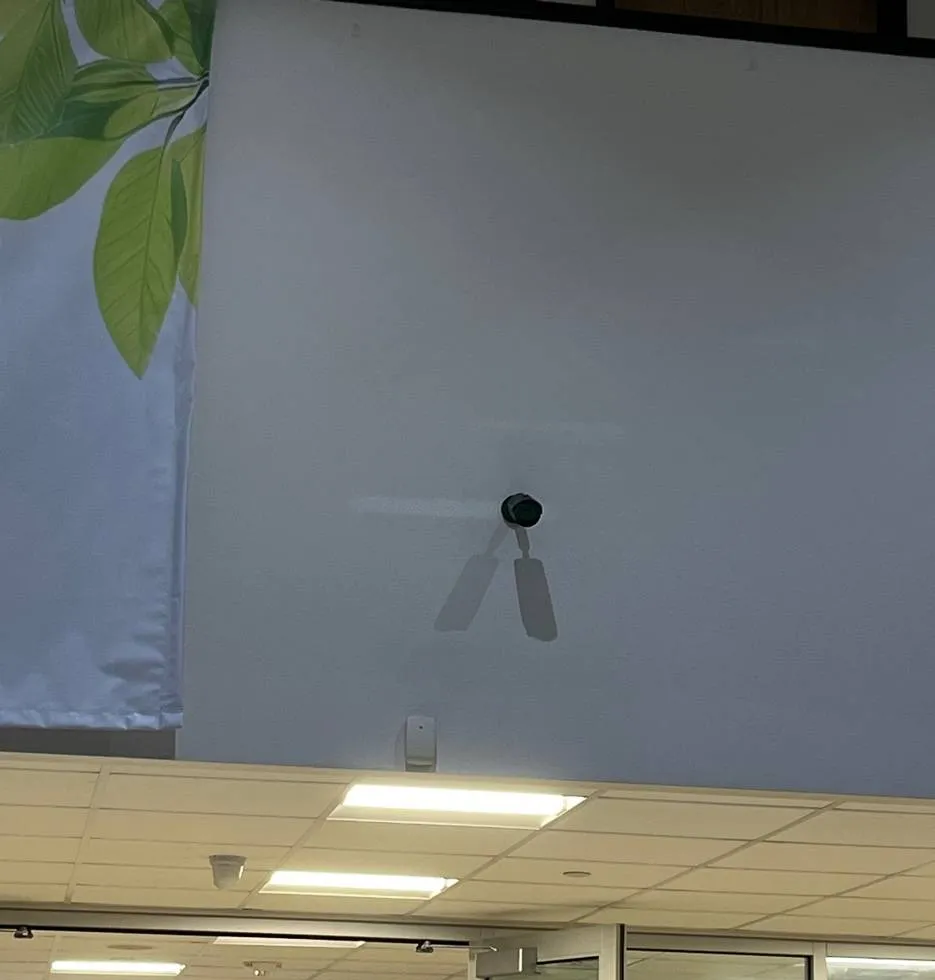
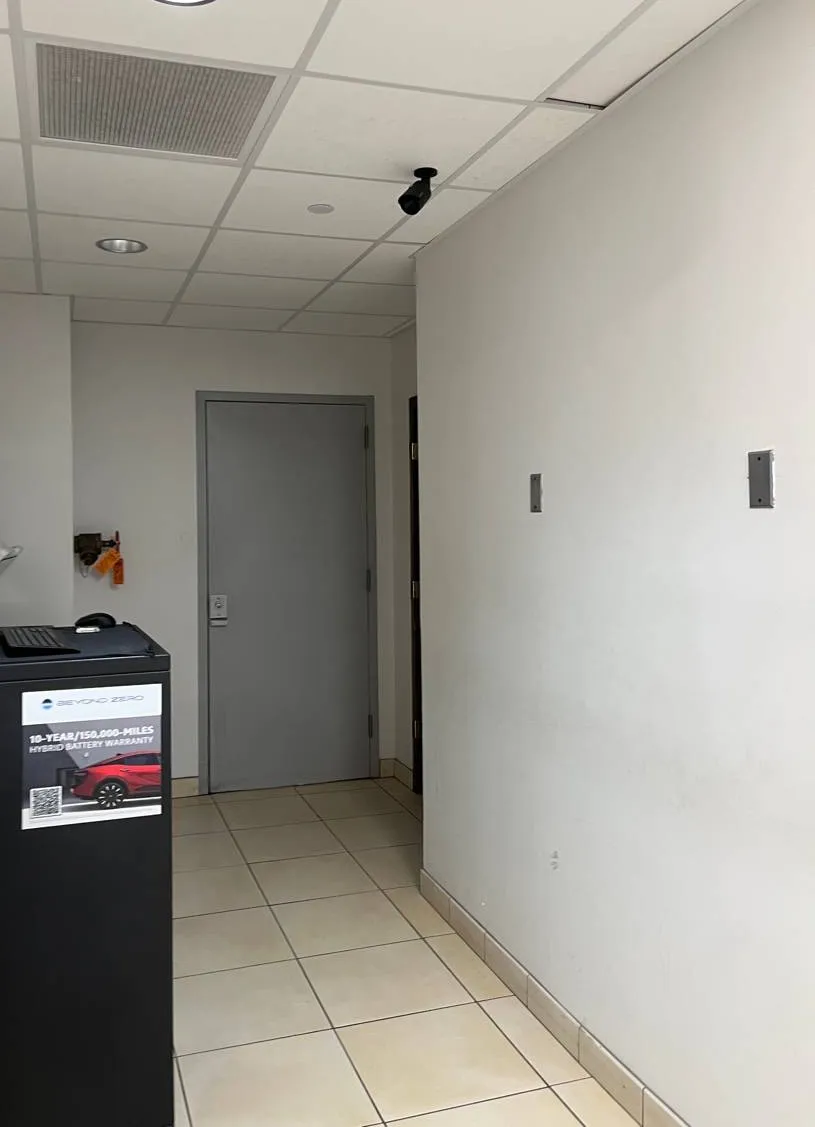
The single most important camera in an elevator co-op looks at people as they come through the inner lobby door, from slightly above head height, so faces are lit by the lobby rather than silhouetted against the street. The outer door gets its own camera only if the vestibule is where packages are left or where problems happen. In prewar buildings near the stations, where the vestibule is small and finished in stone or wood, we place a compact camera on the lobby side and keep the vestibule itself clear of hardware.
A doorman does not replace a camera; a camera does not replace a doorman. The desk needs a live view of the side doors, the garage entrance and the package room, on a monitor turned toward the staff and away from visitors. The recording is what matters when something happens on a break, at a shift change or after the desk closes. We give staff live-view logins only, and leave search, export and deletion to the managing agent and named directors.
Most Yonkers and Mount Vernon towers and nearly every garden building run without a doorman. Packages land in the vestibule, on a shelf inside the lobby or in a locked room opened by couriers. In those buildings we put one camera over the place packages actually end up, aimed so it sees the hands and face of anyone picking one up, and a second at the door they leave through. If packages pile up on the floor because the shelf is full, the camera plan should follow the pile, and we say so.
Smart lockers reduce theft but do not end it, because the overflow that will not fit still sits somewhere. A camera at the locker bank, slightly to one side so the screen is not washed out, and a second covering the overflow shelf, deal with both. Where a courier code or a fob opens the package room, the camera is what shows whose code was used.
A camera that shows who is standing at the mailbox bank is normal and useful when shareholders report missing mail. One zoomed in tightly enough to read envelopes or the contents of an open box is not, and we never aim a camera that close. The wider view is also the one that shows a face.

Every camera on the plan answers a question the board can state in a sentence. Here is how we treat each common area in a Westchester cooperative, with the reason for each placement, so directors can strike anything they do not need before the price is fixed.
The service door is where contractors, deliveries, movers and trash go in and out, and where doors get propped. One camera inside, facing the door at an angle that shows the face of the person opening it, is usually enough. In towers with a separate loading dock, the dock gets a camera that covers the truck bay and the door into the building together.
Most boards do not need a camera on every landing. A camera on the corridor side of the stair doors on the ground floor and the garage level, plus one at the roof door if people have been getting onto the roof, covers the routes that matter. In co-ops that lease rooftop space to wireless carriers, the roof door camera also shows when carrier crews come and go.
A camera at the laundry room door, looking in, shows who came and went. A second over the machines can help when a vendor's coin or card box is broken into. Neither should see into a restroom or any spot where people change.
Storage corridors are long. One camera at the entrance and one at the far end, looking back toward the door, usually cover a whole aisle of cages better than several cameras in the middle. Bike rooms need a camera at the door and one over the racks, aimed to show the person rather than the bikes.
Illegal dumping by outsiders, and furniture left behind by departing shareholders, cost Westchester co-ops real money in carting charges. A camera covering the exterior trash enclosure or the compactor room door is often one of the first the board adds after the doors and garage.
A small dome in a top corner of each cab, with video carried down the hoistway by a wireless link made for elevators so no cable is added to the elevator's own traveling cable. Anything inside the elevator controller or the cab wiring belongs to the building's elevator contractor, and we coordinate with them rather than working on their equipment.
The entrance to each amenity gets a camera. The pool gets one over the gate and the deck entry, masked so the water and changing areas are not recorded. A gym gets a door camera and perhaps one over the equipment, never toward a locker room door. Community rooms get a door camera; what happens at a shareholder's party inside is not the board's business.
The inside of any apartment, any view through a window into an apartment or a neighbor's property, restrooms, changing rooms, staff locker rooms and the staff break area. Where a camera's view crosses a window or a neighbor's yard, we black out that part of the picture in the recorder, and the mask is drawn on the plan the board approves.

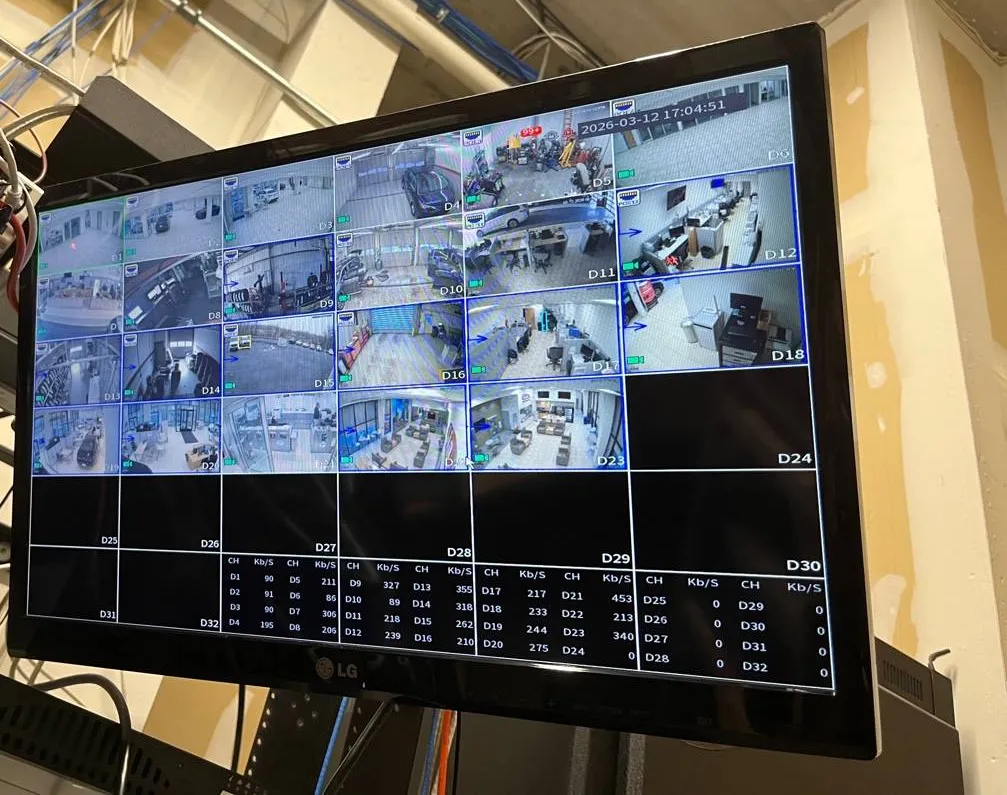
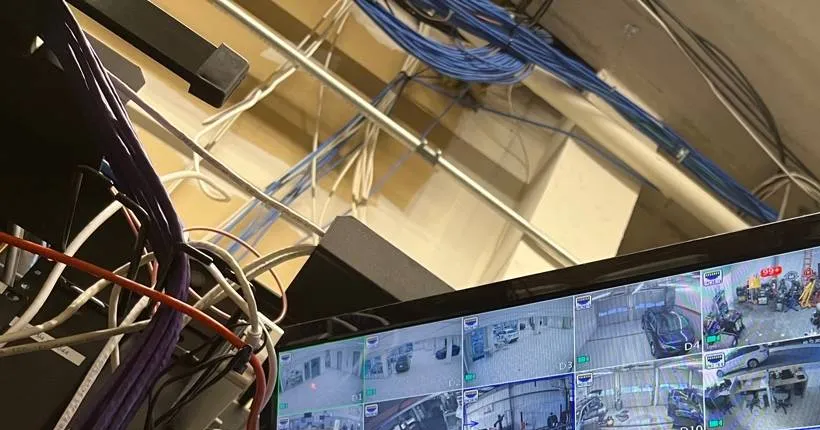
A co-op's camera system is a small private network: cameras, cable, a switch that powers the cameras, a recorder that keeps the video, a battery that carries it through outages, and accounts that let the right people see it. Each piece is chosen for the building, not pulled from a box.
The recorder stores video on drives inside it. How many days it keeps depends on camera count, resolution, frame rate and how much motion the cameras see. A garage camera facing a busy ramp fills a drive faster than a storage-room camera that sees two people a day. We size the drives to the number of days the board picks and write that number on the plan, so nobody discovers later that the recorder only holds a week.
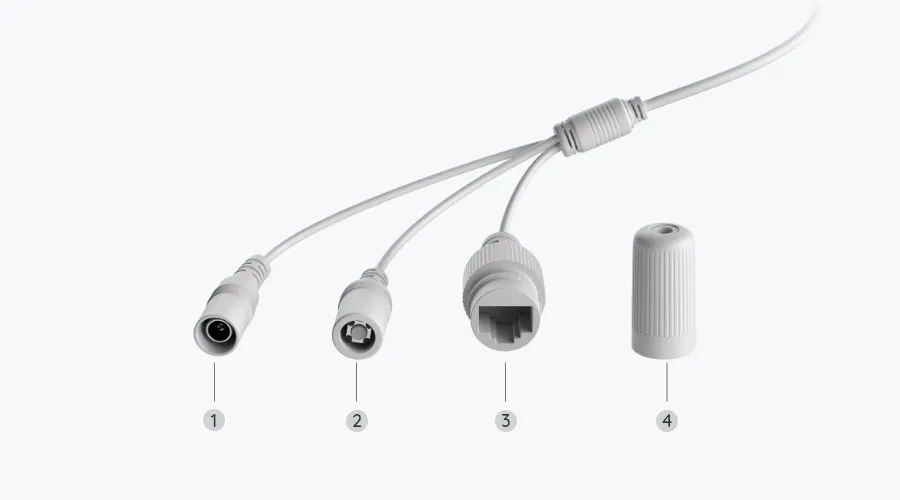
Network cameras take power and video over one cable from a power-over-Ethernet switch beside the recorder, so most camera locations need no outlet. A single run can go about 100 meters before it needs a switch or an extender. In towers we use the existing risers and the garage ceiling; in prewar buildings we use closets, basements and old chases; between garden buildings we use conduit, an outdoor-rated cable on a messenger, or a point-to-point wireless link, whichever the site allows.
A battery unit keeps the recorder, the switch and the cameras running through short outages and shuts the recorder down cleanly in long ones. Westchester's summer storms take power out for hours at a time in some neighborhoods, and a recorder that loses power mid-write can lose its settings or its clock. We size the battery to the actual load and tell the board how long it should last.
Each person the board names gets a personal login with only what they need: live view for staff, search and export for the agent, administration for one or two directors. The corporation keeps the master password, sealed and filed with the board's records. Remote viewing by phone works through the manufacturer's app or a secured connection, and we disable the default accounts every recorder ships with.
Every price on this page assumes our house-brand cameras and recorder, the line on our published price list. If the board would rather have a name brand, Lorex, Luminys and Reolink are our partner brands, and other major makers can be installed too. Where a board's prior installer left a recorder from another maker that is still sound, we can often add to it rather than replace it.
Plenty of Westchester co-ops still run analog cameras on coaxial cable into an old DVR. Good coax can sometimes carry HD-over-coax cameras on a new recorder, which spares the board new cable in finished halls. Damaged or ancient runs get replaced with network cable. Our general CCTV installation page for Westchester County covers closed-circuit systems for every kind of property; this page covers how we apply that work to cooperatives.

These are ranges drawn from the six building types above, meant to help a board frame its first conversation. They are not quotes. The walk of the property sets the real number, and the first phase is often smaller than the board expects.
| Building type | First phase | Full system | First cameras |
|---|---|---|---|
| Prewar elevator building near a station (30–70 apartments) | 4–6 | 8–12 | Inner lobby door, mail and package spot, service door, basement laundry |
| Postwar tower over a garage (100–300 apartments) | 8–12 | 16–32 | Lobby door, garage gate, ramp, garage-to-lobby door, package room, service door |
| Garden-and-mid-rise campus | 8–12 | 16–40 | Lot entrances, each building's main door, walkways, laundry doors |
| Downtown doorman co-op | 6–10 | 12–24 | Side doors the desk cannot see, package room, garage, loading area |
| Sound Shore building with a pool | 6–8 | 10–20 | Lobby, lot, pool gate, water-side entrance |
| River-town hillside building | 4–8 | 8–16 | Upper and lower entrances, the stair or path between them, lot |
Six months of living with a modest system teaches a board more than any proposal can: which camera the agent actually searches, which door nobody uses, where the packages really pile up. So phase one is kept lean on purpose, while the recorder, switch and cable routes we put in are sized for the whole building. Phase two then means mounting cameras, not ripping out the backbone.
One camera body at one mounting point is one camera, even if it has two lenses. A dual-lens panoramic camera covering a lot corner counts as one location on the plan and one line on the price. The board sees the count, the reason and the price for each, and can strike any line before signing.
This is an illustration, not a client building. Picture a 1960s tower of about 160 apartments on a sloping lot in one of the southern cities: a lobby facing the avenue, a mailroom and a package room behind the lobby desk that is staffed only in the daytime, a two-level garage entered from a side street at the bottom of the hill, a basement laundry and storage area, and a board that wants to stop catalytic-converter thefts in the garage and package losses in the lobby.
| # | Location | Camera | What it is for |
|---|---|---|---|
| 1 | Inside the garage gate, lower level | Bullet, narrow lens | Every car entering and leaving, front plate and driver side |
| 2 | Foot of the ramp, looking up | Turret | People walking in behind a car while the gate is open |
| 3 | Ramp turn between levels | Turret | No blind stretch between the two garage floors |
| 4–5 | Ends of the two longest drive aisles, lower level | Bullet | Every parked car seen front or back |
| 6–7 | Ends of the drive aisles, upper level | Bullet | Same for the upper floor |
| 8 | Garage-to-elevator door, garage side | Vandal dome | Who entered the building from the garage |
| 9 | Inner lobby door | Dome | Faces of everyone entering from the avenue |
| 10 | Package room | Dome | Hands and faces at the shelves and lockers |
| 11 | Service door and trash area | Turret | Contractors, movers, propped door |
| 12 | Laundry room door | Dome | Who came and went |
The recorder, switch and battery go in a locked, ventilated cabinet in the super's office on the lobby level, well above the garage. Garage cameras reach it over cable run along the garage ceiling and up an existing riser. The lobby desk gets a live-view monitor; the managing agent and two directors get search and export. Phase two, priced on the same proposal but not ordered, adds elevator cab cameras and the storage corridor. Phase three, if the board wants it, adds the roof door and the lower-street pedestrian entrance.
How many days of video to keep, which directors get access, whether the desk monitor shows all twelve cameras or only the doors, and whether phase two waits a year. Each choice moves the price a little, and each one is written into the plan so nobody has to remember it later.

The super or a director takes our technician through the building, room by room and level by level. We log into whatever recorder is there, put a tester on any old cable worth saving, photograph each proposed camera spot and turn all of it into a numbered plan priced phase by phase. The walk costs the co-op nothing.
Our own crews build the approved plan from end to end: every camera and cable run, the switch and recorder, the battery, the entrance signs, an account for each named user and a training session for the agent and staff on the last day.
If the recorder has free channels and is in good health, we add cameras to it. If it is failing, out of channels or so old that its software is a security risk, we say so and price a replacement alongside the add-on, so the board can choose.
An aging analog DVR can give way to either an HD-over-coax recorder, which keeps the existing coax in service, or a full network system. Every old run that passes its test stays; the dead cameras we replace come down as part of the same job.
When the password left with a former agent, super or installer, we can often reset the recorder and hand it back with new accounts in the corporation's name. When we cannot, we replace the recorder and keep the cameras.
Some boards buy the hardware first. In that case send us the make, the model numbers and how many places they go; the labor price comes back by phone or text, and a deposit books the crew. There is no site walk-through for equipment the co-op supplies, and how that equipment performs, and its warranty, remain the manufacturer's responsibility.
When a camera goes dark or a drive dies after the warranty period, it is handled by our security camera repair service in Westchester County. Boards that want to catch problems first can book a yearly visit: lenses cleaned, aim checked against the plan, drives and firmware checked, the clock and battery tested, one clip exported as proof, and a one-page report to the board.
For boards and engineers who put the work out to bid, we price the specification exactly as written and list any change we would recommend on a separate line, so the board can compare bids without guessing what each contractor left out.

Cameras tell the board who did something. The intercom decides who gets let in, and fob readers decide which doors each resident and staff member can open. When a Westchester board plans all three at once it avoids paying for the same cable, cabinet and battery twice. Our co-op security systems page for Westchester County covers the intercom, fob and elevator side in detail; here is where the camera plan touches them.
Many current video intercom panels can send their camera picture to a recorder. Where that works, we add the entry panel as a channel, so the agent can search the front door and the panel's view on one timeline. It does not replace a lobby camera, because the panel only sees the person standing in front of it.
Video tells the board afterward who wedged the side door open. A contact on that door, reporting to the access system, warns the super within a minute that it is standing open. Garage pedestrian doors and back doors that are chronically left ajar usually need the warning and the video, so we quote them on one line.
In most buildings the camera recorder and switch can live beside the intercom controller and the fob panel in a single locked, ventilated cabinet, all fed by one battery sized for the combined load. That gives the super a single key and a single place to check, and whoever services the building next finds every device labeled in one spot.
If the lobby panel is failing too, our co-op board intercom upgrade guide walks directors through repair versus replacement, bids and shareholder notice. Running the camera and intercom projects on one schedule means the lobby is disrupted once.
What follows is background from a licensed installer, with sources, so a board can bring better questions to its own attorney. It is not legal advice, and the co-op's counsel has the last word on anything here.
The cooperative corporation owns the building, and shareholders hold proprietary leases on their apartments. In Levandusky v. One Fifth Avenue Apartment Corp. (1990), New York's Court of Appeals held that courts generally defer to a co-op board's decisions made in good faith, within the board's authority and for the corporation's purposes. Deciding where cameras go in the corporation's own lobby, garage and halls is the kind of decision that rule protects, provided the board follows its bylaws and proprietary lease and records its vote.
Attorney Ricardo M. Vera told CooperatorNews in 2025 that New York does not recognize a common-law right of privacy in public or common areas. That supports cameras in lobbies, halls and garages. It does not support cameras aimed into apartments or anywhere people undress, which state law covers separately.
Under the Penal Law, eavesdropping is a class E felony (§250.05), and the definition in §250.00 covers mechanical overhearing of a conversation when not even one party has consented. Two shareholders arguing in the laundry room in front of a camera with a live microphone is that situation. Several cameras on our price list have built-in microphones, so on every co-op job we turn audio off at the recorder and say so on the plan.
Penal Law §250.45 makes it a crime to record people without consent in bathrooms, changing rooms and similar places. Labor Law §203-c separately says no employer may make a video recording of an employee in a restroom, locker room or room set aside for changing clothes unless a court orders it. In a co-op that rules out the staff locker room, any restroom and any changing area, including at the pool.
A lot of what is written about co-op cameras comes from Manhattan and cites New York City rules. Those do not travel. The Multiple Residence Law, by its own §3, applies to cities under 325,000 people and to all towns and villages, which takes in every Westchester municipality, including Yonkers. New York City's Local Law 63 of 2021 on smart-access data in multiple dwellings is a city law and does not govern a Westchester building. State statutes on eavesdropping, surveillance, labor and licensing apply everywhere.
A company that installs or services security systems in New York needs a state license under General Business Law §69-m, and the Department of State's regulations (19 NYCRR Part 195) treat video surveillance used to detect or watch for intrusion as part of that licensed work. Ours is New York State license 12000287431, printed on this page and on every proposal so a board can check it. Westchester County's consumer protection office separately licenses plumbers and electricians, and we do not do electrical work: any new outlet, circuit or light fixture on the plan is marked for the building's own electrician.
Westchester has its own co-op disclosure law, administered by the county's Human Rights Commission, which since August 2021 sets deadlines for acting on purchase applications and requires fair-housing training for board members. Video of a prospective buyer touring the building has no place in an admissions decision, and a footage policy that limits review to incidents, safety and building operations keeps directors clear of that problem.
Camera cable never ties into the fire alarm system, and we keep camera work and fire alarm work on separate scopes. Boards with fire alarm questions should deal with the municipality's fire officials and a fire alarm contractor directly.

Mounting cameras is the easy part. Boards get into trouble over who looked at the video, why and what happened to the copy. FirstService Residential's September 2024 guidance for New York co-ops and condos suggests keeping footage for roughly 30 to 90 days, logging every request and every access, and not giving residents copies without board and counsel approval. We hand every board a short draft built around five decisions, for its attorney to adjust before the system goes live.
Pick a number of days and buy the drives to match. Thirty days catches most incidents that are noticed within a week or two; garage problems are often discovered later, after a car has been sitting, so some boards keep the garage cameras longer than the rest. The recorder erases the oldest video by itself once it reaches the limit, and that automatic overwrite should be stated in the policy so nobody is accused of deleting something.
Staff watch live to do their jobs. Searching recorded video is an investigation and belongs to fewer people: the managing agent and one or two named directors. Each has a personal account, so the recorder's own log shows who looked at what and when.
A reported incident, a safety concern, damage to the building, a police request or an insurance claim. Not curiosity about a neighbor, not a dispute between directors, and not the admissions process. Writing the list down protects the board as much as the shareholders.
Only the agent or a named director exports a clip, in the recorder's own format with its player, and records the camera, date and minutes in a simple log. Shareholders who ask for footage of their own incident get a decision from the board, and copies go to them only with counsel's approval. Police requests go through the same log.
A one-page notice before go-live: what areas are covered, that no audio is recorded, how long video is kept, who can see it and how to report an incident. We supply camera notice signs at the entrances on the plan; the board's notice to shareholders, and through them to any approved subtenants, is the board's document, and we provide a draft.
Smaller Westchester co-ops, especially garden buildings in Greenburgh and the river towns, are run by volunteer boards with no managing agent. The same policy works with two directors named instead of an agent. We keep alerts to the few that matter, so nobody's phone lights up every time a car passes the lot.
Westchester boards are used to reading paper closely; they review purchase applications against county deadlines and answer to shareholders who often know the building better than the agent does. A camera proposal should be easy to read in that setting, with nothing left for a director to guess.
Where the money comes from is the board's call, guided by its accountant and bylaws: a small job often fits the operating budget, a larger one may come out of reserves or be folded into a capital project. Because our proposals are phased, a board can fund the doors and garage this year and the cabs and storage next year with no redesign in between.
The written notice goes out before installation day, with the date the crews will be in the building. In our experience most objections in Westchester co-ops are answered by three facts in that notice: there is no audio, nothing looks into an apartment, and only named people can search the video.
When the board awards the job, we issue a certificate of insurance listing the corporation and its agent in whatever form the building's rules ask for; we do not send one with the bid. Our crew schedule follows the agent's rules for contractors and any quiet hours the city or village imposes, and the deposit and ordering terms are the ones in the pricing section below.
With more than 1,500 co-op sales a year in the county, Westchester boards turn over, supers retire and management firms change. A camera system that only one departed person knew how to run is one of the most common things we are called to rescue. Planning for the changeover at installation costs nothing.
Each person gets a personal login, and the administrator password is sealed in an envelope with the board's records. When a director leaves, the board deletes that one account; when a super leaves, the agent does the same. Nobody shares a login, so nobody has to change a shared password that six people knew.
On handover we leave a sheet in the equipment cabinet and a copy with the agent: recorder model, location, camera list with names, retention days, who has accounts, where the battery is and when it was installed. A new agent or super can read it in five minutes and know what the building owns.
When a co-op moves to a new managing agent, the outgoing firm's camera accounts are removed and the incoming firm's are added in the same visit, and the sheet goes with the rest of the building's records. If the old firm never handed anything over, we can usually reset the recorder and rebuild the accounts without touching the cameras.
Being a co-op does not change the price. Westchester cooperatives are quoted from the same county price list as a homeowner or a store: $1,099 installed for the opening system of four house-brand cameras and a recorder, with every extra camera priced individually after the walk fixes its location. The packages below come from our Westchester County security camera pricing page, where the full list and options are shown.
| Package | What is included | Installed |
|---|---|---|
| A1 | Four 2MP eyeball cameras on a 1080P DVR; night vision to about 60 ft | $1,099 |
| A3 | Four 2MP eyeball network cameras with an NVR | $1,133 |
| E2 | Four 4MP dome network cameras with a 4K NVR | $1,306 |
| D1 | Four 8MP (4K) eyeball network cameras with an NVR | $1,541 |
The A1 package suits a small walk-up or a prewar building that wants its doors covered and little else. Most towers and campuses start from a network package such as A3 or E2, because network cameras run further on one cable, take power from the switch and are easier to grow. Domes are the usual choice for lobbies, halls and garage ceilings. Where a package includes cameras with microphones, audio is switched off on a co-op job.
Because ordered equipment cannot go back to the supplier, every item that might raise the price, from a cable that may fail its test to a garage camera that may need a longer bracket, is listed on the proposal before the vote. Surprises on installation day are what this rule exists to prevent.
To start, the co-op pays a deposit of 50 percent; we place the equipment order the day that payment clears, and a cooperative corporation or its agent is welcome to pay by check. Financing is available through Wisetack, subject to approval.
Once the crew hands the system over, a 30-day warranty applies, explained on our warranty page; boards that want longer cover for a new system can buy an extended plan of one year or more, the camera and recorder makers' own warranties still apply on top, and help with the app or recorder by phone costs nothing. Full terms — including 50% deposit, one-year parts-only warranty on Abstract Enterprises Security Systems-supplied products, and the late-fee schedule — are set out in the service agreement.
Directors who want something concrete for the next meeting can have it quickly: we put the building walk on the calendar within 2 hours of a request, seven days a week, early in the day. Installation dates go first come, first served to boards whose deposit has cleared.
A few lines are enough: the city or village, the size of the co-op, whether cars park in a garage or a lot, whether a managing agent runs it, and the problem that prompted the call. If there is an old recorder, a phone photo of its label saves time. Calls and texts go to (914) 877-2578.
Got it. Our office will call or text you shortly to set a day and a two-hour window for the walk of the building.
A forty-apartment prewar building in Bronxville and a three-hundred-apartment tower in Yonkers go through the same seven steps. The tower simply spends longer at the drawing stage and is installed in phases.
Any one person can start it. A call, a text or the form puts the visit on our calendar within 2 hours, and the technician arrives in a two-hour window early in the day.
Our technician goes through each garage level, entrance and common room the board named, logs into the old recorder if there is one, tests any cable worth keeping and finds a locked, ventilated room above the garage for the recorder.
Directors get floor and garage drawings showing each numbered camera with its purpose, the privacy masks, how cable reaches every level, the retention period and a fixed price per phase.
Directors vote the plan through in their normal way. A 50 percent deposit releases the equipment order, and the insurance certificate the agent needs follows the award.
Shareholders receive the board's notice, and the work is scheduled around the managing agent's contractor rules and, for cab cameras, the elevator contractor.
Crews run cable, mount the cameras, recorder, switch and battery, aim each camera to its purpose on the plan, draw the privacy masks and switch audio off.
Named people get their own accounts, the master password is sealed for the corporation, the agent learns to export a clip and a one-page system sheet stays in the cabinet.
Timing follows size. Four to six cameras in a prewar walk-up or a small elevator building is normally one working day. A garage tower with a dozen cameras runs two or three days, longer when cab cameras wait on the elevator contractor. A garden campus is installed building by building, with any digging scheduled when the lot is emptiest.
Very little. Expect a small crew, a stepladder near the lobby door for part of the morning, a few cones in the garage aisle where a bracket is going up and, if cab cameras are on the plan, one elevator out of service for a short stretch. Nobody needs to open an apartment. Each evening the ceiling tiles are back in place, the floor is swept and the super gets a text listing what was finished and what comes next.
Usually yes. Chargers are expensive, their cables get cut or stolen for the copper, and disputes over who is hogging a charging space are common in co-op garages. One camera at the end of the charging row, aimed down the row rather than at a single car, shows who plugged in, who unplugged someone else and whether anyone tampered with the equipment. The charger's own power wiring is the electrician's work, and we keep our cable clear of it.
They can document it. A camera at the service entrance and one at the service elevator landing show when a crew arrived and left, which gives the agent dated evidence to enforce the alteration agreement with the shareholder who hired them. The board should say in its footage policy that building operations, including alteration rules, are a permitted reason to review video, so nobody can claim the cameras were used for something they were not meant for.
The camera alone can only record it. A door contact on the gate wired to the access or alarm system can send an alert when the gate has been open longer than it should be, and the camera then shows why. Some recorders can also raise an alert when a camera sees motion in a defined zone after hours. We price the contact and the camera together, because the alert is what fixes the problem tonight and the video is what explains it tomorrow.
Now, before the walls close. Running a cable to the future camera spot while the room is open costs a fraction of fishing it in later, and the camera can be aimed with the shelving and lockers already drawn. Send us the architect's or contractor's layout and we will mark the camera and cable on it, then install the camera itself when the room is finished.
It can, if the screen accepts a second input or the announcement system can show a video feed, but think about which view. Shareholders like seeing the package room or the front door on the lobby screen; nobody wants the garage or the laundry room displayed to every visitor. A single live view of the entrance, labeled as such, is the common choice, and it doubles as a reminder that the building is recorded.
It is generous, but it is better declined. Reviewing the building's video is a board function under the footage policy, done by the agent or named directors and logged. A shareholder who is an officer looking at a neighbor's comings and goings blurs the line between the co-op and the department, and can put the officer in an awkward position too. If an incident warrants police review, the clip goes to the department through the normal request route.
Read the lease first. Often the operator is responsible for its booth, its cash and the cars it parks, and the co-op for its doors, stairs and the route residents walk. The co-op's cameras then cover the garage-to-building door, the pedestrian path and the gate, and the operator keeps its own system for its booth. Where the lease puts security on the co-op, the plan covers the whole garage and the board decides whether the operator gets live view.
It can, in two ways. In daylight a camera that sees the mirror records a second, reversed lobby that makes a clip harder to read; at night the camera's own infrared light bounces off the glass and washes out the picture. We aim the lobby camera so the mirror sits outside its view or at a steep angle, mask whatever reflection remains, and where that is impossible we turn off the camera's infrared and rely on the lobby lights. Prewar lobbies with mirrored walls get this treatment as a matter of routine.
Yes. The camera goes inside the building, facing the roof door from the stair or bulkhead side, so it never touches the roof or the carrier's antennas and cabinets. It shows when carrier technicians come and go, which helps the agent check access against the lease. Anything mounted outside on the roof would need the board's lease terms checked first.
Usually. In most hillside buildings a riser, an elevator machine-room chase or the garage ceiling gives a cable path from the lowest level up to the recorder, and network cable can run about 100 meters between switches. When no inside path exists, a small switch on the garage level fed by one cable or a fiber link carries all the garage cameras up together. The plan shows which route we tested.
Yes, if the cameras hand off from one to the next with no gap: one inside the gate, one at the ramp turn, and one looking down each drive aisle. On the recorder, the agent plays those cameras side by side on one timeline and watches the car move through the garage. The plan shows each camera's view overlapping the next, so the board can see there is no blind stretch.
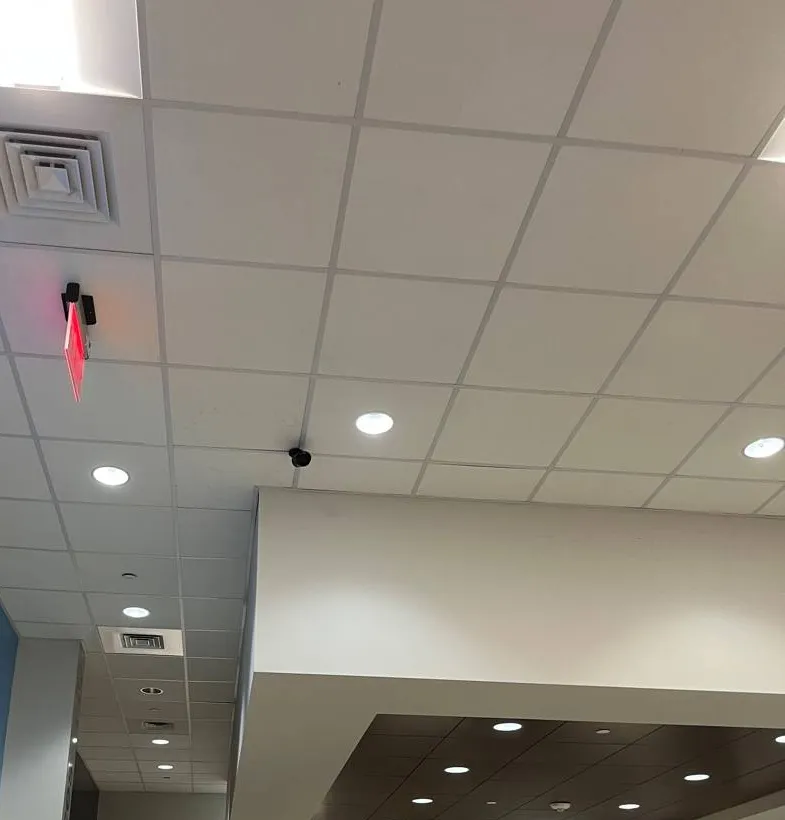
Some are. Most are not. In the November 2026 listings we checked, Yonkers alone accounted for 199 of the county's 466 co-ops for sale, followed by Mount Vernon, New Rochelle and White Plains, and the listings were full of elevators, garages and laundry rooms. The typical Westchester co-op camera job is an elevator building with a lobby, a package problem and a garage or lot, and it should be planned like one.
A doorman sees what is in front of the desk while on duty. Cameras see the side door, the package room and the garage while the doorman signs for a delivery, takes a break or goes off shift, and they keep a record nobody has to remember. In doorman buildings the cameras mostly make the staff's job easier: a live view of the doors the desk cannot see is the first thing they ask for.
A converter can be cut out in a few minutes, and no camera stops that by itself. But the vehicle that brought the thieves has to come through the gate or into the lot, and an entrance camera aimed where cars slow down records it. The Journal News reported in February 2026 that police and repair shops in the area had noticed a rise in converter and other vehicle-related thefts. Cameras at the gate, good lighting and a garage that does not let people walk in behind cars work together; none of the three does the job alone.
It does not. The video stays on the corporation's recorder unless the board's agent exports a clip and hands it over, or the board chooses to join a department's camera program. Shareholders sometimes worry about this, and the notice the board sends out should say plainly who can see the video and when it leaves the building.
Installing security systems as a business in New York requires a license under General Business Law §69-m. A co-op that lets an unlicensed friend install cameras gives up insurance, warranty, documentation and someone accountable when a camera falls on a car or the recorder turns out to be open to the internet on its default password. The savings rarely survive the first problem.
Plenty of online camera advice is sound: video only, no cameras in private spaces, keep the recorder locked, write a retention period down and change the default passwords. Those rules apply in Westchester as everywhere else. Where generic advice goes wrong for a co-op is assuming one person owns the building and makes every decision; in a cooperative, the board decides, the corporation owns the video and the policy matters as much as the hardware.
Camera models are the least interesting part of a walk. These are the details that actually change a Westchester co-op's plan, and we look for them in every building.
Condominium associations, where each owner holds title, have their own guide to condo security camera installation in Westchester County. Owners of rental buildings should read apartment building security camera installation in Westchester County. Houses, shops and offices are covered on the general Westchester County security camera installation page.
Yes. The A1 package, four house-brand cameras with a recorder, is $1,099 installed anywhere in the county, from Yonkers and Mount Vernon to Peekskill and Bedford. What differs between buildings is the number of cameras, the cable distances and how much wiring is concealed, all priced on the plan after the walk.
Yes. Most Westchester cooperatives are in Yonkers, Mount Vernon, New Rochelle, White Plains and Greenburgh, but we walk and install for co-ops across the county, including the river towns and the northern towns. Booking works the same way everywhere: within 2 hours of the request, seven days a week, with early-day visits.
Yes. We price the whole system on one proposal in phases, install phase one now and leave the recorder, switch and cable paths ready for phase two. The board orders phase two whenever its budget allows, at the price written on the proposal for that phase if it is ordered within the proposal's stated validity.
Often, yes. Many recorders can be reset through the manufacturer's recovery process when we have physical access to the unit, after which we rebuild the accounts in the corporation's name. If a recorder cannot be recovered, we replace it and keep the cameras that still work.
Usually a dome. It sits close to the ceiling, is harder to knock out of aim, does not show which way it is pointing and looks tidier in a finished lobby. Bullets are better for long, narrow views such as a garage drive aisle or a lot entrance, where the camera has to reach farther.
Yes. Each camera has its own run to the switch, so a cut cable takes out only that camera. The recorder logs the video loss and can send an alert, and the gap in that one camera's recording is itself a useful clue about when the damage happened.
Gladly. We keep the cameras and recorder on their own switch and network segment, and agree with the consultant on how the recorder reaches the internet for remote viewing, which ports if any are used, and who holds the router settings. That way neither side's changes break the other's system.
Usually, if the recorder has empty drive bays or takes larger drives. We note on the plan how many bays are free and how many more days each added drive would give, so the board can extend retention later without replacing the recorder.
Some cameras can count people crossing a line drawn in their picture, which helps a board decide whether a little-used door should go on fobs or be locked after hours. The counts are a good guide rather than an exact tally, and they work best at a single door with even lighting, not in a crowded lobby.
Some recorders can mirror their drives or write to a second drive, so one failed drive does not take the recordings with it. It adds drive cost, and we price it as an option for boards that consider their garage or lobby video critical.
The recorder restarts during an update and stops writing video for a few minutes. We schedule updates for a quiet hour, check every channel is recording again afterward, and note the update in the system log so a short gap at that time is explained if anyone ever asks about it.
They can, but we recommend the board adopt the policy at the same meeting it approves the plan. If the system goes live first, we limit search and export to the managing agent until the policy is adopted, so nobody reviews video under rules that do not exist yet.
For the wider region, Westchester boards can step back to our guide on co-op security camera installation in the Hudson Valley. West of the Tappan Zee crossing, boards can read about co-op security camera installation in Rockland County, and Orange County co-ops are covered on our Hudson Valley co-op camera hub. Boards in the city can start with co-op security camera installation in NYC or go straight to the Bronx, Manhattan, Queens, Brooklyn or Staten Island. On Long Island, see co-op security camera installation on Long Island, Nassau County and Suffolk County.
From the garage gate to the top-floor trash room, the plan is built for your building and voted on by your board. Expect a free walk, a numbered drawing with a price per phase, a draft policy and notice, and passwords kept in the co-op's own name, with the four-camera system at $1,099 installed.