Garden Courts · Stair Halls · Laundry & Storage Rooms · Lots & Garage Rows · Recorders
Co op security camera installation on Long Island starts at $999 for a four-camera house-brand system with recorder, installed, which is the Nassau County figure on our camera price pages; the same system in a Suffolk County cooperative is $1,099 because of the longer drive east. Every camera past the first four is priced one by one once we have walked the grounds, and that walk is booked within 2 hours of your call, any day of the week.
For the board in one paragraph: Most Long Island cooperatives are garden complexes, not towers: rows of two- and three-story brick buildings, each with its own stair-hall door, its own basement laundry and storage rooms, and a shared parking lot or garage row. Plan the cameras around the doors people actually use, the rooms where property goes missing, and the lot; then decide how video gets from the far building back to one recorder. The corporation owns the system and every password, microphones stay off, nothing looks into an apartment window, and the rules that matter are New York State law and the co-op's own proprietary lease and house rules, not New York City's building codes. Our figures come straight from the Long Island camera price page.
Last updated November 27, 2026 by Abstract Enterprises Security Systems, NYS license #12000287431 · Sources: NY Penal Law §§250.00, 250.05, 250.45; NY Business Corporation Law §624; NY General Business Law §§69-m and 899-aa; NY Multiple Residence Law §3; Levandusky v. One Fifth Ave. Apt. Corp. (1990); 19 NYCRR Part 195; Suffolk County Code art. on cooperative applications; Village of Roslyn Code art. VIII; New York 811; CooperatorNews (2006, 2020); Habitat (2012, 2014, 2015, 2019, 2023, 2025); Long Beach Patch (2012); Long Island Board of Realtors (2026); PSEG Long Island (2020); CBS New York (2025); FirstService Residential (2024); ny.gov county profiles

Owner-operated since 2002 · Thousands of jobs completed · Surveys booked within 2 hours, seven days a week
When people picture a co-op they picture a Manhattan lobby with a doorman. East of the city line the picture is different. The typical Long Island cooperative is a garden apartment complex: a dozen or more low brick buildings arranged around lawns and walkways, each building with one or two stair-hall entrances, a basement laundry, a row of storage cages, a boiler or oil-tank room, and a shared parking lot or a row of detached garages out back. There is rarely a doorman, often no full-time staff beyond a superintendent, and the managing agent may work out of an office two towns away. A camera system built for a tower, with one recorder in a basement closet and a monitor at the front desk, does not fit that layout.
A Nassau County co-op market guide built from OneKey MLS listing data describes the county's garden co-ops as two- and three-story buildings put up between 1949 and 1986, with mid-rise co-ops of six to ten stories in Long Beach built mostly in the 1960s and a handful of older elevator buildings in places like Great Neck Plaza (The DeVito Team, Nassau County co-ops guide). The oldest stock goes back further: CooperatorNews traced the first co-op building constructed on Long Island to a seven-story Great Neck building from 1925 with 69 apartments (CooperatorNews, June 29, 2020). Those buildings were wired, if at all, for a doorbell and a buzzer. Every camera added since has been retrofitted around plaster, brick and concrete.
Scale is the second difference. Habitat magazine's 2025 account of a lobby renovation at a Roslyn Heights garden co-op gives a sense of it: 381 apartments in 25 buildings on 14 acres, with 25 small entryways, refreshed three buildings at a time from reserves (Habitat, July 9, 2025). Twenty-five entryways means twenty-five possible camera locations before anyone mentions the laundry rooms or the lot. Boards in complexes like that need a plan that ranks the locations, phases the spending, and still ends up with one recorder and one set of rules.
The third difference is the rulebook. Long Island co-ops are business corporations under New York State law, like city co-ops, and their boards make camera decisions under the bylaws and the proprietary lease. But none of New York City's housing and building codes reach a cooperative in a Nassau village or a Suffolk town. We go through what does apply, with sources, further down. For the wider picture of co-op security on the Island, including intercoms, key fobs and package rooms, our co-op security systems page for Long Island covers every system; this page stays on cameras.
"Long Island" is one phrase on a proposal and two very different territories for a camera crew. Most of the Island's cooperatives are in Nassau; Suffolk has fewer of them, spread farther apart, and the drive alone changes the price.
The same market guide lists the county's busiest co-op areas over a recent twelve months as Great Neck, Long Beach with 95 sales, Rockville Centre and Freeport with 61 each, Mineola with 46 and Lynbrook with 36 (DeVito Team guide, cited above). That list doubles as a map of where we see the most camera requests: garden complexes along the LIRR's Babylon and Long Beach branches, older elevator co-ops near the Great Neck and Mineola stations, and the oceanfront and bayfront mid-rises of Long Beach. Lots are tight, buildings sit close to public streets, and the job is mostly about entries, basements and parking. The four-camera system is $999 on our Nassau camera price page, which is also the starting point for the whole Island. For a closer Nassau view, see our co-op security camera installation in Nassau County page, and for every system a Nassau co-op might buy, our Nassau County co-op security systems page.
Suffolk's cooperatives cluster along the South Shore in towns such as Bay Shore, Bayport and Patchogue, in Huntington village, and in a few large planned communities in Brookhaven. Listings in Patchogue describe co-ops inside a gated waterfront community and a brick garden complex with landscaped courtyards and a shared laundry room (homes.com Patchogue co-op listings). One owner described the turnaround at a large Coram co-op community in 2019, after a new board and management redid "new pools, gyms, tennis and basketball courts, water mains, laundry rooms, and LED lighting" (City-Data Long Island forum, 2019). Communities like that have amenities spread across acres, which means longer cable runs and more wireless links. Suffolk's four-camera system is $1,099 on our Suffolk camera price page. Co-op security camera installation in Suffolk County is getting its own page; until it is up, our Suffolk County co-op security systems page covers the county.
The hardware, the house-brand default, the way we document the job and the way we hand the system to the corporation do not change at the county line. Neither does the law: both counties sit under the same state statutes on recording, the same state license for installers, and the same Court of Appeals rule on board authority. What changes is the drive, the building stock, and which village or town office cares about work on the outside of a building.
We plan a Long Island cooperative from the incidents backward. Before the survey we ask the super and the managing agent for the last two years of complaints: what was taken, from where, at what time of day, and whether anyone could say who did it. That list ranks the locations below. A camera that cannot be tied to a real problem usually does not make the first phase.
In a garden co-op each building's entrance is a small vestibule with mailboxes, a buzzer panel and a door into the stair hall. That vestibule is where packages are left, where non-residents slip in behind a shareholder, and where a face is easiest to capture, because everyone has to pass within a few feet of the door. A turret camera mounted inside the vestibule, looking at the inner door from the mailbox wall, gets a usable face on nearly everyone who enters. An outdoor camera on the building corner covers the walk up to the door and the stoop. With many entrances, we start with the buildings nearest the street and the lot, where outsiders arrive first.
Laundry rooms in Long Island garden buildings are usually reached by a separate basement door or a stair from the hall, and they are a magnet for disputes: coin boxes forced, clothes taken from dryers, machines damaged. One camera at the laundry room door, aimed so it shows who enters and leaves, settles most of those arguments without filming anyone folding clothes. If the vendor that leases the machines has its own camera rules, we follow them.
Shareholders keep years of belongings in wire storage cages in the basement. Break-ins there are often discovered weeks later, which is why storage-room cameras need long retention more than high resolution. We aim along the aisle between the cages so the camera shows who walked down it, not what sits inside each cage.
Garden co-ops on the Island often have a single lot behind the buildings or a row of detached garages that shareholders rent from the corporation. Cars are broken into, garages are pried open, and outsiders park overnight. Lot cameras are mounted high on the rear walls of the buildings, where the cable route is short, and aimed down the driving aisles. A camera at each lot entrance, narrowed to the lane, catches every vehicle coming and going.
These are rarely the first request, but they are where insurance claims start: a door left propped, a fuel delivery hose left running, a contractor who said he was there and was not. A camera at the door of the mechanical space gives the board a record of every entry without anyone having to keep a log.
Where a co-op has a central package room or a cluster of outdoor mailboxes, it gets a camera of its own. So does the dumpster corral when bulky trash keeps appearing, and the pool gate in complexes that have one. Walkways between buildings come last, because a camera covering open lawn at night records shapes, not faces, unless the lighting is good.

No camera looks into an apartment window, a private garden or patio assigned to one shareholder, a restroom, the super's apartment, or a staff changing area. Hallway cameras in elevator buildings run along the corridor rather than at one apartment door. Audio is disabled at setup. Those limits come from state law and common sense, and we explain the sources in the privacy section below.
In a garden complex the hard part is not the camera. It is the distance between the farthest stair hall and the room where the recorder can live safely. A single network cable carries video and power to a camera for roughly 100 meters, about 328 feet, before it needs help. On a co-op campus with buildings separated by lawns and a lot, most cameras are farther than that from any one point. Here is how we bridge the gap, in rough order of preference.
| Method | Where it fits in a Long Island co-op | What the board should know |
|---|---|---|
| Network cable through basements | Buildings joined by a shared basement or tunnel, and cameras inside one building | Our first choice when buildings connect underground: steady and inexpensive, and the starting system already allows 100 feet of cable per camera; anything longer is measured and priced during the survey. |
| A switch in each building | Complexes where every building has a dry, lockable spot near its own cameras | Each building's cameras plug in locally and one link carries them all back to the recorder; each switch needs a protected outlet. |
| Fiber between buildings | Runs across lawns or lots where a conduit already exists or can be installed | Does not carry lightning surges from building to building, and distance stops mattering; terminating it costs more than copper. |
| Wireless bridge | Detached garage rows, a pool house, or a building across a lot with a clear line of sight | No digging; it needs a clear path above trucks and tree canopy, and summer leaves change what was clear in March. |
| Buried conduit | Long-term routes the board wants to last for decades | The cleanest result, but it means a trench or bore, a utility markout, and lawn or paving repair afterward. |
Most complexes end up with two or three of these. A typical pattern: the buildings that share a basement run on cable to a switch in each building, the far row comes across on fiber in a conduit the co-op already owns from an old intercom or cable TV line, and the garage row talks to the nearest building over a wireless bridge. Every route is drawn on the plan the board approves, so a trench across the front lawn never comes as a surprise.
When cable has to go underground, New York's one-call rules apply. New York 811 asks excavators to notify it at least two working days but no more than ten days, not counting weekends and holidays, before digging begins (New York 811, excavator guidance). Utility marks only cover the utilities' own lines, so we also ask the super about private lines the co-op owns: lot lighting, sprinkler pipes, old intercom cable and the oil line to a buried tank. Trenches are timed around the landscaper's schedule and restored before we leave.
Network cameras draw their power through the same cable, so most need no outlet at all. The exceptions are outdoor switches, wireless bridges and cameras on lot light poles, which need constant power where they sit. We do not do electrical work. If a pole or a garage needs an outlet, the co-op's electrician provides it to our specification, and we connect the low-voltage side.
Unless the board asks for a named brand, every quote we send is for our own house-brand system: network cameras, a recorder and the switches between them, chosen and stocked by us, supported by us, and priced on our camera price pages. If the board wants a name on the box, we install partner brands Lorex, Luminys and Reolink, and we also install other major lines on request. Brand only matters on the proposal when the board makes it matter.

Every outdoor camera we install on a co-op is rated for rain and snow, and the connection at the back of the camera is sealed in a junction box rather than left hanging. Near the water in Long Beach, Freeport, Oceanside or along the North Shore harbors, we choose housings that tolerate salt air and replace the cheap screws that come in the box. On brick we mount into the mortar joints so a camera can come down later without scarring the face of the building.
Some boards arrive with cameras already sitting in a closet, bought online or by a past super. In that case we charge for labor only, quoted by phone or text once we have the model numbers and a site plan marked with where each one should go, and the install is scheduled after the deposit. There is no walk-through for owner-supplied equipment, and any defect in those cameras is a matter for the seller.
The recorder is the part of the system the board actually owns in a practical sense: it holds the video, the user accounts and the settings. Where it sits and how much it stores decide whether the co-op has evidence when it needs it.
In a garden complex the usual choices are the management office if the co-op has one on site, a locked closet in the building closest to the middle of the grounds, or the super's workshop. The room has to stay dry and ventilated, lock with a key the board controls, and sit above the level any past flood reached. In South Shore complexes that last point often rules out the basement entirely. Habitat reported that one Long Beach co-op's boiler room "lay beneath 15 feet of water" after Sandy even though its facade looked untouched (Habitat, November 2012). A recorder in that room would have taken the co-op's footage with it.

Retention is a board policy, not a hardware default. FirstService Residential's New York guidance for co-ops and condos notes that buildings generally keep footage for 30 to 90 days (FirstService Residential, Sept. 23, 2024). For a Long Island garden co-op we usually suggest at least 30 days on the storage rooms, because thefts there are found late, and size the drives so the busiest outdoor cameras still reach the board's chosen number. Outdoor cameras watching moving trees and passing cars write far more data than a quiet basement, so lot cameras normally record on motion with a few seconds of video before each event.

Continuous recording means nothing is missed between events, at the cost of more drive space. Motion recording stretches the same drives much further but depends on the detection being set well. Most co-ops we work with run continuous recording on vestibules and the laundry, where an argument about what happened at 2:14 depends on seeing the whole minute, and motion recording outdoors.
Many current cameras take a memory card that keeps recording locally if the link to the recorder drops. On a campus where a wireless bridge or a building switch is a possible failure point, that card is cheap insurance, and we turn the feature on where the model supports it.

Read this section as background, not legal advice: we install low-voltage systems, and the co-op's attorney is the one to test any camera plan against the proprietary lease, bylaws and house rules. Below are the public sources Long Island boards bring up most, so that conversation begins with the right statutes in hand.
A co-op is a corporation that owns the building; shareholders hold stock and a proprietary lease. New York's highest court held in 1990 that courts review a co-op board's decisions under a business judgment standard, deferring to decisions made in good faith, within the board's authority and in furtherance of the corporation's purpose (Levandusky v. One Fifth Ave. Apt. Corp., 75 N.Y.2d 530). That decision is statewide. A board in Lynbrook or Bay Shore that adopts a camera policy through its normal process is on the same footing as one in Manhattan.
An attorney at Newman Ferrara, answering a board's question in CooperatorNews, explained that New York does not recognize a general common-law right of privacy in public or common areas, and that audio recording raises separate problems under the eavesdropping statutes (CooperatorNews, Q&A: Camera Placement). In practice that supports cameras in vestibules, laundry rooms, storage aisles and lots, and argues against any view into an apartment, a shareholder's private patio or a window.
New York defines eavesdropping to include the "mechanical overhearing of a conversation" without the consent of at least one party (Penal Law §250.00) and makes it a class E felony (Penal Law §250.05). Many cameras ship with a microphone switched on. We switch it off at setup on every co-op job and note that in the handover sheet.
The unlawful surveillance statute covers recording someone without consent in places such as "a bedroom, changing room, fitting room, restroom, toilet, bathroom, washroom, shower" (Penal Law §250.45). In a co-op that means pool changing rooms, the restroom off the community room and any staff washroom. FirstService Residential also points boards to the Labor Law provision that bars video of employees in restrooms, locker rooms and changing areas (FirstService Residential, 2024, cited above), which matters for the super's workshop and any staff room.
Video doorbells and stick-on cameras put up by shareholders in shared halls are a growing headache. A co-op attorney quoted by Habitat put it plainly: "you can't just unilaterally do what you'd like to do in the common hallways" (Habitat, Feb. 20, 2023). A building system that covers the vestibules removes much of the reason shareholders install their own, and a house rule can then require board approval for anything mounted in a common area.
Online advice for co-op boards is written mostly for New York City, and two city rules turn up again and again. The intercom and self-locking door requirements in Multiple Dwelling Law §50-a sit in a statute that applies to cities of 325,000 people or more; New York's Multiple Residence Law instead covers "all cities of less than three hundred twenty-five thousand population" and "all towns and villages" (Multiple Residence Law §3). The city's tenant data privacy law for smart-access systems is a local law of New York City. Neither one governs a co-op in Hempstead, Huntington or Long Beach. That does not leave a Long Island board without rules; it means the state statutes above and the co-op's own documents are the ones to read.
Some Long Island villages review changes to the outside of buildings inside historic districts. The Village of Roslyn, for example, requires a permit and Historic District Board review for exterior work in its district, and its code lists light fixtures among the exterior elements covered (Village of Roslyn Code, art. VIII). If a co-op sits inside a district like that, we size and place outdoor cameras to keep the review simple and give the managing agent product sheets for the application.
Under General Business Law §69-m, nobody may be in the business of installing, servicing or maintaining security systems in New York without a Department of State license (NY Department of State), and the state's rules include video surveillance used to detect or monitor intrusion (19 NYCRR Part 195). Our license is NYS #12000287431. Ask every bidder for theirs.
On Long Island the fights we hear about are rarely over where a camera went. They are over who got to look at the video afterward. A shareholder thinks a neighbor scratched her car, a director wants to see who left a mattress by the dumpster, the super is asked to pull a clip for a buyer's broker. A one-page policy adopted before the system goes live settles most of these in advance.
We set up one account per person with only the rights the policy gives them, rather than a single shared login taped to the recorder. The administrator account is registered to the corporation and handed to the managing agent and the board president in a sealed letter at the end of the job. Nobody at our company keeps a back door. If the co-op changes managing agents, the new agent gets new credentials and the old ones are deleted.
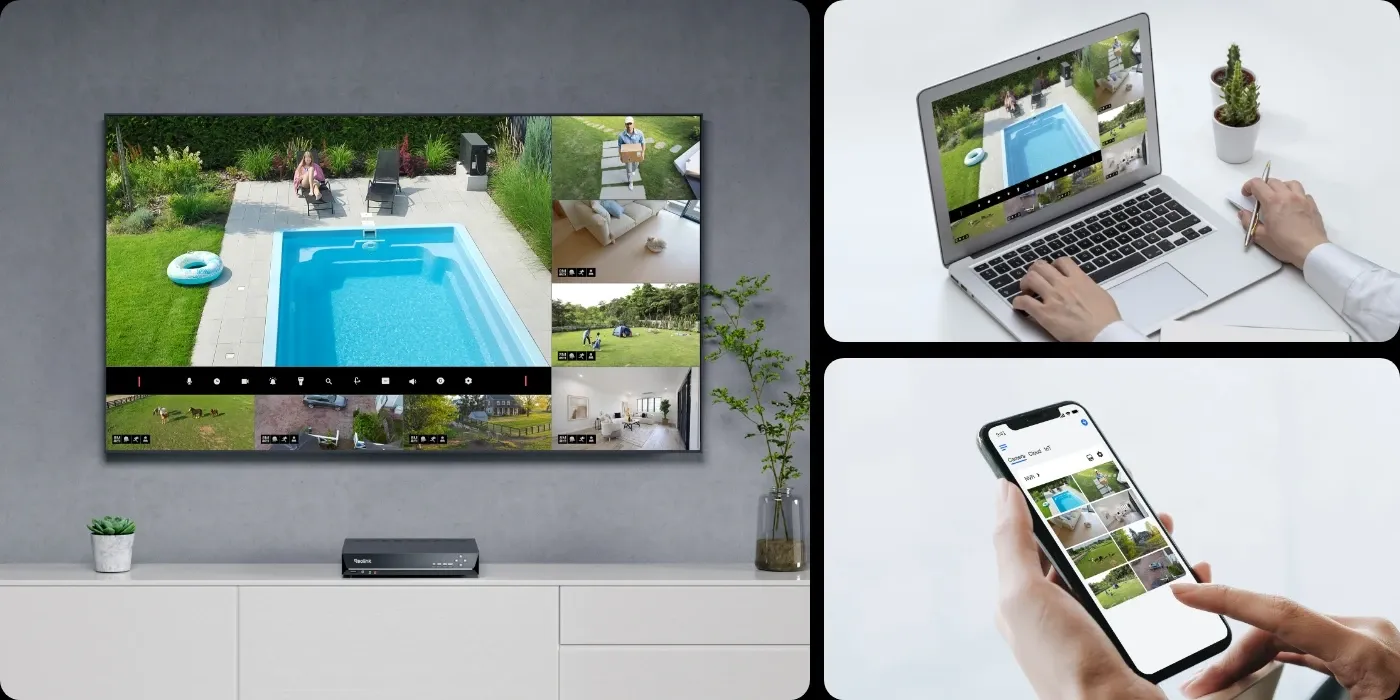
Most Long Island co-op agents manage several properties and are not in the building on a given day. Remote viewing on a phone or office computer is set up through the recorder's app, with the same per-person rights. Where a board would rather keep video off phones entirely, we can limit remote access to one office computer.

Co-op boards on the Island are volunteers with day jobs, and many meet monthly or less. A Newsday report on Long Island co-op purchases quoted a mortgage adviser describing board review of buyers as "often an even more invasive 'underwriting'" (Newsday, July 31, 2019). Boards that scrutinize buyers that closely scrutinize vendors too. Our proposals are built so a board can read, question and vote on a camera project in one meeting.
Boards fund cameras from the operating budget, from reserves, or through an assessment, and which one fits depends on the co-op's finances and bylaws; the treasurer and accountant usually decide. Phasing spreads the cost across fiscal years without buying the recorder twice. Shareholders on Long Island watch maintenance charges closely; a Long Island Reddit thread on buying a co-op summed up a common view that co-ops "are very restrictive and are prone to constant maintenance increases" (r/longisland). A clear phase plan with a price per phase answers that worry better than one large number. Financing is available through Wisetack, subject to approval.
The notice works best when it shows the plan: which areas are covered, that there is no audio, who can view recordings and how to ask for footage. We give the managing agent a one-page summary to send with the next maintenance statement and post in each vestibule. In complexes with many older shareholders, a printed copy under each door avoids a month of phone calls.
We follow the co-op's house rules on work hours, parking and access to apartments (we rarely need any), book survey and installation visits early in the day, and schedule first come, first served once the deposit is paid. The certificate of insurance naming the corporation and the managing agent is issued once the contract is awarded.
Nothing about being a cooperative changes the price: a Long Island co-op is charged the figures on our county price pages, the same as any other customer. Both county pages start from one package, four house-brand cameras and a recorder, mounted, cabled and set up.
| County | Four-camera house-brand system, installed | Full package list |
|---|---|---|
| Nassau County | $999 | Nassau camera prices |
| Suffolk County | $1,099 | Suffolk camera prices |
The $100 difference covers the longer travel to Suffolk properties, which can be an hour and a half or more from our crews. Both county pages show the full range of packages above the starting system.
Coverage on a Long Island co-op system works like this. The 30-day warranty published on our warranty page starts the day the recorder goes live in the management office or the super's workshop. On top of that the corporation may buy a year or more of extended coverage at signing, which suits boards that fund cameras from reserves and want the expense fixed in advance. Cameras and recorders also carry their makers' own terms, and calls asking how to use the app cost the co-op nothing. Full terms — including 50% deposit, one-year parts-only warranty on Abstract Enterprises Security Systems-supplied products, and the late-fee schedule — are set out in the service agreement. The house-brand system carries no monthly charge.
Tell us the co-op's town, how many buildings and apartments it has, which doors, rooms and lots the board wants covered, and what is on the walls now. A site plan or an aerial screenshot with the buildings lettered saves time on the survey. To talk first, call (800) 486-0943.
Got it. Our office will be in touch, usually within two hours, to set an early-day survey that suits the co-op.
A board that asks "how many cameras do we need" is really asking what kind of property it runs. These are the co-op types we see most often on the Island, and how the plan changes for each.
Ten to thirty buildings, each two or three stories, around courtyards and a central lot. This is the most common Long Island co-op and the most demanding camera job, because coverage has to be spread across many small entrances. The usual first phase is the vestibules of the buildings facing the street, every laundry room, and the lot entrances. A switch in each building or each row keeps cable short, and fiber or wireless links tie the rows together. The recorder sits in the management office or the most central building.
Some co-ops are one building of twelve to forty apartments on a village street. Here the four-camera starting system often covers the front door, the rear door, the laundry and the lot, and the whole job is done in a day. The board's biggest decision is where the recorder goes in a building with no office: a locked cabinet in the laundry room or the super's workshop is common.
Long Beach and parts of the South Shore have six- to ten-story co-ops with elevators, lobbies, garages and boardwalk or bay frontage. These look more like city buildings inside: lobby, mailroom, elevator landings, garage ramps and a package area. Outside, salt and wind dominate. Recorders go above the flood line, garage cameras are chosen to handle headlight glare at the ramp, and every outdoor connection is sealed. In 2015 Habitat described a Long Beach co-op that raised its replacement generator about 30 inches off the floor after Sandy, "just in case the area [got] flooded" (Habitat, May 11, 2015). Camera equipment deserves the same thinking.
Great Neck Plaza, Rockville Centre, Garden City and Mineola have pre-war and post-war elevator co-ops within walking distance of the train. Their camera needs are lobby, package room, elevator, basement and a small lot or garage. Plaster walls and ornamental lobbies mean slow, careful cable work and small cameras placed to respect the space.
Elevator cabs are among the most requested spots in Long Island mid-rises, and among the most misunderstood. The camera inside the cab is ours to supply and mount, and so is the way its video gets out: in most older buildings that means a small wireless link from the top of the cab to the machine room or the top floor, because there is no spare conductor in the traveling cable. Anything inside the elevator controller, the car-top junction box or the traveling cable itself belongs to the co-op's elevator maintenance contractor, and we coordinate with them rather than work on their equipment. The cab camera is mounted high in a corner with a vandal-rated housing, shows the door and the floor, and records with the microphone off like every other camera in the building.
A few Suffolk co-ops sit in planned communities with a pool, clubhouse, tennis courts and private roads. Those add the amenities to the plan: the pool gate, the clubhouse doors, and the community's entrance. Where a separate association owns the amenities, we price its cameras separately so each entity approves and pays for what it owns.

The equipment does not change from Great Neck to Patchogue, but the buildings, the conditions and the requests do. Here is how the Island breaks down for co-op camera work.
Great Neck, Port Washington, Roslyn Heights, Glen Cove and Sea Cliff have the Island's oldest co-op buildings alongside large garden complexes on hilly ground. Expect retaining walls, split-level lots and steep driveways that complicate camera sightlines, and village rules that care about how the outside of a building looks.
Mineola, Garden City, Westbury, Hicksville and Floral Park mix older elevator co-ops near the Long Island Rail Road with postwar garden complexes. Commuter parking, package volume and non-residents passing through lobbies on the way to the train drive most requests here.
Rockville Centre, Lynbrook, Valley Stream, Freeport, Oceanside and Long Beach have some of the county's most active co-op markets. Garden complexes dominate inland; Long Beach adds mid-rises on the ocean and the bay. Flood history decides where the recorder goes, and salt decides what gets mounted outside.
Huntington village and the towns along the Route 110 and Northern State corridors have small co-op buildings close to downtowns, often a single building with a rear lot. Jobs are compact and usually finish in a day.
Bay Shore, Bayport, Sayville, Patchogue, Coram and Middle Island hold most of Suffolk's co-ops, from brick garden courts to large amenity communities and gated waterfront developments. Distances between buildings grow, and so does the use of wireless links and pole-mounted lot cameras.
Co-ops are scarce on the forks, and the ones that exist are often seasonal. For those, the test of a camera system is whether the managing agent can check the grounds after a winter storm without driving out. East End visits are booked as early in the day as possible, and the Suffolk price page applies.
Rental buildings owned by one landlord are covered on our apartment building security camera page for Long Island, and condominium communities on our Long Island condo security camera page.
A two-camera addition at a single laundry room and a forty-camera garden complex follow the same seven steps. Only the length of each one changes.
Garden complexes are usually installed in sections, a row of buildings at a time, so the super always knows which buildings will see the crew that day.
A lot of Long Island co-ops are not starting from nothing. They have an analog system from fifteen years ago, a recorder nobody can log into, a mix of cameras added one at a time by different contractors, and a monitor in the super's workshop showing six fuzzy squares. Here is how we decide between fixing and replacing.
Analog systems ran on coaxial cable. If that cable tests clean, high-definition analog cameras and a new recorder can often reuse it, which saves the labor of pulling new cable through plaster and brick. If a run is questionable, the proposal says so and prices its replacement up front, so the board is not hit with a change order on installation day.
If the cable is a patchwork, the recorder is end-of-life and the cameras are from three different brands, a clean network system is usually cheaper over five years than keeping the old one limping. We take down the old cameras we replace and leave the board with one system, one recorder and one set of passwords.
When a single camera or the recorder fails, our security camera repair page for Long Island covers how repair visits work. Boards that inherited a recorder with an unknown password usually need a factory reset done carefully, so recordings that matter are saved first.
For camera work at a property that is not a cooperative, see our general security camera installation page for Long Island. Boards that write their bid documents around closed-circuit language can compare our CCTV installation page for Long Island.

Long Island's weather writes part of every co-op camera plan. The same storm that knocks out power is the night the board most wants a recording.
Tropical Storm Isaias affected about 420,000 PSEG Long Island customers in August 2020 (PSEG Long Island, Aug. 5, 2020). We put the recorder and the main switch on a battery backup sized to keep recording through a short outage and to shut down cleanly in a long one. Where a co-op has a generator that carries common-area circuits, the recorder's outlet should be on one of them.
Sandy flooded basements across the South Shore. One 179-unit Long Beach co-op took about two feet of water in its lobby, lost its boiler and elevators, and spent roughly $3.2 million recovering, according to Habitat's later account (Habitat, Nov. 26, 2014). For co-ops in flood zones, recorders and switches go on upper floors or high shelves, cable entries are sealed, and basement cameras are mounted high on the wall rather than near the floor.
On the ocean and bay, salt corrodes cheap mounts and screws in a season or two. We use outdoor housings and stainless hardware rated for coastal air, keep camera bodies under eaves where possible, and check outdoor seals during any service visit.
Low cameras get buried by plowed snow and high ones collect icicles. Lot cameras are placed above plow piles and away from roof valleys that drip and freeze. A heated camera is rarely needed on the Island, but a camera under a leaking gutter will show nothing but ice for half the winter.
Package theft drives more Long Island co-op camera requests than any other problem, and garden buildings are especially exposed, because packages pile up in small vestibules with no one watching. The theft is organized as often as it is opportunistic. In November 2025 the Suffolk District Attorney charged a ring of 14 men with 50 felony counts for stealing more than 200 phones and tablets from deliveries in 31 Suffolk communities over about two years, using hacked delivery tracking data (CBS New York, Nov. 25, 2025). Suffolk police have also sought a man who took a package from the mailroom of an apartment complex in Port Jefferson (LongIsland.com, Sept. 14, 2023), and Nassau police released surveillance images of two men taking packages from front stoops in Valley Stream (ABC7 New York, Dec. 16, 2018).
The best package camera is not the one with the widest view. It is the one placed where a thief's face has to pass close to the lens: inside the vestibule, above the inner door, looking back toward the street door and the pile of boxes. Outdoor cameras show a figure walking away; the vestibule camera shows who it was.
Cameras deter and document, but they do not return a stolen phone. Co-ops with steady package losses often pair the vestibule camera with a locked package room or smart lockers. Those options live on our co-op security systems pages; on the camera side, we make sure whatever room the board chooses is covered from the door.

A camera system is a set of computers on the co-op's property. Left on default settings, it can be an open door into the building's video. On a garden campus with switches in several buildings and a wireless link across the lot, there are more doors than usual, so we close them at setup.

The administrator account belongs to the corporation, and a written list of every device, its location and its credentials goes into the managing agent's file. If the co-op ever changes contractors, the next one starts from that list instead of a factory reset.
Cameras on a garden campus are outdoors, in basements and on lot walls, so they need a little attention through the year. None of it is complicated, and most of it can be folded into a service visit the co-op is already having.
After the last snow, check that plows and ice did not knock lot cameras out of line, and clean the winter's road salt off lenses and housings. Look at each outdoor view once the trees leaf out, because a branch that was bare in March can block a lot camera by June.
Heat and thunderstorms are the season's risks. Recorders in unventilated closets run hot, and nearby lightning can damage cameras on long outdoor runs. Summer is also when pool and courtyard cameras get the most use and the most footage requests.
Before hurricane season peaks, test the battery backup, confirm the recorder's clock and storage are healthy, and make sure anything in a flood-prone basement is as high as it can be. Falling leaves clog gutters above cameras and cause the drips that become icicles later.
Short days mean more of the recording happens in the dark, so it is the time to look at night images and ask whether a lot light has burned out. Snowbird shareholders and agents checking from afar rely on remote viewing, so confirm every account still works before the holidays.
A short checklist goes into the handover packet so the super can do the visual checks, and anything beyond that is a service call.
Cameras are usually one item on a longer list. If the board is also looking at the front door, these pages pick up where this one stops.
These come from survey visits, board meetings and calls from managing agents on the Island. The short answers below are what we tell boards; anything legal goes to the co-op's attorney.
In most co-ops, yes, in the ordinary way. A sponsor or holder of unsold shares pays maintenance on those shares like any other shareholder, so a camera system paid from the operating budget or reserves is shared in proportion. An assessment is usually allocated by shares too, but the offering plan and any agreements with the sponsor can change that, so the board's attorney should confirm before the vote. From our side nothing changes: the corporation is the client, signs the contract and owns the system. Many Long Island garden co-ops converted decades ago still have sponsor units, and boards sometimes find the sponsor is the most interested party, since secure grounds help it sell the remaining apartments.
Mostly along the basement ceiling, which in these buildings is the one place with open joists or exposed pipes to follow. From there the cable rises to each camera the shortest way: through the floor into the vestibule beside an existing pipe or conduit, up the inside of the stair hall in a small painted raceway, or out through the foundation wall and up the building corner to an exterior camera. Drilling solid brick is slow but clean when it is done at mortar joints, and every hole through an outside wall is sealed against water and insects. Where a stair hall has finished plaster the board cares about, we price a concealed route separately so the board can choose between the painted raceway and the extra labor.
Three tools, used together. First, aiming: lot cameras are pointed down the driving aisles and along the co-op's own fence line rather than across it. Second, privacy masks: almost every current camera lets us black out parts of the image permanently, so a neighbor's back windows or pool never appear in the recording. Third, lens choice: a narrower lens covers the aisle without the wide sweep that takes in the houses behind it. We show the board each lot view with the masks applied before handover, and if a neighbor later raises a concern, the managing agent can send them a still image showing exactly what the camera sees.
Yes. A camera mounted at one end of the row and aimed down its length shows every door and anyone at it, but with the doors closed it sees nothing inside, and with a door open it sees only a sliver at an angle. That is usually the right balance: the board can see who opened garage 7 at two in the morning, and a shareholder's car and belongings are not on display. For long rows, a second camera at the other end covers the far doors with better detail. If the row backs onto an alley, a camera at the alley entrance catches vehicles coming and going.
We advise against giving volunteers recording access, and so do most boards once they think it through. Live view on a phone means footage of neighbors in the hands of other neighbors, with no log of what was watched or saved, and it can turn a disagreement between shareholders into a dispute the board has to referee. A better arrangement is that volunteers report what they see to the managing agent or the super, who has access under the footage policy and can pull the recording. If the board does want volunteers to have something, limit it to live view of one or two outdoor cameras, with no playback or export.
Usually not for the cameras themselves. Under most proprietary leases the board already controls the common areas and can install equipment there, and the business judgment rule supports decisions it makes through its normal process. Where the house rules help is with everything around the cameras: who can view footage, how shareholders request it, and whether shareholders may mount their own cameras or video doorbells in common areas. Adopting those as house rules or a board resolution gives the managing agent something to point to. Counsel should look at the co-op's own documents, because older leases vary, and a few co-ops have bylaw provisions that require more.
A camera can help the agent see it, but it is not a flood alarm. A camera aimed at the lowest part of the lot or a basement floor drain lets the agent check during a storm from a phone, and some cameras can alert on motion in a set area, which water sometimes triggers. That is not reliable enough to depend on. For real warning, a water sensor on the basement floor tied to an alarm panel or a dedicated leak monitor does the job, and the camera then confirms what the sensor reported. For South Shore co-ops we often suggest both: a camera on the boiler room or lowest corridor and a sensor on the floor beneath it.
Answer with the facts in the shareholder notice and nothing more: which common areas are covered, that there is no audio, how long video is kept and how footage requests are handled. That information is not confidential, and it is usually reassuring to a buyer. What should not go out is the camera map, the recorder's location or anything about blind spots, which are security details. If the attorney asks for footage itself, that is a request under the footage policy like any other, and the board's counsel should be involved. Having a written policy makes this a two-minute email instead of a judgment call by the agent.
Name every camera by building and spot, using the same lettering the co-op already uses, and add the street the door faces: "Bldg C vestibule, Oak Street door" rather than "Camera 14." When a detective asks for video of a particular door at a particular time, the agent can find it in seconds, and the name exported with the clip tells anyone watching exactly where it was recorded. We also set the recorder's clock to sync automatically, because a clip stamped ten minutes off causes more doubt than it should. The camera list in the handover packet uses the same names, matched to the marked site plan.
It often can, and that is a reason many boards put alteration work on their list of camera uses. Most co-op alteration agreements make the shareholder responsible for damage their contractors cause in common areas. A vestibule or stair-hall camera shows when a crew came and went, what they carried and when the damage first appeared. That gives the managing agent a factual basis for a claim against the shareholder's deposit or insurance. Save the clips as soon as the damage is reported, because a routine retention period may otherwise overwrite them, and let the attorney decide how they are used.
Usually the street side, unless the incident list says otherwise. Outsiders reach the street-facing vestibules first, packages are delivered there, and those are the doors a passer-by can try without being noticed. Courtyard-facing entrances are partly protected by the buildings around them. The exception is a courtyard with its own gate to a side street or the lot, which often becomes the quiet way in. We map where people actually enter during the survey, including paths worn across the lawn, and the first phase follows that map rather than the architecture.
Board members research before they call, and much of what they find was written for somewhere else or for a single-family house. These are the claims we correct most often on Long Island co-op surveys.
The city's Multiple Dwelling Law requirements and its local privacy laws for building entry systems do not apply in Nassau or Suffolk; the Multiple Residence Law covers towns and villages instead, as cited above. State criminal law on recording does apply everywhere.
They look cheap per camera. Across twenty buildings they mean batteries to charge, Wi-Fi to reach every vestibule, separate apps and often a subscription per camera for recordings, with clips that start after the event. A wired system with one recorder costs less to run and records continuously.
Sometimes one camera per building is more than the problem needs, and sometimes far less. Coverage should follow incidents: a vestibule with package theft may need two views, while a quiet courtyard building may need none in the first phase.
Recording conversations without consent can be a felony under New York's eavesdropping law. Co-op cameras run with microphones off.
Installing security systems as a business in New York requires a Department of State license. A board that hires an unlicensed installer also takes on the insurance questions that follow.
Cloud systems move the recorder offsite and add a monthly fee per camera, and they still need accounts, permissions and a footage policy. They also depend on the co-op's internet connection staying up through the storms when video matters most.
Our owner has worked in security since 2000 and has run the business since 2002, and we have completed thousands of jobs across the city, Long Island and the Hudson Valley. A few patterns repeat on Long Island co-op work often enough to share. We do not name client buildings, so these are patterns rather than case studies.
Most boards collect two or three proposals. Comparing them line by line is easier with a short checklist. These are the questions we would ask any bidder, ourselves included.
We book surveys within 2 hours of a request, seven days a week, schedule early-day visits, and put paid jobs on the calendar first come, first served. Our customers rate us 4.7 stars across 201 Google reviews.
Long Island is one of three regions we serve. Each co-op camera page is written for its own building stock and local conditions.
Not under the corporate records statute itself. Business Corporation Law section 624 lets a shareholder of record, on five days' written demand, examine the minutes of shareholder proceedings and the record of shareholders; camera recordings are not on that list. Access to video follows the board's footage policy, and in a lawsuit it follows subpoenas and discovery rules. The co-op's attorney should handle any demand that cites the statute.
We do not recommend it. Each cooperative is a separate corporation with its own board, budget, insurance and footage policy, and one recorder would mix their video and their accounts. The saving is small, since a recorder is a modest part of a system. Instead, each co-op gets its own recorder, and the managing agent can view both properties side by side in one app with separate permissions.
It can, as a stopgap or for a spot no cable or wireless link can reach. Solar cameras record to a memory card or the cloud, need a strong signal to send video, and can run short of power in December, when Long Island days are shortest. For permanent coverage we prefer a cable, a building switch or a wireless bridge to the recorder, and the proposal shows both options with their prices.
Ordinary video is not listed. General Business Law section 899-aa defines private information as personal information combined with items such as Social Security numbers, account numbers, or biometric data used to authenticate or ascertain a person's identity. Face-recognition templates could fall into that last category, which is one reason we do not set up face recognition on co-op systems unless the board and its counsel ask for it.
Yes. We can price to the engineer's specification, supply product data sheets for the spec, or bid the camera scope directly to the board alongside the main contract. Bundling saves opening walls twice and lets cable go in while finishes are off. The insurance certificate naming the corporation, the managing agent and the engineer's required parties is issued once the contract is awarded.
Often, if there is a way to get cable or a wireless link to it. Many entrance signs already have a light fed from a nearby building, and that conduit can sometimes carry camera cable too. We mount into mortar joints so the face of the sign is not scarred, and keep the camera small. In villages that review exterior changes, the managing agent should confirm whether a sign-mounted camera needs approval.
From the first vestibule to the last garage door, across Nassau and Suffolk, our crews map the cameras, link every building back to one recorder and turn the passwords over to the corporation. NYS license #12000287431 · 4.7 stars from 201 Google reviews.