What are you looking for?
About Us Contact Us Careers Get a Free Quote (800) 486-0943
Pick a service
✅ Got Your Own System?
🎬 Home TheatreQuote 🎶 AV SoundQuote 🔑 Access ControlQuote
Now pick your area
Pick your area
Long Island
Hudson Valley
Services available
Pricing & Tools
Pick a service for pricing
🚪 Intercom Pricing 🔔 Buzzer Repair Pricing
Calculators
📹 Camera System Calculator 🚨 Alarm Calculator ⚡ Cabling Quote Builder ✅ Got Your Own System?
Select your area
Dented cars in the lot, a garage row nobody can see from a window, a recorder that died in the last storm? Staten Island co-op boards and managing agents reach us at (347) 934-8335
Home › Co-op Security Camera Installation NYC › Co-op Security Camera Installation Staten Island
For Staten Island Co-op Boards, Managing Agents & Supers · NYS Licensed Low-Voltage Contractor

Co-op Security
Camera Installation
Staten Island

Parking Lots · Garage Rows · Walkways · Lobbies · Laundry & Storage · Elevators

Co op security camera installation on Staten Island starts at $999 for four house-brand cameras and a recorder, installed, which is the first package on our Staten Island camera price list, and every camera a cooperative adds after those four is priced once we have walked the grounds and fixed where it goes. Abstract Enterprises Security Systems is a New York State licensed low-voltage contractor, and on Staten Island most of our co-op camera work happens outdoors: parking lots, detached garage rows, paths between garden buildings and the entrances of the borough's handful of elevator co-ops in St. George, Grymes Hill, the North Shore and the East Shore.

Quick answer: A Staten Island co-op board gets a free walk of the property and a site-plan camera layout it can vote on: which lot, garage, path and door each camera covers, where the recorder sits above any flood line, how many days of video it keeps and who gets a login. Four cameras with a recorder start at $999 installed. Hiding cable adds $200 per camera for runs up to 100 feet, and longer runs to a far building are priced on site. No audio, nothing aimed into apartments, and the passwords belong to the corporation. Requests are booked within 2 hours, seven days a week, with early-day visits.

Last updated November 27, 2026 · Written by the Abstract Enterprises Security Systems team, NYS license #12000287431 · Sources relied on: NYC Department of Finance co-op comparable rental income data; HPD Mitchell-Lama list; US Army Corps of Engineers (Oct 2024); SILive (2024, 2025); NYC Comptroller; Levandusky v. One Fifth Ave. Apt. Corp., 75 NY2d 530 (1990); NY Penal Law §§250.00, 250.05, 250.45; NY Labor Law §203-c; FirstService Residential (Sept 2024); CooperatorNews (2012, 2025); Habitat (2021); 19 NYCRR Part 195; NYC Admin. Code §28-105.4.7

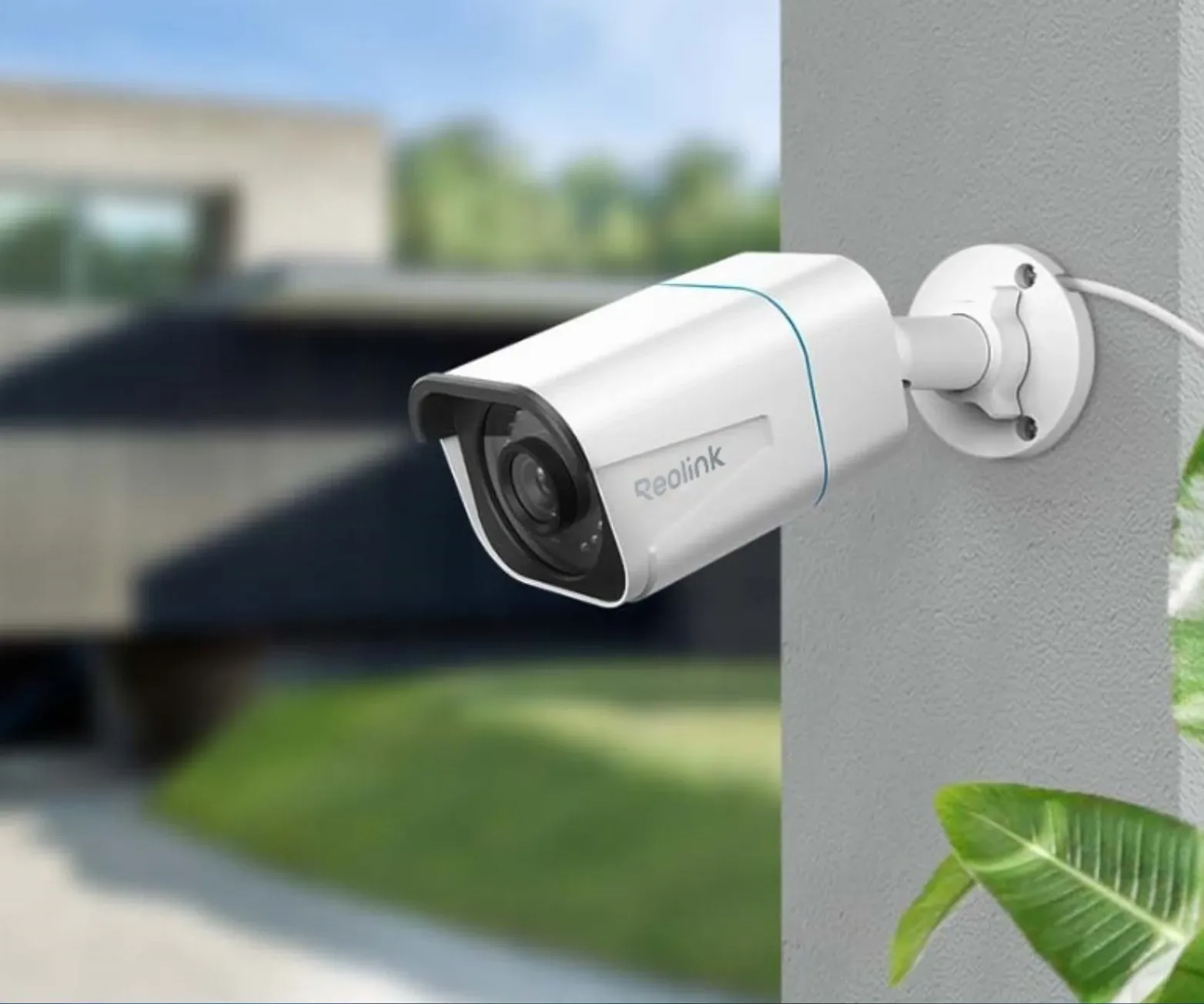
Co-op security camera installation Staten Island: white bullet camera on a short arm fixed to a pale pillar beside a lawn
Product photo (Reolink, one of our partner brands): a bullet camera on a pillar looking along a lawn. On Staten Island co-op grounds, this is the kind of mount we use on building corners and carport posts to look down a row of parking spaces.
Staten Island Co-op Camera Request
Board members, managing agents, supers and shareholders

✅
Request Sent!
Got it. We will call or text to set up the walk of the property.
25+
Years Experience
2 Hr
Booking
$999
4 Cameras Installed
4.7★
201 Google Reviews

Owner-operated since 2002 · Thousands of jobs completed · Booked within 2 hours · Call or text (347) 934-8335

Staten Island Co-ops

Staten Island Has Few Co-ops, and Almost All of Them Sit on Open Ground

Ask anyone in the trade where New York's cooperatives are and they will point to Manhattan, Queens and the Bronx. The city comptroller puts the citywide figure at roughly 450,000 occupied apartments in cooperative buildings, and very few of them are on Staten Island. The city's own valuation records make the point sharply. In the Department of Finance's comparable rental income data for report year 2019, the most complete recent year, Staten Island shows 26 cooperative tax lots holding 1,928 apartments between them. A single large complex in another borough can hold more homes than that.

Small numbers do not make the work simple. The same records show that every one of those Staten Island co-op lots was built between 1947 and 2000, none of them before the Second World War. Seventeen are classed as walk-up buildings and nine as elevator buildings. Most sit on their own grounds, with lawns, parking lots, garages and paths between separate structures. That is the opposite of the Manhattan pattern, where a co-op is one tall building on a lot line and the camera plan is mostly about a lobby, a hallway and a basement. On Staten Island the camera plan is a site plan.

The Department of Finance list is a valuation tool, and it may not capture every cooperative on the island, so we treat it as a sketch of the stock and not as a census. It still tells a board something useful before anyone talks about cameras: the building probably went up after 1947, probably has a parking area, and quite possibly has a row of garages or carports out of sight of every apartment window.

Where the city's records place Staten Island co-ops

The table below summarizes the 2019 Department of Finance rows by neighborhood. We publish no building names or addresses, only the neighborhood the city assigned, the building class, the years of construction and the apartment counts.

Neighborhood (DOF)Co-op lots and typeBuiltApartments per lot
New Brighton and New Brighton–St. George5 elevator1960–198517 to 140
West New Brighton5 walk-up1950–196812 to 24
Livingston1194760
Grymes Hill2195124 and 128
Clove Lakes2 elevator1966–1967143 each
Arrochar–Shore Acres1 elevator1964122
Rosebank11974178
Concord–Fox Hills31999–200011 to 19
Dongan Hills1 elevator196971
Grant City2196920 and 118
Great Kills2197436 and 60
Great Kills–Bay Terrace11977192 (108 in some other report years)

No Mitchell-Lama co-ops on the city's list

Elsewhere in the city, the biggest camera projects come from Mitchell-Lama cooperatives that buy by competitive bid with a supervising agency watching. The Department of Housing Preservation and Development's Mitchell-Lama listing shows only one Staten Island development, and it is filed under rentals, not cooperatives. For a Staten Island co-op board that usually means a simpler purchase: the board, sometimes with a managing agent, chooses a contractor under its own bylaws and pays from its own operating budget or reserves. It also means there is rarely a large professional staff on site. The person who will check the cameras is often a part-time super, a volunteer director or the agent's office in another neighborhood, and the system has to suit that.

What a Staten Island co-op board is usually trying to fix

The requests we hear from cooperatives here are specific and mostly outdoors. A car was keyed or backed into overnight and nobody knows who did it. A side door to the laundry was found propped with a brick. Someone has been sleeping in a stairwell landing in a walk-up. A garage door at the end of the row was pried open and a shareholder's stored tires went missing. A delivery driver keeps leaving packages at the wrong building in a complex where every building looks the same. The plan we write starts with that list, one line for each problem, and puts a camera only where it answers a line.

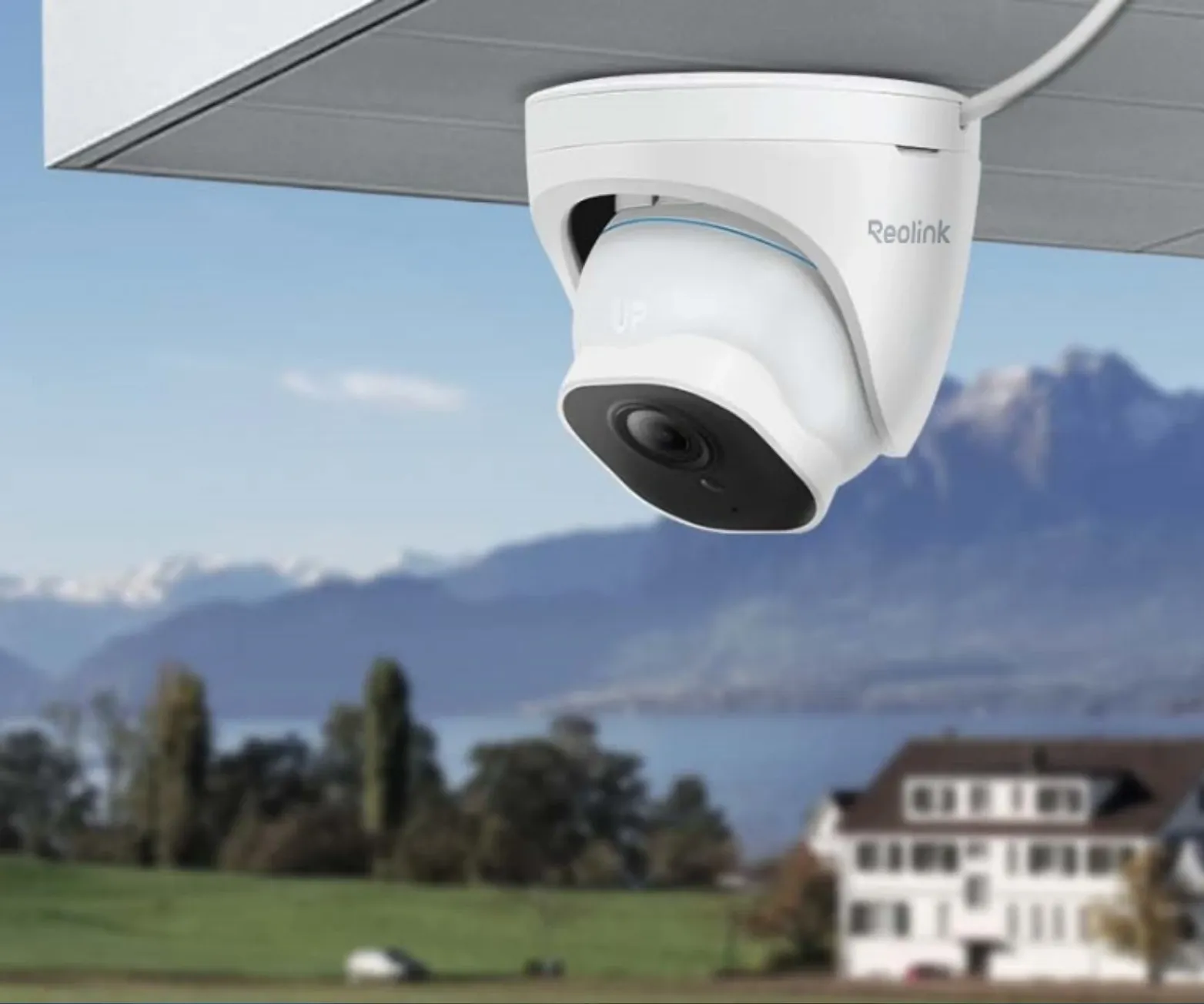
Co-op security cameras Staten Island: white turret dome camera under a flat eave looking out over an open field toward houses and hills
Product photo (Reolink): a dome under a flat eave looking across open ground. Staten Island co-ops are mostly postwar buildings set on lawns and lots, so many of their cameras look outward from an eave or soffit.
Building Types

Five Kinds of Staten Island Co-op and the Camera Plan Each Needs

Grouping the island's cooperatives by age and form gives five fairly distinct camera problems. A board that recognizes its own building in one of these will have a good idea of the first phase before we arrive.

Early postwar garden walk-ups: West New Brighton, Livingston and Grymes Hill

The oldest co-op lots on the island date from 1947 to the early 1950s. Walk-ups of this period are typically low brick buildings arranged around lawns, each building with its own front door and often a cellar door at the back. Twelve to sixty apartments is typical, and a few run larger. There is no lobby in the Manhattan sense; there are several small vestibules. Camera work here is about the doors and the spaces between buildings. One camera at each vestibule, one or two along the main path, and coverage of the parking area usually make the first phase. Cellars in these buildings are often shared laundry and storage rooms reached by an outside stair, and a single camera inside the bottom of that stair answers most of the complaints about strangers and propped doors.

The cable is the hard part. Buildings of this era were not built with conduit between them, and the lawns are usually the co-op's pride. We prefer to run cable building to building along existing paths in a shallow trench only where the board approves it, and otherwise along fences, under eaves or through a point-to-point wireless link between rooftops. Each method is priced separately so the board can choose.

1960s elevator co-ops: Clove Lakes, Arrochar–Shore Acres and Dongan Hills

The island's 1960s elevator buildings hold 70 to 145 apartments each. Buildings of this kind typically have a real lobby, a mailroom, one or two elevators, a laundry room and a surface lot, sometimes with a garage under part of the building. These look most like a co-op camera job elsewhere in the city, with one difference: the lot is often bigger than the building's footprint, and it is where most incidents happen. A sensible first phase is the lobby door, the mailroom, the elevator cab, the laundry and two to four lot cameras. The recorder goes in a locked room near the building's network entry, and the lot cameras are reached by cable along the building wall before any pole is considered.

Late-1960s and 1970s garden complexes: Grant City, Rosebank, Great Kills and Bay Terrace

Several of the largest Staten Island cooperatives by apartment count date from the late 1960s and 1970s on the East and South Shore, with roughly 100 to 190 apartments per lot in the city's data. Where a property of that size is laid out as several low buildings with internal roads, parking courts, garage rows and a management office, it cannot be covered in one pass and should not be. We map every entrance road, parking court and building door, then divide the plan into phases the board can fund over two or three budget years. The recorder and network are sized for the full plan on day one so later phases plug in without replacing anything.

North Shore elevator buildings: St. George and New Brighton

Five of the city's Staten Island co-op lots are elevator buildings in New Brighton and St. George, built between 1960 and 1985. They sit on hillsides above the harbor with steep driveways, split-level entrances and garages tucked under the slope. Elevation changes are the main camera issue. A camera on the upper drive cannot see the lower garage door, and a lobby on one level may have a back entrance a full story lower. Each level gets its own camera, and the recorder is placed where cable can reach both without crossing a lobby ceiling.

Small newer walk-ups: Concord and Fox Hills

The newest lots in the city's data are three small walk-ups from 1999 and 2000 with 11 to 19 apartments each. These buildings are close to the size of a large two-family house and are often self-managed. They need three to five cameras, a recorder that a volunteer can understand, and a short written policy. The worst thing we can do for a building this size is sell it a system that needs a professional to run.

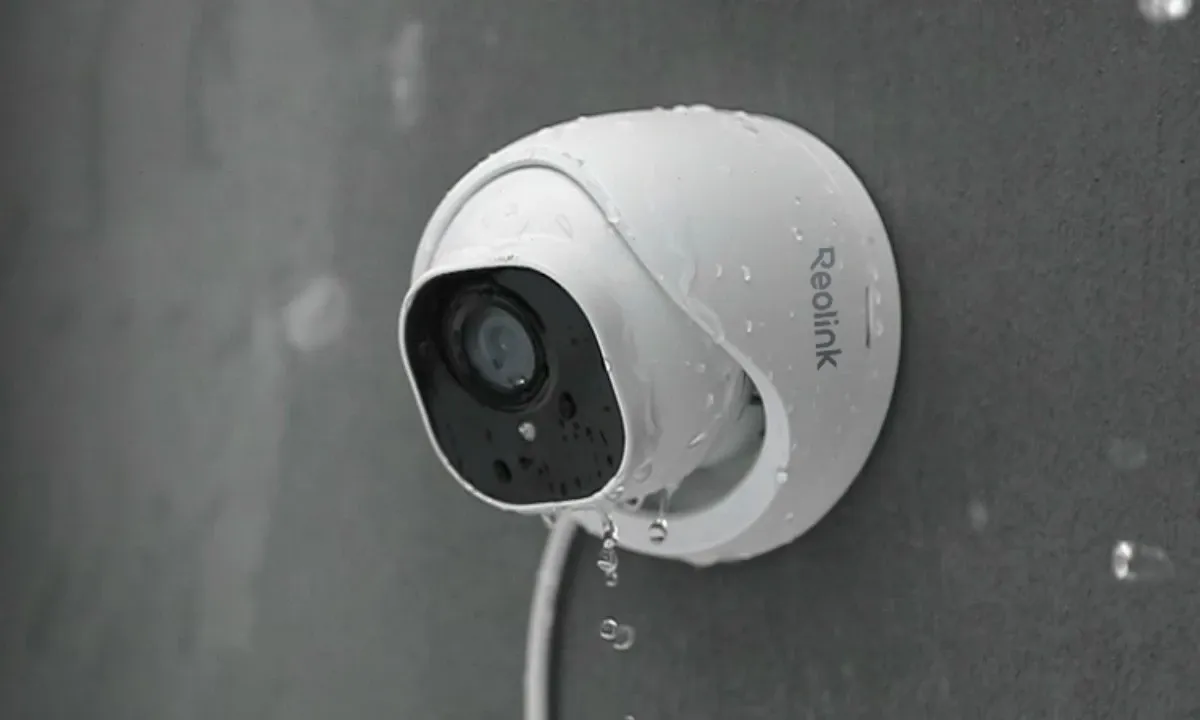
Cooperative security camera installation Staten Island: white dome camera with water drops on a grey wall, cable running down
Product photo (Reolink): a dome camera shedding rain on a grey wall. Walk-up co-ops on Staten Island have small vestibules and back doors with no canopy, so the cameras over them have to be fully weather-rated.
Neighborhoods

From St. George to Bay Terrace: What Each Part of the Island Asks of a Co-op Camera

Staten Island co-ops are scattered, so a board's neighbors are usually houses, not other cooperatives. That changes what the cameras can see and what they should avoid. These notes follow the neighborhoods where the city's records place co-op lots.

St. George and New Brighton

Hillside elevator buildings within walking distance of the ferry terminal. Foot traffic is heavier here than anywhere else on the island, and some buildings have entrances on two streets at different heights. We put a camera at every door that opens to a street, and we keep street-facing cameras aimed at the building's own steps and doors rather than across the sidewalk at the houses opposite. Harbor light and late-afternoon sun off the water can wash out a west-facing lens, so those cameras get wide dynamic range and a hood.

West New Brighton and Livingston

Smaller early postwar walk-ups near Forest Avenue and the Kill Van Kull side of the island. The buildings are close to the street, lots are small, and many garden courts are open to the sidewalk without a fence. Path cameras need masking so they record the co-op's walk and lawn but not the neighbors' front yards. Small boards here often want to start with two or three cameras and grow.

Grymes Hill, Silver Lake and Clove Lakes

Hillside sites and wooded edges near Clove Lakes Park. Trees overhang parking areas, deer and raccoons cross the lots at night, and driveways climb. Leaf cover in summer changes what a camera sees compared with a winter survey, so we check the line of sight against the tree canopy and pick mounting heights that clear the lowest branches. Motion settings get tuned for animals, which we cover further down.

Arrochar, Shore Acres and South Beach

East Shore neighborhoods near the Verrazzano-Narrows Bridge and the water, where storm exposure is the first planning question. Recorders stay off the ground floor wherever the building allows, outdoor hardware is chosen for salt air, and cable entries are sealed and dripped. Lot cameras here also face strong onshore wind, so mounts are checked for movement.

Dongan Hills and Grant City

Mid-island neighborhoods along the Hylan Boulevard and Richmond Road corridors, with one 1969 elevator co-op in Dongan Hills and two 1969 lots in Grant City in the city's records. Parking is the theme: entrance drives off busy roads, cars turning in and out at speed, and lots that back onto commercial properties. Entrance cameras are set to capture a vehicle at the point where it slows to turn, which is far more useful than a distant view of the whole road.

Great Kills and Bay Terrace

South Shore complexes from the mid-1970s, including the largest co-op lot in the city's Staten Island data. Long internal drives, parking courts, and in some cases garage rows. Coverage is phased, the recorder is central, and buildings at the far end of the property are linked back by fiber or a wireless bridge where cable along a wall cannot reach.

Rosebank, Concord and Fox Hills

A mix: one large 1970s complex in Rosebank near the Narrows, and the island's newest small co-op walk-ups in Concord and Fox Hills. The large site follows the phased approach; the small ones get compact systems that a volunteer treasurer can look after.

The Grounds

The Places a Staten Island Co-op Camera Plan Has to Cover

A Staten Island co-op camera plan reads like a walk around the property. We list each space below in roughly the order boards ask us to cover them, with what the camera there is actually for.

Entrance drives

The point where cars enter the property. One camera aimed at the narrowest part of the drive, at a height and angle that shows the front of each car and its driver's side, gives the board a record of who came in and when. A second, wider camera can show which way a car went once inside. We do not promise that any camera will read every plate at every hour; a plate reading is a matter of angle, speed, distance and light, and we tell the board honestly where the image will be good and where it will not.

Parking courts and surface lots

The most common incident site on a Staten Island co-op. A lot camera is there to answer three questions after the fact: what time did it happen, what kind of vehicle or person was involved, and which direction did they come from or leave. Lot cameras rarely give a usable face from fifty feet away at night. They do give the sequence of events, which is what insurance companies and the police usually ask for first.

Detached garage rows and carports

Garages built as a separate row at the back of the lot are common in postwar complexes and almost always out of sight of the buildings. A camera at each end of the row, looking down the line of doors, covers the row. Carports with posts give a natural mounting point under the roof, out of the rain.

Paths between buildings

Paths are where residents walk at night and where most trip-and-fall claims start. A path camera is mounted high on a building wall and aimed along the walk, so it records people on the path without looking into ground-floor windows. Where the walk passes close to windows, the recorder blanks out the window area of the image.

Building vestibules and lobbies

Every entrance door. In a walk-up complex that may mean eight or twelve small vestibules; in an elevator building, one lobby with a side door and a garage door. The camera at each door looks at the inside of the door at head height, the angle that gives faces.

Mailrooms and cluster mailboxes

Elevator co-ops have indoor mailrooms. Garden complexes often have outdoor cluster mailbox units on a pad near the drive or the office. A camera on a nearby wall or post that frames the face of the mailbox unit records who opened which door, without needing to be close.

Laundry rooms, storage rooms and bike areas

In walk-ups these are usually in cellars reached from outside; in elevator buildings, off the basement corridor. One camera at the entrance of each room, aimed to show who comes in, covers most complaints. We do not add cameras inside spaces where people change or wash, and the laundry camera looks at the door and machines, not at a folding area by a window.

Elevator cabs

In the island's elevator co-ops, a cab camera is often the most-viewed camera in the building because vandalism and disputes happen there. We supply the camera and the wireless link down the shaft to the recorder, and the building's elevator contractor handles anything inside the car's controls. The board should check with its elevator company before we mount anything.

Dumpster enclosures, sheds and the management office

A camera at the trash enclosure records illegal dumping by non-residents, which boards pay to haul away. A camera at the door of the management office or the maintenance shed protects the co-op's own tools and records. Both are usually short cable runs from the nearest building.

Spaces we leave out

Inside apartments, bathrooms, changing areas, staff locker rooms and any view into a window. We also leave out the neighbors: no camera on a co-op wall should be looking into the yard or windows of the house next door, and on Staten Island, where most co-ops border private homes, that takes deliberate aiming and masking.

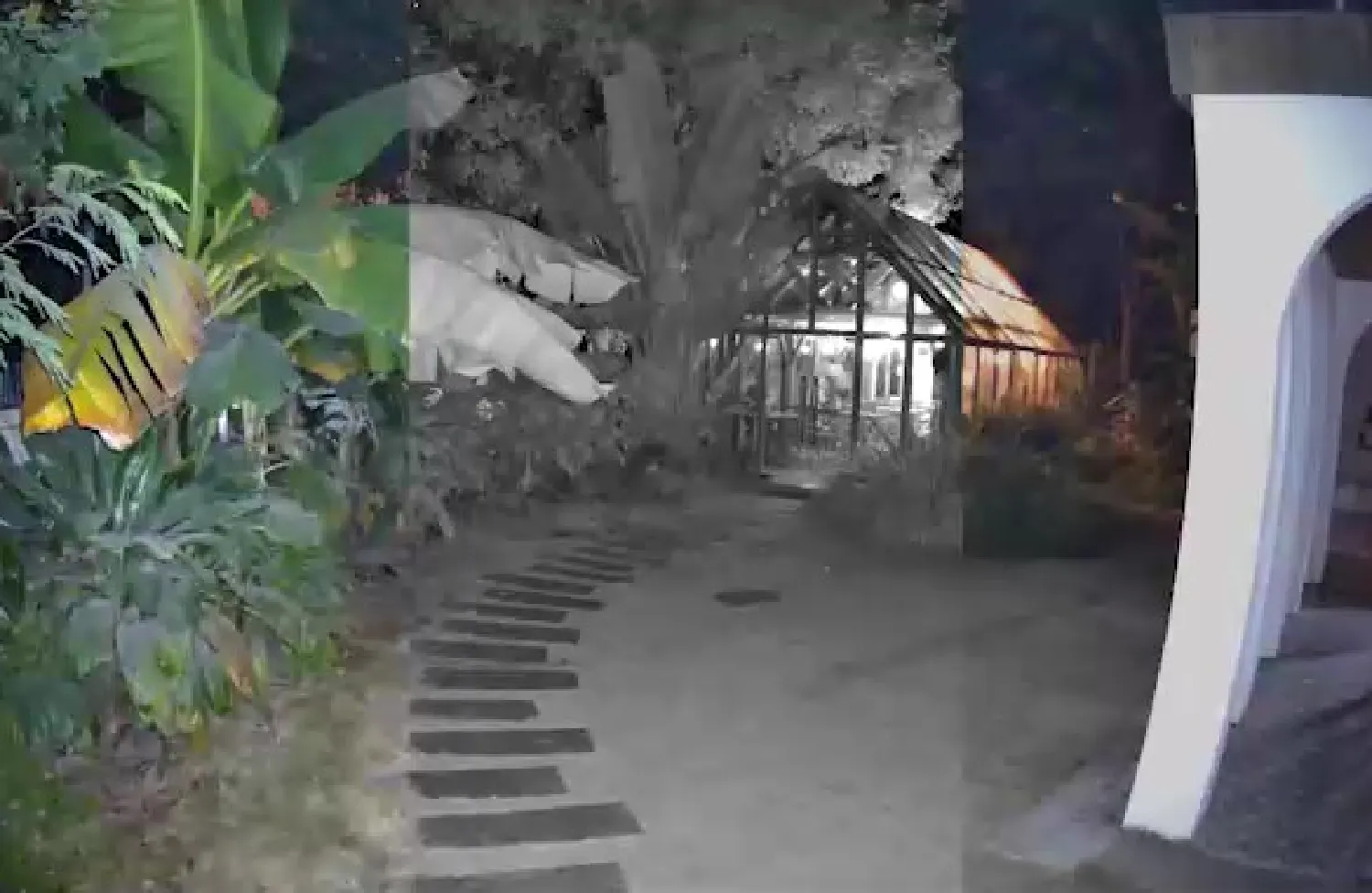
Co-op building security cameras Staten Island: manufacturer night sample comparing a colour view and an infrared view of a stepping-stone garden path
Manufacturer sample image (Reolink), not footage from a client: the same garden path at night shown in colour on one side and in black-and-white infrared on the other. Paths between garden co-op buildings are recorded this way after dark, and the lighting decides which of the two you get.
Lots & Garages

Parking Lots and Detached Garages: Where Most Staten Island Co-op Incidents Happen

For a co-op in Manhattan the parking question rarely comes up. For a co-op on Staten Island it is usually the first item on the board's list, so it deserves its own section.

What has changed in car crime on the island

Boards that remember the catalytic converter wave of a few years ago sometimes ask whether lot cameras are still worth it. SILive reported in July 2025 that, according to the NYPD's public information office, catalytic converter thefts on Staten Island were down more than 90 percent for the year to that point compared with 2022, when those thefts were rampant. That is good news, and it also shows why we plan lot cameras around ordinary events rather than one crime wave: cars scraped by a neighbor backing out, mirrors broken, cars entered because they were left unlocked, and non-residents parking in assigned spaces. Those never went away, and they are what the managing agent spends time on.

Overview cameras and detail cameras

A single wide camera can show the whole lot, but each car in it is a few hundred pixels. A narrow camera can show a face or a plate, but only in one spot. Good lot coverage uses both: an overview camera or two that record the movement of every car and person across the lot, and detail cameras at the choke points where everyone must pass close by, which on most co-op properties means the entrance drive and the building doors. With that pairing, the overview tells you when and where something happened, and the detail camera tells you who.

Light decides the result

Cameras see well at night only where there is light or where their own infrared reaches. The four-camera package that starts our Staten Island price list lists night vision up to 60 feet, and models higher on the list reach further or record in colour with a built-in light. A large dark lot needs lighting, cameras with longer infrared range, or both. Lot lighting is electrical work, which we do not do; when a lot needs more light, we tell the board where and the co-op's electrician installs it.

Garage rows

A row of detached garages is usually 100 feet or more from the nearest building, and it is a frequent target because nobody can see it. We reach a garage row in one of three ways: cable along a fence or wall where one exists, a buried conduit if the board approves digging, or a wireless bridge between a building and a small weatherproof box at the garage row. The bridge needs power at the garage end, which the co-op's electrician can provide if the row has none. Each option is priced separately in the proposal.

Carports and covered parking

Carports are the easiest outdoor mounting spot on a co-op property because the roof keeps rain and snow off the cameras and the posts give a solid surface. A camera under each end of a carport, aimed down the row, records doors opening and people moving between cars.

Assigned spaces and guests

Many boards want proof of who parks in assigned spaces. A camera can record a car entering and parking; it cannot enforce a parking rule on its own. We suggest the board decides first what it will do with the evidence (warning letters, towing under posted rules) and then we aim the camera to support that.

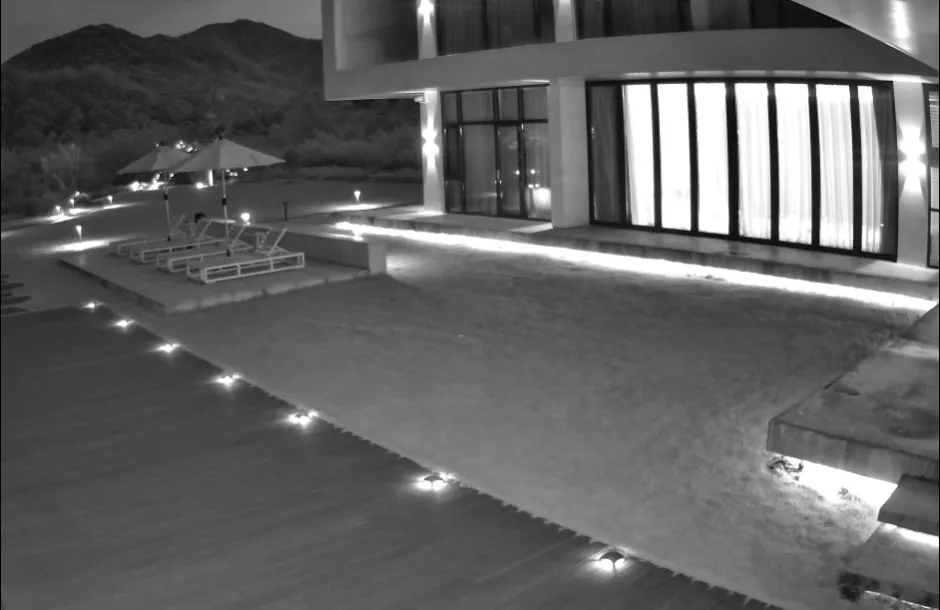
Co-op surveillance cameras Staten Island: manufacturer black-and-white night sample of a lit terrace with small path lights and a building wall
Manufacturer sample image (Reolink), not client footage: a terrace at night in black and white. The small path lights in the frame give the camera reference points; a co-op lot with no lighting at all records far less detail than this.
Storms & Weather

Storm Exposure: Building a Co-op Camera System That Survives Staten Island Weather

Staten Island boards do not need to be reminded about storms. The US Army Corps of Engineers wrote in October 2024 that Hurricane Sandy resulted in 24 deaths on Staten Island, more than any other borough, and that nearly 7,300 residential and commercial properties were affected; the Corps is building a seawall of about five miles from the edge of Fort Wadsworth to Oakwood Beach. A camera system on the East or South Shore has to be planned on the assumption that the next big storm will come.

The recorder goes up, not down

The recorder holds every hour of video and every setting. In most of the city it sits in a basement, because that is where the network enters. On a co-op property in a flood-prone area we look for a dry, locked space above the ground floor or at least high on a ground-floor wall, and we run the cable to it. The network switch and battery backup go with it. If a building has no such space, we put the equipment in a locked wall cabinet mounted as high as the room allows.

Wind and driven rain

Wind-driven rain gets into connections that face up. Every outdoor cable entry we make faces down with a drip loop, the junction boxes are sealed, and mounts on the windward side of a building are fixed into solid masonry rather than siding. A camera that slowly turns on a loose mount loses the view the board voted for, so windward mounts are part of the yearly check.

Salt air near the water

Co-ops in South Beach, Arrochar, Shore Acres, Great Kills and Bay Terrace are close enough to salt water that bare steel screws rust and cheap housings chalk. We use stainless or coated mounting hardware and housings rated for outdoor exposure, and we wipe and inspect the lenses on yearly visits.

Power cuts

A storm that takes the power down also takes the cameras down unless they have a battery backup. A battery backup unit at the recorder keeps the recorder, the switch and the cameras running through short outages and lets the recorder shut down cleanly in a long one, so the drive and the settings survive. Run time depends on how many cameras the switch is powering, and we size the unit to the board's choice.

Snow and plows

Snow piled at the edge of a lot can bury a low camera, and a plow blade can hit anything mounted below head height. Lot cameras go on building walls or carport structures at a height a plow cannot reach, and we avoid mounting cameras low on fence posts at the edges where plows push the snow.

Deer and night motion

SILive reported in February 2024 that the Parks Department's estimate of the island's deer population was 1,273, a 41 percent drop from an earlier estimate of 2,166. That is still a lot of deer, and they cross co-op lawns and lots at night, especially near Clove Lakes, Grymes Hill and wooded edges. A camera set to alert on any motion will alert all night. We set detection to people and vehicles where the camera supports it, draw detection zones that exclude lawns and tree lines, and leave plain motion recording on so nothing is missed.

Staten Island co-op video surveillance: manufacturer sample view of open water and distant hills at sunset
Manufacturer sample image (Reolink), not a Staten Island view: open water at sunset. Cameras on East and South Shore co-ops face this kind of low, bright light off the water, which is why we choose wide dynamic range models for waterside walls.
Equipment

Co-op Security Camera Systems for Spread-Out Staten Island Properties

The equipment for a Staten Island cooperative is the same family of cameras and recorders we install everywhere. What changes is how it is connected, because the buildings are apart and much of the coverage is outdoors.

Cameras by location

  • Turret (eyeball) cameras for building corners, eaves and carports. They do not collect spider webs on the lens the way a dome bubble can, which matters for outdoor cameras near lawns and trees.
  • Vandal domes for vestibules, laundry rooms and anywhere a camera can be reached by hand. The impact-rated housing is harder to knock out of position.
  • Bullet cameras for long views down a drive or a garage row, with a hood against rain and glare.
  • Dual-lens or panoramic cameras for a wide parking court where one camera has to replace two.
  • Pan-tilt-zoom cameras only where a board specifically wants an operator to follow something live, which is rare in a co-op with no full-time staff.

Recorder, drives and how many days are kept

One recorder for the whole property is the goal, because one place to search is much easier for a managing agent than three. The number of days kept depends on the number of cameras, their resolution and the size of the drives. FirstService Residential, a large New York property manager, wrote in September 2024 that co-op and condo footage is generally stored for 30 to 90 days. We size the drives to the retention the board chooses and write the number of days into the plan, so nobody discovers after an incident that the recorder only held a week.

Linking separate buildings

Network camera cable runs reliably up to about 100 meters, which on a garden co-op is often not enough to reach the far building or the garage row from the recorder. The ways around it are a small network switch in a second building fed by one cable or fiber from the first, fiber between buildings where the distance or electrical noise calls for it, and point-to-point wireless bridges where the board will not allow digging. Each has a price and a trade-off, and the plan says which we chose and why.

Remote viewing and who sees what

If the co-op has an internet line in the management office or at the recorder location, the board and the managing agent can view cameras on a phone or computer. Each person gets their own login with only the cameras and rights the board approves: live view for the super, playback for the agent, export for one officer. If there is no internet at the recorder, the system still records; remote viewing waits until the co-op adds a line.

Detection settings

Person and vehicle detection is useful on a co-op property mostly to make playback searches fast and to cut down false alerts from deer, cats and blowing branches. We set detection zones camera by camera, keep motion recording on in the background, and turn phone alerts on only for the few cameras the board actually wants to be told about, usually the garage row and the management office door after hours.

House brand first, partner brands when asked

Our proposals quote our own house-brand cameras and recorder by default, the system the Staten Island price list is built on. When a board asks for a named brand, we can quote Lorex, Luminys or Reolink, the three brands we are partners with, and we install any brand a co-op chooses. Each manufacturer's warranty stays with that manufacturer.

Power without electrical work

Network cameras take their power down the same cable that carries video, from the switch at the recorder, so most cameras need no outlet nearby. The recorder, switch and battery backup need a standard outlet. Where a garage row or a shed has no power for a wireless bridge, the co-op's electrician supplies an outlet; we do not do electrical work.

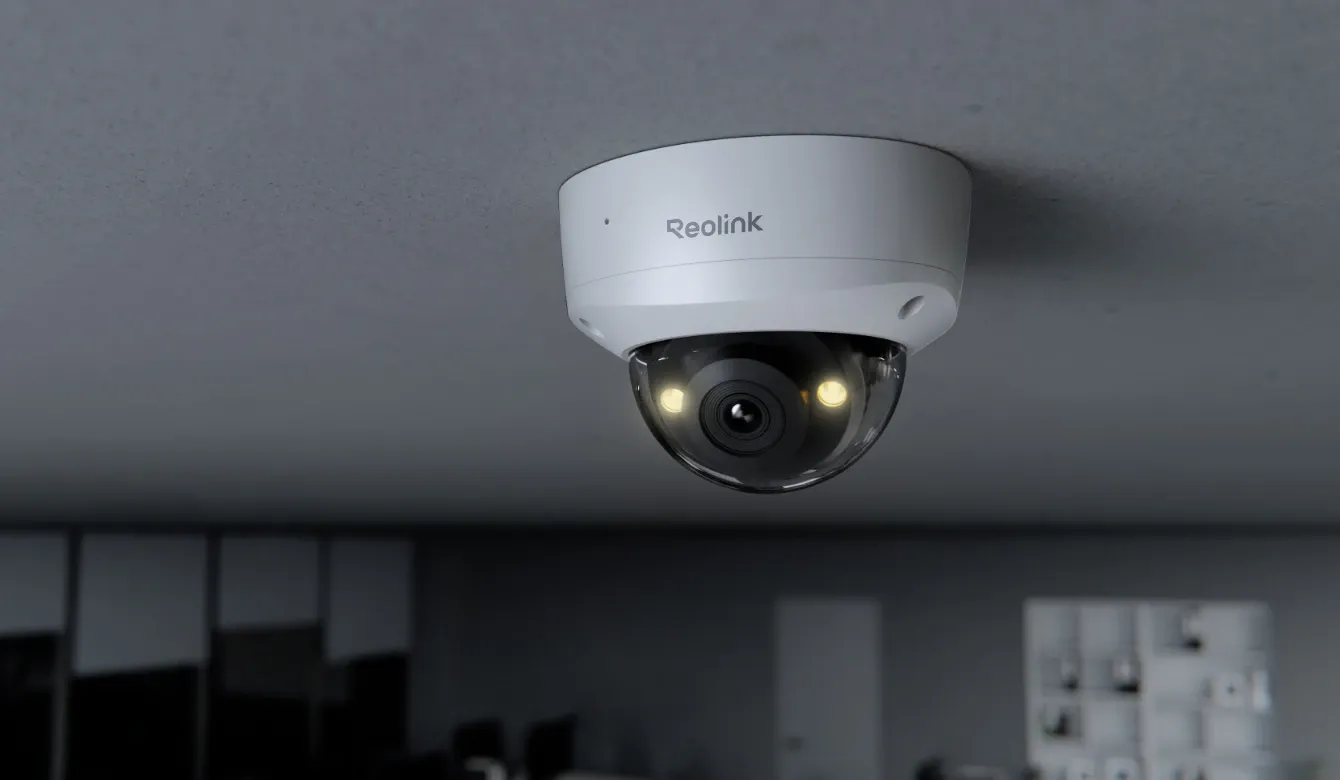
Co-op surveillance camera installation Staten Island: white ceiling dome camera with two small spotlights lit beside the lens
Product photo (Reolink): a ceiling dome with two built-in spotlights. A dome like this under a carport roof or garage overhang can record colour at night where there is no other light.
Camera Counts

How Many Cameras Staten Island Co-ops Usually Start With

These are typical first phases from the kinds of co-op found on the island. Every property is different, and the walk of the grounds sets the real number.

Co-op typeTypical first phaseUsually covered first
Small walk-up, 11–24 apartments3–5 camerasFront door, rear or cellar door, parking area, laundry entrance
Early postwar garden walk-ups, 24–60 apartments6–10 camerasEach vestibule, main path, parking area, cellar laundry
1960s elevator building, 70–145 apartments8–12 camerasLobby door, mailroom, elevator cab, laundry, garage door, 2–4 lot cameras
North Shore hillside elevator building8–12 camerasEntrances on each level, garage under the slope, drive, lobby, cab
1970s garden complex, 100–190 apartments12–20 cameras in phase oneEntrance road, parking courts, garage rows, management office, busiest vestibules

Why the first phase is smaller than the wish list

Boards often arrive with a list of thirty places they would like to see. Thirty cameras on a garden property is a large budget and a lot of video for a volunteer to search. We put the places where incidents have actually happened in phase one, size the recorder for the full list, and leave the rest for a later phase once the board has lived with the system for a season.

Sample Layout

A Sample Camera Layout for a 1970s Garden Co-op on the South Shore

This is an illustration of how we would write up phase one for a hypothetical complex of six two-story buildings around two parking courts, with a garage row at the back and a management office by the entrance. It describes no real property.

  1. Camera 1, entrance drive (bullet). Mounted on the management office wall, aimed at the narrowest point of the drive, showing the front of each car as it slows.
  2. Camera 2, parking court A overview (dual-lens). On the end wall of building 2, covering the whole court.
  3. Camera 3, parking court B overview (dual-lens). On the end wall of building 5.
  4. Cameras 4 and 5, garage row (turrets). One at each end of the row, looking along the doors, linked back by a wireless bridge powered from an outlet the co-op's electrician adds.
  5. Camera 6, management office door (turret). Alerts on after hours.
  6. Camera 7, cluster mailboxes (turret). On the office wall, framing the face of the mailbox unit.
  7. Cameras 8 to 11, the four busiest vestibules (vandal domes). Inside each door at head height.
  8. Camera 12, cellar laundry entrance (vandal dome). At the bottom of the outside stair.
  9. Recorder. In a locked cabinet high on the wall of the management office, with a battery backup and room on the drives for the board's chosen retention across phase two.

Phase two in this example would add the remaining vestibules, the paths between buildings and the dumpster enclosure, all plugging into the switch and recorder installed in phase one.

Services

Co-op Security Camera Installation Services on Staten Island

Every service below is for a cooperative corporation, its managing agent or its super, and every job ends with the passwords handed to the board.

Walk of the grounds and written plan

A tech walks the property with whoever the board sends, notes each problem location, checks where cable can run between buildings, opens the existing recorder if there is one, and looks for a dry, high place for new equipment. The board gets a numbered site plan and a price for each phase.

New systems

For co-ops with no cameras at all, or with a handful of consumer cameras on Wi-Fi that nobody manages. We install the cameras, the recorder, the switch and the battery backup, set retention and detection, and train whoever the board names.

Adding cameras or buildings

For co-ops that already have a working recorder and want the garage row, a second parking court or another building brought in. If the existing recorder has room and is in good health, new cameras go onto it; if not, we say so in writing before the board orders anything.

Replacing analog systems

Older co-op camera systems are often coaxial analog. Where the recorder is a decade or more old, the drives are often worn and the images soft. Depending on the cable's condition we either reuse the coax with newer high-definition analog cameras on a matching recorder, or replace it with network cable for IP cameras. Any cable that might fail its test is named and priced before the board orders.

Recovering a system nobody can log into

When the installer has disappeared, or the director who kept the password has moved away, we work with the recorder to restore access where the manufacturer's process allows, or replace the recorder and keep the cameras where they are compatible. The board gets the new logins in writing.

Rebuilding after a storm or power surge

Recorders and switches that took water or a surge are replaced, outdoor cameras are tested one by one, and the equipment is moved above the flood line if it was not there already.

Cameras the co-op already bought

If the board has already purchased cameras, we quote the labor to install them by phone or text from the model list and the number of locations, and book the job with the deposit. The board's equipment and its manufacturer warranty remain the board's.

Repair and yearly checks

A yearly visit cleans lenses, re-aims anything the wind or a ladder has moved, checks the drives and the battery backup, updates firmware and reviews who has logins. Repairs between visits are handled as service calls. Our security camera repair page for Staten Island covers broken cameras and recorders in more detail.

Co-op security camera installation and technical support Staten Island: hands holding a phone with a camera app notification on the lock screen
Product photo (Reolink): a phone showing a camera notification. On a co-op system we turn alerts on only for the few cameras the board names, so the agent's phone is not buzzing all night.
Building Systems

How Co-op Cameras Work With the Intercom, Fobs and Gates

A camera system is usually not the only security system on a cooperative property, and it works better when it is planned with the others.

Entry panels and intercoms

Many entry panels have their own camera. That camera shows the person calling; it is not a substitute for a camera recording the vestibule, because it usually records only when someone presses a button. We keep the two separate and, where the panel supports it, add the panel's video to the recorder so the agent searches one place. Boards planning a new panel can read our co-op board intercom upgrade guide.

Fob readers and gates

Where a co-op has fob readers on its doors or a pedestrian gate in a perimeter fence, a camera at each controlled door gives the board a picture to match against the reader's log. Together they answer the question a reader alone cannot: was the fob used by the person it was issued to.

One cabinet, one battery

If the intercom controller, the access control panel and the camera recorder can share a locked cabinet and a battery backup, the board has one place to check and one battery to replace. On a garden complex that is usually the management office.

The co-op's broader security plan

For intercoms, fobs, door buzzers and the other systems on a Staten Island co-op property, see our co-op security systems page for Staten Island.

Law & Privacy

New York Rules That Shape Cameras on a Co-op Property

We are installers, not lawyers, and nothing here is legal advice. These are the published rules and sources a Staten Island board will hear about, so the board can take the right questions to the co-op's attorney.

The board decides about the common areas

A co-op's lawns, lots, paths and hallways belong to the corporation. New York's highest court held in Levandusky v. One Fifth Avenue Apartment Corp. (1990) that courts defer to a co-op board's decision when the board acts for the purposes of the cooperative, within its authority and in good faith, which is the business judgment rule. A written camera plan, minutes of the vote and a footage policy are the ordinary way a board shows its purpose. In a 2025 CooperatorNews answer, attorney Ricardo M. Vera wrote that New York does not recognize a common-law right of privacy in public or common areas. What the bylaws and proprietary lease require for a particular building is a question for the co-op's counsel.

Video, not sound

New York Penal Law §250.05 makes eavesdropping a class E felony, and §250.00 defines mechanical overhearing of a conversation as listening by a device without the consent of at least one party. Many cameras can record audio. We turn it off on every co-op camera, including those in packages whose spec sheet lists audio.

Places cameras never go

Penal Law §250.45 makes it a crime to use an imaging device to view or record a person in a bedroom, changing room, fitting room, restroom, toilet, bathroom, washroom or shower without consent, and Labor Law §203-c bars employers from video recording employees in restrooms, locker rooms and changing rooms. On a co-op property that rules out cameras in staff locker rooms and washrooms in the maintenance shed or boiler room, as well as anywhere inside a home.

Telling people about the cameras

Signs cost little and settle many questions. In a CooperatorNews answer about cameras in a co-op community room, attorney Christian Paul Daglieri recommended a sign conspicuously placed to warn that the room is under surveillance, and cameras that do not record voices. We suggest a short notice at each entrance drive, each building door and the laundry rooms.

Shareholders' own cameras

On garden co-ops, shareholders sometimes put a doorbell camera or a small camera over their own door that looks across a shared path or the lot. That is a house-rules matter for the board, because the path is a common area. Habitat reported in October 2021 on a co-op dispute over video doorbells, with one attorney advising against them unless every resident on the floor agrees. A board that wants to allow, limit or forbid them should write the rule down; we do not install shareholder cameras on common walls without the board's written permission.

Who may install

New York's General Business Law article 6-D requires a license from the Department of State for the business of installing, servicing or maintaining security or fire alarm systems, and the Department's rules in 19 NYCRR Part 195 count closed-circuit television and video surveillance used to detect or monitor intrusion. Our license number, #12000287431, is on every proposal, and a board can check it with the Department of State.

Permits

New York City's Administrative Code §28-105.4.7 exempts signaling and data wiring under 50 volts from the electrical permit requirement, apart from life-safety systems. Low-voltage camera cable usually needs no Department of Buildings filing. Work that touches a fire alarm, electrical circuits or the building's structure is a different matter and is not ours.

Face matching and smart access data

New York City's Local Law 63 of 2021 sets data rules for smart access systems in class A multiple dwellings, with no co-op exception in its text. We do not install face-matching features on co-op camera systems, and whether that law applies to a co-op's fob or entry system is a question for the co-op's attorney.

Licensed co-op security camera installer Staten Island: manufacturer daylight sample image across calm water to hills and a small boat
Manufacturer sample image (Reolink), not a Staten Island view: a long daylight shot across water. Long views like this are what an overview camera records; for faces and plates, a second camera closer to a door or drive does the job.
Footage Policy

Footage Access Policy: Who Sees Co-op Video and How a Clip Leaves the Recorder

On a Staten Island co-op, most requests for video are about cars. An adjuster wants proof of a hit-and-run in the lot, a shareholder wants to know who scraped her door, a resident thinks a neighbor is parking in his space. The board needs a policy before the first request arrives, or every request becomes an argument.

What property managers recommend

FirstService Residential's September 2024 guidance for New York co-ops and condos says residents should not have access to footage without prior approval from the board and legal counsel, that a board member reviewing footage of a neighbor dispute could face claims of bias, and that a log of footage requests should be kept. It also notes the 30-to-90-day storage range and that hallway cameras should not capture the inside of units. Christina Forbes is quoted there: “Limiting access protects the privacy of residents and helps prevent potential misuse.”

A policy in eight lines

  1. The cameras record common areas only, video only, around the clock.
  2. Video is kept for the number of days in the plan and then overwritten automatically.
  3. Live view: the super and the managing agent. Playback and export: the managing agent and one named officer.
  4. Anyone else, whether a shareholder, an adjuster or a lawyer, puts the request to the managing agent in writing, naming the date, the time span, the camera location and the purpose.
  5. The agent decides routine requests under the policy; anything involving a dispute between shareholders goes to the board and, if needed, counsel.
  6. Approved clips are exported with the time stamp burned in and released only to the requester; the original stays on the recorder until it is overwritten.
  7. Police requests go to the managing agent, who follows counsel's guidance on what to release.
  8. Every request and every export is written in a log kept by the agent.

Exporting a clip that holds up

The most common mistake is a shareholder filming the recorder's monitor with a phone. A proper export comes from the recorder in the manufacturer's format with its player, or as a standard video file, with the camera name and time stamp in the image. We show the agent how to do it at handover and leave written steps in the cabinet.

Self-managed and small co-ops

The island's small walk-up co-ops are often run by their shareholders without an agent. The same policy works with the treasurer or secretary in the agent's place, as long as two people, not one, can export video, and the log is kept with the corporation's records.

Board Approval

Taking a Camera Plan to a Staten Island Co-op Board

A camera vote on a Staten Island co-op tends to be about the budget and the neighbors as much as about security. A board packet that answers those questions up front shortens the meeting.

What the packet should hold

  • The site plan with each camera numbered and its purpose in one line.
  • Photos or a description of what each outdoor camera will see, including what is masked out.
  • The recorder's room or cabinet, with its height relative to past high water.
  • Retention in days and who gets which login.
  • Phase one and later phases, each with its own price.
  • The cable method between buildings and whether any digging is proposed.
  • A draft footage policy and the wording of signs.
  • The installer's license number and warranty terms.

Phasing across budget years

Larger garden complexes rarely fund the whole site at once. We price phase one so it stands on its own and size the recorder and switch so later phases need no replacement. Whether the money comes from operating funds, reserves or an assessment is for the board's treasurer and accountant; we only make sure each phase has a firm number.

Notice to shareholders

Boards that send a short notice before installation hear far fewer complaints afterward. It should say where the cameras are, that nothing looks into homes, that there is no sound, how long video is kept, who can see it, and how to ask for a clip. On garden properties, where cameras on outside walls are visible from ground-floor apartments, it also helps to tell the residents of those apartments directly.

Neighbors outside the co-op

Because most Staten Island co-ops border private houses, a board should expect neighbors to notice cameras on outside walls. Aiming cameras at the co-op's own drive, lot and paths, and masking anything beyond the property line, avoids most of those conversations.

Contract, insurance and scheduling

Once the board approves, the contract and the 50% deposit come next, and equipment is ordered only after the deposit clears. Managing agents usually ask for a certificate of insurance naming the corporation and the management company; we issue it once the job is awarded. Installation is booked first come, first served once paid, in early-day arrival windows, and we keep at least one entrance and one driving route open at all times.

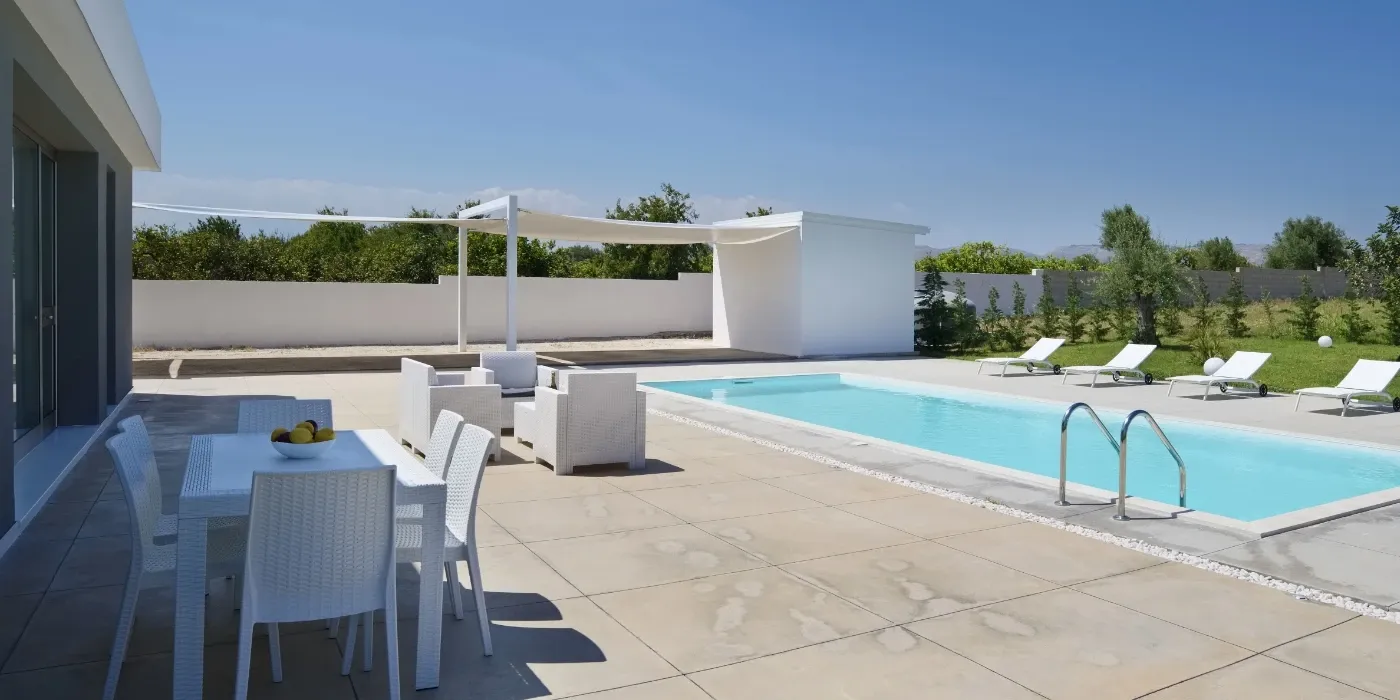
Co-op board security camera installation Staten Island: manufacturer daytime sample image of a paved terrace with outdoor furniture and a pool
Manufacturer sample image (Reolink), not a client property: a wide daytime view of a paved terrace. Boards find it easier to vote on a camera when the packet shows roughly what that camera's frame will hold, as this sample does.
Comparing Bids

Making Camera Proposals Comparable for a Staten Island Co-op Board

Two camera proposals for the same garden co-op can differ by a factor of two and still both be honest, because they describe different jobs. A few questions make them line up.

  • How does each bidder reach the far buildings and the garage row? Cable along walls, trenching, fiber or wireless bridge. This is often the biggest cost difference on Staten Island and the one most often left out.
  • Where will the recorder sit? A proposal that puts it on a cellar floor in a flood area is cheaper and worse.
  • How many days of video, at what resolution? A drive size means nothing until it is translated into days.
  • What happens in a power cut? Is a battery backup included, and how long does it run?
  • Whose name are the logins in? The co-op corporation's, on paper, at the end of the job.
  • What is the license number? The board can check it.
  • What does the warranty cover, and for how long? Parts, labor, and which claims go to the manufacturer.

If the board already has our numbered plan, it is welcome to give it to other bidders so every price covers the same cameras in the same places.

Pricing

What Co-op Security Camera Installation Costs on Staten Island

A cooperative pays our ordinary Staten Island camera prices. The four-camera house-brand system with a recorder starts at $999 installed, and each camera beyond four is priced per camera once the layout is confirmed on site. The packages below are from our Staten Island security camera pricing page, all four cameras and a recorder, installed, with wire runs up to 100 feet per camera included.

PackageWhat it isInstalled
A14 eyeball cameras, 2MP, 1080P recorder, night vision up to 60 ft$999
A34 eyeball network (IP) cameras, 2MP, network video recorder$1,033
E24 dome network cameras, 4MP, 4K network video recorder$1,206
D14 eyeball network cameras, 8MP 4K, network video recorder$1,441

Some packages on the price list carry built-in audio. On a co-op system we install them with audio switched off, for the reasons in the law section above.

What changes a co-op quote

  • Number and type of cameras. Set by the site plan.
  • Hidden cable. Conduit, molding or piping to hide cables is $200 per camera for runs up to 100 feet, per the price page.
  • Distance. Runs over 100 feet, which are common to garage rows and far buildings, are quoted on site, along with any switch, fiber or wireless bridge they need.
  • Retention. More days of video means larger drives.
  • Battery backup. Sized to the number of cameras the board wants kept running in an outage.
  • Cameras in elevator cars. The radio link down the hoistway, and a visit timed with the elevator mechanic.
  • An existing recorder. Whether we can keep it, unlock it or must replace it is known only after we open it.

Every possible add-on is written into the proposal before the board orders. Once equipment is ordered it cannot be returned, so nothing is left to be discovered on install day.

Deposit, financing and warranty

A deposit of half the installation price starts the job, and we place the equipment order after that payment has cleared. Co-op corporations and managing agents can pay by check. Financing is available through Wisetack, subject to approval.

What protects the board after install day: 30 days of coverage as posted on our warranty page, optional extended plans of a year or longer for new systems, each maker's own equipment warranty, and free phone help. Full terms — including 50% deposit, one-year parts-only warranty on Abstract Enterprises Security Systems-supplied products, and the late-fee schedule — are set out in the service agreement.

Bring the Board a Site Plan, Not a Guess

Tell us the buildings, the lots and the problems. A walk of the grounds is booked within 2 hours, any day of the week, with an early-day arrival window.

Get In Touch

Request a Co-op Camera Proposal on Staten Island

Send the neighborhood or cross streets, the number of buildings and apartments, whether there is a lot, garages or carports, whether a managing agent runs the property, and what the board wants solved. Photos of the existing recorder help. Calls and texts go to (347) 934-8335.

✅

Request Sent!

Received. Expect a call or text shortly to pick a time for walking the grounds.

How It Works

Seven Steps From First Call to Handover for a Staten Island Co-op

The steps do not change between a fifteen-apartment walk-up and a 190-apartment garden complex; the larger property spends longer at the site plan and runs the install in phases.

1

Call, text or send the form

Any director, the agent or the super can start it by phone, text or the form; the property walk is booked within 2 hours, with a two-hour arrival window early in the day.

2

Walk the grounds

Our tech walks every lot, garage row, path and door the board named with the super, checks how cable can reach each building, opens any existing recorder and picks a dry, high place for the equipment.

3

Site-plan proposal

A numbered site plan goes to the board listing what every camera is for, how cable gets between buildings, where the recorder will live, how many days it stores and a fixed price per phase.

4

Board vote and deposit

Directors vote under the co-op's own bylaws, then the 50% deposit is paid; any special-order item is named before that payment, and nothing is ordered until it clears.

5

Shareholder notice and schedule

The board sends its notice, the managing agent issues the building's contractor rules, the certificate of insurance goes out, and installation is booked first come, first served.

6

Install, aim and mask

The crew runs cable, mounts cameras, installs the recorder, switch and battery backup, then aims each camera and masks windows and neighboring property in front of the super or agent.

7

Handover to the board

The board gets every login in writing, personal accounts for the people it named, the export steps, the final camera map and the warranty terms.

A small walk-up with three to five cameras usually takes one day. An elevator co-op with eight to twelve cameras and a cab camera takes two to three days. A garden complex is installed building by building, and trenching or a wireless bridge to a garage row adds time that we schedule around the co-op's parking.

What residents notice on install day

A crew of two or three, a ladder or lift outside the buildings, some cones around the spot in the lot where we are working and, for an hour or two, a vestibule with a ladder in it. We do not need to enter apartments for a common-area camera system. At the end of each day work areas are cleared and any open ceiling or cabinet is closed and marked.

Board Questions

Staten Island Co-op Camera Questions, Answered

Two shareholders disagree about who backed into whose car, and both want the board to look at the video. Who should review it?

Not a director who lives beside either of them. FirstService Residential's 2024 guidance warns that a board member reviewing footage of a neighbor dispute could face claims of bias. The cleaner path is for the managing agent, or in a self-managed co-op an officer with no stake in the dispute, to find the minutes in question, export them with the time stamp, and give the same clip to both sides or to their insurers under the footage policy. The board's role is to have written that policy before the argument started, not to referee the video.

After a windstorm one of our lot cameras is pointing at the sky. Is that a repair, or should the super climb up and fix it?

Book it as a service visit rather than sending the super up a ladder in the wind. A camera that moved usually means a mount loosened or the bracket was fixed into siding or soft mortar. We re-aim it to the angle on the site plan, re-check the image against the plan's description, and if that wall keeps losing cameras, we move the camera to a sheltered spot or a stronger mount. On co-ops with a yearly check, we look at every windward mount each visit so this happens less often.

The board put the lot lights on a timer that turns them off at midnight. Will the cameras still see after that?

They will switch to infrared and record in black and white, but only as far as their infrared reaches, which for the starting package is up to 60 feet. Beyond that the lot goes dark on video. If the board wants to keep the timer, we place lot cameras closer to the parked cars or choose models with longer infrared range. If the board is willing to keep some lights on, a few fixtures over the busiest rows usually do more for the video than any camera upgrade.

The time stamps on our recorded clips are off by several minutes. Does that matter?

It does. When an insurer or the police compare your clip with a 911 call or a neighbor's camera, a clock that is seven minutes slow makes the clip harder to rely on. We set the recorder to take its time from an internet time server where the co-op has internet, set the correct time zone and daylight saving rule, and check it on every yearly visit. Without internet, the clock is set by hand and checked twice a year when the clocks change.

Our co-op shares an entrance drive with the property next door. Can our cameras watch it?

Usually the shared portion can be covered, because both properties use it, but the cameras should stop at the property line and mask the neighbor's lot, building and windows. If the drive is jointly owned or governed by an easement, the board should check with counsel and tell the neighbor before mounting a camera that looks at it. Some co-ops and their neighbors agree to share the cost of a camera at the shared entrance; that is a written arrangement between the two owners, and we can install it either way.

Teenagers climb onto the flat roof of our garage row at night. Can a camera cover a garage roof?

Yes, from a building wall that looks down on it or from a short mast at one end of the row, aimed so it sees the roof surface and the spots where people climb up. A roof camera is mainly a deterrent and a record of when it happens; an alert on that one camera after midnight, sent to the super or the agent, lets someone act. Fixing the reason people can climb up, such as a dumpster or fence beside the garage, is often the cheaper half of the answer.

A shareholder offered to pay for a camera over his assigned parking space. Should the board accept?

That is the board's decision, and it is worth deciding as a policy because others will ask. If the board accepts, the safest arrangement is that the camera is installed as part of the co-op's system, recorded on the co-op's recorder, and governed by the co-op's footage policy, even though the shareholder paid. A private camera on the shareholder's phone, aimed across a common lot, raises the same common-area questions as a shareholder's doorbell camera, and we will not mount one on a co-op wall without the board's written permission.

Snow pushed by the plow buries our low cameras every winter. Where should they go instead?

Higher, and away from the edges where the plow piles snow. Building walls and carport roofs at eight feet or more keep cameras clear of drifts and plow blades. When we survey in summer, we ask the super where the snow ends up each winter, because a camera that looks fine in July can be under a bank in February.

Can the cameras show the board whether the snow and landscaping contractors actually came?

Yes. The entrance camera records each vendor truck arriving and leaving, and the lot overview shows plowing and mowing as it happens. A managing agent can play back a morning at high speed in a few minutes. That is an ordinary use of common-area video and fits inside a standard footage policy, as long as the board treats it as verifying service rather than watching staff.

Our East Shore co-op was evacuated before the last big storm. Can the board watch the grounds while everyone is away?

If the recorder has internet and a battery backup, the board can watch until the power or the internet goes out, and the recorder keeps recording locally until its battery runs down. Once the power is out for long, the cameras stop. That is another reason to keep the recorder and the internet equipment above the flood line: when power comes back, the system starts again on its own instead of needing replacement.

Ground-floor shareholders say a red glow from the camera outside their window keeps them up. What is it, and can it be fixed?

Many cameras use infrared lights that give off a faint red glow at night. The fix is to re-aim the camera so the lights do not face the window, switch that camera to a model whose infrared is not visible, or add enough outdoor light that the infrared can stay off. We check this at handover on any camera mounted near a bedroom window, because it is one of the few complaints a camera generates by simply being there.
Reality Check

Camera Claims Staten Island Co-op Boards Hear, Checked

“Battery cameras save the board the cost of running cable”

Battery and solar cameras suit a single house. On a co-op with a dozen cameras, someone has to charge or check every battery, the cameras usually record short clips on motion instead of continuously, and they depend on Wi-Fi reaching across a lot. Wired cameras on a recorder keep running without anyone climbing a ladder, which is the point on a property with no full-time staff.

“Night vision sees the whole lot”

Night vision on a camera has a stated range. The starting package on our Staten Island price list is rated up to 60 feet. A lot that is 200 feet deep and unlit will be dark on video past that point, whatever the box says about resolution.

“Put the recorder wherever the internet comes in”

On the East and South Shore, the internet often comes in at the cellar or the ground floor, exactly where water goes in a surge. The recorder can sit higher with a cable run to the router. A few extra feet of cable is cheaper than a new recorder and the lost video.

“Audio helps settle disputes in the lot”

Recording conversations without the consent of at least one party is eavesdropping under New York Penal Law §250.05. Co-op cameras record video only.

“The cheapest bid with the most cameras is the best value”

A low price with many cameras often means the bid left out how cable reaches the far buildings, left the recorder on the floor, or skipped the battery backup. Compare the method and the placement, not only the count.

Co-op CCTV installation Staten Island: manufacturer night sample image of a lit shoreline town below a dark hill
Manufacturer sample image (Reolink), not a Staten Island view: a lit shoreline at night. Street and building lights carry a night image; open ground without lights does not, which is the gap most lot camera disappointments come from.
From the Field

Field Notes From Co-op Camera Work on Staten Island

What our crews look for on island co-op properties

Old cable between buildings is worth testing before anything new is dug. Garden complexes often have an abandoned coax or phone line running through a crawl space or along a fence from an earlier system, and a good one can carry a pull string for new cable.

The super knows where the trouble is. We ask the super to walk with us, because the super knows which door gets propped, where the snow piles up, and which corner of the lot the late-night drivers use.

Recorders on Staten Island co-op properties fail from heat as often as from water. A recorder shut in a closet with the boiler, or in a sealed metal box in the sun, runs hot and kills drives. Ventilation is part of choosing where it goes.

A checklist before the board signs

  • Each numbered camera ties back to a specific incident or worry the board wrote down.
  • No camera looks into a home, a bathroom, a changing area or a staff locker room, or across the property line at a neighbor.
  • Audio is off on every camera.
  • The recorder is above any flood line, ventilated and locked.
  • A battery backup is included and sized.
  • Retention days are written down and match the drives.
  • The method for reaching far buildings and garages is described and priced.
  • Hidden cable is priced separately.
  • It is written down who may watch live, who may pull clips, and where each request gets recorded.
  • The corporation receives all logins on paper at handover, and no copy stays with the installer.
  • The installer's license number is on the proposal.

Other camera pages for Staten Island

This page is for cooperative boards. Condominium boards and homeowners' associations have their own guide to condo security camera installation on Staten Island, and landlords of rental buildings should read about apartment building security camera installation on Staten Island. Homes and shops start with security camera installation on Staten Island, and boards that want a fully wired closed-circuit layout for a garage or lot can read about CCTV installation on Staten Island. For recorders specifically, see NVR installation and DVR upgrades on Staten Island; for lens cleaning and drive checks, security camera maintenance on Staten Island.

FAQ

Staten Island Co-op Security Camera FAQ

Which Staten Island camera package suits a co-op parking lot?
+

For a lot, the network camera packages are usually the better fit because they reach further on one cable run and give sharper images: A3 at $1,033 or E2 at $1,206 for four cameras with a recorder, installed. The $999 A1 package works well for doors and short views. The walk of the grounds decides, and every package on the Staten Island price list can take more cameras priced per camera.

What does hiding the cable add on a Staten Island co-op job?
+

Our Staten Island price page lists concealed wiring at $200 per camera for runs up to 100 feet, using conduit, molding or piping. Exposed cable is the standard price. On a garden co-op, boards often hide cable on building fronts and leave it exposed in cellars and garages.

How is a camera priced when it sits more than 100 feet from the recorder?
+

Standard installation includes wire runs up to 100 feet per camera. Longer runs, common to garage rows and far buildings, are quoted on site along with any switch, fiber link or wireless bridge needed to reach them, and the price is written into the proposal before the board orders.

Can a co-op with no managing agent run its own camera system?
+

Yes. Many small Staten Island co-ops are self-managed. We set the system up so two named shareholders can view and export video, keep alerts to a minimum, and leave written steps in the equipment cabinet. A yearly check can be booked so no volunteer has to maintain drives or firmware.

How long will the cameras keep recording if the power goes out?
+

That depends on the battery backup and how many cameras it powers. A unit sized for a small system can carry it through a short outage, and in a long one it lets the recorder shut down cleanly so the drive and settings survive. We size the battery to the board's choice and write the expected run time into the plan.

Can the lobby camera and the intercom be seen on the same screen?
+

Often, yes. Where the entry panel can send video to a recorder, we add it to the co-op's camera system so the agent searches one place. The panel's camera still only shows callers; a separate vestibule camera does the recording.

Does the board pay for the walk of the property?
+

No. The walk of the grounds and the written site plan for a new co-op system are free. Labor for cameras the co-op already bought is quoted by phone or text instead of a site visit.

How many cameras can one recorder handle before the co-op needs a second?
+

That depends on the recorder's channel count and its recording capacity. Recorders commonly come in 8, 16 and 32 channels, and we choose one with room for every phase on the board's plan. A second recorder is usually only worth it when a building is far enough away that linking it back costs more than recording it locally.

What happens to the video if the recorder is stolen or damaged?
+

The video on it goes with it, which is why the recorder belongs in a locked room or locked cabinet, high and away from water. Clips that matter should be exported as soon as an incident is reported and kept with the managing agent's records.

Will the cameras keep working if the co-op changes its internet provider?
+

Yes. The cameras record to the recorder on the property whether or not there is internet. Changing providers only affects remote viewing, and once the new router is in, the recorder needs its network settings checked so phones and the agent's office can reach it again. We can do that on a service visit or the yearly check.

Can you reuse the old camera brackets and boxes already on our buildings?
+

Sometimes. Old junction boxes and brackets that are solid, sealed and in the right place can be reused if they fit the new cameras. Rusted or cracked hardware is replaced, and we say which is which in the proposal so the board knows before ordering.

Does the co-op own the cameras outright once they are paid for?
+

Yes. The equipment belongs to the cooperative corporation once paid in full, the passwords are handed to the board, and there is no monthly fee to us to keep the system recording. Optional yearly checks and extended warranty coverage are separate.

All Areas Served

Co-op Security Camera Installation Across New York City

Each borough has its own guide for cooperative boards and managing agents, collected under co-op security camera installation in NYC. For properties off the island, read about co-op security camera installation in Manhattan, in Brooklyn, in Queens and in the Bronx. Outside the city, see co-op security camera installation on Long Island, in Nassau County and in the Hudson Valley. For video at the door of each apartment, see doorbell camera installation on Staten Island; for elevator floor control, elevator access control on Staten Island; and for fob readers on co-op doors and gates, access control installation on Staten Island. Back to Abstract Enterprises Security Systems.

Cameras That Cover the Whole Co-op Property, Not Just the Lobby

It begins with a free walk of the grounds. Directors receive a site plan for its lots, garages, paths and doors, a draft footage policy for the next meeting, and every password in the corporation's name. Four cameras with a recorder start at $999 installed.