Entrance Roads · Parking Courts · Garage Rows · Mail Kiosks · Pools & Clubhouses · Lobbies
Condo security camera installation on Staten Island starts at $999 for a four-camera house-brand system with a recorder, installed, and each camera a community adds beyond those four is priced after we confirm the site layout in person. Abstract Enterprises Security Systems holds New York State low-voltage license #12000287431 and plans common-area camera systems for condominium boards, homeowners associations, unit owners and managing agents across the borough: townhouse communities with private roads on the South Shore, garden complexes around Bulls Head and New Springville, elevator buildings on the hills above St. George, and small newer condos tucked onto former house lots from Port Richmond to Great Kills.
Quick answer: Most Staten Island condominiums are spread out over roads, lots and separate buildings rather than stacked in one tower, so the camera plan is really a site plan. We walk the property with a board member or the managing agent at no charge, mark every camera on the community's own map, and price the job so the board can vote on it: what each camera watches, how the far cameras get power and signal, where the recorder lives, how many days it keeps, and which runs are buried, concealed or exposed. Audio stays off, nothing aims into a home, and the condominium owns every login. Requests are booked within 2 hours, seven days a week, with early-day visits.
Last updated November 27, 2026 · Written and reviewed by the Abstract Enterprises Security Systems installation team (company byline), New York State license #12000287431 · Published sources cited on this page: NYC Department of City Planning MapPLUTO (NYC Open Data); NYC Department of Finance building class definitions; NY Real Property Law §339-e and §339-v; NY Penal Law §250.00, §250.05 and §250.45; 13 NYCRR Part 22; 19 NYCRR Part 195; NYC Building Code Appendix G; NYC Special Initiative for Rebuilding and Resiliency; WNYC; CBS New York; SILive; City Limits; Commercial Observer; Nacmias Law; FirstService Residential; CooperatorNews; Habitat

Owner-run since 2002 · Staten Island associations get a walk-through date inside 2 hours, seven days a week · direct line (347) 934-8335
Ask a Manhattan board where its cameras go and the answer is a list of rooms: lobby, mailroom, elevator, garage. Ask the same question at a Staten Island condominium and the answer is usually a walk outdoors. The front entrance off the main road, the private lane that loops past forty or sixty front doors, the parking courts and carports behind them, a row of detached garages, the mailbox pad, the pool and the clubhouse, and a stretch of woods or wetland along the back line. That geography is the first thing that sets condo security camera installation on Staten Island apart from the other four boroughs, and it decides almost every choice that follows.
The city's own tax-lot data shows why. In MapPLUTO, the Department of City Planning's lot file published on NYC Open Data, Staten Island's residential condominium lots hold about 11,460 homes, and roughly 63 percent of them sit in lots the Department of Finance classes R3, defined as a "Condo; Residential Unit In 1-3 Story Bldg." Elevator condominiums (class R4) and walk-up condominiums (class R2) together account for about 2,400 units. Nacmias Law, a Staten Island real estate firm, describes the pattern plainly: the borough holds more low-rise condominium units than any other, nearly all of them in planned attached townhouse communities, with one declaration covering an entire community and the association often owning the roads, parking, drainage and grounds.
Age matters as much as shape. Of the borough's condominium lots that carry a construction year in PLUTO, the largest group, 63 lots, dates from the 1980s, with only a dozen from the 1970s and seven from the 1990s, before a second wave of mostly small two- to six-unit buildings from 2004 on and a handful of larger elevator buildings since 2014. So a typical Staten Island condo board is not dealing with a sponsor's camera system installed last year. It is dealing with a forty-year-old community whose original low-voltage wiring, if any, was never designed for cameras, and whose first cameras were often added piecemeal by a past board, a single director or individual owners.
Ownership is the other constant. New York's Condominium Act treats yards, gardens, parking areas, recreational and community facilities, storage spaces and "all apparatus and installations existing for common use" as common elements (Real Property Law §339-e), and many Staten Island communities add a homeowners association layer above the condominium; the Attorney General's offering-plan rules for HOAs, 13 NYCRR §22.3(f), require a plan to describe common areas including land, parking facilities and recreational facilities. Before we can draw a camera plan we need to know which body owns which ground, because a camera on the clubhouse may belong to the HOA while a camera on a building corner belongs to the condominium. Rental buildings with a single owner follow different rules; they are covered on our page about apartment building security camera installation on Staten Island.

We group Staten Island condominiums into five layouts when we plan cameras. The labels are ours, drawn from our own walk-throughs and the PLUTO data above, not official categories, and plenty of communities blend two of them.
The classic South Shore and Mid-Island condo: rows of two- and three-story attached homes along a looped private lane, each with its own front door and often a garage, sometimes behind a gate. The camera plan covers the entrance, the lane intersections, guest parking and any shared amenities rather than individual homes.
Two- and three-story buildings with shared entry halls set around open lots, common around Bulls Head, New Springville and Willowbrook. Cameras watch building entries, each parking court and the dumpster corral, and the recorder usually lives in a utility room in one building with links out to the others.
Newer and older elevator buildings around St. George, Tompkinsville and Stapleton, a few on steep streets with the garage entrance a level or two below the lobby. Coverage looks more like a city building: lobby, mail area, elevator cab, garage and stair doors.
Most condominium lots built since 2004 are small: a two-family-style building or a short row divided into condo units on a former house lot. A compact four- to six-camera system with a small recorder often covers the whole property, which is where the $999 starting system becomes most of the project.
Shops at street level with condo homes above, along corridors such as Bay Street, Victory Boulevard, Forest Avenue and Richmond Avenue. The declaration's line between commercial and residential common elements decides which entrances and which cameras the residential board controls.
Office, medical and light-industrial condo buildings, many along the arterial roads and the West Shore. Each unit owner usually runs its own interior cameras; the condominium's system covers the shared lot, loading area, lobby and building perimeter.
The difference between these layouts shows up in three places on the proposal. First, distance: a garden complex may need cable runs of several hundred feet between buildings, which changes whether a camera connects by copper network cable, by fiber or by a wireless bridge. Second, power: a townhouse community's entrance sign or mailbox pad may sit far from any building with an outlet. Third, who watches: an elevator building with a superintendent has someone on site, while a 1980s townhouse community with a volunteer board may have nobody looking at footage until an owner reports a problem.
That last point is why we design Staten Island systems to be reviewed quickly after the fact, not monitored live. A board treasurer who gets a call about a damaged car on a Saturday morning should be able to open the right camera, jump to the right hour and save a clip in a few minutes from a phone, without knowing anything about recorders. Camera names that match the community's own map ("Lane B at Court 3" rather than "Camera 14"), a clean list of accounts and written export steps matter more here than another megapixel.

In a townhouse community the entrance is the one place every car and most people pass. If a board can afford only a handful of cameras, at least two of them usually belong there. What those two cameras should do is different from what most people expect, so it is worth separating the jobs.
An overview camera shows the whole entrance: both lanes, the sign, the sidewalk and the first stretch of road. It answers "what happened and when," such as a car clipping the sign or someone walking in on foot at two in the morning. A detail camera is aimed tight on the inbound lane at a point where cars slow down, framed to show a vehicle's front and, under good light, its plate and the driver's side window. It answers "which car." One camera rarely does both well, because a wide lens spreads its pixels across the scene and a tight lens sees only a slice of it. Pairing them is cheaper than buying one expensive camera and hoping.
Entrances on Staten Island rarely have a building close enough to hold a camera at the right height and angle. The usual answers are the gatehouse or guard booth if there is one, the entrance sign structure if it is solid masonry, a light pole the association owns, or a new pole set on association land. Each has trade-offs: a light pole may already carry power but can sway in wind, a sign may be too low and too easy to reach, and a new pole needs a footing and a buried conduit back to the nearest building. We mark the options on the site plan with heights and distances so the board chooses with the costs in front of it.
Communities with a vehicle gate get the most out of a camera aimed at the gate from the inside, looking out, so it records every car that enters behind another one and every arm that gets pushed up by hand. Gate operators, keypads, call boxes and fob readers are a separate system; we cover how they work for condominiums on our Staten Island condo security systems page, and the camera plan simply makes sure the cameras see what those devices do.
Two practical notes apply to every Staten Island entrance. Snowplows and salt are hard on anything low and close to the curb, so camera poles stand back from the plow line and hardware is stainless or coated. And because the entrance is often the farthest point from the recorder, the link back to it, whether buried cable or a wireless bridge, is planned first, before anyone picks camera models.

Cars are what Staten Island condo boards call us about most often after packages. Staten Island is the only borough the subway does not reach, and townhouse and garden communities were built around parking: courts behind each row, carports along the lanes, guest spaces at the ends and, in many communities, separate garage buildings. Local reporting gives a sense of the problem. CBS New York reported in July 2022 that Staten Island had seen more than 250 catalytic converter thefts that year to date, at a police etching event in Graniteville that drew about 200 people. In September 2022, SILive reported that for more than two years police had been urging residents to lock their cars amid a surge in car break-ins and grand larceny. Those figures cover the whole borough, not condominiums alone, but parking courts are where a condo board feels them.
A camera mounted high on a building corner and aimed down a long parking court records movement across thirty or forty spaces. At night, at that distance, it will show a figure walking between cars and a car arriving or leaving, but not a face and rarely a plate. That is still useful: it fixes the time of an incident, shows which direction someone came from and which car they left in, and points the reviewer to the camera that might have a closer view. Boards get better results by adding a second, tighter camera at the court's only drive-in point, where every car must pass within a few yards of the lens, than by buying a higher-resolution camera for the overview.
Catalytic converter theft happens low and fast, often under a car parked nose-in against a building. A camera on the second-floor eave looking straight down sees roofs. For courts that have had this problem we angle at least one camera lower and along the row, from the end of the court, so the sides of the cars and the space beneath them fall in frame. Lighting decides the rest; a court lit only by porch lights will record mostly darkness, and full-color cameras with their own low light, or the association adding a fixture, make a larger difference than any setting.
Carport roofs give good, protected mounting points and short cable runs, and domes under a carport ceiling are hard to reach or knock out of line. Detached garage rows are a different case. Each garage interior belongs to an owner, or is a limited common element assigned to one, so the camera covers the apron and the lane in front of the doors, never inside an open garage. The garage building usually has no network connection of its own, which means the link back to the recorder is the main design question: a buried conduit if the association will allow digging, a fiber run along an existing utility path, or a point-to-point wireless bridge from the garage roofline to the building that houses the recorder.

A city condo has a package room. Most Staten Island townhouse communities do not. Parcels land on dozens of separate stoops and porches, and letter mail goes to a cluster mailbox unit on a concrete pad near the entrance or at a lane intersection. That changes what a condo camera system can and cannot do about package theft.
SILive's August 2025 report from Elm Park is a useful reminder. A homeowner there had a porch theft recorded on her own camera, and she found out two days later because of a notification problem; the same report noted that more Staten Islanders are turning to locked options for receiving packages, and quoted another household member: "It's unfortunate that people are having to set up lock boxes because of people (who steal)." That was a private house, not a condominium, but it captures the two lessons we apply in condo communities. A camera that records a theft nobody reviews in time is only half a system. And the most effective fix for porch theft is often a place to put packages, with cameras watching that place.
A community system that tried to cover sixty front doors would need sixty cameras, or a few wide views that show every doorway too small to identify anyone. It would also put the association's lenses in front of owners' homes, which is where privacy objections start. Front doors and stoops are usually part of the unit or a limited common element serving it, and most boards leave the doorstep to the owner's own doorbell camera. The community system watches the shared ground that a thief has to cross: the lane, the entrance and the parking court. A van that stops at four stoops in ten minutes is visible on a lane camera even if no single doorway is.
The cluster mailbox is the one shared object every owner uses daily, and forced or pried mailbox doors are a recurring complaint. A single camera on a nearby pole or building wall, aimed so it sees the front face of the unit and the person standing at it, covers it well. We frame the camera so it shows who is at the boxes and when, without being able to read the contents of an open mailbox or an envelope in someone's hand. If the pad is too far from power and network, a powered pole with a short buried run, or a solar-assisted camera where wiring is impractical, can work, and we price both.
Some communities add a parcel locker bank or a small package shed by the clubhouse or the mail pad. If yours is planning one, tell us early: a camera aimed at the locker doors from the side, plus one on the shed entrance, is cheaper to include when the locker goes in than to add after. The camera does not need to see a locker's screen or code entry, only who opened which door and when.

Many Staten Island townhouse communities share a pool, a clubhouse or party room, tennis or basketball courts and a playground. These are the places owners care about most and the places where cameras need the most restraint, because people use them in swimsuits, with children and at private events.
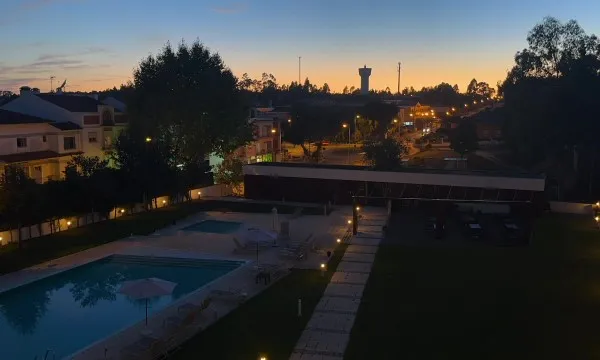
Pool cameras earn their keep on the gate, the fence line and the equipment room door. Most pool trouble in a community happens after hours: people climbing the fence at night, a gate propped open, chairs thrown in the water, a break-in at the pump room. Cameras aimed at the entry gate and along the fence, plus one covering the deck from a high corner, record those events without zooming in on bathers. We do not put cameras in changing rooms, showers or restrooms at any pool house; New York's unlawful surveillance law, Penal Law §250.45, makes recording in a bathroom, changing room or shower without consent a felony, and no condo purpose changes that.
A clubhouse usually has an entrance, a main room, a kitchen and restrooms, and sometimes a fitness room or office. The entrance camera is uncontroversial; whether the main room records during private rentals is a board choice we answer in the questions below. Restrooms are never on camera.
Tennis courts, basketball courts and playgrounds get cameras for vandalism and after-hours use, typically one camera from a building or light pole that takes in the whole space at moderate resolution. Playgrounds are a place to be deliberate. Recording children at play is lawful in a common area, but footage of minors should be locked down in the policy: reviewed only when there is an incident, never exported for anything except that incident, and never posted. We set the playground camera to a wider, lower-detail view and recommend the board say so in its owner notice.
Communities that border woods, wetlands or parkland, which on Staten Island means a lot of them, often have informal paths in from the back line. A camera at the point where a path meets the community's lane shows foot traffic in and out. Cameras pointing into the woods themselves mostly record branches moving and animals, and the false alerts that come with them, which we address under conditions below.

The North Shore is where Staten Island condominiums look most like the rest of the city. St. George, Tompkinsville and Stapleton have older elevator buildings from the 1930s and 1960s, a few newer towers, and the waterfront development that followed the Bay Street Corridor rezoning, which the City Council approved on June 26, 2019, covering about 20 blocks and roughly 1,800 planned homes according to City Limits. Commercial Observer's January 2026 survey of Staten Island multifamily development described the borough's zoning as a brake on apartment construction for decades; one attorney it quoted put it bluntly, saying "the zoning on Staten Island makes it virtually impossible to build multifamily housing." The result is that North Shore elevator condos are few, varied, and often on unusual sites.
The streets that climb from the ferry terminal toward Grymes Hill and Stapleton Heights put some buildings on slopes steep enough that the garage opens onto one street and the lobby onto another, a full story or two higher. Camera coverage has to follow both entrances, and the recorder location has to make sense for both. We usually place it on the lobby level or above, run a riser cable down to the garage, and label views by street so whoever reviews footage knows which door is which.
Lobby cameras in a North Shore building watch the street door from inside at face height, the mailboxes and the elevator doors. Many of these lobbies face the harbor or a bright street through glass, so we choose cameras with wide dynamic range and mount them to look across the glass rather than straight into it. Where the building has a package shelf or room, it gets its own camera aimed at the shelves, not just the door.
An elevator camera is a common request and a common source of confusion about who does what. We install the camera in the cab and the wireless link that carries its video from the cab to the building network, which avoids touching the elevator's traveling cable. Anything inside the elevator controller, machine room equipment or the car's own wiring belongs to the building's elevator contractor, and we coordinate the visit with that contractor rather than work around them.
Garage cameras follow the same logic as parking courts: one camera inside the overhead door looking in, so every car is seen after it clears the door, then views along the drive aisles and at each stair and elevator vestibule. Stair doors to the roof and the cellar, the trash room and the service entrance are the back-of-house doors boards most often leave uncovered, and they are where a building's propped-door problems show up first.
Mixed-use buildings along Bay Street, Victory Boulevard and Forest Avenue add one more layer. The stores below often run their own camera systems for their own spaces. The condo's system covers the residential entrance, the residential halls and whatever the declaration makes common, and we keep it on a separate recorder unless the board and the commercial owners agree in writing to share one.
The hardware in a Staten Island condo system is the same family of equipment we use everywhere: cameras, a recorder, a network switch that powers the cameras, storage, and the software owners and agents use to view it. What changes is the proportion. A tower spends its budget on many indoor cameras over short runs. A townhouse community spends a bigger share on fewer outdoor cameras, the links that reach them and the hardware that survives the weather.
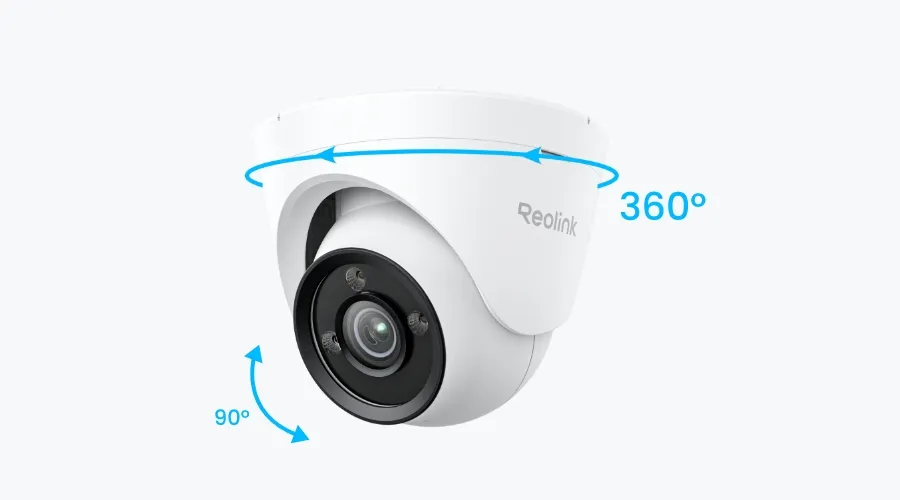
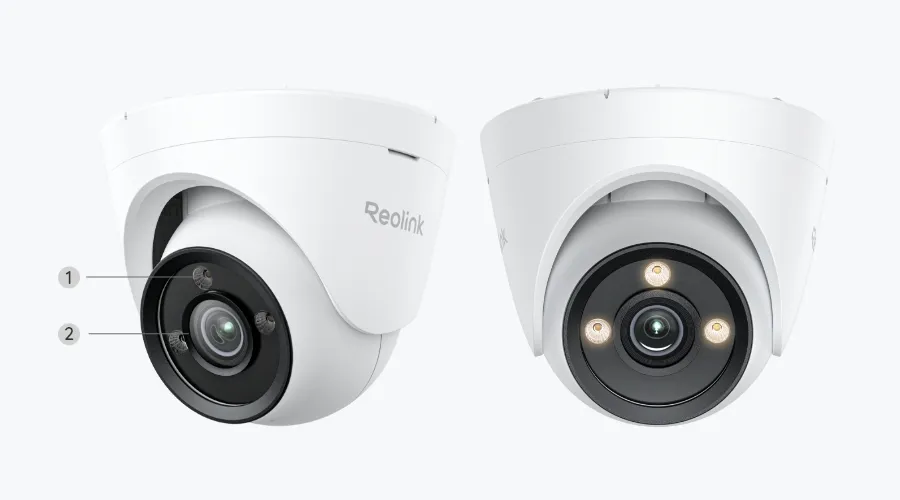
Turret cameras, with a ball-shaped lens in a short housing, are our default for eaves, carports and building corners, because they shrug off water and have no glass dome to fog or scratch. Domes suit covered spots that people can reach, such as clubhouse ceilings and carports, where a vandal-resistant housing matters. Bullet cameras, longer and narrower, are easy to aim down a long lane or parking court and give a visible "this area is recorded" signal. Pan-tilt-zoom cameras earn a place only where someone will actually steer them, such as a superintendent's desk overlooking a large lot; on a volunteer-run community they mostly sit in one position. Full-color low-light cameras help where the court has some lighting, and models with a built-in white light can add both color and deterrence at a dark entrance.
A network video recorder in a locked utility closet, office or clubhouse room records every camera continuously or on events, depending on the policy. FirstService Residential, a large condo management firm, says condo and co-op footage is generally kept 30 to 90 days depending on the building; we size the recorder's drives to whatever retention the board picks at the camera count it plans to reach, not just the first phase. The recorder sits on a battery backup so short outages do not erase the minutes that matter.
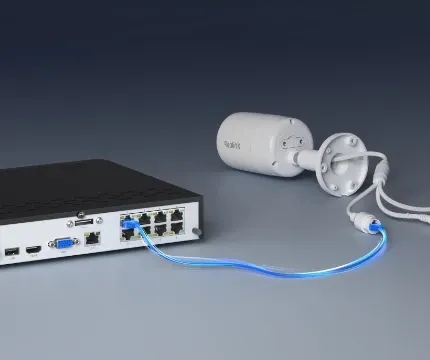
Standard network cable carrying both power and video runs about 100 meters, roughly 328 feet, between the switch and a camera. In a city building that is rarely a limit. On a Staten Island site it often is. When a camera sits beyond that, we choose between a small outdoor-rated switch at a midpoint, fiber optic cable between buildings with media converters at each end, or a point-to-point wireless bridge with a clear line of sight between rooftops. Each is listed separately in the proposal with what it costs and what could go wrong, such as a tree that will leaf out in May across a wireless path.

Unless a board asks for a particular brand, we quote our own house-brand system: commercial-grade cameras and recorders with no monthly fee, which is also what the $999 starting price and our Staten Island price list are built on. It keeps proposals comparable and keeps the condominium free of a subscription it did not choose.
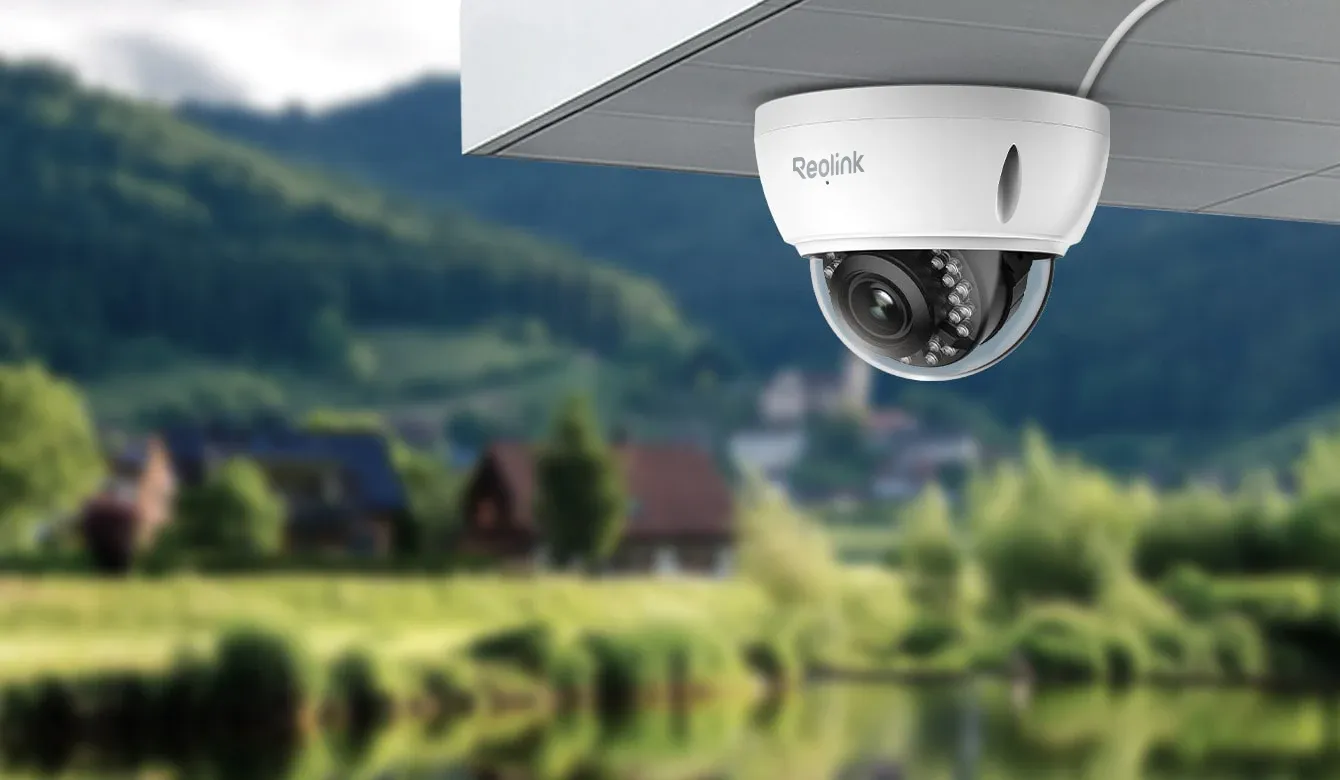
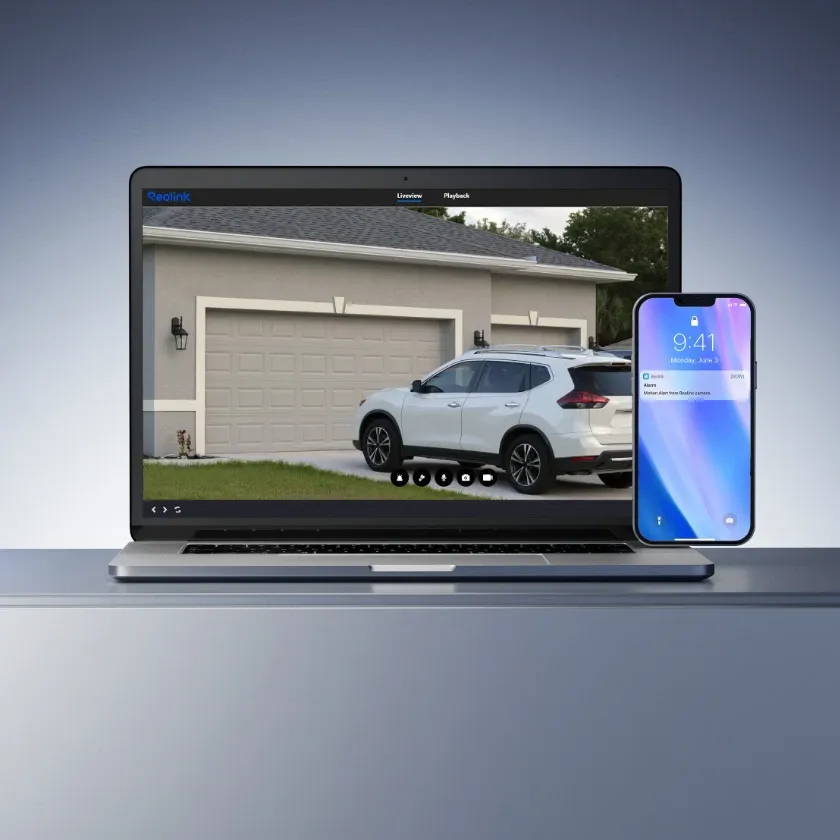
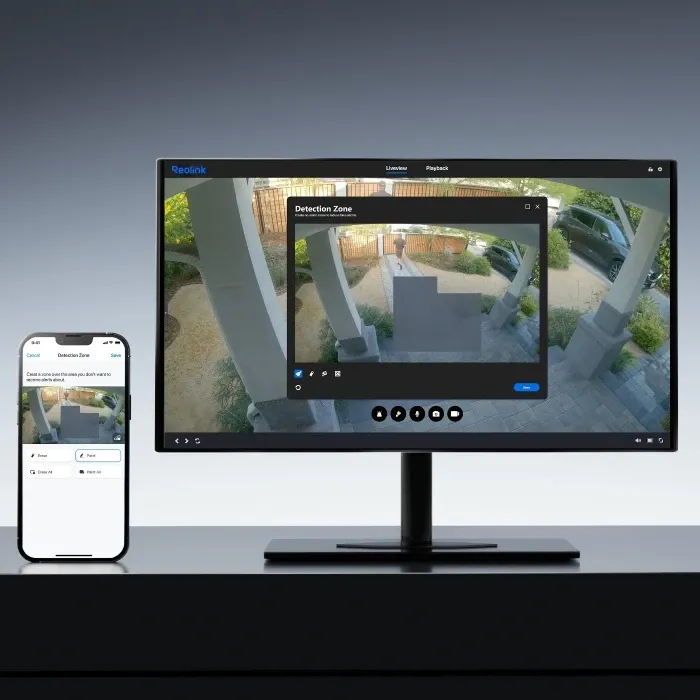
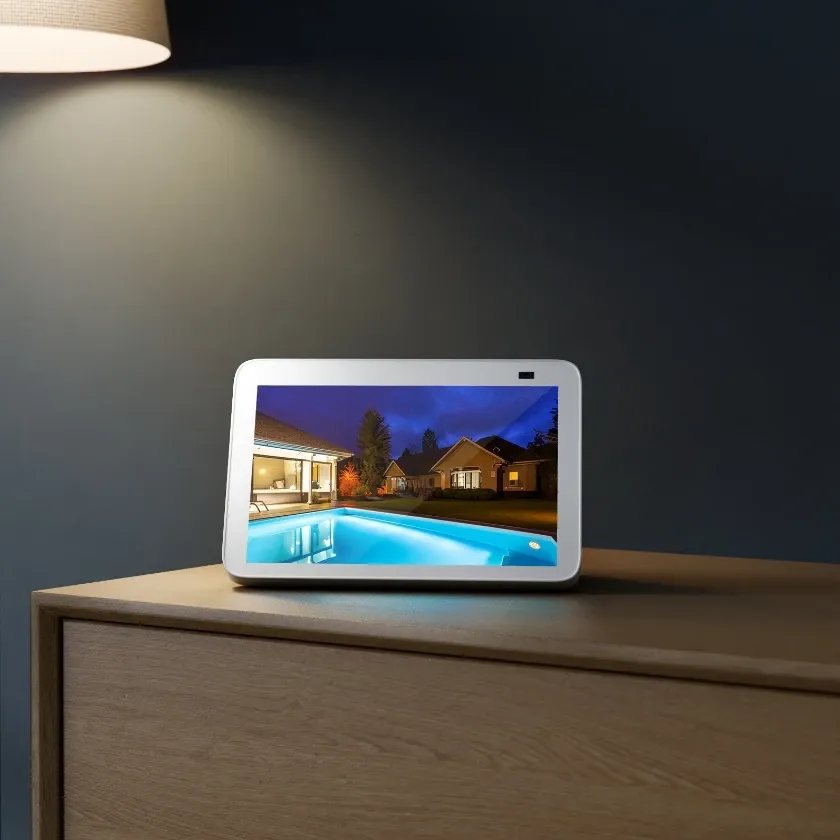
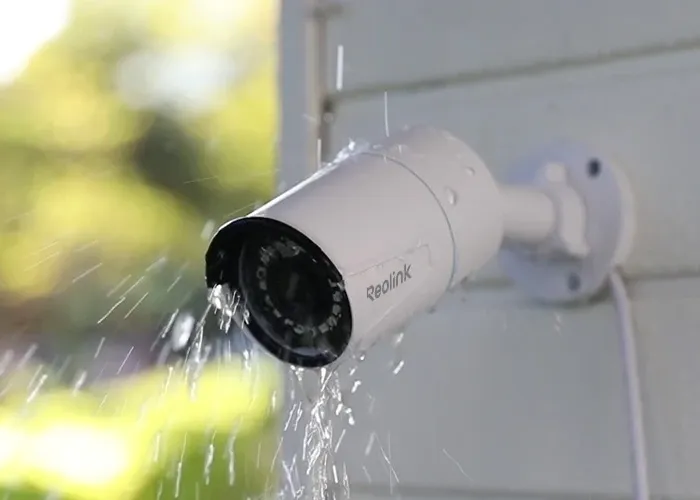
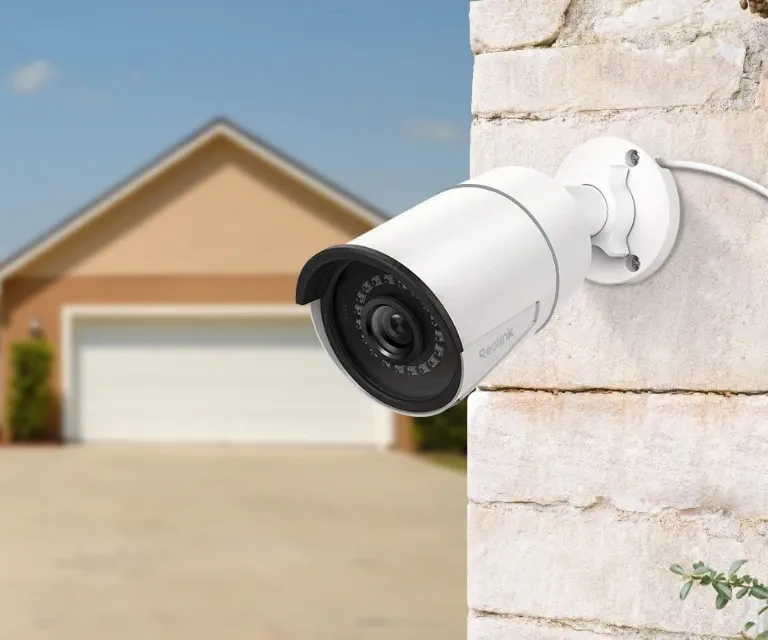
When a board prefers a named brand, we install that too. Lorex, Luminys and Reolink are our partner brands, and the product photos on this page come from Reolink because they show equipment of the kind we install; they are manufacturer images, not photos of Staten Island properties. Other brands are available through our suppliers, and any brand that carries its own cloud plan or license fee is listed as a separate line so the board sees the real cost over time.
Boards ask us about the law on almost every walk-through. We are installers, not lawyers, and nothing on this page is legal advice; a board with a specific question should ask its counsel. What we can do is point to the published rules that shape where cameras go, and tell you how we design around them.
New York's Condominium Act requires bylaws to cover matters such as the board's powers and the care of the common elements (Real Property Law §339-v). Camera projects are normally a common-element decision made by the board under those documents. Where a Staten Island community also has a homeowners association, the HOA's own documents govern the land and facilities it owns. Habitat magazine, writing on condo surveillance in August 2023, quoted attorney Andrew Lieb on the limits of board rules: "A house rule that is unauthorized by these foundational documents is unenforceable." So the first question is not whether cameras are allowed in general but which body's documents authorize them on that piece of ground.
New York's eavesdropping statute, Penal Law §250.05, makes "mechanical overhearing of a conversation" (defined in §250.00) without the consent of at least one party a felony. Many cameras ship with microphones turned on. We disable audio recording on every common-area camera we install, including the pool deck and the clubhouse, and we note that in the handover so a future installer does not quietly switch it back.
Penal Law §250.45 lists bedrooms, changing rooms, fitting rooms, restrooms, toilets, bathrooms, washrooms and showers as places where recording a person without consent is unlawful surveillance. FirstService Residential's guidance for condo and co-op boards adds that New York's Labor Law §203-c bars video recording of employees in restrooms, locker rooms and changing areas. In a townhouse community that means pool house changing rooms and restrooms, clubhouse restrooms and any staff changing area in a maintenance building are off the plan entirely.
A lawyer answering a reader's question in CooperatorNews in 2025 noted that the law gives the inside of a neighbor's unit considerable privacy protection, and that a camera which "peers into a neighboring unit" can interfere with that. Townhouse communities make this easy to get wrong, because front windows, sliding doors and back decks face the same lanes and lawns the cameras watch. We aim every view at shared ground, test angles from inside the frame at night when lit windows stand out, and black out any window that remains in view using the recorder's privacy masking, which removes that part of the picture from live view and recordings alike.
The same CooperatorNews column pointed out that condominiums typically bar owners from altering common elements on their own and that board consent is advisable before an owner mounts a camera on them. On Staten Island the line is often blurred: an owner's front wall, stoop and patio may be part of the unit, a limited common element or a common element depending on the declaration. Boards that adopt a short rule on owner doorbell and porch cameras, saying where they may point and what they may not record, avoid most neighbor disputes. We do not install a camera on a common element for an individual owner without written board approval.
New York City's Local Law 63 of 2021 regulates smart access systems, including biometric entry, in certain residential buildings. Whether and how it applies to a particular condominium is a question for the board's counsel. Separately, we do not set up face identification on condo common-area cameras unless a board asks for it after legal review; person and vehicle detection, which only tell the recorder that a human or a car is in the frame, are different and are what most boards actually want.
New York State licenses security and fire alarm installers through the Department of State, and its regulations at 19 NYCRR Part 195 treat video surveillance used to detect or monitor intrusion as a security system. Our license number is #12000287431. Most condo cameras run on low-voltage network cable from a PoE switch, which is not electrical work; we do not do electrical work, and if a pole or utility room needs a new outlet, the community's electrician installs it.
The camera plan decides what gets recorded. The footage policy decides what happens next, and in a volunteer-run community it matters more than the hardware. Without one, recordings end up on a board member's personal phone, clips get forwarded around a group chat, and the board has no answer when an owner asks why a neighbor saw a video of them. FirstService Residential recommends that boards keep a log of footage requests and a list of everyone who has accessed footage, and that residents not receive footage or copies without approval from the board and legal counsel. We give every board a short template that covers the same ground, for its counsel to adapt.
Where a master HOA owns the entrance, pool and clubhouse and a condominium association owns the buildings and parking, both bodies' cameras may share one recorder for cost reasons. The policy then needs to say which board controls which cameras and who reviews footage of shared areas. We can set the recorder up so each body's officers see only their own cameras, which keeps the system on one box without blurring responsibility.
Signs at the entrance and the amenities, plus a notice to owners with a simple map of what each camera covers, head off most complaints before they start. Many Staten Island condo homes are rented, and renters live with the cameras too; the notice should go to them through the owners, and the policy should say renters can ask for footage the same way owners do.

Most of our Staten Island proposals go to a board of three to seven volunteers, many of whom work full time and meet monthly or less. The proposal is written for that audience: something a treasurer can read at the kitchen table and a president can present in ten minutes.
A site map of the community with each camera numbered and its field of view sketched; a one-line purpose for each camera ("records cars entering at the main gate"); the recorder location and how many days of video it keeps; how distant cameras are linked and powered; the price of each phase, with buried, concealed and exposed runs on their own lines; anything that could add cost, such as an old cable that may fail its test; and the warranty and service terms. If the board wants options, such as color-at-night cameras at the entrance or a second camera on the mailbox pad, each option is priced on its own so the board can approve some and not others.
The signer is whoever the governing documents and a board resolution authorize. In communities with both an HOA and a condominium association, each signs for the cameras on its own property, or one signs for both under a written cost-sharing agreement between them. In professionally managed communities the managing agent often countersigns after the vote; in self-managed ones, an officer does.
How a community funds cameras is the board's decision under its own documents and budget. Associations commonly pay from operating funds for a small system, from reserves when cameras replace an aging system, or through a special assessment for a large first-time installation; we make no recommendation on which is right. Splitting a project into phases, entrance and parking first, amenities the next year, is common, and we size the recorder for the full plan so phase two plugs in.
Condominiums and HOAs pay the same Staten Island camera prices as anyone else on the Island; nothing is added because the buyer is a board. Four house-brand cameras and a recorder, installed, start at $999, and higher-resolution, full-color and network-recorder packages for the borough are listed on our Staten Island security camera pricing page. Because a community almost always needs more than four views, $999 is the first line of the estimate, not the total.
| Line on the proposal | How it is priced on Staten Island |
|---|---|
| Starter system: four house-brand cameras and a recorder, installed | $999 |
| Each camera beyond the first four | Each one priced once we have walked the site and confirmed the layout |
| Long runs, buried conduit, fiber or wireless bridges to distant cameras | Itemized separately, link by link, before anything is ordered |
| Concealed wiring inside finished walls and ceilings | Quoted as an extra, run by run |
| Poles for entrance or mailbox cameras | Listed with height, location and footing, priced per pole |
| Larger recorder and more storage | Sized to the full camera plan and the retention the board chooses |
| A named brand instead of the house system | Quoted when the board asks, with any monthly plan broken out |
| Installing cameras the association already bought | Labor only, quoted by phone or text |
In a city building, the variable that moves a per-camera price most is usually how hard it is to hide cable inside finished walls. On a Staten Island site it is distance and ground. A camera on the clubhouse thirty feet from the recorder costs little beyond the camera itself. The same camera at the entrance, four hundred feet away across a lawn and a lane, needs either a trench and conduit, a fiber run or a wireless bridge, and possibly a pole. That is why we price additional cameras only after walking the property: the board votes on a number that holds.
Ordered equipment cannot be returned, so anything that could raise the price is disclosed in the proposal: an existing buried cable that might fail its test, a tree that may need trimming for a wireless path, ledge rock under a planned trench, or a lift for a high mount. Digging, paving repair, wall patching and painting are outside our scope; where a trench crosses pavement, the community's paving contractor restores it.
Now and then a director has already bought a box of cameras for the community. For equipment the association supplies, our price is for labor alone, worked out over the phone or by text from the model list and the spots to cover, and the install goes on the calendar when the deposit comes in. We do not schedule site visits for association-supplied gear, and any fault in it is a matter for the association and whoever sold it.
Three kinds of coverage apply, and it helps to keep them apart. Our website lists a 30-day warranty on the installed system. Boards that want longer protection, often those paying from reserves, can buy one-year or multi-year plans as an add-on at signing. The hardware itself, cameras, recorder and drives, is covered by each manufacturer under its own terms. Full terms — including 50% deposit, one-year parts-only warranty on Abstract Enterprises Security Systems-supplied products, and the late-fee schedule — are set out in the service agreement.
Financing is available through Wisetack, subject to approval.
A few details help us prepare: roughly where the community is, how many homes or units it has, whether it has its own road, a gate, a pool or a clubhouse, and what the board most wants watched. If you have the community site map, attach it or mention it and we will sketch camera spots before we arrive. Prefer to talk? Call or text (347) 934-8335.
Got it. Expect a call or text from our office, usually inside 2 hours, to pick a walk-through date for your Staten Island property.
Staten Island is usually described by its shores, and the description fits condominium camera work well. The equipment is the same everywhere; the building stock, the ground and the weather are not. PLUTO's ZIP-code totals show where the work concentrates: about 4,950 condo units in 10314, about 1,500 in 10304, and between roughly 400 and 850 each in 10306, 10305, 10301, 10309, 10312, 10303 and 10308, with smaller numbers elsewhere.
ZIP code 10314 alone holds about 43 percent of the borough's condominium homes, most of them townhouse and garden communities near Richmond Avenue, the Staten Island Mall, the College of Staten Island campus in Willowbrook and the edge of Freshkills Park. These are the communities where entrance roads, parking courts, pools and clubhouses dominate the plan, and where long runs between buildings make link design the biggest single line on the proposal. Many of them date from the 1980s building boom, so we often find early camera systems added by past boards on coax cable that needs testing before reuse.
The North Shore mixes the borough's few elevator condominiums, small newer condo buildings on former house lots and mixed-use buildings along Bay Street, Victory Boulevard and Richmond Terrace. Hills, harbor glare and split-level entrances are the planning questions here, along with elevator cab cameras and the separation of residential and store systems. Buildings near the ferry terminal and the Bay Street corridor see steady foot traffic past their doors, so entrance cameras are framed tight on the building's own steps rather than the whole sidewalk.
The low-lying East Shore took the worst of Hurricane Sandy. The city's rebuilding report counts 23 storm-related deaths on the Island, all but one on the East and South Shores, and WNYC described the square mile around Midland Beach, Ocean Breeze and part of Dongan Hills, bounded by Midland Avenue, Father Capodanno Boulevard, Seaview Avenue and Hylan Boulevard, as the deadliest place in the city that night, with streets several feet below the boulevard along the water. Condo communities in this belt plan cameras around water: recorders and switches above any past flood line, outdoor connections sealed against wind-driven rain, and salt-resistant hardware within sight of the beach.
Nacmias Law names Annadale, Huguenot and Eltingville among the areas where Staten Island's planned townhouse condominiums cluster. South Shore communities are often wooded at the edges, with deer and raccoons that trigger motion alerts, private lanes that the association plows, and amenities near the back of the property. Tottenville, at the island's southern tip near Conference House Park, and the communities along Hylan and Amboy Road add bay exposure on the southern side.
The West Shore, around Bloomfield and Travis, has more commercial and light-industrial condo buildings than homes; there the work is shared lots, loading docks and fences. Across all of these areas, the drive from our Troy Avenue office in Brooklyn crosses the Verrazzano, and we schedule Staten Island walk-throughs and installs in early-day windows to keep crews on site, not in traffic.

Camera spec sheets assume mild conditions. Staten Island condominiums sit on a coastline, in woods and on hills that test equipment in ways a city interior never does. Most of these problems are cheap to plan for on the walk-through and expensive to discover after the first storm.
The NYC Building Code's flood-resistant construction appendix (Appendix G) requires mechanical equipment and outside appliances in flood hazard areas to be elevated to or above the design flood elevation, which for many structures is the base flood elevation plus two feet. A camera recorder is not named in that rule, but the logic carries over: if the clubhouse office or a ground-floor utility room has taken water before, the recorder, switch and battery backup go higher, on an upper floor or a raised shelf, with cables brought up from below. A recorder that drowns takes the recordings of the storm, and everything before it, with it.
Nor'easters and tropical storms drive rain sideways into connections that stay dry in a normal shower. We seal every outdoor cable entry and keep connectors inside junction boxes rather than taped to the wall, and we mount cameras under eaves or overhangs where the building allows. Short, rigid mounts and properly anchored poles resist the vibration that blurs night video in gusts.
Within a few blocks of the beach on the East and South Shores, salt spray corrodes plain steel brackets and screws and fogs lenses. We use stainless or coated hardware and housings rated for outdoor exposure, and we put lens cleaning on the maintenance list more often than for inland communities.
Associations that plow their own lanes push snow onto the same curbs and islands where entrance and mailbox poles stand. Poles go behind the plow line, low-mounted equipment gets a protective post or none at all, and cameras are mounted high enough that ice sliding off a roof will not knock them out of line.
Wooded edges block views and wireless paths once leaves grow in. We check sightlines with summer canopy in mind, not just the bare branches of a winter walk.
Cameras on the PoE switch run off the battery backup with the recorder. A remote pole that needs its own outlet gets one from the community's electrician; we do not do electrical work.

Adding two cameras to a working recorder can be finished soon after the board signs. A full community system may wait through two or three board meetings between proposal and vote. The steps do not change.
Any officer, director, agent or owner can start it. We book the walk-through within 2 hours of the request, any day of the week, as a two-hour arrival window, with early-day slots first.
With a board member or the agent, we walk the entrance, lanes, parking, mail pad, amenities and back lines, open the room where the recorder is or will go, test existing cable and measure distances.
Each camera numbered on the community's map with its purpose, link and power method, retention and storage, every long run and pole itemized, and anything that could add cost stated up front.
Once the board or boards vote under their documents, the person they authorize signs and the deposit is paid. Only then do we order equipment; the certificate of insurance for the association follows the award.
A plain summary and a lane-by-lane schedule go to the agent or secretary to send owners and renters, including any parking spaces that will be blocked and when.
Cable, links, poles, cameras, switch, recorder and battery backup go in. Views are aimed at night as well as day, windows masked, microphones disabled, detection zones and retention set.
The board receives its own logins for each officer and the agent, a quick lesson in finding and saving footage, a printed camera map keyed to the community, and the administrator keys in the association's name.
Our install calendar fills in the order deposits arrive, so a signed and paid job gets the next open slot; unsigned proposals hold no date, and nothing is promised for the same day. When a board picks a named brand that has to be special-ordered, it is ordered after the deposit and the install date is set once the shipment is in hand.
Few Staten Island communities start from nothing. More often there is a recorder in the clubhouse closet that a past board bought, a mix of cameras added over the years, and a password that left with the director who set it up. The choice between repair, expansion and replacement comes down to three tests we run on the walk-through: can we get administrator access, is the recorder still supported with security updates, and does the existing cable test good.
If the recorder is reasonably current and we can recover or reset access, repairing a few failed cameras, replacing a dead drive and setting up alerts and proper accounts may be all the community needs. Our security camera repair service on Staten Island covers that work in detail; for a condominium, we add the account cleanup and footage-policy setup that turn a repaired system into one the board actually controls.
When the recorder is sound but coverage is thin, we add cameras where the old plan missed: the mailbox pad, the far parking court, the pool fence. A recorder with spare channels takes them directly; one without may need a channel upgrade or a second recorder. Old coax runs from analog cameras can sometimes carry new high-definition analog cameras or, with adapters, network cameras, but only after they test good end to end.
A recorder that no longer receives updates, cameras so old that night footage is unusable, or a system nobody can get into are reasons to start over. Replacement is also the moment to fix the layout: move the recorder out of a flood-prone room, put cameras on their own network and correct angles that have been filming owners' windows for years.
We arrive inside the scheduled two-hour window, never early, and park where the agent or board tells us, usually in guest spaces or at the clubhouse, rather than on narrow lanes. Lifts and ladders go up only after the lane is coned off, and we move them between camera locations rather than leaving them standing. Where a trench or conduit crosses a lawn, the route is agreed in advance, marked, and left tidy; restoring pavement or patching walls is for the community's own contractors.
Owners will ask the crew questions. Our installers answer what the camera will see and point anything else, such as whether a camera can be moved for one owner, back to the board, because the board, not the installer, made those decisions. We do not enter homes for common-area work; if a cable path would require going through a unit or an owner's garage, it is raised in the proposal and arranged through the board in advance.
Before anyone walks the property, boards usually want a rough idea of size. The ranges below come from communities we have surveyed and cover shared areas only. Treat them as orientation, not a quote or a statistic; the actual count comes from the site, and cameras past the first four are priced once we have seen it.
| Community type | Areas usually covered | Cameras we often plan |
|---|---|---|
| Small condo, two to six units | Front entry, side or rear door, driveway, mailboxes | 4–6 |
| Townhouse community, 20–60 homes | Entrance overview and detail, lane intersections, guest parking, mailbox pad | 6–14 |
| Townhouse community with pool and clubhouse, 60+ homes | All of the above plus pool gate and deck, clubhouse entry, courts, playground | 14–28 |
| Garden complex with parking courts | Each building entry, each court's drive-in point and overview, dumpster corral | 12–32 |
| North Shore elevator condo | Lobby, mail area, elevator cab, garage door and aisles, stair and service doors | 10–24 |
| Commercial condo building | Shared lot, loading area, lobby, perimeter fence | 6–16 |
Size the recorder and storage for the whole plan even if the board approves only the first phase. Spare channels and drive bays cost little on day one and avoid a second recorder when the pool and clubhouse cameras are approved the following year.
National cost guides such as Angi, HomeAdvisor and Fixr, store displays and well-meaning neighbors give boards plenty of confident advice. Much of it is written for a single house. Here is how seven common claims hold up in a Staten Island condominium.
Doorbell cameras watch doorsteps. They do not watch the entrance, the lanes, the parking courts, the mailbox pad or the pool, which is where most community incidents happen. They also store video in dozens of separate personal accounts, so after an incident the board has to ask owners one by one for clips, some of whom will not have kept them.
Owner cameras and a community system complement each other. The community system covers shared ground under one recorder the board controls; owners keep their own doorstep cameras under whatever rule the board adopts about where they may point.
Most "wireless" cameras still need power, so they need either a wire to an outlet or a battery that someone has to recharge. Battery models also record only on motion and wake up a second or two late, which can miss the event the board most wants to see.
Wi-Fi is also the weak link across a Staten Island site. Signal from a clubhouse router fades long before it reaches the far parking court, and every leaf, wall and car in between weakens it further. A wired camera on PoE, or a dedicated wireless bridge built for long outdoor links, is far more reliable.
Resolution is spread across the whole frame. A 4K camera aimed at a hundred-foot parking court gives each car a modest number of pixels, and at night, with less light, the usable detail falls further. It will show that something happened; it usually will not show who.
Two ordinary cameras, one wide and one tight on the court's only entry point, beat one premium camera trying to do both jobs. Lighting beats both: an unlit court records shapes no matter what camera watches it.
Solar cameras are useful at a mailbox pad or a far gate where running power is impractical. But they record on events rather than continuously, they depend on enough winter sun reaching the panel, and many send video to a cloud subscription rather than to the community's recorder.
On a shaded, north-facing or tree-lined Staten Island lot, a panel that works in July may struggle in January. We check panel placement against winter sun angles and the tree canopy before recommending one.
Cameras deter some people and record the rest. They do not stop a determined thief, and footage of a hooded figure at night does not guarantee an arrest. What cameras reliably do is establish what happened, when and in which direction, which helps police, insurers and the board.
Deterrence improves with visibility: a camera people can see, a sign at the entrance and good lighting. Some cameras add a white light or a siren on detection, which some communities find useful at a pool fence after hours and others find too intrusive for a residential lane.
Cloud plans look cheap per camera per month, but a community system has many cameras and runs for years. Multiply the subscription by the camera count and by five or ten years, and a recorder with local drives usually costs less. Cloud upload also depends on the community's internet upload speed, which many clubhouse connections cannot spare for a dozen cameras.
Local recording keeps the footage on equipment the association owns, under its own accounts, and it keeps recording when the internet goes down. Remote viewing still works when the connection is up.
New York State requires security system installers to be licensed by the Department of State, and its regulations at 19 NYCRR Part 195 cover video surveillance used to detect or monitor intrusion. An association that hires an unlicensed installer takes on the risk if something goes wrong.
Beyond licensing, the hard parts of a community system are design decisions a handyman is not set up to make: links between buildings, recorder sizing, network separation, privacy masking and account control.
There are three workable routes, and the walk-through decides which. If the association will allow a trench, a conduit carrying network cable or fiber from the nearest building gives the most reliable result; fiber is needed beyond about 100 meters. If digging is off the table, a point-to-point wireless bridge from a building roofline to a small pole-mounted enclosure carries the video, with power coming from an outlet the community's electrician adds at the pole. For a low-traffic spot with no power at all, a solar-assisted camera can work, recording on events. We price each option the site allows so the board can compare cost against reliability.
Mostly, yes. Plain motion detection reacts to anything that changes in the picture, including animals, swaying branches and headlights. Cameras and recorders with person and vehicle detection classify what moved and alert only on the categories you choose. We also draw the detection zone to exclude the tree line and set alerts for the hours the board cares about. No setting is perfect, and a large dog at night can still fool a camera now and then, but the alert volume usually drops from dozens a night to a handful a week.
Yes. One recorder can serve both levels as long as the cable between them is planned. We usually put the recorder at lobby level or above, away from any water that could enter a lower garage, and run a riser cable down to a switch serving the garage cameras. Views are named by street and level, so whoever reviews footage knows instantly which entrance they are looking at, and the garage and lobby door cameras share one timeline when a car comes in below and the driver walks up into the lobby.
Yes. We create a separate account for the pool company that shows only the pool gate, fence and deck cameras, with viewing rights but no export or settings rights. The board's officer or agent switches it on at opening day and off after closing, and the account log shows when it was used. That is far safer than sharing an officer's login, which tends to stay on a lifeguard's phone long after the season ends.
We place camera poles on the association's own land, inside the property line shown on the community's survey, and we keep them out of the public sidewalk and roadway. Anything in the public right-of-way would need city approval, which is why we design around it rather than into it. Whether a particular pole, footing or sign change needs approval from your own association or from any agency is a question for the board and, where needed, its counsel or engineer; we mark exact pole positions on the site plan so that review can happen before the vote.
That is a board decision, and boards go both ways. Some keep the main-room camera on to resolve damage claims after rentals; others turn it off during bookings out of respect for guests. A common compromise is a camera on the clubhouse entrance and vestibule that always records, plus a main-room camera scheduled off during reserved hours. Whatever the board chooses, the rental agreement should say so, and restrooms and changing areas are never on camera.
No. Properly mounted outdoor cameras are built to stay up, and the storm is exactly when the board will want recordings of what happened to cars, trees and buildings. The preparation that matters is elsewhere: confirm the recorder and battery backup are above any past flood level, check that the backup's battery is healthy, and make sure someone knows how to look at the system remotely after power returns. Anything temporarily mounted, such as a camera on a seasonal tent, should come down.
Yes, within limits. A camera aimed at a known problem drain, catch basin or the retention area's outlet lets the board or the superintendent check water levels from a phone during a heavy storm instead of walking out into it, and the recordings show how high water rose and how long it stood, which helps when the board talks to engineers or contractors. A camera is not a flood sensor and will not send a water-level alarm by itself; it gives you eyes on the spot.
Not in a way anyone can enforce. Some cameras offer analytics that estimate speed, but those estimates are not calibrated measurements and the association cannot issue tickets on private roads. What a lane camera can do is show which vehicles regularly drive too fast and when, which supports a letter to an owner about a guest or contractor, and shows the board where signs, speed humps or a stop bar would help.
Yes, and it is one of the most useful single cameras in a townhouse community. One camera on a nearby pole or wall, framed on the front of the unit and the person standing there, records who used the boxes and when. We set it so it cannot read envelopes or the inside of an open box, set late-night alerts if the board wants them, and keep it low enough to see faces but high enough to be out of easy reach.
Yes, with the right hardware. Screwing a camera straight onto vinyl siding cracks the panel and lets water in behind it. We use a siding mounting block that sits flat in the siding profile, fasten through it into the sheathing and framing behind, and seal every penetration. Where the board prefers no holes in the homes at all, cameras can go on soffits, fascia boards, carport structures or poles instead, which also keeps the association's equipment off walls that may belong to individual owners.
Cameras give the board a dated record of which cars use the guest spaces and for how long, which is what it needs before it acts under its own parking rules. A camera covering the guest area, with the recorder's clock kept in sync, shows a car arriving at 6:40 a.m. and leaving at 7:15 p.m. on five weekdays running. Whether to post signs, issue warnings or tow is the board's call under its documents and with its counsel's advice; the cameras supply the evidence.
Some Staten Island projects are not really condominium projects at all. A single-family home, a storefront, a warehouse system on old coax, or a board that wants to replace its intercom while the cameras go in each has a better page:
We have been putting in security systems around New York since 2002, and certain surprises repeat often enough in Staten Island communities that they are now on our walk-through checklist.
The recorder was in the pool pump room. It is a common choice because the room is locked and has power, and a poor one, because pump rooms are damp, hot in summer and cold in winter, and close to chemicals. Moving the recorder to the clubhouse office usually costs one cable run and adds years to the equipment.
The entrance camera watched the sign, not the cars. Past boards often mounted one wide camera on the entrance sign that showed the landscaping beautifully and every car as a blur. A second, tighter camera at the point where cars slow for the turn fixes it.
The wireless link worked in March. Links installed when the trees were bare fail once leaves fill in. We plan paths against summer canopy and move a bridge a few feet higher rather than fight the trees.
Nobody had the password. In communities run by volunteers, the admin login tends to leave with the director who set it up. We register every credential to the association and leave the board a sealed copy.
Boards on the Island usually line up two or three bids, and the totals alone mislead, since one bidder may count fewer cameras, skip the link to the far court, undersize the drives or leave out the pole. Asking each bidder the same questions puts the proposals side by side. Here are the ones we would ask, and how we answer them.
| Ask every bidder | Our answer |
|---|---|
| Is each camera's location and purpose shown on a site map? | Yes. Every camera is numbered on the community's map with what it is meant to record. |
| How do the farthest cameras get power and signal, and what does that link cost? | Each link is named (cable, fiber or wireless bridge) and priced on its own line. |
| At the settings in the bid, how long until the oldest footage is overwritten? | The proposal states the number of days, matched to whatever retention the board sets. |
| Where will the recorder sit, and is that room above any past flood level? | We name the room and, in flood areas, plan it above the water line. |
| Whose name are the administrator credentials in when the job ends? | The association's. Remote service access exists only if the board switches it on. |
| Is there anything to pay every month? | Not for our house-brand system. A brand with its own cloud plan shows that cost on a separate line. |
| Is audio recording turned off? | Yes, on every common-area camera. |
| What is your New York State license number? | #12000287431. |
| What is covered, and for how long? | Our posted 30-day warranty on the installed system, optional paid plans of a year or more, and each maker's own equipment warranty. |
| At what point do you send the insurance certificate? | After the job is awarded, issued to the association and its agent using the agent's required wording. |
Crews come from our Brooklyn office on Troy Avenue, with offices in the Bronx and Queens behind them, and the company is rated 4.7 stars across 201 Google reviews. What we sell is installation and service of equipment the association owns outright. Staffed monitoring of camera feeds, virtual doorman services and electrical work are not things we offer.
Usually not, and we say so up front. $999 is our Staten Island price for a four-camera house-brand system with a recorder, installed, the same figure as on our Staten Island camera price page. Most condo communities need more cameras than that, and every added camera, long run, pole or wireless link is priced after we walk the property, so the board votes on a complete number.
For most common-area cameras we recommend continuous recording, with motion or person detection used to mark events for quick searching. Continuous recording avoids the gap of a second or two that event-only cameras can miss at the start of an incident. Solar or battery cameras at remote spots are the exception, since they record on events to save power.
Resolution matters less than how close and how well lit the subject is. A 4-megapixel camera framed tightly on a doorway or a lane where people pass within a few yards will usually show a face; an 8-megapixel camera aimed at a whole parking court usually will not. We choose resolution camera by camera, matched to the distance and the lighting at each spot.
Built-in infrared typically reaches somewhere between about 60 and 130 feet depending on the model, but it shows shapes and movement at the far end, not detail. For useful night detail beyond that, the area needs some light, either a fixture the association adds or a camera with its own white light. We test night views on the walk-through when the schedule allows, or describe what to expect in the proposal.
Only if the declaration makes that wall a common element or the owner agrees in writing, and the board approves. On many Staten Island communities exterior walls are part of the unit or a limited common element, so we prefer soffits, carports, light poles or association poles. The proposal shows exactly which surfaces each camera mounts on so the board can confirm ownership first.
It is possible, and some communities offer it, but it widens who sees footage. If the board wants owners to have it, we create a view-only account limited to one or two non-sensitive cameras, such as the entrance overview, with no playback or export. Most boards keep owner access to live entrance views only, or none at all, and spell that out in the footage policy.
Yes. Send the community's site map or a survey and we can mark likely camera positions and a planning range for the camera count, which helps the board decide whether to schedule the walk. The firm per-camera price still comes after we see the distances, mounting surfaces and cable paths in person.
No. We put cameras on their own network segment so they can talk only to the recorder, and the recorder reaches the internet only for the remote viewing the board approves. Guests and party renters who join the clubhouse Wi-Fi never share a network with the cameras.
The officer or agent named in the footage policy exports the clip from the recorder or the app to a file, logs the request, and sends it to the insurer or saves it to a USB drive. At handover we write out those steps for your recorder and show the reviewer how to export a clip with the date and time stamp intact.
The installed system carries the 30-day warranty listed on our website. One-year and longer warranty plans are available as paid add-ons, priced by the year, and the cameras, recorder and drives also carry their manufacturers' own warranties. The full terms are in the service agreement the board signs.
Often, for basic video. Many network cameras follow the ONVIF standard and will show live and recorded video on another maker's recorder, but features such as person detection, two-way audio and the phone app's full functions may work only within one brand. Before adding a different brand we test a sample camera on your recorder and tell the board what will and will not work.
It is lawful in a common area and many boards do it for vandalism and after-hours use. We set the playground camera to a wide view rather than close-ups, and recommend the footage policy say playground footage is reviewed only after a reported incident, exported only for that incident and never posted or shared beyond it.
Our NYC overview, condo security camera installation in NYC, compares the five boroughs side by side. Agents whose portfolios cross the bridges can go straight to condo security camera installation in Manhattan, condo security camera installation in Brooklyn, condo security camera installation in Queens or condo security camera installation in the Bronx; communities east of the city have condo security camera installation on Long Island. Or return to the Abstract Enterprises Security Systems home page.
One plan for the whole site, from the gate to the pool fence, with every login in the association's name. Staten Island systems start at $999 for four cameras, installed. NYS license #12000287431 · 4.7 stars from 201 Google reviews.