What are you looking for?
About Us Contact Us Careers Get a Free Quote (800) 486-0943
Pick a service
✅ Got Your Own System?
🎬 Home TheatreQuote 🎶 AV SoundQuote 🔑 Access ControlQuote
Now pick your area
Pick your area
Long Island
Hudson Valley
Services available
Pricing & Tools
Pick a service for pricing
🚪 Intercom Pricing 🔔 Buzzer Repair Pricing
Calculators
📹 Camera System Calculator 🚨 Alarm Calculator ⚡ Cabling Quote Builder ✅ Got Your Own System?
Select your area
Package room losses, a garage ramp nobody can see, a recorder the sponsor never handed over? Queens condo boards and managing agents can call or text (347) 434-6392
Home › Condo Security Camera Installation NYC › Condo Security Camera Installation Queens
For Queens Condo Boards of Managers, HOAs, Unit Owners & Managing Agents · Served From 460 E Fordham Rd

Condo Security
Camera Installation
in Queens

Package Rooms · Garages & Ramps · Roof Decks · Lobbies · Elevators · Recorders

Condo security camera installation in Queens starts at $950 for a four-camera house-brand system with a recorder, fully installed, and every camera a condominium adds beyond those four is priced once we have confirmed the building's layout on a site visit. Abstract Enterprises Security Systems holds New York State low-voltage license #12000287431 and designs common-area camera systems for condo boards, homeowners associations, unit owners and managing agents across the borough, from the glass towers of Long Island City and the podium buildings of downtown Flushing to the Queens Boulevard mid-rises of Forest Hills and Rego Park, the converted courtyard buildings of Jackson Heights and Astoria, and the beachfront condominiums of the Rockaways.

Quick answer: A Queens condominium usually needs more than four cameras, so treat $950 as the entry point rather than the final number. We walk the common elements with the agent or a board officer at no charge, then write a numbered camera plan the board can vote on: what each camera watches, the recorder size, how many days of video it keeps, and which runs are concealed (concealed wiring is quoted as an extra before anything is ordered). Audio stays off, nothing points into a unit, and the condominium, not the installer, owns every login. We book requests within 2 hours, seven days a week, with early-day visits.

Last updated November 27, 2026 · Written and reviewed by the Abstract Enterprises Security Systems installation team (company byline), New York State license #12000287431 · Published sources cited on this page: NY Real Property Law §339-e and §339-v; NY Penal Law §250.00, §250.05 and §250.45; NYC Department of City Planning (Long Island City Special District, 2001; LIC Neighborhood Plan C 250176; Jamaica Plan, 2007); NYC Landmarks Preservation Commission; Historic Districts Council; Jackson Heights Beautification Group; FirstService Residential; CooperatorNews; Habitat; The Real Deal; QNS; LongIsland.com

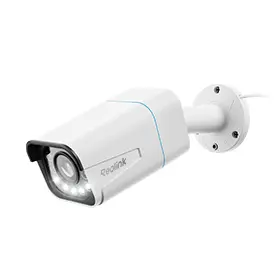
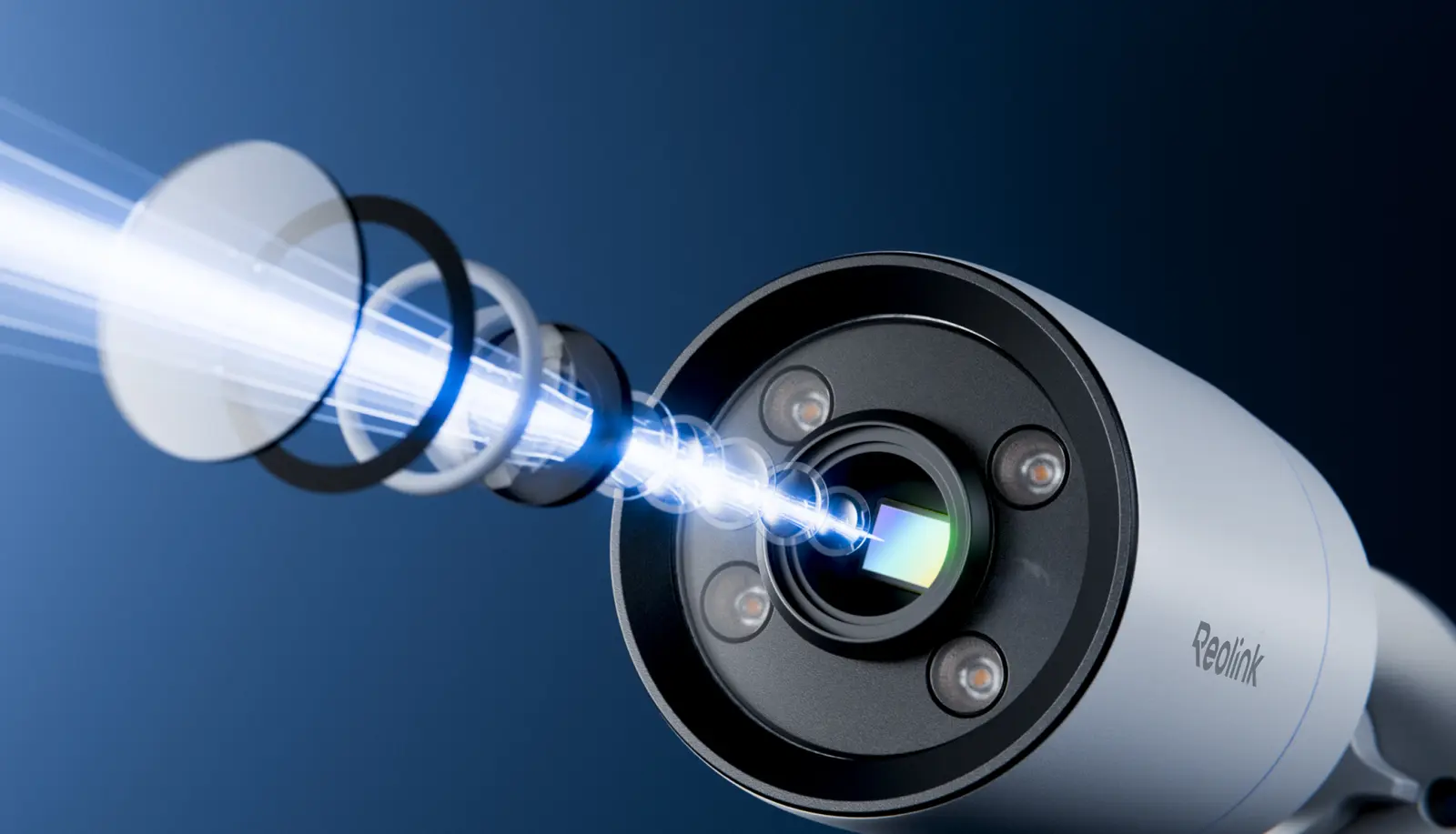
Full-color bullet camera lens close-up for condo security camera installation in Queens
Manufacturer product image from Reolink, one of our partner brands: a white bullet camera shown with its lens elements and lights. Full-color cameras like this keep clothing and car colors visible at night at a lot entrance or garage ramp.
Queens Condo Camera Request
Board officers, HOA members, unit owners, resident managers and agents

✅
Request Sent!
Thanks. Someone from our office will call or text to set up the camera survey at your Queens building.
25+
Years Experience
2 Hr
Booking
$950
4-Camera System
4.7★
201 Google Reviews

Queens condo camera surveys are booked within 2 hours of your call or text, seven days a week, by a company that has been owner-run since 2002 · Queens line (347) 434-6392

The Borough

Why Camera Projects in Queens Condominiums Start From a Different Place

Most Queens condo boards did not choose the cameras they live with. A large share of the borough's condominium stock was planned and fitted out by a sponsor within the last twenty-five years, and the sponsor's integrator picked the camera brand, the recorder, the closet it sits in and the account that controls it, usually months before the first owner closed. When the board of managers takes over, it inherits a system it has never seen a drawing of, with a password that often left with the integrator. That is the starting point for a large part of our condo security camera installation work in Queens, and it shapes everything else on this page: what to keep, what to replace, and who should hold the keys afterward.

The scale of that new construction is documented. In May 2001 the City Planning Commission unanimously approved special zoning for 37 blocks in Long Island City, and the City Planning Commission's report on the LIC Neighborhood Plan (C 250176) counts more than 21,000 housing units built within half a mile of the plan area since 2010, with Hunters Point South alone planned at about 5,000 units. In Flushing, The Real Deal reported in December 2022 that "because its residents prefer to own real estate, Flushing has become a hotbed for condominium projects," naming Sky View Parc, whose pair of condominiums holds nearly 1,200 units above a shopping center. Those figures cover rentals and affordable housing too, so they are not a condo count, but they explain why so many Queens condo boards are dealing with first-generation equipment at the same time.

The other half of the Queens condo picture is older. The Jackson Heights Beautification Group's history of the neighborhood records that in the 1980s at least 60 buildings there were converted to cooperative or condominium ownership, adding more than 5,000 owner-occupied units to a district of 1920s garden apartments. Similar conversions dot Astoria, Sunnyside, Woodside, Kew Gardens and Forest Hills. Those buildings bring a different camera problem: masonry walls, plaster ceilings, narrow cellars and decades of abandoned coax, with no sponsor to blame and usually no record of who installed what.

Then there is the coastline. On the Rockaway peninsula, Arverne by the Sea was planned as a development of about 2,300 homes, condominiums and two-family houses among them, and LongIsland.com reported in November 2012 that the site had been raised five feet with half a million cubic yards of fill, which is why it came through Hurricane Sandy largely dry while neighbors flooded. Beach condos like these put outdoor cameras in salt air, wind and sand, and push recorders up and out of ground-level rooms. A camera that lasts a decade on a Bayside garden condo may not last three winters facing the Atlantic.

Across all of them one legal fact is constant. Under New York's Condominium Act, the halls, corridors, lobbies, stairs, entrances and exits, parking areas, recreational facilities and "all apparatus and installations existing for common use" are common elements (Real Property Law §339-e), governed by a board acting under the declaration and bylaws. So a condo camera system is a purchase by the condominium for space it holds in common, approved the way its bylaws require, not an amenity a landlord buys and imposes. That changes how cameras are placed, who sees the video and how the project is paid for, and it is why we write every Queens camera proposal for a board rather than for a single decision-maker. Rental buildings with one owner have their own page on apartment building security camera installation in Queens.

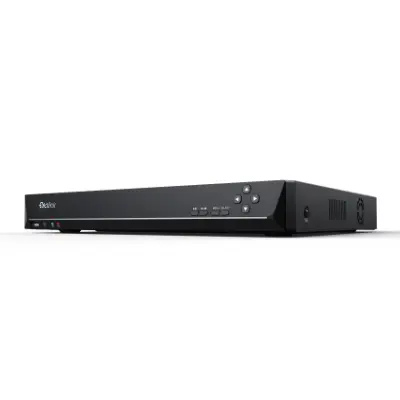
Black network video recorder front panel for a Queens condo camera system
Manufacturer product photo (Reolink): a slim black network video recorder. In a Queens condo it sits in the equipment room with a battery backup, and its channel count is sized for the whole camera plan, not just phase one.
Building Types

Six Kinds of Queens Condo, Six Different Camera Plans

The word "condo" covers buildings in Queens that have almost nothing in common physically. The camera plan follows the building, so here is how the main types differ when we walk them. These are patterns from our own surveys, not statistics; your building may combine two of them.

Waterfront and Court Square towers

Thirty to sixty stories in Hunters Point, Queens West and around Court Square, with a staffed lobby, a package room sized for hundreds of deliveries a week, amenity floors, a roof deck and often a garage. Systems run to dozens of cameras on a rack-mounted recorder, with separate viewing accounts for the desk, the agent and the board.

Podium condos over retail

Common in downtown Flushing and along the Flushing waterfront: residential floors above shops, sometimes above a mall, with a garage shared between owners and the retail side. The camera plan has to follow the declaration's line between residential and commercial common elements.

Queens Boulevard mid-rises

Eight to twenty stories in Forest Hills, Rego Park, Kew Gardens and Elmhurst, many with a single lobby, one elevator bank, a part-time super and a management office elsewhere. Entrance, package area, elevator, rear door and cellar cameras carry most of the load, and remote viewing for the agent matters more than a desk monitor.

Conversion and courtyard buildings

Pre-war garden apartments in Jackson Heights, walk-ups in Astoria and Sunnyside, and former factories turned lofts near the Long Island City rail yards. Multiple entrances off one courtyard, brick and plaster everywhere, and old cable that has to be tested before anyone counts on it.

Beach and bay condos

The Rockaways, Arverne and Howard Beach: low-rise buildings and townhouse rows with parking courts, boardwalk-facing facades and storm exposure. Outdoor hardware choice and recorder location decide whether the system survives.

Garden and townhouse associations

Bayside, Douglaston, Whitestone and College Point have condo communities with private lanes, carports, clubhouses and no lobby at all. Cameras go on gates, lanes, mail kiosks and amenity buildings, linked over long outdoor runs or wireless bridges.

A seventh type deserves a note: the small boutique condo of six to twenty units that went up on a former one- or two-family lot in Astoria, Ridgewood, Maspeth or Jackson Heights. These buildings often have a single glass entry door, mailboxes in a vestibule, a cellar meter room and a rear yard, and they are run by a board of three or four owners with no managing agent at all. A compact four- to eight-camera system on a small recorder in the cellar, viewable by every board member, usually covers them, and it is where the $950 starting system most often grows into the whole project with only a few added cameras.

Commercial condominiums are the other outlier. Long Island City and Flushing both have office and medical condo buildings where each unit is a business, and the "board" is a group of companies. There the camera questions are about shared lobbies, loading areas and after-hours access, and each unit usually keeps its interior cameras on its own recorder. The building-wide system covers what the declaration makes common.

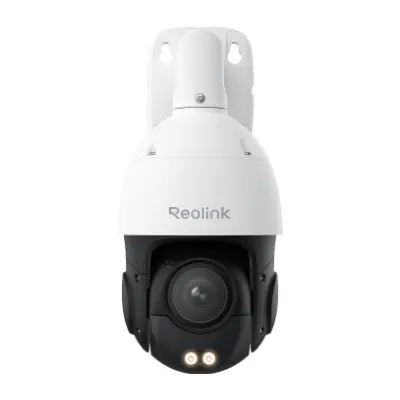
White PTZ speed dome camera on a wall mount for Queens garden condo grounds
Manufacturer product photo (Reolink): a pan-tilt-zoom camera on a wall bracket. On the open grounds of a Bayside or Whitestone garden condo, a PTZ can zoom in live, alongside fixed cameras on every gate and door.
Package Rooms

Package Rooms and Mailrooms: Where Most Queens Condo Camera Projects Begin

When a Queens condo board first calls us about cameras, the reason is usually a missing delivery. Package volume has outgrown the rooms that buildings were designed with, and mailrooms have become targets that thieves return to. Local reporting shows the pattern across the borough. In April 2025 QNS reported that the NYPD was looking for a man who had burglarized mail rooms in five Queens neighborhoods, hitting one Jackson Heights building three times in March alone, along with buildings in Elmhurst, Flushing, Woodside and Long Island City; police circulated a surveillance image taken inside the Jackson Heights building. In October 2022, according to QNS, a thief in Forest Hills picked the lock of a building's outer door and then the lock of a large mailbox to take a package, and again it was the building's video that police released. These were apartment buildings of all kinds, not only condos, but every one of those condo boards in the same blocks read the same news.

The lesson from those cases is about angles, not camera counts. A camera that shows a hooded figure from above and behind is little help to anyone. In a condo package room the coverage that works is a set of three views. The first looks at the outside of the entry door at face height from slightly inside the vestibule, so anyone forcing or picking the lock is seen from the front. The second looks across the room from the far corner back toward the door, catching faces and the shelves or lockers at the same time. The third, where mailboxes are separate from parcels, looks along the mailbox bank so a forced box can be tied to a time. A fourth camera on the courier door is worth adding where couriers have their own entrance.

Lighting is the quiet failure in Queens mailrooms. Many are converted storage rooms with one fluorescent fixture and a glass street door, so the camera sees a black interior against a bright window during the day and a lit room against a black window at night. Cameras with wide dynamic range handle the first; a light that stays on, or a full-color camera with its own low light, handles the second. We point these out at the survey rather than leave the board to discover them on its first incident clip.

Package lockers and smart rooms complicate the picture in a useful way. Many towers in Hunters Point and Court Square have locker banks that log every pickup by unit. A camera aimed at the locker face, with the recorder's clock synchronized to the locker system's clock, lets the managing agent match a disputed pickup to a person in seconds. That clock detail sounds small; in our experience it is the single most common reason a building cannot prove who took a package, because the two systems disagree by several minutes.

What package room cameras will not do

Cameras record and deter; they do not stop a determined thief or recover a box. Boards get the most from them when the room itself is part of the plan: a self-closing, self-locking door, a reader or code so only residents and staff get in, couriers handed off to a locker or a staffed desk, and a clear rule for who can review video and when. We install the cameras and recorder and can tie them to the access side of the building; the house rules are the board's. Condo boards weighing a new lobby panel or courier entry at the same time can read our condo intercom replacement guide for the entry side of the same problem.

Holiday volume

In November and December the package room is the busiest room in a Queens condo, and overflow parcels end up stacked in the lobby, the corridor outside the mailroom or the vestibule floor. If the board expects overflow, the overflow spot needs its own camera, placed where the stack will actually be. We ask the super or the desk where boxes pile up during the holidays, because the answer is rarely where the architect drew the package room.

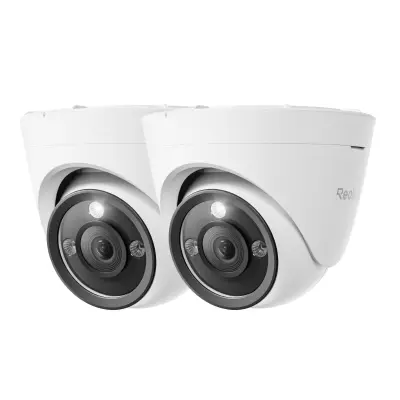
Two white turret cameras with spotlights for a Queens condo package room
Manufacturer product photo (Reolink): two white turret cameras. Turrets fit package rooms and lobbies, where one camera watches the door from inside and a second looks back across the shelves.
Garages

Garages, Ramps and Parking Courts Under and Around Queens Condos

Queens is a borough where owners still drive, and a large share of the borough's newer condominiums were built with parking: below-grade garages under Long Island City towers, enclosed levels inside Flushing podiums, surface lots behind Queens Boulevard mid-rises and carports in the garden condo communities of northeast Queens. The garage is also where an owner judges the building's security, because it is where they walk alone at night. It deserves its own camera plan rather than two cameras left over from the lobby budget.

The ramp and the gate

The most common mistake we find at Queens condo garages is a single camera mounted over the overhead door, pointed out at the street. At night it sees headlights and glare. The views that answer real questions are pointed inward: one camera inside the gate, looking at cars after they clear the door, framed tight enough to read a plate in the lane where drivers slow for the reader; and one on the pedestrian door beside the gate, where people follow a car in on foot. A plate-reading camera is an add-on that needs a narrow, lit lane and a fixed angle, so we decide on it at the survey and price it with the rest of the cameras.

Drive aisles, columns and dead corners

Concrete columns in a Queens garage create blind pockets that a single wide camera will never see into. Aisle cameras work best mounted on the aisle centerline, looking down the length of each row, with a second camera at each stair or elevator vestibule. Those vestibules matter most: they are the point where the garage connects to the residential building, so the camera there should show a face, not a roof of parked cars. Electric-vehicle chargers, storage cages and the bike room, if it opens off the garage, each earn a camera of their own when the board has had trouble there.

Who owns the gate

Many Queens condo garages are run by a separate parking operator, or the gate and its sensors are maintained by a gate company under its own contract. Our cameras can watch the gate and the reader, and our recorder can sit beside the operator's equipment, but the gate motor, loops and safety sensors stay with whoever maintains them. We note that split in the proposal so the board knows which vendor to call for which fault.

Surface lots and curbside parking

Car break-ins are a recurring Queens complaint, and they do not stop at garage doors. In September 2026 PIX11 reported a string of car break-ins along 62nd Drive in Rego Park, with residents' surveillance video showing people breaking into vehicles. For a condo with a surface lot, a full-color camera at each lot entrance and a panoramic or multi-sensor camera covering the parking field gives the clearest night picture. Cameras on a condo's own property should be aimed at the condominium's lot and driveway, not at the public street beyond it; a view that includes the sidewalk and curb is normal, but the camera's job is the building's property.

Garage cameras face harder conditions than interior ones. Exhaust grime builds up on lenses, winter brings road salt in on every car, and ramps can see freezing temperatures. We specify outdoor-rated housings even inside enclosed garages, mount cameras out of the reach of truck mirrors and roof racks, and list lens cleaning in the maintenance schedule we hand the board.

Two white bullet cameras for a Queens condo garage ramp and parking court
Manufacturer product photo (Reolink): a pair of white bullet cameras with built-in lights. Bullets mounted inside a garage gate, aimed inward, show cars and plates after they clear the door.
Amenities

Roof Decks, Courtyards, Gyms and Playrooms: Amenity Cameras That Respect Owners

Amenity spaces are where Queens condo boards feel the tension between security and privacy most sharply. The roof deck of a Hunters Point tower, the courtyard of a Jackson Heights conversion and the pool deck of a Rockaway condo are shared spaces the board governs, but owners use them to relax, and an owner who feels watched will say so at the next meeting. Our approach is to cover the ways in and out of an amenity space first and the space itself only where the board has a specific reason.

Roof decks

The essential roof camera watches the bulkhead door, because the roof is where unauthorized guests, propped doors and after-hours parties begin. Coverage of the deck itself is a board decision, and in Long Island City it comes with a complication most other neighborhoods do not have: the next tower is often close enough that a wide camera picks up its windows. Every camera we install near a property line is aimed to keep neighboring windows out of frame, and where that is impossible we use the recorder's privacy masking to black out those parts of the image permanently. Seasonal decks raise a practical point too. A roof that closes from October to April can keep its door camera running all year while the deck cameras follow the season.

Courtyards and gardens

Courtyard buildings in Jackson Heights, Sunnyside Gardens and Kew Gardens have interior gardens overlooked by dozens of windows. A camera on a courtyard wall almost always has apartment windows in its background. We place courtyard cameras low and angled down at the paths and gates, so the picture shows who came through the gate rather than a wall of living rooms. Where the building has several entrances off the court, as many Kew Gardens courtyard buildings were designed to, each entrance gets its own door view instead of one camera trying to see them all.

Gyms, pools and lounges

A gym camera that shows the door and the equipment floor helps with damage claims and after-hours use. A camera never goes in a locker room, changing area, shower or restroom; that line comes from New York's unlawful surveillance statute and is not negotiable. Pool decks follow the same thinking as courtyards: entrances and the gate first, the deck only if the board decides it needs it, and nothing aimed at changing cabanas.

Children's playrooms

Some boards want a camera in the playroom; others refuse to have one. Both positions are reasonable. If the board chooses coverage, we recommend a door camera plus, at most, a single view of the room with no audio, live viewing limited to staff, and the policy posted on the door. If it does not, the door camera alone answers most questions about who was in the room and when.

Bike rooms and storage

Bike rooms in Queens condos lose expensive e-bikes and cargo bikes, and storage cages lose whatever owners keep in them. A camera inside the bike room door looking at the racks, plus one at the room's door from the corridor, gives a usable face and the moment a bike left. Storage areas follow the same rule. Neither replaces a reader on the door that limits entry to registered owners, which is a separate project the board can phase in with the cameras.

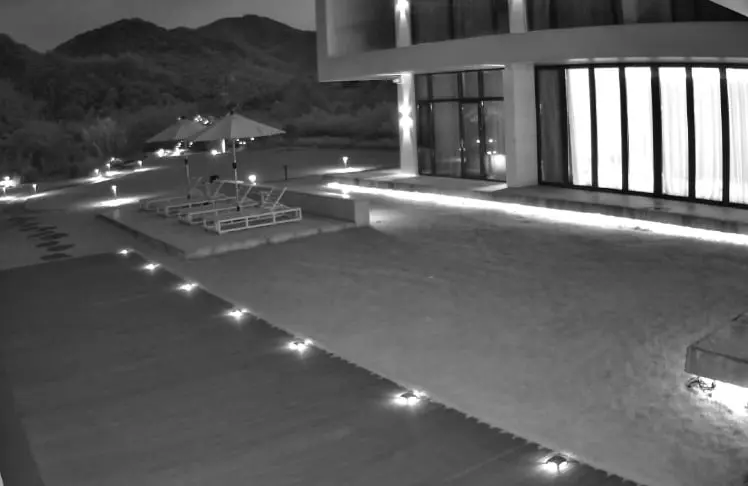
Manufacturer night sample frame of a lit terrace, the kind of view a Queens condo roof deck camera records
A manufacturer sample frame (Reolink) of a terrace and deck at night, not a Queens building. Roof deck and pool deck cameras record this kind of low-light scene, which is why we aim them at doors and paths and keep neighboring windows out of frame.
Inside the Building

Lobbies, Elevators, Stairs and Back-of-House Doors

The lobby is the one space every Queens condo board agrees to cover, and the one most often covered badly. In the glass lobbies along the Long Island City waterfront and Jackson Avenue, the camera at the desk faces a wall of daylight for half the day. In the older lobbies of Forest Hills and Jackson Heights, a single dome over the mailboxes is often all there is. A good lobby plan has four views: the street door from inside, so faces are lit by the lobby rather than backlit by the street; the vestibule between the outer and inner doors, where tailgating happens; the desk or intercom panel; and the path from the lobby to the elevators.

Elevators

Cab cameras in Queens condos use a wireless link from the car to a receiver in the hoistway or machine room, so video reaches the recorder without anyone touching the elevator's own wiring. The building's elevator contractor provides access to the hoistway and machine room and handles anything inside the car, the controller or the traveling cable; our work stops at the wireless link and the camera. In Queens Boulevard buildings with older elevators, it is worth asking whether a modernization is planned, because the camera can ride along with that project. Elevator landing cameras on each floor are rarely worth the cost; a camera at the lobby landing and one in each cab cover the same movements.

Corridors

Residential corridors are the space we cover least, and on purpose. A hallway camera inevitably sees unit doors open and close, and an aim that looks straight into an open doorway is the most common source of owner complaints. When a board does want corridor coverage, usually on the garage floor, a trash chute floor or a floor with repeated incidents, we mount the camera at the end of the hall looking along it, so doors are seen edge-on rather than face-on, and we test every view with doors open before handing it over.

Stairwells and roof bulkheads

Stair doors are how people move through a building unseen. A camera at the ground-floor stair door and the roof bulkhead covers the two points that matter; cameras on every landing rarely earn their cost. Any device mounted on or beside an exit door must leave the door's egress hardware alone, and we check that before installing.

Service entrance, trash room and cellar

The service door is where contractors, cleaners and movers come and go, and in many Queens condos it is also where the trash and recycling go out on collection nights. One camera on the service door from inside, one on the trash room door and one on the cellar corridor that leads to the meter and boiler rooms cover the back of the house. These are the cameras boards forget, and the doors incidents most often come through.

White bullet camera on a wall arm for a Queens condo service entrance
Manufacturer product photo (Reolink): a single white bullet camera on its wall arm. Service entrances, trash rooms and cellar corridors are the back-of-house doors boards most often leave uncovered.
Equipment

Condo Security Camera Systems for Queens Buildings: Cameras, Recorders, Storage

A condo security camera system is three things working together: cameras chosen for each space, a recorder that stores and serves the video, and the network and power that connect them. The board does not need to become an expert in any of them, but it should be able to read a proposal and see why each piece is there. This is the equipment vocabulary we use in Queens proposals, and what each choice means for the building.

Camera typeWhere it fits in a Queens condoWhy
TurretLobbies, package rooms, corridors, garage vestibulesSmall, easy to aim, no dome bubble to catch glare from lobby lighting.
Vandal domeLow ceilings, back stairs, bike rooms, laundryHard shell resists knocks and tampering where a camera can be reached.
BulletRamps, lots, rear yards, beachfront wallsLonger reach and visible deterrent; easier to fit a sun shield.
Multi-sensor or panoramicParking fields, large courtyards, roof decksOne mounting point covers a wide area at full detail.
PTZGarden condo grounds and large plazas, alongside fixed camerasOperator can zoom in live; never a substitute for fixed door cameras.
Full-color low-lightLot entrances, dim cellars, mailroom windowsKeeps color at night, so clothing and cars can be described.

DVR or NVR

A digital video recorder runs cameras over coaxial cable; a network video recorder runs IP cameras over network cable, usually powering them over the same cable (PoE). In Queens conversion buildings with good existing coax, a modern high-definition DVR can be the cheapest sound option. In new towers and in any building being rewired, an NVR with PoE cameras is the default, because it scales to more cameras and higher resolution and every camera needs only one cable. Our base four-camera system on the Queens price page is a DVR package; condo buildings that grow past it usually move to an NVR at the planning stage, and the proposal says which and why.

Storage and retention

Retention is the number of days the recorder keeps video before it overwrites the oldest footage. It is a board policy decision, and the drives are sized to it. FirstService Residential, writing about New York condos and co-ops in 2024, reported that footage is "generally stored for 30 to 90 days depending on the building size." The number of cameras, their resolution and how much motion each one sees all change the drive capacity needed, so we size storage from the board's chosen retention period rather than quote a drive and let the retention fall where it may. Recording on motion only stretches storage but can miss the moments before an event; we usually recommend continuous recording at a modest frame rate with motion events flagged.

Network and power

Cameras connect to the recorder through a PoE switch in the equipment room, which feeds each camera its power through the network cable. A battery backup keeps the recorder and switch running through short outages and lets them shut down cleanly on long ones. We do not do electrical work; if the equipment room needs a new outlet, the building's electrician provides it. Most condo cameras never need an outlet of their own.

Viewing and accounts

Each person who views the system gets a named account with only the permissions their role needs: the desk sees live views, the managing agent can play back and export, a board officer may see live views of the lobby, and admin rights sit with the condominium. Remote viewing goes through the manufacturer's app without opening ports on the building's router, which keeps the recorder off the public internet.

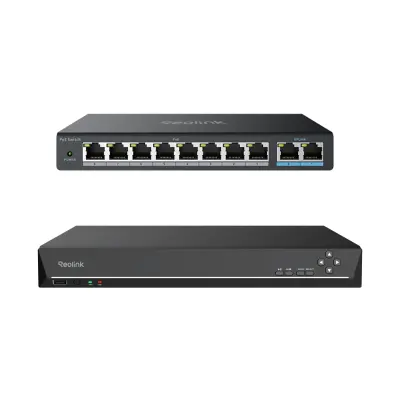
Two compact PoE network switches for a Queens condo camera network
Manufacturer product photo (Reolink): two compact network switches. A PoE switch in the equipment room powers each camera through its network cable, so most condo cameras never need an outlet of their own.
Brands

Our House-Brand System by Default, Named Brands When the Board Prefers

Every Queens condo proposal we write starts with our own non-branded house system, the same cameras and recorders priced on our Queens camera price page. It is what we install most, what our technicians know best, and what lets us quote a condo building without a brand premium or a subscription. For most boards it is the right answer, and the proposal says so plainly.

Some boards have a reason to want a named brand: an existing system they want to extend, a managing agent who runs the same platform across a portfolio, or an owner on the board who has used one at work. In those cases we partner with Lorex, Luminys and Reolink, and we install other major lines when a building already runs them. A named brand can change three things in the proposal, and we show all three: the equipment price, any cloud or software subscription that comes with it, and how long the manufacturer supports the model with updates.

The question we hear most from Queens boards is whether to match what the sponsor installed. If the sponsor's cameras are a current line that we can buy and configure, and the recorder is still supported, matching usually makes sense, because it keeps working cameras in service. If the recorder is discontinued, or the platform only works through an account the sponsor's integrator still controls, matching ties the condominium to the same problem. We say which case the building is in after we have seen the equipment and tested it, not before.

Two things never change whichever brand the board picks. Every login, app account and subscription is registered to the condominium, and the recorder stays in the building's own equipment room, under the board's control. A brand that requires the video to live only in the manufacturer's cloud, with no local copy, is one we flag for the board's attention, since it changes who holds the footage.

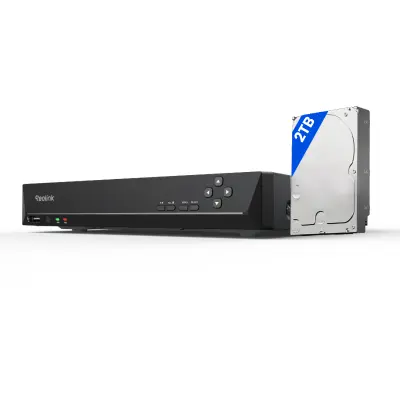
Network video recorder beside a hard drive for Queens condo footage retention
Manufacturer product photo (Reolink): a recorder shown with a hard drive. Drive capacity is chosen from the number of days of video the board decides to keep, not the other way around.
Privacy and the Law

Condo Cameras and New York Privacy Rules: What Queens Boards Should Know

We are a security contractor, not a law firm, and nothing here is legal advice. The board's attorney should review its camera policy and the contract. What follows are the published sources we rely on when we design a Queens condo system, and the design choices they lead to.

The board acts for the condominium

Common elements under Real Property Law §339-e include the lobbies, halls, stairs, entrances, parking areas and recreational facilities, and the bylaws required by §339-v set "the powers and duties of the board" and the vote needed for decisions that bind all owners. In practice that means a common-area camera system is approved through the board's normal process, and the condo's own documents decide whether an owner vote is also needed. Writing about a condo board's power to install cameras, attorney Andrew Lieb told Habitat in 2023 that "a house rule that is unauthorized by these foundational documents is unenforceable." A camera policy that has not been checked against the declaration and bylaws is a policy waiting to be challenged.

Video in shared spaces, never audio

New York's eavesdropping law (Penal Law §250.05, using the definition of "mechanical overhearing of a conversation" in §250.00) makes it a crime to record a conversation without the consent of at least one party. A microphone in a lobby or elevator records people who never agreed to it. Many current cameras ship with microphones enabled, so we turn audio recording off on every common-area camera and leave it off unless the board's counsel approves otherwise in writing.

Rooms where cameras never go

Penal Law §250.45 makes unlawful surveillance of a person in "a bedroom, changing room, fitting room, restroom, toilet, bathroom, washroom, shower" a felony when done for no legitimate purpose and without the person's knowledge or consent. FirstService Residential's guidance for New York buildings adds that Labor Law §203-c bars video of employees in restrooms, locker rooms and changing areas, which covers the staff locker room in a Queens condo's cellar. We do not install in any of those rooms, whatever the request.

Units are off limits

CooperatorNews, in a 2025 question-and-answer column, quoted attorney Ricardo M. Vera on a camera that "peers into a neighboring unit," noting that "the law recognizes the interior of a neighbor's unit as subject to considerable privacy safeguards." FirstService Residential makes the same point for hallway cameras, which "must be carefully placed to avoid capturing footage that shows the inside of any residential unit." Our corridor and courtyard aiming rules above follow directly from that.

Owner-installed cameras

The same CooperatorNews column noted that condos "typically prohibit unit owners from unilaterally altering" common areas, and that an owner camera put up without consent "may have violated the governing bylaws." When a Queens owner wants a camera at their own door, the board has a policy choice to make. We can install a board-approved device; we do not install owner cameras in common areas without the board's written approval.

Landmark districts

Several Queens condo neighborhoods sit inside historic districts. The Historic Districts Council records that the Jackson Heights Historic District was designated on October 19, 1993, and CityLand reported the designation of the Sunnyside Gardens Historic District on June 26, 2007. Work on a designated building's exterior generally goes through the Landmarks Preservation Commission, whose permit guidance favors cameras placed off the primary facade where possible and "well spaced to avoid a cluttered, haphazard appearance." We plan facade cameras in those districts with that in mind and leave the filing to the board's architect or expediter where one is needed.

Who may install

New York State licenses security and fire alarm installers through the Department of State, and its regulations (19 NYCRR Part 195) count closed-circuit and video surveillance systems used to detect or monitor intrusion as security systems. Our NYS license is #12000287431. Boards comparing bids should ask every bidder for theirs.

Footage Policy

Who Sees the Video: Writing a Footage Policy for a Queens Condominium

The camera system is only half the decision. The other half is a written policy that says who may watch live video, who may play back and export recordings, how long recordings are kept and what happens when an owner, an insurer or the police ask for a clip. Boards that adopt that policy before the cameras go live rarely end up arguing about footage afterward. Boards that skip it usually write one in a hurry after the first dispute.

FirstService Residential's 2024 guidance for New York condos and co-ops is a useful starting point. It notes that access is usually limited to the property manager or a third-party provider, that buildings "should maintain a log of requests and a list of anyone who accessed footage," and that "residents should not have access to footage or copies of footage without prior approval from the board and legal counsel." We build the system to support whatever policy the board adopts: named accounts, permissions by role, an export function only for the people allowed to use it, and an audit trail on recorders that keep one.

Five decisions the policy should make

  • Live viewing. Who can see cameras in real time: the desk, the super, the agent, board officers. Many Queens boards allow officers live lobby and garage views but not amenity or corridor views.
  • Playback and export. Usually the managing agent and one designated board member, with every export logged by date, camera and reason.
  • Retention. A fixed number of days, which sets the drive size. Changing it later means changing drives.
  • Requests from owners. How an owner asks for a clip, who reviews it, and when counsel is consulted before release.
  • Requests from police and insurers. Who receives the request, how quickly a clip is preserved so it is not overwritten, and who decides on release.

Signs and notices in a borough of many languages

Queens is one of the most linguistically diverse places in the country. A Babbel overview of the borough's languages, citing the Nonstop Metropolis atlas, counts "at least 138 languages," and reports that 56.3 percent of residents aged five and up spoke a language other than English at home in 2015 Census data. For a condo board, that has a practical consequence: a camera notice that only some owners and tenants can read is a notice many of them never got. Boards in Flushing, Elmhurst, Jackson Heights and Astoria often post camera signs and the owner notice in the languages most spoken in the building, and we can supply plain English wording for the board to have translated. The policy itself should be adopted by the board under its bylaws, ideally after its attorney has reviewed it.

Renters in condo units

Many Queens condo units are rented out, sometimes most of them in newer towers. Tenants live with the cameras but did not vote on them. The owner notice should go to owners with a request that they pass it to their tenants, and the posted signs at entrances do the rest. Tenant requests for footage go through their landlord, the unit owner, and then to the managing agent under the same policy as everyone else.

Approval

From Board Packet to Owner Notice: Getting Queens Condo Cameras Approved

The slowest part of most Queens condo camera projects is not installation; it is the stretch between the first proposal and a signed contract. Boards meet monthly or less, managing agents juggle many buildings, and in newer towers the sponsor may still hold enough unsold units to have a voice. A proposal written for that process moves faster than one written for a single buyer.

What we put in the board packet

  • A numbered camera plan on a simple floor sketch, one line per camera: location, what it watches and why.
  • Two or three options, usually a base plan, a fuller plan and a phased plan, each priced in full.
  • The recorder, its channel count and the retention it supports at the chosen resolution.
  • Which cable runs are concealed and which are exposed, with concealed wiring priced as its own line.
  • Any recurring cost, such as a brand subscription, on its own line. On our house system there is none.
  • Warranty terms, what the board owns at handover, and the payment schedule.

The sponsor, the agent and the officers

Who signs depends on the building. In a newer Long Island City or Flushing condo still in sponsor control, the sponsor's representatives may sit on the board; their approval is part of the process, and we write the proposal so it can be read by both camps. In an older conversion with a volunteer board and no agent, an officer usually signs on the board's behalf. Where a managing agent runs the building, the agent typically countersigns for the condominium after the vote. We take direction from whoever the board authorizes, in writing.

Paying for it

Real Property Law §339-v requires condo bylaws to address reserves for "major and minor maintenance, repairs, additions, improvements, replacements," which is why many boards fund a building-wide camera system from reserves, while smaller additions come out of the operating budget and larger ones occasionally go to an assessment. That choice is the board's and its accountant's; our job is to price the project so it can be split by phase if the board wants to spread the cost across fiscal years.

The owner notice

Once the contract is signed, owners should hear about the project before a ladder appears in their lobby. We give the agent a short plain-language summary: which spaces are getting cameras, that audio is off, that no camera points into a unit, who may view footage under the board's policy, and the work schedule by floor and by day. Notices that include the camera plan cut owner complaints sharply, in our experience, because owners can see exactly what each camera will and will not show.

Pricing

Condo Security Camera Installation Cost in Queens

Our Queens condo camera pricing is our Queens camera pricing. There is no condo surcharge and no separate board rate. The entry system is four house-brand cameras with a DVR recorder, installed, at $950, and the full Queens package list, including higher-resolution, full-color and network-recorder systems, is on our Queens security camera pricing page. A condominium almost always needs more than four cameras, so that $950 is where the conversation starts, not where it ends.

What the board is buyingHow it is priced in Queens
Four-camera house-brand system with recorder, installed$950
Each camera beyond the first fourPriced per camera after we confirm the layout on the site visit
Concealed wiring in finished walls and ceilingsQuoted as an extra, run by run, before anything is ordered
Larger recorder, more storage, network recorderListed in the proposal, sized to camera count and retention
Named brand instead of the house systemPriced on request, with any subscription shown separately
Installing cameras the condominium already boughtLabor only, quoted by phone or text

Why the per-camera number waits for the walk

The same camera can take twenty minutes to mount on an open garage ceiling in Flushing or most of a morning to reach through a plaster corridor in a 1920s Jackson Heights building, where the cable has to be fished between floors without opening walls. Concealed versus exposed, the distance to the equipment room, the mounting height and whether existing cable can be reused all move the number. Pricing per camera after the walk means the board votes on a figure that holds, rather than a guess that grows on installation day.

What can add to the cost, told before the order

Once equipment is ordered it is not returnable, so anything that could add cost is disclosed in the proposal: an old coax run that might fail its test and need replacing, a lift for a double-height lobby, a long outdoor run to a parking court, or a wireless link for an elevator cab. The board knows the worst case before it signs.

When the board already bought the cameras

Some Queens associations buy cameras first, often through a board member. In that case we price installation labor only, from the camera list and the spaces to cover, by phone or text, and schedule the job once the deposit is paid. We do not run walk-throughs for owner-supplied equipment, and performance or defects in that equipment are a matter between the condominium and whoever sold it.

Warranty and terms

Three layers of coverage apply, and boards should read them separately. The installed system carries the 30-day warranty listed on our site. One-year and longer warranty plans are paid add-ons, which many associations prefer for a reserve-funded system. Cameras, recorders and drives carry their manufacturers' warranties on the manufacturers' terms. Full terms — including 50% deposit, one-year parts-only warranty on Abstract Enterprises Security Systems-supplied products, and the late-fee schedule — are set out in the service agreement.

Financing is available through Wisetack, subject to approval.

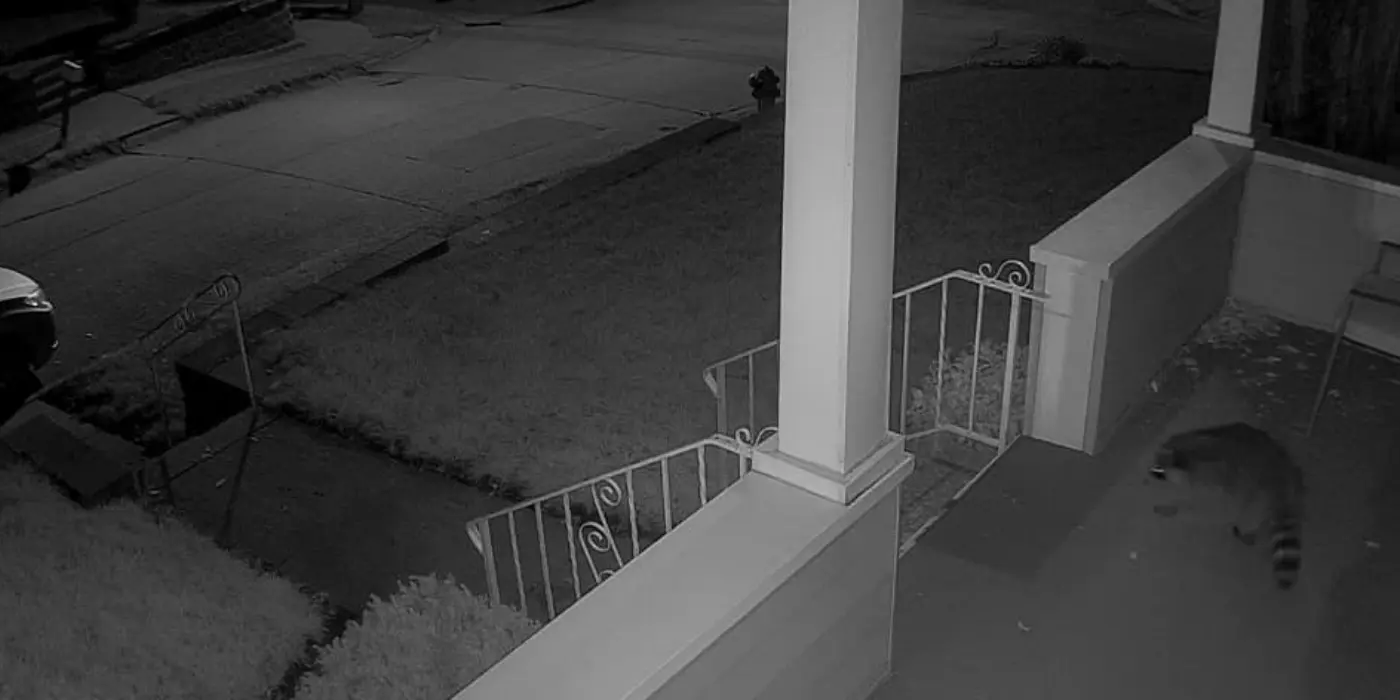
Manufacturer infrared sample frame of entry steps and a railing, like a Queens condo entrance camera at night
A manufacturer sample frame (Reolink) of entry steps and a railing at night in infrared, not a Queens building. Night views like this are what a board reviews after an incident, which is why the clock, retention and aim are checked at handover.
Get In Touch

Request a Camera Plan for Your Queens Condo

Tell us the neighborhood or cross streets, the number of units, whether there is a garage, and which spaces the board wants covered. A photo of the current recorder, or of the closet where one would go, saves time at the walk. To talk it through, call or text (347) 434-6392.

✅

Request Sent!

Thanks. We will call or text to schedule the walk at your Queens building, normally within 2 hours.

Across Queens

From Hunters Point to the Rockaways: How Condo Camera Work Changes Across Queens

Queens is the largest borough by area, and its condo neighborhoods differ as much from each other as from Manhattan. The camera hardware is the same; what changes is the building stock, the problems boards call about and the conditions the cameras have to survive. These are the differences we plan for, neighborhood by neighborhood. Wider building-security questions for these same buildings, from lobby entry to fobs and garage gates, are covered on our Queens condo security systems page.

Long Island City and Hunters Point

The towers that followed the 2001 Special District and the later waterfront plans brought staffed lobbies, package rooms sized for heavy delivery volume, amenity floors and garages. Most have first-generation systems the sponsor installed, frequently with more cameras than anyone monitors and a recorder whose admin account sits with a vanished integrator. The work here is usually a takeover and expansion: recover or reset the accounts, test what is there, add cameras in the places the original plan missed (the package room shelves, the garage stair vestibules, the roof bulkhead) and set up viewing for the desk and the agent. Lobbies facing the river or Jackson Avenue need wide dynamic range cameras to cope with glare. Converted factory lofts closer to the rail yards bring the opposite problem: thick masonry, high ceilings and exposed cable runs that need to look intentional.

Astoria and Ditmars

Astoria's condos are mostly small: boutique buildings on former house lots, mid-rises near the Ditmars and 30th Avenue corridors, and a few newer waterfront buildings. Many have a single glass entry door with mailboxes in the vestibule, which makes the vestibule camera the most important one in the building. Boards here are often self-managed, so the system has to be simple enough for a volunteer treasurer to export a clip.

Jackson Heights, Elmhurst and Woodside

The Jackson Heights garden-apartment district, with its block-long interior gardens and multiple entrances, is where courtyard aiming rules matter most, and where the historic district shapes any facade work. Mailroom break-ins have been reported across these neighborhoods, including the repeated 2025 burglaries QNS described in Jackson Heights, Elmhurst and Woodside. Older cellars here mean recorders often need a better home than the space next to the boiler.

Flushing and College Point

Downtown Flushing's condominiums are often podium buildings above retail, with garages shared between owners and commercial tenants, and the waterfront district adds large new residential buildings. The declaration's split between residential and commercial common elements decides which cameras the condo board controls. Boards here often want camera signs and owner notices in more than one language. Main Street and Roosevelt Avenue foot traffic makes the entrance and vestibule cameras busy; picking camera models with good motion handling and enough storage for a busy view is part of the plan.

Forest Hills, Rego Park and Kew Gardens

Queens Boulevard and the streets around Austin Street and Lefferts Boulevard are lined with mid-rise elevator buildings, some built as condos and some converted, plus Kew Gardens' courtyard buildings with several entrances off one garden. Elevator cab cameras are a frequent request, and the elevator contractor's schedule often decides when we can install them. Surface lots and curbside parking behind these buildings bring the car break-in problem that PIX11 reported in Rego Park in 2026.

Bayside, Douglaston, Whitestone and Little Neck

Northeast Queens has garden and townhouse condo communities with private lanes, carports, clubhouses and pools, plus a handful of elevator buildings near the bay. Coverage here is about gates, lanes and amenity buildings, linked over long outdoor cable runs or wireless bridges, with PTZ or multi-sensor cameras where the grounds are open.

Jamaica and southeast Queens

The Jamaica Plan, adopted on September 10, 2007 for 368 blocks according to City Planning, opened downtown Jamaica to larger residential buildings, and newer condominiums have joined the area's older co-ops and houses. Buildings near the Jamaica Avenue and Sutphin Boulevard transit hub see heavy foot traffic past their entrances, so door cameras are framed tight on the building's own doors.

The Rockaways

Beach condominiums in Arverne, Rockaway Park and along the boardwalk face salt, sand and wind no inland building sees. Outdoor cameras need sealed, corrosion-resistant housings and stainless hardware; recorders and switches belong on upper floors or raised shelves, not in ground-level rooms that a storm surge could reach. Parking courts and boardwalk-facing facades are the usual priorities, along with the bike and surfboard storage that beach buildings tend to have.

Conditions

Salt Air, Storm Water, River Glare and Winter Wind

Camera specifications assume reasonable conditions. Queens condo buildings offer several that are not. Planning for them at the survey costs little; discovering them after the first winter costs a service call and sometimes a camera.

Salt air on the peninsula and the bays

Within a few blocks of the ocean or Jamaica Bay, salt spray corrodes cheap metal mounts and fogs lenses. We specify housings with an outdoor sealing rating, stainless screws and brackets, and cable entries sealed against water, and we schedule lens cleaning more often than inland. Bayside and Whitestone buildings near Little Neck Bay and the East River see a milder version of the same thing.

Where the recorder lives when water can rise

Hurricane Sandy showed what water does to ground-level rooms near the Queens shoreline; the reason Arverne by the Sea fared well, according to LongIsland.com's 2012 report, was that its whole site had been raised five feet. For condos in low-lying parts of the Rockaways, Howard Beach and other shore neighborhoods, the recorder, switch and battery backup go above the level of any past flooding, ideally on an upper floor with the cable brought up a riser. A camera system whose recorder is underwater has no recordings of the storm, or of anything after it.

Glare off the river and glass

Long Island City lobbies facing west across the East River take low afternoon sun straight into the camera. Wide dynamic range cameras, careful mounting angles and, where needed, a camera placed to look across the glass rather than into it, keep faces from turning into silhouettes.

Wind and cold on high roofs

Roof deck and bulkhead cameras on towers take wind loads and winter temperatures well beyond street level. Short, rigid mounts reduce the vibration that blurs night video, and outdoor-rated cameras with built-in heaters or wide temperature ranges handle January on a thirty-story roof.

Power

A battery backup in the equipment room keeps the recorder and PoE switch running through short outages, and every camera powered by the switch keeps recording with it. We do not do electrical work; if the equipment room needs a dedicated outlet, the building's electrician installs it before we arrive.

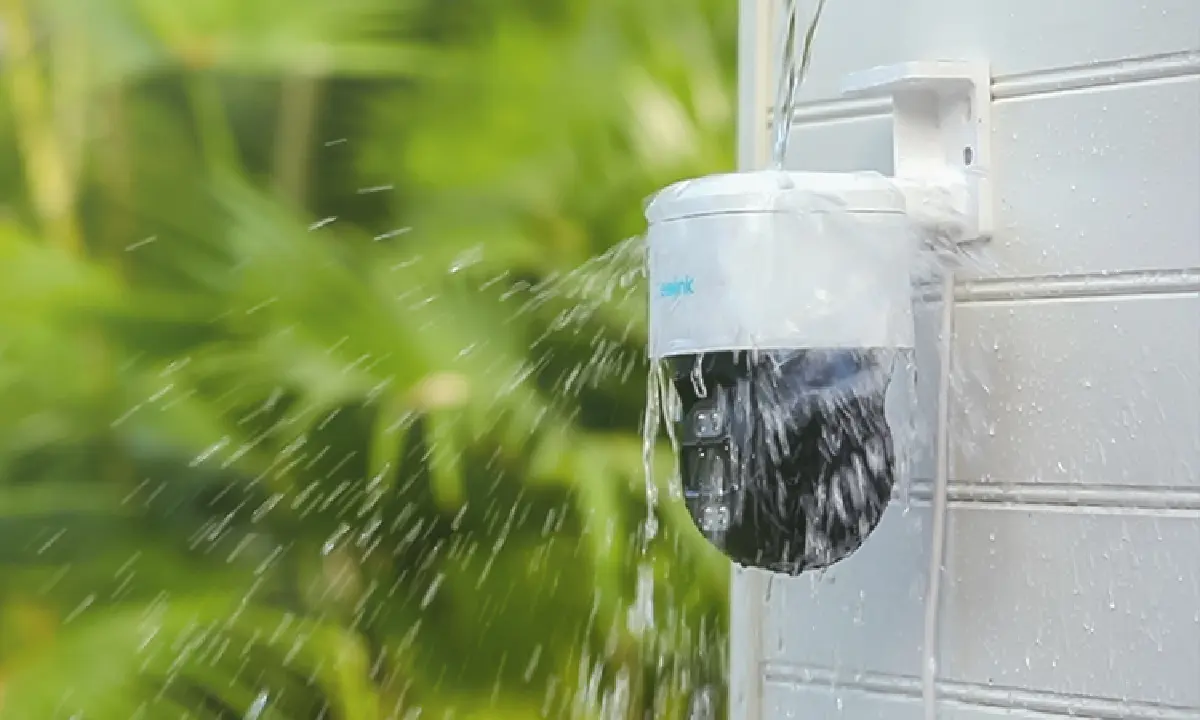
Pan-tilt camera on white siding in heavy rain, the weather Queens beach condo cameras face
Manufacturer product image (Reolink): a pan-tilt camera on white siding being hit by rain. Beach and bayfront condos in Queens need sealed housings, stainless hardware and sealed cable entries.
How It Works

Seven Steps From First Call to Handover in a Queens Condo

One added camera on a working recorder can be finished within days of the first call. A building-wide system may wait two or three board meetings between proposal and vote. The sequence is the same either way.

1

Reach out

Phone, text or the form on this page works. Whoever reaches out, from treasurer to super, gets a survey slot booked inside 2 hours, seven days a week, as a two-hour arrival window, with morning slots preferred.

2

Walk the common elements

With the agent, super or an officer, we go through every space on the board's list, open the room where the recorder is or will be, test existing cable and note mounting surfaces, lighting and power.

3

Written camera plan

A numbered plan with each camera's job, options priced in full, retention and storage, concealed runs on their own lines, and anything that could add cost, formatted for the board packet.

4

Vote, contract, deposit

After the board approves under its bylaws, the authorized signer countersigns and pays the deposit. Equipment is ordered only then, and the insurance certificate naming the condominium is issued on award.

5

Owner notice and schedule

We send the agent a plain-language summary and a floor-by-floor schedule that fits the building's work hours and elevator rules, ready to circulate to owners and tenants.

6

Install and aim

The crew runs cable, mounts each camera and fits out the equipment room. Before leaving, we open nearby apartment doors to test each angle, black out stray windows with masking, disable microphones and set the retention days.

7

Hand over to the board

Named accounts for each role, a short training session, written export steps, a labeled camera map, and every admin credential registered to the condominium.

Installations are scheduled first come, first served once the deposit is paid; we do not promise a same-day installation, and we do not hold a slot for an unsigned proposal. Special-order equipment, such as a named brand the board chose that is not in stock, is ordered after the deposit, and we confirm the install date once it arrives.

Existing Systems

Repair, Upgrade or Replace: Deciding What to Do With an Inherited System

Many of the Queens condo camera calls we get are about a system that already exists. The board wants to know whether to fix it, build on it or start over, and the honest answer depends on three things we can only learn on site: whether the recorder is still supported, whether the cable tests good, and whether the building can get into its own system.

Fix it

Dead cameras, a failing drive, a power supply that drops out, a recorder that stopped recording on schedule: these are repairs, and on a supported recorder they are usually far cheaper than replacement. Diagnosis and repair visits for any camera system, condo or not, are described on our Queens security camera repair page.

Build on it

In a Jackson Heights or Astoria conversion with a ten-year-old analog system, the coax is often sound. A modern high-definition recorder and new cameras on the same cable give a sharp picture at a fraction of the labor of rewiring, and the upgrade is the moment to add the package room, garage and roof door cameras the first installer skipped. In a newer tower with a working IP system, building on it usually means adding channels, storage and the views the sponsor's plan missed.

Start over

A recorder with no firmware support, cable that fails testing across the building, or a layout that never matched how residents use the property is a replacement. We plan the changeover so the building is not left blind: the new recorder goes in beside the old one, and cameras move over floor by floor.

Getting the keys back from the sponsor

The most valuable line in many Queens tower proposals is account recovery. When the admin login, app account or cloud subscription is still registered to the sponsor or its integrator, the board cannot add a user, export a clip or update firmware. Recovering or factory-resetting those accounts in the condominium's name, documenting every credential and handing the list to the board often turns a "replace everything" discussion into a modest repair and expansion.

After handover: upkeep

Cameras drift out of aim, lenses collect grime, drives wear out and firmware ages. A periodic check of every view, the recording schedule, drive health and the user list catches failures before an owner asks for a clip that does not exist. Tech support by phone after the job is free, and visits are priced under the warranty plan the board chose.

On Site

Working Inside an Occupied Queens Condominium

Every condo we work in is someone's home while we are there. The installation plan follows the building's house rules, not our convenience, and the board should expect a few things from any contractor it hires.

  • Work hours and noise. We follow the building's permitted contractor hours. Drilling into masonry is loud, so the noisiest work is scheduled together and announced in the owner notice.
  • Elevators and freight. Where the building requires it, we book the service elevator and pad it before bringing in ladders and cable boxes.
  • Arrival windows. Technicians arrive within the scheduled two-hour window, not before it, and check in with the desk, super or agent.
  • Insurance. The certificate of insurance naming the condominium and the managing agent is issued on award, to the wording the agent sends.
  • Units. Common-area camera work rarely needs access to any apartment. If a cable path ever requires entry to a unit, it is arranged in advance through the agent with the owner's consent.
  • Finishes. We do not patch or paint walls. Where a concealed run needs a small opening, the proposal says so, and the board's painter finishes it.
  • Clean-up. Ceilings closed, debris removed and the equipment room left labeled at the end of each day.

Owners notice the crew more than the cameras. A crew that announces itself, keeps hallways clear and leaves on time does more for the board's project than any spec sheet. We book visits seven days a week and favor early-day windows; installation days are set with the agent so they fit the building's rules.

Planning

Typical Camera Counts by Queens Condo Type

Boards like a sense of scale before the walk. The table below shows camera counts we commonly plan for common-area coverage in the Queens building types described above. They are planning ranges from our own surveys, not quotes and not statistics; the building's layout sets the real number, and every camera beyond the first four is priced after the walk.

Queens condo typeSpaces usually coveredCameras we often plan
Boutique condo, under 20 units (Astoria, Ridgewood, Maspeth)Entry door outside and inside, vestibule mailboxes, cellar door, rear yard4–8
Conversion courtyard building (Jackson Heights, Sunnyside, Kew Gardens)Each courtyard entrance, garden gate, mailroom, cellar and laundry doors, roof door8–16
Queens Boulevard mid-rise (Forest Hills, Rego Park, Elmhurst)Lobby and vestibule, package area, elevator cab, rear and service doors, lot or garage entrance10–20
Podium condo with shared garage (Flushing, College Point)Residential lobby, package room, garage ramp and aisles, stair vestibules, amenity floor20–40
Waterfront or Court Square tower (Long Island City)All of the above plus multiple cabs, roof deck, gym, bike room, loading area32–64+
Garden or beach association (Bayside, Rockaways)Gates and lanes, parking courts, mail kiosk, clubhouse or pool entrances8–24

The recorder should be sized for the whole plan even if the board approves only phase one. A recorder with spare channels costs a little more on day one and saves a second recorder purchase when the garage or roof cameras are approved a year later. Storage is sized the same way: to the full camera count at the retention the policy sets.

Reality Check

Six Things Queens Condo Boards Are Told About Cameras, Checked

Boards hear a lot of confident advice from vendors, neighbors and online cost guides. Some of it holds up in a Queens condominium; some does not.

"Store-bought cloud cameras can cover a whole building"

Consumer cloud cameras are built for a house: one owner's phone, video stored on the manufacturer's servers, a subscription per camera. In a condo they scatter footage across personal accounts, multiply monthly fees and leave the board without one recorder it controls. A building system keeps the video in the building's equipment room under the board's accounts.

"Cameras replace the need for a good door"

The Forest Hills and Elmhurst cases reported by QNS and Fox 5 began with a picked or forced lock. Cameras recorded the thieves; they did not stop them. A self-closing, self-locking door and hardware that resists prying matter as much as the camera watching it.

"Footage belongs to whoever is in it"

Recordings from common-area cameras are the condominium's records, released under the board's policy. FirstService Residential's guidance is that residents should not get footage without board and counsel approval. An owner who appears in a clip does not thereby acquire a right to a copy on demand.

"More infrared means a better night picture in a garage"

Strong infrared in a tight garage bounces off concrete columns and parked cars and washes out the image, and it renders everything in black and white. Moderate infrared aimed correctly, or full-color cameras with a little ambient light, usually gives a more useful night picture of a car and a person.

"Face recognition comes standard now"

Some cameras offer person and vehicle detection, which helps find events quickly. Identifying specific people by face is a different feature with different legal and privacy implications, and New York City's Local Law 63 of 2021 already regulates smart access systems in certain residential buildings, with how it applies to a given condo a question for the board's counsel. We do not set up face identification on condo common-area cameras unless the board asks after legal review.

"Any handyman or electrician can put the cameras up"

New York State licenses security system installers through the Department of State, and its regulations treat video surveillance systems used to detect or monitor intrusion as security systems. A condo board hiring an unlicensed installer takes on the risk if something goes wrong. Electricians are licensed for electrical work, which camera installation mostly is not; most cameras run on low-voltage network cable from a PoE switch.

Questions We Hear

Questions Queens Condo Boards, Agents and Owners Ask Us

Our Long Island City tower's cameras were set up by the developer's integrator. Can we keep the cameras and change who controls them?

Usually, yes. If the cameras and recorder are a supported line, we recover or reset the admin account in the condominium's name, create named accounts for the desk, agent and board, update firmware and document every credential. The cameras stay; control moves to the board. If a cloud subscription is tied to the sponsor's account, it has to be transferred or replaced, and we show the board both options.

The roof deck is only open in summer. Should its cameras run all year?

The bulkhead door camera should run all year, because a closed roof is exactly where unauthorized visits happen. Cameras on the deck itself can follow the season if the board prefers, and the recorder can be scheduled to record them only while the deck is open. We set that up so nobody has to remember to switch anything in October.

Owners in our Flushing building speak several languages. How should camera signs be worded?

Short and plain: that the area is under video surveillance, that audio is not recorded, and who to contact with questions. We provide English wording the board can have translated into the languages its owners and tenants use, and we suggest placing signs at each entrance and in the garage rather than only in the lobby.

Our garage gate is run by a separate parking operator. Can our cameras still cover the ramp?

Yes. Cameras on the condominium's own common elements, including the ramp and pedestrian door, are the board's to install, and they can watch the gate without touching it. The gate motor, loops and safety sensors stay with the operator or gate company. If the operator has its own cameras, we can agree with them on views so the two systems complement each other rather than duplicate.

Salt air at our Rockaway condo keeps fogging the outdoor cameras. What lasts longer by the beach?

Sealed outdoor housings, stainless mounting hardware, sealed cable entries and cameras placed under an overhang where possible. Fogging often comes from water getting in at the cable entry rather than from the camera itself, so we reseal those points. Lenses near the boardwalk also need cleaning more often, which goes on the maintenance schedule.

Our building is inside the Jackson Heights Historic District. Can cameras go on the front facade?

Exterior work on designated buildings generally goes through the Landmarks Preservation Commission, whose guidance prefers cameras off the primary facade where possible and discreetly placed. We plan entrance coverage from inside the vestibule or from secondary walls first, and where a facade camera is needed, we size and place it so the board's architect or expediter can file for it.

Can a camera show whether a courier actually left the package inside, rather than outside the door?

Yes, with two views: one on the outer side of the entry door and one inside covering the drop-off spot or package room door. The recorder's timestamps then show whether a box came through the door or stayed on the step. Synchronizing the recorder clock with the building's locker or courier system makes that comparison exact.

Our management company is in Manhattan. Can the agent pull clips without driving to Queens?

Yes. The agent gets a named remote account with playback and export rights, used through the manufacturer's app or desktop software, without opening ports on the building's network. Exports are logged, so the board can see who pulled which clip and when.

The cellar where our recorder sits took water in a storm. Where should it go now?

Up, and somewhere ventilated. An upper-floor closet, a corner of the management office or a raised shelf in a dry telecom room all work. We move the recorder, switch and battery backup, extend or reroute the cable, and set a drive health alert so the agent learns the day a drive fails rather than the day a clip is needed.

Our townhouse condo in Bayside has no lobby at all. What does a camera plan look like for us?

It follows the ways in and out of the property: the entrance gate or drive, internal lanes, the mail kiosk, parking areas and the clubhouse or pool. Cameras mount on gateposts, light poles the association owns or common buildings, with outdoor cable or wireless bridges back to a recorder in the clubhouse or a common utility room.

A unit owner wants a camera over her own apartment door in the hallway. Can the board's system cover that instead?

Often a board-installed corridor camera, aimed along the hall, answers the owner's concern without a private device in the common area. If the board decides to allow owner door cameras, it can adopt a standard device and placement rule; we install board-approved devices but not owner cameras in common areas without the board's written approval.

Bikes keep disappearing from our bike room. Will a camera actually help identify who took them?

It helps when it is placed to catch faces, not backs. One camera at the room's door from the corridor and one inside facing the door, at head height, give a usable image and a time. Pair that with a reader on the door so only registered owners get in, and the list of possible suspects becomes very short.
Related Pages

Other Camera Pages for Queens Buildings

Not every Queens camera question is a condo question. When the property is a house, a shop or an office, or the job is about the wiring itself, these pages go further:

From the Field

Field Notes From Condo Camera Jobs in Queens

The company has installed security systems in New York since 2002. A handful of patterns come up in Queens condominiums often enough that we now check for them on every walk.

The sponsor's camera plan covered the sales office, not the building. In newer towers we regularly find cameras clustered around the lobby and the model-unit route, with nothing on the garage stair doors, the roof bulkhead or the package room shelves. Those were not priorities during sales; they are the first places owners ask about after closing.

The recorder's clock was wrong by minutes, or by an hour. Recorders that never got a time server drift, and many never switched for daylight saving time. A clip that is fifty-eight minutes off is hard to use with police or an insurer. We set every recorder to sync automatically and check it at handover.

The courtyard camera filmed living rooms. In Jackson Heights and Kew Gardens courtyards we have found cameras aimed across the garden at the opposite wing's windows. Re-aiming them down at the paths and gates, and masking what is left, ends the complaints without losing the coverage that matters.

Nobody knew the drive had failed. The most common failure in any condo system is not a broken camera but a recorder that stopped recording weeks before it was needed. Health alerts to the agent's email fix that for the cost of ten minutes of setup.

Boards that circulated the camera plan heard almost nothing afterward. Where owners saw a simple drawing of each camera's view before the work started, objections were rare. Where cameras simply appeared, the same equipment drew complaints. The notice is part of the project, not an afterthought.

Comparing Bids

Comparing Condo Security Camera Installation Contractors in Queens

Most Queens boards collect two or three proposals. Totals alone do not compare well, because bids differ in camera count, recorder size, retention and what is excluded. These are the questions we suggest asking every bidder, with our own answers alongside.

Ask every bidderOur answer
Is each camera's purpose written down, or just a count?Every camera is numbered on a plan with its location and the question it answers.
How many days of video will the recorder keep at the quoted resolution?Stated in the proposal and sized to the retention in the board's policy.
Which runs are concealed, and what do they add?Each concealed run is listed and priced before anything is ordered.
Who holds the admin password after the job?The condominium. We keep no standing access unless the board grants it.
Are there monthly fees?None on our house-brand system; any brand subscription is listed separately.
Is audio recording turned off?Yes, on every common-area camera.
What is your New York State license number?#12000287431.
What warranty applies?Thirty days on the installed system as posted on our website; extended coverage by the year can be added at signing; equipment carries its maker's own warranty.
When is the insurance certificate provided?On award, naming the condominium and agent as the agent requests.

Our crews work from offices in the Bronx and Brooklyn and a small office in Queens, and we hold 4.7 stars from 201 Google reviews. We install and maintain camera systems that condominiums own. We do not offer virtual doorman services or staffed monitoring of condo camera feeds, and we do not do electrical work.

Frequently Asked Questions

Queens Condo Security Camera FAQ

Why does a Queens condo camera proposal usually come in above the $950 starting price?
+

Because $950 buys four cameras. Our four-camera house-brand system with a recorder starts at $950 installed in Queens, the same figure as on our Queens camera price page, and most condominiums need more coverage than that. Every added camera is priced after we confirm the building's layout on a site visit, since concealed runs through finished walls cost more than exposed runs in a garage or cellar.

Who signs the camera contract for a Queens condominium?
+

Whoever the board authorizes in writing. In buildings with a managing agent, the agent usually countersigns for the condominium after the board votes; in self-managed buildings an officer signs. Where a sponsor still sits on the board, its approval is part of the board's own process.

Do outdoor condo cameras keep working through a Queens winter?
+

Outdoor-rated cameras are built for freezing temperatures, and we mount them on short rigid brackets, out of direct wind where possible, with sealed cable entries. Snow and road salt mean lenses at garage ramps and entrances need occasional cleaning, which we list in the maintenance schedule.

Can you hide parts of the picture that show a neighbor's window?
+

Yes. Most recorders support privacy masking, which permanently blacks out a chosen area of a camera's view, live and in recordings. We aim cameras to avoid neighboring windows first and use masking for anything that still falls in the frame.

When does the board receive your certificate of insurance?
+

On award. Once the board has approved the proposal, we have the certificate issued naming the condominium and the managing agent with the wording the agent provides.

Will your installers need to enter any apartments?
+

Rarely. Common-area camera work is done from halls, ceilings, risers and equipment rooms. If a cable path would require entering a unit, we raise it in the proposal and arrange access in advance through the agent, with the owner's agreement.

How often should a Queens condo's cameras be checked?
+

We suggest a check of every view, the recording schedule, drive health and the user list at least once or twice a year, and after any work by other trades near a camera. Health alerts from the recorder cover the gaps between visits, so a failed drive or an offline camera is reported the day it happens.

Do you deal with unit owners directly or only through the board?
+

We take direction from the board and its managing agent, since the cameras are a common-area project. Owners with questions are welcome to call, and we pass anything that needs a decision back to the board.

What should we have ready before the site visit?
+

A list of the spaces the board wants covered, any past incidents that prompted the project, access to the room where the recorder is or would go, and someone who can open the garage, roof and cellar doors. Existing login details, if anyone has them, save time.

Can you put cameras in a condo laundry room?
+

Yes, aimed at the door and the machines so damage, theft from dryers and after-hours use can be reviewed. Laundry rooms are common elements, but a camera there should never take in a restroom or changing area that opens off the room, and we keep audio off as everywhere else.

What does the condominium receive at handover?
+

Named accounts for each role, every admin credential registered to the condominium, a labeled camera map, written steps for exporting a clip, a short training session for the agent or super, and the warranty and service terms in writing.

Can the recorder warn us when a camera goes offline?
+

Yes. We configure the recorder to email the managing agent, or another contact the board names, when a camera loses signal, a drive fails or recording stops. Most condo systems that fail quietly do so because nobody set those alerts up.

All Areas Served

Condo Camera Pages Across New York City

For the citywide view, including how borough pricing compares, start with condo security camera installation in NYC. Managing agents with condo buildings in more than one borough can also read our pages on condo security camera installation in Manhattan and condo security camera installation in Brooklyn. Pages for condo security camera installation in the Bronx and on Staten Island cover the other two boroughs. Back to Abstract Enterprises Security Systems. Outside the city, condo boards can read about condo security camera installation on Long Island.

Ready to Plan Cameras for Your Queens Condo?

Package rooms, garages, lobbies, roof decks and grounds, planned for the board and owned by the condominium. Four-camera systems from $950 installed in Queens. NYS license #12000287431 · 4.7 stars from 201 Google reviews.