What are you looking for?
About Us Contact Us Careers Get a Free Quote (800) 486-0943
Pick a service
✅ Got Your Own System?
🎬 Home TheatreQuote 🎶 AV SoundQuote 🔑 Access ControlQuote
Now pick your area
Pick your area
Long Island
Hudson Valley
Services available
Pricing & Tools
Pick a service for pricing
🚪 Intercom Pricing 🔔 Buzzer Repair Pricing
Calculators
📹 Camera System Calculator 🚨 Alarm Calculator ⚡ Cabling Quote Builder ✅ Got Your Own System?
Select your area
Manhattan condo board or managing agent with a concierge screen full of dead tiles, a garage nobody can see or a facade camera hidden behind a sidewalk shed? Call or text (929) 560-0737
Home › Condo Security Camera Installation NYC › Manhattan
Manhattan Condo Towers, Lofts & Conversions · Boards, HOAs & Managing Agents

Condo Security
Camera Installation
Manhattan

Concierge Desks · Package Rooms · Garages · Amenity Floors · Service Entrances

Condo security camera installation in Manhattan starts at $1,099 for a four-camera house-brand system with a recorder, installed, the same starting figure as our Manhattan camera price page. Towers, converted office buildings and loft condos usually need more than four cameras, so we price the extra ones individually after walking the building with your managing agent, and that walk is booked within 2 hours of your request, any day of the week.

The two-minute answer for a Manhattan board: Put the first cameras where your staff and your owners lose track of people: the front door and the concierge desk, the package room, the service entrance and the garage ramp. Keep audio switched off, keep lenses out of staff locker rooms and restrooms, and aim hallway cameras so an open unit door shows nothing inside. If your building sits in a historic district, the Landmarks Preservation Commission limits how many cameras can go on the street facade, so we plan those positions first. Four-camera systems start at $1,099 in Manhattan; each added camera is priced after the layout is confirmed, and concealed wiring costs more than exposed runs.

Last updated November 27, 2026 by Abstract Enterprises Security Systems, NYS license #12000287431 · Sources: NYC Landmarks Preservation Commission Permit Guidebook ch. 11; Mayor's Management Report, Fiscal 2026 (LPC); NYC Mayor's Office (Oct. 19, 2026); NYC Comptroller (March 2024); NY Real Property Law §§339-e, 339-v; NY Penal Law §§250.00, 250.05, 250.45; FirstService Residential (Sept. 23, 2024); Habitat (Feb. 20, 2023; Aug. 28, 2023); CooperatorNews; CBS New York (May 22, 2018); Bisnow (Dec. 17, 2025); CRE Daily (Oct. 7, 2026)

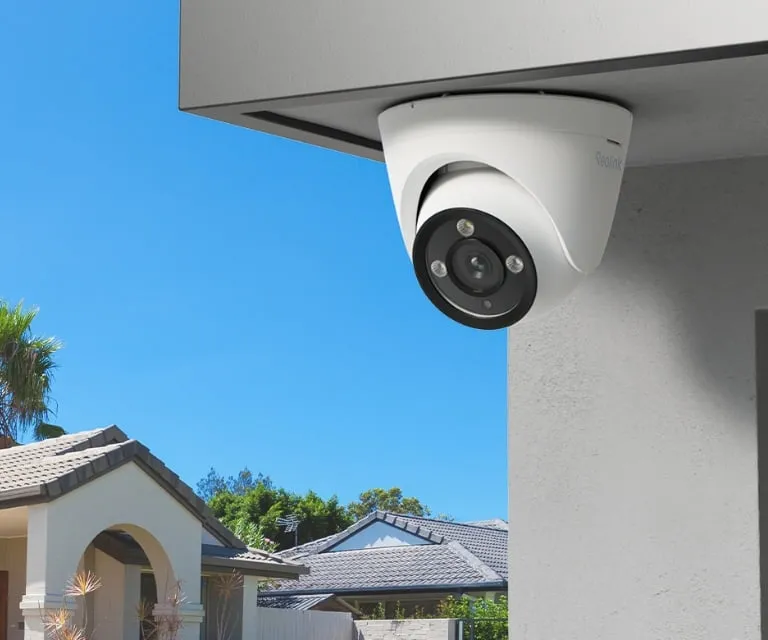
Condo security camera installation Manhattan: white Reolink turret camera mounted under a white eave
A turret camera tucked under an overhang. Under a canopy or a vestibule ceiling, a turret like this watches a condo entrance without hanging off the facade. Partner-brand product photo, not a client building.
Manhattan Condo Camera Request
Tell us the building, the neighborhood and which common areas the board wants on camera

✅
Request Sent!
Thank you. We will be in touch to book the walkthrough, normally within 2 hours of your request.
25+
Years Experience
2 Hr
Booking
100%
Licensed & Insured
4.7★
201 Google Reviews

Owner-operated since 2002 · Thousands of jobs completed · Walkthroughs booked within 2 hours, seven days a week

The Neighborhood

Why Manhattan Condo Buildings Need Their Own Camera Plan

A Manhattan condominium is rarely a simple box with a front door. A typical tower has a lobby with a staffed desk, a mail and package room behind it, a service entrance on the side street where deliveries, contractors and building staff come and go, a freight elevator, a cellar full of storage cages and bike racks, a trash and compactor room, often a garage ramp, and one or more amenity floors with a gym, a lounge, a children's playroom or a roof terrace. Each of those spaces is a different camera problem, and each is shared by every owner. New York's Condominium Act lists halls, lobbies, entrances, basements, recreational facilities, parking areas and storage spaces among a condo's common elements (Real Property Law §339-e), so in almost every Manhattan building those spaces, and the cameras that watch them, are governed by the board of managers rather than by any one owner.

The people inside the building change constantly, too. The NYC Comptroller's March 2024 analysis of the city's homeowner market found that 21 percent of Manhattan condo units are owned by LLCs (NYC Comptroller, Spotlight: New York City's Homeowner Housing Market). An LLC-owned unit may be rented out, used a few weeks a year, or sit empty between sales, and the owner may live in another country. When something goes wrong in a building like that, the desk staff and the managing agent are often the only people who saw the lobby that day, and the camera recorder is the only reliable memory the condominium has. A board that treats its condo security camera system as building infrastructure, with a policy, a budget line and a named person responsible, gets far more use from it than a board that bought a kit years ago and forgot the password.

Packages are the most common reason Manhattan boards call. CBS New York reported on May 22, 2018 that a thief carrying a garbage bag had taken packages from the lobby of a Jones Street building in Greenwich Village, where deliveries were often left unattended; residents said parcels had been disappearing for years, and the building's super planned a secure delivery room (CBS New York). That story is a small walk-up, but the pattern scales up: in a doorman tower the risk shifts from the open lobby to the package room door, the shelf where a porter stages oversized boxes, and the moment a courier is waved through the service entrance. We design Manhattan condo camera layouts around those hand-off points, because a camera that only shows the front sidewalk rarely answers the question an owner asks the next morning.

Manhattan also adds rules that most of the city doesn't deal with as often. A large share of the borough's condos sit in landmarked buildings or historic districts, where the street facade is protected. Many towers spend months behind sidewalk sheds during facade work, which can blind an entrance camera. Newer condos came out of office conversions with camera cabling left over from the commercial tenants. And nearly every managing agent has vendor rules: an insurance certificate after award, set work hours, freight elevator bookings and a superintendent who has to sign off before anyone touches the ceiling. Our Manhattan condo camera work starts from those constraints instead of discovering them on installation day.

Manhattan facts that shape a condo camera project

  • Protected buildings: the Landmarks Preservation Commission had designated 38,550 buildings and sites citywide by the end of Fiscal 2026, including 1,473 individual landmarks and 159 historic districts and extensions (Mayor's Management Report, Fiscal 2026). Manhattan is where many of those districts are, from Tribeca and SoHo to the Upper West Side.
  • Facade camera limits: LPC staff can approve security cameras when, among other criteria, no more than two cameras are installed per 25 feet of street frontage on small buildings and no more than three on large residential buildings (LPC Permit Guidebook, chapter 11).
  • Sidewalk sheds: the Mayor's Office said on October 19, 2026 that the city had reduced the number of sidewalk sheds by approximately 1,200 since January (NYC Mayor's Office), which still leaves many entrances working under a shed.
  • Conversions: of the homes created by turning offices, hotels and industrial space into housing, 317 were condos due on the market in 2026, according to Corcoran Sunshine figures (Bisnow, Dec. 17, 2025).
  • New development: about 3,000 new-development units were on the Manhattan market in the third quarter of 2026, and 240 went into contract versus 331 a year earlier (CRE Daily, Oct. 7, 2026), so many buildings will move from sponsor control to an owner-run board with a camera system they did not choose.
  • Absentee ownership: 21 percent of Manhattan condo units are LLC-owned, per the Comptroller analysis cited above.

This page covers cameras only. If your board is also weighing intercom, fob, elevator or amenity access work, those systems are on our Manhattan condo security systems page, and if the lobby panel itself is the problem, our condo intercom replacement guide walks a board through that decision. For the citywide view of condo cameras, including how the other boroughs differ, see the NYC condo security camera installation hub.

What We Install

Condo Security Camera Services in Manhattan

Most Manhattan condo boards come to us with one of six jobs. Some need a first real system because the sponsor left a handful of consumer cameras and a recorder in a closet. Some have a decent system that covers the front door and nothing else. Others have a concierge desk monitor nobody can read, a garage that went dark when the parking operator changed, or a recorder that quietly stopped writing to its drive. The cards below describe how we approach each one in a Manhattan building, and every one of them ends with the same deliverable: a camera system the condominium owns outright, with logins registered to the association rather than to a vendor.

New condo camera systems

A layout drawn for your building's real traffic: street door, concierge desk, package room, service entrance, freight elevator lobby, cellar corridors and garage. We number every camera on a floor plan and write down what it is meant to see before anything is ordered.

Concierge desk viewing

A second monitor or a split layout so the doorman sees the four views that matter at full size, with the rest a click away. Desk screens get set up for the shifts that use them, including the overnight porter who covers both doors.

Garage and loading dock coverage

Cameras on the ramp, the gate, the pedestrian door into the building and each drive aisle, placed so plates and faces are readable at the speed cars actually move. Coordinated with the garage operator when the condo leases the space out.

Amenity floor cameras

Entrances to the gym, lounge, playroom, screening room and roof terrace, aimed at doors and circulation rather than at people working out or relaxing. Pool decks get weather-rated housings and lenses that handle glare off water.

Upgrades on existing cable

Analog coax and network cable from an older system are tested run by run. Runs that pass carry new cameras and a new recorder, which avoids reopening plaster corridors in a prewar building or finished ceilings in a newer tower.

Elevator cab cameras

A small cab camera with a wireless bridge to the hoistway, so video leaves the moving car without touching the traveling cable. Your elevator contractor provides access and handles anything on the car or controller side.

Sponsor turnover takeovers

When a new board inherits a developer's system, we recover or reset the administrator account where the recorder allows it, document every camera, and hand the association its own credentials.

Facade and landmark work

Exterior cameras positioned and finished to meet the Landmarks Preservation Commission's camera criteria, with manufacturer cut sheets ready for the building's permit filing when one is needed.

Customer-supplied cameras

If the condo already bought its cameras, we quote installation labor by phone or text and book the job once the deposit is paid. We do not walk through owner-bought equipment, and its performance stays with the seller.

Every one of those jobs uses our own non-branded house system as the default, at the prices on our price pages. When a board asks for a named brand, we quote one; we are partners with Lorex, Luminys and Reolink, and we also install and match other major lines already in a building. The figures on this page are product photos of partner-brand equipment, shown so a board can see the shapes and mounts we are describing; they are not photos of a client's building.

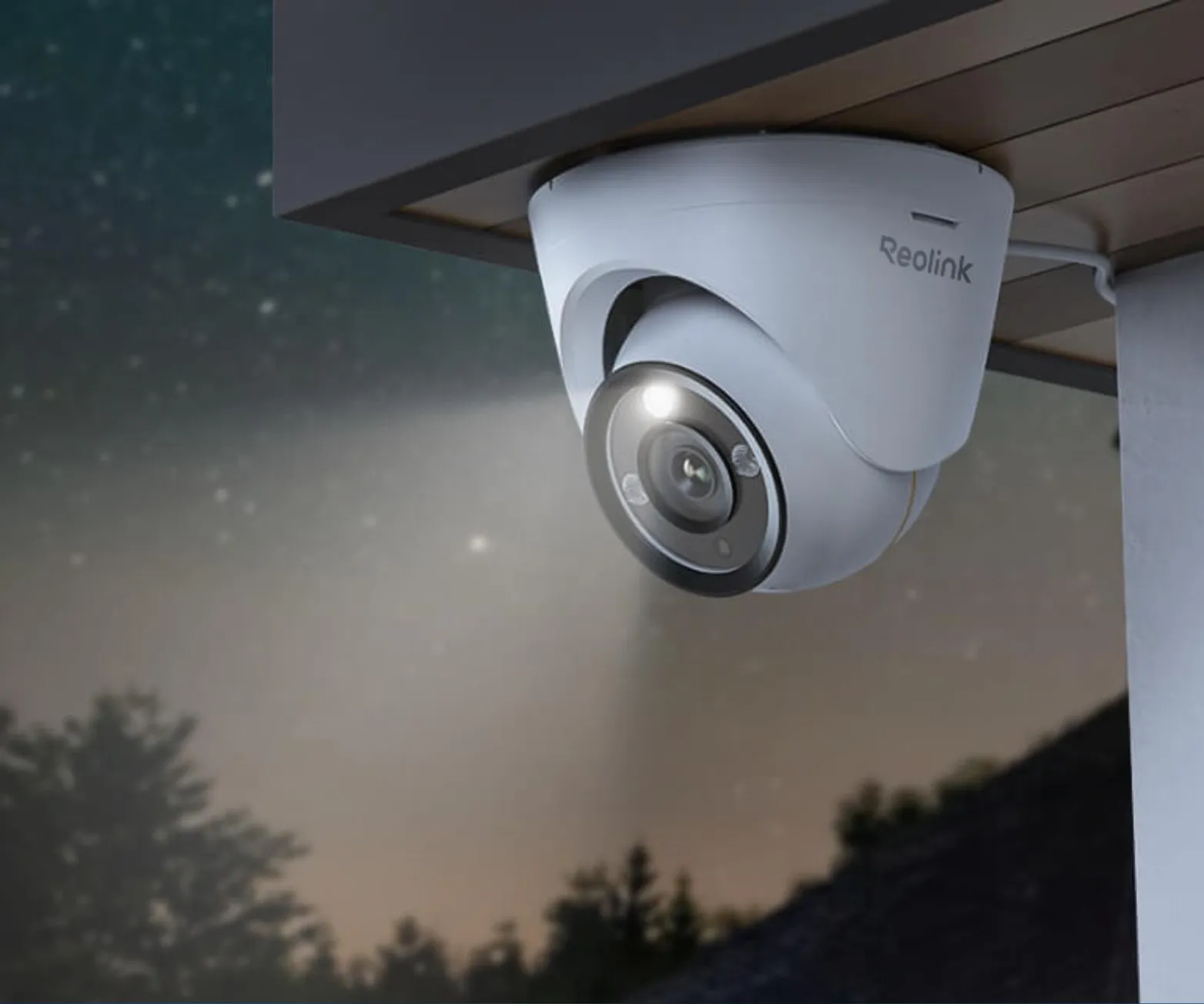
Turret camera with a lit spotlight under a soffit at night, an option for Manhattan condo service entrances
A turret with its spotlight on after dark. White-light models keep clothing colors visible at a side-street service door; we keep the light off where it would shine into apartments.

Two things we deliberately leave to other pages. Ordinary repairs to a camera or recorder that already exists, where the board is not changing the system, are handled on our Manhattan security camera repair page. Rental buildings, where a single landlord owns everything and there is no board of managers, have their own considerations, covered on our apartment building security camera page for Manhattan. This page is for condominiums and the people who run them.

Building Specialists

Condo Security Cameras for Manhattan's Architecture

The same four cameras cost different amounts of labor in different Manhattan buildings because the walls, ceilings and rules are different. Before a board compares two proposals, it helps to know which of these building types it lives in, because the type predicts where cable can travel, how the cameras mount, and what the managing agent will ask for.

Glass and concrete towers

Post-2000 towers in Hudson Yards, Midtown, the Financial District and along the West Side usually have finished drywall ceilings below a concrete slab, a dedicated low-voltage riser and an equipment room. Cable travels well through the riser; the work is in each floor's finished ceiling and in getting a slot on the freight elevator.

Prewar masonry conversions

Condos carved out of older apartment houses on the Upper West Side, Upper East Side and in Harlem have plaster walls, thick masonry and crowded utility chases. We favor existing chases, the cellar and stair bulkheads, and we use surface raceway only where the board accepts it in writing.

Cast-iron and loft buildings

SoHo and Tribeca loft condos often sit inside historic districts with cast-iron fronts. LPC criteria forbid attaching equipment through cast iron or decorative surfaces, so street-side cameras move to mortar joints, plain masonry, a side wall or the inside of the vestibule.

Office-to-condo conversions

Converted office buildings around Water Street, Wall Street and Midtown South sometimes keep raised floors, drop ceilings and leftover Category cable from the commercial tenants. Leftover cable is tested before it is trusted; untested runs from a demolished office plan rarely go where a residential layout needs them.

Boutique walk-up condos

Small condos of five to twenty units, common in the Village, the Lower East Side and Chelsea, often have no doorman and no package room. A video doorbell at the street door, a vestibule camera and one camera on the mail area do most of the work.

Mixed-use condos

Buildings with a retail or office condo unit on the ground floor share a facade, sometimes a cellar, and sometimes a service corridor with the residences. The declaration decides who owns those spaces, and the camera layout follows it.

Mounting and wiring details by building type

In concrete towers the ceilings are usually suspended or furred drywall, so corridor cameras either drop through an access panel or mount on a low-profile box with the cable fed from above. Where a corridor has no access, a camera can sit at the elevator lobby looking down the hall, which covers more doors with less ceiling work. Equipment rooms in these buildings often already hold the intercom head end and the building network; we ask for a dedicated, labeled shelf or rack space and a battery backup rather than tucking a recorder on top of someone else's equipment.

Prewar buildings reward patience. The cellar is almost always the easiest highway, with risers going up through pipe chases, dumbwaiter shafts that were closed off decades ago, or the back of a stair. Plaster ceilings in public halls are often decorative, so a corridor camera may go on a wall bracket above the door frame instead of in the ceiling. When concealed paths are not available, we price exposed raceway painted to match as a separate line, so the board can see exactly what the concealed option costs before it chooses.

Loft buildings bring tall ceilings, exposed beams and wide vestibules. A camera at twelve or fourteen feet sees a lot of floor but very little face, so entrance cameras in lofts usually come down to door height on a wall mount, with a second, wider camera higher up for context. For office conversions, we usually find the old security riser and the old comms room first. Whether those spaces can be reused depends on who owns them under the condo declaration, which is a question for the managing agent before it is a question for us.

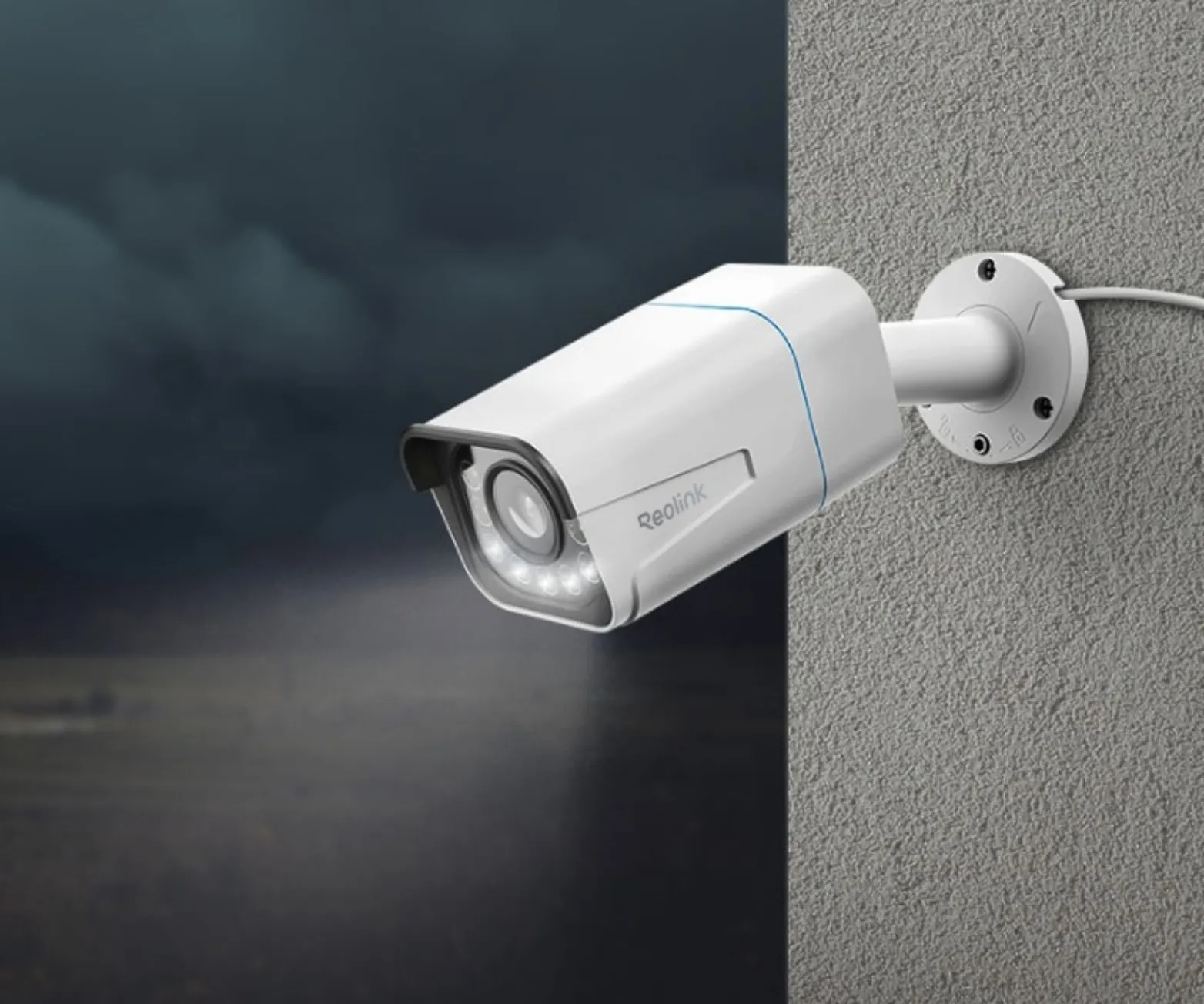
White bullet camera on a concrete wall under a stormy sky, used for Manhattan condo garage ramps and rear courts
A bullet camera on a plain concrete wall. Its long view suits a garage ramp or rear court, and plain masonry is the kind of surface landmark rules prefer for attachment.
Commercial Condo Security Cameras

Business Condo Security Cameras in Manhattan

Commercial condo units are common in Manhattan: a restaurant or bank branch owning the ground floor of a residential tower, a medical practice owning a suite in a Midtown building, or an office condo in a converted loft. Commercial condo security cameras raise one question residential boards rarely face, which is whose system covers which space. The commercial owner usually controls cameras inside its own unit and storefront; the residential board controls the lobby and shared corridors; and the shared service corridor, trash room or loading dock belongs to whichever party the declaration says, or to both.

We see the same business corridors again and again. Along Broadway and lower Fifth Avenue, ground-floor retail condos sit under residential floors in loft buildings. Around Madison and Lexington Avenues on the Upper East Side, medical and professional office condos share entrances with residences. In the Financial District, conversions put residential condos above retail and fitness tenants. Along Eighth and Ninth Avenues in Chelsea and Hell's Kitchen, restaurant condos share cellars and trash rooms with the building. In Harlem, new condominiums along Frederick Douglass Boulevard and 125th Street often have a commercial unit at street level. Each of those arrangements changes where the residential system should stop.

Our approach for mixed-use condos is to give each owner its own recorder for its own space, and to share only what both sides agree to share in writing. A shared service corridor camera can be recorded on the residential system and made viewable to the commercial owner through a limited account, or the other way around. That keeps a restaurant's kitchen out of the residential board's footage and keeps residents' lobby comings and goings out of a tenant's hands, while still letting both parties see who propped open the shared back door.

Compliance points that come up in commercial condos

  • Staff areas: New York's Labor Law §203-c bars video recording of employees in restrooms, locker rooms and changing areas, as summarized by FirstService Residential (FirstService Residential, Sept. 23, 2024). That applies to a condo's porters and doormen as much as to a restaurant's kitchen staff.
  • Facade equipment: commercial storefronts in historic districts fall under the same LPC criteria as the residential entrance next door, and both count toward the frontage limit on the building.
  • Insurance and access: commercial owners may have their own insurer's requirements for recorded areas; we follow whichever written requirements each owner gives us and do not substitute our own.
  • Licensing: the installer should hold a New York State license covering security and video surveillance installation. Ours is NYS license #12000287431.
Your Questions Answered

Condo Security Cameras in Manhattan: Questions Answered

These are the questions Manhattan board members, resident managers and managing agents ask us most during walkthroughs. Each answer reflects how we actually handle the situation; where the answer depends on your declaration, bylaws or a lawyer's view, we say so.

The lobby, the desk and the street

Our concierge desk monitor shows sixteen tiny tiles. How should it be laid out?

Give the desk a dedicated layout with the four or five views staff act on, shown large: the street door, the vestibule, the package room door and the service entrance, plus the garage gate if there is one. Everything else stays on the recorder and on a second page the doorman can flip to. Sixteen thumbnails on a 24-inch screen make every face the size of a fingernail, and in practice staff stop looking. We set the main layout so it returns automatically after someone browses other cameras, and we label each tile with a plain name such as "Service door, W 54th" rather than "CH07."

Landmarked fronts: the frontage count comes first

Landmark status rarely rules cameras out, but it caps them. The Landmarks Preservation Commission's permit guidebook says equipment should not go on or in front of a primary facade unless there is no other option, and when it must, it should be in a discreet location, as small as possible and finished to blend in. LPC staff can approve security cameras when they meet the published criteria, including no more than three cameras per 25 feet of street frontage on large residential buildings and two on small ones, attachment at mortar joints, plain masonry, wood or metalwork, and never through cast iron or decorative surfaces (LPC Permit Guidebook, ch. 11). We start with positions inside the vestibule or on a return wall, then use facade positions only where nothing else reaches.

A sidewalk shed has blocked our entrance camera for over a year. What can we do?

Move the view under the shed rather than fighting it. A camera mounted on the underside of the shed's deck, or inside the vestibule looking out through the door glass, keeps the entrance covered while the facade work drags on. The shed belongs to the facade contractor, so the managing agent has to approve anything attached to it, and the camera has to come down when the shed does. Inside-the-vestibule positions survive the shed's removal, which is why we usually recommend them.

Should the service entrance be on the same recorder as the lobby?

Yes, in nearly every building. The service door is where package couriers, food deliveries, contractors and staff enter, and incidents often cross between the two doors: someone comes in through the service side and leaves through the lobby. Keeping both on one recorder means a single timeline and one export when the managing agent needs to show what happened. The exception is a mixed-use building where the service corridor belongs to a commercial unit; then the camera goes on whichever system the declaration assigns that space to.

Garages, cellars and the roof

Garages leased to a parking operator

The garage lease decides more than the camera plan does. When the condominium leases its garage to a parking operator, the lease usually decides who installs and maintains equipment inside it, and many operators already run their own cameras at the cashier booth and gate. The condo still has a strong interest in the pedestrian door from the garage into the building and the elevator lobby at garage level, because that door is a way into the residences. We normally put the condo's cameras on that door and lobby, coordinate with the operator for anything inside the drive aisles, and avoid two systems pointing at the same gate.

Cellar aisles and storage cages

The usual answer is a wide-angle turret at one end of the aisle, aimed down its length, with a second camera at the cellar door. Cage aisles are long, narrow and badly lit, so a camera that handles low light matters more than resolution. We avoid aiming into individual cages; the goal is to see who walked down the aisle and when, not to inventory an owner's belongings. If the cellar also holds the bike room, a camera on the bike room door usually answers more questions than one inside it.

Roof terraces and the windows across the street

We point roof terrace cameras down and inward, at the terrace door, the furniture area and the parapet line, and use the camera's privacy masking to black out any part of the frame that shows a neighboring building's windows. In Manhattan, a roof camera aimed level will see into a dozen apartments within half a block, which helps nobody and invites complaints. We confirm the final view with the resident manager on the day of installation and save a screenshot of the masked frame for the board's file.

Older systems, staff and outages

Our building was converted from offices. Can the condo reuse the old office camera cabling?

Only the runs that test good and go somewhere useful. Office tenants wired cameras for open floors and reception desks; a residential layout needs cameras at corridors, mail rooms and residential entrances, which rarely line up with the old drops. We trace and test each leftover run, keep the ones that land near a position on the new plan, and abandon the rest. Ownership matters too: if the old cable runs through space that now belongs to a commercial unit, the managing agent should confirm the condo can use it.

Do we need to involve our building staff's union before adding a camera at the desk?

That is a question for the board's labor counsel, not for a camera installer, and we would not try to answer it for you. What we can tell you is what the law says about places cameras cannot go: video recording of employees in restrooms, locker rooms and changing rooms is barred, per FirstService Residential's summary of Labor Law §203-c. Habitat reported a Midtown East condo with cameras above the doorman desk and in the elevators, and the questions that raised among owners and staff (Habitat, Aug. 28, 2023). We aim desk cameras at the counter and the people approaching it, not at a staff member's screen.

Power outages and the recorder

With a battery backup, the recorder and network switch keep running through a short outage and shut down cleanly in a longer one, so the drive isn't corrupted. Without one, everything stops, and a recorder that loses power in the middle of writing can lose recent footage or damage its drive. We size the backup to the recorder, switch and cameras it powers, and we put the recorder on the building's emergency circuit only if one exists and the building's electrician has already provided an outlet; we do not do electrical work.

How do you keep installation from clashing with move-ins and doorman shifts?

We book the freight elevator through the managing agent, work inside the building's permitted contractor hours, and stage cable and ladders in a space the super assigns. Lobby work is scheduled for the quietest part of the day the building suggests, and anything at the desk is done in short stretches so the doorman is never without a working door view. Move-ins and large deliveries take priority on the freight car; we plan around them, not the other way round.

Equipment

Types of Condo Security Cameras We Install in Manhattan

Equipment is the easiest part of the decision to over-think. For most Manhattan condos, the difference between a camera that works and one that doesn't is placement, lighting and cable, not a spec sheet. These are the categories we install, and where each one earns its place in a Manhattan building.

Turret cameras

Our default for lobbies, corridors and cellar aisles. No dome bubble to scratch or reflect light, an infrared or white-light option for dark spaces, and a mount small enough for a plaster ceiling.

Vandal-resistant domes

For garage ceilings, service corridors and anywhere a cart or ladder might strike the camera. Impact-rated housings take a knock and keep recording.

Bullet cameras

For long views: a garage ramp, a rear court, a side-street service door seen from across the sidewalk. Their shape is visible, which is part of the point at a back door.

Multi-lens and panoramic cameras

One housing, several sensors. Useful at the center of a large garage level or a wide plaza where three fixed cameras would otherwise be needed.

PTZ cameras

Pan-tilt-zoom units for plazas, courtyards and large roof decks, paired with fixed cameras at every door so a PTZ pointing the wrong way never leaves an entrance uncovered.

Elevator cab cameras

Compact corner cameras for the cab with a wireless link to the hoistway. Placement keeps the floor buttons and the door in view.

Video doorbells for street doors

For boutique condos without a doorman, a wired video doorbell at the street door records every visitor and lets owners answer from their phones.

Network video recorders

Sized by camera count, resolution and the board's retention period, rack-mounted in larger buildings and on a shelf in smaller ones, always on battery backup.

PoE switches and cabling

One network cable per camera carries power and video. Every run is labeled at both ends and recorded on the camera map we hand over.

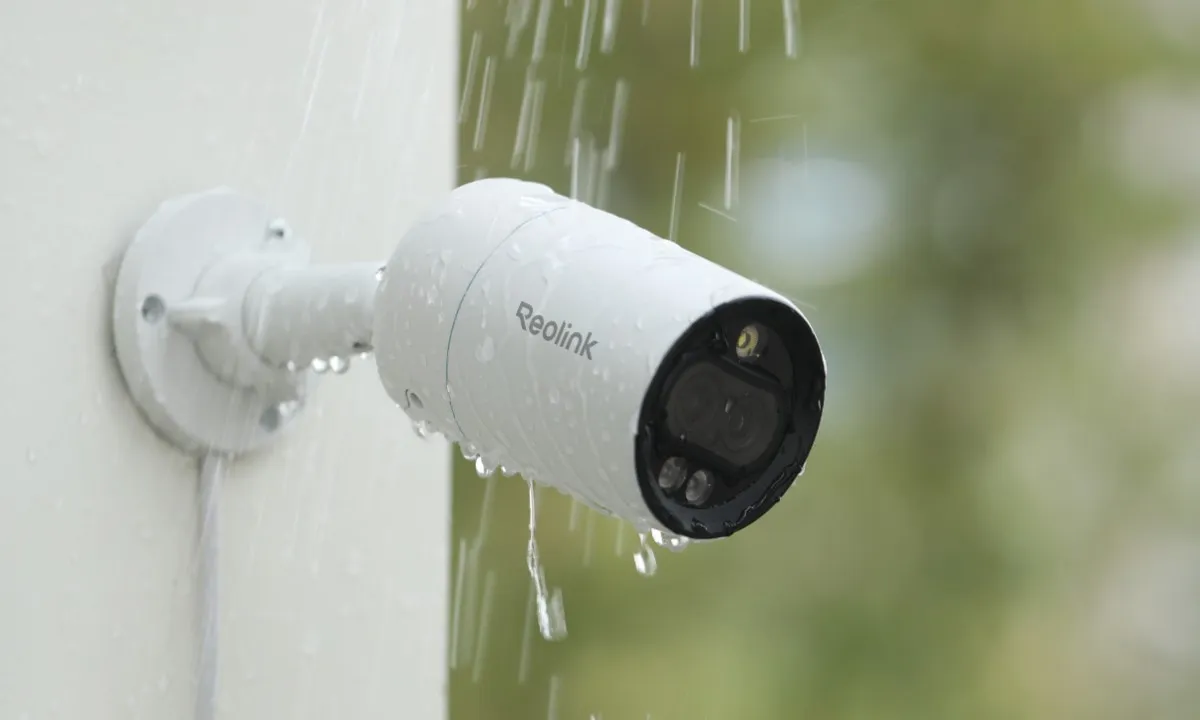
Dual-lens bullet camera on a wall corner in the rain, a weather-rated choice for Manhattan condo roof terraces
A weather-rated camera shrugging off rain at a building corner. Roof terraces and setbacks in Manhattan towers take wind and driving rain, so outdoor housings matter.

Comparison: the camera choices Manhattan boards weigh most

DecisionOption AOption BWhat we usually recommend
Resolution2MP / 1080p8MP / 4K4K for the street door, desk and garage gate; 2MP to 5MP for corridors and cellars
Night performanceInfrared (black and white)Full color with white lightFull color at entrances where clothing color matters; infrared where a light would bother neighbors
RecordingOn-site recorderCloud subscriptionOn-site recorder, with remote viewing for named accounts; cloud only for one or two critical views if the board wants an off-site copy
CableConcealedSurface racewayConcealed in finished lobbies and corridors; raceway in cellars, garages and service areas
BrandHouse systemNamed brandHouse system by default; Lorex, Luminys or Reolink when the board prefers a named brand
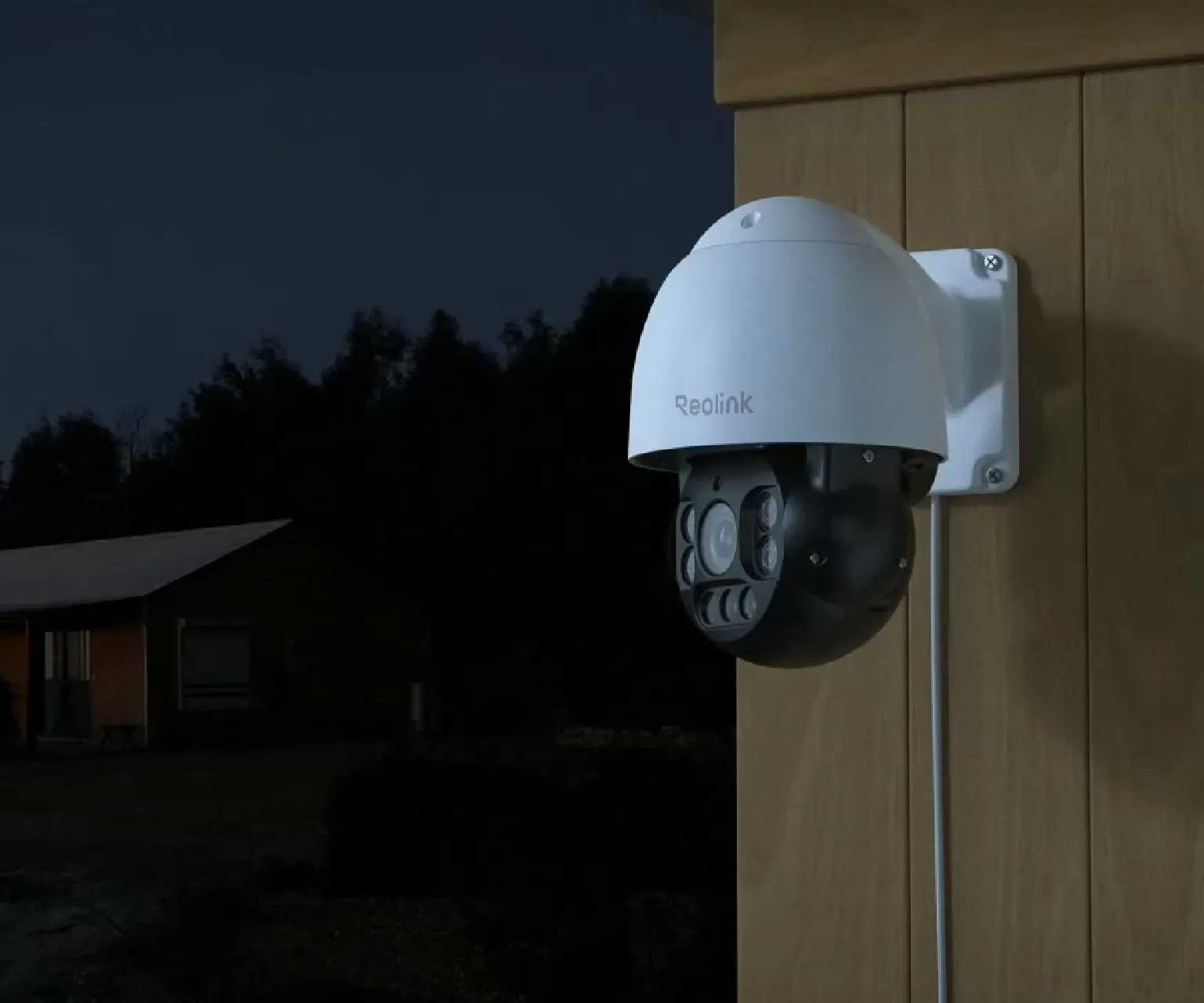
Pan-tilt-zoom camera on a wood-clad wall at night, used for Manhattan condo plazas and courtyards
A pan-tilt-zoom camera at night. One PTZ can sweep a tower plaza or courtyard, while fixed cameras keep every door covered when it is pointed elsewhere.
AI Overview Reality Check

What AI Gets Wrong About Condo Security Cameras in Manhattan

Board members increasingly start their research with a chatbot or an AI summary at the top of a search page. Those answers are written for an average home in an average town, and they tend to repeat the same handful of claims. Here are seven we hear repeated in Manhattan board meetings, and what actually happens in a Manhattan condominium.

"You can mount cameras wherever you need them on the outside of the building."

A generic answer treats the facade like a suburban garage wall. In Manhattan, a building that is an individual landmark or sits in a historic district is regulated by the Landmarks Preservation Commission, which designated 38,550 buildings and sites citywide by the end of Fiscal 2026, including 159 historic districts and extensions.

LPC's guidebook limits camera counts per 25 feet of frontage, asks that equipment be as small as possible and finished to blend in, requires concealed conduit where conduit is needed, and rules out attaching through cast iron or decorative surfaces. A permit application needs manufacturer cut sheets for the cameras.

What that means in practice: we plan facade cameras first, keep their count low, and move as much coverage as possible inside the vestibule. Boards in protected buildings should expect the exterior part of a proposal to be the slowest part to approve.

"Wireless cameras are the easy choice for a high-rise."

Wireless sounds simpler because no cable is pulled. In a Manhattan tower, concrete slabs, steel, elevator shafts and hundreds of residents' Wi-Fi networks all compete with a wireless camera's signal, and battery cameras need someone to recharge them.

A wired camera on a network cable gets steady power and a steady connection, and it records to the condominium's own recorder rather than to a phone app account. That is the reliability a board needs when a footage request comes in three weeks after an incident.

We use wireless only for short point-to-point links where cable cannot go: the elevator cab to the hoistway, or a bridge across a courtyard. The cameras themselves stay wired.

"Put a camera on every floor and you're covered."

A forty-story tower with a camera on every corridor sounds thorough and costs a great deal, but most corridor cameras in residential towers record almost nothing useful. Incidents cluster at the doors into the building, the package room, the garage and the amenity floors.

Corridor cameras also bring privacy questions every time a unit door opens. FirstService Residential's guidance is that hallway cameras must be placed to avoid capturing footage of the inside of any residential unit, which limits where they can point on a tight corridor.

We usually recommend full coverage of entrances, the desk, packages, service areas, garage and amenities first, then corridor cameras at elevator landings on floors with a specific history of problems.

"Cloud cameras mean you don't need a recorder."

Cloud recording works well for a single apartment. For a condominium, it means a monthly fee per camera, a heavy upload on the building's internet connection, and footage stored under an account that someone has to own and pass on when the board changes.

An on-site recorder keeps the condominium's footage in the building, under accounts registered to the association, with retention set by the board's own policy. Remote viewing still works for the managing agent and named board members.

If a board wants an off-site copy for one or two critical views, we can add that, but the recorder remains the system of record.

"Cameras will stop package theft."

Cameras help identify who took a package and often deter a casual thief. They do not stop a determined one. In the Jones Street case CBS New York reported, a resident recorded the thief, and the lasting fix the super planned was a secure delivery room, not another camera.

The best results come from pairing cameras with process: packages go into a locked room or locker, the desk logs who collects them, and the camera covers the door and the hand-off. That combination answers "who took it" in minutes instead of hours.

Package handling procedures belong to the managing agent and the desk staff. Our part is making sure the cameras show the room's door, the shelf and the person signing for a box, clearly enough to act on.

"Turn on the microphones; recording audio makes the system more useful."

Many cameras have built-in microphones, and some AI answers suggest enabling them. New York's eavesdropping law treats mechanical overhearing of a conversation without the consent of at least one party as a crime (Penal Law §250.00, §250.05).

A lobby microphone records residents, guests and staff who never agreed to it. Habitat's 2023 report on a Midtown East condo described exactly that worry among owners.

We install condo common-area cameras with audio recording switched off and turn it on only if the board's counsel approves it in writing. We are not lawyers, and nothing on this page is legal advice.

"A camera system costs about the same wherever you are in New York City."

Cost guides often give a single national range. Our own published four-camera prices differ by borough: $950 in Queens and the Bronx, $999 on Staten Island and $1,099 in Manhattan, matching our borough price pages.

In Manhattan condos, the bigger driver is labor around the building: concealed runs through finished corridors, booked freight elevator time, restricted work hours, and facade positions that need careful mounting. A camera that takes an hour to mount in a garage can take most of a morning in a finished lobby.

That is why we price additional cameras individually after the walkthrough, and why our proposals separate equipment, concealed wiring and exposed wiring so a board can see where the money goes.
Talk to a Technician About Your Manhattan Condo

Tell us the cross streets, the floor count and what the board wants covered. We will book the walkthrough within 2 hours of your request.

Get In Touch

Request a Free Quote for Your Manhattan Condo Cameras

A few facts let us arrive ready: the block or address, the floor count, staffed desk or not, and the board's list of spaces. If you can snap a picture of the desk screen or the recorder closet, attach it to your follow-up email. To talk instead, call or text (929) 560-0737.

✅

Request Sent!

Your Manhattan building details are with our scheduler, who will reach out shortly (normally within 2 hours) to pick a walkthrough window.

How It Works

Our Installation Process for Manhattan Condos

Adding a single package room camera to a working recorder can be scheduled within days of approval. A full tower system usually waits on the board calendar, the managing agent's paperwork and, for protected facades, the landmark filing. The seven steps are the same either way.

1

Request and booking

Reach us by phone, text or the form. Within 2 hours the walkthrough is on the calendar, set in a two-hour arrival window and as early as the building permits.

2

Walkthrough with the super

We walk the entrances, desk, package room, service corridor, cellar, garage and amenity floors with the super or resident manager, test existing cable, and look at the riser and equipment room.

3

Written proposal

A floor-by-floor camera schedule with each camera's purpose, options at different price points, storage sized to the board's retention period, and a note on any facade positions that need landmark review.

4

Approval and paperwork

With the vote recorded and the contract countersigned by management, the deposit releases the order. The agent's certificate of insurance is issued at award, before any crew arrives.

5

Scheduling with the building

Freight elevator time, work hours and staging space are agreed with the agent and super, and a short notice for owners goes out through management.

6

Installation and aiming

Cable, cameras, recorder and battery backup go in. Each view is checked against open unit doors and neighbors' windows, privacy masks are applied, and audio is left off.

7

Handover and training

Doormen learn to find a moment on the timeline; the agent learns exports and user management. A printed camera map stays at the desk, and the association holds every password.

Equipment is ordered only after the deposit and the board's approval, and once it is ordered it cannot be returned. That is why anything that could add cost, such as an old cable run that might fail its test or a facade position that may not be approved, is spelled out in the proposal before the order. We would rather a board hear about a possible extra in the proposal than on installation day.

Coverage Area

Condo Security Cameras Near Manhattan's Landmarks

We work in condominiums across the whole borough. These six areas show the range of buildings we see, and what each tends to need from a camera system. None of the descriptions refers to a particular client.

Hudson Yards and the High Line

New glass towers with staffed lobbies, large amenity floors and below-grade parking. Camera work centers on desk layouts, amenity entrances and garage levels.

West 57th Street

Supertall condo towers along the stretch often called Billionaires' Row, where privacy expectations are high and camera views around private elevator landings need careful aiming.

SoHo and Tribeca

Loft and cast-iron condos inside historic districts. Facade camera counts and mounting points follow LPC criteria; vestibules carry most of the coverage.

Financial District and Battery Park City

Office conversions near Wall and Water Streets and riverfront condos in Battery Park City, with plazas, esplanade-facing entrances and shared service docks.

Upper West Side and Riverside Boulevard

Prewar condo conversions on side streets and newer towers along Riverside Boulevard, with mail rooms, bike rooms and courtyard entrances.

Harlem and Central Park North

Newer condominiums along Frederick Douglass Boulevard and near 110th Street, often with a ground-floor commercial unit and a separate residential entrance.

We also serve condos in Chelsea, the West Village, the Lower East Side, Midtown East, Murray Hill, Kips Bay, Gramercy, the Upper East Side, Lenox Hill, Morningside Heights, Washington Heights and Inwood. For buildings outside Manhattan, our Brooklyn condo camera page and Queens condo camera page cover those boroughs, and the Bronx condo camera page and Staten Island condo camera page cover the other two.

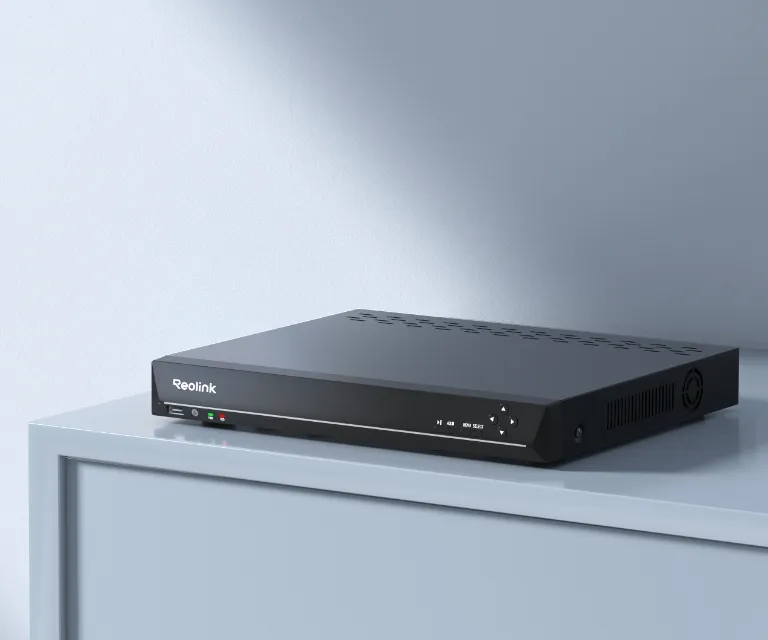
Black network video recorder on a white shelf, the kind used in a Manhattan condo equipment room
A network video recorder on a shelf. In a Manhattan condo it belongs on a labeled shelf or rack in the equipment room, on battery backup, with drives sized to the board's retention period.
Pricing

Condo Security Camera Installation Cost in Manhattan

Our four-camera house-brand system with a recorder starts at $1,099 installed in Manhattan, the same starting price shown on our Manhattan security camera pricing page. That price includes standard wire runs of up to 100 feet per camera. Runs longer than that, and every camera beyond the first four, are priced after we confirm the layout during the walkthrough, because the same camera can take very different amounts of labor in a garage and in a finished lobby.

What moves the price in a Manhattan condo

FactorWhy it mattersHow we show it
Number of camerasEach added camera adds equipment, a cable run and aiming timePriced per camera after the layout is confirmed
Concealed vs exposed cableFishing cable through finished corridors and plaster takes far longer than raceway in a garageConcealed wiring shown as its own line
Run lengthStandard install covers runs up to 100 feet per cameraLonger runs quoted on site
Recorder storageMore cameras, higher resolution and longer retention need more drive spaceStorage sized to the board's retention period
Building accessFreight elevator windows and restricted work hours affect how much gets done each dayReflected in the labor estimate after the walkthrough
Facade positionsLandmark-sensitive mounting and finishing take extra careListed separately so the board can phase them
BrandNamed brands cost more than our house systemHouse system quoted by default; brand options on request

Financing is available through Wisetack, subject to approval.

How a condominium pays for its system is a board decision. New York's Condominium Act allows bylaws to provide for funds for "major and minor maintenance, repairs, additions, improvements, replacements" (Real Property Law §339-v), and boards use operating budgets, reserves or assessments depending on their documents and their accountant's advice. We don't advise on that choice; we make sure the proposal separates one-time costs from anything ongoing, so the treasurer can file it correctly.

Think of protection in three layers. Layer one is the 30-day warranty posted on our website, running from the go-live date. Layer two is optional: an extended plan of one year or more that a board can purchase. Layer three belongs to the companies that built the cameras and recorder.

Full terms — including 50% deposit, one-year parts-only warranty on Abstract Enterprises Security Systems-supplied products, and the late-fee schedule — are set out in the service agreement. Plan details are on our warranty page.

Shop Our Systems

Condo Security Camera Packages & Pricing in Manhattan

Three four-camera starting systems from our Manhattan price list cover most first phases: a front door, the desk or vestibule, the package room and a service or garage door. Larger buildings add cameras to whichever system fits, priced per camera after the walkthrough.

Starter · $1,099

Four 2MP eyeball cameras with a 1080p recorder, installed. A sensible first phase for a boutique walk-up condo: street door, vestibule, mail area and rear door.

Standard · $1,306

Four 4MP dome cameras on a 4K network video recorder, installed. Domes suit lobby and corridor ceilings; we leave the cameras' audio feature switched off in common areas unless the board's counsel approves it.

4K · $1,541

Four 8MP 4K eyeball cameras on a network video recorder, installed. For the views where detail decides the outcome: the street door, the concierge counter, the package room and the garage gate.

Each package price covers four cameras and standard runs. Additional cameras, longer runs, concealed wiring and extra storage are added after the layout is confirmed; nothing in a package is bundled beyond the cameras, recorder and drive.

Bringing your own cameras

When the condominium has already bought its cameras, we install them for a labor-only price. Send us the make and model of each camera and recorder and the spaces they should cover; we quote by phone or text and book the work once the deposit is paid. We don't do walkthroughs on customer-supplied equipment, and how that equipment performs is between the condo and the seller. Wireless cameras the building bought itself depend on the building's Wi-Fi, which stays the building's responsibility.

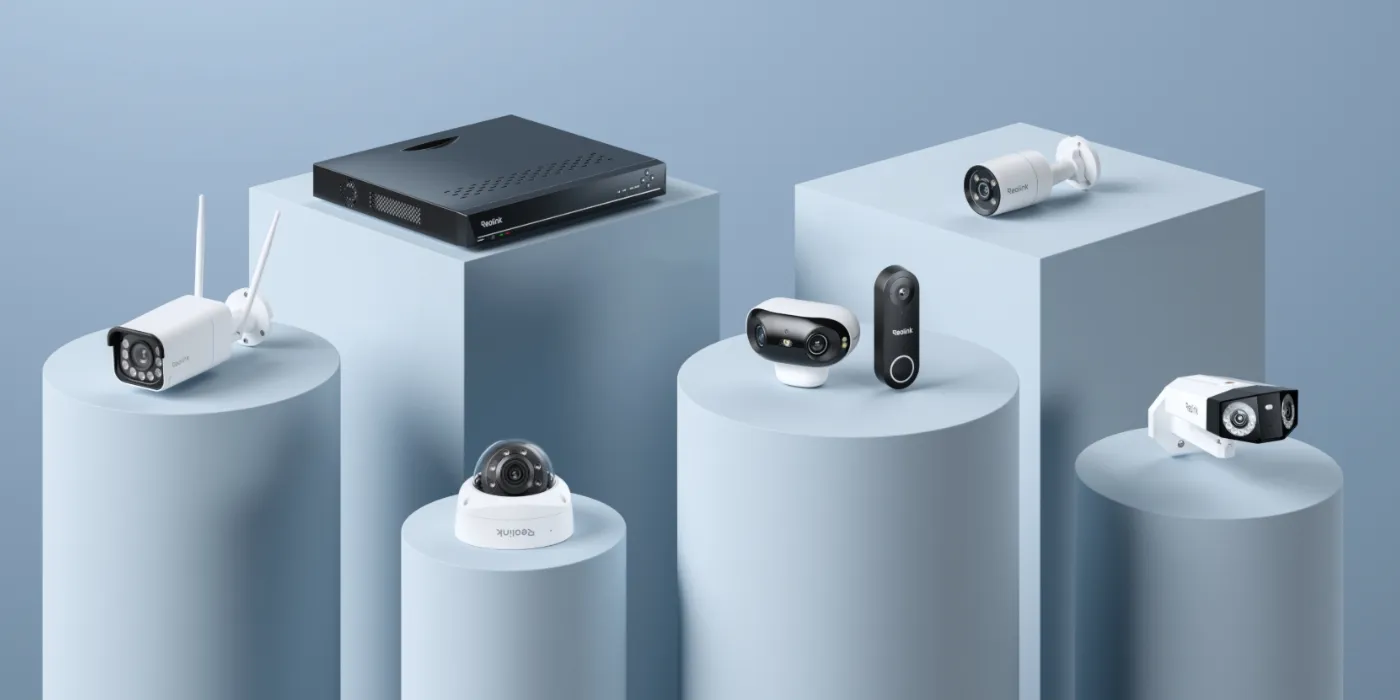
Recorder with dome, turret and bullet cameras on pedestals, showing camera shapes for a Manhattan condo plan
One recorder with several camera shapes. A condo camera plan mixes them: turrets in corridors, domes where cameras might get bumped, bullets for long outdoor views.

Bring a Camera Proposal to Your Next Board Meeting

Tell us when the board meets and we will plan the walkthrough so the written proposal is ready for the packet.

Camera Schedule

What a Camera Schedule for a Manhattan Condo Tower Looks Like

Boards often ask what they will actually receive after the walkthrough. The core of every proposal is a camera schedule: one line per camera, saying where it goes, what it is there to show, and what it must not show. The table below is an illustrative example for a hypothetical twenty-story doorman condo with a garage and one amenity floor. It is not a real building or a client project, and the numbers of cameras in your building will depend entirely on its layout.

#LocationPurposeMust not show
1Street entrance, inside the vestibule looking outFaces of everyone entering, at door heightSidewalk beyond the building line where avoidable
2Lobby, behind the concierge counterPeople approaching the desk and items handed overStaff computer screens
3Lobby wide viewMovement between the door, desk, mail area and elevatorsNothing private in frame
4Package room doorWho enters and leaves the room, with timestampsNone
5Package room interiorShelves and the sign-out pointStaff break area if it shares the room
6Service entrance, side streetCouriers, contractors and staff enteringNeighboring building's windows
7Freight elevator lobby, cellarDeliveries and move-in trafficPorters' locker room door interior
8–9Cellar corridors and storage aisleWho walked where and whenInside individual storage cages
10Bike room doorEntry and exitNone
11Garage pedestrian door into buildingAnyone entering the residential floors from the garageOperator's booth, if the lease excludes it
12Garage gate and rampVehicles and plates at gate speedStreet traffic beyond the gate
13Amenity floor elevator landingWho arrives on the amenity floorGym floor and changing room doors
14Roof terrace door and seating areaEntry and general useWindows across the street (masked)
15–16Passenger elevator cabsRiders and the doorNone beyond the cab

Alongside the schedule, the proposal shows the recorder and how many days it will keep at the chosen resolution, the network switch and battery backup, a cable plan that separates concealed runs from exposed ones, and a phase plan if the board wants one. A building like the example would usually start with cameras 1 through 6 and 11, then add the rest over one or two budget years.

Why "must not show" is on the schedule

Writing down what each camera must not show does two things. It gives the installer a checklist on the day of installation, so every view is checked against it before the ladder moves. And it gives the board something concrete to put in front of owners: not "we are installing cameras," but "this camera sees the package room door and nothing else." That single column often settles privacy questions before they reach a board meeting.

Lighting, glass and weather in Manhattan buildings

Manhattan lobbies are often lit for looks rather than for cameras: dark stone, low warm light and a wall of glass facing a bright street. A camera at the back of that lobby, aimed at the door, sees silhouettes against the daylight. Cameras with strong wide dynamic range help, but the real fix is placement: an entrance camera inside the vestibule, aimed across the door rather than straight out at the street, sees faces lit from the side. At night the problem reverses, and the glass reflects the lobby's own lights back into the lens, so we angle cameras slightly off the glass and avoid infrared pointing at it.

Outdoors, roof terraces and setbacks catch wind and driving rain, and garage ramps collect road salt in winter. Outdoor cameras get weather-rated housings and stainless or coated mounts, and garage cameras sit high enough on the wall to stay clear of truck mirrors. Where a camera faces west over the Hudson or east over the river, late-day sun can wash out the image for an hour; we check the compass direction of every outdoor view and choose positions that keep the low sun out of the frame where we can.

Privacy and the Law

Where Manhattan Condo Cameras May Point, and Where They Must Not

Privacy is the topic that stalls more condo camera votes than price. Owners who agree a lobby needs a camera still worry about a lens that sees into their foyer when the door opens, or a microphone that picks up a conversation at the mailboxes. The sources below are what New York law and New York building professionals actually say. We are installers, not attorneys, and the board's own counsel should review any policy before it is adopted; nothing here is legal advice.

Common areas are not private in the legal sense

An attorney answering a condo camera question for CooperatorNews wrote that "New York does not recognize a common law right of privacy in public or common areas," while also noting that a camera which "peers into a neighboring unit" may interfere with privacy, and that "the law recognizes the interior of a neighbor's unit as subject to considerable privacy safeguards" (CooperatorNews, Q&A: Camera Placement). That is the line we design to: lobbies, corridors, garages and amenity entrances can be watched; the inside of a home cannot.

Rooms where cameras never go

New York's unlawful surveillance statute makes it a felony to use a device to view or record a person, for no legitimate purpose and without their knowledge or consent, "in a bedroom, changing room, fitting room, restroom, toilet, bathroom, washroom, shower" (Penal Law §250.45). Staff locker rooms and changing areas fall under Labor Law §203-c, as FirstService Residential summarizes it. In a Manhattan condo those rooms include the porters' locker room, the staff bathroom off the service corridor, the gym's changing rooms and the pool showers. We will not mount a camera in any of them, even when asked, and we check that no camera outside them can see in through a door.

Hallways and unit doors

FirstService Residential's guidance for New York condos and co-ops is that hallway cameras "must be carefully placed to avoid capturing footage that shows the inside of any residential unit." On a tight Manhattan corridor that usually means mounting at the elevator landing and looking along the hall, rather than across from a door, and applying a privacy mask over each doorway so an open door shows a black rectangle. We check every corridor view with a door propped open before the installer leaves the floor.

The board's authority has limits too

A board's power to install cameras comes from the declaration and bylaws. Andrew Lieb, the attorney quoted in Habitat's 2023 piece on a Midtown East condo's cameras, put it directly: "A house rule that is unauthorized by these foundational documents is unenforceable." Boards should have counsel confirm that the camera plan, and the footage policy that goes with it, sit within what their documents allow before the contract is signed.

Unit owners' own cameras

Owners increasingly want video doorbells or small cameras at their own doors. Habitat's February 2023 article on video doorbells in co-ops and condos quoted Manhattan attorney Debra Guzov: "you can't just unilaterally do what you'd like to do in the common hallways" (Habitat, Feb. 20, 2023). The CooperatorNews Q&A likewise said condos "typically prohibit unit owners from unilaterally altering" common areas and that "a request for board consent is advisable." Many boards solve this with a written owner-camera policy: allowed models, mounting rules, no audio, and a view limited to the owner's own doorway.

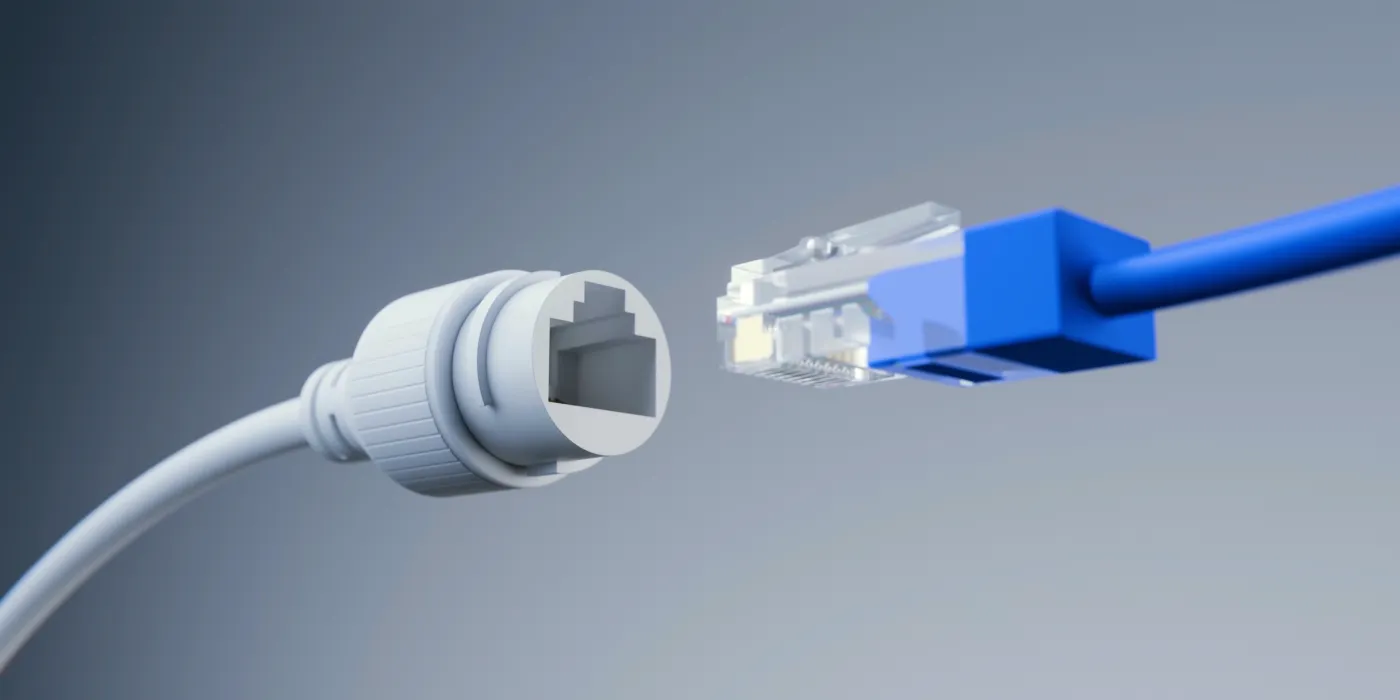
Blue network cable plug next to a white camera pigtail connector, the PoE wiring used in Manhattan condo camera systems
A network cable meeting a camera's connector. One cable carries power and video, and in finished Manhattan corridors most of the labor is getting that cable to the camera out of sight.
Footage Policy

Writing a Footage Policy Your Desk Staff Can Follow

The recorder will do whatever it is told. The policy decides what it is told. A Manhattan condo with a staffed desk has more people near the system than most buildings, across three shifts, so the policy needs to be short enough that a relief doorman on a Sunday overnight can follow it. These are the decisions we ask boards to make before we configure the accounts.

  • Retention: how many days the recorder keeps before overwriting. FirstService Residential reports footage is "generally stored for 30 to 90 days depending on the building size." We size drives to whatever the board picks.
  • Live viewing: who may watch cameras live. Usually the desk, the super or resident manager and the managing agent; sometimes named board officers.
  • Playback and export: who may search recordings and save a clip. Usually fewer people than can view live, often just the managing agent and resident manager.
  • Request log: FirstService recommends that buildings "maintain a log of requests and a list of anyone who accessed footage." We set up the recorder's own user log and can give the agent a simple request form.
  • Owner requests: the same source advises that "residents should not have access to footage or copies of footage without prior approval from the board and legal counsel." The policy should say who decides and how quickly.
  • Outside requests: who handles a request from police or an insurer. That is the managing agent's call under the policy, with counsel where needed.
  • Turnover: what happens to accounts when a board member, agent or staff member leaves. Accounts are named, so removing one person doesn't change everyone's password.

Once the board answers those questions, we build the accounts to match: a desk account that views live and plays back but cannot export, an agent account that can export and manage users, and board accounts with whatever rights the policy grants. We also turn on the recorder's audit log so the agent can see who exported what, and when. None of this costs extra; it is part of setting the system up properly.

Telling owners and residents

Owners hear about a camera project in one of two ways: from the board before installation, or from a neighbor after a camera appears outside their door. The first is better. We give the managing agent a plain-language summary for circulation: which spaces will have cameras, that audio is off, who can see recordings, how long they are kept, and when work will happen on each floor. Owners who rent their units can forward it to tenants. Signage at entrances is a common practice in New York buildings and is the board's choice; we can mount signs the board supplies.

After the Sponsor Leaves

Taking Over a Sponsor-Installed Camera System

Many Manhattan condos were built by sponsors who installed a camera system as part of the original build-out, chose the equipment, and in some cases kept the administrator credentials with their own property team. When the owners elect a board and the sponsor steps back, the new board can find it has cameras on the ceiling and no one in the building who can change a setting. With about 3,000 new-development units on the Manhattan market in the third quarter of 2026, according to CRE Daily, this is a situation many boards will face in the next few years.

Our takeover visit has three goals. The first is control: identify the recorder and every camera, and either obtain the administrator account through the managing agent or reset it where the manufacturer's procedure allows, then register new named accounts to the association. The second is inventory: a camera map with each position, model, cable path and what it currently sees, so the board knows what it inherited. The third is a gap list: spaces the sponsor never covered, cameras pointed at nothing useful, drives near capacity, and any remote-access setting left wide open.

From there the board can decide whether to keep, extend or replace. Many sponsor systems are perfectly serviceable and only need better aiming, a desk layout and a larger drive. Some were built around consumer cameras that do not suit a building of that size. We tell the board which situation it is in, with prices for each path, and the board decides when it is ready. If the sponsor still controls the board, we work for whoever signs the contract, and changes to a system the sponsor installed are the sponsor-controlled board's decision.

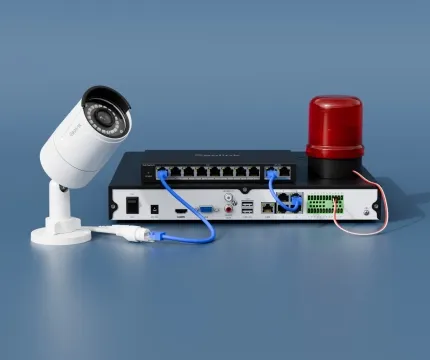
Bullet camera wired to the back of a PoE recorder beside a red siren, an example Manhattan condo cellar setup
A camera cabled straight into the back of a PoE recorder, shown with an optional siren. Small condo cellars and bike rooms often run on a setup this simple.
Budget Years

Phasing a Manhattan Condo Camera Plan Over Two or Three Budgets

Few Manhattan boards fund a complete building-wide system in one year, and they don't need to. A plan that is designed whole and installed in phases avoids the common mistake of buying a small recorder for phase one and replacing it in phase two. We design the full layout first, size the recorder and switch for the final camera count, and then split installation into phases the board can fund.

PhaseTypical spacesWhy this order
Phase 1Street entrance, vestibule, concierge counter, package room door, service entranceWhere most incidents and most owner questions start
Phase 2Garage gate and pedestrian door, cellar corridors, bike room, storage aisles, trash roomBelow-grade spaces with little staff presence
Phase 3Amenity entrances, roof terrace, elevator cabs, selected corridor landingsLower incident rates; more privacy planning needed

Each phase gets its own price in the proposal, built from the same per-camera figures, so the board can see what the full plan costs and what it is approving this year. When a later phase is approved, the cameras plug into a recorder and switch that were already sized for them. If prices change between phases, the board sees that in a new written quote before anything is ordered; we never change a rate partway through a signed contract.

Phasing also suits buildings that are waiting on something else: a facade project that will put up a sidewalk shed, a lobby renovation, or a landmark filing for exterior cameras. The interior phases can go ahead while the exterior waits, without anything being installed twice.

Board Checklist

Before the Board of Managers Votes on Cameras

A short list of things we would want settled if we sat on a Manhattan condo board. None of them is complicated, and each one prevents a common argument later.

  1. Read the declaration and bylaws with counsel to confirm the board can install cameras in each space on the plan and adopt a footage policy.
  2. Know who owns each space. Garages leased to operators, cellar areas assigned to commercial units and roof areas assigned to penthouse owners change where the condo's cameras can go.
  3. Check landmark status for the building, and plan exterior cameras around LPC criteria if it applies.
  4. Adopt the footage policy before installation, so accounts are configured correctly on day one.
  5. Ask for a numbered camera schedule, not just a camera count: position, purpose, what it should show, and what it must not show.
  6. Compare proposals line by line: equipment, concealed wiring, exposed wiring, storage, battery backup, and any monthly fees.
  7. Confirm the credentials go to the condominium, written into the contract, with no vendor-held master account.
  8. Confirm the installer's license and insurance. The insurance certificate the agent requires is normally issued upon award.
  9. Plan the owner notice and the schedule with the managing agent.

If you are collecting proposals now, ask each bidder the same questions and lay the answers side by side. A proposal that is cheaper only because it leaves out storage, battery backup or concealed wiring in the lobby is not cheaper once those are added back.

Network Safety

Keeping the Condo's Camera Network Separate and Locked Down

A camera recorder is a computer on the building's network, and a careless one can be reached from the internet. In a Manhattan tower the building network often carries the intercom, access control, the gym equipment and the management office as well, which makes separation matter. Our standard setup keeps cameras on their own switch and their own network segment, with the recorder as the only device that talks to the outside world, and only through the manufacturer's secure remote-viewing service or a connection the building's IT provider manages.

We change every default password, disable features the building does not use, set the recorder's clock from a reliable time source so timestamps hold up when a clip is exported, and record firmware versions on the handover sheet. Residents' Wi-Fi never shares a network with the cameras. If the condo has an IT provider, we work to their network rules; if it doesn't, we leave a written record of how the camera network is set up so the next vendor is not starting from scratch.

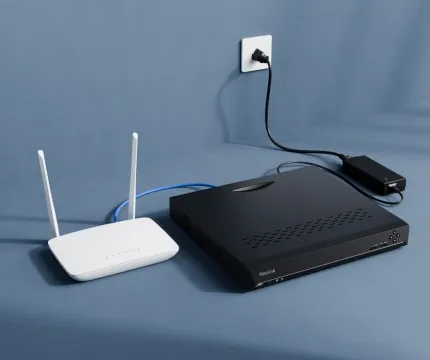
Black recorder beside a white router and power adapter, a small Manhattan condo camera closet layout
A recorder next to a router. In a boutique Manhattan condo the camera recorder often shares a closet with the internet equipment, but it should sit on its own network segment.
Field Notes

Field Notes: What We Check First in a Manhattan Condo

Walk into a Manhattan condo lobby with a camera installer and you'll notice we look up before we look at the cameras. The first question is where the cable can travel: is there an access panel above the desk, a soffit along the mailroom wall, a riser closet on every floor, or nothing but finished plaster? The answer to that question sets the price more than any camera choice. Next we look at the desk monitor and ask the doorman which view he actually uses. The answer is almost always the street door and the package room, and it is often the one view that is too small or badly lit.

Then we go downstairs. Cellars tell you how a building really runs: where deliveries are staged, which door the porters prop open for the trash, whether the bike room lock works. In towers with garages we check where the pedestrian door from the garage lands, because that door is frequently the least watched way into the residential floors. On the roof or amenity floors, we stand where a camera would go and look out. If we can see into a neighbor's windows, so can the camera, and the layout changes. Finally we open the recorder, if there is one, and check three things: whether anyone can log in, whether the drive is actually recording, and how many days of footage it really holds. More often than boards expect, one of the three fails.

Choosing an Installer

How Manhattan Boards Can Compare Condo Camera Contractors

A condo security camera installation contractor in Manhattan should be licensed, insured and comfortable working under a managing agent's rules. New York State licenses security and fire alarm installers, and the Department of State's regulations cover closed-circuit television and video surveillance used to detect or monitor intrusion (NYS Department of State, 19 NYCRR Part 195). Ask every bidder for its license number. Ours is NYS license #12000287431, and Abstract Enterprises Security Systems has been owner-operated since 2002, with thousands of jobs completed.

Insurance certificates are part of every Manhattan job. The managing agent sends its requirements, and the certificate naming the condominium and the agent is issued from our insurer upon award. For references, we point boards to our Google reviews, currently 4.7 stars from 201 reviews, rather than handing out other buildings' contact details; we keep our clients' buildings private the same way we would keep yours.

Beyond paperwork, a board learns most from the proposal itself. A good one names every camera position and its purpose, separates equipment from labor and concealed wiring, sizes storage to the board's retention period, says who will own the credentials, and lists anything that could add cost before the order is placed. A proposal that says "16 cameras, installed" and a single number leaves the board guessing about everything that matters.

Complete Services

Every Condo Security Camera Service in Manhattan

Condo cameras connect to other building systems. These are the related pages for Manhattan, each covering its own service in depth.

Security camera installation in Manhattan

Camera systems for homes, shops and buildings of every kind across the borough.

CCTV installation in Manhattan

Recorder-based CCTV systems for commercial spaces and building service areas.

NVR installation in Manhattan

Network video recorders, storage sizing and replacement of aging recorders.

Camera maintenance in Manhattan

Scheduled checks of drives, views, firmware and battery backup.

Elevator access control in Manhattan

Floor restriction for towers with private landings and amenity floors.

Doorbell camera installation in Manhattan

Video doorbells for boutique condo street doors and owner entries where the board allows them.

Shareholders and boards in Manhattan cooperatives will get a separate camera page written around co-op governance; until it is live, the questions above apply to most co-op lobbies too.

Hand holding a phone showing four camera tiles, remote viewing for Manhattan condo managing agents and boards
Camera views on a phone. Named accounts let the managing agent or authorized board members check views remotely, with permissions set by the board's footage policy.
FAQ

Manhattan Condo Security Camera FAQ

What does a four-camera condo system cost in Manhattan, and what raises the price?
+

Our four-camera house-brand system with a recorder starts at $1,099 installed in Manhattan, with standard runs up to 100 feet per camera. The price rises with each added camera, longer runs, concealed wiring through finished corridors, extra recorder storage and named brands. Additional cameras are priced individually once the walkthrough confirms the layout.

Can a camera go on a private elevator landing that serves one penthouse?
+

Only with the right approvals. Depending on the declaration, a private landing may belong to the unit or be a limited common element, so we need written approval from the board and, where it is part of the unit, from the owner. Cameras there are aimed at the elevator doors, never into the apartment entry.

What should the desk do when police ask for a copy of a recording?
+

Follow the board's footage policy. Most Manhattan condos route outside requests to the managing agent, who decides with counsel where needed and logs the request. We set the desk account to view and play back without exporting, give the agent export rights, and show staff how to note the camera and time so the agent can find the clip quickly.

May a unit owner mount a video doorbell on their own condo door?
+

It depends on the condo's bylaws and house rules, because the hallway outside the door is usually a common element. Many boards allow owner doorbells under a written policy covering approved models, mounting, audio and the camera's view. We install owner doorbells only with the board's or managing agent's written approval.

Are condo parking garage security cameras legal in New York?
+

Cameras in a condo's garage common areas are widely used in New York, and an attorney writing in CooperatorNews noted that the state does not recognize a common law right of privacy in common areas. Audio recording and cameras in restrooms or changing areas raise separate legal issues. The board's counsel should confirm its own plan; we don't give legal advice.

Do condo security cameras reduce insurance costs?
+

Sometimes, but we can't promise it. Whether a camera system affects a condominium's premiums is up to its insurer, so the board's broker is the right person to ask. If the insurer has requirements for recorded areas or retention, send them to us and we will build the system to meet them.

Do security cameras increase a condo's property value?
+

We don't know of reliable Manhattan data that puts a number on it, so we won't claim one. What a working system clearly does is give the board evidence when something happens in a common area, which is the reason most boards install one.

Are condo security cameras considered capital improvements?
+

That is an accounting and governance question for the board's accountant and its bylaws. New York's Condominium Act allows bylaws to provide funds for repairs, additions, improvements and replacements. Our proposals separate one-time equipment and installation from any ongoing costs so the treasurer can classify them.

Is there a charge for the walkthrough and written proposal?
+

No. For a new condo camera system or an expansion, the walkthrough and written proposal are free. We book the visit within 2 hours of your request and send the proposal in a form the board can put straight into its packet.

How long do the recorder's hard drives last?
+

Surveillance drives write around the clock, so they wear out faster than a computer's drive, and the timing varies with load and heat. Drive health is checked on maintenance visits, and a failing drive is priced and replaced before it takes recordings with it.

Should the trash and compactor room have a camera?
+

Usually yes, on its door. Trash rooms collect bulky items left by contractors and move-outs, and a camera on the door shows who left what and when. We keep the camera outside the room where heat and dust are lower, and aim it at the doorway.

Do you install cameras in condo buildings still under construction?
+

Yes, when the sponsor or general contractor hires us and the spaces are ready for finish work. We bid to the contractor's drawings, carry the insurance the contract requires, and leave a camera map and credentials for the board that will eventually take the building over.

All Areas Served

Condo Security Camera Installation Across New York City

Every borough's condos are different, and each of our condo camera pages is written for its own buildings. Start with the citywide hub for an overview, or go straight to your borough. Outside the city, condo boards can read about condo security camera installation on Long Island.

NYC condo security cameras

The citywide guide: board decisions, placement, privacy sources and prices for all five boroughs.

Brooklyn condo security cameras

Brooklyn's condo towers, brownstone conversions and waterfront buildings.

Queens condo security cameras

Queens condominiums from waterfront towers to garden-style complexes.

Bronx condo security cameras

Riverdale elevator condos, prewar conversions and townhouse communities.

Staten Island condo security cameras

Townhouse condo communities, parking courts and garden complexes.

Plan the Cameras for Your Manhattan Condo

Village walk-ups, West Side towers, SoHo lofts and FiDi conversions: every Manhattan condo camera plan we write ends with credentials in the association's name. Licensed under NYS #12000287431, rated 4.7 from 201 Google reviews.