Towers · Garages · Campuses · Walk-ups · Laundry & Package Rooms
Co op security camera installation in the Bronx starts at $950, which covers a recorder and four of our house-brand cameras fully installed and matches the first system on our Bronx camera price list; any further cameras a cooperative needs are priced one by one after we survey the building and agree where each goes. Abstract Enterprises Security Systems is a licensed New York State low-voltage contractor with a Bronx office on East Fordham Road, and we plan, install, expand and take over camera systems for Bronx co-ops of every size, from six-unit HDFC walk-ups in Mott Haven to Riverdale elevator buildings and multi-building campuses.
Quick answer: We walk the property for free, then hand the board a written plan listing every camera and the job it does, the recorder's location, the days of video it keeps, and a line-by-line price. The $950 entry system covers four cameras; larger Bronx co-ops add cameras at a per-camera price set after the walk, and hidden wiring or links between buildings appear as their own lines. Video only, nothing aimed into homes, and the corporation holds every login. Surveys go on the calendar within 2 hours, seven days a week, early in the day.
Last updated November 27, 2026 · Abstract Enterprises Security Systems, licensed under NYS #12000287431 · Research for this page drew on: Riverbay Corporation (Co-op City); Amalgamated Housing Cooperative; Lehman College; NYC HPD; NYS Comptroller (2018); Nacmias Law; CooperatorNews (2010, 2025); Homes.com; Bronx Times (Dec 2025); Levandusky v. One Fifth Ave. Apt. Corp., 75 NY2d 530 (1990); NY Penal Law §§250.00, 250.05, 250.45; NY Labor Law §203-c; FirstService Residential (2024); Habitat (2023); LPC Permit Guidebook; NYC Admin. Code §28-105.4.7; 19 NYCRR Part 195

Bronx office on East Fordham Road · In business since 2002 · Surveys booked within 2 hours, 7 days a week · Phone or text (646) 490-0629
A camera plan for a Bronx cooperative starts with a question most other boroughs never have to ask: which kind of co-op is this? The borough runs from a single development of tens of thousands of residents to six-unit HDFC walk-ups that are run by whichever shareholders have time on a Tuesday night. Both are housing cooperatives. Both have a board of directors. They need very different camera systems, and they buy them in very different ways.
At one end sits Co-op City. Riverbay Corporation describes it as a state Mitchell-Lama cooperative with 15,372 apartments in 35 high-rise buildings and seven townhouse clusters, plus three shopping centers, three community centers and eight parking garages with more than 10,000 spaces. Only about a fifth of its 320 acres is built on. Wikipedia calls it the largest housing cooperative in the world. A camera project there is a campus project, measured in buildings and garage levels, not in cameras.
At the other end are the HDFC co-ops. A Bronx real estate practice that handles co-op closings describes the borough as holding "one of the densest bands of HDFC buildings in the city, through Mott Haven, Highbridge, Morrisania and the Grand Concourse." These are limited-equity buildings formed from city-owned property, supervised by HPD, often with no super on site and a small reserve. A good camera plan for one of them may be three cameras and a recorder.
Between the two is most of the Bronx co-op market. The same firm says Bronx co-ops "cluster in the Riverdale and Spuyten Duyvil belt," with elevator buildings along the Henry Hudson Parkway and central Riverdale, large complexes along Pelham Parkway and the Grand Concourse that converted from rentals, and garden co-ops in Throggs Neck and Country Club that read as low-rise rentals from the street. CooperatorNews put it plainly in a Riverdale market report: "co-ops tend to predominate in Riverdale." A Homes.com guide to Pelham Parkway notes that prewar buildings there "range from mid-rise elevator buildings to garden-style complexes with landscaped courtyards, and midcentury brick co-ops are also common."
Then there is the limited-equity tradition that began here. The Amalgamated Housing Cooperative, on Van Cortlandt Park South, says it was founded in 1927 and is "the oldest limited equity housing cooperative in the United States." Lehman College's Bronx public art survey describes the Amalgamated houses as eleven apartment buildings "scattered over six blocks just south of Van Cortlandt Park," built between 1927 and 1970, ranging from six-story mock-Tudor buildings to a pair of 24-story towers, with a garden common reached through a tunnel-like portal. That one description holds every camera problem a Bronx board meets: walk-ups, towers, slopes, courtyards and passages, all under one corporation.
Boards and buyers regularly call Parkchester a co-op. It isn't. Its buildings were converted to condominiums, about a third in 1974 and the rest as Parkchester South Condominium in 1986. Owners there are unit owners, not shareholders, and the association's documents work differently. If your building is in Parkchester, our page on condo security camera installation in the Bronx is the one written for you.

In every cooperative, the corporation owns the building and the shareholders hold proprietary leases. Lobbies, halls, cellars, garages and grounds are corporate property, and decisions about them belong to the board of directors acting under the bylaws. New York's highest court set the standard in Levandusky v. One Fifth Avenue Apartment Corp. (1990): courts generally defer to a board's good-faith decisions made within its authority and for the purposes of the cooperative. That is why a camera plan is usually a board vote, not a shareholder vote. What sits around that vote changes a great deal from one Bronx co-op to the next.
Most of these buildings have a managing agent and a board of five to nine directors. The agent collects proposals, the board votes, the agent signs and schedules. The practical steps are the ones in the rest of this page: a survey, a written plan the board can read in ten minutes, a vote, a notice to shareholders. Some boards send the plan to the co-op's attorney first, especially for hallway cameras, and we write the plan so it can be read that way.
Co-op City and other state Mitchell-Lama developments answer to the state Division of Housing and Community Renewal (HCR) as well as to their own boards. Riverbay notes that, like all Mitchell-Lama cooperatives, Co-op City is supervised by HCR. In practice that can mean purchasing procedures, bid formats and approval steps that a market-rate building does not have. We respond to whatever format the bid package sets and leave the rules to the management office, which knows them better than any contractor.
Bronx developments in the city's Mitchell-Lama program deal with HPD. A 2018 State Comptroller audit summarized HPD's Mitchell-Lama rules as requiring competitive bids and HPD approval for contracts over $100,000 for building services, repairs and replacements. Most camera projects come in well below that line, but a full campus replacement may not, and a board should know before it asks for prices.
HPD describes HDFC co-ops as limited-equity cooperatives incorporated under the Business Corporation Law and Article XI of the Private Housing Finance Law, with shareholders electing a board and HPD supervising under a regulatory agreement. Many small Bronx HDFCs are self-managed. The treasurer is often the person who calls us, and the camera plan has to fit a budget measured in hundreds or low thousands of dollars, not tens of thousands.
Many Bronx co-ops converted from rentals in the 1980s, and some sponsors still hold blocks of apartments rented to tenants. The sponsor's apartments are still shares in the corporation, and the board still decides about common areas, but the sponsor may sit on the board or pay a large share of maintenance. Renters in sponsor apartments see the same cameras as shareholders, so the notice the board sends should reach them too.
A tall co-op has a short list of places where almost everything happens: the front door, the mail and package area, the elevator lobby on the ground floor, the garage, the service entrance and the trash room. The upper floors matter much less than people expect. A 20-story building does not need 20 floors of hallway cameras. It needs the handful of points every person must pass to get in, get out or carry something away, each covered well enough to identify a face.
The camera that does the most work in any Bronx tower looks at the inner vestibule door from the inside, at about head height, so it sees the face of everyone who comes through. A second camera covers the outer door and the sidewalk approach in a wider view. Riverdale buildings often face west over the river, and that afternoon light is brutal on a camera looking out through glass. We mount the face camera to look in toward the lobby rather than out toward the street wherever the layout allows, and use wide dynamic range cameras where it doesn't.
Package theft in a staffed tower usually happens in the gap: the doorman steps away, the porter is on another floor, a courier leaves a stack by the desk. A camera over the package shelves, aimed so it sees the person reaching for the box and not just the top of their head, settles most disputes. In unstaffed buildings, the package room door matters more than the shelves.
Riverbay says it modernized all 160 residential elevators in Co-op City's high-rises. Elevator work like that is a good moment to plan cab cameras, because the elevator contractor is already in the car. We supply the cab camera and the wireless link that carries its picture down the hoistway to the recorder; anything inside the car's controls or traveling cable stays with the elevator company. A camera at the ground-floor elevator lobby is cheaper, needs no elevator contractor and catches most of what a cab camera would.
Towers built in the 1960s and 1970s often have a compactor or chute room on every floor. Bags left on the floor beside the chute, furniture left on the landing, and the occasional fire in a chute are among the most common shareholder complaints we hear in big co-ops. A camera in every chute room is rarely worth it. Cameras on the floors with repeat problems, placed by the super's records, usually are.
Fire stairs in a high-rise are long, quiet and rarely used, which is why people end up in them who shouldn't. We cover the stair doors at the lobby level and the roof door, and leave the intermediate landings alone unless the board has a specific problem. Cameras never go on the latch or the door hardware itself; exit doors stay exactly as the fire code requires.

Parking is a bigger part of Bronx co-op life than anywhere else in the city. Co-op City alone has eight garages with more than 10,000 spaces. Riverdale elevator co-ops often have a garage cut into the hillside under the building. Garden co-ops in Throggs Neck, Country Club and along Pelham Parkway have open lots behind the buildings. Each needs a different camera layout, but the order of priorities is the same.
Every car and every person that enters a garage passes the ramp and the pedestrian door. Cameras there, set to show the front of the vehicle and the face of the driver or walker, are worth more than any number of cameras along the parking rows. On a sloped Riverdale ramp, the camera goes where the car is level and slow, usually at the gate or just past it, not halfway down the incline.
Many garage break-ins in residential buildings are not about cars at all. Someone walks in behind a car, then uses the garage stair to reach the building. A camera on the inside of the garage-to-building door, aimed at head height, is often the single most useful camera in a co-op garage.
Inside a structured garage, columns hide most of the floor from any one point. We cover the drive aisles with bullet cameras looking along the aisle, so a car moving through is in view for several seconds, and accept that not every parked car will be in frame. Concrete garage ceilings take anchors well, but they are often damp or spalling near the ramps, and we pick mounting points on sound concrete away from leaks.
An open lot needs fewer cameras than people expect and more light than most have. A camera on the building wall looking down the length of the lot, with a second at the lot entrance, covers most garden co-ops. Where the lot is dark, color cameras with their own small white lights, or infrared models, make the picture usable without new pole lighting, which is electrical work we don't do.
Boards often ask for every plate on every car. A plate is readable only when a camera is set up for it: a narrow view at the gate, the right angle, a slow car, and enough light. We can set one camera up that way at a garage entrance. General overview cameras will show the car, its color and its direction, but not reliably its plate.

Several of the largest Bronx co-ops are not buildings at all but campuses: towers and townhouse clusters on one property, or a string of buildings on a slope like the Amalgamated houses south of Van Cortlandt Park. Camera plans for these properties are mostly about distance, consistency and who watches.
Network cable for cameras has a practical limit of about 100 meters, roughly 328 feet, from switch to camera. On a campus, that usually means a recorder or a network switch in each building, connected back to a central point. Some boards prefer each building's video to stay in that building, so a fault in one never takes down the others. Others want everything in one locked room near the management office. Both work. What matters is that the board decides once, and every building follows the same pattern.
Between buildings, we use fiber where a conduit or an existing cable path already runs, and point-to-point wireless bridges where it doesn't. Fiber doesn't care about weather or trees. Wireless bridges are fast to install and cost far less than trenching, but need a clear line of sight from roof to roof or wall to wall. On a hillside campus, a bridge mounted on the uphill building can usually see the roofs below it.
A campus that grows building by building over ten years ends up with five different camera brands and five different apps, and nobody knows all of them. We set one standard on the first building: the same camera models for the same jobs, the same recording settings, the same naming scheme for cameras, the same retention. Each later building plugs into that standard, and staff only learn one system.
Co-op City runs its own public safety department. Its website describes sworn New York City and State certified peace officers, a patrol services unit and an on-site 24-hour dispatch center. Where a co-op has staff like that, the camera plan should be written with them: which cameras their dispatchers see live, which they can play back, and who exports clips. Our job is the cameras, the recorders and the accounts; how the officers use them is the co-op's.
State Senator Jamaal T. Bailey put $1 million toward NYPD cameras in the 45th Precinct, aimed at Co-op City, according to a Bronx Times story from December 2025, which quoted him: "These tools will help law enforcement better prevent crime, respond more effectively, and provide residents with greater peace of mind." Police cameras watch public streets for the police. They do not show the inside of a co-op lobby, garage or laundry room, and the board has no access to them. A co-op's own cameras are still the only record of what happens on its property.

Below the towers, the Bronx has a deep stock of five- and six-story prewar buildings, many of them now co-ops: Art Deco apartment houses along the Grand Concourse, mid-rise elevator buildings and garden courts along Pelham Parkway, and older walk-ups on the side streets. They share features that change how cameras go in.
The Landmarks Preservation Commission's report on the Grand Concourse Historic District, designated in 2011 with 78 properties, describes buildings with a "concave main-entry vestibule featuring beige and gold mosaic tile and terrazzo flooring." Nobody wants a camera bolted into that tile. We look first for the plain surfaces: the ceiling, a painted plaster band above the tile, a door frame, a steel transom. Cable comes in from above, through the ceiling or a closet, not across the mosaic. On buildings inside the historic district, exterior cameras follow the LPC's permit guidance, which we cover below.
Many Pelham Parkway and Concourse buildings are built around a courtyard, with two, three or four entrances off it, each leading to a separate stair hall. Each of those doors is a front door to the people who use it. A camera at each stair-hall door, aimed at the person entering, is the core of the plan. A wide courtyard camera on top of that is nice to have, not essential.
Prewar buildings hide useful paths: abandoned dumbwaiter shafts, old intercom risers, gas pipe chases, the space behind a stair stringer. Our survey tech looks for these first. A camera cable that rides an existing riser to the lobby costs a fraction of one that needs a new channel through plaster, and leaves nothing for the board to repaint.
Walk-up co-ops have fewer places to watch and less money to watch them with. The front door, the cellar door and the mailboxes cover most of them. The harder question is where the recorder lives. It should be in a locked common room with power and an internet connection, not in the treasurer's apartment. If no such room exists, a small lockable wall cabinet in the cellar or the first-floor hall is better than keeping the recorder in someone's home.

HPD's own description of HDFC co-ops sets the frame: shareholders' household income is generally capped at up to 165% of area median income, the building is supervised by HPD, and money from flip taxes goes back into capital repairs and reserves. For a 10- to 30-unit HDFC in Mott Haven, Highbridge or Morrisania, a camera system is a real expense, and the board needs to see exactly what it is paying for.
In most small Bronx HDFCs we suggest starting with the front door from the inside, the mail area, and the cellar or rear door. That is three cameras. Our Bronx starting system has four cameras and a recorder for $950 installed, which leaves one camera for whatever the board's biggest problem is, often the stairs to the roof or the yard where the trash goes out. Concealed cable inside finished walls is priced separately, and in walk-ups we usually avoid it by running cable in the stair hall in painted raceway.
Self-managed co-ops lose access to their own cameras more often than any other kind of building, usually because the one person who set them up moved away. We hand the main password to the board in writing, and set up at least two personal logins for officers, so the building never depends on one shareholder's phone. When officers change, the outgoing ones lose access and the new ones get theirs.
Boards fund camera work from the operating budget, from reserves, or by assessment under the bylaws; the treasurer and the co-op's accountant decide which. Because equipment is ordered only after the deposit, and the 50% deposit is the only money due before work starts, a small board can plan the purchase around its next maintenance cycle. Financing is available through Wisetack, subject to approval.
We work in co-ops across the whole borough from our office on East Fordham Road. These are the neighborhoods where Bronx co-ops are concentrated, and the first thing a camera plan has to settle in each.
Elevator co-ops with doormen, garages under the building and lobbies facing the river. The first question is glare: entrance cameras have to cope with bright western light through lobby glass, and garage cameras with a steep ramp. Desk staff usually want a live monitor, which shapes where the recorder and screen go.
Home of the Amalgamated and neighboring limited-equity co-ops, with buildings of different ages spread over several blocks of hillside. The first question is distance: which buildings share a recorder, and how video crosses streets and courtyards between them.
Towers, townhouse clusters and garages on a single campus with its own management and public safety staff. The first question is standards and phasing: one camera standard for every building, rolled out in a sequence the capital program can carry.
Prewar mid-rise and garden courtyard co-ops and midcentury brick buildings. The first question is the number of entrances: each courtyard stair hall is its own front door, and each needs its own camera before the courtyard itself.
Art Deco buildings, many converted to co-ops, with decorated vestibules and some inside the historic district. The first question is surfaces: where a camera and its cable can go without touching mosaic, terrazzo or ornament, and what the LPC will approve outside.
Garden co-ops that look like low-rise rentals from the street, with lots and grounds behind and the Sound close by. The first question is weather and light: outdoor cameras that survive salt wind and still give a usable picture of a dark lot.
The heart of the borough's HDFC stock, mostly walk-ups and small elevator buildings, many self-managed. The first question is budget and custody: the fewest cameras that cover the doors, and a password plan that survives the next board election.
Every co-op is different, but the same spaces come up on almost every Bronx survey. This is the table we work from when we write a plan. The right-hand column is what we tell the board before anyone picks a camera model.
| Space | What the camera has to show | Usual camera | What to watch for |
|---|---|---|---|
| Front door and vestibule | A clear face of everyone entering | Turret or dome at head height, looking inward | Backlight from street glass; mosaic or marble surfaces |
| Lobby and desk | Who comes and goes, what the desk sees | Wide dome on the ceiling | Keep the desk screen out of the frame if the board wants |
| Mail and package area | Hands on the boxes and the face of the person | Dome over the shelves plus one at the door | Couriers who block the view with carts |
| Elevator lobby, ground floor | Everyone heading upstairs | Dome facing the elevator doors | Cheaper than a cab camera and often enough |
| Elevator cab | People in the car | Small corner dome with a wireless link | Elevator contractor handles the car's controls and cable |
| Laundry room | The door and the machines | Vandal-resistant dome | No audio; no camera in any restroom off the laundry |
| Storage and bike rooms | The face of whoever opens the door | Dome inside, aimed at the door | Cage rows hide people; cover the entry, not the cages |
| Compactor or trash rooms | Who leaves what beside the chute | Small dome or turret | Only on floors with repeat problems |
| Cellar corridors | Movement toward service doors | Infrared dome | Damp and heat from boiler rooms |
| Roof and stair doors | Who opens them | Turret above the door | Never mount on exit hardware |
| Garage ramp and gate | Vehicle front and, if set up for it, the plate | Bullet with a narrow view | Slope, headlights, wet concrete |
| Garage-to-building door | Face of anyone walking in | Turret at head height | Often the most useful garage camera |
| Courtyards and paths | Movement between buildings | Bullet or turret on a corner | Trees grow into views; mask apartment windows |
| Open parking lot | Cars and people across the lot | Bullet on the building wall | Light at night; no new pole wiring by us |
No camera goes inside an apartment, a bathroom, a changing area or a staff locker room. Hallway cameras are aimed along the corridor, not into anyone's door, and any window that falls into a courtyard view is blacked out with a privacy mask on the recorder. If a board asks for something on this list, we explain why not and put it in writing.
Boards rarely call to say they want cameras. They call because something keeps happening and nobody can say who did it. Here is what we hear most from Bronx co-ops, and what a camera can and can't do about each.
A camera over the drop area and a camera at the door, both at a height that shows faces, turn "my package was stolen" into a clip the managing agent can give to the shareholder and, if needed, to the local precinct. The camera does not stop the theft. Moving drop-off into a locked room does that, and the camera makes the locked room accountable.
The usual pattern is a person on foot walking in under a closing gate. A camera on the ramp and one on the garage-to-building door show it happening and when. The fix for the gate itself, a faster close or a sensor adjustment, is the gate company's job; we can tell the board which cameras will prove whether the change worked.
Broken machine doors, missing clothes and arguments over who left what in the dryer. A vandal-resistant dome that covers the door and the machines, with no audio, settles most of it. Signs at the door saying the room is recorded prevent much of the rest.
Scraped cab walls and dented doors are a constant cost in co-op towers. A camera at the ground-floor elevator lobby, plus a cab camera where the board wants one, tells the managing agent which move caused the damage so the moving deposit can cover it.
Side and cellar doors get wedged open for deliveries, aides, contractors and smokers. A camera on the inside of each problem door shows who opened it and how long it stayed open. Some recorders can send an alert when a door camera sees movement at night; the board decides who receives it.
Mattresses and construction debris left behind garden co-ops and by garage entrances cost the co-op money to haul away. A bullet camera looking along the approach to the enclosure, with enough light at night, shows the vehicle and the person.
When someone says they fell on the front steps or a car was dented in the garage, the first thing the insurer asks is whether there is video. A camera on the steps and the garage aisles, with retention long enough to outlast the time it takes a claim to arrive, gives the board an answer.
Facade work, boiler replacements and elevator modernizations bring outside crews through the lobby and cellar for months. Cameras on the service entrance and the routes those crews use show what was already damaged before the project and what was damaged during it.
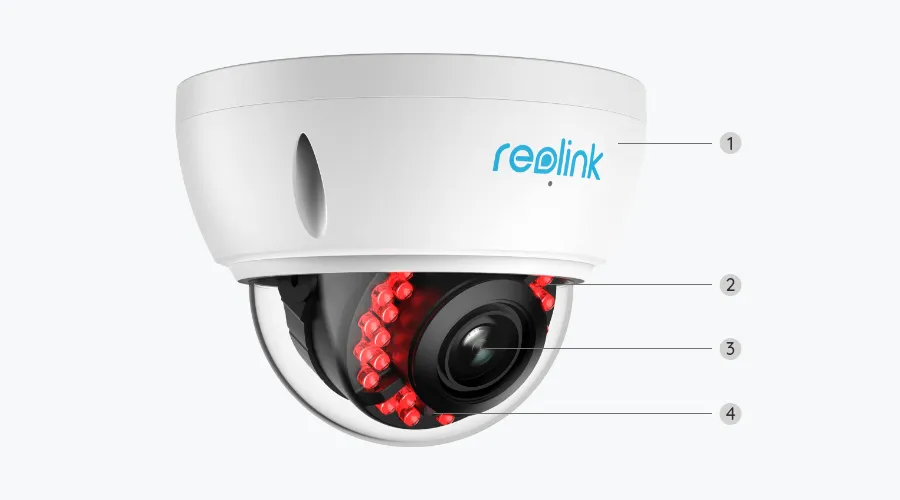
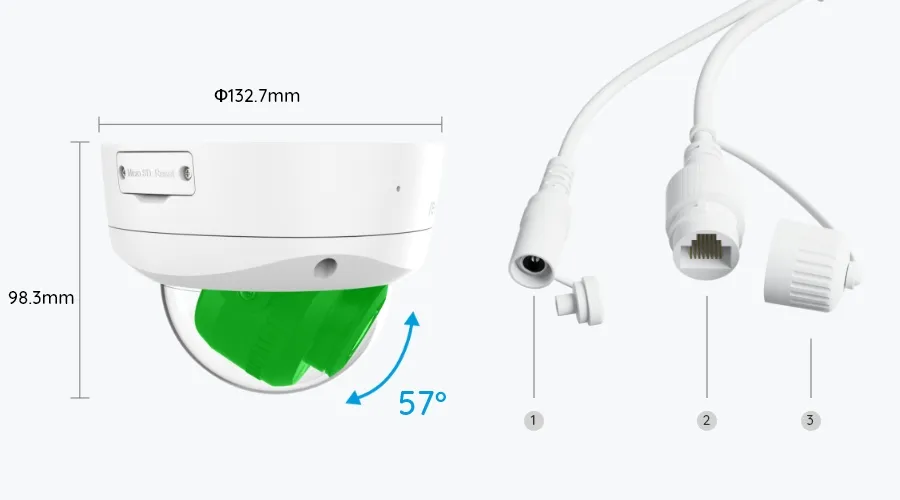
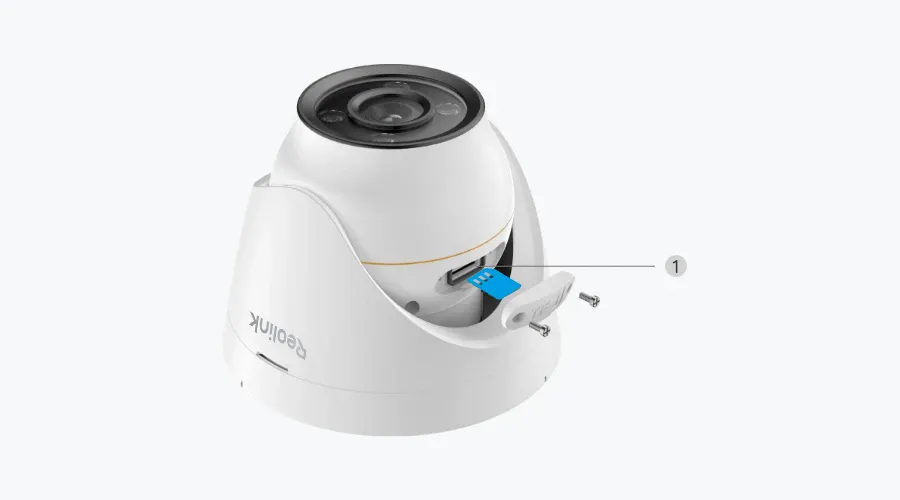
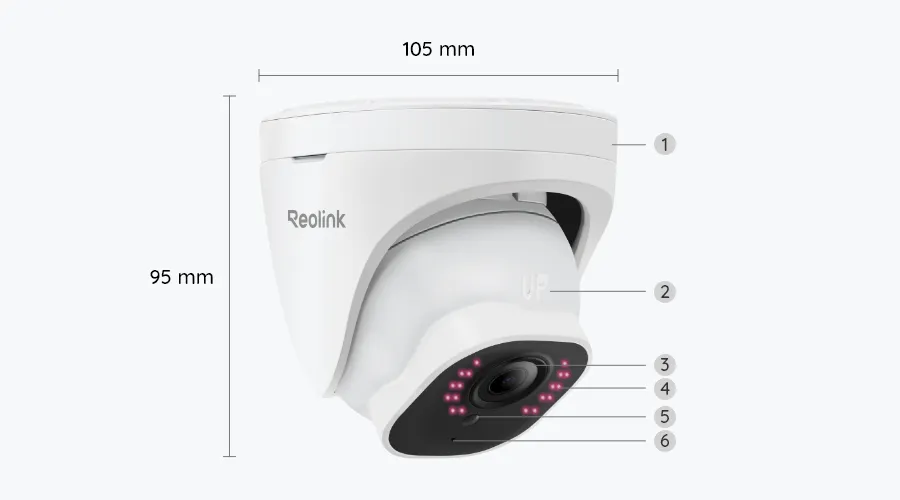
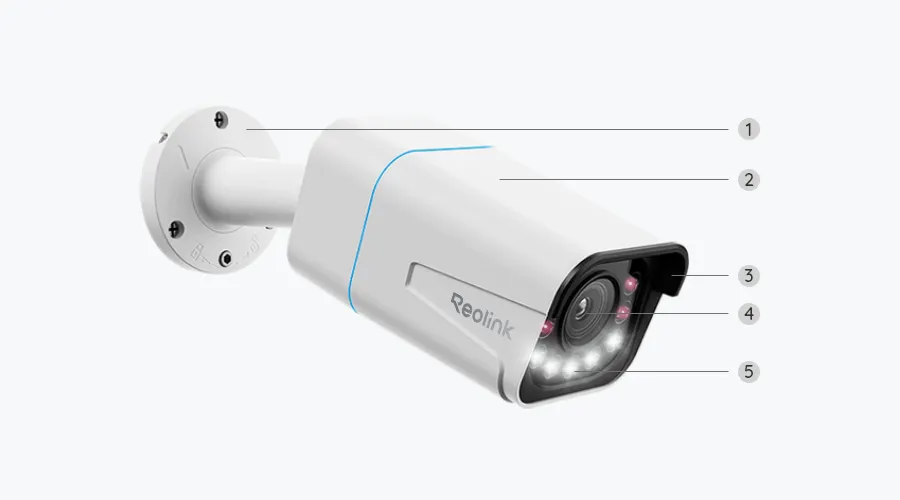
Our default system is our own house-brand line of cameras and recorders, which keeps the price where co-op boards can approve it. If the board asks for a named brand, we also install Lorex, Luminys and Reolink, the three manufacturers we are partners with, and we can quote other commercial brands on request. The photos on this page are Reolink product photos, used because we do not show our clients' buildings.
Domes go on ceilings in lobbies, laundry rooms and garages; the vandal-resistant versions take a kick or a broom handle. Turrets go over doors and on outside corners; they keep their lens clear of rain and don't collect spider webs over the glass like domes can outdoors. Bullets go on long views, such as a garage aisle, a lot or a path between buildings, and their shape tells people they are being recorded. Pan-tilt-zoom cameras are rarely the right answer for a co-op: when one is looking left, nothing is recording on the right. We suggest them only for very large open grounds, and always alongside fixed cameras.
Our Bronx price list starts with an analog high-definition system on a digital video recorder: four 2MP eyeball cameras and a 1080p DVR, installed, for $950. That system is a good fit when a building already has coax cable in good condition, because the new cameras can reuse it. Network systems, where each camera gets one network cable that carries power and video to an NVR, start at $984 for four 2MP IP eyeball cameras. Four 4MP dome cameras on a 4K NVR are $1,157, and four 5MP eyeball cameras on a 4K NVR with a monitor are $1,479. Most new co-op systems we install are network systems, because they scale more easily across a building.
Higher resolution helps when one camera must cover a wide space. At a vestibule door, where the person is a few feet away, a 2MP or 4MP camera with the right lens shows a face as clearly as an 8MP camera with the wrong one. We pick the lens for the distance first, then the resolution.
Infrared cameras see in the dark in black and white, with no visible light. Color night cameras use a small built-in white light, or a very sensitive sensor, to keep color after dark. For a co-op garage or a lot where the board wants to know the color of a car, color night models are worth the difference. For a cellar corridor, infrared is enough.
Retention is set by the size of the hard drives, the number of cameras and the quality setting. The trade groups that advise New York co-ops suggest 30 to 90 days. We size drives for the number of days the board chooses, and write that number on the handover sheet so nobody assumes footage is kept longer than it is.
Network cameras draw power through their data cable from a PoE switch or the recorder, so most cameras need no outlet at all. The recorder and switch plug into an existing outlet in the equipment room, on a battery backup that rides out short outages and shuts the system down cleanly in long ones. We are a low-voltage contractor and do not do electrical work. If a location truly needs a new outlet, the co-op's electrician installs it.


Most Bronx co-ops that call us already have cameras: an analog system from the 2000s, a recorder from a company that no longer answers the phone, or a mix of both after a few repairs. Before we propose anything new, we look at what is there.
Cameras that still give a clear picture can stay. Coax that tests clean can carry new high-definition analog cameras, and a newer recorder can often run old and new cameras side by side while the board phases in the rest. Our survey notes, camera by camera, which ones are worth keeping.
Recorders whose passwords left with a former installer, super or board member are the single most common problem we find. Some can be reset to factory settings and reconfigured, losing old recordings; some are locked to a vendor account and cannot. Either way, the end state is the same: a recorder the corporation controls, with logins issued by the board.
Recorders over seven or eight years old, cameras with yellowed covers or failed night vision, and cable that fails its test are usually cheaper to replace than to keep repairing. Pages for a DVR upgrade and NVR installation cover those jobs on their own.
Boards that already own cameras pay for labor only: we price the work by phone or text and put it on the schedule when the deposit comes in. Equipment we didn't sell gets no free walk-through from us, and how it performs is a matter for its manufacturer.
Cameras are rarely the only security system in a Bronx co-op, and the plan works better when it knows what else is in the building.
Many video intercoms have their own small camera at the entry panel, which shows the visitor to the apartment being called. That camera usually does not record to the building's recorder. A separate camera at the vestibule is still what records the visitor. Boards planning a new panel can read our intercom upgrade guide for co-op boards before choosing.
Readers record which fob opened a door and when. Cameras record who actually walked through. Placing a camera so it sees both the reader and the person makes the two records line up when the board has to investigate a lost or shared fob.
Co-ops that restrict elevator access by floor often pair it with a cab or elevator-lobby camera. The elevator contractor handles anything inside the car's controls; our elevator access control work and our cameras stay on our side of that line.
Where the building already has a locked room for the intercom and access control equipment, the camera recorder usually belongs there too, on the same battery backup and the same internet line, with one labeled rack instead of three loose boxes.
This section summarizes public sources so a board knows what to ask its attorney. It is not legal advice, and the co-op's counsel is the right person to apply it to your building's documents.
Ricardo M. Vera of Newman Ferrara told CooperatorNews in 2025 that New York "does not recognize a common law right of privacy in public or common areas." Combined with the board's authority under the bylaws and the business judgment rule from Levandusky, that is why boards can generally place cameras in lobbies, halls, laundry rooms and garages without a shareholder vote, as long as they follow their own documents.
Under New York Penal Law ยง 250.05, eavesdropping is a class E felony, and ยง 250.00 counts the mechanical overhearing of a conversation as eavesdropping unless at least one person in it consents. Many cameras come with microphones. On every co-op job we turn audio off and note it on the handover sheet.
Penal Law ยง 250.45, unlawful surveillance, covers recording people in places such as bedrooms, changing rooms, restrooms and bathrooms. New York Labor Law ยง 203-c separately bars employers from video recording employees in restrooms, locker rooms and changing areas, which matters for the super's and porters' spaces in a co-op cellar.
Video doorbells and peephole cameras on apartment doors look into common hallways. Habitat quoted attorney Debra Guzov in 2023: "you can't just unilaterally do what you'd like to do in the common hallways." Many boards now write a house rule that either allows such devices with conditions or prohibits them. That is a board decision, made with counsel.
Parts of the Bronx sit in historic districts, including the Grand Concourse, Riverdale and Fieldston districts. The Landmarks Preservation Commission's permit guidance asks that security cameras stay off the primary facade where possible, be small and painted to match, and be "well spaced to avoid a cluttered, haphazard appearance," attached at mortar joints or plain surfaces rather than ornament. We include the camera cut sheets a permit application needs and mount to the approved locations.
New York City's Administrative Code ยง 28-105.4.7 exempts signaling and data wiring under 50 volts from an electrical permit, with exceptions for life-safety systems, so a low-voltage camera system normally needs no DOB electrical permit. New York State licenses installers of security systems, including CCTV and video surveillance used to detect or monitor intrusion, under 19 NYCRR Part 195. Our state license number, #12000287431, is on every proposal.
FirstService Residential's 2024 guidance for New York co-ops and condos recommends keeping footage 30 to 90 days, logging every request and every viewing, and not giving residents access without prior approval from the board and legal counsel. Christina Forbes of FirstService put the reason simply: "Limiting access protects the privacy of residents and helps prevent potential misuse." The details of a good policy depend on who actually runs the building.
The agent's office is usually the custodian. The doorman or desk sees live views of the entrance and packages; the super sees cellar and garage views; playback and export are limited to the agent and one or two board officers. Requests from shareholders go to the agent in writing.
Dispatchers need live views to send officers. Playback and export are often limited to supervisors. The policy should say how a clip is preserved when an incident report is written, so the video is still there when an insurer or the police ask a month later.
Without staff, the board itself is the custodian. Two officers hold logins, one of them exports clips, and the minutes record each request. Keeping the log in the board's minutes is simple and leaves a record when officers change.

Describe the property and the incidents your directors are tired of hearing about. We put a walk-through on the calendar within 2 hours of your request, seven days a week, starting early in the day.
Send the cross streets or the neighborhood, the number of buildings and apartments, whether there is a managing agent or a management office, and the spaces the board wants watched. A photo of the current recorder, if there is one, saves time. Calls and texts go to (646) 490-0629.
Got your request. Expect a call or text from the Bronx team to choose a day for the walk-through.
A three-camera HDFC walk-up and a campus with a dozen buildings go through the same seven steps. The campus simply spends longer on steps two and four.
The request reaches our Fordham Road office through a call, a text or the web form, from a director, the agent, a management office clerk or the super. Within 2 hours we confirm a date and a two-hour arrival window, early in the day.
Our tech walks every space on the board's list with whoever has the keys, opens the existing recorder if there is one, tests any coax worth keeping, and finds the cable path to each camera location.
The board gets a numbered camera list with the purpose of each camera, where the recorder goes, how many days it records, any concealed or between-building cable priced on its own line, and the total.
Directors vote under their bylaws. Once the corporation pays half up front, we order the equipment, and the insurance certificate the agent asks for, naming the co-op and the agent, follows the award.
A one-page letter from the board or agent tells residents where the cameras are, that they capture pictures and not conversations, who may watch, and after how many days video is overwritten.
Our crew runs the wiring, hangs every camera, tunes each view to the board's priorities, blocks out any window caught in a frame, programs how long video is kept, and connects the recorder to its battery backup.
We walk the board or agent through live view, playback and clip export, set personal logins for the people the board names, and leave a written sheet of every account and setting.
Four to six cameras in a walk-up or small elevator building is usually one day. A Riverdale elevator co-op with ten to sixteen cameras, a garage and some concealed runs is usually two to four days. Campuses are scheduled building by building, keeping at least one entrance to each building free of work at all times.
We work in common areas only, during permitted working hours, and never need to enter an apartment for a common-area system. Ladders come down and ceiling tiles go back at the end of each day. Bookings are first come, first served once paid, and we book seven days a week.
This is a typical plan for an illustrative building, not a client: six stories, about 90 apartments, a U-shaped courtyard with three stair-hall entrances, one elevator, a cellar laundry and a small lot behind. Every building differs, and the board's problem list sets the final count.
| # | Location | Purpose | Camera |
|---|---|---|---|
| 1 | Main entrance, inside vestibule | Face of everyone entering | Turret at head height |
| 2 | Courtyard entrance A | Face at the stair-hall door | Turret under the door hood |
| 3 | Courtyard entrance B | Face at the stair-hall door | Turret under the door hood |
| 4 | Courtyard entrance C | Face at the stair-hall door | Turret under the door hood |
| 5 | Mailboxes and parcel shelf | Hands on boxes and the person | Dome on the ceiling |
| 6 | Elevator lobby, ground floor | Everyone going up | Dome facing the doors |
| 7 | Cellar laundry | Door and machines | Vandal-resistant dome |
| 8 | Cellar corridor to rear door | Movement toward the yard | Infrared dome |
| 9 | Rear lot from the building wall | Cars and people in the lot | Color night bullet |
| 10 | Lot entrance | Vehicles coming and going | Bullet with a narrow view |
The recorder goes in a locked cellar room on a shelf, on battery backup, with drives sized for the number of days the board picks. Cameras 1 to 8 reuse the existing intercom riser and cellar ceilings for cable; cameras 9 and 10 run along the rear wall. The first four cameras are covered by the $950 starting system; cameras 5 to 10 are priced per camera after the survey confirms each location.
If the board can only fund part of the plan this year, the numbers show what to buy first: the doors, then the packages and elevator, then the cellar, then the lot. The recorder is sized for all ten from the start, so later phases plug in without replacing it.
Our Bronx camera prices are the same for a cooperative as for any other building. They come from our Bronx security camera price list, and every four-camera system below is installed, with the recorder, and with cable runs up to 100 feet per camera.
| Four-camera system | Installed price in the Bronx | Good fit for |
|---|---|---|
| 4 eyeball 2MP cameras, 1080p DVR | $950 | Small co-ops reusing sound coax |
| 4 eyeball 2MP IP cameras, NVR | $984 | Small co-ops starting a network system |
| 4 dome 2MP cameras, 1080p DVR | $998 | Lobbies and laundry rooms on existing coax |
| 4 dome 4MP IP cameras, 4K NVR | $1,157 | Elevator co-ops; audio is switched off |
| 4 eyeball 5MP IP cameras, 4K NVR, monitor | $1,479 | Desks that want a live screen |
Once equipment is ordered it cannot be returned, so anything that could add cost, such as old coax that might fail its test or a run that might need a second path, is priced in the proposal before the board votes, not discovered on install day. Customer-supplied cameras are priced as labor only, quoted by phone or text and booked with the deposit.
We take a 50% deposit when the board signs, nothing is ordered until it arrives, and a corporate check from the co-op or its agent is fine. Financing is available through Wisetack, subject to approval.
Protection is split three ways. The installation itself is under the 30-day warranty listed on our website. A board that wants longer protection can buy extended coverage, sold by the year. Camera and recorder makers stand behind their own hardware under their own warranties. Full terms โ including 50% deposit, one-year parts-only warranty on Abstract Enterprises Security Systems-supplied products, and the late-fee schedule โ are set out in the service agreement.

Boards often receive three proposals that look nothing alike: one with 8 cameras, one with 22, one with a monthly fee. Comparing them line by line is easier with a few questions every bidder should answer in writing.
Managing agents usually require a certificate of insurance naming the corporation and the agent. We issue it once the job is awarded, to the wording the agent sends. Proposals carry our license number and the warranty terms; the service agreement holds the rest.
The Bronx has its own set of physical conditions, and a co-op camera that ignores them starts failing in the second winter.
Co-op City sits between the Hutchinson River and Eastchester Bay, and garden co-ops in Throggs Neck and Country Club face Long Island Sound. Exposed walls there need weather-rated housings, corrosion-resistant brackets and cable entries that point down. We check that each outdoor camera is tight on its mount at handover, because a camera that slowly turns in the wind is the most common outdoor failure we see.
Wikipedia's account of Co-op City notes that the buildings stand on pilings to bedrock while the land around them settles a fraction of an inch a year, cracking sidewalks and building entrances. Anywhere a cable crosses from a building onto settling ground, or into an entrance slab, we leave slack and use flexible conduit so movement pulls on the conduit and not the camera.
Riverdale, Spuyten Duyvil and the Amalgamated blocks sit on slopes. Garage ramps are steep, buildings step down the hill, and a camera on the uphill side can see over the roofs of the downhill buildings. We use that height for wireless bridges between buildings, and keep entrance cameras low enough to see faces rather than hats.
Bronx prewar cellars are often warm near the boiler and damp near the street wall. Recorders hate both. We put the recorder in the coolest, driest locked space available, raise it off the floor, and keep it away from steam lines. In buildings that have flooded, it goes above the high-water line, even if that means a higher floor.
Snow piles against ground-level cameras near lots and drives, and plows throw slush. We mount lot cameras on building walls well above plow height. The battery backup on the recorder covers short outages, and the system restarts on its own when power comes back after a long one.

A camera system that nobody checks quietly stops working one camera at a time. A few habits keep it useful for years.
Once a month, the super or an officer opens the camera grid and looks at every view. Is each camera live? Is any view blurry, dark or pointing at a wall? Is the recorder still recording, with today's date on the playback bar? It takes five minutes.
Once a year, lenses get cleaned, outdoor mounts get tightened, hard drive health gets read from the recorder, firmware gets updated and the clock gets checked. Our security camera maintenance visits cover all of it.
New board officers, a new super or a new managing agent means new logins and old logins removed, the same week. The handover sheet lists every account, so this takes minutes instead of a service call.
The board can give them the number. A camera system is a one-time capital cost with no monthly fee from us, and the board can show exactly what it costs and where the money comes from: operating budget, reserves or an assessment. In a supervised Mitchell-Lama, any change to carrying charges goes through the supervising agency anyway, so a camera purchase on its own rarely moves them. Showing the proposal, with its total, usually ends the rumor.
On those two floors, often yes. A small dome inside the chute room, aimed at the door, shows who comes in and what they carry. Put it only where the super's records show a repeat problem. Covering every chute room on every floor adds cost and gives the board footage nobody will ever review.
At the place where hands meet boxes. That is usually the shelf or table where couriers drop parcels, seen from slightly above and in front, so the camera shows the face of the person reaching in. A second camera at the door shows them leaving with it. A camera that looks straight down on the shelf mostly records the tops of heads.
We'd rather not put it there. Recorders and hard drives fail early in heat and damp, and a boiler room can be both. A small locked, ventilated wall cabinet in a cooler part of the cellar or the first-floor hall is usually better. If the boiler room really is the only option, we mount the recorder high, far from the boiler and steam lines, and the board should plan on checking its drive health more often.
Usually, in the camera's settings. Some LED fixtures pulse at a rate that shows up as banding or flicker on video. Most cameras have an anti-flicker setting matched to 60 Hz power, and adjusting the exposure setting usually clears the rest. If the fixtures are very cheap, the fix is a different driver in the light, which is the electrician's job, not ours.
Talk to the co-op's attorney first. Posting identifiable footage of shareholders, guests or staff can start disputes the board doesn't need and may raise legal issues the attorney should weigh. Most boards get better results by handling the matter privately through the managing agent, with the clip kept in the request log, and posting a general reminder instead.
Yes, in most buildings. An accessible side entrance is a front door for the people who use it, and often the door that gets propped open for deliveries and aides. A turret above the ramp door, aimed at head height, treats it the same as the main entrance.
Not necessarily. Cameras protect the building whatever its financing, and the equipment stays with the corporation either way. The part that may change is purchasing procedure: while the co-op is supervised, its bidding and approval rules still apply. If the board waits, nothing it has spent on a survey or plan is lost, because nothing is ordered until the deposit is paid.
In many Bronx co-ops it should. The notice only works if every household can read it, and many buildings already send maintenance notices in English and Spanish, or other languages their residents use. We supply plain-language wording for the board to translate, covering which areas have cameras, that nothing records sound, who sees the video and how long it is kept.
Usually not. If the guard company owns the cameras and the recorder, the footage and the passwords leave when the contract ends. A better arrangement is a system the corporation owns, with a personal login for the guard company that the board can switch off on the last day of the contract.
Supervision affects how a supervised co-op buys, and large contracts may need bids or agency approval. It doesn't stop a board from deciding to install cameras. The managing agent or management office knows which steps apply to your development.
Network cameras run on low-voltage cable that carries their power, and the city's code exempts most wiring under 50 volts from an electrical permit. The recorder plugs into an existing outlet. An electrician is needed only if a location genuinely has no outlet nearby.
A face is clear when the camera is at the right height and distance, with the right lens and the light behind it. An 8MP camera looking down from a 12-foot ceiling into a backlit vestibule shows a dark scalp. A 2MP camera at head height facing the door shows the face.
Coax in good condition can carry high-definition analog cameras to a modern DVR. We test it first and keep the runs that pass, which is often the cheapest way to upgrade a Concourse or Pelham Parkway building.
Cameras record what happened. They don't lock doors. A lobby door that doesn't close on its own, or a garage gate that stays open, needs a hardware repair; the camera only shows who walked through. We often point out door problems on the survey and refer the board to the right page for them.
What our Bronx crew keeps running into
The recorder nobody can open. In Bronx co-ops that have had cameras for ten years or more, the most common first call is not a broken camera but a recorder whose password left with a former super, installer or board member. Recovering it is sometimes possible, sometimes not; either way, the new handover sheet goes to the board.
The courtyard that grew. Garden co-ops plant trees, and trees grow into camera views a few feet a year. We aim courtyard cameras along paths and below branch height, and check the views again on the first yearly visit.
The ten-year campus. Large developments rarely replace every camera at once. The single best thing a board can do is set a standard on the first building, and hold every later phase to it.
This page is written for cooperative boards. Our co-op security systems page for the Bronx covers intercoms, fobs and the building's other systems, and boards replacing an entry panel can start with the co-op board intercom upgrade guide. Owners of rental buildings should see apartment building security camera installation in the Bronx. For a single home or a shop, start with security camera installation in the Bronx; for a hard-wired closed-circuit system in a garage, see CCTV installation in the Bronx; and if cameras already exist and have stopped working, our Bronx security camera repair page is the right place. Boards keeping an older recorder can read about a DVR upgrade in the Bronx or NVR installation in the Bronx, and large lots have their own page on parking lot camera installation in the Bronx.
Mostly cable distance and access. In a tower, the recorder is often many floors and several hundred feet from the camera, runs may need a riser or a lift to reach, and elevator or garage locations need coordination. A walk-up camera is usually a short run in the stair hall. Each camera beyond the first four is priced per camera once its location is set on the survey.
Yes. Large developments are planned building by building to one standard and scheduled in phases, with recorders or switches in each building linked by fiber or wireless bridges. Small co-ops get the same survey and written plan, sized to three or four cameras if that is what the building needs.
We mount only on sound concrete. On the survey we pick anchor points away from leaks and spalling, often on a beam or a wall instead of the slab over the ramp. If the garage is due for concrete repair, the board may want to schedule cameras after that work so nothing has to come down.
A week or two is comfortable. Surveys are booked within 2 hours of your request, seven days a week, and the written plan follows the survey, so most boards have the plan in hand well before their next meeting.
Common-area cameras can go in at any time. Cab cameras are best planned with the elevator modernization, because the elevator contractor is already working in the car and the hoistway; we supply the camera and its wireless link, and the elevator company handles the car's controls.
No. Camera cable is new and separate, so the intercom keeps working throughout. The only interruption is a few minutes when the recorder is connected to the building's router for remote viewing, which we schedule with the super or the management office.
If the board wants one, yes, as a common-area space the corporation controls. Staff working there should be told the camera exists, and it should not cover any restroom or changing area attached to the office.
Call or text our Bronx line. Tech support questions cost nothing. If a visit is needed, it is booked as a service call; co-ops that bought an extended warranty are covered under its terms, and parts under manufacturer warranty go back to the manufacturer.
Usually not. Network cameras get their power through the same cable that carries their video, and the recorder plugs into an existing outlet. An electrician is needed only where a location has no outlet at all and the plan truly needs one, and that work is the co-op's electrician's, not ours.
Yes. Cameras and cable are rated for cold, and we install year-round. Very icy days can delay work on ladders or roofs for safety, in which case we move the outdoor part of the job to the next clear day and keep the indoor work on schedule.
Either, depending on the model. Infrared cameras record black and white in the dark. Color night cameras use a small built-in light or a very sensitive sensor to keep color, which helps the board know the color of a car or a jacket. The plan names which type goes at each location.
Not noticeably. Cameras record to the recorder inside the building, so they use no internet at all while recording. Internet is used only when someone views remotely, and we set the remote stream to a lower quality that phones handle well, so the office connection is not crowded.
Each borough has its own page in our cooperative camera series, and the citywide overview is co-op security camera installation in NYC. Managing agents with buildings elsewhere in the city can turn to the pages for Manhattan, Brooklyn, Queens and on Staten Island. Outside the city, see co-op security camera installation on Long Island, in Nassau County and in the Hudson Valley. For routine cleaning and drive checks, see security camera maintenance in the Bronx; for floor control in co-op elevators, see elevator access control in the Bronx. Back to Abstract Enterprises Security Systems.
One visit to the property, at no charge, produces a priced plan aimed at the incidents your directors keep discussing, plus starter wording for a footage policy. When the work is done, the logins belong to the corporation. Four cameras with a recorder start at $950 installed in the Bronx.