Lobbies · Courtyards · Laundry Rooms · Bike & Storage Rooms · Elevators · Parking
Co op security camera installation in Brooklyn starts at $950 for a four-camera house-brand system with its recorder, installed, the same starting price on our Brooklyn camera price list, and each camera a cooperative adds beyond those four is priced once we have surveyed the building and fixed its location. Abstract Enterprises Security Systems is a licensed New York State low-voltage contractor with a Brooklyn office on Troy Avenue, and we plan, install, expand and take over camera systems for co-op buildings across the borough, from four-unit brownstone corporations in Park Slope to the tower complexes of Coney Island and Sheepshead Bay.
Quick answer: A Brooklyn co-op board gets a free survey and a numbered camera plan it can put in the board packet: what each camera watches, where the recorder lives, how many days of video it keeps, and who holds each login. Four cameras with a recorder start at $950; most co-ops need more, priced per camera after the walk-through, with concealed cable priced separately. No audio, no cameras into apartments, and every password goes to the board. Requests are booked within 2 hours, seven days a week, with early-day visits.
Last updated November 27, 2026 · Written by the Abstract Enterprises Security Systems team, NYS license #12000287431 · Sources relied on: Levandusky v. One Fifth Ave. Apt. Corp., 75 NY2d 530 (1990); NY Penal Law §§250.00, 250.05, 250.45; FirstService Residential (Sept 2024); CooperatorNews (2012, 2025); Habitat (2019, 2021); LPC Permit Guidebook; 19 NYCRR Part 195; NYS Comptroller audit (2018); NYS Senate (2009); 6sqft (2017); Brownstoner (2018)

Owner-operated since 2002 · Thousands of jobs completed · Booked within 2 hours · Call or text (347) 934-8335
Everything about a camera project in a cooperative follows from one fact: nobody in the building owns an apartment. The corporation owns the land, the walls, the lobby and the cellar, and each household holds shares plus a proprietary lease. That means the board of directors decides where cameras go, the managing agent (if there is one) carries out the decision, and the shareholders who pay maintenance live with the result every day. A rental landlord can simply hang cameras. A co-op board has to explain them to the people who elected it.
New York courts give boards a lot of room here. In Matter of Levandusky v. One Fifth Avenue Apartment Corp., decided by the Court of Appeals on April 5, 1990, the court held that so long as a board acts for the purposes of the cooperative, within the scope of its authority and in good faith, judges will not substitute their judgment for the board's. That protection is the reason a careful camera decision is usually safe, and also the reason it pays to make the decision carefully: minutes, a written plan and a footage policy show the purpose. We are not lawyers and this page is not legal advice; the co-op's attorney is the person to ask about the bylaws and proprietary lease.
A Brooklyn closing attorney's overview of the borough's co-op stock describes it as two populations that share almost nothing. On one side are the brownstone and limestone corporations of Park Slope, Clinton Hill and Prospect Heights, often four to twelve units and run by the shareholders themselves. On the other are the large post-war complexes toward Coney Island and Sheepshead Bay, several of which began as limited-equity or Mitchell-Lama housing. In between sit the pre-war elevator buildings along Eastern Parkway, Ocean Avenue and Shore Road that converted to co-ops in the 1980s, and a newer crop of small conversions in Bushwick and Crown Heights.
Those groups need different camera plans. A nine-unit Park Slope co-op where the treasurer is also the person who lets the plumber in needs three or four cameras, a recorder in a locked closet and a login the whole board can share. A Coney Island tower complex with thousands of residents needs a camera schedule by building, a recorder per lobby or a central room, and a written chain of who may look at what. We plan both, but we never sell the second plan to the first building.
Brooklyn holds some of the city's largest Mitchell-Lama cooperatives. Habitat magazine described Amalgamated Warbasse Houses in Coney Island as five 24-story towers with 2,585 units, opened in 1964. A 2009 New York State Senate release put Luna Park, a city-supervised Mitchell-Lama development in Coney Island, at 1,600 affordable units with more than 5,000 residents. Nearby Trump Village, built in 1964 as seven 23-story towers with about 3,700 co-op and rental apartments, became one of the first co-ops to leave the program in 2007, according to 6sqft. Buildings this size buy cameras the way they buy elevators: by bid, in phases, with the supervising agency in view.
At the other extreme are Brooklyn's HDFC co-ops in Bed-Stuy, Crown Heights, Clinton Hill and Bushwick. The same attorney's overview calls them small, self-run corporations, many under a dozen units, where every shareholder is effectively on the board, and notes that they often defer roof, boiler and facade work because the shareholder base cannot fund it. For an HDFC, a camera plan has to be modest, cheap to keep running and easy to hand from one volunteer to the next.
Many Brooklyn co-ops allow sublets after a period of owner occupancy, and some apartments house relatives of the shareholder rather than the shareholder. The cameras treat everyone in the common areas the same, but the notice about the cameras should reach subtenants as well as shareholders, and the managing agent should know that a subtenant can ask about footage through the shareholder. That small step avoids the complaint that someone living in the building was never told the cameras were there.
When a Brooklyn co-op board asks us for cameras, the request is rarely about video for its own sake. It is about the stroller that vanished from the vestibule, the bike room lock that was cut, the laundry machine someone broke and denied breaking, the side gate that keeps getting propped open, or the insurance claim from a fall on the courtyard steps. Good co-op security camera installation starts by writing those problems down, one line each, and then putting a camera where it answers that line. Cameras that answer no question are clutter, and shareholders notice clutter.

We sort Brooklyn co-ops by how they are built and run, because that decides camera count, cable route and recorder location far more than the neighborhood name does. Here is how we approach each type.
The six-story elevator buildings of the 1920s and 1930s are the backbone of Brooklyn co-op living. A 2018 Brownstoner listing described one on Ocean Avenue facing Prospect Park as a six-story, 65-unit building from 1939 with an elevator and a live-in super, which is about as typical a description as exists. Buildings like it line Ocean Avenue and Flatbush's side streets, cluster around Prospect Park West and the Heights, and run along Eastern Parkway.
These buildings share a layout: a vestibule with an inner and outer door, a lobby with mailboxes, one or two elevators, a rear service door to a yard or alley, a cellar with laundry, storage and the boiler, and stairs to a roof bulkhead. Plaster walls and terrazzo floors make cable routing the main design problem. We usually find an old pipe chase, the dumbwaiter shaft, or the original intercom riser to carry low-voltage cable from the cellar to the lobby ceiling without cutting the plaster shareholders paid to restore.
A typical first system here covers the vestibule, the lobby looking toward the elevator, the rear service door, the laundry room and the cellar corridor outside storage. That is five or six cameras. Elevator cabs, the roof door and a second view of the mailboxes come in a later phase if the board wants them.
A converted row house with four to twelve apartments has a stoop, a front door, a hallway that serves every floor, a back yard and a basement. There is no lobby desk and often no super; shareholders take turns dealing with problems. For these buildings we usually propose a small camera above or beside the front door, one on the inner hall facing the mailboxes, and one at the rear yard door or garden gate. If the cellar holds bikes or storage, a fourth camera goes there.
Many of these buildings sit in historic districts. Brooklyn Heights became New York City's first historic district in 1965, and the Landmarks Preservation Commission has kept adding Brooklyn districts since, including the East 25th Street Historic District in East Flatbush, designated on November 17, 2020 as that neighborhood's first. In a district, anything on the front of the building is a Landmarks question, so we lean on the inner vestibule, the side of the stoop, and the rear of the house before proposing anything on the facade.
Tower complexes along the southern shore have several lobbies, parking fields or garages, grounds between buildings, shopping or community rooms, and a management office on site. Camera work here is a program, not a job. We plan it building by building, keep every lobby on the same equipment so staff learn one system, and set up a central viewing station in the management office with separate logins for the security desk, the property manager and the board.
The outdoor spaces of these complexes are big. A parking field or a promenade between towers needs cameras with longer lenses mounted high on a building wall, a pan-tilt-zoom camera where staff want to follow something, and enough recorder storage to keep high-resolution video for the number of days the board's policy sets. Salt air near Coney Island and Sheepshead Bay also decides the hardware, which we cover further down.
Brooklyn also has low-rise garden co-ops: two- and three-story buildings arranged around courtyards, each with its own entrance, often with a shared laundry building or basement laundry per section. A garden co-op might have eight or twelve separate front doors and no central lobby at all. Cameras here watch the courtyard paths, the entries to each section, the laundry and the parking area. Because the entrances are spread out, we often use several small recorders networked together, or run fiber between sections, rather than pulling copper cable across the grounds.
For a small HDFC or a recent conversion, we start with the minimum that solves the board's list, usually the front door, the hallway and the back of the building. The recorder goes somewhere locked and ventilated, not under a shareholder's bed. Logins go to at least two board members so the system survives the next election. If the building has a co-op board meeting once a quarter, we write the plan so it can be approved in one meeting.
Our Brooklyn office on Troy Avenue sends crews to co-ops in every part of the borough. The neighborhood shapes the building, and the building shapes the camera plan, so here is how the main co-op areas differ from where we stand on a ladder.
Small co-ops in converted row houses and carriage houses sit beside larger pre-war elevator buildings near the Promenade. Almost all of it lies inside historic districts, so front-of-building cameras are designed to Landmarks rules from the start: small, painted to match, mounted in mortar joints or on the underside of an entrance hood, and never more than the guidebook allows for the frontage. Inside, the work is mostly vestibules, narrow halls and basement laundry rooms where the ceiling is low and the walls are brick.
Brownstone and limestone co-ops dominate the side streets, with pre-war elevator co-ops on Prospect Park West, along the avenues and around Grand Army Plaza. Shareholders here tend to ask detailed questions about privacy, which is a good thing: a camera plan that explains each camera's purpose and shows the privacy masks on paper gets approved faster. Bike rooms and stroller storage are frequent targets, and rear gardens shared by the whole building need careful aiming so no camera looks into a garden-floor apartment.
Ocean Avenue, Flatbush's side streets and the blocks south of Prospect Park hold a long run of six-story pre-war elevator co-ops, many with courtyards, cellar laundry rooms and rear service alleys. These buildings often have a live-in super and a part-time managing agent, so we set up the super for daily use and the agent for exports. Mature street trees shade the entrances, and many lobbies have original plaster and tile that we route around.
Eastern Parkway is lined with pre-war elevator co-ops, and the side streets mix older conversions with small HDFC co-ops. Wide sidewalks and service roads mean front cameras look across a lot of public space; we aim them at the building's own entrance and steps rather than the parkway. Side and rear doors to alleys are where these buildings most often want coverage.
Shore Road's co-ops are elevator buildings facing the Narrows, many with garages, rear parking and long lobbies. Wind and spray from the water affect outdoor cameras on the west side, and garage ramps need plate-capable bullet cameras with good low-light performance. Buildings further inland are smaller walk-up and elevator co-ops with the familiar cellar laundry and storage rooms.
Ocean Parkway and the streets around it carry many mid-century and pre-war elevator co-ops with wide lobbies, side parking and service entrances on the cross streets. A common request here is a camera on every entrance plus the parking area, tied to one recorder in the super's office or a locked closet off the lobby.
The southern shore holds the borough's biggest co-ops: Mitchell-Lama and former Mitchell-Lama tower complexes, plus mid-rise co-ops along the avenues near the bay. Here we design for scale, salt air and flood risk, with recorders and switches kept off cellar floors, sealed outdoor hardware and a consistent setup in every lobby so security staff learn one system.
Small HDFC co-ops and newer conversions are common. Budgets are tight and boards are volunteers, so we start with the front door, the hallway and the rear of the building, put the recorder in a locked common closet with its own internet line, and write the plan so a single board meeting can approve it.
Every co-op camera we install points at a space the corporation controls and every shareholder may use. Here is how we treat each one, and why.
The vestibule camera has one job: show a clear face for everyone who comes through the street door. We mount it inside, looking out toward the inner door at head height, so the image is lit by the lobby and not blinded by the street. A second lobby camera, mounted high in a corner, shows the whole room, the mailboxes and the elevator doors. Together they answer the two questions boards ask most often: who came in, and where did they go.
Brooklyn co-ops have courtyards of every size, from the light well behind a brownstone to the planted quadrangles of garden complexes. Courtyard cameras watch the paths and gates, not the windows that face onto them. We aim them down and along the walkways, and we use the recorder's privacy masking to black out any apartment window that falls in the frame. If children play in the courtyard, the board should decide in writing who may view that camera and why.
The cellar laundry room is the most argued-over room in many Brooklyn co-ops: damaged machines, clothes taken out mid-cycle, coins and cards missing, or non-residents using the machines. One camera mounted high near the door, looking across the machines, usually settles these disputes. We never add audio, and we never aim a laundry camera at a folding area where someone might change a shirt. A vandal-resistant dome is the right shape here.
Bike rooms are a recurring theft target, and storage rooms hold shareholders' belongings behind wire or wood partitions. For a bike room, the camera should see the door from the inside and the faces of whoever enters; for a storage room, the main corridor and the room entrance. We don't aim cameras into individual storage bins, because the camera's job is to show who came in, not to inventory shareholders' possessions.
Package theft drives a large share of Brooklyn co-op camera requests. If packages are left in the lobby, the lobby camera covers them. If the building has a separate mailroom or package room, a dome inside it should show the door and the shelves, ideally at an angle that shows the face of anyone leaving with a box. Where the building uses a smart locker or a locked package room, the camera supports the lock; it doesn't replace it.
A camera inside an elevator cab is common in larger Brooklyn co-ops. The camera itself is ours; the link from the moving cab to the building's recorder is usually a wireless bridge we install at the top and bottom of the hoistway. Anything that touches the elevator controller or the traveling cable belongs to the co-op's elevator contractor, and we coordinate with them. In older pre-war cabs, the board should check with the elevator company before anything is mounted.
Rear service doors, cellar entrances and roof bulkhead doors are where people slip in when the front is busy. A small camera at each, aimed at the door from the inside, shows who opened it. Stair cameras are less useful than they sound; we usually put one at the bottom of the stair and leave the landings alone.
Larger co-ops have parking lots, garages and trash or recycling enclosures where dumping and break-ins happen. Here we use bullet cameras with a narrower lens to show license plates at the entrance, and wider cameras for the lot itself. Trash areas get a camera that shows the gate and the bins, because illegal dumping fines land on the corporation.
We don't put cameras inside apartments as part of a building system, inside bathrooms, changing areas or staff locker rooms, or anywhere that looks into a residence. We don't record audio. We don't aim cameras through a shareholder's window, even from the courtyard. If a board asks for any of these, we explain why we won't do it, and the section on the law below shows the statutes behind that answer.


Good co-op security camera installation starts from the problem, not the product. These are the complaints we hear most from Brooklyn co-op boards and managing agents, and how we answer each one.
The fix is a lobby camera that sees the package area and the exit door from inside, at a height where faces show as people leave. If deliveries are left in the vestibule, a vestibule camera looking inward covers both the courier and whoever picks the box up. Boards often pair the cameras with a locked package room or smart lockers, and the camera then watches that door.
Tailgating is hard to stop with cameras alone, but a camera on the inner vestibule door shows who came in behind a resident and when. That record helps the board decide whether a new door closer, a faster-locking strike or an access control change is worth the money. Our access control installation page for Brooklyn covers the door side of that decision.
A small camera aimed at the door from inside shows who props it and how often. Some recorders can send an alert to the super when a door stays open in the camera's view for longer than a set time, so the problem is fixed the same evening rather than discovered days later.
A single wide camera over the laundry room door answers most disputes about broken machines, emptied coin boxes or clothes moved mid-cycle. Because laundry rooms are emotional territory in a co-op, the footage policy should say plainly that the board reviews laundry room video only after a reported incident.
Cameras at the room door and in the corridor outside, combined with a better lock or a fob reader, usually end a run of thefts. Video helps most when it shows a face at the door, which is why we mount these cameras low and facing the entrance.
Cameras at the bottom of the stairs, the roof door and the cellar entrance show how people are getting in. Often the answer is a rear door that doesn't latch or a cellar hatch left unlocked, which the super can fix once the video shows the route.
An outdoor camera covering the front wall and steps records when it happens and, with enough light, who did it. In a historic district, that camera has to meet the Landmarks guidance, so we place it under an entrance canopy or on a side return where possible.
Slip-and-fall claims on steps, sidewalks and courtyard paths are a real cost for co-ops. A camera covering the front steps and the courtyard path can show the conditions at the time of an incident. The retention period matters here: if claims arrive weeks later, the board may want longer retention for those cameras.
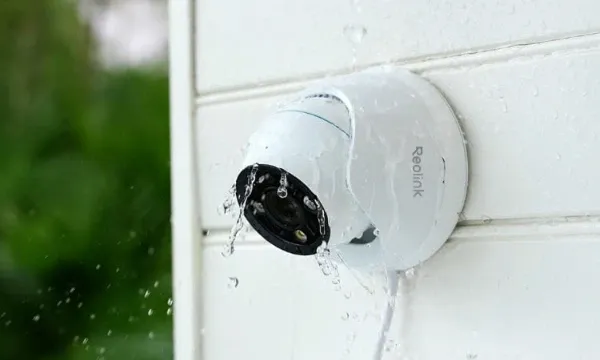
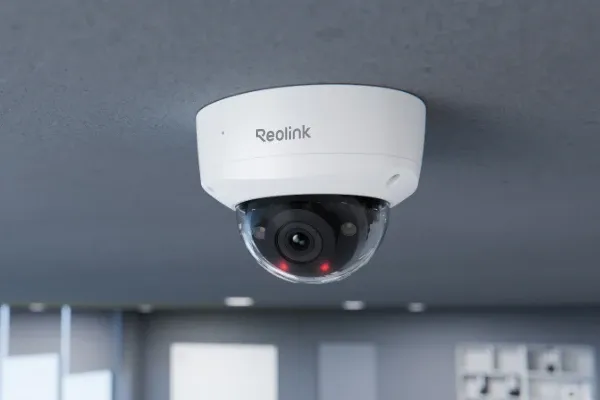
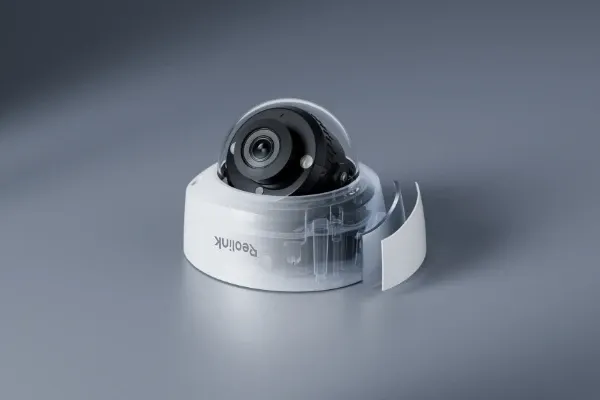
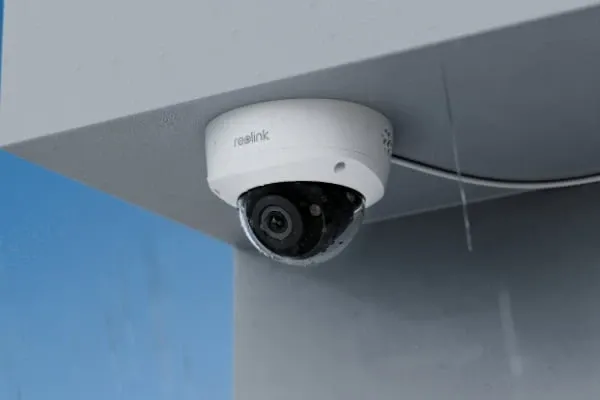
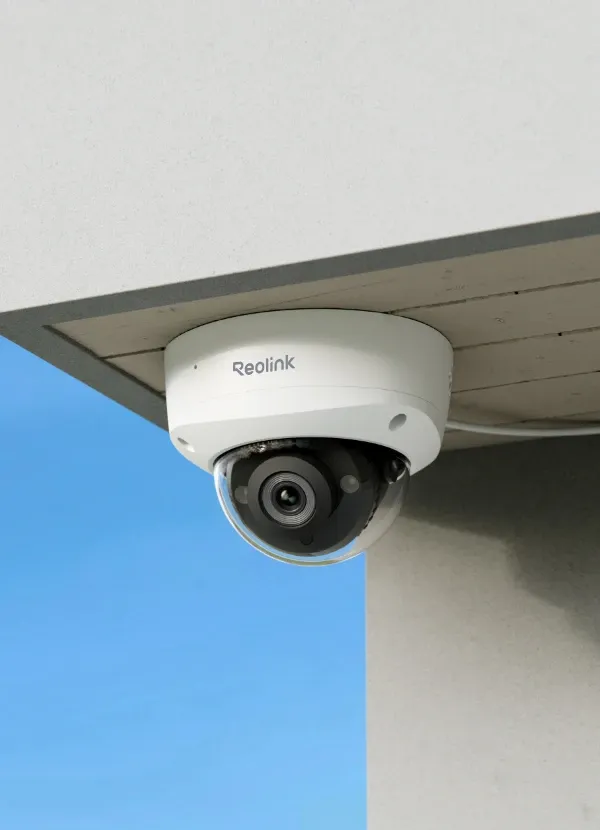
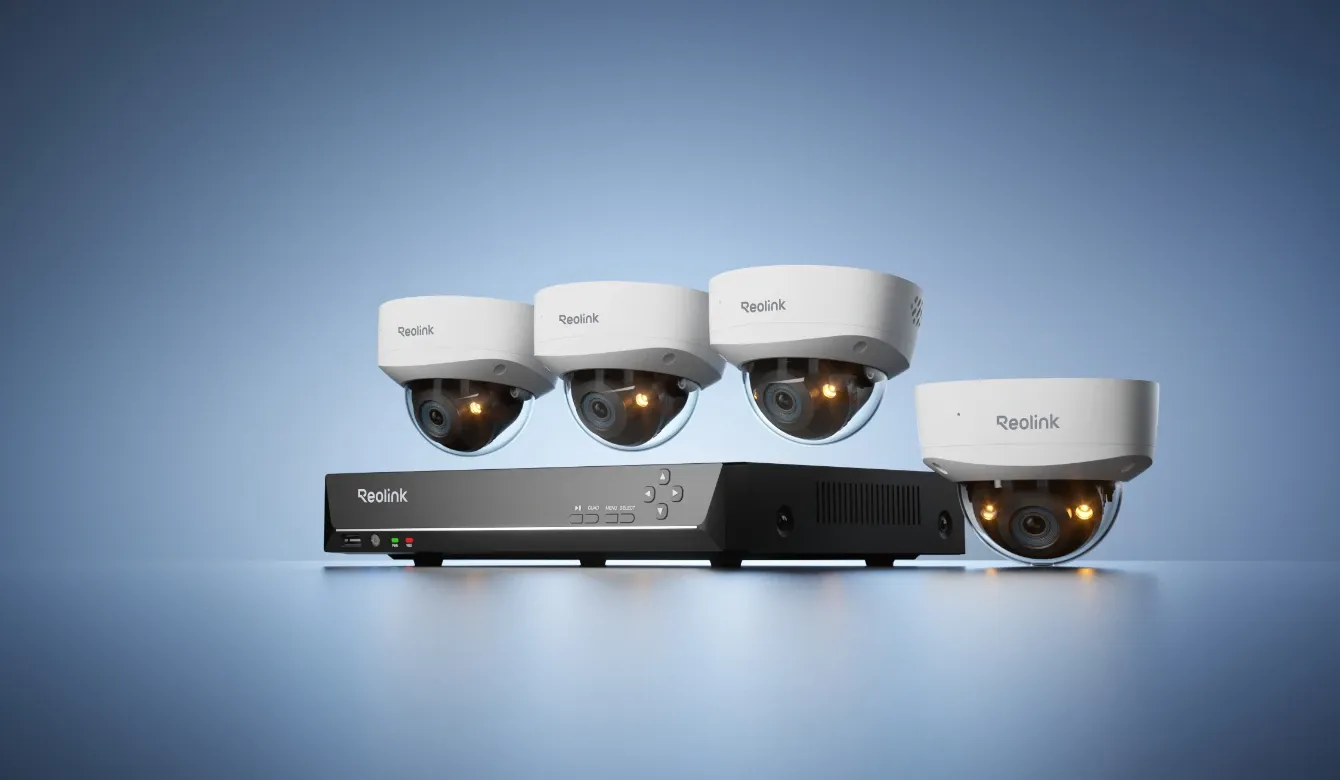
Unless a board asks for a particular brand, we propose our own house-brand system: commercial-grade IP cameras, a network video recorder and a PoE switch that powers each camera over the same cable that carries its video. It costs less than the name brands, it is the system our techs install every week, and the board owns every password. When a board does want a brand, we install Lorex, Luminys and Reolink as partner brands, and we work with most other major makers on request.
For co-op lobbies and doors we usually specify 4MP to 8MP cameras with a lens chosen for the distance. More pixels don't fix a camera aimed at a bright doorway; good wide dynamic range and a sensible mounting height do. Outdoors, cameras with infrared show black-and-white at night, and full-color models with a small built-in light show color where there is some street or path lighting. In a courtyard ringed by apartments, we prefer full color with low-level ambient light over bright floodlights shining toward bedroom windows.
The recorder holds all the video on hard drives. How many days it keeps depends on the number of cameras, the resolution, and whether it records all the time or only when it sees motion. FirstService Residential, one of the largest co-op and condo managers in New York, wrote in September 2024 that building footage is generally stored for 30 to 90 days depending on building size, storage capacity and legal requirements. We size the drives to match whatever retention period the board writes into its policy, and the plan states that number in days.
Cameras run on their own network, separated from the building's internet and from any intercom or fob system. Remote viewing through the app needs an internet connection at the recorder; if the cellar has none, the system still records locally, and we can bring a line in later. Each person who views remotely gets a personal login with only the cameras and rights the board approved, so a resigned board member can be removed without changing everyone's password.
Modern recorders can tell a person from a car or a passing shadow, and they can flag a person in a space after hours, such as the laundry room at 3 a.m. or the roof door at any time. We set those rules with the board, keep them few, and send alerts only to the people the footage policy names. We do not switch on face recognition for co-op buildings; a board that wants to discuss it should talk to its attorney first, because biometric data raises questions of its own.
Some boards prefer a name they recognize, or want to match cameras another building in their portfolio already uses. We quote Lorex, Luminys or Reolink equipment on request and can name every brand we carry when asked. The plan, the cable route and the footage rules stay the same whichever logo is on the camera.
We are a low-voltage contractor and we don't do electrical work. PoE cameras take their power from the switch next to the recorder, so in most Brooklyn co-ops the only outlet we need is the one the recorder plugs into, plus a battery backup so recording survives a short outage. If the recorder location has no outlet, the co-op's electrician adds one before our install day.


These are planning ranges from our own surveys, not quotes. The real number comes from walking the building with the board's list in hand.
| Co-op type | Typical first phase | Spaces covered first |
|---|---|---|
| Brownstone or limestone co-op, 4–12 units | 3–5 cameras | Front door or vestibule, inner hall, rear yard door, cellar |
| Pre-war elevator co-op, 40–90 units | 6–10 cameras | Vestibule, lobby, elevator landing, rear service door, laundry, storage corridor |
| Garden-apartment co-op | 8–16 cameras | Courtyard paths, section entries, laundry, parking |
| Post-war tower, single building | 10–20 cameras | Lobby, elevators, mailroom, garage or lot, side doors, laundry |
| Multi-tower complex | Planned per building | Each lobby the same, then grounds, parking, community rooms |
Most Brooklyn co-ops don't install everything at once. We size the recorder and switch for the full plan on day one, so cameras added next year plug straight in without replacing anything. The plan marks each future camera with a number, so a board two elections from now can see exactly what was intended.
Two well-placed cameras that show faces at the doors usually do more than eight that show the tops of heads. Shareholders also accept fewer, better-placed cameras more easily. If the board's list is short, the camera plan should be too.
This is an illustrative plan for an imagined six-story, 60-unit pre-war elevator co-op of the kind found along Ocean Avenue or Eastern Parkway. It is not a client building and carries no price; it shows the level of detail a board should expect from any bidder.
| # | Location | Camera | What it should show |
|---|---|---|---|
| 1 | Inner vestibule, facing the street door | Turret, wide dynamic range | A clear face of everyone entering |
| 2 | Lobby ceiling corner | Dome | The mailboxes, the package area and the elevator doors |
| 3 | Elevator cab | Compact wide-angle with wireless link | Everyone riding, without a view into any hallway |
| 4 | Rear service door, inside | Turret | Who opens the door to the yard or alley |
| 5 | Cellar laundry room | Vandal-resistant dome | The machines and the door |
| 6 | Cellar corridor outside storage and bike rooms | Vandal-resistant dome | Faces of anyone heading to storage |
| 7 | Bike room, facing the door | Turret | A face at the door, not the racks |
| 8 | Roof bulkhead door, inside | Turret | Who goes onto the roof |
Alongside the table, a complete plan names the recorder location (here, a locked cellar closet with an outlet and a battery backup), the retention period the board chose, the cable route (in this example, up the old intercom riser to the lobby ceiling and through the cellar ceiling to each room), who receives logins, and which cameras would come in a second phase, such as a second lobby view or a camera at the trash area. Each line can be approved, changed or dropped on its own.
We number cameras in order of priority, not location. If the board can fund only five this year, cameras one to five are the ones that answer the most important problems, and the recorder is already sized for the rest. That makes a phased approval simple: the board approves a number, not a redesign.
Our work for Brooklyn cooperatives falls into a handful of services. Most projects combine two or three of them.
We walk the building with whoever the board sends, usually the super, the managing agent or a board member, and come back with a numbered plan: each camera's location, what it is meant to show, the cable route, the recorder location and the retention period. The plan is written so it can be pasted into a board packet. For a system we would supply and install, the survey and the plan cost nothing.
We run the cable, mount and aim every camera, install the recorder, switch and battery backup, set up recording and motion rules, and test each camera from the recorder and from the board's phones. Cable is concealed where the building allows it, run in a painted raceway where it doesn't, and every run is labeled at both ends.
If the co-op already has a working recorder with free channels, we can add cameras to it. If it is full or out of date, we explain the choice between a second recorder and a replacement, with numbers.
Plenty of Brooklyn co-ops still run coax cameras installed fifteen or twenty years ago. Some of that coax can carry newer high-definition analog cameras on a matching recorder; some of it needs to be replaced with network cable. We test the old cable before we promise anything, and any cable that might fail its test is priced before the board orders, not discovered on install day.
A common Brooklyn co-op story: the camera system was put in by a previous super, a former board member's nephew, or a vendor who has since disappeared, and nobody has the password. We try to recover access first. If the recorder can't be recovered without wiping it, we say so plainly, and the board decides whether to reset it or replace it.
We supply the cab camera and the wireless link to the recorder, and we coordinate the mounting with the co-op's elevator contractor, who handles anything inside the car's controls.
If the board has already purchased cameras, we install them for a labor price quoted by phone or text, booked with the deposit. Because the equipment isn't ours, we don't do site walk-throughs for customer-supplied cameras, and the performance of wireless cameras the co-op supplies is on that equipment.
A camera that has stopped recording, a recorder that beeps, or a drive that has filled with errors is a repair job; our security camera repair service in Brooklyn covers it. A once-a-year check, before the holiday package season or after winter, catches dirty lenses, failing drives and cameras knocked off aim.

Cameras rarely stand alone in a Brooklyn co-op. They share closets, cable paths and sometimes screens with the intercom, the fob system and the elevators. Planning them together saves money and avoids conflicts.
Many video intercom panels have their own camera. Some can also send that image to the building's recorder so the entrance view is saved alongside the other cameras. Where the intercom is old or due for replacement, the board may want to plan both projects together; our intercom guide for co-op boards explains that decision in detail.
A fob system records which credential opened which door and when. Cameras record what happened. Put together, they answer the question a board actually has: who used the fob that opened the bike room at 2 a.m. We keep the two systems on separate networks but can set the recorder to bookmark video when a door event happens, where the equipment supports it.
Elevator cab cameras need coordination with the elevator contractor, and buildings that add elevator access control later will want the same contractor involved. We plan the hoistway wireless link so it doesn't interfere with anything the elevator company installs.
Where space allows, the camera recorder, its switch and the intercom and fob controllers share one ventilated, locked closet with a battery backup. That makes the building easier to service and keeps shareholders out of the equipment.
Most co-op camera systems fail slowly. A lens gets dusty, a drive starts throwing errors, a camera is bumped by a ladder, the super who knew the password retires, and two years later the board discovers that nothing has recorded since spring. A few habits prevent that.
Someone the board trusts, usually the super or the managing agent, opens the app once a month and looks at each camera's live view and at yesterday's recording. If a tile is black or a camera is pointing at the ceiling, that is a service call while the problem is still small.
Once a year, ideally before the holiday delivery season or after the winter, the lenses are cleaned, the drive health is read from the recorder, firmware is reviewed, the battery backup is tested and every camera's aim is compared with the original plan. Our camera maintenance service does exactly this for Brooklyn buildings.
After each annual election, the board should review the list of logins, remove anyone who has left, and add new officers if the footage policy names them. Because each person has a personal login, this takes a few minutes and doesn't disturb anyone else's access.
A new super gets a new login; the old one is removed the day they leave. A change of managing agent works the same way, and the outgoing firm should hand back the written login sheet so the incoming firm starts with a complete record.
Lobby renovations, facade work under Local Law 11 and new sidewalk sheds all change what cameras can see. Before the work starts, tell us which cameras are affected; we can take cameras down, store them and put them back, or re-aim them around scaffolding so the building is not blind while the work goes on.
These are the rules we design around, with sources. They are facts for the board's discussion, not legal advice; the co-op's attorney should review anything that turns on the bylaws, the proprietary lease or the house rules.
A co-op's common areas belong to the corporation, and the proprietary lease and house rules usually leave decisions about them to the board. The business judgment rule from Levandusky protects decisions made for the co-op's purposes, within the board's authority and in good faith. A CooperatorNews Q&A from 2025, answered by attorney Ricardo M. Vera of Newman Ferrara, added that New York does not recognize a common law right of privacy in public or common areas, while the interior of a neighbor's unit is subject to considerable privacy safeguards.
New York's eavesdropping law, Penal Law sections 250.00 and 250.05, makes it a crime to mechanically overhear a conversation without the consent of at least one party. That is why we install every co-op camera with audio switched off. A 2012 Cooperator answer about cameras in a shareholders' party room made the same practical point: the attorney, Christian Paul Daglieri of Schechter & Brucker, suggested cameras that do not record voices.
Penal Law section 250.45 makes unlawful surveillance a felony in places such as bedrooms, changing rooms, restrooms, bathrooms and showers, when done without knowledge or consent. Labor Law section 203-c, as FirstService Residential summarized it in 2024, bars employers, including co-op boards, from recording video of employees in restrooms, locker rooms and changing areas. So the super's locker room and the staff bathroom stay camera-free, even if the board is worried about the cellar.
For the party room question above, Daglieri recommended that a sign be conspicuously placed warning those in the room that it is under surveillance. Many Brooklyn co-ops post a short notice at each entrance and in the laundry room for the same reason. Signs cost little and settle most of the shareholder questions before they are asked.
Video doorbells are the other side of the camera question. In an October 2021 Habitat article on a shareholder dispute over a doorbell aimed at a neighbor's door, attorney Peter Massa advised boards not to allow such devices unless every resident on the floor approves, and attorney Theresa Racht said boards must take a clear position, adding, "Inaction is not an option." A building camera plan is a good moment for the board to write that rule too.
The Landmarks Preservation Commission's permit guidebook says security cameras on regulated buildings should avoid the primary facade where another location works, be as small as possible, be painted to blend, and be well spaced to avoid a cluttered, haphazard appearance, with numeric limits per 25 feet of frontage. For Brooklyn Heights, Park Slope, Clinton Hill and the other districts, we design the front-of-building cameras to those rules and supply the product cut sheets the commission asks for.
A handyman with a drill is not allowed to wire a building's cameras. Under 19 NYCRR Part 195, the rules New York writes for alarm and security installers also take in closed-circuit cameras that watch for intrusion. Abstract Enterprises Security Systems holds NYS low-voltage license #12000287431. A board can and should ask any bidder for its license number.

The cameras are the easy part. The arguments start when someone wants to see a clip. A short written policy, adopted at a board meeting before the system goes live, prevents most of them.
FirstService Residential's 2024 guidance for New York co-ops and condos makes four practical points. Access is generally given to the property manager or a third-party security provider rather than to board members. Residents should not have access to footage or copies of footage without prior approval from the board and legal counsel. The property manager or security provider should maintain a log of requests and a list of anyone who accessed footage. And hallway cameras must be carefully placed to avoid capturing footage that shows the inside of any residential unit.
When a clip is needed, it should be exported from the recorder with its time stamp, saved to a drive or secure link, and logged. A phone video of the recorder screen is a poor substitute: blurry, missing the time stamp and easy to challenge. At handover we show the managing agent and super how to export, and we leave written steps on the recorder shelf.
A brownstone co-op with no managing agent still needs the same discipline. We suggest two board members hold review logins, the president and the secretary for example, and that any export is noted in the board minutes. That way the system is never in one person's pocket.
Camera projects stall in Brooklyn co-ops for governance reasons far more often than technical ones. A clear packet and a clear notice keep the project moving.
Big Brooklyn co-ops often put camera work out to bid through the managing agent. We answer in the format of the bid package, with each building and phase broken out. City-supervised Mitchell-Lama companies have an additional layer: the State Comptroller's 2018 audit of a Brooklyn Mitchell-Lama development summarized HPD's Mitchell-Lama Rules as requiring that contracts over $100,000 for building services, repairs and replacements be competitively bid and approved by HPD. The managing agent will know whether that applies to a given project.
In a nine-unit co-op where the board is most of the shareholders, the approval may happen at one meeting around a kitchen table. We keep the plan to one page so it can be read there and voted on.
Shareholders object most when cameras appear without warning. In a Habitat reader forum from November 2019, a shareholder complained that the board "just started to install cameras on every floor without discussing it with the shareholders," and a commenter described stopping a similar installation with a petition and a special meeting. A short notice before installation avoids that fight. It should say which common areas will have cameras, that there is no audio, who may view video, how long it is kept, and how a shareholder can ask for a clip. We provide the facts; the board or managing agent sends the notice.
We book within 2 hours of a request, schedule seven days a week with early-day visits, and give every appointment a two-hour arrival window. Jobs go on the calendar first come, first served once the deposit is paid. Our crew follows the co-op's contractor hours and checks in with the super or desk.

Shareholders tend to ask the same handful of things when cameras go up. Boards that have short, honest answers ready find the project goes smoothly. These are the points we suggest boards cover in the notice or at the annual meeting.
A short paragraph covering those points, sent before the installation, turns most objections into questions, and most questions into nothing at all. Where a shareholder still objects to a specific camera, looking at that camera's actual image together, often with a privacy mask added, usually settles it.
Boards that collect two or three camera proposals often find they are impossible to compare: one lists eight cameras with no locations, another lists twelve with a recorder brand and no retention, a third gives one total. A few requests make the bids line up.
Co-op boards fund camera work from operating budgets, reserve funds or assessments, and some spread it over two fiscal years by phasing. We don't advise on which is right for a corporation's finances; that is a conversation for the board's treasurer and accountant. What we can do is give each phase its own written price so the budget discussion starts from real numbers.
Managing agents usually ask for a certificate of insurance naming the co-op corporation and the management company. We issue it once the job is awarded, from our general liability policy, and send it to whoever the agent names. Alteration agreements and contractor rules from the building are signed before work starts.
A cooperative pays the same camera prices in Brooklyn as anyone else. Our four-camera house-brand system with its recorder starts at $950 installed, and every camera beyond those four is priced per camera after we confirm the layout on site. The full set of Brooklyn packages is on our Brooklyn security camera pricing page.
Half of the installation price is due as a deposit, and equipment is ordered only once it clears. Management companies and co-op corporations can pay by check. Financing is available through Wisetack, subject to approval.
Our installations carry the 30-day warranty posted on our warranty page; a co-op buying a new system can add a year or more of coverage for an added price, the cameras and recorder keep their manufacturer's warranty, and calling us with a how-do-I question costs nothing. Full terms — including 50% deposit, one-year parts-only warranty on Abstract Enterprises Security Systems-supplied products, and the late-fee schedule — are set out in the service agreement.
Send the building, the number of apartments and the problems you want solved. A survey is booked within 2 hours, any day of the week.
Tell us the address or cross streets, how many apartments and entrances, whether there is a managing agent, and which spaces worry the board. Photos of the current recorder and the problem doors help. Calls and texts go to (347) 934-8335.
Thank you. Our Brooklyn office will call or text to set up the building survey.
The steps are the same for a four-camera brownstone and a tower complex; the bigger building simply spends longer at step four.
Whoever speaks for the building, an officer, the agent or the super, reaches our Brooklyn office by phone, text or the form, and the survey goes on the calendar within 2 hours with a two-hour arrival window.
Our tech tours each space the board named, opens up the old recorder if there is one, and traces a cable path from the equipment closet to every proposed camera.
The board receives a numbered plan with each camera's purpose, the recorder, retention days and the price, ready for the board packet.
After the board approves the plan in the way its bylaws require, the 50% deposit is paid and equipment is ordered; the insurance certificate follows the award.
The board or managing agent sends a short notice covering which common areas get cameras, no audio, who views video and how long it is kept.
We run cable, mount and aim each camera, set privacy masks over any windows in view, and set up recording and retention.
We test every camera with the board, set up personal logins, show how to export a clip, and deliver a written sheet of every account and setting.
A three- to five-camera brownstone system usually takes one day. A pre-war elevator co-op with eight to ten cameras and concealed runs takes two to three days. Large complexes are scheduled building by building over several weeks. We keep at least one entrance free of work at all times so shareholders can come and go.
A crew of two or three working in the common areas, a ladder in the lobby for an hour or two, and occasionally a ceiling tile or access panel open in the cellar. We don't need to enter apartments for a common-area camera system. Every evening the work areas are cleaned up and anything left open is closed and marked.
Co-op towers in Coney Island, Brighton Beach and Sheepshead Bay face salt spray and strong winds off the water. Outdoor cameras there need sealed housings, stainless or coated mounting hardware and cable entries that face down. We check mounts on the windward side more often, because a camera that slowly turns in the wind loses the view the board paid for.
The same attorney's overview of Brooklyn co-ops notes that many coastal complexes sit in flood zones. Where a cellar or garage has flooded before, we keep the recorder, switch and battery backup above the floor on a wall shelf or a higher floor, and run cable high on the walls. A recorder sitting on a cellar floor is the first thing lost in a storm.
Ditmas Park, Flatbush and Prospect Lefferts Gardens have mature street trees, and garden co-ops have courtyard plantings that keep growing. We look at the canopy at survey time and aim cameras below branch height or along paths that stay clear. A camera that is perfect in December can be staring at leaves by June.
On masonry we anchor into mortar joints rather than the face of the stone wherever possible, which matches the Landmarks guidance and makes the holes easy to repair if a camera is ever moved. Brownstone in particular is soft and flakes when drilled carelessly.
Pre-war co-op lobbies often have restored plaster, decorative moldings and terrazzo floors. We route cable through existing chases, closets and the original intercom or dumbwaiter paths before proposing anything on a finished surface, and where a raceway is unavoidable we paint it to match.
A camera looking from a dark lobby toward a bright street door turns faces into silhouettes. We mount vestibule cameras so they look inward with the light behind them, or choose cameras with strong wide dynamic range where that isn't possible.
Every recorder we install sits on a battery backup sized to ride through a short outage, and PoE cameras draw power from that backed-up switch. During a long outage the system shuts down cleanly and restarts on its own when power returns.

Usually one recorder in a central, locked room, with cable or fiber to each section. If the sections are far apart or separated by a street, we may put a small recorder in each section and network them so the board sees all cameras in one app. The choice comes down to cable distance and where secure, ventilated space exists.
The face of whoever walks in. That means a camera inside the room, aimed at the door at about head height, not one in the corner looking down at the racks. A second camera in the cellar corridor outside shows which way the person came from. Pair the cameras with a better lock or a fob reader on the bike room door.
Look at the actual image first. Often a camera covers the hallway and her door is simply in the frame. We can re-aim the camera, narrow its view, or add a privacy mask over the door so that area is blacked out on the recording. Showing the shareholder the masked image usually resolves the complaint.
It can be, if the board approves it in the footage policy. Give the super a personal login with live view and playback for the common areas he manages, not export rights unless the policy allows it. If he leaves, that login is removed in a minute without changing anyone else's access.
A camera can show it happening and, with the right lens and light, the vehicle and the person. Mount it to look along the approach to the gate rather than straight down at the bins, and make sure there is some light at night. The managing agent can then pass a clip to the Sanitation Department or the police.
They will if the cameras are aimed through the canopy. We mount front cameras low enough to look under the branches, usually at the vestibule or under the entrance canopy, and aim them at the path to the door rather than across the street.
That is a governance decision for the board and its attorney, not for us. Our side is simple: nothing is ordered and no work is scheduled until the deposit is paid, so the board can wait without losing anything already spent on the survey or plan.
Follow the co-op's footage policy. Normally the managing agent exports the clip with its time stamp, keeps a record of what was given, to whom and when, and hands it over. If the policy is silent, the board and its attorney should decide before the next request arrives.
Not if the hardware is chosen for it. Weather-rated housings, corrosion-resistant mounts, sealed cable entries and a yearly check keep cameras working near the water. Cameras sheltered under a canopy or overhang last longer than ones fully exposed on a windward wall.
No. Our building cameras are wired to the recorder, so they record whether or not there is internet. Internet only matters for viewing remotely, and it only needs to reach the recorder, wherever that is.
In most co-ops, decisions about common areas sit with the board under the bylaws and proprietary lease, and the business judgment rule protects good-faith decisions. Many boards still consult shareholders because it avoids fights, but a shareholder vote is not usually required. The co-op's attorney can confirm what the documents say.
Battery and Wi-Fi cameras made for houses struggle in brick and concrete buildings, need charging, and depend on the building's internet. Wired PoE cameras record continuously, get their power from the recorder's switch, and keep recording when the internet goes down.
Recording conversations without consent runs into New York's eavesdropping law. Co-op building cameras should record video only.
The co-op corporation should own every password. We hand them over in writing at the end of the job, to the board, not to one person. If the board wants our help later, it can give us temporary access.
A camera that shows the top of a head at a doorway helps nobody. Fewer cameras, well placed to capture faces at entrances, do more and bother shareholders less.
Recorders overwrite the oldest video when the drive fills. If the policy says 30 days, a clip from five weeks ago is gone. Anyone who needs a clip should ask quickly.
What our Brooklyn crew keeps seeing
In pre-war co-ops, the old intercom riser is often our best friend. Buildings that replaced an audio intercom with a newer system frequently left the old cable path in place, and that path runs from the cellar to every floor. It can carry camera cable to the lobby and landings without opening a single wall.
In self-managed brownstone co-ops, the recorder is too often in a shareholder's apartment because that is where the internet was. When that shareholder sells, the cameras go dark. We move the recorder to a common space with its own internet line, even a small one, before adding anything else.
In the big complexes, the most useful thing we deliver is consistency: the same cameras, the same recorder settings and the same login rules in every lobby. Staff learn one system, and the board can compare buildings at a glance.
This page is written for cooperative boards. The broader co-op security systems page for Brooklyn covers intercoms, fobs and the building's other systems, and boards planning a new entry panel can read our co-op board intercom upgrade guide. Condominium boards have their own page on condo security camera installation in Brooklyn, and owners of rental buildings should see apartment building security camera installation in Brooklyn. Homeowners and shops can start with security camera installation in Brooklyn, and boards that specifically want a hard-wired closed-circuit setup for a garage or parking field can read about CCTV installation in Brooklyn.
No. A cooperative pays our standard Brooklyn camera prices. The four-camera house-brand system with its recorder starts at $950 installed, and each added camera is priced per camera once the layout is confirmed on site. Concealed cable inside finished walls is priced separately.
In most co-ops the bylaws and proprietary lease leave common-area decisions to the board, and New York courts defer to good-faith board decisions under the business judgment rule. Many boards still tell shareholders in advance. The co-op's attorney can confirm what the building's documents require.
That depends on the co-op's footage policy. A common approach is a written request to the managing agent with the date, time and reason, approval by the board, and an export of the clip with its time stamp, recorded in a request log.
We install co-op cameras with audio off. New York's eavesdropping law makes it a crime to mechanically overhear a conversation without the consent of at least one party, so building cameras record video only.
It can. A 2018 State Comptroller audit summarized HPD's Mitchell-Lama Rules as requiring competitive bidding and HPD approval for contracts over 100,000 dollars for building services, repairs and replacements. Your managing agent will know which rules apply, and we answer bids in whatever format the package sets.
Sometimes. Coax in good condition can carry newer high-definition analog cameras on a matching recorder. We test the cable first, and any run that might fail is priced before the board orders, so there are no surprises on install day.
That is a house-rules decision for the board, because the hallway is a common area. Attorneys quoted by Habitat in 2021 suggested boards take a clear position, with one advising against such devices unless every resident on the floor agrees.
The board. We hand every login to the board in writing and set up personal accounts for the managing agent, super and board officers the board names, so access never depends on a single person.
Yes. We size the recorder and switch for the full plan on day one, so later cameras plug straight in. A front door camera and a hallway camera are a sensible start for many small Brooklyn co-ops.
Signs are inexpensive and head off most questions. A Cooperator legal answer on cameras in a shareholders' party room recommended a conspicuous sign warning that the room is under surveillance, and many co-ops post a short notice at each entrance and in the laundry room.
Yes. We aim courtyard cameras down along the paths and use privacy masking on the recorder to black out any window in the frame. The board's footage policy should also say who may view that camera.
Usually. We supply the cab camera and a wireless link to the recorder, and coordinate the mounting with the co-op's elevator contractor, who handles anything inside the car's controls. The board should confirm with its elevator company before work starts.
This page is part of our series on co-op security camera installation in NYC, written for cooperative boards and managing agents in all five boroughs. Boards with buildings across the East River can read about co-op security camera installation in Manhattan. Pages for co-op security camera installation in Queens, in the Bronx and on Staten Island are on the way. For routine lens cleaning and drive checks, see security camera maintenance in Brooklyn; for elevator floor control, see elevator access control in Brooklyn. Back to Abstract Enterprises Security Systems.
Start with a free survey of the building. You get cameras chosen for the problems on the board's list, a draft footage policy for the next meeting, and every password handed to the corporation. Four cameras with a recorder start at $950 installed.