What are you looking for?
About Us Contact Us Careers Get a Free Quote (800) 486-0943
Pick a service
βœ… Got Your Own System?
🎬 Home TheatreQuote 🎢 AV SoundQuote πŸ”‘ Access ControlQuote
Now pick your area
Pick your area
Long Island
Hudson Valley
Services available
Pricing & Tools
Pick a service for pricing
πŸšͺ Intercom Pricing πŸ”” Buzzer Repair Pricing
Calculators
πŸ“Ή Camera System Calculator 🚨 Alarm Calculator ⚑ Cabling Quote Builder βœ… Got Your Own System?
Select your area
Laundry room break-ins, packages walking out of the lobby, or a recorder nobody on the board can open? Book a co-op camera survey in any of the five boroughs: (800) 486-0943
Home › Co-op Security Camera Installation NYC
For Co-op Boards, Security Committees, Managing Agents & Supers · All Five Boroughs

Co-op Security
Camera Installation
NYC

Lobbies · Laundry Rooms · Elevators · Storage · Garages · Courtyards

For co op security camera installation in NYC, prices start at $950 for a four-camera house-brand system with its recorder, installed, which is the lowest four-camera figure on our New York City borough price pages, and every camera a cooperative adds beyond those four is priced after we confirm the layout inside the building. We plan, install, upgrade and take over building-wide camera systems for housing cooperatives in Manhattan, Brooklyn, Queens, the Bronx and Staten Island, and the survey visit is booked within 2 hours of your call.

For the board packet: In a co-op the corporation owns the building and shareholders hold proprietary leases, so cameras in the lobby, halls, laundry, storage rooms and garage are a decision for the board of directors acting under the bylaws and the lease. Most buildings start with the street door, the package area and the laundry room. Microphones stay off, cameras stay out of restrooms and staff locker areas, and hallway views are aimed along the corridor, not into apartment doors. A four-camera system starts at $950 in Queens and the Bronx, $999 on Staten Island and $1,099 in Manhattan; Brooklyn pricing is on the Brooklyn package list. Each added camera is priced after the layout is confirmed, and concealed wiring is extra. Financing is available through Wisetack, subject to approval. Intercoms, fobs and the rest of the building's security live on our NYC co-op security systems page.

Last updated November 27, 2026 by Abstract Enterprises Security Systems, NYS license #12000287431 · Sources: NYC Comptroller, Spotlight: New York City's Homeowner Housing Market (2024); Levandusky v. One Fifth Ave. Apt. Corp., 75 N.Y.2d 530 (1990); NY Penal Law §§250.00, 250.05, 250.45; FirstService Residential (Sept. 23, 2024); CooperatorNews, Q&A: Camera Placement; Habitat (Feb. 20, 2023); NYC HPD, HDFC co-ops; LPC Permit Guidebook ch. 11; NYC Admin. Code §28-105.4.7; 19 NYCRR Part 195

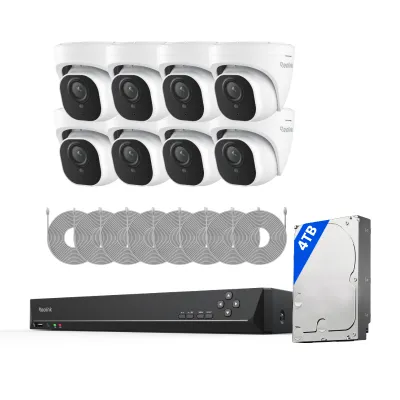
Co-op security camera installation NYC product photo: eight white turret cameras, a network video recorder and a hard drive
Product photo of a Reolink eight-turret kit with its recorder and drive. A co-op of 40 to 80 apartments often lands near this camera count once the lobby, package room, laundry, cellar door, rear yard and elevator are on the plan.
NYC Co-op Camera Request
Building, borough and the shared spaces the board wants on camera

✅
Request Sent!
Thank you. We will call or text to set the survey, normally within 2 hours.
25+
Years Experience
2 Hr
Booking
100%
Licensed & Insured
4.7β˜…
201 Google Reviews

Owner-operated since 2002 · Thousands of jobs completed · Booked within 2 hours, seven days a week, early-day visits

Why Co-ops Are Different

In a Co-op, the Cameras Belong to the Corporation and Answer to Shareholders

A housing cooperative is a corporation that owns the whole building. Nobody in it owns an apartment outright; each household owns shares and lives there under a proprietary lease. That structure decides how a camera project works from the first phone call. The lobby, the halls, the laundry room, the storage cages, the roof door and the garage are corporate property, so a camera on any of them is installed for the corporation, paid with the corporation's money and governed by rules the board of directors adopts. It also means every shareholder pays for the system through maintenance, which is why camera projects in co-ops draw more questions at the annual meeting than almost any other building upgrade.

New York City has a lot of these buildings. The NYC Comptroller's 2024 spotlight on the homeowner market, built on the 2023 Housing and Vacancy Survey, counted about 450,000 occupied apartments in cooperative buildings, and co-ops and condos together make up 22% of the city's occupied housing. Much of that stock is old: the Citizens Housing & Planning Council's reading of the same survey puts roughly 54% of the city’s housing in buildings put up before 1947. For a camera installer that means plaster over terra-cotta block, cast-iron and limestone facades, and wiring paths that were never meant to carry data.

The board's power to make these calls is broad. In Levandusky v. One Fifth Avenue Apartment Corp. (1990), New York's highest court held that so long as a co-op board acts for the purposes of the cooperative, within the scope of its authority and in good faith, courts will not substitute their judgment for the board's. That business judgment rule is why a well-documented camera decision, made at a properly noticed meeting with a clear policy behind it, is hard for an unhappy shareholder to undo. It is also why we put so much of the reasoning in writing for the board.

Five things that make co-op camera projects unlike any other building

  • One owner, many voters. The corporation signs the contract, but the people paying for it elect the board and can replace it. Projects that skip shareholder communication tend to stall.
  • The proprietary lease and house rules matter. They set what the corporation controls, what a shareholder may change, and how new rules are adopted. Your attorney reads them; we design around them.
  • Board turnover is normal. Directors change every year or two, so the system has to be owned by the corporation and documented well enough that a new treasurer can find the login.
  • Budgets run through the managing agent. The agent usually holds the contract, pays the deposit from the operating or reserve account and asks for the insurance certificate, which we issue once the job is awarded.
  • Staff are part of the picture. Supers, porters and doormen work in the spaces being recorded, and New York law limits where they may be filmed.

If the board is weighing a broader security upgrade, the intercom side has its own guide for directors, the co-op board intercom upgrade guide, and the two projects are often planned together because they share the lobby, the same closet and sometimes the same cable path.

Camera Placement

The Shared Spaces Where Co-op Cameras Earn Their Keep

Every co-op board starts with the same question: where do the cameras go first? Our answer comes from the incidents that actually reach managing agents' desks, and from the spaces where a recording settles an argument instead of starting one. Below is the order we usually suggest, with what each camera needs to see. A small walk-up may stop after three items; a 300-apartment complex will cover all of them.

1. The street door and vestibule

The single most useful camera in most co-ops faces the inside of the entry door from the far side of the vestibule, at a height that catches faces under hats and hoods. A second camera outside, high on the facade, shows who walked up and which way they went. We set the inside camera's exposure for the bright doorway, because a sunlit glass door turns faces into silhouettes on a cheap camera. Where the building has a doorman, this view also runs to the desk monitor.

2. Packages, mail and deliveries

Package rooms, mailbox alcoves and the corner of the lobby where carriers stack boxes are the second priority almost everywhere. The camera goes on the wall opposite the shelves so it sees both the boxes and the faces of whoever picks them up. Co-ops that let carriers in with a code or a key fob benefit from a camera at that door too, tied to the time stamp of each entry.

3. The laundry room

Laundry rooms are co-op territory more than condo territory: many older cooperatives have one shared room in the cellar, often reached by a back stair, with coin or card machines that attract break-ins and quarrels over machines left full. A ceiling dome near the entrance that covers the machines and the door handles most of it. We keep the view off any folding table near a restroom door and never place a camera inside a bathroom attached to the laundry.

4. Storage cages, bike rooms and the cellar corridor

Storage rooms full of shareholder property are where losses go unnoticed for weeks. Turret or dome cameras at each entry point and along the main aisle are usually enough. Cellar corridors also lead to the boiler room, the meter room and the compactor, so a camera here doubles as a staff-safety and fire-door check.

5. Elevator cabs and elevator landings

An in-cab camera answers vandalism and graffiti questions instantly. In older buildings we send the cab's video to the recorder over a wireless link mounted in the car and the hoistway, so nobody touches the elevator's traveling cable. Anything inside the controller, the car wiring or the machine room is the elevator contractor's work, scheduled through the managing agent. A camera on the lobby landing covers anyone who rides up without being buzzed in.

6. Garage, driveway and parking lot

Postwar and garden co-ops often have a parking lot or a tuck-under garage. Cameras face inward at the cars once they clear the gate, where headlights no longer blind them, with a second view at the pedestrian door. Full-color cameras with a little ambient light keep car colors and clothing readable at night.

7. Courtyards, gardens and the paths between buildings

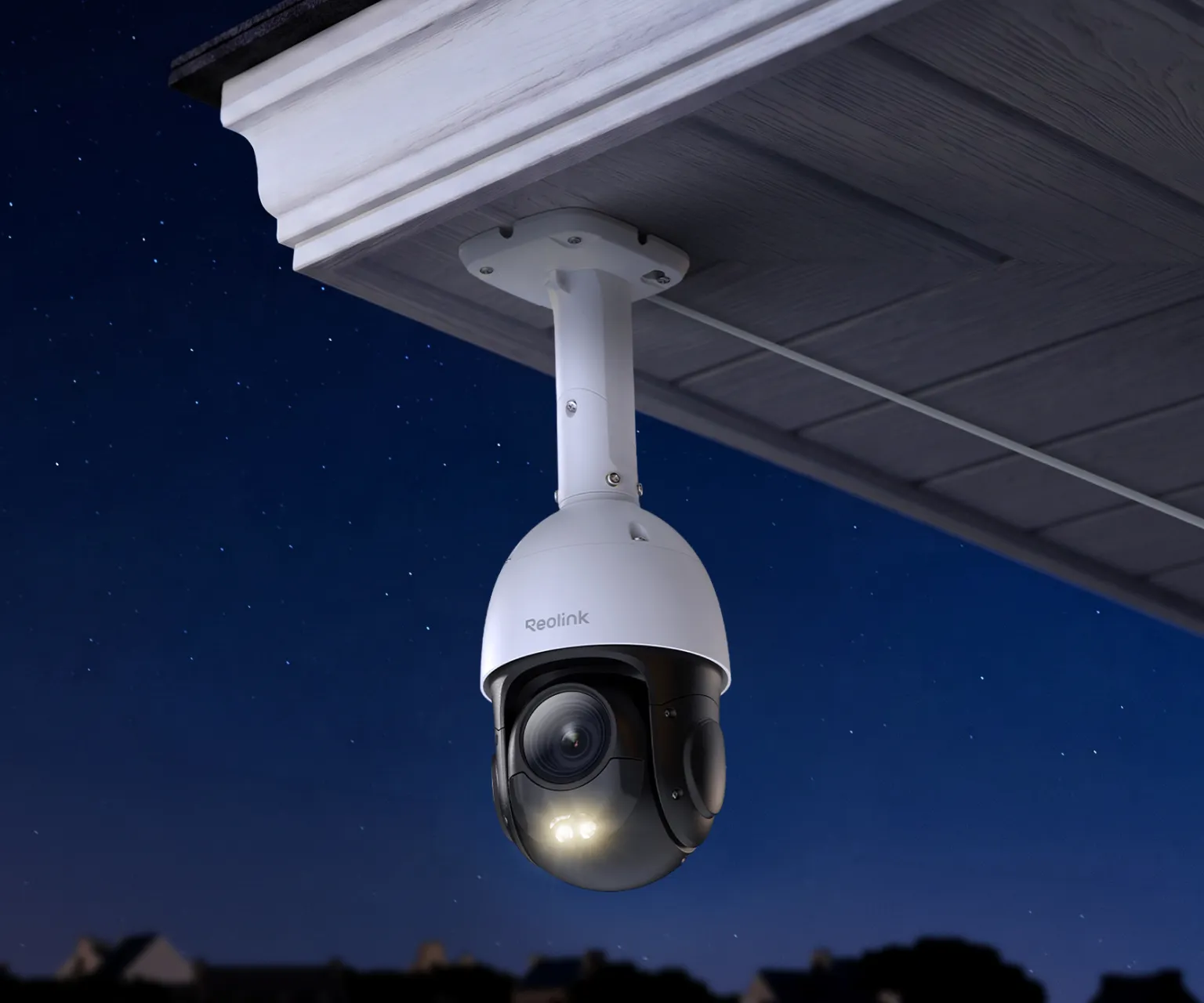
PTZ camera on a pendant mount under a white eave at night, an option for NYC co-op courtyards and garden co-op grounds
Product photo of a Reolink pan-tilt-zoom camera hanging from a pendant mount under an eave. On a garden co-op with paths between several buildings, one camera like this can patrol the shared grounds while fixed cameras hold each doorway.

Garden apartment cooperatives spread over a block or more, with lawns and walkways between low buildings. Fixed cameras on each building's entry plus a pan-tilt-zoom or panoramic camera on a corner pole or eave cover the grounds without dozens of extra channels. Distances here can exceed what a single cable run allows, which is where outdoor-rated fiber or point-to-point wireless bridges come in.

8. Roof doors, stairwells and the service entrance

Stairwell doors at the roof and the cellar are how intruders move without passing the lobby. A small dome at the top landing facing the roof door, plus one at the service or trash entrance, closes those routes. We do not hang cameras from stairwell sprinkler piping or block exit signs, and we keep cable out of the stair's fire-rated walls unless it is properly sleeved.

9. Gym, community room and the super's office

Amenity rooms in larger co-ops get a camera at the entry rather than one watching people exercise. The super's office and workshop get a camera on the door and the tool cage if the board wants it, with staff told where it is.

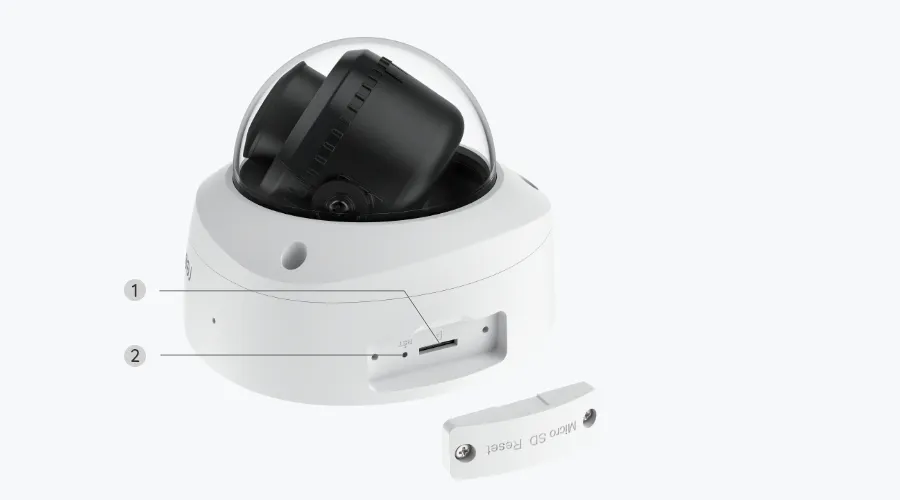
Dome camera with its cover open showing the lens module, the type used in NYC co-op laundry rooms and corridors
Product photo of a Reolink dome with the cover removed. Domes are our usual pick for co-op corridors, laundry rooms and storage areas because the lens direction is hidden and the housing is hard to knock out of aim.

Spaces that stay off camera in a co-op

  • Inside any apartment, and through any apartment's door, peephole or window.
  • Restrooms, showers and changing areas, including any staff locker room in the cellar.
  • A view so tight on one shareholder's door that it reads as monitoring that household instead of the hallway.
  • Places where nothing happens that a recording would help with: a quiet top-floor hallway in a 12-unit walk-up rarely justifies a camera.

Boards that keep to that list rarely face complaints after the cameras go live. The one area that sparks the most debate is the residential corridor, and we cover how other cooperatives handle it in the privacy section below.

Equipment

Co-op Security Camera Systems: Cameras, Recorders, Cable and Power

A co-op camera system has four parts: the cameras, the recorder that stores their video, the cable and network gear that connect them, and the power protection that keeps everything running. The right choice for each depends on the building more than on the brand.

Cameras, matched to the space

Camera styleWhere it fits in a co-opWhy
DomeCorridors, laundry, storage, elevator landingsLow profile, hard to re-aim, lens direction not obvious
Turret (eyeball)Lobbies, vestibules, package areasClear night image without glare off a dome cover
BulletRear yards, driveways, facade cornersLonger reach, visible deterrent, easy to aim down a path
Impact-rated domeService doors, cellar halls, low ceilingsBuilt to survive a strike from a broom handle or a bat
Panoramic or multi-lensParking lots, courtyards, big lobbiesOne mount replaces two to four fixed cameras
Pan-tilt-zoomGarden co-op grounds, large lotsPatrols and zooms; always paired with fixed cameras
Mini cab cameraElevator cabsSmall housing, sent to the recorder over a wireless link
Close-up of an IK10 impact-rated white dome camera for vandal-prone NYC co-op cellars and back doors
Product photo of a Reolink dome marked IK10, the impact rating for housings built to take a hard hit. We specify impact-rated domes for co-op service entrances, cellar corridors and low ceilings where a camera is within reach.

Recorder and storage

Most co-ops we work in use a network video recorder with internal drives, kept in a locked closet, a rack in the cellar or the super's office. Channel count follows the camera plan plus room for growth: an 8-channel unit for a small walk-up, 16 for a typical mid-size elevator co-op, 32 or 64 for a large tower or a multi-building complex. Storage is sized to the retention period in the board's written policy. A recorder that keeps 30 days for ten cameras needs far less drive space than one keeping 60 days for forty, and motion-heavy views such as a lobby use more than a quiet storage aisle.

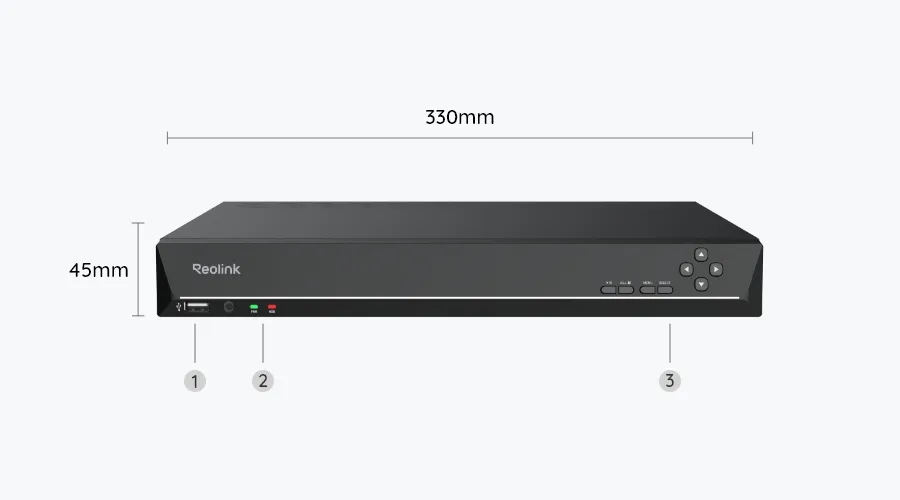
Front of a 16-channel network video recorder with dimension markings, sized for an NYC co-op camera closet
Product drawing-style photo of a Reolink 16-channel recorder front, about 330 mm wide. A recorder this size fits on a shelf in the super's office or a lobby closet and handles a mid-size co-op with room to grow.

Cable and network

New systems run on network cable, with each camera powered over the same cable from a PoE switch, so no outlet is needed at the camera. Runs longer than a standard network segment, such as from one garden co-op building to the next, use fiber or a wireless bridge. Where an older co-op still has good coax from an analog system, we can sometimes reuse it with converters or hybrid recorders, but only after we test each run; we say before you order which runs might fail and what replacing them would cost.

Power and outages

A battery backup on the recorder and switch keeps recording through short outages and protects drives from the power blips old buildings are known for. Where a camera location truly needs a new outlet, the building's electrician installs it; we do not do electrical work. Most cameras never need one because of PoE.

Viewing apps and accounts

Each person who needs access gets a named account with the permissions the board's policy allows: live view only for a doorman, playback and export for the managing agent and super, administrator rights for the corporation's designated officer. We set up the phone app and a desktop viewer, register every login to the corporation's email, and hand over a written record of who has what.

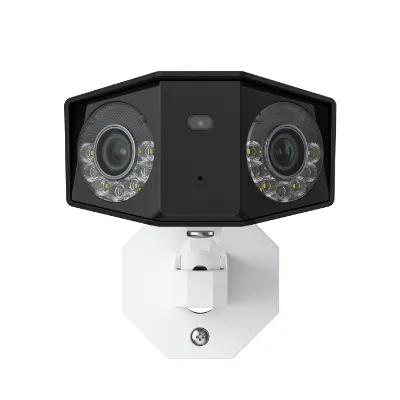
Dual-lens panoramic camera on a white wall mount, a wide-view choice for NYC co-op courtyards and parking lots
Product photo of a Reolink dual-lens panoramic camera. Two lenses stitched into one wide image let a single mount cover a co-op parking lot or a long courtyard that would otherwise need two or three fixed cameras.

House system by default, partner brands on request

Our proposals start with our own non-branded house system at the prices on our price pages. It records locally, needs no subscription and is supported by us. When a board asks for a named brand, we quote it: we partner with Lorex, Luminys and Reolink, and we install other major lines to match equipment a co-op already owns. Brand-name cloud platforms can add yearly license fees, which we list line by line so the treasurer sees the long-term cost before the vote.

Building Specialists

Camera Plans for New York City's Co-op Building Types

The word co-op covers very different buildings in this city. Here is how the camera plan changes across the main types we see.

Prewar elevator co-ops

Six to sixteen stories, often from the 1910s through the 1930s, with marble lobbies, plaster corridors and one or two elevators. Cable has to be fished through old chases or along moldings without scarring finishes, and the lobby camera has to blend with ornamental ceilings.

Walk-up and small co-ops

Four- and five-story buildings with eight to thirty apartments, frequently self-managed. Four to eight cameras on a compact recorder, cable in existing paths or neat raceway on masonry, and a simple app for two or three directors.

Garden apartment co-ops

Low buildings around courtyards and lawns, common in Queens and parts of the Bronx and Brooklyn. Several entries per building, long distances between buildings and outdoor parking, so wireless bridges, fiber and wide-view cameras do much of the work.

Postwar high-rise co-ops

White- and red-brick towers from the 1950s to the 1970s with garages, laundry rooms on several floors and big lobbies. Recorders in the 32 to 64 channel range, elevator cab links and a desk monitor for doormen.

Mitchell-Lama and limited-equity co-ops

Large complexes built under state and city affordable-ownership programs, sometimes with thousands of apartments. Camera systems here are capital projects with formal approvals and often public oversight; phasing building by building is common.

Mixed-use co-ops

Apartments above ground-floor shops or offices that the corporation leases out. Separate camera groups and permissions for the residential side and any commercial tenant, with shared spaces such as a loading door on the co-op's recorder.

The scale at the top end is hard to picture until you walk it. Co-op City in the Bronx has 35 high-rise buildings and seven townhouse clusters holding 15,372 residential units, is described as the largest housing cooperative in the world, and has long been part of the Mitchell-Lama program. In Chelsea, Penn South is a limited-equity cooperative of 2,820 apartments in ten 22-story buildings. We name them only as examples of the building type, not as clients. Camera planning at that scale is about standard designs repeated across buildings, central recording and strict account control.

HDFC cooperatives are another New York category with their own rules. According to the city's housing agency, HDFC co-ops are limited-equity cooperatives incorporated under Article XI of the Private Housing Finance Law and supervised by HPD; they must house people of low income, defined in state law as household income up to 165% of area median income, and shareholders elect a board to make decisions. HPD also notes that HDFC co-ops reinvest flip taxes in capital repairs and reserves. For a camera project that usually means a tighter budget, a board that may need to show the spending fits its regulatory agreement, and a strong preference for a system with no monthly fees. Our house system was built for exactly that brief.

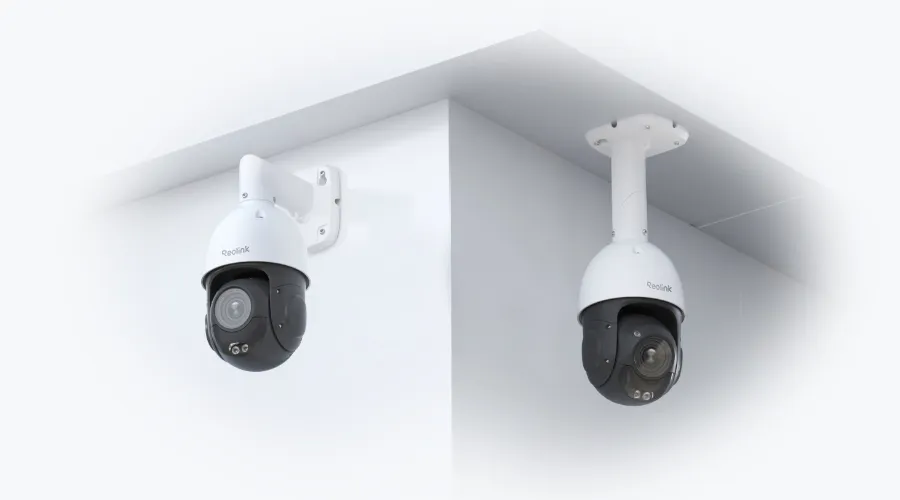
Two pan-tilt-zoom cameras, one on a wall bracket and one on a ceiling pendant, for large NYC co-op complexes
Product photo of two Reolink PTZ cameras on a corner wall bracket and a ceiling pendant. Large limited-equity complexes with towers set in open grounds are where these mounts come up most.

How the install method changes with the building

  • Masonry and plaster: surface raceway painted to match, or cable fished through existing chases; we tell the board in the proposal which runs are concealed and which are exposed.
  • Drop ceilings in postwar cellars: the easiest case, with cable above the tiles on proper supports.
  • Landmarked facades: exterior cameras kept small, few and off the primary facade where the Landmarks Preservation Commission's guidance asks for that.
  • Multi-building campuses: one recorder per building feeding a central viewer, or one central recorder fed by fiber, depending on distances and who manages each building.
Privacy and the Law

New York Camera and Privacy Rules for Co-op Buildings, With Sources

The facts below are taken from statutes, court decisions and published guidance, each linked. They are not legal advice. The co-op's own attorney should review the board's camera policy, especially anything touching shareholders' doors, staff areas or the release of footage.

Video in shared spaces is generally allowed; audio is a different matter

In a CooperatorNews legal Q&A on camera placement, attorney Ricardo M. Vera of Newman Ferrara wrote that New York does not recognize a common-law right of privacy in public or common areas, and pointed out that recording sound can raise problems under Penal Law Article 250. That article makes it a crime to mechanically overhear a conversation without the consent of at least one party to it (§250.00 defines the term; §250.05 makes eavesdropping a class E felony). A lobby microphone records neighbors, guests and delivery workers who never agreed to it. Our standard setup keeps every microphone switched off, and we enable audio only when the corporation's counsel approves it in writing.

Rooms where cameras are prohibited

New York's unlawful surveillance statute, Penal Law §250.45, covers recording a person without knowledge or consent and for no legitimate purpose in places such as a bedroom, changing room, restroom, bathroom or shower. Property manager FirstService Residential's 2024 guidance for New York condos and co-ops adds that Labor Law §203-c bars video recording of employees in restrooms, locker rooms and changing areas. In co-ops with a staff locker room or a toilet off the laundry, those rooms stay off the camera plan, full stop.

The board's authority runs through the co-op's documents

A cooperative's bylaws, proprietary lease and house rules set out what the board controls and how it adopts new rules. Combined with the business judgment rule from the Levandusky decision cited above, that gives a board wide room to place cameras in common areas for building security. What the documents do not authorize, the board should not assume. Before a large project, ask counsel two questions: does the lease or house rules say anything about surveillance or recording, and does the board need to adopt a written camera and footage policy by resolution?

Shareholders who want their own cameras

Video doorbells and hallway cameras added by individual shareholders are now a common board headache. In Habitat's February 2023 look at video doorbells, attorney Debra Guzov is quoted saying “you can't just unilaterally do what you'd like to do in the common hallways.” In a co-op the hallway belongs to the corporation, so a shareholder device mounted there generally needs the board's consent under the lease and house rules, and alteration agreements usually come into play when the work touches the apartment door or wall. Some boards ban such devices, some approve them case by case, and some choose one building-standard model. We install whichever the board decides, and we never mount a shareholder's camera in a common hall without a written board approval.

Landmarked buildings and historic districts

Many prewar co-ops sit in historic districts. The Landmarks Preservation Commission's Permit Guidebook chapter on health and safety work asks that equipment stay off primary facades unless no other option exists, that security cameras be small, painted to blend and “well spaced to avoid a cluttered, haphazard appearance,” and that they be attached at mortar joints or plain surfaces rather than decorative ones. Where a facade camera is part of the plan, we provide the manufacturer cut sheets that a staff-level permit application asks for.

Face recognition and keyless entry data

New York City's Tenant Data Privacy Act, Local Law 63 of 2021, governs data from smart access systems such as key fobs and biometric readers in class A multiple dwellings, including how long authentication data may be kept. The text does not single out cooperatives, so whether it reaches a given co-op is a question for counsel. Ordinary recording cameras are not entry systems, but camera features that identify faces raise similar issues, so we leave face-matching analytics off unless the board's attorney signs off.

Who may legally install the system

New York State licenses security and fire alarm installers, and the Department of State's rules in 19 NYCRR Part 195 treat closed-circuit television and video surveillance used to detect or monitor intrusion as covered work. We hold New York State license #12000287431. On the city side, Administrative Code §28-105.4.7 exempts low-voltage signaling and data wiring under 50 volts from electrical permits, with life-safety exceptions, which is why a typical PoE camera installation does not need a Department of Buildings electrical permit.

Footage Policy

Who Gets to Watch, Pull and Release Co-op Video

The camera hardware is the easy part. What causes trouble in cooperatives is footage: a shareholder who wants a clip of a neighbor, a director who watches the lobby from home, a recording that turns up in a dispute. A short written policy, adopted by the board, prevents most of it. We set up the system to enforce whatever the board writes.

RoleTypical access in a co-op policyHow we configure it
Doorman or porterLive view of entrances and lobby during shiftsLive-only account on the desk monitor, no export
SuperintendentLive view and playback to check incidentsPlayback account; export only if the policy allows
Managing agentPlayback and export on request, with a logExport rights plus an audit trail of every clip saved
Board officersUsually no routine viewing; access through the agentNo standing account, or a view-only account if the board votes for one
ShareholdersNo direct access; requests go to the agentNothing installed on shareholder phones
Police or insurersCopies on written request, released by the agentAgent exports a clip; we can help if the agent asks

FirstService Residential's 2024 guidance for New York buildings says footage is generally kept for 30 to 90 days depending on building size, that managers should keep a log of requests and of anyone who accessed footage, and that residents should not get footage or copies without prior approval from the board and legal counsel. Those three points make a sound skeleton for a co-op policy. The board then decides the details: the exact retention period, who signs off on releases, and whether directors get any standing access at all.

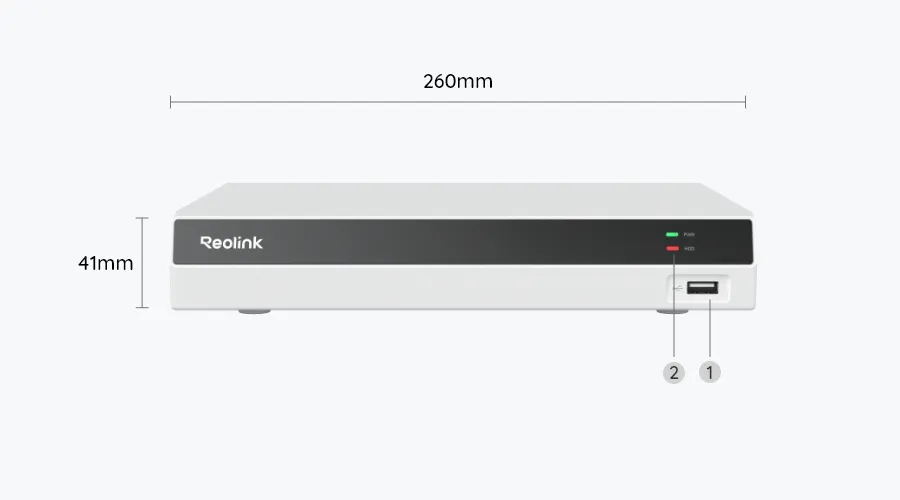
White 8-channel network video recorder front with dimensions, a compact recorder for small NYC walk-up co-ops
Product photo of a white Reolink 8-channel recorder, about 260 mm wide. For a walk-up cooperative with four to eight cameras, a unit this size sits in a utility closet, and only the people named in the footage policy get a login.

Retention, overwrite and storage

Retention is a board choice, not a technical default. Once the policy names a number of days, we size the drives so the recorder holds at least that much before it overwrites, and we set it to overwrite automatically so old video does not pile up. If an incident is reported, the agent exports and saves that clip before the overwrite date; we show staff how in the handover.

Signs and notice

Many cooperatives post simple signs at entrances saying the common areas are recorded. Signs also tell residents and visitors that the cameras exist, which deters some incidents on its own. The wording, and whether the house rules should mention the system, is a matter for the board and its attorney. We can hang signs the board supplies when we mount the cameras.

When a clip involves a shareholder dispute

Recordings of shareholders arguing in the laundry room, a dog incident in the courtyard or damage to the elevator can end up in house-rules proceedings. Treat those requests the same way every time: in writing, through the managing agent, with counsel deciding what is released. Our role stops at the equipment; we do not review footage on a co-op's behalf or offer opinions on what it shows.

Board Approval

From Committee Idea to Board Vote: the Co-op Camera Path

Camera projects in co-ops tend to follow the same arc. Knowing it in advance saves a meeting or two.

Step one: a committee and a short list of problems

Most projects start with a security or building committee writing down the incidents that prompted the idea: packages missing, a cellar break-in, graffiti in the elevator, a stranger in the laundry. That list decides where cameras go and keeps the scope honest when someone later proposes a camera on every floor.

Step two: a site survey

We walk the building with the super, open the closet where the recorder will live, look at every space on the list, test any old cable and note mounting surfaces. For co-ops that want two or three competing quotes, the survey also gives the committee a common set of facts to hand every bidder.

Step three: a written proposal built for the board packet

  • A numbered camera map, with what each camera is meant to see and why.
  • Two or three options, usually a core plan and an expanded plan, each with its price and its retention period.
  • A run-by-run note saying whether cable is hidden in walls or mounted on the surface, with the price settled before any order.
  • Any ongoing costs, including none on our house system and any license fees on branded platforms.
  • Who will own the logins, what the warranty covers and how support works.

Step four: budgeting

Boards pay for cameras in one of three ways: from the operating budget, from the reserve fund, or through an assessment voted under the bylaws. Which is right depends on the co-op's finances and documents, and the treasurer and accountant usually decide. Financing is available through Wisetack, subject to approval. A phased plan, with entrances and packages this year and the garage next, spreads the cost across fiscal years using a recorder sized for the full system from the start. In HDFC co-ops, HPD's note that flip taxes go into capital repairs and reserves is sometimes the source of funds for this kind of work.

Step five: the vote, the contract and the paperwork

After the board votes, the managing agent signs our agreement and pays the deposit; only then is equipment ordered. Ordered equipment cannot be returned, which is why everything that might change the price is disclosed beforehand. The agent's insurance requirements come with the award, and we issue the certificate of insurance naming the cooperative corporation and the management company at that point, not with the bid.

Step six: shareholder notice

We give the agent a one-page summary and a floor-by-floor schedule to circulate. Co-ops that show shareholders the camera map before installation hear far fewer objections afterward. Where the house rules limit work hours or require notice before entering certain areas, we schedule around them.

Alteration agreements and shareholder-side work

Building-wide cameras are corporate work and do not normally involve shareholders' alteration agreements. Those agreements come into play when a shareholder hires someone to work inside an apartment or on its door. If a board decides to let shareholders add approved doorbells or door cameras, the alteration process is the usual route, and we follow whatever the agreement requires when a shareholder hires us directly.

Your Questions Answered

Co-op Security Cameras in NYC: Board and Managing Agent Questions

Getting the board to yes

Our board is split on cameras. How do other co-ops settle the privacy objection?

By putting limits in writing before the vote. A draft policy that says audio stays off, no camera looks into an apartment, footage is kept for a fixed number of days and released only through the managing agent answers most objections, because the worry is usually about who will watch, not about the camera itself. Circulating the camera map with the policy lets shareholders see exactly what each camera covers.

Can the security committee run the camera project instead of the full board?

It can do most of the work: collecting incidents, meeting bidders, comparing proposals and recommending one. The contract and the spending are usually approved by the board under the bylaws, so the committee's recommendation goes to a board vote. We present to either group, in person or by video call.

What should the camera line item look like in the co-op's capital plan?

Treat it like other building systems: an installation figure, a replacement horizon for the recorder drives and cameras, and an annual allowance for repairs. Hard drives are the part that wears out first in a system recording around the clock, so a modest yearly amount for drive replacement is realistic. Our proposal lists equipment and labor separately so the accountant can book it properly.

Design questions

Are wireless cameras a good idea for a garden co-op with several buildings?

Wireless bridges between buildings are, Wi-Fi cameras usually are not. A point-to-point bridge carries many cameras' video from one building to the next without trenching, and it is reliable when it has line of sight. Battery or Wi-Fi cameras on the grounds tend to drop out, need charging and depend on someone's router, so we cable each camera to a switch inside its own building.

How do you decide between one panoramic camera and several fixed cameras in a big co-op courtyard?

Distance and detail. A panoramic camera is excellent for seeing what happened across the whole space; it is weak at identifying a face 80 feet away. We usually pair one wide-view camera for the overall picture with fixed cameras at each doorway and gate, where people pass close enough to be recognized.

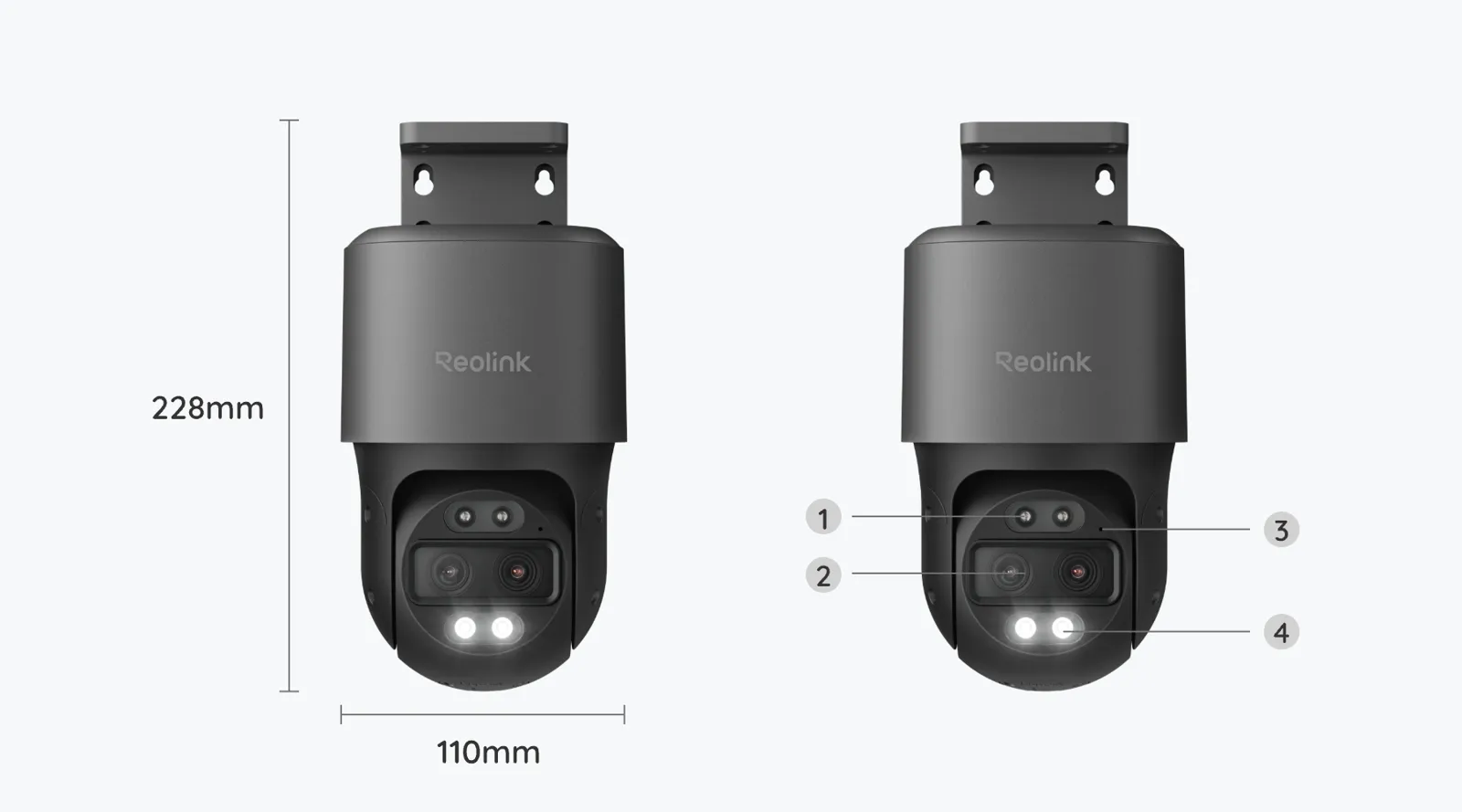
Two grey dual-lens tracking cameras with dimension callouts for NYC co-op parking lots and long driveways
Product photo of two grey Reolink dual-lens tracking cameras. One lens holds the wide view while the other zooms in on movement, which suits a co-op parking lot or a long driveway where a fixed camera shows people too small to recognize.

Can garage cameras read license plates in a co-op garage?

A standard camera aimed at the right spot captures readable plates in daylight and in a lit garage; reading plates reliably at night or at speed needs a dedicated plate camera at the gate. Automatic plate-reading software that logs every car is a bigger privacy decision and goes through the board and its attorney first.

What should the camera map in the board packet show?

Each camera as a numbered symbol on a floor plan, with a shaded wedge showing its view, a one-line purpose, and a note on whether the cable is concealed or exposed. That page does more to win the vote than any brochure, and it becomes the super's reference after installation.

After installation

How should a co-op answer a police request for footage?

Through the managing agent, in writing, following the board's policy and counsel's advice. Staff should know how to export a clip and save it before the recorder overwrites it, which we cover at handover. We can help the agent with a technical export if asked, but releasing footage is the corporation's decision.

What happens to camera access when directors leave the board?

Nothing breaks, because accounts belong to roles, not people. When a director steps down, the agent or the designated officer removes that person's login, and the new officer is added. The administrator credentials sit with the corporation, recorded in the handover document, so the system never depends on one volunteer.

Should the co-op buy spare cameras when the system is installed?

For larger buildings, one spare of each camera model is sensible. Models are discontinued every few years, and a matching spare lets the super swap out a failed or vandalized camera from stock instead of waiting on a reorder, without a mismatched image on the recorder. Small walk-ups rarely need spares.

Can the cameras help the board enforce house rules about bikes and strollers in the halls?

They can show when and by whom a hallway was blocked, which is why some boards ask. Using footage for routine rule enforcement is a policy choice that changes how shareholders feel about the system, so most boards limit review to safety and property incidents and decide the question in the written policy before the cameras go live.

What does commissioning include before the co-op signs off?

Every camera aimed and checked in daylight and darkness, recording confirmed on the recorder, retention set to the policy, audio confirmed off, health alerts sent to the agent, all accounts tested, and a walk-through with the super. Final payment follows a working system the agent has seen.

AI Overview Reality Check

What AI Answers Get Wrong About Co-op Cameras in NYC

Ask a chatbot or skim a national cost guide about cameras for a cooperative and you get answers written for houses or for generic apartment rentals. Seven claims come up again and again. Here is how each one holds up in a New York City co-op.

1. “Any shareholder can put up a camera to protect their door”

The hallway outside an apartment belongs to the corporation, not to the shareholder who lives beside it. Under most proprietary leases and house rules, changes to common areas need the board's consent, and attorneys quoted in co-op trade press have said as much about video doorbells.

That does not mean boards must say no. Many approve a building-standard device, set rules on angle and recording, and require the work to go through the alteration process. What creates conflict is a device that appears without permission and records the neighbor's door across the hall.

When a board asks us, we suggest deciding the policy once, in writing, instead of ruling on each doorbell as it appears. It keeps decisions consistent and out of the realm of personal disputes.

2. “Put a camera on every floor for full coverage”

Coverage is not the goal; useful coverage is. In a 60-apartment prewar co-op, cameras on every corridor can double the channel count while adding little, because intruders and package thieves pass through the entries, the lobby and the elevator first.

Every extra camera also adds storage, maintenance and privacy objections. Residential corridors are the most sensitive spaces in the building, and a camera that shows one family's comings and goings every day is the one most likely to be challenged.

We start at the chokepoints and add corridor cameras only where there is a specific problem, such as a floor with a history of vandalism or a hallway leading to a roof door.

3. “Wi-Fi cameras save money on a co-op install”

Consumer Wi-Fi cameras are cheap to buy and expensive to live with in a masonry building. Thick walls block signal, battery models need recharging on ladders, and the whole system depends on a router nobody on the board controls.

A wired system costs more on installation day because of cable labor, but it records continuously, survives Wi-Fi outages and has no per-camera subscription in our house setup.

Wireless still has a place: bridges between buildings and the link that carries an elevator cab camera's video to the hoistway. Those are engineered point-to-point links, not household Wi-Fi.

4. “Recording sound makes the system more useful”

In New York, recording a conversation without the consent of at least one party is eavesdropping under the Penal Law. In a lobby or laundry room, the people being recorded are rarely parties who agreed to it.

Most of the value of a camera system comes from video alone. Sound rarely settles who took a package or who damaged a door.

We ship and leave every camera with audio switched off and turn it on only if the cooperative's counsel approves in writing for a specific location.

5. “Cameras are a one-time purchase”

Cameras last years, but hard drives in a recorder running around the clock wear out, firmware needs updating and a camera on the facade faces wind, salt and winter. A system nobody maintains often stops recording months before anyone needs a clip.

Plan for that in the co-op's capital and operating budgets. A drive replacement or a single camera swap is a modest line item; discovering the recorder failed the week of a break-in is not.

We configure the recorder to alert the managing agent when a drive or camera fails, so problems are found within a day, not at the worst possible moment.

6. “The installer should keep the admin password so they can support you”

This is how many co-ops end up locked out of their own systems: a vendor goes out of business or a former director moves away with the only login.

Every administrator account we set up is registered to the cooperative corporation's email, and the credentials go into the handover document the managing agent keeps.

We can still support the system remotely when the agent gives us access. Ownership and support are separate, and the corporation always holds the keys.

7. “Any handyman can mount a few cameras”

Mounting is the smallest part of the job. A co-op system needs a channel plan, storage sized to a retention policy, cable that meets building rules, network setup that keeps the recorder off the open internet, and accounts that match the board's policy.

New York State also licenses security system installers, including CCTV and video surveillance work, under the Department of State's rules. Managing agents typically ask for proof of license and insurance before awarding the job.

We hold NYS license #12000287431, carry insurance and issue the certificate the agent requires once the job is awarded.
Need a Camera Plan Before the Next Board Meeting?

We book co-op surveys within 2 hours, seven days a week, and send a written proposal formatted for the board packet.

Get In Touch

Request a Co-op Camera Proposal in NYC

Give us the building address, the apartment count and the list of shared spaces the directors want watched. If there is a recorder already, a snapshot of its front panel and the label on top helps us price faster. Prefer to talk? Call (800) 486-0943.

✅

Request Sent!

Your request is in. Someone from our office will call or text about a survey date, typically inside 2 hours.

How It Works

Our Co-op Camera Installation Process, Start to Handover

Adding one laundry room camera to a working recorder can be finished within days of the deposit. A building-wide co-op system usually waits on a board meeting or two between proposal and vote. Either way, the work runs in these seven steps.

1

Call, text or form

Reach us by phone, text or the form; the co-op survey is set within 2 hours, on any day including weekends, inside a two-hour arrival window that we try to keep early.

2

Building survey

We walk every space on the committee's list with the super, test existing cable, and choose the recorder location.

3

Proposal for the board

Directors receive a marked-up floor plan, a core and an expanded option with prices, the storage period, who will hold the logins, and the yearly cost if any, laid out for the packet.

4

Vote, contract and deposit

Directors vote the way their bylaws require; the agent then countersigns and sends the deposit, equipment gets ordered, and our insurance certificate naming the corporation follows the award.

5

Shareholder notice

We send the agent a summary and a schedule by floor to circulate before work starts.

6

Installation and setup

Crews work inside the hours the house rules allow, mount and cable each camera, then confirm every angle, mute every microphone and program the retention days.

7

Handover to the corporation

Named accounts, staff training, an export how-to and a labeled camera map, with every login registered to the co-op.

Scheduling is first come, first served once a job is paid, seven days a week, with early-day starts so crews are out of lobbies before the evening rush. Equipment is ordered after the deposit, and the install date is set once it arrives, never promised before then.

Coverage Area

Co-op Cameras Across Manhattan, Brooklyn, Queens, the Bronx and Staten Island

We work in cooperatives in every borough. The building stock changes a lot from one to the next, and so does the camera plan. Each borough also has its own co-op security systems hub, linked below, and the Manhattan and Brooklyn co-op camera pages go deeper on those boroughs.

Manhattan

Manhattan holds a large share of the city's prewar elevator co-ops along Riverside Drive, West End Avenue, Park Avenue and the side streets of the Upper East and Upper West Sides, plus postwar towers and big limited-equity complexes in Chelsea and on the Lower East Side. Doorman lobbies, freight elevators and strict work hours shape every job. See co-op security camera installation in Manhattan and the Manhattan co-op security systems hub.

Brooklyn

Brooklyn mixes prewar elevator co-ops on Ocean Parkway, Eastern Parkway and in Park Slope and Brooklyn Heights with walk-up co-ops in brownstone neighborhoods and postwar complexes in the south of the borough. Self-managed boards are common, so a simple app and a clear handover matter. See co-op security camera installation in Brooklyn and the Brooklyn co-op security systems page.

Queens

Queens is garden co-op country: Jackson Heights, Forest Hills, Kew Gardens, Bayside and the large postwar developments of eastern Queens, with courtyards, parking lots and many buildings per corporation. Wide-view cameras, wireless bridges and multi-building recorders are routine there. Co-op camera installation in Queens is covered on this page for now; building-wide work is on the Queens co-op security systems page.

The Bronx

The Bronx has prewar elevator co-ops along the Grand Concourse and in Riverdale, garden and postwar co-ops in East Bronx neighborhoods, and Co-op City in the northeast. Our Bronx office on Fordham Road sends crews across the borough. Co-op camera installation in the Bronx is covered here for now; see the Bronx co-op security systems page for intercoms and access.

Staten Island

Staten Island co-ops are mostly garden and low-rise complexes on the North and East Shores, with parking lots that need cameras as much as the doors do. Co-op camera installation on Staten Island is covered here for now; the Staten Island co-op security systems page covers the rest of the building.

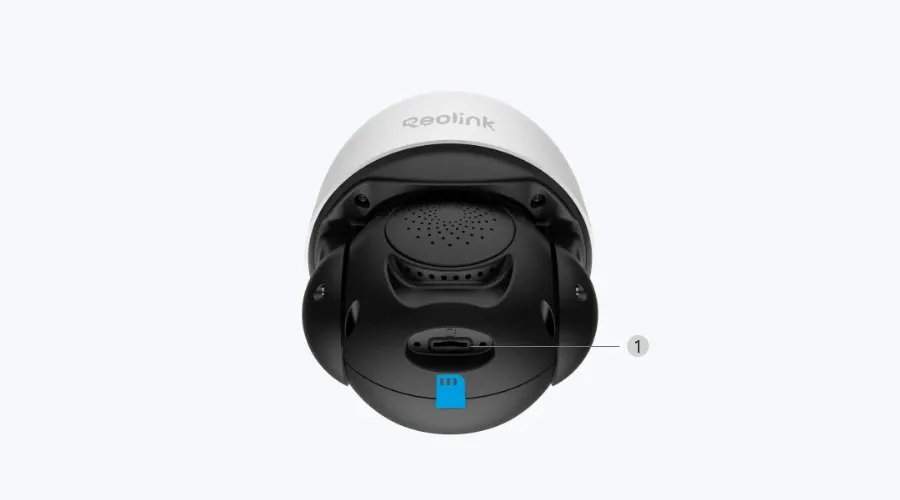
Underside of a PTZ camera showing the lens window and access cover, used on NYC co-op corner buildings
Product photo looking up at the underside of a Reolink PTZ camera, with the service cover marked. On a corner co-op with two street frontages, one PTZ high on the corner can follow activity along both sidewalks.
Sizing

What Co-op Camera Projects Look Like at 12, 60 and 300 Apartments

Boards often ask what a project like theirs usually involves. These three outlines are typical of the cooperatives we survey. They are planning sketches, not quotes; every building gets its own count after the survey, and pricing follows the borough price pages plus the per-camera quote.

A 12-apartment walk-up co-op

Five stories, no staff, a self-managed board of three. The plan usually lands at four to six cameras: the street door from inside the vestibule, the outside steps, the mailboxes, the cellar door and the rear yard or trash area. An 8-channel recorder sits in a cellar closet on a battery backup. Two directors and the part-time handyman get app accounts. Cable runs along existing paths or in painted raceway, since walk-up stairwells rarely leave room to hide it. The whole job is often a day or two of work once the equipment is in.

A 60-apartment prewar elevator co-op

Nine to twelve stories, one elevator, a live-in super, maybe a part-time doorman. Ten to sixteen cameras is common: vestibule inside and out, lobby, package area, elevator cab and lobby landing, laundry, storage cages, bike room, service entrance, roof landing and a rear courtyard. A 16-channel recorder goes in the super's office or a locked closet, with a lobby monitor if there is a desk. Concealed runs in the lobby and exposed runs in the cellar are the usual mix, and the elevator link is scheduled with the elevator company. This is the size where a written footage policy starts to matter, because several staff members will have accounts.

A 300-apartment garden or postwar complex

Several buildings, a parking lot or garage, laundry rooms in more than one cellar, a management office on site. Plans run to 40 to 80 cameras or more, split by building, with a recorder per building or central recording fed by fiber. Panoramic cameras cover lots and courtyards, PTZ cameras watch the grounds, and wireless bridges link buildings where trenching is impractical. Projects this size are usually phased over two or three budget years, with the recorder and network sized for the end state from the first phase.

Whatever the size, the survey produces the same deliverables: the camera map, the options, the retention period and storage, and a clear statement of which runs are concealed. That consistency makes it easier for a board to compare our proposal with others.

Pricing

Co-op Security Camera Installation Cost in NYC

Co-op boards are charged exactly what our borough price pages list; being a cooperative adds nothing to the bill. On each of those pages the entry point is the same: four of our house-brand cameras and a recorder, mounted, wired and set up.

BoroughFour-camera house-brand system, installedFull package list
Queens$950Queens camera prices
The Bronx$950Bronx camera prices
Staten Island$999Staten Island camera prices
Manhattan$1,099Manhattan camera prices
BrooklynSee the current Brooklyn package listBrooklyn camera prices

For all five boroughs side by side, open the NYC security camera pricing page; every borough list also climbs from that entry package into 4K, color-at-night and warning-light kits. Few cooperatives stop at four cameras, so treat the four-camera figure as the floor of the conversation. Every additional camera is priced per camera after we confirm the layout during the survey, because the same camera costs far less to mount on an open cellar ceiling than to conceal behind a plaster corridor wall in a prewar building.

What moves a co-op camera quote

  • Hidden versus surface wiring. Pulling cable inside a prewar plaster wall takes far longer than clipping it along a cellar joist, so every concealed run is listed separately in the proposal as an extra.
  • What the old system left behind. Sound coax or network cable from a previous installation can be reused; any run we doubt is named before the order, with the price of a new pull beside it.
  • Cab cameras. A camera inside an elevator needs its own radio link plus a visit coordinated with the co-op's elevator company.
  • Gaps between buildings. A garden co-op with buildings 200 feet apart may need fiber or a radio bridge for each one.
  • Days of video kept. Every extra week of retention, multiplied across the camera count, adds drive capacity.
  • Reach. Tall prewar lobbies and garage ramps can call for a rented lift instead of a ladder.
  • Choice of hardware. Our house system carries no yearly fees; branded cloud platforms can, and the proposal shows both the day-one and the five-year figure.

Thinking about cost per shareholder

Boards often want to know what a system means for each household. Since co-op costs are shared through maintenance according to shares, the treasurer can divide the approved total by the building's shares, or by apartments as a rough guide, to show shareholders the scale. We give the board an itemized total; how it is allocated is the corporation's decision.

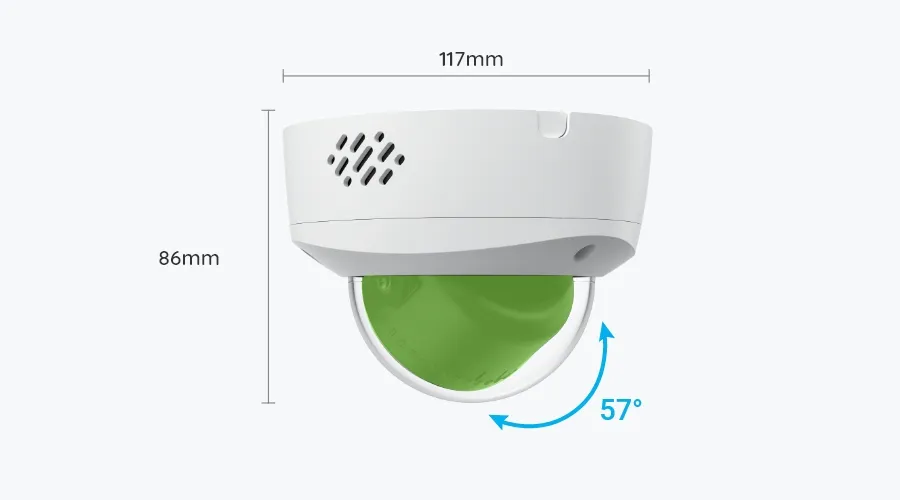
Dome camera size diagram showing a 57-degree tilt range, used to plan ceiling heights in NYC co-op lobbies
Product diagram of a Reolink dome showing its housing size and tilt range. We check numbers like these against ceiling heights during the survey, because a dome in a 12-foot prewar lobby has to tilt farther to see faces than one in a low cellar hall.

Cameras the co-op already bought

Sometimes a board member or a previous vendor has already purchased the cameras. Then our price is labor only, worked out from the model list and a floor plan you send, quoted by phone or text, and booked once the deposit is paid. We do not schedule walk-throughs for owner-supplied equipment, and defects in that equipment go back to whoever sold it.

Warranty and terms

Co-op treasurers ask about warranty more than any other term, so here it is in order. Abstract Enterprises Security Systems backs the installation for 30 days from the day recording begins, as our website states. Directors who want longer protection can buy a one-year or multi-year plan when the contract is signed; reserve-funded projects often do. Separately, each camera, recorder and drive carries its own manufacturer coverage. Full terms β€” including 50% deposit, one-year parts-only warranty on Abstract Enterprises Security Systems-supplied products, and the late-fee schedule β€” are set out in the service agreement. Plan options are on our warranty page, and the proposal prices each plan next to the system it covers. Phone and remote tech support is free.

Financing is available through Wisetack, subject to approval.

Phasing

Three Ways NYC Co-ops Usually Stage a Camera Project

Few boards fund a whole building at once. These are the stages we see most often; prices for each follow the borough price pages and the per-camera quote from the survey.

Stage one: the front door

Street entrance, vestibule, lobby and the package area, with a recorder sized for the full plan so later stages plug straight in.

Stage two: the cellar

Laundry room, storage cages, bike room, service entrance and the cellar corridor, where most unnoticed losses happen.

Stage three: the rest

Elevator cabs, garage or parking lot, courtyards, roof door and any corridor with a specific history of problems.

A recorder bought for stage one with room for stage three avoids paying twice. We note the planned channel count on the stage one proposal so the board can see the whole road before it commits to the first step.

Staffing

Doorman, Part-Time Staff and Self-Managed Co-ops: Who Watches the Video

A camera system nobody looks at still helps after an incident, but the way a co-op is staffed changes how we set it up.

Full-time doorman buildings

The lobby desk gets a monitor showing the entrances, the package area and the elevator landing, laid out so the doorman can glance at it without turning away from the door. Doormen usually get live view only. Shift changes do not involve passwords, because the desk monitor is logged in to a live-only account that cannot export or delete video.

Part-time staff or a live-in super

Here the recorder does the watching. Motion alerts for chosen spaces and hours, such as the cellar after midnight, go to the super's phone and the managing agent, and everyone else reviews video only when something has been reported. We keep alerts to a few meaningful zones so they are not ignored after the first week.

Self-managed co-ops

Without a managing agent, a director usually ends up holding the system. We register the administrator account to the corporation's shared email rather than a personal one, give two directors playback access so one absence does not stall a request, and leave a printed one-page guide in the recorder closet showing how to find and export a clip. When the board changes, the incoming president inherits a working system and a short document, not a mystery.

Existing Systems

Taking Over a Co-op Camera System Another Company Installed

Many cooperatives call us about a system someone else put in years ago. The installer has retired, the director who handled it has sold, or the recorder simply stopped responding. We service and upgrade those systems as well as replacing them.

What we check first

  • Whether the recorder still records, and how many days are actually on the drive.
  • Whether anyone at the co-op holds an administrator login; if not, whether the manufacturer's reset process can recover it.
  • Which cameras work, which are dead and which point at the wrong thing.
  • Whether the cable is coax for analog cameras or network cable, and whether it tests good.
  • Where the recorder lives, and whether heat, dust or leaks are shortening its life.

From there the board gets three paths with prices: keep and repair what works, upgrade the recorder and cameras over the existing cable, or replace the system. Repair is cheapest when the recorder is sound. Upgrading over good cable is the usual middle path for postwar co-ops with an analog system. Full replacement makes sense when the cable has failed or the layout no longer matches the building's problems.

Analog to network cameras

Going from an old analog system to network cameras gives sharper images, better night video and remote viewing that works. Where coax is sound, hybrid recorders and converters can carry the change without new cable for every camera. Where it is not, new network cable is pulled, often along the old path. We decide camera by camera, and tell the board before the order which runs are being reused.

Network Security

Keeping the Co-op's Recorder Off the Open Internet

A camera recorder connected to the internet with a factory password is an open door. Researchers and attackers scan for exactly those devices. In a cooperative, where the recorder may have been installed by one vendor and connected to the building's internet by another, this risk is easy to miss.

  • Factory logins replaced on day one. Each device leaves our hands with its own long password, written into the handover binder the managing agent keeps.
  • Cameras on their own network. Cameras talk to the recorder over a separate switch or network segment, not on the same network as the super's computer or the lobby Wi-Fi.
  • Remote access through the manufacturer's app or a secure relay, not by opening ports on the building router.
  • Firmware updates applied at installation and when security fixes are released.
  • Named accounts only. No shared logins, so access can be removed for one person without changing everyone else's.

The building needs an internet connection only for remote viewing and alerts; recording continues if the internet goes down. If the co-op does not have a line in the right closet, the managing agent arranges one with the provider, and we connect the recorder to it.

Site Conditions

Light, Weather and Old Walls: Mounting Cameras in NYC Co-ops

Bright doors and dark vestibules

Prewar lobbies often have a glass-and-iron street door opening onto a dim marble vestibule. A camera without good wide dynamic range shows a white rectangle with a black shape in it. We pick lobby cameras for that contrast and test them at the time of day the sun hits the door, not only at the survey hour.

Cellars with one bulb

Laundry rooms and storage aisles are frequently lit by a few fixtures on timers. Infrared night vision handles darkness but turns everything gray; full-color cameras need some light to work. Where color matters, such as identifying clothing in a package theft, the board may want the building's electrician to add a fixture. We say so in the proposal rather than promising color video in a pitch-dark room.

Facades, roofs and winter

Exterior cameras on a co-op face wind off the rivers, road salt splashed up from the sidewalk and ice falling from cornices. We use weather-rated housings, mount under overhangs where possible, seal every penetration and avoid spots directly below a cornice that sheds ice. On landmarked buildings the smallest camera that does the job wins.

Brick, block, plaster and tile

Anchors that hold in brick fail in hollow terra-cotta block; plaster over lath cracks if drilled carelessly; lobby tile and marble chip. Our crews identify the substrate before drilling, use the right anchor for each, and mount on mortar joints or plain surfaces where the facade or lobby finish is valuable.

Shareholder Notice

What a Good Co-op Camera Notice to Shareholders Says

The managing agent or board usually sends the notice, and the wording is theirs and counsel's. These are the points we see in notices that land well with shareholders:

  • Why: the incidents that led to the decision, in one or two sentences.
  • Where: the list of spaces getting cameras, or the camera map itself.
  • Where not: a plain statement that no camera looks into any apartment and none is placed in restrooms or changing areas.
  • Sound: that cameras record video only.
  • Who sees it: the roles with access and how a shareholder requests footage.
  • How long: the retention period in days.
  • When: the installation dates and hours, floor by floor.
  • Who to ask: the managing agent's contact for questions.

We supply the technical half of that notice in plain language as part of every co-op proposal: the camera list, the retention period, the installation schedule and the access setup. The policy decisions and the final wording remain with the board.

Complete Services

Other Camera Pages for New York City Buildings

Everything above is aimed at housing cooperatives and the people who run them. If your building or job is something else, these pages fit better:

Cameras are rarely the only system a co-op lobby needs. The front door, the intercom and the fobs usually come up in the same board discussion, and the co-op security hubs above cover each of them.

From the Field

Field Notes From Co-op Camera Jobs

We have installed security systems in New York since 2002, and cooperatives make up a large part of our multifamily work. These are patterns we now plan for on every co-op security camera installation; no client building is named.

The laundry room camera is usually pointed at the wrong wall. Older installs often aim at the machines from the doorway, which records the backs of people's heads. A dome in the far corner looking back toward the door shows faces as people come in and still covers the machines.

Old coax is better than its reputation, sometimes. In postwar co-ops, the coax from an analog system installed decades ago often tests fine and carries a modern high-definition signal with the right recorder. In prewar buildings it has frequently been spliced, painted over and stapled through, and it fails. We test before promising either.

The recorder is in the boiler room. Heat and dust kill hard drives. Moving the recorder to a ventilated closet with a battery backup has fixed more “the cameras stopped recording” calls than any new camera.

Nobody knows the password. In co-ops with volunteer boards, the most common problem we inherit is not broken equipment; it is a system whose administrator left. Registering the accounts to the corporation and putting them in the managing agent's file fixes that permanently.

Elevator links need a date on the elevator company’s calendar. The camera work in a cab takes little time, but the elevator contractor has to be present and the car taken out of service. Booking that slot through the managing agent early keeps the whole project from waiting on one visit.

The camera map wins the vote. Boards that circulated a one-page map of every camera and its view before the meeting passed the proposal faster and heard fewer complaints after installation than boards that described the plan in words.

Planning

A Co-op Board's Checklist Before Signing a Camera Contract

  • A written list of the incidents and spaces that prompted the project.
  • A camera map with every camera numbered and its view shown.
  • Audio confirmed off in writing.
  • No camera inside or aimed into any apartment, restroom or staff changing area.
  • A draft footage policy: who views, who exports, how requests are logged, how long video is kept.
  • Storage sized to that retention period, stated in the proposal.
  • Concealed and exposed cable runs identified and priced before the order.
  • Any ongoing license or cloud fees listed line by line.
  • Administrator accounts registered to the corporation.
  • Warranty terms, including what is labor and what is the manufacturer's.
  • Proof of New York State license; certificate of insurance issued on award.
  • A shareholder notice and work schedule ready to circulate.

Boards that tick every line before signing rarely revisit the decision. Most of the items cost nothing; they are simply choices made in writing instead of left to the installer.

Glossary

Camera Terms Co-op Directors Will Meet in Proposals

TermWhat it means for a co-op
NVRNetwork video recorder. The box that stores video from network cameras; the corporation should hold its admin login.
DVRDigital video recorder for analog or coax cameras; often what older co-op systems use.
PoEPower over Ethernet. Cameras get power and data on one cable, so no outlet is needed at each camera.
ChannelOne camera input on the recorder. A 16-channel recorder handles 16 cameras.
RetentionHow many days of video the recorder keeps before overwriting; set by the board's policy.
WDRWide dynamic range. Helps a lobby camera see faces against a bright glass door.
IK10An impact rating for housings built to survive a hard hit.
Wireless bridgeA point-to-point radio link carrying video between buildings or from an elevator cab.
UPSBattery backup that keeps the recorder running through short outages.
ExportSaving a clip off the recorder to share with police or an insurer, under the footage policy.
Frequently Asked Questions

NYC Co-op Security Camera FAQ

What does the four-camera starting system cost for a co-op in each borough?
+

Going by our borough price pages, the entry package of four house-brand cameras plus recorder, fully installed, is $950 for a Queens or Bronx co-op, $999 on Staten Island and $1,099 in Manhattan, while Brooklyn buildings use the Brooklyn package list. Most cooperatives add cameras beyond four; those are quoted one by one once the survey fixes the layout, with concealed wiring billed as an extra.

Will a co-op camera project need a Department of Buildings permit?
+

A typical low-voltage camera installation does not need an electrical permit: NYC Administrative Code section 28-105.4.7 exempts signaling and data wiring under 50 volts, with life-safety exceptions. Exterior cameras on a landmarked building can need a Landmarks Preservation Commission permit, and the co-op's own alteration rules still apply.

Do you need to enter shareholders' apartments to install building cameras?
+

Almost never. Building-wide cameras go in the lobby, halls, cellar, elevators and grounds, and cable runs through common spaces. The rare exception is a cable path that has to pass through an apartment's ceiling or closet, which we identify at the survey so the managing agent can arrange access in advance.

Can a Mitchell-Lama or HDFC co-op use the same camera system as a market-rate co-op?
+

Yes. The hardware is the same; what differs is the approval and budgeting process, since these cooperatives operate under program rules and, for HDFC co-ops, HPD supervision. Our house system has no monthly fees, which usually suits limited-equity budgets, and we itemize proposals so the board can document the spending.

Can co-op cameras cover the public sidewalk in front of the building?
+

An entrance camera will normally see part of the sidewalk, which helps show who approached the door. We aim exterior cameras at the building's own doors, steps and walkways rather than across the street or into neighboring windows, and on landmarked facades we keep them small and few.

Can the co-op put a camera in the laundry room?
+

Yes, the shared laundry room is a common area and one of the most requested camera locations in co-ops. We cover the entry and the machines from the ceiling and keep any attached restroom or changing space out of view, as New York law requires.

Can new cameras be added to the recorder our co-op already owns?
+

Often. If the recorder has free channels, works reliably and someone at the co-op can log in as administrator, we add cameras that are compatible with it. If it is full, failing or locked, we say so at the survey and price a replacement sized for the whole plan.

Do you take out the old cameras and cable when you replace a co-op system?
+

We take down the old cameras and mounts we replace. We do not patch or paint walls, so the building's handyman or painter handles any touch-up afterward. Abandoned cable is removed where it is reachable in common spaces, and the proposal states what will be pulled out and what will be left in place.

Who pays if a co-op camera is vandalized after installation?
+

Deliberate damage is not a warranty item, so repair or replacement is billed to the corporation. Impact-rated domes and higher mounting in vandal-prone spots reduce the risk, and the recording of the damage often helps the board pursue whoever caused it.

Can co-op cameras send an alert when someone opens the roof door or enters the cellar at night?
+

Yes. Cameras can send a phone notification when they detect a person in a chosen zone during chosen hours, for example the roof landing or cellar corridor after 11 p.m. Alerts go to the super or managing agent named in the board's policy.

Does the co-op's insurance carrier care whether the building has cameras?
+

That depends on the carrier and the policy, so ask the co-op's insurance broker. We do not promise premium discounts. What we can provide is a documented system description and, on award, a certificate of insurance for our own work.

Do you offer monitored video service for co-op cameras?
+

Not as part of a co-op camera installation. The systems we install record locally and send alerts to the people the board chooses. Central-station monitoring on our site applies to alarm systems, and we do not run virtual doorman or managed-video services.

All Areas Served

Co-op Security Camera Installation Across New York

Co-op camera pages by area. Live pages are linked; the others are on the way, and until then this page and the area co-op security hubs cover them.

Ready to Put Cameras in Front of Your Co-op Board?

From walk-up cooperatives to Mitchell-Lama towers, we design camera plans boards can vote on and install them in every borough. NYS license #12000287431 · 4.7 stars from 201 Google reviews.