What are you looking for?
About Us Contact Us Careers Get a Free Quote (800) 486-0943
Pick a service
✅ Got Your Own System?
🎬 Home TheatreQuote 🎶 AV SoundQuote 🔑 Access ControlQuote
Now pick your area
Pick your area
Long Island
Hudson Valley
Services available
Pricing & Tools
Pick a service for pricing
🚪 Intercom Pricing 🔔 Buzzer Repair Pricing
Calculators
📹 Camera System Calculator 🚨 Alarm Calculator ⚡ Cabling Quote Builder ✅ Got Your Own System?
Select your area
Lobby panel rebooting in the heat, or fobs from apartments sold years ago still opening the side door? Book a co-op visit from Yonkers to Mount Kisco: (914) 877-2578
Home › Co-op Security Systems Hudson Valley › Westchester County
For Co-op Boards, Managing Agents & Supers · Westchester County, NY

Co-op Security
Systems in
Westchester County

Lobby Intercoms · Buzzer Repair · Key Fobs · Elevator Readers · Cameras · Package Areas

Co op security systems in Westchester County start at $250, the service call that opens every repair, while a new lobby intercom, fob system or building-wide upgrade for a co-op, coop or cooperative apartment building is priced in writing after a free walk-through. We work for boards, managing agents and supers in Yonkers, Mount Vernon, New Rochelle, White Plains, Eastchester, Scarsdale, Bronxville, Hartsdale and the river towns, and we book the visit within 2 hours of your request.

Quick answer for a Westchester board: anything broken starts with the $250 service call, and most single-part buzzer and intercom fixes land between $250 and $950 on our Westchester buzzer repair price list. A video intercom for a four- to eight-unit building runs $1,200–$3,500 on our Westchester intercom page, larger multi-unit systems $1,200–$5,000 and IP systems with phone calling $2,500–$8,000 and up. Bigger co-ops get an itemized proposal after the free survey. Financing is available through Wisetack, subject to approval.

Last updated November 26, 2026 by Abstract Enterprises Security Systems, NYS license #12000287431 · Sources: OneKey MLS Westchester County report (October 2026); Homes.com Westchester co-op listings (viewed Nov. 26, 2026); Scarsdale10583, Feb. 6, 2026; Habitat, Feb. 17, 2022; The Cooperator (CCAC profile); News 12 Westchester, June 9, 2026; ABC7 New York (Yonkers lobby thefts); Con Edison, July 5, 2026; City of Yonkers Code (alarm and fire chapters); NYS Multiple Residence Law §3; Westchester County Human Rights Commission

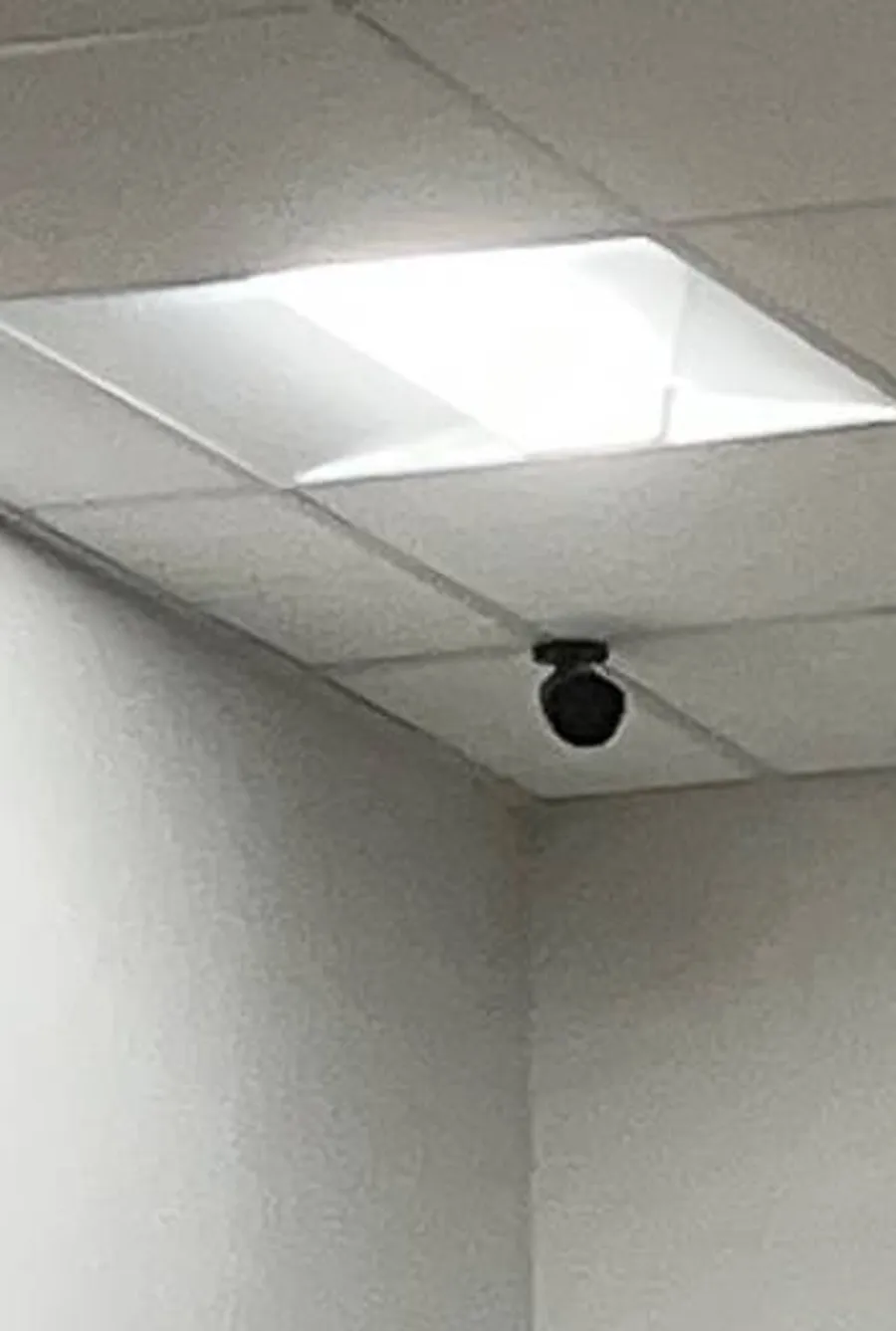
Co-op security systems Westchester County: small black ball camera hanging from a white drop ceiling beside a bright recessed light panel, above the corner of two pale walls
A small black ball camera on a short mount, tucked into a drop-ceiling corner next to a lit panel. In a lobby or a mail alcove, a ceiling corner like this sees the whole room and stays out of reach of anyone who wants to turn it. Photo from our job and product library, not taken at a Westchester County co-op.
Westchester Co-op Request
City, village or town, building type and what the board needs

✅
Request Sent!
Thank you. Expect a call or text to set the visit, normally within 2 hours.
25+
Years Experience
$250
Service Call to Start
100%
Licensed & Insured
4.7★
201 Google Reviews

Owner-operated since 2002 · Thousands of jobs completed · Booked within 2 hours

The County

In Westchester, Co-ops Outsell Condos, and Their Front Doors Show the Strain

Most people outside the county picture Westchester as single-family houses on wooded lots. Boards know better. In the twelve months through October 2026, OneKey MLS counted 1,581 co-op closings in Westchester County against 1,250 condominium closings, at a twelve-month median co-op price of $240,000. That is roughly 130 co-op apartments changing hands every month. For building security for co-ops, the number that matters most is not the price but the turnover. Every one of those sales is a fob to cancel, a directory name to change, an intercom station that a new shareholder will test on the first evening, and sometimes a set of keys that never came back from the seller.

The listings show where that stock sits. On the day we wrote this page a public listing site carried 466 co-ops for sale across Westchester County, and the first page alone ran from Yonkers ZIP codes 10701, 10703, 10704 and 10710 through Mount Vernon, Eastchester, Bronxville, New Rochelle, White Plains, Rye, Tarrytown, Croton-on-Hudson, Peekskill, Briarcliff Manor, Mount Kisco and North Salem. The features the sellers chose to mention tell a security contractor a lot: Mount Vernon listings that advertised a gate and "security," Yonkers listings that leaned on parking, a pool or being near the train, and elevator buildings in Yonkers, New Rochelle and Peekskill. That is a county of garden complexes with lots and gates, mid-century towers with garages and elevators, and older buildings within walking distance of Metro-North, sometimes all on the same managing agent's list.

Some of the stock is old enough to have its own historians. A local history published in February 2026 describes Garth Road in Eastchester, just south of the Scarsdale Harlem Line station, as a street of 13 residential buildings, "nearly all cooperatively-owned," built in waves between 1926 and 1966. Buildings like that carry nearly a century of wiring decisions in their walls: a cloth-covered riser from the first intercom, a second system added in the 1970s, a camera cable someone pulled through a dumbwaiter shaft. At the other end of the scale, Habitat described one Yonkers complex in 2022 as the largest co-op in the county: 778 units in five buildings, with no doormen. A co-op that size runs its entire front-door security through intercom panels and locks, which is exactly why what happened inside its panels, covered further down this page, is worth every board's attention.

Westchester co-ops also have a support network most areas lack. The Westchester Cooperative and Condominium Advisory Council, formed in 1979 and part of the Building and Realty Institute, was described in The Cooperator as representing more than 400 co-ops and condos in Westchester and the Mid-Hudson region. Boards here compare notes, share vendor experiences and ask hard questions of contractors. We write this page for that kind of reader: a treasurer who wants the number before the meeting, a president who wants to know what the law actually says outside New York City, and a managing agent who needs one co-op security contractor for buildings in three different municipalities.

Westchester County facts that shape a co-op security job

  • 1,581 co-op sales in twelve months: through October 2026, compared with 1,250 condo sales and 4,544 single-family sales; co-op median $240,000, days on market 56 (OneKey MLS, Westchester County, October 2026). High turnover means credential lists go stale quickly unless someone owns them.
  • The Multiple Residence Law, not the Multiple Dwelling Law: the state's Multiple Residence Law applies to "all cities of less than three hundred twenty-five thousand population and to all towns and villages" (MRL §3). Yonkers, the county's largest city, counted 211,569 people in the 2020 Census (NYS Comptroller), so even Yonkers falls under the MRL. The New York City intercom rules most online articles quote do not govern a Westchester building.
  • A county fair-housing clock for co-op applications: since August 1, 2021, Westchester's law gives co-op boards deadlines to acknowledge an application and to approve or reject a complete one within 60 days, plus fair-housing training for board members (Westchester County Human Rights Commission). It doesn't regulate security equipment, but it does set the pace at which new shareholders arrive and need credentials.
  • Annual alarm permits in Yonkers: the city's alarm chapter requires a permit to be renewed every year, gives a 30-day grace period for a newly installed system, and treats the first two false alarms in a calendar year as warnings; more than four in a year may lead to suspension or revocation (City of Yonkers Code, alarm systems).
  • Heat as well as storms: Con Edison said Westchester "experienced the greatest impact" during the early-July 2026 heat event, with the largest outages in Greenburgh, Yonkers, Elmsford, Dobbs Ferry and Rye (Con Edison, July 5, 2026).
  • A licensed trade: installing or servicing security and fire alarm systems as a business requires a New York Department of State license under General Business Law §69-m. Ours is NYS #12000287431.
Westchester County co-op building security: product photo of a white bullet camera with a wide dark lens ring on a short white round mount
Product photo of a white bullet camera with a large lens on a short round mount. On a garden complex or a tower with a long front walk, a narrow-view bullet like this aimed down the path catches faces well before visitors reach the door panel. Image from our product library, not taken at a Westchester County co-op.

Who usually picks up the phone

In Westchester the first call rarely comes from a shareholder. It comes from a managing agent who handles a dozen co-ops between Yonkers and White Plains, from a super who has replaced the same door release three times this year, or from a board member who chairs the building committee and has been asked to "look into the intercom." Self-managed co-ops are common too, especially smaller garden complexes and walk-ups where the treasurer also handles the contracts. Each of them needs something slightly different from us. The agent wants a proposal format that matches the other bids on the desk. The super wants to know which parts to keep in the basement. The board member wants a plain explanation of the options and a number that will survive the board meeting. We write proposals for all three at once.

What We Do

The Co-op Security Work We Take On Across Westchester

One contractor for every low-voltage system at the front of the building means one person to call when something stops working, and one set of drawings when the board plans its next capital project. These are the pieces of a cooperative building's security that we install, repair and maintain in the county.

01

Lobby intercom upgrades

Audio panels replaced with video entry, apartment stations or phone calling, planned around the riser the building already has.

02

Buzzer and door release repairs

Dead apartments, a release that clicks but won't open, a handset that hums: diagnosed on the $250 visit and fixed where the part is on the truck.

03

Fobs for every shared door

Lobby, side, garage, laundry, storage and roof doors on one credential list the agent can manage remotely.

04

Elevator readers

A reader in the car so visitors only reach the lobby or the floor they were buzzed to, coordinated with the elevator contractor.

05

Lobby, mailroom and garage cameras

Cameras placed to see faces at the door and hands at the mailboxes, recorded on site with board-controlled access.

06

Panel audits

A written inventory of every device connected to the entry system, so nothing is on the door that the board didn't approve.

07

Package areas

A locked package room or lockers on the fob system, with a camera covering the drop-off point.

08

Cable, power and racks

Riser testing, new Cat6 where needed, battery backup and a labeled cabinet for the building's security equipment.

09

Board-ready proposals

Itemized scopes that line up against other bids and can be attached to a shareholder notice or an RFP response.

Intercoms

Co-op Intercom Upgrades in Westchester: Replace, Repair or Phase It

The intercom is where nearly every Westchester co-op security conversation begins, because it is the system shareholders touch every day and the one that fails in the most visible way. A visitor stands outside pressing a button that does nothing; a delivery driver leaves a notice instead of a package; an elderly shareholder walks down four flights to let in a home aide. By the time the board asks for a co-op intercom upgrade, the building has usually spent several years paying for repairs on a system whose parts are getting hard to find.

The first decision is whether to replace at all. A lobby panel that is twenty-five or thirty years old can often be kept running for a while with a new power supply, a rebuilt release circuit or a refurbished amplifier, and for a co-op that has a facade or boiler project already eating the reserve, that may be the right answer for a year or two. What changes the answer is the riser. If testing shows the old pairs are sound, a replacement can reuse them, and the project becomes a new lobby panel plus new apartment stations or phone calling, with no walls opened. If the riser has failed in several places, the board is choosing between re-cabling, a wireless or app-based apartment end, or a mix. Trade reporting on intercom replacement makes the same point: one installer interviewed by The Cooperator advised boards to "retain the existing infrastructure with the exception of the panel" where they can, because full rewiring is "expensive and highly disruptive" (The Cooperator, Nov. 2025).

The path we recommend for most Westchester boards is a written scope first and bids second. The scope lists every entrance, the number of apartments and floors, which apartments have been combined, what is installed now, what works and what does not, and what the board wants shareholders to be able to do: answer on a wall station, on a phone, or both; open the door from an app; see the visitor. With that scope in hand, two or three co-op intercom installation bids can be compared line by line instead of as three totals that describe three different systems. Our board guide to co-op intercom upgrades walks through writing that scope, comparing bids and notifying shareholders. For the equipment itself, our Westchester intercom installation page lays out the county's ranges: a video intercom for a four- to eight-unit building runs $1,200–$3,500, a multi-unit building system with a tenant directory $1,200–$5,000, and IP systems with smartphone access for larger buildings $2,500–$8,000 and up.

How the building type changes a coop intercom project

Prewar elevator buildings near the stations. The buildings along Garth Road, in Bronxville and around the older village centers often have handsome lobbies the shareholders want left alone: marble or terrazzo floors, wood paneling, a brass mail wall. The panel location is usually fixed by the original vestibule, and the job becomes finding a panel that fits the existing opening or a faceplate that covers the old cut. Cable routes are the hard part; the original riser may run through a shaft that has been closed for decades, so we test before we promise anything.

Postwar towers and mid-rises. The larger buildings in Yonkers, New Rochelle and White Plains tend to have one main lobby, a garage entrance, a service door and sometimes a second lobby on another street. Their intercoms were often installed in one go when the building went up or converted, so every apartment has the same station model, which makes a phased replacement easier. The decision here is usually how many entry points get full video panels and how many get a reader and a simple call button.

Garden complexes. Hartsdale, Mount Vernon, parts of Yonkers and the Sound Shore have co-ops spread over several two- and three-story buildings with a stair hall at each entrance. Each stair hall may serve six to twelve apartments, so the project is many small panels rather than one large one, and the cable between buildings matters as much as the cable inside them.

What shareholders get at the apartment end

There are three main choices, and most Westchester co-ops end up mixing them. A wall station in each apartment, audio or video, is the most familiar and the easiest for older shareholders; it needs working wiring to every apartment. Phone calling, where the lobby panel rings a shareholder's mobile or landline, avoids the riser entirely but depends on the panel's connection and the shareholder's phone. An app adds video and remote door release but asks every shareholder to install and keep using it. We price all three on the proposal so the board can choose apartment by apartment if it wants to, and we flag which apartments' wiring tested poorly so the board knows where a wall station would cost more.

What the law says, briefly

Online articles about co-op intercoms are almost all written for New York City, where the Multiple Dwelling Law sets intercom requirements for certain buildings. That law applies to cities of 325,000 people or more. Westchester buildings fall under the Multiple Residence Law instead (MRL §3), along with the state building and fire code as enforced by the city, town or village. We don't give legal advice, and a board with a question about its obligations to shareholders should ask the co-op's attorney; what we can do is make sure the system we install works, is documented, and keeps the door locking and releasing the way the board intends.

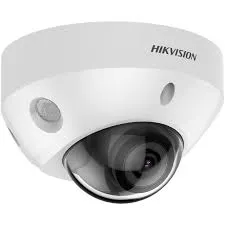
Westchester County coop intercom and lobby camera: product photo of a small white mini dome camera with a smoked lens bubble and a sensor window on the housing
Product photo of a compact white mini dome with a smoked bubble over the lens. Many lobby panels already carry their own camera, but a small dome inside the vestibule catches what the panel can't: the person who holds the inner door for the visitor. Image from our product library, not taken at a Westchester County co-op.
Panel Audit

What Is Wired Into Your Entry Panel? A Yonkers Story Every Board Should Know

In early 2022 Habitat reported on a problem at the county's largest co-op, the 778-unit Yonkers complex mentioned above. The managing agent's intercom company opened a misbehaving panel and found a device nobody on the board had approved: an Amazon Key for Business unit, installed inside the intercom so delivery drivers could open the door without buzzing anyone. According to the article, the installer was a local vendor, and the service agreements had been signed by people with no authority to sign for the co-op. A similar device turned up at another building the same agent managed; the super there caught an installer at work, a police report was filed and the box was removed. Amazon ended its relationship with that vendor and offered to reimburse the co-ops for the intercom company's time (Habitat, Feb. 17, 2022). The agent's comment to Habitat is the lesson in four words: "At least ask permission."

Nobody was hurt and the devices came out. But the story shows something that applies to every cooperative apartment building in the county. An entry panel is a small computer and a set of relays wired to the lock on the most important door in the building. Anything connected to those relays can open that door. Over twenty or thirty years, a busy panel collects connections: a key switch for the fire department, a relay for a delivery service, a link to a long-gone alarm company, a second power supply someone added when the first one ran hot, a camera tapped off the panel's video output. Some are harmless and useful. Some are not documented anywhere. A board that can't list what is connected to its front door doesn't fully control it.

What a co-op panel audit covers

  • Every wire on the door release circuit: where it goes, what can energize it, and whether that device belongs to the co-op, a vendor or nobody.
  • Every network connection: for IP and cloud panels, which accounts can log in, which integrations are switched on, and who holds the administrator password.
  • Every power supply in the chain: panel, strike or maglock, amplifier, reader controller, each one tagged and its breaker or outlet noted.
  • Every credential type that can open the door: keys, codes, fobs, app accounts, delivery services, fire service override.
  • A plain written list the board files with its building records, with a photo of each connection, and a recommendation on anything that should come off.

We don't remove anything on the audit visit without the board's say-so. If a device belongs to a delivery service or another vendor, the board decides whether to keep it, ask for a proper agreement or have it taken out. If a connection is part of the fire alarm or a fire service override, it stays, and we tell the board who maintains it. An audit like this is often done on the $250 service call for a single-entrance building; a complex with many panels gets a written price for the whole survey first.

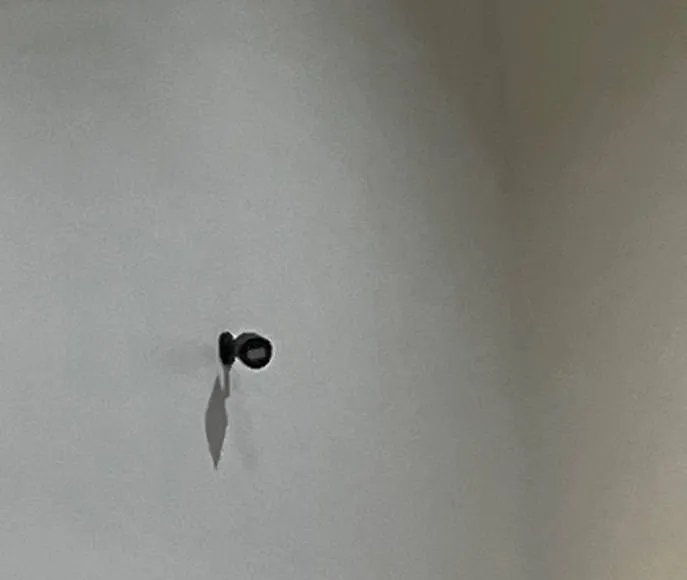
Westchester County co-op equipment room: small black mini bullet camera on a short mount projecting from a plain white wall, casting a long shadow below
A small black camera on a stubby mount, alone on a bare white wall. A camera like this on the hall outside the room where the entry panel's power supplies and relays live is a cheap way to know who has opened that room and when. Photo from our job and product library, not taken at a Westchester County co-op.
Repairs

Door Buzzer and Intercom Repair for Westchester Cooperative Buildings

Most of our Westchester co-op calls are repairs, and most repairs fall into a short list of faults. The door won't release from the apartments, or releases from some and not others. A floor or a line of apartments stopped ringing. The lobby speaker is dead or howls. The panel reboots, freezes or shows an error. The strike buzzes but the door stays shut, usually because the door has dropped on its hinges or the closer has been adjusted. Each of those has a handful of usual causes, and a technician who has seen the same panel models in dozens of buildings can usually narrow it down in the first half hour.

A co-op door buzzer repair starts with the $250 service call. On that visit we test the panel, the power supplies, the release circuit and the riser at the points we can reach, and either fix it then or give the board a firm price for the part and the labor. Our Westchester door buzzer repair page publishes the component ranges we use on co-op repairs in the county, and the table below repeats them. For video panels, app-based systems and intercoms that need a full diagnostic rather than a buzzer fix, our Westchester intercom repair page goes deeper; where its examples differ from the ranges here, the written price after the visit is the one that counts.

Common co-op repairWestchester range
Service call and on-site diagnosis$250
Apartment station replacement$250–$525
Door release relay or button$250–$475
24V transformer replacement$325–$650
Electric strike replacement and alignment$450–$950
Lobby panel repair or faceplate$650–$1,800
Riser pair repair or re-termination$850–$2,400

Faults we see again and again in the county

Releases that fail after a heat wave. Power supplies and transformers in a closet or a boiler-room corner run hot all summer. When a long heat spell is followed by voltage dips, the weakest supply gives out first. The symptom is often a release that works in the morning and fails by evening.

Upper floors that go quiet. In tall buildings, a single bad splice or a corroded terminal block in the riser can cut off everything above it. The fix may be one junction box, which is why we trace before we quote a re-cable.

Doors that won't latch. A surprising number of "intercom" calls are door problems: a sagging door, a worn closer, a strike plate that has shifted a few millimeters. Electronics can't open a door that is bound against its frame, and they can't lock one that never closes. We adjust what we can on the visit and tell the board when a door or frame needs a carpenter or locksmith.

Two systems fighting over one lock. Where a building added fobs years after the intercom, the reader controller and the panel sometimes share the strike without proper isolation. Each works on its own; together they cause intermittent faults. Separating them properly is usually a small job.

Buildings that want a simple upgrade rather than a repair, say a new button panel or a basic video buzzer at a walk-up, can see our door buzzer installation page for Westchester County.

Access Control

Key Fobs and Access Control for Westchester Co-ops With High Turnover

With roughly 1,600 co-op sales a year in the county, the hardest part of co-op access control in Westchester is not the hardware. It is the list. Every sale, sublet approval, new aide, new porter and change of managing agent adds or removes someone who can open the building's doors. Keys can't keep up with that: nobody knows how many copies of the side-door key exist, and changing a cylinder means handing new keys to everyone. Fobs and phone credentials solve the problem only if someone actually maintains the list.

A well-run fob system for a Westchester co-op has three things. First, one credential list for every shared door: lobby, side and service doors, garage, laundry, storage, bike room, roof and any package room. A shareholder's fob is shut off once and stops working everywhere. Second, a clear owner: usually the managing agent, sometimes the super, with board members able to see the list but not necessarily change it. Third, a routine tied to the co-op's own paperwork. When the board approves a sale, the buyer's fobs are issued at the closing and the seller's are turned off the same day. When the county's fair-housing clock is running on an application, nothing changes in the access system until the board has actually approved the buyer.

Our Westchester access control installation page covers hardware in detail and publishes the county ranges: $1,500 to $2,500 for a single-door keypad or fob reader, $4,000 to $15,000 for a multi-door system, and $15,000 to $40,000 and up for a full building with elevator restriction. For a co-op, the proposal breaks that down door by door, so the board can start with the lobby and the garage and add laundry and storage rooms later.

Mag lock or electric strike, and keeping egress free

Most Westchester co-op doors take an electric strike, which works with the existing lockset and leaves the door mechanically lockable if power fails. Glass storefront-style lobby doors and some double doors take a magnetic lock instead. Either way, the door must always open freely from the inside, and a maglock needs a proper request-to-exit device and a release tied to the fire alarm where the building has one. Those details are set by the state code and checked by the local building department, so we design to them and show the board where each piece goes.

Privacy rules: what applies here and what doesn't

Boards that read about New York City sometimes ask whether the city's Tenant Data Privacy Act governs their fob system. That law is a city law, New York City Local Law 63 of 2021, written for "smart access buildings" within the five boroughs (Local Law 63 of 2021). It doesn't extend to Yonkers or Scarsdale. That doesn't mean anything goes. A sensible co-op still decides in writing how long door logs are kept, who can see them and what happens to a former shareholder's data, and many attorneys recommend just that. We set the system up to match whatever retention and access policy the board adopts.

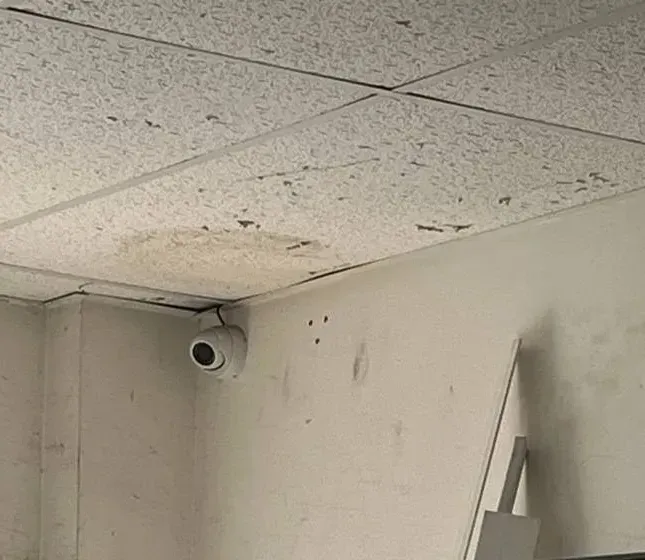
Westchester County cooperative building storage room: white dome camera fixed in the corner where a stained ceiling meets bare painted walls, with the edge of a ladder at right
A white dome camera in the corner of a plain storage room, under a ceiling with water stains and next to unpainted patches on the wall. Basement storage, bike rooms and trunk rooms are the doors co-ops most often add to the fob system after the lobby, and one corner camera covers the whole room. Photo from our job and product library, not taken at a Westchester County co-op.
Elevators

Elevator Access Control in Westchester's Elevator Co-ops

Westchester has a large share of elevator co-ops: the towers in Yonkers and New Rochelle, the mid-rises around White Plains and Hartsdale, the older elevator buildings near the Harlem Line stations. In those buildings, the lobby door is only the first line. A visitor who gets past it, or a tailgater who follows a shareholder in, can ride to any floor. A reader in the elevator car closes that gap: shareholders tap a fob to reach their own floor or every residential floor, visitors buzzed in from the lobby are sent to the floor that let them in, and the garage and lobby stops stay open to everyone.

Elevator work is always a joint job. We install the reader and the controller and wire them to the car; the building's elevator maintenance company makes the connections inside the elevator controller and signs off on the work. Our elevator access control installation page for Westchester starts at $1,875 per car for a Level 1 card, fob, code or intercom reader and $3,125 per car for Level 2 biometric readers; the elevator company's charges are billed separately by that company. For a co-op with two or three cars, Level 1 in every car is the usual first step, and it uses the same fobs as the lobby.

A few points come up in nearly every Westchester elevator project. Older cars may need an elevator company upgrade before any reader can be connected, and the board should get that price before committing. Fire service operation always overrides the reader, so firefighters are never locked out. Movers, contractors and aides can be given time-limited credentials for a single day or a set schedule. And the board should decide in advance whether the reader applies around the clock or only overnight; some co-ops leave the car open during the day and restrict it after 10 p.m.

Cameras

Co-op Security Cameras in Westchester: The Short Version

Cameras have their own pages in our series, so this section stays brief. In a Westchester co-op, the first cameras usually go in four places: the lobby or vestibule, aimed so a face is seen as someone comes through the inner door; the mail and package area, from above, so hands are visible; the garage ramp or lot entrance; and any side or service door that gets propped. Garden complexes add the walks between buildings and the lot; towers add the garage levels, the laundry room and sometimes the elevator lobby on each floor. A dedicated co-op camera page for the county is being prepared. Until then, our apartment building security camera installation page for Westchester covers multifamily layouts in detail and publishes an installed range of $625 to $1,875 per camera in the county.

Three board decisions matter more than the camera model. Who can view live and recorded video, and from where? How long footage is kept before it is overwritten? And what happens when the police, a shareholder or an insurer asks for a clip? The Cooperator has noted that a co-op's governing documents typically bar owners from changing common elements without board approval, and that recording audio can raise issues under the state's eavesdropping law (The Cooperator). We install video-only cameras in common areas, point them away from apartment doors and windows, and leave the board with a short written note of what each camera sees, so the camera policy can be written against the actual system.

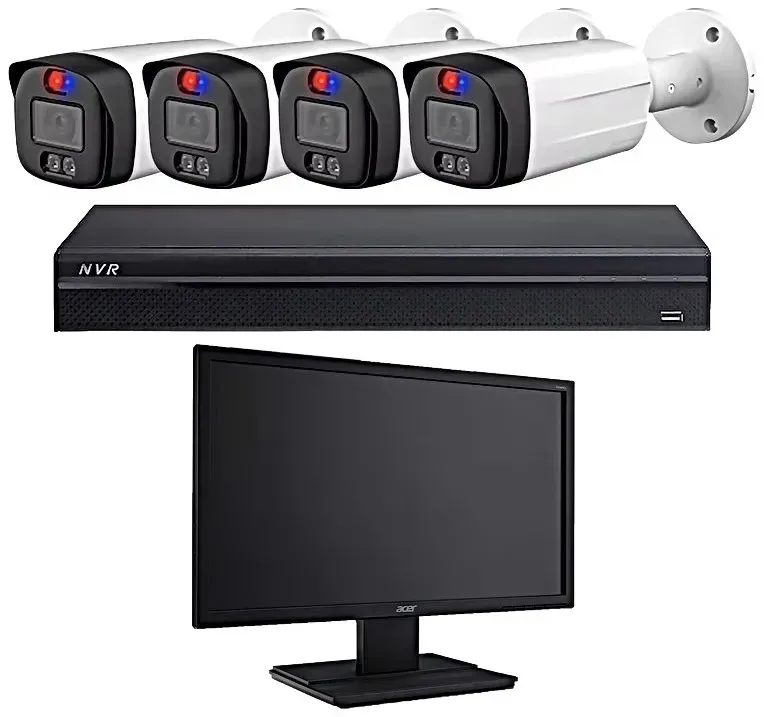
Westchester County co-op camera system: product photo of four bullet cameras with red and blue indicator lights in a row above a slim network video recorder and a black monitor
Product photo of a small recorded system: four bullet cameras, a slim network recorder and a monitor. A four-camera set like this is a common first step for a walk-up or a single garden building, covering the entrance, the mailboxes, the back door and the lot. Image from our product library, not taken at a Westchester County co-op.
Packages

Packages, Vestibules and Lobbies Without a Doorman

Package theft from co-op lobbies is a real Westchester problem, not a national headline borrowed for a sales pitch. In late 2024 Yonkers police arrested three people after reports of suspicious activity on Bronx River Road; officers found several open Amazon packages with the contents removed, taken from the lobby of a building nearby, and the three were charged with petit larceny, possession of stolen property and possession of burglary tools (ABC7 New York). A police lieutenant's point to reporters was simple: "The sooner we get the information, the sooner we can react."

The numbers have since moved in the right direction. In June 2026, News 12 reported that package thefts had fallen in several Westchester departments: Yonkers police counted a 50% decrease at the First Precinct, and White Plains had about 13 reports so far that year against 18 in the same period of 2025. White Plains' deputy commissioner of public safety still told the station, "Cameras are still good" (News 12 Westchester, June 9, 2026). For a co-op, a falling citywide count doesn't help much if the building's own vestibule is the soft spot, and every board that has had to tell a shareholder "we don't know who took it" understands why.

What actually works in a cooperative building lobby

  • Move packages behind a second locked door. If drivers leave boxes in the outer vestibule, anyone who walks in can take them. A fob-controlled package room, or a delivery code that opens only the inner door during set hours, keeps them behind a lock.
  • Know which credential opened the door. A delivery code or a driver credential that is separate from shareholder fobs means every delivery entry is logged and can be turned off without affecting residents.
  • Put the camera where the package sits. One camera covering the shelf or the locker bank, mounted high and looking down, records hands and faces at the moment it matters.
  • Keep the doors closing. A propped inner door or a closer that never quite latches undoes everything else, so we check both on every package-area job.
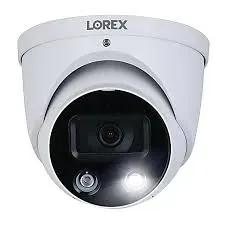
Westchester County co-op package area camera: product photo of a white turret camera with a dark lens window and two small built-in spotlights below the lens
Product photo of a white turret camera with two small spotlights under the lens. A light that comes on with motion helps in a dim vestibule or a package alcove off the lobby, where faces are otherwise lost in shadow at night. Image from our product library, not taken at a Westchester County co-op.
Power

Heat Waves, Storms and Con Edison: Keeping a Westchester Co-op's Doors Working

Westchester co-op boards tend to think about power in winter, when storms bring trees down on lines. The summer of 2026 was a reminder that heat matters too. During the early-July heat event, Con Edison said Westchester "experienced the greatest impact," naming Greenburgh, Yonkers, Elmsford, Dobbs Ferry and Rye as having the greatest outages (Con Edison, July 5, 2026). A month earlier, on June 7, a storm cut power to more than 5,000 Westchester customers in places including Bronxville, Mount Vernon, New Rochelle, Scarsdale, White Plains and Yonkers (Con Edison).

An entry system is only as good as its power. When the lights go out, a co-op's front door does one of two things: it stays locked and the intercom goes dark, so shareholders need a key; or, with some maglock setups, it unlocks. Neither is acceptable for hours at a time in a building full of people. Brownouts and voltage dips during a heat wave are often worse for electronics than a clean outage, because supplies and panels brown out, reboot and sometimes corrupt their settings.

What we put in so the doors keep working

  • Battery backup sized for the system: a UPS or battery-backed power supply on the panel, the release and the reader controller, sized to carry them through the outages the building actually gets.
  • Power supplies that aren't cooking: moved out of boiler rooms and sealed closets where we can, or vented and replaced with units rated for the heat.
  • Surge protection where cable leaves the building, such as a panel at a detached garage or a camera on a light pole.
  • Settings saved off the device: directory, codes and credentials backed up, so a panel that loses its memory in a brownout is restored in minutes instead of being reprogrammed from scratch.
  • A known fail state for every door: written down, agreed with the board and matched to the building code, so the super knows what the door will do before the next outage instead of during it.
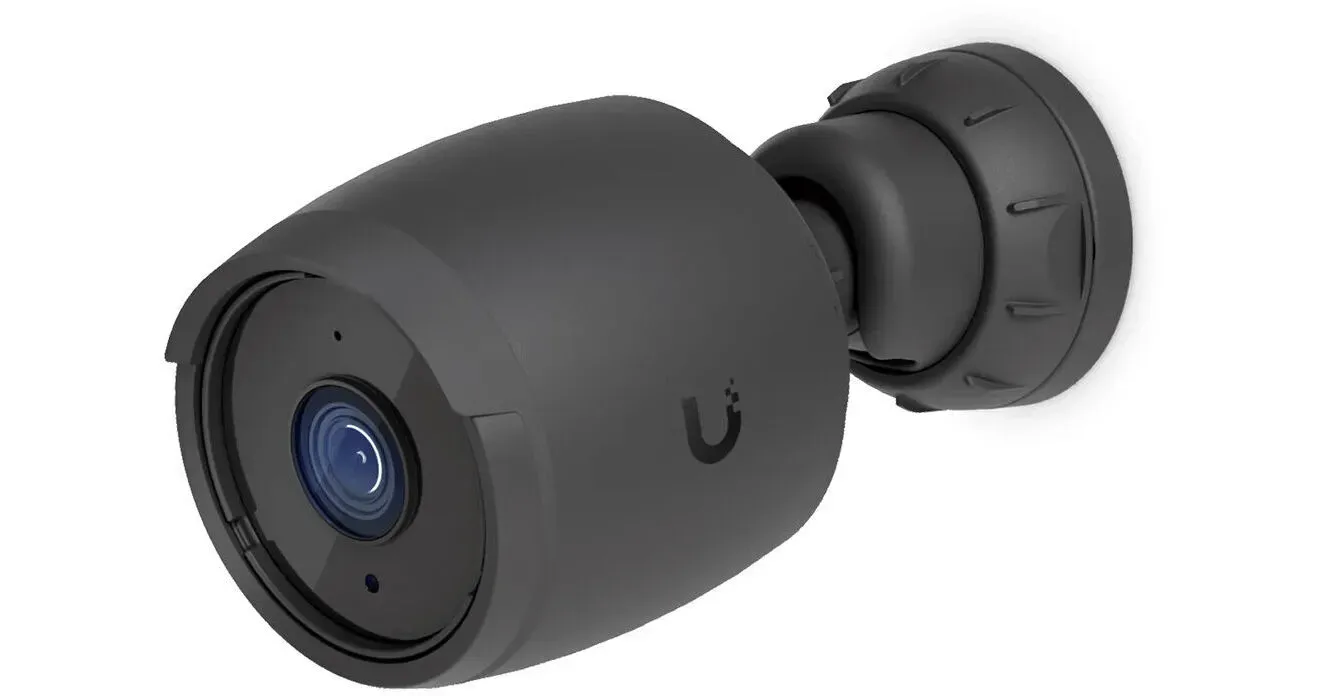
Westchester County co-op garage camera: product photo of a compact black bullet camera with a blue-tinted lens on a black swivel mount, on a white background
Product photo of a small black bullet camera on a swivel mount. Garage ramps and loading doors are where we often use a camera like this, and where battery backup on the recorder and the switch decides whether the footage from an outage night exists at all. Image from our product library, not taken at a Westchester County co-op.
Scope

Cabling, Fire Alarm, Alarm Permits and What We Leave to Other Trades

Low-voltage cable and the building's small network

Modern co-op security equipment runs on network cable. A video panel, an IP camera, a fob controller and an elevator reader all want Cat6 and a switch, and many want power over the same cable. In older Westchester buildings the cable is often the biggest unknown in the project: the riser may be eighty years old, the conduit full, and the only practical path a shaft or a closet stack. We survey routes before pricing, reuse what tests well, and run new cable where it doesn't. The building's security equipment then lives in one labeled cabinet with its own switch, kept apart from the shareholders' internet. For larger cabling scopes, our structured cabling installation page for Westchester County covers drops, racks and certification.

Fire alarm work, within our scope

Fire alarm systems in co-op buildings are life-safety systems, and in Westchester they are reviewed by whichever city, town or village the building is in, under the New York State Uniform Code. Yonkers, for example, has its own fire code chapter that refers to "the New York Uniform Code" and places enforcement with the city's Fire Commissioner (Yonkers Fire Code). Fire alarm projects start with drawings, go through local review and end with an acceptance test, and they are priced per building after that process is mapped out; we don't publish fire alarm prices. Our fire alarm installation page for Westchester County explains that path. On a security project, our job is to make sure maglocks and access-controlled doors release when the fire alarm calls for it, and that nothing we install interferes with the fire alarm system.

Burglar alarms and city permits

Some co-ops want a monitored alarm on the management office, a storage room or a roof door. Where they do, the municipality's alarm rules apply. Yonkers requires an alarm permit renewed every year, gives a new system a 30-day grace period, issues written warnings for the first two false alarms in a calendar year and may suspend or revoke a permit after more than four (City of Yonkers Code). Other Westchester municipalities have their own versions. We set the board up with the permit paperwork and design the system to keep false alarms down: door contacts that are properly aligned, entry delays long enough for the super, and no motion sensors where heating vents or hanging signs will trip them. Our alarm installation page for Westchester County has the details, including the monitoring options we offer.

Electrical work belongs to the building's electrician

We handle the low-voltage side: panels, readers, strikes, maglocks, cameras, cable and power supplies plugged into existing outlets or circuits. If the project needs a new high-voltage circuit, a dedicated outlet in the equipment closet or a hardwired connection, that is work for a licensed electrician. Westchester County requires plumbers and electricians to hold a county trade license (Westchester County Consumer Protection), and we coordinate with the co-op's electrician or recommend that the board bring one in.

Virtual doormen and "managed security"

We don't run a virtual doorman, a remote concierge or a managed security subscription. We install and maintain the intercom, cameras and access control that the building's staff, or a virtual-doorman provider the board hires, will use, and we can connect new equipment to a provider the co-op already has. Boards should be wary of any contract that ties the hardware to a monthly service they can't leave.

Building Types

Security Plans for Westchester's Co-op Building Types

No two co-ops are the same, but Westchester's stock falls into a handful of types, and each has a typical first project. These are the patterns we plan around when a board calls.

A

Prewar elevator co-ops

1920s and 1930s buildings near the Harlem Line stations and the old village centers, with formal lobbies and original risers.

B

Postwar towers

Six- to twenty-story buildings in Yonkers, New Rochelle and White Plains with garages, service entrances and several elevators.

C

Garden complexes

Two- and three-story buildings around lawns and lots in Hartsdale, Mount Vernon, Yonkers and the Sound Shore.

D

Gated campuses

Complexes with a perimeter gate, a pool or clubhouse and parking that need one credential system across the grounds.

E

River-town buildings

Smaller elevator and walk-up co-ops in Tarrytown, Croton, Peekskill and the Hudson villages, often near the train.

F

Northern county co-ops

Fewer, smaller buildings in Mount Kisco, Briarcliff Manor and the northern towns, sometimes self-managed.

Prewar elevator co-ops near the stations

The defining feature is the lobby. Shareholders in a Garth Road or Bronxville building want the entry to look as it did, and a panel that reads as a modern gadget will meet resistance at the board meeting. We look for panels that fit the existing opening, faceplates in finishes that match the brass or bronze already there, and readers small enough to tuck into a door frame. Inside, these buildings often have the original manual or automatic elevators with later controls, so elevator readers depend on the elevator company's assessment. The riser is usually the deciding cost factor, and we test it before anyone signs.

Postwar towers

Towers have more doors than people realize: the main lobby, a second lobby or side entrance, the garage ramp, the garage-to-building door on each level, the service entrance, the laundry room, the storage rooms and the roof. The typical first project is fobs on all of them with one list, video at the main lobby, and cameras at the garage and the mailroom. Towers with a part-time doorman want the panel to call the desk when it is staffed and the apartments when it isn't.

Garden complexes and gated campuses

Here the challenge is distance. A Hartsdale or Mount Vernon complex may have a dozen entrances spread across several buildings and a lot, with cable between buildings buried decades ago or never installed. We look at each entrance's traffic: busy stair halls get video panels, quiet ones get a reader and a call button, and the perimeter gate gets a call box that rings shareholders' phones. The listings that mention a gate and "security" in Mount Vernon are describing exactly this kind of property, and the board's goal is usually one fob that opens every door the shareholder is entitled to and nothing else.

River-town and northern county buildings

Smaller co-ops in Tarrytown, Croton-on-Hudson, Peekskill and the northern towns usually have one entrance, a small lobby, perhaps an elevator, and a volunteer board. Their first project is often simply making the front door reliable: a new panel, a new strike and battery backup. They also benefit most from a panel the managing agent or a board member can manage from a laptop, because nobody is on site full time.

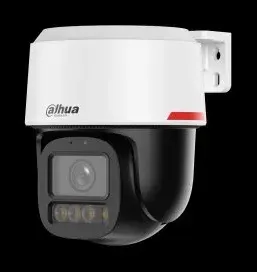
Westchester County garden co-op grounds camera: product photo of a pan-tilt camera with a white top housing, a red stripe, a black lower body with lens and lights, and an attached wall bracket
Product photo of a pan-tilt camera on its own wall bracket, with a white upper housing and a black lens body. On a garden complex or gated campus, one camera like this on a building corner can be steered to the lot, the gate or the walk between buildings. Image from our product library, not taken at a Westchester County co-op.
Board Process

Getting a Westchester Co-op Security Project From Proposal to Install

The technical side of a co-op security project is usually the easy part. The harder part is moving it through a board, a managing agent and a few hundred shareholders without stalling. Here is how the projects we see in Westchester actually move.

Approval and the business judgment rule

Security decisions are board decisions. New York's highest court held in 1990 that, so long as a co-op board "acts for the purposes of the cooperative, within the scope of its authority and in good faith," courts will not substitute their judgment for the board's (Levandusky v. One Fifth Ave. Apt. Corp.). That standard applies statewide, including in Westchester. In practice it means the board should be able to show a reasoned process: a survey, comparable bids, a vote. We supply the paperwork that makes that process easy to document.

Requests for proposals and comparing bids

Many Westchester co-ops put security work out to bid, and the managing agent often runs the process. A good RFP describes the building and what the board wants, not a brand. When bids come back, the board should check that each one includes the same entrances, apartment stations or app licenses, door hardware, power, cable, programming, training and warranty. Habitat once described a co-op board member who wrote the intercom RFP himself and scored five sealed proposals before choosing an installer that reused the building's existing copper (Habitat). That level of structure is exactly what makes bids comparable. We respond to RFPs and board bid requests, and our proposals are itemized so each line can be matched against the others.

Certificates of insurance and alteration agreements

Managing agents will ask for our certificate of insurance naming the co-op and the agent. We issue it once the job is awarded, not with the quote. Work inside apartments, such as replacing wall stations, is normally covered by the co-op's own scope rather than a shareholder's alteration agreement, because the intercom is building equipment; if the board's rules say otherwise, we follow them.

Telling shareholders

Shareholders accept a new system far more easily when they know what is coming. We give the board a notice it can adapt: the dates, what will be off and for how long, whether anyone needs to be home for a station swap, how fobs or app invitations will be handed out, and who to call with questions. For large buildings we schedule apartment work floor by floor and post the schedule in the lobby and the elevator.

Compliance notes for Westchester co-op security work

  • State security and fire alarm installer license under GBL §69-m (ours: NYS #12000287431).
  • Multiple Residence Law and the state Uniform Code, as enforced by the city, town or village building department.
  • Municipal alarm permits where a monitored alarm is installed (Yonkers requires annual renewal).
  • Elevator connections made by the elevator maintenance company.
  • New high-voltage circuits by a county-licensed electrician.
  • No New York City rules (Multiple Dwelling Law intercom sections, Tenant Data Privacy Act) unless the co-op's attorney advises otherwise.
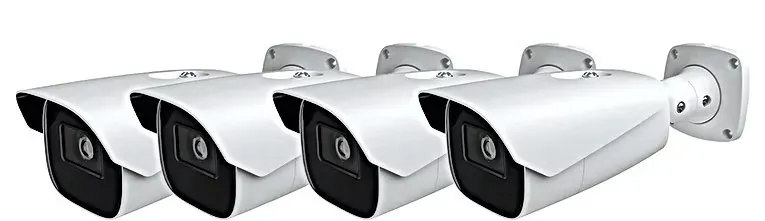
Westchester County co-op camera bid comparison: product photo of four identical white bullet cameras on wall brackets lined up side by side
Product photo of four matching white bullet cameras on their wall brackets. When a board compares bids, the count of cameras like these is only one line; the mounts, cable runs, recorder and labor behind each one are where proposals differ. Image from our product library, not taken at a Westchester County co-op.
Your Questions Answered

Westchester Co-op Boards Ask, We Answer

These questions come from boards, agents and supers in the county. Costs, fobs, elevators and cameras are covered in their own sections, so they aren't repeated here.

Who controls the front door

Someone installed a delivery device inside our intercom panel without board approval. How do we find out what else is connected to our entry system?

Book a panel audit. We open the panel, the power supplies and any controllers tied to the door, trace every wire on the release circuit and every network connection, and photograph each one. The result is a written list of what is connected, who it appears to belong to and whether it can open the door. Anything the board didn't approve is flagged with a recommendation. We don't pull devices on the spot unless the board tells us to, because some, like a fire service override, have to stay.

After the audit, the board should keep the list with its building records and update it whenever anything changes. The managing agent should know that no vendor, delivery company or contractor connects anything to the door without written approval. And if the panel is cloud-managed, the board should change the administrator password and remove any user accounts that don't belong to the co-op or its agent.

A delivery company is offering to add keyless access to our lobby door for free. What should the board ask before saying yes?

Ask who signs the agreement and on whose authority, who owns the device, what exactly it can do (open which doors, at what hours, for which drivers), whether every entry is logged and who can see that log, how it is powered, and how the co-op can switch it off or have it removed. Ask, too, whether it connects to the panel's release circuit or to a separate relay; a separate, clearly labeled relay is much easier to manage. The Yonkers case Habitat reported shows what happens when those questions are skipped.

Many boards decide that a time-limited delivery code or a separate package room is simpler. If the board does go ahead, we can install the device on its own labeled relay, with its own power, so the rest of the entry system doesn't depend on it.

Old buildings and old lists

Our 1920s co-op near the Scarsdale station has an original lobby the shareholders love. Can a new entry panel fit in without looking out of place?

Usually, yes. Most panel makers offer flush-mount or recessed versions and several finishes, and the panel can often go into the existing opening with a custom faceplate that covers the old cutout. Where the original directory is a framed brass board, some buildings keep it as decoration and mount a slim video panel beside it. Readers can be small enough to sit in a door frame or behind a decorative plate.

We bring finish samples and photos to the board, and we mock up the panel's size and position with tape on the wall before anything is ordered, so shareholders can see it in place. The wiring for a prewar lobby is the bigger question, and we answer it by testing the existing riser first.

How often should a large co-op reconcile its fob list against the shareholder roster?

At least once a year, and after every change of managing agent or super. In a building with frequent sales, quarterly is better. The reconciliation is simple: export the list of active credentials, compare it with the stock ledger and the list of approved occupants, staff and vendors, and turn off anything that doesn't match. Credentials that haven't been used in six months deserve a second look.

Good systems make this easy by labeling each credential with the apartment and the person, not just a number. If your current list is a spreadsheet of fob numbers with no names, the first reconciliation takes longer, but every one after it is quick.

We're changing managing agents. What has to be handed over so the new firm can run the intercom, fobs and cameras?

Administrator logins for the intercom panel or its cloud account, the access control software, the camera recorder and any remote viewing app; the current credential list; the directory; the equipment map or drawings; warranty and service records; and the contact for whoever maintains each system. The outgoing agent's personal accounts should be removed and new accounts created in the co-op's name.

If nobody can find some of those logins, it is usually possible to reset them on site, but it takes a technician and sometimes the manufacturer's support line. We can do the handover on a single visit, change the passwords with the board and the new agent present, and leave a one-page summary so the next transition is easier.

Daily life with the system

During a summer heat wave our lobby panel kept rebooting. What was going on?

Almost always power. Voltage dips during a heat event can drop a panel's supply below what it needs, so the panel restarts, sometimes over and over. Supplies mounted in hot closets or boiler rooms make it worse, because they are already running near their limit. Occasionally the panel itself overheats if it sits in direct afternoon sun behind glass.

The fix is usually a battery-backed power supply or UPS that holds the panel steady through dips, plus relocating or venting the supply. We also back up the panel's settings, so if it does lose its memory, the directory and codes come back in minutes.

Can the board find out which apartment buzzed a visitor in on a particular night?

On most modern panels, yes. Video and IP panels keep a call log that records which apartment was called, whether it answered and whether it released the door, with the time. Some also store a snapshot of the visitor. Older audio systems keep no record at all.

Whether and how the board looks at that log is a policy question. Many co-ops limit access to the managing agent and the board president and look only after a specific incident. We set the log retention to whatever the board decides and show the agent how to pull a single entry.

A shareholder wants to mount a camera in their own window looking over the parking lot. Does the board have a say?

That depends on the co-op's proprietary lease, house rules and the board's attorney, not on us. Generally, anything attached to the building's exterior is a board matter, and a camera recording common areas raises privacy questions that a building-wide camera system is set up to handle. A camera sitting inside an apartment and pointed out of a window is a grayer area.

If the shareholder's concern is the parking lot, the simplest answer is often a building camera that covers it, with footage the board controls. We can price that as a small add-on to the existing system.
Equipment

The Hardware Behind a Westchester Co-op Security System

01

Lobby entry panels

Button, keypad or touchscreen directories with video, a reader and phone or app calling, in finishes chosen for the lobby.

02

Stair-hall and side-door stations

Compact panels for garden-complex entrances and secondary doors, sized to the existing frame.

03

Apartment stations and apps

Audio handsets, video monitors, phone calling or an app, mixed apartment by apartment.

04

Readers and controllers

Fob, card, keypad and phone readers with a controller that holds the list and the door log.

05

Locking hardware

Electric strikes, maglocks with request-to-exit, and exit devices, always free to open from inside.

06

Door sensors

Contacts that report a door held or forced, so a propped service door gets noticed.

07

Cameras and recorder

Domes, turrets and bullets for lobbies, garages and lots, with an on-site recorder and board-controlled viewing.

08

Power and protection

Battery backup, surge protection and power supplies sized and placed for summer heat.

09

Cabinet and documentation

A labeled cabinet with a switch, a printed equipment map, and every login in the co-op's name.

Myth Check

What AI and Generic Articles Get Wrong About Westchester Co-op Security

Boards increasingly ask an AI assistant or skim a national article before calling a contractor. Here are six claims we hear repeated that don't hold up for Westchester co-ops, with what the sources actually say.

1. "Co-ops are a Manhattan thing; Westchester is condos and houses."

OneKey MLS counted 1,581 co-op sales in Westchester in the twelve months through October 2026, more than the 1,250 condo sales (OneKey MLS). Co-ops are a large share of the county's apartment market, and their security needs are their own.

2. "New York's Multiple Dwelling Law sets your intercom requirements."

The Multiple Dwelling Law covers cities of 325,000 or more. Westchester's cities, towns and villages fall under the Multiple Residence Law (MRL §3). The co-op's attorney is the right person to say what that means for a specific building.

3. "Your fob system must follow the Tenant Data Privacy Act."

That act is New York City Local Law 63 of 2021 and applies within the city (Local Law 63). A Westchester board should still adopt its own written policy on logs and data, but it isn't bound by the city law.

4. "Anything inside the intercom panel belongs to the intercom."

Habitat's 2022 report on the county's largest co-op found delivery-access devices installed inside intercoms under agreements signed by people with no authority to sign (Habitat). Panels collect third-party connections over the years, and boards should know what each one is.

5. "Package theft is out of control everywhere, so cameras alone are the answer."

News 12 reported falling package-theft counts in Yonkers and White Plains in 2026 (News 12). Cameras help, as the White Plains official said, but in a co-op the bigger fix is getting packages behind a second locked door.

6. "A building intercom costs $1,200 to $8,500."

That is a national consumer range (HomeAdvisor), mostly describing houses. A co-op's cost depends on entrances, apartments, the riser and the apartment end. Our Westchester pages publish the county's ranges, and a co-op gets an itemized price after a free survey.

Talk Through Your Westchester Co-op With a Technician

Ten minutes on the phone usually tells us whether the building needs a repair visit, a survey for the board or just a setting changed.

Get In Touch

Request a Survey or Repair Visit for Your Westchester Co-op

Tell us the city, village or town, the kind of building and what the board needs. A few lines about entrances, floors and apartments are enough to set up the right visit: a free survey for anything new, the $250 service call for anything broken. Prefer to talk? Call or text (914) 877-2578.

✅

Request Sent!

Thank you. Watch for a call or text from (914) 877-2578 to set a time that works for the building.

How It Works

How a Westchester Co-op Security Job Runs, From First Call to Handover

01

Tell us about the building

Call, text or use the form with the city or village, building type, entrances, floors and apartments, and what failed or what the board wants. Photos of the panel and the equipment room help.

02

A booked time within 2 hours

We call back with a confirmed time within two hours of your request. Repairs are the $250 service call; a survey for new work is free.

03

Walk the building with the super

We go through the lobby, every side and service door, the garage, mail and package areas, laundry and storage rooms, and the equipment room.

04

Audit and test

We list what is connected to the entry panel, test the riser and power supplies, and check that each door closes and latches.

05

Itemized written proposal

Each entrance, the apartment end, fobs, elevators, cameras, power and cable get their own line, so the board can compare bids and phase the work.

06

Vote, insurance, deposit

After the board approves, the managing agent gets our certificate of insurance, the deposit is paid and equipment is ordered; special-order parts are scheduled on arrival.

07

Notice and installation

The board sends the shareholder notice we draft, and we install entrance by entrance and floor by floor, keeping the front door working each night.

08

Program, train, hand over

Directory and credentials loaded, cameras checked with the super, the agent trained, and every login, the panel inventory and an equipment map left in the co-op's name.

Field Notes

What We Check on a First Visit to a Westchester Co-op

Whether we are there for a $250 repair or a free survey, the first visit to a Westchester co-op follows the same route through the building. These notes describe our crews' general practice, not any particular building.

  • The front door, closed and open. Before touching the panel, we watch the door close on its own. Does it latch? Does the strike line up? Does the closer slam or drift? A door that doesn't latch makes every other fix pointless.
  • The panel, from both sides. We call a few apartments, release the door from each, and look at the panel's back box: how many cables come in, whether any don't belong, and whether the box is wet, rusty or full of old splices.
  • The power. We find every supply feeding the panel, the release and the readers, read its output under load, and note where it lives and how hot that space gets.
  • The riser. At the points we can reach, usually the basement terminal and a junction on an upper floor, we test pairs for continuity and shorts. On a survey we test enough to say which apartments can keep wall stations.
  • Every other door. Side, service, garage, laundry, storage and roof doors: what locks them now, who has keys, and whether any are propped.
  • The mail and package area. Where packages land, whether that spot is behind a locked door, and what a camera there would see.
  • The equipment room. Recorder, switch, controllers, labels or the lack of them, and whether the room itself is locked.
  • The paperwork. Who holds the logins, whether there are drawings, and what the last contractor left behind.

At the end of the visit, the super or agent gets a short verbal summary, and the board gets a written one: what we found, what we fixed, and what we recommend next with prices. Nothing is replaced without approval beyond the repair we were called for.

Coverage

Co-op Security Across Westchester, City by City and Town by Town

We serve co-ops throughout the county from our Bronx office on East Fordham Road, a short drive south of the Yonkers and Mount Vernon lines. These are the places our Westchester co-op calls come from most, described by building stock rather than by client.

Yonkers

The county's largest city and its largest co-op market, with co-op listings in the 10701, 10703, 10704 and 10710 ZIP codes ranging from garden complexes to elevator buildings. Listings here stress parking, pools and train access.

Mount Vernon

Garden complexes and mid-rises in the 10552 ZIP code, several advertising gated grounds and security. Perimeter gates, lot cameras and one fob list for many entrances are typical requests.

New Rochelle

Elevator co-ops in the 10805 ZIP code, with listings that mention elevators, laundry and parking. Lot or garage-door fobs, elevator readers and lobby video come up together.

White Plains

The county seat, with mid-rise co-ops and a downtown where package volume is high. The city's public safety department reported fewer package thefts in 2026 but still recommends cameras.

Eastchester and Scarsdale

Garth Road's 13 mostly cooperative buildings, built from 1926 to 1966 beside the Scarsdale station, and other prewar and postwar co-ops nearby. Lobby finishes and old risers drive the plan.

Bronxville

A one-square-mile village whose apartment buildings date back to the 1910s, some of them above shops. Small lobbies, formal entrances and careful cable routing.

Hartsdale and Greenburgh

Garden complexes and elevator buildings near the Hartsdale station, in a town Con Edison named among the hardest hit by July 2026 outages. Battery backup is a priority.

Tarrytown and the river villages

Smaller elevator and walk-up co-ops in Tarrytown, Croton-on-Hudson and other Hudson Line villages; one Tarrytown listing we saw advertised being near the train.

Peekskill

Elevator co-ops in the northwest corner of the county, at least one of them listed with an elevator when we wrote this page. Panel replacement and lobby cameras are the usual first projects.

Rye and the Sound Shore

Co-ops in Rye and other Long Island Sound communities, where salt air near the water shortens the life of exterior panels and readers.

Northern Westchester

Smaller co-ops in Mount Kisco, Briarcliff Manor, North Salem and nearby towns, often volunteer-run, where remote management matters most.

Every visit is booked within 2 hours of your request, seven days a week, with early-day appointments first. We don't promise same-day work; we promise a time, and we keep it.

Pricing

What Co-op Security Work Costs in Westchester County

The first number depends on whether something is broken. A repair starts with the $250 service call: we come out, find the fault, and fix it on that visit or give the board a firm price. Anything new, a replacement or a building-wide project, starts with a free on-site survey and a written, itemized proposal. We don't publish package or per-apartment prices for co-ops, because entrances, riser condition and building layout decide most of the cost. The ranges below are the ones already published on our Westchester service pages; where two of our pages show different figures for similar work, the written quote after the visit is what applies.

What the co-op needsHow it is priced in Westchester
Any intercom, buzzer, strike, reader or camera repair$250 service call to diagnose; small fixes usually done on the visit, larger ones priced before parts are ordered
Common buzzer and intercom partsApartment station $250–$525; release relay or button $250–$475; 24V transformer $325–$650; strike with alignment $450–$950; lobby panel repair $650–$1,800; riser repair $850–$2,400
Video intercom$1,200–$3,500 for a four- to eight-unit building; multi-unit building systems $1,200–$5,000; IP systems with smartphone access for larger buildings $2,500–$8,000 and up
Key fob access control$1,500–$2,500 single door; $4,000–$15,000 multi-door; $15,000–$40,000 and up for a full building with elevator restriction
Elevator access controlFrom $1,875 per car (Level 1) or $3,125 per car (Level 2); elevator company charges billed by that company
Common-area cameras$625–$1,875 per camera installed, per our Westchester apartment building camera page; count and placement set on the survey
Panel auditOften done on the $250 service call for a single entrance; a written price first for multi-panel complexes
Fire alarmNo published prices; drawings, local review and acceptance test, quoted per building
Equipment the co-op already boughtLabor quoted by phone or text and booked once the deposit is paid

Financing is available through Wisetack, subject to approval. Full terms — including 50% deposit, one-year parts-only warranty on Abstract Enterprises Security Systems-supplied products, and the late-fee schedule — are set out in the service agreement. Our labor warranty is the one on our warranty page; longer coverage is a paid add-on, and manufacturer warranties stay with the manufacturer. Camera system prices for the county are on our Westchester security camera pricing page.

Westchester County co-op garage camera: product photo of a compact pan-tilt dome camera with a white top, black lower body and clear dome on a black background
Product photo of a compact pan-tilt dome camera with a white top and a clear lower dome. A single steerable camera like this in a garage or at a lot entrance is sometimes cheaper than two fixed cameras, which is one of the trade-offs the survey sorts out. Image from our product library, not taken at a Westchester County co-op.
Getting Started

Co-op Security Projects & Pricing: Common First Steps in Westchester

These are not packages. They are the starting points Westchester boards choose most often, each priced on the building after the service call or the survey.

1

Audit and stabilize

A panel audit, battery backup and a repair of whatever is failing now. The board learns what it has before spending on what it wants.

2

Lobby and garage first

A new video panel at the main entrance, fobs on the lobby and garage doors, and a camera on the package area. The most common first project for a tower.

3

Every door on one list

All entrances, shared rooms and elevators on one credential system, installed in phases over one or two budget years.

If the co-op already bought the equipment

We install equipment a co-op supplies. Labor is quoted by phone or text without a walk-through and booked once the deposit is paid. The equipment itself, its compatibility and its warranty stay with the seller, so we suggest boards check with us before buying, especially panels meant for an existing riser.

Complete Services

More Help for Westchester Co-op Boards and Supers

Parking lot cameras

Lot and garage camera layouts for Westchester co-ops and complexes.

Buzzer repair price list

Published ranges for the most common buzzer and intercom repairs.

Intercom pricing

How intercom systems are priced, from audio to app-based.

Buzzer repair across the Hudson Valley

For agents managing buildings in several counties.

Free written quote

Describe the co-op and get a written plan back.

FAQ

Westchester County Co-op Security Systems FAQ

Does the Westchester County fair-housing timeline for co-op applications affect when a new buyer gets fobs?
+

Indirectly. The county's law sets deadlines for the board to acknowledge an application and decide on a complete one within 60 days, but it says nothing about entry systems. What it does is make closings more predictable. The sensible routine is to issue the buyer's fobs or app access at the closing, never before board approval, and turn off the seller's credentials the same day. We set the system up so the managing agent can do both in a few minutes from the admin screen.

How many false alarms can a Yonkers co-op have before the city can act on its alarm permit?
+

Under the Yonkers alarm chapter, the first two false alarm notifications in a calendar year bring a written warning with no charge, later ones are dealt with under a separate section of the chapter, and more than four in a calendar year may lead to suspension or revocation of the permit. The permit also has to be renewed every year. A co-op with a monitored alarm on its office or storage rooms should keep the permit current and fix the cause of any false alarm right away.

Our lobby panel is too loud for the apartments right above the vestibule. Can its volume change at night?
+

On many video and IP panels, yes. Speaker and ringback volume can be set separately, and some panels allow a quieter night schedule. On older audio panels the volume is a single adjustment on the amplifier, so we can turn it down, but it stays down all day. Moving the speaker grille or adding a small hood that points the sound toward the visitor also helps. We check the setting on the service call before suggesting new equipment.

Should the trash-room door on each floor of our co-op tower be put on fobs?
+

Usually not. Trash and compactor rooms on residential floors are used by everyone on that floor, often several times a day, and adding a reader means more hardware to fail and more complaints. Those doors may also be fire-rated with closers and hardware the code expects to stay as they are. The co-op's money is better spent on the doors that let people into the building, the garage and the shared rooms in the basement.

Can old door contacts from a disconnected alarm system be reused to warn us when a door is held open?
+

Often they can. A door contact is a simple switch, and if it is still mounted, aligned and its cable tests good, it can be connected to the access control system or the camera recorder to send an alert when a door is held or forced. We test each contact and its wiring before reusing it. Contacts that are part of the fire alarm or a monitored system stay with that system and aren't repurposed.

Why does one vestibule camera so rarely show both the visitor's face and the package?
+

Because the two need different angles. A face is best caught at head height looking toward the door as someone comes in, while a package on a shelf or the floor is best seen from above. A single camera high in a corner often sees the tops of heads and a blurry shelf. Two inexpensive cameras, one at each angle, usually do far better than one expensive camera trying to do both.

Can shareholders get a phone alert when a package is left in the vestibule?
+

Some systems can do something close to it. A camera with object or motion detection can send an alert when something appears in a defined zone, and some package rooms and locker systems notify the recipient directly. Alerts for every motion in a busy lobby quickly become noise, though, so we usually set alerts for the package area only and send them to the super or the agent rather than to every shareholder.

Can a co-op reuse the coax cable from an old lobby camera system for new cameras?
+

Sometimes. Many newer cameras can run over existing coax using adapters or hybrid recorders, which saves opening walls in a finished lobby. Whether it works depends on the cable's condition and length, which we test. Where the coax is damaged or too long, we run new Cat6, often in the same pathway once the old cable is pulled. The proposal shows which runs we can reuse.

How do board members view the cameras from home without making the recorder easy to hack?
+

Give each viewer a separate account with view-only rights, use strong passwords and two-step login where the system offers it, keep the recorder's firmware up to date, and reach it through the manufacturer's secure app rather than by opening ports on the building's router. We set that up, keep the cameras on their own network, and leave the administrator account with the managing agent rather than with an individual board member.

Is a video intercom with a built-in camera enough, or does the lobby still need a separate camera?
+

For seeing who is at the door, the panel's camera is usually enough. It doesn't see what happens after the door opens: who walks in behind the visitor, what is taken from the mail area, or whether the inner door is propped. That is why most co-ops add at least one camera inside the vestibule or lobby. The panel camera answers who rang; the lobby camera answers who came in.

Can the intercom open the garage door for a visitor who's parking?
+

Yes, if the garage door has an operator that accepts a dry-contact input, which most do. A call box at the ramp can ring a shareholder's phone or apartment station, and the shareholder presses a key to open the gate or overhead door. The same box can take fobs for residents. We wire it to the door operator's input; any changes inside the operator itself are done by the garage door company.

Our laundry room machines take a card. Can the laundry room door use the same card as the machines?
+

Rarely. Laundry cards are issued by the laundry vendor and work only with its machines, while the door uses the co-op's access control system. The practical answer is to put the laundry room door on the building's fob, so the same fob opens the lobby and the laundry room, and leave the laundry card for paying for machines. If the vendor offers a phone app instead of cards, that still stays separate from the door.

All Areas Served

Co-op Security Systems in Other Counties and Boroughs

Westchester is the southernmost of the six counties in our Hudson Valley coverage. The regional overview is co-op security systems in the Hudson Valley, and the neighboring county pages cover Putnam co-ops, Dutchess co-ops, Orange County co-ops and Rockland co-ops. Managing agents with buildings south of the county line can start at co-op security across New York City or go straight to co-ops in the Bronx, Manhattan, Queens, Brooklyn and Staten Island. Long Island boards can see Long Island co-ops, Nassau County co-ops and Suffolk County co-ops. Boards planning an intercom replacement can also read our co-op board intercom upgrade guide. Or start at the Abstract Enterprises Security Systems home page.