What are you looking for?
About Us Contact Us Careers Get a Free Quote (800) 486-0943
Pick a service
✅ Got Your Own System?
🎬 Home TheatreQuote 🎶 AV SoundQuote 🔑 Access ControlQuote
Now pick your area
Pick your area
Long Island
Hudson Valley
Services available
Pricing & Tools
Pick a service for pricing
🚪 Intercom Pricing 🔔 Buzzer Repair Pricing
Calculators
📹 Camera System Calculator 🚨 Alarm Calculator ⚡ Cabling Quote Builder ✅ Got Your Own System?
Select your area
Front door stuck on release since the last thunderstorm, or a fob list nobody has cleaned since the conversion? Book a co-op visit anywhere from Tappan to Stony Point: (845) 640-3835
Home › Co-op Security Systems Hudson Valley › Rockland County
For Co-op Boards, Shareholders & Managing Agents · Rockland County, NY

Co-op Security
Systems in
Rockland County

Entry Panels · Buzzer Repair · Fobs · Elevator Readers · Cameras · Mail & Package Rooms

Co op security systems in Rockland County start at $250, the service call that opens every repair, while a new or building-wide system for a co-op, coop or housing cooperative is priced in writing after a free walk-through. We work for boards, shareholders and managing agents in Suffern, Spring Valley, Nyack, Pearl River, Nanuet, Orangeburg, New City and the Haverstraw villages, and we set the appointment within 2 hours of your call or form.

Quick answer for the board: Rockland's co-op market is steady and modest: 71 co-op apartments closed in the twelve months through October 2026 at a median of $140,000, according to OneKey MLS, and most co-ops listed for sale carry Suffern or Spring Valley addresses. Most security spending in these buildings goes to the entrance: the panel, the door release and the lock. Repairs begin with the $250 service call. Our Rockland buzzer repair page lists the parts ranges we work from, $250–$525 for an apartment station up to $850–$2,400 for riser re-termination, and our Rockland intercom installation page prices a video intercom for a four- to eight-unit building at $1,200–$3,500. Bigger buildings and garden complexes get an itemized proposal after the survey. Financing is available through Wisetack, subject to approval.

Last updated November 26, 2026 by Abstract Enterprises Security Systems, NYS license #12000287431 · Sources: OneKey MLS Rockland County market report (October 2026); Homes.com Rockland County co-op listings (viewed Nov. 26, 2026); U.S. Census QuickFacts; NYS Multiple Residence Law §3; NYS General Business Law §69-m; NYS Department of State notice on the 2025 Uniform Code; Rockland County Code Ch. 250; Town of Clarkstown Code Ch. 91; News 12 Hudson Valley, Feb. 14, 2024; Orange & Rockland Utilities, July 6, 2026; Rockland County Times, July 9, 2026

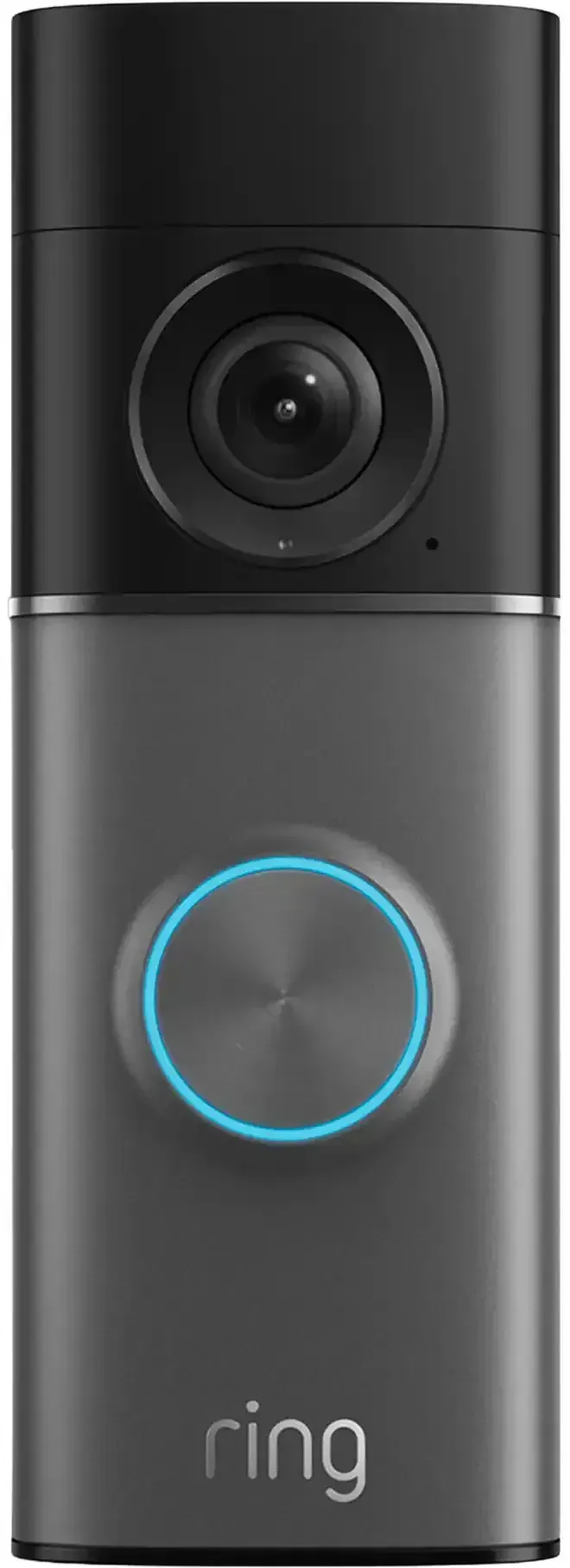
Co-op security systems Rockland County: product photo of a dark grey video doorbell with a round camera lens at the top and a blue-lit ring around the push button
Product photo of a slim video doorbell: camera lens at the top, a push button circled by a blue light ring, and the maker's name at the bottom. In Rockland garden and townhouse-style co-ops where each apartment has its own outside door, a unit doorbell like this sits beside the shared entry system rather than replacing it. Image from the Abstract Enterprises Security Systems product library, not taken at a Rockland County co-op.
Rockland Co-op Request
Village or hamlet, type of building, what's failing

✅
Request Sent!
Thank you. Expect a call or text to pick a time, normally within 2 hours.
25+
Years Experience
$250
Service Call to Start
100%
Licensed & Insured
4.7★
201 Google Reviews

Owner-operated since 2002 · Thousands of jobs completed · Booked within 2 hours · NYS low-voltage license #12000287431

The County

Rockland Co-ops Live Under Town and Village Rules, Not City Ones

Rockland County has no cities at all. It is five towns, Clarkstown, Haverstraw, Orangetown, Ramapo and Stony Point, and eighteen incorporated villages, packed into 199 square miles, the smallest county by area in New York outside New York City. That one fact explains more about co-op security work here than any product brochure. Every rule that matters to a co-op board, from who inspects a new door lock to who has to hold a license to wire a fire alarm, comes from a town building department, a village code office, the county or the state. None of it comes from the New York City agencies that most online co-op advice is written around. A board in Suffern or Nyack that reads an article about Manhattan intercom law and assumes it applies is starting from the wrong rulebook.

The co-op market itself is real and steady. OneKey MLS, the listing service that covers the county, recorded 71 co-op closings in the twelve months through October 2026, exactly the same number as the year before, with a twelve-month median price of $140,000. Over the same period 543 condominiums and 1,666 single-family houses changed hands. So co-ops are a small slice of Rockland housing, but a busy one: seventy-odd apartments a year means seventy-odd sets of fobs to cancel, directory names to change and app accounts to move. That turnover, more than crime, is what wears out a co-op's access records. A board that never cleans its credential list ends up with dozens of working fobs in the pockets of people who sold years ago.

Where the buildings sit is the other half of the picture. When we checked a public listing site for this page, it showed 35 co-op apartments for sale in Rockland County. Of the listings it displayed, the large majority carried Suffern 10901 or Spring Valley 10977 addresses, with a few in Nyack, Garnerville and Monsey. Several mentioned elevators, shared laundry, assigned parking or a pool; a couple mentioned being near the train and the bus; one mentioned an intercom. The Suffern mailing address is wider than the village of Suffern: one 1970-built co-op we looked at was listed as "Suffern (Ramapo)", meaning it sits in the Town of Ramapo. For security planning that distinction matters, because the office that answers a question about a door or an alarm depends on whether the building is inside a village or in the unincorporated part of a town.

Then there is the weather. Rockland's summer storms knock out power in long, uneven stretches, and the county's tree cover means downed lines rather than a quick blink. A co-op entry system that loses its programming when the power drops, or a fob door that has no battery behind it, turns a storm into a weekend of propped-open entrances. We plan every Rockland job with that in mind, and because our office is across the Hudson in the Bronx, we plan the trip as carefully as the work: early-day starts, the parts a building of that age most likely needs on the truck, and visits grouped by part of the county when we can.

Rockland facts that change how a co-op security job is done

  • 71 co-op sales in a year, median $140,000: twelve months through October 2026, unchanged from 71 a year earlier; 30 co-ops were on the market in October 2026 and the typical one sold in 61 days that month (OneKey MLS, Rockland County, October 2026).
  • A growing county: 338,329 people in the 2020 Census and an estimated 357,397 in July 2025, in 109,999 housing units, with an owner-occupied rate of 67.9 percent and 3.22 persons per household (U.S. Census QuickFacts). Larger households mean more people per apartment holding a fob or an app login.
  • Multiple Residence Law, not the city law: New York's Multiple Residence Law applies to "all cities of less than three hundred twenty-five thousand population and to all towns and villages" (MRL §3). Every Rockland co-op is in a town or a village.
  • One village's code enforcement is run by the county: Rockland's Office of Buildings and Codes began inspections and enforcement in the Village of Spring Valley on Feb. 14, 2022, after the state ordered the change, and logged more than 2,000 inspections and more than 12,400 alleged violations in its first two years (News 12 Hudson Valley, Feb. 14, 2024).
  • The state has watched local enforcement here before: in December 2016 the Department of State appointed code enforcement monitors to the Town of Ramapo and the Village of Spring Valley after finding "significant deficiencies" (WAMC, Dec. 22, 2016).
  • A new statewide code: "The effective date of the 2025 NYS Uniform Code is December 31, 2025" (NYS Department of State). Fire alarm and door-egress work in Rockland co-ops is inspected against it by the local enforcing office.
  • Storm outages: Orange & Rockland Utilities reported that more than 47,000 customers were affected by the storms and heat that began July 1, 2026 (O&R, July 6, 2026); at 11:30 p.m. on July 4, Rockland alone had about 6,466 customers out (Rockland County Times, July 9, 2026).
  • A licensed trade: installing or servicing security or fire alarm systems as a business needs a New York Department of State license under General Business Law §69-m. Ours is NYS #12000287431.
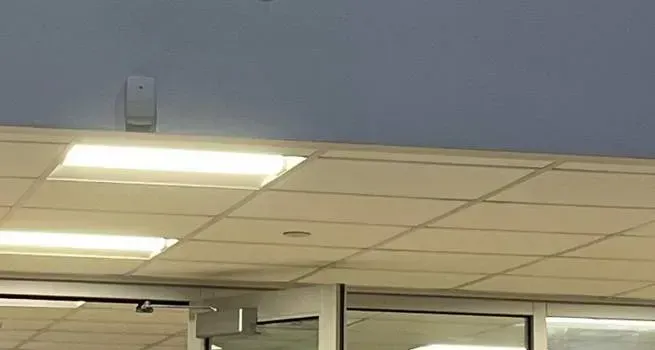
Rockland County co-op building security: white motion detector mounted high on a blue-grey wall above a drop ceiling, with glass doors and a door closer below
A small white motion detector high on a painted wall, above a drop ceiling with light panels; the tops of a pair of glass doors and a door closer arm show at the bottom of the frame. Sensors like this guard a management office or a community room after hours, separately from the entry system. Photo from the Abstract Enterprises Security Systems job library, not taken at a Rockland County co-op.

Who calls us about a Rockland co-op

Volunteer board presidents. Plenty of Rockland co-ops are run by a board of shareholders with a part-time management company or none at all. The president is usually the person who hears that the buzzer rings but the door won't open, that the laundry door has been taped open since spring, or that someone who moved out in 2019 still parks in the lot. They want the problem explained in plain words and priced in a way the other directors will sign off on.

Treasurers watching a thin reserve. With apartments trading around $140,000, maintenance charges carry the building, and there is rarely a deep reserve. The treasurer wants to know what is broken now, what will fail next, and whether the work can be split into phases across budget years. We give itemized prices so the board can decide; we don't tell a board how to fund its projects.

Managing agents with buildings on both sides of the river. When a Rockland co-op does have an agent, the office is often in Westchester, Bergen County or New York City, and the agent handles several properties. Their questions are practical: the certificate of insurance, the arrival window, and whether names and fobs can be changed from the office instead of a drive over the Tappan Zee.

Supers and handymen. In larger complexes, a resident super or a maintenance contractor is the one who opens the boiler room, knows where the old intercom power supply hides and has been resetting it by hand. We ask for them on every walk-through, because they know which door fails when it rains.

What We Install

Co-op Building Security in Rockland: One Contractor for Every Door

Building security for co-ops in Rockland is mostly a list of doors: the front entrance, the side and rear entrances of each building, the laundry room, the storage cages, the boiler room, the pool gate, the clubhouse and the door to the parking area. A board that hires a different company for the intercom, the fobs and the cameras ends up with three apps, three passwords and three companies blaming each other. We install, repair and maintain all of it as one co-op security system, so the panel at the front door, the reader on the laundry room and the camera over the mailboxes share one wiring plan and one record the board keeps. Each part has its own section below and a link to the Rockland service page that goes deeper.

01

Entry panels and intercoms

Button, keypad or touchscreen directories, with or without video, calling apartment stations, phones or an app.

02

Buzzer and release repair

Dead buttons, a release that hums but won't open, one floor that can't hear the lobby: diagnosed on the $250 service call.

03

Fobs and readers

Proximity readers on entrances, laundry rooms, storage and gates, run from one list the board controls.

04

Elevator readers

A reader in the car or at a garage call button for the mid-rise co-ops that have elevators.

05

Cameras and recording

Entrances, mail areas, lots and pool decks, recorded on site with footage access set by board policy.

06

Mail and package areas

Locked package rooms, a reader on the door, a camera on the shelves, and a courier entry plan.

07

Cabling and power

Riser repairs, runs between buildings, PoE switches and battery backup so a storm doesn't open every door.

08

Alarms for offices and storage

Intrusion alarms for a management office or a storage room, with central-station monitoring through our provider.

09

Maintenance visits

Scheduled checks of panels, closers, readers and recorders, booked when the board wants them.

Two things we don't do. We don't run a virtual doorman or a managed, subscription security service, and we don't offer one under another name; we install and maintain the equipment a virtual-doorman company or the building's own staff would use, and we can connect a new panel to a provider the board already has. And we don't do high-voltage electrical work. Low-voltage wiring, door hardware and the security equipment itself are ours. A new 120-volt outlet or circuit is a job for the building's licensed electrician, which matters in Rockland because the county's electrical licensing chapter covers wiring "for light, heat or power purposes or for signaling systems operating on 50 volts or more" (Rockland County Code Ch. 250).

Intercom Upgrades

Upgrading or Replacing the Intercom in a Rockland County Co-op

Most co-op intercom upgrade projects in Rockland start the same way: a panel that went in when the building converted, a few apartments that no longer ring, a release relay that has been replaced twice, and a board that wonders whether to keep paying for repairs or replace the whole thing. The honest answer depends on three things we test before we write a proposal: the condition of the wiring between the entrance and the apartments, whether the apartment stations still work with a new panel, and how many entrances the co-op actually has. A twelve-unit walk-up in Nyack with one front door is a different project from a Spring Valley garden complex with a stair-hall entrance on every building.

We see the same pattern the industry press describes. In a November 2025 CooperatorNews article on replacing building intercoms, an intercom contractor said full replacement "can be expensive and highly disruptive" and recommended that buildings "retain the existing infrastructure with the exception of the panel" where they can, noting that wiring from the 1960s to the 1980s has "a typical lifespan of 25-50 years" (CooperatorNews, Nov. 14, 2025). Rockland's co-ops were mostly converted or built in exactly that period, so the cable in the walls is often the most valuable thing the co-op owns in its intercom. When it tests clean, a new entry panel can run over it for years. When it doesn't, the proposal says where it fails and what pulling new cable would involve.

The four upgrade paths a co-op board usually compares

  • New panel, keep the apartment stations. The cheapest co-op intercom system upgrade, possible when the old handsets are compatible with a new door panel. Shareholders notice a new face at the entrance and nothing else changes inside their apartments.
  • Video at the door, new stations in the apartments. A video entry panel plus new indoor monitors or handsets, usually over the existing pairs using a two-wire system. This needs a short visit to every apartment, which the board schedules through its notice.
  • App-based calling. The panel calls shareholders' phones or an app, and apartment stations become optional. This avoids entering most units, but it needs a reliable internet connection at the panel and a plan for shareholders who don't want an app.
  • Full replacement with new cable. Needed when the riser or the buried runs between buildings have failed. It is the most disruptive path and we only propose it when testing shows the cable can't carry a new system.

Whatever the path, the co-op board intercom upgrade decision is the board's, and it goes better when the proposal is written for directors who were not on the walk-through. Ours list each entrance, each apartment-side option and each line of cable work separately, so the board can approve the front door this year and the side entrances next year if the budget calls for it. Boards that want a fuller guide to scoping, bidding and approving an intercom replacement can read our co-op board intercom upgrade guide, and the hardware side for this county is on our Rockland County intercom installation page, where the published ranges run from $1,200–$3,500 for a video intercom in a four- to eight-unit building to $2,500–$8,000 and up for IP systems with smartphone calling in larger ones.

Writing the scope when the co-op asks for bids

Larger Rockland co-ops, and every co-op whose bylaws or management company require it, put an intercom replacement out to bid. Bids only compare well when every contractor prices the same thing. A useful scope names every entrance that needs a panel, says whether apartment stations are included and of what type, states whether existing cable is to be reused or replaced, lists the doors that need new strikes or closers, and asks each bidder to separate equipment, labor and any yearly software or cloud fee. We respond to RFPs and board bid requests in Rockland. Our certificate of insurance goes to the managing agent when the job is awarded, not with the bid, and we never ask a board to commit before it has a written, itemized number.

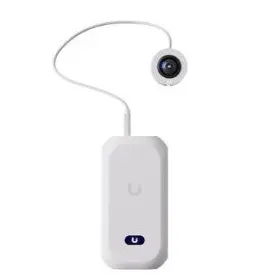
Rockland County co-op intercom upgrade parts: product photo of a tiny round camera lens on a thin white cable leading to a small white hub
Product photo of a very small camera lens on a thin white cable, connected to a compact white hub with a status light. Miniature cameras like this can be built into a door frame or a mail niche where a full-size camera would look out of place in an older building. Image from the Abstract Enterprises Security Systems product library, not taken at a Rockland County co-op.

Shareholders who don't use smartphones

Rockland co-ops have plenty of long-time shareholders, and an upgrade that only works through an app can leave some of them unable to answer the door. Most current panels can call an ordinary landline or cell number instead of an app, keep a wired station in the apartment, or both. The board can choose per apartment. We list those options in the proposal so the shareholders who want a plain handset can keep one, and so the board can see what each choice costs before it votes.

Buzzer Repair

When the Buzzer Stops Working in a Rockland Co-op

Co-op security repair in Rockland is usually intercom and buzzer repair. A visitor presses a button and nothing happens; the apartment hears the call but the door won't release; one wing of a garden building can't hear the lobby; the panel works by day and goes dead every night. Every one of those starts with the $250 service call. We test the power supply, the release circuit, the door hardware and the wiring, find the part that failed, and either fix it on that visit or give a firm price for the repair before ordering anything. Small faults, such as a loose strike, a failed transformer or a burnt button, are often finished the same visit.

The parts that fail most often have published prices on our Rockland County door buzzer repair page: an apartment station replacement runs $250–$525, a door release relay or button $250–$475, a 24V transformer $325–$650, an electric strike with alignment $450–$950, a lobby panel repair or faceplate $650–$1,800, and riser pair repair or re-termination $850–$2,400. For video and IP intercoms that have stopped calling, lost their directory or dropped off the network, our Rockland intercom repair page covers the brand-specific side.

Why Rockland buzzer faults cluster after storms

Many of the calls we get from Rockland co-ops come in the week after a thunderstorm. A nearby lightning strike or a hard power return can take out a transformer, a release relay or the electronics in an entry panel, and if the building has no surge protection on its low-voltage side, the damage spreads. After the July 2026 storms, Orange & Rockland reported more than 47,000 customers affected across its territory, and Rockland County alone had about 6,466 out late on July 4. One New City neighborhood went more than 36 hours without power, according to the Rockland County Times. When we repair storm damage we also tell the board where surge protection and a battery would have prevented it, priced as a separate line.

What we need from the board for an intercom repair

Repairs at the door and in the basement need only the super or a board member with keys. Repairs on a single apartment's line need that apartment open. When a fault sits somewhere along a riser or a buried run between buildings, we may need to get into several apartments to find it, and the board's notice is what makes that possible. We tell the managing agent up front which units we expect to need, so shareholders aren't asked to stay home for a visit we don't make.

Access Control

Key Fobs and Door Readers for Rockland Cooperative Buildings

Keys are the oldest security problem in a co-op. Over a few decades, the front door key gets copied for dog walkers, aides, contractors and grown children, and nobody knows how many are out there. A fob system replaces that with a list the board controls: every fob is tied to an apartment, a lost one is shut off from a screen in a minute, and a shareholder who sells hands in their fobs at closing and the new owner gets new ones. In Rockland, where seventy-odd co-op apartments change hands every year, the closing-day handover alone justifies the system for many boards.

Garden co-ops get the most out of fobs because they have the most doors. A complex with eight buildings may have sixteen entrances, a laundry building, a storage room, a pool gate and a clubhouse. One fob can open all of them for a shareholder, and the board can limit others, for example opening the pool gate only in season and the laundry room only during set hours. For a co-op with a single building, a reader on the front door and one on the basement or laundry is often enough. Pricing for this county is on our Rockland County access control installation page: $1,700–$5,000 for a single door or gate and $4,500–$15,000 for a multi-door property.

Strike or magnetic lock on a Rockland co-op door

Most co-op entrances we fit use an electric strike, which keeps the door's existing lock and lets a key still open it. Magnetic locks are useful on glass and aluminum doors where a strike won't fit, but they need a way to release them for anyone leaving, they have to release when the fire alarm calls for it, and they draw power the whole time they are locked. Under the 2025 Uniform Code, which took effect on December 31, 2025, the local code office decides what is acceptable on an egress door, so for any door on an exit path we confirm the hardware with the enforcing office before we install it. That office is the town building department in most of the county, a village building department in the villages that have one, and for the Village of Spring Valley, the county's Office of Buildings and Codes.

Who keeps the credential list

The board decides who may add and remove fobs; usually it's the managing agent, the super or a designated director. A cloud-managed system lets that person work from an office in another county, which suits Rockland co-ops whose agent is in Westchester or New Jersey. An on-site controller keeps everything in the building, which suits boards that don't want a yearly software fee. We set up either, name the administrators in the co-op's name rather than ours, and hand over every password at the end of the job.

New York City's fob privacy law doesn't follow you over the bridge

Articles about co-op key fobs often cite New York City's Tenant Data Privacy Act, Local Law 63 of 2021. That is a city law in the city's Administrative Code (Local Law 63 of 2021) and it doesn't apply in Rockland. That doesn't mean anything goes. A sensible Rockland board still writes down what entry data the system keeps, who can see it and how long it is kept, and has the co-op's attorney look over that policy. We set the retention period to whatever the board decides.

Elevator Access

Elevator Readers for the Rockland Co-ops That Have Elevators

Most Rockland co-ops are walk-up garden buildings, but a number of the mid-rise buildings in Suffern, Spring Valley and Nyack have elevators, and several listings we saw while researching this page advertised them. Where a building has a garage level, a pool deck or a public lobby on a different floor, a reader in the elevator car keeps outsiders who slip through one door from riding to the residential floors. The simplest version enables the car for any valid fob; more involved versions restrict each fob to its own floor, which needs the elevator company to connect our reader to the car's controls.

Our Rockland County elevator access control page prices a Level 1 reader that enables the car for approved fobs, codes or intercom stations from $1,950 per car, and a Level 2 face, fingerprint or iris reader from $3,250 per car; floor-by-floor restriction is quoted per building. The elevator maintenance company bills separately for its connection visit, and we coordinate that visit with them so the car is out of service once rather than twice.

Cameras

Co-op Security Cameras in Rockland: The Short Version for Boards

Cameras are a supporting system in a co-op, not the main one. They don't keep anyone out; they tell the board what happened after a package goes missing, a car gets hit in the lot or a door is found propped open. The cameras that earn their keep in Rockland co-ops are almost always the same few: one over each main entrance, one over the mailboxes, one over the package shelf, and one or two covering the parking lot and the path from the lot to the doors. A garden complex with a pool adds one on the pool gate. Everything records on site, so the co-op owns the footage and pays no monthly cloud fee unless it chooses one.

Two rules keep camera projects out of trouble. Cameras in common areas should not look into apartments or capture sound; New York's eavesdropping law makes audio recording a different matter from video, and a co-op attorney should review any plan that includes it. And the board, not the installer, should decide in writing who can watch footage and how long it is kept. Our full camera coverage for apartment buildings in this county is on the Rockland apartment building security camera page, and a dedicated co-op camera page for Rockland is being prepared.

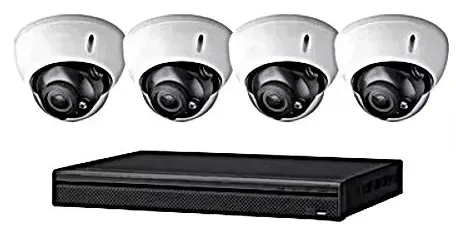
Rockland County co-op security cameras: product photo of four white dome cameras with dark lenses lined up above a slim black network recorder
Product photo of four white vandal-style dome cameras in a row above a slim black recorder. Four cameras on one recorder is a common first system for a single-building co-op: front door, mailboxes, package shelf and the lot. Image from the Abstract Enterprises Security Systems product library, not taken at a Rockland County co-op.
Packages & Mail

Packages, Mailboxes and Vestibules in Rockland Co-op Buildings

Package theft is the complaint that has grown fastest in co-op buildings without a doorman, and Rockland is no exception. In April 2026, Haverstraw police investigated packages taken from several buildings within an apartment complex and recovered them after a search warrant, according to Daily Voice. The pattern in that story is the usual one: boxes left in open vestibules and stair halls, reachable by anyone who catches the outer door.

The fixes, roughly in order of cost, are these. Make sure the outer door actually latches, because a door that doesn't close fully defeats everything else. Move deliveries from the vestibule to a locked room or a cage with a reader on the door, so couriers are let in by code or remotely through the intercom, and shareholders open it with their fob. Put a camera on that room's door and shelves. In larger garden co-ops, consider one central package room near the office instead of a pile in every building. Electronic lockers are a further step; most need power, a network connection and a monthly software fee, and the outlet is the building electrician's job.

Mail carriers and the outer door

Once the outer door goes on fobs, the board has to decide how the mail carrier gets in. The usual answers are a carrier key switch where the postal service provides one, a timed code, or a door that stays on free entry during the carrier's window. We set whichever the board and the local post office agree on and note it in the handover so the next super knows why it's there.

Cabling, Alarms & Fire

Cabling, Office Alarms and Fire Alarm Work in Rockland Co-ops

Cabling and network. Every co-op security system rides on cable: the intercom riser, the runs between garden buildings, the Cat6 to each camera and reader, and the network switch that powers them. We run, test and label all of it, put the switches on battery backup, and add surge protection where cable leaves one building for another. When a co-op needs a larger cabling job, such as a building-wide network for cameras, readers and an office, the details are on our Rockland structured cabling installation page. We don't sell internet service or IT management; when the co-op needs an internet line for an app-based panel, the board orders it from its provider and we connect to it.

Office and storage alarms. Some co-ops want an intrusion alarm on the management office, a storage room or a maintenance garage. We install those and arrange central-station monitoring through our provider; options are on our Rockland alarm installation page. Local alarm rules apply. In the Town of Clarkstown, for example, anyone who wants to be an alarm user must "obtain an alarm user permit from the Police Department", a user with more than three false alarms in twelve months faces civil penalties for each further one, and the permit is revoked at ten (Town of Clarkstown Code Ch. 91). Other towns and villages have their own versions, so we check the rule for the co-op's address before the system goes live.

Fire alarm. Fire alarm work is separate from security work and follows its own process. In Rockland a code-required fire alarm system starts with drawings sealed by a licensed design professional, is filed with the town, village or county office that enforces the Uniform Code at that address, is installed by a company licensed by the state for fire alarm work, and passes an acceptance test witnessed by that office. We don't publish fire alarm prices; each building is quoted in writing after a survey. The process for this county is on our Rockland fire alarm installation page. On security jobs, our part is to make sure fob doors and magnetic locks release when the fire alarm calls for it, coordinated with whoever maintains the fire alarm.

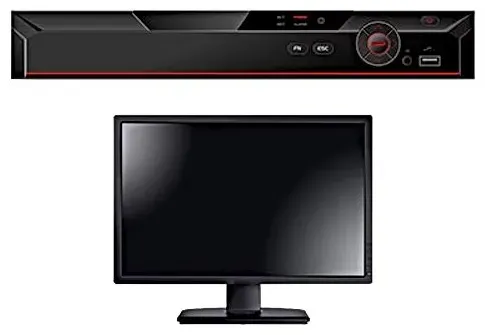
Rockland County co-op security equipment: product photo of a black video recorder with front buttons and a USB port shown above a black flat-screen monitor
Product photo of a black recorder with a red-trimmed front panel, a few buttons and a USB port, shown above a plain black monitor. In a co-op the recorder usually lives in a locked closet or the super's office on a battery backup, with the monitor there only for the people the board allows to view footage. Image from the Abstract Enterprises Security Systems product library, not taken at a Rockland County co-op.
Building Specialists

Security Plans for Rockland's Co-op Building Types

Rockland's co-op stock falls into a handful of types, and each one fails in its own way. We plan the work around the building rather than around a product list.

Garden complexes in Ramapo and Spring Valley

Two- and three-story buildings arranged around lawns and parking, each with one or two stair-hall entrances, often built around 1970 like the Ramapo listing we looked at. These are the co-ops with the most doors and the longest cable runs. The typical problems are stair-hall door stations that have weathered for decades, buried intercom cable between buildings that fails after heavy rain, and side doors that never latch because the closer gave out years ago. Good plans here put a reader and a small station at every entrance, tie them to one controller or cloud account, and fix the closers first. Where cable between buildings is beyond saving, a wireless bridge or new conduit is priced as an option.

Elevator mid-rises near the village centers

Four- to six-story buildings with a lobby, an elevator, a laundry room in the basement and sometimes a garage. They have fewer entrances but more going on at the one that matters: a directory panel, a vestibule with mailboxes, package deliveries and the elevator. A video panel with a reader, a reader in the elevator car, a locked package room and cameras on the lobby and the garage door cover most of what these boards ask for. The riser is the part to test, because one bad pair can silence a whole stack of apartments.

Older walk-ups in Nyack, Haverstraw and Piermont

River-village buildings are smaller and older, sometimes with apartments above shops. Space at the entrance is tight, walls are masonry or plaster, and the front facade may face a busy sidewalk. Here the work is careful rather than big: a panel sized to the existing opening, cable routed through the old path instead of new holes, and a camera that sees the door without filming the street. Where a building sits in a historic district, the board should ask the village whether a new exterior panel or camera needs review before the work is scheduled; we fit our schedule to that answer.

Townhouse-style co-ops

Some Rockland cooperatives are rows of attached homes, each with its own front door, sharing grounds, a pool or a clubhouse. They rarely need a lobby intercom. What they need is shared-amenity access, so fobs on the pool gate and the clubhouse, cameras on the parking and the entrance road, and sometimes a call box at a gate. Individual unit doorbells stay with the shareholders, within the board's rules on exterior changes.

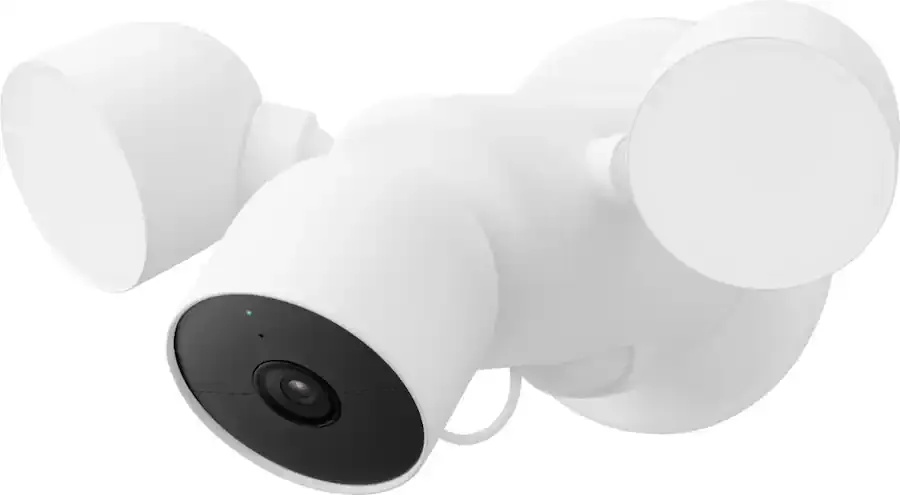
Rockland County co-op parking lot security: product photo of a white floodlight camera with two round lamp heads above a small rounded camera
Product photo of a white floodlight camera: two round lamp heads on short arms and a small rounded camera with a black face below them. A light and a camera together suit the path from a co-op lot to a stair-hall door, where the light alone deters and the camera records what it lights up. Image from the Abstract Enterprises Security Systems product library, not taken at a Rockland County co-op.

What changes with building size

A ten-unit building can usually be served by one panel, one release and one power supply, and its biggest cost is the door hardware. A fifty-unit garden complex multiplies the entrances, and its biggest cost is often cable. A hundred-unit or larger complex adds a central controller, a recorder that can hold weeks of footage from many cameras, and an administrator who manages credentials every week. We don't quote per-apartment prices for any of these, because two co-ops with the same number of apartments can have very different numbers of doors and very different cable.

Weather & Logistics

Storms, Winter and the Bridge: Planning Rockland Co-op Work Around All Three

Storm season. Summer thunderstorms are the main reason Rockland entry systems fail all at once. Any co-op security system we install here gets a battery behind the controller and the panel, surge protection on cable that leaves a building, and a clear choice, made by the board in advance, about whether fob doors lock or release when the batteries finally run out. Doors on exit paths follow code; for the rest, the board decides between security and convenience during a long outage, and we program it that way.

Winter. Cold slows door closers, ice keeps doors from reaching the strike, and salt on stair-hall floors gets into thresholds. Most "the fob doesn't work" calls in January are really "the door doesn't close" calls. Exterior panels go into hooded or recessed boxes rated for outdoor use, readers mount where plow piles won't bury them, and we check closers and strikes on every visit. Boards that want it can book a pre-winter check of exterior doors and panels in the fall.

Rockland County co-op community room security: high drop ceiling with recessed lights and a vent above a pale wall and a tall dark-framed window
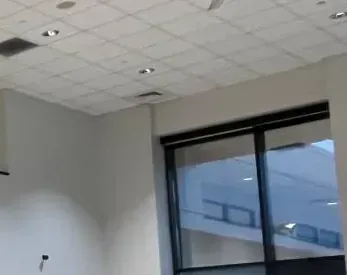
A high room with a drop ceiling, recessed lights and an air vent, pale walls and a tall window in a dark frame. Common rooms, clubhouses and management offices like this are where a co-op's controller, recorder and network gear often end up, so we check the space for heat, a power outlet and a door that locks. Photo from the Abstract Enterprises Security Systems job library, not taken at a Rockland County co-op.

Distance. Our office is at 460 E Fordham Rd in the Bronx, and Rockland work crosses the Hudson on the Tappan Zee, the Mario Cuomo Bridge as it is now named, or comes up the Palisades Parkway. We plan Rockland visits as early-day appointments, load the truck with the parts a building of that age and type is most likely to need, and group visits by part of the county when we can. We don't promise same-hour arrival anywhere; we do book the appointment within 2 hours of your request and keep the window we give you.

The Board Process

From Shareholder Complaint to Signed Contract in a Rockland Co-op

Most co-op security projects in Rockland follow the same path, whether the building is self-managed or run by a management company. Knowing the steps in advance saves a board a month.

1. Separate the emergency from the project

A front door that won't lock is an emergency; an aging intercom is a project. Boards get into trouble when they let the first wait for the second. Book the $250 service call to make the door work now, and ask for the written list of everything else we saw. That list becomes the start of the project.

2. Walk the property with the people who know it

The free walk-through for new work takes an hour for a single building and longer for a garden complex. Bring the super, a board member who can make decisions, and if possible the managing agent. We walk every entrance, the mail and package area, laundry and storage, the equipment closets and the lot, and test a sample of the cable.

3. Get an itemized proposal, not a lump sum

The proposal breaks out every entrance, every apartment-side option, fobs, cameras, power and cable. The board can approve parts of it, phase it across budget years, or put it out to bid using it as a scope. Financing is available through Wisetack, subject to approval.

4. Decide, record the vote, notify shareholders

New York's highest court held in Levandusky v. One Fifth Avenue Apartment Corp. (1990) that courts won't substitute their judgment for a co-op board's so long as the board acts "for the purposes of the cooperative, within the scope of its authority and in good faith." That standard applies to Rockland co-ops as much as to Manhattan ones, and it is a good reason to keep the walk-through notes, the proposals considered and the minutes of the vote together. Once the board votes, it sends the shareholder notice; we supply plain-language wording about what will change, when, and whether anyone needs to be home.

5. Paperwork, deposit, order

The managing agent receives our certificate of insurance, the deposit is paid, and equipment is ordered. Special-order panels and readers are scheduled when they arrive, and we tell the board the expected date before it sends the notice.

6. Install building by building, then hand over

We install around the house rules, keep at least one entrance working at all times, and test every station, reader and camera with the super. The handover includes a labeled equipment map, every administrator login in the co-op's name, and a short instruction sheet for shareholders.

Your Questions Answered

Rockland Co-op Boards Ask, We Answer

These are questions Rockland boards, supers and managing agents have put to us about their buildings, grouped by topic. Pricing, fobs, elevators and cameras have their own sections above, so they are only touched on here.

Local rules and paperwork

Our co-op is in Spring Valley, where the county handles code enforcement. Does that change anything for a security project?

For most security work, no. Replacing an entry panel, adding fobs to existing doors or installing cameras is low-voltage work that usually doesn't need a building permit. It matters when the work touches an exit door, a fire-rated door or the fire alarm, because then the enforcing office has a say, and in the Village of Spring Valley that office has been the Rockland County Office of Buildings and Codes since February 2022. We confirm with the right office before installing anything on an egress door, and we keep the board's records of what was approved.

Our mailing address says Suffern, but the building isn't in the village. Whose rules apply?

The rules of the municipality the building actually sits in. Many co-ops with Suffern 10901 addresses are in the unincorporated Town of Ramapo, and others are inside one of Ramapo's villages. The tax bill or the certificate of occupancy shows which. It decides who answers questions about door hardware, who issues alarm permits if any are needed, and who inspects fire alarm work. We check it as part of the walk-through.

Does our board need a lawyer to approve a new security system?

Not usually for the purchase itself, which is an ordinary board decision under the bylaws. It's worth involving the co-op's attorney when the project includes a written footage or entry-data policy, a change to house rules about access, a camera that might record sound, or a contract with a yearly software fee that runs for years. We give the board our documents early so the attorney isn't rushed.

Garden complexes and shared grounds

Our garden co-op's buildings all have different intercom brands from different repairs. Can they be brought under one system?

Yes, and it's one of the most common Rockland projects. We survey every building, note what each one has and whether its cable is usable, and propose one panel type and one administrator account for all of them. The board can convert building by building over a year or two; during the changeover, the old and new systems run side by side so no stair hall is ever without a working door. At the end, the super has one set of spare parts and one app instead of four.

A tree limb took down the intercom cable strung between two of our buildings. Should it go underground?

If the run can be trenched or pulled through existing conduit at a sensible price, yes. Overhead cable between garden buildings is common in older Rockland complexes, and every summer storm puts it at risk from the same trees that shade the lawns. The alternatives are direction-bored conduit, a run through a basement or crawlspace that links the buildings, or a point-to-point wireless bridge mounted on the two buildings. We price the options side by side, and we restore service with a temporary run while the board decides.

Can the system tell the board which entrances are used least, so we can lock one down?

Yes, once the doors are on readers. The entry log counts how often each door opens with a fob, by hour and by day, and after a month or two the board can see which side or rear entrance is barely used. Some boards then set that door to exit-only, or open it only during the day, which cuts the number of places a stranger can slip in. Exit paths required by code stay usable for leaving; we confirm that before changing any door's schedule.

Shareholders and everyday use

Our bylaws require board approval for every new occupant. Can a fob stay inactive until the approval is recorded?

Yes. The administrator can issue a fob and leave it disabled, or create the apartment's directory entry without a working credential, until the board's approval comes through; then one change turns everything on. That stops the common problem of a buyer's family getting keys or fobs from the seller before the closing. It only works if one person, usually the managing agent or the board secretary, is the only one who activates credentials, so we set the permissions that way.

How do we stop shareholders from handing the building code to food-delivery drivers?

Retire the shared building code. Once every shareholder has a fob or a phone credential, the panel can drop the single code that everyone knows and that ends up written on delivery apps. Visitors and drivers then call the apartment from the panel and the shareholder releases the door, which leaves a record. Shareholders who truly need a code, for a regular cleaner for example, can get a personal one tied to their apartment that the board can shut off on its own.

Can a shareholder see a history of who buzzed their apartment while they were out?

On most video and app-based panels, yes. A missed call to an apartment can be stored with a snapshot from the panel camera, and the shareholder can see it on an indoor monitor or in the app. Whether snapshots are kept, and for how long, is a privacy setting the board chooses for the whole building. Older audio systems don't store anything, so this is one of the features boards weigh when deciding whether to upgrade.

Equipment choices and site problems

Old abandoned cable and dead equipment hang all over our facade. Can it come down during the security job?

The low-voltage cable and equipment we are replacing, old intercom wire, dead camera cable, empty junction boxes, comes down as part of our job, and we patch the small holes it leaves. Satellite dishes and cable or phone company lines belong to the providers or to individual shareholders, so the board decides about those and we leave them unless it tells us otherwise. Anything still live is tested before it is cut, so nobody loses a phone line or a building alarm by accident.

Headlights from the parking lot glare into our entry camera at night. Can that be fixed?

Usually. The fixes are moving or angling the panel so cars don't point straight at the lens, adding a hood, choosing a panel camera with wide dynamic range, and lighting the visitor's face with a soft light over the door so the camera isn't fighting the headlights. In some Rockland garden complexes the lot sits directly in front of the stair halls, so we check panel placement at night as well as by day when the problem is reported.

One shareholder runs a small business from home and gets many deliveries. Can the entry system handle that?

The board first decides whether its proprietary lease and house rules allow it. If they do, the panel can give that apartment's deliveries a clear path: couriers call the apartment from the directory, or the shareholder issues time-limited codes for regular carriers. A locked package room with a reader keeps the extra boxes out of the stair hall. If the volume is high, the board may want the shareholder to cover any extra credentials or equipment; we price those separately so the board can decide.

Equipment

Co-op Security Equipment We Install in Rockland

A board doesn't need to know model numbers, but it helps to recognize the line items on a proposal. These are the pieces of co-op security hardware we put into Rockland buildings most often, and what each one does for the co-op. We install and repair Aiphone, Comelit, ButterflyMX, Akuvox, 2N, DoorBird and other brands; the comparisons on Akuvox vs ButterflyMX and DoorBird vs 2N explain how some of them differ.

01

Directory entry panels

Button, keypad or touchscreen, with video and a built-in reader, sized for the existing opening and rated for outdoor exposure.

02

Stair-hall stations

Small one- to eight-button stations for garden-building entrances, in hooded boxes that keep rain and meltwater off the face.

03

Apartment stations

Audio handsets, video monitors or phone and app calling, chosen apartment by apartment where the board allows.

04

Readers and fobs

Proximity readers at doors, gates and elevators, with fobs, cards or phone credentials on one administrator list.

05

Strikes, locks and closers

Electric strikes, magnetic locks where code allows, exit buttons and door closers adjusted so every door latches.

06

Controllers and power

Door controllers, power supplies, batteries and surge protection so a storm doesn't open or kill the system.

07

Cameras

Turrets and domes for doors and halls, wider cameras and floodlight cameras for lots and paths.

08

Recorders and switches

On-site recorders sized to the footage the board wants to keep, and PoE switches that power cameras and readers.

09

Links between buildings

Buried or conduit cable, or point-to-point wireless bridges where trenching isn't practical.

Rockland County co-op camera equipment: product photo of a white turret camera with a dark two-lens module and two small lights
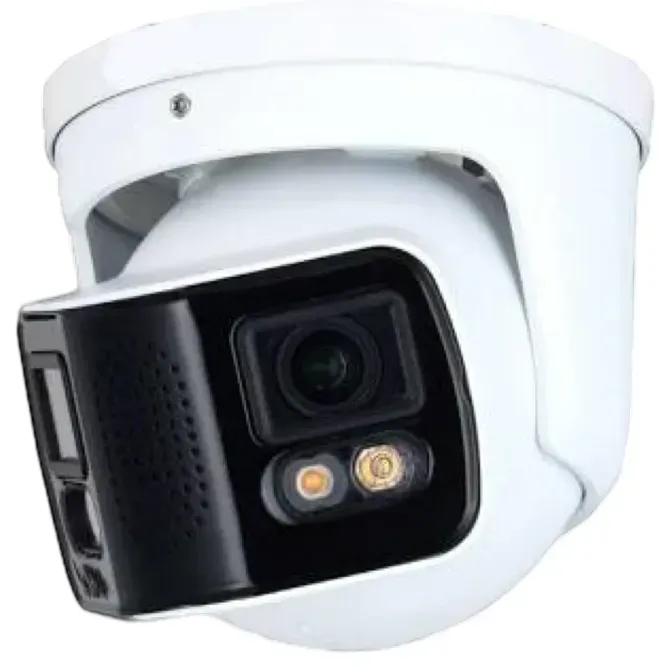
Product photo of a white turret camera whose dark front holds two lenses side by side and two small lights below them. A wide two-lens camera like this can cover a long stair hall or a vestibule with mailboxes from one mounting point. Image from the Abstract Enterprises Security Systems product library, not taken at a Rockland County co-op.

National brands versus a local installer

Some boards ask whether they should simply buy a security package from a national alarm company such as ADT, or let shareholders put up their own Ring or SimpliSafe devices. For an individual apartment, a shareholder's own doorbell or alarm is their business, within the board's rules on exterior changes. For the building, those products aren't designed to run a multi-apartment directory, a fob list for dozens of doors or a recorder the board controls. What a co-op needs is a system the board owns outright, documented, with passwords in the co-op's name and no contract it can't leave. That's the system we install.

AI Overview Reality Check

What AI Gets Wrong About Co-op Security Systems in Rockland County

More board members now ask an AI chatbot before they call a contractor. The answers sound confident and are often built from articles about Manhattan, national cost sites such as HomeAdvisor and Angi, or generic product pages. Here are the claims we hear repeated most often by Rockland boards, and what the record actually shows.

1. "Co-ops are basically a New York City thing."

Rockland has fewer co-ops than the city, but it has a steady market of them. OneKey MLS counted 71 co-op closings in Rockland in the twelve months through October 2026, the same as the year before, at a twelve-month median of $140,000. A public listing site showed 35 Rockland co-ops for sale on the day we checked, most with Suffern or Spring Valley addresses.

The difference that matters isn't how many co-ops there are but what kind. Rockland's are mostly garden complexes, a set of elevator mid-rises and older walk-ups in the river villages. Their security problems are many doors, long cable runs and storm damage, not a single lobby with a doorman.

An answer built on Manhattan assumptions will tell a Spring Valley board to budget for a concierge desk and a building-wide IP system. Most Rockland boards need working stair-hall doors, a clean fob list and one good camera over the packages first.

2. "New York law requires every co-op to have a two-way intercom."

The intercom requirement people quote comes from the Multiple Dwelling Law, which applies to cities of 325,000 people or more. Rockland has no cities at all; its towns and villages fall under the Multiple Residence Law, which by its own terms covers "all cities of less than three hundred twenty-five thousand population and to all towns and villages."

That doesn't mean a Rockland co-op can let its entry system fail. Its proprietary leases, house rules, local property maintenance codes and the Uniform Code all bear on doors and safety, and shareholders rely on the intercom to let visitors in.

What it does mean is that a board should check the actual Rockland rules with its attorney and the local code office rather than copy a New York City checklist. We are not lawyers and don't give legal advice; we do make sure the system we install works with whatever the board decides.

3. "An apartment intercom costs $1,200 to $8,500."

That range comes from national cost sites; HomeAdvisor's intercom installation page gives a "Normal Range: $1,200 - $8,500." It mixes single-family homes, small offices and apartment buildings and has no idea how many entrances a Rockland garden complex has.

Our Rockland pages publish narrower, specific numbers: $1,200–$3,500 for a video intercom in a four- to eight-unit building, $2,500–$8,000 and up for IP systems with smartphone calling in larger buildings, and repair parts from $250–$525 for an apartment station to $850–$2,400 for riser work, all after a $250 service call for repairs.

For a co-op with many buildings, the number that matters comes after the walk-through, because the count of doors and the state of the cable drive the price far more than the brand on the panel.

4. "Key fob systems are covered by New York's smart-access privacy law."

The law usually meant is New York City's Tenant Data Privacy Act, Local Law 63 of 2021, which sets consent and data-retention rules for smart access systems in the city's multiple dwellings. It is part of the city's Administrative Code and doesn't reach Rockland.

Rockland boards still have good reasons to write a short policy on what entry data the system stores, who can see it and how long it stays. Shareholders ask, and a written policy settles disputes before they start.

We set retention periods and administrator access to match the board's policy, and we suggest the co-op's attorney review it, especially if the board is considering face or fingerprint readers.

5. "Wireless cameras are the easy answer for a co-op."

Battery and Wi-Fi cameras are easy to put up, and that is their appeal. In a co-op they are hard to keep running: batteries die in Rockland winters, Wi-Fi doesn't reach the far end of a parking lot, and each camera usually needs its own cloud subscription tied to one person's account.

Wired cameras on a recorder in a locked closet cost more to install, but the board owns the footage, nobody's personal account controls the building's video, and a battery keeps recording through an outage.

Wireless still has a place for a detached garage, a dumpster enclosure or a gate too far to cable. We use it there, on a bridge back to the building's recorder rather than a consumer cloud account.

6. "Any electrician can install the security system."

Electricians and security installers hold different licenses. In New York, installing or servicing security or fire alarm systems as a business requires a Department of State license under General Business Law §69-m. Rockland's own electrical licensing chapter covers wiring for light, heat or power, and signaling systems at 50 volts or more.

Most co-op security work, the panel, the readers, the cameras, is low-voltage and is ours under our state license, #12000287431. A new outlet or circuit for that equipment is the electrician's.

A board that hires only an electrician may get the outlet but not the programming, the credential list or the cameras set up properly. A board that hires only a security installer still needs an electrician for line-voltage work. We tell the board exactly where that line falls on its job.

7. "A city security company won't come out to Rockland."

Some don't, and some add travel charges that aren't on the quote. AI answers tend to list the companies with the most city reviews, which says little about who actually works in Suffern or Haverstraw.

We cover all of Rockland from our Bronx office, the same office that serves our other Hudson Valley counties. The $250 service call is the same starting price here as anywhere else we work, and the ranges on our Rockland pages are the ranges we quote.

What distance does change is planning: early-day appointments, parts on the truck for the building's age and type, and visits grouped by area. We book within 2 hours of your request and give a window we keep.
Talk Through Your Rockland Co-op With a Technician

Ten minutes on the phone usually tells us whether the building needs a repair visit, a walk-through for the board, or nothing yet.

Get In Touch

Request a Written Proposal for Your Rockland Co-op

Tell us the village or hamlet, the kind of building and what keeps failing. A few lines about entrances and apartments let us book the right visit: a free walk-through for new work, the $250 service call for anything broken. Prefer to talk? Call or text (845) 640-3835.

✅

Request Sent!

Thank you. Look for a call or text from (845) 640-3835 to set a time that works for the building.

How It Works

How a Rockland Co-op Security Job Runs, Step by Step

A single entry panel in Pearl River and a fob system across a Spring Valley garden complex follow the same eight steps. Larger properties repeat the last three for each phase the board approves.

01

Tell us about the co-op

Village or hamlet, building type, number of entrances and apartments, and what failed or what the board wants. Photos of the panel and the door help.

02

Appointment within 2 hours

We call back with an early-day time within two hours of your request: the $250 service call for a repair, a free walk-through for new work.

03

Walk every entrance

With the super, we walk the front, side and stair-hall doors, mail and package areas, laundry, storage, pool gate, lot and equipment closets.

04

Test cable and hardware

Riser pairs, runs between buildings, strikes and closers are tested so the proposal says exactly what can be reused.

05

Itemized proposal

Each entrance, apartment option, fob door, camera and cable run is its own line, ready for a board vote or a bid comparison.

06

Vote, insurance, deposit

After the board votes, the managing agent gets our certificate of insurance, the deposit is paid and equipment is ordered.

07

Notice, then installation

The board sends the shareholder notice we draft, and we install building by building with one entrance always working.

08

Program, test, hand over

Directory loaded, fobs enrolled, cameras checked with the super; the co-op keeps every login and a labeled equipment map.

Field Notes

Field Notes: What We Check First at a Rockland Garden Co-op

On a garden complex, the first thing we do is count doors, because the board's count is almost always low. Boards remember the stair-hall entrances. They forget the laundry building's back door, the boiler room door that opens onto the lot, the storage room under the office and the gate the landscapers use. Every one of those is a way in, and a fob system that covers the front doors but leaves those on old keys has a hole in it. The first page of our notes is a door list with a photo of each, and it usually grows by three or four on the walk.

The second thing is the power supplies. In older Rockland complexes the intercom often has a transformer in each building's basement or utility closet, installed at different times by different companies. We look for scorch marks, a missing cover, water stains on the wall above, and wiring that's been spliced after a storm. A transformer that failed after a lightning strike and was replaced without surge protection will fail again the next time, and it's cheaper to fix that once than to keep paying for the replacement.

The third is the cable between buildings. We find where it runs, overhead, buried or through a crawlspace, and test a few pairs end to end. If it's sound, we say so, and a board that expected a full rewire is usually glad to hear a new panel and new stations can go over what's there. If it isn't, the proposal shows where it fails and what the alternatives cost.

Coverage Area

Rockland Co-op Security Near the County's Towns and Villages

We take co-op work anywhere in the county's five towns and eighteen villages. These are the places co-op listings cluster, or where the building stock shapes the work, and what tends to matter in each.

Suffern and the Town of Ramapo

The largest share of Rockland co-op listings carry Suffern 10901 addresses, many of them garden complexes in unincorporated Ramapo. Suffern station on the Port Jervis Line serves commuters. Multi-building fob systems and between-building cable are the usual work.

Spring Valley and Monsey

The second big cluster of co-op listings, including complexes advertising pools and parking. Code enforcement in the Village of Spring Valley has been handled by the county since 2022. Spring Valley has a station on the Pascack Valley Line.

Nyack and the river villages

Older and smaller buildings in Nyack, Upper Nyack, Grand View-on-Hudson and Piermont, some above shops, where entrances are tight and facades face busy sidewalks. Careful panel sizing and quiet cable routes matter here.

Pearl River and Orangeburg

Orangetown hamlets near the New Jersey line, with Pearl River station on the Pascack Valley Line. Mid-size buildings where a video panel, a reader and a camera over the mailboxes cover most needs.

Nanuet and New City

Clarkstown, the county seat at New City and a Pascack Valley Line station at Nanuet. Clarkstown's alarm law requires a police alarm-user permit, which matters if the co-op adds a monitored alarm.

Haverstraw and Garnerville

The Town of Haverstraw, with the villages of Haverstraw and West Haverstraw and the Garnerville hamlet, where some co-op listings sit. The Haverstraw–Ossining ferry crosses the river here. Package rooms and vestibule doors are common requests.

Stony Point and the north

The northern edge of the county, with fewer co-ops and longer drives that we plan as early-day visits grouped with Haverstraw work.

Sloatsburg, Hillburn and Airmont

Smaller Ramapo villages near the Thruway and the Port Jervis Line, served on the same trips as Suffern-area co-ops.

Pricing

Co-op Security Cost in Rockland County

What a Rockland board pays first depends on whether something is broken. If it is, the job opens with the $250 service call: we come out, find the fault, and either fix it then or give a firm price before ordering parts. If the board wants something new, a replacement or a building-wide project, the job opens with a free walk-through and a written, itemized proposal. We don't publish package or per-apartment prices for co-ops, because in a Rockland garden complex the number of doors, the condition of the cable and the distance between buildings decide most of the cost. The ranges below are the ones already on our Rockland County service pages; where two of our pages show different ranges for similar work, the written quote after the site visit is what counts.

What the co-op needsHow it is priced in Rockland
Any intercom, buzzer, strike, reader or camera repairThe $250 service call to diagnose; small fixes often finished on that visit, larger ones priced before parts are ordered
Common buzzer and intercom partsApartment station $250–$525; release relay or button $250–$475; 24V transformer $325–$650; electric strike with alignment $450–$950; lobby panel repair or faceplate $650–$1,800; riser pair repair $850–$2,400 (our Rockland buzzer repair page)
Intercom for a co-op buildingVideo intercom for a four- to eight-unit building $1,200–$3,500; multi-unit building with directory and release $1,200–$5,000; IP systems with smartphone calling $2,500–$8,000 and up (our Rockland intercom installation page); written quote after the free walk-through
Fob access control$1,700–$5,000 for a single door or gate; $4,500–$15,000 for a multi-door property (our Rockland access control page); itemized door by door
Elevator access controlLevel 1 reader from $1,950 per car; Level 2 face, fingerprint or iris reader from $3,250 per car; elevator company's connection billed by that company
Entrance, mailbox and lot camerasCamera count and placement set on the walk-through; recorded commercial systems run $1,500 to $5,000 and up on our Rockland CCTV installation page
Equipment the co-op already boughtLabor quoted by phone or text, booked once the deposit is in
Fire alarmNo published prices; sealed drawings, local filing and a written quote per building

Financing is available through Wisetack, subject to approval. Full terms — including 50% deposit, one-year parts-only warranty on Abstract Enterprises Security Systems-supplied products, and the late-fee schedule — are set out in the service agreement. Our labor warranty is the one on our warranty page; longer coverage is a paid add-on, and manufacturer warranties stay with the manufacturer.

Rockland County co-op security installation cost example: product photo of four white turret cameras above a black recorder labeled NVR and a flat-screen monitor
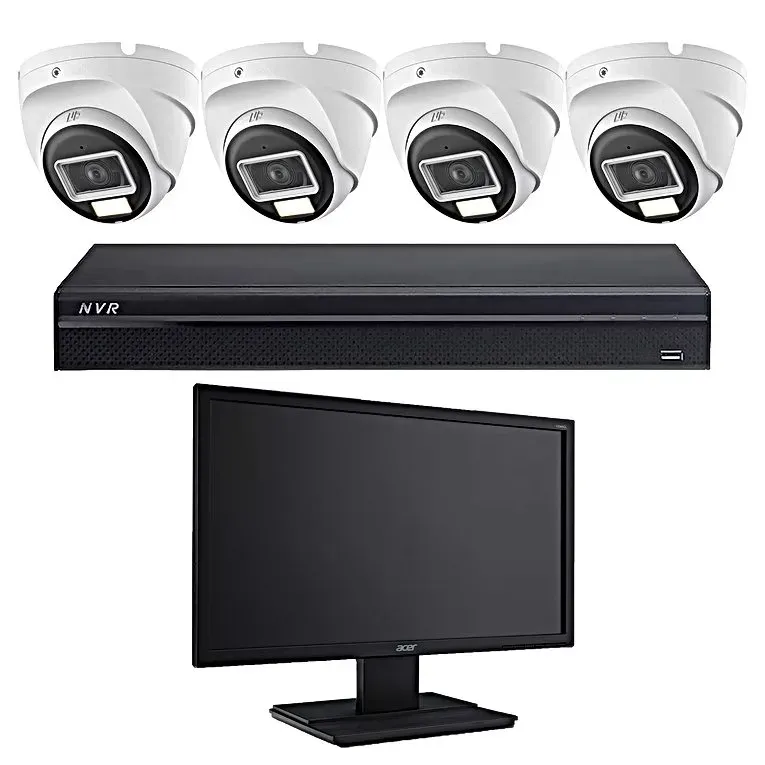
Product photo of four white turret cameras in a row, a black recorder marked NVR below them and a flat-screen monitor at the bottom. A set like this is the shape of a typical first camera system for one co-op building; the price depends on where the cameras go and how far the cable runs. Image from the Abstract Enterprises Security Systems product library, not taken at a Rockland County co-op.
Shop Our Systems

Co-op Security Packages & Pricing: Where Rockland Boards Usually Start

None of these is a fixed-price package. They are the three starting points we see most often in Rockland co-ops, each priced on the building after the service call or the walk-through.

1

Get the doors working

The $250 service call on the entrance that fails most: closer, strike, release and power. The board gets a written list of everything else we found, priced, for later.

2

Entrance plus shared rooms

A new video panel with a reader at the main door, fobs on the laundry and storage rooms, and a camera over the mailboxes. The most common first project for a mid-rise or a small garden co-op.

3

Whole complex in phases

Every stair hall, every shared door, the pool gate, the lot and the package room, scoped once and installed building by building, on one fob list and one recorder.

If the co-op has already bought equipment

We install equipment a co-op supplies. Labor is quoted by phone or text without a walk-through, and the job is booked once the deposit is paid. The equipment, its compatibility and its warranty stay with whoever sold it, so we suggest the board check with us before buying, especially for outdoor panels that will face a Rockland winter and storm season.

Rockland County co-op security equipment: product photo of a white turret camera with a dark face, a rectangular lens window and two round infrared lights
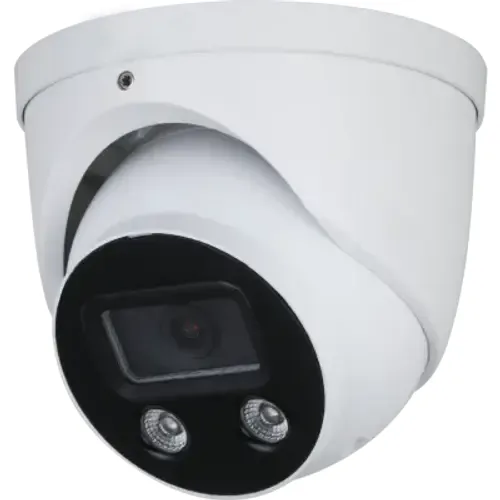
Product photo of a white turret camera with a black front, a rectangular lens window and two round infrared lights for night viewing. Turrets like this are the usual choice for stair halls, laundry rooms and vestibules because they sit close to the ceiling and are easy to aim. Image from the Abstract Enterprises Security Systems product library, not taken at a Rockland County co-op.
Complete Services

More Help for Rockland Co-op Boards and Supers

Door buzzer installation

New buzzer systems for small Rockland buildings that don't need video.

Building network installation

Switches and network gear behind panels, readers and cameras.

Parking lot cameras

Camera layouts for co-op lots, carports and entrance roads.

Buzzer repair price list

Published ranges for the most common buzzer and intercom repairs.

Intercom pricing

How intercom systems are priced, from audio to app-based.

Free written quote

Describe the co-op and get a written plan back.

FAQ

Rockland County Co-op Security Systems FAQ

Is there anything shareholders should be told not to do with their new fobs?
+

A few things, and they belong in the board's notice. Don't lend a fob to anyone the board hasn't approved, because the log shows it as the shareholder's entry. Don't keep the fob on the same ring as a car key left with a valet or a repair shop. Report a lost fob the same day so the administrator can shut it off, and don't hold the door for someone you don't know just because they're carrying boxes. We include this list in the instruction sheet we leave at handover.

Our co-op keeps its records in a basement room. Can that door show who went in and when?
+

Yes. Put the records or storage room door on a reader and give access only to the people the board names, usually the managing agent, the super and one or two directors. Every entry is logged with the credential and the time, and the board can pull that report whenever it needs to. Pairing it with a camera inside the door is optional; many boards find the entry log enough for a room that only a few people should ever open.

What happens to the old panel and apartment stations you remove?
+

We take them away unless the board wants to keep them. Some boards keep a few working stations or a spare release relay as a stock of parts for apartments that will keep their old handsets for a while, and that can save a service call later. Anything the board doesn't want leaves with our crew, so nothing sits in the basement for the super to deal with.

Can the board get a regular report of entry activity by email?
+

Most current access systems can send a scheduled report, such as a weekly summary of entries by door, a list of fobs that haven't been used in months, or every failed attempt with a cancelled fob. The board chooses what it wants and who receives it. Unused-fob reports are especially handy in Rockland co-ops with steady turnover, because they show credentials that probably belong to people who have moved out.

Is a cloud-managed entry system a risk if the company behind it goes out of business?
+

It is a fair concern. A cloud system depends on the maker's servers and subscription, and if the service ends, remote features stop. We ask about that when we recommend a system and prefer panels and controllers that keep opening doors locally even if the cloud connection is lost, and that let the co-op export its directory and credential list. The proposal says plainly which features depend on a subscription and which don't.

A shareholder has passed away and the estate is still open. What happens to the apartment's fobs?
+

The board decides, usually with the managing agent and the co-op's attorney. Common practice is to leave credentials active for family members the estate names, change the directory listing as the board directs, and replace or cancel the fobs when the apartment is sold. The system lets the administrator do each of those in a minute, and the log shows any use of the apartment's credentials in the meantime.

Do you photograph our equipment closets and doors, and who sees the photos?
+

Yes, during the walk-through and the job, because photos make the proposal and the equipment map accurate. They go to the board and the managing agent as part of the co-op's records. We don't publish photos of a client's building, its doors or its equipment, and we never name client buildings on our website.

Can the bike room or the dumpster enclosure be put on fobs?
+

Yes. Any door or gate with a frame solid enough for a strike or a magnetic lock can take a reader. A bike room on fobs stops bikes walking off with whoever caught the door, and a locked dumpster enclosure keeps people who don't live there from leaving their trash in it. The reader needs a cable or a wireless link back to the controller, which is the main cost when the enclosure sits out in the lot.

Do new apartment stations have to go in the same spot as the old ones?
+

Not always. If the old station sits at an awkward height or behind a door, the new one can move a short distance along the same wall without new cable, and further with a short cable run. Moving it covers or exposes the old opening, so we tell the shareholder what patching is needed. Apartment painting is the shareholder's, unless the board decides otherwise for the whole building.

Can installation be scheduled around Sabbath and holiday observance in our building?
+

Yes. The board tells us which days and hours to avoid, and we schedule work in the building, especially anything that rings apartments, cuts power to the doors or needs shareholders at home, around them. Installation days are set in the shareholder notice so nobody is surprised. If the board wants a door left on a particular setting during those times after the job, we program it that way.

Can new cameras be added to the recorder the co-op already has?
+

Sometimes. It depends on how many channels the recorder has free, whether it accepts the type of camera the board wants, and whether it is still supported by its maker. We check the model and its free inputs on the walk-through. If the recorder has room and is sound, adding cameras to it saves money; if it is near the end of its life, the proposal prices a replacement alongside the add-on so the board can compare.

Can a reader let shareholders open the lot gate without getting out of the car?
+

Yes. A reader on a post at driver's-window height, set back from the gate so the car stops clear of it, reads a fob or a windshield tag. Longer-range readers can open the gate as the car approaches. The post goes where snowplows won't hit it, with a bollard in front if needed. The gate's own operator and motor are a separate system; we connect to it, and the gate company maintains it.

Rockland County cooperative building security: product photo of a white floodlight camera with a wide flat light panel and a black camera body below
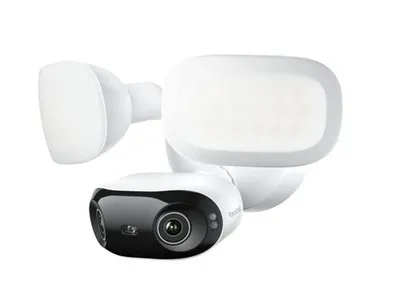
Product photo of a white floodlight camera: a wide, flat light panel and a smaller side lamp on one bracket, with a camera body below. Over a co-op's entrance drive or dumpster area, the light makes the camera's picture usable at night. Image from the Abstract Enterprises Security Systems product library, not taken at a Rockland County co-op.
All Areas Served

Co-op Security Systems Across the Hudson Valley and New York

Rockland is one of six counties in our Hudson Valley coverage; the overview for the region is co-op security systems in the Hudson Valley. Neighboring county pages cover co-ops in Westchester, Orange, Putnam and Dutchess. Managing agents who also run buildings in the city or on Long Island can start at co-op security across New York City, or go straight to co-ops in Manhattan, Brooklyn, Queens, the Bronx and Staten Island, or to Long Island co-ops, Nassau County co-ops and Suffolk County co-ops. Boards planning an intercom replacement can read the guide to co-op board intercom upgrades, or begin at the Abstract Enterprises Security Systems home page.