What are you looking for?
About Us Contact Us Careers Get a Free Quote (800) 486-0943
Pick a service
✅ Got Your Own System?
🎬 Home TheatreQuote 🎶 AV SoundQuote 🔑 Access ControlQuote
Now pick your area
Pick your area
Long Island
Hudson Valley
Services available
Pricing & Tools
Pick a service for pricing
🚪 Intercom Pricing 🔔 Buzzer Repair Pricing
Calculators
📹 Camera System Calculator 🚨 Alarm Calculator ⚡ Cabling Quote Builder ✅ Got Your Own System?
Select your area
Packages vanishing from a garden-court vestibule, car windows broken in the back row of the lot, an old recorder nobody can log into? Rockland County co-op boards from Suffern to Nyack: (845) 640-3835
Home › Co-op Security Camera Installation Hudson Valley › Co-op Security Camera Installation Rockland County
For Rockland County Co-op Boards, Managing Agents & Supers · NYS Licensed Low-Voltage Contractor

Co-op Security
Camera Installation
Rockland County

Entrance Drives · Parking Courts · Mail Kiosks · Vestibules · Elevator Cabs · Laundries

Co op security camera installation in Rockland County starts at $1,099, which buys four of our house-brand cameras and a recorder, fully installed, and any camera beyond those four is priced on its own after a walk of the grounds settles where it belongs. Abstract Enterprises Security Systems is a New York State licensed low-voltage contractor; in Rockland our co-op work is concentrated where the county's cooperatives are, in the garden court complexes of Suffern and the Town of Ramapo, the towers and garden buildings of Spring Valley, and a handful of buildings in Nyack, Garnerville and Monsey.

Quick answer: For a Rockland County cooperative the price begins at $1,099 installed for four cameras and a recorder, with $200 per camera to hide cable on runs up to 100 feet. Before anything is priced, a technician walks the lots, entrances and basements at no charge and the board receives a drawing to vote on, showing why each camera is there, how separate buildings in a court complex reach the recorder underground or by radio instead of overhead wire, which dry room holds the equipment, how long video is kept and which people can log in. Audio stays off, apartments and neighboring property are masked out, and the passwords are the corporation's. We book requests inside 2 hours on any day of the week and visit early in the day.

Last updated November 27, 2026. Facts on this page are drawn from OneKey MLS Rockland County market report (Oct 2026); Homes.com Rockland co-op listings (Nov 27, 2026); Wikipedia, Rockland County; News 12 (Feb 2024; Nanuet dealership report); WAMC (2016); NBC New York and CBS New York (May 2019); Orange & Rockland Utilities (July 2026); Rockland County Times (July 2026); Rockland Daily (Jan 2024); Rockland County Code ch. 250; NY Multiple Residence Law §3; NY Penal Law §§250.00, 250.05, 250.45; NY Labor Law §203-c; GBL §69-m and 19 NYCRR Part 195; 18 U.S.C. §1708; Levandusky v. One Fifth Ave. Apt. Corp. (1990); CooperatorNews camera-placement Q&A; FirstService Residential (Sept 2024). Compiled by the Abstract Enterprises Security Systems team, NYS license #12000287431.

Co-op security camera installation Rockland County: two dual-lens turret cameras on the corner of a building, one under the soffit and one on the wall
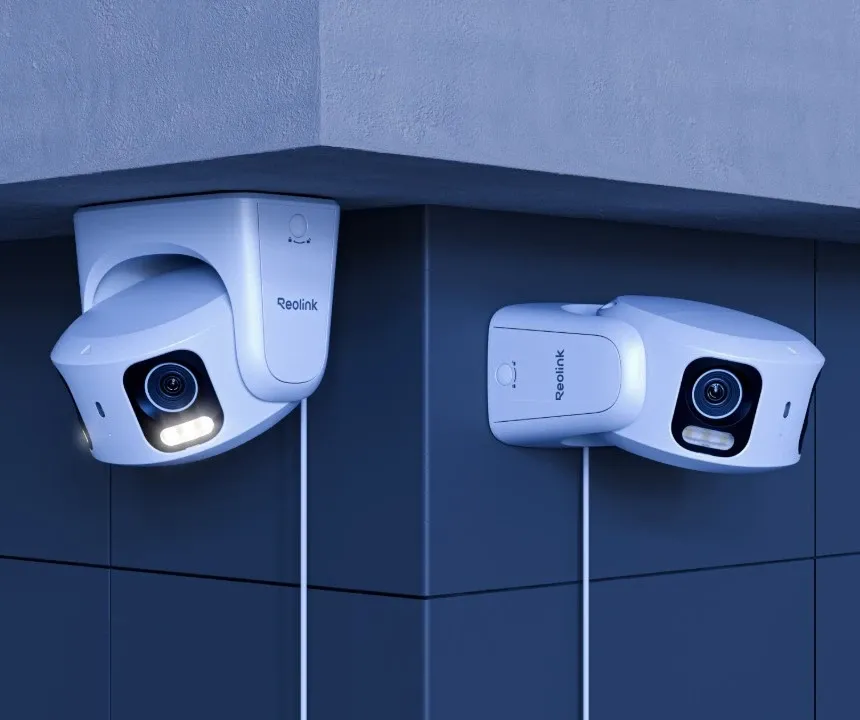
Product photo (Reolink, one of our partner brands): two dual-lens turrets on a building corner. In a Rockland garden court, one corner mount like this can watch a building's entrance walk and the parking in front of it.
Rockland County Co-op Camera Request
Directors, managing agents, supers and shareholders

✅
Request Sent!
Thanks. We will call or text to arrange the walk of the property.
25+
Years Experience
2 Hr
Booking
$1,099
4 Cameras Installed
4.7★
201 Google Reviews

One owner, cameras since 2002 · Co-op, condo and rental buildings across Rockland · Board questions answered by phone or text at (845) 640-3835

Rockland Co-ops

A Small Co-op Market With Very Particular Buildings

Rockland is a county of houses and condominiums, and its housing cooperatives are easy to overlook. OneKey MLS counted 71 co-op closings in Rockland County in the twelve months through October 2026, the same number as the year before, against 543 condominium closings and 1,666 single-family sales over the same period. The median co-op price for those twelve months was $140,000, down from $165,000, and the typical co-op that sold in October had spent 61 days on the market. Thirty co-ops were listed for sale at the end of that month.

Those numbers shape every camera plan we write in the county. A co-op where apartments trade around $140,000 is a co-op whose carrying charges have to stay affordable, whose reserve fund is modest and whose board is usually made up of volunteers who also have day jobs. Nobody on that board wants to buy forty cameras because a salesman said so. They want the four or six cameras that will settle the problems they actually have, a clear price for each, and a way to add the rest later without starting over. That is how we approach co-op security camera installation in Rockland: smallest useful system first, expandable recorder, and nothing on the drawing that the board cannot explain to shareholders in one sentence.

Where the county's cooperatives actually are

When we checked the Rockland co-op listings on Homes.com on November 27, 2026, the page counted 35 apartments for sale. Almost all of them were in two ZIP codes. Suffern 10901 had the largest share, mostly apartments in garden complexes whose buildings are arranged around named courts and circles, plus an elevator building whose listings mention assigned parking, laundry and an entry security system. Spring Valley 10977 came next, with units in elevator towers, one of which advertises an indoor gym, and in low-rise garden complexes on the village's north side, some with a pool and on-site laundry. The rest were scattered: a riverfront elevator building and a second building in Nyack 10960, a small complex on Main Street in Garnerville 10923, and a garden complex in Monsey 10952.

That spread matters more than any countywide statistic. A camera plan for a Suffern garden complex is a site plan with long walkways, mailbox kiosks and parking courts. A plan for a Spring Valley tower is a vertical plan built around a lobby, elevators, stair doors and a large lot. A plan for a Nyack building is a small-building plan on a busy village street with the river a few hundred feet away. The same company, the same equipment and the same prices, but three very different drawings.

Why boards here call about cameras

The first call from a Rockland co-op is rarely about technology. It is about a car window broken overnight in the back row of the lot, a package that disappeared from the vestibule floor, somebody dumping furniture beside the dumpster enclosure, a mailbox door pried open, or an old recorder in a basement closet that has shown a blank screen since the last big storm. Spring Valley residents saw exactly that kind of overnight car crime in May 2019, when NBC New York reported a run of break-ins that included two men caught on surveillance video smashing a minivan window in an apartment complex lot, and CBS New York reported that Ramapo police were investigating more than a dozen overnight thefts of bags, wallets, cash and even furniture from cars. Every co-op plan we write begins with the board's own list of incidents and puts a camera only where it answers one of them.

Co-op security camera installation Rockland County: manufacturer night sample of apartment buildings and a lot with the camera spotlight off and on
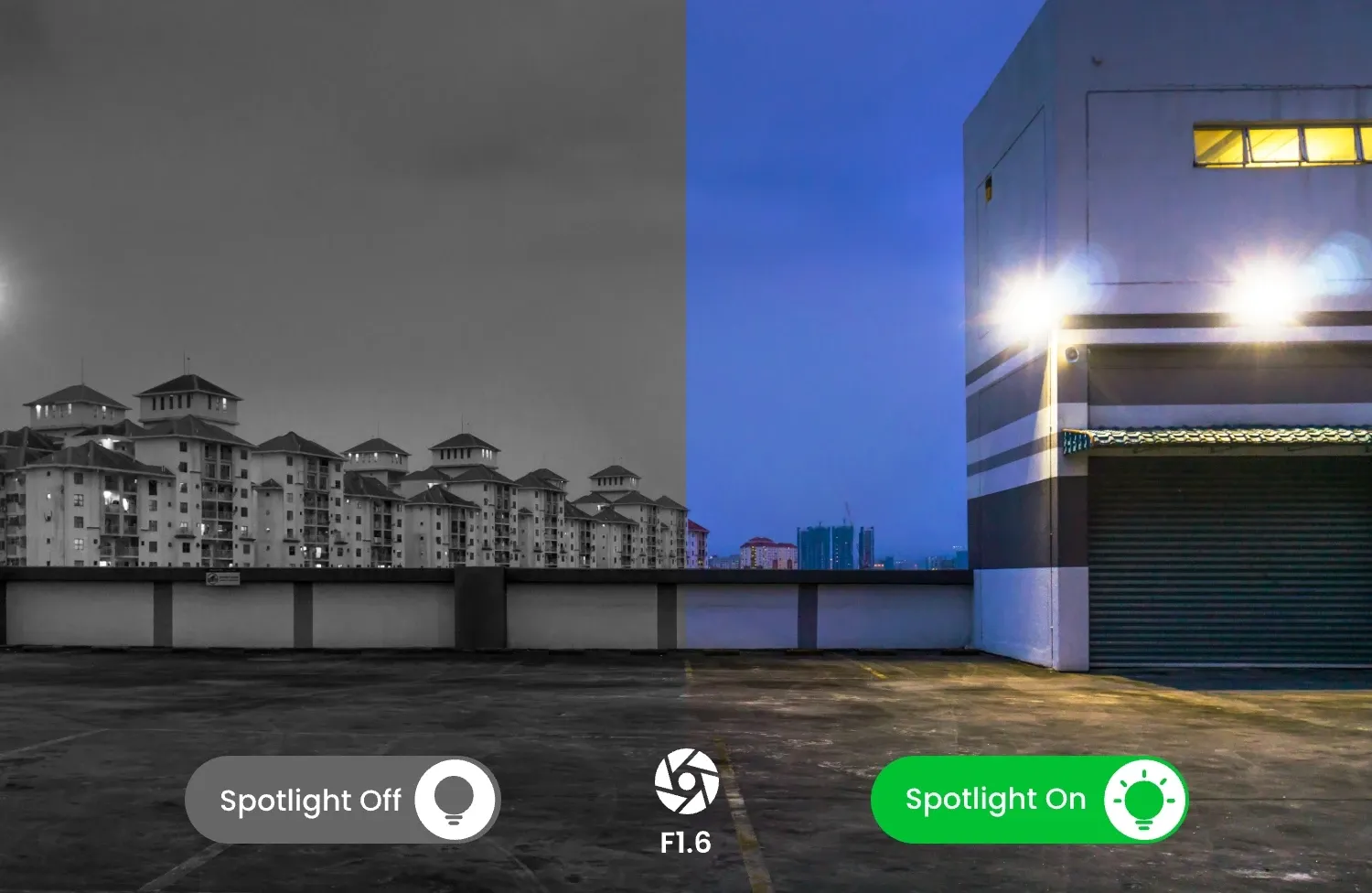
Manufacturer sample image (Reolink, one of our partner brands), not a Rockland property: the same night scene of apartment buildings with a camera's spotlight off and then on. Many Rockland garden lots are lit only by a few pole lights, which is why the board's choice between infrared and color-at-night cameras matters.
Building Types

Court Complexes, Village Towers and River Buildings: What Each Rockland Co-op Needs First

Put the Rockland listings side by side and four building shapes keep repeating. Each shape implies a different first phase, so a board that recognizes its own can estimate the size of the job before the walk.

The Suffern court complex

Two- and three-story brick or frame buildings, often dating from around 1970 (one Suffern co-op listing we reviewed gives 1970 as the year built), grouped around a series of courts or circles with a parking area in front of each group. Each building has one or two entrances, an unlocked or buzzer-locked vestibule, a basement or ground-floor laundry and a few storage rooms. Mail often arrives at a bank of boxes in each vestibule or at an outdoor kiosk on the walkway. The parking is assigned, so shareholders know exactly whose car is whose, which makes a clear view of each parking court unusually useful.

The first cameras in a court complex go where the most people pass and the fewest residents can see: the driveway where the complex meets the public road, each parking court, the mail kiosks, and the vestibule of any building that has had a package or mailbox problem. A complex with a dozen buildings rarely starts with a camera in every vestibule. It starts with the roads, lots and mail, then adds buildings as the budget allows.

The Spring Valley elevator tower

A taller building, sometimes paired with a twin, with a staffed or unstaffed lobby, two elevators, a mailroom, a compactor or trash room on each floor or in the basement, fire stairs that exit to the outside, a fitness room or community room, and a large surface lot. These are the Rockland co-ops that look most like the high-rise co-ops of the Bronx or Queens, and their camera plans follow the same logic: identify everyone who comes through the front door, cover the mailroom and package area, put a camera in each elevator cab, watch every door that lets someone in from outside without passing the lobby, and give the lot enough overview cameras to follow a car from the entrance to its space.

The difference from a city tower is the lot. A Bronx tower may have a small garage; a Spring Valley tower usually sits in a wide open parking field with a single curb cut. That field is where the overnight problems happen, and it needs more cameras than a city building's garage would.

The river-village building

Nyack and its neighbors along the Hudson have a handful of co-ops: an elevator building with river views, and smaller walk-ups mixed into blocks of shops, restaurants and older houses. These buildings have one main door on a village street that is busy late into the evening, a rear door to a small lot or alley, a basement with laundry and storage, and sometimes a terrace or garden on the river side. The camera plan is small and precise: a face-height camera at each door, one in the mail area, one or two in the basement, and one or two covering the rear lot. Because the street is public and lively, aiming matters more here than in a suburban complex; the board wants its own doorway and steps, not the diners across the sidewalk.

The roadside garden group

In Garnerville, Monsey and a few other hamlets, cooperatives occupy a few small buildings set back from a busy road, with one shared lot and a dumpster enclosure at the back. They behave like a scaled-down court complex. The roadside driveway, the lot and the rear enclosure are the first three camera locations; vestibules come next. With so few buildings, everything usually reaches one recorder over cable run through the basements or along the building faces, without trenching.

Coop security camera systems Rockland County: manufacturer daytime sample of a curving residential road, lawns and a traffic island
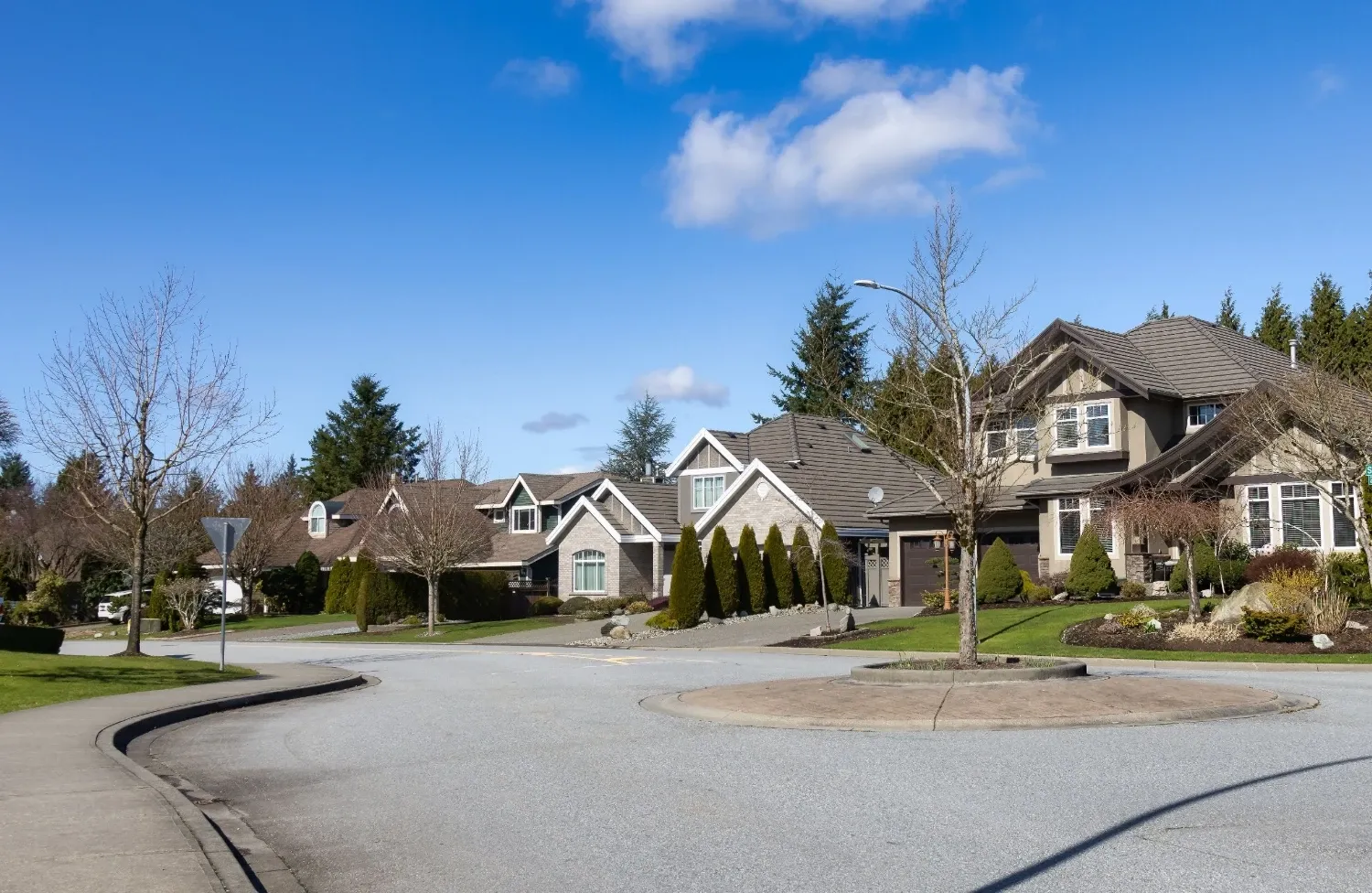
Manufacturer daytime sample (Reolink), not a client property: a wide view of a curving road with lawns and a traffic island. An entrance-drive camera at a Suffern court complex needs about this field of view to see every car that enters and leaves.
Local Government

Five Towns, Eighteen Villages and No Cities: Whose Rules a Rockland Co-op Follows

Rockland is the smallest county by area in New York outside New York City, at about 199 square miles, and it has no cities at all. It has five towns, Clarkstown, Haverstraw, Orangetown, Ramapo and Stony Point, and eighteen incorporated villages, among them Suffern, Spring Valley, Nyack, Piermont, Haverstraw, Pomona and Sloatsburg. New City is the county seat. A cooperative is governed locally by whichever village it sits in, or by its town if it sits in an unincorporated hamlet.

That sounds simple until you look at a Suffern mailing address. Plenty of apartments with a Suffern 10901 address sit outside the Village of Suffern, in the Town of Ramapo (listings often write it as “Suffern (Ramapo)”), so the building department, code enforcement office and police department that matter to the co-op may be the town's, not the village's. Spring Valley adds another layer. Under a state order, Rockland County's Office of Buildings and Codes took over inspections and code enforcement in the Village of Spring Valley on February 14, 2022, and News 12 reported two years later that the county had carried out more than 2,000 inspections there. Before that, in December 2016, the New York Department of State had appointed code-enforcement monitors for both the Town of Ramapo and the Village of Spring Valley, citing what WAMC reported as significant deficiencies in code enforcement.

Where a code office can touch a camera project

Usually only at the edges. A low-voltage camera system mounted on existing walls and fed by network cable is not the kind of work that typically needs a building permit in a Rockland town or village. What can bring a code office into the picture is anything that comes with it: a new electrical outlet or circuit for the equipment closet, a pole set in the ground, trenching across a lot, or a change to a fire-rated wall or door. We do not do electrical work. Rockland County's own code defines electrical work as wiring for light, heat or power, or for signaling systems operating at 50 volts or more, under the supervision of a master electrician; if the equipment closet needs a new receptacle, the co-op's electrician adds it before we arrive, and we list that requirement in writing on the proposal. When the plan involves a pole or a trench, we tell the board which office to ask and leave the answer on the schedule.

State law, not city law

Search for advice on co-op cameras and the results lean heavily on Manhattan and Brooklyn buildings, with references to the city's Multiple Dwelling Law, building code and smart-access data law. A Rockland board can set all of that aside. Section 3 of the state's Multiple Residence Law says that chapter applies to cities of fewer than 325,000 people and to all towns and villages, which covers every multiple dwelling in Rockland. For a camera project the rules that matter are state rules (eavesdropping, unlawful surveillance, workplace privacy and security-installer licensing), the co-op's own proprietary lease and bylaws, and whatever the town or village says about construction.

Which police department asks for the video

Rockland is policed mainly by town departments, with some villages keeping their own. The 2019 Spring Valley car break-ins described above were investigated by the Ramapo Police Department; News 12 has reported Clarkstown police arresting three people for an attempted car theft from a Nanuet dealership. Which department calls matters only in one respect: the co-op's footage policy should name one person who receives every police request, whichever badge it comes from, and should say how a clip is exported and how the export is logged. We set that up at handover.

Parking Courts

Assigned Spaces, Open Lots and the Overnight Problem

Almost every Rockland co-op has more parking than building. Garden complexes have a parking court for each group of buildings, towers sit in wide lots, and even the river buildings usually have a rear lot. The co-op's lot is also where most of the trouble we hear about takes place, after midnight, when nobody is looking out a window. So the lot plan deserves more thought than any other part of the drawing.

Two jobs, two kinds of camera

A lot camera has one of two jobs, and no single camera does both well. The first job is identification: seeing a face, a jacket or a vehicle clearly enough that a detective, an insurer or the board can tell who it was. That needs a camera aimed at a narrow spot that everyone has to pass, such as the driveway where the lot meets the road or the walkway from the lot to the buildings, mounted no higher than it has to be and zoomed so a person fills a good part of the picture. The second job is overview: following a car or a person across the lot so the board can see where they went and what they did. That needs wide cameras up high on building corners, each covering a section of rows.

Boards that skip the identification camera end up with a recording of a small figure walking between cars at 3 a.m. that nobody can name. Boards that skip the overview cameras have a sharp picture of everyone who drove in but no idea which car they went to. A useful Rockland lot plan almost always has both: one or two identification cameras at the choke points and enough overview cameras to see every row.

Assigned spaces make the video more useful

Many Suffern and Spring Valley co-op listings mention an assigned parking space. That small detail helps a camera system more than most boards realize. When each space belongs to a known apartment, a recording that shows a stranger stopping beside space 14 tells the board immediately whose car was touched and who to call. We label the overview cameras by row and space range in the recorder, so the managing agent can jump to the right camera in seconds without scrubbing through the whole lot.

Light, or the lack of it

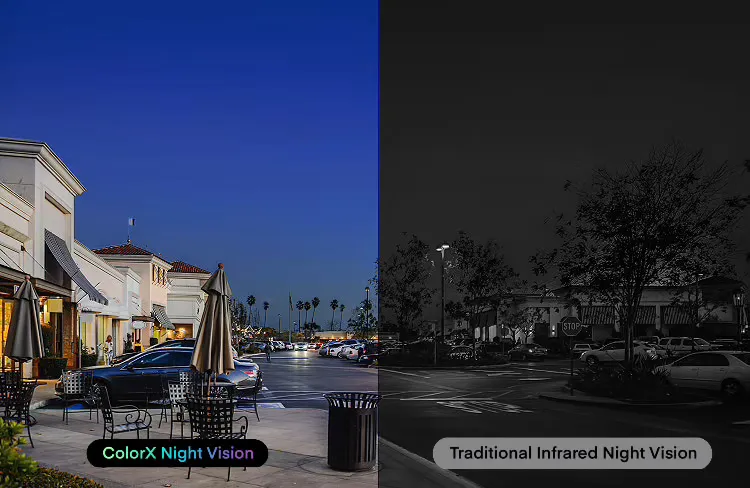
Many garden-complex lots in the county are lit by a handful of pole lights and wall packs, some on timers and some simply dim. A camera can only record what it can see. Standard cameras switch to black-and-white infrared after dark, which is fine for following movement but poor for describing a car's color or a jacket. Cameras with their own small spotlight, or with large-sensor lenses designed for low light, record color at night over a shorter distance. On the walk we look at the lot at the time of day the board is worried about whenever we can, or we ask the super to send a phone photo of it after dark, and we choose the camera for each pole or corner accordingly. Where the lighting itself is the problem, we say so; adding or re-aiming light fixtures is electrical work for the co-op's electrician.

Where to mount when there is nothing to mount on

The far row of a big lot is often a long way from any building. The options are to mount on an existing light pole, if the co-op owns it and its structure can carry a camera, to set a new pole, or to accept a wider view from the nearest building corner. Mounting on a pole raises two questions we answer on the walk: how power and data reach the camera (usually a single network cable in buried conduit, sometimes a short wireless link), and whether the pole sways enough in wind to shake the picture. A camera on a tall, thin pole in an exposed Rockland lot can wobble badly in a gusty storm, which is why we prefer shorter, stiffer mounts where the view allows it.

Cooperative security camera installation Rockland County: dual-lens turret camera on a building wall above a parking lot at dusk
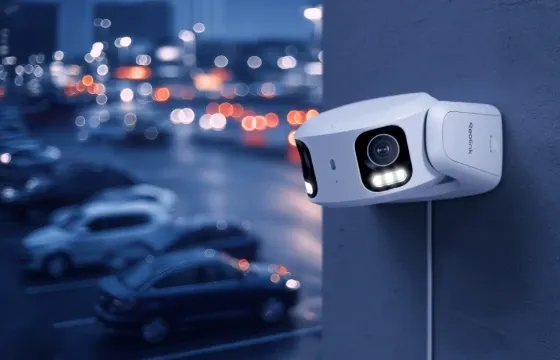
Product photo (Reolink): a dual-lens turret camera on a wall above a parking lot. A wide two-lens camera on a building corner can cover several rows of a Rockland co-op lot from one mounting point.
Court Complexes

Linking a Dozen Buildings to One Recorder in a Rockland Garden Co-op

The hardest technical question in a Suffern or Spring Valley garden complex is not which camera to buy. It is how video from cameras spread over several acres gets back to one recorder that the board controls. There are four realistic answers, and most complexes end up using two or three of them.

Cable through connected basements

Where buildings in a group share a continuous basement or a utility tunnel, which happens in some older complexes, network cable can run from building to building indoors. It is the cheapest and most reliable link, and we look for it first. The super usually knows whether the basements connect; the walk confirms whether the passage is dry and accessible.

Buried conduit between buildings

Where buildings stand apart, cable can travel in conduit buried under a lawn or a walkway. Copper network cable is limited to about 328 feet (100 meters) per run, so longer distances use fiber, which also avoids running copper between buildings that sit on separate electrical services. Trenching is disruptive and has to be planned around parking, landscaping and anything else underground, so we recommend it only where the board expects to keep the link for decades or where it can share a trench with other planned work, such as a walkway rebuild.

Point-to-point wireless

A pair of small radios mounted on two buildings that can see each other can carry the video from a whole building's cameras with no trench at all. This is the most common answer in Rockland complexes, where trees and grade changes are the main obstacles. Line of sight is everything; a summer canopy that was bare in March can block a link in June, so we survey for leaf-on conditions and mount high enough to clear them.

A small recorder per group, viewed together

For a complex whose groups of buildings are far apart, each group can get its own small recorder in a locked closet, and the board views all of them together in one app. The video stays local to each group, so a broken link between groups never stops recording. The trade-off is more equipment to maintain and more drives to replace over time.

Why we avoid overhead cable

Some older complexes still have cable strung through the air between buildings, often from a long-gone cable or intercom installation. We do not add camera cable to those spans. Rockland's summer storms bring down limbs across the county; Orange & Rockland Utilities reported that more than 47,000 of its customers were affected by the storms that began on July 1, 2026, and the Rockland County Times reported one New City neighborhood without power for more than 36 hours after the July 4 storm. A camera system whose links hang under the tree canopy is a system that will go dark in exactly the weather when a board most wants to know what happened on the grounds.

Elevator Towers

Spring Valley Tower Co-ops: Lobby, Cabs, Stair Doors and the Open Lot

A tower co-op has a front door that everyone uses and several doors that almost nobody should. A camera plan for a tower in Spring Valley, or a mid-rise anywhere in the county, is built around that difference.

The front door and lobby

One camera inside the vestibule, aimed back at the outer door from about head height, records a clear face of everyone who enters, resident, guest or delivery driver. A second camera covers the lobby itself: the mailboxes, the package area, the elevator doors and the path to the mailroom. Lobbies with glass on the street side are hard for cameras in the afternoon, when bright sun behind a person turns them into a silhouette; a camera with strong wide dynamic range, set to favor the face rather than the background, solves most of that.

The elevator cabs

A camera in each cab is one of the most effective cameras a tower can have: vandalism, lost items and disputes between neighbors often happen in the elevator. The camera itself is a small vandal-resistant dome in a top corner of the cab. Getting video out of a moving car is the tricky part. We use a pair of wireless transmitters, one on the car and one at the top or bottom of the shaft, so no new cable has to travel with the car. Anything inside the elevator controller, the car's own wiring or the shaft beyond our transmitter belongs to the co-op's elevator maintenance company, and its mechanic has to be on site when we mount the car equipment. We coordinate that date with the managing agent.

Stair doors and the side and rear doors

Exit stairs that open to the outside are the most common way strangers enter a tower without passing the lobby, usually because a door was propped open or the latch failed. A camera at each exterior stair door, aimed so it sees anyone coming in, tells the board whether the door is being used as an entrance and by whom. The same goes for the service door, the door to the garbage area and any door to the lot.

The trash and compactor rooms

Bulky items left in the compactor room or beside the dumpster enclosure are a constant complaint in tower co-ops. A camera at the enclosure gate, or in the basement compactor room, answers the question of who left the mattress. It does not need high resolution; it needs a good angle on the doorway and enough light.

The fitness or community room

Some Spring Valley tower listings mention an indoor gym. A camera covering the entry and the general floor of a shared fitness room is reasonable and common; it protects equipment and records accidents. It must never look into a changing area or restroom, and the board should tell shareholders in writing that the room is recorded. We cover that in the policy section below.

The lot again

Everything said above about lots applies, multiplied. A tower may have a hundred or more spaces around it and one or two driveways. Identification cameras go at each driveway; overview cameras go on the building's corners and, for the far rows, on poles. Because the tower is tall, cameras mounted on a second- or third-floor ledge can see a great deal of the lot from one point, but they lose detail with height, so they are overview cameras only.

Co-op surveillance cameras Rockland County: white vandal-resistant dome camera mounted on a dark ceiling
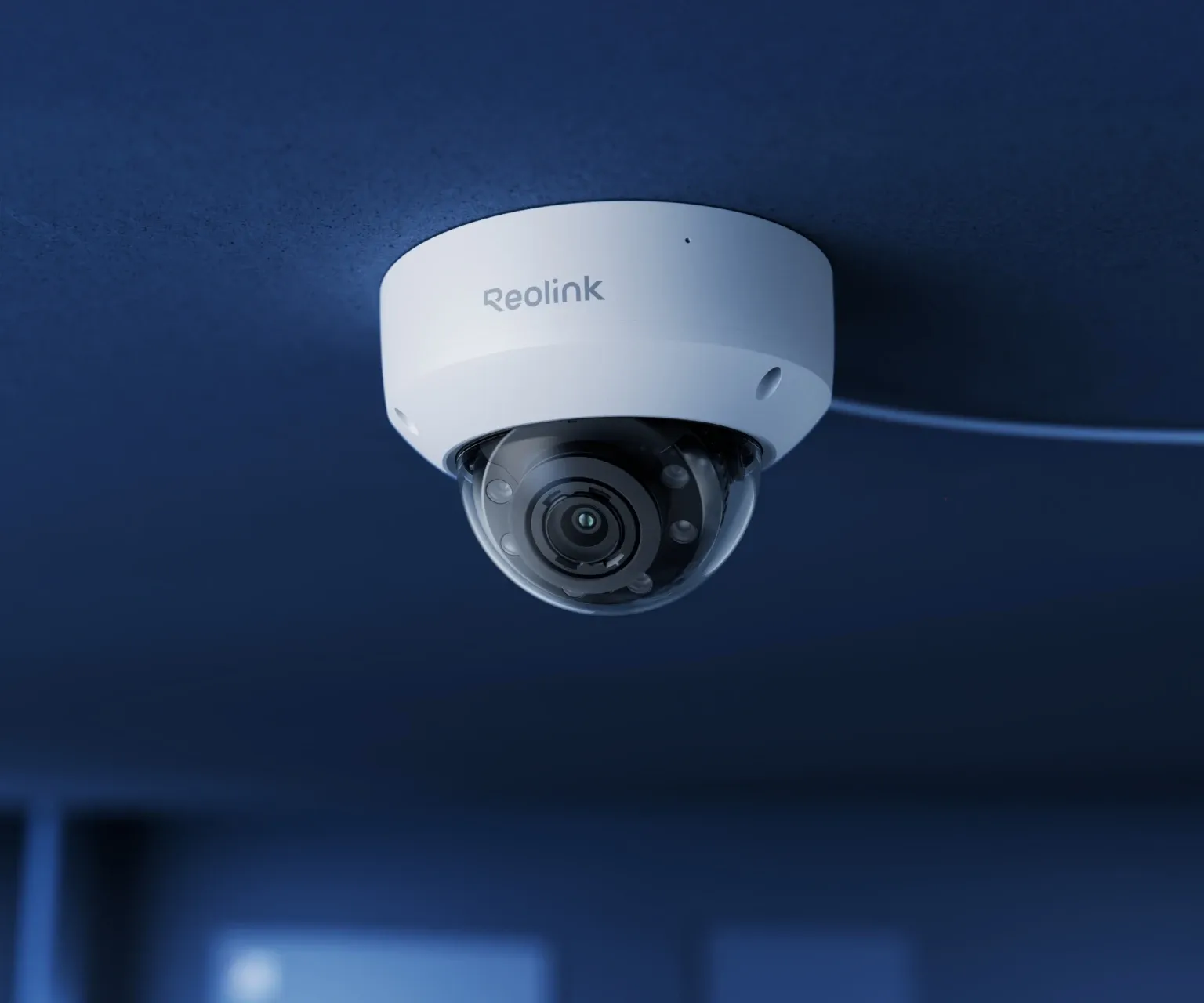
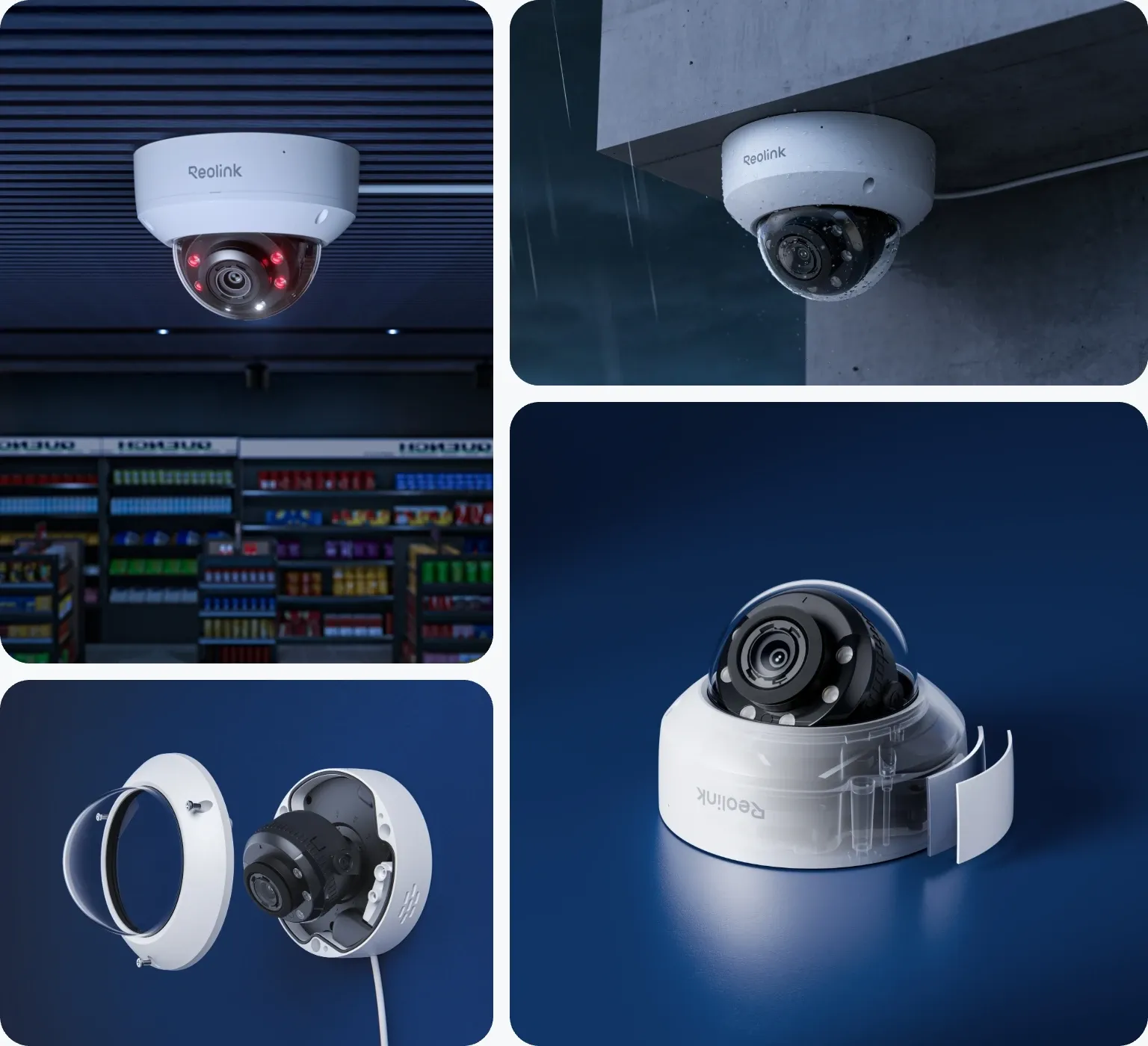
Product photo (Reolink): an impact-rated dome fixed to a ceiling. In a Spring Valley tower this is the model for the lobby, the mailroom and the stair landings, anywhere a person could reach up and strike it.
River & Weather

Nyack, Haverstraw and Piermont: Camera Choices Where the Hudson Sets the Terms

Only a few of Rockland's co-ops sit on the river, but they are the ones where weather decides the equipment. Wind off the Hudson, wet snow and the occasional tidal flood all leave marks on a camera system that a co-op ten miles inland never sees.

Water at the low end of the building

Rockland Daily reported that the Village of Piermont was hit hard by tidal flooding from a January 2024 storm, its worst flooding since Hurricane Sandy. A river-village co-op whose basement laundry and storage took water in either storm should not keep its recorder, network switch or battery backup on the basement floor. We mount the equipment cabinet high on a wall or move it to a locked closet on the first floor, and we keep basement cameras on cable that can be dried out and reused rather than on power supplies that sit in the water. A recorder that drowns takes every recording with it.

Wind and wet snow on the river side

Cameras on the river face of a building take wind-driven rain and wet snow straight on. We choose sealed housings rated for outdoor use, angle each camera slightly down so water runs off the lens window, and mount under an overhang wherever the view allows. Long brackets that hold a camera out from the wall vibrate in strong gusts; on the river side we use short, solid mounts and accept a slightly narrower view.

Busy village streets

A co-op door on a Nyack street faces sidewalks, restaurants and traffic well into the night. That brings two practical issues. Headlights and storefront signs can wash out a door camera aimed at the street, so we aim door cameras inward from the vestibule, toward the outer door, wherever possible. And a co-op's cameras have no business recording the diners across the street or the windows of the building next door; we mask those areas out in the camera's settings so they are blacked out in every recording, and we show the board the masked picture before we leave.

Power cuts anywhere in the county

Storms do not need a river to knock out power. The July 2026 outages reported by Orange & Rockland and the Rockland County Times reached inland neighborhoods such as New City, and garden complexes under mature trees lose power often. Every co-op system we install includes a battery backup for the recorder and the network switch that powers the cameras, sized to the number of cameras and to the run time the board chooses. When the power comes back, the recorder restarts on its own and resumes recording without anyone touching it.

Co op security camera installation Rockland County: manufacturer sample of a row of garage doors in daylight, at dusk and at night
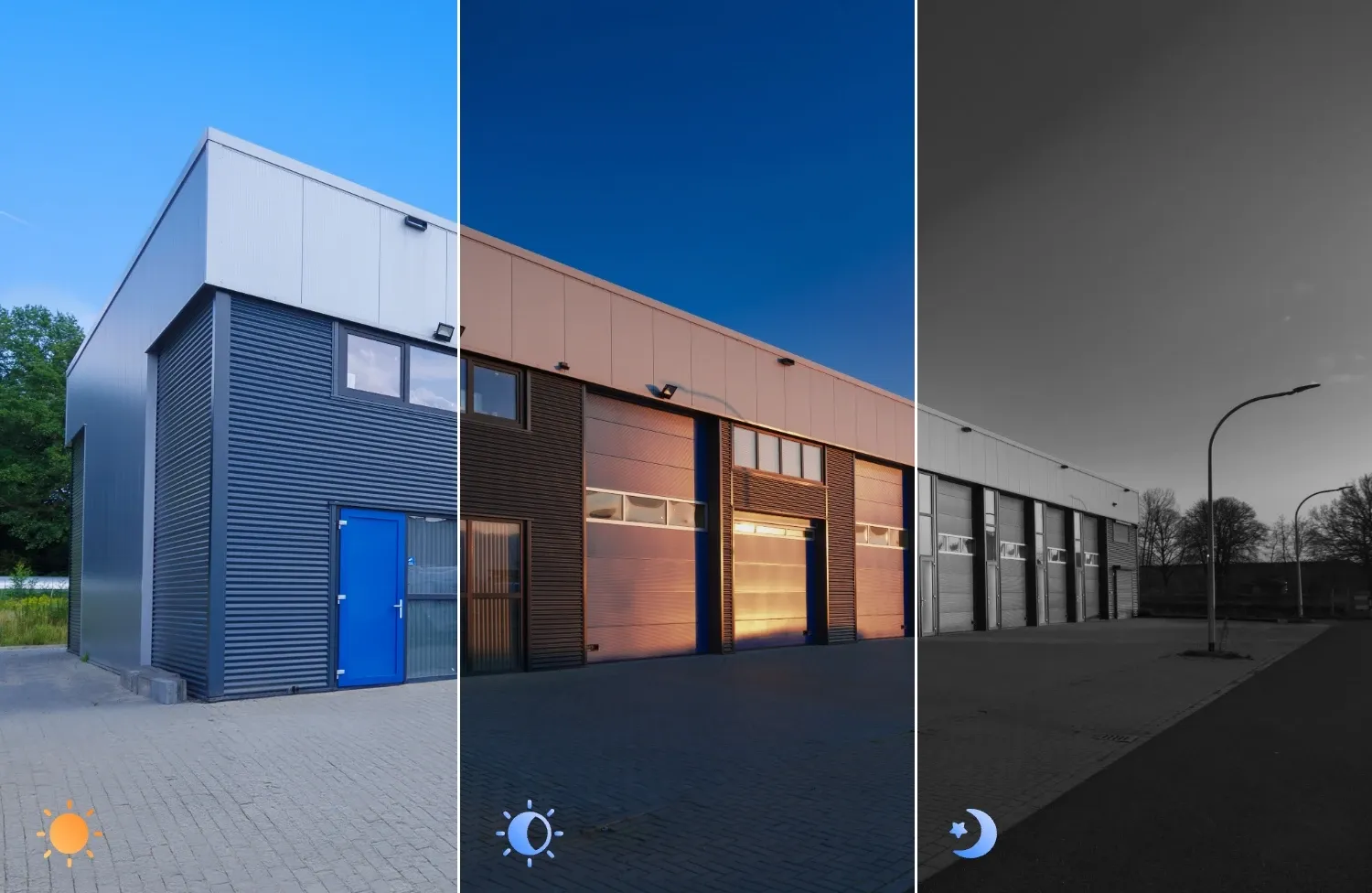
Manufacturer sample (Reolink), not a client building: one camera's view of a row of garage doors in daylight, at dusk and at night. How the picture changes as the light fails is the first thing we check when choosing cameras for a co-op's garages and lots.
Coverage

Every Common Area on a Rockland Co-op Camera Plan, and What Each Camera Is For

A housing cooperative (a coop, as several Rockland listings spell it) is a corporation that owns the land, the buildings and every common area; shareholders hold proprietary leases on their apartments. That means the board can place cameras anywhere in the common areas without anyone's individual consent, and it also means the board alone answers for where the cameras point. A good plan lists each location with one line explaining its purpose. Here is how that list usually reads for a Rockland co-op.

  • Driveway entrances. Identify every vehicle and person entering from the public road. Usually the single most valuable camera in a garden complex.
  • Parking courts and lots. Overview by row, plus identification at walkways from the lot to the buildings.
  • Building entrances and vestibules. A clear face at the door, aimed inward. One per entrance in towers and in any garden building with a history of problems.
  • Mailboxes, indoor or outdoor. The person at the boxes, not the box numbers or the contents of anyone's mail.
  • Package areas. The shelf, the floor or the room where carriers leave parcels, with the door in view.
  • Lobbies and elevator landings. Movement through the lobby and the elevator doors.
  • Elevator cabs. One small dome per cab, linked wirelessly.
  • Exterior stair doors, service doors and rear doors. Who comes in without passing the front door.
  • Laundry rooms. The door and the machines, for disputes and damage.
  • Storage rooms and storage cages. The door or the corridor outside the cages, never the inside of a shareholder's cage.
  • Bike rooms. The door and the racks.
  • Trash and recycling enclosures, compactor rooms. Illegal dumping and bulky-item disputes.
  • Pools, playgrounds and community or fitness rooms. Entry and general area, with signage, never changing rooms or restrooms.
  • Boiler rooms, meter rooms and roof doors. Usually a door camera or a door alert rather than a full view.
  • Maintenance garages and the super's shop. Tools, snow equipment and supplies are expensive and easy to carry off.

What the plan leaves out on purpose

The inside of any apartment, any shareholder's window or balcony, anyone's private yard next door, restrooms, changing rooms and the porters' locker room. Audio is left off everywhere. Hallways on residential floors are a board decision: some co-ops want a camera at each elevator landing, others want nothing above the lobby. Our drawing marks residential-floor cameras as a separate option so the board can vote on them separately.

Co-op CCTV cameras Rockland County: white turret camera mounted on a ceiling above a dimly lit room
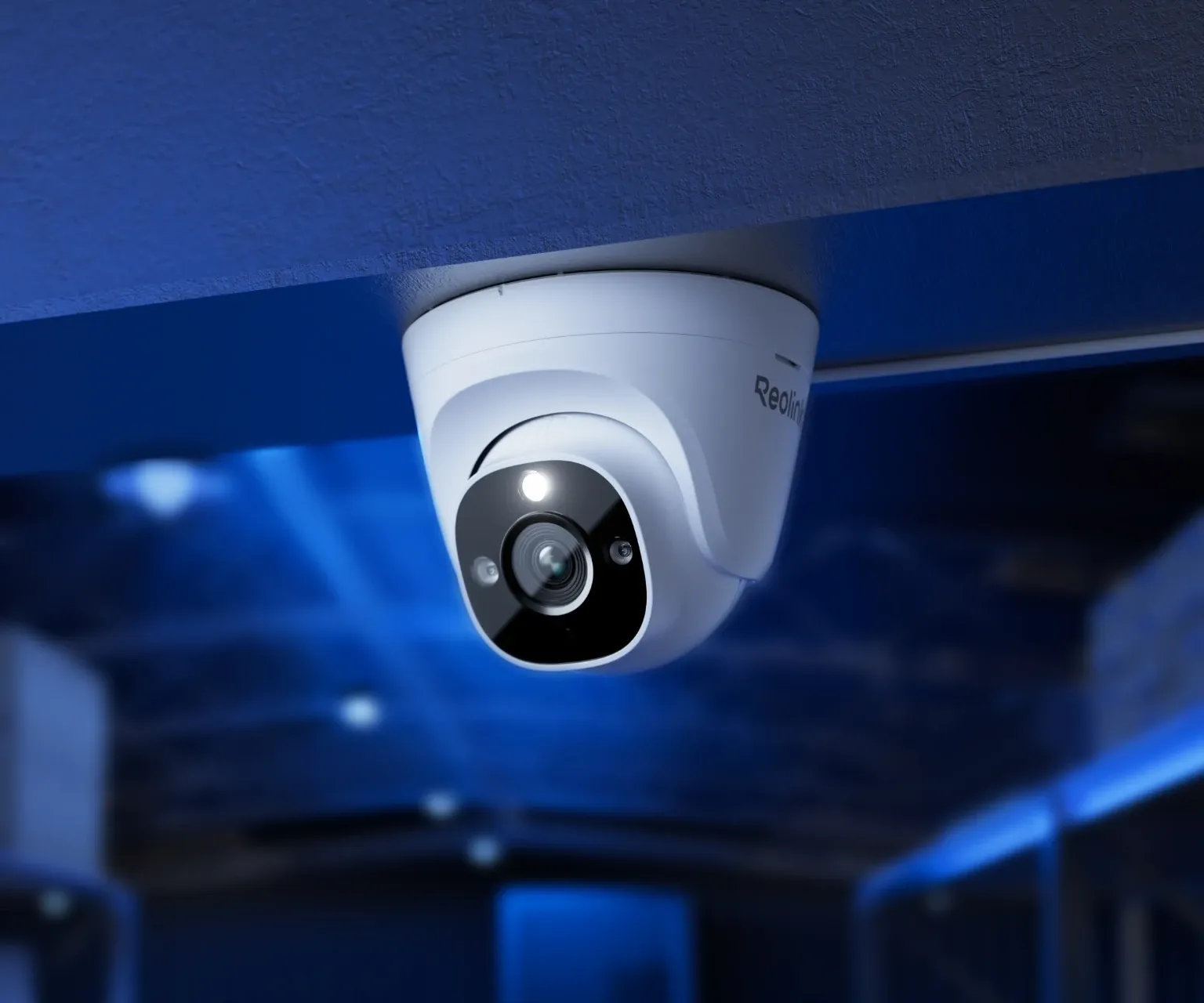
Product photo (Reolink): a turret camera on a ceiling over a dim room. Basement laundries and storage corridors in Rockland garden buildings are often this dark, so indoor cameras there need good low-light performance.
Equipment

The Co-op Security Camera Systems We Install Across Rockland County

By default we install our own house-brand system: network cameras and a network video recorder sold and supported by us, priced on our Rockland camera price list. Boards that ask for a name brand can choose from our partner brands, Lorex, Luminys and Reolink, and we quote those on request. Every system we install for a co-op records locally on the property, with no required monthly cloud fee, and can be viewed on phones and computers by the people the board authorizes.

Camera styles and where each goes

  • Impact-rated domes indoors wherever a hand or a broom handle can reach the camera: lobbies, mail areas, landings, laundries. Their cable enters from behind and the lens sits under a hard bubble.
  • Turrets for most outdoor walls and building corners. They throw less glare from their own infrared lights than domes do and are easy to aim.
  • Bullets where a camera needs to look a long way, such as down a driveway or across a lot, and where its visible shape is part of the deterrent.
  • Dual-lens and panoramic cameras on building corners that overlook wide lots or courtyards, to cover a lot of ground from one mounting point.
  • Varifocal and zoom cameras for identification at a driveway or gate from a distant mounting point.
  • Small elevator domes with wireless shaft links for each cab.

The equipment closet

The recorder, the network switch that powers the cameras over the same cable that carries their video, and the battery backup live together in one locked, ventilated closet or wall cabinet. In garden complexes that is usually the basement of the building nearest the middle of the property; in towers, a room off the lobby or the super's office. The closet needs a dedicated outlet, which the co-op's electrician provides if one is not already there. Hard drives are sized to the number of days of video the board chooses to keep.

Network or analog

Our price list includes both analog systems on a DVR and network systems on an NVR. For co-ops we usually recommend network cameras: one cable carries power and video, the cameras are sharper for the money, and the recorder is easier to expand as the board adds buildings. Analog packages still make sense for a very small walk-up or where usable coaxial cable from an old system can be kept, which we test on the walk.

Remote viewing without opening the co-op's network

Board members and the managing agent view the cameras through the recorder maker's app. The recorder connects outward to the internet over a dedicated line or a separate segment of the co-op's network; we never put it on the same network as the management office's computers without separating the two. Each person gets their own login with only the cameras and permissions the board grants, and the master password belongs to the cooperative corporation, written into the handover packet.

Co-op camera system installation Rockland County: vandal-resistant dome camera shown in four mounting views on ceilings and walls
Product photo (Reolink): one vandal-resistant dome shown in four positions, on a ceiling, a wall and a corner. The same model can usually serve a lobby, a stair landing and a laundry room, which keeps a co-op's spare parts simple.
Camera Counts

How Many Cameras a Rockland Co-op Usually Starts With

Camera counts depend on the property, not on a formula, but after enough walks the patterns are clear. These are the ranges we see for a first phase and for a finished system. They are guides for the board's first conversation, not quotes.

Co-op typeTypical first phaseTypical finished system
Nyack walk-up or small village building4 cameras: front door, rear door, mail area, basement6 to 8, adding the rear lot and storage
River-village elevator building6 to 8: vestibule, lobby, cab, rear door, basement, lot10 to 14, adding stair doors, terrace and every cab
Spring Valley tower with a large lot8 to 12: vestibule, lobby, mailroom, cabs, stair doors, driveway16 to 32, adding full lot coverage and trash rooms
Garnerville or Monsey roadside garden group4 to 6: driveway, lot, rear enclosure, worst vestibule8 to 12, adding each building's entrance
Suffern court complex, ten or more buildings6 to 10: entrance drive, parking courts, mail kiosks24 to 48, adding vestibules and laundries building by building

Every package on our price list starts with four cameras and a recorder, and a recorder chosen for a large complex is sized for the finished system, not the first phase, so adding cameras later is a matter of mounting them and running cable rather than replacing the box. Each camera beyond the first four is priced per camera once we have confirmed the layout.

Phasing a big complex over several budget years

Most large Rockland garden co-ops spread their camera program across two or three fiscal years. Phase one covers the entrance drive, the lots and the mail. Phase two adds the vestibules and laundries of the buildings with the most incidents. Phase three finishes the rest. The backbone, meaning the recorder, the closet and the links between building groups, goes in during phase one, sized for the end state, so later phases never require rework.

Coop surveillance camera installation Rockland County: white bullet camera on an exterior wall at night
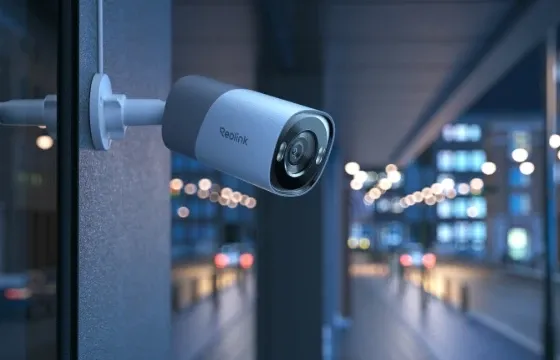
Product photo (Reolink): a bullet camera on an exterior wall at night. Bullets suit the long views down a Rockland co-op's entrance drive or along a row of parking spaces.
Sample Plan

Sample Layout: A Ten-Building Court Complex Outside the Village of Suffern

The layout below is illustrative, not a client's property. It describes the kind of 1970-era garden cooperative that makes up much of the Suffern co-op market: ten two-story buildings in two courts, each court with its own parking area, one entrance drive from the town road, mail kiosks on the walkways, a laundry in every basement and a maintenance garage at the back. Phase one is the part most boards fund first.

No.LocationCameraPurposePhase
1Entrance drive, inboundVarifocal bulletIdentify vehicles and people entering from the road1
2Entrance drive, outboundVarifocal bulletIdentify vehicles leaving1
3–4Court A parking, two cornersDual-lens turretOverview of all rows in Court A1
5–6Court B parking, two cornersDual-lens turretOverview of all rows in Court B1
7–8Mail kiosks, Courts A and BTurretThe person at the boxes1
9Maintenance garage doorTurretEquipment and tools1
10–19Ten building vestibulesVandal domeFaces at each entrance, packages2
20–24Five busiest basement laundriesTurretMachines and door2
25–29Remaining laundriesTurretMachines and door3
30Dumpster enclosureBulletDumping and bulky items3

In this layout the recorder, switch and battery backup sit in a locked cabinet in the basement of the building closest to the middle of the property. Court B is linked to it by a point-to-point wireless pair mounted at second-floor height to clear the trees, and the entrance-drive cameras reach it over buried conduit that shares a trench with the driveway lighting the co-op's electrician is replacing anyway. The recorder is a 32-channel unit from day one, though phase one uses only nine channels. Drives are sized for 30 days of continuous recording on every camera at the finished count.

What the board sees on paper

A site drawing with each camera numbered and its view shaded, the masked areas marked in black, the cable and wireless paths drawn in, the cabinet location, the number of days of storage and a price for each phase. The table above becomes the legend. That drawing is what goes into the board packet, and nothing gets installed that is not on it.

Services

Co-op Security Camera Installation Services in Rockland County

Abstract Enterprises Security Systems is a licensed and insured New York State low-voltage contractor, license #12000287431, and has been installing cameras since 2002. For Rockland cooperatives we handle the whole job, from the first walk to the handover, with our own technicians.

  • Design and site survey. A free walk of the property, the numbered camera plan, the masking plan and a price per phase.
  • Supply and installation. Cameras, recorder, switches, links, battery backup, cable and mounting hardware, installed and tested.
  • Programming and configuration. Camera names by building and court, recording schedules, motion zones, privacy masks, user accounts and permissions.
  • Upgrades of old analog systems. We test existing coaxial cable and reuse what is sound with a hybrid recorder, or replace it with network cable where it is not.
  • Adding cameras to an existing system. If the co-op's current recorder is compatible and has free channels, new cameras can join it.
  • Owner-supplied cameras. Already have boxes of cameras in the super's office? Give us the model numbers and a count of mounting spots; the labor price comes back by phone or text and the date is set when the deposit lands. Owner-supplied gear gets no site walk from us, and if it underperforms or fails, that is between the co-op and its manufacturer.
  • Technical support. Phone help for the super or managing agent with exports, logins and playback is free.

For cameras that have already stopped working, see our security camera repair in Rockland County page. For houses, stores and offices rather than cooperatives, the general Rockland County security camera installation page applies, and owners of rental buildings will find their own page on apartment building security camera installation in Rockland County. Commercial recorder and analog systems are covered under CCTV installation in Rockland County.

Booking and scheduling

Whichever way a board reaches us, the walk gets a date inside 2 hours, and that is true on weekends too. Walks happen early in the day within a two-hour arrival window. Installation dates go in the order deposits arrive. We do not promise same-day installs or round-the-clock service.

Co-op security camera installation services Rockland County: bullet camera on a ceiling pendant mount inside a parking garage
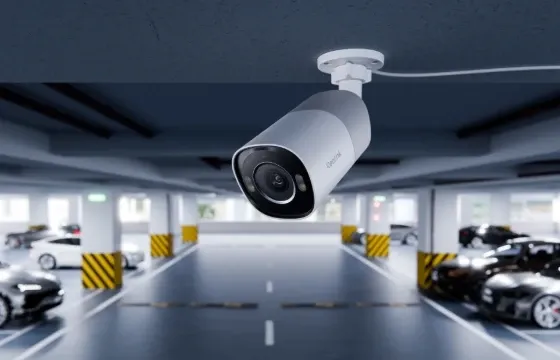
Product photo (Reolink): a bullet camera hanging from a ceiling mount in a parking garage. The few Rockland co-ops with covered parking get the same treatment: one camera on the entrance, the rest aimed down the drive aisles.
The Whole Building

Cameras Alongside the Co-op's Intercom, Fobs and Door Hardware

Cameras are one part of a building's security, and in a co-op they work best when they are planned with the front-door system rather than after it. A camera that shows someone tailgating through the front door is far more useful when the board can also see which fob opened the door a second earlier. A recorder sitting in the same closet as the intercom controller and the access-control panel can share one battery backup and one locked door.

Our page on co-op security systems in Rockland County covers the intercom, entry, fob and door-buzzer side of a Rockland cooperative, and our co-op board intercom upgrade guide walks directors through deciding between repairing and replacing an entry system. Condominium associations in the county have their own page on condo security camera installation in Rockland County; condo boards answer to unit owners and a declaration rather than to shareholders and a proprietary lease, so their decisions run differently.

What we do not provide

We do not do electrical work, we do not provide virtual-doorman or remote-guard services, and we do not sell a managed video service. The co-op owns its recorder and its video, and the people the board names watch it.

The Law

New York State Law on Co-op Cameras, Read for a Rockland Board

This section summarizes state laws that bear on a co-op camera system. It is general information, not legal advice; a board with a specific question should ask the co-op's attorney.

Video in common areas

New York does not recognize a general common-law right of privacy in a building's public or common areas, as Ricardo M. Vera of Newman Ferrara explained in a CooperatorNews Q&A on camera placement. A board can therefore record lobbies, halls, laundries and lots. That same Q&A warned that recording audio is a different matter.

Sound

Recording other people's conversations is where camera systems get into legal trouble. New York's eavesdropping statute, Penal Law §250.05, is a class E felony, and the definitions in §250.00 cover capturing a conversation with a device when no party to it has agreed. Two shareholders talking by the mailboxes have agreed to nothing. Our co-op systems are installed with audio disabled on every camera, including packages whose cameras have a microphone built in.

Bathrooms, changing rooms and staff areas

Some rooms are off limits by statute. Unlawful surveillance under Penal Law §250.45 covers using a device to watch or record someone undressing, or someone in a restroom, bathroom, shower, changing room or bedroom, without that person's consent. Separately, Labor Law §203-c bars employers from video recording employees in restrooms, locker rooms and rooms designated for changing clothes. In a co-op that rules out any camera inside a restroom off the lobby, pool or gym, inside a changing area, or inside the porters' locker room.

Who may install

Not every handyman may legally put up building cameras. New York licenses security-system installers under General Business Law §69-m, and the Department of State reads its Part 195 rules (19 NYCRR) as reaching cameras used to detect or monitor intrusion. A bid without a license number on it is incomplete. Ours is #12000287431.

The board's authority

New York courts review a co-op board's decisions under the business judgment rule set out by the Court of Appeals in Levandusky v. One Fifth Avenue Apartment Corp. (1990): a court will generally not second-guess a board action taken in good faith, within the board's authority and for a legitimate corporate purpose. Installing common-area cameras to protect property and residents fits comfortably inside that. Following the co-op's own bylaws, recording the vote and notifying shareholders keeps it that way.

Mail

Mailbox theft is a federal crime under 18 U.S.C. §1708, investigated by the U.S. Postal Inspection Service. A clip of someone prying open a co-op's mailboxes should go to the local police and to the Postal Inspection Service, and the managing agent should keep a logged copy.

Footage Policy

A Short Footage Policy Every Rockland Co-op Board Should Adopt

The equipment is the easy part. What keeps a camera system from becoming a source of shareholder complaints is a one-page written policy that the board adopts before the cameras go live. We provide a draft with every proposal; the board's attorney can adjust it. A sound policy answers seven questions.

  1. Purpose. One sentence: the system protects the corporation's property and the people who live, work and visit there, and its recordings are reviewed when a specific incident is reported.
  2. Retention. The number of days of video kept before the oldest is overwritten. In a September 2024 article FirstService Residential put the usual range for co-ops and condos at 30 to 90 days, and 30 is a common choice among the smaller Rockland boards we meet.
  3. Viewing rights. A short named list, typically the agent, the super and a director or two, each with a separate login, and a note of who may play back recordings rather than only watch live.
  4. How a resident asks for a review. In writing to the managing agent, with the date, time and place. Residents generally do not receive copies of footage without board approval and, where appropriate, counsel's review.
  5. Requests from police or an insurer. A single named person receives them, makes the export and records where each copy went.
  6. Preservation. When an incident is reported, the relevant video is exported and saved before the recorder overwrites it, and the export is kept until the matter is closed.
  7. Notice. Signs at the entrances and a written notice to shareholders describing the cameras, the policy and how to raise a concern.

We configure the recorder to match: user accounts by name, playback rights only for those the policy lists, the retention period set in the recorder, and the recorder's own access log turned on so the board can see who logged in and when.

Co-op video surveillance installation Rockland County: manufacturer night sample comparing color night vision and infrared views of a walkway
Manufacturer sample (Reolink), not a client property: the same walkway at night in color and in infrared black-and-white. Color at night helps when the board needs to describe a car or a jacket to police; infrared reaches further in a dark lot.
Board Approval

Taking a Camera Proposal Through a Rockland Co-op Board

A co op security camera project in Rockland usually passes through the same five stages, whether the building is a Nyack walk-up or a Suffern complex with dozens of apartments. Boards that know the stages in advance move faster and field fewer complaints.

1. One director or a committee owns it

Somebody has to collect the incident list, meet the contractor on the walk and carry the plan to the full board. In a small co-op that is often the president or treasurer; in a large complex, a security or capital-improvement committee. The board should say in its minutes who that is, so the contractor knows whose questions to answer and whose approval counts.

2. The walk and the plan

The owner of the project walks the property with our technician, opens the doors the plan will need, and points out every incident location. Within a few days the board receives the numbered plan, the draft footage policy, a draft shareholder notice and a price for each phase. The proposal lists anything the co-op must supply, such as an electrician's outlet in the equipment closet, and anything that could add cost, such as a cable path we cannot fully see until the ceiling is opened.

3. The vote

The board votes under its bylaws, at a regular or special meeting. Any director with a personal interest in the contract should say so and abstain. The minutes should record the plan version approved, the phase funded and the policy adopted.

4. Notice to shareholders

Before installation the board sends shareholders a short notice: why the cameras are going in, where (in general terms), that there is no audio, who can see the video and how long it is kept, and how to raise a concern. Signs go up at the entrances. Notice is not a legal requirement for common-area video in most cases, but co-ops that skip it tend to spend the next six months answering the same questions in the laundry room.

5. Deposit, scheduling and insurance paperwork

The co-op pays half the price as a deposit and we order the equipment once it clears; ordered equipment cannot be returned, which is why everything that could change the price is in the proposal first. The managing agent sends us the building's contractor rules and, if required, the insurance wording for the certificate. We issue the certificate of insurance once the contract is awarded, naming the corporation and the managing agent as the agent's requirements specify. The job takes the next open slot in the order deposits were received.

Paying for it

Most Rockland co-ops pay for cameras out of the operating budget or the reserve fund; a few large complexes fold them into a broader capital project, and others spread the phases across fiscal years. Cooperative corporations and managing agents can pay the deposit and the balance by check; financing options are listed in the pricing section below.

Comparing Bids

How a Rockland Board Can Compare Co-op Camera Bids Fairly

Camera bids are notoriously hard to compare. One contractor quotes eight cameras and another quotes twelve; one includes a 30-day recorder and another a 7-day one; one includes trenching and another assumes wireless. A board that asks every bidder to fill in the same short list ends up comparing like with like.

  • Camera list by location, each with its model, resolution and purpose.
  • Recorder model and channel count, with how many channels are left free for future phases.
  • Storage days at the finished camera count, recording continuously.
  • How each building or group connects to the recorder: cable, conduit, fiber or wireless, and who digs if digging is needed.
  • Battery backup size and the run time it gives.
  • What the co-op must provide: outlets, access, the elevator mechanic, a network connection.
  • Ongoing fees, if any. A local recorder needs none; cloud subscriptions are charged per camera per month.
  • State security-installer license number and proof of insurance on award.
  • Coverage after installation, naming how long the contractor stands behind its work and where manufacturer coverage takes over.
  • Administrator access at the end, which belongs in the corporation's hands, never solely with whoever installed it.

Our proposals already follow this list. Boards are welcome to send it to every bidder.

Pricing

What Co-op Security Camera Installation Costs in Rockland County

There is no co-op surcharge and no co-op discount in Rockland: a board sees the same numbers a homeowner or shop owner in the county would see. Our smallest installed system is $1,099 for four house-brand cameras and a recorder; once the walk settles where the rest go, every additional camera gets its own line price. The four packages below are taken from our Rockland County security camera pricing page, and each one covers cable runs of up to 100 feet per camera.

PackageWhat it includesInstalled
A1Budget analog kit for a small walk-up: a 1080P DVR plus four 2MP eyeball cameras, black-and-white night view to about 60 ft$1,099
A32MP eyeball IP cameras ×4 on a four-channel network recorder$1,133
E24MP IP domes ×4, 4K network recorder and a monitor$1,306
D18MP (4K) IP eyeball cameras ×4, network recorder and a monitor$1,541

For most co-op vestibules, lobbies and lots we recommend one of the network packages, because they carry power and video on one cable and expand more easily. A1 suits a small building that wants its doors covered and little more. Where a package's cameras include a microphone, we leave audio switched off for the reasons given above.

What moves a co-op quote up or down

  • The number and type of cameras on the approved plan.
  • Concealment. Where a board wants no visible wire, each camera's run of up to 100 feet goes into conduit, molding or piping for an added $200.
  • Distance. A camera more than 100 feet of cable away from the recorder is priced once we have seen the route, along with any fiber, radio link or extra switch it needs.
  • Storage days, since more days means larger drives.
  • Battery run time for outages.
  • Cameras inside elevator cars, since each car needs its own radio link down the shaft and the co-op's elevator company has to send a mechanic.
  • An existing recorder or cable, which we can only judge after testing.

Ordered equipment cannot be sent back, so every possible extra, such as a cable that may fail its test, is named in writing before the vote rather than raised on the day of the install.

Deposit, financing and warranty

Equipment orders wait for the deposit, which is half the contract price, to clear. Financing is available through Wisetack, subject to approval.

If a camera we mounted in a Spring Valley lobby quits in week three, that is ours to make right: newly installed systems carry the 30-day warranty explained on our warranty page. Boards wanting protection well beyond the first month buy an extended plan, a year or several, at contract signing. Manufacturer warranties on the hardware run in parallel, and when the super calls with a playback or login question, there is no charge. Volunteer boards that budget once a year usually decide on the extended plan at the same vote that approves the system, so the cost lands in one fiscal year instead of surprising the treasurer twelve months later. Full terms — including 50% deposit, one-year parts-only warranty on Abstract Enterprises Security Systems-supplied products, and the late-fee schedule — are set out in the service agreement.

Bring a Numbered Camera Plan to Your Next Board Meeting

Call or text and the walk is on the calendar inside 2 hours. We book every day of the week and send crews early.

Get In Touch

Request a Co-op Camera Proposal in Rockland County

The more we know before the walk, the better the first plan. Useful details: the town or village, the number of buildings and apartments, whether the co-op is a tower, a court complex or a village building, who manages it, and the incidents that prompted the call. A photo of whatever recorder is there now saves time. Phone or text (845) 640-3835.

✅

Request Sent!

Your details reached our office. We will contact you to fix a date for walking the property.

How It Works

Seven Steps From the First Call to a Working Co-op System in Rockland

Whether the job is four cameras on a Nyack walk-up or forty across a Suffern complex, the order of events does not change; only the time spent drawing and the number of installation phases do.

1

First contact

Any director, the managing agent or the super can start it from this page or by phone; within 2 hours the walk has a date and an early two-hour arrival window, Saturdays and Sundays included.

2

Walk the grounds

Our technician goes through each lot, entrance, laundry and closet the board lists, tests any cable worth keeping, sights wireless paths over the tree line and chooses a dry, lockable room for the recorder.

3

Drawing and figures

Within days the board has a site drawing: numbered cameras with a one-line purpose each, blacked-out zones, the route from every building to the recorder, days of storage, and a figure for each phase.

4

Approval

Directors pass the plan and adopt the policy at a meeting held under the bylaws; the corporation then pays half, and ordering waits until those funds clear.

5

Notice, paperwork, date

The board's notice goes to shareholders, the agent forwards the building's contractor rules, our insurance certificate follows the award, and the install takes the next open date in deposit order.

6

Mount, aim, mask

Cable is pulled and cameras, radios and the equipment cabinet are mounted; then each view is tuned and anything private is blacked out while the super or the agent checks the screen.

7

Keys to the system

The agent learns playback and export on the real recorder, the corporation receives the master password, named logins, the as-built drawing and warranty papers, and the entrance signs are checked.

Timing scales with the drawing. Four to six cameras in a village building fit in a single working day; a tower job with its elevator cars runs two or three days; a court complex goes in one group of buildings after another, and if the plan needs a trench we fit it around the residents' parking.

What residents notice on installation day

Residents mostly notice a ladder: in one vestibule for an hour, then on a building corner, then on the next. Cones mark whichever row of parking we are working above, and an elevator may stop briefly while its mechanic lets us fit the car. Apartments are never entered for common-area cameras, and every evening the ceilings are closed up and the debris is gone.

Board Questions

Rockland Co-op Camera Questions, Answered

Our tower's fitness room has no attendant. Is it reasonable to put a camera in there?

Yes, as long as it covers only the entry and the open floor. An unattended fitness room is exactly where equipment gets damaged and where an injury may go unwitnessed, and a camera answers both. Keep it out of any changing area or restroom attached to the room; state law forbids recording those spaces. Post a sign at the door, mention the room in the shareholder notice, and leave audio off. A ceiling dome in a corner opposite the door usually sees the whole room.

Pollen and road grime build up on our outdoor cameras every spring. How often should the lenses be cleaned, and by whom?

Indoor domes that can be reached from a step stool can be wiped by the super every few months with a dry microfiber cloth; no sprays, which can cloud the cover. Outdoor cameras high on walls or poles should be cleaned from a proper ladder, ideally once a year after the spring pollen season, when Rockland's oaks and pines coat everything yellow. A smeared lens is most obvious at night, when the camera's own infrared light bounces off the dirt and the picture turns hazy. If the board buys a yearly check from us, cleaning every lens is part of it.

Our mailboxes are in outdoor kiosks along the walkways. How should a camera cover them?

From the side and slightly above, at a distance where a person standing at the kiosk fills a good part of the picture, so the camera sees who is at the boxes and what their hands are doing without being able to read box numbers or envelopes. A camera on the nearest building wall usually works; if the kiosk stands alone in the middle of a lawn, a short post or a wireless camera link may be needed. Night lighting is the weak point at many Rockland kiosks, so a color-at-night camera or a camera with its own light is worth the small difference in price. Mail theft is a federal crime, and clips go to the Postal Inspection Service as well as the local police.

Half our buildings are brick and half have vinyl siding. Does that change how the cameras are mounted?

Yes, and it is worth knowing before the board sees the drawing. On brick we anchor into the brick itself, not the mortar joint, seal the cable hole and run the cable inside where we can. Vinyl siding cannot carry a camera on its own: screwing through it crushes the panel and lets water in, so each camera goes on a mounting block fastened through the siding into the sheathing and framing behind it, with the cable entering through the block. Many 1970s Rockland complexes mix the two, sometimes on the same building, and the plan notes which mount each camera gets so nobody improvises on a ladder.

A visitor says she slipped on our icy front walk last week. How do we make sure the video still exists when her lawyer asks?

Export it now. The recorder overwrites the oldest video once its drives fill, often after 30 days, so the clip of the fall may already be close to disappearing. The person named in the footage policy should export the relevant camera views for a generous window around the time she gives, save the export in two places, note in the log who made it and when, and tell the co-op's insurance carrier and attorney that it exists. Do not edit, trim or comment on the clip. If the board is unsure what period to keep, keep more rather than less and let counsel decide.

Our complex is built on a slope, and the lower parking court sits well below the upper one. Can one camera watch both?

Rarely well. A camera on the upper level looking down sees the roofs of the lower cars and little of the people between them, and a retaining wall usually hides the nearest row completely. Rockland's hillside complexes are better served by giving each level its own overview camera, mounted on a building that faces it, plus an identification camera on the stair or path that connects the two levels, since everyone moving between them has to use it. The drawing shows the grade change so directors can see why the count went up by one or two.

Our walk-up faces a Nyack street lined with restaurants. Does the village need to approve cameras on our front wall?

We have not found a Nyack rule that requires village approval for a small camera on a building's own front wall, but villages with historic districts sometimes review exterior changes, and the rules change. Before we mount anything on a street facade in Nyack, Piermont or another river village, we ask the board or managing agent to check with the village building department, and we note the answer on the schedule. Mounting the door camera inside the vestibule, looking out, sidesteps the question entirely and usually gives a better picture anyway.

Will cameras help our apartments sell faster? Units here can sit on the market for two months.

We would be guessing if we said yes. Rockland co-ops that sold in October 2026 spent a median of 61 days on the market, according to OneKey MLS, and nothing we know of measures how much cameras change that. What we can say is that buyers and their attorneys ask about building security, and a board that can describe a working system, a written footage policy and a clean incident record has a better answer than one that cannot. Buy cameras because they solve the building's problems; treat any effect on resales as a bonus.

Should the camera map be kept out of the minutes and the board packet shareholders can read?

It is sensible to keep the detailed map, with exact camera positions and blind spots, out of documents that circulate widely, and to describe the system in general terms instead: the areas covered, that there is no audio, who can view and how long video is kept. The full drawing can live with the managing agent and the board. Ask the co-op's attorney how that fits your bylaws and any shareholder right to inspect records; the general description should always be available.

We are switching managing agents at the end of the year. What happens to the camera logins?

Nothing has to break, provided the master password belongs to the corporation rather than the outgoing agent. On the changeover date the board's designated director, or we on the board's instruction, delete the old agent's user accounts, create accounts for the new agent's staff and change any shared passwords. The recorder's access log will show that the old accounts stopped being used. If the outgoing agent is the only one who knows the master password, recover it from them in writing before the contract ends.

The elevator maintenance company says it has to be present for a cab camera. Who pays for the mechanic's time?

The co-op, under its elevator maintenance contract, in almost every case. The mechanic's attendance protects the co-op's elevator warranty and keeps anyone else from working inside the car or shaft. Ask the managing agent to get the elevator company's rate and earliest date before the board votes, so the full cost is in front of the directors. We set the cab dome and our transmitter while the mechanic controls the car, and we schedule all cabs on the same visit to avoid paying for two.

Our complex has two driveways onto two different roads. Does each one need its own identification camera?

Yes, if both are open to traffic. Anyone who wants to avoid being recorded will use the driveway without a camera, and the gap will show up the first time the board tries to follow a car. If one driveway is little used, the board might consider gating it or restricting it to emergency use, which is a decision for the board and the town, not for us. If both stay open, each gets an inbound camera, and the busier one usually gets an outbound camera as well.
Reality Check

Five Things Rockland Co-op Boards Hear About Cameras, Checked

“A few doorbell cameras on the doors would do the same job for less”

For a single house, maybe. For a co-op, no. Consumer doorbell cameras record to a cloud account that belongs to whoever set them up, usually on a per-camera subscription, they cover a doorstep rather than a lot or a laundry, and they often record sound by default. A co-op needs video that belongs to the corporation, stays on the property, covers the common areas the board chooses and leaves out audio.

“Infrared cameras see as well at night as during the day”

They see shapes and movement well in the dark, in black and white, but they cannot record color, and they struggle with faces at a distance and with reflective surfaces. That is often fine for a hallway. For a lot where the board needs to describe a car's color, or a mail kiosk where it needs to describe a jacket, a camera that records color at night is the better choice.

“Cameras need to record sound to be useful as evidence”

Video alone is what boards, insurers and police use in the great majority of incidents. Recording conversations in a co-op's common areas risks running into New York's eavesdropping law, which is a felony statute. We leave audio off.

“Plug-and-play wireless cameras will cover the whole complex for a few hundred dollars”

They are cheap to buy and quick to mount, but every battery has to be recharged or replaced, Wi-Fi rarely reaches across a court complex reliably, most record only short clips when they detect motion, and many depend on a monthly cloud plan. Over a few years, a wired system with a local recorder usually costs less and records far more.

“The electrician adding the outlet can install the cameras while he is here”

Electrical work and security-camera installation are separate trades with separate licensing in New York. Rockland County's code governs electricians; the state requires a security and fire alarm installer license for camera installers under General Business Law §69-m. Some firms hold both. A board should check that whoever installs the cameras holds the state security license.

Field Notes

What We Look For on a Rockland Co-op Camera Walk

The tree line in leaf

A wireless link or a lot camera aimed across an open court in March can be blocked by maples and oaks by June. In Rockland's wooded complexes we look at where the canopy will be, not where it is, and mount accordingly.

Old cable that might still be good

Many 1970s complexes still have coaxial cable from an earlier camera or cable-TV system running through the basements. We test it. Sound cable can carry a hybrid system for a fraction of the cost of new runs; cable that fails the test comes out of the plan before the board votes, not on installation day.

The equipment closet's floor level

In river-village buildings and in garden basements that have taken water, we look for a place for the recorder above any past flood line and away from pipes. A dry, locked closet on the ground floor is worth a slightly longer cable run.

Who actually opens the doors

In complexes with no full-time super, we ask who has keys to each basement and laundry. A camera plan that needs access to fifteen locked rooms on installation day needs one person with fifteen keys, and the schedule depends on it.

The lot after dark

Wherever we can, we see the lot at night or get a photo of it. Lights on timers that switch off at midnight, dead fixtures in the back row and bright wall packs that blind a camera all change which camera goes where.

FAQ

Rockland County Co-op Security Camera FAQ

When is the balance due after the deposit?
+

Half the contract price is paid before equipment is ordered and the balance is due when the installation is finished and handed over. For a phased project each phase is contracted and paid the same way. The service agreement sets out the full payment terms, including the late-fee schedule.

When is it worth paying for 4K cameras instead of 2MP?
+

When a camera has to cover a wide area and still pick out a face or a car, such as a lot overview or a long lobby. For a vestibule door where the camera is a few feet from every face, a 2MP or 4MP camera is enough. Our Rockland packages run from 2MP up to 8MP 4K, and one plan can mix them by location.

How often do the recorder's hard drives need replacing?
+

Drives in a recorder that writes video around the clock wear out sooner than drives in an office computer. Many last several years, but none last forever. We set the recorder to warn when a drive reports errors, and a yearly check of a co-op system should include reading each drive's health.

Can video be protected so nobody on staff can delete it?
+

Yes. Accounts for the super, porters and the managing agent's staff can be limited to viewing and exporting, with no right to delete recordings or change settings. Only the master account, held by the corporation, can do that, and the recorder logs every login.

Does exporting a clip require a computer, or can the super do it at the recorder?
+

Either works. The super can plug a USB drive into the recorder, pick the camera and time on the attached monitor and export the clip there, or the managing agent can download it from the app or a computer. We show both methods at handover and leave written steps in the equipment closet.

If the board pays the deposit in October, will the cameras be up before winter?
+

Installations are scheduled in the order deposits are received, so the sooner the deposit clears, the sooner the date. We give the board the next open installation date when the contract is signed rather than promising one in advance. Outdoor work continues through most winter weather; deep snow or ice on a roofline can push a single location back a few days.

How long is an elevator out of service while a cab camera goes in?
+

Usually an hour or two per car, while the elevator mechanic holds the car and we mount the dome and the wireless transmitter. We do all cabs on the same visit and give the managing agent the time window so a notice can go up.

If the board decides a camera is in the wrong place, what does moving it cost?
+

Re-aiming a camera within its existing view in the first weeks is part of finishing the job. Moving a camera to a new location later is billed as a $250 service call plus any new cable the move needs. That is why we review every view with the super or agent on site before we leave.

Can you show the camera system to shareholders at our annual meeting?
+

Yes, once it is installed. We can bring a laptop or use the community room screen to show live views with the masked areas visible, explain who can see recordings and how long they are kept, and answer questions. Seeing the blacked-out windows usually settles more worries than any written notice.

How do you keep the co-op's cameras from being hacked?
+

Every default password is changed, each user gets an individual login, firmware is updated at installation, unused remote-access features are switched off, and the recorder sits on its own network segment rather than alongside the management office computers. The corporation holds the master password.

What goes in the handover packet besides the passwords?
+

The final camera drawing with numbers and views, the camera names as they appear in the app, the retention setting, the user list and permissions, export instructions, the warranty paperwork and manufacturer warranty details, and our contact for support. One copy goes to the managing agent and one to the board.

Is there a minimum number of cameras for a co-op job?
+

Our installed packages begin with four cameras and a recorder, at $1,099 in Rockland County. Adding one or two cameras to a system the co-op already owns is quoted per camera once we confirm the recorder is compatible and has free channels.

All Areas Served

Co-op Security Camera Installation in Rockland, the Rest of the Hudson Valley, Long Island and New York City

Shareholders and agents comparing counties can go back to the regional page on co-op security camera installation in the Hudson Valley, or cross the Mario M. Cuomo Bridge to co-op security camera installation in Westchester County. Orange County cooperatives are covered on the Hudson Valley hub. Long Island boards should start with co-op security camera installation on Long Island, then the county pages for Nassau and Suffolk. Inside the five boroughs, the overview of co-op security camera installation in NYC leads to borough pages for Manhattan, Brooklyn, Queens, the Bronx and Staten Island. Back to Abstract Enterprises Security Systems.

Cameras That Answer the Board's Own Incident List

Tell us what has gone wrong on the grounds and we will put a camera only where it helps. The walk costs nothing, the drawing comes with a policy and a shareholder notice ready to adopt, and the passwords stay with the corporation. Rockland pricing begins at $1,099 installed for four cameras and a recorder.