What are you looking for?
About Us Contact Us Careers Get a Free Quote (800) 486-0943
Pick a service
✅ Got Your Own System?
🎬 Home TheatreQuote 🎶 AV SoundQuote 🔑 Access ControlQuote
Now pick your area
Pick your area
Long Island
Hudson Valley
Services available
Pricing & Tools
Pick a service for pricing
🚪 Intercom Pricing 🔔 Buzzer Repair Pricing
Calculators
📹 Camera System Calculator 🚨 Alarm Calculator ⚡ Cabling Quote Builder ✅ Got Your Own System?
Select your area
A pool gate nobody can see from the clubhouse, a recorder that went dark in the last O&R outage, a new building in the next phase with no cameras yet? Rockland County condo boards and HOAs can call or text (845) 640-3835
Home › Condo Security Camera Installation Hudson Valley › Condo Security Camera Installation Rockland County
For Rockland County Condo Boards, Townhouse HOAs, 55-Plus Communities, Unit Owners & Managing Agents

Condo Security
Camera Installation
in Rockland County

Townhouse Loops · Pools & Courts · Riverfront Lobbies · Phased Buildings · Links Between Buildings

Condo security camera installation in Rockland County starts at $1,099 for a four-camera house-brand system with a recorder, installed, which is the opening package on our Rockland County camera price page, and each camera a community adds beyond those four is priced once we have walked the property and confirmed where the cable or wireless link has to go. Abstract Enterprises Security Systems holds New York State low-voltage license #12000287431 and plans common-area camera systems for condominium boards, homeowners associations, unit owners and managing agents in all five Rockland towns: townhouse loops in Clarkstown and Ramapo built around a pool, a clubhouse and a pair of courts, elevator buildings along the river in Nyack, Piermont and Haverstraw that were finished one phase at a time, 55-plus communities in Stony Point and Pearl River, and older garden complexes off Route 59.

Quick answer: Rockland condo camera plans turn on three local facts. Most communities are loops of attached homes with one or two ways in, so the entrance and the amenity island carry most of the coverage. Riverfront buildings sit where the Hudson floods and the power goes out for a day or more, so the recorder has to live high, dry and on battery. And units sell often, so passwords, phone-app logins and the footage policy have to survive constant turnover. We price the cameras and every link between buildings line by line, switch audio off, mask windows out of each view, and hand the association every administrator login. Requests are booked within 2 hours, seven days a week, with early-day visits.

Last updated November 27, 2026 · Company byline: Abstract Enterprises Security Systems field and design staff, NYS license #12000287431 · Sources this page relies on: OneKey MLS Rockland County market report (October 2026); Redfin Rockland County condo listings (November 2026); Hudson Valley Magazine (2019); U.S. Census QuickFacts; Rockland County Times (July 9, 2026; November 2, 2012); Orange & Rockland Utilities (July 6, 2026); Rockland Daily (January 14, 2024); Daily Voice (April 2026); News 12; Dig Safely New York (Code Rule 753); Rockland County Code ch. 250; NY Real Property Law §339-e and §339-v; NY Penal Law §250.00, §250.05 and §250.45; NY General Business Law §69-m and §395-b; 19 NYCRR Part 195; NYC Local Law 63 of 2021; FirstService Residential; CooperatorNews

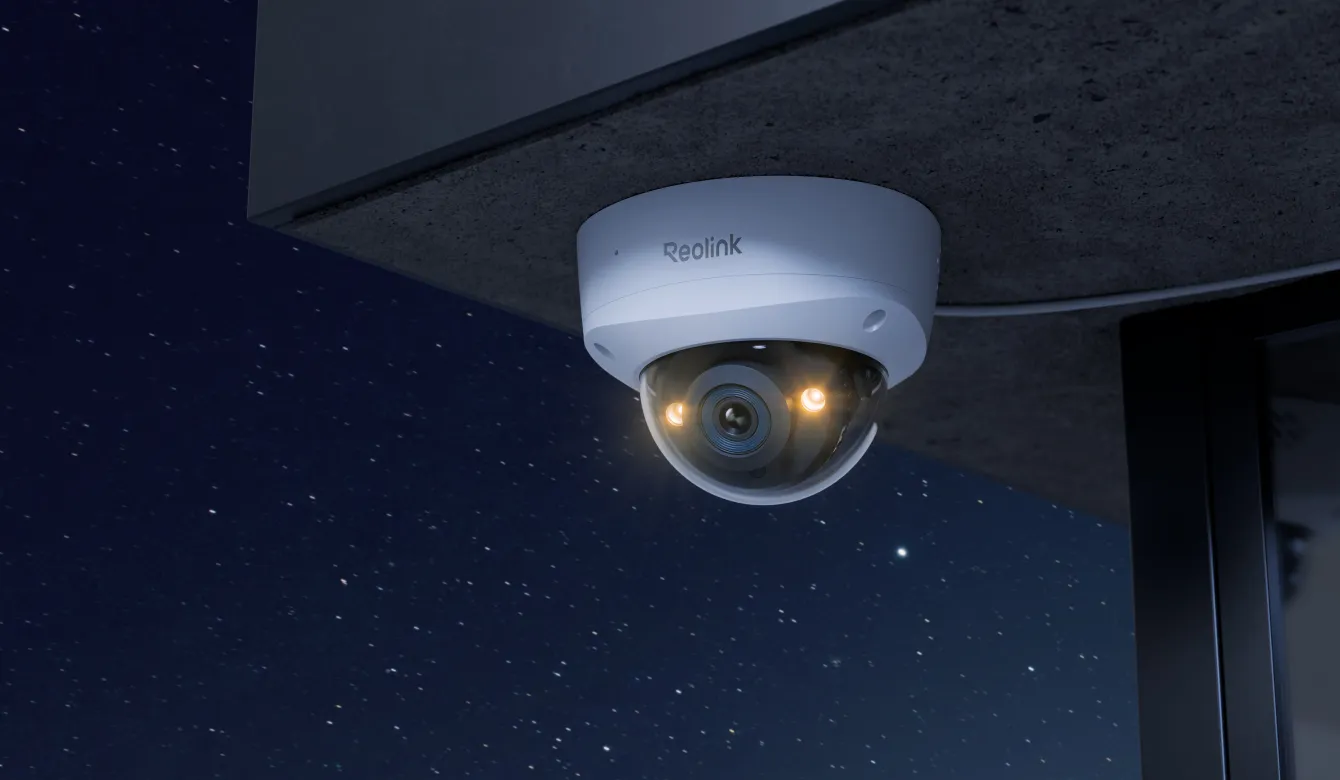
Dome camera with warm lights mounted under a dark eave against a starry night sky, the kind of entry camera used at Rockland County condo clubhouses
Manufacturer photo from Reolink, one of our partner brands; not a Rockland County property. A white dome camera with two small warm lights, mounted under a dark overhang with stars behind it. A covered clubhouse or lobby entry is where a camera like this records faces at night.
Rockland County Condo Camera Request
Board officers, HOA directors, managing agents, sponsors and unit owners

✅
Request Sent!
Thank you. The office will call or text to put a morning walk-through of your Rockland community on the calendar.
25+
Years Experience
2 Hr
Booking
$1,099
4-Camera System
4.7★
201 Google Reviews

Owner-led since 2002 · Any Rockland town or village, scheduled within 2 hours of your call or form · Direct Rockland number (845) 640-3835

The County

Why a Rockland Condo Camera Plan Starts With the Loop, the River and the Resale Calendar

Rockland is compact. Wikipedia's county entry gives it 199.34 square miles and calls it the smallest county by area in New York outside the city, split into five towns (Clarkstown, Haverstraw, Orangetown, Ramapo and Stony Point) with eighteen villages inside them and the county seat at New City. A crew can cross it in under an hour, which matters less to a camera plan than what the condo stock looks like once you get there. And that stock is not one thing.

When we pull the active condo listings, the pattern is easy to read. Redfin showed 177 condos for sale in the county in late November 2026, spread across Pomona, Valley Cottage, Spring Valley, Nanuet, Suffern, New City, Tappan, West Nyack, Congers, Haverstraw, Piermont, Stony Point, Pearl River, Monsey and Bardonia. The listing notes keep repeating the same amenities: a community pool, a clubhouse, tennis courts, a gated entrance, garage parking, age-restricted living. Read as a camera designer would read them, those are the places where a community's shared life happens, and so they are where a board's money should go first.

Three shapes of community account for most of the condo security camera installation work we see in Rockland County. The most common is the townhouse loop: two-story attached homes along a private road that circles back on itself, with the pool, courts and a small clubhouse on an island of lawn in the middle. The second is the riverfront building in one of the Hudson villages, an elevator condo with a lobby, a garage and a view, often one of several buildings put up in phases. The third is the age-restricted community, which borrows the loop layout but adds a busier clubhouse and residents who expect to be consulted about every camera.

Turnover is the thread that runs through all three. OneKey MLS counted 543 Rockland condo sales in the twelve months through October 2026, a median twelve-month price of $475,000 and a median of 41 days on market, while condo inventory that October stood at 193 units, up 69.3 percent from 114 a year earlier. More listings mean more showings, more closings and more new owners asking how the cameras work. A camera system that depends on one volunteer remembering one password does not survive that pace, so we design the logins, the camera map and the footage policy to be handed over cleanly every time a unit changes hands. Rental buildings with a single landlord have different obligations and a different buyer, and they are covered on our page about apartment building security camera installation in Rockland County.

Rockland facts that shape a condo camera plan

  • Five towns and eighteen villages in 199.34 square miles, the smallest county by area in the state outside New York City (Wikipedia, Rockland County).
  • 543 condo sales in the twelve months through October 2026, median price $475,000, median 41 days on market; October inventory 193, up 69.3 percent year over year (OneKey MLS, Rockland County report, October 2026).
  • 177 condos listed in mid-November 2026 across fifteen Rockland communities, with pools, clubhouses, courts, gated entrances and 55-plus living repeated in the listing notes (Redfin).
  • One Haverstraw riverfront development described by Hudson Valley Magazine opened with two buildings and sixteen units, with later phases planned to reach "40 total units in five buildings."
  • Of 109,999 housing units in the county, 67.9 percent are owner-occupied (U.S. Census QuickFacts).
  • After the July 4, 2026 storm, 6,466 Rockland customers were still without power late that night, and one New City neighborhood "had no power for over 36 hours" (Rockland County Times, July 9, 2026).
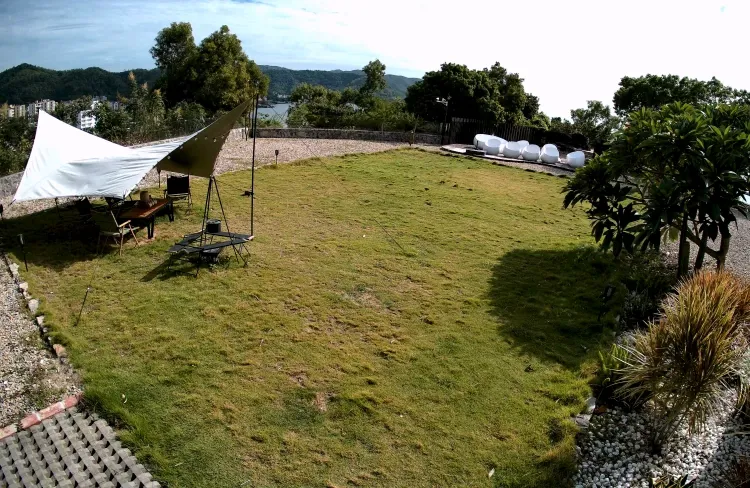
Sample wide-angle daytime camera view of a sloping lawn with a shade canopy and trees, like the amenity lawns in Rockland County townhouse condos
Sample image from a Reolink product page (partner brand), not a Rockland County community: a very wide daytime view across a lawn with a white shade canopy, seating and a line of trees. One corner camera with a lens this wide can cover most of a townhouse loop's central lawn.
Community Types

Six Kinds of Rockland Condo Community and Where Each One Spends Its Camera Budget

No agency sorts condos this way; the six labels below are simply how our crews describe what they find on Rockland walk-throughs, and some communities fit two at once. The label matters because it predicts which part of the property will absorb most of the budget.

Townhouse loop with pool and courts

The classic Clarkstown and Ramapo layout: attached two-story homes with their own front doors, a private road that loops, guest parking pockets and an amenity island. Most of the spend lands at the loop entrance, the pool gate and the clubhouse door, plus whatever link carries those far cameras back to a recorder.

Phased riverfront elevator building

Nyack, Piermont and Haverstraw have condo buildings with lobbies, garages and river-facing amenities, often one of several buildings delivered over years. The plan concentrates on the lobby, the garage ramp, elevators and the parcel area, and it has to leave room for buildings that are not finished yet.

55-plus community

Stony Point, Pearl River and parts of Clarkstown have age-restricted condos with a clubhouse that functions as the community's living room. Coverage sits at doors, the lobby and the fitness floor rather than in the rooms where residents gather, and the board spends real time on the written policy.

Garden complex off a main road

Two- and three-story buildings from the 1970s and 1980s around open parking, many near Route 59 and the old village centers. The work goes into parking rows, building entries, laundry rooms and dumpster areas, and into replacing whatever the last board bought.

Gated community

A handful of Rockland developments, including listings in Nanuet, advertise a gated entrance. The gate needs a camera that sees plates and one that sees the whole approach, and those two jobs are kept on separate cameras.

Small village condo near a station or a main street

A dozen or two units in Suffern, Pearl River, Nanuet or Spring Valley, close to the Port Jervis or Pascack Valley line. Four to eight cameras usually cover the entry, the mail spot, the lot and the rear door, and the starting package is close to the whole job.

The same $1,099 four-camera starting system can be nearly the entire project for an eight-unit building in Pearl River and a first phase for a two-hundred-home loop in New City. What scales a Rockland budget is seldom the camera hardware. It is how many separate places the board wants recorded, how far apart those places are, and whether a link has to cross a lawn, a parking lot or a town road to reach the recorder.

The other early question is who will actually use the system. A riverfront building with a part-time superintendent needs alerts sent to someone off site. A townhouse HOA run by volunteers needs playback that a treasurer can work from a phone on a Sunday night. A 55-plus board wants to see exactly what each camera shows before anyone drills a hole. We build the plan around those people, not around a camera count.

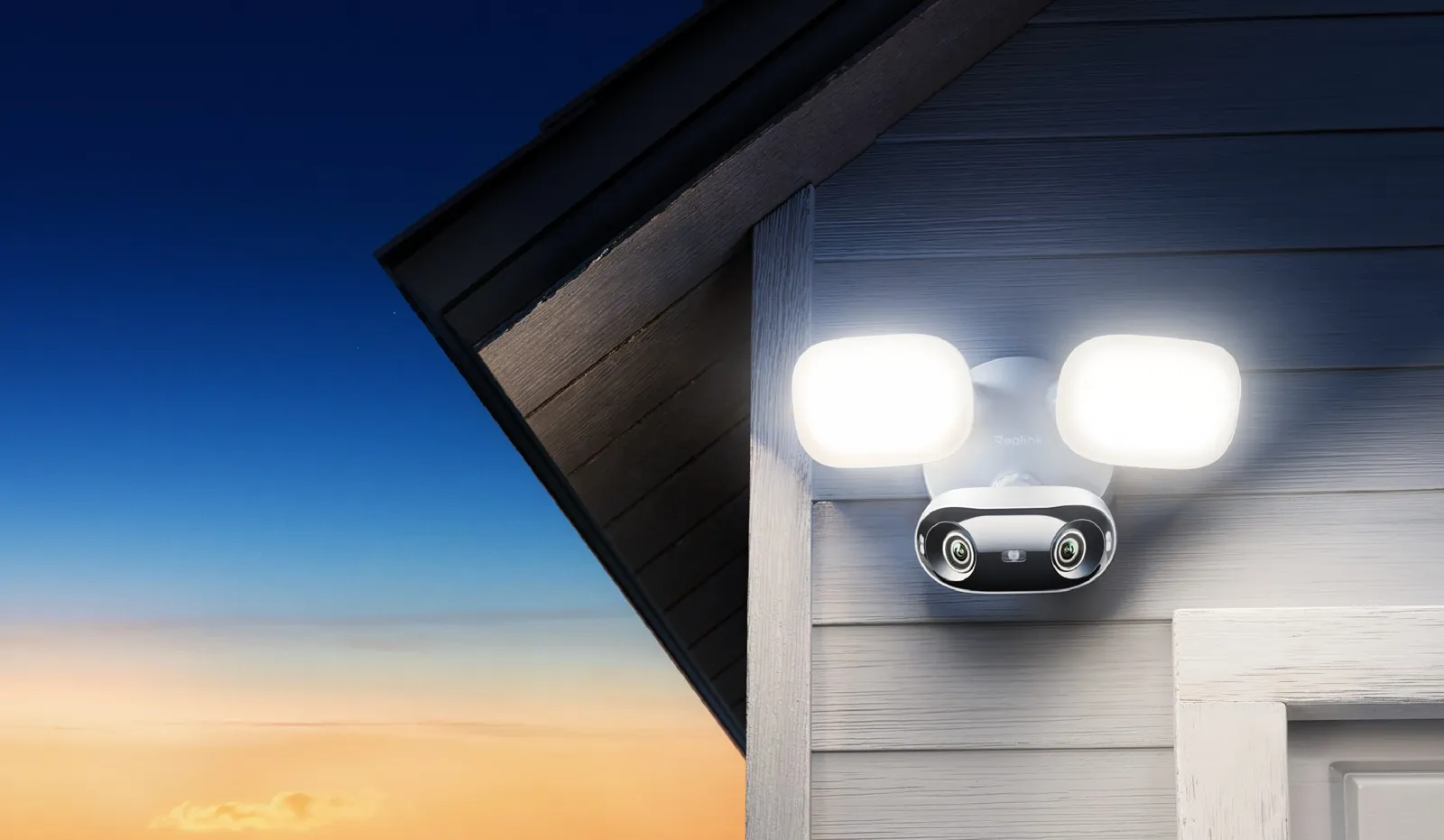
Dual-lens floodlight camera with two lamps lit under a sided gable at dusk, the kind of end-wall camera used over Rockland County condo guest parking
Manufacturer photo from Reolink (partner brand), not a Rockland County building: a white floodlight camera with two lit lamps and a dual lens, mounted under the peak of a sided gable against an orange and blue dusk sky. A light-and-camera unit on the end wall of a townhouse row can cover a guest parking pocket.
Townhouse Loops

Covering a Townhouse Loop: One Way In, an Amenity Island, and Fifty Front Doors

A loop layout is generous to a camera designer, because traffic has fewer choices. If every car arrives through one or two openings off the town road, a well-placed pair of cameras at each opening records nearly everyone who enters the community. That is why we start a loop plan at the mouth of the road, not at the pool, even though the pool is usually what prompted the call.

The mouth of the loop

At the entrance we separate two jobs. One camera, mounted low and close to where cars slow for the turn, is aimed and zoomed to read plates and see a driver's side window. A second, wider camera mounted higher shows the approach, both lanes and the sidewalk, so the board can tell what happened even when the plate camera only captured a bumper. Where the entrance sign or a light pole sits on association land, it often makes a good mount; where it doesn't, a short pole goes on the plan with its own price.

The amenity island

Pool, courts and clubhouse usually share one patch of lawn in the middle of the loop, and that is convenient: one weatherproof cabinet at the clubhouse can serve all three. Cameras cover the pool gate, the deck in a wide view, the court gate and the clubhouse door. The courts themselves rarely need a dedicated camera unless a board is dealing with damage to nets or lights after hours.

Guest parking pockets

Loops tend to have small clusters of guest spaces tucked between buildings. These are where cars are rummaged and where a dent in a parked car turns into a dispute between neighbors. A camera on the end wall of the nearest building, looking along the row rather than across it, gives a usable view of anyone walking between the cars. We note on the plan whose wall it is and get the board's written direction before anything is mounted on an owner's end unit.

The backs of the buildings

Rear patios and decks belong to individual owners in many Rockland declarations, or at least are reserved for their use. We generally leave the backs of buildings alone unless there is a shared path, a wooded edge where people cut through, or a utility area. When a rear camera is warranted, its view is masked so that private patios and windows don't appear in the recording at all.

The front doors of individual homes are the last piece, and the most argued about. A loop with fifty front doors cannot put a camera on each one, and shouldn't try; that coverage belongs to owners who choose their own doorbell cameras under the board's rules. The association's cameras handle the shared spaces: the road, the island, the parking and the entrance. Setting that line in writing early keeps the plan affordable and keeps owners from feeling watched on their own steps.

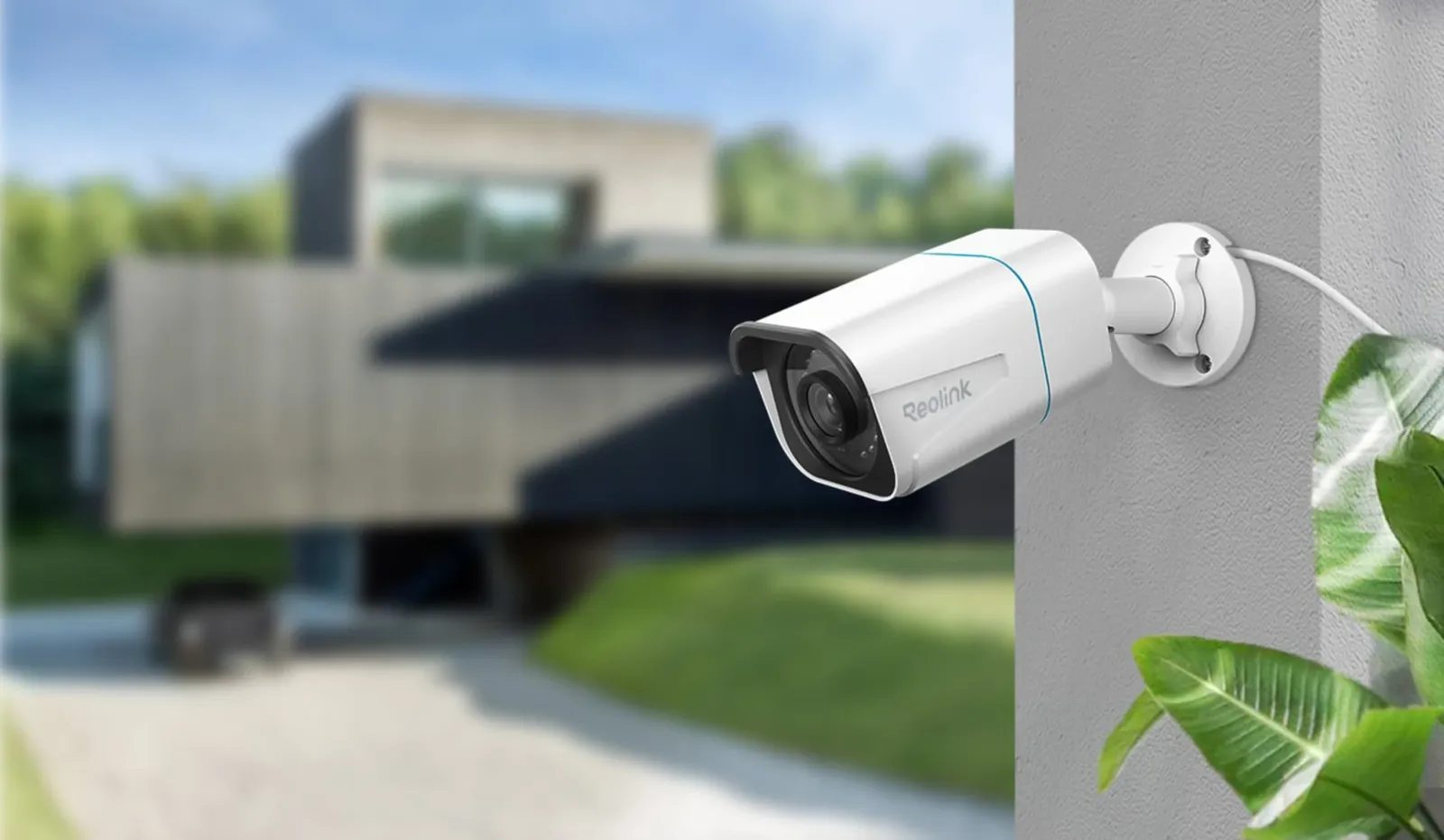
White bullet camera on a gray wall with a modern flat-roofed building and lawn blurred behind it, as mounted at a Rockland County townhouse loop entrance
Manufacturer photo from Reolink (partner brand), not a Rockland County community: a white bullet camera on a short bracket fixed to a gray wall, with a modern building, a driveway and a lawn out of focus behind it. A longer-lens bullet like this is what watches the approach to a loop entrance.
River Villages

Riverfront Buildings in Nyack, Piermont and Haverstraw That Arrive One Phase at a Time

The river villages produce a different kind of condo job. Hudson Valley Magazine's 2019 profile of one Haverstraw waterfront development described a first phase of two buildings and sixteen units, with the final phases planned to bring the total to 40 units in five buildings, and amenities that included two swimming pools, a fitness center, an indoor basketball court and a café. We are not naming that property and we don't work from its plans here, but the shape is typical of riverfront condos in Rockland: buildings handed over in stages, amenities that open before the last building does, and a board that inherits whatever the developer installed.

Sizing the first recorder for the last building

When a community will grow, the recorder decision made in phase one shapes the next decade. A recorder with spare channels and drive bays, placed in a room that can reach the future buildings by fiber or conduit, lets phase two add cameras without a second system and a second app. We put the expected final camera count in the proposal next to today's count, so the board and the developer both see the headroom they are paying for.

The lobby, the garage and the river side

Inside, coverage follows people: the main entry and vestibule, the lobby, the parcel area, each elevator lobby, the garage entrance and ramp, garage stair doors and the trash room. Outside, the river side is usually a lawn, a terrace or a walkway, and owners on that side are protective of their view and their balconies. River-side cameras are aimed along the walkway and the building line, never up at the balconies, and the parts of the picture that would show a window are blacked out in the recorder settings.

When the developer still holds the keys

During the transition years, the sponsor may still control the board, still own unsold units and still employ the original contractors. That is a reasonable time to put cameras in, provided the association ends up owning the recorder, holding the administrator login and receiving the camera map. We address the proposal to the association, list the sponsor as a party where the board wants it, and hand every credential to the people the board names, not to the sales office.

The river also sets the location of the equipment. A garage level or a basement utility room is the obvious place for a recorder in a riverfront building and the worst place for it during a tidal flood. The weather and power section below covers how we pick the room. In short: as high as the cable paths allow, in a locked space, on a battery, and never on the floor.

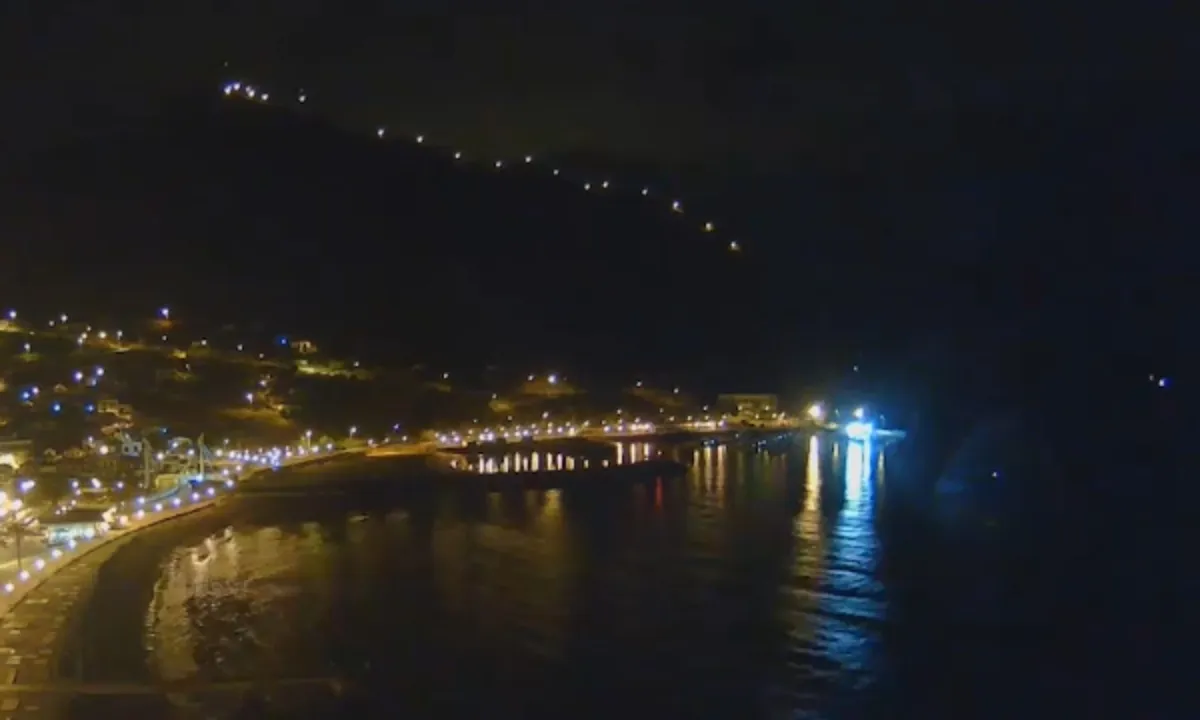
Night sample camera view of lights along a curving shoreline below a dark hillside, like the riverfront villages where Rockland County condo buildings stand
Sample image from a Reolink product page (partner brand), not a Rockland County scene: town lights strung along a curving waterfront at night, with a dark hillside above and reflections on the water. Riverfront condos face both the view and the flood risk that comes with it.
Turnover

Fast Resales and Camera Access: Keeping Logins, Maps and Policy Intact as Owners Change

With hundreds of Rockland condo closings a year and inventory well above last year's level, a typical board sees units change hands every few weeks, and its own members change too. Each sale is a small security event. A seller who was treasurer may still have the camera app on a phone. A buyer may arrive asking what the cameras cover and who can see the footage. An agent may want to photograph the clubhouse for a listing and catch a camera in the shot. None of this is dramatic, but over a few years it is how associations lose control of systems they paid for.

Logins tied to roles, not to people

We set up the recorder with one administrator account owned by the association, recorded in the board's files, and separate named accounts for each person who needs access, each with only the permissions that role requires: view only for most directors, playback and export for one or two officers and the managing agent. When a director sells and leaves the board, removing one named account takes a minute and touches nobody else. Shared passwords written on a card in the clubhouse office are the thing we replace most often.

The camera map as a closing document

At handover the board receives a numbered camera map and a still image from each camera showing exactly what it records and what is masked out. That pair answers most buyer questions without anyone opening the recorder. Boards often attach the map and the footage policy to the documents a new owner receives, so a buyer knows before moving in that the pool gate is recorded, the private patios are not, and footage requests go through the managing agent.

What is never shared

Recorded video stays with the association. Prospective buyers, their agents and inspectors may be told where the cameras are and how long footage is kept; they do not get access to recordings, and they do not get logins. A showing is not a reason to give anyone a view of the live cameras, however harmless the request sounds.

There is a practical side benefit to all this. A community that can show a buyer a tidy camera map, a written policy and a recorder that is clearly maintained looks well run, and a well-run association is easier to sell into. We don't claim cameras raise prices, and we have no data that says so. We do see buyers' agents ask about security, and a clear answer reflects well on the board.

Between Buildings

Trenching, Wireless Bridges and Old Conduit: Connecting the Far Corners of a Rockland Site

The single most variable line in a Rockland condo camera proposal is the link between buildings. A camera on the clubhouse wall thirty feet from the recorder costs little beyond the hardware. The same camera at the pool gate, three hundred feet across a lawn and a parking lot, needs a way to get power and video back, and the cost of that path can exceed the cost of the camera several times over.

The distance limit that drives everything

Network cameras normally take power and send video over one copper network cable, and that cable is reliable up to about 100 meters, roughly 328 feet, from the switch. Past that, both the signal and the power fall off. On a loop community, the clubhouse, the entrance and the farthest guest lot can all sit beyond that limit from wherever the recorder lives, so the plan needs either an intermediate switch or a different kind of link.

Three ways across the property

Trenching is the most durable: conduit buried between buildings, carrying fiber or copper, protected from mowers, frost and animals. It is also the most disruptive, because lawn, curbing or pavement has to be cut and restored. A wireless point-to-point bridge, a pair of small radios aimed at each other from building to building, avoids digging entirely and works well where there is a clear line of sight and both ends have power. The third option is the one boards forget: conduit the developer already buried for future use. Many Rockland communities built since the 1990s have spare pipes between buildings or out to the entrance sign, and testing whether one is open can save a trench.

Before anyone digs

Any excavation in New York requires a call to the one-call center first. Under the state's Code Rule 753, as Dig Safely New York explains it, the notice "shall be served at least two but not more than ten working days" before digging, not counting the day of the call, so utilities can mark their lines. That marks gas, electric and phone. It does not mark private lines the association owns, such as irrigation, site lighting or the cable to the entrance sign, and those are found from the community's own drawings and the maintenance contractor's memory. Trenching is priced and scheduled only after both are done.

Power at the far end

A remote switch cabinet or a wireless radio needs electricity. If a light pole or the pool house already has a circuit, a licensed electrician can add a protected outlet there. We don't do electrical work. Rockland's county code treats wiring for light, heat or power as electrical contracting under a master electrician (Rockland County Code ch. 250), so that outlet is the association's electrician's job, and we coordinate the location and timing with them.

Every far link appears on its own line in our proposal, with its distance, its method and its price, so the board can see what the distant cameras really cost and decide whether to include them now or in a later phase. Trenches are restored to grass or patched pavement, and radios are mounted on building structure rather than gutters.

Network video recorder, router and wall-mounted monitor connected on a gray table, a setup like a Rockland County condo clubhouse equipment closet
Manufacturer product photo from Reolink (partner brand), not a Rockland County installation: a black recorder and a white router on a table below a flat-screen monitor, cables running to a wall outlet. The recorder and its switch belong in a locked, dry room, kept off the network the residents use.
Floods & Outages

River Flooding, Summer Storms and Day-Long Outages on Rockland Condo Grounds

Rockland's weather problems are well documented, and both of them reach condo camera systems. The first is the river. The second is power.

Tidal flooding in the river villages

Rockland Daily reported in January 2024 that "the Village of Piermont was hit hard by tidal flooding from Friday night's storm," its worst since Hurricane Sandy. Writing after Sandy in 2012, the Rockland County Times said that "Rockland residents living near the Hudson River got the worst of Sandy." For a riverfront condo, those reports translate into a short list of rules: the recorder and the main switch go above any flood line the building has seen, not in the garage or the basement; outdoor connections are sealed and drip-looped; and garage cameras are mounted high on walls or ceilings, with their cable entering from above.

Outages that last more than a night

Inland communities face a different risk. Orange & Rockland Utilities said storms beginning July 1, 2026 affected more than 47,000 of its customers, and the Rockland County Times counted 6,466 Rockland customers still in the dark on the night of July 4, with one New City neighborhood without power for over 36 hours. No battery keeps a camera system running for a day and a half. What a properly sized battery backup does is ride out short interruptions without a reboot, then shut the recorder down cleanly in a long one so the drive and its footage survive, and restart everything on its own when power returns.

Generators, where they exist

Some clubhouses and a few riverfront buildings have standby generators. Putting the recorder and camera switches on a generator-backed circuit, with the battery bridging the seconds before the generator takes the load, is the best outage protection a condo camera system can have. Connecting equipment to a generator circuit is electrical work for the association's electrician; our part is to tell them exactly which equipment needs it and how much power it draws.

Surges on long runs

Copper cable running between buildings can pick up surges during summer storms and deliver them to the switch and the recorder. Every cable that leaves a building gets surge protection at both ends and a proper ground, and where two buildings are on separate electric services we lean toward fiber, which carries no current at all, for the link between them.

After any major storm we suggest the board or manager open the app the next morning and look at every camera tile. A dark tile after a storm is usually a tripped outlet, a radio that lost aim or a switch port that took a surge. Catching it in a day keeps the gap in the footage to a day.

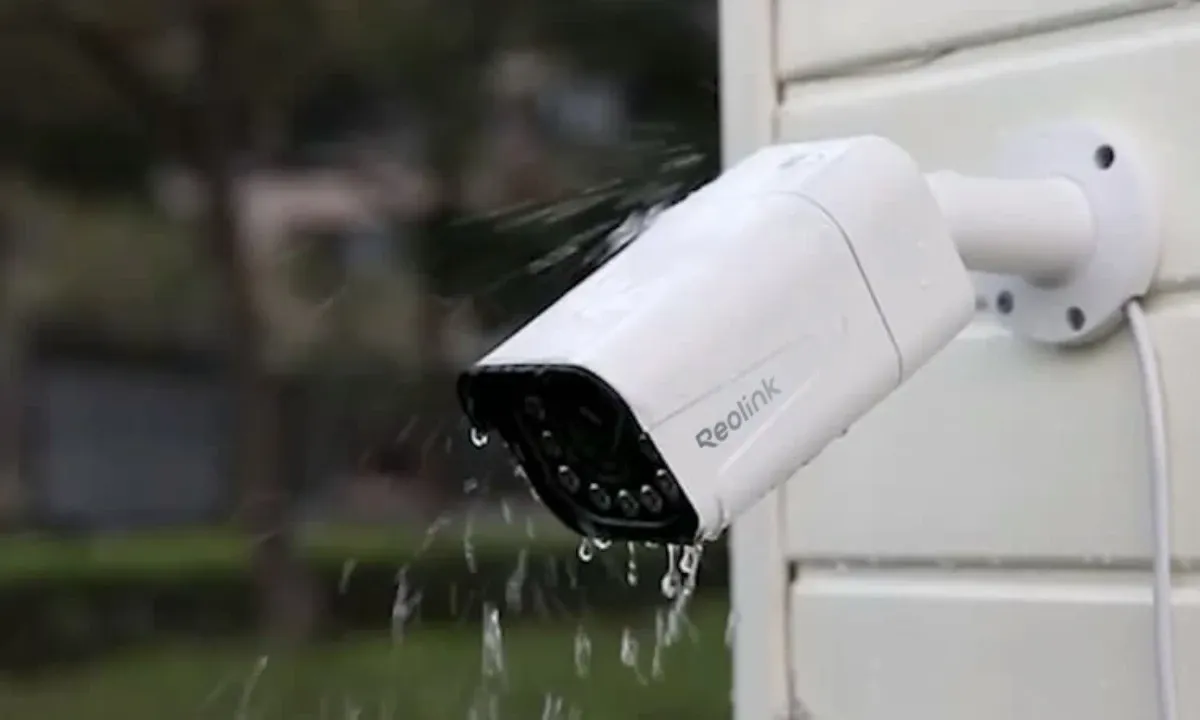
White bullet camera on a wall bracket shedding water against light siding, weather-sealed for Rockland County condo storms
Manufacturer photo from Reolink (partner brand), not a Rockland County building: a white bullet camera on a wall bracket with water streaming off its hood against pale siding. Sealed housings and drip loops keep a camera working through the summer storms that cut power across the county.
Police Requests

Rockland Police Camera Registration and What It Means for a Condo Association

Rockland law enforcement has encouraged private camera owners to let police know where cameras are. News 12 reported on Rockland County Sheriff Lou Falco's Project Community Eyes, a database of private camera locations intended to show detectives "precisely where to knock after a crime or terrorist incident occurs," and on Clarkstown police asking residents and businesses to register their systems. As those reports describe it, registration is a list of locations; it does not give police a live feed.

For a condominium, registering is a decision for the board, because the cameras belong to the association. In practice it means providing the community's address and a general description of what the cameras cover, such as the entrance, the clubhouse, the pool and the parking areas, along with a contact who can check for footage when asked.

Registration doesn't change who releases video. The association still decides, under its written policy, and calls its counsel when a request is unusual. And registration only helps if the footage still exists when the detective calls. A recorder that keeps ten days of video is no use to an investigation that starts three weeks later, which is one reason we size storage to the policy rather than to the cheapest drive.

Signing up is the board's call, and the board does it directly; we never enroll a community ourselves and have no video-sharing agreement with any department. The camera list and coverage notes in the handover binder contain everything a registration form asks for.

Equipment

Condo Security Camera Systems Built for Rockland Loops and River Buildings

The parts list for a Rockland community is ordinary. What is specific is how the pieces are matched to a loop road, an amenity island or a riverfront garage.

Cameras

Turret cameras are our default under eaves and on clubhouse walls: they hold aim, shed rain and don't collect webs the way some domes do. Vandal-rated domes go where someone could reach them, such as garage ceilings and laundry rooms. Bullets with longer lenses watch the loop entrance and long parking rows. Dual-lens panoramic cameras cover a wide lawn or a pool deck from one corner, and full-color cameras with a soft white light help where the board wants color at night and the lighting is poor.

Recorder and storage

One network video recorder holds the community's footage in a locked room. We size its drives from the number of cameras, their resolution and the days of retention the board's policy calls for, then state that number of days in the proposal. For phased communities we choose a recorder with channels to spare for the buildings still coming.

Network and power

Cameras run on their own network, kept apart from the clubhouse Wi-Fi and the management office computers, and take power through the same cable from a PoE switch. Switches and the recorder sit on battery backup. Links between buildings use fiber, buried cable or point-to-point wireless, each chosen per link.

Detection that respects the woods

Much of Rockland backs onto woods, parkland or wetland, and deer, foxes and wind-blown branches would bury a board in alerts if detection weren't tuned. We draw detection zones around the places that matter, the pool gate after hours or the loop entrance at night, and set the cameras to classify people and vehicles so that animals and moving leaves are recorded but don't trigger messages.

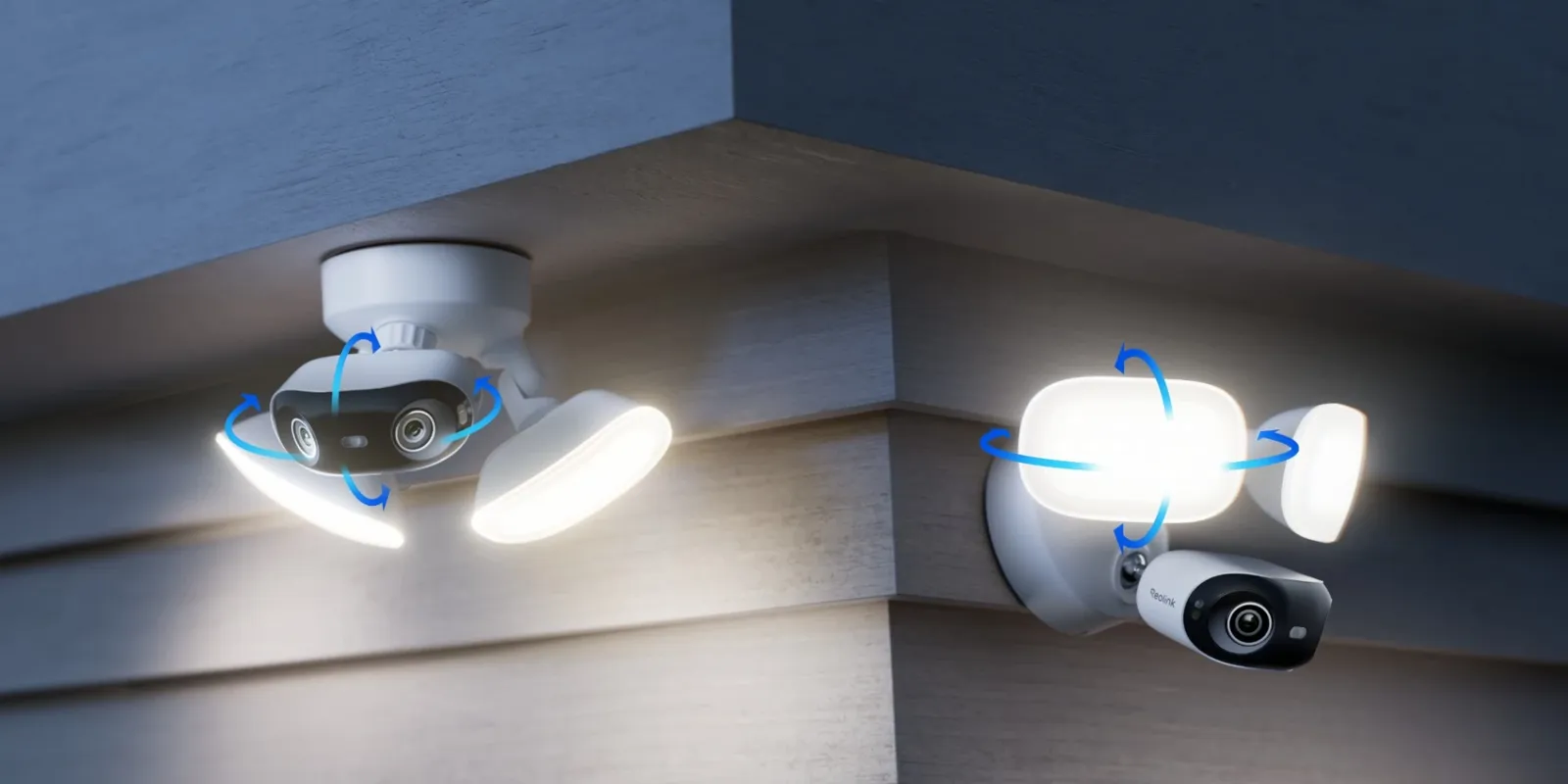
Two floodlight cameras lit under the eave of a sided building at night, showing the pan and tilt range used on Rockland County condo clubhouses
Manufacturer image from Reolink (partner brand), not a Rockland County clubhouse: two white floodlight cameras with their lamps on, one under a soffit and one on a wall corner, with arrows showing how each lens turns. Combined light-and-camera units suit clubhouse corners where the existing lighting is weak.
Brands

Our House-Brand System by Default, Partner Brands When a Board Asks

Unless a board names a manufacturer, our proposals start from the house-brand line we carry: commercial cameras and recorders with a phone app and no subscription. The $1,099 Rockland starting price, and every package on the Rockland County security camera price page, is built on that system.

If the board prefers a named brand, we install that instead. Lorex, Luminys and Reolink are our partner brands, and the product images on this page are Reolink's own photos, used because they show the type of equipment we put up; they are manufacturer images, not pictures of a Rockland property. A brand with a paid cloud plan has that monthly cost listed on its own line so the board can compare totals honestly.

Whatever the brand, the association owns the hardware and holds the administrator account. We don't keep a back door into a community's cameras. If the board wants us to help remotely later, it invites us with a separate login it can remove at any time.

Privacy & the Law

New York State Rules Behind a Rockland Condo Camera Plan

We install cameras; we are not lawyers, and nothing on this page is legal advice. A board with a legal question about its own situation should put it to the association's counsel. What we can do is point to the published state rules that shape how we install, and clear up one frequent confusion: New York City's local laws do not follow city commuters across the Tappan Zee, now the Mario M. Cuomo Bridge.

The board's authority

The state Condominium Act lists entrances and exits, recreational and community facilities, parking areas and "all apparatus and installations existing for common use" among a condominium's common elements (Real Property Law §339-e), and it requires the bylaws to address the operation and maintenance of the property and the reserves kept for repairs and improvements (§339-v). The declaration and bylaws are therefore the first documents to read, because they say who controls the common areas where cameras go and how spending is approved. A Rockland HOA that is not a condominium works from its own declaration of covenants instead.

Video, not sound

Penal Law §250.05 makes eavesdropping a felony, and §250.00 defines it to include the "mechanical overhearing of a conversation" without the consent of at least one party. Plenty of cameras arrive with a microphone switched on. We turn audio off on every common-area camera and note that on the camera list the board receives.

Rooms that are off limits

Penal Law §250.45 names bedrooms, changing rooms, fitting rooms, restrooms, toilets, bathrooms, washrooms and showers among the places where recording a person without consent can be unlawful surveillance, and General Business Law §395-b separately bars hidden viewing devices in restrooms, showers and fitting rooms. Pool changing rooms, clubhouse restrooms and locker areas get no cameras. A camera may watch the door to those rooms from outside, never the inside.

Units, patios and balconies

A 2025 CooperatorNews legal column observed that the law gives the interior of a neighbor's unit "considerable privacy safeguards," and that a camera that "peers into a neighboring unit" can intrude on them. In a townhouse loop or a riverfront building, windows, balconies and private patios are almost always somewhere in a wide view. We aim to keep them out and use privacy masking in the recorder to black out whatever remains.

Owners' own cameras

Owners of attached homes often want a doorbell camera, and that is their own device, governed by the board's alteration rules. CooperatorNews pointed out that condominium documents usually stop owners from changing common elements unilaterally and that getting the board's consent first is the prudent route. A short house rule on where owner doorbells may go and which way they may face settles most disputes in advance. The association's recorder never ties in to those personal devices.

Who may install, and who may wire power

New York licenses security and fire alarm installers through the Department of State (General Business Law §69-m), and its rules at 19 NYCRR Part 195 count closed-circuit video used to detect or monitor intrusion as security work. Ours is license #12000287431. Line-voltage wiring is a separate trade under Rockland County Code ch. 250, which is why outlets and circuits for cameras are done by a licensed electrician hired by the association.

City rules that stay in the city

Board members who work in Manhattan sometimes ask about New York City's tenant data and smart-access rules. Local Law 63 of 2021 is a New York City law; it does not govern a condominium in Nanuet or Nyack. The state laws above apply everywhere in New York, and the association's own documents do the rest.

Footage Policy

A Written Footage Policy for a Rockland Condominium, Adopted Before the Cameras Go Live

Cameras rarely start arguments. Footage does. Who may watch it, who may copy it, how long it lasts and what happens when an owner asks for a clip of their neighbor are the questions that divide boards, and they are far easier to settle on paper before the first incident than in the middle of one.

What the policy covers

  • How long video is kept. FirstService Residential notes that condo footage is generally stored for 30 to 90 days, depending on building size. In communities where incidents are often noticed late, such as a dent found after a vacation, the longer end is worth the extra drive space.
  • Who may view. Typically the managing agent and one or two named officers; a superintendent may have live view of the lobby and garage only.
  • Who may export. One or two named people, so every copy of a clip can be traced to the person who made it.
  • Owner requests. An owner who wants to see a clip asks the managing agent in writing. FirstService Residential recommends that residents get footage only with the board's and counsel's approval, and that someone log every request and every person who opens the recordings.
  • Police, insurers and attorneys. One named person answers them, the relevant clip is exported the same day so the recorder cannot overwrite it, and anything beyond a routine police request goes to counsel first.
  • Moving cameras. Adding, moving or re-aiming a camera is a board decision, not something an owner arranges with the installer on site.
  • Resales. The camera map and the policy go into the information a new owner receives, and departing owners' app access ends at closing.

Telling owners and renters

Owners should get the camera map and the policy before installation starts. Where the declaration allows rentals, owners who rent their units pass the same information to their tenants, and the board's notice says so. Signs at the entrance and the pool tell visitors that the common areas are recorded.

Master associations and sub-associations

Some larger Rockland developments have a master association that owns the roads, the entrance and the clubhouse, and separate condominiums that own their buildings. Each body sets the policy for its own cameras. The simplest arrangement is one recorder per owner of the ground; the alternative is one shared recorder with each body's cameras visible only to that body's named users.

Board Approval

Moving a Camera Plan Through a Rockland Board, HOA or Developer-Controlled Board

Most of our Rockland proposals are read by volunteer boards that meet monthly, some by boards still controlled by a sponsor, and a few by master associations with several sub-boards to consult. We write each proposal so a director who has never bought a camera can follow it and an engineer on the board can check it.

What the board packet contains

The community's site plan with every camera numbered and its field of view sketched; a sentence per camera saying what it is there to record; the recorder's room and the days of video it keeps; how each distant camera connects and what that link costs; any poles and their locations; what is masked out of each view; and a short list of things that could change the price, such as a blocked conduit or rock in a trench path. Each of those is a line the board can approve, defer or strike.

Timing around pool season and the annual meeting

Two Rockland patterns affect timing. Communities with a summer pool usually want outdoor work around the pool finished before Memorial Day weekend or deferred until after Labor Day, so the deck isn't closed during the season. And boards that hold their annual meeting in spring often want the plan presented to owners there before a vote, which pushes installation into early summer or fall.

Paying for it

How the community pays is the board's decision under its documents. Associations commonly fund a small system from operating money, use reserves when cameras replace an aging system, or split a large first installation into phases across budget years. Financing is available through Wisetack, subject to approval.

Sponsor-controlled boards

When the sponsor still holds a majority, the board can still buy cameras, and many owners want them in before the transition. We make sure the contract names the association as the owner of the equipment and the administrator account, so the system stays with the community after the sponsor's seats turn over.

Pricing

Condo Security Camera Installation Cost in Rockland County

Condominiums and HOAs pay the same Rockland County camera prices as homeowners and businesses here; being a board adds nothing to the number. Four house-brand cameras and a recorder, installed, start at $1,099, and the higher-resolution and full-color packages on our Rockland price page step up from there. A community job is larger than a house job because it covers more places, so the proposal adds lines to that package rather than replacing it with a mystery total.

Line on the proposalHow it is priced in Rockland County
Starter system: four house-brand cameras and a recorder, installed$1,099
Each camera beyond the first fourPriced per camera after we confirm the layout on the walk-through
Concealed wiring inside finished walls and ceilingsOur Rockland price page lists $200 for each camera, covering cable runs to 100 feet; anything longer is measured and priced at the walk-through
Fiber, buried cable or wireless bridges between buildingsEach building-to-building path on its own line, showing method, length and cost
Trenching and surface restorationPriced per run after utility markouts and a check of the association's own buried lines
Poles at the entrance, pool or parking areasListed with height, location and mounting, priced per pole
Larger recorder and storageHard drives chosen so every camera keeps the number of days the board's policy sets
A named brand instead of the house systemQuoted on request, with any monthly cloud plan shown separately
Installing cameras the association already ownsLabor only, quoted by phone or text

What moves a Rockland number

In a riverfront elevator building, the costs that vary are concealed cable through finished lobbies and corridors and the work of reaching garage levels. In a townhouse loop it is distance: an HOA that covers the clubhouse and its immediate surroundings can come close to the package prices, while one that wants the loop entrance, the far guest lot and the back gate on the same recorder is paying mostly for links, cabinets and trenching. That is why we show those items separately, so the board can see exactly what each far camera adds.

Cameras the association already bought

Sometimes a committee has purchased cameras before calling us. For association-supplied equipment we quote labor only, worked out by phone or text from the model numbers and the places to be covered, and the installation is booked once the deposit is paid. We don't do on-site walk-throughs for customer-supplied equipment, and the cameras themselves, including how well any wireless model holds its signal, remain the association's responsibility.

Warranty and terms

Boards sometimes blur three separate promises together. The installed system carries the 30-day warranty shown on our website. Longer protection, one year or several, is an optional plan bought at signing, with per-year prices on the Rockland price page. Separately, each hardware maker stands behind its own product under its own terms. Full terms — including 50% deposit, one-year parts-only warranty on Abstract Enterprises Security Systems-supplied products, and the late-fee schedule — are set out in the service agreement. Full warranty details are on our warranty page.

Financing is available through Wisetack, subject to approval.

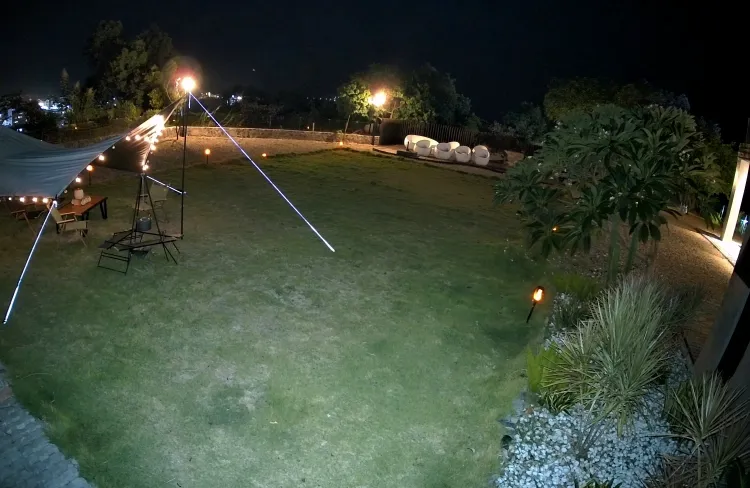
Night sample camera view of a lawn lit by string lights and lamps, with a shade canopy and trees, like a Rockland County condo common lawn after dark
Night sample image from a Reolink product page (partner brand), not a Rockland County property: a wide view of a lawn after dark, lit by string lights, a tall lamp and garden lights, with a canopy and trees around the edge. How much light a common lawn has at night shapes which camera a board should buy for it.
Get In Touch

Request a Camera Plan for Your Rockland County Condo

A few details help us prepare: the town or village, the number of buildings and units, whether there is a pool, courts, a clubhouse or a garage, how many entrances the community has, and what the board most wants recorded. A copy of the site plan, or the developer's as-built drawings for a newer building, saves time on the walk-through. Or call or text (845) 640-3835.

✅

Request Sent!

Received. Expect a call or text from our office, typically within two hours, offering an early-day walk-through time at your Rockland County community.

Across the County

From Piermont to Stony Point: How Condo Camera Work Changes Town by Town in Rockland

Rockland's five towns are small enough to drive in an afternoon and different enough that a camera plan in Tappan and one in Stony Point share little beyond the recorder. These are the patterns we see by area. The places named are general landmarks for orientation, not client properties.

Orangetown: Piermont, Nyack's south end, Tappan, Pearl River and Orangeburg

Riverfront condos in Piermont and along the Nyack waterfront, older village buildings with a few units over shops, and townhouse groups near Pearl River's station on the Pascack Valley line. Flood-aware equipment placement comes first on the river; in Pearl River and Tappan, the job looks more like a small-building plan with a lot, a rear door and a mail area.

Clarkstown: New City, Nanuet, Congers, Valley Cottage, West Nyack and Bardonia

The county's densest concentration of townhouse loops with pools, clubhouses and courts, a few gated developments, and condos within reach of the Palisades Center and Route 59. Loop entrances, amenity islands and links across lawns dominate these plans, and New City's long July outage is a reminder to size the battery backup properly.

Haverstraw: the village waterfront, West Haverstraw and Garnerville

Phased waterfront buildings near the Haverstraw–Ossining ferry, older garden complexes and mixed buildings inland. Package security in multi-building complexes is a recurring theme: Daily Voice reported in April 2026 that packages taken from several buildings in one Haverstraw complex were later recovered in a search. Parcel areas and building entries get identification-quality cameras here.

Ramapo: Suffern, Spring Valley, Monsey, Airmont and Pomona

Small village condos near the Port Jervis line in Suffern, larger communities and clubhouse complexes around Pomona, and fast-growing neighborhoods in Monsey and Spring Valley where some owners observe the Sabbath and want lighting and alerts that don't depend on someone triggering them. The county took over code enforcement in the Village of Spring Valley in 2022, according to News 12, which matters for any work that needs a permit there.

Stony Point and the northern edge

Age-restricted communities with clubhouses and billiard rooms in the listings, more woods and slopes, and longer distances between buildings. Detection tuning for wildlife and careful link planning across uneven ground carry more weight here than anywhere else in the county.

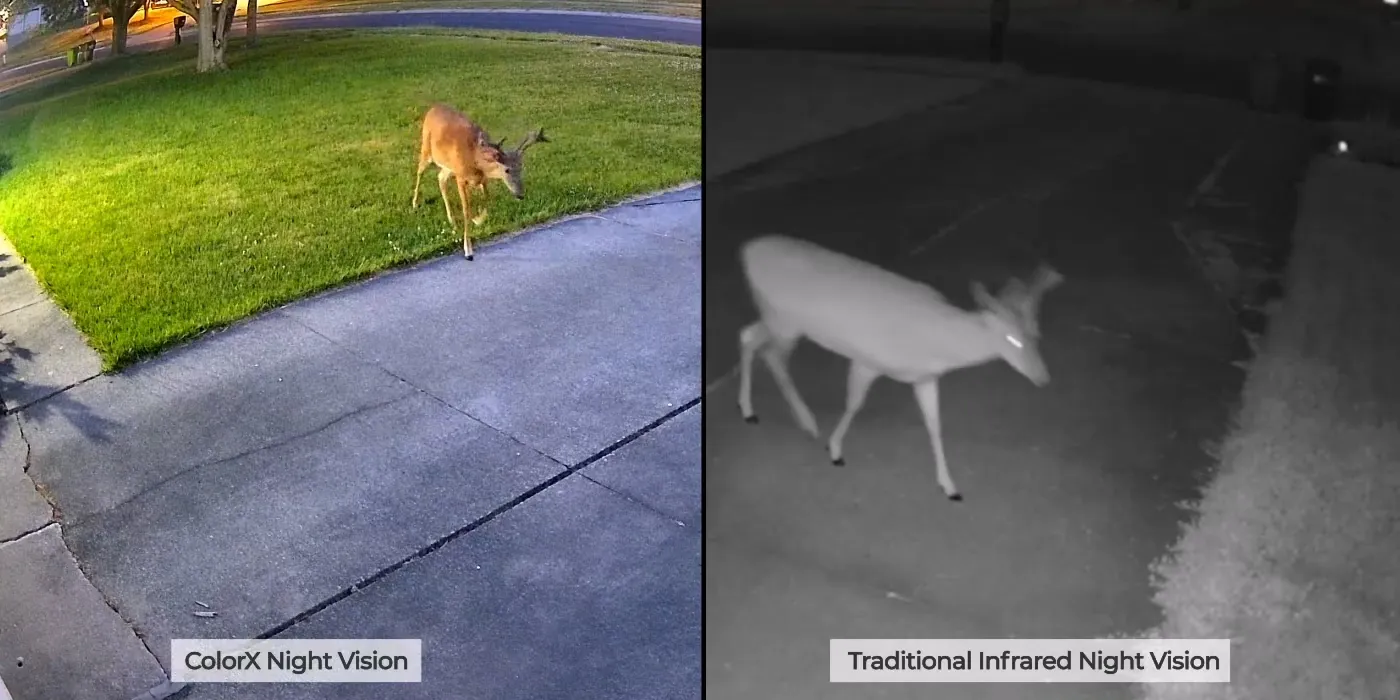
Split sample image of a deer on a lawn beside a driveway at night, in color on one side and infrared on the other, as seen by Rockland County condo cameras
Sample image from a Reolink product page (partner brand), not a Rockland County community: the same deer crossing a lawn beside a paved drive, shown in color night vision on the left and black-and-white infrared on the right. Wooded Rockland sites need detection tuned so wildlife is recorded without setting off alerts.
How It Works

Seven Steps From First Call to Handover for a Rockland Condo

The calendar varies, the order doesn't. A single extra camera on a healthy recorder is a short job once paid for; a first system for a large loop community can spend two board cycles in discussion before anyone signs. Here is what happens from the first message on.

1

Call, text or send the form

A director, the managing agent or an owner reaches out. Within 2 hours we book a walk-through, any day of the week, in a two-hour arrival window with morning slots offered first.

2

Walk the property

Someone from the board or management walks us from the entrance to the farthest lot. We look at the room for the recorder, test any existing cable and spare conduit, and measure each camera spot's distance from it.

3

Written plan on the site map

The board receives a numbered camera map, a purpose for each camera, every link and pole as its own line, the retention days and a list of anything that could raise the price.

4

Vote, signature, deposit

Once the board has voted as its bylaws require, an officer signs and the association pays the deposit, which is what triggers the equipment order. Our certificate of insurance goes out when the job is awarded.

5

Markouts and owner notice

If anything will be dug, the one-call markout is requested and the association's own buried lines are located. We draft a one-page owner notice with the map and work days for the manager to send.

6

Install and tune

The crew runs cable and links, mounts cameras, sets up the recorder, switches and batteries, turns audio off, masks windows and patios, and checks every view in daylight and after dark.

7

Handover to the association

We walk the agent and officers through pulling up a clip, each person signs in with an individual account, and the board gets its binder: map, a still from every camera, and the master credentials registered to the association.

Install dates go to jobs in the order their deposits arrive. An unsigned proposal doesn't hold a date, and we don't book installs for the same day. Special-order equipment gets an install date only once it has arrived.

Existing Systems

Repair, Extend or Replace: Rockland Communities With an Older Camera System

Most Rockland communities we visit already own something: a recorder in the clubhouse closet bought two boards ago, a few cameras the developer installed in phase one, a monitor in the management office that nobody has looked at since the last superintendent left. The first question is not which new cameras to buy. It is what the existing system can still do.

Repair

Sometimes the bones are fine. When the recorder still gets updates and we can regain the master login, the fix may be two failed cameras, a tired hard drive and a fresh set of individual accounts with offline alerts. Our security camera repair service in Rockland County handles that kind of work for any building, condo or not.

Extend

Where the recorder is sound but coverage stops at the clubhouse, we add cameras where the original plan fell short: the loop entrance, the far guest lot, the new building in the latest phase. A recorder with spare channels takes them directly; one without gets a small add-on or, sometimes, a replacement that is cheaper than working around it.

Replace

Three findings usually end the repair conversation: a recorder its maker stopped updating years ago, old analog cameras that show grey blur after sunset, and a locked box whose password left with a past board. Replacement is also the moment to fix the layout: move the recorder out of a flood-prone garage, put the cameras on their own network and draw the plan around the places that matter now. Older analog systems in any type of building are the subject of our CCTV installation page for Rockland County.

Whichever path fits, we test before we recommend. Old coaxial and network cable between buildings is checked with a tester during the walk-through, because a run that fails after the board has voted turns into an unwelcome change. Anything that might need replacing is priced in the proposal up front.

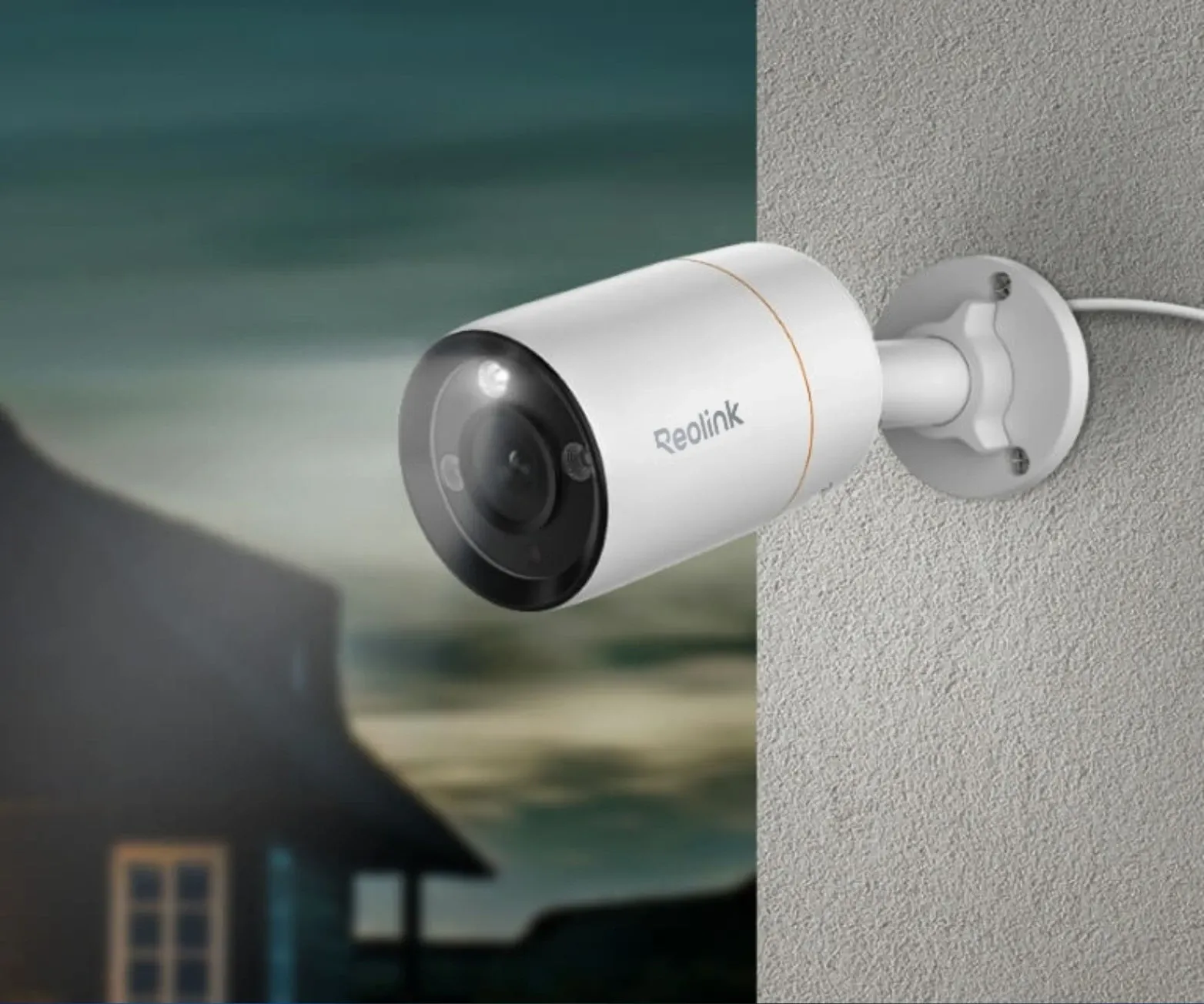
White bullet camera with an orange trim ring mounted on a stucco wall corner at dusk, as fitted to an older Rockland County condo building
Manufacturer photo from Reolink (partner brand), not a Rockland County building: a white bullet camera with an orange trim ring on a short bracket at the corner of a stucco wall, a roofline and dusk sky behind it. Replacing tired analog cameras usually means new mounts like this on the same corners.
On Site

Working Inside an Occupied Rockland Community

We arrive within the scheduled two-hour window, never ahead of it, and park where the board or manager tells us, usually by the clubhouse or in guest spaces rather than on a narrow loop road where a van blocks garages. Ladders and lifts are kept off walkways during the morning dog-walking and school-bus hours, and work near the pool stays outside swim hours in season. In riverfront buildings, elevator use is booked through management so our work doesn't collide with a move-in, which in a community with constant resales happens more often than boards expect.

Residents will ask the crew what a camera sees, and our installers are glad to show them. Requests to move a camera, add one near a particular home or change its aim go back to the board, because the board made those decisions and its policy says how they change. At the end of each day the work area is cleaned up, trenches are covered or fenced, and the manager gets a short note of what was finished.

Planning

How Many Cameras a Rockland Condo Community Typically Needs

Directors often ask for a ballpark before anyone visits. The ranges below reflect common-area coverage on properties our crews have walked; treat them as a conversation starter rather than a quote or a statistic, because the actual count depends on the site and on what the board decides matters.

CommunityTypical camera rangeWhere the cameras go
Small village condo, up to about 24 units4 to 8Front entry, mail area, parking lot, rear door
Riverfront elevator building10 to 24Entry and lobby, parcel area, elevator lobbies, garage ramp and stairs, river walkway
Townhouse loop, 60 to 150 homes10 to 24Loop entrance, amenity island, guest parking pockets, maintenance area
Garden complex with open parking12 to 30Building entries, parking rows, laundry rooms, dumpster areas
55-plus community with a clubhouse14 to 30Main drive, every clubhouse door, the gym floor, the pool fence gate and a deck overview, plus clubhouse parking
Phased community, final build-outPlan for the final countPhase one now, with recorder capacity and conduit for later buildings

Two things push a Rockland community toward the top of its range: separate parking areas that can't be seen from one building, and a pool or courts far from the clubhouse. Two things pull it lower: a single loop entrance that every car must pass, and buildings arranged so that one corner camera can see two building entries at once.

AI Overview Reality Check

What Generic Answers Miss About Condo Cameras in Rockland County

Ask a chatbot or skim a national cost guide (Angi, HomeAdvisor and Fixr all publish them) and you get answers built for one house on one lot, or for a Manhattan tower. Rockland condo communities are neither. These are the claims we correct most often when a board brings a printout to the walk-through.

"Figure a few hundred dollars per camera"

Per-camera averages quietly assume the camera is twenty feet from the recorder. On a Clarkstown loop, the camera that matters most, the one at the pool gate or the entrance sign, is often several hundred feet away, and getting video back from there through a trench, a radio pair or a powered cabinet is where the money goes. A camera's price tells a board very little about a far location's price.

So our proposals keep two lists: the cameras, starting from the $1,099 four-camera Rockland package, and the paths that connect them, each with a length and a method. When a competing bid is noticeably cheaper, look first for the missing path. It usually reappears later as a change order.

"Wireless cameras mean no wiring"

A Wi-Fi camera still needs a power source at the spot where it hangs, and its signal still has to find a router. Across a townhouse community the clubhouse router is rarely within reach of the guest lots, and summer foliage in Rockland's wooded settings weakens what little signal there is. Battery cameras trade that problem for another: they wake on motion, miss the seconds before, and need recharging.

Our wireless work uses purpose-built bridges, two radios aimed at each other between buildings and checked for signal margin before we leave. They carry the video of an ordinary wired camera on the far side, which keeps recording continuously to the association's recorder.

"More megapixels will identify anyone"

Megapixels are spread across the whole frame. Aim a 4K camera down a parking row and the person at the far end is still a handful of pixels tall. What identifies people is a camera placed where they come close and pause: the clubhouse door, the parcel shelf, the pool gate latch, the turn into the loop. We decide those spots first and fill the remaining views with wider, cheaper cameras that answer what happened rather than who it was.

"Put it all in the cloud and nothing is ever lost"

The July 2026 storms showed how that fails here: when a New City neighborhood lost power for over 36 hours, its internet went with it. A cloud-only camera records nothing while the connection is down, and twenty cameras uploading at once outstrip the upload speed of a typical clubhouse line anyway. Our house-brand systems store video on the association's own recorder, backed by battery, and remote viewing simply resumes when the internet returns. A board that wants a second copy of important clips can add one off site, and avoids paying monthly per camera for the privilege of storing everything there.

"Sign up with the police and they can watch your cameras"

Location programs such as the one News 12 described for the Rockland Sheriff record where cameras exist so detectives know whom to call. Nothing in that description involves a live connection, and the association keeps the decision about releasing footage. What decides whether a registration ever helps is storage: the recorder has to still hold the video on the day the detective phones.

"The entrance camera will keep outsiders off the property"

It will record them. Keeping them out is a job for a gate, signage and rules the board enforces. Trail walkers crossing the back lawn, commuters parking in guest spaces and drivers tailgating a resident through the loop entrance all appear on camera, and that record is what lets a board see a pattern and decide what to do about it.

"A handy owner could mount these over a weekend"

Hanging a camera is easy. Keeping a thirty-camera community recording through a Piermont flood or a two-day outage, with the right retention, the right permissions and no window in any view, is design work, and New York licenses the people who do it. Before signing with anyone, a board should see a state license number, a numbered site plan and a written promise that the administrator account goes to the association. The systems we are called in to rescue usually failed one of those three tests.

Questions We Hear

Questions Rockland Condo Boards, HOAs and Owners Ask Us

Our townhouse loop has only one road in and out. Can cameras at that entrance cover the whole community?

They can cover most of what boards care about, because every car has to pass them. A plate camera and a wide approach camera at the mouth of the loop record nearly every arrival and departure. What they can't show is what happened once a car or person was inside: who scraped a car in a guest pocket, who left the pool gate open. Most single-entrance loops start with the entrance pair plus the amenity island, then add a camera or two at the busiest parking pocket if incidents point there.

The developer is still building our last two buildings. Can conduit for cameras go in now, before the walls close?

Yes, and it is the cheapest time to do it. Empty conduit from each new building's riser or electrical room toward the recorder, plus pull boxes at the likely camera spots in the lobby and garage, costs little during construction and saves cutting finished walls later. We can mark the locations on the developer's drawings so the electrician or general contractor installs the pipe; we then pull cable and mount cameras when the building is turned over.

Our clubhouse has a standby generator. Will the cameras keep recording when it starts?

They will if the recorder, the camera switches and any wireless radios are on a circuit the generator feeds and a battery backup covers the few seconds before the generator takes over. Without that battery, the switch-over blinks everything off and the recorder reboots, losing a minute or two of video and sometimes the drive's health. Moving equipment onto a generator circuit is the association electrician's work; we supply the list of what needs to be on it and its power draw.

Some owners observe the Sabbath and object to lights that switch on when they walk past. Can the cameras work without motion-triggered lighting?

Yes. Many cameras come with a built-in light or siren tied to motion, and we can turn those features off entirely. The camera then relies on infrared night vision, which is invisible to people, or on existing steady lighting along the walkway. Where the board wants color at night, a fixed light that stays on from dusk to dawn, rather than one triggered by movement, serves the same purpose without reacting to anyone.

Icicles hang from our gutters all winter and block the eave cameras. Where should those cameras go instead?

Move them out from the drip line rather than tucking them tighter under the eave. A short wall arm that puts the lens a foot below the soffit and clear of the gutter edge, or a mount on a gable end without a gutter above, keeps ice and meltwater out of the picture. Where an ice-dam problem is chronic, that tells the board something about the roof; the camera fix is to avoid that stretch of eave.

Children wait for the school bus at our entrance on dark winter mornings. Can a camera cover the stop?

If the stop is on association property or visible from it, the entrance camera can include it, and a full-color camera with steady lighting gives a clearer early-morning picture than infrared alone. If the stop is on the town road outside the entrance, we aim to keep the view on the association's side and include only what is incidentally visible. A camera there records; it doesn't supervise, and the board's notice to parents should say so.

Our 1970s buildings have textured ceilings that may contain asbestos. Can cameras go in without disturbing them?

Usually, by planning around them. We mount on walls, beams or surfaces the board's records show are clear, run cable in surface raceway rather than drilling suspect ceilings, and stop if we find material we can't confirm. If the association has an asbestos survey, we work from it; if a ceiling must be penetrated and its content is unknown, testing by a licensed firm comes first. That keeps the camera project from turning into an abatement project.

Spider webs on our eave cameras set off motion alerts every summer night. What stops it?

A web strand a few inches from the lens catches the camera's own infrared light, glows white in the night picture and sways in the breeze, so the camera reads it as movement. Three things help: switching person and vehicle detection on so a moving strand isn't treated as an event, using the camera's external light or existing lighting instead of the built-in infrared where possible, and choosing turret housings, which give spiders less to anchor to than box-shaped domes. A seasonal wipe of the housing during routine maintenance takes care of the rest.

Our pool sits across a town road from the buildings. Can camera cable or a wireless link cross it?

Cable across or under a public road needs permission from whoever owns the road, which takes time and money most boards would rather avoid. A point-to-point wireless bridge from a building on one side to the pool house on the other usually solves it without touching the road, provided there is line of sight and power at both ends. Where the pool house has its own internet service, a second small recorder there, viewed in the same app, is another option.

Our buildings are on separate electric services. Is copper camera cable between them a problem?

It can be. Buildings fed from separate services can sit at slightly different ground levels, and copper data cable between them gives stray current and storm surges a path into the equipment at both ends. For links between separately powered buildings we prefer fiber, which carries light rather than electricity, or a wireless bridge. Where copper is used, both ends get surge protection and proper grounding.

We just repaved our parking lot and sidewalks. Can cable reach the far lot without cutting the new asphalt?

Often yes. The options are a wireless bridge, an existing conduit if one runs under the paving, routing along the edge of the lot in the lawn strip, or directional boring under the pavement, which avoids an open cut. Each has a different price, and the proposal lists the options side by side. Before the next paving or curb project, adding empty conduit under the new surface is worth asking the paving contractor about.

A seller mounted a doorbell camera on the common wall by their door. What happens to it when the unit sells?

That depends on the board's rules and on whatever approval the seller originally received. If the camera was approved as an owner alteration, the buyer may inherit it under the same conditions; if it wasn't, the board can ask the seller to remove it and patch the wall before closing. It is the owner's device, not the association's, so it isn't part of the association system and we don't connect it. Boards that want a uniform look often adopt a short rule on owner doorbell cameras for exactly this situation.
Related Pages

More Rockland County Pages for Condo Boards and Managers

One level up is our Hudson Valley condo security camera installation page, where Rockland sits in a table with the other five counties north of the city. For the rest of a Rockland condominium's security, including intercoms, entry fobs, gates and package rooms, see our condo security systems page for Rockland County. Boards replacing a tired lobby or gate intercom can read our guide to condo intercom replacement.

From the Field

Field Notes From Rockland Condo Camera Walk-Throughs

One pattern shows up in Rockland loops more than anywhere else we work: the developer's phase-one cameras. A handful of cameras went up around the first clubhouse or sales office, wired to a small recorder that nobody on the current board has ever logged in to. The later phases got nothing. The board thinks the community has a camera system; in practice it has four cameras watching a building that is no longer the center of anything. Recovering that recorder, and deciding whether it can grow or must be replaced, is usually the first hour of the visit.

The second pattern belongs to the river villages. After a flood or a long outage, a riverfront building's recorder, mounted in the garage or the basement because that was where the cable ended, has either drowned or died in a power spike when the electricity came back. Moving that equipment upstairs costs a cable pull and an afternoon; replacing it after the next storm costs the recorder and every clip on it.

Last comes the buried-cable mystery. Somewhere on the property a run to the pool house or the entrance sign went into the lawn bare, no pipe around it, and frost, aerators and burrowing animals have chewed through it since. The tile on the screen went black long ago and the board wrote the camera off. Nine times out of ten the camera still works and the wire is the casualty, so our crews put a tester on every old run before a proposal is written.

Comparing Bids

Comparing Condo Security Camera Installation Contractors in Rockland County

Bid totals only compare fairly when every bidder is pricing the same job. Fewer cameras, a skipped link to the pool house or a drive too small for the retention period can make a proposal look cheap. Put the questions below to each contractor; our own answers are in the right-hand column.

Ask every bidderOur answer
Where does each camera go, and why, on our site plan?Every camera is numbered on your plan with a written purpose.
How do the far cameras connect, and is that link in the price?Fiber, buried cable or wireless bridge, with length and price on its own line.
Who checks for buried lines before any trench?We request the one-call markout and locate the association's own lines from its records.
How many days of video will we keep?Stated in days in the proposal, with drives sized to reach it.
Where will the recorder sit in a flood or an outage?Above any known flood line, locked, on battery backup, with surge protection on every outside run.
Who holds the administrator login after handover?The community does. Our crew leaves with no way in; if the board ever wants remote help, it issues a separate login it can delete.
Is audio off?Yes, on every common-area camera.
Is there a monthly fee?Not on our house-brand system; any brand's cloud plan is listed separately.
What is your New York State license number?#12000287431.
When does our agent receive your insurance certificate?On award, naming whoever the agent's insurance requirements list.

Our Bronx office schedules and supports Rockland work, and the company holds a 4.7-star rating across 201 Google reviews. Ownership of every camera and recorder passes to the association; our role is design, installation and service. Three things we leave to others: people watching live video for a fee, virtual doorman programs, and electrical work.

Frequently Asked Questions

Rockland County Condo Security Camera FAQ

Is the $1,099 Rockland County starting price for the whole community or for each building?
+

It is the price of our four-camera house-brand system with a recorder, installed, wherever those four cameras go. A small village condo may need little more than that package. A loop community or a multi-building complex adds cameras, links between buildings and sometimes poles, each priced per item after the walk-through, all feeding one recorder rather than a separate system per building.

Should our camera map and footage policy go into the packet buyers receive at resale?
+

Many boards include them, and with frequent resales it saves the managing agent from answering the same questions at every closing. The map shows where cameras are and what is masked out, and the policy explains retention and how footage is requested. Neither gives a buyer access to recordings, and whether to include them is the board's decision with its counsel.

If the house-brand recorder model is discontinued, can we still get parts and support?
+

Yes. Recorders and cameras on a network system follow common standards, so a replacement recorder or camera from the current line can take over when a model is retired. We keep the association's camera list and settings so a swap is a planned visit, not a rebuild, and the cameras themselves can usually stay.

When you replace our old recorder, what happens to the footage on its hard drive?
+

The old recorder and its drive belong to the association, so we hand them back rather than taking them away. If the board needs to keep any clips, for an open insurance claim or a dispute, they are exported before the swap. When the board no longer needs the old drive, it can be wiped or destroyed under the board's direction.

Can the recorder show us who logged in and which clips were exported?
+

Yes. Each person gets a named login rather than a shared password, and the recorder keeps a log of sign-ins and of playback and export activity. That log, together with the request log in the footage policy, lets the board see who viewed or copied a clip and when.

Should the association list the camera system on its property insurance?
+

That is a question for the association's insurance broker, but most boards add significant equipment to their property schedule. At handover we provide an equipment list with model numbers and locations, which is what a broker usually asks for when adding it.

If the board changes its mind after paying the deposit, can the equipment order be cancelled?
+

Equipment is ordered only after the deposit is paid, and once it has been ordered it can't be returned. That is why every camera, link and option is confirmed in the written proposal before the board signs. The full terms are in the service agreement.

Can each camera be named after the building, court or area residents call it?
+

Yes. Every camera gets a name in the recorder and the phone app that matches the community's own vocabulary, such as "Building 4 rear walk" or "Tennis gate", and the same names appear on the printed camera map. When an owner reports something near Building 4, whoever opens the app finds the right view in seconds instead of scrolling through numbered tiles.

Do you leave spare cameras or parts with the association?
+

Not by default, but a board can buy one spare camera of the most common model as an optional proposal line. Keeping it in the management office means a failed camera can be swapped on the next visit without waiting for an order, which matters most for the entrance and the pool gate.

Is there a follow-up check after the system has been running for a few weeks?
+

Yes. A few weeks after handover we check in with the managing agent about alerts, views and playback. Busy alerts are usually a detection zone that needs trimming, and a camera aimed slightly wrong for real-world use is re-aimed; most of that tuning can be done with the board's own login while we talk it through.

Can our cameras record to memory cards instead of a recorder?
+

Some cameras can record to a card inside the camera, but for a condo community it is a weak choice: each card holds a few days, anyone who reaches the camera can take the card, and searching many cameras one at a time is slow. A central recorder in a locked room keeps all the footage in one place under the board's control.

How long does the battery backup keep the recorder running in an outage?
+

We size the battery to ride through common short outages and then shut the recorder down cleanly in a long one, so the drive and its footage are protected. Runtime depends on how much equipment is on the battery; the proposal states the expected runtime. For outages measured in hours or days, only a generator-backed circuit keeps recording going.

All Areas Served

Condo Camera Pages Across the Hudson Valley, New York City and Long Island

Managing agents rarely look after just one county. Our six-county summary is condo security camera installation in the Hudson Valley; across the Cuomo Bridge there is a Westchester County condo camera page, and up Route 17 and the Thruway, one for Orange County condos. Putnam County (in preparation), Dutchess County (in preparation) and Ulster County (in preparation) will follow.

Plenty of Rockland owners commute to the city, and some boards here share an agent with buildings there. The city overview, condo security camera installation in NYC, leads to each borough page: Manhattan, Brooklyn, Queens, the Bronx and Staten Island. Agents with Long Island portfolios can use our Long Island condo camera page and its county pages for Nassau and Suffolk.

One Camera Plan for Your Whole Rockland County Community

Whether your community is a loop of townhouses off Route 59 or a phased building on the river, we plan the cameras around where people actually come and go, keep the recorder dry and powered, and leave the board in full control as owners come and go. Rockland County systems start at $1,099 for four cameras, installed. NYS license #12000287431 · 4.7 stars from 201 Google reviews.