What are you looking for?
About Us Contact Us Careers Get a Free Quote (800) 486-0943
Pick a service
✅ Got Your Own System?
🎬 Home TheatreQuote 🎶 AV SoundQuote 🔑 Access ControlQuote
Now pick your area
Pick your area
Long Island
Hudson Valley
Services available
Pricing & Tools
Pick a service for pricing
🚪 Intercom Pricing 🔔 Buzzer Repair Pricing
Calculators
📹 Camera System Calculator 🚨 Alarm Calculator ⚡ Cabling Quote Builder ✅ Got Your Own System?
Select your area
Golf carts gone from the clubhouse lot, a recorder nobody has opened since the last board, cameras dark after a summer storm? Suffolk County condo boards and HOAs can call or text (631) 407-2884
Home › Condo Security Camera Installation Long Island › Condo Security Camera Installation Suffolk County
For Suffolk County Condo Boards, 55-Plus Communities, HOAs, Unit Owners & Managing Agents

Condo Security
Camera Installation
in Suffolk County

Gatehouses · Clubhouses · Pools · Parking Fields · Long Cable Runs · Coastal Storms

Condo security camera installation in Suffolk County starts at $1,099 for a four-camera house-brand system with a recorder, installed, the same figure on our Suffolk County camera price page, and every camera a community adds after those four is priced once we have walked the grounds and confirmed the layout. Abstract Enterprises Security Systems holds New York State low-voltage license #12000287431 and lays out common-area camera systems for condominium boards, homeowners associations, unit owners and managing agents from the Route 110 corridor to the North and South Forks: age-restricted communities built around a clubhouse, gated townhouse developments with a manned booth, garden complexes in Brookhaven and Islip, newer village-center buildings near the train, and second-home condos out east that sit half empty for months.

Quick answer: Two facts shape almost every Suffolk condo camera plan. The grounds are big, so the hard part is carrying power and video from a far gate, pool or parking field back to one recorder. And the people responsible are often not there: volunteer boards, retirees who winter elsewhere, owners who use their unit a few weekends a year. We design for both. Every camera gets a written purpose, the long links are priced line by line, the recorder is protected against storms and surges, and the board gets alerts and simple playback it can use from anywhere. Audio stays off, nothing points into a home, and the association holds every password. Requests are booked within 2 hours, seven days a week, with early-day visits.

Last updated November 27, 2026 · Company byline: Abstract Enterprises Security Systems field and design staff, NYS license #12000287431 · Sources this page relies on: Suffolk County Police Department Camera Registry Program notice (Nixle, 2021); Officer.com; Suffolk County government; Town of East Hampton housing study; News 12 Long Island; Suffolk County News; NY Real Property Law §339-e and §339-v; NY Penal Law §250.00, §250.05 and §250.45; 13 NYCRR Part 22; 19 NYCRR Part 195; FirstService Residential; CooperatorNews; Habitat

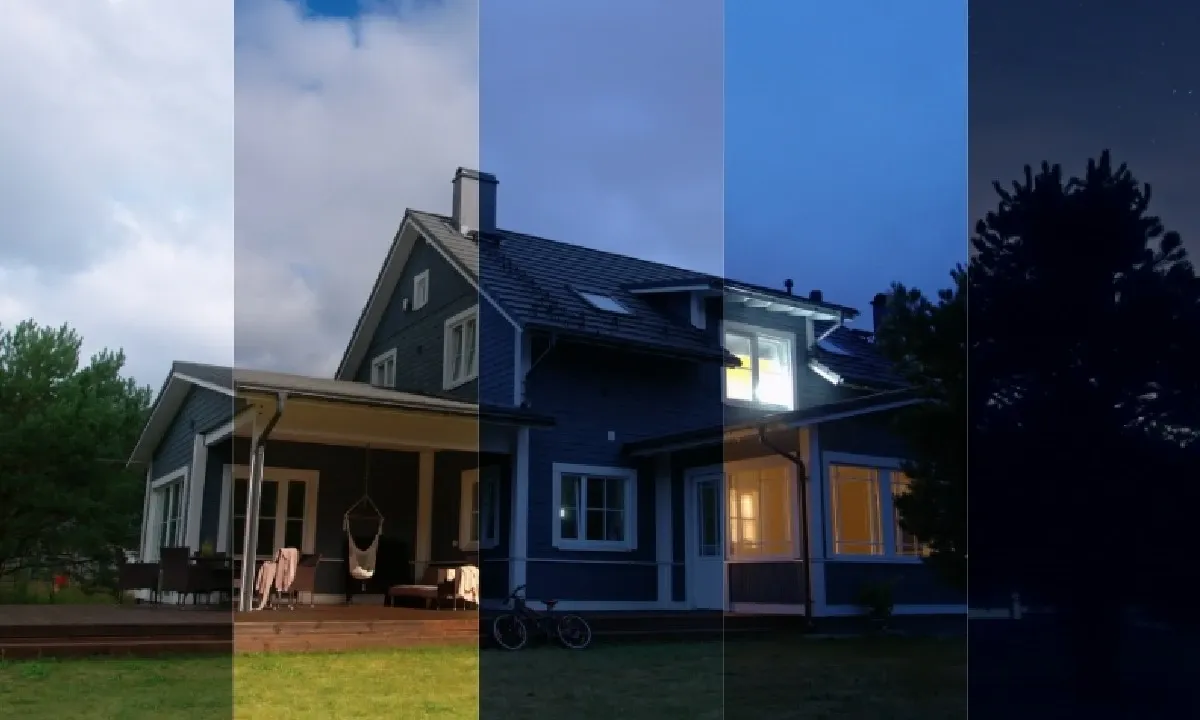
Two-story house shown in strips from daylight to night, the lighting range a Suffolk County condo camera has to handle
Manufacturer image from Reolink, one of our partner brands; not a Suffolk County property. One two-story house shown in vertical strips from full daylight through dusk to night. A condo camera on a lane or a clubhouse corner has to give a usable picture at every one of those light levels.
Suffolk County Condo Camera Request
Board officers, HOA directors, clubhouse managers, unit owners and managing agents

✅
Request Sent!
Thank you. Our office will call or text to set a walk-through date at your Suffolk County community.
25+
Years Experience
2 Hr
Booking
$1,099
4-Camera System
4.7★
201 Google Reviews

Run by its owner since 2002 · From Babylon to the Forks, a board's request gets a booked visit within 2 hours · Suffolk line (631) 407-2884

The County

Why Suffolk Condo Cameras Are Planned Around Distance and Absence

A condo board in a city tower can usually point to the five rooms that need a camera. A board in Suffolk County is more likely to hand us a site plan with a gatehouse at one corner, a clubhouse and pool somewhere in the middle, a few hundred parking spaces spread across separate fields, and a back property line that runs along woods, a golf course or a creek. That geography is the first thing that separates condo security camera installation in Suffolk County from the same job in the boroughs or even in much of Nassau, and nearly every decision in the proposal follows from it.

The county itself explains part of the pattern. Suffolk is divided into ten towns, from Babylon and Huntington in the west to Southampton, East Hampton and Shelter Island at the eastern end, with a county list of 32 incorporated villages inside them. Condominiums were built in all of them, but not in the same shape. In the western towns, many communities went up on former farm and estate parcels close to the Long Island Expressway and the Northern State, often with a gate and a booth. Across Brookhaven and Islip there are large garden and townhouse complexes. Out east, condos tend to be smaller and closer to the water, and a large share of them are second homes.

Age-restricted housing is the second thread. A Suffolk real estate team that tracks the local listing service counts 74 condo developments in the county where the records show the community is 55-and-over. Those communities share a recognizable plan: a clubhouse with a lobby, card room, fitness room and outdoor pool, often a gatehouse, and owners who spend part of the winter somewhere warmer. Their boards ask different camera questions from a commuter complex near the train, and we cover those questions in their own section below.

The third thread is absence. A Town of East Hampton housing study counted 20,952 of the 44,227 housing units in its study area, about 47 percent, as held for seasonal, recreational or occasional use, against 41 percent occupied year-round by their owners. Condos on the East End follow that rhythm. When nobody is home for months, a camera system cannot rely on someone noticing a problem. It has to tell somebody, and it has to keep working through the storms and outages that hit the coast while the owners are away. Rental buildings with a single landlord follow a different set of rules, and they are covered on our page about apartment building security camera installation in Suffolk County.

Suffolk facts that shape a condo camera plan

  • Ten towns and, by the county's own list, 32 incorporated villages; building and zoning questions go to whichever one the community sits in (Suffolk County government).
  • 74 condo developments recorded as 55-and-over in local listing data (DeVito Team, Suffolk County condos).
  • Nearly half of East Hampton's studied housing stock, 20,952 homes, is kept for seasonal or occasional use rather than year-round living (Town of East Hampton market study).
  • Huntington's town board approved a Melville Town Center plan with 110 condominiums, and a Port Jefferson project lists 77 condominiums for spring 2027, according to a November 2026 summary of public filings (Phases & Spaces).
  • The Suffolk County Police Department runs a voluntary Camera Registry Program for residents and businesses; the department says it does not have access to registered cameras (SCPD notice on Nixle, September 30, 2021).
  • Long outages happen: Suffolk County News, looking back at Sandy, reported roughly a third of homes in its South Shore coverage area still dark a week after the storm (Suffolk County News).
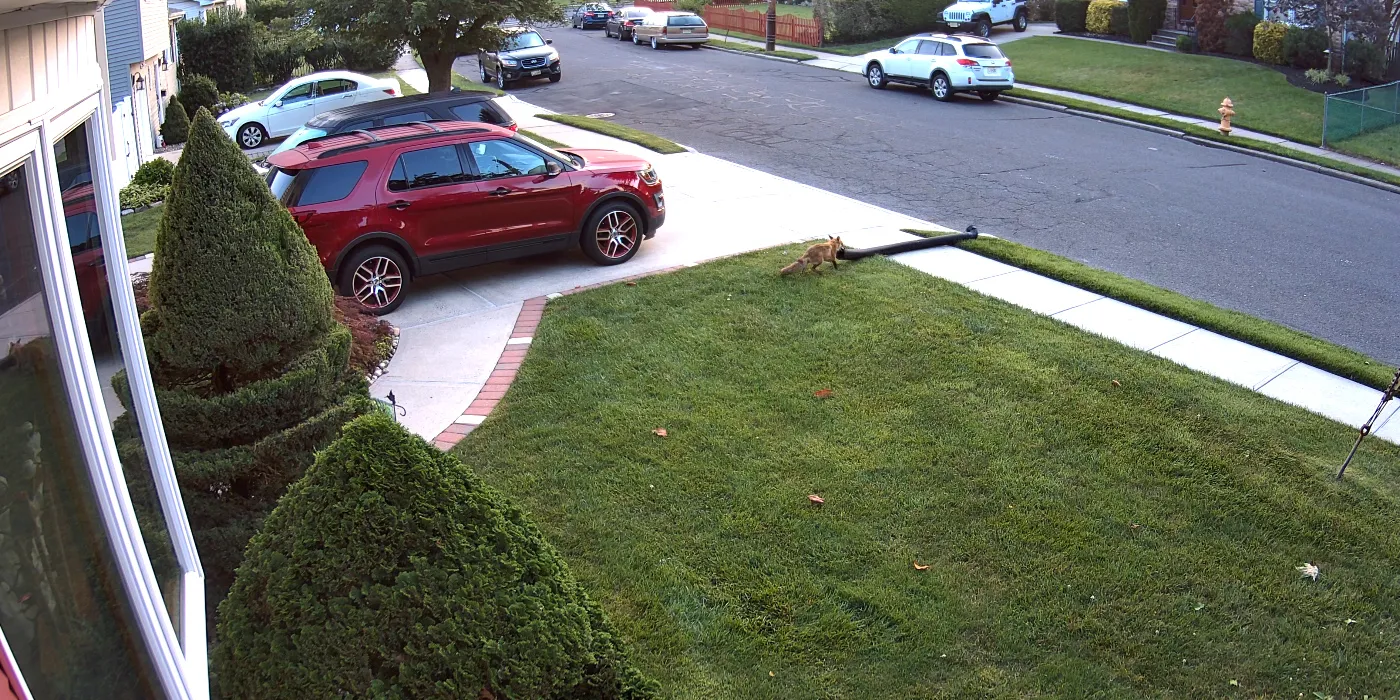
Sample camera view over a driveway, front lawn and residential street with a fox crossing, typical of Suffolk County condo grounds
Sample image from a Reolink product page (partner brand), not a Suffolk County community: a camera looking from a front window across a driveway, a lawn and a quiet street, with a fox walking along the curb. Open lawns, parked cars and wildlife are the everyday scene on Suffolk condo grounds.
Community Types

Six Kinds of Suffolk Condo Community and What Each Asks of a Camera System

These groupings are ours, drawn from walking Suffolk properties rather than from any official category, and plenty of communities fit two of them. They are useful because each one moves the budget toward a different part of the site.

55-plus community built around a clubhouse

Single-level or two-story attached homes, a clubhouse that is busy from morning exercise class to evening cards, a pool, sometimes tennis or bocce. Cameras concentrate on the clubhouse entrances and lot, the pool gate and the main entrance. The people reviewing footage are usually a volunteer committee, so playback has to be simple.

Gated townhouse development with a booth

Common along the western towns and parts of Brookhaven: a manned or partly manned gatehouse, private roads, garages under each home. The gate is the focal point, and the camera plan has to support whoever sits in the booth, or replace their eyes during the hours nobody does.

Garden or townhouse complex with parking fields

Rows of two-story buildings around open lots, many from the 1970s and 1980s, spread across Islip, Brookhaven and Smithtown. The money goes into the parking fields, the dumpster corrals and the links between buildings, because the recorder is often hundreds of feet from the farthest camera.

Second-home or resort condo out east

Smaller buildings and cottage-style units on the North and South Forks and near the bays, busy in July and nearly silent in February. Coverage is modest, but the system has to report its own health, ride out outages and survive salt air, because the board may not visit for weeks.

Village-center or station-area building

Newer elevator buildings near downtowns and train stations, with a lobby, a mail and parcel room, a garage or surface lot and sometimes shops below. This is the most city-like Suffolk condo, and its camera plan looks closer to a building plan than a site plan.

Office, medical or industrial condo

Commercial condo buildings in office parks and industrial areas, each unit owned by a business. The association's cameras cover the shared lot, loading docks, lobby and building perimeter; each owner handles its own interior. Night activity is normal here, which changes how alerts are set.

The same four-camera starting system can be the whole job for a small cottage condo on the North Fork and barely a beginning for a 400-home gated community in western Suffolk. What scales the price is rarely the cameras themselves. It is how far each camera sits from the recorder, what it mounts to, whether power is already nearby, and how many separate buildings have to be tied together.

One more difference matters before anything is drawn: who will actually use the system. A gated community with a full-time gatehouse staff needs live views laid out for a guard. A 55-plus community run by volunteers needs playback a retired treasurer can manage on a tablet. A second-home condo needs the system to send alerts to a managing agent who may be thirty miles away. We ask about this first on every walk-through, because the right equipment for one of those audiences is the wrong setup for the others.

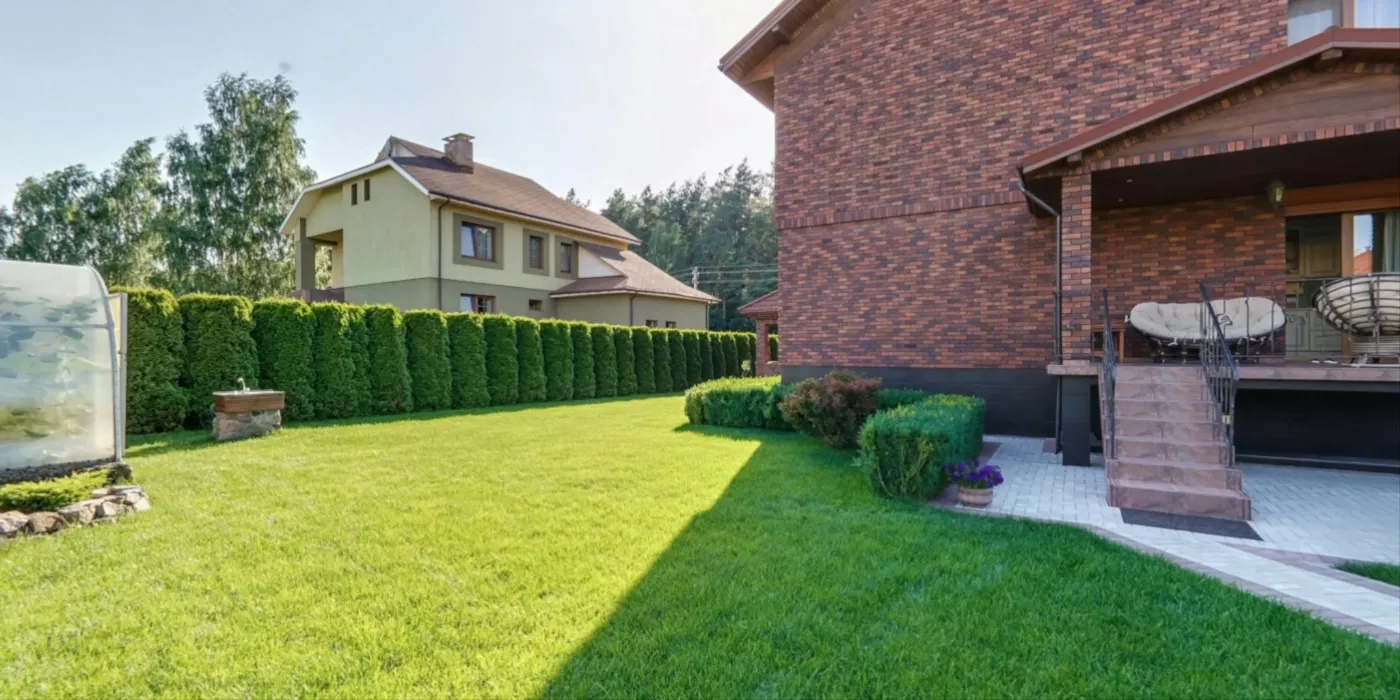
Sample daytime camera view of a lawn, a long hedge row and a brick house, like the open grounds of a Suffolk County condo community
Sample frame from a Reolink camera product page (partner brand), not a Suffolk County property: a wide lawn bordered by a tall hedge row, a brick house with a porch on the right and a second house beyond. Wide, green, low-density grounds are what most Suffolk condo cameras look across.
Gatehouses

Cameras at the Gatehouse: Helping the Booth Rather Than Replacing It

Gated condo communities are common enough in Suffolk that the gatehouse is often the first thing a board wants to talk about. It is also the place where boards most often buy the wrong cameras, because they expect one camera to do every job at once.

Three separate jobs at one gate

A gate needs to answer three different questions. The first is what happened: a car that struck the arm, a pedestrian who walked around it, a delivery truck that clipped the island. A wide camera mounted high on the gatehouse answers that. The second is which vehicle: a camera framed tight on the inbound lane where cars stop at the booth, close enough to show the front of the car and, with good light, the plate. The third is who is in the booth window and what was handed over, which is a matter for the board's policy and the guard company as much as for us. Treating these as three cameras rather than one costs less than buying a single expensive camera and asking it to do everything.

The resident lane and the exit lane

Many Suffolk gates split traffic: visitors stop at the booth while residents use a separate lane with a remote, a sticker reader or a fob. That resident lane is where tailgating happens, because a second car can slip through behind the first before the arm comes down. A camera aimed down the resident lane, looking toward the arm from inside the community, records each car that follows another. The exit lane matters less for identity but still deserves an overview, since it is the route anyone takes when they leave in a hurry.

What the guard sees

If the booth is staffed, the guard needs a monitor laid out for the job: the two lane cameras large, the overviews smaller, and nothing else cluttering the screen. A guard should not be scrolling through clubhouse or pool views to find the gate. When the booth is empty overnight, the same cameras keep recording, and the board can choose to have certain events, such as the arm being pushed up by hand or a car stopping in the lane for a long time, sent to the managing agent as an alert. The gate operator, its readers and any call box are a separate system; our Suffolk County condo security systems page covers how those work for associations, and the camera plan simply makes sure the cameras can see what those devices are doing.

Two Suffolk details come up at almost every gate. The booth usually has power and a small equipment shelf, which makes it a good place for a network switch and battery backup for the entrance cameras, but rarely a good place for the main recorder, which belongs in a locked room inside the clubhouse or an office. And the gate is often the farthest point from that room, so the link between them is planned before anybody chooses camera models.

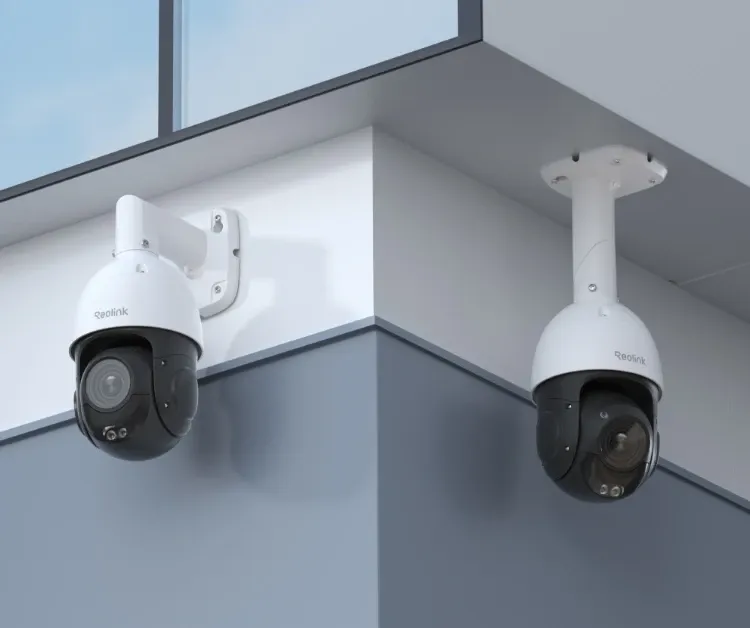
Two pan-tilt-zoom cameras on a building corner, one on a wall bracket and one on a pendant mount, as at a Suffolk County condo gatehouse
Manufacturer product photo from Reolink (partner brand), not a Suffolk County gatehouse: two white pan-tilt-zoom cameras on the corner of a light gray building, one on a wall bracket and one hanging from a pendant mount under the overhang. Cameras like these can be steered toward a lane, though fixed cameras usually do the recording at a gate.
55-Plus Communities

Clubhouses, Pools and Shared Lots in Suffolk's Age-Restricted Condos

In an active-adult community the clubhouse is the town square. It holds the mail, the bulletin board, the exercise room, the library and the party room, and on a busy day half the community passes through it. That makes it the most valuable place for cameras and also the place where residents are most sensitive about being watched. A good plan respects both.

Entrances, not rooms

We usually recommend covering every door into the clubhouse, the lobby and the main hallway, and leaving the card room, library and lounge without cameras unless the board has a specific problem in one of them. Entrances answer most of the questions boards actually face: who came in after hours, who took the package from the front table, who propped the side door during an event. Cameras in the rooms where residents sit and talk change the feel of the building for very little gain.

The fitness room and locker areas

An unattended fitness room is a reasonable place for a camera that shows the equipment floor, because damage and injuries do happen there. Locker rooms, changing areas, showers and restrooms are a different matter: New York's unlawful surveillance law lists changing rooms, restrooms and showers among the places where recording people without consent is a crime, and we never put cameras there. The camera on the fitness floor is aimed so its view stops short of any doorway into those spaces.

The pool season

Outdoor pools in Suffolk condo communities generally run through the summer and close for the cold months. A pool camera's main jobs are recording who opens the gate, especially outside posted hours, and keeping an overview of the deck for incidents. It is not a substitute for a lifeguard or attendant and should never be described to residents as one. Glare off the water at midday and darkness at night are the two technical problems, and we handle them with camera placement high and to the side of the sun's path and a camera that can show color at night without blinding swimmers.

Parking at the clubhouse

Clubhouse lots in age-restricted communities fill and empty in pulses around classes and events, and minor damage to parked cars is the most common footage request we hear about from these boards. A camera mounted on the clubhouse itself, looking across the lot at the height of a second story, gives a usable overview for most of these claims. Golf carts and bikes parked by the door are a smaller, separate target, covered in the questions further down.

Almost every 55-plus board we meet raises the same concern: some residents are uneasy about cameras at all. The answer we have seen work is a short written policy, discussed at a community meeting before installation, that lists where each camera points, says plainly that there is no audio, and explains who can look at footage and why. Residents who see the camera map in advance rarely object to what is actually installed.

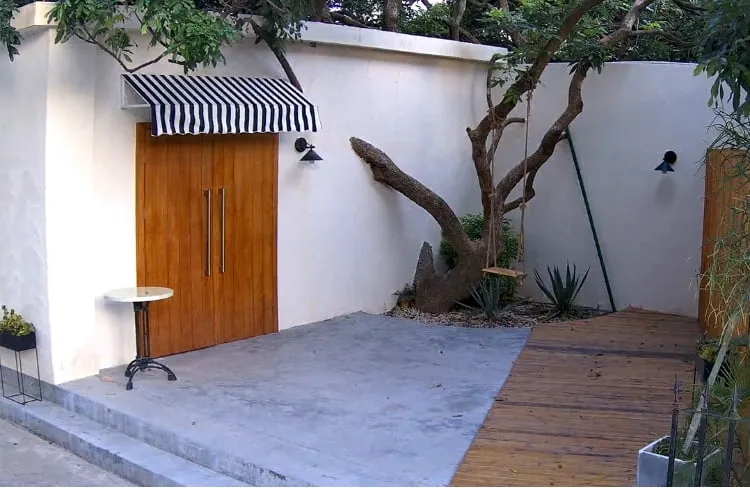
Sample camera view of a walled courtyard with a wooden door and a small wall-mounted camera, like a Suffolk County condo clubhouse side entrance
Sample image from a Reolink product page (partner brand), not a Suffolk County clubhouse: a paved courtyard enclosed by white walls, with a tall wooden door under a striped awning and a small camera mounted high on the wall. Side doors and courtyards like this are where clubhouse cameras earn their keep.
Seasonal Owners

When the Owners Are Away: Designing for East End and Snowbird Condos

The East Hampton figures above are not an East End curiosity. Second homes and part-year residents are a fact of condo life across Suffolk, from bayfront cottages on the South Fork to 55-plus communities in Brookhaven where a good share of owners spend January somewhere else. A camera system built for those places has to work without anyone checking on it day to day.

Recording continues; reviewing waits

In a community where nobody watches the screens, the goal is not live monitoring. It is a reliable record that survives until someone needs it, which may be weeks after the event. That means recorder storage sized so the oldest footage is not overwritten before the board is likely to notice a problem, and a footage policy that tells owners who to contact when they come back and find something wrong. For an East End condo that sits mostly empty from late fall to spring, we usually size storage toward the long end of what the board is comfortable keeping.

The system reports on itself

The question to ask about any recorder in a seasonal community is: if a camera dies in December, who finds out, and when? We set the recorder to send a message to the managing agent and one board officer when a camera stops sending video, when a hard drive shows errors, or when the recorder restarts after a power loss. None of that needs a monitoring contract; it is a feature of the recorder that most installers simply never switch on.

Remote access the board controls

Owners who are in Florida for the winter still want to know the community is fine after a storm. Remote access lets an authorized board officer or the managing agent open the cameras from a phone and confirm that the lots are clear and the clubhouse roof is intact. Access is granted per person, can be limited to live views only, and is removed in one step when an officer's term ends. Remote service access for our technicians exists only if the board turns it on.

What we do not offer is staffed monitoring of camera feeds or a guard service watching video. If the association wants a person watching in real time, that is a separate contract with a monitoring company, and we can talk about what the equipment would need. For most seasonal Suffolk condos, a recorder that keeps a good record, alerts the right people when something breaks and lets them look in from anywhere is the practical answer.

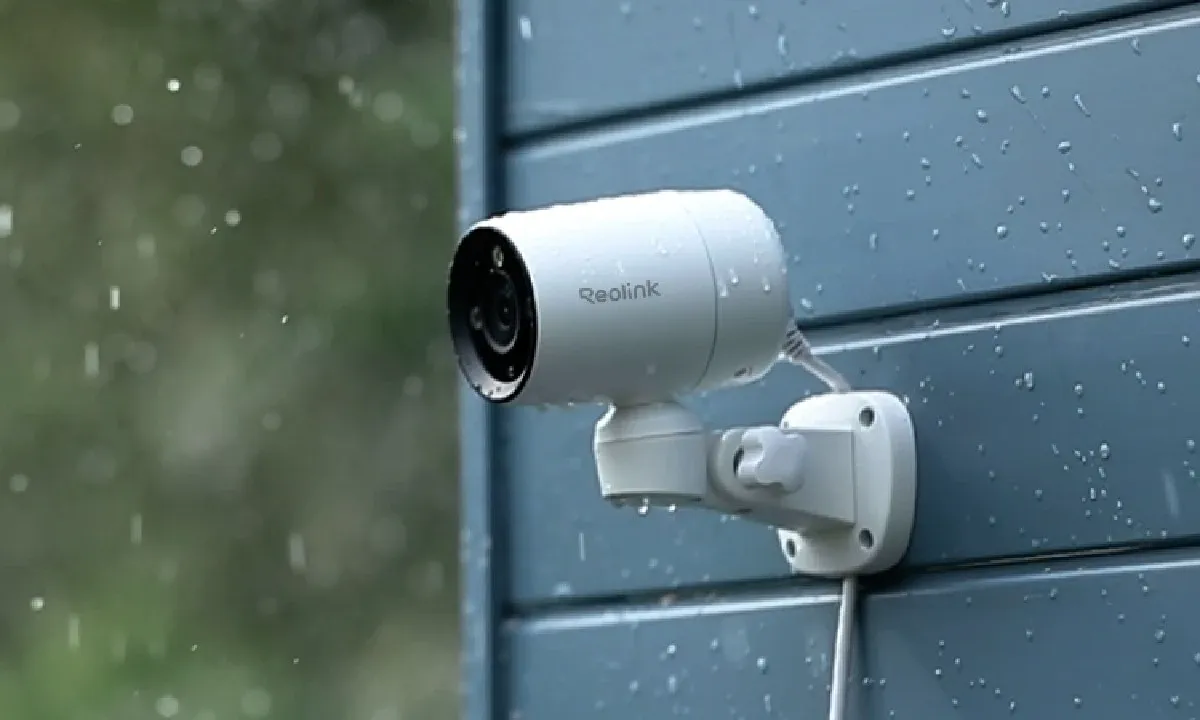
White bullet camera on blue clapboard siding in the rain, the kind of exterior mount used on Suffolk County seasonal condos
Manufacturer photo from Reolink (partner brand), not a Suffolk County building: a white bullet camera on an adjustable wall bracket, mounted on blue clapboard siding with rain falling past it. In a seasonal community nobody may see the camera for weeks, so it has to keep running through weather like this on its own.
Long Runs

Getting Video Home From the Far Parking Field, the Pool and the Back Gate

On most Suffolk condo sites the hardest engineering problem is not the camera. It is the path from the camera back to the recorder. A clubhouse camera thirty feet from the equipment closet costs little beyond the hardware. The same camera at the far end of a parking field, five hundred feet away across asphalt and lawn, needs a plan of its own.

Why the distance matters

Network cameras usually draw their power and send their video over a single copper network cable, which works well up to roughly 100 meters, about 328 feet, between the camera and the switch. Beyond that, the signal and the power both suffer. The analog systems in our starting packages work differently but have their own practical limit; the package description on our price page notes wire runs up to 100 feet per camera before extra cable is quoted. Either way, the far corners of a large Suffolk community are past what one plain cable can reach.

Four ways to bridge it

The first is a small outdoor network cabinet partway out, mounted on a building or a pole, with its own power and a switch that feeds nearby cameras and sends everything back on one link. The second is fiber optic cable between buildings, which carries video over long distances without being affected by lightning-induced surges on the line, a real advantage in a county known for summer thunderstorms. The third is a point-to-point wireless bridge, two small radios aimed at each other, which avoids trenching but needs a clear line of sight above trees that leaf out in May. The fourth is using conduit the community already has, such as empty pipe left from site lighting or an old phone system, which we test before counting on it.

Power at the far end

A remote cabinet or wireless radio needs electricity. Where a light pole or building already has a circuit, an electrician can add a protected outlet there; we do not do electrical work ourselves, so that outlet is either handled by the association's electrician or listed in the proposal as something the board arranges. Where there is no power at all, a solar-powered camera with a battery is sometimes the answer for one remote spot, with the understanding that it records on motion rather than continuously.

Every one of these links appears on its own line in our proposal, with the distance, the method and the price, so the board can see what the far cameras really cost and decide whether to include them now or in a later phase. Digging trenches, cutting asphalt and repairing pavement or lawn are outside our scope; where a buried run is the best choice, the proposal says so and names who does the excavation.

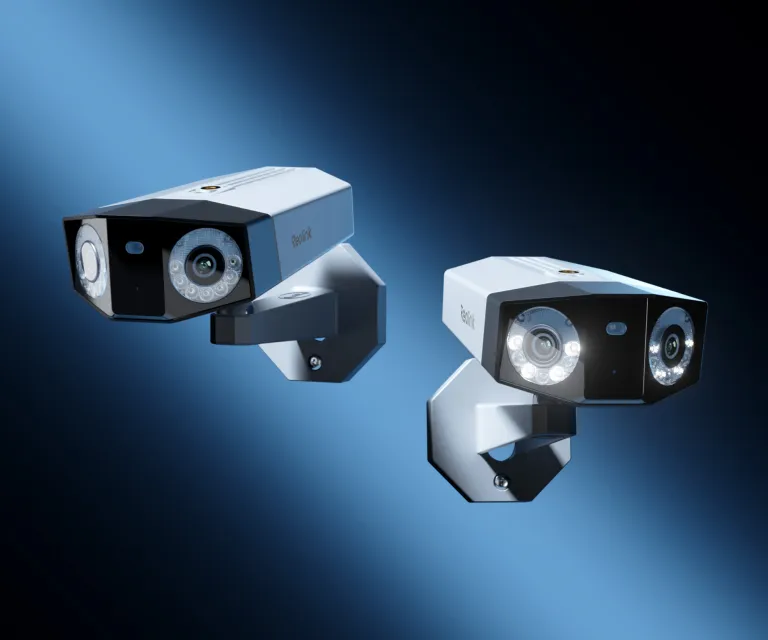
Two dual-lens panoramic cameras on wall brackets against a dark blue background, used to cover wide Suffolk County condo parking fields
Manufacturer product photo from Reolink (partner brand), not a Suffolk County installation: two white dual-lens cameras on wall brackets, lit against a dark blue background. Two lenses stitched side by side give one very wide picture, which suits a long parking field watched from a single building corner.
Weather & Power

Salt Air, Nor'easters, Lightning and Outages on Suffolk Condo Grounds

Suffolk is surrounded by water on three sides, and a camera on a bayfront condo lives a harder life than one on a city courtyard. The weather affects which cameras we choose, how they mount and where the equipment that runs them sits.

Outdoor ratings that mean something

The outdoor cameras in our Suffolk packages carry IP66 or IP67 weather ratings, meaning the housings are sealed against dust and against heavy rain or brief immersion. Near salt water we add stainless or coated mounting hardware, because the bracket screws usually corrode long before the camera does, and we keep connections inside sealed junction boxes rather than taped in the open.

Wind and storm mounting

Nor'easters and the tail ends of tropical storms push wind-driven rain sideways under eaves and shake anything mounted on a tall pole. Cameras go on solid structure, not on gutters or thin trim, and pole cameras get brackets rated for the pole's diameter. After a big storm, the most common problem we find is not a broken camera but one knocked a few degrees out of aim, which is why the proposal includes a printed reference image of what each camera should see.

Surges and lightning

Summer thunderstorms are when we get the most calls about several cameras failing at once. Long copper runs between buildings can pick up surges from a nearby strike and carry them into the switch and the recorder. Our plans put surge protection on runs that leave a building, ground the equipment properly, and use fiber for the longest links between buildings where the board agrees to the cost.

Keeping the recorder alive in an outage

The Suffolk County News account of Superstorm Sandy describing about 35 percent of homes in its South Shore coverage still without power at the end of that week is an extreme case, but shorter outages are routine. A battery backup on the recorder and the main network switch keeps the core of the system recording through brief interruptions and lets it shut down cleanly in a long one, instead of corrupting the drive. We size the battery for the equipment it protects and tell the board in plain terms how long it is expected to last.

Where the recorder lives

In communities near the water, the clubhouse basement or a ground-floor utility room can take water in a storm surge. We put the recorder in a dry, locked room above any past flood line when one exists, off the floor at the least, and away from pool chemical storage, whose fumes are hard on electronics.

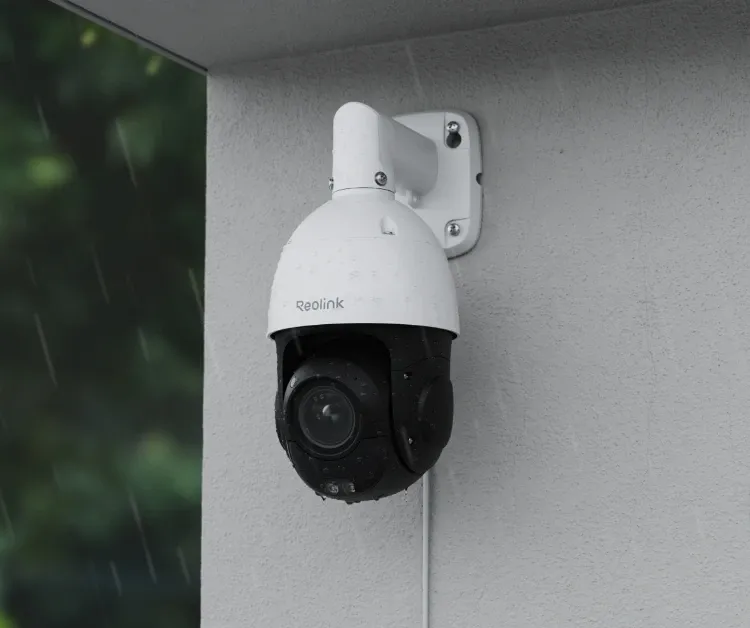
Pan-tilt-zoom camera on a gray wall bracket in heavy rain, built for coastal Suffolk County condo weather
Manufacturer product photo from Reolink (partner brand), not a Suffolk County property: a white pan-tilt-zoom camera on a wall bracket against a gray wall, with heavy rain falling in front of it. Sealed housings and solid mounts are what keep a coastal condo camera aimed and working after a storm.
Police Registry

The Suffolk County Police Camera Registry and What It Means for an Association

The Suffolk County Police Department runs a voluntary Camera Registry Program. In a September 2021 notice, the department described it as a way for "citizens and business owners to register the locations of their video surveillance systems with the Police Department," so that detectives investigating an incident know whose cameras might have recorded it and can ask the owner to check for footage from a particular date and time. The same notice is direct about what the program is not: "The Department does NOT have access to these cameras." If an owner finds relevant video, retrieval is arranged with the department at the owner's convenience. A 2019 Officer.com profile of the program described the same purpose, streamlining the canvass detectives otherwise do door to door, and noted that the registry included both home doorbell cameras and business systems.

For a condominium, registering is a board decision rather than an individual one, because the cameras belong to the association. In practice it means listing the community's address and the general areas its cameras cover, such as the entrance, the parking fields or the clubhouse, and naming who the department should contact. That contact should be the person the footage policy names as responsible for exports, usually the managing agent or a designated officer, not whoever happens to answer the clubhouse phone.

Two practical points follow. First, registration does not change who decides whether to release a clip. The association still decides, under its own policy and with its counsel when the request is unusual. Second, a registry request is only useful if the footage still exists, which brings the question back to retention: a recorder that overwrites after seven days will often have nothing left by the time a detective calls. Communities patrolled by a town or village police department rather than the county police should ask that department whether it keeps a similar list.

We do not register cameras on an association's behalf, and we have no arrangement with any police department to share video. At handover we give the board the information it would need to register, including a short description of each camera's coverage, and leave the decision to the board.

Equipment

Condo Security Camera Systems Sized for Large Suffolk Properties

The equipment list for a Suffolk community is ordinary in its parts and specific in how they are combined. Here is how we choose each piece and why.

Cameras

Turret cameras, a ball-shaped camera in a shallow base, are our default under eaves and on clubhouse walls, because they hold aim well and their lenses do not collect spider webs the way some housings do. Vandal-resistant domes go where someone could reach the camera, such as covered entries and carports. Bullet cameras suit long, narrow views like a lane or the side of a building. Dual-lens panoramic cameras cover a whole parking field from one corner. A pan-tilt-zoom camera has its place at a large gate or a big lot, but it only records where it happens to be pointed, so fixed cameras do the recording and the moving camera is an extra for live use. Full-color night cameras with a soft built-in light help where the association does not want to add floodlights.

Recorder and storage

One recorder, in a locked room, holds all the video. We size its hard drives from the camera count, the resolution and the number of days the board wants to keep, then state that number of days in the proposal so nobody is surprised. For larger communities we use a recorder with a spare drive bay, so storage can grow when cameras are added in a later phase.

Network and power

Cameras run on their own network, separate from the clubhouse Wi-Fi and the management office computers, with power over the same cable through a PoE switch. Battery backup protects the recorder and switches. Remote links use fiber or wireless bridges as described above, and each outdoor cabinet is locked.

Detection that actually helps

Modern cameras can separate people and vehicles from blowing leaves, headlights and passing animals. That matters far more on a wooded Suffolk site than in a city lobby. We set detection zones so a camera watching the pool gate ignores the trees behind it, and use person and vehicle tags so a board member can search an afternoon of footage for "vehicle in lane two" instead of scrubbing through hours of video.

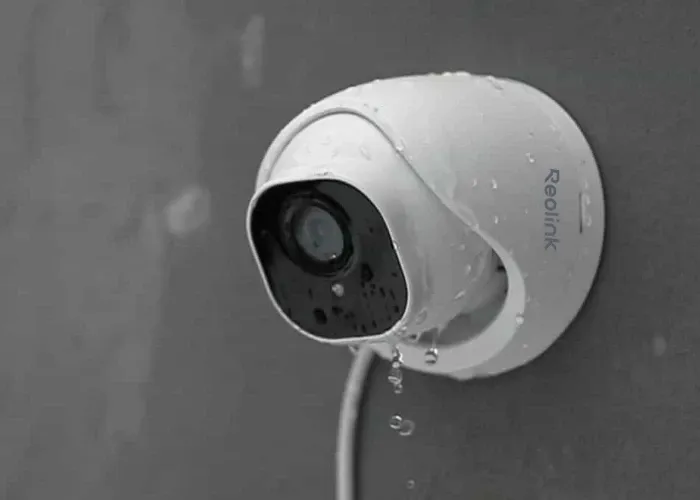
White dome camera on a wet wall with water dripping, shown in black and white, for covered entries at Suffolk County condos
Manufacturer photo from Reolink (partner brand), not a Suffolk County property, shown in black and white: a turret-style dome camera on a wall beaded with water, its cable running down below. Compact cameras like this suit covered entries, carports and clubhouse corners.
Brands

House-Brand System by Default, Partner Brands on Request

Our proposals start from the house-brand line we carry ourselves, commercial cameras and recorders with no subscription attached, unless a board names a maker it wants. That system is what the $1,099 starting price and the rest of our Suffolk County price list are built on, and it keeps proposals easy to compare because every camera on the plan is the same family and every login works the same way.

When a board prefers a named brand, we install that too. Lorex, Luminys and Reolink are our partner brands, and the product photos on this page come from Reolink because they show the kind of equipment we install; they are manufacturer images, not pictures of Suffolk communities. We also install other brands a board already uses. A brand that relies on its own cloud service may carry a monthly plan, and if it does, that cost is broken out on its own line. Equipment that has to be special-ordered is ordered only after the deposit, and the install date is set once it arrives.

Privacy & the Law

New York State Rules That Apply to Suffolk Condo Cameras

We are installers, not lawyers, and nothing here is legal advice; a board with a specific legal question should ask its counsel. What we can do is point to the published rules that shape how we install, and flag one common mix-up: New York City's local laws on building cameras, smart access systems and tenant data are city laws. A condominium in Suffolk County is governed by state law, its own declaration and bylaws, and whatever its town or village adds, not by the city's code.

Where the board's authority comes from

New York's Condominium Act treats yards, gardens, parking areas, recreational and community facilities and "all apparatus and installations existing for common use" as common elements (Real Property Law §339-e), and requires the bylaws to address matters such as the board's powers and the care of those common elements (§339-v). Many Suffolk communities also have a homeowners association, and the Attorney General's regulations for HOA offering plans require the plan to describe the common areas, including land, parking and recreational facilities (13 NYCRR §22.3(f)). Which body owns which ground decides which body approves each camera. A lawyer writing in Habitat put the risk of skipping that step plainly: a house rule that the governing documents do not authorize is "unenforceable."

Video yes, audio no

New York's eavesdropping statute, Penal Law §250.05, makes the "mechanical overhearing of a conversation" (defined in §250.00) without the consent of at least one party a felony. Many cameras ship with microphones enabled. We switch audio off on every common-area camera, and our proposals say so in writing.

Places that are off limits

Penal Law §250.45 names bedrooms, changing rooms, fitting rooms, restrooms, toilets, bathrooms, washrooms and showers among the places where recording a person without consent can be unlawful surveillance. FirstService Residential's guidance for condo boards also cites the state labor law's ban on video of employees in restrooms, locker rooms and changing areas. In a clubhouse, that rules out cameras in the locker rooms and restrooms and in any staff changing area for the maintenance crew.

Units and private outdoor space

A CooperatorNews legal column in 2025 noted that the law gives the interior of a neighbor's unit considerable privacy protection and that a camera which "peers into a neighboring unit" can interfere with it. In Suffolk townhouse and 55-plus communities, patios and decks are often limited common elements assigned to one home. We aim common-area cameras so they do not look into windows or onto private patios, and use the recorder's privacy masks to black out any part of a view that cannot be avoided.

Owners' own cameras

The same column pointed out that condominiums typically bar owners from altering common elements on their own, and that asking the board first is advisable. Doorbell cameras on attached homes are the usual case. The board's rules can address where owner cameras may mount and what they may point at; the association's system is separate from them.

Who may install

New York State licenses security and fire alarm installers through the Department of State, and its rules at 19 NYCRR Part 195 treat closed-circuit video used to detect or monitor intrusion as a security system. Our license is #12000287431. Boards comparing bids can ask every contractor for a license number and check it with the state.

Footage Policy

Who Looks at the Video: A Footage Policy for a Suffolk Condominium

The cameras are the easy part. The arguments in condo communities are almost always about the footage: who may see it, who may copy it, and how long it stays. A written policy, adopted before the system goes live, settles those questions while nobody has a dispute in mind.

What the policy should settle

  • Retention. FirstService Residential notes that condo footage is generally kept for 30 to 90 days depending on building size. For Suffolk communities with seasonal owners, we suggest the longer end.
  • Who may view. Usually the managing agent and one or two named officers, with live-only access for a gatehouse guard if there is one.
  • Who may export. One or two named people, never every board member, so copies of footage are always traceable.
  • Requests from owners. FirstService recommends that residents not receive footage or copies without approval from the board and legal counsel, and that a log be kept of requests and of everyone who accessed footage.
  • Outside requests. A detective, an adjuster or an attorney asks for video: the policy names the person who answers, the deadline for saving the clip before it is overwritten, and the point at which counsel gets a call.
  • Camera changes. Moving or adding a camera goes through the board, not through an owner's request to the crew.

Telling owners and renters

Owners should receive the camera map and the policy before installation, and new buyers should receive them at closing. In East End communities that allow seasonal rentals, owners who rent their units should pass the same information to their renters; East Hampton, for example, runs a rental registry under its town code, and owners there are already handling paperwork for each rental. Signs at the entrance and the clubhouse door telling people that common areas are recorded are a sensible addition, and we can mount them during the install.

Layered associations

Where a master association owns the gatehouse and roads and individual condominiums own their buildings, each body sets the policy for its own cameras. The simplest arrangement is one recorder per owner of the ground, or one shared recorder with separate accounts and a written agreement on who may see what. The proposal shows which cameras belong to which body.

Approval

Taking a Camera Plan Through a Suffolk Board or HOA

Most of our Suffolk proposals land in front of a volunteer board that meets monthly, and in age-restricted communities many of those volunteers are retired professionals who read every line. We write the proposal for that reader: specific enough to vote on, short enough to present in ten minutes.

The board packet

A site plan of the community with every camera numbered and its view sketched; one sentence for each camera saying what it is meant to record; the recorder's location and the number of days of video it keeps; how each distant camera is linked and powered; the price of each phase, with every long run, cabinet and pole on its own line; anything that could add cost, such as a buried cable that might fail its test or a tree that might need trimming for a wireless path; and a draft footage policy the board can edit. Ordered equipment cannot be returned, so possible extras are disclosed before anything is ordered, not on installation day.

Timing around the calendar

Two Suffolk patterns affect timing. Communities with many winter-away owners often want decisions made at a fall meeting, before the board scatters, so installation can happen while fewer residents are around. Communities with a summer pool season want the pool and clubhouse cameras working before the gate opens. Neither changes how we schedule, which is first come, first served once a job is signed and paid, but both are reasons to start the conversation early.

Paying for it

How the community pays is the board's decision under its documents and budget. Associations commonly pay for small systems from operating funds, use reserves when cameras replace an aging system, or levy a special assessment for a large first installation; we do not recommend one over another. Splitting the plan into phases, typically the entrance and clubhouse first and the outer parking fields later, keeps each vote smaller, and we design the first phase so the later ones plug into it without rework.

Pricing

Condo Security Camera Installation Cost in Suffolk County

Condominiums and HOAs pay the same Suffolk County camera prices as anyone else in the county; nothing is added because the customer is a board. Four house-brand cameras and a recorder, installed, start at $1,099, and higher-resolution, full-color and network-recorder packages for the county are listed on our Suffolk County security camera pricing page. A board can compare those package prices against our proposal line by line.

Line on the proposalHow it is priced in Suffolk County
Starter system: four house-brand cameras and a recorder, installed$1,099
Each camera beyond the first fourQuoted individually after our visit, because mount height and cable path vary from spot to spot
Concealed wiring inside finished walls and ceilings$200 per camera for runs up to 100 feet, as on our Suffolk price page; longer runs quoted on site
Fiber, wireless bridges and outdoor cabinets for distant camerasItemized link by link, with distance and method, before anything is ordered
Poles for entrance, pool or parking camerasListed with height, location and mounting, priced per pole
Larger recorder and storageDrive capacity matched to camera count, resolution and the retention period in the policy
A named brand instead of the house systemQuoted when the board asks, with any monthly plan shown separately
Installing cameras the association already ownsLabor only, quoted by phone or text

What moves a Suffolk number

In a city building, the hardest cost to predict is usually hiding cable inside finished walls. On a Suffolk site it is distance. A community whose cameras all sit on or near the clubhouse can come in close to the package prices. One that wants the back gate, the far parking field and the pool on the same recorder will carry link costs that can match or exceed the cameras themselves. We show those costs separately so the board can decide where the line falls.

When the association supplies the cameras

Sometimes a committee has already bought cameras. For equipment the association supplies, we price labor alone, worked out by phone or text from the model list and the places to cover, and the job goes on the calendar when the deposit comes in. We do not schedule site walk-throughs for association-supplied equipment, and faults in that equipment, or weak Wi-Fi for wireless models, are outside our responsibility.

Warranty and terms

Three kinds of coverage apply, and they are worth keeping apart. Our website lists a 30-day warranty on the installed system. Boards that want longer coverage, often those paying from reserves, can add a one-year or multi-year plan at signing. The cameras, recorder and drives also carry each manufacturer's own warranty. Full terms — including 50% deposit, one-year parts-only warranty on Abstract Enterprises Security Systems-supplied products, and the late-fee schedule — are set out in the service agreement.

Financing is available through Wisetack, subject to approval.

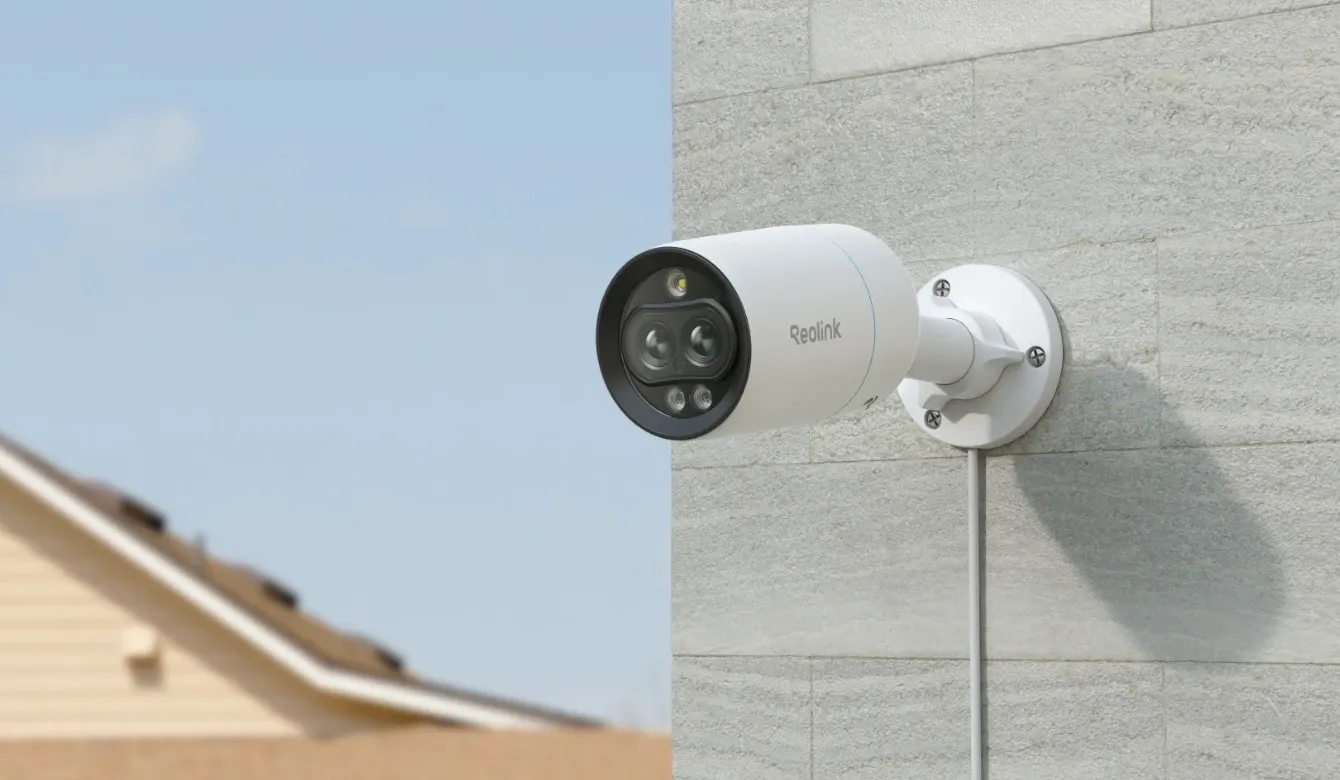
White bullet camera with two lenses on a pale stone wall beside a roofline, as mounted on a Suffolk County condo building
Manufacturer photo from Reolink (partner brand), not a Suffolk County property: a white bullet camera on a short wall bracket fixed to pale stone, with a neighboring roofline and blue sky behind it. A camera on a building corner like this, close to the recorder, is the least expensive kind on any condo plan.
Get In Touch

Request a Camera Plan for Your Suffolk County Condo

A few details help us prepare: the town or hamlet, how many homes or units the community has, whether there is a gate or gatehouse, a clubhouse or a pool, and what the board most wants recorded. If you have the community's site plan, mention it and we will mark likely camera spots before we arrive. Prefer to talk? Call or text (631) 407-2884.

✅

Request Sent!

Thanks, it's in. Someone from the office will reach out by phone or text to set up a visit to your Suffolk County property, normally inside two hours.

Across the County

From Huntington to Montauk: How Condo Camera Work Changes Across Suffolk

Suffolk is long enough that a camera plan in Melville and one in Southold have little in common beyond the recorder. These are the patterns we see by area. None of the places named here are client properties; they are general landmarks to orient the reader.

Western towns: Huntington, Babylon and the Route 110 corridor

Gated townhouse and 55-plus communities near the expressway, office condos around Melville, and village-center buildings close to the Huntington and Babylon stations. Gatehouse coverage, garage-level entrances and commuter-style parking dominate. The Melville Town Center plan, with 110 condominiums approved by the Huntington town board, points to more elevator-style condo buildings arriving in an area that has mostly built rentals and age-restricted homes, according to the November 2026 filing summary we cite above.

Islip, Smithtown and central Brookhaven

The largest garden and townhouse complexes in the county, many with parking fields between buildings, plus age-restricted communities around Ronkonkoma, Holbrook, Coram, Middle Island and Yaphank. Car break-ins in residential lots are a recurring story here; News 12 Long Island reported in June 2025 on overnight break-ins in Bay Shore and Brentwood, where one resident said four other cars in his complex had their windows broken and a household camera recorded a person going through vehicles for about nine minutes. Parking-field cameras and the links that reach them are the main line item in this part of the county.

North Shore villages: Port Jefferson, Stony Brook and the 25A towns

Smaller condo buildings and townhouse groups in hilly villages, a few on the harbor. Hills and mature trees complicate wireless paths, and village rules can affect anything mounted where the street can see it. The 77-condominium Port Jefferson project listed for spring 2027 is the kind of village-center building whose camera plan resembles a city lobby more than a campus.

South Shore: Patchogue, Sayville, Mastic and the bay communities

Condos near the Great South Bay and along Main Street downtowns, some close enough to the water to take storm surge. Recorder placement above flood level, sealed outdoor connections and corrosion-resistant hardware come first; after that, these are ordinary parking-and-entrance plans.

The East End: Riverhead, the North Fork, the Hamptons and Montauk

Smaller communities, more second homes and the longest drives from our crews. Systems here are planned for absence, with alerts to the managing agent, longer retention and battery backup, and we group visits on days our crews are already out east so the board is not paying for a trip that could have been shared. Salt air, sand and summer crowds are the conditions; quiet winters are the risk.

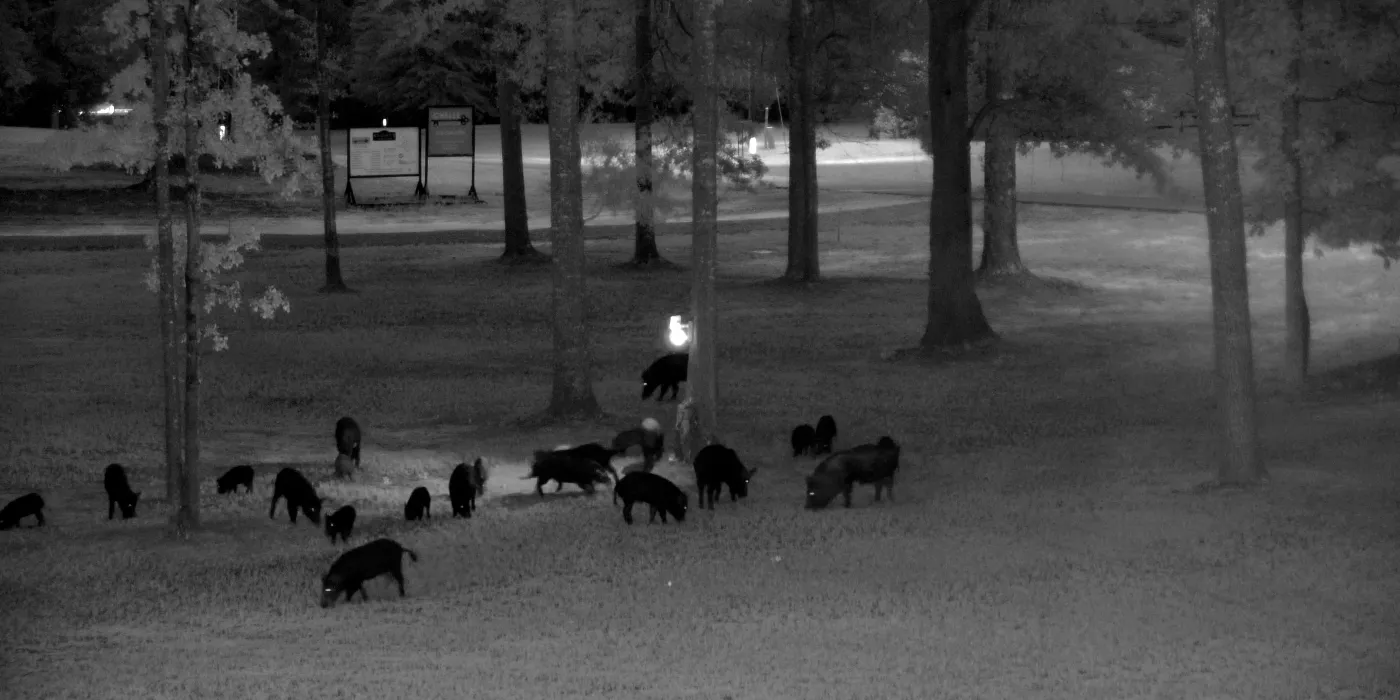
Infrared night sample view of a group of animals moving under trees, like the wooded back lines of Suffolk County condo communities
Infrared sample image from a Reolink product page (partner brand), not a Suffolk County site: a black-and-white night view of a group of animals moving across open ground under tall trees. Wooded edges are where good detection settings matter most, so animals don't trigger alerts all night.
How It Works

Seven Steps From First Call to Handover for a Suffolk Condo

A small add-on to a recorder that already works moves quickly once signed. A first system for a 300-home community may sit through a few meetings before the vote. Either way, the sequence below is what happens.

1

Request by call, text or form

Anyone connected to the community can reach out: a director, the manager, an owner. Inside 2 hours we put a visit on the calendar, weekends included, with a two-hour arrival window and morning slots offered first.

2

Walk the grounds

A board member or the manager tours us from the gate to the back fence: roads, lots, clubhouse, pool. We look at the room for the recorder, check old cable with a tester and measure how far each spot is from it.

3

Written site-plan proposal

The board gets a marked-up site plan, a sentence per camera on why it is there, the cost of each far link and pole as separate lines, the days of storage, and a list of anything that could raise the price.

4

Vote, sign, deposit

After the board or boards vote under their documents, the authorized person signs and the deposit is paid. Equipment is ordered only then, and the insurance certificate goes to the association and its agent once the job is awarded.

5

Notice to residents

We draft a one-page notice for residents with the map, the work days and any lots or spaces that will be closed, and the manager or secretary sends it out.

6

Install and set up

The crew runs cable, mounts cameras and cabinets and sets up the recorder, switches and batteries. Each view gets checked by day and again after sunset; microphones are disabled, windows blacked out in the image, and alerts configured.

7

Handover to the board

Each officer and the agent get their own login, a short lesson in finding and exporting footage, a printed camera map with reference images, and the administrator credentials in the association's name.

Install dates go to jobs in the sequence their deposits come in. A proposal that hasn't been signed doesn't reserve a slot, and we don't take same-day installs. Special-order brands get a date only once the hardware is in our hands.

Existing Systems

Fix, Extend or Start Over: Suffolk Communities With Older Cameras

Most Suffolk communities we visit already have something: a recorder in the clubhouse office bought by a past board, cameras added one at a time over the years, perhaps a monitor in the gatehouse showing views nobody has adjusted in a decade. The right next step depends on what is salvageable.

Fix

If the recorder is reasonably current and we can recover or reset access, replacing a few dead cameras, swapping a failing drive and setting up proper accounts and alerts may be all the community needs. Our Suffolk County security camera repair service handles that kind of work for any property, and the visit starts with finding out what still works.

Extend

When the recorder is sound but coverage is thin, we add cameras where the original plan fell short, such as the second parking field, the pool gate or the resident lane at the gate. A recorder with spare channels takes them directly; one without may need an upgrade or a second recorder on the same network.

Start over

A recorder that no longer receives software updates, cameras whose night picture is unusable, or a system nobody can log in to are reasons to replace. Replacement is also the chance to correct the layout: move the recorder out of a damp basement, separate the cameras from the office network, and give the board a system it actually controls. Communities that only want the general picture of camera options for any building, rather than a condo plan, can read our Suffolk County security camera installation page.

On Site

Working Inside an Occupied Suffolk Community

We arrive inside the scheduled two-hour window, never early, and park where the board or agent tells us, usually at the clubhouse or in guest spaces rather than on narrow private roads. In 55-plus communities, residents walk the roads in the morning, so ladders and lifts go up only after the work area is coned off, and we keep cords and cable reels out of walking paths. In gated communities we check in at the booth and follow whatever contractor procedure the gatehouse uses.

Residents will ask the crew questions, and our installers are glad to explain what a camera will see. Requests to move a camera, add one for a particular home or change what it watches go back to the board, because the board made those decisions. We do not need to enter any home to install common-area cameras, and work inside the clubhouse is scheduled around classes and events the manager tells us about. We do not patch or paint walls; where a camera or old hardware leaves holes, the proposal says who handles the finish work.

Planning

How Many Cameras Suffolk Condo Communities Usually Need

Boards usually want a sense of scale before anyone walks the grounds. These ranges come from communities we have surveyed and cover common areas only. They are orientation for a first conversation, not a quote and not a statistic; the real count comes from the walk-through.

CommunityTypical camera rangeWhere the cameras go
Cottage or small condo, up to about 20 units4 to 8Entrance drive, parking area, mail spot, building corners
Village-center elevator building8 to 20Lobby, parcel room, elevators, garage or lot, rear and service doors
Garden or townhouse complex, 50 to 150 homes12 to 30Entrances, each parking field, dumpster corrals, clubhouse and pool
55-plus community with a clubhouse, 100 to 300 homes16 to 36Gate or entrance, clubhouse doors and lobby, fitness floor, pool gate and deck, clubhouse lot
Large gated community, 300 homes or more30 and upGatehouse lanes, road intersections, every amenity, maintenance yard, back gates
Office or industrial condo building8 to 24Shared lot, loading area, lobby, building perimeter

Two factors push communities toward the high end of a range: a layout with separate parking fields that cannot be seen from one building, and an amenity area far from the clubhouse. Two factors push them lower: buildings arranged around a single shared lot, and a board that decides to phase the outer areas into a later year.

AI Overview Reality Check

What Generic Advice Gets Wrong About Condo Cameras in Suffolk County

Search summaries, chatbot answers and national cost guides from sites like Angi, HomeAdvisor and Fixr are written for a house, a store or a city building. Applied to a Suffolk condo community, several of their usual claims fall apart. Here are the seven we hear repeated most often on walk-throughs, and what we find in the field.

"A security camera system costs a few hundred dollars per camera, installed"

National per-camera averages assume the camera sits on a house, a short run from the recorder. On a Suffolk condo site the camera is often the cheap part. A pool camera four hundred feet from the clubhouse may need fiber or a wireless bridge, an outdoor cabinet and a power source before it records anything.

That is why our proposals separate the cameras from the links. Our Suffolk starting system is $1,099 for four cameras and a recorder, installed, and each added camera is priced after the walk-through, but the far links are listed on their own lines with distances, so the board sees what each remote camera truly costs.

A board comparing bids should be wary of any total that does not mention how the farthest cameras connect. That missing line is where a low bid usually turns into a change order.

"Wireless cameras solve the wiring problem on big properties"

Wi-Fi cameras still need power at every location, and their video still has to reach a network. Across a large Suffolk site, a camera at the edge of a parking field is usually too far from any access point for a reliable picture, especially once trees leaf out in spring.

Where wireless makes sense, we use dedicated point-to-point bridges between buildings or poles, aimed and tested, rather than consumer Wi-Fi cameras talking to a router in the clubhouse.

Battery and solar cameras are fine for one or two hard-to-reach spots, but they record on motion and need occasional attention, so they are an exception on the plan, not the plan.

"Higher resolution means you can identify anyone on the property"

Resolution spread across a 300-foot parking field still leaves a person at the far end as a few dozen pixels. Identification comes from distance and light, not from the number on the box.

We place identification cameras where people and cars come close and slow down, such as the gate lanes, clubhouse doors and pool gate, and use wide cameras elsewhere to show what happened.

That split gets better evidence from a modest budget than putting expensive cameras everywhere, and it is the reason our proposals describe each camera's job before naming a model.

"Cloud cameras mean you never lose footage"

Cloud storage depends on the community's internet connection, and on the East End a summer storm can take that connection down along with the power. Uploading many cameras continuously also needs far more upload speed than a clubhouse service usually has.

Our house-brand systems record locally to the association's own recorder, with battery backup, and allow remote viewing when the internet is up. Some boards add an off-site copy of selected clips, which is a reasonable extra.

A local recorder also avoids the monthly per-camera fees that come with many cloud plans, which add up quickly across a 30-camera community.

"Registering with the police means officers can watch your cameras"

Some owners worry, and others assume, that joining the Suffolk County Police Camera Registry gives the department a live feed. The department's own notice says it does not have access to registered cameras.

Registration only tells detectives that a camera exists at an address so they can ask the owner to check for footage. The association still decides what to release.

The real dependency is retention: if a detective calls three weeks after an incident and the recorder only keeps ten days, registration does not help. Storage sizing matters more than the registry.

"A camera at the gate keeps people out"

A gate camera records who came in. It does not stop a car following a resident through the resident lane, a pedestrian walking around the arm, or a visitor waved in by someone at the booth.

Cameras deter some opportunistic behavior and are valuable after an incident, but the gate's effectiveness depends on its arm, its readers, its staffing and the community's rules. We say this plainly in proposals so a board does not buy cameras expecting them to fix a gate problem.

Where tailgating is the real issue, the camera's job is to record it clearly enough that the board can identify a pattern and take it up with the gate company or the owner involved.

"Any handyman can put up cameras"

Mounting a camera is simple; designing a system that covers a whole community, survives storms, keeps the right number of days and stays under the board's control is not. New York also licenses security installers, and its rules treat video used to detect intrusion as a security system.

The common failures we inherit are recorders with a former volunteer's password, cameras on the clubhouse Wi-Fi, audio left on and no surge protection on long runs.

Ask any bidder for a state license number, a site plan with every camera on it, and confirmation that the association, not the installer, will hold the administrator account.
Questions We Hear

Questions Suffolk Condo Boards, HOAs and Owners Ask Us

Golf carts and e-bikes keep disappearing from the racks outside our clubhouse. What camera setup records who takes them?

One camera aimed straight along the rack or cart parking row, mounted on the clubhouse wall about ten feet up and no more than twenty or thirty feet away, gives a clear look at anyone handling a cart or bike. Pair it with a wider camera on the path or lot the carts leave by, so the footage shows the direction of travel as well as the face at the rack. Lighting matters: if the rack is dark at night, a camera with its own soft white light gives a color picture instead of a gray infrared one.

After a summer thunderstorm, cameras on three different buildings went dark at the same time, even though lightning didn't hit any of them. Why?

A strike near the property can induce a surge on long copper cables running between buildings, and that surge travels to whatever both ends are plugged into, usually the network switch and sometimes the recorder. Several cameras then fail together because they share the damaged switch, not because each was hit. The fixes are surge protectors where cables leave each building, proper grounding of the equipment, and fiber for the longest runs between buildings, since fiber does not conduct electricity.

Several owners have doorbell cameras that see the common lawn. Can the board ask them for footage after an incident?

The board can ask, and owners often help willingly, but footage from an owner's personal camera belongs to that owner and the board cannot compel it through us. The association's own system is the record the board controls. If owner footage matters to a dispute, the board's counsel can advise on how to request it. We keep owners' devices off the association's recorder so that the two never blur together.

Gulls sit on our parking-lot camera poles by the bay and foul the lenses. What helps?

Bird spikes or a slim deterrent strip on the top of the pole and the camera bracket, installed so they stay out of the camera's view, solve most of it. Mounting the camera on a side arm a little below the pole top, rather than on the very top, also gives birds a less attractive perch over the lens. A camera with a small sun shield above the lens catches droppings that would otherwise land on the glass. We include bird deterrents on waterfront pole mounts when the board agrees.

Our second entrance is emergency-only and stays chained. Does it need a camera?

Usually yes, though a simple one. An emergency access gate is a known weak point: people cut chains or drive around the posts because they know nobody is watching. One wide camera on that entrance, recording continuously and set to alert the agent when a vehicle appears there, tells the board whether the gate is being used and when. Because the entrance is often far from the clubhouse, it is a good candidate for a wireless bridge or a solar-powered camera.

Our pool has a guest limit per unit. Can the cameras count how many people come in?

Some cameras can count people crossing a line drawn in the picture, and the count is reasonably useful for trends, such as how busy weekend afternoons get. It is not accurate enough to enforce a per-unit guest rule, because it cannot tell who belongs to which home, and groups walking together get miscounted. Most boards use the pool gate camera to review a specific complaint and leave the counting to the pool attendant or the gate's own access log.

Our board president lives in Florida half the year. Can two board members approve a footage export remotely?

The recorder itself does not have a two-person approval feature, but the footage policy can create one. A common approach is that the managing agent performs exports, but only after written approval from two named officers by email, and logs each export with the date, the clip and the reason. The president can review clips remotely through a view-only account without needing export rights at all.

The motion alerts are overwhelming our volunteers. Can the system send a daily summary instead?

Many recorders and apps can group events and send fewer, more meaningful notifications, and the first step is better filtering: person and vehicle detection only, tight detection zones and quiet hours for areas that are busy during the day. For most volunteer boards we turn off routine motion alerts entirely and keep only alerts for specific events, such as a vehicle at the emergency gate after midnight or a camera going offline. Daily browsing is then done in the app's event timeline when someone has a reason to look.

Our community is built around a pond. Will reflections off the water confuse the cameras?

Reflections and ripples can trigger basic motion detection, especially at sunrise and sunset. Person and vehicle detection is far less affected, and we exclude the water surface from detection zones so only the banks and paths trigger events. Camera position helps too: aiming across the pond with the sun behind the camera, not facing it, cuts glare. For a pond edge near a path, a camera with good wide dynamic range keeps faces readable against bright water.

An osprey has built a nest on the light pole where we planned a camera. Can we still use that pole?

Not while the nest is active. Ospreys are protected by federal and state wildlife law, and disturbing an active nest can be a violation, so the camera moves to another pole or a building nearby and the plan changes around it. If the board wants the nest removed or relocated outside the nesting season, that is a question for the New York State Department of Environmental Conservation, not for an installer. A camera on a neighboring pole can keep the same view of the lot.

Owners whose decks face our new camera pole say it spoils their view of the bay. What are the options?

Before anything goes up, we mark proposed pole spots on the site plan so the board can flag view lines, and a shorter pole or a building mount often does the same job. After the fact, the choices are moving the camera to a nearby building or light pole, swapping the pole for a lower one with a wider lens, or painting the pole and camera housing a darker color that disappears against trees. Each option changes what the camera sees, so we show the board the before and after view.

Non-residents use our private roads as a shortcut between two main roads. Can cameras show how much outside traffic we get?

Yes, roughly. A camera at each end of the through route, with vehicle detection, logs every car that enters, and comparing the two ends over a few weeks shows how many drive straight through without stopping. That gives the board numbers to take to a meeting about a gate, signs or speed humps. The count is an estimate, since cars that stop briefly or turn around get mixed in, and cameras cannot tell residents from visitors unless they are paired with a gate or sticker system.

Related Pages

More Suffolk County Pages for Condo Boards and Managers

This page sits under our Long Island condo security camera installation overview, which compares Nassau and Suffolk side by side. For the rest of a condominium's security, including intercoms, gates, fobs and package rooms, the county condo hub linked in the gatehouse section above covers each system. Boards replacing an aging lobby or gate intercom can read our guide to condo intercom replacement.

From the Field

Field Notes From Suffolk Condo Camera Walk-Throughs

Patterns repeat across Suffolk communities. The most common one starts in the clubhouse office: a recorder on a shelf, still running, whose administrator password left with a board member who moved away. The cameras record, but nobody can change a setting or export a clip, and the hard drive has often been full and overwriting itself for years. Recovering access is the first step on those visits, and sometimes the only one needed.

The second pattern is the far camera that was never connected properly. An earlier installer ran outdoor cable across a lawn without conduit or along a fence line, and seasons of mowers, frost and animals did the rest. The camera at the back gate or the far parking field has shown a blank tile for months, and the board assumed the camera died. Usually the cable did. That is why we test every existing run during the walk-through and price replacements in the proposal before the board votes.

The third is a storm story. After a summer thunderstorm, a switch in the gatehouse failed and took every entrance camera with it, and the recorder in the clubhouse kept recording blank channels without telling anyone. Surge protection, a battery backup and an offline alert to the agent would have shortened that gap from weeks to an afternoon.

Comparing Bids

Comparing Condo Security Camera Installation Contractors in Suffolk County

Suffolk boards often collect two or three bids, and the totals mislead when one bidder counts fewer cameras, leaves out the far links or undersizes the storage. The same questions asked of every bidder put the proposals on equal footing. These are the ones we would ask, with our answers.

Ask every bidderOur answer
Can we see on paper where each camera goes and why?Our proposals mark every location on your site plan and give it a written reason.
What is carrying video back from the far corners, and is it in the price?Fiber, bridge or cable, with its length and cost shown separately for each spot.
If nobody touches the settings, when does the oldest recording get erased?Our proposal names it in days, and drives are bought to hit the board's target.
What happens to the system in a thunderstorm or a blackout?Lines leaving a building get surge suppressors, gear is grounded, and the core equipment sits on battery.
Whose name is on the master login after handover?The community's. We can't get in remotely unless the board invites us.
Will the recorder alert anyone when a camera goes dark?Yes, we set offline and drive alerts to the agent and a named officer.
Is audio recording turned off?Yes, on every common-area camera.
Will the association get a recurring bill?No subscription with our own system; any brand's cloud charge would be its own line.
What is your New York State license number?#12000287431.
When does our managing agent get your COI?On award, naming whoever the agent's insurance requirements list.

Suffolk jobs are dispatched from our Brooklyn base, backed by our Bronx and Queens offices, and 201 Google reviewers rate the company 4.7 stars. The association buys and owns the equipment; we design, install and service it. We don't run live video monitoring, remote doorman programs or electrical contracting.

Frequently Asked Questions

Suffolk County Condo Security Camera FAQ

Do condo associations pay a different camera price than homeowners in Suffolk County?
+

No. A condominium or HOA pays the same Suffolk County camera prices as any homeowner or business, starting at $1,099 for four house-brand cameras and a recorder, installed. What changes for a community is the scope: more cameras, longer links and sometimes poles, each priced after the walk-through and shown on its own line.

Does the recorder keep recording when the community's internet service is down?
+

Yes. Our house-brand systems record to the association's own recorder on site, so an internet outage only interrupts remote viewing and alerts. Recording continues as long as the recorder and cameras have power, and the battery backup covers short power interruptions as well.

Can the cameras help document storm damage to common areas for an insurance claim?
+

They can help. Video from before and after a storm shows the condition of roofs, fences, trees and the clubhouse, and a time-stamped clip of a tree coming down or water rising in the lot is useful to an adjuster. Cameras are not a substitute for the photos and inspection the insurer will want, but saving the relevant clips right after the storm, before they are overwritten, is worth adding to the footage policy.

How do you keep the camera system from being hacked?
+

The cameras sit on their own network with no direct path from the internet, the recorder gets its current firmware at installation, default passwords are replaced, and each person gets an individual login instead of a shared one. Remote viewing goes through the maker's secured app rather than open ports on the router. We also show the board how to check for updates and how to remove a user who leaves.

Will mounting cameras on the clubhouse affect its roof or siding warranty?
+

It shouldn't if the work is planned around it. We mount on walls, soffits and fascia rather than through the roof, seal every fastener and cable entry, and on vinyl or fiber-cement siding use mounting blocks made for that material. If the clubhouse has a recent roof or siding warranty, the board should check its terms for attachments, and we will follow any mounting rules the manufacturer or roofer sets.

Our parking lot still has old orange sodium lights. Will color cameras work under them?
+

They will record, but colors look off under sodium lighting, with everything tinted orange and car colors hard to tell apart. Many boards replace those fixtures with LED lighting when they add cameras, which improves the picture a great deal; that is an electrician's job. Until then, the cameras still show movement, shapes and plates at close range.

Do the recordings keep the correct date and time after outages and clock changes?
+

They should, and we set them up to. The recorder syncs its clock with an internet time server and pushes the time to every camera, and daylight saving changes happen automatically. After a long outage we check that the clock recovered. Correct timestamps matter, because a clip with the wrong time is hard to use with police or an insurer.

We were quoted a cellular camera for our far entrance. Is that a good idea?
+

It can be, for one remote spot with no cable path and decent cell coverage. Cellular cameras carry a monthly data plan, usually record on motion rather than continuously, and depend on the carrier's signal at that exact location. Where a wireless bridge from the nearest building is possible, it is usually cheaper over time and records continuously to the association's recorder.

Can a camera tell us when the front gate is stuck open?
+

Indirectly. A camera can be set to alert when a vehicle or person lingers in a zone, but it cannot read the gate's position the way the gate operator's own sensor does. The more reliable answer is an alert from the gate system itself, which is set up by whoever services the gate. The camera then shows what was happening when the alert came in.

How many cameras does a typical 55-plus clubhouse need?
+

Most clubhouses we survey need six to twelve cameras: one at each exterior door, the lobby, the main hallway, the fitness floor, the pool gate and deck, and the clubhouse lot. Larger clubhouses with a ballroom, several wings or a separate pool house need more. Rooms where residents sit and socialize are usually left without cameras.

Can one camera be added later without a whole new proposal?
+

Yes. A single added camera on an existing recorder with a spare channel is quoted as a short change, usually by phone or email after we confirm the spot from photos or our plan. It still goes through whoever the board authorizes to approve spending, and it is scheduled once the deposit is in.

Is there a monthly fee for the house-brand camera system?
+

No. The house-brand system records to the association's own recorder and its phone app has no subscription. Monthly costs appear only if the board chooses a brand with a paid cloud plan, adds cellular cameras, or buys an optional extended warranty plan, and each of those is shown separately in the proposal.

All Areas Served

Condo Camera Pages Across Long Island, New York City and the Hudson Valley

Our regional overview, condo security camera installation on Long Island, sets Suffolk beside its western neighbor, and boards just over the county line can go straight to condo security camera installation in Nassau County. Managing agents with buildings in the city can start at condo security camera installation in NYC or pick a borough: Manhattan, Brooklyn, Queens, the Bronx or Staten Island. North of the city, see condo security camera installation in the Hudson Valley. Hudson Valley county pages cover Westchester County, Rockland County and Orange County.

One Camera Plan for Your Whole Suffolk County Community

Booth, clubhouse, pool and the far lots on one recorder that keeps going through storm season, tells your manager when something breaks and answers only to the board. Suffolk County systems start at $1,099 for four cameras, installed. NYS license #12000287431 · 4.7 stars from 201 Google reviews.