What are you looking for?
About Us Contact Us Careers Get a Free Quote (800) 486-0943
Pick a service
✅ Got Your Own System?
🎬 Home TheatreQuote 🎶 AV SoundQuote 🔑 Access ControlQuote
Now pick your area
Pick your area
Long Island
Hudson Valley
Services available
Pricing & Tools
Pick a service for pricing
🚪 Intercom Pricing 🔔 Buzzer Repair Pricing
Calculators
📹 Camera System Calculator 🚨 Alarm Calculator ⚡ Cabling Quote Builder ✅ Got Your Own System?
Select your area
Entrance camera blinded by headlights, a recorder that died in the last outage, or a pool gate nobody can see from the office? Book a condo camera survey anywhere from Yonkers to Kingston: (800) 486-0943
Home › Condo Security Camera Installation Hudson Valley
For Condo Boards, HOAs & Managing Agents · Westchester to Ulster

Condo Security
Camera Installation
Hudson Valley

Gate Lanes · Clubhouse Doors · Pool Fences · Parking Rows · Condo Towers · Battery-Backed Recorders

Condo security camera installation in the Hudson Valley starts at $1,099 for a four-camera house-brand system with recorder, installed, which is the Westchester and Rockland price on our camera price pages. Communities farther up the river are priced from their own county page, every camera past the first four is priced once we have walked the property, and that walk is booked within 2 hours of your request, seven days a week.

Short version for the board: A Hudson Valley condo can be a forty-story tower in downtown White Plains or a few dozen townhouses on a wooded hillside outside New Paltz, so start with what your community actually is. Townhouse and garden communities put the money into the entrance drive, the clubhouse and pool, and the parking areas, then into building doors. Towers look more like city work: lobby, garage ramp, package room and elevators. Either way, plan for battery backup and surge protection, because outages and lightning here are routine, and plan cable around hills, rock and trees. Audio stays off, nothing looks into a home or a changing room, and the city's building laws do not reach the six counties; state law and your own declaration do. Prices are on our Hudson Valley camera price page.

Last updated November 27, 2026 by Abstract Enterprises Security Systems, NYS license #12000287431 · Sources: OneKey MLS county market reports (Q3 and Oct. 2026); NY Real Property Law §§339-e and 339-v; NY Multiple Residence Law §3; NY Penal Law §§250.00, 250.05 and 250.45; NY General Business Law §§69-m and 395-b; NY Executive Law §378; 16 NYCRR Part 753; 13 NYCRR Part 22; Central Hudson (Sept. 26, 2026); Orange & Rockland (July 6, 2026); Dutchess County (July 2026); Earth Networks lightning report (2021); Rockland Daily (Jan. 14, 2024); lohud (2022, 2025); Times Herald-Record (2022); News 12 (2026); ABC7 (Apr. 16, 2025); FirstService Residential (Sept. 23, 2024)

Condo security camera installation Hudson Valley: dual-lens bullet camera on a wall in falling snow at night
A dual-lens camera on a wall bracket, lights on, with snow falling in the dark. Hudson Valley condo cameras have to keep recording through January storms at the entrance drive and the parking areas. Manufacturer photo from Reolink, one of our partner brands; not a client property.
Hudson Valley Condo Camera Request
Name the community, the town and what the board wants covered

✅
Request Sent!
Got it. Our office will be in touch, usually within 2 hours, to set a morning for the property walk.
25+
Years Experience
2 Hr
Booking
100%
Licensed & Insured
4.7★
201 Google Reviews

Owner-operated since 2002 · Thousands of jobs completed · Property walks booked within 2 hours, seven days a week

Why the Hudson Valley Is Different

Hudson Valley Condo Cameras Are Planned Around Hills, Trees and Weather

North of the city line, a condominium is rarely one building. It is more often a cluster of townhouses climbing a slope, a garden complex tucked behind a commercial strip on Route 9 or Route 59, or a gated community whose clubhouse sits a quarter mile up a private drive from the town road. The common elements a board is responsible for are spread across lawns, woods and parking areas, and the ground between them is seldom flat. A condominium security camera plan that works in a Bronx lobby falls apart on a property where the pool is forty feet below the clubhouse and the entrance sign is hidden behind a stand of oaks.

The valley also packs more variety into one region than anywhere else we work. Westchester's condo market is the largest of the six counties by a wide margin: OneKey MLS counted 1,250 condo sales there in the twelve months through October 2026, at a median of $560,000 (OneKey MLS, Oct. 2026). Ulster recorded 24 condo sales in the twelve months through September (OneKey MLS, Q3 2026). Between those extremes sit Rockland's river villages, Orange County's fast-growing towns along Route 17, Putnam's lake and reservoir country and the Route 9 corridor in Dutchess. A board in Mamaroneck and a board in Saugerties are both "Hudson Valley condos," but they share very little except the river.

Weather is the third difference, and it shapes the hardware more than anything else. Outages here are not rare events. A nor'easter in late September 2026 left more than 19,000 Central Hudson customers without power, with the worst damage in Woodstock, Shawangunk, Plattekill and Hurley (Central Hudson, Sept. 26, 2026), and storms in early July had already affected more than 47,000 Orange & Rockland customers. Lightning is a regular summer visitor on ridges and open lots. A condo camera system here needs battery backup, surge protection on every long run and a recorder kept somewhere dry and heated, or it fails on exactly the night the board needs it.

The fourth difference is law. Hudson Valley condos answer to the same state Condominium Act as city condos, but none of New York City's local laws travel north with the commuters. Boards here work from their declaration and bylaws, state statutes and their own town or village. We cover what that means for cameras, with sources, further down. For the whole security picture, including gates, call boxes, fobs and intercoms, see our condo security systems page for the Hudson Valley; this page is about cameras only.

Hudson Valley numbers that change a condo camera plan

  • Rockland condos sold at a twelve-month median of $475,000 through October 2026, across 543 sales, while Orange County's 359 condo sales had a median of $320,000 (OneKey MLS Rockland; OneKey MLS Orange). Budgets, and expectations, differ accordingly.
  • Putnam County recorded 75,093 lightning pulses and 35 thunder days in 2020, according to Earth Networks' state lightning report (Earth Networks, 2021). Long copper runs to poles and outbuildings are where strikes do their damage.
  • Roughly three-quarters of Putnam lies in the New York City watershed and more than nine-tenths sits on Hudson Highlands bedrock, per the county's hazard mitigation profile (Putnam County). Trenching for camera conduit regularly meets rock.
  • Dutchess County's July 4, 2026 storm knocked out more than 33,000 Central Hudson and 7,400 NYSEG customers, with the worst damage around Poughkeepsie, East Fishkill, LaGrange and Pawling (Dutchess County).
  • Police in Rye and the Town of Wappinger warned about thefts from cars in May 2026, with Rye police pointing to "cars left unsecured with keys or key fobs inside" (News 12, May 2026). Parking areas are where condo cameras earn their keep.
  • The Multiple Residence Law, not the city's Multiple Dwelling Law, covers cities under 325,000 people and every town and village (NY MRL §3), which takes in every condo in the six counties.
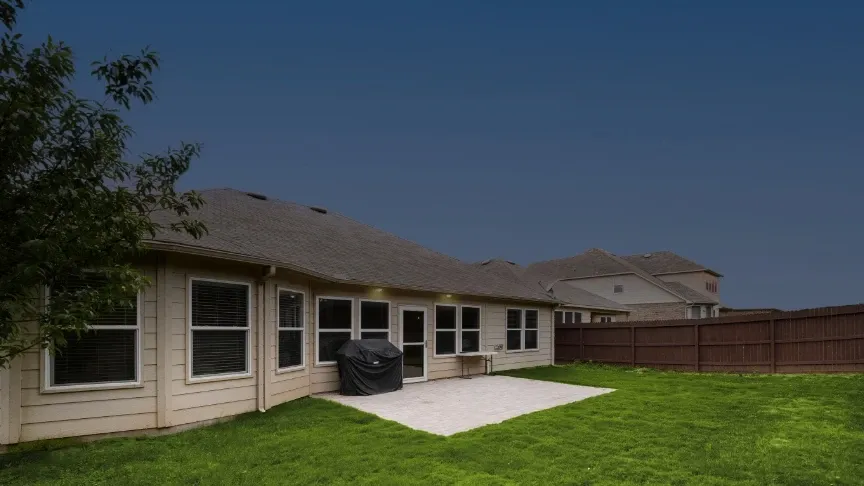
Camera view at dusk of a single-story building row and lawn, like a Hudson Valley garden condo
A camera view at dusk along the back of a single-story building with a lawn and a fence. Low garden-style buildings like this are common in Hudson Valley condo complexes, where the cameras watch shared lawns and walks, not private patios. Manufacturer sample frame from Reolink, one of our partner brands; not a client property.
County by County

Six Counties, Six Different Condo Camera Jobs

We price, plan and schedule the Hudson Valley county by county, because the work changes as the drive gets longer and the ground gets rougher. The table puts the main differences side by side; the notes below explain what each county means for a condo board.

CountyCondo sales, latest 12 months (OneKey MLS)Four-camera system, installedWhat usually drives the camera plan
Westchester1,250 (through Oct. 2026)$1,099Downtown towers and garages; big townhouse communities split into many associations
Rockland543 (through Oct. 2026)$1,099Riverfront elevator condos, clubhouse-and-pool complexes off Route 59
Orange359 (through Oct. 2026)$1,199New mid-rise condo districts and older garden complexes; long distances
Putnam171 (through Oct. 2026)$1,19955-plus communities, rock under the lawn, lightning on the ridges
Dutchess307 (through Sept. 2026)$1,299Route 9 townhouse complexes, gated 55-plus, station-area condos in Beacon
Ulster24 (through Sept. 2026)$1,299Small associations, conversions in New Paltz and Kingston, mountain-town outages

Sales figures come from each county's OneKey MLS report (Westchester, Rockland, Orange and Putnam October 2026; Dutchess and Ulster third quarter 2026). Camera prices are the four-camera house-brand package on each county's camera price page.

Westchester County

Westchester has both ends of the condo spectrum. In White Plains, New Rochelle and Yonkers, condos share skylines with rental towers, and a camera job looks like a city job with a garage ramp, a lobby desk, mail and package rooms and elevator cabs. Farther north, in Somers, Yorktown and Cortlandt, the condo stock is townhouse communities, some enormous: one well-known Somers community lists about 2,600 condos grouped into 30 separate condo associations (community listings site). In a community like that, camera ownership has to be settled before anything is mounted: which cameras belong to the master association and which to each group. Westchester sets the valley's lowest camera price because it is closest to our crews. Our Westchester condo security systems page covers the rest of the county's condo work; camera specifics are on our condo security camera installation in Westchester County page.

Rockland County

Rockland is the smallest county in the state outside the city (199 square miles), and its condos cluster in two places: the river villages from Piermont up through Nyack and Haverstraw, and the inland towns along Route 59 and the Palisades Parkway. Riverside buildings bring elevators, garages and glass lobbies that face the water; inland complexes bring clubhouses, pools and tennis courts. Haverstraw also gave the county a reminder of what cameras are for in April 2026, when packages taken from several buildings in one apartment complex were later recovered in a search (Daily Voice, Apr. 2026). Rockland shares Westchester's starting price. For the county's other condo systems, see our Rockland condo security systems page; camera specifics are on our condo security camera installation in Rockland County page.

Orange County

Orange covers more than 800 square miles (U.S. Census), and its condo stock ranges from 1970s complexes in Newburgh to brand-new mid-rise districts. The most striking example is in the Town of Palm Tree, where the Times Herald-Record reported families moving into "the four- and five-story buildings completed so far" of a 1,600-unit condominium complex on 70 acres (Times Herald-Record, May 19, 2022). A campus that size needs a fiber backbone, building-by-building recorders or a central one, and phased budgets. Orange starts one step above Westchester on our price pages. The county's broader condo page is Orange County condo security systems; camera specifics are on our condo security camera installation in Orange County page.

Putnam County

Putnam's condos are mostly in Carmel, Brewster, Mahopac and Patterson, with a handful around Cold Spring, and a large share are age-restricted. One Carmel 55-plus community counts 312 homes, a clubhouse, a fitness center and an outdoor pool (55places). The county's bedrock and lightning are what we plan around: conduit routes that avoid rock where possible, and surge protection and grounding on anything that runs to a pole or a detached building. Putnam shares Orange's price tier. More on the county's condo security is on our Putnam condo security systems page; a dedicated Putnam condo camera page is coming.

Dutchess County

Dutchess has dozens of condo and townhouse complexes, concentrated in Fishkill, Beacon, Poughkeepsie and Wappingers Falls, built anywhere from the 1960s to the last few years; one directory lists 41 of them across eight towns (Real Estate Hudson Valley NY). Gated 55-plus communities near the I-84 interchange, older complexes along Route 9 and station-area condos in Beacon each need a different plan. Dutchess and Ulster carry our highest Hudson Valley price, reflecting the drive. The county's condo security overview is our Dutchess condo security systems page; a Dutchess condo camera page is in progress.

Ulster County

Ulster's condo market is small and personal: a few dozen sales a year, mostly in New Paltz, Highland, Kingston and Port Ewen, with associations that may have twenty units and a volunteer treasurer. Conversions are part of the story; HudsonValleyOne reported that the owners of a 46-unit net-zero building in New Paltz "began converting the apartments into condominiums for sale" in March 2025 (HudsonValleyOne, Oct. 28, 2025). Small associations need small, sturdy systems they can run without a managing agent on call. See our Ulster condo security systems page for the rest of the county's work; an Ulster condo camera page is being prepared.

Coverage

Where Cameras Belong on a Hudson Valley Condo Property

We plan coverage from the outside in. The first cameras go where every car and every person must pass, then to the shared buildings, then to the places where problems have actually happened. Common elements under New York's Condominium Act include entrances and exits, "recreational or community facilities, parking areas and storage spaces" and "all apparatus and installations existing for common use" (RPL §339-e), which is a fair map of where an association's cameras may go.

The entrance drive

Most Hudson Valley townhouse communities have one or two ways in, often a private drive that leaves a county or state road and winds uphill past a stone sign. An overview camera at the point where cars slow down, set to see the vehicle from the side rather than head-on into headlights, records every arrival. Where the board wants plates, a second camera with a narrow lens is aimed low at the spot where cars are slowest, usually a speed bump or a stop line. If the community has a gate, the cameras mount separately from the gate operator and call box.

The clubhouse

The clubhouse is usually the community's most valuable building and the natural home for the recorder. Cameras cover each exterior door, the lobby or entry hall, the management office door and any room with shared equipment, such as a fitness room or a billiards room. Rooms used for meetings and parties get cameras only at their doors, if at all, and restrooms, locker rooms and changing rooms never.

The pool and courts

State law already requires that pool enclosure gates be self-closing and self-latching and kept locked when the pool is not in use or supervised (Executive Law §378). A camera on the gate shows whether the gate was left propped and who came through after hours. A second camera covers the deck from a corner, aimed away from the changing building. Tennis and pickleball courts usually share one camera on the entry gate.

Parking areas and garage rows

Car break-ins and hit-and-run damage are the most common reasons a board calls us after the fact. Cameras go at the entrance to each parking area and along rows of detached garages, mounted high enough to clear the snow piles plows push against the curbs every winter. In a townhouse community, cameras watch the shared lanes and guest spaces, not an owner's own driveway or garage door.

Lobbies, garages and elevators in condo buildings

Downtown condo buildings in White Plains, New Rochelle, Yonkers, Tarrytown and Nyack, including the region's few high-rise condo towers, need the coverage of a city building: both sides of the front door, the mail and package room, each elevator cab, the garage ramp and gate, and the stairwell doors at garage level. Elevator cab cameras use a wireless link or the traveling cable the elevator contractor approves; anything inside the elevator controller belongs to the elevator company.

Maintenance buildings, mail and trash

Maintenance garages, salt sheds and equipment buildings hold the association's tractors, snowblowers and tools. A camera on each door is cheap insurance. Mail kiosks and trash enclosures each get one camera aimed so the face of whoever is using them is visible.

Where a condo camera must never point

  • Into a home. Windows, sliding doors, patios, decks and private yards of individual units are out of frame or masked.
  • Restrooms, locker rooms and changing rooms. New York prohibits viewing devices in these spaces (GBL §395-b), and recording in them can be a felony (Penal Law §250.45).
  • Staff break rooms and changing areas used by maintenance or clubhouse staff.
  • Neighboring properties. Cameras along a property line are aimed at the association's land, and any part of a neighbor's yard in view is masked.
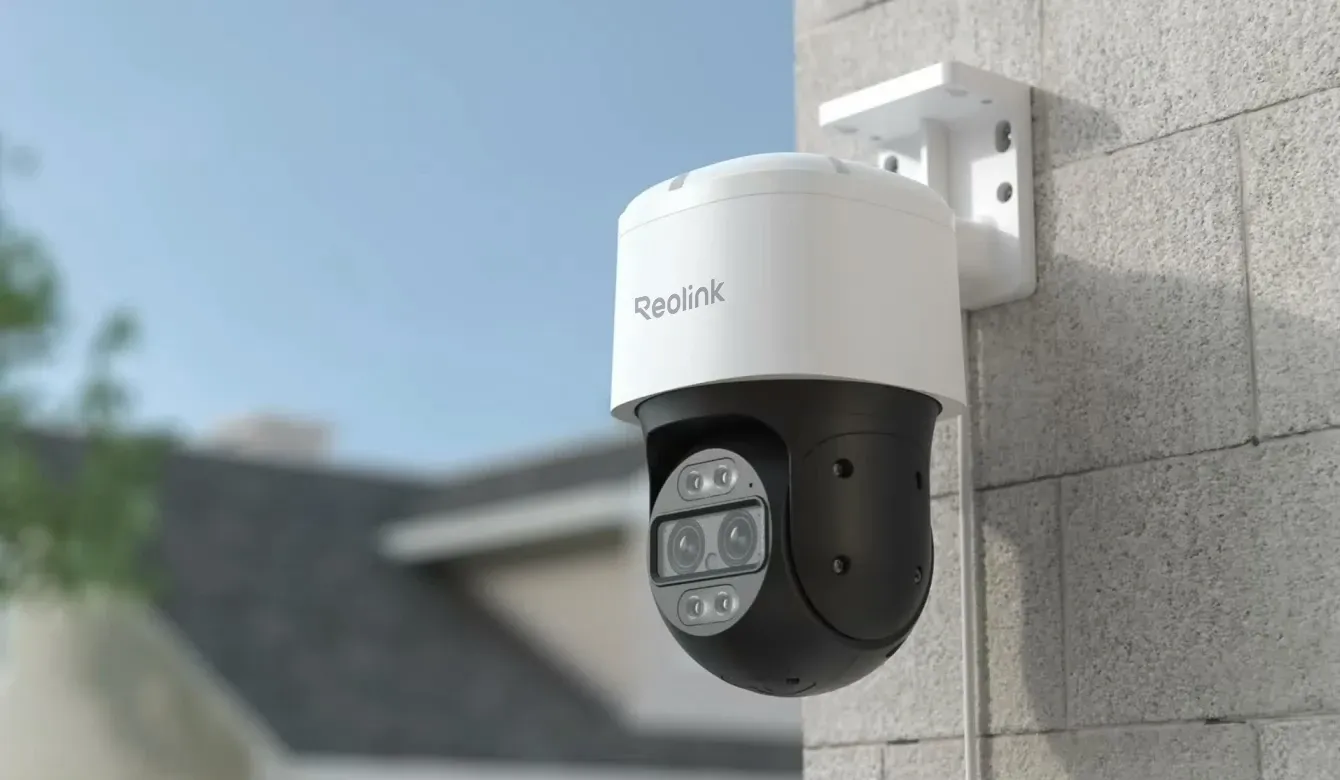
Dual-lens pan-tilt camera mounted on a stone block wall, an option for Hudson Valley condo clubhouses
A dual-lens pan-tilt camera on a stone-block wall. On a large Hudson Valley condo property a camera like this can add a moving view from the clubhouse, but only as an extra to fixed cameras that always watch the doors. Manufacturer photo from Reolink, one of our partner brands; not a client property.
Cameras & Cable

Condo Security Camera Systems Built for Slopes, Rock and Distance

In condo video surveillance, the cameras themselves are the easy part of a Hudson Valley project. The hard part is getting a clean, powered signal from a pool fence or an entrance sign back to a recorder that may be hundreds of feet away, uphill, through trees, across ground that hides rock a few inches down.

Three ways to move the video

A network camera runs on one cable that carries both power and video, up to about 100 meters (328 feet) from the switch that feeds it. Inside that distance, we pull cable through attics, crawlspaces and conduit. Past it, there are three answers. Fiber between buildings carries video any distance and does not conduct lightning, which matters here more than almost anywhere. A point-to-point wireless bridge links two buildings with a clear line of sight and no digging. And an outdoor switch in a weatherproof box, with its own power, extends the reach from a second building. Each run on our site plan says which method it uses and what it costs.

Hills and sight lines

Hillside communities give cameras good views and wireless links bad ones. A camera on a clubhouse that sits above the parking areas can see a long way, but a wireless bridge between two buildings on either side of a rise may have no line of sight at all. We check each link with the actual mounting heights during the walk, and account for summer leaves, which can block a link that worked fine in March.

Rock, roots and frozen ground

When a run has to go underground, New York's dig-safe rule requires notice "at least two but not more than ten working days" before excavation (16 NYCRR Part 753), so markouts come first. Trenches across Hudson Valley lawns meet ledge rock, boulders and tree roots more often than they do on Long Island's sandy soil. Where rock is likely, we price an alternate route, such as along a building, under a walkway that is being replaced anyway, or over a wireless link, before the board approves anything. Trenching stops when the ground freezes and resumes in spring, which is a scheduling point for boards approving work in October.

Cameras that suit the valley

Turret cameras cover building doors and lobbies. Bullet cameras with long lenses suit entrance drives and parking areas. Full-color low-light cameras matter on properties lit only by a few path lights, where infrared turns everything gray. Dual-lens and panoramic cameras cover a whole parking area from one mount. Pan-tilt cameras have a place on a large site, but only as an extra; a camera that is looking left when something happens on the right records nothing useful.

The recorder and its closet

The recorder goes in a heated, dry, locked space, usually the clubhouse office or a utility room, never a pool pump room, an unheated garage or a shed. It sits on a battery backup sized to ride out short outages and shut down cleanly in long ones. Drives are sized for the retention the board chooses, usually 30 days or more at the resolution and frame rate the cameras need.

Seeing the cameras from somewhere else

Managing agents in the valley often handle communities in three counties from one office, and board members may be in Florida for the winter. Remote viewing through the manufacturer's encrypted app lets authorized people check the cameras and pull clips without driving over. Where the clubhouse has no wired internet, a cellular or fixed-wireless connection can carry remote viewing, with the data cost shown in the proposal.

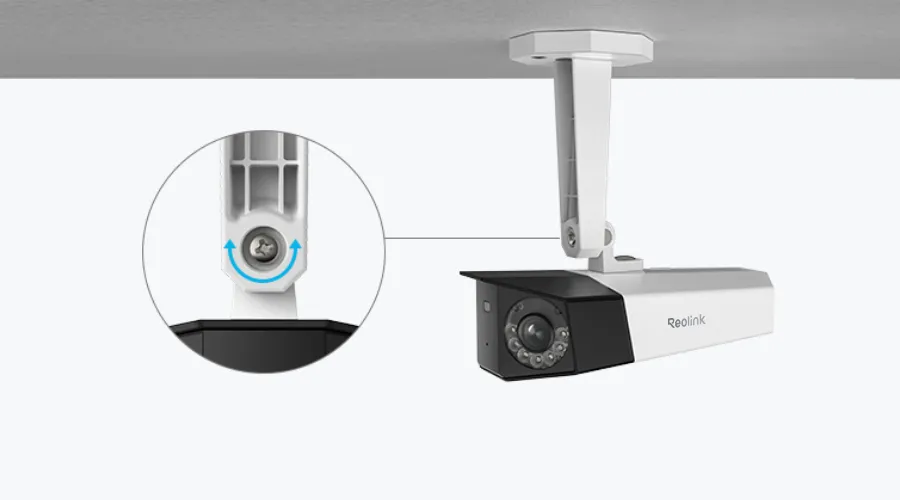
Dual-lens camera on a ceiling drop bracket, as used in Hudson Valley condo garages and carports
A dual-lens camera hanging from a ceiling drop bracket, with a close-up of the angle adjustment. Ceiling mounts suit Hudson Valley condo tower garages, carports and covered entries where there is no wall in the right place. Manufacturer photo from Reolink, one of our partner brands; not a client property.
Brands

Our House System First, Partner Brands When the Board Prefers One

Every Hudson Valley condo proposal starts with our own house-brand system: network cameras and a recorder we install, configure and support ourselves, with no monthly fees attached. It is the system behind the prices on our county pages, and it covers what nearly every condo community needs, from turrets at clubhouse doors to long-lens bullets on the entrance drive.

Some boards come to us with a brand in mind, often because a neighboring community uses it or because a board member has it at home. We install Lorex, Luminys and Reolink as an authorized partner, and many other major brands as well. When a board asks, we quote the brand side by side with the house system, including any subscription or cloud fees the brand charges, so the comparison covers what the community will pay over the life of the system, not just the price at signing.

Whichever system goes in, the association owns it outright. Every administrator account is registered to the association, not to us and not to an individual board member, so the community can change installers, managing agents or board officers without losing access to its own cameras.

Privacy & State Law

Hudson Valley Condo Camera Privacy: Your Bylaws and New York State Law

Nothing on this page is legal advice, and the association's attorney should review any camera plan that raises a question. What we can do is point boards to the rules that actually apply north of the city, with sources, so the conversation with counsel starts in the right place.

The declaration and bylaws come first

A condo board's authority to put cameras on common elements comes from the condominium's own documents, read with the state's Condominium Act. The Act defines the common elements and requires bylaws that cover, among other things, reserves "for major and minor maintenance, repairs, additions, improvements, replacements" (RPL §339-v). Most declarations let the board install equipment in common areas; some require an owner vote for improvements above a dollar threshold. That threshold, not a camera law, is what usually decides whether owners must vote.

Homeowners associations that are not condominiums

Many Hudson Valley townhouse communities are organized as homeowners associations, where each owner holds title to the lot and the association owns the roads, open space and clubhouse. The Attorney General's offering plan questionnaire for HOAs is issued under 13 NYCRR Part 22 (NY Attorney General). For cameras, the difference matters at the property line: an HOA can usually mount on what it owns, while a camera on an owner's townhouse wall needs that owner's agreement or an easement in the documents.

Video, yes; audio, almost never

New York's eavesdropping law makes it a crime to mechanically overhear a conversation without the consent of at least one party (Penal Law §250.00; §250.05). A microphone in a clubhouse lobby records conversations among people who never consented. We ship every condo system with audio turned off and leave it off unless the board's counsel approves a specific use in writing.

Spaces that are off limits

Bathrooms, locker rooms, changing rooms and similar rooms are covered both by the General Business Law ban on viewing devices and by the unlawful surveillance provisions of the Penal Law, which list "a bedroom, changing room, fitting room, restroom, toilet, bathroom, washroom, shower" (Penal Law §250.45, cited above). Pool changing buildings and clubhouse locker rooms are the places a Hudson Valley condo is most likely to have one; they get no cameras inside, and the outside cameras are aimed so their doorways show who entered, not what is inside.

Owners' own cameras

Video doorbells and owner cameras are common in townhouse communities. Whether an owner can mount one on a wall the association maintains is a question for the declaration and the house rules. Practical boards adopt a short rule: owner cameras are allowed at the owner's own door, aimed at the owner's own entry, with no view into a neighbor's windows or yard. We can install owner cameras under the same rule, as a separate job billed to the owner.

Who may legally install the system

The installer should hold New York's state license for security and fire alarm installers, administered by the Department of State (GBL §69-m); ours is NYS license #12000287431. Power is a separate trade. Westchester requires plumbers and electricians to hold a county trade license (Westchester County Consumer Protection), and Rockland's code defines electrical contracting to include wiring for light, heat or power (Rockland County Code ch. 250). We do not do electrical work. When a camera pole or a new outlet needs line power, the association's licensed electrician provides it, and we coordinate the location and timing.

City laws that stay in the city

Board members who work in Manhattan sometimes bring city rules home with them. The Multiple Dwelling Law covers cities of 325,000 or more, so its entrance and intercom provisions do not reach Westchester's cities or any Hudson Valley town. The city's Local Law 63 of 2021 on smart access systems is a New York City law (intro.nyc). State laws such as the Penal Law, the General Business Law and the Executive Law's pool gate rule apply everywhere in the six counties.

Footage Policy

Footage, Police Requests and Who Holds the Passwords

A camera system is only as useful as the board's rules for its recordings. A clear written policy, adopted before the cameras go live, prevents most of the arguments we hear about later.

How long to keep video

FirstService Residential, one of the largest community management firms in the region, says condo and co-op footage is "generally stored for 30 to 90 days depending on the building size" (FirstService Residential, Sept. 23, 2024). For a Hudson Valley community where incidents in a parking area may not be noticed until an owner returns from a trip, 30 days is the practical minimum. We size the drives to the retention the board sets, and the recorder overwrites the oldest video automatically.

Who can see what

The same article recommends keeping "a log of requests and a list of anyone who accessed footage." We set up named accounts by role: the managing agent sees everything and can export; the superintendent sees live views; a board officer sees what the policy allows; the pool contractor, if any, sees only the pool. Owners asking for a clip go through the managing agent, and the log records each request.

When police ask

Local departments in the valley increasingly want to know where private cameras are. Rockland County Sheriff Lou Falco's Project Community Eyes, reported by News 12, aims to tell detectives "precisely where to knock after a crime or terrorist incident occurs," and Clarkstown police have asked residents and businesses to register their systems (News 12). Registration of that kind is a list of locations; it does not give police a live view. The board's policy should say who handles police requests, how clips are exported and logged, and when the association's attorney is called.

Signs

Signs at the entrance and at clubhouse doors telling owners and visitors that the common areas are recorded are standard practice and help deterrence. We supply and mount them as part of the job, worded to match the board's policy.

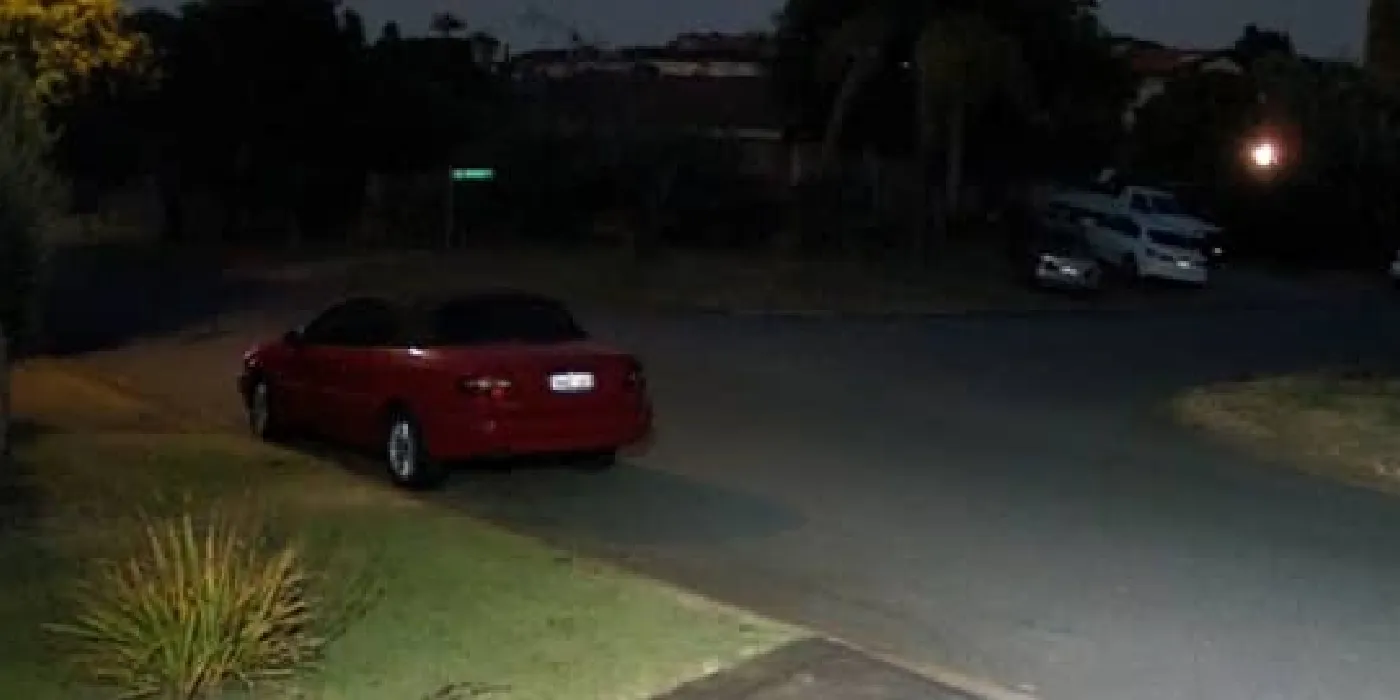
Night camera view of a red car at a curb under a streetlight, like a Hudson Valley condo guest lot
A night frame from an outdoor camera: a red car at a curb, lit by a single streetlight. Parking areas are where most Hudson Valley condo footage requests start, so lot cameras are aimed to show cars and people clearly in low light. Manufacturer sample frame from Reolink, one of our partner brands; not a client property.
Board Approval

Taking a Camera Plan Through a Hudson Valley Board or HOA

Condo association security cameras are a board decision, and most Hudson Valley boards meet monthly, many are volunteers with day jobs in the city, and some govern communities where a third of the owners spend winter somewhere warmer. A camera proposal has to be easy to approve in one meeting and easy to explain to owners afterwards.

What goes in the board packet

  • A marked-up aerial showing each camera, what it sees and how its cable or link gets back to the recorder.
  • Phases with separate prices, so the board can approve the entrance and clubhouse now and the parking areas next budget year.
  • Running costs, including drive replacement, any internet line for remote viewing and any brand subscription.
  • A privacy page listing what is masked, that audio is off and who will have access.
  • The license number and insurance carrier, with the certificate issued on award naming the association and the managing agent.

Paying for it

Boards fund cameras from the operating budget, from reserves or through a special assessment, as their documents allow. A camera system is a reasonable reserve item because its parts wear out on a schedule: drives in a few years, cameras in seven to ten. Financing is available through Wisetack, subject to approval.

Developers still in control

In newer communities where the sponsor still controls the board, cameras installed now will belong to the owners after turnover. The HOA offering plan questionnaire asks, for example, whether certified financial statements will be provided to members while the sponsor is in control (13 NYCRR Part 22 questionnaire, cited above). Owners' representatives should ask the same kind of question about the camera system: who holds the passwords, and will they transfer at turnover?

Telling owners

The managing agent sends owners a short notice before work starts: which areas will be recorded, that nothing points into homes, who sees the footage, and the work dates. Owners who are away for the season get it by email. Communities that send the aerial with the notice get far fewer questions than those where cameras simply appear.

Pricing

Condo Security Camera Installation Cost in the Hudson Valley

Condo camera work in the Hudson Valley is priced from the same county camera price pages as every other camera job we do here. There is no condo premium. The base package on each page is four house-brand cameras and a recorder, installed, with cable runs of up to 100 feet per camera, and the price steps up with the drive from our crews.

CountyFour-camera house-brand system, installedFull package list
Westchester County$1,099Westchester camera prices
Rockland County$1,099Rockland camera prices
Orange County$1,199Orange County camera prices
Putnam County$1,199Putnam camera prices
Dutchess County$1,299Dutchess camera prices
Ulster County$1,299Ulster camera prices

Each county page also lists full-color, higher-resolution, audio-capable and deterrence packages above the base system. Condo communities almost always need more than four cameras, and every camera past the package is priced per camera once we have walked the property and confirmed the layout. A turret over a clubhouse door and a camera at an entrance sign 600 feet downhill are very different amounts of work.

What moves a Hudson Valley condo camera quote

  • Runs past 100 feet. Conduit, fiber, outdoor switches and wireless bridges are each listed and priced on their own line.
  • Digging. Trenching, boring under drives and restoring lawn are priced per run, with a rock contingency stated in writing where the ground is known to be ledge.
  • Poles and power. New camera poles add material and labor; line power at a pole comes from the association's electrician.
  • Concealed wiring. Fishing cable inside finished clubhouse rooms or tower corridors is an extra; exposed runs in attics, garages and utility rooms usually are not.
  • Surge protection and grounding on runs to poles and detached buildings, which we recommend on almost every Hudson Valley job.
  • Cable already in the walls. A 1990s coax run that may not test clean is flagged in writing with a replacement figure, since hardware we order for you is not returnable.

Cameras the association already bought

If the community supplies its own cameras, we quote installation labor only, by phone or text from the models and a marked-up aerial, and book the work once the deposit is paid. We do not do walk-throughs for owner-supplied equipment, and the equipment itself stays with whoever sold it.

Warranty and terms

Our installation carries the 30-day warranty posted on our site, starting the day the system goes live, and the board can add a one-year or longer plan at signing; the plan price sits in the proposal beside the system it covers. Hardware is covered by its manufacturer on the manufacturer's own terms. Full terms — including 50% deposit, one-year parts-only warranty on Abstract Enterprises Security Systems-supplied products, and the late-fee schedule — are set out in the service agreement. Plan details are on our warranty page.

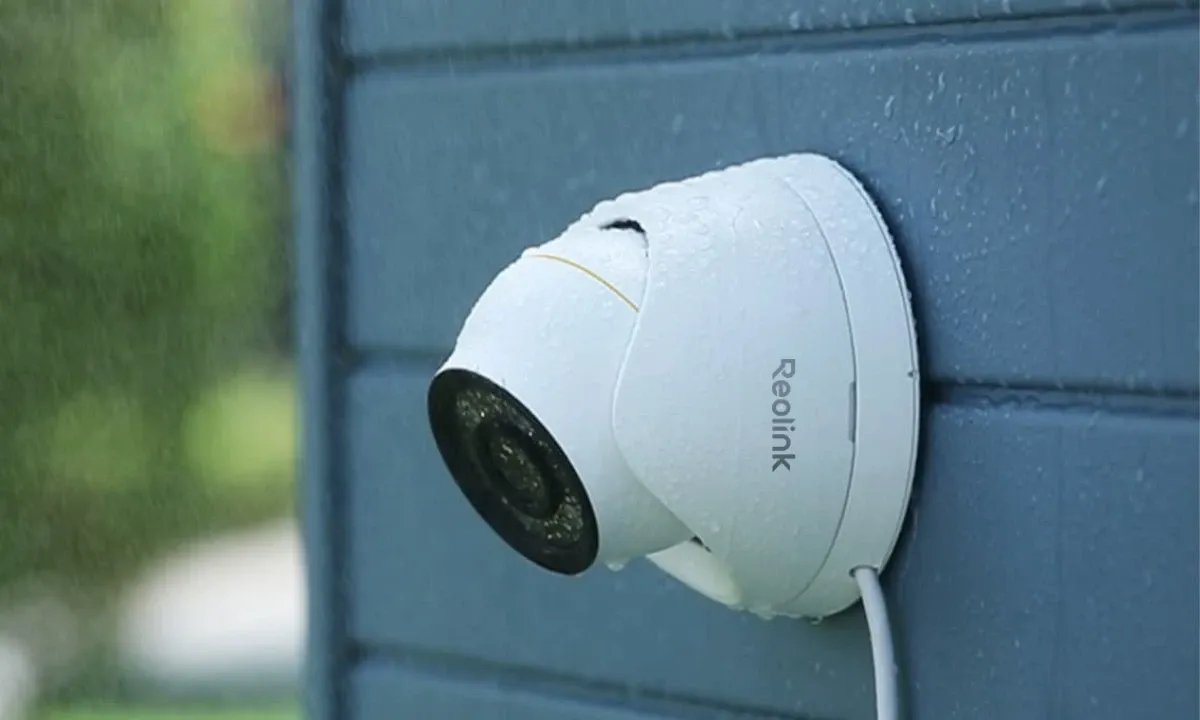
White dome camera on blue siding in the rain, a Hudson Valley condo camera for townhouse building fronts
A white dome camera on blue siding, with rain falling past it. Domes like this go on clubhouse doors and building fronts in Hudson Valley townhouse communities, mounted on blocks so the siding stays sealed. Manufacturer photo from Reolink, one of our partner brands; not a client property.
Get In Touch

Request a Condo Camera Proposal in the Hudson Valley

The most useful first message names the community and its town, gives a rough count of buildings and homes, lists the spots the board is worried about and describes any cameras already up. A screenshot of the property from an online map, with the entrance, clubhouse and pool circled, helps us plan the walk. To talk it through first, call (800) 486-0943.

✅

Request Sent!

Your request is in. Expect a call or text from our office shortly, and we will settle on a morning visit around the board's calendar.

Community Types

Camera Plans for the Hudson Valley's Kinds of Condominium

When a Hudson Valley board asks for condo cameras, the first question is what kind of community it governs. The answer decides where the recorder lives, how the cable travels and roughly what the system costs.

Gated and private-drive townhouse HOAs

Attached homes along association roads, a clubhouse and pool, and one or two entrances off a county road. The entrance drive and amenities come first; building fronts come later and only where needed.

Garden-style complexes

Two- and three-story wood-frame buildings from the 1960s to the 1990s around shared parking, common along Route 9, Route 59 and Route 17. Attic paths make building doors easy; the parking areas take most of the budget.

Downtown condo towers

Elevator buildings in White Plains, New Rochelle and Yonkers with lobbies, garages, package rooms and amenity floors. These are planned like city buildings, with a desk monitor where there is a concierge.

Riverfront and station condos

Buildings and townhouses along the Hudson in the river villages and near Metro-North stations, with glass lobbies facing the water, garages that can flood and parking used by commuters who do not live there.

55-plus communities

Clubhouse-centered life, walking paths, and owners who travel. Coverage favors the clubhouse, the pool, the paths at key points and the entrance, with remote viewing for a board that may be scattered in winter.

Conversions and historic buildings

Condos in former mills, schools, churches and factory lofts in Beacon, Kingston, Newburgh and New Paltz. Thick masonry, high ceilings and historic district rules shape where cameras and cable can go.

Very large communities add another layer. Where one property holds dozens of separate condo associations under a master association, we plan the system in two parts: shared cameras at entrances, roads and the main clubhouse, owned by the master association, and building or group cameras owned by each condo, with permissions that match.

Camera view at dusk over tall trees and a lit street, the wooded setting of many Hudson Valley condo communities
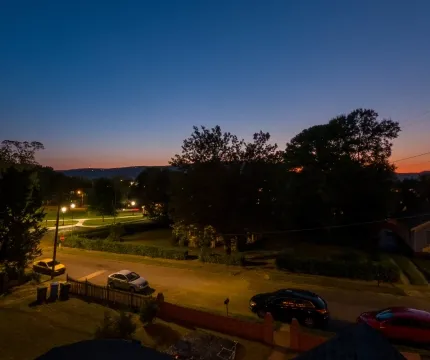
A camera view at dusk over a row of trees, streetlights and parked cars. Trees frame most Hudson Valley condo properties, which is why camera placement is checked with summer leaves in mind. Manufacturer sample frame from Reolink, one of our partner brands; not a client property.
Across the Valley

Condo Surveillance Cameras From the Sound Shore to the Catskill Foothills

The equipment on our trucks is identical whether the job is in Mount Vernon or Saugerties. What changes with every exit up the Thruway is the property, the weather and what boards complain about, so here is the region in pieces.

Southern Westchester's cities

Yonkers, Mount Vernon, New Rochelle and White Plains have the valley's tallest condo buildings. New Rochelle's downtown was rezoned in 2015, opening 279 acres to residential and mixed-use construction (City of New Rochelle), and most of what rose is rental, so condo buildings sit among rental towers and share streets, garages and delivery traffic with them. Camera plans here focus on the lobby, package handling, the garage ramp and the elevator cabs.

The river towns

From Dobbs Ferry to Croton, the river towns mix older condo complexes with new waterfront development. In Sleepy Hollow, the former General Motors plant site is becoming what lohud called a "village within a village": 70 acres with 1,177 townhomes, condos and apartments, a hotel, shops and parkland (lohud, June 3, 2025). Mixed sites like that need clear lines between what the condo association records and what belongs to the retail and rental owners next door.

The Sound Shore

Rye, Mamaroneck, Larchmont and Port Chester condos sit close to the water and the rivers that feed it. When the remnants of Ida came through in 2021, lohud's photographers showed a family wading through water as they evacuated along Mamaroneck Avenue (lohud, Sept. 2, 2021). Recorders and switches go above ground floors and garage levels in these buildings.

Northern Westchester and Putnam

Somers, Yorktown, Carmel, Mahopac and Brewster are townhouse and 55-plus country, with long private drives, wooded edges and reservoirs. Lightning, outages and rock under the lawn are the planning constraints. Mail theft has been an issue too; in December 2022, police made three arrests after stopping a car near Route 6N in Mahopac whose occupants appeared to be stealing mail (News 12).

Rockland's river villages and Route 59

Piermont, Nyack and Haverstraw have elevator condos and townhouses with river views; New City, Nanuet, Pomona and Pearl River have clubhouse complexes and 55-plus communities. Riverfront properties flood: Rockland Daily reported in January 2024 that "the Village of Piermont was hit hard by tidal flooding," its worst since Hurricane Sandy (Rockland Daily, Jan. 14, 2024).

Orange County's towns

Newburgh and New Windsor hold older complexes, Monroe and Palm Tree newer mid-rise condos, Middletown and Chester garden and townhouse communities, and the Village of Warwick a 55-plus community within walking distance of its downtown. Snow is the winter constraint; News 12 reported about 18 inches in Monroe in January 2026 (News 12, Jan. 26, 2026).

Dutchess along Route 9 and the river

Fishkill and Wappingers Falls have the county's densest run of townhouse complexes, Poughkeepsie has gated and older communities, and Beacon has station-area condos and townhouses. New waterfront condos keep coming; a plan reported by Westfair in 2023 proposed 116 condo units in four buildings on the Fishkill riverfront (Westfair, Dec. 1, 2023). New buildings are the cheapest time to plan cameras, before walls close.

Ulster and the mountain towns

New Paltz, Highland, Kingston and Port Ewen hold most of Ulster's condos, with Woodstock and the Catskill towns beyond. Associations here are small, outages last longer, and the nearest help is farther away, so systems need to be simple, well protected and easy for a volunteer treasurer to run.

Long-range daytime camera view of a village below mountains, the kind of distance Hudson Valley hillside condos face
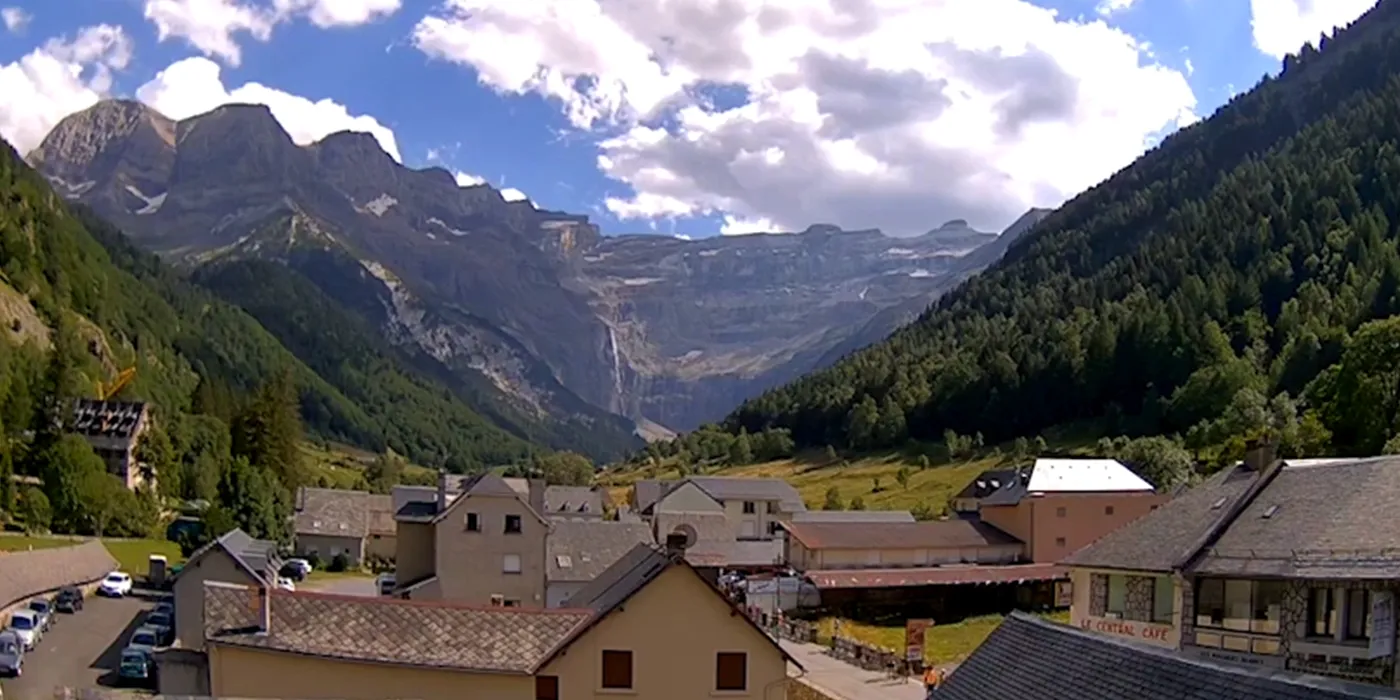
A wide daytime frame looking across rooftops and a parking area to a mountain valley. Long views like this make good overview shots on hillside Hudson Valley condo properties, while identifying cameras stay close to doors and paths. Manufacturer sample frame from Reolink, one of our partner brands; not a client property.
How It Works

How a Hudson Valley Condo Camera Installation Runs

One camera at a mail kiosk can be a single visit. A full community system can run a season from first call to handover, mostly waiting on board meetings, markouts and the weather. The steps are the same every time.

1

First call and booking

Phone, text message or the form on this page all work. Within 2 hours we confirm a morning survey slot on whatever day suits you, weekends included, with a two-hour arrival window.

2

Walking the property

We walk the entrance, clubhouse, pool, parking areas and outbuildings with the manager or a board member, measure runs, check sight lines for wireless links, test old cable and note rock, slopes and trees.

3

Written plan and phases

A marked aerial showing every camera's view and every cable or link, phases with separate prices, retention days and yearly running costs.

4

Approval and deposit

Once the vote the declaration calls for has passed, the agent countersigns, the deposit clears and we place the order. Our certificate of insurance goes out at that point, on award.

5

Markouts and owner notice

Before a shovel goes in, the utilities mark their lines. Meanwhile the agent emails every owner, snowbirds too, a one-page notice with the schedule.

6

Installation

Crews set conduit and pull cable, mount links and surge suppressors, hang cameras and rack the recorder. Every view is masked where it touches a home, microphones stay disabled and torn-up sod is replaced before we leave.

7

Handover

Role-based logins, training for the agent and staff, written export steps, a labeled aerial and the password list, all held by the association.

Two rules protect the board. Equipment is ordered only after approval and the deposit, and because it cannot be returned once ordered, anything that might add cost, such as rock in a trench line or an old cable that may fail its test, is written into the proposal first. And installation dates are given in the order deposits arrive: first paid, first scheduled, with no promises of a date before the equipment is in hand.

Weather & Power

Lightning, Nor'easters and Long Outages: Hardening a Condo Camera System

The single most common reason we replace a Hudson Valley condo camera system early is not theft or vandalism. It is weather: a strike that traveled down a long copper run, a recorder that corrupted its drive when the power dropped, or a camera that froze shut behind ice. Each has a known fix, and each fix belongs in the original design.

Outages measured in days

The valley's utilities report outages in the tens of thousands several times a year. After storms in early July 2026, Orange & Rockland said more than 47,000 of its customers had been affected (Orange & Rockland, July 6, 2026). In August 2020, Tropical Storm Isaias left 34,150 of NYSEG's 38,693 Putnam customers without power (Daily Voice, Aug. 2020). A battery backup on the recorder and the switch that powers the cameras keeps the system recording through short outages and shuts it down cleanly in long ones, so the drive survives. Communities with a clubhouse generator can put the camera equipment on it; we plan the outlet location with the association's electrician.

Lightning on ridges and open lots

A copper cable running a few hundred feet to a pole camera or a pool house is an antenna in a thunderstorm. We put surge protection at both ends of every outdoor run, bond it to a proper ground and use fiber for links between buildings wherever the distance or the exposure justifies it, since glass does not carry a strike from one building into the next. A protected system still loses a camera to a direct hit now and then; an unprotected one can lose the recorder, the switch and every camera on it.

Flooding near the river and the Sound

Riverfront and Sound Shore buildings keep recorders, switches and battery backups off garage floors and out of basements that take water. Cameras in garages that flood are mounted high, with connections in sealed boxes. After a flood, a camera that looks fine can have water in its connector, so a post-storm check of each low camera is part of our maintenance visits.

Snow, ice and cold

Plows pile snow along curbs and at the ends of parking rows, so cameras along lots go high enough to see over the banks and out of reach of the plow blade. Eave cameras are placed away from drip lines where icicles form. Cameras rated for low temperatures, with heaters where the spec calls for them, keep working through upper-valley January nights.

Trees, leaves and wildlife

Most walks happen when the trees are bare or leafing out, and what a camera sees in April is not what it sees in July. We ask the manager where the canopy fills in and aim accordingly. Motion analytics trained to recognize people and vehicles keep deer, branches and blowing snow from filling the alert log.

Night camera view from a hillside over a lit parking lot and town lights, as at a Hudson Valley ridge-top condo
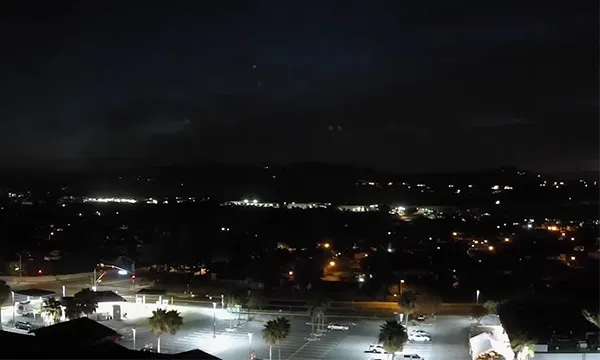
A night frame from a camera high on a hill, looking over a lit parking lot to the lights of a town. Ridge-top Hudson Valley condo properties get broad views like this, and their exposed mounts need surge protection. Manufacturer sample frame from Reolink, one of our partner brands; not a client property.
Existing Systems

Repairing, Upgrading or Replacing an Older Condo Camera System

Many Hudson Valley communities already have cameras, put in by the developer or by a board ten or fifteen years ago. Before recommending anything new, we find out what can be kept.

When a repair is the answer

A dead power supply, a failed drive or a camera knocked out of aim is a repair, not a project. If that is all the community needs, our Hudson Valley security camera repair service is the place to start.

When the cable can stay

Coax runs from an older analog system can often carry modern high-definition analog cameras to a new recorder, which saves the most expensive part of any upgrade: pulling new cable through finished buildings or across lawns. We test each run before we promise anything.

When the whole system goes

Systems with no working administrator password, recorders the manufacturer no longer supports, or cameras whose picture cannot identify a face at the door usually get replaced. Where possible we phase it, entrance and clubhouse first, so the community is never without recording.

Getting control back

The most common takeover problem is a system registered to a former vendor or a former board member's personal email. Resetting it can mean factory-resetting each device. We document the process and register everything to the association.

Keeping it working

A visit each spring and fall covers lens cleaning, aim checks after winter, drive health, firmware and a test export. Between visits, the recorder emails the managing agent when a camera drops offline or a drive reports errors, so nobody learns of a dead camera from an incident.

Network Security

Keeping the Community's Camera Network Private

A condo camera system shares the clubhouse with guest Wi-Fi, the office computers, smart TVs in the community room and sometimes a pool contractor's tablet. Each one is a way in unless the design closes it.

  • A separate network for the cameras, apart from guest Wi-Fi and office machines.
  • Nothing on the recorder exposed to the internet. Phones and laptops connect through the camera maker's encrypted cloud relay, so the clubhouse router never forwards traffic to it.
  • Factory passwords replaced on every device that has one, from the recorder down to each radio on a building link; the board keeps the only copy of the list.
  • Logins named for the job (manager, superintendent, treasurer) instead of anyone's personal email, so access ends the day a person leaves the role.
  • Encrypted wireless bridges with hidden network names.
  • Firmware current at handover and checked on every maintenance visit.

Some management firms in the valley run their own IT standards across every property they handle. If yours does, its rules govern the camera network too, and we settle the details with its technician well before our crew arrives.

Planning

Sizing a Camera System for a Hudson Valley Condo Community

We count cameras last. First comes a list of places and the question each camera has to answer, such as "which car hit the garage door?" or "who propped the pool gate?" The ranges below are what Hudson Valley communities of each type usually end up with; the walk sets the real number.

CommunityAreas usually coveredTypical camera count
Small association, under 30 unitsEntrance, mail kiosk, main parking area, trash enclosure4–8
Garden complex or townhouse HOA, 30–150 unitsEntrance drive, each parking area, clubhouse doors and lobby, pool gate and deck, maintenance building10–24
Large townhouse or 55-plus community, 150–500 homesPlate and overview cameras at each way in, the clubhouse and any second amenity building, the courts, detached garage rows, the RV lot and the busiest path crossings24–48
Multi-association community, 500+ homesShared entrances and roads under the master association, plus each group's own buildings and parking48–100+
Downtown condo towerStreet entry and vestibule, the lobby desk view, parcel storage, each cab, the ramp and every parking level, the rooftop terrace16–40

Two rules keep the counts honest. Every way onto the property is covered before any building interior. And each camera gets one job; a camera asked to watch the entrance, the clubhouse and the pool at once does none of them well. We size the recorder for the full plan in phase one, so later cameras plug in.

Wide-angle daytime camera view across an open lawn, as one camera might cover a Hudson Valley condo green
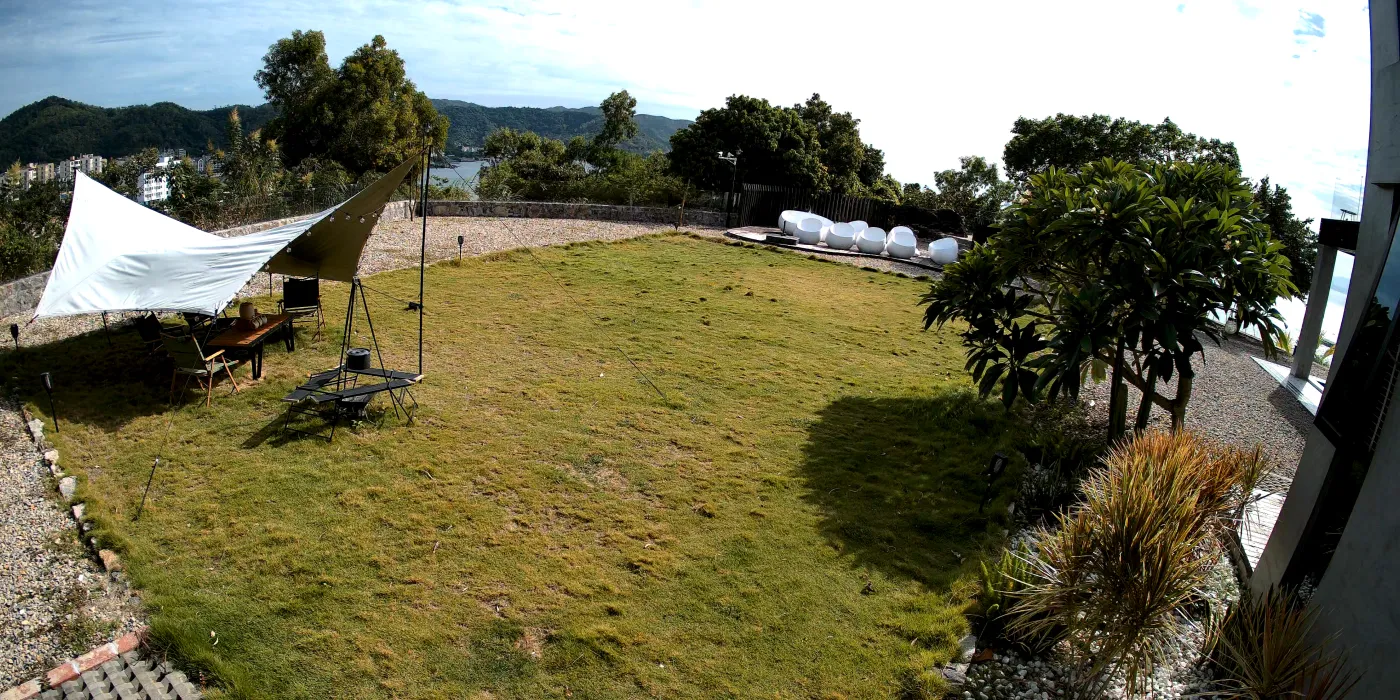
A wide-angle daytime frame across an open lawn with a shade canopy and trees. One wide camera can cover a Hudson Valley condo green or picnic area that would otherwise take two. Manufacturer sample frame from Reolink, one of our partner brands; not a client property.
Related Pages

Other Hudson Valley Camera Pages and What Each One Covers

This page is written for condo boards, HOAs and their managing agents. Other pages cover other owners and other questions, and boards sometimes need more than one.

Real Questions

Questions Hudson Valley Condo Boards Ask Us About Cameras

Our community climbs a steep hillside. Can one camera at the top see the lower parking areas?

It can see them, but usually not well enough to identify anyone. A camera looking down a long slope sees roofs and the tops of heads, and details shrink with distance. We use the high vantage point for an overview camera and put identifying cameras at the bottom, near where people park and walk, linked back up the hill by cable along a building or by a short wireless hop.

Cable internet doesn't reach our clubhouse. Can we still check the cameras from home?

Yes. The cameras record to the recorder in the clubhouse whether or not there is internet; remote viewing is the only part that needs a connection. A cellular router or a fixed-wireless service can provide it, and because live video uses data, we set remote viewing to a lower-resolution stream and pull full-quality clips only when needed. The monthly data cost is listed in the proposal.

Our water treatment building sits off by itself at the edge of the woods. Is a camera there worth it?

Usually yes. A community that runs its own well or pump building has equipment that is expensive to replace and essential to every owner, sitting in the place least likely to be noticed. One camera on the door, fed by fiber or a wireless link with surge protection at both ends, shows who opened it and when. Check whether the community's water operator or the health department has its own requirements for that building before work starts.

Plowed snow piles up along our parking rows every winter. How high should the lot cameras be?

High enough to look over a five-foot bank and stay out of reach of the plow and of anyone standing on the pile, which usually means 12 to 16 feet on a building or pole. Higher than that, faces become hard to identify, so we pick a lens that frames the parking row tightly from that height and aim it to see under the brim of a hat.

River fog hides our waterfront views on summer mornings. Is there a camera that sees through it?

Not in any meaningful way. Fog scatters both visible and infrared light, and infrared can make it worse by lighting up the droplets in front of the lens. What helps is moving identifying cameras closer to the doors and paths people use, so fog between the camera and the subject is a few feet rather than a few hundred, and keeping the long river view for overview only.

Residents in our 55-plus community want cameras that notice when a neighbor falls. Can the system do that?

A condo camera system is not a medical alert or wellness service, and we do not sell it as one. Cameras in common areas record what happened, but nobody is watching live, and fall-detection features in consumer cameras are not designed for this. Owners who want that protection should look at personal emergency response devices; the association's cameras can still help the board understand what happened on a path or in the clubhouse after the fact.

Some owners rent their units out on weekends. Can the cameras show the board how often guests come and go?

The cameras will record guests in common areas the same way they record everyone else, but turning them into a rental-tracking tool is a different matter. Whether the board may use footage to enforce rental rules depends on the declaration, the house rules and the footage policy, and counsel should weigh in first. We set the cameras up for security; how the board uses recordings is a governance decision.

We just put EV chargers in the guest lot. Should a camera cover them?

Yes. Chargers attract cable theft and damage from cars backing in, and disputes over who has been parked there all day. One camera at the end of the row, framing the chargers and the plates of cars using them, answers all three. Its cable can often share the trench or conduit that was dug for the chargers, which is why it pays to call before the lot is repaved.

Our condo is in a converted 19th-century mill with walls two feet thick. How does camera cable get through?

Slowly and deliberately. Wireless signals do not pass through that kind of masonry, so each floor or wing usually needs its own cable path. We follow existing chases, old freight shafts, sprinkler and electrical routes and the spaces above dropped ceilings, and core through a wall only where the board approves it. If the building is in a historic district, exterior cameras are placed where they are least visible from the street.

Our garden buildings share one attic with firewalls between units. Can camera cable cross them?

It can, but every hole through a fire separation has to be sealed again with a listed firestop product so the wall keeps its rating. We drill the smallest hole that works, sleeve it, seal both sides and note each penetration on the handover plan. Where a route would mean crossing many firewalls, running cable outside along the eaves in a protected channel is often cleaner.

Will summer leaves block a wireless link between two of our buildings?

They can. Wet leaves absorb the signal that point-to-point bridges use, so a link that tests perfectly in March can drop in July. We test with the antennas at their final height, look for paths above or around the tree line, use higher-gain equipment for wooded paths and recommend fiber where no clear path exists.

Can trenching for camera cable still happen after the ground freezes?

Generally not well. Frozen ground breaks equipment and the lawn cannot be restored until spring, so we finish trenched runs before the freeze and schedule the rest for when the ground thaws. Cameras on buildings, cable inside buildings and wireless links can go in all winter, so a late-fall approval usually means a winter install with the buried runs added in spring.

Reality Check

What Online Answers Get Wrong About Hudson Valley Condo Cameras

Board members usually research before they call. Search results, chatbots and national cost guides from sites such as Angi, HomeAdvisor and Fixr are mostly written for single-family houses or for city buildings. Here is how common claims hold up on a Hudson Valley condo property.

"Wireless cameras are the easy answer for a spread-out property"

Battery and Wi-Fi cameras are easy to put up, which is why they show up in so many answers. On a condo property they run into the same three problems again and again: Wi-Fi from the clubhouse does not reach the far parking area, batteries die faster in a Hudson Valley January, and each camera stores clips in its own cloud account rather than in one recorder the association controls.

They also record clips, not continuous video. When the managing agent needs to see who walked past a car at 2:14 a.m., a clip-based camera may have recorded nothing at all.

Wired network cameras, with fiber or proper wireless bridges between buildings, cost more on day one and far less over the life of the system.

"Camera rules are the same everywhere in New York"

State laws, such as the Penal Law sections on eavesdropping and unlawful surveillance, do apply statewide. But many answers mix in New York City rules, such as the Multiple Dwelling Law or the city's local laws on building entry systems, as if they applied in Westchester or Dutchess. They do not.

The Multiple Residence Law covers cities under 325,000 people and every town and village, and local codes differ from town to town on things like alarm permits and electrical inspections.

For cameras, the condo's own declaration and bylaws usually matter more than any statute. Counsel should read them before the board votes.

"A cost guide tells you what a condo camera system costs"

National guides quote per-camera ranges built from house installs, where a camera goes on a wall twenty feet from a router. A condo camera at a pool fence 400 feet from the clubhouse, through rock, is a different job, and no national range accounts for it.

Guides also leave out what Hudson Valley jobs routinely need: surge protection, battery backup, trenching, restoration and the drive time to Dutchess or Ulster.

Our county price pages give real starting prices for the base package, and the property walk prices the rest in writing before anything is ordered.

"Battery backup is optional"

Many installation guides treat a battery backup as an add-on. In a region where a single storm can affect tens of thousands of utility customers, it is the difference between a recorder that rides through a flicker and one that corrupts its drive.

A battery will not carry cameras through a two-day outage, and nobody should promise that. What it does is keep recording through short drops and shut the recorder down cleanly in long ones.

For longer coverage, the camera equipment can go on a clubhouse generator, with the circuit provided by the association's electrician.

"Any electrician can install the cameras"

Electricians are licensed for power wiring; camera systems fall under New York's separate license for security and fire alarm installers, administered by the Department of State. The two trades overlap at the outlet, and a good project uses both.

An electrician will run power to a pole. Aiming cameras to identify faces, setting retention, separating the network and configuring role-based access is a different skill set.

Ask any bidder for the state license number. Ours is printed on every page of the proposal.

"Point a 4K camera at the entrance and it will read every plate"

Resolution helps, but plate reading depends mostly on angle, speed and light. A wide camera watching a whole entrance drive in 4K will still blur a plate on a car moving 25 miles an hour at night with its headlights on.

Dedicated plate cameras use a narrow lens, a fast shutter and infrared tuned for reflective plates, aimed where cars are slowest, such as a speed bump or a stop line.

On a Hudson Valley entrance with a curve and a hill, placement matters as much as the camera; we test with real cars before we finish.

"Cameras stop package theft and break-ins by themselves"

Visible cameras do deter some people, and recordings help police. But a camera does not lock a car or bring a package inside. When thefts from cars rose this spring, police in Rye and the Town of Wappinger answered by telling drivers to lock up.

Recordings are most useful when the community pairs them with simple habits and with the board's footage policy, so a clip can be found and exported the morning after.

The strongest result comes from cameras placed where they identify people, not just where they look impressive.
From the Field

Field Notes From Hudson Valley Condo Camera Work

Over two decades of security work, Hudson Valley condo properties have taught us a short list of hard lessons. Our first walk of any community now checks for each of them.

The recorder was in the garage. We still find recorders in unheated maintenance garages and pool pump rooms, where cold, damp and chlorine shorten drive life. Moving the recorder into the heated clubhouse office often fixes more than new cameras would.

The pole camera took the strike for everyone. A single copper run to a lot camera with no surge protection carried a nearby strike straight into the switch and the recorder. Protection at both ends, and fiber on the longest runs, now goes into every plan that reaches a pole.

The walk was done in March. Sight lines that were open over bare branches disappeared by June. We now ask where the canopy fills in and walk the property with summer in mind.

The back of the building was the way in. In an April 2025 burglary at a senior housing building in Rye, entry came through unlocked rear windows, and a resident's own camera recorded the suspect; a detective called the video "paramount in our investigation" (ABC7, Apr. 16, 2025). Rear elevations of older buildings are routinely uncovered, and we look at them on every walk.

The drive had been full of nothing since spring. On takeover visits we regularly open a recorder and find its last saved video is months old, with no one the wiser. Every system we hand over now emails the managing agent when a drive or camera stops reporting.

Comparing Bids

Comparing Condo Camera Installers in the Hudson Valley

Hudson Valley boards usually line up a few competing bids. Putting one identical list of questions to every installer makes the proposals comparable on something other than the total.

Ask every bidderOur answer
What is your New York State license number?NYS license #12000287431.
How does video get from the far cameras to the recorder?Our aerial labels every path back to the recorder and prices each one separately.
What protects the system from lightning and outages?Surge protection at both ends of outdoor runs, grounding, and battery backup on the recorder and switches.
What happens if the trench hits rock?A rock contingency or an alternate route is in the proposal before you sign.
Who owns the administrator logins?The association, from handover.
Is audio recording on?Off, unless the board's counsel approves in writing.
What are the monthly fees?Our own system carries no recurring charge. Cloud plans that some brands sell are spelled out, year by year, next to that option.
How soon can you start?We confirm a survey time within 2 hours of your call, seven days a week; install dates follow the order deposits come in.
When is the insurance certificate issued?On award, naming the association and the managing agent.

Hudson Valley work is handled out of our Bronx office at 460 E Fordham Rd, and our clients have given us 4.7 stars across 201 Google reviews. For references, please read those reviews; we keep client communities out of our marketing. We do not do electrical work, we do not provide virtual doorman or managed video services, and we do not keep a community's footage. We install and support systems the community owns.

All Areas Served

Condo Security Camera Installation Across the Region

Our condo camera pages are organized by region and then by county or borough. If your firm manages communities on both sides of the city line, each one has its own page here.

  • NYC condo security camera installation: the five-borough overview.
  • Manhattan: high-rise towers, conversions and doorman buildings.
  • Brooklyn: waterfront towers and brownstone condos.
  • Queens: new towers and older garden condos.
  • The Bronx, the borough closest to southern Westchester: elevator condos and townhouse associations.
  • Staten Island: low-rise communities with lots and clubhouses.
  • Long Island: gated, garden and 55-plus communities across Nassau and Suffolk.
  • Nassau County: station-town condos and North Shore communities.
  • Suffolk County: large planned communities and the East End.
  • Westchester County condo cameras: downtown towers, garages and northern townhouse condos.
  • Rockland County condo cameras: townhouse loops and riverfront buildings.
  • Orange County condo cameras: phased developments and 55-plus communities.
  • Putnam County condo cameras: page in preparation.
  • Dutchess County condo cameras: page in preparation.
  • Ulster County condo cameras: page in preparation.
  • Co-op security cameras in the Hudson Valley: page in preparation.
White bullet camera on a wall in the rain, a weather-rated Hudson Valley condo parking camera
A white bullet camera with infrared lights on a wall in steady rain. Weather-rated bullets cover Hudson Valley condo entrance drives and parking rows through nor'easters and summer storms. Manufacturer photo from Reolink, one of our partner brands; not a client property.
Frequently Asked Questions

Hudson Valley Condo Security Camera FAQ

Which Hudson Valley counties start at $1,099 for condo cameras, and which start higher?
+

Westchester and Rockland start at $1,099 for our four-camera house-brand system with recorder, installed. Orange and Putnam start at $1,199, and Dutchess and Ulster at $1,299, matching each county's camera price page. The steps reflect drive time from our crews. Cameras past the first four are priced per camera after the property walk.

What license should a Hudson Valley condo camera installer hold?
+

A New York State security and fire alarm installer license from the Department of State; ours is NYS license #12000287431. Power wiring is a separate trade, and Westchester requires electricians to hold a county trade license. Ask every bidder for the license number and check it before the board votes.

Who handles the electrical work if a camera pole needs a new power circuit?
+

The association's licensed electrician. We do not do electrical work. We mark where the outlet or circuit is needed, give the electrician the power requirements and coordinate the schedule so the circuit is ready when our crew mounts the camera.

Can a fob swipe at the clubhouse door pull up the camera clip from that moment?
+

Often, yes. When the access control system and the recorder can share events, each door event can be tagged on the camera timeline so the manager jumps straight to the clip. Whether it works depends on the access brand already installed; we check compatibility on the walk and tell the board before it buys anything.

Do you take on small condo associations with only a handful of units?
+

Yes. Some of the simplest jobs in the valley are associations of eight or twenty units that need four to eight cameras on one recorder. We design them to be run by a volunteer board member, with clear instructions for pulling a clip and health alerts sent to whoever the board chooses.

Will owners lose power or internet while the cameras go in?
+

No. Cameras and recorders connect to the association's own outlets and network equipment, and owners' units and services are not touched. If a clubhouse circuit has to be shut off for an electrician's work, the managing agent gets advance notice so it can be scheduled around community events.

Can a unit owner hire you to put cameras inside their own condo?
+

Yes, as a separate job billed to the owner and priced from the same county camera page. Cameras inside a unit are the owner's own business, though audio is still off by default, and anyone who works in the home, such as a cleaner or caregiver, should be told. Cameras on common-element walls still need the board's permission.

Can the camera system double as smoke or fire detection for the clubhouse?
+

No. Cameras are not life-safety devices and do not replace smoke detectors or a fire alarm system. Fire alarm systems are designed and installed to their own code requirements as a separate system. Some cameras can flag smoke-like images, but nobody should rely on that for safety.

Does a downtown condo tower need a different camera system than a townhouse HOA?
+

The hardware family is the same, but the plan is not. A tower concentrates cameras on a few critical points such as the lobby, package room, elevators and garage, all inside one building. A townhouse HOA spreads cameras across acres, so most of its budget goes to distance, outdoor mounting and weather protection.

Our community has a fenced lot for owners' boats and RVs. What camera setup covers it?
+

Usually one camera on the gate to record every vehicle and person entering, and one or two wide cameras covering the rows. Storage lots tend to sit at the edge of the property with no power, so the cameras are fed by fiber or a wireless link from the nearest building, with surge protection on any copper.

What should the notice to owners say before cameras go up?
+

Keep it short: which common areas will be recorded, that cameras do not point into homes, patios or yards, that audio is off, who can view and export footage, how long recordings are kept and the installation dates. Including the marked aerial answers most questions before they are asked. The board's counsel should review the final wording.

Can a camera be mounted on a tree instead of a pole?
+

We advise against it. Trees sway in the wind, grow around the mount and move the camera out of aim, and the cable on a trunk is easy to damage. A short pole, a building corner or an existing light standard with the right bracket gives a steady picture for years.

Bring Us Your Hudson Valley Condo Camera Plan

Whether it is a ridge-top HOA in Putnam that loses power every August or a garage beneath a White Plains high-rise, we design for the site and leave every password with the board. NYS license #12000287431 · 4.7 stars from 201 Google reviews.