Buzzer panel in a New Paltz garden building ringing the wrong units? Lost track of who holds the laundry room keys? Ulster County condo boards, HOAs and managing agents reach our crew at (845) 640-3835
For Ulster County Condo Associations, HOA Boards, Unit Owners & Managing Agents · Served From Our Bronx Office
Condo Security Systems in Ulster County
Buzzer & Video Door Entry · Fobs for Common Doors & Amenities · Cameras · Monitored Alarms · Elevator Access
Condo security systems in Ulster County start with a $250 service call from Abstract Enterprises Security Systems when a buzzer panel, video entry station, fob reader, door lock, camera recorder or alarm stops working, and any new system for the building is priced in writing after a free on-site assessment. We hold New York State low-voltage license #12000287431 and install, repair and maintain the intercoms, access control, cameras and alarms that condominium associations use across the county, from the garden complexes and newer elevator buildings of New Paltz and Highland to townhouse associations around Kingston, the riverfront community in Port Ewen and small condo buildings in Woodstock and the Catskill towns.
Quick answer: Ulster has few condos, about two dozen sales a year, and most associations are small buildings or townhouse communities without staff, so the work centers on a reliable front door, credentials that switch off when a renter leaves, a few cameras, and batteries that outlast long storm outages. A broken device is a $250 visit. A new plan starts with a free walk-through and a written price for each part. We book within 2 hours of your call or form, schedule seven days a week with early-day arrival windows, and take paid jobs in the order they come in.
Last updated November 27, 2026 · Written and checked by Abstract Enterprises Security Systems (NYS license #12000287431) · Facts on this page come from: the OneKey MLS Ulster County report for the third quarter of 2026; Ulster condo listings on Redfin read November 26, 2026; a New Paltz brokerage's March 2026 condo guide; Hudson Valley One reporting from October 2025; Ulster County's 2025 housing announcement; the Ulster County Sheriff's Office and Local Law 13 of 2015; Chapter 185 of the Ulster County Code; the Town of Saugerties alarm chapter; Central Hudson's September 2026 storm report; the 2020 Census; Real Property Law §339-e and §339-v; Multiple Residence Law §3; Executive Law §378; and General Business Law §69-m and §395-b
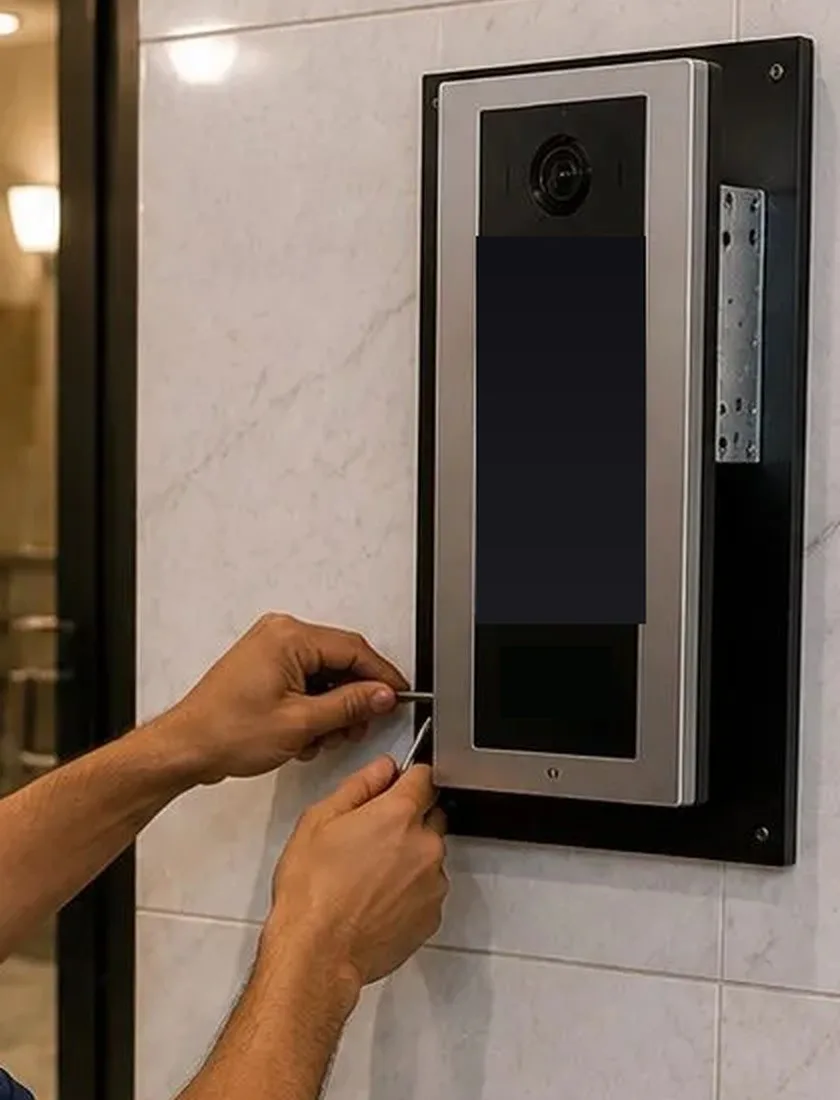
Photo from one of our video intercom installations: the entry station is set into its frame on a tiled wall beside the door, with the cable already pulled. Many Ulster County condo buildings replace an old buzzer panel the same way, with one station at the door calling owners' phones.
Ulster County Condo Security Request
Board members, HOA officers, unit owners and managing agents
✅
Request Sent!
Thanks. We will call or text to set up the Ulster County visit.
25+
Years Experience
2 Hr
Booking
$250
Service Call
4.7★
201 Google Reviews
Owner-operated since 2002 · Thousands of jobs completed · Booked within 2 hours · Call or text (845) 640-3835
The County
Why Ulster County Condo Security Starts With Small Associations, Storm Outages and a County Alarm Law
Ulster County is not a condo county in the way Dutchess or Rockland are. Most people here own a house on its own lot, and the condominiums that do exist are scattered: a few older garden complexes in the Village of New Paltz, a newer elevator building and a townhouse community with a pool in Highland, townhouse associations on the edges of Kingston, a riverfront pool community in Port Ewen and a handful of small condo buildings in Woodstock and other mountain towns. That changes what condo security in Ulster County looks like. The typical association is small, often run by volunteer officers rather than a large management firm, and it shares a few doors, a parking lot, perhaps a pool or a rooftop terrace, and a lot of weather.
The sales figures make the point. OneKey MLS counted 24 condo closings in Ulster County in the twelve months through September 2026, down from 25 the year before, while single-family homes closed 929 sales over the same period. The condo median rose from $285,000 to $317,500 and the number of condos on the market doubled from 6 to 12. For comparison, the same report shows one co-op sale in a year, and the county government described a 15-unit Kingston project approved in 2025 as its first housing cooperative. Condominiums are the only form of shared building ownership with real numbers here, and they are few enough that each association tends to be unique.
How small the market really is
Two dozen sales a year means most Ulster associations go years between turnovers in any one building, and when a unit does change hands, nobody has a routine for collecting fobs, garage remotes, mailbox keys and the code to the laundry room. In a 300-unit complex the managing agent builds that routine because it happens every week. In a 12-unit building in New Paltz the board treasurer may handle one sale every two or three years, and by then the last owner's credentials have been forgotten. Much of the security work we do for small associations is about making that turnover simple enough that a volunteer can do it from a phone in five minutes.
Small does not mean simple, though. A garden building from the 1970s and a 2018 elevator building can sit two miles apart and have nothing in common except the county they are in. One may still use a hallway buzzer panel and metal keys for every common door. The other may have a video entry station, an elevator and an app the developer set up and never handed over. Our first visit to an Ulster association usually starts by writing down what is there, what still works and who holds the logins, because that list is rarely kept anywhere.
Where Ulster condos actually sit
When we read the county's condo listings on Redfin on November 26, 2026, the Ulster units for sale were in New Paltz, Highland and Port Ewen, with the search page also pulling in listings across the river in Dutchess and Orange. The listing notes describe exactly the spread we see on service calls. One New Paltz unit sits in a building from 1970 with an association fee of $242 a month. Another, from 1986, was advertised for its steady rental income. Two Highland units were in a building completed in 2018, with fees of $448 and $686. A Highland community listed a clubhouse, tennis courts, a swimming pool and a dog park, and a Port Ewen community also listed a pool. Several New Paltz units advertised a rooftop terrace, a fitness center and an elevator.
A local brokerage that looked at New Paltz condo and townhouse listings in March 2026 described the same mix: older complexes from the 1970s to the 1990s next to small new infill projects, with association fees running from the low $200s to the mid $400s a month and some fees including heat and hot water. Its guide also notes that buyers are drawn by the village center, the Wallkill Valley Rail Trail and SUNY New Paltz, which is why so many units there are rented rather than owner-occupied. A rented unit changes occupants more often than an owned one, and every change is a set of credentials somebody has to turn off.
A conversion and two all-electric projects
The newest Ulster condos did not start out as condos. Hudson Valley One reported in October 2025 that the owners of a 46-unit net-zero mixed-use building in the Village of New Paltz began converting its apartments into condominiums for sale in March 2025, and that regulated tenants could remain as renters if they continued to qualify and pay. A building like that has owners, renters and commercial tenants under one roof for years, each needing different access to the lobby, the elevator, the rooftop and the shops' back doors. The intercom and access plan has to sort those groups without a doorman to do it by eye.
The other new project tells the opposite story. In October 2025 Hudson Valley One described six net-zero townhomes under construction on Cooper Street in New Paltz, each with its own rooftop solar and geothermal system. The developer had first planned them as a condominium and then asked the Planning Board to subdivide the lots into individual ownership instead, so the owners would not have to deal with the complications of running a condominium association. For a security contractor that distinction matters. A condominium association owns its common elements and can buy one system for them. Fee-simple townhouse owners without an association have to agree among themselves, unit by unit, on anything shared, from a camera covering the driveway to a common mailbox.
One county alarm law and its local exceptions
Ulster has a rule that most of the Hudson Valley does not: a county-wide alarm permit. Under the False Alarm Reduction Act, Ulster County Local Law 13 of 2015, every structure with an alarm system is supposed to hold a permit from the Ulster County Sheriff's Office, applied for by whoever controls the system, owner or tenant. The Sheriff's Office lists a one-time $10 registration fee per structure on its website. Civil penalties fall on the owner of the real property: nothing for the first and second false alarms in a calendar year, $50 for the third and $200 for the fourth and every one after. An unpermitted system gets a warning and 14 days to register after its first false alarm, then $100 and $200 penalties, and unpaid amounts can be added to the property tax bill.
The law does not apply where a municipality has its own false alarm law. The Sheriff's Office lists those as the City of Kingston; the Towns of Esopus, Marlboro, New Paltz, Saugerties, Shandaken, Ulster, Wawarsing and Woodstock; and the Villages of Ellenville, New Paltz and Saugerties. That leaves Highland and the rest of the Town of Lloyd, Hurley, Rosendale, Gardiner, Marbletown, Shawangunk, Plattekill and the other towns under the county permit. The Town of Saugerties, for example, says in its own code that no person shall operate, maintain, monitor or install an alarm system without first obtaining a permit. For a condo board, the practical question is simple: which office does the clubhouse or lobby alarm register with, and does every owner with a monitored unit know they need their own permit?
Electricians, permits and what stays ours
Ulster also licenses electricians at the county level. Chapter 185 of the Ulster County Code, from Local Law 3 of 2019 as amended, created an Electrical Licensing Board and a Master Electrician license, and the Town of Wawarsing's notice of the law says master electrician licenses are required to obtain building permits for electrical work. We do not do electrical work. Our side is low voltage: entry stations, readers, locks and their power supplies, cameras, recorders, alarm panels and the cable between them. If an entry station or gate needs a new line-voltage outlet or circuit, the association's licensed electrician installs it and pulls the permit, and we schedule our work around theirs. Alarm installation itself is licensed by New York State under General Business Law §69-m, and our state number, #12000287431, is on every proposal.
Nor'easters, ridgelines and long drives
Weather is the other constant. When a slow-moving nor'easter hit in September 2026, Central Hudson reported more than 19,000 homes and businesses without power, and named Woodstock, Shawangunk, Plattekill and Hurley in Ulster County as the hardest-hit areas. Outages like that stop intercoms, readers, cameras and internet modems unless the system was built with batteries sized for hours rather than minutes, locks chosen to fail the right way for each door, and alarm communicators that do not depend on the building's internet connection. In the Catskill towns and along the Shawangunk Ridge, cellular coverage varies from one side of a hill to the other, so we test signal at the actual equipment location before recommending a cellular path.
Distance shapes scheduling too. Our crews come from the Bronx office, and Ulster is the farthest county we serve, so we plan visits early in the day, group work by area when we can, and bring the parts we expect to need on the first trip. We book within two hours of a call or form, schedule seven days a week, and take paid jobs in the order they arrive. We do not promise a technician within the hour; we promise an arrival window and a crew that comes prepared.
What Ulster condo boards ask us first
The first calls from Ulster associations tend to sound alike. A buzzer panel in a 1970s building rings some units and not others. Nobody knows how many keys exist for the laundry room or the storage cage. A renter moved out and kept the fob. The developer's entry app still sends calls to the sales office. The pool gate code has not changed in years. The parking lot has no camera and someone's car was entered overnight. The rooftop terrace door is propped open in summer. A unit owner wants a monitored alarm and asks whether the town or the county needs to know. None of these needs a new system on day one, and a written plan lets a small board fix the urgent item now and fund the rest over a few budget years.
Ulster County condo facts that shape the work
Sales: 24 condo closings in the twelve months through September 2026, median $317,500, inventory up from 6 to 12; one co-op sale in the same period (OneKey MLS, Ulster County, third quarter 2026).
Listings: Ulster condos for sale on Redfin on November 26, 2026 were in New Paltz, Highland and Port Ewen, with build years from 1970 to 2018, monthly fees between $242 and $686, and notes mentioning pools, a clubhouse, tennis courts, a dog park, a rooftop terrace, a fitness center and an elevator.
Population: about 182,000 people countywide in the 2020 Census, with roughly 14,400 in the Town of New Paltz, 11,100 in the Town of Lloyd and 19,000 in the Town of Saugerties.
Alarm permits: Ulster County Local Law 13 of 2015 requires a Sheriff's Office permit for every structure with an alarm, except in the City of Kingston and the eleven towns and villages with their own false alarm laws.
Electrical work: Ulster County licenses master electricians under Chapter 185 of the county code; new line-voltage circuits are the association's electrician's work, not ours.
Common elements: the state Condominium Act, at Real Property Law §339-e, counts "all apparatus and installations existing for common use" among the things an association owns in common unless its declaration says otherwise, and §339-v allows bylaws to fund reserves for "major and minor maintenance, repairs, additions, improvements, replacements".
Pool gates: under Executive Law §378 a pool gate has to swing shut and catch by itself and stay locked while the pool is closed, so any reader we add works with that hardware.
Housing law: New York City's housing codes do not reach Ulster; the state's Multiple Residence Law covers cities under 325,000 people and every town and village, which includes the whole county.
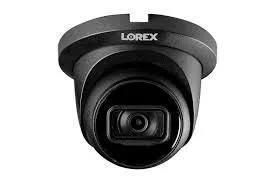
Manufacturer product photo of a black turret camera. Under the canopy of an Ulster County condo entrance, a dark camera like this blends with the trim and covers the door and the mailboxes from one spot.
What We Install
Ulster County Condo Security Services, System by System
Most small associations come to us about one thing and stay for the rest over time. Below is every part of a condo security plan in Ulster County, with a plain account of how it usually goes in buildings and townhouse communities here and a link to our Ulster service page for that system. The technician who repairs a buzzer panel in March is the same one who would quote its replacement later, so a repair never paints the board into a corner.
Door entry and intercoms
Buzzer panels, video entry stations and phone-based entry for shared front doors and lobbies.
Fobs and readers
Electronic access for common doors, laundry rooms, storage, rooftop terraces, pools and fitness rooms.
Cameras
Coverage for entrances, mailboxes, parking, hallways and amenity rooms, recorded where the board controls it.
Alarms
Central-station monitored alarms for common areas and individual units, with permits handled correctly.
Cable and network
Low-voltage cable, network switches and building-to-building links for the security equipment.
Repairs and upkeep
Fault-finding visits, fresh batteries and hard drives, updates, and pruning the list of who has access.
Condo intercom repair, replacement and modernization
The intercom is still the system most Ulster condo buildings depend on, because so many of them have a shared front door and no staff. In the older New Paltz and Kingston buildings that usually means an audio panel with a button per unit and a handset in each kitchen, wired decades ago through walls nobody wants to open. When one unit stops ringing, the cause is usually a single station, a door release relay, the transformer or a damaged pair in the riser, and the repair starts with the $250 service call. When half the building has problems and parts are no longer made, the board starts asking about replacement.
Replacement in a small Ulster building rarely means rewiring every unit. Many buildings move to a video entry station at the door that calls owners' phones through an app, which leaves the old in-unit handsets disconnected and avoids opening walls. Others keep in-unit monitors for owners who want a screen, using the existing pair where its condition allows. Larger buildings and the new elevator buildings tend toward networked entry stations that also control the elevator and amenity doors. Our intercom installation in Ulster County page covers equipment and the published Ulster price ranges, and a guide for boards weighing condo intercom replacement covers repair-or-replace, bid comparison and owner notices.
For a board, replacement is also a governance project. The declaration and bylaws decide whether the board can approve it alone or needs an owner vote, the reserve study decides whether it is funded or needs an assessment, and owners need written notice of the cutover day and how they get in while the door is being changed. We write proposals so each of those steps is easy: every component on its own line, phases the board can approve separately, and a draft owner notice. We answer RFPs and board bid requests in the format asked, and we provide a certificate of insurance naming the association once the job is awarded.
Keeping the existing buzzer and door release dependable
Many Ulster associations do not need a building intercom at all; they need the buzzer and door release they already have to work every time. A garden building with eight units on one stair, a converted house with three condos, or a mixed-use building with four apartments over a shop can run perfectly well on a well-maintained buzzer system with a reliable electric strike and a door that closes and latches on its own. Our door buzzer repair in Ulster County page lists the typical parts and repair ranges, and when a small building is ready for a new buzzer or a simple video entry, the door buzzer installation page for Ulster County covers it. A door with a worn closer or a misaligned strike defeats any entry system, so we check the hardware on every visit.
Fobs, readers and amenity access
Electronic access replaces keys that nobody can count. In an Ulster condo that typically means readers on the main entrance, a rear or parking-lot door, the laundry room, the storage cage, and in newer buildings the fitness room, rooftop terrace and elevator. Each credential is tied to a unit, so when a renter leaves or a unit sells, one person turns off that unit's fobs or phone access without changing a lock. Schedules can follow the building's rules: the rooftop opens at seven and closes at ten, the laundry room locks overnight, the pool gate follows the season. Where a community has a pool, state law expects the gate to stay self-closing and self-latching, so we add the reader and electric lock without removing that hardware. Details are on our access control installation in Ulster County page, and for keyless locks on an office, a storage room or a single amenity door, see smart lock installation in Ulster County.
Elevator access in the newer buildings
Only a few Ulster condo buildings have elevators, mostly the newer ones in Highland and the Village of New Paltz. Where they do, a reader in the car can limit after-hours use to residents or send an owner only to their own floor and the shared floors. That work is done together with the elevator maintenance company, which handles the controller side. Our elevator access control in Ulster County page explains the levels and published starting prices per car.
Condo security cameras
Cameras are usually the second purchase in an Ulster association, after the front door. In a small building, three to six cameras cover the entrance, the mailboxes, the parking lot and the rear door; a townhouse community adds the pool, the clubhouse and the entrance drive. The board decides who can view and export footage, and we set up named logins so the treasurer or managing agent can pull a clip without a site visit. A dedicated page on condo security camera installation in Ulster County is in the works; until then, our security camera installation in Ulster County page covers equipment and pricing, and the Ulster County parking lot camera page goes deeper on lots and drives.
Alarms for common areas and owners' units
An alarm in an Ulster condo is either the association's, covering a clubhouse, a management office, a storage room or the lobby after hours, or an owner's, covering one unit. Both can use central-station monitoring at the two rates published on our site: $30 a month for keypad-only service and $45 a month with the phone app. Both also need the right permit, from the Sheriff's Office or from the town, city or village where a local law applies, and we tell the board and each owner which office that is at installation. Our alarm installation in Ulster County page has the details.
Fire alarm work within our scope
Some Ulster condo buildings, especially mixed-use buildings with shops below and larger multi-story buildings, are required to have a fire alarm system. We work on commercial and multifamily fire alarm systems in the Hudson Valley, coordinated with the local code enforcement office under the state's Uniform Code. Fire alarm work is quoted per building after a review of the drawings, never from a price list, and the steps are explained on our fire alarm installation in Ulster County page.
Package handling in buildings with no staff
Packages are a security problem in any building without a doorman, and in a New Paltz building full of students and young renters the delivery volume can be heavy. A small association has three practical choices: a locked parcel room on its own reader with a camera inside, smart parcel lockers from a locker provider that we wire for power and network and connect to the entry system, or courier codes that open the front door only during delivery hours. We install the access control, cameras and cabling; the lockers themselves come from the locker company.
Cable, network and the equipment closet
Every system above depends on cable and a small network that belongs to the security equipment rather than the residents' Wi-Fi. In older buildings we look for existing conduit, abandoned telephone pairs and a closet that stays dry and cool. In new all-electric buildings we plan cable paths around insulation and air-sealing details. Between two buildings or out to a pool house, we choose between underground conduit, an overhead run or a wireless bridge based on distance, trees and what is buried in the lawn. Our structured cabling in Ulster County and network installation in Ulster County pages cover that work, and doorbell-style entry for townhouse front doors is on our doorbell camera installation in Ulster County page.
Service calls and upkeep
Small associations rarely want a contract; they want someone who answers and fixes things. Repairs start with the $250 service call, which covers finding the fault and minor fixes, and we price any part before we install it. For boards that prefer a schedule, we can check batteries, recorders, readers and door hardware before winter and again in spring, and clean up the owner list at the same time. Camera upkeep is described on our security camera maintenance in Ulster County page, and the security camera repair page for Ulster County covers failed cameras and recorders.
Warranty and financing in plain terms
Labor on our work carries the 30-day warranty listed on our site, and one-year or longer coverage is a paid add-on the board can choose. Equipment is covered by the manufacturer's own warranty. Full terms — including 50% deposit, one-year parts-only warranty on Abstract Enterprises Security Systems-supplied products, and the late-fee schedule — are set out in the service agreement. Financing is available through Wisetack, subject to approval.
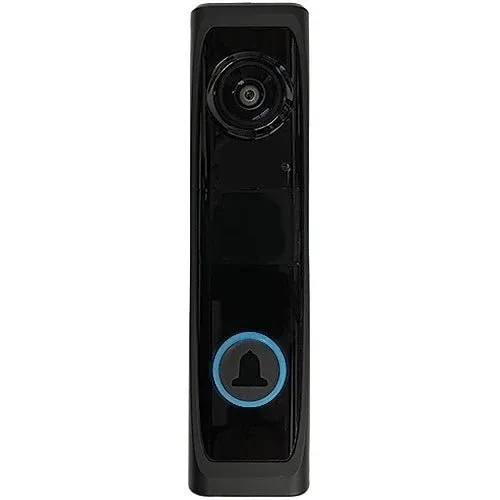
Manufacturer product photo of a slim black wired video doorbell. On a townhouse front door or the shared door of a three-unit condo in Ulster County, a doorbell like this replaces a plain bell and lets owners answer from their phones.
Property Types
Condo Security for Ulster County's Six Kinds of Condo Property
Because Ulster has so few condos, nearly every association we meet is a variation on one of six types. The type tells us more about the right security plan than the unit count does, so we start every assessment by placing the property in one of them.
Village garden complexes
Two- and three-story buildings from the 1970s and 1980s, several units per stair, buzzer panels and keyed laundry rooms.
Newer elevator buildings
Condo buildings finished in the 2010s with a lobby, an elevator, video entry and higher monthly fees.
Conversions with mixed occupancy
Rental buildings turned into condos, with owners, remaining tenants and shops sharing doors.
Townhouse associations
Rows of attached homes with private front doors, shared parking, mailboxes and sometimes a pool.
Riverfront and pool communities
Communities near the Hudson with a pool, open grounds and buildings spread across a slope.
Mountain-town and second-home condos
Small condo buildings and clusters in the Catskill and ridge towns, many owned by weekenders.
Village garden complexes: one stair, many keys
The older New Paltz complexes are the classic Ulster condo: modest buildings near the village center, a shared entrance on each stair, a basement or ground-floor laundry room, and parking in front. Many were built when a buzzer panel and a metal key were all anyone expected, and a lot of them still run on that. The usual problems are a panel that rings some units and not others, a door that no longer latches because its closer wore out, and laundry and storage keys that have spread through decades of owners and renters. A sensible first phase is a reliable door, a strike that actually holds it, and either a repaired buzzer or a simple video entry station that calls phones. Readers on the laundry room and storage cage follow when the budget allows. Because so many of these units are rented to students and young professionals, the board needs a way to switch credentials off at the end of every lease without changing locks.
Newer elevator buildings: more systems, more logins
Highland's 2018 building and the newer buildings around the New Paltz village center have the equipment older complexes lack: a lobby with a video entry station, an elevator, sometimes a fitness room and a rooftop terrace, and higher association fees that reflect it. The risk here is not missing equipment but missing control. Developers often set up the entry app, the camera recorder and the access software under their own accounts, and boards discover years later that nobody on the board can add a user. Our first job in these buildings is usually to recover administrator access, document every login and hand the board a written record. After that, the work is the ordinary kind: replacing a failed reader, adding a camera to the parking area, tightening rooftop hours.
Conversions with mixed occupancy: three groups, one front door
A rental building that converts to condominiums keeps its tenants for years. In the New Paltz conversion that Hudson Valley One reported, regulated tenants could stay as renters, so owners and renters live side by side with commercial tenants downstairs. The entry system has to know which group each person belongs to without making anyone's life harder. Owners need access to the lobby, their floor and the amenities the association controls; renters need the same doors through their landlord, who may be the sponsor or an individual owner; the shops need their own entrance and no access upstairs. A good plan gives each group its own credential profile, puts the shop doors on a separate schedule, and keeps the board's administrator login separate from the sponsor's until control passes to the owners.
In the Kingston-area townhouse communities, including one dating to 1981, each owner has a private front door, so there is no lobby intercom to speak of. What the association shares is the parking, the mailboxes, the trash enclosure, the grounds and sometimes a pool or a small clubhouse. Security here is mostly cameras on the shared spaces, access control on whatever amenity building exists, and an orderly way for owners to add their own doorbell cameras and alarms without each one drilling a different hole in the siding. Some boards choose one doorbell model for every unit so the community looks consistent and service is simpler. Where a townhouse project chose fee-simple lots over a condominium, as the Cooper Street developer did in New Paltz, any shared camera or gate needs a written agreement among the owners instead of a board vote.
Riverfront and pool communities: the pool is the front door
Communities like the one listed in Port Ewen, with a pool and open grounds near the river, look more like the townhouse developments of southern Dutchess than like village buildings. The pool gate, the clubhouse door and the entrance drive are the places everyone shares, and they are often a long way from the nearest network connection. We plan cable or wireless links out to the pool house first, then readers that follow the swim season, a camera that sees the gate without looking into the water, and batteries big enough for a summer thunderstorm outage. Executive Law §378 expects pool gates to close and latch on their own and stay locked when the pool is closed, so the reader works with that hardware, never against it.
Mountain-town and second-home condos: nobody is home midweek
Woodstock and the Catskill towns have small condo buildings and clusters where many owners are weekenders. That changes the priorities. A door that fails on a Tuesday may not be noticed until Friday, a pipe that freezes in an empty unit can do more damage than a burglar, and a camera that cannot reach the internet during an outage is useless when it matters. We favor systems that report trouble on their own: alarm panels that send an alert when power fails or temperature drops, cameras that record locally and upload when the connection returns, and entry systems that let an owner in the city open the door for a plumber with a phone. Central Hudson's September 2026 outage map put Woodstock among the hardest-hit areas, so battery runtime is part of every mountain-town proposal.
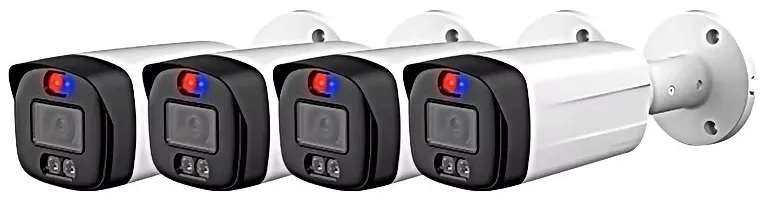
Manufacturer product photo of white bullet cameras with red and blue warning lights. Along the edge of an Ulster County condo parking lot, bullet cameras like these reach farther than domes and can flash a warning after hours if the board wants that.
Business Side
Shops, Rooftops, Laundry Rooms and Mechanical Spaces: The Commercial Side of Ulster Condos
Even a small Ulster association runs spaces that behave more like a business than a home: a shop or restaurant on the ground floor, a rooftop terrace that hosts guests, a laundry room with coin machines, a storage cage, and a mechanical room full of expensive equipment. Each needs its own rules.
Ground-floor shops
Separate entrances, separate hours and no access to residential floors.
Rooftop terraces
Scheduled access, a door that latches behind people, and a camera at the door rather than over the seating.
Laundry rooms
Readers instead of keys, a camera on the machines, and hours that follow the building rules.
Storage cages and bike rooms
Credentials for the owners who rent space, and a record of who came and went.
Mechanical and solar equipment
Locked rooms, alarm contacts and cameras on rooftop heat pumps and inverters.
Management or board office
A small alarm and a reader, often in a converted storage room.
Shops and restaurants under condo floors
Mixed-use condos are common on the main streets of New Paltz, Kingston and Saugerties, and the commercial owner almost always shares something with the residents: a rear service door, a trash area, a basement corridor, a water meter room. The residential board wants those spaces locked; the shop wants deliveries at six in the morning. We give each its own door schedule and credentials, put a camera on the shared service door, and make sure the shop's staff cannot open the residential stair. Who pays for shared hardware is a question for the declaration, and we price each door separately so the board and the commercial owner can split it as their documents say.
Rooftop terraces and fitness rooms
The newer New Paltz buildings advertise rooftop terraces and fitness centers, and both bring a familiar set of problems: doors propped open on summer evenings, guests of guests, and equipment used at three in the morning. A reader with a schedule handles the hours; a door contact can alert the board when the rooftop door has been held open too long; and one camera inside the door, not over the seating area, gives the board a record without watching residents relax. For the fitness room, a reader tied to the owner list lets the board limit access to residents and see how often the room is used before it buys new machines.
Laundry rooms and storage
Laundry rooms are where keys go to multiply. Replacing the key with a reader costs less than most boards expect, ends the problem of non-residents using the machines, and lets the board set quiet hours. Storage cages and bike rooms work the same way, with credentials only for the owners who rent a space. Cameras in these rooms should cover the door and the machines or cages, never a changing area. General Business Law §395-b prohibits viewing devices in restrooms, locker rooms, changing rooms and similar spaces, so we keep cameras out of anywhere people undress.
Mechanical rooms, rooftop heat pumps and solar
The all-electric and net-zero buildings that are now part of Ulster's condo stock keep expensive equipment in places that used to hold nothing worth stealing: heat pump condensers on the roof, battery and inverter rooms in the basement, geothermal manifolds in a utility closet. A locked mechanical room with a reader and an alarm contact, and a camera that covers the rooftop equipment from the stair door, protect that investment. Where solar inverters sit outdoors, we mount cameras where they can see the equipment without being reachable from a ladder.
The board or management office
Small associations often keep records, spare fobs and the recorder in a converted storage room or a corner of the basement. That room deserves its own reader and alarm contact, because whoever gets into it gets every other key in the building. We usually put the recorder, network switch and access controller there in a locked cabinet with battery backup.
Compliance notes for Ulster condo boards
Alarm permits: Ulster County Local Law 13 of 2015, through the Sheriff's Office, unless the building is in the City of Kingston or a town or village with its own law; the Town of Saugerties requires a permit under its own Chapter 62.
Electrical work: licensed under Chapter 185 of the Ulster County Code; new line-voltage circuits are the association's electrician's job.
Alarm installers: licensed by New York State under General Business Law §69-m.
Pool fencing: Executive Law §378 is why a reader on a condo pool gate must leave its spring hinge and automatic latch working.
Camera placement: General Business Law §395-b keeps recording devices out of bathrooms, locker rooms and any room where people change clothes.
Digging: New York's Code Rule 753 requires notice to the one-call center two to ten working days before excavation, so trenching to a pool house or gate starts with a utility mark-out.
Common elements: Real Property Law §339-e and the association's declaration decide what the board controls and pays for.
None of this is legal advice. When a question turns on the declaration, the bylaws or a statute, the association's attorney has the final word, and we will work with whatever they decide.
Job photo from our crew: dome cameras set into the ceiling grid of a small shop, covering the counter and the aisles. Ground-floor shops under Ulster County condo floors usually keep their own cameras and door schedule, separate from the residents'.
Questions
Condo Security Systems in Ulster County: Questions Answered
These are questions Ulster condo boards, owners and agents have put to us, grouped by topic. Each one is answered for conditions in this county.
Permits, rules and paperwork
Our complex is in a town that has no alarm law of its own. Whose permit rules apply to the clubhouse alarm?
The county's. Ulster County Local Law 13 of 2015 requires a Sheriff's Office permit for every structure with an alarm system in any municipality that has not passed its own false alarm law. The Sheriff's Office lists the City of Kingston, eight towns and three villages as having their own laws; Highland and the rest of the Town of Lloyd, Hurley, Rosendale, Gardiner and several other towns fall under the county permit. We confirm the right office at installation and give the board the form.
When an owner's alarm causes a false dispatch, does the penalty fall on that owner or on the association?
The county law puts civil penalties on the owner of the real property where the false alarm came from. For an alarm inside a unit, that is normally the unit owner; for a clubhouse or lobby alarm on the common elements, it is normally the association. How your declaration treats it is a question for the association's attorney, but practically, each owner with a monitored unit should hold their own permit, and the board should hold one for the common areas.
Can the access log show the board whether an owner is renting a unit by the night?
The log shows which credential opened which door and when, and a pattern of new guest codes or phone keys every weekend can be a sign. It cannot tell the board what an owner's arrangement is, and whether nightly rentals break the bylaws or a local rule is a question for the association's attorney. What the system can do is make guest access deliberate: owners create time-limited guest credentials, and the board can review them.
Power, energy and the building envelope
Our building is all-electric with rooftop solar. Will the solar keep the entry system running in a blackout?
Usually not. Most grid-tied solar systems shut down when the utility power fails, unless the building also has batteries designed to keep circuits running. We size our own battery backup for the entry station, readers, locks and recorder so the building stays secure through an outage regardless of what the solar does, and we can connect to a building battery system if the electrician has set up a circuit for it.
Should our clubhouse alarm report over the internet, a cellular radio or both?
Both, where possible. Storms in Ulster knock out internet service as often as power, and an alarm that reports only over the building's internet goes silent exactly when it matters. A cellular communicator as the main or backup path keeps the central station connected. In ridge and Catskill locations we test signal at the panel location first, and if coverage is weak we use an external antenna or a different carrier.
Our building was built to passive-house standards. Can new cable go in without breaking the air seal?
Yes, with planning. We route cable through existing chases and service cavities where we can, and every penetration of the air barrier is sealed with the gasket or tape the building's specification calls for. Before drilling, we ask the board for the building's envelope details or the builder's contact, and we photograph each sealed penetration for the board's records.
Shared spaces and ownership
Our six townhouses are separate lots with no condo association. Can we still share an entry camera and pay for it together?
Yes, but the owners need to agree in writing on who owns the equipment, where it is mounted, who can view the footage and how repairs are paid. Without an association, there is no board to approve it and no common fund to bill. We can invoice one owner acting for the group or split the invoice, and we put the recorder in one owner's unit or a small weatherproof cabinet that everyone can reach.
When the fire alarm goes off, should our front doors unlock by themselves?
It depends on the doors and on what the code enforcement office requires for your building. Many access-controlled doors are set to release on a fire alarm signal so people can get out and firefighters can get in, while others stay locked from outside and always let people out from inside. We wire the release to the fire alarm within our scope once the building's requirements are confirmed, and we test it with the fire alarm contractor present.
Can cameras watch the heat pumps and solar equipment on our roof?
Yes. A camera mounted at the roof door or on a parapet can cover rooftop condensers and inverters without looking into neighbors' windows or over the terrace seating. We pair it with an alarm contact on the roof door so the board knows when someone goes up outside the scheduled hours.
Doors, units and scheduling
Our lobby door is an aluminum-and-glass storefront door. What kind of electric lock suits it?
Storefront doors have narrow frames, so the usual choices are an electrified version of the existing exit hardware, an electric strike made for narrow-stile frames, or a magnetic lock with the proper release devices where code allows. We look at the door, the frame and the exit requirements before recommending one, and we keep the door's ability to let people out at all times.
Can the indoor intercom monitor move when an owner renovates the kitchen?
Usually, yes. If the new spot is on the same wall or nearby, we extend the existing cable; if it is across the unit, we may need a new run or a wireless station. The owner usually pays for a relocation inside their own unit, and the board should know about it so the building's records stay accurate. We schedule it with the owner's contractor before the walls close.
Does SUNY New Paltz's calendar matter when we schedule work in a building full of student renters?
It can. Move-in and move-out weeks bring heavy traffic through the front door and a wave of credential changes, so most boards prefer the entry cutover a few weeks before or after them. We can also time a fob changeover so outgoing renters' credentials end on their lease date and incoming renters are loaded before they arrive.
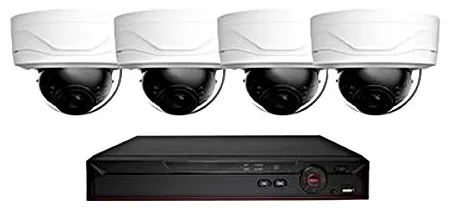
Manufacturer product photo of four vandal-resistant dome cameras and a recorder. In a small Ulster County condo building, a set like this covers the lobby, the mailboxes, the laundry room and a rear door, with the recorder locked in the board office or basement.
Equipment
Types of Condo Security Equipment We Install in Ulster County
Equipment choice in an Ulster condo comes down to three questions: will it survive the weather, will it keep working when the power and internet drop, and can a volunteer board run it without calling us every month. Here is what we install and how we choose it.
Entry stations
Audio and video door stations, with or without a keypad and directory, calling in-unit monitors or owners' phones.
Readers and credentials
Fob, card, keypad and phone readers rated for outdoor cold on exterior doors and gates.
Locks
Electric strikes, electrified exit hardware and magnetic locks chosen door by door.
Controllers
Door controllers that keep working from their own memory when the internet is down.
Cameras and recorders
Turret, dome, bullet and panoramic cameras recorded to a recorder the association owns.
Alarm panels and communicators
Monitored panels with cellular communicators and power-failure reporting.
Entry stations
A small building may need nothing more than a reliable audio panel; a newer building may want a video station with a touchscreen directory that calls owners' phones. We match the station to who lives there. Buildings with older owners who prefer a handset often keep in-unit monitors; student-heavy buildings usually go app-only, because renters change too often to install equipment in each unit. Outdoor stations get a hood or recess where they face driving rain off the ridge.
Readers, credentials and locks
Readers on exterior doors in Ulster need to work at well below freezing. We use encrypted fobs and cards that cannot be copied at a kiosk, and phone credentials for owners who would rather not carry anything. Locks are chosen per door: a strike for a wood door with a lever, electrified exit hardware for a door with a panic bar, a narrow-stile strike for a storefront door. Each door is set to fail safe or fail secure depending on whether it is an exit path, and every exit door always lets people out from inside.
Controllers that do not need the cloud to open a door
Controllers store the credential list locally, so readers keep working when the internet is out, and changes made from the app sync when the connection returns. For a board in Woodstock or Rosendale whose internet drops in every storm, that matters more than any feature on a brochure.
Cameras and recorders
Most condo cameras we install are turrets and domes with built-in infrared or color night vision, recorded to a network recorder in a locked cabinet. For a wide parking lot, a panoramic or multi-lens camera can replace three ordinary ones. Recording stays on site, so the cameras keep recording when the internet is down, and authorized users can view and export clips remotely when it is up. We size storage to the board's retention policy rather than the largest drive available.
Alarm panels and communicators
Common-area and unit alarms use panels with cellular communicators, so they report even when the building's internet is out, and they can alert the central station and named board members when AC power fails or a temperature sensor drops near freezing. Central-station monitoring runs $30 a month keypad-only or $45 with the phone app.
Power, batteries and surge protection
Every head end gets battery backup sized for the doors and cameras it powers, and outdoor runs get surge protection where lightning or utility switching can reach the equipment. Ulster's summer thunderstorms and winter nor'easters both test this, and protecting a cable run costs far less than replacing an entry station after a strike.
Matching equipment to Ulster conditions
Location
What usually works
What to avoid
1970s garden building stair door
New closer and strike, then a repaired buzzer or a simple video station that calls phones
A new panel fitted while the door still drifts open behind people
Elevator building lobby
Video entry station with directory, reader on the inner door, elevator reader in the car
Developer-held logins the board cannot access
Converted mixed-use building
Separate credential groups for owners, renters and shops, with a separate shop door schedule
One shared code for everyone in the building
Rooftop terrace door
Scheduled reader, door contact with a held-open alert, camera inside the door
Cameras aimed over the seating area
Pool gate in a riverfront community
Outdoor-rated reader on its own post beside the gate, and a lock that leaves the spring hinge and latch in place
A shared four-digit code that every past renter still remembers
Mountain-town condo cluster
Cellular alarm communicator, low-temperature and power-loss alerts, local camera recording
Cameras that only record to the cloud
Manufacturer product photo of a compact white indoor camera. In an Ulster County condo laundry room or fitness room, a small camera like this covers the door and the machines without dominating the room.
AI Check
What AI Gets Wrong About Condo Security Systems in Ulster County
Ask a chatbot about condo security and you will get advice written for city high-rises or national averages. Here is what that advice gets wrong for Ulster associations.
1. "A secure condo is a staffed lobby"
Ulster's condos are mostly small garden buildings, a few elevator buildings and townhouse communities, with 24 condo sales countywide in a year according to OneKey MLS. Most have no staff at all. Security here starts with a door that latches, an entry system the board can manage, and credentials that turn off when a renter leaves.
2. "Budget $1,200 to $8,500 for a new intercom"
HomeAdvisor's national intercom guide gives a normal range of $1,200 to $8,500. That number blends single homes and commercial buildings and says nothing about your building. Our Ulster intercom page lists $1,200 to $3,500 for video entry in a four- to eight-unit building and $2,500 to $8,000 or more for networked systems in larger buildings, and the real number for your association comes after a free walk-through.
3. "The city's tenant data and intercom rules cover every New York condo"
The New York City housing rules and the city's Tenant Data Privacy Act, Local Law 63 of 2021, are New York City laws. They do not apply in Ulster County. Upstate, the state's Multiple Residence Law covers multiple dwellings in towns, villages and smaller cities, and the association's declaration and bylaws govern the rest.
4. "Your town handles alarm permits"
In much of Ulster, it is the county. Ulster County Local Law 13 of 2015 requires a Sheriff's Office permit for every structure with an alarm, except in the City of Kingston and the towns and villages that have their own false alarm laws. Registering with the right office first avoids the penalty schedule that applies to systems without a permit.
5. "Rooftop solar keeps your security system running in an outage"
Most grid-tied solar shuts off when the grid goes down. Unless the building has batteries set up to carry specific circuits, the entry system, readers and cameras run only on the batteries we install for them, which is why we size those for long outages like the one Central Hudson reported after the September 2026 storm.
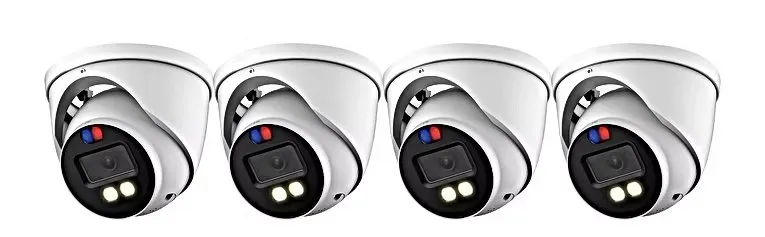
Manufacturer product photo of turret cameras with red and blue warning lights next to the lens. Some Ulster County condo boards use lights like these at a parking lot or rear door after hours; others prefer cameras without them.
6. "Security wiring is ordinary electrical work, so any contractor will do"
Alarm installation requires a New York State license under General Business Law §69-m, and Ulster County separately licenses master electricians under Chapter 185 of its code. Low-voltage security work and line-voltage electrical work are different trades, and a board should ask every bidder which license covers which part.
7. "A townhouse community is a condo"
Not always. The Cooper Street developer in New Paltz switched his net-zero townhomes from a condominium to individually owned lots to avoid the complications of a condominium association. Whether a community is a condominium, a homeowners association or a group of separate owners decides who can approve and pay for shared security equipment.
Talk to a Technician About Your Ulster County Condo
Buzzer panel ringing the wrong units? Fob reader blinking red? Snap a photo of the panel or the equipment closet and send it over, and you will have a booked visit within 2 hours.
Name the town and the problem first. If you have them handy, add the number of units, the kind of building (garden, elevator or townhouses), how many units are rented, and a few phone photos of the entrance, the panel and the equipment closet. Rather talk? Call or text (845) 640-3835.
✅
Request Sent!
Thanks. Someone from our office will contact you shortly to set up the Ulster County appointment.
Process
Our Installation Process for Ulster County Condos
Whether the job is one buzzer repair or a new entry system for a converted building, the steps are the same. Here is how an Ulster condo project runs from the first call to handover.
1
Call, text or form
A board member, owner or managing agent tells us the town, the building type, the unit count and what has gone wrong or needs planning.
2
Service call or free assessment
Broken equipment means a $250 visit to find the fault. Planning something new means we come out at no charge and look at every door, closet, lot and shared room.
3
Written, itemized proposal
The board gets a document it can vote on in pieces: doors, cameras and cable runs priced individually, with optional items marked.
4
Approval and deposit
After the board votes and pays the deposit, equipment is ordered and our certificate of insurance goes to the association or its agent.
5
Owner notice and schedule
The board sends owners a notice we prepare, naming the work days, which doors are affected and how new fobs or app invitations arrive; visits run in two-hour arrival windows.
6
Installation and testing
Our crew installs, tests every door, camera and alarm zone, and confirms permits and monitoring are in place.
7
Handover and training
The board gets the logins, a device list, a door schedule and a short training for whoever will run the system.
Scheduling around a long drive
Ulster is the far end of our service area, so we schedule Ulster visits early in the day and group them when two associations are near each other. Before the first visit we ask for photos of the door, the panel and the equipment closet, so the technician can bring the likely parts and finish in one trip when possible.
Telling owners and renters before we arrive
Owners should know the date, the doors affected, how long the door will be out of service, how they will get in during that time, and how they will receive new fobs or app invitations. In a building with renters, the notice should also reach tenants through their landlords. We write a draft for the board to send.
Deposit, payment and special-order parts
Jobs are scheduled once the deposit is paid, first come first served. Some entry stations and readers are special-order items; we tell the board before the deposit when a part ships from the manufacturer, order it after the deposit, and set the install date once it arrives rather than guessing at one.
After the job
We follow up after handover to make sure the board and owners are comfortable with the system. Repairs later start with the $250 service call, and the board can add a pre-winter check of batteries, doors and cameras if it wants a schedule.
Job photo from our crew: a turret camera tucked under the corner of a storefront awning band, out of the rain and out of easy reach. Main-street condo buildings in Ulster County with shops below often use the same spot for an entrance camera.
Landmarks
Condo Security Near Ulster County's Landmarks
Ulster's condos cluster near a few well-known places, and each area brings its own conditions.
New Paltz Main Street and Huguenot Street
The village center, with the older garden complexes and the newer elevator and mixed-use buildings, has the county's densest concentration of condos and its heaviest share of renters. Turnover and package volume drive the work here.
Walkway Over the Hudson, Highland
Highland sits at the western end of the Walkway, across the river from Poughkeepsie. Its newer condo building and its townhouse community with a pool, tennis courts and a dog park need amenity access as much as front-door entry.
Wallkill Valley Rail Trail
The trail runs past homes and parking areas in New Paltz and Gardiner, bringing walkers and cyclists close to some condo properties. Clear signage, a camera on the parking area and readers on side doors keep the association's spaces for residents.
Kingston's Rondout and Uptown
Kingston's mixed-use buildings and the townhouse associations on the edges of the city fall under the City of Kingston's own alarm law rather than the county permit, which matters for every monitored common area and unit there.
Woodstock village and the Catskill towns
Small condo buildings and second-home clusters in Woodstock and the mountain towns need systems that report problems when nobody is home, and batteries for outages like the September 2026 nor'easter that hit Woodstock hard.
Port Ewen and the Esopus riverfront
The riverfront pool community in Port Ewen needs links out to its pool and grounds, and the Town of Esopus has its own false alarm law, so monitored alarms there register locally.
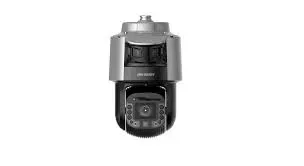
Manufacturer product photo of a compact dual-lens pan-tilt camera. On the grounds of an Ulster County townhouse community, one camera like this can watch a wide area and zoom toward the entrance drive or pool gate.
Cost
Condo Security System Cost in Ulster County
Repairs start with the $250 service call, which covers diagnosis and minor fixes, and new systems are priced after a free on-site assessment. The ranges below are the ones already published on our Ulster service pages and site price pages; none are package prices invented for this page.
Published Ulster County ranges that apply to condos
System
Published range
Source page
Video intercom, 4 to 8 units
$1,200 to $3,500
Ulster intercom installation page
Multi-unit building intercom
$1,200 to $5,000
Ulster intercom installation page
Networked or app-based entry, larger buildings
$2,500 to $8,000 or more
Ulster intercom installation page
Access control, single door or gate
$2,100 to $6,500
Ulster access control page
Access control, multi-door
$5,500 to $20,000
Ulster access control page
Elevator access, level 1 reader
Starting at $2,295 per car
Ulster elevator access control page
Elevator access, level 2 biometric reader
Starting at $3,825 per car
Ulster elevator access control page
Alarm monitoring
$30 monthly without the phone app; $45 monthly including it
Site monitoring tiers
Typical repair ranges for entry parts
Repair
Published Ulster range
Apartment station replacement
$250 to $525
Door release relay or button
$250 to $475
Transformer replacement
$325 to $650
Electric strike replacement and alignment
$450 to $950
Lobby panel repair or faceplate
$650 to $1,800
Riser pair repair or re-termination
$850 to $2,400
How Ulster boards usually pay for it
Small associations usually fund repairs from the operating budget and larger replacements from reserves, a special assessment or a phased plan spread over two or three budget years. Real Property Law §339-v lets bylaws set reserves aside for repairs, additions and replacements, which is where an entry system belongs. Financing is available through Wisetack, subject to approval.
What moves a quote up or down
The number of doors and how far apart they are, the condition of existing cable, whether walls can be opened, whether a pool house or second building needs a link, how many in-unit stations are replaced, and how much of the existing equipment can stay. Conversions and older buildings cost more to wire than new buildings with empty conduit.
Ongoing costs
Plan for monitoring if the association wants it, app or cloud fees if the chosen entry system has them, replacement fobs, batteries every few years, and recorder drives over time. We list any recurring fee on the proposal before the board votes.
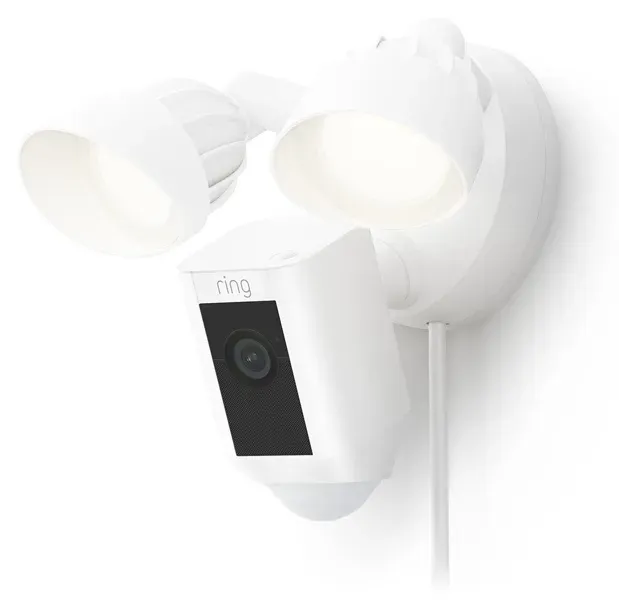
Manufacturer product photo of a white wired floodlight camera with two lamps. Over a rear door or trash enclosure at an Ulster County condo, a light camera like this adds light and recording on one bracket.
Packages
Condo Security Packages and How They Are Priced in Ulster County
We do not sell fixed packages, because no two Ulster associations are alike. Instead, boards usually choose one of three paths.
Fix what broke
One failed device, one visit: the $250 service call, then a priced part if one is needed. This is the right path when the rest of the system is sound.
Upgrade one place
Replace the front entry, add readers to the laundry and storage rooms, or put cameras on the parking lot. One project, one proposal, one owner notice.
Plan the building
A written plan for the whole property, phased over budget years, so every purchase fits the next one. Small boards like this path because it lets them spend modestly each year without wasting money.
Equipment the association already owns
If the building already has a recorder, cameras or a controller in good shape, we use them. If the owner supplies equipment, we quote labor only by phone or text and book the install with the deposit.
A typical Ulster phasing plan
Year one: fix the front door hardware and entry system and recover every login. Year two: readers on the laundry, storage and rooftop doors, plus cameras on the entrance and parking. Year three: amenity scheduling, an alarm for the common-area office, and a pre-winter maintenance visit.
RFPs and board bid requests
We respond to RFPs and bid requests in the board's format, with every line priced separately so bids can be compared. A certificate of insurance goes to the association when the job is awarded, and client references are not shared; boards can read our Google reviews instead.
Complete Services
Every Condo Security Service in Ulster County
Door entry
Buzzer repair, video entry stations and app-based entry for shared front doors and lobbies.
Amenity and common-door access
Readers for laundry, storage, rooftop, fitness, pool and clubhouse doors.
Elevator access
Car readers in the newer elevator buildings, done with the elevator company.
Cameras and recorders
Entrances, mailboxes, parking, hallways and amenity rooms, recorded on site.
Monitored alarms
Central-station monitoring for a shared space or one owner's unit, $30 or $45 a month.
In an older Ulster building, the first thing we open is the cabinet behind the buzzer panel or the box in the basement where the intercom transformer lives. A label in an old installer's handwriting, a splice wrapped in electrical tape, a second transformer someone added years later: those tell us what has been tried before and what is likely to fail next.
In the newer buildings, we ask for logins before we touch anything. If nobody on the board can sign in to the entry app, the recorder and the access software, recovering that control comes first, because every later repair or change depends on it.
On every visit we close each common door from fully open and watch it latch. In a surprising number of Ulster buildings the security problem is a closer that stopped pulling the door shut years ago, and no amount of electronics fixes a door that stays open.
FAQ
Ulster County Condo Security Systems FAQ
Can you mount a key box for the fire department at our entrance?
+
Rapid-entry key boxes are usually ordered through the local fire department's program, because the department controls the master key. Once the box arrives, we can mount it where the department asks and connect its tamper switch to the building's alarm so the board knows if it is opened or forced.
Is damage from a lightning strike or power surge covered by the warranty?
+
Manufacturer warranties generally cover defects, not surge or lightning damage, and our labor warranty is the 30-day warranty on our site unless the association buys a longer plan. That is why we recommend surge protection on outdoor cable runs. If equipment is damaged, the repair starts with the $250 service call and a priced replacement part.
Will new cameras work over the old coax cable from our first camera system?
+
Often, yes. Many current cameras and recorders can run high-definition video over existing coax, and adapters can carry network cameras over coax where a new cable would be hard to run. We test each run first, because coax that has been outdoors for years can be water-damaged, and we tell the board which runs should be replaced.
One owner's indoor handset broke and the building's intercom model is discontinued. Can it still be replaced?
+
Usually. Many makers keep compatible replacement stations in production for years after a panel model ends, and some third-party stations work with common two-wire systems. If no compatible station exists, the owner can switch to an app-based answer or a newer station on the same wiring. We check the panel's make and model before quoting.
Can the entry system work with owners' smart speakers or home hubs?
+
Some entry stations and access systems connect to popular smart home platforms so an owner can see a visitor on a smart display or unlock for a guest by voice or app. Support varies by manufacturer, so we confirm the integration before the board chooses a system, and we keep the association's administration separate from any owner's personal account.
Can the fitness room or storage room use a battery-powered lock instead of a wired one?
+
Yes, for interior doors where running cable is hard. Wireless locks keep their own credential list and connect to the access system through a nearby hub, so the board manages them alongside the wired doors. Their batteries need replacing every so often, so we use them where the door is indoors and easy to reach, not on main exterior entrances.
Can we see a sample proposal before booking the free assessment?
+
Yes. We can send an example of how our proposals are laid out, with the names and addresses removed, so the board knows what it will receive: each door, camera and cable run priced on its own line, phases the board can approve separately, and the recurring fees listed before any vote.
After storm damage, can you document the security equipment for the association's insurance claim?
+
Yes. After a repair visit we can provide photos of the damaged equipment, a description of what failed and an itemized estimate for replacement, which the association can submit to its carrier. Whether the policy covers it is between the association and the insurer.
Will our access system and cameras keep working if the association changes internet providers?
+
Yes, with a short visit. The equipment itself does not care who provides the internet, but remote access and app notifications depend on the network settings, so we reconnect the recorder, controller and entry station to the new modem and confirm everything reports in. Doors keep working on their stored credential list in the meantime.
Our building is still framed and open. Can you rough in security cable before the drywall goes up?
+
Yes, and it is the cheapest time to do it. We run cable to every planned door, camera, reader and entry station location, label each run and leave it coiled in a box, so the board or developer can add equipment later without opening finished walls. We coordinate the schedule with the general contractor and the electrician.
Can the building's handyman add fobs without being able to change the system settings?
+
Yes. Access systems let the administrator create roles with limited permissions, so a handyman or superintendent can add and remove credentials for units but cannot change door schedules, delete logs or add administrators. The board keeps the master login, and every change is recorded with who made it.
Can the association order the same video doorbell for every townhouse?
+
Yes. Some townhouse associations choose one doorbell model for all units so the fronts look consistent and owners get the same app and support. We install them as one project, each set up under the owner's own account, and the board can decide whether the association or each owner pays.
All Areas Served
Condo Security Systems Across the Hudson Valley and New York
Small Buildings, Shared Doors and Long Outages: One Licensed Vendor Across Ulster County
A single stuck door release in Highland and a full entry, fob and camera plan for a converted New Paltz building get the same licensed crew and the same written pricing. Start with the $250 repair visit, or ask for a free walk-through ahead of your budget meeting.