What are you looking for?
About Us Contact Us Careers Get a Free Quote (800) 486-0943
Pick a service
✅ Got Your Own System?
🎬 Home TheatreQuote 🎶 AV SoundQuote 🔑 Access ControlQuote
Now pick your area
Pick your area
Long Island
Hudson Valley
Services available
Pricing & Tools
Pick a service for pricing
🚪 Intercom Pricing 🔔 Buzzer Repair Pricing
Calculators
📹 Camera System Calculator 🚨 Alarm Calculator ⚡ Cabling Quote Builder ✅ Got Your Own System?
Select your area
A new phase going up next door, an unmanned gate nobody can review, a clubhouse recorder the builder never handed over? Orange County condo boards and HOAs can call or text (845) 640-3835
Home › Condo Security Camera Installation Hudson Valley › Condo Security Camera Installation Orange County
For Orange County, NY Condo Boards, Townhouse HOAs, 55-Plus Communities, Unit Owners & Managing Agents

Condo Security
Camera Installation
in Orange County

Phased Developments · Gate Entrances · Clubhouses · Garage-Under Townhouses · Snow & Outages

Condo security camera installation in Orange County starts at $1,199, installed, for four house-brand cameras plus a recorder, the same entry figure our Orange County camera price page lists, and any camera past those four gets its own price after a walk of the grounds shows where it will hang and how its cable will travel back. Abstract Enterprises Security Systems holds New York State low-voltage license #12000287431 and plans common-area camera systems for condominium boards, homeowners associations, unit owners and managing agents across Orange County, New York: phased townhouse developments off Route 17 and Route 208, older garden complexes in Newburgh and New Windsor, gated and village-style 55-plus communities, and the newer four- and five-story condo buildings in the southeast corner of the county.

Quick answer: Most Orange County condo communities are not finished when the cameras go in. A builder is still working on the next phase, the board may still include the sponsor's people, and the entrance is often an unmanned gate with a call box. So we draw the camera plan for the community as it will be, install the part that exists today, and leave conduit, recorder channels and network ports for the phases still coming. Cameras are aimed at common elements only, audio is switched off, and the association, not the builder or us, holds the master login. A request gets a booked visit within 2 hours, seven days a week, with early-day arrival windows.

Last updated November 27, 2026 · Company byline: Abstract Enterprises Security Systems field and design staff, NYS license #12000287431 · Sources this page relies on: OneKey MLS Orange County market report (October 2026); Redfin Orange County condo listings; Times Herald-Record; News 12; Security Sales & Integration; FOX 35 Orlando; U.S. Census QuickFacts; 55places; ActiveAdultLiving; Orange & Rockland Utilities; Town of New Windsor Code ch. 86; NY Real Property Law §339-e and §339-v; NY Penal Law §250.00, §250.05 and §250.45; NY Executive Law §378; 13 NYCRR Part 22; 19 NYCRR Part 195; FirstService Residential
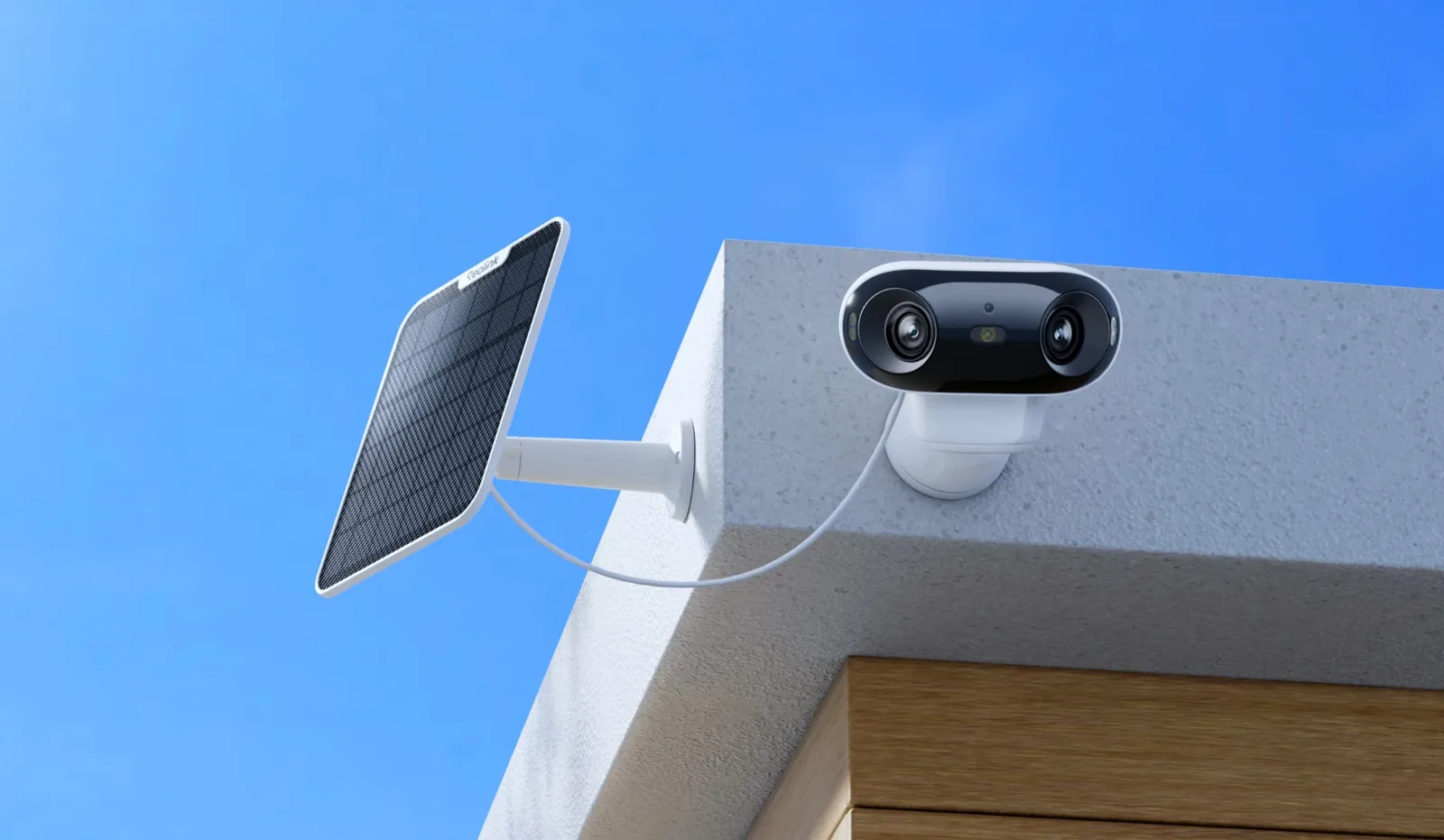
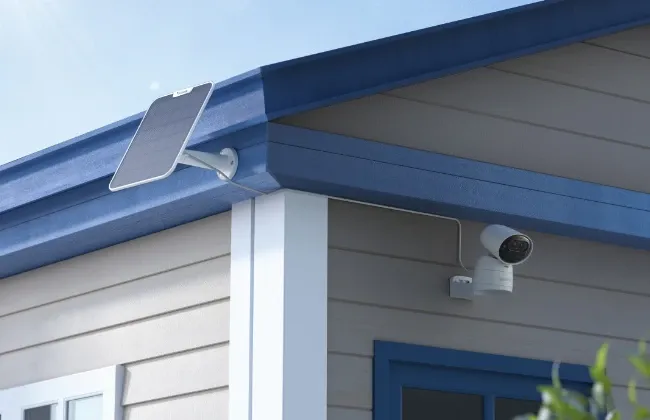
Battery camera with a small solar panel on the corner of a flat-roofed building, a fit for a far corner of an Orange County condo phase
Manufacturer image from Reolink, one of our partner brands; not an Orange County property. A white dual-lens battery camera on the corner of a flat roof, with a small solar panel on an arm beside it and blue sky behind. On a phased Orange County site, a camera like this can watch a far corner until a wired run reaches it.
Orange County Condo Camera Request
Board officers, HOA directors, community managers, unit owners and managing agents

✅
Request Sent!
Thank you. Our office will call or text to set a walk-through at your Orange County community.
25+
Years Experience
2 Hr
Booking
$1,199
4-Camera System
4.7★
201 Google Reviews

Same owner at the helm since 2002 · Hudson riverfront to the Delaware, every board request is put on the calendar inside 2 hours · Direct Orange County number (845) 640-3835

The County

Orange County Condos Are Built in Phases, So the Camera Plan Is Too

Ask an Orange County board for its site plan and there is a good chance the drawing shows more than what stands today. One loop of townhouses is finished and occupied, a second loop is framed, and a third is a graded field with a sales trailer at the corner. That is the defining fact of condo security camera installation in Orange County, New York, and it shapes the proposal more than any camera model: whatever goes on the wall this year has to keep working as the community doubles around it.

The listings show the spread. On November 26, 2026, Redfin's county page showed 126 condos for sale with a median list price near $325,000, and the entries ranged from Newburgh complexes built in 1973 and 1978 to a Palm Tree building from 2022 and a Monroe community from 2023, with monthly association charges listed between roughly $120 and $584 (Redfin). Some listings mentioned a clubhouse, tennis and basketball courts in Washingtonville, pools and a gym in Chester, and one Middletown listing described a gated community. Those numbers matter to a camera plan for a plain reason: a board collecting a modest monthly charge looks hard at anything that adds a recurring bill, which is one reason our house-brand system carries no subscription.

The sales market is moving too. OneKey MLS reported 359 Orange County condo closings in the twelve months through October 2026 at a median of $320,000, and condo inventory of 126 units that October against 83 a year earlier, a jump of 51.8 percent (OneKey MLS, October 2026). More listings mean more showings, more lockboxes and more strangers walking common hallways with an agent, which is exactly the traffic a lobby or stair-hall camera records.

Scale is the last piece. At the far end of the range sits the Town of Palm Tree, where the Times Herald-Record reported in May 2022 that families were moving into "the four- and five-story buildings completed so far" of a condominium complex planned for 1,600 units on 70 acres, with one block of residential buildings swapped for a six-story building holding a supermarket, stores and offices (Times Herald-Record). A campus built over years like that is the extreme version of what smaller Orange developments do on a scale of dozens of homes. Single-landlord rental properties, which change hands as one building rather than unit by unit, follow a different approach covered on our page for apartment building security camera installation in Orange County.

Orange County facts behind a condo camera plan

  • 812 square miles of land, per the U.S. Census Bureau, so the drive between a Port Jervis condo and a Newburgh condo is longer than many trips across all five boroughs (Census QuickFacts).
  • OneKey MLS counted 359 closed condo deals over the year ending October 2026, at a $320,000 midpoint, and a condo inventory that had grown from 83 to 126 units.
  • Listed association charges of roughly $120 to $584 a month, with build years running from the 1970s to 2023 (Redfin, November 2026).
  • A gated 55-plus homeowners association near Middletown lists 283 homes around a 7,500-square-foot clubhouse with indoor and outdoor pools (55places).
  • A Warwick age-restricted neighborhood mixes condos, townhomes and houses around an 8,000-square-foot neighborhood center within walking distance of the village (ActiveAdultLiving).
  • The Orange County District Attorney opened a voluntary registry of private cameras in 2016 and said investigators would not be able to reach registered cameras remotely (Security Sales & Integration).

One more note so nobody wastes a search: this page is about Orange County, New York, the county between the Hudson and the Delaware with Goshen as its seat. Results for "Orange County condo cameras" are crowded with Orange County, California, and Orange County, Florida, whose sheriff's programs, laws and prices have nothing to do with a board in Monroe or Middletown.

Dusk sample view from a camera over rooftops, trees, a lake and distant hills, like the terrain around Orange County condo communities
Sample frame from a Reolink camera product page (partner brand), not an Orange County view: rooftops and trees in the foreground, a stretch of water and a line of hills under a pink and orange dusk sky. Rolling ground and long sight lines like these are why Orange County camera plans start with the terrain.
Community Types

Six Kinds of Orange County Condo Community and Where Their Camera Budget Goes

These groupings come from what we see on walk-throughs, not from any county category, and plenty of communities straddle two. They are useful because each one pulls money toward a different part of the property.

1970s and 1980s garden complex

Two-story buildings with interior stair halls, open parking lots, a pool and tennis courts, concentrated around Newburgh, New Windsor and Middletown. Budget goes to stair-hall entrances, the lots and the pool gate, often on top of an older system nobody has touched in years.

Phased townhouse development

Rows of two- and three-story townhouses with a garage underneath, built loop by loop in Monroe, Chester, Highland Mills, Washingtonville and Montgomery. Budget goes to the entrance, the mailbox and amenity area, and the conduit that lets future loops join the same recorder.

Gated 55-plus community

A gate with a call box rather than a guard, a large clubhouse with an indoor pool, and private roads. Budget goes to the gate lanes, every clubhouse door and both pools, with playback simple enough for a volunteer committee.

Walkable village 55-plus neighborhood

Smaller lots, porches and sidewalks that connect to a village downtown, as in Warwick. Budget goes to the neighborhood center and the paths where the community meets public streets, since there is no single gate to watch.

Mid-rise elevator condo district

Four- to six-story buildings with lobbies, elevators, parcel areas and sometimes shops on campus, as in the Palm Tree area. Budget goes to lobbies, elevators and garages building by building, tied together by a fiber backbone.

Office and flex condo near the highways

Commercial condo buildings near the Route 17, I-84 and Stewart Airport corridors, each unit owned by a business. Budget goes to shared lots, loading doors and the building perimeter, with alert schedules that respect early and late work hours.

The four-camera starting system can be the whole job for a twelve-unit building in Goshen and a rounding error for a 280-home gated community. What scales an Orange County number is rarely the camera count on its own. It is how many phases exist, how far the farthest camera sits from the recorder, whether the builder left conduit, and how many separate buildings or associations share the ground.

The audience matters just as much. A board still half made up of the sponsor's representatives wants something that hands over cleanly at turnover. A retiree committee in a 55-plus community wants a tablet app with big buttons. A managing agent who covers communities from Newburgh to Warwick wants alerts that say which property and which camera, not a stream of motion clips. We ask who will use the system before anyone talks about models.

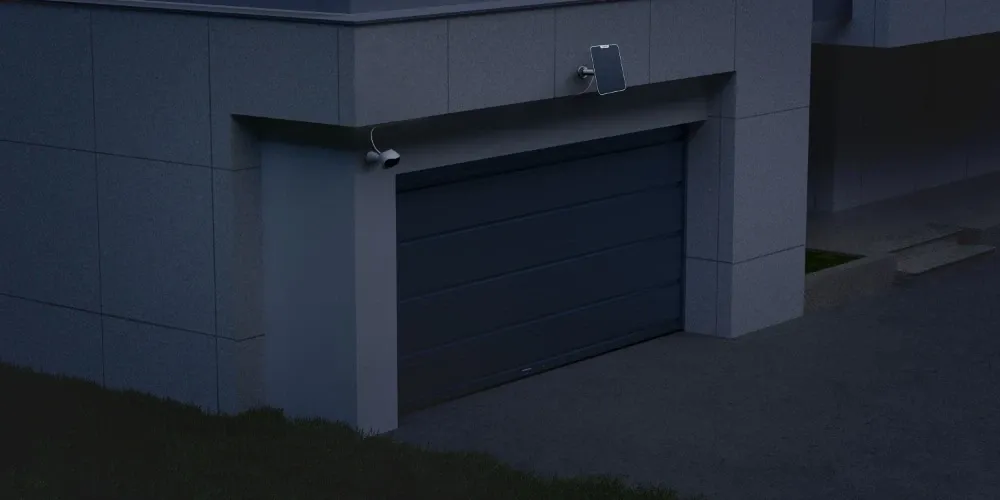
Small camera mounted on the wall beside a dark garage door at dusk, like the garage-under townhouses in Orange County condo developments
Manufacturer image from Reolink (partner brand), not an Orange County townhouse: a modern gray building at dusk with a wide garage door, a small camera on the wall beside it and another device above the opening. Garage-under townhouses are the most common new condo form in Orange County, and how cameras treat those garage fronts is a board decision.
Future Phases

Building Phase One So Phase Three Plugs In Without Rework

The most expensive camera mistake we see in Orange County is not a bad camera. It is a first phase installed as if it were the whole community: a recorder with exactly enough channels for today, cable run to the nearest convenient wall, and no thought for the loop of homes the builder will start next spring. When that loop is finished, the association pays to replace a recorder that still works and to open finished soffits to pull cable that could have been staged years earlier.

Start from the final site plan

We ask for the approved subdivision or site plan, the one the planning board signed off on, not only the as-built drawing of what stands. Every future camera spot gets marked on that plan in a different color, along with the route its cable will take. The board then sees two prices: the cameras it is buying now, and the groundwork that makes the later ones cheaper. Groundwork usually means an empty conduit stubbed out at the end of a building, a pull string left in a crawl space, or a weatherproof box mounted where a future pole will stand.

Talk to the builder while walls are still open

If construction on a phase has not reached drywall, an empty conduit from each building's utility closet to an exterior wall costs a fraction of what it costs later. Builders in active developments will often allow this when the association or sponsor asks early, because it is the same trades already on site. We provide a short, specific request: where each conduit runs, its size, and which wall box it ends in. We do not do electrical work, so any new power circuits for cabinets or poles go on the builder's electrician's list or the association's.

A recorder with room to grow

For a community that will double, the recorder in phase one is chosen for the camera count at buildout, with drive bays left empty until the cameras exist. That way the recorder bought today is the one still running when the last loop is finished, and storage grows by adding drives rather than replacing the box. The network switch at each building is sized the same way, with ports left open.

Construction-period cameras stay separate

During buildout the builder may run its own temporary cameras on trailers or poles to protect materials. Those belong to the builder and leave with the builder. We keep the association's system completely apart from them, on its own recorder and its own network, so nothing about the community's footage depends on a contractor's account. Builders who need site cameras for an active phase can look at our page on construction site security camera installation in Orange County.

Phasing also keeps each board vote smaller. A common split is entrance, mailbox area and clubhouse first; the completed residential loops second; and future loops as they are finished. Each phase in the proposal lists exactly what it adds and what groundwork it relies on, so a later board can pick up the plan without calling the original volunteers.

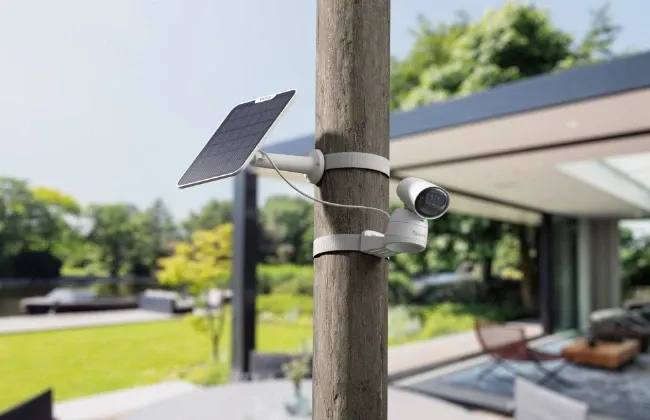
Battery camera and solar panel strapped to a wooden post beside a patio and lawn, a temporary option at an Orange County condo phase boundary
Manufacturer image from Reolink (partner brand), not an Orange County property: a white battery camera and a small solar panel held to a round wooden post with straps, with a lawn, trees and a covered patio behind. Strap-on cameras like this suit the edge of an unfinished phase for a season, before permanent wiring reaches it.
Gate Entrances

Unmanned Gates and Call Boxes at Orange County Condo Entrances

Orange County gated communities rarely have a guard. The typical entrance is a swing or slide gate, or an arm, a call box on a gooseneck post for visitors, and a remote, sticker tag or keypad code for residents. With nobody in a booth, the cameras are the only record of what happened at the gate, so they have to be planned around how that particular gate works.

Face height at the call box

The single most useful gate camera in an unmanned entrance looks at the driver's window where a visitor stops to use the call box. Mounted low and close, it records the face and the front of the vehicle at the moment the visitor asks to be let in. Many call boxes have a small built-in camera of their own, but its picture is usually meant for the resident answering the call, not for recording, and it is often not saved anywhere. The association's camera fills that gap.

The lane and the swing

A second camera, set back inside the community, looks down the entry lane toward the gate so it records every vehicle that passes, including one that follows a resident through before the gate closes. A third, wide view covers the whole entrance from above, which is the clip a board wants when a gate leaf is hit or a car drives over the island. Exit lanes need an overview rather than identity.

Where the equipment sits

Unmanned gates usually have power at the operator and a small enclosure, but rarely a heated, secure space. We put a sealed outdoor cabinet with a switch and surge protection at the gate, and bring the video back to the clubhouse recorder over fiber, a buried cable in conduit or a wireless bridge, whichever the distance and the ground allow. The gate operator, its call box and its codes are a separate system serviced by the gate company; the broader picture of gates, intercoms and fobs for associations is on our Orange County condo security systems page.

Two Orange County details come up often at gates. Snowplows pile snow against the gate posts and island, so camera poles go back from the plow path. And many entrances face a county or state road, so cameras are aimed to stop at the property line rather than recording passing traffic on the public road all day.

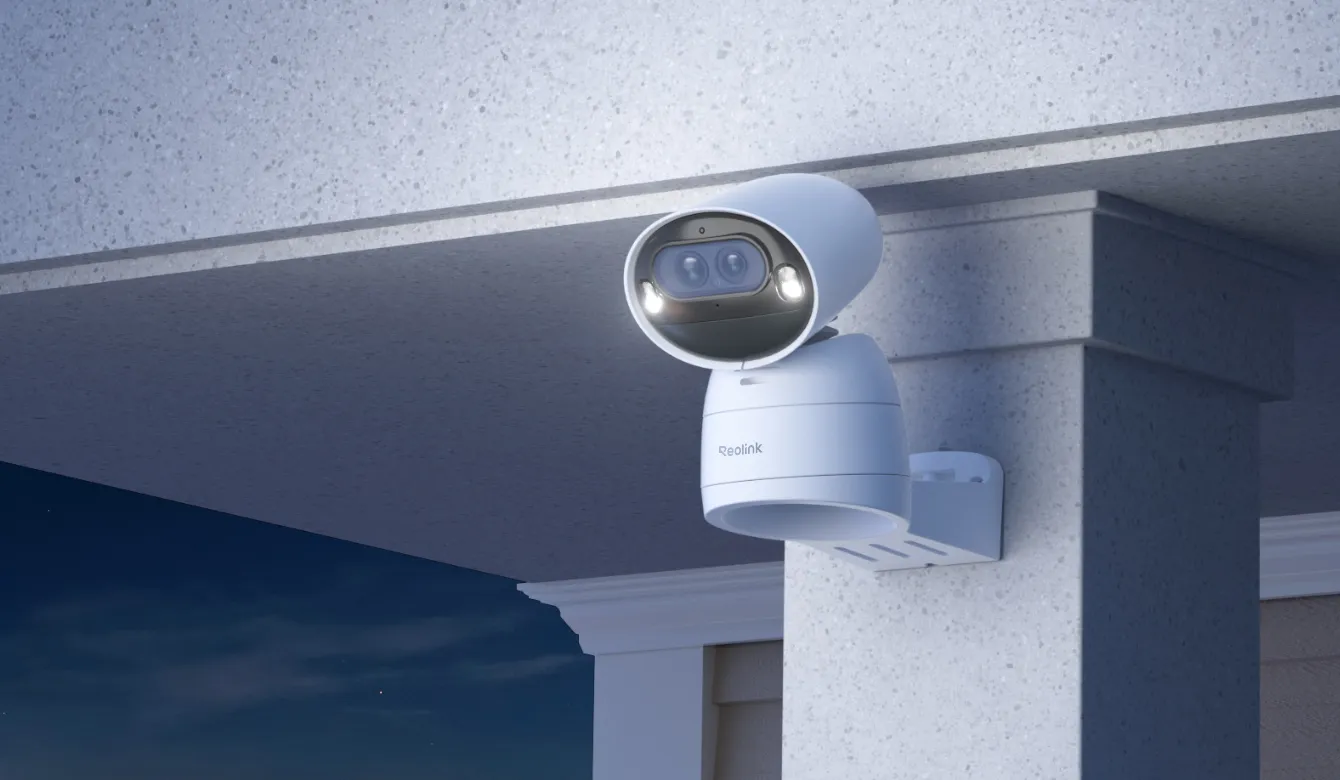
White pan-tilt camera with spotlight mounted under a porch ceiling beside a square column, as at an Orange County condo clubhouse entry
Manufacturer image from Reolink (partner brand), not an Orange County building: a white pan-tilt camera with two lenses and a small spotlight, on a bracket under a porch ceiling beside a square column, with dusk sky beyond. A covered entry like this keeps snow and ice off the lens at a clubhouse or gate shelter.
55-Plus Communities

Clubhouses, Indoor Pools and Walking Paths in Orange County's 55-Plus Condos

Age-restricted communities in Orange County come in two shapes. One is the gated campus with a big clubhouse at its center, like the 283-home community near Middletown that lists a 7,500-square-foot clubhouse with an indoor pool, an outdoor pool, a fitness room, a card room, a banquet room and a library. The other is the village neighborhood, like the Warwick community whose 8,000-square-foot neighborhood center sits a walk from downtown shops. Each needs a different kind of camera plan.

The clubhouse: doors and corridors

A big clubhouse has many doors: the main entrance, a side door to the pool, a service door by the kitchen, emergency exits from the banquet room. Each one gets a camera, because a door propped during an evening party is the most common way an outsider ends up inside. The lobby and the main corridor get coverage too. The rooms where residents gather, such as the library, card room and billiards area, usually do not; they are where people expect privacy, and entrance cameras already show who came and went.

The indoor pool is its own environment

Warm, wet, chlorinated air is hard on electronics and hardware. A camera in a natatorium needs a sealed housing rated for moisture, stainless or coated fasteners, and cable connections made outside the pool room or inside sealed boxes. It is aimed from a high corner to show the entrance and the deck, away from the changing room doors. Like any pool camera, it records incidents; it does not watch swimmers and should never be described to residents as a lifeguard.

The outdoor pool and the season

New York's pool enclosure rules call for gates that close and latch on their own and stay locked when the pool is unsupervised (Executive Law §378, through the state's building code). A camera on the pool gate records who opened it and when, which matters after hours. It does not satisfy any enclosure rule by itself, and the board should treat it as a record rather than a safety device. Pools here open late in spring and close after summer, so the pool camera is set up and aimed before opening day.

Village-style neighborhoods without a gate

Where sidewalks run straight from the community into a village, there is no single entrance to watch. Cameras go at the neighborhood center's doors and parking, the mail area, and the points where paths meet public sidewalks, aimed to stop at the property line. The goal is a record of who used the common facilities, not a log of who walked past on a village street.

Residents in 55-plus communities often worry that cameras are a step toward being watched at home. What reassures them is specifics: a map of every camera presented at a meeting before installation, a written statement that no camera records sound or looks into a home, and a short list of who can view footage. When owners see that list, objections usually fade.

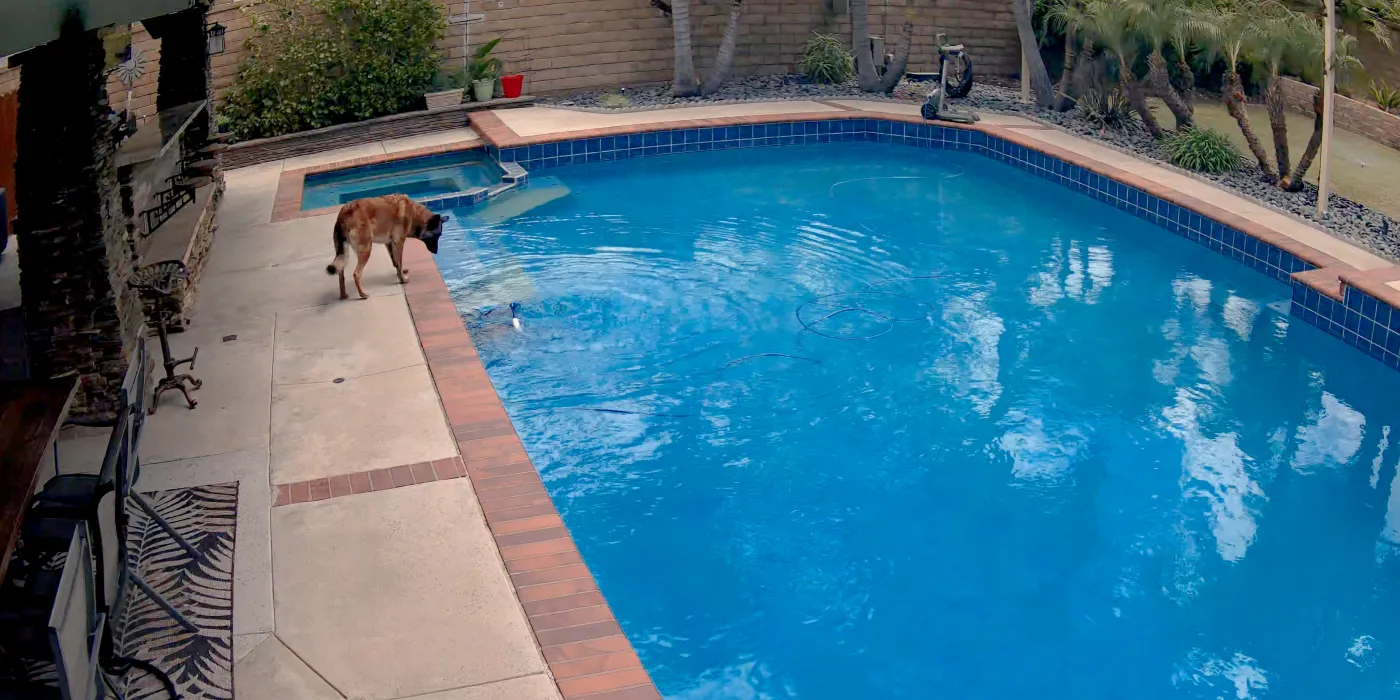
Sample camera view of a backyard swimming pool with a dog drinking at the edge, the kind of pool-deck view an Orange County condo board records
Sample frame from a Reolink camera product page (partner brand), not an Orange County pool: a camera looking down at a bright blue pool with a brick coping, a dog drinking at the far edge and plants along a wall. A high, angled view like this shows the deck and gate without singling out swimmers.
Distance

Entrance Signs, Mail Kiosks and Maintenance Barns Far From the Clubhouse

Orange developments are laid out along long entrance drives off county and state roads, so the spots a board most wants covered are often the ones farthest from any building: the stone entrance sign by the road, a mail kiosk placed where the postal carrier can reach it, a maintenance barn tucked behind the last loop, a stormwater pond at the low corner. Each is a separate engineering problem, and each gets its own line in the proposal.

The 100-meter rule

A network camera can draw power and send video over a single copper cable for about 100 meters, roughly 328 feet. The analog packages on our price page are described with wire runs up to 100 feet per camera before extra cable is quoted. On a typical Orange site, the entrance sign or the barn is past both limits, so something has to sit in between.

How we close the gap

  • Fiber in conduit for the longest permanent links, especially between buildings, because it carries video for miles and does not conduct lightning surges.
  • A point-to-point wireless bridge where trenching is impractical and two buildings or poles can see each other over the trees, tested in leaf season.
  • An outdoor cabinet partway out, with a switch and surge protection, that feeds nearby cameras and sends one link back.
  • Builder conduit left during construction, which we test and use when it is clear and continuous.
  • A solar-assisted battery camera for one spot with no cable path at all, accepting that it records on motion rather than continuously.

Power and digging are on someone else's list

A remote cabinet, pole camera or radio needs a power source. Where a site light or the entrance sign already has a circuit, the association's electrician or the builder's can add a protected outlet; we do not do electrical work. Trenching, saw-cutting pavement and restoring lawn are also outside our scope. The proposal names each of these, who is expected to do them, and where our work begins.

The Route 17 and I-84 corridors add one more consideration. Commercial and warehouse traffic on nearby roads means trucks miss turns and use condo entrance drives to turn around, and contractors' vehicles serve active phases daily. Cameras at the entrance and the barn are set with vehicle detection zones that ignore the public road and wake up only for what enters the property.

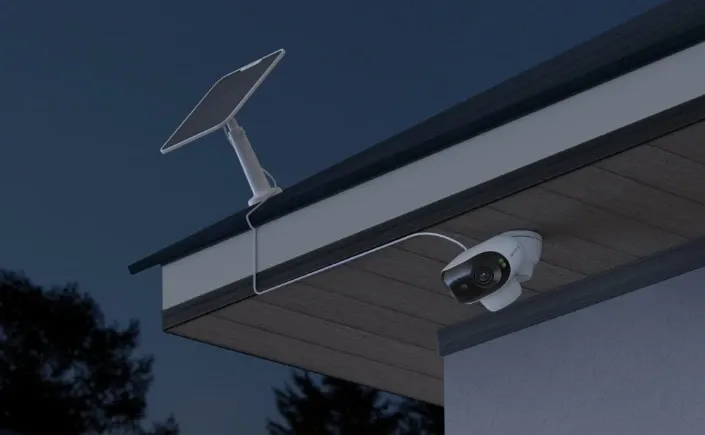
Battery camera under a roof overhang with a solar panel on the roof edge at dusk, an option for a remote Orange County condo maintenance building
Manufacturer image from Reolink (partner brand), not an Orange County building: a white battery camera under a dark roof overhang at dusk, cabled to a small solar panel mounted on the roof edge, with trees silhouetted behind. On a far maintenance barn or pump house, a setup like this can cover one door without a new circuit.
Winter & Power

Snow, Ice Dams, Summer Storms and Outages on Orange County Condo Grounds

Orange County winters are colder and snowier than the city's, and its storms knock out power across wide areas. Both shape where cameras mount and how the recording equipment is protected.

Heavy snow and plow piles

News 12 reported about 18 inches of snow in Monroe during the January 2026 storm, with up to two feet in some parts of the region (News 12). After a storm like that, plowed banks along lot edges can climb above a parked car. Lot cameras mount on buildings or poles well clear of where the plow pushes snow, and low cameras at the call box get a hood and a position the plow driver can see.

Ice under the eaves

Townhouse roofs in this county build ice dams, and the meltwater that runs off them refreezes on whatever hangs below. A camera mounted right at the drip edge ends up encased in ice by February. We mount under the soffit, back from the edge, or on the gable wall, and choose housings with a built-in sun and weather shield.

Summer storms and long outages

Orange & Rockland Utilities reported more than 47,000 customers affected by storms in early July 2026 (Orange & Rockland). A battery backup on the recorder and the core switch keeps recording through short interruptions and shuts the system down cleanly in a long one, which protects the hard drives. We state in the proposal roughly how long the battery is expected to carry the equipment it protects. Where a clubhouse has a standby generator, the recorder circuit can be one of the loads it carries; connecting that is an electrician's job.

Lightning on long copper runs

Thunderstorms induce surges on copper cables that run between buildings, and those surges take out switches and recorders more often than direct strikes take out cameras. Surge protection where cables leave each building, proper grounding, and fiber for the longest runs are the standard answers, and every one of them appears on the proposal so the board can see what it is paying for.

Cold mornings

The outdoor cameras in our packages carry IP66 or IP67 weather ratings. For entrances where a camera faces into the wind, we prefer models with a heater or a housing that sheds frost, so the first image on a January morning is not a white blur.

Camera mounted on lap siding under a blue-trimmed gable, with a solar panel on the gutter line, as placed on an Orange County townhouse end wall
Manufacturer image from Reolink (partner brand), not an Orange County home: a white camera on beige lap siding beneath a gable with blue trim and gutter, and a small solar panel mounted at the gutter line. Mounting below the overhang, back from the drip edge, keeps a camera out of the meltwater that refreezes under ice dams.
Police Requests

The District Attorney's Camera Registry, Police Requests and Why Retention Decides Everything

In September 2016, Orange County District Attorney David Hoovler announced a voluntary program inviting homeowners and businesses to register their private cameras in a law enforcement portal. As reported by Security Sales & Integration, only county law enforcement agencies can see the registered locations, on a map used during investigations, and officers then contact the owner to ask for images. The report was explicit about access: "No law enforcement members or district attorney's office staff will be able to access the cameras remotely" (Security Sales & Integration, September 2016). A board considering registration should confirm with the District Attorney's office how the program runs today.

Searching for that program turns up a different one with a similar name. Connect Orange County is run by the Orange County Sheriff's Office in Florida; its statement that the office "cannot access – remotely or directly – your security cameras at any time" describes a Florida program (FOX 35 Orlando, August 2023). Neither the Florida sheriff nor California agencies have anything to do with a condominium in Newburgh or Chester. Orange County, New York communities are patrolled by town, village or city police departments, the Sheriff's Office or State Police depending on location, and the board should ask its own department whether it keeps a camera list.

What a request looks like in practice

The common case is not a registry hit. It is an officer or a resident asking the managing agent whether a camera saw something a few days ago. In September 2025, News 12 reported more than 20 vehicles with slashed tires and smashed windows in the lot of one apartment complex in the Town of Wallkill, with police asking anyone who had surveillance footage to come forward (News 12, September 2025). In October 2023, after car break-ins in the Squire Village and Plum Point areas of New Windsor, News 12 obtained a resident's doorbell video of a man looking into a car in a driveway (News 12, October 2023). In both kinds of story, the useful footage is whatever still existed when someone asked.

Retention is the board's real decision

A recorder that keeps seven days is often empty by the time a claim or a detective arrives. We size storage to the number of days the board chooses, write that number into the proposal, and set the recorder to warn the agent if a drive starts failing. The footage policy then names one person who answers outside requests, how quickly a clip is saved before it is overwritten, and when the association's attorney is called.

We do not register cameras for an association and have no video-sharing arrangement with any police agency. At handover the board receives a one-page summary of each camera's coverage, which is what any registry or detective would ask for, and the decision stays with the board.

Equipment

Condo Security Camera Systems for Orange County Townhouse Rows, Gates and Mid-Rises

The parts are standard. How we combine them depends on whether the community is a row of townhouses, a gate and clubhouse campus, or a set of elevator buildings.

Cameras by job

Turret cameras are the default under soffits and on clubhouse walls; they hold aim through winter and shed snow better than boxy housings. Vandal-resistant domes go wherever a hand can reach, such as carport ceilings, mailbox shelters and stair halls in garden buildings. Bullet cameras suit long views down a townhouse lane or a lot edge. Dual-lens panoramic cameras cover a whole parking court from one corner. Full-color night cameras with a soft light help on drives the association does not want to floodlight, which matters in communities that border woods and houses. Pan-tilt cameras are a live-viewing extra, never the camera that does the recording.

One recorder or several

A townhouse development usually works best with one recorder in the clubhouse or management office. A mid-rise district may be better served by a recorder in each building, joined over fiber so authorized users see every camera in one app, with each building's video stored locally. The choice affects cost, what happens when a link fails, and how cleanly a building's records can be separated if associations ever split.

Network and detection

Cameras run on their own network, apart from the clubhouse Wi-Fi and the office computers, with power over the same cable through PoE switches. Detection is tuned to people and vehicles, with zones drawn to ignore tree lines, public roads and pond surfaces, so a volunteer can search a day of footage for vehicles at the gate instead of scrolling through deer and blowing snow.

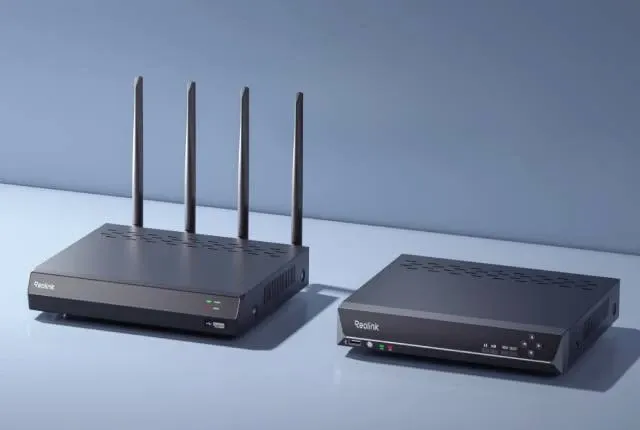
Two black network video recorders on a pale surface, one with four antennas, the kind of recorder an Orange County condo clubhouse uses
Manufacturer product photo from Reolink (partner brand), not an Orange County installation: two black recorders side by side on a pale blue-gray surface, the left one with four upright antennas for wireless cameras. The recorder is where every camera's video lives, so its room and its storage are planned first.
Brands

Our House-Brand System First, Named Brands When a Board Asks

Proposals start from the house-brand cameras and recorders we carry ourselves, commercial equipment with a phone app and no monthly subscription. The $1,199 Orange County starting system and the rest of the county's package list are built on that line, which keeps every camera on a plan in the same family and every login working the same way.

When a board wants a named brand, we install it. Lorex, Luminys and Reolink are our partner brands, and the product photos on this page are Reolink manufacturer images, shown because they picture the kind of equipment we install; none of them shows an Orange County property. We also work with brands an association already owns. If a brand depends on a paid cloud plan, that charge appears on its own line, and special-order equipment is ordered only after the deposit, with the install date set when it arrives.

Privacy & the Law

New York State Rules That Shape Orange County Condo Cameras

We install cameras; we do not give legal advice, and a board with a legal question should take it to its counsel. What we can do is point to the published rules that affect how we install. One point first: New York City's local laws on building cameras, smart access and tenant data are city laws. A condominium in Orange County answers to state law, its own declaration and bylaws, and its town or village, not to the city's code.

Common elements and the board's authority

The state Condominium Act counts parking areas, recreational and community facilities and "all apparatus and installations existing for common use" among common elements (Real Property Law §339-e), and requires bylaws to cover the board's powers and the maintenance of those elements (§339-v). Many Orange townhouse developments are homeowners associations rather than condominiums, or a mix of both, and the Attorney General's rules for HOA offering plans require a description of common areas such as land, parking and recreation facilities (13 NYCRR §22.3). Whichever body owns the ground under a camera is the body that approves it.

No sound

Penal Law §250.05 makes eavesdropping, which includes the "mechanical overhearing of a conversation" as defined in §250.00 without at least one party's consent, a felony. Many cameras ship with microphones turned on. We turn audio off on every common-area camera and say so in the proposal.

Rooms that never get a camera

Penal Law §250.45 lists bedrooms, changing rooms, restrooms, bathrooms and showers among the places where recording a person without consent can be unlawful surveillance. FirstService Residential's guidance for condo boards also points to the state labor law's ban on video of employees in restrooms, locker rooms and changing areas. In an Orange County clubhouse that rules out the pool changing rooms, locker areas, restrooms and any staff room where the maintenance crew changes.

Garages, driveways and patios

In garage-under townhouse rows, each garage and often its driveway apron and rear patio are limited common elements or private lots assigned to one home. Common-area cameras are aimed along the lane, not into open garages, front doors or back patios, and the recorder's privacy masks black out any part of a view that cannot be avoided. Owners who add their own doorbell cameras should follow whatever the board's rules say about mounting on the exterior.

Sirens and strobes on cameras

Some packages include cameras with a built-in siren and flashing lights. Local alarm laws can reach audible devices: the Town of New Windsor's alarm law, for example, requires exterior audible alarms to shut off automatically within 15 minutes and sets escalating fines for repeated false alarms (Town of New Windsor Code ch. 86). In a residential community, we leave sirens off by default and enable them only on cameras the board chooses, with short bursts and schedules it approves.

Licensing of installers

Installer licensing in this state runs through the Department of State. Under 19 NYCRR Part 195, a closed-circuit video setup whose purpose is spotting or watching for intrusion counts as a security system. We operate under license #12000287431; before signing with anyone, a board can look up that bidder's number with the state.

Footage Policy

A Footage Policy an Orange County Board Can Adopt Before Turnover

Disputes in condo communities are rarely about where a camera points. They are about who saw the video, who copied it and why it was gone when someone needed it. A short written policy, adopted before the system goes live and ideally before the sponsor turns the board over to owners, settles those questions while nobody has a stake in the answer.

  • How long video stays. A 30-to-90-day window, scaled to the size of the property, is the range FirstService Residential describes for condominiums; a phased community with owners who travel for weeks at a time is better off near the top of it.
  • People allowed to watch. Name them: typically the agent plus a couple of officers. An attendant at a gate shelter or a lobby desk, where one exists, sees live pictures only.
  • Exports. One or two named people, with a log of every export: date, camera, time span and reason.
  • Owner requests. FirstService recommends that residents not receive footage without approval from the board and legal counsel, and that the association keep a record of requests and of everyone who viewed footage.
  • Outside requests. Police, insurers and attorneys go to the named contact, who saves the clip before it is overwritten and calls counsel when the request is unusual.
  • Adding or re-pointing. A crew member on a ladder never takes a resident's word for where a lens should face; any new or redirected camera is a board decision first.

Sponsor control and turnover

In a community still under sponsor control, the cleanest arrangement is that the administrator account is created in the association's name from day one, with the sponsor's representatives holding ordinary user accounts that end when they leave the board. That avoids the familiar turnover problem of a recorder whose master password left with the developer's project manager.

Letting owners know

Owners should receive the camera map and policy before installation, and buyers should receive them with the resale package. Signs at the entrance and the clubhouse door noting that common areas are recorded are sensible, and we can mount them during the install.

Approval

Getting a Camera Plan Approved by an Orange County Board or HOA

An Orange County proposal may land in front of a board that still includes the sponsor, a newly elected owner board, or two boards at once where a master HOA owns the roads and each condominium owns its buildings. We write the packet so any of them can vote on it in one meeting.

What the packet contains

The approved site plan with each existing and future camera numbered; one sentence per camera saying what it records; which body owns the ground under it; the recorder's location and days of storage; the link and power plan for every remote spot; a price for each phase with conduit, poles, cabinets and long links on separate lines; anything that might add cost, like a buried builder conduit that may be blocked or a tree line a wireless path has to clear; and a draft footage policy. Ordered equipment cannot be returned, so every possible extra is disclosed before the order, never on install day.

Timing around construction and the seasons

Two Orange County rhythms affect timing. Groundwork in a phase under construction has to happen before the builder closes walls or paves, so that decision cannot wait for the next annual meeting. And frozen ground from December into March makes trenching hard, so buried links are best approved in time for fall or spring. Neither changes our scheduling, which is first come, first served once a job is signed and paid.

Where the money comes from

How an association pays is up to the board under its documents. Associations commonly fund small systems from operating funds, use reserves when the cameras replace an aging system, or levy a special assessment for a large first installation, and in phased communities the sponsor sometimes funds groundwork in phases it is still building. We do not recommend one route over another.

Pricing

Condo Security Camera Installation Cost in Orange County

A board is charged exactly what a homeowner or shop in Orange County would be charged; there is no association surcharge. The entry system, four house-brand cameras with a recorder and installation, is $1,199, and the county's higher-resolution, full-color and network-recorder packages are listed on our Orange County security camera pricing page. A board can hold our proposal next to that page and check it line by line.

Proposal lineHow it is priced in Orange County
Starting system: four house-brand cameras and a recorder, installed$1,199
Each camera after the first fourPriced per camera after the walk-through, once mount and cable path are confirmed
Concealed wiring inside finished walls and ceilingsHidden runs are $200 a camera up to 100 feet per the county price page, with anything longer priced during the visit
Groundwork for future phasesConduit stubs, pull strings and wall boxes listed by location so the board can fund them separately
Fiber, wireless bridges and outdoor cabinetsItemized link by link with distance and method
Poles at the entrance, pool or lotsListed with height, location and mounting
Recorder sized for buildoutSized to the buildout camera total; hard drives follow the number of days in the policy
A named brand instead of the house systemQuoted when asked, with any monthly plan shown separately
Installing cameras the association already ownsLabor only, quoted by phone or text

What moves an Orange County number

Distance and phasing. A community whose cameras all sit on or near the clubhouse can land close to the package prices. One that wants the entrance sign, the mail kiosk, the maintenance barn and every finished loop on one recorder carries link costs that can rival the cameras themselves, plus groundwork for the loops still coming. Every one of those items appears separately, so the board decides where to draw the line this year.

Equipment the community purchased itself

If a committee or the sponsor already purchased cameras, we price labor only, worked out by phone or text from the model list and the spots to cover, and the job is scheduled when the deposit comes in. We do not do site walk-throughs for association-supplied equipment, and defects in that equipment, or weak Wi-Fi for wireless models, are outside what we are responsible for.

Coverage after installation

Three kinds of coverage are worth separating. Our website lists a 30-day warranty on the installed system. Boards that want more can add a one-year or longer plan when they sign. The cameras, recorder and drives also carry their manufacturers' own warranties. Full terms — including 50% deposit, one-year parts-only warranty on Abstract Enterprises Security Systems-supplied products, and the late-fee schedule — are set out in the service agreement.

Financing is available through Wisetack, subject to approval.

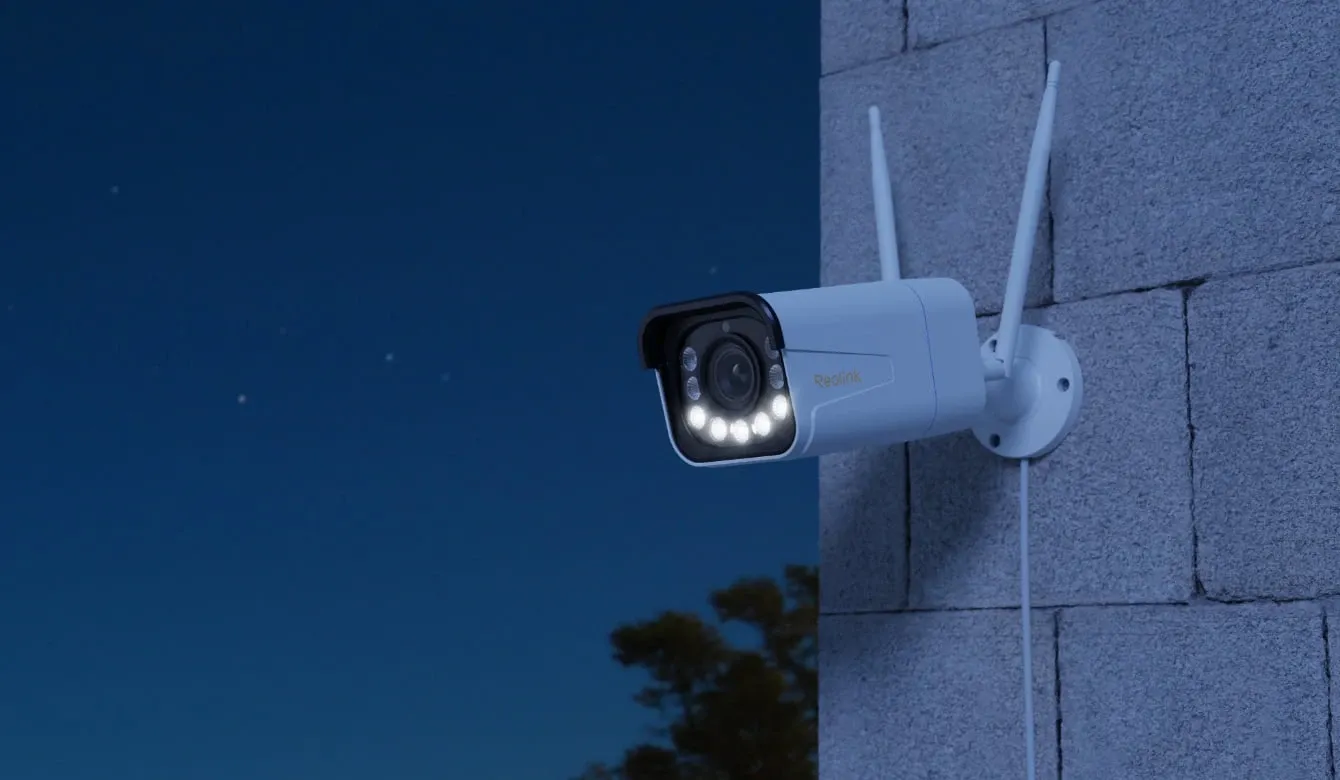
White bullet camera with two antennas and lit spotlights on a block wall at night, a wireless option for an Orange County condo outbuilding
Manufacturer product photo from Reolink (partner brand), not an Orange County property: a white bullet camera with two upright antennas and small spotlights glowing, fixed to a pale block wall against a deep blue night sky. Wireless models like this are a line-item option for a single outbuilding, not the backbone of a community system.
Get In Touch

Ask for an Orange County Condo Camera Proposal

A few details help us arrive prepared: the town or village, how many homes or units exist now and how many are planned, whether there is a gate, a clubhouse or a pool, and what the board most wants on record. If you can share the approved site plan, we will mark likely camera spots and future conduit routes before the visit. Rather talk? Call or text (845) 640-3835.

✅

Request Sent!

Thank you, your details reached the scheduling desk. Someone will be in touch by phone or text, generally within a couple of hours, to agree on a day to tour your grounds.

Across the County

From Newburgh to Port Jervis: How Condo Camera Work Varies Across Orange County

Orange County runs from the Hudson at Newburgh and Cornwall to the Delaware at Port Jervis, and from the New Jersey line at Warwick up to the Ulster border. Camera plans change across that distance. The places named here are general landmarks to orient the reader, not client properties.

Newburgh, New Windsor and the Route 32 and 9W corridors

The county's oldest condo stock, with garden complexes from the 1970s and 1980s near the river, the Newburgh-Beacon Bridge and Stewart International Airport. Typical work here is taking over or replacing an older system, covering stair-hall doors in buildings without lobbies, and lighting-aware cameras for lots that were never designed for video. The New Windsor alarm law mentioned above is a reminder that town codes can touch anything that makes noise.

Middletown, Wallkill and Route 211 and 17M

A mix of older complexes, gated 55-plus campuses and newer townhouse sections around the city and the Town of Wallkill, with the Port Jervis Line station in Middletown nearby. Gate entrances with call boxes, large clubhouses with indoor pools, and long parking lots are the common elements. The Wallkill vandalism story cited earlier is the kind of overnight lot incident a board here plans retention around.

Monroe, Harriman, Highland Mills and Woodbury

Some of the county's newest condo construction, with townhouse loops added in phases near Route 17, the Thruway interchange and Woodbury Common. Heavy snow totals, steep entrance drives and active construction next door make phased groundwork and plow-aware pole placement the main design topics.

Palm Tree and the southeast elevator district

Four- to six-story buildings with lobbies, elevators and shops on the same campus. The plan looks more like a city building plan repeated many times: lobby, elevator, parcel area, garage or lot and rear doors in each building, tied together by fiber, with commercial units kept on their own cameras or recorder.

Chester, Goshen, Washingtonville and Montgomery

Townhouse and garden communities with clubhouses, pools and courts around the county seat and the Route 17 and 208 corridors. These sites usually have one main entrance and a recreation area that is a long walk from the farthest buildings, so the amenity cluster and the entrance get cameras first and the residential loops follow.

Warwick, the southern valleys and the western towns

Village 55-plus neighborhoods, smaller associations and the longest drives in the county, out toward Port Jervis and Deerpark. Systems here are planned to run quietly with alerts to a managing agent who may be far away, and we group visits on days our crews are already working nearby so a small association is not paying for a trip that could have been shared.

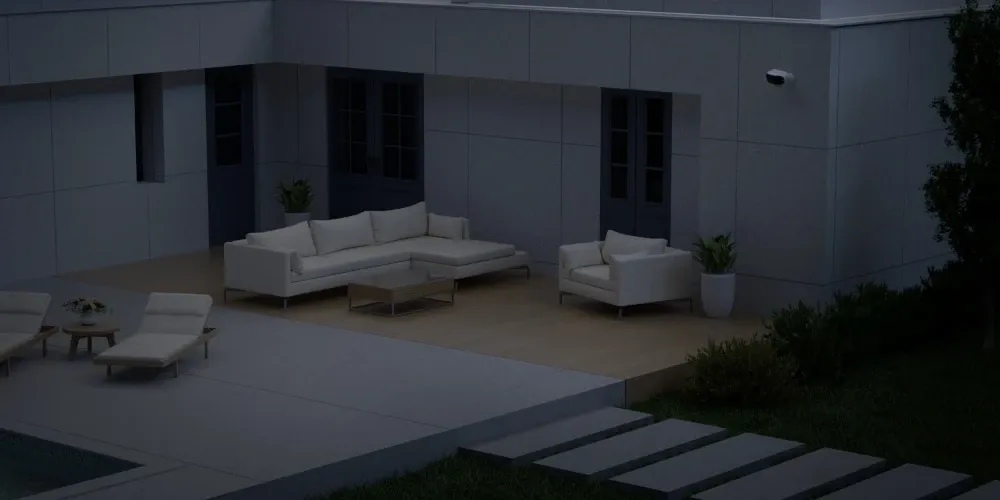
Patio with outdoor sofas and lounge chairs at dusk, watched by a small wall camera, like a clubhouse terrace at an Orange County condo community
Manufacturer image from Reolink (partner brand), not an Orange County clubhouse: a paved terrace at dusk with white outdoor sofas, lounge chairs and stepping stones, and a small camera high on the wall at the corner. A camera placed like this records who uses a clubhouse terrace without looking into any home.
How It Works

Seven Steps to a Working Camera System at an Orange County Condo

Adding two cameras to a recorder that already works can be signed and scheduled quickly. A first system for a phased community may go through the sponsor, an owner board and a master HOA before anyone votes. The order of events is the same either way.

1

Make first contact

Whoever notices the need, from a sponsor's rep to an owner, makes contact. Inside 2 hours there is a date, weekends included, with a two-hour arrival window and the earliest times offered before later ones.

2

Site walk with the plan in hand

We walk the finished phases with the approved site plan, look at the room for the recorder, test any builder conduit or old cable, and measure distances to the entrance, kiosk and barn.

3

Phased written proposal

Directors get the site plan marked with existing and future spots, why each camera exists, the conduit to stage for later loops, separately priced links and poles, retention in days and any risks to the number.

4

Board approval, then the deposit

Once the right board or boards approve under their documents, the authorized officer signs and the deposit is paid. Equipment is ordered after that, and the certificate of insurance goes to the agent once the work is awarded.

5

Heads-up to owners

Owners hear about it before trucks arrive: a single sheet we write, sent out by the agent, showing the map, which days crews are on site and where parking will be squeezed.

6

Install day and view tuning

Cable, mounts, cabinets, recorder, switches and batteries go in. Each view is checked in daylight and after dark, microphones are disabled, windows and garages masked, and detection zones drawn.

7

Handover in the association's name

Each authorized person leaves with a personal account and a walk-through of search and export; the binder holds the map and a still per camera; the master credentials are registered to the association itself.

Our calendar fills strictly by when deposits land. Proposals awaiting signature reserve nothing, nobody gets a same-day install, and anything on special order is dated only once it reaches our warehouse.

Existing Systems

Taking Over a Builder-Installed or Inherited Camera System

Many Orange County associations already have cameras: a few the builder put on the clubhouse during sales, a recorder in the model unit or management office, or a garden-complex system bought by a board two decades ago. What to do next depends on who controls it and what still works.

Recover control first

If the builder or a past manager holds the only administrator account, getting that account transferred, or resetting the recorder and rebuilding accounts in the association's name, comes before anything else. Sometimes that and a few new cameras are all the community needs. Our Orange County security camera repair service handles that kind of recovery and repair for any property.

Extend what is sound

A current recorder with spare channels can take cameras for the new loops directly. A recorder without spare channels may need a second unit or an upgrade, and the cable the builder ran during construction can often be reused once it passes a test.

Replace what is not

A recorder that no longer gets security updates, cameras with useless night images, or a system on the clubhouse Wi-Fi are reasons to start over. Replacement is also the moment to move the recorder out of a model unit that is about to be sold, put the cameras on their own network, and size storage properly. Boards that want the general picture of camera installation for any kind of property can read our Orange County security camera installation page, and those running an older analog system can compare options on our Orange County CCTV installation page.

On Site

What Installation Days Look Like in an Occupied Orange County Community

Our crews arrive inside the scheduled two-hour window, never ahead of it, and park where the agent directs, usually at the clubhouse or guest spaces rather than on narrow private lanes in front of garages. In communities next to an active phase, we coordinate with the builder's superintendent so our lift is not in the way of concrete trucks, and we follow whatever check-in the gate or office uses for contractors.

Residents will ask what a camera will see, and the installers will gladly show them. Requests to move a camera or add one for a specific home go back to the board. Common-area work does not require entering any home or garage. Clubhouse work is scheduled around classes and events the manager tells us about, and we do not patch or paint; where old hardware leaves holes, the proposal says who finishes the surface.

Planning

How Many Cameras an Orange County Condo Community Tends to Need

Boards usually want a sense of scale before a walk-through. These ranges reflect communities we have surveyed and cover common areas only. They are a starting point for discussion, not a quote or a statistic; the real number comes from the site visit.

CommunityTypical rangeWhere cameras usually go
Small association, up to about 24 units4 to 8Entrance drive, lot, mail area, building ends
Garden complex with stair halls, 60 to 200 units12 to 32Stair-hall doors, each lot, pool gate, laundry or storage building
Phased townhouse development, per finished loop4 to 10Loop entrance, lane views, mail kiosk; plus entrance and amenities once
Gated 55-plus campus, 150 to 300 homes20 to 40Gate lanes and call box, every clubhouse door, both pools, lots, maintenance barn
Mid-rise elevator building10 to 22 per buildingLobby, elevators, parcel area, garage or lot, rear and service doors
Office or flex condo building8 to 20Shared lot, loading doors, lobby, perimeter

Separate lots that cannot be seen from one building, an amenity area far from the clubhouse, and a long entrance drive push a community up its range. A compact layout around one shared lot and a decision to phase outer loops into later years pull it down.

AI Overview Reality Check

Where Generic Online Answers Miss on Orange County, NY Condo Cameras

Chatbot answers, search summaries and national cost guides from sites such as Angi, HomeAdvisor and Fixr are written for a single house, a store or a city building. Several of their standard claims break down on an Orange County condo site. These are the seven we hear most on walk-throughs, with what we actually find.

"Orange County camera rules and programs apply to us"

Many search results for Orange County surveillance rules, police camera programs and installer prices come from California or Florida. The Florida sheriff's registry, California ordinances and West Coast price surveys have no bearing on a condominium in Goshen or Cornwall.

The rules that apply here are New York State law, the association's own declaration and bylaws, and the town or village code. The registry that applies is the one run, or not run, by the agency that patrols the community.

When a resident brings a printout to a board meeting, the first question is which Orange County it describes.

"The builder's cameras become the association's at turnover"

Hardware may stay when the sponsor leaves, but control often does not. A recorder set up during sales is frequently registered to the builder's email, with the only administrator password held by a project manager who has moved to another job.

Turnover checklists should name the camera system specifically: the administrator credentials, the cloud or app account, any warranty paperwork and the camera map. Without them, the association owns a box it cannot change.

The simplest fix is to create the administrator account in the association's name from the start, which is how we set up every system.

"Solar cameras are a cheap way to cover a whole development"

Solar-assisted battery cameras are useful for one or two spots with no cable path, and several appear on this page for that reason. As a community-wide plan they fall short: they record on motion rather than continuously, depend on cell or Wi-Fi coverage, and lose charge through short, dark January days.

A wired camera on a building or a pole fed by a proper link records every minute to the association's recorder. We use solar cameras as a stopgap at the edge of an unfinished phase, not as the backbone.

When the next phase brings power and conduit, the solar camera moves on and a wired camera takes its place.

"A camera system costs a few hundred dollars per camera installed"

National averages assume a camera on a house, a short run from the recorder. Our Orange County starting system is $1,199 for four cameras and a recorder, installed, but on a condo site the cost that varies is the path from the far cameras back to that recorder.

A bid that shows a low per-camera figure and no line for links, poles or groundwork usually grows once the installer reaches the entrance sign. Our proposals list those items separately with distances.

Comparing bids on total camera count and total link distance is fairer than comparing a per-camera average.

"A camera with a siren scares people off, so turn it on everywhere"

A siren camera can startle someone at a dumpster corral at 2 a.m. It can also go off for a raccoon, a resident walking a dog or a plow truck, in a community where people are asleep a few feet away.

Town alarm codes can apply to audible devices, and New Windsor's sets a 15-minute automatic cutoff for exterior audible alarms and fines for repeated false alarms. Owners notice quickly when a camera keeps sounding.

We leave deterrent features off by default and switch them on only for cameras and hours the board approves.

"The clubhouse Wi-Fi can reach every building"

Consumer Wi-Fi from a clubhouse rarely reaches the far loops of a townhouse development with a dependable signal, and the cameras that do connect compete with residents streaming video in the same building.

When radio really is the best path, the link is a pair of dish-style bridges pointed at each other from roof to roof or pole to pole, signal-checked on install day and kept off the network residents use.

The difference shows up in winter, when wet snow on trees weakens marginal links and cameras on consumer Wi-Fi drop off the recorder.

"Any electrician or handyman can put up cameras"

Mounting a camera is easy. Designing a system that covers a phased community, records the right number of days, survives storms and stays under the board's control is a different job, and New York licenses security installers through the Department of State.

The problems we inherit are consistent: a recorder on the office network, audio left on, cameras on the clubhouse Wi-Fi, no surge protection on runs between buildings, and a password nobody has.

Three things to collect from each contractor: the number on their state installer license, a drawing that places every proposed camera, and written agreement that master access will sit with the community.

Questions We Hear

Twelve Questions From Orange County Condo Boards and Owners

The builder is still finishing our last phase and runs its own trailer cameras. Can our system share its poles or wiring?

It is better not to. The builder's cameras protect its materials and leave with the builder, often on short notice, and anything of ours attached to its poles or power leaves with them. We keep the association's system on its own poles, power and network. What we do ask the builder for is groundwork in the buildings it is still finishing, such as empty conduit to an exterior wall, so the association's cameras can reach that phase cleanly later.

Our townhouses have garages under the living space with short driveways in front. Where do cameras go so they are not staring into owners' garages?

Along the lane, not across it. A camera at the end of a row, mounted on the end wall and looking down the length of the lane, records vehicles and people moving through the common road while seeing garage doors only at a steep angle. Where a view still catches an open garage or front door, a privacy mask blacks that part out. The board decides whether driveway aprons, which are often assigned to individual homes, are in or out of the picture, and the proposal says which.

Our clubhouse has an indoor pool and the air is always warm and smells of chlorine. What camera holds up in there?

A sealed camera rated for moisture, mounted with stainless or coated hardware, with its cable connection made outside the pool room or inside a sealed box. Standard brackets and unsealed connectors corrode within a season or two in that air. We mount it high in a corner so it shows the entry door and deck, away from changing-room doors, and we check the room's ventilation pattern so the camera is not in the path of the warmest, wettest air from the pool heater vents.

Our gate has no guard, just a call box. Can the cameras show which visitor an owner buzzed in?

Yes, by timing. A camera at face height beside the call box records each driver who stops there, and the recorder's timeline lines up with the moment the gate opened. If the call box keeps its own log of which home answered, the two records together show who let whom in. The call box's built-in camera usually is not recorded on its own, which is why the association's camera at that spot is worth more than any other at an unmanned gate.

Tractor-trailers miss the turn for the warehouses down the road and use our entrance drive to turn around. Can cameras document the damage to our curbs?

A wide camera covering the entrance and the island, with vehicle detection set to the drive rather than the public road, records each truck that pulls in, how it turns and what it hits. Clips with time stamps and visible company markings give the board something concrete to send to the carrier or its insurer. Cameras can't keep trucks out; signs, island design and the town's traffic office are the tools for that, and the footage helps make that case.

Our sidewalks connect straight into the village. Should a camera cover where outside walkers come into the community?

Usually the better targets are the facilities walkers might use, such as the neighborhood center doors, the mail area and the pool gate, rather than the sidewalk connection itself. A camera on a path entrance records many neighbors walking past for every visitor who matters. If the board has a specific problem at one path, a camera aimed along the path inside the property line, stopping short of the public sidewalk, gives a record without logging the village's foot traffic.

Can the cameras show what time our snow contractor actually plowed and salted?

Yes. Cameras covering the entrance, the main lanes and the clubhouse lot record the plow and salt trucks with time stamps, and vehicle detection lets the agent search a storm night for trucks rather than scrolling through hours of falling snow. Boards use those clips to check that service matched the contract and to answer owners' complaints. A camera on the steepest part of the entrance drive is especially useful, since that is where timing matters most.

Our buildings went up in three phases by two different builders, and the utility closets don't match. Does that matter for the cameras?

It matters for the cable routes and the network gear, not for the cameras. One builder may have left a dedicated low-voltage closet with conduit to the attic, the other a shared space behind the water heater with nothing pre-run. We survey each building type separately, pick a consistent location for a small switch in each, and plan the link back to the recorder per building. The proposal groups buildings by type so the board can see why identical camera counts carry different prices.

The sales office and model unit will close when the builder leaves. Can the cameras on them be kept for the association?

Sometimes. If the model unit is being sold as a home, any camera and recorder inside it have to come out before closing, and exterior cameras on that unit may not belong on a private home at all. If the sales office becomes a common building, its cameras can stay if they are reasonably current and the administrator account is transferred to the association. We check the model, firmware and account during the walk-through and say plainly which pieces are worth keeping.

Our manager suggested putting the recorder beside the pool pumps and chlorine because that door locks. Is that a good spot?

We avoid it. Pool chemical storage gives off fumes that corrode electronics, the room is often humid, and pump rooms can flood. A locked cabinet in the management office, a ventilated closet, or a small lockable wall rack in a dry storage room is a far better home. If no dry room exists, the proposal includes a locking enclosure, and the board decides where it goes.

Home health aides visit several owners in our 55-plus community every day. How do we keep the cameras from turning into a record of who receives care?

Keep cameras off individual front doors and walkways, cover the entrance and common facilities only, and limit who can view footage. An entrance camera will record a visiting aide's car the same way it records any guest, but nobody browses that footage without a reason under the policy. Writing into the footage policy that recordings are reviewed only in response to a specific incident, and logging every view, is what gives owners that assurance.

Many of our owners don't use smartphones. How would they ask to see a clip?

The same way as anyone else under the footage policy: a written or phoned request to the managing agent or the named officer, giving the date, rough time and place. The agent reviews it and, if the policy allows, shows the clip at the clubhouse or office. Phone apps are for the few people who manage the system; owners never need one. We print a one-page request form at handover that the office can keep at the front desk.

Related Pages

Other Orange County Pages a Condo Board May Need

This page sits under our Hudson Valley condo security camera installation overview, which compares all six counties. For the rest of a community's security, including gates, intercoms, fobs and parcel rooms, see the Orange County condo hub linked in the gate section above. Boards replacing an aging lobby or gate intercom can read our guide to condo intercom replacement.

  • Boards that want a yearly visit to wipe lenses, swap tired drives and confirm every view: security camera maintenance in Orange County.
  • Shareholder-owned buildings follow different governance, and that guide is still being written (co-op security camera installation in Orange County).
  • Full warranty terms: our warranty page.
From the Field

What We Keep Finding on Orange County Condo Walk-Throughs

One pattern repeats in newer Orange County developments. The builder put four or five cameras on the clubhouse and entrance during sales, connected to a recorder in the sales office. When sales ended, the office was emptied, the recorder unplugged and carried to a closet, and the cameras kept hanging there, recording nothing. Owners assumed the entrance was covered for two years. The first step on those visits is simply finding where the recorder went and who has its password.

In older garden complexes, the pattern is coaxial cable stapled along exterior walls years ago, cracked by sun and frost, feeding cameras whose picture went gray long ago. The recorder still shows a tile for each one, so nobody noticed. We test every old run during the walk-through, mark which can be reused, and price the rest before the board votes, so replacement cable is never a surprise.

The third pattern is winter. A camera mounted at the drip edge of a townhouse roof spends February inside a block of ice, and a pole camera at the entrance gets a plow bank piled against its base and a coat of road salt on its lens. Moving a camera a few feet, under the soffit or back from the plow path, fixes more winter complaints than any equipment upgrade.

Comparing Bids

How to Compare Bids From Condo Camera Installers in Orange County

Boards often gather two or three bids, and totals mislead when one bidder ignores future phases, leaves out the entrance link or undersizes storage. Putting the same questions to every bidder evens the field. These are the ones we would ask, with our own answers.

Question for every bidderOur answer
Does the plan show phases that aren't built yet?Yes. Future camera spots and conduit routes are marked on the approved site plan in a separate color.
How does video get back from the entrance sign and the far loops?Each far spot names its method, whether glass fiber, radio or copper, plus the footage and the dollars.
Will the recorder still be big enough at buildout?It is chosen for the final camera count, with drive bays left for growth.
How many days will the system keep, and how do you know?A day count appears in writing, and the storage we buy is calculated to hit it.
Who holds the administrator login during sponsor control and after?It is registered to the community at installation; outside logins by our staff happen only when directors ask for a service session.
What protects the equipment in storms and outages?Suppressors where cable exits a structure, a bonded ground, and a battery unit carrying the recorder plus main switch.
Is audio off, and are sirens off unless we ask?Yes to both, on every common-area camera.
Is there a monthly charge?Zero for the house line we install by default; a named maker's paid cloud would show up as a separate figure.
What is your New York State license number?#12000287431.
When does our agent receive your certificate of insurance?On award, naming whoever the agent's requirements list.

Orange County jobs are handled through our Bronx office, with our Brooklyn and Queens offices behind it, and 201 Google reviewers rate the company 4.7 stars. The association buys and owns the equipment; we design, install and service it. We do not provide live video monitoring, guard or remote doorman services, or electrical contracting.

Frequently Asked Questions

Orange County Condo Camera FAQ for Boards and Owners

Is this page about Orange County, New York, or another Orange County?
+

Orange County, New York, the county between the Hudson and the Delaware with Goshen as its seat, including Newburgh, Middletown, Port Jervis, Monroe, Chester, Warwick, Palm Tree and the towns around them. Prices, laws and programs described here are New York ones. Orange County, California, and Orange County, Florida, have their own rules and installers, and nothing on this page applies to them.

Can a camera system go in before the sponsor turns control of the board over to owners?
+

Yes, if the board as it stands approves it under the association's documents. We create the administrator account in the association's name from the start, give the sponsor's representatives ordinary user accounts that end when they leave the board, and list the camera system on the turnover checklist so the owner board receives the credentials, map and paperwork.

A unit was sold and the new owner wants clips from before closing. What should the agent do?
+

Treat it like any other request under the footage policy. The new owner is now a member of the association, but footage from before the sale may show the prior owner and others, so most policies send that request to the named officer and, where appropriate, counsel. Clips older than the retention period will already be overwritten.

Does the town building inspector need to sign off on a condo camera system?
+

It depends on the town or village and on the work. Rules differ across Orange County's municipalities, and the items most likely to involve the building department are new poles, trenching and any electrical circuit, not the cameras themselves. The proposal flags any item we expect to need a permit and says who files it, and the board can confirm with its code enforcement office.

Does anyone at your company watch our cameras live?
+

No. We design, install and service the system, and the association decides who views it. We do not provide live video monitoring or a guard service, and our technicians can reach the recorder remotely only if the board turns that access on for a service visit.

How is hard-drive size decided for a community with two dozen cameras?
+

From three numbers: how many cameras, how sharp each recording is, and how many days the board wants to keep. Continuous recording at higher resolution fills drives faster, and motion-heavy views like a busy lot use more space than a quiet hallway. We calculate the storage, put the resulting number of days in the proposal, and leave empty drive bays where the community will grow.

Should our entrance cameras have their built-in siren and strobe turned on?
+

Usually not in a residential community. Sirens set off by animals, plows or residents wake people and can fall under town alarm rules, such as the Town of New Windsor's 15-minute automatic cutoff for exterior audible alarms. We leave them off by default and enable them only on cameras and hours the board picks.

Can the board see sample images from each proposed camera spot before voting?
+

Yes. During the walk-through we photograph the view from each proposed mounting point at roughly the camera's height and include those photos with the site plan, along with the field of view we expect. After installation, a reference image from each live camera goes into the handover binder.

If the town takes over our private roads later, what happens to cameras along them?
+

Cameras mounted on association buildings keep working, but poles or mounts in a road right-of-way that becomes public may have to come out or move, and views of a now-public road should be narrowed. If road dedication is planned, tell us during the walk-through and we will keep poles on association land from the start.

Can the pool cameras be installed before our pool opens for the season?
+

Yes, if the job is signed and the deposit paid with enough lead time. Scheduling is first come, first served once a job is paid, so boards that want pool and clubhouse cameras working on opening day should approve them in early spring rather than the week before.

Can the association pay the deposit from reserves and the balance from operating funds?
+

That is the board's decision under its documents and budget, and either source works for us. The service agreement shows the 50% deposit and the balance due, and the association can pay each from whichever account the board authorizes. Financing through Wisetack, subject to approval, is another option.

What happens to our install appointment if it snows that day?
+

Outdoor mounting, lift work and anything on a roof edge are moved to the next available date when snow or ice makes them unsafe, and the office contacts the agent to reschedule. Indoor work such as recorder setup can sometimes go ahead on the original day if the board agrees.

All Areas Served

Condo Camera Help in Neighboring Counties, the City and Long Island

Our regional overview, condo security camera installation in the Hudson Valley, sets Orange beside its neighbors. Boards in the counties next door can go to condo security camera installation in Rockland County or Westchester County; pages for Putnam (in preparation), Dutchess (in preparation) and Ulster (in preparation) are on the way. Managing agents with buildings in the city can start at condo security camera installation in NYC or choose a borough: Manhattan, Brooklyn, Queens, the Bronx or Staten Island. On Long Island, see Long Island, Nassau County and Suffolk County.

One Camera Plan for Every Phase of Your Orange County Community

Gate, clubhouse, pools and the loops still to be built on one recorder that rides out winter storms, tells your agent when something fails and answers only to the board. Orange County systems start at $1,199 for four cameras, installed. NYS license #12000287431 · 4.7 stars from 201 Google reviews.