What are you looking for?
About Us Contact Us Careers Get a Free Quote (800) 486-0943
Pick a service
✅ Got Your Own System?
🎬 Home TheatreQuote 🎶 AV SoundQuote 🔑 Access ControlQuote
Now pick your area
Pick your area
Long Island
Hudson Valley
Services available
Pricing & Tools
Pick a service for pricing
🚪 Intercom Pricing 🔔 Buzzer Repair Pricing
Calculators
📹 Camera System Calculator 🚨 Alarm Calculator ⚡ Cabling Quote Builder ✅ Got Your Own System?
Select your area
Broken car windows on a garage level, packages walking out of the mail room, a recorder the developer's installer never handed over? Westchester County condo boards and managing agents can call or text (914) 877-2578
Home › Condo Security Camera Installation Hudson Valley › Condo Security Camera Installation Westchester County
For Westchester Condo Boards, Associations, Unit Owners, Managing Agents & Resident Managers

Condo Security
Camera Installation
in Westchester County

Garage Ramps · Package Rooms · Lobby Desks · Amenity Floors · Townhouse Lanes · Board-Owned Footage

Our condo security camera installation in Westchester County starts at $1,099 for four house-brand cameras with a recorder, installed, which is the opening package on our Westchester camera price page, and anything a building needs beyond those four cameras is priced after we have walked the property and confirmed where each camera goes. Abstract Enterprises Security Systems, licensed by New York State as a low-voltage contractor under #12000287431, designs and installs common-area camera systems for condominium boards, associations, unit owners and managing agents in every corner of the county: the glass-and-steel towers over the train stations in White Plains, New Rochelle and Yonkers, mid-rise elevator buildings in Tarrytown, Rye, Port Chester and Mamaroneck, waterfront buildings on the Hudson and the Sound, and the townhouse condo groups that fill the hillsides from Greenburgh to Somers.

Quick answer: In a Westchester condo, most of the camera money belongs where owners actually enter and where property changes hands: the garage ramp and the walk from a parking space to the elevator, the package or mail room, the lobby door and the desk. Amenity floors and townhouse lanes come next. We design around those paths, write down why each camera exists, keep audio off and private spaces out of every frame, and hand the board the master login in the association's name. The four-camera package is $1,099 installed; garages, long runs and extra cameras are itemized line by line. A request made by call, text or form is booked within 2 hours, seven days a week, with early-day visits offered first.

Last updated November 27, 2026 · Company byline: Abstract Enterprises Security Systems design and installation staff, NYS license #12000287431 · Sources this page relies on: OneKey MLS Westchester County market report (October 2026); City of New Rochelle downtown rezoning page; The Journal News (lohud); News 12 Westchester; Mid-Hudson News; City of Rye Board of Architectural Review page; Westchester County Department of Consumer Protection; NY Real Property Law §339-e and §339-v; NY Penal Law §250.00, §250.05 and §250.45; NYS Department of State security and fire alarm installer licensing; FirstService Residential; CooperatorNews; Habitat

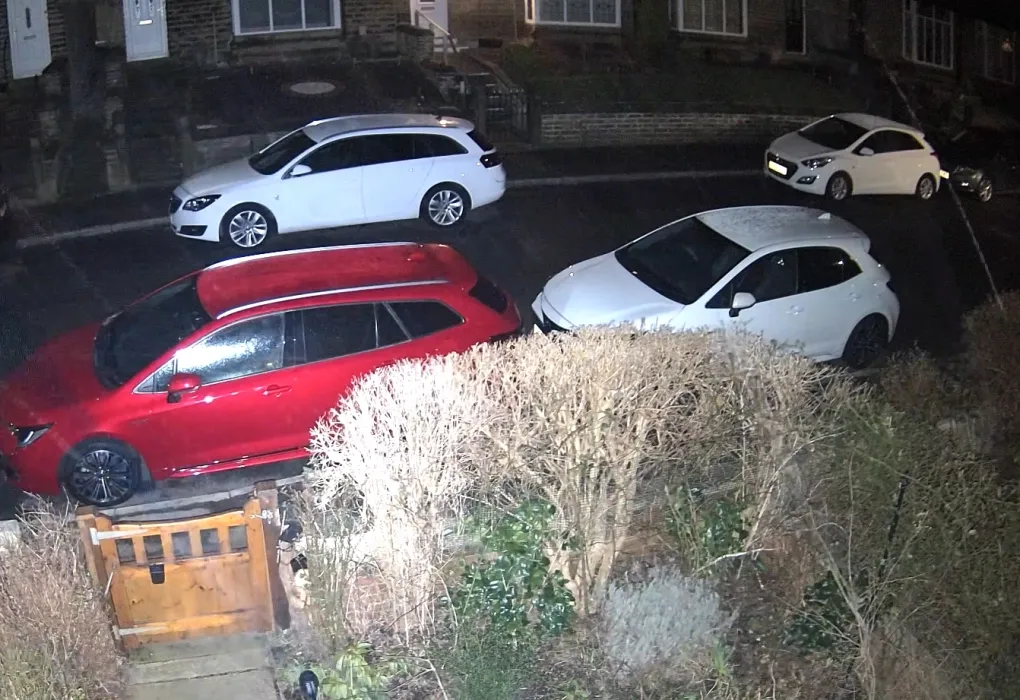
Night view from a high camera over parked cars in a residential lot, the kind of scene a Westchester County condo garage camera records
Sample frame from a Reolink camera product page (partner brand), cropped by us; not a Westchester County property. A camera mounted high above a row of parked cars at night picks out a red wagon, a white wagon and the hedge beside them in color. Elevated, wide views like this are how one camera can account for a full row of spaces in a condo garage or surface lot.
Westchester County Condo Camera Request
Board officers, association directors, managing agents, resident managers and unit owners

✅
Request Sent!
Thank you. Our office will call or text to set up a walk-through of your Westchester County building.
25+
Years Experience
2 Hr
Booking
$1,099
4-Camera System
4.7★
201 Google Reviews

Owner-run since 2002 · Crews sent from our Bronx office on Fordham Road, just south of the Yonkers line · Westchester line (914) 877-2578

The County

Westchester Condo Cameras Follow the Commute: Garage, Package Room, Lobby

Ask a Westchester condo owner how they come home and the answer is rarely "through the front door." It is through a garage under the building after the drive up the Saw Mill or the Hutch, or along a short walk from a Metro-North platform, or down a private lane to a townhouse with its own garage door. That daily route is the single most useful thing to understand before any camera goes up, because the places owners pass every day are also the places where problems in a condominium actually happen: a car window smashed on a lower garage level, a package taken from a mail room shelf, a stranger slipping in behind a resident at a lobby door, a scrape down the side of a car that nobody admits to.

The county's condo market is large and active, which keeps camera systems turning over. OneKey MLS counted 1,250 condominium sales in Westchester in the twelve months through October 2026, at a median price of $560,000, and 114 in October alone. Every one of those sales is a new owner who arrives with their own expectations about how the building is watched and who can see what. Boards that last bought cameras when the building opened are often answering to a different group of owners now, and the questions have changed: not only "do we have cameras?" but "can the agent find the clip from Tuesday, and who else can see my car?"

Westchester's building stock also explains why one camera plan does not fit every association here. Downtown New Rochelle was rezoned in 2015 under a form-based code, and the city describes a boom in residential and mixed-use construction across 279 acres of downtown since then; much of it is rental, but condo buildings sit among those towers and share streets, garages and sometimes loading areas with them. In Sleepy Hollow, The Journal News describes the redevelopment of the former General Motors plant as a "village within a village" of 70 acres with 1,177 townhomes, condos and apartments. In the north, a single Somers community lists 2,600 condos clustered into 30 condo groups. A tower, a riverfront phase and a townhouse group under a master association each need a different camera plan, and the sections below take them one at a time.

This page is written for condominiums: buildings and communities where owners hold their units and a board answers to them under a declaration and bylaws. Rental buildings with a single owner have a different decision-maker and different notice duties, and they are covered on our page about apartment building security camera installation in Westchester County. Boards looking at the whole picture, including intercoms, fobs and garage readers, can start at our condo security systems page for Westchester County, which keeps a short camera section that points back here.

Westchester facts that shape a condo camera plan

  • In October 2026 alone, 114 Westchester condos sold; over the year to that month OneKey MLS recorded 1,250 sales, with half priced above $560,000.
  • Downtown New Rochelle rezoned in 2015, with a boom in residential and mixed-use development across 279 acres of the downtown, according to the City of New Rochelle.
  • Sleepy Hollow's former General Motors plant: 1,177 homes of all three kinds, townhomes, condos and apartments, planned across 70 acres, a "village within a village" in the words of The Journal News (June 2025, updated March 2026).
  • One northern Westchester community's listing site counts 2,600 condos in 30 condo groups, each with its own association under a larger community.
  • Mid-Hudson News reported in December 2017 that the Westchester County Police Real Time Crime Center operates out of county police headquarters in Hawthorne, drawing on live traffic cameras and license plate readers among other tools.
  • In September 2026, News 12 counted at least nine vehicles with smashed windows in a Yonkers parking garage on Warburton Avenue; police said video from the garage and nearby stores linked two suspects to the break-ins.
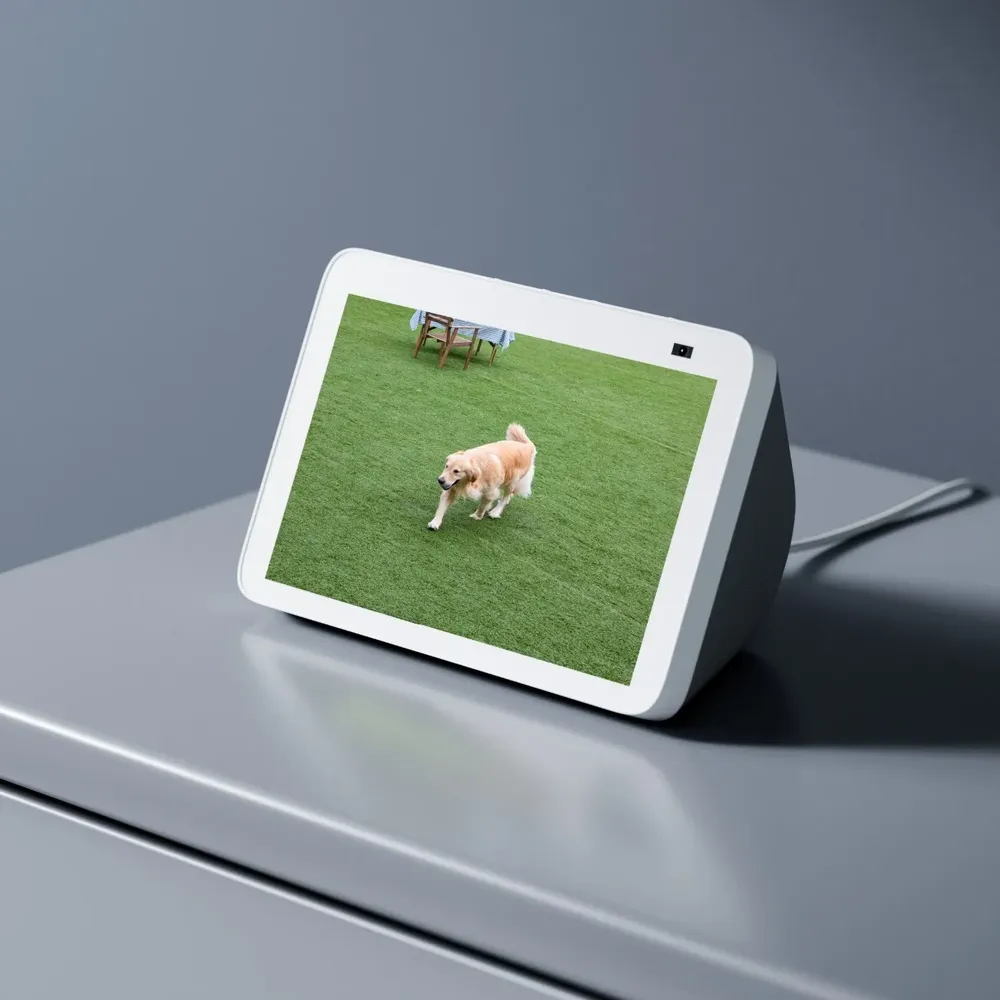
Smart display on a gray shelf showing a live camera view of a dog crossing a lawn, the way Westchester County condo board members check a camera at home
Manufacturer photo from Reolink (partner brand), not a Westchester County property: a small smart display on a gray shelf showing a camera's live picture of a golden dog trotting across a lawn. Owners and directors now expect to see a building camera from home, which is why the board has to decide who gets that access and on which cameras.
Building Types

Five Westchester Condo Settings and What Each Asks of a Camera System

Before a site visit we ask which of these a building most resembles. The answer tells us where the first cameras go, how much cable work to expect and which questions the board will face from owners.

Downtown tower over a garage

White Plains, New Rochelle and Yonkers. A structured garage, often shared with retail or a rental building, a staffed or part-time lobby desk, a package room that never empties, and an amenity floor. Garage ramps, elevator vestibules and the package room carry most of the camera budget.

Village elevator building near the station

Tarrytown, Rye, Port Chester, Mamaroneck, Larchmont, Ossining. Thirty to a hundred units, a surface lot or a single-level garage, no doorman, and a street entrance close to shops. The lobby door, the lot and the mail area are the priorities, and village review can shape what shows on the facade.

Waterfront phase on the Hudson or the Sound

Glass lobbies facing water, public walkways along the edge, and wind and spray on the exposed side. Picture quality against bright water and sky, and keeping cameras off the public path, drive the design.

Townhouse condo group in the north

Somers, Yorktown, Cortlandt, Mount Kisco, Greenburgh's hills. Private lanes, garages attached to each home, a clubhouse and pool, and often a master association above several condo groups. Distance between buildings and who controls which camera are the hard parts.

Converted or older building

Pre-war apartment houses and former offices converted to condominiums in Yonkers, Mount Vernon, Bronxville and White Plains. Plaster walls, no hung ceilings and few spare pathways make cable routing the main cost question.

Mixed-use or commercial condo

Office, medical and retail condominiums, or a residential condo with commercial units on the ground floor. The association's cameras have to cover shared doors and lots without filming the inside of another owner's business.

Most buildings mix two of these. A Tarrytown building may be a village elevator building with a waterfront side; a Yonkers tower may be a conversion with a new garage. We plan for the parts the building actually has, not for a label.

Garages

Parking Garages Under Westchester Condo Towers: Ramps, Shared Levels and the Walk to the Elevator

For a downtown Westchester condo, the garage is the real front door, and it is also where boards hear the most complaints. Owners leave cars there overnight and for days at a time while they travel, contractors and movers use it, and in many buildings the levels or the ramp are shared with a retail center, an office tenant or a rental tower next door. When News 12 reported on the Yonkers garage where at least nine cars had their windows smashed in September 2026, the detail that mattered for any condo board was the last line: police said surveillance video from the garage and nearby stores linked the suspects to the crimes. Garage cameras that are planned well turn a pile of broken glass into a timeline.

The ramp and the gate

The entry ramp is where every car arrives, so it is the one place a garage camera should be able to answer "which car, and when?" That calls for a camera aimed down the lane at the point where cars slow for the gate or the turn, not one mounted wide across the whole ramp. Headlights pointed straight into a lens wash out the picture at night, so we set the camera off-axis to the traffic, use models with wide dynamic range and adjust the shutter for moving vehicles. Where the board wants plates recorded, a dedicated narrow-view camera at the slow point does far better than asking one wide camera to do two jobs. A second camera on the exit lane finishes the record.

Shared levels and shared ramps

A condominium can only put cameras where its declaration gives it the right to, and garages are where that question gets complicated. In some towers the condo owns the garage as a common element; in others the garage is a separate commercial unit, owned by the developer or a parking company, and the residential board has rights to certain levels or spaces. Before we draw a single camera on a shared garage, we ask the managing agent for the declaration's description of the garage and any easement or shared-facilities agreement. Cameras then go where the association plainly has authority, and views that cross into another owner's levels are either masked or agreed in writing with that owner.

Elevator vestibules and the walk from the car

The garage-level elevator vestibule is the most valuable camera position in many Westchester towers. Everyone who parks passes through it, the light is steady, and people face the camera while they wait for the car. A camera there identifies people far better than any camera out on the parking deck, and it ties a person to a time even when the garage cameras only show figures between cars. We pair it with one camera on the stair door that opens into the garage, since that door is the usual way people leave without passing the desk.

Columns, low ceilings and lighting on sensors

Garage columns block sight lines and break a level into bays. Rather than chase every space, we place cameras to watch the drive aisles, where every car and every person on foot must pass, and add bay cameras only where the board has a specific problem, such as a corner where cars keep getting damaged. Ceiling height decides camera style: vandal-resistant domes tucked between beams survive the truck and van traffic that knocks bullet cameras off their brackets. Many newer garages light each bay on motion sensors to save energy, which means a camera's picture can drop to infrared until someone walks in; cameras with good low-light sensors, and a few fixtures the board keeps lit all night, solve most of that.

Moisture and exhaust

Westchester garages breathe in spring and fall. Warm, wet air rolls down the ramp, meets cold concrete and condenses on everything, including camera domes. Exhaust film builds on lenses near the ramp. We seal cable entries, choose housings with venting or heaters where the garage gets damp, keep cameras out of the direct path of exhaust fans, and add a lens-cleaning check to the maintenance schedule the board receives at handover.

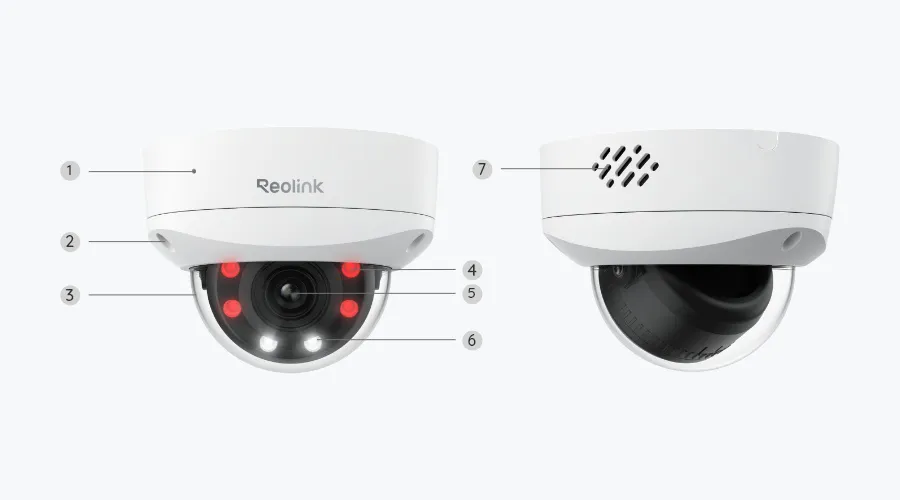
Front and rear views of a white dome camera with numbered callouts, a style used in Westchester County condo parking garages
Manufacturer product photo from Reolink (partner brand), not a Westchester County installation: a white dome camera shown from the front, with its lens, infrared and spotlight ring numbered, and from the rear. Low, rounded housings like this sit tight to a garage ceiling between beams, where taller vans and trucks are less likely to strike them.
Packages & Lobbies

Package Rooms, Mail Rooms and Lobby Desks in Westchester Condos

The package room has become the busiest common area in many Westchester condominiums, and it is the place where a camera most often settles an argument between neighbors. Late in 2024, News 12 reported that three people were charged after taking packages from a Yonkers building lobby; officials said they retrieved surveillance video that appeared to show the suspects entering and removing the packages. Lobby and package-room video works like that when it was planned with the room's actual traffic in mind.

What a package room camera has to see

Three things, in this order: the door, so every entry has a face and a time; the shelves or lockers, so a box can be followed from where the courier set it down to whoever picked it up; and the counter or bench where people open boxes and leave the packaging. One wide camera in a corner rarely does all three. In a room under about two hundred square feet, two cameras usually cover it, one looking at the door from inside and one along the shelves. Larger rooms with rows of shelving need a camera down each aisle.

Lockers, couriers and the holiday overflow

Buildings that add smart lockers often assume the locker system's own log replaces cameras. It replaces part of the job: the log says which code opened which door. The camera says who used the code and whether the person at the locker was the owner or someone standing behind them. Around the holidays, deliveries spill out of the room onto the lobby floor, and that overflow area deserves coverage too, ideally from a camera that already watches the lobby.

The lobby door and the desk

At the main entrance, one camera inside the vestibule facing the door captures faces as people step in; a second watching the intercom panel from the side records who was buzzed in and who followed. Where the building has a concierge or a part-time attendant, we lay out the desk monitor with only the views staff need during a shift, large enough to read, with the rest available on request. After the desk closes, the same cameras simply keep recording, and the board decides whether any of them should send alerts overnight.

Revolving doors, lounges and art

Several Westchester towers have a revolving door beside a swing door, a lounge with a fireplace off the lobby, or art the association owns on the lobby walls. Each changes the plan slightly. A revolving door hides faces behind glass panels as it turns, so the camera belongs past the door, looking back at people as they step out of it. A lounge where owners sit and talk is a place many boards choose not to record at all, covering only its entrances. Art is protected best by a camera that sees the wall from across the room, so a person approaching a piece is recorded walking toward it, not just their back.

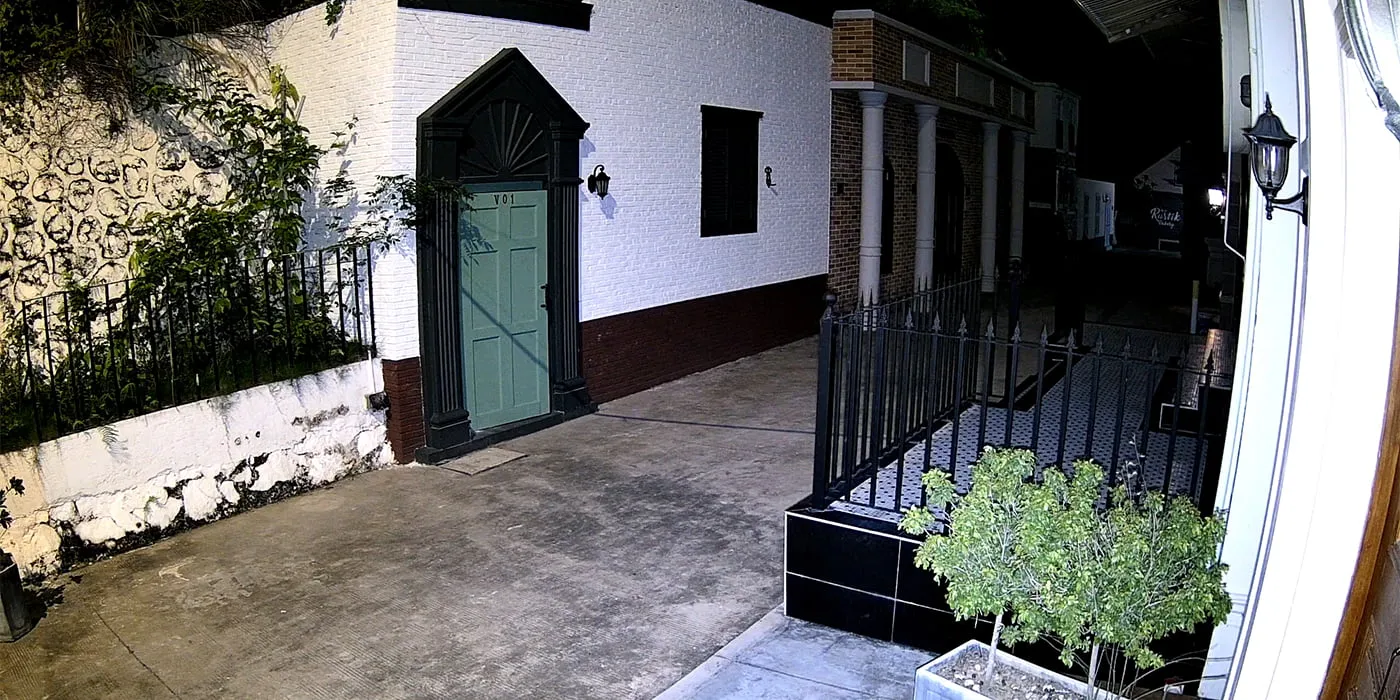
Night sample view of a courtyard entrance with a green arched door and iron railing, like the side entry of a Westchester County condo building
Night sample frame from a Reolink camera product page (partner brand), not a Westchester County property: a paved courtyard lit from above, with a green arched door set in a white wall, a black iron railing and potted shrubs. Side and courtyard doors like this are where a condo's second entrance camera usually goes.
Amenities

Amenity Floors, Roof Decks, Pools and Fitness Rooms

Westchester's newer condominiums sell on their amenities: a fitness room, a pool or a terrace, a resident lounge, a children's playroom, sometimes a screening room or a guest suite. Owners want those spaces protected, and they also expect not to be watched while they use them. A camera plan for an amenity floor has to satisfy both expectations at once.

Entrances first, rooms second

The most useful amenity camera is at the door, where a fob or key code lets people in. It records who entered and when, which answers most questions about damage, unauthorized guests or after-hours use. Inside the room, coverage depends on the room. A gym with expensive equipment and no attendant is worth a camera across the floor; a children's playroom usually is not, and many boards leave it to the door camera alone.

Places a camera never goes

Locker rooms, changing areas, restrooms and showers get no cameras, inside or pointed in through a doorway. New York's unlawful surveillance law names bathrooms, changing rooms, fitting rooms, restrooms and showers among the places where recording a person without consent is a crime, and FirstService Residential notes that state labor law separately bars video of employees in restrooms, locker rooms and changing rooms. We place the nearest camera so that the door to those rooms is outside its frame, or so that its view stops at the corridor.

Glass walls and roof terraces

Many fitness rooms and lounges have floor-to-ceiling glass. A camera behind glass at night sees mostly its own infrared reflection, so we mount amenity cameras inside the room facing away from the glass, or outside under cover looking in at the door. On a roof terrace, cameras watch the access door and the furniture area, not the skyline, the neighbors' windows or the terraces of adjoining buildings, and they are mounted where wind and maintenance crews will not knock them out of aim.

Pools

A pool camera records who came through the gate and what happened on the deck; it does not watch swimmers on anyone's behalf, and it is no substitute for the lifeguard or attendant the house rules require. We aim pool cameras to cover the gate, the deck edges and the furniture area, keeping changing cabanas and restroom doors out of frame.

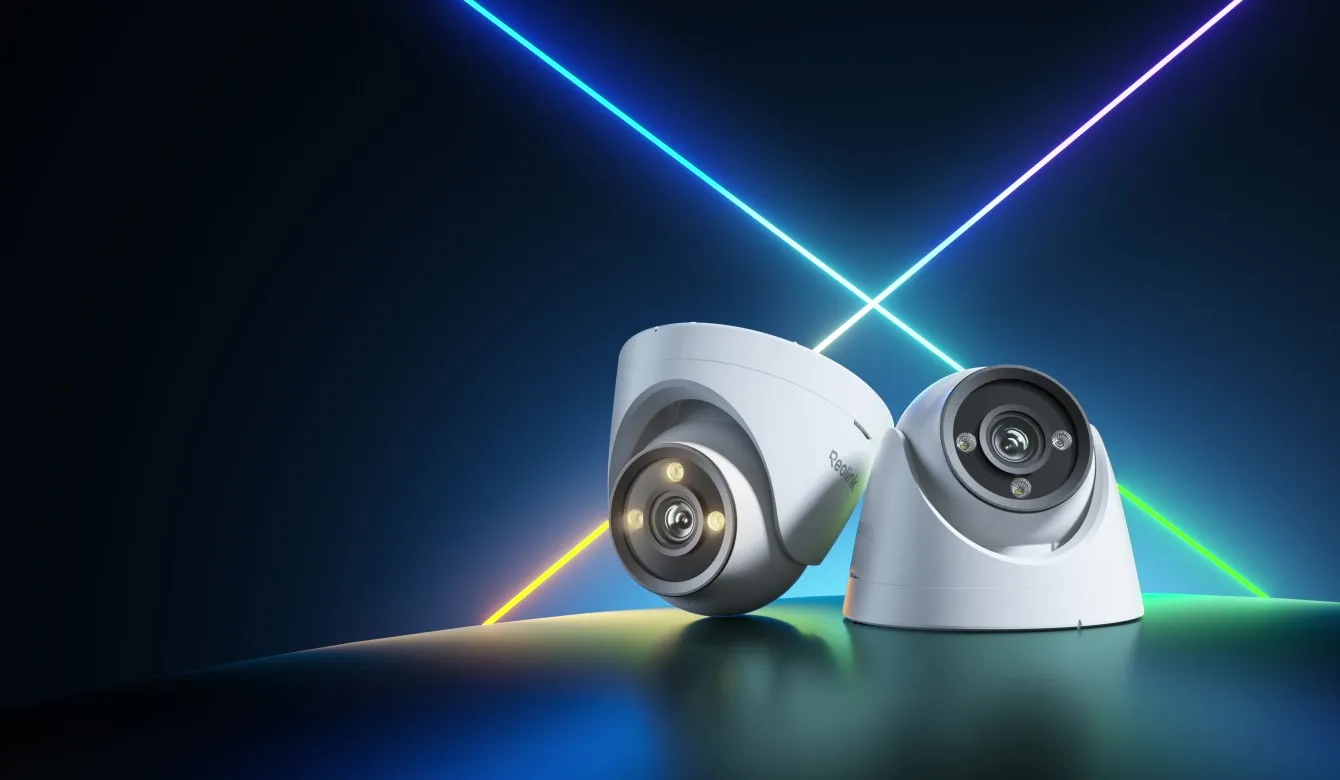
Two white turret cameras with built-in spotlights displayed on a dark stage with colored light beams, the style used at Westchester County condo amenity entrances
Manufacturer product photo from Reolink (partner brand), not a Westchester County installation: two white turret cameras with spotlights beside their lenses, shown on a dark display surface crossed by colored light beams. Compact turrets mounted near the ceiling suit amenity-floor doors, gym entrances and corridors leading to a pool or terrace.
Townhouse Groups

Northern Westchester Townhouse Condos: Many Associations, One Set of Roads

North of White Plains, the typical condominium looks nothing like a tower. It is a group of attached townhouses on private lanes, each home with its own garage door, around a clubhouse and pool, and it is frequently one of several condo groups that share roads, gates and amenities through a master association. A community with 2,600 condos in 30 condo groups, like the one in Somers mentioned above, is the extreme case, but smaller versions with three or four groups are common from Cortlandt to Greenburgh. The camera questions there are less about picture quality and more about ownership: who buys the camera, who sees the video and who pays when it breaks.

Which association owns which camera

The cameras at the main entrance, the clubhouse and the shared roads usually belong to the master association; cameras on a condo group's own buildings and parking courts usually belong to that group. We write the proposal the same way, splitting lines by owner, so that each board votes only on what it pays for. Where a group wants its cameras on the master association's recorder to save cost, the arrangement and the maintenance responsibility go into a short written agreement between the boards before installation.

Separate views on one system

One recorder or one video management system can serve several associations with each board seeing only its own cameras. The master association's manager sees the gates and amenities; each group's officers see their courts and buildings; nobody sees another group's footage without its board's permission. Setting those permissions takes an hour at installation and saves arguments for years.

Distance, terrain and the clubhouse closet

Lanes that wind up a hillside carry video a long way. Fiber between buildings, outdoor-rated cabinets at the far ends and wireless bridges where trenching is impossible all appear on northern Westchester proposals, priced link by link. The clubhouse usually holds the recorder, which is fine as long as it is in a locked, ventilated closet on a battery backup rather than on an office shelf. Our regional page on condo security camera installation in the Hudson Valley goes deeper into slopes, rock and weather across the six counties north of the city.

Private garages and lanes

An owner's attached garage is part of that owner's unit, not a common area, so the association's cameras watch the lane in front of the garages, not into them. Owners who want cameras on their own homes can install doorbells or small cameras under the community's rules; the board's cameras are for the shared property.

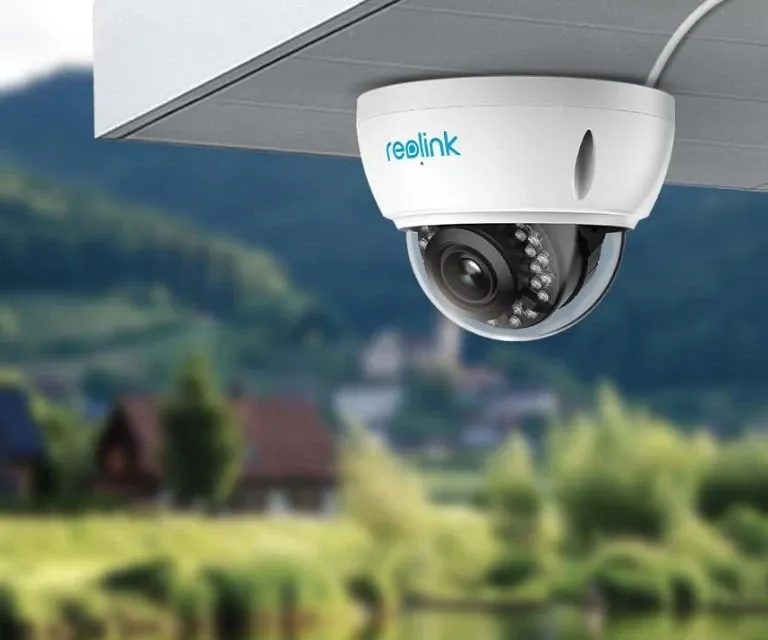
White vandal-resistant dome camera under a roof eave with a blurred green valley and houses behind it, as on a northern Westchester County condo clubhouse
Manufacturer photo from Reolink (partner brand), not a Westchester County property: a white dome camera fixed under the edge of a roof, with a soft-focus green valley, trees and a few houses behind it. An eave-mounted dome on a clubhouse or the end of a townhouse row keeps its lens out of rain and snow.
Local Reviews

City and Village Reviews That Can Touch a Westchester Condo Camera Project

Westchester is not one jurisdiction. It is a patchwork of cities, towns and villages, each with its own building department and, in many cases, its own review board for what changes on the outside of a building. Most common-area camera work never needs one of those boards. Interior cameras, garage cameras and small exterior cameras mounted under existing soffits rarely draw attention. Where a project changes what the building looks like from the street, it is worth asking first.

Facades, signs and architectural review

The City of Rye is a good example of how local review works. Its Board of Architectural Review examines "the exterior building plan design of individuals and developers," and the city says that board is also responsible for approving all signs. For a Rye condo, that makes the camera-notice signs a board may want at the entrances something to ask the building department about before ordering them. Villages along the river and the Sound have their own review boards, and some streets fall inside historic districts. When a camera, a pole or a run of exterior conduit would be visible on a front facade, we photograph the spot, mark the proposed equipment on the image and give the managing agent a short description to bring to the municipality if it asks.

Electrical work stays with electricians

Our cameras run on low-voltage cable and draw power from the recorder or a network switch, so nearly every condo camera project needs no new electrical circuit at all. When a project does need one, such as a receptacle in a new equipment closet or power at a light pole, that work belongs to a licensed electrician. Westchester County's Department of Consumer Protection states that plumbers and electricians must obtain a trade license in order to work in the county. We do not perform electrical work; the board's electrician handles any new circuit, and we coordinate the timing so our equipment goes in once power is ready.

Who may install the cameras

Installer licensing in New York runs through the Department of State. Its security license rules reach closed-circuit television and video surveillance systems that detect or watch for intrusion, which is exactly the work a condo camera project involves. Our state license is #12000287431, and any bidder a board considers should hand over its number for the board to verify before a contract is signed.

New York City's camera and building-access rules stop at the city line

Owners who moved up from Manhattan or Brooklyn sometimes ask about New York City local laws on smart access systems, tenant data or building cameras. Those laws are city laws; they do not govern a condominium in Yonkers, White Plains or anywhere else in Westchester. A Westchester condo answers to state law, its own declaration and bylaws, and whatever local codes its city, town or village has adopted. We describe the rules as we understand them for planning purposes; questions about how a law applies to a particular building belong with the association's attorney.

The Rules

New York State Law, Your Declaration and What Westchester Condo Cameras May Record

A condominium board's power to put cameras in common areas comes from its own governing documents. New York's Condominium Act describes what common elements can include, from lobbies and corridors to parking areas, and requires the bylaws to provide for the maintenance, repair and replacement of the common elements. Those documents, and the house rules adopted under them, are what make a camera in a hallway or a garage the board's decision rather than any single owner's. Writing in Habitat, attorney Andrew Lieb put the limit plainly: "A house rule that is unauthorized by these foundational documents is unenforceable." When a declaration is silent or old, boards often ask counsel before a large camera project, and we wait for that answer before installation.

Video, not audio

Common-area cameras record pictures only. New York's eavesdropping law makes it a crime to mechanically overhear a conversation without the consent of at least one party, and a lobby or garage camera recording sound would be overhearing conversations nobody consented to. We turn microphones off on every common-area camera, and the proposal says so in writing. Two-way talk features on some cameras stay disabled unless the board has a narrow, specific reason and its attorney's agreement.

Inside units, windows and doors

CooperatorNews, quoting attorney Ricardo M. Vera, observed that the law recognizes "the interior of a neighbor's unit as subject to considerable privacy safeguards." A corridor camera therefore should not look straight down a hallway into a door that opens toward it, and an exterior camera should not frame an owner's window or terrace. Where some of a unit is unavoidably in view, the recorder's privacy masking blacks out that part of the picture permanently, on live view and in every recording.

Owners' own cameras

The same CooperatorNews piece notes that condominiums typically prohibit unit owners from altering common areas on their own, and that a request for board consent is advisable before an owner mounts a camera outside their door. Many Westchester boards now have a short policy on owners' video doorbells: allowed on the owner's door, aimed at the doorway, no audio recording of the corridor. We can help a board think through placement, but the policy itself is the board's.

Staff and contractors

Building staff work under cameras every day. Cameras that cover staff work areas should cover them for the same reasons they cover everything else, never as a hidden way to supervise one person, and never in staff restrooms, locker rooms or changing areas. Visible cameras and a written camera policy shared with staff avoid most problems.

None of this is legal advice. It is the set of facts we work from when we design a system, and each one comes from a published source listed at the top of this page.

Footage

Footage Requests, Police and Westchester's Real Time Crime Center

The moment a condo camera system becomes useful is the moment someone asks for a clip, and that is also when a board without a policy gets into trouble. Owners ask for video of their car. Insurers and attorneys ask after an accident. Police ask after a break-in. Each request should go through the same short path, set before the first one arrives.

How long the video lasts

FirstService Residential reports that building footage is generally stored for 30 to 90 days, depending on the building's size. We size the recorder's drives to the period the board chooses, at the resolution and recording schedule the proposal lists, and we tell the board in plain terms how many days of video each camera will hold. A request that comes in after that period cannot be met, which is why the policy should tell owners to ask promptly.

Who can see what

The same FirstService article advises that residents should not have access to footage or copies of it without prior approval from the board and legal counsel, and that buildings should keep a log of requests and of everyone who accessed footage. In practice that means individual logins for the managing agent, the resident manager and named officers, export rights limited to one or two people, and a simple request form. We set up the accounts that way at handover.

When police ask

Westchester County Police operate a Real Time Crime Center at county police headquarters in Hawthorne; Mid-Hudson News reported in 2017 that it draws on live traffic cameras, license plate readers and shared law enforcement records. That center works with public and police systems; nothing about it gives the county a live view into a private condominium's cameras. Some cities run their own programs: Mount Vernon launched a residential camera initiative in March 2025 under which owners sign a two-year agreement and police can request access to recovered video, according to News 12. A condominium's cameras are the association's property. When an officer asks for a clip, the managing agent exports the relevant minutes, logs the request and follows whatever the board's counsel has advised about requests without a subpoena.

Telling owners and residents

Owners and renters should know the cameras exist, roughly where they are and how footage is handled. A one-page notice from the board, a line in the house rules and small signs at the main entrances cover it. Buildings with renters should make sure the notice reaches them, not only the owners who receive board mail.

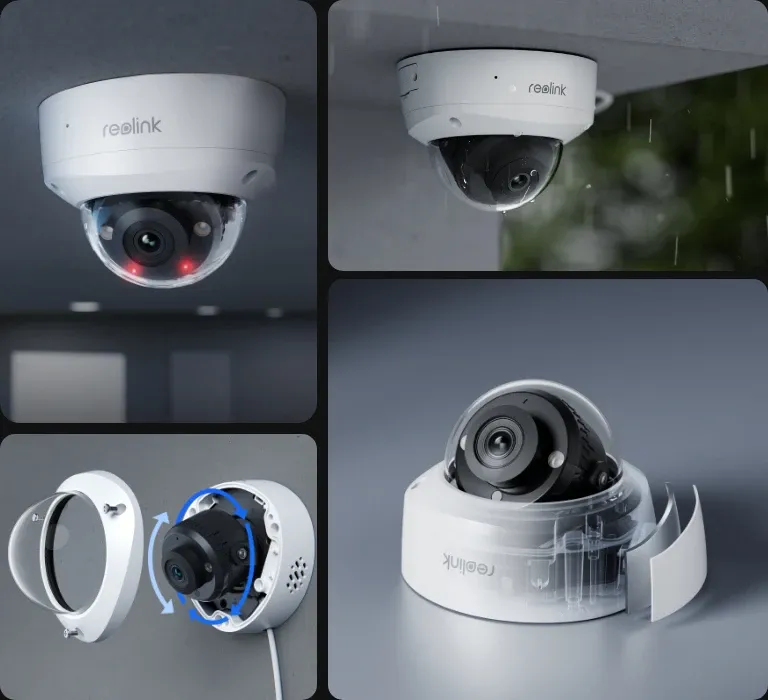
Four product views of a white vandal-resistant dome camera, including its open housing and lens module, used in Westchester County condo common areas
Manufacturer product image from Reolink (partner brand), not a Westchester County installation: four panels showing a white dome camera from below, mounted under a ceiling, opened to reveal its lens module, and in its clear-domed housing. Sealed, impact-resistant domes suit garages, stair doors and package rooms where someone may try to knock a camera away.
The System

Condo Security Camera Systems Built for Westchester Buildings

A condominium camera system has four parts that matter: the cameras, the recorder and its storage, the network and power that tie them together, and the software that lets the right people find video. A weak link in any one of them shows up as a camera that is "always offline" or a clip nobody can export.

Cameras matched to the spot

Turret cameras suit corridors, vestibules and package rooms, where they sit flush to the ceiling and give a sharp, steady picture. Vandal-resistant domes go in garages and at stair doors. Bullet cameras with a narrower lens watch ramps, gates and long lanes, and full-color night models help at outdoor entrances and parking courts lit by streetlights. Panoramic or dual-lens cameras cover a wide lobby or a terrace with one mount. Pan-tilt-zoom cameras appear only where a person will actually steer them, such as a desk watching a large plaza, because a camera that wanders on a schedule misses what happens behind it.

Bright glass and water

Westchester's waterfront lobbies and glass entrances put a dark face in front of a bright background. Cameras with true wide dynamic range, placed so the person is lit from the side or front rather than silhouetted against the window, make the difference between a face and a shape. We test each entrance camera at the worst hour of daylight for that facade before we sign off on its position.

Recorder, storage and power

Our house-brand systems record to a network video recorder owned by the association, with drives sized to the retention period in the board's policy. The recorder, its network switch and the internet router sit on a battery backup so a short outage does not erase the minutes that matter, and the recorder lives in a locked, ventilated room, not in a damp corner of the garage. The cameras run on their own network, separated from the building's office computers, amenity Wi-Fi and any resident internet service.

Finding the video

Every authorized person gets their own login in the maker's app or desktop software, with the views they need and nothing else. Detection set to people and vehicles, rather than any movement, keeps alerts limited to events that matter, and offline alerts tell the agent when a camera or drive fails. Where a building already has an intercom or an access control system that can share events, we look at linking a door event to the camera clip from the same moment.

Running cable in finished buildings

In occupied towers we route cable through existing risers, telecom closets, garage ceilings and service corridors wherever possible, and use surface raceway painted to match where nothing else works. Concealed wiring inside finished walls and ceilings is priced on its own line. Older buildings with plaster walls take more planning; we map the route on the walk-through and show the board where any raceway will be visible before anyone votes.

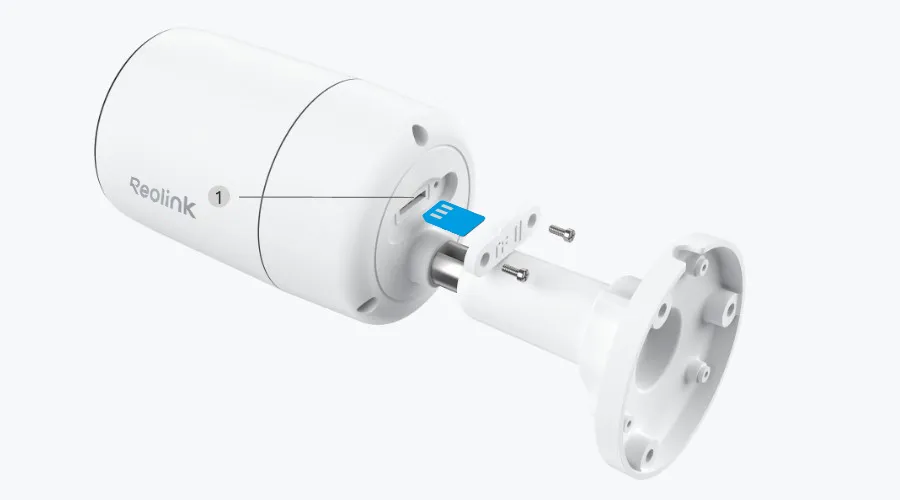
White bullet camera on its wall mount with the memory card slot open and a card being inserted, a backup feature on cameras used in Westchester County condo systems
Manufacturer product photo from Reolink (partner brand), not a Westchester County installation: a white bullet camera on its round mount, its underside panel opened to show a blue memory card going into the slot. Some cameras can keep a short onboard copy on a card; in a condo system the main recording still lives on the association's recorder in a locked room.
Brands

House-Brand System by Default; Lorex, Luminys or Reolink When the Board Asks

We quote our own non-branded system first because it gives a condominium the features it needs without a monthly cloud fee per camera: local recording to a recorder the association owns, a phone app, people and vehicle detection and remote access controlled by the board. That is the system behind the $1,099 starting price. When a board prefers a named brand, we work with Lorex, Luminys and Reolink as partner brands and install other major brands on request, quoting any subscription the brand charges as its own line. If a management company wants every building in its portfolio on the same platform, we quote that platform for the Westchester building as well.

Special-order equipment, including some brands' larger recorders and specialty cameras, is ordered only after the deposit, and the install date is set once it arrives; shipping times are outside our control, so we do not promise a date before the equipment is in hand.

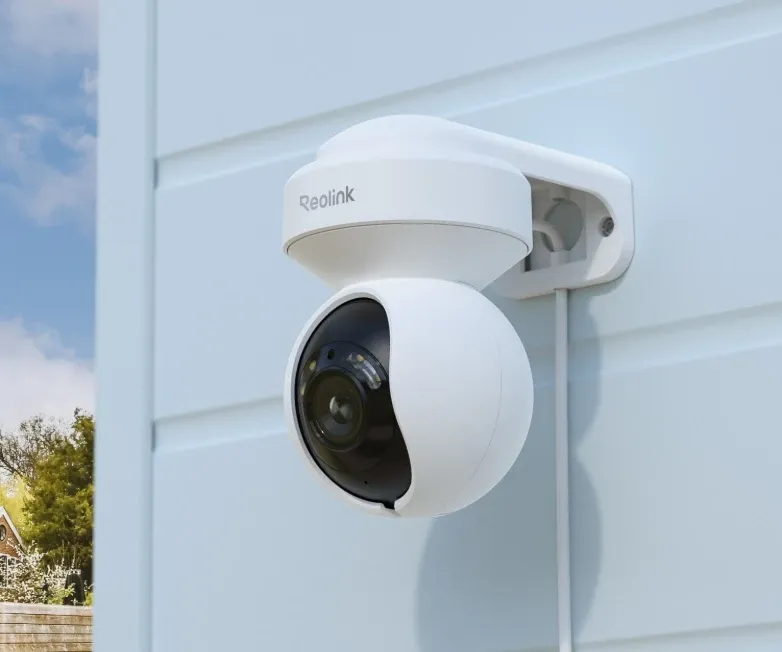
White pan-tilt dome camera mounted on a white panel wall beside blue sky, a partner-brand option for Westchester County condo boards
Manufacturer photo from Reolink (partner brand), not a Westchester County property: a white pan-tilt camera with a round head hanging from a wall bracket on smooth white panels, with sky and trees at the left edge. A camera that can be steered from the app suits a plaza or lot a staff member actually watches.
Approval

Getting a Camera Plan Through a Westchester Condo Board

Condo boards in Westchester tend to meet monthly, with a budget season in the fall and an annual meeting where owners raise whatever has been bothering them. A camera project moves fastest when the board has everything it needs to vote at one meeting.

The packet we prepare

  • A floor plan or site plan with every camera marked and numbered.
  • One sentence per camera explaining what it is for.
  • Sample images from similar positions so directors can see what a camera at that height will show.
  • Itemized prices: the starting package, each added camera, concealed wiring, garage or long-distance links, storage and any brand subscription.
  • The retention period the drives are sized for, and who will hold logins.
  • Anything that could change the price, such as cable that fails testing or a closet that needs power.
  • A draft owner notice the board can edit.

Paying for it

Associations pay for camera systems in different ways: from the operating budget, from reserves, through a special assessment, or in phases over two budget years. Many declarations say how improvements and reserves may be used, so the treasurer and the managing agent usually settle the funding question before the vote.

Sponsor-controlled buildings

In a newer building where the sponsor still holds unsold units and board seats, a camera project often waits for the transition to an owner-controlled board, or proceeds with the sponsor's agreement on who will hold the administrator login afterward. Either way, the login should end up with the association, not with the developer's integrator.

Pricing

Condo Security Camera Installation Cost in Westchester County

Being a board earns neither a surcharge nor a separate price list: condominiums are charged the same Westchester County camera prices as houses and businesses. Four house-brand cameras and a recorder, installed, start at $1,099, and the full list of Westchester packages, including higher-resolution, full-color and network-recorder systems, is on our Westchester County security camera pricing page. A treasurer can hold our proposal against that page line by line.

Line on a Westchester condo proposalHow it is priced
Four house-brand cameras and a recorder, installed$1,099
Each camera after the first fourPriced per camera once we confirm the layout, since height, ceiling type and cable path differ from spot to spot
Concealed wiring inside finished walls and ceilingsQuoted per camera: $200 each where the hidden run is 100 feet or less, the figure on our Westchester price page, with anything longer priced at the walk-through
Garage levels, ramps and elevator vestibulesItemized per camera with mount type; vandal domes and narrow-view ramp cameras shown separately
Links between buildings or to far lotsFiber, wireless bridge or cable listed one link at a time with distance and method
Recorder size and drivesDrive capacity chosen to hold the board's number of days at the planned camera count and resolution
A named brand instead of the house systemPriced on request, with any recurring brand fee broken out
Cameras the association already ownsLabor only, quoted by phone or text

What moves a Westchester number

Two things drive most of the difference between the package price and a full proposal here. In towers it is the garage: how many levels, how many ramps, and whether cable can ride in an open garage ceiling or has to be hidden. In townhouse communities it is distance, because every far court or gate needs a link back to the recorder. A village elevator building with a lobby, a mail room and a small lot often comes in closest to the package prices.

Cameras the association already bought

Boards sometimes arrive with cameras a committee already bought. In that case the work is quoted as labor alone, over the phone or by text, using the model numbers and a list of the spots to cover, and the date is set when the deposit comes in. Walk-throughs are not part of that service, and the association's own equipment, including the signal strength of any wireless models, stays the association's responsibility.

Warranty and terms

Three kinds of coverage apply and are worth keeping apart. Our website lists a 30-day warranty on an installed system; one-year and longer warranty plans are paid add-ons a board can choose at signing; and the cameras, recorder and drives carry their manufacturers' own warranties. Full terms — including 50% deposit, one-year parts-only warranty on Abstract Enterprises Security Systems-supplied products, and the late-fee schedule — are set out in the service agreement.

Financing is available through Wisetack, subject to approval.

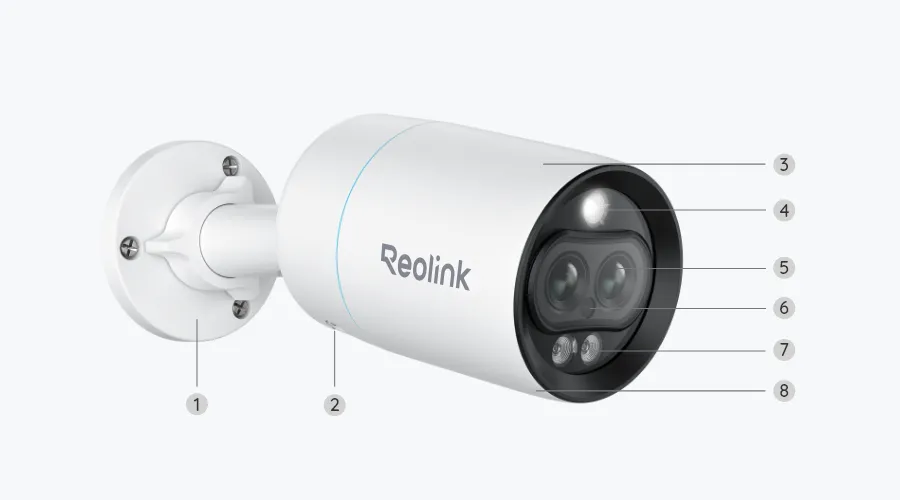
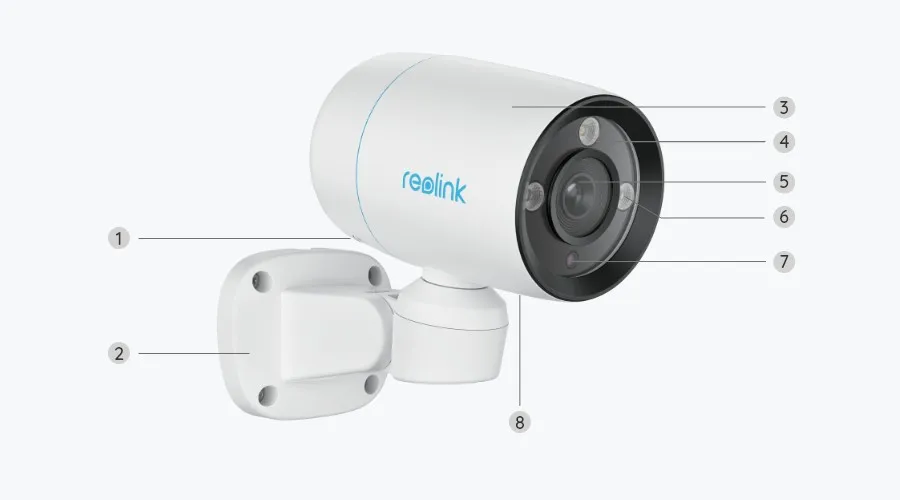
White dual-lens bullet camera on a wall mount with numbered callouts, priced per camera on Westchester County condo proposals
Manufacturer product photo from Reolink (partner brand), not a Westchester County installation: a white bullet camera with two lenses, a spotlight and infrared lights on a round wall mount, with eight parts numbered. A dual-lens camera covers a wide lot or lane from one mount, which can reduce the camera count on a proposal.
Get In Touch

Request a Camera Plan for Your Westchester County Condo

A few details help us arrive prepared: the city, village or town, how many units the condominium has, whether parking is a garage, a surface lot or private garages, and what the board most wants recorded. Floor plans or a site plan are welcome; we mark likely camera positions before the visit. Prefer to talk? Call or text (914) 877-2578.

✅

Request Sent!

Your request is in. Someone from our office will be in touch by phone or text, normally inside two hours, to book a visit to the Westchester County property.

Across the County

From Yonkers to Somers: How Condo Camera Work Changes Across Westchester

Our crews travel the whole county from the Bronx office. The work changes as they go north, and so does what boards ask for first.

Yonkers and Mount Vernon

Southern Westchester's two big cities hold the county's densest mix of older apartment houses converted to condominiums, new towers near Getty Square and the waterfront, and smaller condo buildings on residential blocks. Car break-ins in garages and lots, package theft and doors that do not latch are the usual opening complaints. Older buildings mean plaster walls and tight risers, so cable routing gets the most attention on the walk-through, and garages built decades ago often need lighting fixes before the cameras can do their job at night.

White Plains

Downtown White Plains is tower country, with condominium residences above or beside offices, hotels and retail, and garages that may serve all of them. Camera plans here start with the garage and the elevator vestibules, then the package room, the lobby and the amenity floor. Boards in mixed-use towers spend more time than most on which parts of the garage and loading areas the condominium actually controls.

New Rochelle and the Sound Shore

The 2015 downtown rezoning brought new towers to New Rochelle, and older condominium buildings along the Sound in Larchmont, Mamaroneck, Rye and Port Chester sit close to busy commercial streets and to the water. Village elevator buildings with a surface lot are common. Salt air shortens the life of cheap outdoor hardware near the shore, and low-lying lots on the Sound Shore are a reason to keep recorders off garage floors and basement slabs.

The river towns

From Hastings-on-Hudson and Dobbs Ferry through Irvington, Tarrytown, Sleepy Hollow, Ossining, Croton-on-Hudson and Peekskill, condominiums mix renovated older buildings with large new riverfront phases. Bright water behind west-facing entrances makes picture quality the first technical issue, public riverfront paths beside private grounds make camera aim a privacy issue, and phased construction means the system has to grow as new buildings open.

Central Westchester

Greenburgh, Scarsdale, Eastchester, Harrison and the Valhalla and Elmsford areas hold garden-style condominiums, mid-rise buildings near the Harlem Line and townhouse communities on hillsides. Surface parking, mail areas and clubhouse pools lead the lists, and wooded edges call for detection settings that ignore deer and swaying branches.

Northern Westchester

Mount Kisco, Bedford, Yorktown, Somers, Cortlandt, North Salem and Lewisboro are townhouse and garden condo territory, often with a master association above several condo groups. Long private lanes, a gatehouse or entry sign far from any building, and clubhouses holding the recorder make distance and ownership the main design questions, as described in the townhouse section above.

How It Works

Seven Steps From First Call to Handover for a Westchester Condo

A two-camera addition to a recorder that already works moves quickly once signed. A full garage-and-lobby system for a two-hundred-unit tower may go through two board meetings. The order of events is the same either way.

1

First contact

Whoever reaches out first, whether a director, the agent, the resident manager or an owner, gets a walk-through on the calendar inside 2 hours. Visits run every day of the week, each with a two-hour arrival window, and early slots go out first.

2

Walk-through with the agent or a director

We walk the garage, the lobby and package room, the amenity floor and the exterior, open the closet where a recorder could live, and test any existing camera cable we might reuse.

3

Written plan and itemized price

The board receives the marked-up plan, the purpose of every camera, sample views, the retention period, and every price as its own line, along with anything that could change the total.

4

Board vote and deposit

When the board has voted as its bylaws require, the agent or an authorized officer signs and pays the deposit, and only then do we order equipment. The managing agent receives our certificate of insurance on award, listing the parties its requirements name.

5

Notice to owners and residents

We draft a one-page notice with the work dates, the areas affected and any garage spaces that need to be cleared, and the agent sends it to owners and renters.

6

Installation and setup

The crew runs cable, mounts cameras, installs the recorder, switch and battery backup, and sets every view by day and after dark. Microphones are disabled, private areas masked, and detection and alerts configured.

7

Handover to the association

Personal logins go to each authorized person, along with a short walkthrough of searching and exporting clips. The association gets a camera map with a reference picture for each view, and the administrator credentials are registered in its name.

Projects are scheduled first come, first served, in the order deposits arrive. A proposal holds no date until it is signed, and special-order hardware gets a date only once it is here.

Existing Systems

Taking Over, Extending or Replacing a Developer-Installed Camera System

Most Westchester condominiums we visit already have cameras. In newer buildings the developer's integrator installed them, sometimes on a cloud platform billed per camera, and the administrator login left with that integrator when the sponsor turned the building over. In older buildings a past board bought a recorder and added cameras over the years. The next step depends on what can be kept.

Taking control back

The first job is often just getting into the system: recovering or resetting the administrator account, documenting what each camera sees, replacing a failed drive and setting up proper accounts for the agent and the officers. When that is all a building needs, our Westchester County security camera repair service handles it like any other repair call.

Extending what works

When the recorder is current and the cameras are sound, we add coverage where the original plan fell short: the second garage level, the package room the developer added later, the stair door everyone props open. A recorder without spare channels may need a larger model or a second unit on the same network.

Replacing it

Recorders that no longer receive firmware updates, analog cameras whose night picture is unusable, or a cloud system the board no longer wants to pay for per camera are reasons to replace. Often the existing cable can be tested and reused, which keeps the cost down. Buildings that still run older coaxial cameras and want to stay with that kind of system can read our CCTV installation page for Westchester County, and boards that want the general picture of camera options for any property can see our Westchester County security camera installation page.

White bullet camera on a junction box mount with numbered callouts, used when replacing older cameras at Westchester County condos
Manufacturer product photo from Reolink (partner brand), not a Westchester County installation: a white bullet camera on a matching junction box, with its lens, lights and mounting parts numbered. A junction box gives the cable connection a sealed home on the wall, which helps when a new camera goes onto an old mounting spot.
On Site

Installing Cameras in an Occupied Westchester Condo

Our crew arrives inside the scheduled two-hour window, never early, checks in with the desk, the resident manager or the agent, and follows the building's rules for contractors, including elevator padding, certificate requirements and work hours. In garages we work level by level so owners can still park, with cones around ladders and lifts, and the notice tells owners which spaces need to be empty on which day. Lobby and package-room work is planned around the hours when deliveries and residents are lightest.

Residents often stop the installers to ask what a camera will show, and the crew is happy to explain. Anything beyond explaining, such as re-aiming a camera, moving it or adding one by a particular unit, is referred to the board that approved the plan. No one's unit has to be entered for common-area work. Patching and painting are not part of our scope, so wherever old brackets come off or a new path leaves marks, the proposal says who takes care of the finish.

Planning

Typical Camera Counts for Westchester Condo Properties

Before anyone visits, directors like to know roughly how big a system they are discussing. The ranges below are drawn from the Westchester properties we walk and count common areas only. Treat them as orientation rather than a quote or a statistic, since the real figure is set on site.

PropertyTypical rangeWhere the cameras go
Small condo building, under about 20 units4 to 8Front door, mail area, rear or side door, lot or driveway
Village elevator building, 30 to 100 units8 to 20Lobby and vestibule, mail and package room, elevators, lot or single-level garage, service and stair doors
Downtown tower with a structured garage24 to 60Ramps, garage drive aisles, elevator vestibules on each garage level, stair doors, lobby and desk, package room, amenity entrances, roof terrace
Waterfront phase with public walkway16 to 40Entrances facing the water and the street, garage, package room, amenity deck, perimeter where private grounds meet the path
Townhouse condo group, 50 to 200 homes12 to 32Main entry sign or gate, mail kiosk, every parking court, clubhouse entrances, the pool enclosure, the maintenance garage
Office or medical condominium8 to 24Shared lobby, elevators, shared lot or garage, loading door, building perimeter

A garage with several levels or two ramps pushes a tower toward the top of its range; a building that phases the amenity floor into a later year lands lower. In townhouse communities, the number of separate parking courts matters more than the number of homes.

AI Overview Reality Check

What Generic Camera Advice Gets Wrong About Westchester Condominiums

Plenty of what boards read about cameras comes from search summaries, chatbot replies and national cost sites such as Angi, HomeAdvisor and Fixr, written for one house or one storefront. In a Westchester tower or townhouse community, some of those standard claims steer boards wrong. Here are seven that come up on our walk-throughs, and what we actually find.

"The more cameras a building has, the safer it is"

A camera count is not a measure of safety. A building with forty cameras that nobody can search, aimed at blank walls and parking spaces, is worse off than one with sixteen cameras at the doors, vestibules and ramps where every person must pass. We start from the paths people take and add cameras only where each one has a stated job. Boards are often surprised to see a proposal recommend fewer cameras than the system they are replacing.

"Put a camera on every parking space to stop car break-ins"

Space-by-space coverage in a structured garage is expensive and still misses the person between cars. The cameras that solve garage cases are the ones on the ramps, the drive aisles, the stair doors and the elevator vestibules, because that is where a person's face and a car's arrival are both recorded. The Yonkers garage case in 2026 was linked to suspects with video from the garage and nearby stores, not from a camera over each space.

"Smart package lockers make package-room cameras unnecessary"

A locker log shows which code opened which door. It cannot show who was holding the phone, whether someone followed the owner in, or what happened to the boxes that did not fit in a locker. Lockers and cameras answer different questions, and in a busy Westchester mail room both are useful.

"Dummy cameras deter crime just as well and cost almost nothing"

A fake camera produces no evidence when something happens, and an association that displays cameras may find owners assume they are recording. When a car is damaged or a package goes missing and the board has to admit the camera was a prop, the cost shows up in owner trust and sometimes in claims. Real cameras at fewer positions are the better use of the same money.

"With night vision, the lighting doesn't matter"

Infrared night vision turns a dark garage bay or parking court into a gray picture with little detail on clothing or car color, and bright fixtures pointed at a lens can blind it. Steady, even lighting at entrances, vestibules and aisles gives cameras a color picture after dark. On many projects the cheapest improvement to video quality is a lighting change the board's electrician makes, not a more expensive camera.

"Any camera that works with an app can be added to the building's system"

Consumer cameras that connect through their own cloud app usually cannot record to a building's recorder, cannot be managed from the same software and may not support the standard protocols a recorder uses. Before an association buys extra cameras on its own, it is worth checking with us that they will work with the recorder it already has; otherwise the building ends up with two systems and two sets of logins.

"Once it's installed, a camera system runs itself for years"

Drives wear out, firmware needs updating, lenses collect film in garages, and cameras get bumped out of aim by movers and maintenance crews. A system nobody checks fails quietly, often discovered only when someone asks for a clip. Offline alerts, a periodic check of every view and a scheduled look at drive health keep it honest; our security camera maintenance service in Westchester County covers that work for associations that want it on a schedule.

Questions We Hear

Questions Westchester Condo Boards, Agents and Owners Ask Us

Owners leave cars in the garage for weeks while they travel. Can the cameras keep an eye on a car that hasn't moved?

They can record it, but a camera will not reliably tell anyone that a parked car has been touched. What helps is placing the drive-aisle cameras so every space is at least in the background of one view, and turning on person detection for the garage after midnight, so a figure walking between parked cars at 3 a.m. sends a clip to the agent. When an owner returns to damage, the agent can then search by time and area rather than scrolling through days of video.

Our package room overflows around the holidays, and boxes end up on the lobby floor. Where should the cameras point?

Keep the package room cameras on the door and the shelves, and make sure one lobby camera takes in the area where overflow is stacked. If the building sets up a temporary holding spot, such as a corner of the lounge or a cart by the desk, we can add a camera there for the season or adjust an existing camera's view. The board's house rules on where couriers leave boxes help the cameras do their job.

Every spring, moisture in our garage fogs the camera domes. What prevents it?

Condensation forms when warm, humid air meets a cold camera housing. Sealing the cable entry so air cannot get inside, using housings with built-in heaters or vents, and keeping cameras away from the direct stream of air coming down the ramp all help. Garage ventilation that runs properly matters too, and a lens check in early spring belongs on the maintenance list.

Our lobby has a fireplace lounge where owners sit and talk. Should that room be recorded?

Many boards decide not to record the inside of a lounge, because owners use it as a living room and expect privacy there. Covering the lounge's doorways from the lobby side records who came and went without watching conversations. If the room holds valuable furnishings or has had damage, a single camera on the room with audio off is an option the board can weigh.

Are stairwell cameras worth it in a high-rise condo, or only at the stair doors?

In most towers, cameras at the stair doors on the lobby and garage levels do the important work, because those are the doors people use to enter or leave without passing the desk. Cameras inside the stair shaft on every floor add cost and are rarely reviewed. A building with a specific problem in one stairwell, such as loitering or smoking on a particular landing, can add a camera there.

Lights in our garage only come on when someone moves. Will the cameras record in the dark stretches?

They will record, but in infrared until the lights switch on, which means a gray picture for the first moments of anyone's approach. Cameras with strong low-light sensors narrow that gap, and asking the board's electrician to keep a few fixtures lit around ramps, vestibules and stair doors all night removes it where it matters most.

We are adding smart package lockers in the mail room. Where should the camera go relative to the lockers?

Across from the locker bank, high enough to see over anyone standing at it and angled so a person's face is visible as they enter the code. A camera directly above the lockers sees only the tops of heads. We still keep a camera on the room's door, since the lockers do not record who walked in behind the owner.

At night our fitness room camera sees only its own reflection in the glass wall. What causes that?

The camera's infrared lights bounce off the glass straight back into the lens. Moving the camera inside the room facing away from the glass, or mounting it so the lens touches the glass with a rubber shroud, solves it. Turning off the camera's built-in infrared and relying on the room's lighting also works if the room stays lit.

Our designer wants dim, warm lobby lighting in the evening. Will the cameras still give a clear picture?

Usually, if the lobby cameras are chosen with that lighting in mind. Current cameras with large sensors produce a color picture in light that looks dim to people, as long as faces at the door are lit from the front or the side. The trouble comes from strong backlight, such as a bright vestibule behind a dark lobby, or fixtures aimed into a lens. We look at the lighting plan, or visit after dark, and place or adjust cameras so the design and the video both work.

Our lobby has a revolving door next to a swing door. Where does the entrance camera go?

Inside, past both doors, looking back toward them at about the height of a door frame. People coming out of a revolving door face forward and are clear of the glass panels, so the camera catches faces there rather than through the turning glass. A second, wider camera can cover the swing door and the sidewalk approach.

Our garage attendant keeps owners' car keys in a lockbox at the podium. Should a camera cover it?

It is a good idea, both to protect owners and to protect the attendant. A camera that sees the lockbox and the podium shows who opened it and when. If the attendant works for an outside parking company, the board should agree with that company on who can view the footage before the camera goes live.

The association owns paintings and sculpture in the lobby. How should cameras protect them?

Place the camera across the room from each piece so it records a person approaching, not just their back once they are in front of it. Keep the picture wide enough to show where the person went next. For a particularly valuable piece, the board's insurer may have its own recommendations, and the cameras can be placed to support them.
Related Pages

More Westchester County Pages for Condo Boards and Managers

This page sits under our Hudson Valley condo camera overview, linked in the townhouse section above, which compares the six counties north of the city. Boards replacing a worn lobby panel or gate intercom can read our guide to condo intercom replacement, written for condominium boards and unit owners rather than rental landlords.

  • Every camera package and price for the county: Westchester County camera packages.
  • Cooperative housing corporations in the county get a dedicated camera page shortly (co-op security camera installation in Westchester County); for now much of the planning above carries over, though co-op boards act under a proprietary lease and corporate bylaws rather than a condominium declaration.
  • Coverage terms in full: our warranty page.
From the Field

Field Notes From Westchester Condo Camera Walk-Throughs

Three situations come up again and again in Westchester condominiums. The first belongs to newer buildings: cameras installed by the developer's integrator on a cloud service billed per camera each month, with the administrator account still in the integrator's name years after turnover. The board pays the bill but cannot add a user, change a view or export more than a short clip. Untangling that, and often moving the cameras onto a recorder the association owns, is a common first project.

The second is the garage ramp camera mounted straight down the lane. It looks right on a floor plan, and in daylight it works. After dark, every arriving car is a pair of white circles. Owners discover this the first time they need a clip of a car coming in at night. Moving the camera to the side of the lane and adding a second view of departing cars usually fixes it for the cost of a service visit and a bracket.

The third is the package room camera placed over the door, looking into the room. It shows the shelves well and records the back of everyone who walks in. The face is always on the other side. Turning that camera around, or adding one inside facing the door, is a small change that makes the room's video useful.

Comparing Bids

Comparing Condo Security Camera Installation Companies in Westchester County

Westchester boards and managing agents usually collect two or three bids, and the totals are hard to compare when one bidder counts fewer garage cameras, leaves out cable concealment or sizes storage for a week instead of a month. Asking every bidder the same questions puts the proposals side by side. Here are the questions we would ask, and how we answer them.

Question for every bidderHow we answer
Does the proposal show each camera's position and purpose?Yes. Every camera is numbered on the plan with one sentence on its job.
How are the garage ramps and elevator vestibules covered?With cameras placed for faces and vehicles at the slow points, listed separately.
How many days of video will each camera keep?Written as a number of days per camera, with storage bought to reach it.
Is concealed wiring included or extra?Listed separately: $200 a camera for up to 100 feet of hidden run, with longer distances priced at the visit.
Who holds the administrator login after installation?The association. We have no remote access unless the board invites us.
Will microphones be turned off?Yes, on every common-area camera.
Is there a monthly fee?The house-brand system has none; a brand with a cloud plan shows that fee as its own line.
Will the system warn someone when a camera or drive fails?It will. The managing agent and one named officer receive camera-offline and drive-failure notices.
What is your New York State license number?#12000287431.
When does the managing agent receive your certificate of insurance?On award, naming the parties the agent's requirements list.

Our Bronx office on Fordham Road sends the crews for Westchester jobs, with Brooklyn and Queens locations behind it, and the company holds a 4.7-star rating from 201 Google reviewers. Equipment is bought and owned by the association; our role is design, installation and service. Live video monitoring, remote doorman programs and electrical contracting are not services we offer.

Frequently Asked Questions

Westchester County Condo Security Camera FAQ

What does the $1,099 Westchester package include, and what does a garage usually add?
+

The $1,099 package is four house-brand cameras and a recorder, installed, the same starting price shown on our Westchester County camera price page. A condominium with a garage usually adds cameras at the ramps, the drive aisles, the stair doors and the elevator vestibule on each parking level. Each of those is priced per camera once we confirm the layout, and concealed wiring is $200 per camera for runs up to 100 feet.

Will the cameras identify people who wear hoods and masks in our lobby?
+

Not always by face, and no camera can promise that. What a well-placed system does is record height, build, clothing, shoes, bags, the direction a person came from and left in, and the time at every camera they passed. Investigators often connect those details across several cameras and nearby businesses. Cameras at eye-level positions such as vestibules and elevator lobbies give the best chance of a usable face when a mask slips or comes off.

Can the board use hidden or disguised cameras in common areas?
+

We install visible cameras in common areas, and we recommend boards stay with them. Visible cameras deter, owners know they exist, and the board's camera policy can describe them openly. Covert recording raises privacy and legal questions that belong with the association's attorney, and hidden cameras in places such as restrooms or changing areas are a crime under New York law.

Can the board show clips of an incident at an owners' meeting?
+

That is a board policy question, and many boards decide against it. Showing a clip that identifies a resident or a guest to a room full of neighbors can create privacy complaints and disputes the board did not intend. A common approach is to describe the incident and its outcome at the meeting while keeping the video with the managing agent, the board and, where relevant, the police or the insurer.

We are switching internet providers next month. Will the cameras keep working afterward?
+

Recording continues, because the cameras record to the recorder in the building, not to the internet. What changes is remote viewing and alerts, which depend on the recorder reaching the internet through the new provider's equipment. After the switch, the recorder's network settings may need updating, and we can do that on a short visit or walk the managing agent through it.

Can the cameras be used to enforce a no-smoking rule in the garage or on the roof deck?
+

They can show who was in a place at a given time, and if the person is visibly smoking, the video supports the board's enforcement of its house rules. Cameras cannot detect smoke or vapor on their own. The board should make sure its rules and camera policy allow footage to be used for rule enforcement before relying on it.

How many cameras does one garage level need when columns block the view?
+

Fewer than most boards expect, because cameras should cover the drive aisles, where every car and every person must pass, rather than each parking bay. A typical level with one aisle loop takes two to four aisle cameras plus one at each stair door and the elevator vestibule. Bays with repeated problems can get their own camera later.

Will running camera cable set off the building's fire alarm or touch the sprinklers?
+

It should not, and we plan so it does not. Camera cable is low-voltage work that stays clear of fire alarm devices and sprinkler piping, and we never fasten to either. Where drilling near a smoke detector could raise dust, the managing agent arranges with the building's fire alarm company to cover or bypass that device for the day, and the alarm company restores it afterward.

Is a condo camera system different from an apartment building camera system?
+

The equipment can be the same, but the decisions are not. In a condominium the board answers to owners under a declaration and bylaws, footage access is governed by board policy, and costs are often split between associations or paid from reserves. A rental building has one owner who decides alone and has its own notice duties to tenants. The plan, the approvals and the handover differ even when the cameras match.

How do you mount cameras high on the outside of a condo tower?
+

Most exterior cameras on a tower go on the lower floors, the garage entrance, the plaza and the roof, where they can be reached from a ladder, a lift or the roof itself. When a camera has to go higher on a facade, we look first for a terrace, balcony edge or setback the association controls. Work that needs suspended access from the roof is planned with the building's management and its facade or window-washing contractor.

Can a camera alert someone when a car drives the wrong way on the garage ramp?
+

Many current cameras support line-crossing rules that trigger only when a vehicle crosses a line in one direction. On a ramp, that can send an alert or save a marked clip when a car enters through the exit lane. It works best where the lane is clearly separated and lit, and we set the rule and test it with the managing agent before relying on it.

Our managing agent has written rules for contractors working in the building. Will your crew follow them?
+

Yes. Send us the building's contractor or alteration rules with the signed proposal, and we follow them: certificate requirements, permitted work hours, elevator reservations and padding, parking and loading instructions, and any check-in procedure at the desk. If a rule affects the schedule or cost, we raise it before the work is booked.

All Areas Served

Condo Camera Pages Across the Hudson Valley, New York City and Long Island

On the west side of the river, see condo security camera installation in Rockland County; for communities around Newburgh, Middletown and Monroe, see condo security camera installation in Orange County. Pages for Putnam, Dutchess and Ulster counties are being written (condo security camera installation in Putnam County, Dutchess County and Ulster County). Managing agents with buildings in the city can start at condo security camera installation in NYC or go to a borough: Manhattan, Brooklyn, Queens, the Bronx or Staten Island. On Long Island, see the Long Island overview, Nassau County and Suffolk County. The regional overview for this county is condo security camera installation in the Hudson Valley.

One Camera Plan for Your Westchester County Condominium

Ramps, vestibules, the package room and the lobby on one recorder the association owns, with a written purpose for every camera and video the board can actually find. Westchester County systems start at $1,099 for four cameras, installed. NYS license #12000287431 · 4.7 stars from 201 Google reviews.