What are you looking for?
About Us Contact Us Careers Get a Free Quote (800) 486-0943
Pick a service
✅ Got Your Own System?
🎬 Home TheatreQuote 🎶 AV SoundQuote 🔑 Access ControlQuote
Now pick your area
Pick your area
Long Island
Hudson Valley
Services available
Pricing & Tools
Pick a service for pricing
🚪 Intercom Pricing 🔔 Buzzer Repair Pricing
Calculators
📹 Camera System Calculator 🚨 Alarm Calculator ⚡ Cabling Quote Builder ✅ Got Your Own System?
Select your area
Catalytic converters cut in the carport, a lobby recorder nobody can open, a gate camera that only shows headlights? Nassau County condo boards, HOAs and managing agents can call or text (516) 346-5778
Home › Condo Security Camera Installation Long Island › Condo Security Camera Installation Nassau County
For Nassau County Condo Boards, HOAs, Unit Owners & Managing Agents · Served From 1282 Troy Ave

Condo Security
Camera Installation
in Nassau County

Garden Complexes · Station Mid-Rises · Gated Communities · Harbor & Beach Buildings · Carports & Garages

Condo security camera installation in Nassau County starts at $999 for a four-camera house-brand system with a recorder, installed, and every camera an association needs beyond those four is priced once we have confirmed the layout on site. Abstract Enterprises Security Systems, New York State low-voltage license #12000287431, designs and installs common-area camera systems for condominium boards, homeowners associations, unit owners and managing agents across the county: two-story garden complexes that began life as rental apartments, elevator condos a short walk from the Long Island Rail Road, gated and 55-plus communities with a gatehouse and a clubhouse pool, and buildings on the North Shore harbors and the barrier island between Atlantic Beach and Point Lookout.

Quick answer: A Nassau condo camera plan depends first on what kind of property the board runs and which village, town or city it sits in, because those two facts decide where cable can travel, which police department asks for footage and whose rules govern a pole or a trench. We walk the property with a board member or the agent at no charge, number every camera on a plan with what it is meant to record, and itemize the links, storage and any concealed runs so the board can vote on a complete price. Audio stays off, no camera looks into a home, and every login is registered to the association. Requests are booked within 2 hours, seven days a week, with early-day visits.

Last updated November 27, 2026 · Written and reviewed by the Abstract Enterprises Security Systems installation team (company byline), New York State license #12000287431 · Published sources cited on this page: U.S. Census Bureau QuickFacts; New York State county profile; Nassau County law enforcement directory; Nassau County Department of Assessment glossary (Real Property Tax Law Article 18); NY General Business Law §352-eee and §395-b; NY Real Property Law §339-e and §339-v; NY Penal Law §250.00, §250.05 and §250.45; NY Executive Law §378; 19 NYCRR Part 195; Newsday; News 12 Long Island; Herald Community Newspapers; Habitat; CooperatorNews; FirstService Residential

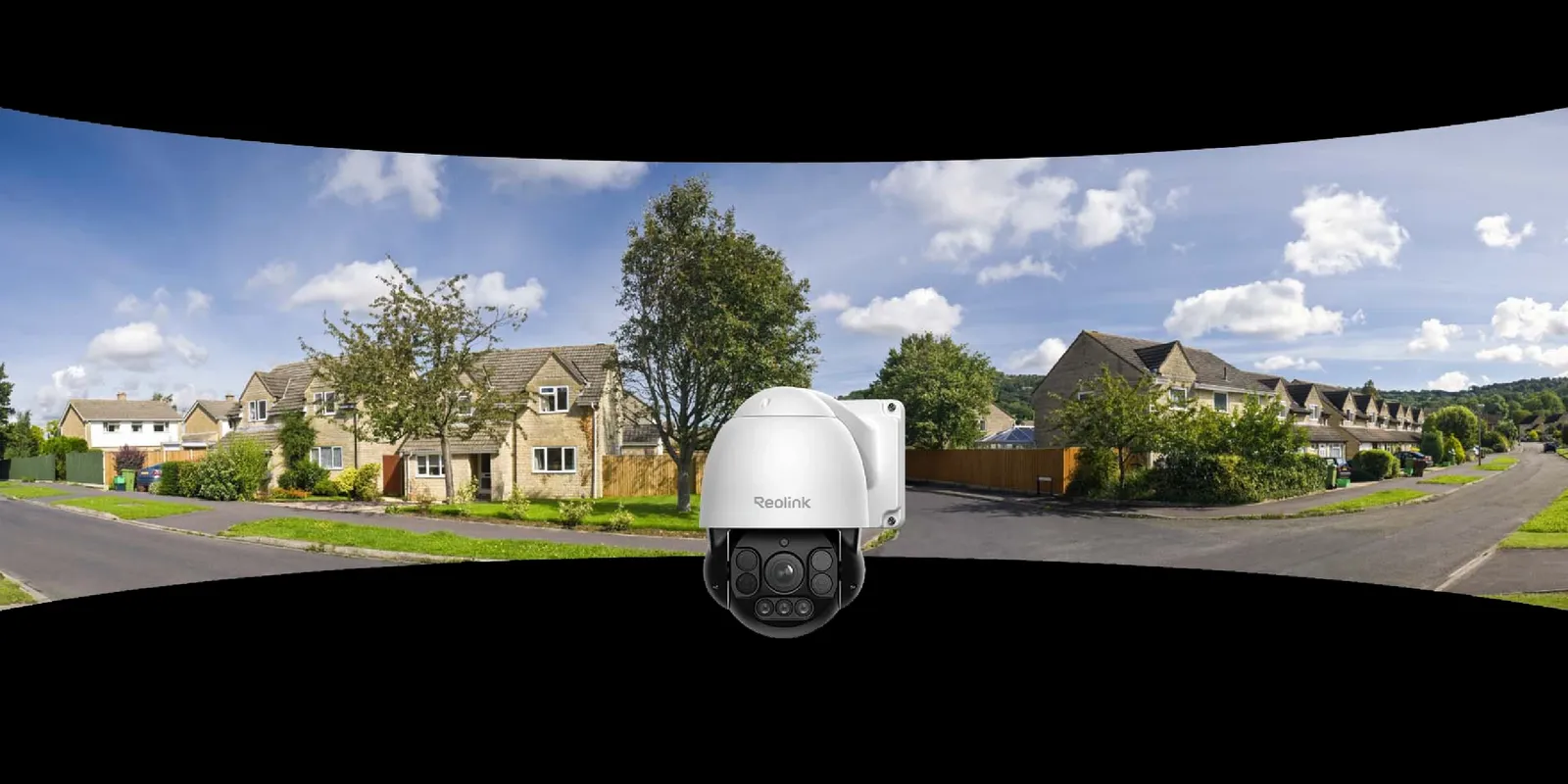
Pan-tilt camera over a wide view of a suburban street, for condo security camera installation in Nassau County
Manufacturer image (Reolink, one of our partner brands), not a Nassau County property: a white pan-tilt camera shown in front of a stretched panoramic view of a tree-lined suburban street. Wide views like this suit a community entrance or a long private road.
Nassau County Condo Camera Request
Board officers, HOA directors, unit owners and managing agents

✅
Request Sent!
Thanks. Our office will call or text to set a walk-through date at your Nassau County property.
25+
Years Experience
2 Hr
Booking
$999
4-Camera System
4.7★
201 Google Reviews

Owner-operated since 2002 · Thousands of jobs completed · Booked within 2 hours, seven days a week · Nassau direct line (516) 346-5778

The County

Why Nassau County Condo Cameras Start With Two Questions: What You Own and Where You Sit

Most camera companies open a condo survey by counting doors. In Nassau County we open with two questions that change the plan more than any door count. The first is what kind of property the association actually owns: a garden complex of a dozen two-story buildings around shared lots, a single elevator building beside a train station, a gated community of villas and townhouses with its own roads, or a waterfront building where the ground floor has already flooded once. The second is which local government the property answers to, because Nassau is not one jurisdiction for practical purposes. It is a patchwork, and the patch decides who reviews a pole, who restores a sidewalk after a trench, and which police department calls when it needs a copy of last night's video.

The patchwork is real and it is large. New York State's own profile of the county lists two cities, three towns, 64 incorporated villages and more than 60 hamlets. A condo in Garden City, Rockville Centre or Freeport sits in a village with its own building department and its own police; a condo in Uniondale, Hicksville or Elmont sits in an unincorporated hamlet where the Town of Hempstead or the Town of Oyster Bay handles permits and the Nassau County Police Department answers calls; a condo in Long Beach or Glen Cove answers to a city. The county's law enforcement directory names the county police department alongside 19 separate village and city departments, from Floral Park, Lynbrook and Malverne to Lake Success, Sands Point and Old Westbury. That one list explains why our footage-policy advice for a Nassau board is never a single paragraph.

The buildings are just as varied, and the county's own tax rules draw a line through them that happens to match how cameras get planned. Under Real Property Tax Law Article 18, the Nassau County Department of Assessment places residential condominiums of three stories or less in Class I, alongside one- to three-family houses, and residential condominiums of four stories or more in Class II, alongside apartment buildings and co-ops. Boards already know which class their units fall into from the tax bill. For us it is a fair first clue: a Class I condo usually means many short buildings, many outdoor doors and shared parking, so cameras travel across open ground; a Class II condo usually means an elevator, a lobby, a garage under the building and corridors stacked on top of each other, so cameras travel up through a riser.

Money is the other reason boards here take cameras seriously. Newsday, reporting OneKey MLS figures in April 2026, put the median price of a closed Nassau condo sale in February at $920,000, up from a twelve-month median of $815,000. Owners who paid that much expect the parking lot, the package shelf and the pool gate to be watched properly, and buyers' agents increasingly ask what the association has in place. None of that makes cameras a cure for crime, and we will say so plainly further down. It does mean a Nassau board is usually choosing between a system that records evidence it can actually use and one that merely looks like security. Rental complexes owned by a single landlord work differently; they have their own page on apartment building security camera installation in Nassau County.

Nassau County facts that shape a condo camera plan

  • 1,395,774 people lived in Nassau County at the 2020 census, on 284.54 square miles of land, about 4,905 people per square mile (U.S. Census Bureau QuickFacts).
  • About 81.9 percent of the county's homes are owner-occupied (QuickFacts, 2020–2024), so boards answer to owners who live on site.
  • Two cities, three towns, 64 villages and 60-plus hamlets share the county (New York State county profile).
  • Besides the county police, 19 village and city police departments are listed by Nassau County (county law enforcement directory).
  • Condos of three stories or less are taxed in Class I; condos of four stories or more in Class II (Nassau County Department of Assessment, RPTL Article 18).
  • Half of the condos that closed in the county in February 2026 sold for more than $920,000 (Newsday, citing OneKey MLS).
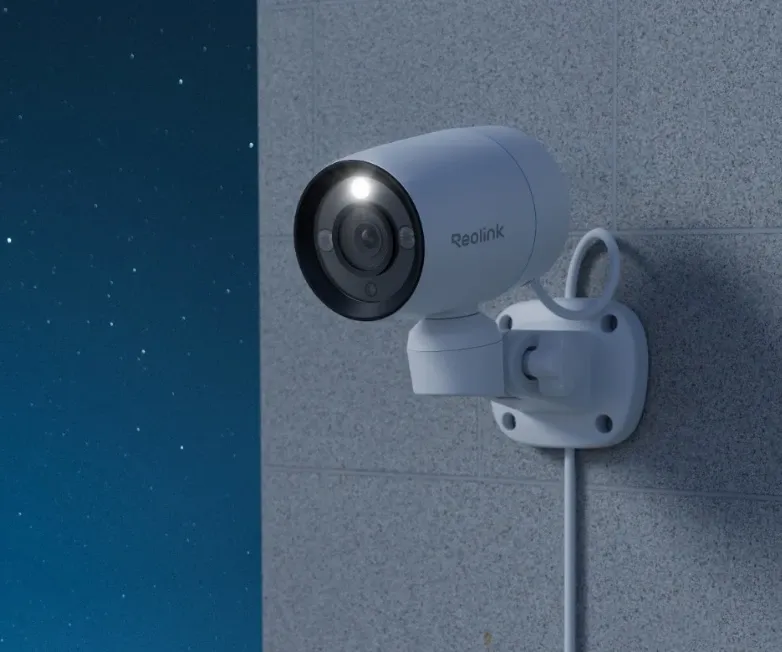
Bullet camera with a lit lens on a gray wall at night, as used on Nassau County condo building corners
Manufacturer product photo (Reolink), not a Nassau property: a white bullet camera with its light on, mounted on a gray textured wall against a night sky. Building corners are where most garden-complex cameras start.
Building Types

Six Kinds of Nassau Condominium and How Each Changes the Camera Plan

These are our working groups, drawn from the properties we survey and from the published sources on this page. They are not legal categories, and plenty of Nassau communities straddle two of them, such as a gated community with one elevator building at its center.

Garden-style conversion

Two- and three-story brick or frame buildings set around parking courts and lawns, many of them built as rental apartments and converted to condominium ownership later. Each building has one or two entry halls, a laundry or boiler room and outdoor stairs; the shared lots between buildings are where most incidents happen.

Station mid-rise

Four- to eight-story elevator buildings within walking distance of an LIRR station, in places like Mineola, Westbury, Hicksville and the village downtowns along the Babylon and Port Washington branches. Coverage looks like a city building: lobby, package room, garage ramp, elevator cab, roof deck and sometimes a ground-floor commercial space.

Gated or 55-plus community

Villas, townhouses and condo suites on private roads behind a guard booth, with a clubhouse, pools, courts and walking paths. The entrance carries most of the camera budget, and amenity cameras are planned around rules that change by season.

North Shore waterfront building

Condos along the harbors at Glen Cove, Port Washington and the Great Neck peninsula, often with a marina walk, a promenade or a public path along the water. Salt air, glare off the harbor and the line between association grounds and public waterfront drive the design.

Barrier-island building

Ocean- and bay-side buildings in Long Beach, Lido Beach, Atlantic Beach and Point Lookout, from older towers to newer low-rises raised above the flood line. Sand, salt and the memory of 2012 decide where the recorder can live and which mounts survive.

Village-center or office condo

Small residential condos of four to twenty units over or beside downtown storefronts, and office, medical and light-industrial condo buildings along corridors such as Old Country Road, Jericho Turnpike and Hempstead Turnpike. Each owner may run private cameras inside; the condominium covers the shared lot, doors and halls.

Three numbers move between these groups more than anything else on a proposal. Cable distance is the first: a garden complex may need runs of a few hundred feet between buildings, which is beyond what plain network cable carries without help, while a mid-rise keeps every camera within a riser's reach. Exposure is the second: a camera facing Reynolds Channel or Hempstead Harbor takes salt, wind and glare that a camera in Mineola never sees. Governance is the third: a gated community may have a master HOA, one or more condominium associations and a management company each with a claim on the cameras, while a twelve-unit village condo may have no agent at all and a board of three owners who meet at a kitchen table. We plan each of those before we pick a single camera model.

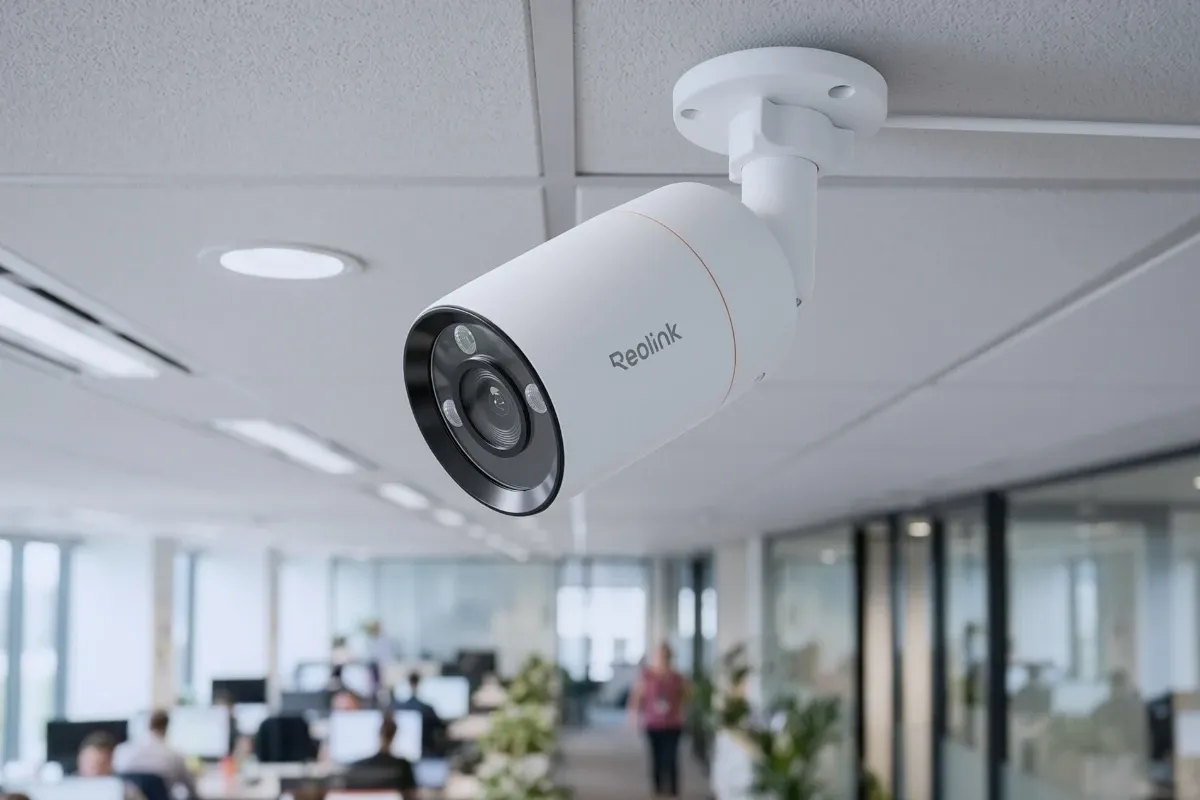
Bullet camera on a ceiling mount above an open office floor, as in a Nassau County office or medical condo
Manufacturer lifestyle photo (Reolink), not a Nassau building: a white bullet camera hanging from a ceiling mount over an open-plan office, with desks out of focus below. Office and medical condos cover shared corridors and lobbies this way.
Garden Complexes

Garden-Style Condos: Many Doors, Shared Lots and Wiring That Was Never Meant for Cameras

The garden complex is the most common condo layout we see between the Queens line and the Oyster Bay border, and it is the one most often underserved by its first camera system. A typical complex has ten to thirty buildings of two or three stories, each with a front hall or two, sometimes a rear door to the lot, a basement with a laundry or boiler room, and a lawn between buildings. Residents park in open courts or carports rather than a garage. The trouble spots follow from that: cars in the courts, the entry halls where package carriers leave boxes on the floor, the laundry room at night, and the paths that cut between buildings toward the street.

Conversions bring renters along with owners

Many of these complexes were built as rental apartments and later converted to condominium ownership, and in Nassau a conversion often happens under General Business Law §352-eee. That section governs conversions in Nassau, Westchester and Rockland counties in any city, town or village whose local legislature has opted in, and it allows a non-eviction plan to take effect once at least fifteen percent of the bona fide tenants in occupancy have signed purchase agreements. The practical consequence for cameras is simple: a converted complex can have long-time renters living next to owners for years. Our notices and handover materials are written for every resident, not just owners, and the footage policy we help a board draft treats a renter's request the same way it treats an owner's.

Where the recorder goes in a complex with no office

A garden complex rarely has a management office on site, and the obvious spare spaces are the wrong ones. Boiler rooms run hot and dusty, unfinished attics swing from freezing to well above what a hard drive tolerates, and basement laundry rooms are humid and sometimes take water. We look for a locked interior closet with steady temperature in the building closest to the middle of the site, add a small battery backup, and run links outward from there. When no such closet exists, a wall-mounted ventilated cabinet in a dry stair hall is the fallback; the board chooses, and the proposal shows both options with their trade-offs.

Getting video from building to building

Plain network cable carries a camera's signal and power about 100 meters, roughly 328 feet. In a garden complex the buildings themselves are close, but the recorder building may be farther than that from the last carport. We prefer to follow routes that already exist: an old telephone or cable conduit between buildings if it tests clear, a run along the underside of a covered walkway, or the attic-to-attic path of attached buildings. When nothing exists, the choices are a short trench with conduit, fiber for the long legs, or a point-to-point wireless link between rooflines. We do not dig, patch walls or paint; trenching across lawn or pavement is done by the association's landscaper or paving contractor to our depth and route, and we pull the cable once the conduit is in.

The original wiring in the walls

Converted complexes often still have coaxial cable from the cable-television era running up the outside of each building or through hall closets. Some of it can carry an analog high-definition camera signal to a hybrid recorder, and reusing it can save a board real money on a first phase. Some of it is cracked, spliced or shared with an owner's active service, and that we will not touch. The walk-through includes testing a sample of any cable the board hopes to reuse, and anything that might fail its test is named in the proposal before equipment is ordered, because ordered equipment cannot be returned.

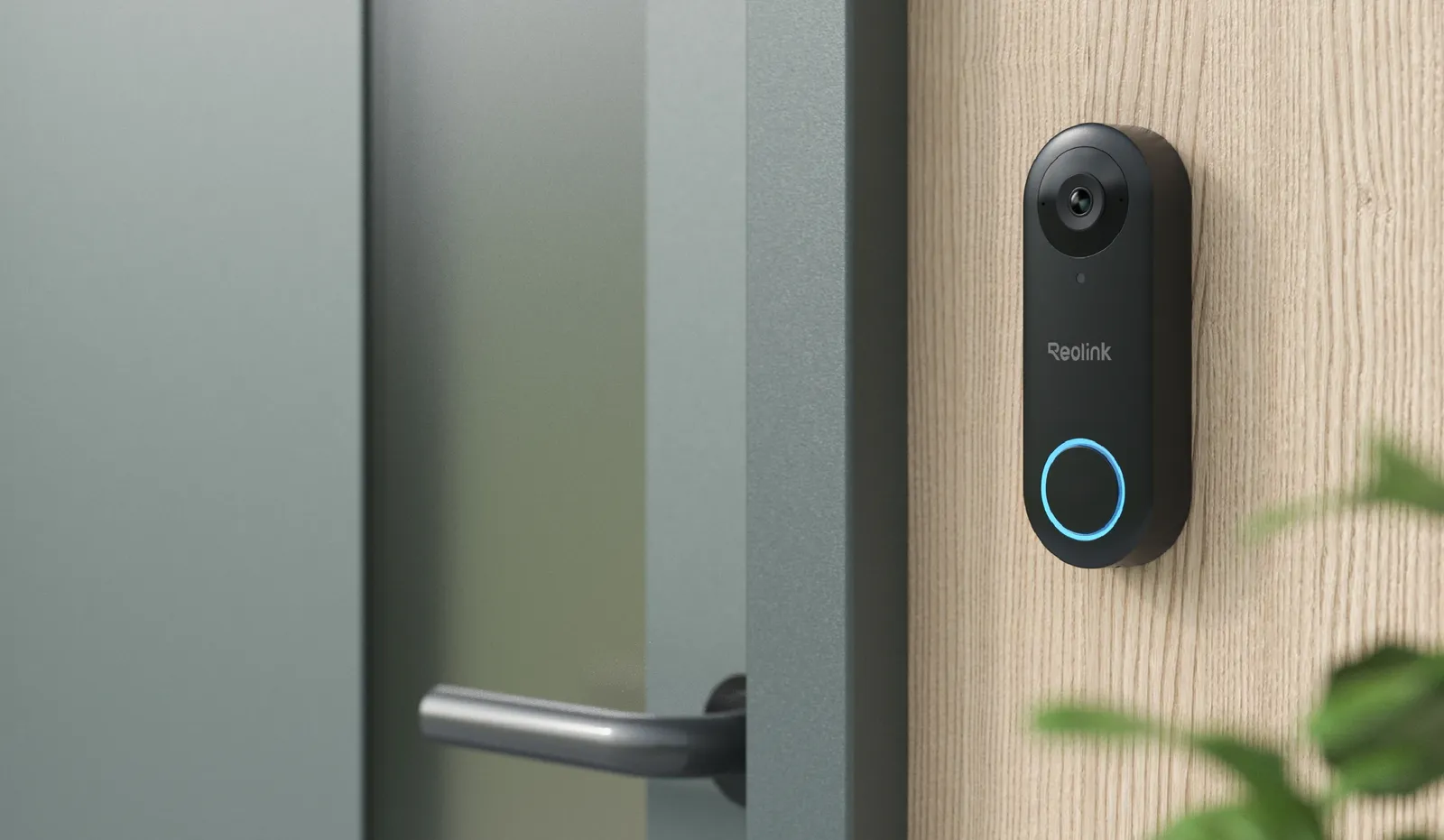
Video doorbell mounted beside a door handle and wood trim, as at a Nassau County garden condo entry hall
Manufacturer product photo (Reolink), not a Nassau property: a black wired video doorbell on a wood-trimmed frame next to a lever handle. Entry halls in garden-style condos often get a door station like this alongside the association cameras.
Station Buildings

Mid-Rise Condos Near LIRR Stations: Lobby, Garage, Package Room and the Floors in Between

Nassau's newer elevator condos cluster around train stations because villages have zoned their downtowns for them. Newsday reported in April 2026 that a 101-unit condominium "steps from the Long Island Rail Road" in Mineola is set to open in 2028, with a ground-floor event space of about 10,000 square feet and a rooftop pool, and that more than 1,100 rental apartments have opened in that village since 2010, citing the Long Island Regional Economic Development Council. Buildings like that are Class II properties for tax purposes, and for cameras they behave like a small city building dropped into a suburban downtown: a lobby that faces a busy sidewalk, a garage under the building, an elevator that serves every floor, and amenity spaces that guests use.

The lobby and the package room

Station-area lobbies see commuters walking past the glass all day, ride-share drivers idling at the curb and couriers who arrive in bunches in the late afternoon. The lobby camera should capture faces at the door from inside, not the reflections on the glass, which usually means a camera set back from the entrance and angled across it rather than straight at it. Package rooms get one camera on the door and one across the shelves, so the board can see both who entered and what they carried out. If the room has a keypad or fob reader, the recorder's clock is matched to the access system's clock, so a door event and a video frame line up to the second.

The garage ramp and the car

Under-building garages in these condos are short and low, and cameras there have two enemies: headlights coming down the ramp and tall vans. We place the ramp camera to look at cars after they pass the door, so the headlights are off-axis, and we mount every garage camera above the clearance bar's height or tight against a beam. Plate capture at a garage gate is possible with a camera dedicated to that one job, aimed at the point where cars stop for the gate; a general overview camera will rarely read a plate at night.

Elevator cabs, corridors and the roof deck

A camera inside an elevator cab is common in these buildings, and it is a joint job: we supply and mount the camera and the wireless link that carries video out of the shaft, and the elevator contractor handles anything inside the car's own controls or traveling cable. Corridor cameras on residential floors are a board decision, not a default; when a board wants them, each one looks along the hall toward the stairs and elevator, never at a unit door at close range. Roof decks and rooftop pools come with their own privacy questions, which we answer in the questions section below.

Event spaces and commercial units downstairs

When a building has a ground-floor event room, a café or a medical office, the declaration usually separates commercial and residential common elements. We plan the residential board's cameras to cover the residential lobby, the doors between the commercial space and the residential core, and the shared garage, and we leave the commercial owner's interior to the commercial owner. If both sides want to share a recorder, each gets its own user permissions so the café never sees the residential lobby and the residential board never browses the café's register.

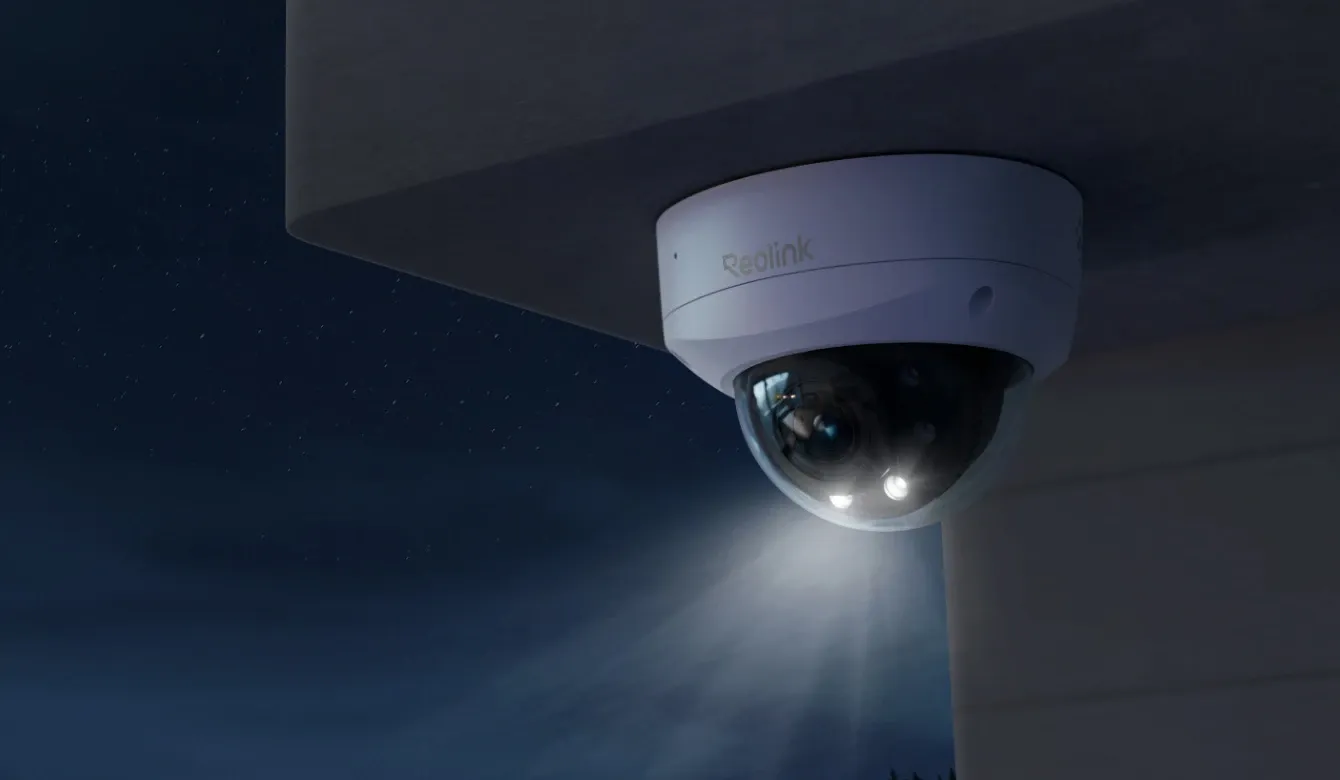
Dome camera with its light on under a concrete overhang at dusk, for a Nassau County station-area condo entrance
Manufacturer product photo (Reolink), not a Nassau building: a white dome camera under a smooth concrete overhang with its light shining down at dusk. Covered building entrances and garage mouths use domes like this.
Gated Communities

Gatehouses, Clubhouses and Pools in Nassau's Gated and 55-Plus Condo Communities

Nassau has fewer gated communities than central Suffolk, but the ones it has are large and busy. Newsday's real estate listings describe one under construction on the Plainview–Old Bethpage border as a 143-acre gated community with 660 condo suites, villas and townhouses, a guarded gatehouse, a roving security car, a clubhouse of about 29,000 square feet and two outdoor heated pools. Communities on that scale have staff, schedules and a management office, which changes the camera conversation from "can we afford cameras" to "who needs to see which view, and when".

The entrance: overview, plates and the visitor lane

At a staffed gate we separate three jobs. An overview camera shows the whole entrance and every vehicle that passes. A plate camera, one per lane, is mounted low and close to where cars slow, and is set for a narrow shutter so plates are readable at night. A third camera faces the visitor lane at driver height so the booth officer, and the recorder, see the driver's face when the window comes down. We coordinate around the gate operator and any call box already in place; the cameras do not change how the gate opens unless the board asks us to add a reader or remote opening, which is a separate access-control job.

The roving patrol and the booth monitor

Where a guard company runs the booth or a patrol car, the board decides what its officers can see. Typically the booth monitor shows live views of the entrance, the clubhouse doors and the pool gate; playback and export stay with the management office. We set those permissions per user account, so a guard company that changes contractors leaves nothing behind but a disabled login.

Pools and the gate the law already regulates

New York's Executive Law §378(14) requires gates in a swimming pool enclosure to be self-closing and self-latching and securely locked when the pool is not in use or supervised. A camera does not satisfy that rule and does not replace it; what it does is show whether the gate was propped, who came over the fence after hours, and when a latch stopped catching. Pool cameras look at the gate and the deck perimeter, not at loungers at close range, and in a 55-plus community the board often prefers a single wide view of the deck to anything more detailed. Clubhouse fitness rooms and lobbies get cameras; locker rooms and restrooms never do.

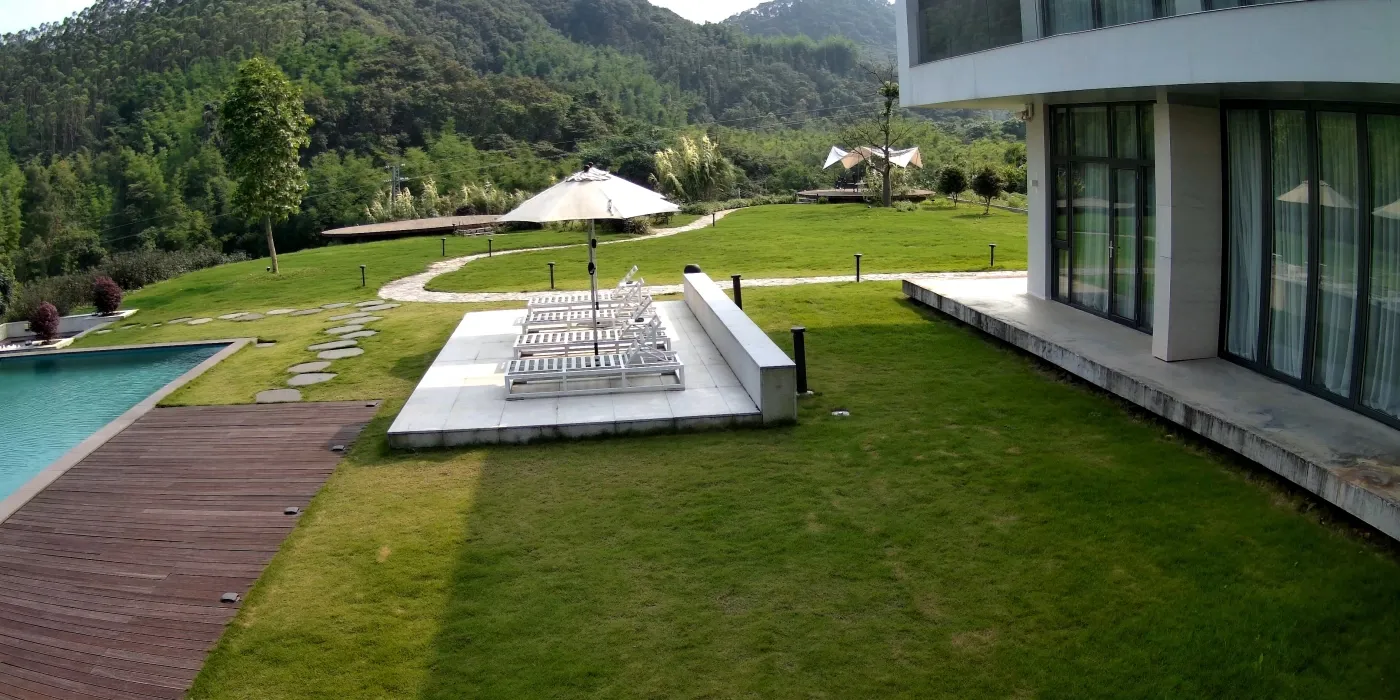
Daytime camera view across a pool deck, lawn and loungers, the kind of view planned for Nassau County condo pools
Manufacturer sample frame (Reolink), not a Nassau community: a daytime camera view across a pool edge, a wooden deck, a lawn and a row of loungers under umbrellas. A wide view like this shows activity at the pool without close detail of swimmers.
Harbors & Beaches

North Shore Harbors and the Barrier Island: Salt, Surge and Sand

Nassau's waterfront condos split into two very different environments. On the North Shore, harbor-front buildings at Glen Cove, Port Washington and around Manhasset Bay face sheltered water, glare and salt air, but rarely ocean surge. Newsday has reported that the Garvies Point project in Glen Cove is set to include 1,110 condos and apartments when complete, along with parks, shops and offices, which tells you how much public waterfront now sits right next to private condo grounds. On the barrier island, buildings in Long Beach, Lido Beach, Atlantic Beach and Point Lookout face the open Atlantic on one side and Reynolds Channel or the bays on the other, and everyone on the island remembers what water did to ground floors in 2012.

What Sandy did to condo ground floors

Habitat, the trade magazine for New York co-op and condo boards, sent a reporter to Long Beach a week after the storm. Tom Soter's November 2012 report quoted John Wolf saying simply, "Lobbies have to be redone," and described one oceanfront condominium that "lost their first floor, their pool, all their heating systems, their gym, their lobbies," and a building whose boiler room "lay beneath 15 feet of water." A March 2013 Habitat report on a historic Lido Beach condominium tower recorded that it took nearly three weeks to pump out the water and sand, and listed among the losses four elevators, the electrical switchgear and the building's communication equipment and telephone wiring. Every camera system on the island has to be planned with that history in mind.

Recorder above the line, cameras that can be replaced

On the barrier island we place the recorder, the network switch and its battery backup on a floor above the building's flood elevation, never in a ground-floor storage room or beside the boiler, even if that means a longer cable run up a riser. Ground-floor cameras are treated as replaceable: mounted where they can be swapped quickly, fed from above rather than below, with any junction boxes kept off the floor. After a flood, cable that sat in salt water is replaced rather than trusted, and the board's proposal says so in advance.

Salt, sand and glare

Salt air shortens the life of cheap housings and exposed screws. We choose weather-rated housings, stainless or coated hardware, sealed cable entries and drip loops, and we keep cameras out of direct spray where a building corner allows. Blowing sand scours lenses on the ocean side, so beach-facing cameras sit under an overhang where possible. On the harbors, morning and late-afternoon glare off the water can wash out a view, which we manage with wide-dynamic-range cameras and angles that keep the sun's reflection out of frame. Cameras look at the association's walkway, dock gate or garage entry, and stop at the property line rather than recording the public promenade or beach.

Dome camera under an overhang facing water and a floating dock, as on a Nassau County harbor-front condo
Manufacturer lifestyle photo (Reolink), not Long Island: a white dome camera under a roof overhang, with a lake, a floating dock and forested hills behind it. Harbor-front buildings need housings and hardware chosen for salt air and glare.
Parking

Carports, Open Lots and Under-Building Garages

Parking is where most Nassau condo footage requests start. News 12 Long Island reported in September 2022 that catalytic converter thefts in Nassau County were up 248 percent that year, with 1,549 converters stolen so far compared with 445 in the whole of the year before. Thefts like that happen quickly and low to the ground, usually in an open lot or carport at night, and the cameras that boards already had often showed nothing useful: a wide view from a building corner, two hundred feet away, with the cars as dark shapes.

What a lot camera can realistically show

One camera cannot identify a person across a whole lot at night. What works is a layered plan: a wide camera that shows the lot and the direction someone came from, plus tighter cameras at the lot's entry points and along each carport row, mounted low enough to see under a car's side and lit by the carport's own fixtures or the camera's built-in light. When a board can afford only a few lot cameras, we put them at the points everyone must pass, the lot entrance and the walkway to the street, rather than over the middle of the asphalt.

Carport columns and lighting

Carport rows are good camera mounts because the roof gives shelter and the columns sit right over the cars. We mount along the row, looking down its length, and avoid pointing directly into the fixtures. If the carport lights are on a photocell that fails often, the camera's own infrared or spotlight carries the scene; we note when better lighting would do more than a better camera, because sometimes it would, and new outlets or fixtures are work for the association's electrician.

Garages under station-area buildings

Under-building garages are easier to cover than open lots because there are fewer ways in. The ramp, each stair door and the elevator lobby door are the priorities, then one camera per drive aisle. Bicycle and storage rooms off the garage get a camera on the door, not inside individual cages. Where the garage has an EV charging area, a camera at the chargers is worth adding, since damaged charging cords and blocked spaces are a growing complaint.

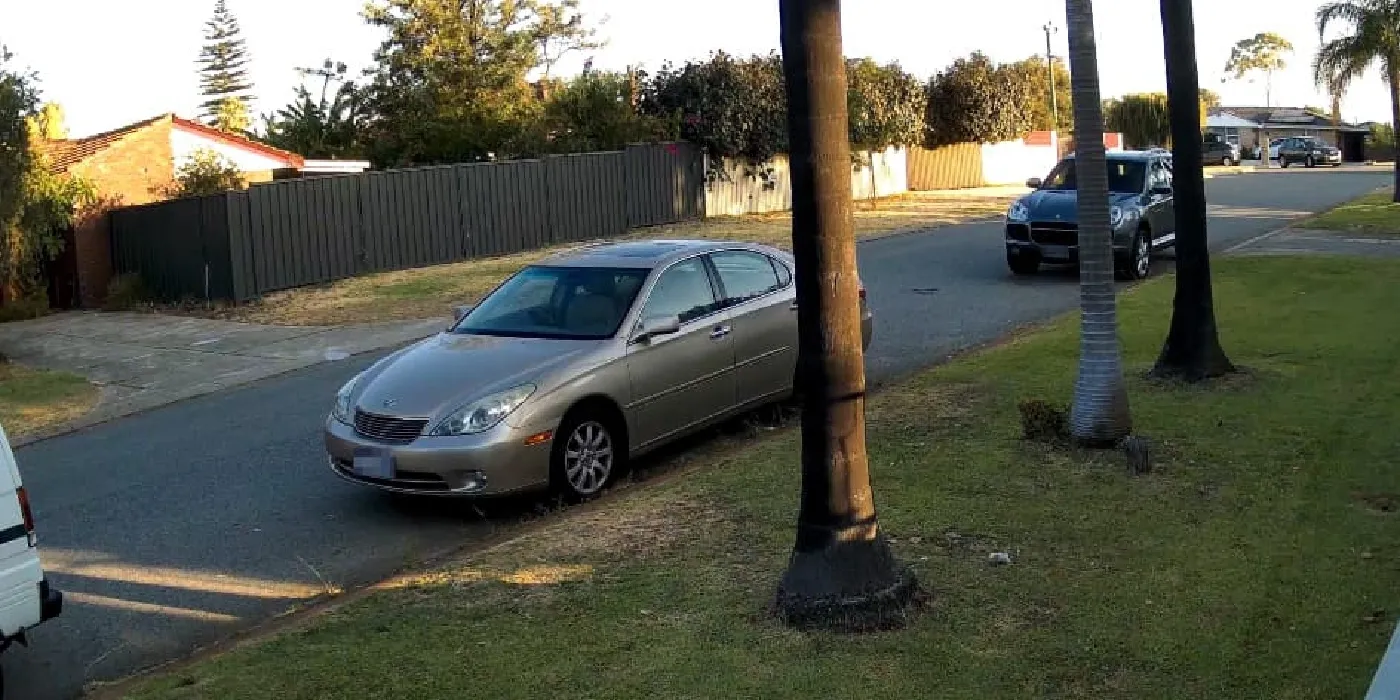
Daytime camera view of a sedan parked beside a lawn and a fence, the kind of parking view planned for Nassau County condo lots
Manufacturer sample frame (Reolink), not a Nassau property: a daytime camera view of a silver sedan parked on a roadside verge beside a lawn, with a fence and another car beyond. Close, low views like this are what identify vehicles in a condo lot.
Systems

Condo Security Camera Systems Sized for Nassau Properties

A condo camera system has four parts that a board should be able to name: the cameras, the recorder and its drives, the network that ties them together, and the power that keeps all of it running when the lights flicker. Each part can be undersized in ways that only show up on the day the board needs a clip, so the proposal names the choice for each one.

Cameras matched to the job, not the brochure

Turret cameras suit most building corners, eaves and carport beams because they are easy to aim and do not collect spider webs over the lens the way some domes do. Vandal-resistant domes go wherever a camera can be reached by hand: a low garage ceiling, a laundry room, a stair landing. Bullet cameras with longer lenses watch a gate lane or a long drive. Pan-tilt and dual-lens cameras earn their place at an entrance or across a big open lot, where one mount needs both a wide overview and a closer look. Full-color night cameras help in lots where the board wants clothing colors, not just shapes, as long as there is some ambient light.

Recorder, drives and how long video is kept

Our house-brand systems record to a network video recorder or, where coax is reused, to a hybrid recorder, with surveillance-rated drives sized to the camera count and the retention the board chooses. FirstService Residential, a large condo and co-op management firm, says footage in New York buildings is generally kept for 30 to 90 days depending on building size. We size storage so the stated number of days holds at the resolution and frame rate in the proposal, with continuous recording on most cameras and motion events marked for fast searching.

Network, links and remote viewing

Cameras run on a network of their own, separate from the clubhouse Wi-Fi, the office computers and any resident-facing internet. Power over Ethernet carries power and video together on one cable to each camera, which means fewer outlets. Long legs use fiber or wireless bridges. Remote viewing for the board and the agent goes through the manufacturer's app or a secure connection the association controls, with each user given only the views and permissions the board approves.

Power when the grid fails

Every recorder and switch we install sits on a battery backup sized to ride through short outages and shut down cleanly in long ones. In buildings with a standby generator, we ask the board's electrician to put the camera closet on a generator-backed circuit. We do not do electrical work ourselves, so any new circuit, outlet at a pole or fixture change is the electrician's line on the project, coordinated with ours.

Already have a system that has stopped recording, lost a camera or locked everyone out? Repair work has its own page: security camera repair in Nassau County.

Black network video recorder on a dark gray background, the type of recorder used in Nassau County condo camera systems
Manufacturer product photo (Reolink), not a Nassau installation: a black network video recorder shown at an angle on a dark gray background. The recorder and its drives decide how many days of video a condo keeps.
Brands

Our House-Brand System First, Partner Brands When the Board Prefers One

Unless the board asks for a particular manufacturer, we quote our own house-brand system: commercial-grade cameras and recorders with no monthly fee, the same equipment behind the $999 starting price and the rest of our Nassau price list. Quoting one system by default keeps proposals easy to compare and leaves the association free of a subscription it never chose.

Boards that want a named brand get one. Lorex, Luminys and Reolink are our partner brands, and the product photos on this page are Reolink manufacturer images, shown because they picture the kinds of cameras and recorders we install; they are not photos of Nassau County properties. Other brands are available through our suppliers. If a brand carries a cloud plan, license fee or per-camera subscription, the proposal lists it on its own line so the board sees the real cost over five years, not just on installation day.

Privacy & the Law

New York State Rules Nassau Condo Boards Should Know Before Cameras Go Up

What follows is general information drawn from published statutes and trade sources, not legal advice. Boards with a specific question, especially about an owner dispute or a recording already made, should ask the association's attorney. We install to the board's decisions; we do not make them.

City rules stop at the county line

Nassau condominiums often read articles about New York City's building rules and assume they apply. They do not. The city's local laws on smart access systems and tenant data, its Multiple Dwelling Law provisions and its Department of Buildings requirements govern buildings inside the five boroughs. A Nassau condo answers to state law, the condominium's own declaration and bylaws, and the codes of its village, town or city. That is good news for boards in one respect: there is no city agency to file with for a camera system. It also means local codes, such as a village's rules on signs or construction hours, matter more than many boards expect.

Where the board's authority comes from

New York's Condominium Act lists entrances and exits, recreational facilities, parking areas and "all apparatus and installations existing for common use" among the common elements (Real Property Law §339-e), and §339-v sets out what bylaws must cover, including how the board is chosen and how common charges and reserves work. A camera on a common element is therefore normally a board decision under the bylaws, though some declarations require an owner vote above a spending limit. Ricardo M. Vera of Newman Ferrara, answering a board's question in CooperatorNews, put the baseline plainly: "New York does not recognize a common law right of privacy in public or common areas." Common areas, though, are not every area.

Video yes, sound no

New York Penal Law §250.00 and §250.05 make the mechanical overhearing of a conversation without the consent of at least one party a felony. A common-area camera has no party to the conversations it would pick up, so we turn audio recording off on every common-area camera, including models that ship with a microphone. Two-way talk at an entrance call point is a different device with a person deliberately on the line.

Rooms that are never recorded

Penal Law §250.45 makes unlawful surveillance of a person in a bedroom, changing room, restroom, bathroom, shower and similar rooms a felony, and General Business Law §395-b separately bars an owner or manager from knowingly permitting a device that surreptitiously observes the interior of a fitting room, restroom, toilet, bathroom, washroom or shower. FirstService Residential also points boards to Labor Law §203-c, which bars video of employees in restrooms, locker rooms and changing areas. In a Nassau condo that means clubhouse locker rooms, pool changing rooms, staff rest areas and every restroom stay camera-free, full stop.

Homes and windows

Cameras watch common elements, not homes. Every camera near a unit door, window or private patio is aimed or masked so it does not show the inside of a home, and we use privacy masks on the recorder to black out any part of the frame that falls on a neighbor's window or a private yard next door. Many Nassau condos border single-family streets, and a camera that covers the association's fence line should stop at the fence.

Owners' own cameras

Owners in townhouse and garden condos often add doorbell cameras. Whether one may be mounted on an exterior wall the association owns is a question for the declaration and house rules, not for us. What we can tell a board is that its system and an owner's doorbell are separate: the association's recorder does not store owners' doorbell video, and the owner's doorbell is not part of the association's coverage or responsibility.

Who may install

New York licenses installers of security systems under General Business Law Article 6-D, and the Department of State's rules at 19 NYCRR Part 195 treat closed-circuit television and video surveillance used to detect or monitor intrusion as covered work. Our New York State license number, #12000287431, is on every proposal and on this page; boards comparing bids should ask every bidder for theirs.

Footage

Who Sees the Video in a Nassau Condominium, and Who Asks for It

A camera system without a written footage policy creates arguments the first time someone wants a clip. FirstService Residential advises that buildings keep a log of footage requests and of everyone who accessed footage, and that residents should not get footage or copies without prior approval from the board and legal counsel. We help boards turn that advice into a one-page policy before handover.

What a Nassau footage policy should settle

  • Who may watch live views (board officers, the agent, a booth officer) and who may play back and export (usually only the agent and one officer).
  • How many days the recorder keeps, and that the number is a maximum, not a promise to keep anything longer.
  • The written route for a resident's clip request: the form, the person who approves it, and the deadline set by the recorder's retention.
  • How a clip is preserved when an insurer, an attorney or the police asks, and who signs the export log.
  • That audio is off and which rooms are never recorded.
  • What happens to accounts when officers, agents or guard companies change.

Which police department calls depends on where you are

In a village with its own department, such as Garden City, Rockville Centre, Freeport or Lynbrook, the request for footage comes from the village police. In Long Beach and Glen Cove it comes from the city's department. In the unincorporated hamlets it comes from a Nassau County Police Department precinct detective. The policy should name who at the association handles any police request, how the request is documented and how the clip is exported, so the agent is not improvising at nine at night.

Villages that encourage private cameras

Some Nassau villages actively invite residents to use their own cameras. In 2019 the Village of Hewlett Harbor introduced "Operation Private Eyes," which, Herald Community Newspapers reported, offered residents discounted doorbell cameras and invited them to send footage of suspicious activity to village security, with the mayor stressing, "I made sure to note that this is totally optional." Programs like that are about owners' own devices. An association's recorder is a different matter, and a board should decide in writing whether, and how, it shares footage with any village program.

Approval

Getting a Camera Project Approved by a Nassau Condo Board or HOA

Most Nassau boards meet monthly, some quarterly, and few can vote on a project the same evening they first see it. A proposal written for the board packet saves a meeting.

What we put in the packet

A numbered camera plan on the property's own site map or floor plans, a sentence per camera on what it is for, the recorder location and retention in days, how each distant camera gets power and signal, every pole, trench and concealed run itemized, what the association must provide (an electrician's outlet, a landscaper's trench, access to a locked room), and the total. Optional items, such as a plate camera or a second phase, are priced separately so the board can vote on the core and add later.

Layered governance in gated communities

When a master HOA owns the roads, gatehouse and clubhouse while separate condominium associations own the buildings, the cameras may need two approvals and two contracts. We price the shared areas and each association's buildings as separate sections of one proposal, so each body can sign for what it owns while the system still runs on one recorder if they agree.

Paying for it

Real Property Law §339-v allows bylaws to provide for reserves for repairs, additions, improvements and replacements, and boards fund camera projects from reserves, the operating budget or a special assessment depending on their own documents and their accountant's advice. A board that wants to spread the cost can phase the project by area. Financing is available through Wisetack, subject to approval.

Telling residents

A short notice before installation, sent to owners and to renters in converted complexes, prevents most complaints. It should say which common areas will have cameras, that audio is off, that no camera looks into a home, how long video is kept, who can see it, and the dates crews will be on site. We draft the notice; the board sends it.

Pricing

Condo Security Camera Installation Cost in Nassau County

Condo associations pay the same Nassau camera prices as any other customer in the county; nothing is added because the client is a board. Four house-brand cameras with a recorder, installed, start at $999. Other four-camera packages on our Nassau County security camera pricing page include four 2MP IP cameras with a four-channel network recorder at $1,033, four 4MP IP domes with a 4K network recorder and monitor at $1,206, and four 8MP 4K IP cameras with a network recorder at $1,441. Because a condo property almost always needs more than four views, the starter package is the first line of the estimate rather than the total.

Line on the proposalHow it is priced in Nassau County
Starter system: four house-brand cameras and a recorder, installed$999
Higher-resolution, full-color or network-recorder four-camera packagesAs listed on the Nassau price page, for example $1,033, $1,206 or $1,441
Each camera beyond the first fourPriced per camera after we confirm the layout on site
Runs between buildings, fiber legs and wireless bridgesItemized link by link before anything is ordered
Concealed wiring inside finished halls and ceilingsQuoted as an extra, run by run
Plate cameras at a gate or garage entrancePriced per lane as an add-on
Larger recorder and drives for longer retentionChosen once the full plan is settled, so the storage covers every camera for the period in the board's policy
A named brand instead of the house systemQuoted when the board asks, with any subscription on its own line
Cameras the association already boughtLabor only, quoted by phone or text

Why a Nassau quote moves

In a garden complex the variable is distance between buildings; in a station mid-rise it is how much cable has to be hidden in finished corridors; in a gated community it is the entrance and how many lanes need plate cameras; on the barrier island it is the weather-rated hardware and the longer run up to a recorder above the flood line. That is why cameras past the first four are priced after the walk-through, and why the board votes on a number that holds.

What you hear about before you sign

Equipment cannot be returned once it is ordered, so anything that could add cost is disclosed in the proposal: an old conduit that might be blocked, existing coax that may fail testing, a tree that may need trimming for a wireless path, or a lift for a high mount. Trenching, paving repair, wall patching, painting and electrical work are outside our scope and are listed as the association's responsibility where they apply.

Cameras the board already owns

If a director has already bought cameras for the property, we price labor only, by phone or text from the model list and the spots to cover, and book the install once the deposit arrives. We do not schedule site visits for association-supplied equipment, and the equipment's own faults remain with the association and its seller.

Warranty and terms

Coverage comes in layers. The installed system carries the 30-day warranty published on our website; a board paying from reserves often adds a one-year or longer plan when it signs; and each piece of hardware, from cameras to drives, keeps the warranty its maker offers. Full terms — including 50% deposit, one-year parts-only warranty on Abstract Enterprises Security Systems-supplied products, and the late-fee schedule — are set out in the service agreement.

Get In Touch

Request a Camera Plan for Your Nassau County Condo

Tell us the village or hamlet, how many buildings and units the property has, whether parking is in a garage, open courts or carports, and what the board most wants watched. A site map or floor plan helps us sketch camera spots before we arrive. Prefer to talk? Call or text (516) 346-5778.

✅

Request Sent!

Thank you. Our office will phone or text you, generally within two hours of this message, and together you will settle on a day for the visit to your Nassau County property.

Across the County

From Great Neck to Long Beach: How Condo Camera Work Differs Across Nassau

Our crews come out from the Brooklyn office on Troy Avenue and work everywhere in the county. The same camera models go in throughout, but the questions at the walk-through change as you cross it.

The Great Neck peninsula, Manhasset and Port Washington

The northwest corner holds the county's densest condo and co-op stock, much of it in elevator buildings near the Port Washington Branch stations and along Middle Neck Road. Buildings are older, lobbies are finished in stone and plaster, and boards care about how cameras look. Cable usually rides existing risers and hall ceilings, and the planning question is how to conceal runs without opening finished surfaces. Several small villages here keep their own police, so the footage policy names which department to call.

Glen Cove, Sea Cliff and the Oyster Bay shore

Harbor-front condos and newer waterfront development sit next to public parks and walkways. Cameras stop at the property line, glare off the water is managed with camera choice and angle, and the cold wind off Long Island Sound decides which mounts stay aimed through a winter. Glen Cove is a city, so permits and police both run through the city rather than a town.

Central Nassau: Mineola, Garden City, Westbury, Hicksville and Carle Place

The station towns along the Main Line are where newer mid-rise condos are going up and where older garden complexes sit a few blocks off the downtowns. Here the plan often splits in two: a city-style lobby-and-garage system for an elevator building, or a lot-and-entry-hall system for a garden complex. Garden City and Mineola are villages with their own building departments; Hicksville, Westbury's unincorporated edges and Carle Place fall to the towns.

The Town of Hempstead's middle: Uniondale, East Meadow, Levittown and the Hempsteads

Garden-style condos and converted rental complexes are common along the Hempstead Turnpike and Old Country Road corridors. Parking courts and carports carry most of the risk, recorder space is scarce, and buildings are often spread farther apart than they look from the street. The Nassau County Police handle most of these hamlets; the Village of Hempstead runs its own department.

The South Shore and the Five Towns

From Valley Stream and Lynbrook through Rockville Centre, Oceanside, Baldwin, Freeport and Merrick, condos range from small village-center buildings to garden complexes near the canals. Low-lying streets near the bays flood in strong storms, so recorder placement gets the same scrutiny it does on the barrier island. Villages such as Lynbrook, Rockville Centre and Freeport keep their own police, and some, like Hewlett Harbor, run their own security programs.

The barrier island and the eastern edge

Long Beach, Lido Beach, Atlantic Beach and Point Lookout bring salt, sand and surge into every decision. At the opposite end of the county, condos in Plainview, Bethpage, Massapequa and Syosset look more like Suffolk's planned communities, with private roads, clubhouses and longer distances between buildings, and the gate is the focal point of the plan.

Dual-lens pan-tilt camera on a white wall bracket, used at Nassau County condo gates and open lots
Manufacturer product photo (Reolink), not a Nassau property: a white and black dual-lens pan-tilt camera on a wall bracket beside a window frame, sky behind. One mount gives both a wide overview and a closer look at a gate or lot.
Conditions

Nassau Weather, Landscaping and the Things That Quietly Ruin Camera Views

Most camera failures we are called about in Nassau condos are not equipment defects. They are the result of where a camera was put and what happened around it afterward.

Nor'easters and wind

Winter nor'easters drive rain sideways into housings and shake pole and parapet mounts out of aim. We use mounts that lock rather than friction-hold, seal every cable entry, and leave a drip loop so water runs off the cable before it reaches the camera.

Irrigation, landscaping and trees

Lawn sprinklers soak low cameras every morning and leave mineral spots on the lens, and landscaping crews' string trimmers and leaf blowers chip housings mounted near the ground. Trees that were bare during a March survey fill in by June. We mount above sprinkler throw, keep cameras clear of shrub beds, and plan views against the summer canopy.

How It Works

Seven Steps From the First Call to Handover for a Nassau County Condo

Adding two cameras to a working recorder can be scheduled soon after the board signs; a complex-wide system may sit through two or three board meetings first. The order of steps stays the same.

1

Call, text or send the form

Whoever reaches out first, an officer, a director, the agent or an owner, gets a site-visit slot inside 2 hours, seven days a week, set as a two-hour arrival window and offered early in the day first.

2

Walk the property

A board member or the agent tours the site with us: gates, parking courts, carports, halls, amenities and the room where video will be stored. We measure building-to-building distances and test any cable the board wants to keep.

3

Numbered camera plan and proposal

The board receives a marked-up map in which each camera has a number and a one-line job, plus a price sheet that separates trenches, poles, hidden wiring, add-ons and the tasks left to the association.

4

Board vote, contract and deposit

The board or HOA approves, signs the agreement and pays the deposit. The certificate of insurance goes to the association and agent on award, and equipment is ordered.

5

Notice to residents and schedule

We draft the notice for owners and renters; the board sends it. Installation is scheduled within quiet hours and local construction hours, one area at a time.

6

Install, aim and mask

Cameras are mounted, cabled and aimed, privacy masks are drawn over windows and neighboring yards, audio is turned off, and recording schedules and retention are set and tested.

7

Hand over to the board

The board and agent get a walk-through of the app and playback, a printed camera map, the draft footage policy and administrator credentials registered to the association.

We schedule installs first come, first served among jobs that are signed and paid, so a proposal still waiting on a vote does not reserve a crew, and no install is promised for the day a board signs. Special-order brands are bought after the deposit clears; the install date follows once the boxes arrive.

Existing Systems

Keep, Fix, Extend or Replace: Deciding What to Do With a Condo's Current Cameras

Many Nassau boards inherit cameras from a sponsor, a past board or an enthusiastic former director. Before quoting new equipment we look at what is there, because some of it is worth keeping.

Keep and fix

If the recorder works, the cameras give a usable picture and the board can log in, the cheapest improvement is usually a few repairs: a failed drive, a dead power supply, a camera re-aimed after a storm, a firmware update and new passwords in the association's name. When the board cannot log in at all, a factory reset and new administrator account often recover the system without replacing it.

Extend

A recorder with spare channels can take new cameras where coverage is missing, as long as the new cameras are compatible and the drives can hold the extra video. Mixing old analog cameras on coax with new network cameras is possible on a hybrid recorder, which lets a board upgrade one area at a time.

Replace

Replacement makes sense when the recorder is unsupported, drives keep failing, cameras are too low-resolution to identify anyone, or the system relies on a cloud service the board no longer wants to pay for. Even then, good cable is reused wherever it tests clean. For coax-based systems and wired recorder upgrades in general, see CCTV installation in Nassau County.

Occupied Properties

Installing Cameras While Owners Live Here

Every Nassau condo we work in is occupied, and residents notice ladders, drills and strangers in the halls. A few habits keep the work from becoming a complaint at the next board meeting.

We arrive only within the agreed two-hour arrival window and start early in the day. Noisy drilling is kept within the association's quiet-hour rules and the village or town's permitted construction hours, which differ from place to place in Nassau. Crews work one building or one area at a time, cover floors under ladders, and leave halls and stairways passable at all times. Nobody enters a unit; everything we touch is a common element, and if a run would need access to a private space, the proposal says so and the board arranges it.

At the end of each day, ceiling tiles are back in place, cable is secured, and loose debris is gone. If an existing camera has to come down before its replacement goes up, we keep the gap as short as possible and tell the agent in advance which views will be dark and for how long.

Indoor pan-tilt camera on a wood-paneled wall, as in a Nassau County condo clubhouse or lobby
Manufacturer product photo (Reolink), not a Nassau clubhouse: a small white indoor pan-tilt camera on a wall bracket against vertical wood paneling. Indoor amenity rooms use compact cameras like this, never in locker rooms or restrooms.
Planning

Typical Camera Counts for Nassau Condo Properties

Boards usually want a sense of scale before the walk-through. The ranges below come from the properties we survey and cover shared areas only. They are orientation, not a quote and not a statistic; the actual count comes from the site, and cameras past the first four are priced once we have seen it.

Property typeAreas usually coveredCameras we often plan
Village-center condo, 4–20 unitsFront door, rear or side door, mail and package area, small lot4–8
Garden complex, 6–12 buildingsEach building's entry halls, parking courts, laundry rooms, lot entrances12–28
Garden complex, 13+ buildingsAs above, plus carport rows, paths to the street and a maintenance area28–50
Station mid-rise, 40–120 unitsStreet entrance and lobby, parcel room, the garage from ramp to each drive lane, every stair exit, cars of each elevator, rooftop space14–32
Gated or 55-plus communityWide view of the gate, a plate reader for each lane, the guest stop, clubhouse doors, pool enclosures, tennis and pickleball, the mailbox station16–40
Waterfront or barrier-island buildingLobby, garage or lot, dock or walkway gate, beach or promenade access door, mail area10–24
Office or medical condoShared lot, building doors, lobby, loading area, common corridors8–20
AI Overview Reality Check

What AI Answers and Cost Guides Get Wrong About Condo Cameras in Nassau County

Boards increasingly start with a chatbot answer or a national cost guide from sites such as Angi, HomeAdvisor or Fixr. Those sources are useful for vocabulary and poor at the details that decide a Nassau condo project. These are the claims we hear most often, checked against what we find on site.

"A condo camera system costs a fixed amount per unit"

Per-unit figures come from averaging very different buildings, and they break down quickly in Nassau. A 40-unit mid-rise with one lobby and one garage may need fewer cameras than a 40-unit garden complex spread over eight buildings and three parking courts. The unit count says how many owners share the bill, not how many cameras the property needs.

What actually sets the number is the count of places that must be watched and the distance between them. A board that wants a fair comparison should ask every bidder for a camera-by-camera plan, then compare prices for the same plan.

Our starting point is public: $999 for a four-camera system with a recorder, installed, in Nassau County, with every other camera and link priced after the walk-through.

"New York condo camera rules are the same everywhere in the state"

State statutes on eavesdropping, unlawful surveillance and condominium governance apply everywhere, but the rules boards hear about most, New York City's local laws and its agencies, stop at the Queens line. Many generic answers mix the two without saying so.

Below the state level, Nassau adds its own layer of variety. A pole, a trench or a sign may fall under a village code in one community and a town code a mile away, and a footage request may come from one of 19 village and city police departments or from the county police.

The practical takeaway: check the declaration and bylaws first, then the local municipality, and treat any rule borrowed from city articles with suspicion.

"Wi-Fi cameras avoid the cost of wiring a complex"

Wireless cameras still need power, and in a garden complex the Wi-Fi signal from one building rarely reaches the far side of a parking court reliably, especially through brick. Battery cameras record clips on motion rather than continuously and need recharging, which in a volunteer-run association tends not to happen.

Wireless has a real role, but as a dedicated point-to-point bridge between buildings carrying wired cameras' video, not as a substitute for each camera's cable. A bridge between two rooflines is engineered, aimed and secured; a consumer camera on the community Wi-Fi is not.

Where a board truly cannot run cable to one spot, such as a far mail kiosk, a solar or battery camera is a reasonable exception, chosen with eyes open about its limits.

"Cameras will lower the association's insurance premium"

Some carriers ask about security features on applications, and some loss-control reports recommend cameras, but no general rule guarantees a discount. Generic answers that promise savings rarely name a carrier or a figure.

What cameras reliably do is help with claims after the fact: who backed into the carport column, whether the water entered through the garage door or the drain, what time the pool gate was propped.

If the board's broker has asked for specific items, send us the list and we will price exactly those, without adding extras the broker did not request.

"Any 4K camera will catch catalytic converter thieves"

Resolution helps only if the camera is close enough, aimed low enough and has enough light. A 4K camera on a building corner looking across a dark lot at cars two hundred feet away will produce a crisp image of a parking lot and an unidentifiable figure under a car.

Converter theft is fast and happens at ground level, so carport-row cameras mounted lower and looking along the row, plus cameras at the lot's entry points that capture the vehicle the thieves arrived in, do more than any single high-resolution camera.

Lighting matters as much as pixels. Sometimes the best first step is fixing a carport's broken fixtures, which is work for the association's electrician, before buying a more expensive camera.

"Cloud cameras mean no equipment to protect"

Cloud-recording cameras still depend on the property's internet connection, and a large camera count can saturate an ordinary business line. Monthly fees per camera add up quickly across a complex, and the association's video lives on someone else's servers under someone else's terms.

A local recorder in a locked room keeps video on site with no monthly fee, and remote viewing still works through an app. For boards worried about a thief taking the recorder, the answer is a locked cabinet in a room people do not know about, not necessarily the cloud.

Some named brands do offer cloud backup of selected clips, and we can set that up when a board asks, with the subscription listed on its own line.

"A contractor can come out today, any hour"

Online directories make it look as if a crew is always one click away. In practice, a condo camera project needs a walk-through, a proposal, a board vote and a deposit before anyone installs anything, and no honest installer promises otherwise.

What we do promise is speed where it matters at the start: requests are booked within 2 hours, seven days a week, with early-day visits for the walk-through. Installation dates go to signed, paid jobs in the order deposits arrive.

A live person answers calls and texts from 8 AM to 8 PM Eastern, seven days a week, and we do not offer staffed monitoring of camera feeds.
Questions We Hear

Questions Nassau Condo Boards, HOAs and Owners Ask Us

Our Long Beach building's garage took salt water in a storm surge. Which camera parts can we keep afterward?

Treat anything that sat in salt water as finished: cameras, junction boxes, power supplies and the cable itself, because salt keeps corroding conductors and connectors long after they dry and failures show up weeks later. Cameras mounted high on the garage walls that stayed dry can usually be kept once we test them. The recorder should not have been in the garage at all; if it was, the replacement goes on a floor above the building's flood elevation, and the new garage cameras are fed from above so the next surge only costs the cameras at the bottom.

Thieves cut catalytic converters off cars in our carport. Can a camera even see under a car?

Not from a building corner across the lot. A camera mounted on a carport column, low enough to look along the row at bumper height and lit by the carport fixtures or its own spotlight, can show someone kneeling beside a car and, more usefully, their vehicle arriving and leaving. Pair the row cameras with one at the lot entrance aimed where cars slow down, and the footage has a chance of identifying the car the thieves came in, which is usually what investigators want.

We're adding EV chargers in the lot next spring. Should camera conduit go in the same trench?

It is a good time to plan it, and sharing the dig saves the association money, but camera cable cannot share a conduit with the chargers' power wiring. The electrician lays the power conduit; a separate low-voltage conduit goes in the same trench at the separation the electrician and code require, with pull strings and spare capacity. We give the electrician our route and conduit size before the trench is opened, then pull cable once it is in. A camera on the charger bank is worth adding at the same time.

The lawn sprinklers hit our ground-level cameras every morning. Can that be fixed without moving everything?

Usually, yes. The simplest fix is having the irrigation contractor adjust the head's arc or swap a nozzle; the next is raising the camera above the spray on the same wall, which keeps the cable route; the last is a small hood over the camera. Mineral spotting from hard water blurs footage over time, so whatever the fix, the lenses need one cleaning afterward. We look for sprinkler heads on every walk-through for exactly this reason.

The only spare space in our garden complex is an unheated attic. Can the recorder go up there?

We advise against it. Attics in Nassau's two-story buildings bake in summer and freeze in winter, and hard drives and power supplies fail early under those swings; access for anyone pulling footage also means a ladder and a hatch. A locked interior closet, a ventilated wall cabinet in a dry hall, or a corner of a boiler-free utility room is better. If the attic truly is the only option, the proposal specifies an insulated, ventilated enclosure and states plainly that equipment life will be shorter.

We're re-siding and replacing the roofs next year. Should the cameras wait until that's done?

If the projects are within a year of each other, plan them together. Cameras mounted on old siding come down when the siding contractor arrives, and cable stapled to the old trim gets cut. The better sequence is to have us mark camera positions and run cable or conduit while walls and soffits are open, then mount cameras once the new siding and gutters are on. If the board needs coverage now, we can install a temporary set on mounts designed to come off cleanly.

Our village limits construction noise to certain hours. Does camera installation count?

Drilling into masonry and running a hammer drill on a hall ceiling are noisy, so we treat them as covered by the village or town's construction-hour rules and by the association's own quiet hours, whichever is stricter. Quiet tasks such as pulling cable, aiming cameras and programming the recorder can continue outside those hours if the board permits. We confirm the local rules with the agent before scheduling and build the daily plan around them.

There's a utility pole right at our entrance. Can the gate camera go on it?

No. Utility poles belong to the utilities and the companies attached to them, and nothing goes on them without the owner's permission, which is not something a condo association can expect to get for a camera. The usual answer is a camera on the association's own entrance sign, gate pillar, light pole or a new short pole on association land, with power from the community's electrician and signal by cable, fiber or a wireless bridge from the nearest building.

A visitor says she slipped on ice by our mail kiosk and her lawyer has written to us. How do we keep the video?

Act before the recorder overwrites it. The agent or an authorized officer exports the relevant cameras for a generous window around the time in question, saves two copies, and records in the footage log who exported what and when. Then let the association's attorney and insurer decide what to share and with whom. If the board is unsure how to export, we can walk the agent through it by phone or visit as a service call; the key is speed, because retention is measured in days.

Our building has a rooftop pool. Is it acceptable to record owners in swimwear?

A pool deck is a common area, and many boards do cover the pool entrance and deck perimeter for safety and rule enforcement. Changing rooms and restrooms beside the pool are never recorded. What we recommend for a rooftop deck is a camera at the door from the elevator or stair, one wide view of the deck from a corner at enough distance that it shows activity rather than close detail, and privacy masks over neighboring buildings' terraces. The footage policy should limit who can view pool cameras.

Delivery box trucks keep clipping the camera at our garage entrance. Where should it go?

Move it out of the vehicle path. At a garage door the camera can sit inside the opening against the header beam, above the clearance bar's height, or on the side wall looking across the ramp rather than over the center of it. Outside, a camera on the building face above the door, angled down, avoids trucks entirely. A low-profile dome is less likely to catch a mirror than a projecting bullet.

Each of our buildings has its own house electric meter. Whose meter ends up powering the cameras?

Mostly the building where the recorder and network switch sit, because Power over Ethernet sends power to each camera down its network cable from the switch. Cameras on the other buildings draw only what that cable delivers, and a wireless bridge or a remote switch in a far building runs from that building's house panel. The draw is modest, but in complexes where each building's common charges track its own meter, boards like to know. The proposal notes which house panels feed which equipment, and any new outlet is installed by the association's electrician.

Related Pages

Other Nassau County Pages for Condo and Building Security

Not every Nassau project is purely a condo camera job. These pages cover the neighboring work:

  • Intercoms, readers, gate entry and the rest of a condo's security, planned together: condo security systems in Nassau County.
  • Single-family homes, retail tenants and businesses that are not part of a condominium are covered on our general page for security camera installation in Nassau County.
  • Old buzzer panels and worn-out entry stations often come up in the same board meeting as cameras; our condo intercom replacement guide explains repair versus replacement for condominiums.
  • Cooperative corporations have different governing documents; our co-op security camera installation page for Nassau County is not live yet, and this line will point to it when it is.
From the Field

Field Notes: What We Check on Every Nassau Condo Walk-Through

The company has been owner-run since 2002, and the condo surveys we do east of the city line keep turning up the same four problems. They now sit on the checklist every technician carries onto a Nassau property.

Where the old recorder really is. Inherited systems often have a recorder in a place nobody remembers: above a drop ceiling in the laundry room, in the boiler room, or in a former superintendent's closet. We find it before we propose anything, because its location tells us where the cable already runs and whether the drives have been cooking.

Which cameras are actually recording. It is common to find several cameras on a site that show live video but have not recorded in months because a drive failed or the recording schedule was never set. We check playback on every channel, not just the live grid.

Who has the password. In volunteer-run associations the administrator login often left with a past director or a former vendor. We register every credential to the association and leave the board a sealed copy.

What the summer view looks like. A camera that sees clearly across a lot in February may see only leaves in July, and a wireless path that works over bare trees may fail once they fill in. We plan both against the leaf-out, and on the barrier island against the summer crowds and glare.

Comparing Bids

Comparing Condo Security Camera Installation Companies in Nassau County

Nassau boards usually collect two or three bids, and totals alone mislead: one bidder may count fewer cameras, skip the link to the far carport, undersize the drives or leave out the plate camera. Asking every bidder the same questions puts the proposals side by side. These are the questions we would ask, with our own answers.

Ask every bidderOur answer
Can we see, on our own map, the spot and purpose of each camera you are pricing?Yes. The plan marks each position and states the view it should deliver.
For the cameras far from the recorder, what carries the video and power, and at what price?We spell out the method for every far camera and give each connection its own price.
At the bid's resolution and frame rate, after how many days does the oldest video disappear?You get a number of days on paper, and the drives are bought to match it.
Which room houses the video equipment, and could storm water reach it?The room is named in writing; near the bays and on the barrier island it is above the building's flood elevation.
When the crew leaves, who controls the master login?The condominium does; we keep no back door, and our technicians log in later only with the board's permission.
Will the association pay anything every month after installation?No recurring charge comes with our house-brand equipment; when a board picks a subscription brand, that fee is broken out.
Is audio recording off?Yes, on every common-area camera.
What is your New York State license number?#12000287431.
If a camera fails after the job, who covers it?Within 30 days, our published warranty; after that, any extended plan the board bought, plus the manufacturer's own coverage on the hardware.
When will the board's agent receive proof of insurance?Once we are selected; the certificate names the condominium and the agent exactly as their requirements specify.

We are rated 4.7 stars across 201 Google reviews, and those reviews are the best place to see what customers say; we do not hand out client names or addresses. We install and service equipment the association owns outright. Staffed monitoring of camera feeds, virtual doorman service and electrical work are not services we offer, and we do not take Nassau County fire alarm permits, so fire alarm work in Nassau is outside what we provide.

Frequently Asked Questions

Nassau County Condo Security Camera FAQ

Does a four-story condo taxed in Class II pay more for cameras than a low-rise one?
+

No. Nassau taxes residential condos of four stories or more in Class II and lower buildings in Class I, but our camera prices do not follow the tax class. Every property starts at $999 for four cameras and a recorder, installed, and the rest is priced per camera and per link after the walk-through. A mid-rise often needs more concealed corridor wiring, and a garden complex more distance between buildings; those differences show up in the itemized lines.

Does it matter whether our condo is in a village or an unincorporated hamlet?
+

For a few things, yes. A village has its own building department, codes for signs and construction hours, and often its own police department; a hamlet answers to the Town of Hempstead, North Hempstead or Oyster Bay and to the Nassau County Police. State privacy and condominium law are the same either way. We confirm the local rules with the agent before scheduling and name the right police department in the footage policy.

Can a garden-style condo use battery or Wi-Fi cameras instead of running cable?
+

For one or two hard-to-reach spots, such as a far mail kiosk, a battery or solar camera can be a reasonable exception. For the main system we recommend wired cameras, because consumer Wi-Fi rarely reaches across parking courts reliably and battery cameras record clips rather than continuous video and need regular charging. Where cable cannot cross between buildings, a dedicated wireless bridge carries the wired cameras’ video instead.

We are a co-op, not a condo. Does this page apply to us?
+

Much of the camera planning is the same, but co-op boards govern under proprietary leases and corporate bylaws rather than a condominium declaration, so approvals and footage questions are handled differently. A separate page on co-op security camera installation in Nassau County is being prepared. Until it is published, call or text us and we will plan a co-op system on the same terms and prices shown here.

Who pays if a camera is vandalized or stolen after installation?
+

Deliberate damage, theft and impact are not covered by our warranty or by manufacturers’ warranties, so replacement is quoted and billed as new work; some associations claim it on their property insurance. We reduce the risk up front with vandal-resistant domes wherever a camera can be reached, tamper-resistant screws and mounts placed out of reach, and a second camera that records anyone approaching the first.

When old cameras come down, do you remove the brackets and fill the holes?
+

We take down the old cameras, brackets and any abandoned cable we can reach safely, and we seal every hole we leave in an exterior wall or soffit so water cannot get in. We do not patch, plaster or paint, so cosmetic repair of interior walls and ceilings is left to the association’s handyman or painter, and the proposal says where that will be needed.

Our agent manages three small condos in the same village. Can one visit cover all of them?
+

Yes. We can survey several nearby properties on the same morning and save everyone a separate appointment. Each association still receives its own proposal, contract and system with its own logins, because each board approves and pays for its own property, but the agent can compare them side by side.

Will the property be without cameras during the changeover from the old system?
+

Usually only briefly, and only area by area. Where possible the new recorder goes in first and the new cameras are mounted beside the old ones before the old ones come down. When a camera must be removed before its replacement is ready, we tell the agent in advance which views will be dark and for how long, and we keep the old recorder’s video until the board no longer needs it.

Our station-area building has no visitor parking. Where does your crew park during installation?
+

We ask the agent ahead of time for a garage space, a loading area or a spot in the building’s lot for the van, since crews carry ladders and cable reels in and out all day. Where none exists, we use legal street or municipal lot parking near the building and plan the work so the van does not block the entrance or a fire lane.

What happens to the video if someone steals the recorder?
+

Video on a stolen recorder is gone, so we make the recorder hard to find and hard to take: a locked room people do not walk past, a locked cabinet inside it, and no labels on the door. For extra protection, some named brands can push selected clips to cloud storage, which we set up when a board asks, with any subscription shown on its own line.

Can the proposal split the cost between the HOA and each condo association?
+

Yes. When a master HOA owns the entrance, roads and clubhouse and separate condominium associations own the buildings, we price each body’s areas as a separate section of one proposal. Each can sign and pay for what it owns, and the cameras can still run on one recorder with separate user permissions if the boards agree.

Can a camera be moved after installation if the board changes its mind about a spot?
+

Yes, but it is a new visit rather than part of the original job. Aiming is set and confirmed with the board at handover, and later re-aims or relocations are billed as a service visit, quoted before we come out. That is why we walk every view with a board member before the crew leaves.

All Areas Served

Condo Camera Pages Across Long Island, New York City and the Hudson Valley

Boards comparing the two Long Island counties can start with condo security camera installation on Long Island or go straight to condo security camera installation in Suffolk County. Managing agents with buildings north of the city can see condo security camera installation in the Hudson Valley, and those with portfolios in the five boroughs can begin at condo security camera installation in NYC or pick a borough: Queens, Brooklyn, Manhattan, the Bronx or Staten Island. Hudson Valley county pages cover Westchester County, Rockland County and Orange County. Or return to the Abstract Enterprises Security Systems home page.

Cameras for a Nassau County Condo Property: Start With a Walk-Through

Garden complex, station mid-rise, gated community or beach building, the board gets a priced, numbered plan it can vote on and a system it controls. In Nassau County, four cameras with a recorder start at $999, installed. NYS license #12000287431 · 4.7 stars from 201 Google reviews.