What are you looking for?
About Us Contact Us Careers Get a Free Quote (800) 486-0943
Pick a service
✅ Got Your Own System?
🎬 Home TheatreQuote 🎶 AV SoundQuote 🔑 Access ControlQuote
Now pick your area
Pick your area
Long Island
Hudson Valley
Services available
Pricing & Tools
Pick a service for pricing
🚪 Intercom Pricing 🔔 Buzzer Repair Pricing
Calculators
📹 Camera System Calculator 🚨 Alarm Calculator ⚡ Cabling Quote Builder ✅ Got Your Own System?
Select your area
Cars broken into in the back parking court, a laundry building with a forced door, packages gone from a front step? Suffolk County co-op boards and managing agents reach us at (631) 407-2884
Home › Co-op Security Camera Installation Long Island › Co-op Security Camera Installation Suffolk County
For Suffolk County Co-op Boards, Managing Agents & Maintenance Staff · NYS Licensed Low-Voltage Contractor

Co-op Security
Camera Installation
Suffolk County

Garden Walks · Parking Courts · Pool Gates · Laundry Buildings · Dumpster Corrals · Maintenance Shops

Co op security camera installation in Suffolk County starts at $1,099 for four house-brand cameras and a recorder, installed, which is the first package on our Suffolk County camera price list; every camera after those four is priced once the walk of the grounds has fixed where it goes. Abstract Enterprises Security Systems is a New York State licensed low-voltage contractor, and most of the Suffolk cooperatives we plan for are two-story garden complexes in central Brookhaven, Islip and Babylon, where every apartment opens straight onto a walk and the camera work happens outdoors.

Quick answer: A Suffolk County co-op board gets a free walk of its buildings, parking courts and amenities, then a numbered camera plan it can vote on: what each camera is for, how video gets from the farthest building back to one recorder, where that recorder lives when there is no lobby, how many days it keeps, and who holds the logins. Four cameras with a recorder start at $1,099 installed. Concealed wiring is $200 per camera for runs up to 100 feet; longer runs are priced after we see them. Video only, no sound, nothing aimed into windows or private patios, and every password belongs to the cooperative corporation. We book the visit within 2 hours of your call, seven days a week, with early-day arrival windows.

Last updated November 27, 2026 · Written by the Abstract Enterprises Security Systems team, NYS license #12000287431 · Sources relied on: NY.gov county profile; U.S. Census QuickFacts; Suffolk County Village Officials Association; Long Island Board of Realtors market reports (March 2026); OneKey MLS data as published by The DeVito Team; Suffolk Experts (2009); City-Data forum (2019); Suffolk County Code §528 (co-op applications); Suffolk County Police Department and SCPD Shield; Officer.com (2019); suffolkcountyny.gov public safety; LongIsland.com (2023); CBS New York (2025); PSEG Long Island (2020); NY Penal Law §§250.00, 250.05, 250.45; NY Labor Law §203-c; 19 NYCRR Part 195; Levandusky v. One Fifth Ave. Apt. Corp. (1990); CooperatorNews (2025); Habitat (2023); FirstService Residential (Sept 2024)

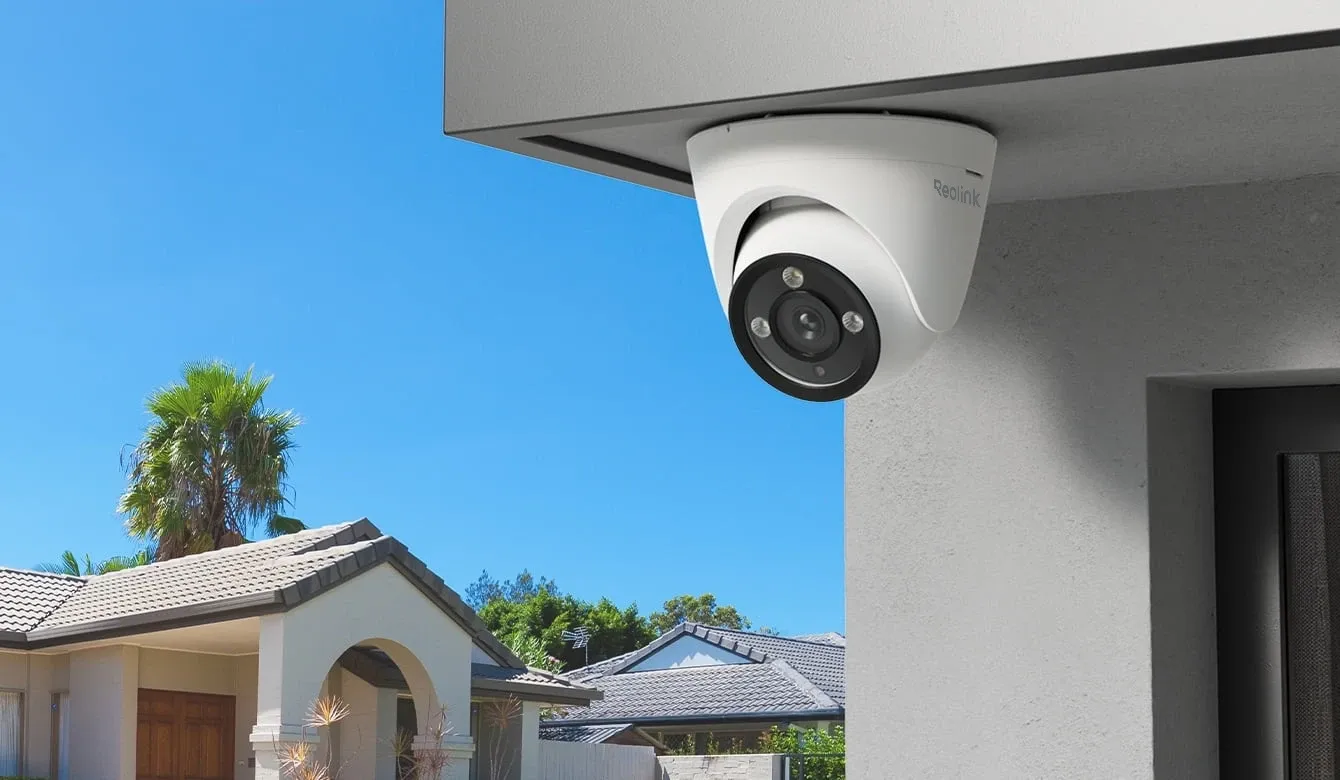
Co-op security camera installation Suffolk County: white turret dome camera mounted under a white eave against a blue sky
Product photo (Reolink, one of our partner brands): a turret dome tucked under an eave. On a two-story Suffolk garden co-op this is the usual mount, high enough to stay out of reach and low enough to see faces on the walk.
Suffolk County Co-op Camera Request
Directors, managing agents, maintenance staff and shareholders

✅
Request Sent!
Thanks. We will call or text to set up the walk of the grounds.
25+
Years Experience
2 Hr
Booking
$1,099
4 Cameras Installed
4.7★
201 Google Reviews

Licensed low-voltage contractor · Same owner for more than two decades · Free walk of the grounds · Questions: (631) 407-2884

Suffolk Co-ops

A Small, Concentrated Co-op Market: What Suffolk Boards Are Actually Protecting

Suffolk County is overwhelmingly a county of owned houses. The Census Bureau puts the owner-occupied rate at 81.9 percent across roughly 582,000 housing units, spread over ten towns and, by the count of the county's village officials' association, 32 incorporated villages. Cooperatives are a sliver of that picture, and a board that reads camera advice written for Manhattan towers or Nassau's station-village elevator buildings is reading about a different kind of property.

The sales numbers show how small the sliver is. The Long Island Board of Realtors' market report for March 2026 counted 386 Suffolk co-op sales in the previous twelve months, against 1,614 condo sales in the county and 771 co-op sales next door in Nassau. The Suffolk co-op median price over those twelve months was $275,000, with 91 co-ops on the market that March. A market guide built from OneKey MLS data identifies only 23 co-op developments in the county, and its list of the most active ones reads like a map of the middle of the Island: Coram, North Babylon, Islip, Holtsville, Port Jefferson Station, Oakdale, Selden, West Babylon and Patchogue.

Small does not mean simple. Those developments are big properties. The same guide lists waterfront co-ops in Patchogue, East Quogue and Westhampton Beach that are two stories tall and were mostly built between 1965 and 1975, with monthly charges it puts between roughly $720 and $1,150. A 2009 profile of one large Coram co-op described brick garden buildings opened in 1970, first- and second-floor apartments, courtyard views, a pool, tennis, basketball and a play area, and a private entry for every apartment. That last detail shapes nearly every camera decision on this page.

What that means for a camera budget

A Suffolk housing cooperative usually has many low buildings, wide lawns, several parking courts and a handful of amenity structures, all owned by one corporation and paid for out of maintenance charges that shareholders watch closely. There is rarely a lobby, a doorman or a package room. The camera plan therefore spends its money outdoors and across distance: on the paths people walk, the places cars sit overnight, the doors of shared buildings, and the cable or radio links that bring all of it back to one recorder.

Who calls us

The request usually comes from a director who chairs a grounds or security committee, from the managing agent's office, or from the co-op's own maintenance supervisor, and it usually follows something specific: a run of car break-ins in one parking court, a laundry building door pried open, a dumpster corral that fills up with someone else's renovation debris every weekend, or shareholders asking why the old cameras on the clubhouse have shown a blank screen for a year. We start from that incident and work outward to a plan the whole board can defend at the annual meeting.

Co-op surveillance cameras Suffolk County: manufacturer daytime sample of a pool deck with tables, chairs and a shade structure
Manufacturer sample frame (Reolink), not a co-op: a pool deck in daylight. At a Suffolk co-op pool the camera belongs on the gate and the path to it, not trained on swimmers.
Private Entrances

Every Apartment Has Its Own Front Door: Planning Cameras Without a Lobby

In a high-rise co-op the camera plan begins at the one front door everyone uses. In the typical Suffolk garden co-op there is no such door. Each building may have four, eight or twelve apartment entries opening onto a stoop, a landing or an exterior stair, and the complex as a whole may have well over a hundred of them. Putting a camera on every door would be expensive, would bury the board in video nobody reviews, and would feel to many shareholders like the corporation keeping a log of when each household comes and goes.

So we plan the walks instead of the doors. A camera on the corner of a building, looking along the path that serves several entries, shows who walked toward those doors and when, without dwelling on any one threshold. Where two paths meet, or where the walk leaves a parking court, one camera covers the choke point that everyone passes. The aim is that a person who did something wrong on the property crosses at least two cameras on the way in or out, and that no shareholder's daily routine is the focus of any single view.

Exterior stairs and second-floor landings

Upper apartments in many garden buildings are reached by an outside stair or an open landing. These are good places to put a camera's view, not a camera: a turret on the building end, aimed so the stair is in the middle of its picture, records anyone using the stair without being mounted where it can be knocked or turned. Masking zones on the recorder black out any apartment window that falls inside the frame.

Shared doors that do exist

Some Suffolk co-ops mix private-entry garden buildings with a few buildings that have a shared vestibule and interior halls, or a mid-rise building on a village street with a single entrance. Those doors get treated like the entrance of any small apartment house: one camera inside the vestibule for faces and one outside for the approach. The board decides which buildings get that treatment in the first phase.

When shareholders ask for their own doors to be covered

Many will, especially after a package theft. The board can answer that the co-op system watches the shared walks and approaches, and that a shareholder who wants a view of their own door may apply under the co-op's alteration rules for a video doorbell. We cover how boards handle those requests in the law section below.

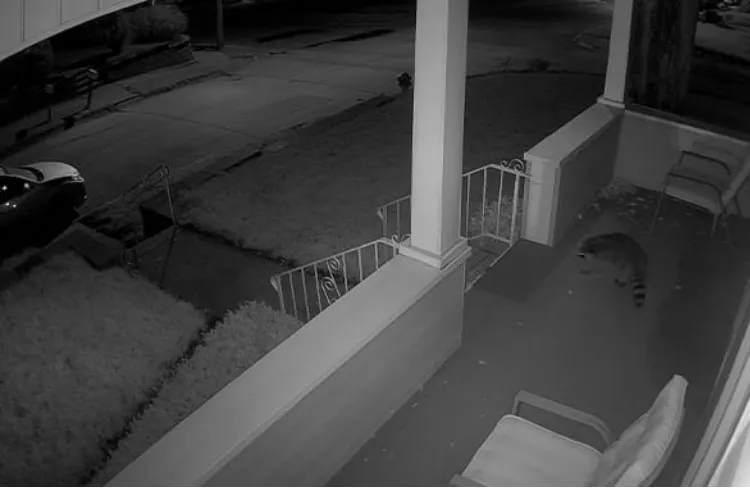
Cooperative security camera installation Suffolk County: black-and-white infrared night sample of porch steps, a railing and a raccoon on the landing
Manufacturer sample frame (Reolink): infrared night video of steps and a landing, with a raccoon on the porch. A private-entry garden building has dozens of landings like this; the plan decides which ones matter.
Parking Courts

Parking Courts, Carports and the Long Rows Between Buildings

Car break-ins and damage are the most common reason a Suffolk co-op board first calls about cameras, and the geometry of a garden complex works against a single camera. Parking is usually split into several courts, each tucked between buildings or along the back of the property, with rows that run a hundred feet or more. A camera on a building wall sees the near cars clearly, the middle of the row as shapes, and the far end as headlights.

For each court we decide what the board actually needs. If the goal is to know which vehicle entered the court at 2 a.m., one camera with a narrower lens on the court's entrance gives a readable side view of every car going in and out, which is more useful to the police than a wide picture of the whole lot. If the goal is to see what happened to a specific car, overview cameras on the building ends cover the rows, and the two together tell the story. A dual-lens or pan-tilt camera can help where a large court has no building end close enough, but it does not replace the entrance view.

Carports and covered rows

Some complexes have carport roofs over the parking rows. The roof shades the cars from the camera above, so the view has to come from the side, usually from a building wall facing the open side of the carport, or from a short bracket on the carport's own end post when it is sturdy enough and owned by the co-op. We check the carport structure before promising a mount on it.

Lighting decides the night picture

Most garden co-op parking courts are lit by a few wall packs and pole lights, many of them recently swapped to LED. A camera aimed into a bright fixture is blinded, a point Suffolk County's Chief of Department Stuart Cameron made to Officer.com in 2019 when he described detectives reviewing private video: it is "very frustrating when you have video of a crime being committed but the quality of the video is such that it's almost useless to you." We walk the courts after dark when the board asks, or we use the super's description and photos, and we aim cameras across the light rather than into it.

Visitor and overflow parking

Visitor spaces near the entrance road and overflow spaces along the back fence are where unfamiliar cars sit longest. A single overview camera there is usually enough for the first phase; the entrance camera already records each car arriving.

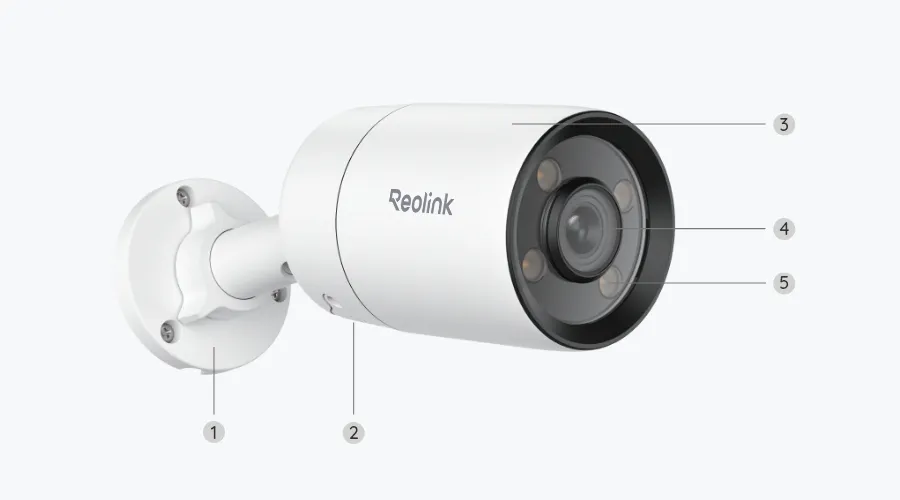
Co-op surveillance camera installation Suffolk County: white bullet camera with numbered callouts for its mount, cable exit, housing, lens and lights
Product diagram (Reolink): a bullet camera, its wall mount and its built-in lights. Bullets with narrower lenses are our usual choice for a parking-court entrance where the goal is a readable car.
Amenities

Pool Gates, Courts, Play Areas and the Clubhouse

Many Suffolk co-ops were sold on their amenities. The 1970 Coram profile listed a pool, tennis, basketball and a play area, and a 2019 owner's post about a large co-op community in the same hamlet described a new board and management replacing pools, gyms, tennis and basketball courts, water mains, laundry rooms and lighting. When an amenity has just been rebuilt with shareholders' money, protecting it becomes part of the camera conversation.

The pool

A pool camera's job is the gate, the fence line and the path to them: who came in after closing, who climbed the fence, who propped the gate. It should not be a close view of people swimming or sunbathing. We mount it on the pool building or a pole outside the fence, aimed so the gate and the approach fill most of the picture and the water is in the background, and we mask any changing area or shower entrance completely.

Tennis, pickleball and basketball courts

Courts are usually left open and are rarely the target of theft. A board that worries about damage to new surfaces or lights may want one camera on the court entrance, but in most first phases the courts are covered incidentally by a parking-court or path camera that already looks that way.

Play areas

The play area is where boards are most careful, and rightly. Where one is covered at all, the view is wide and from a distance, it is there to show damage and after-hours use, and the footage policy should limit who may review it. Parents should hear about it in the shareholder notice before the camera goes live.

The clubhouse or community building

Outside, the clubhouse gets the same treatment as any shared door: a camera on the approach and, if it has one, on the rear service door. Inside, we cover the entrance area and any room where co-op property is kept, such as a fitness room or a management office, and leave restrooms and any changing room out entirely.

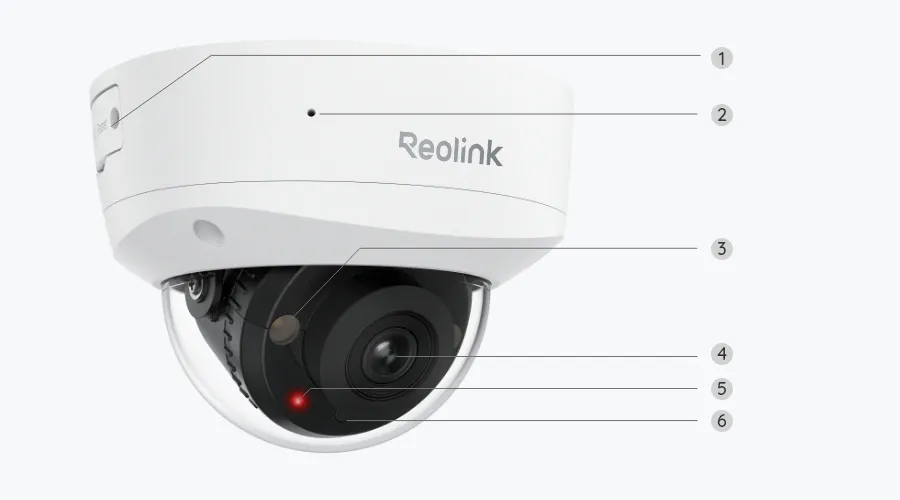
Cooperative housing security camera installation Suffolk County: white vandal-resistant dome camera with numbered callouts for its housing, lens and indicator
Product diagram (Reolink): a vandal-resistant dome. At a laundry building, clubhouse door or maintenance shop within arm's reach, this is the camera that survives a kick or a stick.
Service Buildings

Laundry Buildings, Maintenance Shops, Dumpster Corrals and Mail

Garden co-ops have small buildings that nobody lives in, and those are where break-ins happen quietly. In complexes where apartments have their own washers, there may be no laundry room at all; in others a detached laundry building or a basement laundry serves several buildings and holds coin or card machines. Most properties also have a maintenance shop or garage, a trash and recycling corral for each cluster of buildings, and cluster mailboxes.

Laundry rooms and buildings

One camera outside the door and, inside, a vandal-resistant dome that shows the door and the machine faces covers the usual problems: forced doors, damaged machines and outsiders using the room. Where a laundry vendor owns the machines under a lease, the board should tell the vendor that the room is recorded; the camera covers the corporation's room, not the vendor's cash boxes.

Maintenance shops

Mowers, snow blowers, salt and tools are expensive and portable. A camera on the shop's overhead door and one on its walk-in door, both inside the property line, record anyone entering after hours. If the shop has a restroom or a corner where co-op employees change clothes, those spaces stay out of every view, as New York Labor Law §203-c requires.

Dumpster corrals

Contractors and neighbors dumping renovation debris and furniture into a co-op's containers costs the corporation real money in extra hauls. A camera that sees the corral opening and the closest parking or curb records the vehicle as well as the person. Where the corral is dark, a camera with its own light is often the simplest answer.

Mailboxes and parcels

Package theft is not just a city problem. In September 2023 the Suffolk County Police Department's Sixth Precinct asked for help identifying a man who took a package from the mailroom of an apartment complex in Port Jefferson, and in November 2025 CBS New York reported that the Suffolk District Attorney had charged 14 men in a ring accused of stealing more than 200 phones and tablets from doorsteps in 31 Suffolk communities after tracking deliveries. At a private-entry co-op the parcels land on individual steps, so the path cameras described above do most of the work; a cluster mailbox gets one camera that sees the people using it rather than the contents of anyone's box.

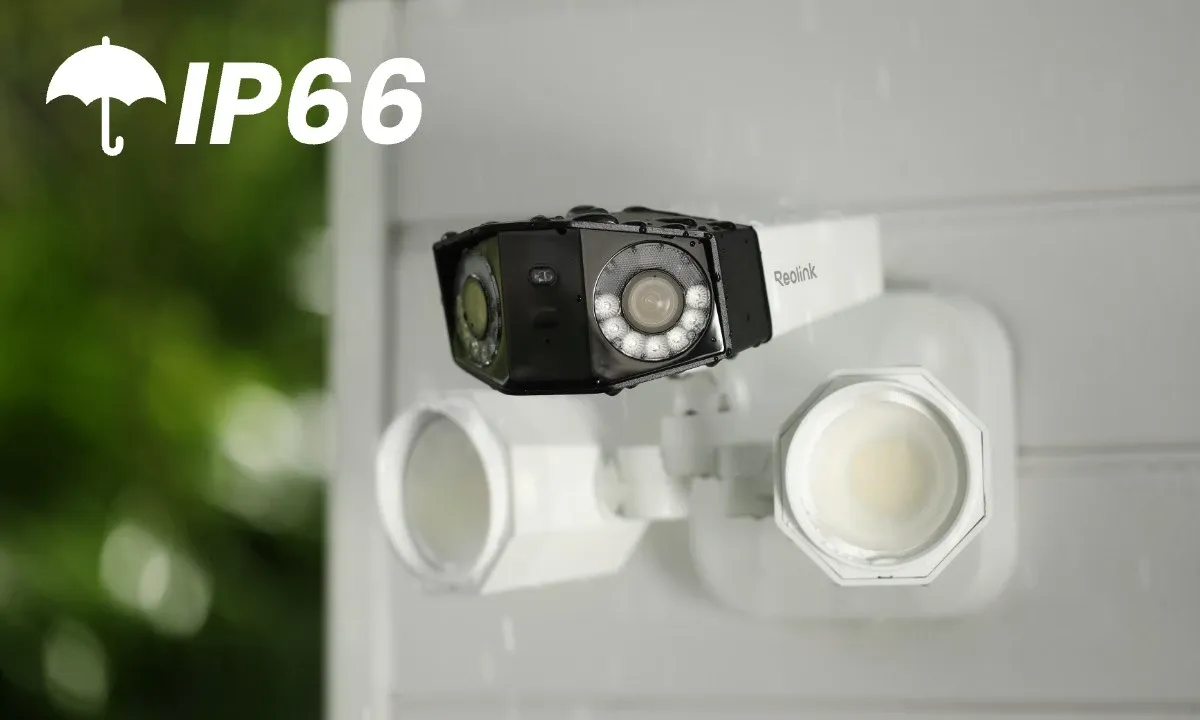
Co-op CCTV installation Suffolk County: dual-lens floodlight camera with two lamps on a white wall in the rain, IP66 rating graphic
Product photo (Reolink, IP66 graphic from the manufacturer): a camera with its own floodlights. Where a dumpster corral or a far parking row has no light at all, a camera that brings its own can be the cheaper fix.
Distance

Twenty Buildings, One Recorder: Getting Video Across a Suffolk Co-op

The hardest part of a garden co-op camera system is rarely the cameras. It is the distance between them. A network camera can sit up to about 328 feet (100 meters) of cable from the switch that powers it, and on a property spread over several acres the farthest parking court or laundry building can be well beyond that from wherever the recorder ends up. Every proposal we write for a Suffolk co-op therefore includes a short drawing of how each building's cameras get home.

Crawl spaces, attics and the outside wall

Many Suffolk garden buildings sit on crawl spaces or slabs rather than full basements, and some have no attic access at all. Inside a building we route cable wherever it can be hidden without opening apartments: through a crawl space if there is safe access, along the underside of an overhang or soffit, or behind the gutter line in a color-matched molding. Concealed wiring is priced per camera, as shown in the cost section; the proposal says, camera by camera, which runs are concealed and which are exposed.

Building to building

LinkWhere it fitsWhat to watch
Network cable through existing conduitOld phone, cable-TV or lighting conduit between buildings that tests clearConduit may be crushed or full; we test before relying on it
Outdoor-rated cable on an existing aerial pathBuildings already joined by a utility-style span the co-op ownsOnly on co-op-owned supports; never on a utility pole
FiberLong runs, runs between buildings on separate electric services, lightning-prone open lawnsNeeds a small switch and power at each end
Point-to-point wireless bridgeLine of sight between roofs or building ends, no trench availableTrees that fill in by June; we check the summer view, not the winter one
Second recorderA detached section of the property far from the restTwo recorders, one app; the board sees both together

New trenching across lawns is the last choice, not the first, because it means landscaping restoration, utility mark-outs and disruption to shareholders. When it is unavoidable, the proposal says so before the board votes, together with the price.

Why we rarely recommend cellular or battery cameras for far corners

Cellular and battery cameras are pitched as the answer for the parking court nobody can reach with cable. On a co-op they bring a monthly data plan per camera, batteries someone must remember to charge, video that lives in a vendor's cloud rather than on the corporation's recorder, and clips that start a second or two after the event because the camera was asleep. They have a place on a temporary basis, such as covering a corral while a permanent link is planned, but the long-term answer is almost always a wired camera on a proper link.

Where the recorder lives when there is no lobby

With no lobby, no package room and often no basement, the recorder needs a home that is dry, lockable, reasonably central and controlled by the corporation rather than any shareholder. The management office, the maintenance shop or a utility room in the clubhouse are the usual answers. We avoid closets that flood, attics that bake in July, and any space inside a shareholder's apartment. Wherever it goes, it shares a small rack or cabinet with the network switch and a battery backup, and the door gets a lock the board controls.

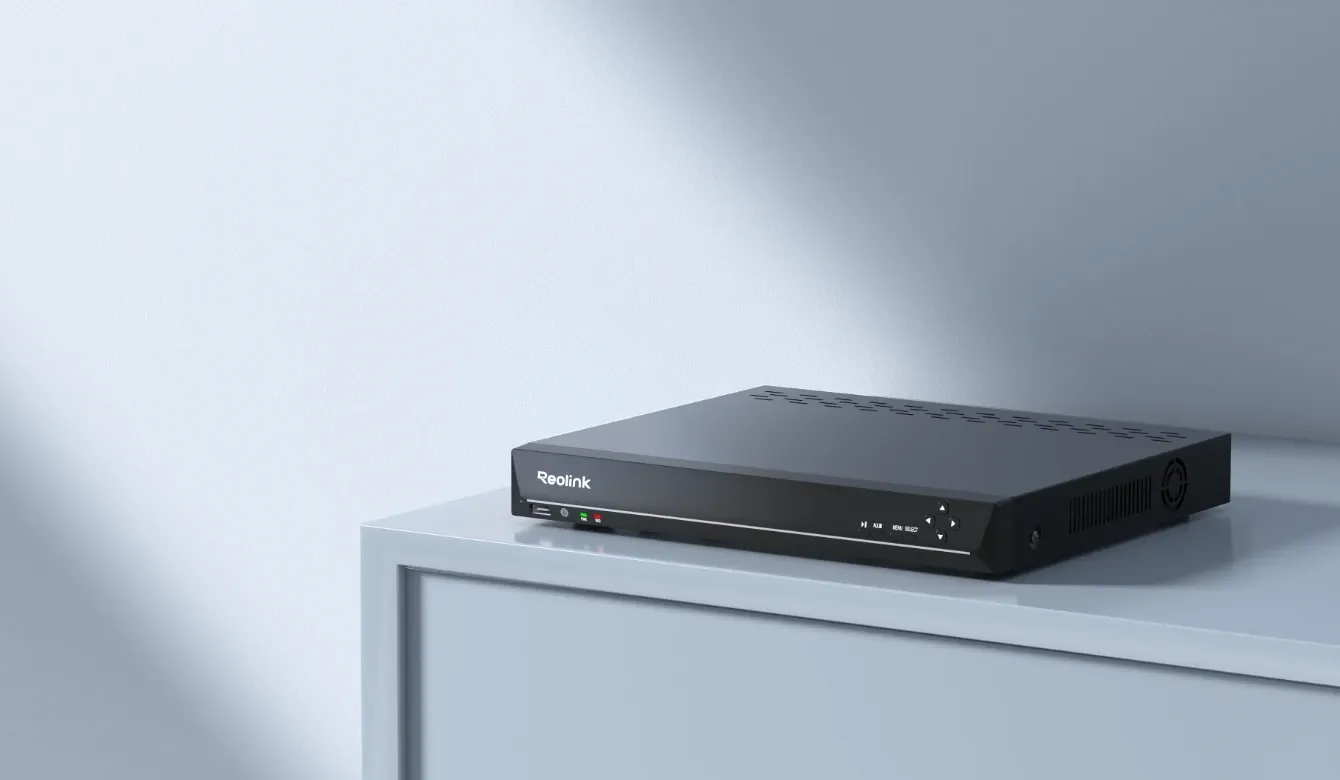
Co-op building security cameras Suffolk County: black network video recorder sitting on a pale shelf
Product photo (Reolink): a network video recorder. In a garden co-op without a lobby, finding a dry, locked, central shelf for this box is often the first real decision.
Power

Whose Electricity? Power for Co-op Cameras, and the Line We Do Not Cross

In most Suffolk garden co-ops each apartment has its own electric meter and the corporation pays for a separate house circuit that runs exterior lights, laundry and amenities. Shareholders reasonably object to a co-op camera drawing on their own meter, and the board does not want cameras that die when one apartment's breaker trips.

Power over the network cable solves most of this. Each camera gets its power and its video on one cable from a switch at the recorder or at a building hub, so nothing is plugged in at the camera. The switch itself plugs into an outlet on the corporation's circuit, which is why its location matters as much as the recorder's.

When a new outlet or circuit is needed

Sometimes a building hub or a pole-mounted camera far from any building needs power that is not there. Abstract Enterprises Security Systems does not do electrical work: a new outlet, circuit or pole feed is done by the co-op's licensed electrician, and we tell the board exactly where it is needed and what it must supply, in writing, before anything is ordered. The camera work and the electrical work are then scheduled so neither crew waits on the other.

Keeping the system up through an outage

Long Island outages are not hypothetical. When Tropical Storm Isaias hit in August 2020, PSEG Long Island reported that the storm affected about 420,000 customers. A battery backup on the recorder and switch keeps a modest system recording through a short outage and lets it shut down cleanly in a long one; a larger battery buys more time. Each building hub that powers cameras needs its own battery, which we list per location in the proposal.

Surges

Copper cable strung between buildings on different electric services, across open lawns, is a path for surges. Fiber between buildings removes that path, and surge protection on the copper runs that remain reduces it. On a large Suffolk property we generally recommend fiber for any building-to-building run that is long or crosses open ground.

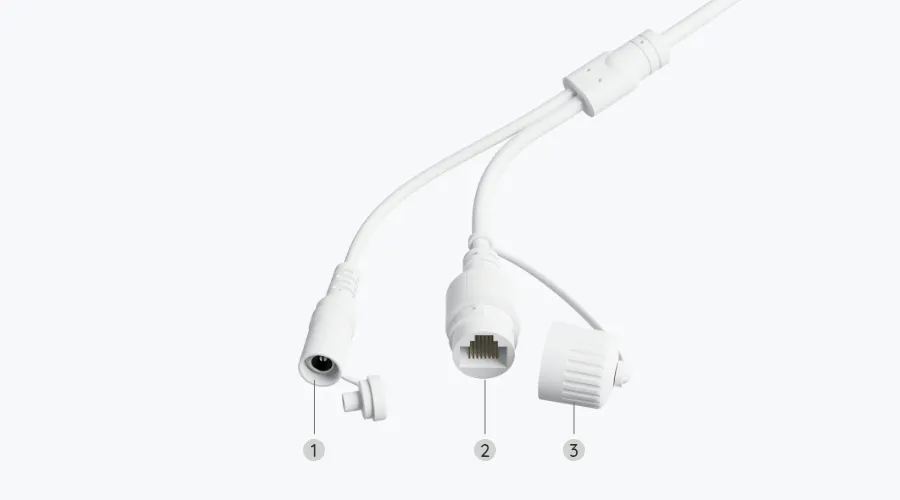
Co-op camera system installation Suffolk County: camera pigtail cable showing a power jack, a network jack and a weatherproof cap
Product photo (Reolink): the short cable on the back of a network camera. With power over the network cable, the single jack in the middle carries both video and power, so no outlet is needed at the camera.
On the Water

Waterfront Co-ops on the Great South Bay and Out East

A few Suffolk cooperatives sit right on the water. The market guide cited above lists two-story waterfront co-ops in Patchogue, East Quogue and Westhampton Beach, most built between 1965 and 1975, and Patchogue listings describe co-ops in a gated waterfront community. They raise three camera questions that inland complexes do not.

Salt, wind and sun

Cameras within sight of the bay need housings and mounts that hold up to salt air, and screws and brackets that will not rust onto the siding. We avoid mounting cameras where they face straight into the low winter sun off the water, which washes out the picture for an hour every morning or evening, and we keep them under overhangs where wind-driven rain cannot sit on the lens.

Docks, bulkheads and boat storage

Where the corporation owns a dock, a bulkhead walk or a kayak rack, a camera on the nearest building end looking along the water's edge is usually enough to show who went out there at night. The cable stays on the building; we do not mount equipment on a dock or bulkhead that floods.

High water

Recorders, switches and batteries go above any level the super has seen water reach, and the equipment cabinet is chosen with that in mind from the start. If the co-op lies in a mapped flood zone, the board should know before the vote which pieces of the system are above the expected water and which are not.

Seasonal co-ops

East End cooperatives that are busy in summer and quiet in winter need a system that keeps recording without anyone on site, reports its own faults, and can be checked from a phone by the managing agent or a designated director. That is a configuration choice, not a different product.

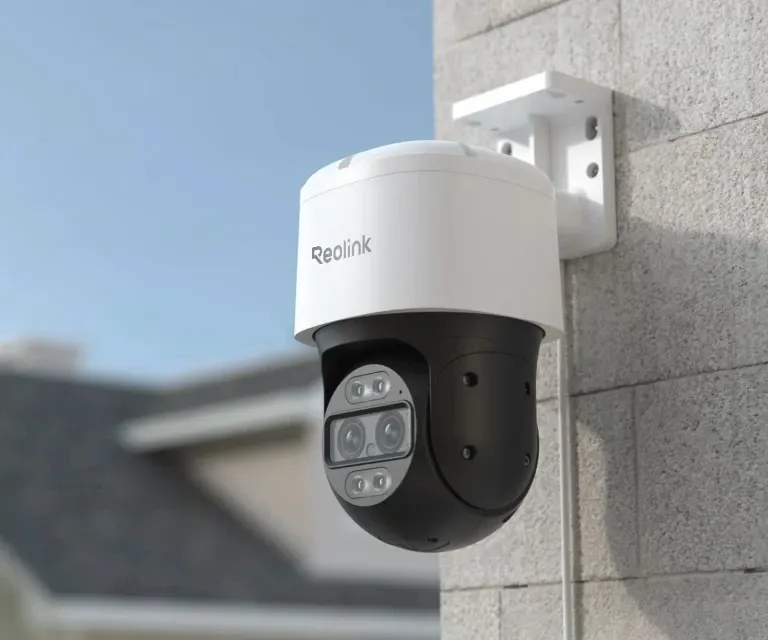
Coop security camera installation Suffolk County: dual-lens pan-tilt camera on a wall bracket against a block wall
Product photo (Reolink): a dual-lens camera that can pan and tilt, on a wall bracket. Useful over a large parking court where one fixed view cannot cover every row, but never a substitute for a fixed camera on an entrance.
Police

Which Police Department, the SCPD Camera Registry and Emergency Access

Who answers a co-op's call depends on where the property sits. Suffolk County's public-safety page says the Suffolk County Police Department provides all police services in the Police District, made up of the five western towns of Babylon, Brookhaven, Huntington, Islip and Smithtown, and supports eight incorporated villages in those towns that keep their own departments, plus eleven town and village departments in the five eastern towns. Nearly all of the county's co-op developments are in the western towns, but a board in a village with its own department, or on the East End, will deal with that department instead.

The voluntary camera registry

The SCPD runs a Camera Registry Program through its SCPD Shield initiative. Citizens and business owners register where their video systems are; when a crime happens nearby, the department can ask participants to check their recordings for a specific date and time, and if the owner finds something, the department arranges to pick it up at the owner's convenience. Registering does not give the police a live view of anything. For a co-op, the decision belongs to the board, and the practical question is who receives the request and who exports the clip: usually the managing agent, following the footage policy described below.

Emergency remote access is a separate decision

SCPD Shield also describes an Emergency Remote Camera Access program, under which the department could remotely reach previously authorized network-based video systems, only during a true emergency such as an active shooter or hostage situation, following pre-arranged guidelines. That is a much bigger step than registration. A board considering it should take advice from the co-op's attorney, decide which cameras would be included, and record the decision in the minutes. We can explain what the recorder supports; we do not set up police access on our own initiative.

Insurers and attorneys ask too

Not every request comes from the police. After a slip on an icy walk or a car damaged in a court, an insurer or a lawyer may ask the co-op to preserve video. Because the recorder overwrites on a schedule, the managing agent should export and save the relevant clip as soon as such a request arrives, log it, and let the co-op's counsel decide what is released and when.

What makes footage useful to detectives

The SCPD's Suffolk Crime Analysis Center in Yaphank is part of the state's network of crime analysis centers and displays footage from county surveillance cameras on a video wall. Private co-op video helps an investigation when the clock on the recorder is right, the export is clean and the camera saw the face or the vehicle clearly. Those three things are design and setup choices we make on installation day.

Across the County

From West Babylon to the East End: How a Co-op Camera Plan Shifts by Location

The co-op developments in the market data are not spread evenly. Most sit in a band through the towns of Babylon, Islip and Brookhaven, with a handful on the water and a few on the East End. The same principles apply everywhere, but each part of the county pushes the plan in its own direction.

Babylon: North Babylon and West Babylon

The western co-ops tend to be smaller sites closer to busy roads, with parking along the street side of the buildings. The entrance camera and the street-facing court matter most, and a camera that sees the property line along a commercial road is often the board's first request. Police calls here go to the county department's precinct covering the town, unless the property is inside a village with its own force.

Islip: Islip and Oakdale

Several of the active developments sit in the Town of Islip, some on generous wooded lots. Trees are the planning issue: views that are open in March close up in June, and wireless links between buildings have to be planned around the summer canopy. We look at the leafed-out view, not the bare one.

Central Brookhaven: Coram, Selden, Holtsville and Port Jefferson Station

This is where the largest complexes are, with dozens of buildings, several courts, pools and full amenity programs. Distance is the issue. These plans almost always include building hubs, fiber or wireless between clusters and a phased schedule, and they benefit most from a recorder location chosen with the whole property in mind.

Patchogue and the South Shore

Waterfront co-ops and gated communities near the bay bring salt air, low sun off the water and occasional high water into the plan, covered in the waterfront section above. Smaller sites mean fewer cameras, but each one is chosen and mounted more carefully.

The East End: East Quogue, Westhampton Beach and beyond

The few East End cooperatives are often seasonal. Police service comes from a town or village department rather than the county police, and the system has to run unattended for months, report its own faults and let the managing agent check in remotely. Travel time is longer, so we plan the walk and the installation to need as few return trips as possible.

Village buildings

A small number of Suffolk co-ops are single buildings on village streets, such as listings in Huntington Village, with a shared entrance, interior halls and sometimes stores below. They are planned like small apartment houses: vestibule, rear door, any lot, and the hall or stair if the board wants it, with the village's own rules on exterior changes checked first.

Systems

Co-op Security Camera Systems We Install in Suffolk County

The equipment list for a Suffolk co-op looks like the list for any multi-building property, chosen for long outdoor runs and for a board that wants to own the system outright.

Cameras by job

  • Turret domes under eaves along the walks and at building ends, where most of a garden co-op's cameras go.
  • Bullets with narrower lenses at parking-court entrances, where a readable vehicle matters more than a wide view.
  • Impact-rated domes wherever a camera hangs low enough to be hit: laundry interiors, the shop, the clubhouse entry.
  • Dual-lens or pan-tilt cameras for big parking courts with no close building end.
  • Cameras with built-in lights at dark corrals and back rows where adding fixtures is not practical.

Recorder and storage

A network video recorder on site, with drives sized to the number of days the board chooses to keep, overwrites the oldest video automatically. Nothing about recording depends on an internet connection or a monthly subscription. Where the property has a second cluster far from the first, a second recorder joins the same app.

Named accounts, not a shared password

The corporation holds the administrator account. The managing agent, the maintenance supervisor and any director the board names each get their own login with only the permissions they need, and the recorder keeps a log of logins and exports that the board can review. When someone leaves, one account is switched off and nobody else's access changes.

House brand by default, partner brands on request

Our proposals are built on our house-brand system unless the board asks for something else. When a board prefers a name brand, Lorex, Luminys and Reolink are the brands we install as a partner, and we work with other brands the board specifies. Brand choice does not change the layout, the policy work or the handover.

CCTV, analog and the upgrade path

Older Suffolk co-ops often have an analog camera system on coaxial cable from the 2000s. Where that coax is in good shape, a recorder that accepts high-definition signals over coax can reuse it for some cameras while new network cameras go where coverage is new. We test the old cable on the walk and say in writing which runs stay.

Co-op video surveillance systems Suffolk County: manufacturer color night sample of a lit pool terrace with tables and lounge chairs
Manufacturer sample frame (Reolink), not a co-op: a terrace and pool at night in color, lit only by low fixtures. Cameras that hold color in low light are why we specify full-color models for co-op pools and back walks.
Camera Counts

How Many Cameras a Suffolk Co-op Usually Starts With

Use these figures to frame the first conversation about scale. They reflect the kinds of Suffolk co-op property we are asked to plan, and the walk replaces them with a real count.

PropertyFirst phaseFull systemFirst cameras
Small garden co-op, 4–8 buildings, one parking court4–68–12Court entrance, court overview, main walk junctions, dumpster corral
Large garden complex, 15+ buildings, several courts and a pool10–1424–40Entrance road, each court entrance, pool gate, laundry and shop doors
Waterfront co-op, two stories, one or two buildings4–66–10Parking, entry walks, dock approach, any shared door
Village building with a shared entrance46–10Vestibule, rear door, lot, hall or stair if the board wants it

Phase by problem, not by building

A tempting way to phase a big complex is one cluster of buildings a year. It usually works better to phase by problem: every parking-court entrance first, then the shared service buildings, then the walks. That way the first phase already protects the whole property against the problem that started the conversation, and the recorder, switches and links installed in phase one are sized for what follows.

Sample Plan

Sample Layout: An Eighteen-Building Garden Co-op in Central Brookhaven

An illustration, not a client. Picture eighteen two-story brick buildings with private entries, arranged in three clusters around lawns; three parking courts off a private loop road; a pool and clubhouse near the entrance; a maintenance shop at the back; one dumpster corral per cluster. The board's complaints are car break-ins in the back court and debris dumped in the corrals. Phase one might be:

#LocationCameraPurpose
1Entrance road, clubhouse cornerBullet, narrow lensEvery vehicle entering and leaving the property
2–4Each parking court entranceBulletVehicles entering each court
5–7Building end facing each courtDual-lens overviewThe parked rows
8–10Each dumpster corralTurret with its own lightVehicle and person at the corral
11Pool gate, from the clubhouse wallTurretAfter-hours entry
12Maintenance shop doorVandal-resistant domeEquipment and tools

The recorder, a switch and a battery go into a locked cabinet in the clubhouse utility room. Cameras near the clubhouse are cabled directly. The back court and shop connect over fiber pulled through an old site-lighting conduit if it tests clear, or a wireless bridge from the clubhouse roof if it does not. Phase two adds the walk junctions in each cluster; phase three, if the board wants it, adds the laundry room interiors.

Services

Co-op Security Camera Installation Services in Suffolk County

A free walk and a numbered plan

A technician walks the grounds with the super or a director, notes light, distance, power and existing equipment, and returns a numbered plan: every camera, what it is for, the link back to the recorder, the retention days, masked zones and a fixed price per phase.

New systems

Complete co-op camera systems for garden complexes, waterfront co-ops and village buildings, designed, installed, programmed and handed over.

Adding to what is there

If the co-op's current recorder is in good health and supports more cameras, new cameras can join it. If it is near the end of its life, we say so and price both options.

Analog-to-network upgrades

Replacing a coax system in stages, reusing good cable where it makes sense and running network cable where new coverage is wanted.

Recorders nobody can open

A common Suffolk story: the previous installer or a former director set the password and nobody has it. Many recorders can be reset; some cannot without losing the stored video. We look before promising either.

Cameras the co-op already bought

When the co-op has bought its own cameras, send us the make, the model and the number of mounting spots. Labor is quoted by text or phone, and the job is booked once the deposit is in. Walk-throughs are not part of customer-supplied jobs, and the equipment's performance and warranty remain the manufacturer's.

Repairs and tune-ups

Dead cameras, failed drives and drifted views are handled through our security camera repair service in Suffolk County; routine cleaning and checks are on the Suffolk camera maintenance page.

Board proposals and bid packages

Proposals written so the board can compare them line by line with other bidders, with the drawing, the price per phase and the assumptions stated.

Older Systems

Mistakes We Often Undo on Older Suffolk Co-op Camera Systems

Many Suffolk co-ops already have some cameras, installed in pieces over the years by different contractors, a handy director or a shareholder's relative. When we walk those properties the same problems turn up again and again. None of them are hard to fix, but a board should know about them before deciding whether to repair, extend or replace.

  • Cameras aimed into lights. A camera looking at a wall pack or pole light shows a white glare and nothing else at night. Moving it a few feet or changing its angle often transforms the picture.
  • The recorder in someone's home. Older systems were sometimes put wherever a volunteer could reach them, including a director's apartment. It belongs in a space the corporation controls.
  • One shared password. Every past director, agent and super may still know it. We replace it with named accounts and give the corporation the administrator login.
  • Battery and Wi-Fi cameras on far buildings. Battery cameras on the back court need charging nobody remembers to do, and Wi-Fi signals across a garden complex are unreliable. Wired cameras with proper links replace them.
  • Unlabeled cable. Nobody knows which cable at the recorder goes to which camera. We label both ends and leave an updated site plan.
  • A wrong clock. Recorders that drift or never switch for daylight saving make exported clips hard to use. We set network time and check it at handover.
  • Audio left on. Some older cameras record sound by default. On a co-op system it should be off, and we switch it off on every camera we touch.
  • Full drives nobody checks. A failed or full drive can mean the recorder stopped saving video months ago. We check drive health on the walk and report what we find.

Repair, extend or replace

If the recorder is healthy, supports more channels and is still receiving updates, extending it is usually the cheapest path. If it is old, unsupported or full of analog cameras at the end of their life, the proposal prices a replacement alongside a repair so the board can compare. Either way, the problems above are fixed in the same visit.

With Intercom & Fobs

Cameras, Intercoms and Fobs on One Co-op Plan

Private-entry garden co-ops often have no building intercom at all, which simplifies the camera plan. Where a Suffolk co-op does have shared entrances with an intercom, or fob readers on the pool, clubhouse or laundry, the camera at that door and the reader or panel should be planned together so the camera sees the person using the panel. The recorder, intercom controller and access panel can share one cabinet and one battery. Boards weighing an intercom replacement can read our co-op board intercom upgrade guide, and the wider picture for Suffolk cooperatives, including amenity fobs and package handling, is on co-op security systems in Suffolk County.

The Law

New York State Rules on Co-op Cameras, as They Apply in Suffolk County

New York City's building and local laws stop at the city line. A Suffolk co-op works under state statutes, its own proprietary lease and bylaws, and the rules of its town or village. None of what follows is legal advice; the co-op's attorney should review the board's policy.

The board's authority

The cooperative corporation owns the land, the buildings and every common area, and the board manages them. New York's highest court held in Levandusky v. One Fifth Avenue Apartment Corp. (1990) that courts defer to co-op board decisions made in good faith, within the board's authority and for the co-op's purposes. A camera plan adopted by a recorded vote, with a written purpose for each camera, fits comfortably inside that rule.

Video, never sound

Recording conversations the co-op is not part of can be eavesdropping under Penal Law §250.05, a felony. Attorney Ricardo M. Vera told CooperatorNews in 2025 that New York does not recognize a common-law right of privacy in public or common areas, but that audio raises Penal Law Article 250 concerns. Every camera we install for a co-op has audio turned off, including models that ship with a microphone.

Places a camera never sees

Penal Law §250.45 makes it a crime to record in a bedroom, changing room, restroom, bathroom or shower without consent, and Labor Law §203-c bars employers from video recording employees in restrooms, locker rooms and changing rooms. At a Suffolk co-op that covers pool changing areas, clubhouse restrooms and any staff changing space. Apartment windows and private patios are masked on the recorder even where the law does not strictly require it.

Shareholders' own cameras

Because each apartment in a garden co-op opens to the outside, shareholders often want their own video doorbells or floodlight cameras on the corporation's walls. Attorney Debra Guzov told Habitat in 2023 that owners "can't just unilaterally do what you'd like to do in the common hallways"; the same logic applies to an exterior wall the corporation owns. Boards typically handle these through the alteration process, with conditions on where the device may point and who maintains it.

Who may install

Under 19 NYCRR Part 195 and the General Business Law, installing security systems that include video surveillance in New York requires a Department of State license. A board should check every bidder's license number; ours is #12000287431.

The county's co-op rules

Suffolk County already regulates how co-op boards handle purchase applications: its code requires written acknowledgment of a complete application within 10 days and a written decision within 45, with reasons stated. Nothing in it addresses cameras, but boards used to that written process tend to write footage rules the same way.

Footage Policy

A Footage Policy a Suffolk Co-op Board Can Live With

A camera system without a written policy invites two problems: video nobody can find when it matters, and video someone looks at when they should not. FirstService Residential's 2024 guidance for co-op and condo boards suggests keeping footage 30 to 90 days, logging every request and access, and not giving residents footage without board and counsel approval. A Suffolk board can adapt that in a page.

  • Purpose. Security of the corporation's property and of people on it; not monitoring shareholders' comings and goings.
  • Retention. Pick the days of video to keep; the recorder erases older footage on its own.
  • Access. A short list of names, typically the agent's office, the maintenance supervisor and up to two directors.
  • When. After a reported incident, not for browsing.
  • Requests. From police, insurers or shareholders, in writing, logged, approved by the people the policy names.
  • Exports. Made by one designated person, with the clip's date and camera recorded.
  • Shareholders' own devices. Governed by the alteration rules.
  • Review. The policy is re-read when directors change.

Telling shareholders and subtenants

A short notice before the cameras go live, signs at the property entrances and at shared buildings, and a line in the house rules are enough for most co-ops. Where the board allows sublets, the notice should go to subtenants too.

Self-managed co-ops

Some smaller Suffolk co-ops have no managing agent. The policy then names two directors, the export duty rotates with the board, and the corporation's administrator password is kept with the co-op's records, not on one person's phone.

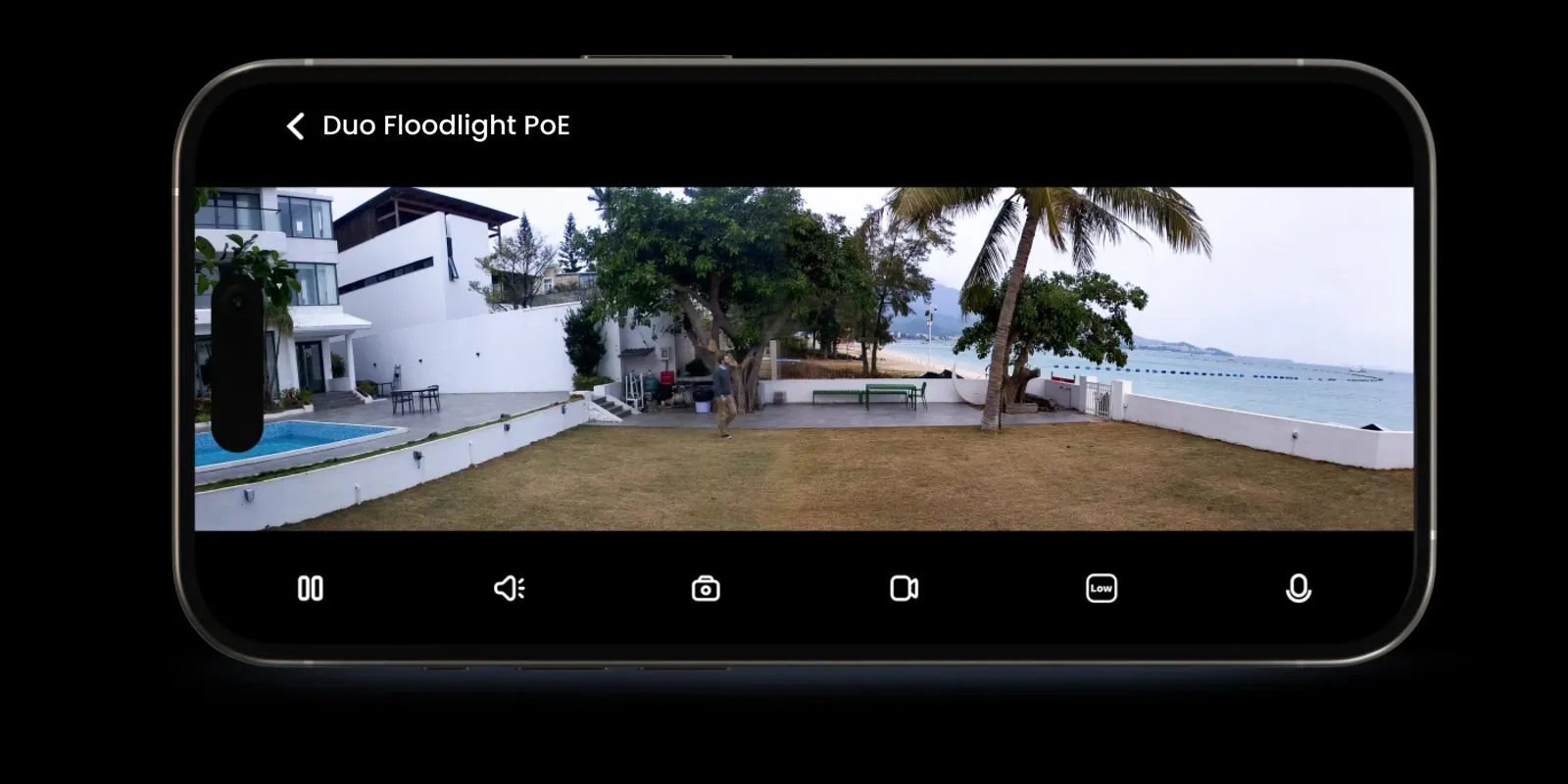
Co op security cameras Suffolk County: phone app showing a wide 180-degree daytime camera view across a lawn toward a pool house and trees
Product image (Reolink): the phone app showing one very wide camera view. Garden co-op walks and lawns suit these wide views from a building corner; the footage policy decides who may open the app.
Shareholder Notice

A Shareholder Notice Suffolk Co-op Boards Can Adapt

Boards often ask what the notice to shareholders should say. Here is a plain-language starting point the co-op's attorney can review and the managing agent can send on the corporation's letterhead:

The Board of Directors has approved security cameras at the corporation's parking courts, entrance road, shared walks, laundry and maintenance buildings, dumpster areas and pool gate. The cameras record video only; none records sound. No camera is aimed into any apartment, and windows and private patios that fall within a view are blacked out on the recorder. Recordings are kept for a set number of days and then overwritten automatically. Only the managing agent and the people named in the board's footage policy may review recordings, and only after a reported incident. Requests for footage from shareholders, insurers or the police should be made in writing to the managing agent. Shareholders who wish to install their own camera or video doorbell on the building must apply under the co-op's alteration procedures. Installation will take place on the dates below; no access to apartments is needed.

Two details make the notice work. First, it names the places that are covered, so nobody is surprised to find a camera on the laundry building. Second, it tells shareholders how to ask for footage, which takes pressure off the board after an incident. Where subtenants are allowed, a copy goes to them as well.

Board Approval

Taking a Camera Plan Through a Suffolk Co-op Board

Suffolk co-op boards are usually volunteer shareholders balancing a project against maintenance charges that, in the market guide's waterfront listings alone, run from about $720 to $1,150 a month. A camera proposal gets approved faster when it arrives with everything a skeptical shareholder will ask about already answered.

What goes in the board packet

  • A drawing of the grounds showing each numbered camera beside a one-line reason for it.
  • The masked zones: windows, patios, the play area if the board chooses.
  • How each building connects to the recorder, and where the recorder lives.
  • Retention days, the people with access and a draft footage policy.
  • Any work the co-op's electrician must do, listed separately.
  • A single price for each phase, and a written list of anything that could change it.

Paying for it

Most boards pay for a first phase from operating funds or reserves and schedule later phases in the next budget. Financing is available through Wisetack, subject to approval. Because ordered equipment cannot be returned, anything that could add cost, such as a link that may need fiber instead of an old conduit, is priced before the vote.

Notice, insurance and scheduling

Once the board votes and the deposit clears, shareholders get the notice, the managing agent sends its contractor rules, and we provide a certificate of insurance naming whoever the agent requires, on award. Jobs are scheduled first come, first served once paid, with work during daytime hours.

Comparing Bids

Questions That Make Co-op Camera Bids Comparable

Two bids with the same camera count can describe very different systems. Ask every bidder for the same details, ideally in a table like this one, before comparing totals.

Ask each bidderWhy
Camera model, lens and resolution at each numbered spotDecides whether a parking-court camera reads a car or shows a blur
How each far building or court connects backReused conduit, new fiber, radio links and fresh trenches each carry a different price and life expectancy
Which runs are hidden and which are surface-mountedHidden cable adds a per-camera charge, so it belongs in the bid
Where the recorder goes and how it is protectedHeat, water and access all matter on a garden property
Battery backup per location and run timeEach building hub needs its own
Electrical work required from the co-opSo it is in the budget, not a surprise
Audio settingIt should be off
Who holds the administrator accountThe corporation
Monthly feesAn on-site recorder needs none to keep recording
State license number and written warranty termsBoth should be on the proposal
Pricing

What Co-op Security Camera Installation Costs in Suffolk County

Cooperatives pay the same camera prices as any customer in the county. Four house-brand cameras with a recorder start at $1,099 installed, and cameras beyond those four are priced once the walk has fixed where they go. These packages come from our Suffolk County security camera pricing page; each is four cameras and a recorder, installed, with wire runs up to 100 feet per camera.

PackageWhat is includedInstalled
A11080P DVR with four 2MP eyeball cameras; night range near 60 ft$1,099
A34-channel NVR with four 2MP network eyeballs$1,133
E24K NVR and 20″ monitor with four 4MP network domes$1,306
E3Four 4MP bullet network cameras with full-color night view and spotlights, 4K NVR with 20″ monitor$1,306
D1NVR and monitor with four 8MP (4K) network eyeballs$1,541

For a garden complex, the network packages usually make more sense than the entry DVR package because network cameras take power and video on one cable and the recorder grows more easily. A3 suits a small co-op starting with its parking courts; E3 suits dark corrals and back rows; D1 suits wide courts where detail at distance matters. Microphones on any package are switched off.

What moves a Suffolk co-op quote

  • How many cameras, and which models, as drawn on the approved site plan.
  • Hidden cable. Each camera whose run is tucked into conduit, molding or piping adds $200, for runs of up to 100 feet.
  • Distance. Anything beyond 100 feet of cable, and any fiber, outdoor switch or radio link, gets its price once we have walked the route.
  • Building hubs, each with its own switch and battery.
  • Retention, because more days means larger drives.
  • Whatever is already there. An old recorder and its cable can be judged only after we open the box and test the lines.

Deposit, warranty and terms

Half the installation price is due as a deposit and equipment is ordered once it clears; the corporation or its managing agent may pay by check. New systems carry the 30-day warranty described on our warranty page, with paid extended plans of a year or more available, each manufacturer's own equipment warranty, and free phone support. Full terms — including 50% deposit, one-year parts-only warranty on Abstract Enterprises Security Systems-supplied products, and the late-fee schedule — are set out in the service agreement.

After Handover

Living With the System: Handover, the First Incident and the Years After

What the corporation keeps

At handover the board receives the administrator account for the recorder, a list of every named login and its permissions, an updated site plan with each camera's number, name and view, the label scheme for the cables, the recorder's model and serial number, the retention setting, and the warranty paperwork. We suggest the managing agent keep a copy with the co-op's records and a second copy stay with the board secretary, so the information survives a change of agent or a change of board.

The first time something happens

When a shareholder reports a break-in or a damaged car, the most useful thing the managing agent can do is act within the retention window. Note the place and the rough time, open the camera nearest that spot, search a window around the time, and export the clip with its camera name and timestamp before the recorder overwrites it. If the police are involved, give them the clip and record the request in the footage log. If the clip shows nothing useful, that is information too: it tells the board where the next camera should go.

The years after

Outdoor cameras collect dust, spider webs and pollen, trees grow into views, and drives wear out. A yearly look at every camera, the drives and the battery keeps a co-op system honest, and each time a phase is added the site plan and the policy are updated with it. Free phone support covers questions about the app and the recorder in between.

Bring the Board a Numbered Camera Plan

The booking is confirmed within 2 hours of your message, and our technicians start their walks early in the day.

Get In Touch

Request a Co-op Camera Proposal in Suffolk County

Tell us the hamlet or village, how many buildings and apartments the co-op has, how many parking courts, whether there is a pool or clubhouse, who manages the property and what the board wants solved. A photo of the current recorder helps. Calls and texts go to (631) 407-2884.

✅

Request Sent!

Thank you. A scheduler will be in touch by phone or text with a morning window for the free walk.

How It Works

From First Call to Handover: Seven Steps at a Suffolk County Co-op

A four-building co-op in West Babylon and a forty-building complex in Coram follow the same seven steps; the big one simply spends longer on the drawing and gets installed in phases.

1

Call, text or send the form

One message from the board, the agent or the super is all it takes; we confirm a morning arrival window for the walk within 2 hours.

2

Walk the grounds

With the super or a director, our technician covers the parking courts, paths, pool, laundry and shop, checks where power and old conduit are, and logs into any old recorder that still has a known password.

3

Numbered camera plan

The board receives the site plan with each camera numbered and explained, the links between buildings, masked zones, retention, electrician items and a fixed price per phase.

4

Board vote and deposit

Directors pass the plan in their normal way. The deposit, half the price, comes next, and ordering waits until it clears.

5

Notice and schedule

The board's letter goes out to shareholders and subtenants. Our insurance certificate goes to the agent along with any site rules, and the job is slotted in the order payments arrived.

6

Install, aim and mask

We work cluster by cluster, then set the cabinet and battery last; every picture is fine-tuned and its masking drawn while the super or agent watches the screen.

7

Handover

Before we leave, the agent finds and exports a test clip with us. The corporation receives the administrator login, a login per named person, the revised site plan, signs and warranty papers.

A small co-op with four to six cameras is usually finished in a day. A large complex with links between clusters takes several days per phase, scheduled around parking so shareholders are told in advance which court is affected.

What shareholders notice while the work is going on

A van and two or three technicians, ladders at building ends for an hour or so per camera, cones around a few spaces in one court at a time and, if a link needs it, a short visit to a crawl space or utility room. We do not need to enter apartments for a common-area system, and work areas are cleared at the end of each day.

Board Questions

Suffolk County Co-op Camera Questions, Answered

Every apartment in our co-op has its own outside door. Should each door get a camera?

Usually not. A camera per door multiplies cost, produces hours of video nobody reviews and feels to many shareholders like a record of their household's movements. Cameras on building corners looking along the walks, plus cameras where walks meet the parking courts, show everyone approaching a group of doors. Boards that want a view of a particular door after a problem can add one camera there later without changing the rest of the system.

Shareholders keep chairs and planters on small patios beside the common walk. Will the walkway cameras record their patios?

Only if the view happens to cross them, and then we mask that part of the picture on the recorder so it records as a black block. The proposal shows each masked area. Where a patio sits right where a camera has to look, we move the camera to the other end of the walk so the patio is behind it.

The previous installer screwed our cameras to aluminum gutters and fascia. Does that matter?

It does. Gutters flex, pull away in storms and move every time they are cleaned, so the camera's aim drifts and the screws loosen. Thin fascia can also let water in around the holes. We remount cameras on the wall or a solid soffit with a proper base and seal the penetrations; the old gutter holes are left for the co-op's gutter contractor to deal with.

Should the board sign up for the Suffolk police's emergency remote access to our cameras?

That is a board decision to make with the co-op's attorney, and it is separate from the voluntary camera registry. SCPD Shield describes emergency remote access as reaching previously authorized network systems only in a true emergency, under pre-arranged guidelines. If the board wants it, it should decide which cameras would be included, record the decision in the minutes and tell shareholders in the camera notice. We can explain what the recorder supports.

Our co-op and the development next door share one entrance road. Can our camera record the shared road?

Yes, where the camera is on the co-op's property and aimed at the part of the road its shareholders use, the same way any owner may record what is visible from its land. Check the easement or road agreement for anything about equipment on shared portions, keep the camera mounted on co-op property, and consider telling the neighboring board. Some neighbors end up sharing the cost of a single entrance camera.

A shareholder mounted a floodlight camera on the outside of the building that points across a parking court. What can the board do?

The exterior wall belongs to the corporation, so the board can ask the shareholder to apply under the alteration rules, set conditions on where the device points, or require its removal if it was mounted without permission. Many boards approve these with conditions: aimed at the shareholder's own entry, no audio, no light shining into other apartments, and the shareholder responsible for any damage to the wall.

Our walks are lit only by knee-high bollard lights. Will the cameras pick up faces?

Bollards light the ground and leave faces in shadow, so an infrared or low-light camera at eave height will show a figure clearly and a face only when the person is close. The answer is placement: cameras at the points where people must approach a door or turn a corner, where they are closest to the lens. Where faces matter most, a camera with its own soft light helps.

Our garden buildings sit on crawl spaces instead of basements. How does camera cable get from building to building?

Inside a building, through the crawl space if it has safe access, or along the soffit and wall in matching molding. Between buildings, through existing conduit if it tests clear, as fiber where runs are long or cross open lawns, or by a wireless bridge where the buildings can see each other. New trenching is the last option and is priced before the vote.

Movers keep chipping our building corners and knocking over walkway lights on move-in days. Can cameras show which company did it?

Often, yes, if the cameras on that cluster see the truck where it parks and the path to the door. The parking-court entrance camera usually records the moving company's name on the truck, and a walk camera shows the damage happening. Many boards pair that with a move-in rule in the house rules: the shareholder books the move with the managing agent, and the agent checks the clip if anything is damaged that day.

Half our walkway lights burn out before anyone reports them. Will the cameras reveal which ones are dark?

Indirectly. A camera that looks along a walk or across a court shows at a glance whether its lights were on, and a quick look at the previous night's video at a few times is a cheap way to catch failed fixtures or a timer set wrong. It is not a lighting monitor, and the repair itself is work for the co-op's electrician.

Cars in our back parking court are being broken into on weekend nights. Which cameras actually help the police?

A camera on the court's entrance with a narrower lens, aimed at the lane cars must use, so each vehicle passes close and side-on, plus an overview camera on the nearest building end that shows which cars were approached. The entrance view gives investigators a vehicle; the overview gives them the time. The recorder's clock must be correct, which we set and check at handover.

We have thirty cameras across the property. How do we find one incident without watching hours of video?

Recorders search by camera and time, and most can filter for people or vehicles detected in a chosen area of the picture. Starting from the camera nearest the incident and a rough time, the managing agent can usually find a clip in minutes. We name every camera by building and view, and show the agent the search at handover.

Reality Check

Five Things Suffolk Co-op Boards Hear About Cameras, Checked

“Our apartments have their own doors, so we don't need building cameras”

Private entries move the risk outdoors rather than removing it. Cars, packages on steps, laundry and maintenance buildings, dumpster corrals and the pool are all shared, and a shareholder's doorbell camera sees none of them.

“If enough shareholders put up doorbell cameras, the co-op is covered”

Those devices belong to individual shareholders, record to their own accounts, keep video on their own terms and point wherever they were mounted. The board cannot rely on any of them after an incident, and has no say over retention or access.

“Night vision reaches as far as the box says”

Infrared range figures describe how far the camera's light reaches in ideal conditions, not how far away a face or a car is readable. In a long parking court the useful distance is often half the printed figure, which is why entrance cameras sit close to the lane.

“One 4K camera can cover the whole parking court”

A high-resolution camera with a wide lens records more of the court, but every pixel is spread across a bigger area. It shows that something happened; it rarely shows who did it at the far end. A modest camera close to where people and cars must pass does that job better.

“Cameras will push maintenance charges up every month”

An on-site recorder keeps recording with no subscription. The ongoing costs are the occasional repair, an optional extended warranty and electricity, which is small. Cloud-only systems are a different model, with fees that grow with the number of cameras.

Field Notes

Field Notes From Co-op Camera Walks in Suffolk County

On nearly every Suffolk co-op walk the same handful of details decides the layout, long before anyone talks about camera models.

  • Where the cars sit overnight. We ask the super which court has the most incidents and walk it first.
  • Old conduit. Garden complexes from the 1960s and 1970s often have abandoned phone, cable-TV or site-lighting conduit that can save a trench.
  • Who owns each pole and wall. Co-op-owned light poles can carry a camera; utility poles cannot.
  • The summer tree line. A view that is clear in March can be a wall of leaves in July.
  • Ground-floor windows and patios. Marked on the plan from the start so the masking is designed in.
  • A home for the recorder. Dry, locked, central and controlled by the corporation.
  • The corporation's circuits. Where the house power is, and where an electrician will be needed.

Before the board signs

  • Every camera has a stated purpose.
  • Every far building has a named link back to the recorder.
  • Electrician items are listed separately.
  • Audio is off and masked zones are shown.
  • Retention days and drive size are written down.
  • The corporation holds the administrator account.
  • The footage policy and shareholder notice are drafted.
  • Every possible add-on is priced before the order.
  • Each bidder's state license has been checked.

Other Suffolk County camera pages

Associations where owners hold title are covered on condo security camera installation in Suffolk County, and rental complexes on apartment building security camera installation in Suffolk County. General camera work is on our Suffolk County security camera installation page, wired systems by their traditional name on CCTV installation in Suffolk County, recorders on NVR installation in Suffolk County, and lot-specific work on parking lot camera installation in Suffolk County.

FAQ

Suffolk County Co-op Security Camera FAQ

Does the $1,099 Suffolk package include camera signs, a battery backup and the viewing app?
+

The package is four cameras, a recorder and installation with runs up to 100 feet each, and remote viewing on phone and computer is included. Signs for the entrances on the plan are part of every co-op installation. A battery backup is listed as its own line in the proposal, sized to the number of cameras it has to carry.

What file format does an exported clip come in, and will it play on someone else's computer?
+

Recorders export to a standard video file, usually MP4, or to the recorder's own format with a small player. For police or an insurer we export a standard file to a USB drive or a download link, with the camera name, date and time noted, so it plays on an ordinary computer.

How long do outdoor cameras last near the bay?
+

Lifespan depends far more on mounting and sealing than on distance from the water. Cameras under an overhang, on a solid mount with sealed cable entries, last much longer than those exposed on an open wall. Salt spray is harder on cheap brackets and screws than on the cameras, so we use corrosion-resistant hardware within sight of the water.

Can a shareholder's doorbell camera be added to the co-op recorder?
+

Technically some can, but we advise against it. Mixing a private device into the corporation's system blurs who owns the video, who maintains the device and what happens when the apartment sells. Keep shareholders' devices under the alteration rules and the co-op system separate.

Does someone from the co-op need to be on site while the crew installs?
+

Someone who can open the shop, the clubhouse, the laundry and any crawl-space hatch should be reachable each morning, and the super or a director should be there at the end of the job to approve each camera view before masking is locked in. Nobody needs to stand with the crew all day.

Does the recorder record all the time or only when something moves?
+

Either. Most co-ops record continuously on cameras covering entrances and parking courts and on motion elsewhere, which stretches the drive further. The plan states the setting for each camera and the resulting retention.

Can we see what a camera will show before it is permanently mounted?
+

Yes. During installation we hold each camera in position and show the super or a director the live view on a phone or tablet before drilling, then fine-tune and mask once it is up.

Can new cameras use the holes and brackets left by the old ones?
+

Sometimes. If an old mount is solid and in the right place, the new camera can go on an adapter plate over it. Often the old spot was chosen poorly, in which case we mount in the right place and leave the old holes for the co-op's own contractor to patch and paint.

How high are cameras mounted on a two-story garden building?
+

Usually just under the eave or about eight to twelve feet up on a wall, high enough to be out of reach and low enough to see faces. Parking-court entrance cameras may sit lower on a building end so vehicles pass at a useful angle.

Can the board try cameras on one parking court before voting on the full plan?
+

Yes, if the recorder, switch and links bought for that trial are the ones the full plan would use. A trial on cheap stand-alone cameras usually has to be thrown away; a trial that is phase one of the real system does not.

How is outdoor cable protected from mowers and string trimmers?
+

Cable never runs loose at ground level. On walls it goes in molding or conduit at a height mowers cannot reach, and where it has to come down to ground or cross to a pole it is in conduit. We point out any low runs to the landscaping contractor's supervisor.

Should the cameras be obvious or discreet?
+

On a co-op, mostly obvious. Visible cameras and signs at entrances discourage casual trouble and tell shareholders and visitors that the property is recorded. Discreet placement makes sense for a camera watching a spot where an obvious camera would just be avoided, such as a dumpster corral with a known problem.

All Areas Served

Co-op Security Camera Installation on Long Island, in New York City and the Hudson Valley

Cameras Planned Around the Whole Co-op, From the Parking Courts to the Pool Gate

It starts with a free walk of the grounds. The board receives a numbered camera plan, a draft footage policy and shareholder notice, and every password in the corporation's name. Four cameras with a recorder start at $1,099 installed.