For Property Managers, Managing Agents, Landlords & Owners · Five Boroughs
Property Management Security in NYC
Intercoms · Key Fobs · Door Buzzers · Cameras · Elevator Access · Cabling
Property management security in NYC starts with a $250 service call for any repair at any building you manage, and new systems for a building or a whole portfolio are quoted in writing after a free on-site assessment. We book visits within 2 hours of the request, schedule seven days a week, and act as one licensed low-voltage contractor for every address on your list, from a six-unit walk-up to a tower with a staffed lobby.
Quick answer: A management company in New York City usually needs one contractor who can fix the intercom, program the fobs, add a camera and pull a cable at any building in the portfolio without a new onboarding each time. Repairs open with the $250 service call. Prices already published on our NYC service pages include $250–$525 to swap an apartment station, $1,200–$2,800 for a lobby panel with its transformer, access control from $1,500 per door and elevator access from $1,500 per car. Building-wide and multi-building work is scoped after the survey, and maintenance agreements are written per portfolio.
Last updated November 27, 2026 by Abstract Enterprises Security Systems, NYS license #12000287431 · Sources: NYS Multiple Dwelling Law §50-a; NYC Housing Maintenance Code §27-2041.1 and HPD's self-closing doors page; 28 RCNY §25-101; NYC Local Law 63 of 2021 (Admin. Code §§26-3001–26-3006); HPD property registration page; HPD Housing Maintenance Code Violations dataset (NYC Open Data, 2025); HPD 2023 NYCHVS initial findings; NYC Building Code §§1010.1.9.8–1010.1.9.9; NYC Admin. Code §28-105.4.7
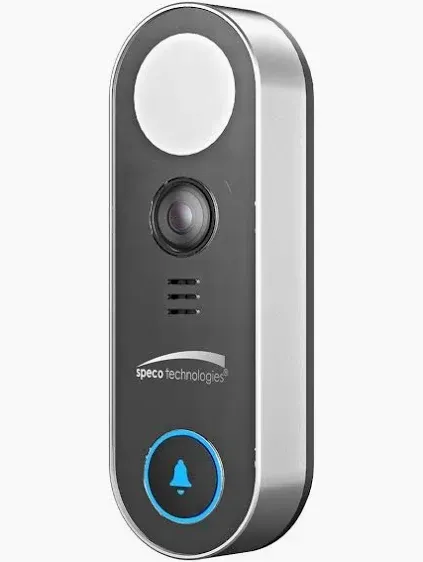
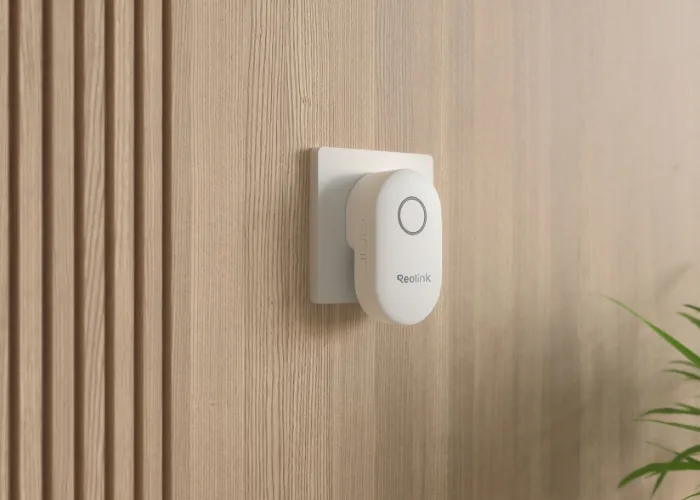
A compact video door station of the kind we fit at a side entrance, a laundry-room door or a small walk-up. Product photo from our job library; the panel at your building depends on what the survey finds.
NYC Property Manager Request
One building or the whole list — tell us where and what
✅
Request Sent!
Thank you. We will be in touch to book the visit, usually within 2 hours of your request.
25+
Years Experience
2 Hr
Booking
100%
Licensed & Insured
4.7★
201 Google Reviews
Owner-operated since 2002 · Thousands of jobs completed · Booked within 2 hours
The Neighborhood
Why NYC Property Managers Need One Security Vendor for the Whole Portfolio
Nobody who runs a New York City portfolio inherits a tidy set of security systems. A management company picks up a building when the owner changes or the previous agent is let go, and with it comes whatever the last three contractors left behind: an audio intercom from the 1980s in one walk-up, a cloud panel with a lapsed subscription in the next, a recorder in a cellar closet that nobody has the password for, and a drawer of fobs that may or may not still open the laundry room. The tenants do not care how it got that way. They care that the buzzer works when the food arrives, that the package room is not a free-for-all, and that the front door actually latches.
That is the problem this page is about. Property management security is less about any single camera or keypad and more about having one contractor who can walk into any building on your list, read what is there, fix it, and leave notes the next person can use. Every additional vendor means another W-9 to collect, another certificate of insurance to chase, another set of invoices to code, and another person who knows one building and none of the others. Consolidating to one low-voltage contractor across the portfolio is how a manager stops paying to rediscover the same closet every time something breaks.
The city adds its own weight. The New York State Multiple Dwelling Law requires a working two-way intercom and self-locking entrance door in most newer apartment buildings of eight or more units, and older ones once a majority of tenants ask in writing. HPD expects apartment and hallway doors to close and latch by themselves. When a smart-access system goes in, the city's Tenant Data Privacy Act decides what a landlord may collect and how long it may keep it. None of that is optional, and a vendor who does not know it can turn a simple fob job into a compliance problem. We are not lawyers and nothing here is legal advice, but we build every system with those rules in view and we point you to the source so your counsel can confirm.
Abstract Enterprises Security Systems has worked in New York security since 2000 and has been owner-operated since 2002. We hold New York State low-voltage license #12000287431, carry general liability insurance, and run crews and vans out of offices in Brooklyn and the Bronx. For a manager, the practical result is simple: one call, one vendor record, and a technician who books into the next open early-day window at whichever building needs it, seven days a week.
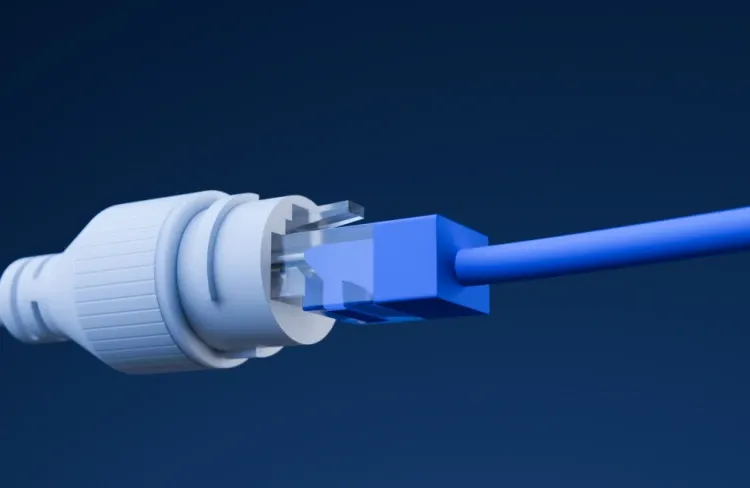
Manufacturer product photo (Reolink): a network cable plug about to seat in a camera's weatherproof pigtail. One cable carries both video and power, which is why we test and label every run before a building's system is handed back to the manager.
New York City facts every property manager should have on file
Intercom duty. State law (Multiple Dwelling Law §50-a) puts the intercom on the owner: any class A apartment building of eight or more units that went up or was converted after January 1, 1968 needs entrance doors that close and lock on their own plus a two-way voice link from every apartment to the lobby door, with a release button in the unit. Buildings older than that must install one when a majority of the apartments ask in writing.
Self-closing doors. HPD states that apartment doors and hallway doors are required to swing closed and latch by themselves (Housing Maintenance Code §27-2041.1), and under Local Law 71 of 2022 it proactively inspects self-closing doors in 300 class A buildings a year. An owner has 14 days to correct after a notice of violation.
Intercom violations are common. HPD issued violations mentioning an intercom in 2025 at these counts by borough: Bronx 1,637, Brooklyn 1,157, Manhattan 1,020, Queens 342 and Staten Island 24 (Housing Maintenance Code Violations dataset, NYC Open Data).
Registration names the agent. Residential buildings with three or more units register with HPD every year, listing the managing agent's name, address and phone; HPD uses that contact for notices and emergencies, and a change of agent is due within five days.
Apartment access has rules. Under 28 RCNY §25-101 an owner gives at least one week's written notice before repairs or improvements inside a unit and 24 hours before an inspection, and access runs 9 a.m. to 5 p.m. on weekdays unless the tenant agrees otherwise. Urgent repairs follow a shorter path.
Keyless entry is regulated. Local Law 63 of 2021 requires express consent before collecting a tenant's credential data, a plain-language privacy policy, encryption and firmware updates, bars selling the data, and bars making a tenant use the smart system to enter their own apartment.
Turnover is low but constant. The 2023 Housing and Vacancy Survey put the citywide rental vacancy rate at 1.4 percent, the lowest since 1968. Every move that does happen still means a fob to cancel, a directory name to change and an app account to close.
Borough
2025 HPD violations mentioning an intercom
What it means for a portfolio
Bronx
1,637
Older walk-ups and prewar elevator stock; budget for riser and station work, not only panels.
Brooklyn
1,157
Wide mix from brownstone rentals to large complexes; standardize where you can.
Manhattan
1,020
Staffed lobbies and walk-ups side by side; access windows and freight rules set the schedule.
Queens
342
Garden complexes and six-story elevator buildings; many separate entrances per property.
Staten Island
24
Smaller multifamily stock; cameras and gates matter as much as the intercom.
The failures we find most often in managed buildings
Across the rentals and mixed portfolios we service, the same handful of problems account for most calls. Entry doors that no longer latch because the closer is worn or the strike has shifted. Intercom transformers in unventilated closets that run hot and fail in summer. Apartment stations that were painted over, pulled off the wall during a turnover or disconnected by a tenant who did not like the buzz. Recorders with full or failing drives that stopped saving weeks ago without anyone noticing. Fob systems still honoring credentials for people who left years ago. Cameras pointed at the ceiling after a delivery cart knocked them. And cable spliced in a hallway ceiling by someone who is no longer around to explain it. None of these are exotic, and all of them are cheaper to catch on a planned visit than on an emergency call.
What each person in a managed building needs from the security contractor
The property manager or managing agent needs paperwork that clears the vendor file, scope written so it can be approved without a phone call, invoices that land on the right building's books, and a contractor who does not set dates or prices with tenants behind the office's back. We schedule through you, confirm through you, and send the tenant-facing notices you approve.
The owner or landlord wants to know the number before the work starts, wants a system the next manager can run, and does not want to buy the same panel twice. We put equipment, labor and any manufacturer platform fee on separate lines, and we tell you before you order if an old cable might fail its test and add cost.
The superintendent is the one tenants find in the hallway. Supers need to know which breaker feeds the intercom power supply, where the controller lives, how to reset a door that will not release, and who to call when that does not work. We walk the super through the equipment at handover and leave the labels and a written map in the closet.
The tenants need a door that opens for them and stays shut for everyone else, an intercom call that reaches their phone or their apartment station, and a straight answer about what the building records. They reach us through management, not directly, which keeps every request tied to an approved job.
What We Install
Property Management Security Services in NYC, System by System
Each part below answers the question a manager actually asks about that system, then points to the NYC service page where the details and published prices live. The audience pages for co-op security systems across NYC and condo security systems in NYC cover the board-run side of the market; this page is for the people who manage rentals, mixed portfolios and buildings on behalf of owners.
Intercoms and door entry: the system that generates the most tenant calls
If one system in a rental building produces most of the complaints to the management office, it is the intercom. The failures are predictable: a dead apartment station, a lobby panel whose buttons have worn through, a transformer that cooked in a hot closet, a door release that clicks but does not pull the strike, or a riser that shorted somewhere in an occupied wall. On a repair visit we test from the panel to the apartment and back, find the fault, and either fix it within the $250 service call or quote the repair before doing more. Published repair ranges on our NYC pages run $250–$525 for an apartment station, $1,200–$2,800 for a lobby panel with its transformer, and $850–$2,400 for riser work in occupied prewar walls. See intercom repair in New York City for the full breakdown.
When a building is past repairing, the choice is between keeping the existing wiring and putting a new panel on it, moving to a panel that calls tenants' phones, or running new cable for an IP system. The right answer depends on what the riser tests like, how many apartments there are, whether tenants without smartphones need an in-unit station, and whether the owner wants to carry a monthly platform fee. We lay those options out side by side for the owner. The install side, including the brands we put in and what new systems cost, is on our page for intercom installation in NYC. Managers who also handle co-op or condo buildings can share our guide to the co-op board intercom upgrade and our condo intercom replacement guide with those boards.
Door buzzers and door releases
A great deal of what tenants call an intercom problem is really the door: a strike that has drifted out of line with the latch, a closer that no longer pulls the door shut against the weatherstrip, a release button wired to a relay that sticks. These are fast, cheap fixes when they are diagnosed correctly and expensive guesses when they are not. Published ranges on our door buzzer repair page for NYC include $325–$650 for a transformer and $450–$950 for a strike with alignment. Because a door that does not latch is also a self-closing-door issue under HPD's rules, we always check the closer and the latch together.
Access control and key fobs
Fobs are where a portfolio either saves the office hours every month or eats them. The best setup lets the office add a new tenant, cancel a lost fob, set a contractor's code to expire on Friday and see who opened the roof door, all from one screen and across every building, without a technician. The worst setup is a different standalone keypad at each property with codes taped inside a closet. We install readers, controllers and door hardware, connect them to software the office can run, and train the staff who will use it. Single-door systems start from $1,500 per door on our access control installation page for NYC.
Two city rules shape every fob job in a rental. The Tenant Data Privacy Act requires express consent before a tenant's credential data is collected, a written privacy policy, encryption and regular firmware updates, and it forbids making a tenant use the smart system to get into their own apartment. And the Building Code sets out how electrically locked egress doors must release, including on loss of power and when the fire alarm activates. We choose hardware that can meet both and we tell you what the policy document needs to say, so your counsel can write it.
Elevator access control
Elevator readers come up in two situations in managed buildings: a commercial tenant who wants its floors locked after hours, and a residential building that wants to keep the gym, roof or storage floors to residents only. The reader and the wiring to the car are our side; the elevator company's mechanic handles the connection inside the controller, and we schedule the visit jointly. Published starting prices on our elevator access control installation page for NYC are $1,500 per car for a card, fob or code reader in Brooklyn and the Bronx, $1,875 in Manhattan, and $2,500 per car for face or fingerprint readers.
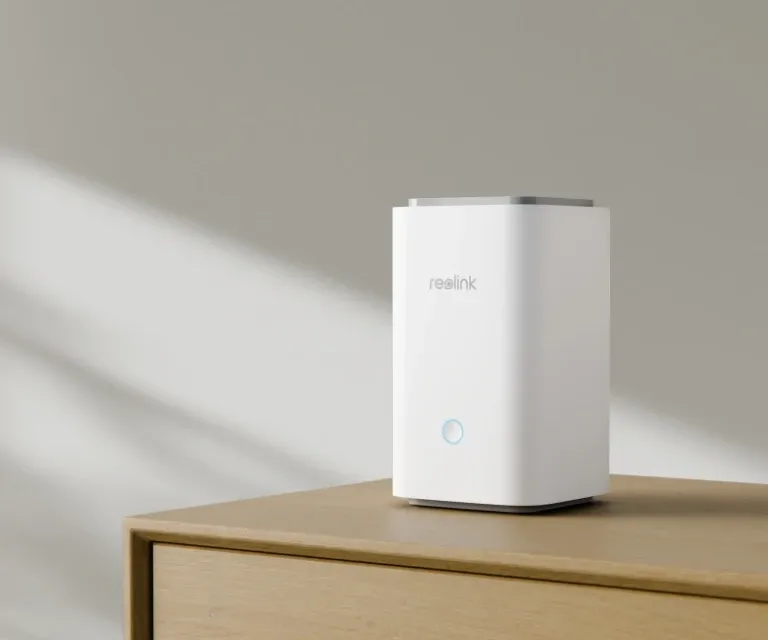
Manufacturer product photo (Reolink): a compact hub that stores video locally. For a small rental with two or three cameras, local storage in a locked closet often beats a cloud plan with a monthly fee per camera.
Cameras for common areas (the short version)
Cameras in a managed building have a narrow job: show who came through the entrances, what happened in the package and mail area, who was in the laundry room and the cellar, and what happened at the trash and back doors. Hallway cameras on every floor are rarely needed and raise tenant privacy questions; well-placed cameras at entries, elevators and shared rooms answer almost every incident report. Four-camera systems on our NYC camera pricing pages start at $950 in Brooklyn, Queens and the Bronx, $999 on Staten Island and $1,099 in Manhattan. Apartment-building camera layouts are covered in depth on our page for apartment building security camera installation in NYC, and general camera work for offices and stores in the portfolio is on our security camera installation page for NYC.
Package rooms, mail areas and delivery access
Package theft is the complaint that ends up in the management office's inbox with a video clip attached. The fix is rarely one device. It is a delivery door or vestibule that couriers can open with a code that expires, a package room door with its own reader so only residents get in, a camera that sees faces at the room's entrance rather than the tops of heads, and a record of which credential opened the door at what time. We build those pieces around whatever locker or shelving system the building already uses, and we keep delivery codes separate from resident credentials so one can be cancelled without touching the other.
Burglar alarms for offices, storage and vacant space
Alarm systems matter in a portfolio in three places: the management or super's office where keys and records are kept, storage and mechanical rooms with copper and equipment worth stealing, and vacant commercial space between leases. We install the panel, door contacts, motion sensors and keypads, and central-station monitoring is available at $30 a month with a keypad or $45 a month with the phone app, as listed on our alarm installation page for NYC.
Fire alarm systems
Fire alarm work in New York City follows its own approval path, separate from the low-voltage security systems on this page. What we do, where and how is described on our NYC fire alarm installation page. On security projects we coordinate with whoever maintains the building's fire alarm so that maglocks and electric locks on egress doors release when that system activates, as the Building Code requires.
Cabling, networks and backup power
Every modern intercom, reader and camera rides on cable, and in an occupied building the cable is usually the hard part. We pull riser and horizontal runs, terminate and label them, install the PoE switches that power cameras and readers, and add battery backup so a power blip does not lock out the front door. Low-voltage wiring under 50 volts generally needs no electrical permit in New York City (Admin. Code §28-105.4.7), though life-safety systems are an exception. Per-drop pricing of $150–$300 is published on our structured cabling installation page for NYC. We do not do electrical work: if a new 120-volt circuit is needed for a power supply, the building's electrician runs it and we connect from there.
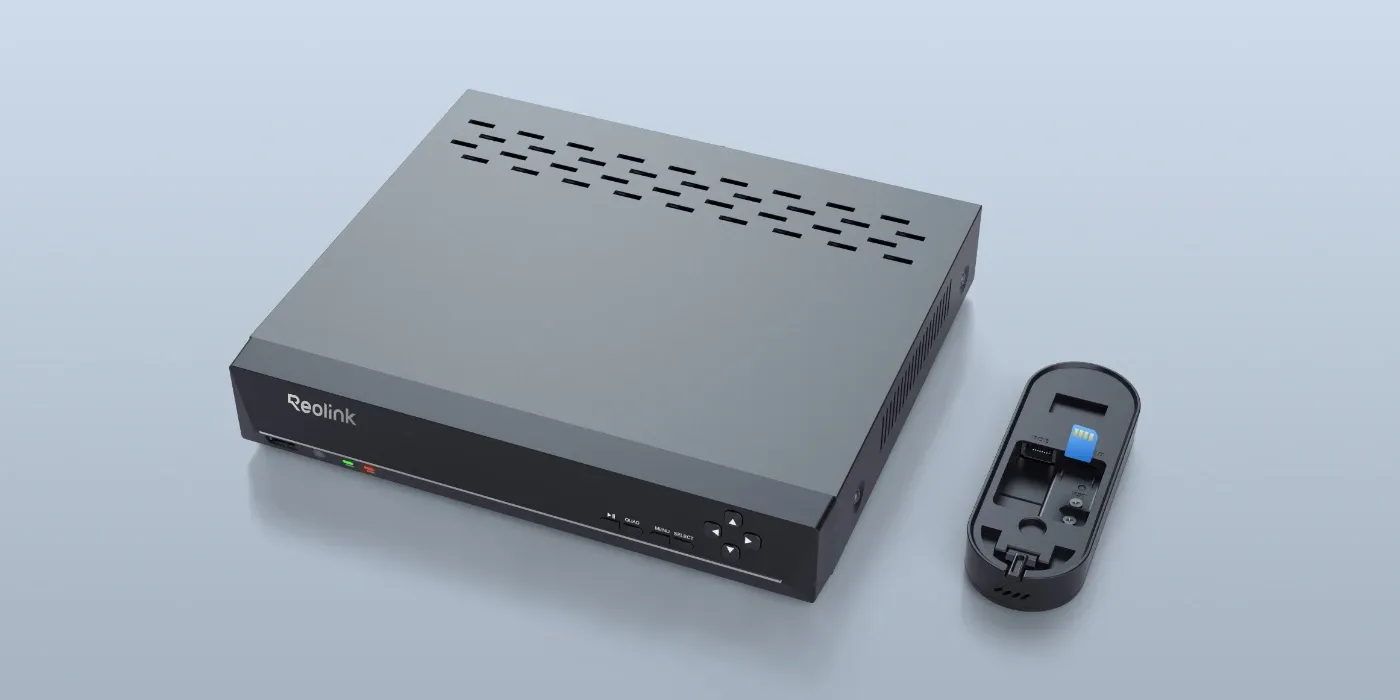
Manufacturer product photo (Reolink): a network video recorder with its remote. In a managed building the recorder belongs in a locked room on battery backup, with the login held by the office, not by whoever installed it.
Internet service at each building
Remote management only works if each building has a dependable internet connection for its security equipment. In many rentals the only service in the building belongs to a tenant or to the laundry vendor, and the intercom or recorder has been borrowing it. We recommend a dedicated connection for the building's systems, in the owner's name, terminated in the same closet as the equipment, with the security devices on their own network segment rather than on a shared tenant network. When a provider has to bring service into the building, we extend it from where it enters to the equipment closet and set up the switch and router for the security side. A building without a reliable connection can still run a local system; it just will not be manageable from the office.
Privacy and retention settings we configure at installation
The settings that matter most to privacy are chosen at installation and rarely revisited, so we set them deliberately. On access systems we turn on only the data fields the building needs, set authentication logs to purge within the period the city's privacy law allows unless the owner's counsel asks otherwise, and create separate user roles so a leasing agent cannot see what the property manager sees. On cameras we mask views that would look into apartment windows or doorways, keep audio off in common areas, and set a retention period the owner has approved. We write those settings into the handover notes so the office can show what the system does if a tenant asks.
One point of contact for the office
Managers tell us the most valuable thing a security vendor can offer is not a product but a single place to send every request. Every request, repair, programming change and proposal for any building on your list comes through one office line and one email, and every job is logged against its building, so the next technician can see what the last one did. Calls and texts are answered at any hour by our automated assistant, and a person responds between 8 AM and 8 PM, seven days a week.
Tying it together so the office runs one system, not twelve
Integration in a portfolio means three practical things. First, the intercom, readers and cameras at each building should be manageable from the office, with user permissions that match the job: a super who can unlock doors at two buildings, a leasing agent who can issue fobs, a manager who sees everything. Second, the door events and the camera timeline should line up, so that when a tenant reports a theft the office can find the clip from the fob record in minutes. Third, the systems should be documented well enough that the next manager can take over. We design for all three and only promise integrations that the equipment's maker documents.
Virtual doorman, remote concierge and monitoring: what we do and do not do
We do not run a virtual doorman, remote concierge or managed security service, and we do not sell security as a monthly subscription. What we do is install the hardware those services depend on: the entry panel with a good camera, the strike or maglock a remote attendant can trigger, the lobby and vestibule cameras, and the network that carries it all. If a building already pays a remote-attendant company, we can connect our equipment to theirs. Live video monitoring is not part of the installations on this page; central-station monitoring for intrusion alarms is.
Accessibility and tenants who do not use smartphones
Every rental building has tenants for whom an app-only intercom is a barrier: older tenants, tenants without smartphones, tenants with hearing or vision loss. A good entry design keeps a way in that does not depend on a phone, whether that is an in-unit station, a call to a landline, or a large-text directory at the panel. We also set door release times and strike hardware so tenants using walkers or wheelchairs have enough time to get through. These choices cost little at design time and a great deal when a tenant complains to HPD afterward.
Commercial portfolios too
Many management companies handle offices, retail strips, medical suites, warehouses and mixed-use buildings alongside residential. The same contractor relationship covers them: storefront cameras and recorders, office access control, after-hours alarms, conference-room cabling and loading-dock cameras. Commercial tenants often bring their own insurance and access requirements, and we work from those documents rather than a residential template.
Short-term and furnished rentals
For owners who keep a few furnished or short-term units, we install smart locks and entry cameras that let the office set and cancel codes between stays.
Building Specialists
Property Management Security for New York City's Building Stock
About 54 percent of New York City's housing was built before 1947 and roughly 62 percent of units sit in buildings with six or more apartments, according to the Citizens Housing and Planning Council's reading of the 2023 Housing and Vacancy Survey. A management company's list reflects that: a lot of old masonry, a lot of shared entrances, and a handful of newer buildings that came with systems someone else chose. The method changes with the building, so the survey always starts with what kind of building it is.
Small walk-ups (3–20 units)
One entrance, a vestibule, a narrow stair and an audio intercom on old wiring. Often the best value is a new panel on the existing riser, a reliable strike and closer, and one or two cameras at the door and the mailboxes.
Prewar elevator rentals
Six to fifteen stories of plaster and brick, risers buried in walls, and a cellar full of abandoned cable. We test the riser before quoting and plan station work around the one-week notice rule.
Rent-stabilized buildings
Long-term tenants, many without smartphones, and a strict eye on anything that looks like a reduction in service. Keep an in-unit option and change the system without leaving anyone unable to buzz in a visitor.
Postwar towers and complexes
Multiple lobbies, garages, service entrances and a staffed desk. Access control and cameras carry the load; the intercom often ties into the desk.
New construction and luxury rentals
Systems arrive with the building, chosen by the developer. The work is takeover: getting admin access, documenting what exists, cutting platform fees that serve no one, and filling gaps.
Affordable and supportive housing
Regulated rents, agency inspections and residents who need help at the door. Durable hardware, in-unit stations and a staffed-desk tie-in usually matter more than app features.
Senior buildings
Large-text directories, longer door-release times, audio clarity at the panel and in-unit stations for residents who do not use smartphones.
Mixed-use with storefronts
Residential entrance and retail tenants under one roof, with separate hours and insurance. Keep the residential credentials apart from the stores' alarms and cameras.
How the install method changes from building to building
In a walk-up, nearly everything happens at the front door and in the cellar, and a day's work can change the whole building. In a prewar elevator building, the riser decides the budget: a tested riser means a panel swap and new stations where they fail; a failed riser means either new cable in occupied walls or a move to a system that does not need the apartment wiring at all. In a postwar complex, the work spreads out over many doors and the challenge is scheduling across lobbies so no entrance is down at the same time as its neighbor. In a new building, most of the work is administrative before it is physical: getting the developer's integrator to hand over the logins, confirming which licenses the owner actually owns, and writing down what is installed.
Masonry dictates mounting. Brick and stone take sleeve anchors; old plaster needs care so a panel does not pull a chunk of wall with it; glass storefront frames need hardware rated for aluminum. Cable paths follow existing chases where they exist and surface raceway where they do not, and we tell the owner before ordering where raceway will show. A manager should never learn on install day that a run had to be exposed in the lobby.
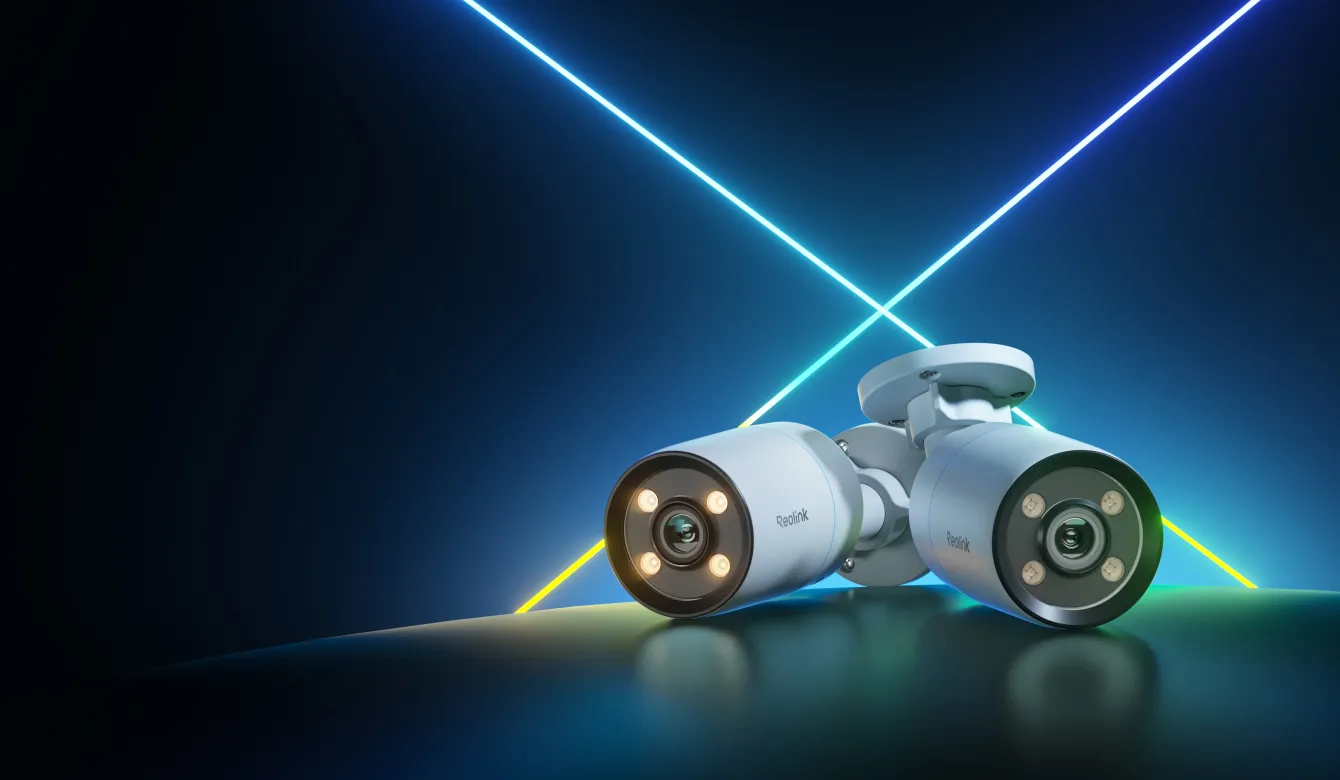
Manufacturer product photo (Reolink): two bullet cameras with built-in lights. Cameras like these suit rear yards, trash areas and service alleys behind rental buildings, where there is no other lighting after dark.
For Management Companies
Vendor Setup, Maintenance Agreements and Multi-Building Work in NYC
Preferred vendor setup: what we provide and when
Management companies onboard vendors in a fairly standard way, and we fit into it. We complete your vendor registration or application form, provide a W-9 for the contracting entity, and sign a master service agreement after review. The certificate of insurance, with the owner and the management company named as additional insureds where you require it, is issued when a job is awarded, from the insurer's system, to your exact wording. We do not send a COI with a quote reply, because the requirements differ by owner and by building, and a certificate written before award usually has to be redone. Being set up as a vendor does not mean we claim to be on any company's approved list; it means your accounts payable can pay us when work is done.
Maintenance agreements across a portfolio
We write maintenance agreements for portfolios. Terms and prices are quoted per portfolio after a site survey, because a contract that covers twelve walk-ups with audio intercoms is a different thing from one that covers two towers with cloud panels, elevator readers and forty cameras. A typical agreement lists each building and its systems, the scheduled checks (door hardware, power supplies, recorder health and storage, battery backup), how service calls are requested and billed, and what is excluded. We do not publish agreement prices or tiers, and we do not offer guaranteed response times or service level agreements. Requests are booked first come, first served once approved and paid, early in the day, seven days a week.
Scheduling many buildings without many vendors
For multi-building work we group visits by area so a technician moves from one building to the next nearby instead of crossing the city. Every visit gets a two-hour arrival window, and technicians arrive inside that window, never early. The office gets the schedule; tenants hear about it only through the notices you approve. When a project covers several buildings we stagger the changeovers so no two buildings that share a super lose their entry system on the same day.
Working in occupied rental buildings
Almost every job in a managed portfolio happens with tenants living there. The front door has to keep working, the elevator stays in service, and any work inside an apartment follows the notice rules: one week's written notice for repairs or improvements, 24 hours for an inspection, weekday hours between 9 and 5 unless the tenant agrees otherwise. An intercom repair where units share a riser needs access to every affected apartment on the visit, so we ask the office to arrange those appointments in advance. On an entry system replacement we build the new panel alongside the old one and switch over in one short window, then go apartment by apartment on the station side.
Tenant turnover, lost fobs and move-outs
Turnover is where a well-built access system pays for itself. When the office can cancel a moving tenant's credentials, remove their directory listing and close their app account from one screen, a move-out costs minutes. When it cannot, it costs a visit. We set up systems so managers can run these changes themselves, and we come out for programming visits when hardware has to be touched: re-keying a reader, replacing a lost master credential, or swapping out a damaged panel. The privacy law adds one step: reference data for a tenant who has moved out has to be deleted or anonymized within 90 days, and a well-configured system can do that on a schedule.
Taking over systems another company installed
When a manager inherits a building, the existing systems usually come without a manual. The hard part is rarely the hardware; it is the accounts. A cloud intercom may be registered to the developer's integrator, a recorder may be tied to a former super's phone, and the fob software may run on a laptop that left with the last agent. Our first step on a takeover is to establish who owns each account and to move admin access into the owner's name, with the management company as an administrator. Where a manufacturer requires proof of ownership to reset an account, we tell the office exactly what that maker asks for. Only then do we start recommending changes, because a system you cannot log into is a system you do not control.
Renovations and capital projects
A lobby renovation, a facade job or an apartment gut is the cheapest moment to fix security wiring, because the walls are already open. When a manager tells us about a capital project early, we walk the space with the general contractor, mark where conduit or cable should go for the entry panel, the readers, the cameras and the network, and give the contractor a simple drawing. The finishes go up over cable that is already in place, and the new system goes in at the end without cutting into fresh plaster. Waiting until after the renovation usually means surface raceway across a new lobby, or opening finished walls. We coordinate with the general contractor's schedule, and the high-voltage side stays with the building's electrician.
Repair or replace: how we advise an owner
Owners ask whether to keep paying for repairs or replace a system outright. We look at four things before we answer. Parts: can we still get stations, panels and boards for this model, or are we scavenging? Frequency: how many service calls has the building logged in the past year, and are they the same fault? Tenant impact: are complaints or HPD violations piling up? Capability: does the office need features the old system cannot give, such as remote fob management or phone answering? If parts are available and calls are rare, we recommend repairing. If parts are gone or calls are constant, we put the replacement cost next to a year of repairs and let the owner decide.
Seasonal timing: winter, holidays and the budget year
Cold weather is hard on entry doors. Metal contracts, closers slow down, and a strike that worked in October stops catching the latch in January, so a pre-winter check of the main doors at each building is cheap insurance against a door that stands open on the coldest night. Package volume peaks between late November and the new year, which is when weak delivery access and blind spots in the mail area show up in tenant complaints; adding a delivery code or a package-room reader in early fall heads that off. And many owners set capital budgets late in the year, so a survey in the fall puts real numbers in front of the owner before the budget is locked. We do not run seasonal discounts or promotions; the timing advice is about the buildings, not a sale.
Incident records, insurance and liability
When a tenant reports a break-in, a theft from the package room or a fall in the lobby, the office's first questions are what happened and when. A camera system that keeps enough days of footage, with clocks set correctly, and an access system that logs which credential opened which door, answer those questions in minutes. Insurers and attorneys often ask for that record. We set retention periods and clocks at installation and show the office how to export a clip and a door log. We do not promise insurance discounts, and whether a carrier credits a system is between the owner and the carrier, but a building that can document an incident is in a better position than one that cannot.
RFPs, scopes of work and bid comparison
We answer requests for proposals and scope-of-work bid forms for single buildings and portfolios. A good scope from a management company names the buildings, the doors and apartments, what must be kept, and the deliverables at the end: as-built drawings, labeled cables, admin logins in the owner's name. When comparing bids, a manager should check whether each one includes the same number of stations and readers, whether wiring is new or reused, who owns the software license, what the monthly platform fee is, and whether the price includes removing the old equipment. A low number that leaves out the platform fee or assumes the riser will test clean is not a low number.
What changes from a 10-unit building to a 400-unit complex
At ten units the decisions are about the door: panel, strike, closer and whether tenants get a phone call or an in-unit station. At fifty units, access control and the directory start to matter more than the panel itself, and a camera in the package area becomes standard. At a few hundred units across several entrances, the system becomes a network: a controller for many doors, a recorder or server for many cameras, user permissions for a staff, and a documented backbone between buildings. The price per apartment usually falls as the building grows, but the share spent on cable, software and documentation rises.
New York rules a property manager should know
Beyond the intercom requirement in Multiple Dwelling Law §50-a, the self-closing door rule in Housing Maintenance Code §27-2041.1, the access notice rules in 28 RCNY §25-101 and the Tenant Data Privacy Act, two building code sections come up on almost every access job. Section 1010.1.9.8 sets the conditions for sensor-release electric locks on egress doors, including a push-to-exit device, release on loss of power and release on fire alarm activation. Section 1010.1.9.9 covers electromagnetically locked doors released by hardware with a built-in switch. Cameras that record sound raise a separate issue under New York's eavesdropping law. We design to these requirements and cite them; your attorney confirms how they apply to a specific building.
Your Questions Answered
Property Management Security in NYC: Questions Answered
Pricing and billing across a portfolio
How do you price service across a portfolio when every building has a different system?
Repairs are priced the same way everywhere: a $250 service call covers the diagnosis and simple fixes, and if more work is needed we quote it before doing it. For upgrades and new systems we survey each building and write a scope per building, so the owner can approve one address without approving the rest. For a portfolio-wide program, the survey produces a list of every building, what it has, what is failing and what we recommend, with the cost for each line. That list becomes the basis for any maintenance agreement.
Can each building's work be invoiced to the entity that owns it?
Yes. Most New York portfolios are a set of separate owning entities, and each job is invoiced to the building and entity the office names when it approves the work. A project that spans several buildings can be split into one invoice per address. That keeps the costs on the right set of books and avoids reallocating a single invoice at month end.
What should a manager do after HPD writes an intercom violation?
Book the repair right away, and send us the violation description so the technician knows what the inspector saw. We diagnose and fix the fault, test from the lobby panel to the affected apartments, and give you a dated invoice describing the work that you keep with your records for correcting and certifying the violation with HPD. If the fault is in a shared riser, we will need access to the affected apartments on the same visit, so ask the office to set those appointments before we arrive.
Vendor paperwork and contracts
What does it take to set Abstract Enterprises Security Systems up as a vendor in our management system?
Send us your vendor packet. We return the completed forms and a W-9, and once a job is awarded we have our insurer issue the certificate of insurance with the additional insureds and wording you specify. Company clients pay by check or through the online payment link on each invoice.
Will you sign our master service agreement?
Usually, after we review it. We read the scope, insurance, indemnity and payment sections, raise anything that conflicts with how low-voltage work is done in New York City, and sign once those points are settled. Our own service agreement sets out deposits, our one-year parts-only warranty on equipment we supply, and the late-fee schedule, and the two documents are reconciled so there is no conflict between them.
Tenants and the law
How much notice must tenants get before a technician enters an apartment for intercom work?
Under 28 RCNY §25-101, an owner gives tenants written notice at least one week before repairs or improvements in their unit, and at least 24 hours before an inspection. Access is limited to 9 a.m. to 5 p.m. and not on weekends or legal holidays unless the tenant agrees. Urgent repairs do not need written notice, but the tenant still has to be told by phone, email or a knock at the door. We schedule apartment work to fit those windows, and the office sends the notices.
Can a landlord make tenants use a fob or app to get into their own apartment?
No. Under the Tenant Data Privacy Act (Admin. Code §26-3003(b)(3)), an owner may not require a tenant to use a smart access system to enter the tenant's own dwelling unit, so a mechanical key option stays at the apartment door. Fobs and apps at the building entrance and common areas are allowed, with express consent, a written privacy policy and the data limits the law sets. If you are considering smart locks on apartment doors, talk to your counsel before ordering.
Do self-closing door rules change how you install locks and readers on apartment and stair doors?
Yes. HPD requires apartment and hallway doors to close and latch by themselves, so any strike, maglock or reader we add has to leave the closer working and the door latching. We check the closer, hinges and latch on every door we touch, and we will not add hardware that holds a fire-rated door open. A door that fails to close after our work is a violation waiting to happen, and we treat it as our problem to fix before we leave.
Should cameras in a rental building record sound?
In common areas we leave audio recording off. Recording conversations can raise issues under New York's eavesdropping law (Penal Law §250), and video alone answers nearly every incident question a manager faces. Intercom panels record or relay audio only during a call, which is a different situation. If an owner wants audio anywhere, we ask that counsel approve it in writing first.
Running the systems day to day
Can our office staff add and remove fobs without calling a technician?
That is how we set systems up. With a cloud-managed or networked controller, the office adds and cancels credentials, edits the directory and sets temporary codes from a browser or app, and we train whoever will do it. A technician visit is needed only when hardware has to change. Older standalone keypads cannot do this, which is one of the most common reasons managers replace them.
Can one technician cover several of our buildings on the same day?
Yes, when the buildings are near each other and the work is approved and paid. We group visits by area and book early-day windows, two hours each, and a technician can work through a short list of nearby buildings in a day. Visits far apart are booked to start or finish a day rather than crossing the city in the middle of it.
Can we watch the cameras for every building from one app?
Yes, when the recorders support remote viewing and each building has a working internet connection. We add each building's recorder to one account owned by the management company, with separate permissions for the office, the supers and the owner. Older recorders from different makers may need to be replaced to get there, and we say which ones during the survey.
Can a portfolio with five different intercom brands be standardized?
Over time, yes, and it is usually worth doing. We do not recommend ripping out working equipment just to match. The practical path is to pick one platform for future replacements, move each building to it when its current system fails or when a renovation opens the walls, and meanwhile service what is there. Within a few years most of the portfolio runs on one platform, one admin login and one set of spare parts.
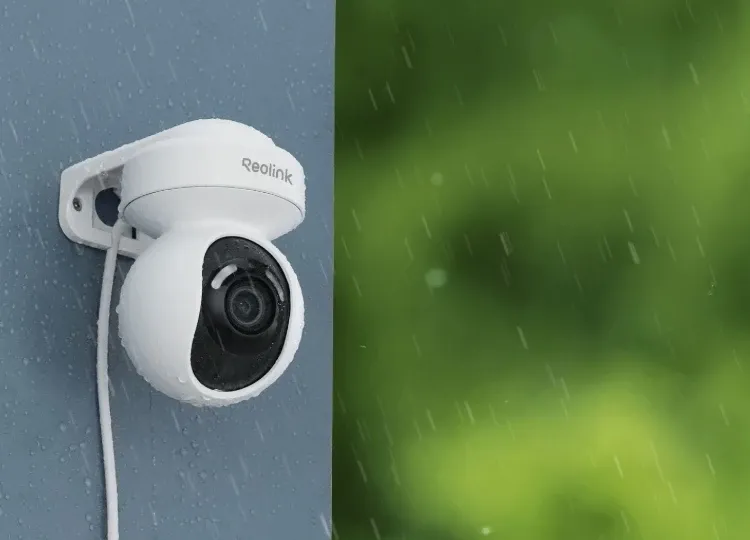
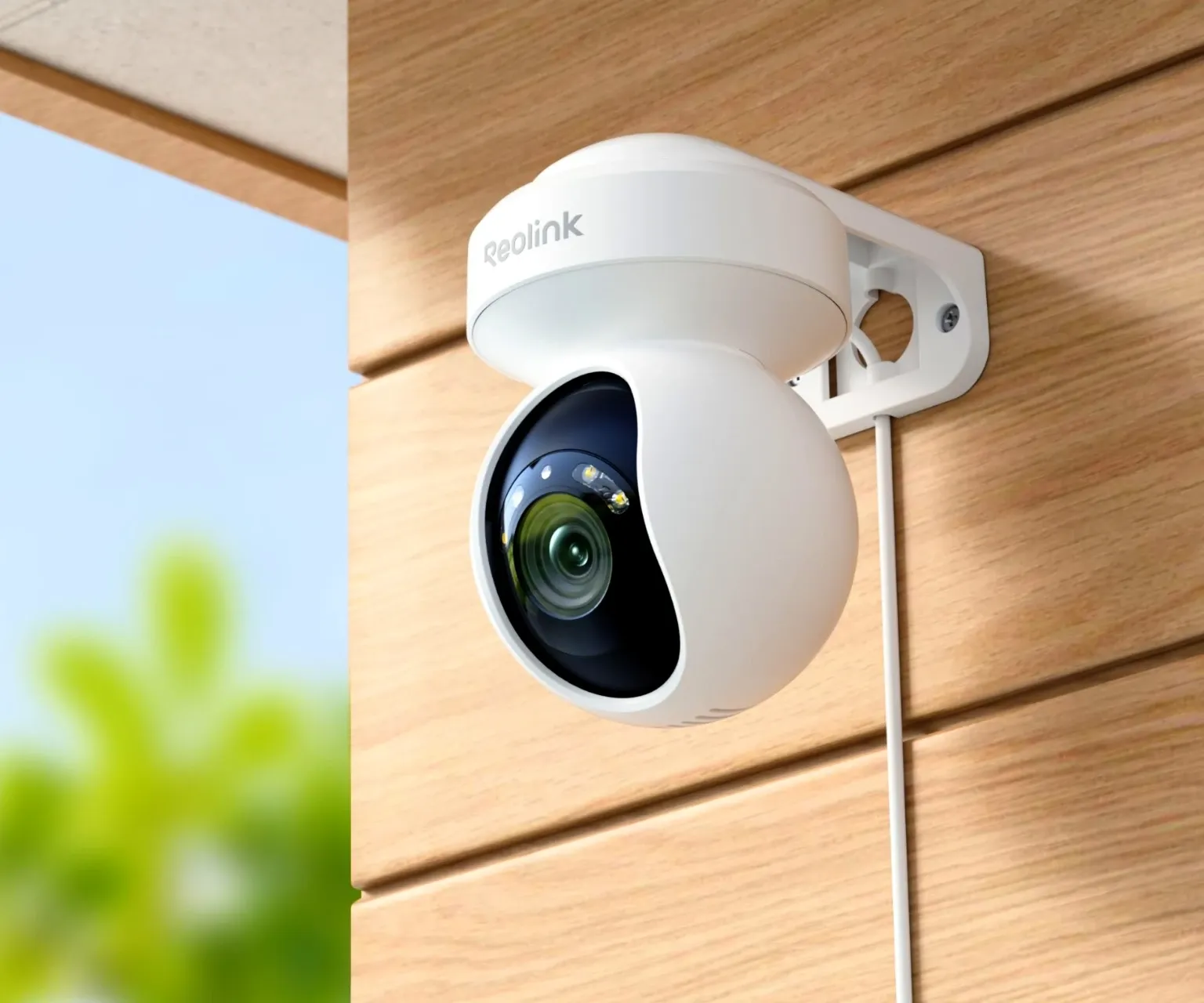
Manufacturer product photo (Reolink): a pan-tilt camera hung from a wall bracket. In a rental courtyard or parking area, one camera that can be turned by the office sometimes covers ground that would otherwise take two fixed cameras.
How do we protect a vacant apartment or an empty building between tenants?
For a vacant apartment, cancel all credentials tied to it, change the lock or code, and put a camera on the hallway door if the unit has been a problem. For a vacant building or commercial space, a monitored burglar alarm with door contacts and motion sensors is the backbone, with cameras on entrances and the rear. We install those systems; central-station alarm monitoring is available on the terms listed on our alarm page, and we do not sell live video guarding.
What building information should we send before the first visit?
The address and borough, the number of units and entrances, who to meet on site, where the intercom and camera equipment is if you know, any admin logins you hold, photos of the lobby panel and the cellar closet, and the symptom or goal in one sentence. If the building has had recent HPD violations, include those. With that list, the first visit is spent fixing rather than finding.
Equipment
Types of Property Management Security Equipment We Install
Entry panels
Audio and video door stations with directories, keypads and readers; surface or flush mounted; on reused wiring or on a network.
Apartment stations
Audio handsets, video monitors or phone-based answering; mixed buildings keep in-unit options for tenants who need them.
Door hardware
Electric strikes, maglocks, closers, request-to-exit buttons and door position switches, chosen to keep doors self-closing and code-compliant.
Readers and credentials
Fob, card, keypad and mobile readers at entrances, package rooms, laundry rooms, gyms, roofs and storage.
Controllers and software
Door controllers and the cloud or local software the office uses to add, cancel and audit credentials across buildings.
Cameras and recorders
Dome, turret, bullet and pan-tilt cameras with network recorders or local hubs, set up for remote viewing by the office.
Network and power
Cat6 runs, PoE switches, racks, battery backup and surge protection for every system we install.
Alarm components
Panels, keypads, door contacts, motion and glass-break sensors for offices, storage and vacant space.
Delivery access
Courier codes, vestibule readers and package-room entry tied to the camera record.
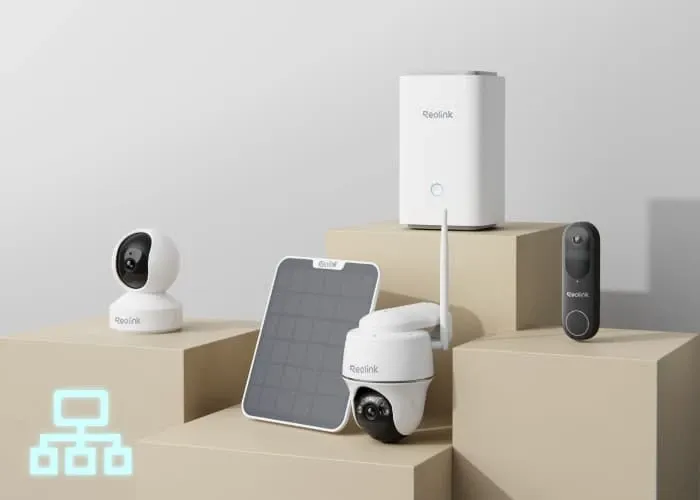
Manufacturer product photo (Reolink): a storage hub shown with an indoor camera, a solar-powered outdoor camera and a video doorbell. Battery and solar cameras help at gates and parking areas where running cable is not practical; wired cameras remain our default inside buildings.
Choosing between the main options
Decision
Option A
Option B
What usually decides it in a managed rental
Panel on old wiring vs network panel
Reuse: lowest cost and least disruption if the riser tests well
Network: needed for most video and app features
Riser test results and how many tenants need an in-unit station.
Phone-call intercom vs in-unit stations
Phone call: no apartment wiring, works for most tenants
Stations: no smartphone needed, no reliance on cell service
Tenant mix; many rentals use both, with stations for those who ask.
Cloud-managed vs local access control
Cloud: office manages every building from one screen
Local: no platform fee, managed on site
Portfolio size; three or more buildings usually justify cloud management.
Network recorder vs cloud video
Recorder: one-time cost, local storage in a locked room
Cloud: no hardware on site, monthly per-camera fee
Camera count and how long footage has to be kept.
Fob vs mobile credential
Fob: simple, works for every tenant
Mobile: nothing to lose, easy to cancel
Most buildings run both; consent and privacy policy cover each.
National brands and app-only systems vs a local installer
Do-it-yourself camera kits and consumer doorbells sold by national brands are built for a single house, not a building with fifty tenants and a management office. They tie every device to one person's account, they rarely support user permissions for staff, and nobody comes out when the door release fails. Platform intercom companies solve some of this but bring a per-door or per-unit monthly fee and a contract term. A local licensed installer gives the owner a choice of hardware, a system the owner controls, and a technician who can be at the building the same week. We install the platforms many buildings use and the systems that carry no monthly fee, and we show the owner both costs side by side.
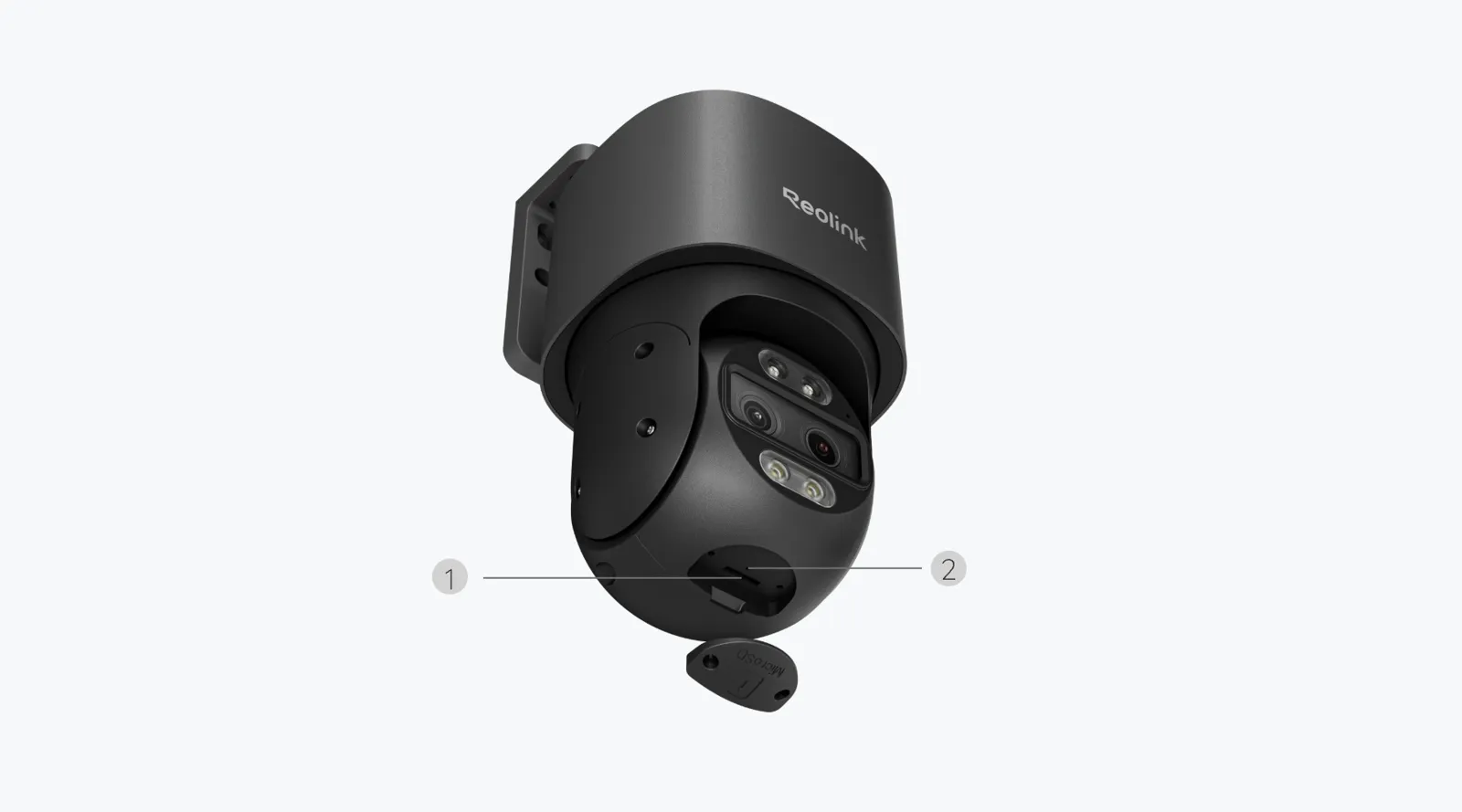
Manufacturer product photo (Reolink): a black dual-lens pan-tilt camera. Darker housings blend into dark brick and storefront frames on mixed-use buildings, where a white camera stands out.
Want One Contractor for Every Building on Your List?
Send the addresses. We survey, write it up building by building, and book the first repair within 2 hours of your request.
What AI Gets Wrong About Property Management Security in NYC
Search summaries and national cost guides answer questions about building security in general terms that rarely fit a New York City rental portfolio. These are the claims we hear most often from managers who looked something up before calling, and what we see in the field.
1. "An intercom system costs a few thousand dollars installed"
National cost guides such as HomeAdvisor give intercom installation a normal range of $1,200 to $8,500, framed mostly around houses and small offices. That range says nothing about a 60-unit prewar rental where the panel is cheap and the riser is the problem.
In a managed building the cost is driven by how many apartments need a station, whether the existing cable can be reused, whether tenants need in-unit options, and whether the owner will carry a monthly platform fee. A panel swap on a good riser can be a modest job; a building that needs new cable in occupied walls is not.
That is why we publish component prices rather than a single number, and why building-wide work is quoted only after we have tested the riser and counted the doors.
2. "Property management security means hiring guards or a monitoring company"
Summaries often lump physical guards, remote monitoring and electronic systems together. For most New York rentals, the security that matters day to day is electronic: a door that latches, an intercom that works, credentials the office controls, and cameras that capture what happened.
Guards and live monitoring are services some large properties buy, and they depend on the same hardware being in good shape. A remote attendant cannot let anyone in through a door whose strike is out of alignment.
We install and maintain the hardware; we do not sell guard or live video services. Getting the hardware right first is almost always the cheaper improvement.
3. "Just switch every building to a smartphone intercom"
App-based intercoms are a good fit for many buildings and we install them. But a blanket switch ignores tenants without smartphones, tenants with poor cell signal in their apartments, and long-term tenants who will call HPD if they cannot buzz in a visitor.
The Tenant Data Privacy Act also adds obligations when the system collects tenant data, and it bars requiring smart access at a tenant's own apartment door.
In practice, rental buildings do best with a phone-call or app option for those who want it and an in-unit or landline option for those who need it.
4. "Any handyman can fix a buzzer"
A handyman can sometimes free a stuck button. Diagnosing whether the fault is the panel, the transformer, the riser, the relay or the strike takes test equipment and experience with the systems in New York's older buildings.
Wrong guesses are expensive: a new panel on a shorted riser fails again, and a strike replaced without fixing the closer still leaves the door open and the building exposed to a self-closing-door violation.
Low-voltage security work in New York State is licensed. Ask any vendor for the license number; ours is #12000287431.
5. "Fob data isn't regulated"
In New York City it is. Local Law 63 of 2021 covers smart access systems in class A multiple dwellings, including key fobs, apps and biometrics. Owners need express consent, a written privacy policy, limits on what is collected, encryption and timely deletion.
The law gives tenants a private right of action over unlawful sale of their data, with statutory damages of $200 to $1,000 for each sale.
We configure systems to keep only what is needed and to purge it on schedule, and we tell the office what its privacy policy has to cover. The policy itself is a job for your counsel.
6. "Put cameras on every floor for full coverage"
More cameras do not mean better security in a rental building. Hallway cameras outside every apartment door are expensive to install and store, and they invite tenant complaints about being watched coming and going.
The incidents managers actually deal with happen at entrances, in the package area, in the laundry room, at the elevator, in the cellar and at the trash door. Cameras placed well in those spots answer most questions.
We plan coverage from the incident history the office already has, then add cameras where that history points.
7. "A vendor's insurance certificate should come with the quote"
Many vendor checklists ask for a COI up front. In practice, the certificate has to name the right owner, management company and additional insureds with your required wording, and those details are usually settled at award.
A certificate issued at the quote stage is often reissued at award anyway, which delays the start.
We provide the W-9 and complete your vendor forms when asked, and our insurer issues the COI to your exact specification as soon as the job is awarded.
Get In Touch
Request a Property Management Security Survey in NYC
List the buildings, with boroughs, unit counts and entrances, what is installed now and what is failing or due for replacement. Photos of the lobby panel, the cellar closet and the recorder screen help us plan the visit. For a single repair, one address and the symptom is enough. Prefer to talk? Call (800) 486-0943.
✅
Request Sent!
Thank you. We will be in touch to book the visit, usually within 2 hours of your request.
How It Works
Our Property Management Security Process
1
Request from the office
The manager or agent sends the address, the symptom or goal and who to meet. We book into a two-hour early-day window, usually within 2 hours of the request.
2
Diagnose or survey
A repair starts with the $250 service call. A new system or a portfolio starts with a free survey of every door, closet and recorder, with photos and notes.
3
Written scope per building
Equipment, labor, any platform fee and any possible extra (such as a cable that may fail its test) on separate lines, so each owner can approve its own building.
4
Approval, deposit and paperwork
Vendor forms and W-9 as needed, the COI issued on award, and the deposit. Equipment is ordered after the deposit; special-order items get a date only when they ship.
5
Notices and scheduling
The office sends tenants the required notices; we set apartment appointments within the legal access hours and stagger building changeovers.
6
Installation and switchover
New equipment goes in beside the old, the switch happens in one short window, then stations and readers are finished unit by unit and door by door.
7
Handover to the office
Admin logins in the owner's name, labeled cables, a written equipment map, training for the super and office staff, and the final invoice per building.
Manufacturer product photo (Reolink): a plug-in chime that pairs with a video doorbell. In a super's apartment or a management office, a chime like this means the person on duty hears a delivery door even when the phone is in another room.
Field notes: the first hour at a building we have never seen
When a management company adds a building and calls us for the first time, the first hour is mostly detective work. We start at the front door, because the door tells you a lot: if the closer is weak or the strike is out of line, half the intercom complaints are really door complaints. Then we go to the cellar or wherever the intercom power supply lives, look for the transformer, check whether it is warm, and trace which wires go up the riser. Most older buildings have at least one abandoned system still on the wall beside the live one, so we tag what is dead before touching anything. If there is a recorder, we try the logins the office gave us; more often than not nobody has them, and getting back in becomes the first job. Before we leave, we write down what we found in plain language, with photos, so the next visit starts from notes instead of from scratch. That one page is usually the first written record the building has had of its own systems.
Field notes: what a scheduled check covers under a maintenance agreement
On a scheduled check we open and close every controlled door and watch the latch, because a door that drifts is the most common slow failure. At the panel we place a test call to a sample of apartments and confirm the release pulls the strike. In the closet we check the power supply's output and temperature, look at the battery backup's age, and make sure nothing new has been stacked against the vents. On the recorder we confirm every channel is live, the drive is healthy, the clock is right and the oldest stored footage reaches back as far as the owner wants. In the access software we look for credentials that should have been cancelled: tenants who moved, contractors whose jobs ended, staff who left. Each check ends with a short written report per building, sent to the office, listing what we fixed on the spot and what needs approval.
How long a property management security project takes
A repair is usually finished on the first visit, or on a second visit if a part has to be ordered. A panel replacement on reused wiring at a walk-up typically takes a day on site once equipment is in. A building-wide entry and fob upgrade in a mid-size elevator building takes several days of on-site work spread over a few weeks, because apartment visits follow the one-week notice rule. A portfolio program moves building by building over months, with each owner approving its own scope. Special-order equipment can add time we do not control; we give a date only once it ships.
Coverage Area
Property Management Security Near New York City's Landmarks
These large residential complexes show the kind of building stock managed portfolios contain across the five boroughs. We name them only as landmarks for the areas we serve; they are not clients, and we do not name the buildings we work in.
Stuyvesant Town–Peter Cooper Village
Red-brick buildings with 110 street addresses on an 80-acre tract from First Avenue to Avenue C between 14th and 23rd Streets, holding 11,250 apartments. The surrounding Lower East Side and Gramercy blocks are thick with walk-ups and prewar elevator rentals.
Spring Creek Towers
Described by its operator as a 5,881-apartment rental complex in East New York, Brooklyn. Nearby Canarsie and East Flatbush mix two-family houses with mid-size rentals.
LeFrak City
Twenty apartment towers on about 40 acres in Corona, Queens, with 4,605 apartments and more than 14,000 residents. Elmhurst and Rego Park around it carry many six-story elevator buildings.
Parkchester
171 brick buildings of eight or 13 stories that MetLife built on 129 acres between 1938 and 1942. The East Bronx around it is heavy with prewar walk-ups and elevator buildings.
Washington Heights and Inwood
Upper Manhattan's long rows of prewar elevator apartment buildings, where risers, old audio intercoms and narrow vestibules are the norm.
St. George and the North Shore
Staten Island's North Shore, around the ferry terminal, where small multifamily buildings and newer rentals near the waterfront sit a few blocks apart.
How property management work differs across the five boroughs
Manhattan portfolios swing between staffed towers and walk-ups on the same block, and access windows, freight elevator bookings and building rules set the schedule more than the work itself. Brooklyn runs from brownstone rentals with three or four units to large complexes, so a single company's list can need both a doorbell-style panel and a multi-door access system. The Bronx has the city's highest count of intercom violations and a deep stock of prewar elevator buildings, so riser work and door hardware come up constantly. Queens has many garden complexes and six-story buildings with several entrances per property, which makes access control and directory management the main event. Staten Island has smaller multifamily buildings where gates, parking areas and exterior cameras matter as much as the intercom.
Pricing
Property Management Security Cost in NYC
Every price below is already published on one of our NYC service pages. Building-wide systems and maintenance agreements are quoted after the survey; we do not publish package prices for whole buildings or portfolios.
Work
Published price
Where it comes from
Service call (diagnosis and simple repairs)
$250
Every NYC repair page
Apartment intercom station swap
$250–$525
Door buzzer repair, NYC
Intercom transformer
$325–$650
Door buzzer repair, NYC
Electric strike with alignment
$450–$950
Door buzzer repair, NYC
Riser repair in occupied prewar walls
$850–$2,400
Door buzzer repair, NYC
Lobby panel with transformer
$1,200–$2,800
Intercom repair, NYC
Access control, single door
From $1,500 per door
Access control installation, NYC
Elevator access, card/fob/code reader
From $1,500 per car (Brooklyn, Bronx); $1,875 (Manhattan)
Elevator access control, NYC
Four-camera system
From $950 (Brooklyn, Queens, Bronx); $999 (Staten Island); $1,099 (Manhattan)
Camera pricing, NYC
Structured cabling
$150–$300 per drop
Structured cabling, NYC
Alarm central-station monitoring
$30/month keypad; $45/month with app
Alarm installation, NYC
Maintenance agreement
Quoted per portfolio after survey
—
What drives the cost of property management security work
Five things move the number more than the brand on the panel. The state of the existing cable is first: a riser that tests clean keeps a project small, and one that does not changes everything. The count of doors and apartments is second, because each reader, strike and station is its own line. Third is access: Manhattan buildings with freight-elevator rules and limited work hours cost more to work in than a walk-up with a cooperative super. Fourth is software and platform fees, which can be zero or can be a per-unit monthly charge for years. Fifth is how much documentation and training the owner wants at handover, which is small on one building and significant on a portfolio.
Budgeting a portfolio over several years
Most owners cannot or should not replace every building's systems in one year. A survey lets the office rank buildings by risk: open violations and constant complaints first, then buildings with obsolete equipment that cannot get parts, then buildings with systems that work but cost too much to run. That ranking becomes a three- to five-year capital plan, and each year's budget covers the next few buildings on the list plus repairs across the rest. Financing is available through Wisetack, subject to approval.
Cost per unit, per door and per building
Managers often want a per-unit number for budgeting. It is a reasonable way to compare buildings once each has been surveyed, but it is not a way to price one before the survey, because a 20-unit building with a bad riser can cost more than a 60-unit building with a good one. Per-door pricing works better for access control, where each controlled opening carries roughly the same reader, hardware and wiring. Per-building pricing is what an owner approves in the end, and it is what our written scopes give.
Full terms — including 50% deposit, one-year parts-only warranty on Abstract Enterprises Security Systems-supplied products, and the late-fee schedule — are set out in the service agreement.
Shop Our Systems
Property Management Security Packages & Pricing
Fix what's broken
$250 service call at any building. Diagnosis and simple repairs included; anything larger is quoted before the work, using the published component prices above.
One building, done right
Quoted after a free survey. Entry panel, door hardware, fobs and cameras for one building, with a written scope the owner can approve on its own.
Portfolio program
Quoted per portfolio. A survey of every building, a ranked plan, standardized platforms, office-run credential management and a maintenance agreement written for your list.
Already have the equipment? Labor-only installs
Some owners buy hardware through their own channels. We install customer-supplied intercoms, readers and cameras for a labor price given by phone once we know the model and the building, and we book it with a deposit. We do not do walk-throughs on customer-supplied equipment, and the performance of equipment we did not supply is the manufacturer's responsibility, not ours. Equipment we supply carries our one-year parts-only warranty, and our own labor carries a 30-day warranty, with longer coverage available as a paid add-on.
Manufacturer product photo (Reolink): a pan-tilt camera on a bracket against wood siding. Frame houses and small multifamily buildings on Staten Island and in eastern Queens take this kind of mount more easily than masonry.
Need Numbers Before the Owner's Budget Meeting?
Tell us which buildings and when the meeting is. We schedule the survey early and write the scope per building so each owner sees its own line.
Send the building list and get a written scope per address.
FAQ
NYC Property Management Security FAQ
Do you also cover buildings our company manages on Long Island and in the Hudson Valley?
+
Yes. Besides the five boroughs, we work in Nassau and Suffolk counties and in Westchester, Rockland, Orange, Putnam, Dutchess and Ulster counties, so a management company with buildings outside the city can keep one security vendor for the whole list.
Is there a set tier or minimum portfolio size for a maintenance agreement?
+
No. We do not sell preset tiers. Each agreement is written after a site survey of the buildings it will cover, listing those buildings, their systems, the scheduled checks and how service calls are billed, and it is priced for that portfolio.
Do you offer guaranteed response times or a service level agreement?
+
No. We do not sign service level agreements or promise response times. Requests are booked within 2 hours of the call into early-day arrival windows, seven days a week, first come first served once the work is approved and paid.
Can tenants call you directly when the intercom stops working?
+
Service requests come from the management office or the owner, who approves the work. If a tenant calls us, we take the building address and pass the report to the office, so every visit stays tied to an approved job and nothing is scheduled behind management's back.
What deposit do you need before a visit or a project is scheduled?
+
Nothing goes on the schedule until it is paid. Jobs under $500 are paid in full when booked, and larger jobs take a 50% deposit, with the balance due on completion as set out in our service agreement. Equipment is ordered only after the deposit.
Do you train supers and office staff on the systems you install?
+
Yes. At handover we show the super where the equipment lives and how to reset it, and we train office staff to add and cancel fobs, edit the directory, set temporary codes and pull camera clips. Phone help on our installed systems is free afterward.
Can you survey and document the systems already installed across our buildings?
+
Yes. A portfolio survey records, building by building, the intercom, door hardware, readers, cameras and recorders in place, what condition they are in, which logins the office holds and what we recommend, with photos. Managers use it to plan budgets and brief new staff.
Do you install smart locks for furnished or short-term rental units?
+
Yes. For owners who keep furnished or short-term units, we install keypad and app-controlled smart locks and entry cameras so the office can issue and cancel codes between stays.
Do you work on weekends in occupied rental buildings?
+
We book seven days a week with visits early in the day. Work inside apartments still follows the city's access rules, which limit entry to weekday business hours unless the tenant agrees to another time, so weekend visits usually focus on lobbies, closets and common areas.
Can a management company buy equipment through you for buildings it handles itself?
+
Equipment normally comes from us as part of an installed job. For buildings where your own staff handle cameras, our security camera equipment pages list what we sell equipment-only, and we can still install it later if you need us.
All Areas Served
Property Management Security Across New York City
Our property management security pages by borough: property management security in Manhattan. Pages for Brooklyn, Queens, the Bronx and Staten Island are being written now, along with Long Island, Nassau County, Suffolk County, the Hudson Valley, Westchester, Rockland, Orange, Putnam, Dutchess and Ulster counties, and a page on apartment building security systems for landlords and owners. Until then, call (800) 486-0943 for any of those areas, or return to the Abstract Enterprises Security Systems home page.
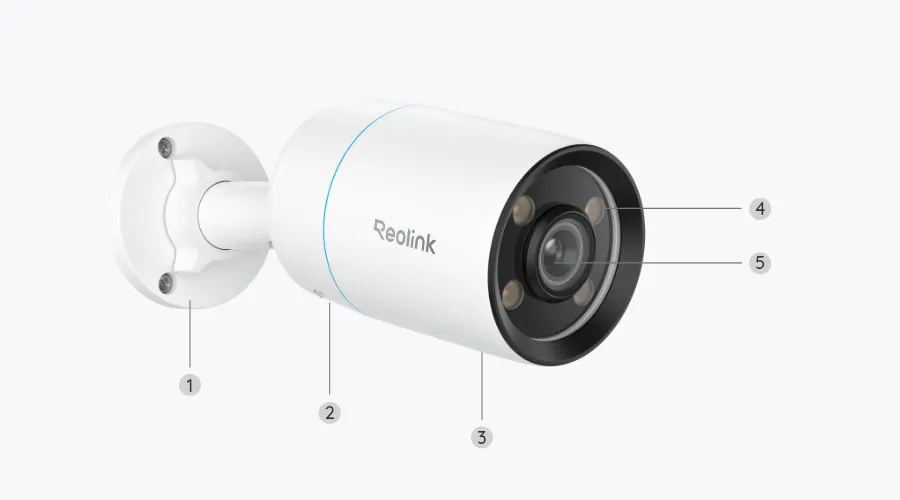
Manufacturer product photo (Reolink): a bullet camera with its wall bracket and numbered parts. A bracket like this lets a camera clear a cornice or a fire escape on the front of an older rental.