Lobby & Hallway Cameras · Storefront Kits · NVR & DVR Recorders · Drives · PoE Switches
Security cameras in Westchester County can be bought from us equipment-only or installed from $1,099 for a four-camera house-brand system, with the recorder, cable, mounting and phone setup done by our licensed crew. We supply the dome and turret cameras, NVR and DVR recorders, surveillance drives, PoE switches and riser-ready cable that Westchester buildings run on — for a co-op lobby in Yonkers, a mailroom in White Plains, a storefront on Central Avenue, a two-family in Mount Vernon or an estate gate in Pound Ridge — and we deliver them to your building or your door.
Quick answer: Abstract Enterprises Security Systems is a licensed installer that also sells security camera equipment across Westchester County. Buy cameras, recorders, drives and parts equipment-only (call or text for today's price) or have them installed, with installed systems starting at $1,099. Every quote comes as a 2K option and a 4K option, recording stays local with no monthly fee, equipment is delivered to your home, building or business, and install requests are booked within 2 hours.
Last updated November 23, 2026 by Abstract Enterprises Security Systems, NYS license #12000287431 · Sources: U.S. Census Bureau, American Community Survey 2020–2024 5-year estimates (tables B25003, B25004, B25024); NYS DCJS Index Crimes by County and Agency; Yonkers City Code Chapter 84; Yonkers Police Department via Patch; ABC7 New York; News 12 Westchester; Con Edison; Office of Governor Kathy Hochul; NYS Penal Law §§250.00 and 250.05; NYS Labor Law §203-c; Reolink and Lorex product specifications

Owner-operated since 2002 · Thousands of jobs completed · Booked within 2 hours · Call or text (914) 877-2578
Westchester is the most urban county in the Hudson Valley, and that changes what a camera store has to stock. South of the Cross County Parkway, the typical buyer is not a homeowner with a barn; it is a co-op board in Yonkers, a superintendent in Mount Vernon, a condo association in a White Plains tower, or a shop owner on Central Avenue or Main Street in New Rochelle. Then, twenty-five minutes north on the Saw Mill or I-684, the buyer changes completely: a stone colonial in Bedford, a horse property in North Salem, a house in Pound Ridge at the end of a quarter-mile drive. We sell security camera equipment to both halves of the county, and the equipment is different for each.
The Census numbers show the split clearly. The U.S. Census Bureau's American Community Survey (2020–2024 five-year estimates, table B25024) counts about 394,400 housing units in Westchester County. Only about 43 percent are single-family detached houses. About 99,300 units — one in four — are in buildings with 20 or more apartments, and roughly 68,100 of those are in buildings with 50 or more. Table B25003 shows about 38 percent of occupied homes are rented. For a camera buyer, that means the most common Westchester purchase is not a four-camera house kit. It is a recorder with 16 or 32 channels, dome cameras for corridors and lobbies, and a plan for who in the building gets to watch.
| City or town | Housing units | Single-family detached | In buildings of 20+ units |
|---|---|---|---|
| Yonkers (city) | 85,006 | 24.7% | 38.1% |
| Greenburgh (town, incl. its villages) | 38,167 | 46.7% | 19.2% |
| New Rochelle (city) | 32,792 | 38.1% | 38.1% |
| Mount Vernon (city) | 30,080 | 27.3% | 34.4% |
| White Plains (city) | 27,561 | 27.8% | 49.0% |
| Eastchester (town, incl. Bronxville and Tuckahoe) | 13,688 | 43.5% | 33.2% |
| Yorktown (town) | 13,599 | 74.1% | 4.5% |
| Peekskill (city) | 11,572 | 32.0% | 19.1% |
| Bedford (town) | 6,140 | 78.2% | 0.7% |
| Scarsdale | 5,921 | 92.7% | 2.6% |
| North Salem (town) | 1,988 | 80.9% | 4.4% |
| Pound Ridge (town) | 1,951 | 95.6% | 0.0% |
Source: U.S. Census Bureau, ACS 2020–2024 five-year estimates, table B25024, county subdivisions of Westchester County; percentages are our arithmetic, and survey estimates carry margins of error. Add up the four southern cities — Yonkers, New Rochelle, Mount Vernon and White Plains — and they hold about 182,000 housing units, 46 percent of the county, but about 68,900 of the county's 99,300 apartments in buildings of 20 or more units: close to seven in ten. White Plains stands out: nearly half its homes are in buildings that size, many of them downtown towers. Pound Ridge sits at the other extreme, with almost every home a detached house.
New York's Division of Criminal Justice Services, in its Index Crimes by County and Agency dataset, reports 831 burglaries, 7,679 larcenies and 812 motor vehicle thefts across Westchester County in 2024. The four southern cities account for an outsized share: Yonkers reported 284 burglaries, 1,538 larcenies and 315 vehicle thefts; Mount Vernon 97, 737 and 193; New Rochelle 50, 985 and 56; White Plains 56, 1,006 and 29. By our arithmetic, those four cities account for about 59 percent of the county's burglaries, 56 percent of its larcenies and 73 percent of its vehicle thefts. (These DCJS figures were pulled and checked for our Westchester CCTV research in November 2026.) The pattern is theft of things in busy places — shelves, lobbies, porches, parked cars — more than break-ins at quiet houses.
Westchester porch theft cases tend to start with a homeowner's own video. In May 2025, News 12 Westchester reported that the Port Chester Police Department shared Ring camera video of a man in a black hoodie walking up to a porch on S. Regent Street and leaving with three packages. In January 2024, ABC7 New York reported that a Yonkers homeowner watched a man take two packages on his Ring doorbell camera, called 911, and that a Yonkers public works employee knocked the fleeing man to the ground; the man was charged with grand larceny and criminal possession of stolen property. Charges are accusations, not convictions.
Both cases show the job a front door camera really has: record clearly enough, and alert fast enough, that someone can act. In apartment buildings the problem moves indoors. A package shelf in a lobby or a delivery room behind a locked door is where boxes sit for hours, and security cameras for holiday package theft in a Westchester building go on that shelf and on the door to it, not on the street.
Street parking and garages under buildings make vehicles a camera topic in southern Westchester. In March 2023, Patch reported that Yonkers police, answering a call about a suspicious vehicle in a parking garage behind 80 Alexander Street, found 17 cut catalytic converters and cutting tools in two cars, including a BMW reported stolen from Suffolk County, and arrested three New York City men. Police Commissioner Chris Sapienza called catalytic converter theft "a serious problem in our region" and told residents, "trust your instincts, if you see something out of the ordinary, give us a call." A garage camera aimed along a row of parked cars, low enough to see the side of each vehicle, is what records the minutes those calls are about.
Metro-North's Hudson, Harlem and New Haven lines run the length of the county, and the villages built around those stations — Tarrytown, Hastings-on-Hudson, Scarsdale, Bronxville, Larchmont, Rye, Harrison and Chappaqua among them — have a daily rhythm that matters for cameras: houses empty from 7 a.m. to 7 p.m., deliveries arriving in the middle of the day, and cars parked all day at the station. Commuters want security cameras with remote monitoring they can actually check from a train seat, which is a question of alerts and app setup more than camera count. The MTA added a commuter garage at the Harrison station in 2021 with 598 spaces, 475 of them for Metro-North riders — one sign of how many cars sit at stations every weekday.
Westchester's retail runs along a few long roads: Central Park Avenue, the "Central Avenue" everyone knows, from Yonkers through Hartsdale toward White Plains, Route 9 along the river towns from Yonkers to Peekskill, Route 119 (Tarrytown Road) across Greenburgh into White Plains, Route 1, the Boston Post Road, through New Rochelle, Larchmont, Mamaroneck, Rye and Port Chester, and the main streets of each downtown — Main Street in New Rochelle, Mamaroneck Avenue in White Plains and Mamaroneck, Gramatan Avenue in Mount Vernon. Car dealerships, delis, pharmacies, nail and hair salons, restaurants and strip plazas line them. Those owners buy business security cameras by the door, the register and the parking spaces, and in Yonkers some of them are buying to a written city standard, covered in the laws section below.
Westchester's apartment stock spans a century. Pre-war walk-ups and elevator buildings line the streets of southwest Yonkers, Mount Vernon and parts of New Rochelle, often with coax or nothing at all in the walls. Downtown White Plains and New Rochelle have added glass-and-concrete towers; the Governor's office reported in July 2024 that Highgarden Tower, a 19-story, 219-unit building beside the New Rochelle train station, had been completed. A 1920s walk-up may reuse coax through a DVR; a new tower runs PoE cameras through a riser. We stock both.
Cameras in Westchester see real winters. Meteorologist Don Sutherland's winter 2025–2026 summary noted single-digit lows in White Plains on two consecutive days, February 7 and 8, 2026. Summer storms take down trees and power: Con Edison reported in June 2026 that more than 5,000 Westchester customers lost power as a storm brought trees down across parts of Bronxville, Mount Vernon, New Rochelle, Pelham Village, Scarsdale, White Plains and Yonkers. Outdoor cameras with a cold rating that covers a single-digit night, and a small battery backup on the recorder and the switch, are on every Westchester parts list we write.
This part of the page is the catalog: the security cameras we keep available for Westchester buyers, sorted the way people shop — indoor or outdoor, how sharp, how it connects, and what shape fits the spot. Everything can be bought equipment-only or installed by our crew. There is no online checkout, so buying is a short conversation: call or text (914) 877-2578 or send the form, and we come back with the model, today's price and a delivery or install date. Equipment prices: call or text for today's price.
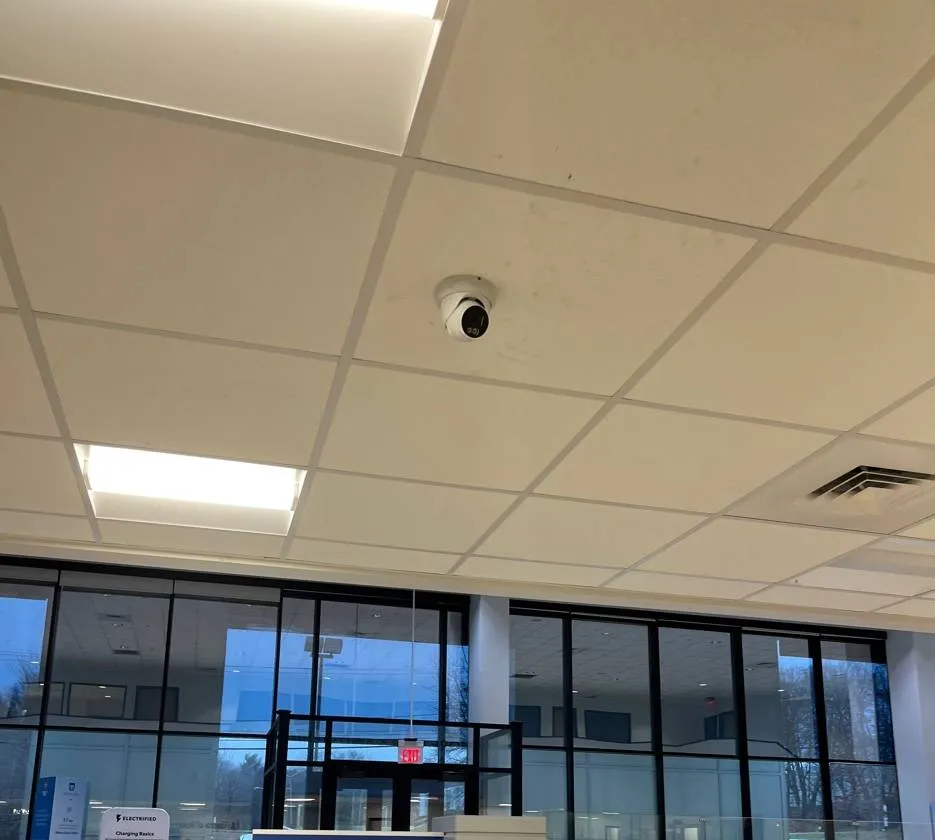
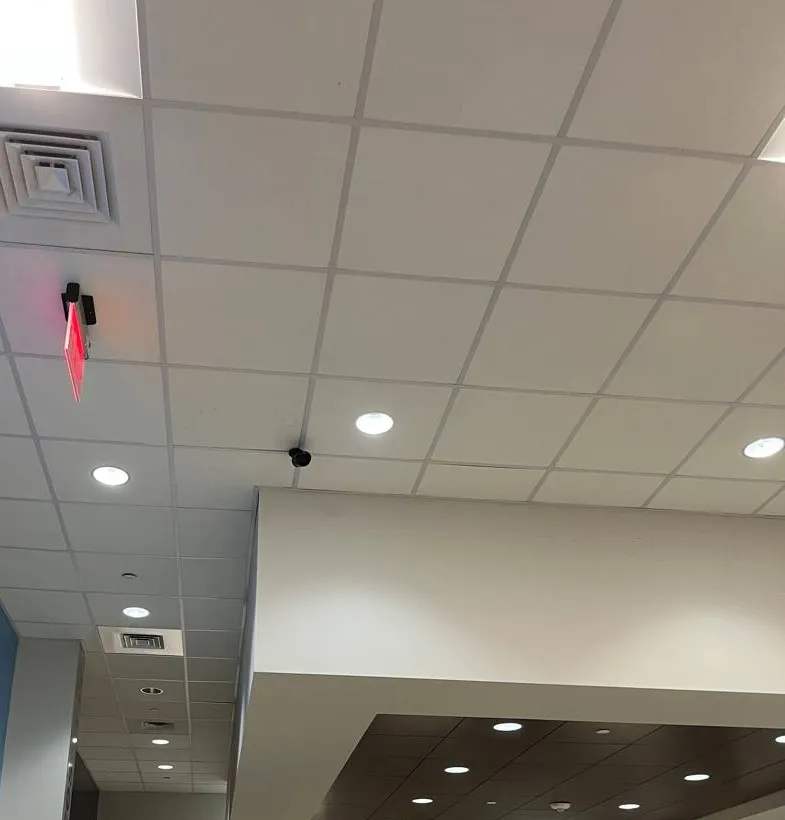
In Westchester, indoor surveillance cameras outsell outdoor ones in a way they never do in the rest of the Hudson Valley, because so many buyers own or run apartment buildings. A lobby security camera has a specific job: see the face of every person coming through the inner door, not just the tops of heads. That means mounting it inside the vestibule looking in, or inside the lobby looking back at the door, at a height where a person walking toward it fills the frame. A second lobby camera usually covers the mailboxes and the package shelf, and a third covers the elevator landing.
Hallway security cameras for long double-loaded corridors need a narrower lens than people expect; a wide camera at one end of a 120-foot hallway shows the far end as a few pixels. Stairwell security cameras go at each landing door, pointed at the door rather than the stairs. Basement security cameras cover the laundry room, the boiler room door, the storage cages and the door to the yard where the trash goes out. Elevator security cameras, inside the cab, need the elevator company's sign-off on the traveling cable. Dome and turret cameras are the shapes for all of these, because they sit flat on a ceiling and do not invite a hand.

Outdoor surveillance cameras in the southern cities mostly watch close, busy places: the stoop of a two-family, the sidewalk in front of a store, a building's side door, the ramp into a garage under the building, the alley where the trash cans sit. North of White Plains they watch far: a driveway curving through trees, a gate at the road, a barn or a pool house. Our house-brand outdoor cameras are rated IP66 or IP67 depending on the model, with infrared night vision from 60 to 120 feet across the range. Those figures come from the package spec sheets, and we quote the sheet, not a guess.
Weatherproof security cameras for winters in Westchester need more than a sealed body. The weak point is the cable joint, so outdoor cameras on brick, stone or stucco go on a junction box that hides the connector. Cameras that face a parking lot plowed into a snowbank get mounted high enough that the bank never blocks the view. Outdoor winter security cameras on the north side of a building stay in shade and ice up less; cameras facing south take the low winter sun, and those get a sun hood or a slight downward tilt. Call or text for today's price on any outdoor camera.
Each Westchester quote goes out as two complete options for the same views, a 2K system and a 4K system, because the right answer depends on distance. In a 12-foot vestibule, a 2K camera already shows a face clearly. Across a 40-car parking lot behind a Central Avenue plaza, or down a 300-foot estate driveway, a 4K camera keeps enough detail to identify a person or a car. Here is how the tiers compare:
| Tier | Pixels | Where it earns its keep in Westchester | Trade-off |
|---|---|---|---|
| 4K / 8MP | 3840 × 2160 | Parking lots and garages, dealership rows, estate driveways and gates, a wide lobby from one corner | Biggest files; needs a 4K recorder and more drive space |
| 5MP | about 2560 × 1920 | Stoops and entrances, two-family driveways, side yards, storefront sidewalks | Middle ground on storage and price |
| 2K / 4MP | 2560 × 1440 | Vestibules, corridors, stairwells, mailrooms, registers, stockrooms | Less reach for faces past 30–40 feet |
| 2MP / 1080p | 1920 × 1080 | Elevator cabs, replacing one camera on an older recorder | Weak for identification beyond a few yards |
12MP security cameras, fisheye security cameras and panoramic security cameras have a place in Westchester: a fisheye on the ceiling of a square lobby or a mailroom can show the whole room in one image. The catch is that a fisheye spreads its pixels thin, so it records what happened in the room but rarely a usable face. We pair it with a door camera that does.
PoE security cameras run on one Cat6 cable each, carrying power and video from a PoE NVR or switch. That is the standard for new work in Westchester buildings, because one cable per camera is reliable, and standard Ethernet, PoE included, runs up to 100 meters (about 328 feet) per segment. In a tall building that limit matters vertically: a camera on the 14th-floor landing is more than 328 cable-feet from a basement recorder once the run climbs the riser and crosses each floor. The answer is a PoE switch in a closet partway up, linked back to the recorder.
WiFi security cameras struggle in the same buildings. Concrete floors, brick party walls, steel stairs and elevator shafts swallow WiFi signal, and a lobby camera competing with fifty residents' routers on the same channels drops frames. WiFi has a place for one view in a single-family house, or where no cable can go. Wired analog cameras — HD coax on RG59 or Siamese cable, recorded by a DVR — are still common in pre-war Westchester buildings that had a CCTV system in the 1990s or 2000s. If the old coax tests clean, an HD DVR and new coax cameras give a big jump in picture without opening walls.
Buy PoE cameras, wired security cameras or wireless security cameras here, and we size the parts to the building: the switch power budget, riser-rated or plenum-rated cable where the fire code calls for it, and which runs need an outdoor jacket.
Our most-sold shape in Westchester. Vandal-resistant dome security cameras for lobbies, corridors, laundry rooms, garages under buildings and any ceiling a person can reach. Call or text for today's price.
No dome bubble to catch infrared glare off glass, which makes turrets the choice inside glass vestibules and under a porch roof. Call or text for today's price.
Visible and long-reaching, for parking lots, driveways, alleys and the back of a plaza. On a Westchester estate, the bullet watches the drive. Call or text for today's price.
One camera for a whole mailroom, package room or square lobby, paired with a door camera for faces. Call or text for today's price.
Varifocal security cameras are zoomed on site to frame a long corridor, a gate or a register exactly. Fixed lens security cameras cost less and suit short views. Call or text for today's price.
Pan tilt zoom cameras and motorized zoom cameras for big parking lots, dealership rows and estate grounds, quoted per site. Call or text for today's price.
Dual lens, multi sensor, thermal and active deterrence security cameras are sold where the job calls for them, such as a building corner facing two streets or a garage ramp after hours.
Southern Westchester is rarely dark; it is badly lit. Streetlights, storefront signs and headlights create glare and deep shadow in the same frame. Starlight and low light security cameras handle that mix better than plain infrared, and full color night vision cameras keep the color of a jacket or a car, which helps when describing someone to police. Night vision security cameras inside a glass vestibule have their own problem: infrared bounces off the glass and blinds the camera. Turret cameras mounted with the lens close to the glass, or with IR switched off where the lobby lights stay on all night, solve it. North of I-287, real darkness returns, and long-range infrared or a color camera with a soft white light covers the drive.
A camera facing a busy Mount Vernon sidewalk sees hundreds of people a day. Motion detection cameras alone would send hundreds of alerts. Security cameras with person detection and vehicle detection, plus a zone drawn around just the door or just the driveway, alert only when someone actually enters that area. Several house-brand packages list smart AI human and vehicle detection on their spec sheets; smart search security camera systems then let a superintendent search a night of recordings for "person at the package room door" instead of scrubbing the timeline.
License plate recognition cameras (LPR, also sold as ANPR cameras or license plate capture cameras), facial recognition security cameras and people counting cameras are separate products with their own lenses and setup. We describe a product as having LPR, facial recognition, NDAA compliance, ONVIF, H.265, IP67, IK10 or edge AI only when the manufacturer's spec sheet says so, and we send that sheet before you buy.
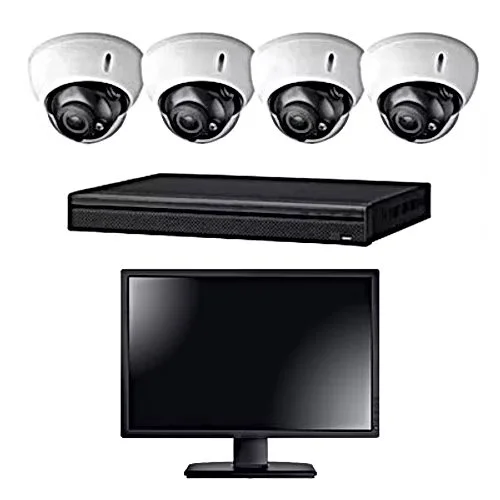
Many Westchester buyers start from a four-camera kit and grow it: four cameras, a recorder and, in most packages, a 20-inch monitor for the super's office, the front desk or the back room of the store. These are the same house-brand packages whose installed prices are listed on our Westchester County security camera pricing page; here they appear as equipment you can buy outright or have installed. The facts below come from the package spec sheets. Equipment prices: call or text for today's price.

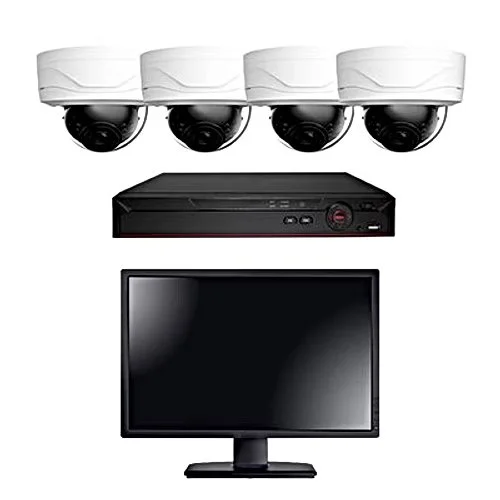
Four 4MP IP dome cameras on a 4K NVR with a 20-inch monitor. The spec sheet lists night vision up to 100 feet, built-in audio and IP67 weatherproofing. This is the kit we point most Westchester apartment buildings toward as a starting block: domes are the right shape for a lobby ceiling, a corridor and a laundry room, IP cameras run on the Cat6 that newer buildings already have, and the 4K NVR lets the board add sharper cameras later without replacing the recorder. Audio is a feature to switch off in common areas unless there is a clear reason and residents have been told, for the reasons in the laws section. Call or text for today's price.

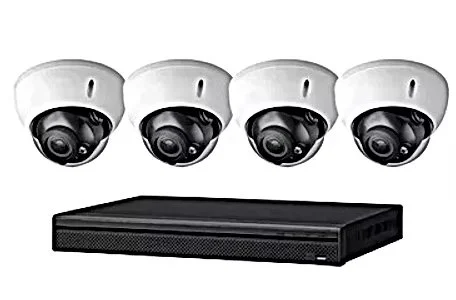
Four 2MP dome cameras on a 1080p DVR. The spec sheet lists night vision up to 60 feet, built-in motion detection, wire runs up to 100 feet per camera and remote smartphone and PC access. This is the budget coax kit for the pre-war walk-up whose old cameras died years ago but whose coax is still in the walls. It will not identify a face across a parking lot; it will show who came through the basement door and the side entrance at 2 a.m., on cable that is already there. Owners who want a sharper picture on the same coax step up to the 5MP DVR kits in the F series. Call or text for today's price.

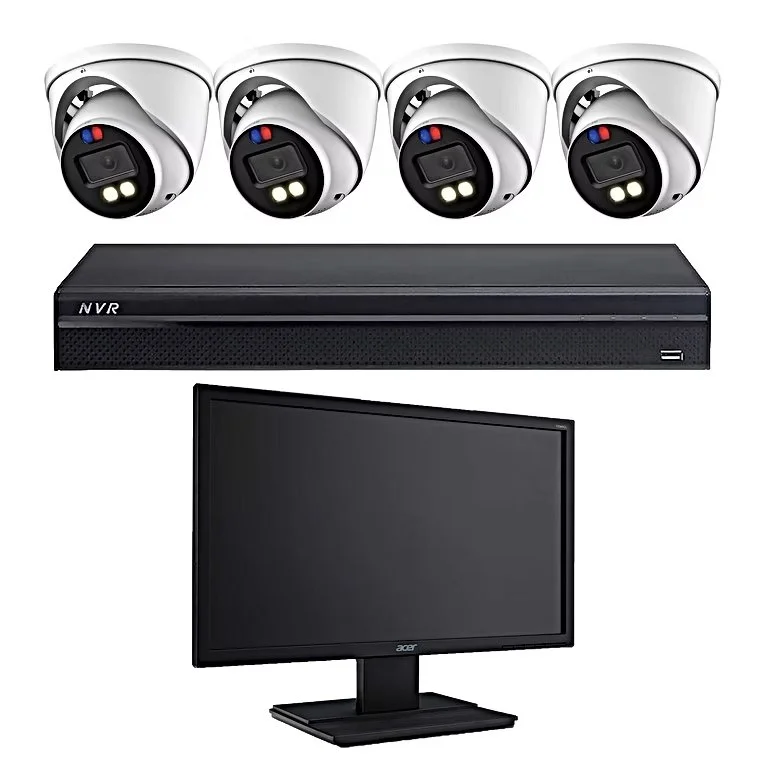
Four 5MP IP eyeball cameras on a 4K NVR with a 20-inch monitor. The spec sheet lists smart AI human and vehicle detection, a built-in alarm and siren, flashing lights and two-way talk, full color at night with audio, night vision up to 90 feet and IP67. This is the active package: when someone steps into the zone you drew around a store's back door, a garage ramp or a car lot after closing, the camera lights up, sounds off and lets you speak through it from your phone. Eyeball cameras fit under an awning or a soffit where a bullet would stick out. Call or text for today's price.

Four 8MP 4K long-range dome cameras on a 4K NVR with a monitor. The spec sheet lists night vision up to 100 feet and IP66 weatherproofing. This is the 4K option for distance: the lot behind a White Plains office building, a garage under a New Rochelle condo, a dealership on Central Avenue, or the drive and gate of a house in Bedford or North Castle. Call or text for today's price.
The lineup runs from 2MP 1080p DVR kits with 60 to 100 feet of night vision, through 5MP eyeball, dome, bullet and deterrent DVR kits with 20-inch monitors, to 4MP and 5MP IP kits on a 4K NVR, and 8MP 4K kits in eyeball and long-range dome styles with up to 120 feet of night vision. Each series starts as a four-camera package and grows camera by camera. Photos of the full range are on our cameras page.
| Westchester property | Typical cameras | What we usually suggest |
|---|---|---|
| Two- or three-family in Yonkers, Mount Vernon or New Rochelle | 4–6 | Stoop and front door, driveway, side door, backyard, basement entry; 8-channel recorder |
| Pre-war walk-up, 6–30 units | 8–16 | Vestibule, lobby and mailboxes, each stair landing door, basement, roof door, rear yard |
| Elevator co-op or condo, 50–150 units | 16–32 | Lobby, package room, elevator landings, garage ramp and rows, laundry, bike room door |
| Garden apartment complex | 16–48 | Each building entrance, parking courts, laundry rooms, dumpster area; recorder per cluster or one large NVR |
| Colonial or Tudor in Scarsdale, Larchmont or Pelham | 4–8 | Front walk, driveway, detached garage, back door, side passage; turrets under eaves |
| Estate north of I-287 | 8–16 | Gate, drive, house entrances, barn or garage, pool house; PoE switch in outbuildings, 4K at the gate |
| Westchester business | Typical cameras | What we usually suggest |
|---|---|---|
| Deli, bodega or pharmacy | 6–12 | Door, register and lottery terminal, aisles, cooler doors, stockroom, rear door |
| Restaurant or bar on a downtown main street | 8–16 | Host stand, bar and registers, dining room, kitchen line, back door, sidewalk seating |
| Strip plaza store on Central Avenue or Route 9 | 6–10 | Entrance, registers, aisles, stockroom, rear service door, the spaces out front |
| Car dealership or used-car lot | 16–32 | Lot rows, service drive, showroom, key cabinet, rear fence; 4K outside |
| Office suite or medical practice | 4–12 | Suite door, reception, corridor, network closet, records room |
| Warehouse or contractor yard | 12–32 | Loading doors, yard, fence line, aisles, office entry |
These are starting points, not quotes. A building with three entrances and a garage needs more than the counts above; a single-door shop needs fewer. For a quick camera count and storage estimate before you call, try the camera calculator.
The house brand is the default because we know every setting on it, but we also sell and install name-brand equipment, and three manufacturers list us as an authorized partner: Lorex, Luminys and Reolink. Two name-brand models show why we read spec sheets before a sale. Reolink's RLC-820A, per its official product page, is a 4K (3840 × 2160) PoE camera with a fixed 4.0mm lens, an 87-degree horizontal field of view, night vision to 100 feet, person, vehicle and pet detection, a built-in microphone, H.265, IP67, IEEE 802.3af PoE at under 12 watts, and an operating range of 14°F to 131°F. That 14°F floor is fine on a sheltered Yonkers storefront and worth a second look on an exposed estate gate on a single-digit night.
Lorex's E842CA bullet series, per its spec sheet, lists up to 3840 × 2160 resolution, an operating range of −40°F to 140°F, IP67, night vision of 150 feet with ambient light and 98 feet in total darkness, PoE (802.3af) or 12V DC power and a built-in microphone. Name-brand equipment is priced at the manufacturer's MSRP; call or text for today's figure. Westchester details for one partner are on Lorex camera installation in Westchester County, other brands we source are on name-brand cameras, and our guide to the best security camera brands compares them side by side.
In a multifamily building or a busy store, the parts behind the cameras decide whether footage is there when you need it. This section covers the recorders, drives, PoE switches, cable, connectors, mounts and boxes we sell in Westchester, with extra attention to the gear that moves video up and down a building. Every item: call or text for today's price.
A network video recorder records IP cameras. Most NVRs we sell are PoE NVRs with a built-in switch, so cameras near the recorder plug straight in and cameras on upper floors connect through a switch in a closet. Channel count is the first decision:
A single-family house with four views, or a small shop with one door. Westchester two-families outgrow it fast.
Two- and three-family houses, colonials with a detached garage, single storefronts with a stockroom.
Walk-ups and small elevator buildings, restaurants, pharmacies, medical suites and estates with outbuildings.
Elevator co-ops and condos with a garage, garden apartment clusters, dealerships and warehouses.
Towers and multi-building complexes; quoted with a network plan and several drives.
Needed to record 8MP cameras at full resolution. We confirm decoding capacity before the sale.

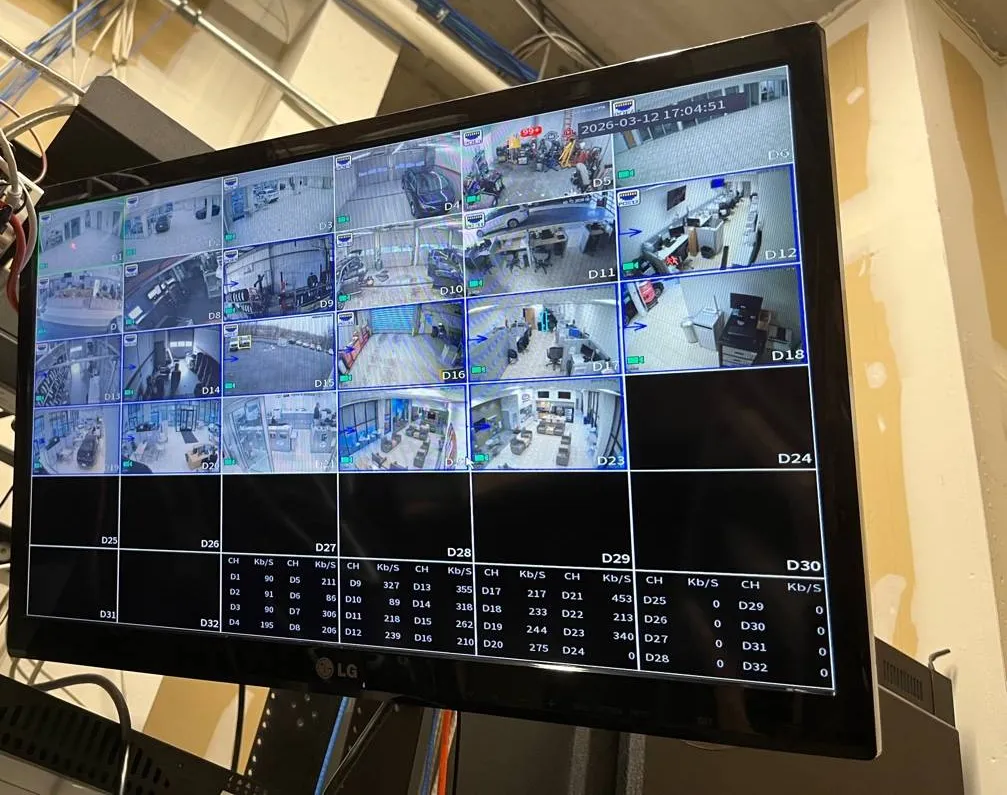
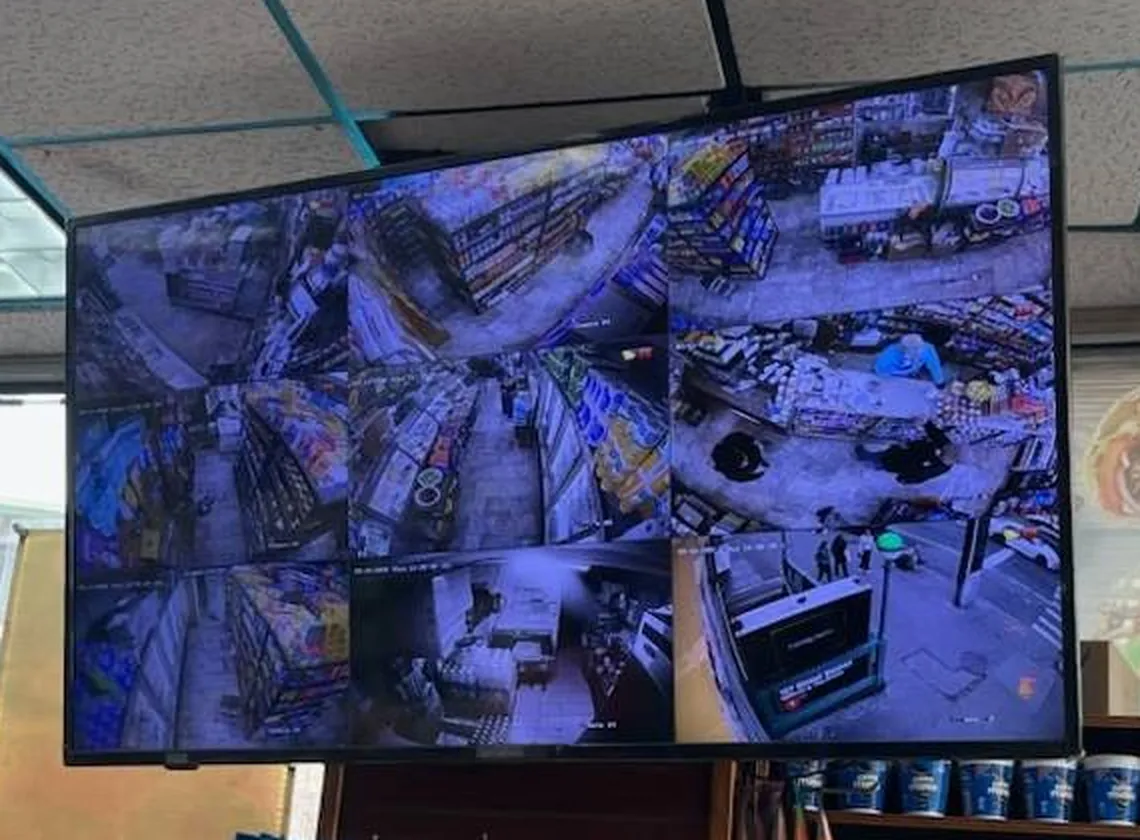
The table on that screen is worth a closer look. It lists a live bitrate for every channel; at the moment the photo was taken, the 23 active channels ranged from 86 to 453 Kb/s and added up to roughly 5.3 megabits per second by our arithmetic. Those are the numbers the screen reports for live view, and they move as people and cars move through each view. Recording settings usually run higher, which is why we read the recorder's own figures after the first week and adjust the drive plan.
A digital video recorder records coax cameras. Modern HD DVRs handle 5MP and 4K analog cameras, which makes them the cheapest real upgrade for the many older Westchester buildings and houses that already have coax to each camera spot: keep the cable, replace the cameras and the box. We sell 4-, 8- and 16-channel DVRs. Before anyone buys a DVR to reuse old cable, we test the runs; crushed or water-soaked coax will not carry a 5MP signal.
CCTV hard drives, sold as surveillance hard drives, are made to write around the clock. We sell them sized to retention, not to round numbers: a 4TB surveillance hard drive for a four-camera house kit, an 8TB surveillance hard drive for eight to twelve moderate cameras, and 16TB surveillance storage or more, usually as two or more drives, for buildings and businesses that want a month on the disk. Security cameras with two weeks recording and security cameras with one month recording are a storage decision, not a camera decision.
A PoE switch for security cameras adds ports and power where the recorder runs short. In a Westchester elevator building, switches usually live in a closet on every few floors, or in the basement next to the building's riser, with one link per switch back to the recorder. We size each switch by its total power budget, because cameras with infrared, white lights and sirens draw more at night than in the day, and some PTZ and long-range models need higher-power PoE+ ports. A security camera PoE injector powers a single camera where a switch is overkill, such as one camera added at a roof door. For coax systems, a CCTV power supply box feeds several cameras from one outlet, and a single CCTV power adapter powers one.
Cat6 cable for security cameras is the standard for IP systems. In buildings, the jacket matters as much as the copper: cable that runs vertically between floors and cable in ceiling air spaces has fire-rating requirements that a box of patch cable from a hardware store will not meet. We sell riser- and plenum-rated cable for those runs, and outdoor ethernet cable with a UV- and water-resistant jacket for exterior walls and parking areas. For coax systems we sell RG59 and Siamese cable, BNC connectors and other CCTV connectors, and a CCTV video balun where a building has spare twisted-pair telephone or intercom wiring that can carry an analog camera signal. A security camera extension cable fixes a lead that is a few feet short.
Security camera mounts in Westchester meet brick, limestone trim, fieldstone, stucco, aluminum siding, cedar shingle, steel canopies and drop ceilings, often on the same building. Each needs a different anchor. A camera junction box (also sold as a CCTV junction box) sits behind an outdoor camera, hides the connector and keeps rain and road salt out of the joint that fails first; on a masonry building it also gives the camera a flat, sealed base. Security camera brackets for corners, poles, parapets and pendant ceilings are all available. We also stock security camera replacement parts and surveillance camera accessories — sun hoods, lens covers, mounting plates, cable glands — for systems we sold and many we did not. Call or text for today's price.
Thirty days of footage is a common target in Westchester: some boards ask for it, insurers like it, and Yonkers requires it of the businesses its camera ordinance covers. Here is how we estimate drive size for a 16-camera building. It is an estimate; the real figure depends on each camera's bitrate, compression, how busy each view is and whether recording is continuous or motion-only.
| Step | Calculation (example only) | Result |
|---|---|---|
| 1. Bitrate per camera | Assume 4 Mbps (a 4MP-class camera at a moderate setting) | 4 Mbps |
| 2. Per camera, per hour | 4 Mbps × 3,600 seconds ÷ 8 bits per byte | 1.8 GB per hour |
| 3. Per camera, per day | 1.8 GB × 24 hours | 43.2 GB per day |
| 4. Sixteen cameras, per day | 43.2 GB × 16 | 691.2 GB per day |
| 5. Thirty days | 691.2 GB × 30 | about 20.7 TB |
| 6. Same building at 2 Mbps per camera | Half the bitrate, half the space | about 10.4 TB |
The formula is bitrate times seconds, divided by eight to turn bits into bytes, times hours, days and cameras. Two things bring the number down without losing what matters: lower bitrate on views where nothing happens for hours, such as a roof door, and motion or smart-event recording on those same views while the lobby and package room record continuously. Four things push it up: 4K cameras, busy sidewalk views, high frame rates and long retention. That is why every quote we send lists retention in days for both the 2K and the 4K option, and why a 32-channel recorder with several drive bays is often the right buy for a building that starts with sixteen cameras.
These six comparisons come up on nearly every Westchester call, from a co-op board's first meeting to a homeowner replacing a dead doorbell camera. A check mark means that option generally handles the point well; a dash means it generally does not. Models differ, so treat these as a first filter and confirm against the spec sheet of the exact product.
| In a Westchester building or house | Wired | Wireless |
|---|---|---|
| Holds a steady picture through concrete floors and brick walls | ✓ | — |
| Unaffected by dozens of neighbors' WiFi networks | ✓ | — |
| No cable to fish through a finished co-op lobby | — | ✓ |
| Hard for someone to unplug or carry off | ✓ | — |
| Quick single view in a house where no cable can go | — | ✓ |
| Keeps recording when the building's internet drops | ✓ | Depends on the model |
| Point | PoE | WiFi |
|---|---|---|
| One cable for power and video | ✓ | — |
| Sixteen or more cameras recording at once without dropouts | ✓ | — |
| Reach per run without extra gear | About 328 ft | Router range, cut by masonry |
| Independent of residents' or tenants' routers | ✓ | — |
| One camera where the landlord won't allow drilling | — | ✓ |
| Point | NVR | DVR |
|---|---|---|
| Records IP network cameras | ✓ | — |
| Records HD coax cameras | — | ✓ |
| Reuses coax left in a pre-war building | — | ✓ |
| Cameras on upper floors through switches in closets | ✓ | Harder |
| Person and vehicle detection in the camera | ✓ on many models | Fewer choices |
| Phone app and local recording | ✓ | ✓ |
| Point | 4K (8MP) | 2K (4MP) |
|---|---|---|
| Identify a face across a parking lot or garage | ✓ | — |
| Clear face in a vestibule or corridor | ✓ | ✓ |
| More days on the same drive | — | ✓ |
| Lower cost per camera for a 24-camera building | — | ✓ |
| Smoother remote viewing on a phone over cellular | — | ✓ |
| Point | IP | Analog (HD coax) |
|---|---|---|
| Newest resolutions and analytics | ✓ | — |
| Least disruption where coax is already in the walls | — | ✓ |
| Easy to extend to a garage level or a second building | ✓ | — |
| No network settings for the super to manage | — | ✓ |
| Point | Local (NVR/DVR) | Cloud |
|---|---|---|
| No monthly subscription | ✓ | — |
| Thirty days of continuous video from many cameras | ✓ | — (upload limits) |
| Keeps recording during an internet outage | ✓ | — |
| Footage survives if the recorder itself is taken | — | ✓ |
| Live view and playback on a phone | ✓ | ✓ |
The systems we sell are security camera systems with no monthly fees: they record to drives inside the recorder, and the phone app connects to the recorder directly. Security cameras with cloud storage are sold only where the product itself offers it, and hybrid cloud security cameras or cloud managed security cameras are quoted on request, usually for a managing agent running several buildings or a business with several Westchester locations. For one building, the practical middle ground is a recorder in a locked room, a battery backup on it, and a habit of exporting any clip that matters the same day.
A building camera system has more users than a house system — board members, the super, the porter, the managing agent, sometimes a security guard — and every shared password is a risk. Cybersecure security cameras and encrypted security cameras start with setup discipline: default passwords changed, a separate account for each person with only the cameras that person needs, firmware kept current, and no router ports opened that remote viewing does not require. RTSP security cameras, which expose a video stream to other software, are locked down the same way. Equipment-only buyers get the same checklist by phone.
Westchester's housing runs from 1920s walk-ups to new glass towers to stone houses on five acres. Each one changes the parts list, so this is how we match the catalog to the building.
Co-op security cameras and condo security cameras are bought by a board, approved at a meeting and paid from a reserve or a budget line, so the purchase has to be explainable to people who are not camera buyers. We put the proposal in plain terms: which doors and rooms get a camera, where the recorder lives, how many days of footage it keeps, and who can view it. The usual list for an elevator building is the vestibule and lobby, the package room or shelf, each elevator landing on the ground floor, the garage entrance and parking rows, the laundry room, the bike or storage room door, the roof door and the rear service door. Building entrance security cameras catch most of what residents complain about; the rest are there for the night something does happen.
Viewing rights are part of the equipment choice. The recorders we sell support separate user accounts, so the board president, the managing agent and the superintendent can each have access to the cameras their role needs, with playback and export limited to the people who should have it. Many boards adopt a short written policy on who may view footage and when, and we set the system up to match it.
Security cameras for landlords and security cameras for property managers in Westchester's rental buildings are bought for the same common areas, with an extra focus on the places that generate complaints and repairs: the basement, the trash area, the laundry room, the mailboxes and the front door that never quite closes. Apartment building CCTV is not for apartments themselves: cameras stay in common areas and never look into a unit. Multifamily security cameras across several buildings can be combined in one app for the owner, with each super limited to the building he runs. Security cameras for property management firms that handle many Westchester buildings are usually quoted as a standard package per building type, so every building is set up the same way.

Westchester has a large stock of two- and three-story garden apartment complexes, from Yonkers and Greenburgh to Ossining and Peekskill, with buildings arranged around lawns and parking courts. These complexes need outdoor coverage more than lobby coverage: each building entrance, each parking court, the walkways between buildings, the laundry building and the dumpster enclosure. The distance between buildings decides whether one recorder or several is the better buy, and we price both ways.
The two- and three-family houses that fill many blocks of Yonkers, Mount Vernon and New Rochelle have a stoop or porch, a side driveway, a side or rear entrance for the upstairs unit, a small backyard and a basement. House security cameras here are usually four to six turrets and one driveway bullet on an 8-channel recorder in the basement. The owner-occupant decides who sees what: the owner keeps full access, and if the owner chooses, a tenant can get a login to the front door view only. Cameras stay on the outside and the shared entrances, not inside the other unit's space.
Home security cameras in Scarsdale, Bronxville, Larchmont, Pelham, Rye, Chappaqua and the river villages go on houses with slate or tile roofs, stone or stucco walls, copper gutters and finished interiors nobody wants opened. The parts list is built around that: turret cameras that sit neatly under deep eaves, junction boxes that give a flat seal on stone, and cable routes through attics and basements rather than across facades. Residential security cameras on these lots cover the front walk, the driveway, the detached garage that is common on older lots, the side passage and the back door. Driveway security cameras matter on the commuter streets where houses sit empty all day.
In Bedford, Pound Ridge, North Salem, Lewisboro and North Castle the Census counts more than 80 percent of homes as detached houses, and many sit on large wooded lots. Here the camera list looks like a small campus: a camera at the gate or the road end, one or two along the drive, the house entrances, the garage, a barn or stable, a pool house and the backyard. Distances exceed what one cable can carry, so the recorder lives in the main house and PoE switches go in the outbuildings, linked by cable, fiber or a wireless bridge. Backyard security cameras watch the tree line and the pool; security cameras for vacation homes and part-time houses add person and vehicle detection so an owner who is away gets alerts that mean something.
Townhouse security cameras in Westchester's condo and HOA communities raise one question before any other: who owns the wall? In many associations the exterior walls, roofs and common grounds belong to the association, so mounting a camera there takes the board's approval. Security cameras for HOAs at the community level cover the entrance road or gatehouse, the clubhouse, the pool, the mailbox kiosk and visitor parking. For an individual owner, a camera inside a window or a doorbell camera on an approved spot is often the simplest route.
Front door security cameras and doorbell security cameras are many Westchester buyers' first purchase. A doorbell camera sees who is at the door from waist height; a turret under the porch roof aimed down the walk sees the car, the face and the direction of travel. Package theft prevention cameras work best as that pair on a house, and as a camera on the package shelf plus one on the door to the package room in a building. We sell and install both, and our doorbell camera installation in Westchester County page covers the doorbell side in detail.
Commercial security cameras, business surveillance cameras and security cameras for small businesses are a large share of what we sell in Westchester. The county's businesses sit in three settings: downtown main streets with storefronts under apartments, strip plazas and dealerships on the long commercial roads, and office parks and industrial pockets near the highways.
Security cameras for retail stores on Main Street in New Rochelle, Mamaroneck Avenue, Gramatan Avenue, Getty Square in Yonkers or Main Street in White Plains watch a busy sidewalk, a door and a long narrow room. Retail store security cameras go at the door facing in at head height, above the register, down each aisle, on the stockroom and on the rear door to the alley or the building's back hall. A storefront camera aimed out at the sidewalk should be angled so it records the sidewalk and the door, not the windows of the apartments upstairs.

Deli security cameras and bodega security cameras cover the counter, the register and lottery terminal, the cooler doors, the aisles, the door and the sidewalk. Cash register security cameras and point of sale surveillance cameras go above and slightly behind the counter to see the drawer and the hands. Pharmacy security cameras cover the entrance, aisles and the pickup counter without reading prescriptions. Restaurant security cameras and security cameras for restaurants add the host stand, the bar, the dining room, the back door and the walk-in; restaurant kitchen security cameras go away from the hood and fryers. Bar security cameras need good low-light performance because the room is dim on purpose.

Strip plazas along Central Park Avenue, Route 9 and Route 119 have parking in front and a service lane behind. Grocery store security cameras add the receiving door, the produce area and the cart corral. Car dealership security cameras cover lot rows, the service drive, the showroom and the key cabinet, with 4K or long-range cameras on the building corners and the light poles. Security cameras for parking lots and parking lot security cameras do their real work at night, so AI vehicle detection cameras that alert only when a car enters the lot after closing are the feature we suggest first. Our parking lot camera installation in Westchester County page covers lot layouts.

Office security cameras in the office buildings along Westchester Avenue, Route 119 and the I-287 corridor, and in medical buildings across the county, cover the suite entrance, reception, the corridor to the back offices and the network closet. Medical office security cameras and dental office security cameras watch the entrance, waiting room and front desk, never treatment rooms. Many suites sit inside a building that already has its own lobby cameras; the tenant's system covers the tenant's space and runs on its own recorder and network.
Security cameras for warehouses, warehouse security cameras, loading dock security cameras and logistics facility security cameras in Elmsford, Mount Vernon's industrial blocks, Yonkers along the river and Port Chester cover dock doors, yards, fence lines and aisles. Factory security cameras and manufacturing security cameras cover machines, exits and inventory cages. Parking garage security cameras, in the garages under Westchester condo and office buildings, need low-light sensitivity and a camera on each ramp and each pedestrian door. Construction site security cameras for Westchester's many new buildings go on temporary poles with a locked recorder box; see construction site security camera installation in Westchester County.
School, daycare and church security cameras stay in entrances, hallways, parking and common rooms; gym security cameras stay out of locker rooms; hotel security cameras cover lobbies and corridors; laundromat and storage facility security cameras watch the door, the machines and the keypad.
Four rules come up most. The first is local to one city. Yonkers City Code Chapter 84, adopted in 2014, requires certain businesses to keep a video camera system: holders of state liquor licenses, businesses open to the public between midnight and 4 a.m., check cashers, licensed secondhand precious-metal dealers, state-licensed pharmacies and city-licensed pawn shops. The code calls for cameras at every entrance and exit that capture full faces, at least eight frames per second, a digital recorder that can export to portable media with date and time, recording during business hours and two hours after closing, 30 days of retention, locked storage of the recorder, an access log, police access on request and an annual certification to the Yonkers Police Department by January 31. Covered Yonkers businesses should buy to that list; we size the drive for the 30 days.
The second is audio. Under New York Penal Law §250.05, eavesdropping is a class E felony, and §250.00 defines mechanical overhearing as recording a conversation without the consent of at least one party. Audio recording security cameras and two way audio security cameras are set up deliberately: usually off in lobbies, stores and offices, on only where there is a clear reason and people know. The third is private spaces at work: New York Labor Law §203-c bars an employer from video recording employees in a restroom, locker room or room designated for changing clothes, unless authorized by court order.
The fourth is a rule that stops at the city line. New York City's biometric identifier signage law, which requires certain stores and restaurants to post signs if they collect face data, is part of the New York City Administrative Code and covers the five boroughs; it does not reach a store in Yonkers or White Plains, though Westchester's cities, towns and villages have their own codes. Security camera laws, CCTV regulations and security camera privacy laws for homes come down to common sense: record your own property and shared areas, not the inside of anyone else's home, a bathroom or a changing area, and do not aim cameras into a neighbor's windows. Are security cameras legal on a Westchester house, building or store? Video of your own property and common areas generally is; the edges are audio, private spaces, other people's property and, in Yonkers, the extra duties Chapter 84 puts on covered businesses. This is general information, not legal advice.
These are the questions Westchester buyers ask before they spend anything, answered the way we answer them on the phone. Most come back to three things: which doors matter, where the recorder lives, and who needs to watch.
Put the camera inside, looking back toward the door, not outside looking in. A camera facing a sunlit glass wall sees bright glass and dark silhouettes; a camera mounted inside the lobby, aimed at the inner door from slightly to one side, sees faces lit by the lobby lights as people walk in. Choose a turret rather than a dome bubble if the camera must sit near glass, so infrared does not reflect back into the lens at night, and pick a model with wide dynamic range on its spec sheet. A second camera over the mailboxes catches the same people from another angle.
For a typical five- or six-story walk-up, eight to twelve cameras covers it: the street door, the vestibule or lobby looking at the inner door, the mailboxes, each stair landing door on the ground and top floors, the roof door, the basement corridor, the laundry or boiler room door and the rear yard or trash area. A 16-channel recorder leaves room for more. If the building already has coax from an old system, a 5MP DVR kit may reuse it; if not, IP cameras on new Cat6 up the stairwell are the cleaner long-term choice.
Through the building's riser and a small network. Cameras on each floor connect to a PoE switch in a closet on that floor or every few floors, and each switch links down the riser to the recorder, usually by fiber in tall buildings because it ignores distance limits and electrical noise. This keeps every camera run under the 328-foot Ethernet limit and means a problem on one floor does not take down the rest. Cable in the riser needs a riser-rated jacket; we sell the right cable, switches and fiber converters for that layout.
Count the cameras first: usually two or three per building (entrance, rear, laundry or basement door) plus two per parking court and one each on the dumpster area and the office. A ten-building complex can reach 40 cameras. The choice is one large 64-channel NVR in the office with links to every building, or a 16-channel recorder in each cluster of buildings, all shown in one app. One recorder is easier to search; several recorders mean a cable cut affects only one cluster. We quote both.
Spend the resolution outside. Inside the showroom, 2K turrets or domes cover the sales floor, the desks and the key cabinet well because everything is within 40 feet. Outside, the overnight rows need 4K or long-range cameras on the building corners and light poles, aimed down each row so a person between cars is visible, plus one camera on the lot entrance with vehicle detection set to alert after closing. A 32-channel recorder with room to grow is typical, and the outdoor cameras should be rated for the winter on their spec sheets.
Start from Chapter 84's list: a camera at every entrance and exit placed to capture full faces, recording at eight or more frames per second, a digital recorder that exports to a USB drive or similar with date and time stamps, enough storage for 30 days, and a locked place for the recorder. In practice that means turret cameras at head height facing each door, a 2K or better camera over the register, an 8- or 16-channel NVR with a drive sized for 30 days, and a lockable cabinet. Keep the access log and file the January 31 certification. Check the current code text before you buy; this is not legal advice.
Yes, if the car is parked in view of your house and the camera is chosen for the job. A 4K or varifocal camera at the second floor, aimed along the curb where you usually park, with color night vision or good low-light performance, records a person crouching beside the car. Vehicle and person detection with a zone drawn around your parking spot can send an alert at 3 a.m. without alerting on every passing car. Keep the camera aimed at the street and your own property, not into neighbors' windows.
Turret cameras under the deep eaves these houses usually have, in white or black to match the trim, on junction boxes where they meet stone or stucco. Five to eight cameras covers most lots: the front walk and door, the driveway, the detached garage, the side passage, the back door and the yard. Cable runs through the attic and basement so nothing crosses the facade, and the recorder goes in a basement closet or a home office. A 2K system is usually enough close to the house; the driveway view benefits from 4K.
The main house, nearly always. It has the best power, the internet connection, and someone to notice if the recorder goes offline. The barn, garage or pool house gets a PoE switch for its own cameras, linked back to the house by buried cable in conduit, fiber or a wireless bridge with line of sight. Put a small battery backup on the recorder and on the switch at each building so cameras keep recording through a short outage, and keep the recorder away from the entry doors so it is not the first thing a burglar finds.
A turret camera inside the vestibule, aimed at the space in front of the intercom panel at face height, records who was buzzed in and when. The intercom's own video, where it has one, shows only what the panel sees at that moment; a separate camera on the building recorder keeps 30 days of it. If the building is replacing its buzzer system, see intercom installation in Westchester County; the camera itself is a simple addition to the lobby layout.
Photos of the lobby, the doors and the basement, or a rough floor plan with camera spots marked, are enough. We send back both options with retention in days, delivered or installed, and book installs within 2 hours of your request.
Search summaries and "best camera" lists are written for a generic suburban house. Westchester callers repeat these five claims to us, and this is what we find when we look at the actual building.
The county's reputation is leafy suburbs, and summaries lean on it. The Census tells a different story: only about 43 percent of Westchester homes are single-family detached, and one in four is in a building of 20 or more units.
In Yonkers, New Rochelle, Mount Vernon and White Plains, many of the people buying cameras are boards, owners and managers of apartment buildings. A four-camera kit does not cover a lobby, a package room, a garage and a roof door.
Our catalog is built around 16- and 32-channel recorders, dome cameras and riser gear as much as house kits, and every quote starts by asking what kind of building it is.
WiFi kits are easy to buy and easy to recommend. In a masonry building with concrete floors, they meet thick walls, steel stairwells and dozens of residents' networks on the same channels.
The result is cameras that drop out, freeze or record in bursts, usually in the corridor or basement where the signal is weakest and the camera matters most.
For buildings we sell wired PoE cameras or, where coax already exists, HD coax on a DVR. WiFi stays an option for one view in a house or a spot no cable can reach.
Two weeks is a common default in camera kits, and summaries repeat it as a rule of thumb.
In Yonkers, Chapter 84 sets 30 days of retention for the businesses it covers: bars and other liquor licensees, late-night businesses, check cashers, pharmacies, pawn shops and precious-metal dealers. Many co-op boards ask for 30 days too, because a resident may not report a problem until the next month's meeting.
We size the drive to the retention the building or business actually needs, and the quote states it in days for both the 2K and the 4K option.
For one doorbell, cloud storage is simple. For a building with 24 cameras recording continuously, it means uploading every camera's video around the clock, often with a subscription per camera.
Local recorders keep a month or more on drives in the building, keep recording when the internet goes down, and still give the board and the super live view and playback on their phones, with no monthly fee.
Cloud has one real advantage, surviving the theft of the recorder, so we put recorders in locked rooms and show staff how to export clips the same day.
A reply in an r/Westchester thread on home security systems made a good point: a PoE system was the best choice for that owner because each camera is powered over Ethernet. We agree on PoE.
Where boxed kits fall short is scale and fit: a four- or eight-port recorder in a building that needs 20 cameras, consumer cable in a riser that needs a fire-rated jacket, or a camera that is not rated for an exposed Westchester winter.
If you already own a kit, we install customer-supplied equipment. If you are buying, we size the recorder, switch and cable to the building first.
Field notes from our Westchester crew
Westchester equipment orders and survey visits run through our Westchester line, (914) 877-2578, with crews coming up from our Bronx office on Fordham Road. The first question we ask is the city, town or village; the second is whether it is a house, a building or a business, because the parts list splits right there.
For buildings, the most useful thing a board or super can send is a set of phone photos: the vestibule from inside, the mailboxes, the basement corridor, the roof door and the room where the recorder will live. Those six photos answer most of what a survey would, and the quote that comes back does not change on installation day.
The habit we push hardest: once a month, open playback on one camera from three weeks back. If the footage is there, the drive plan works.
Tell us whether you want equipment only, equipment plus installation or a trade quote; the city, town or village; whether it is a house, a building or a business; and how many entrances, floors or buildings need cameras. Photos of the spots save a round of questions. Prefer to talk? Call or text (914) 877-2578.
Received. We will reply by call or text with your Westchester equipment options and today's prices.
The steps are the same whether you order one surveillance drive or a 32-camera system for a co-op; the only difference is whether our crew mounts it.
Tell us the city, town or village, whether it is a house, building or business, and which doors, floors or lots need cameras. Photos help.
Two equipment lists for the same views, each with the recorder, drive size, switches and retention in days.
Buy the equipment outright, or have our licensed crew install it. Installers, managers and boards buying in quantity get a trade quote.
Equipment orders are confirmed when paid; installed jobs are booked with a 50% deposit under the service agreement.
Equipment-only orders are delivered to your home, building or business in Westchester County. There is no pickup counter.
Install requests are booked within 2 hours, scheduled 7 days a week with early-day visits, first come, first served once paid.
Recorder programmed, cameras aimed, detection zones drawn, and a separate app login for each board member, super or manager.
App questions, a moved camera or an added floor go to the same Westchester line that sold the equipment.
There is no pickup counter, including at our Bronx office. Call or text and we'll deliver it to your home or business in Westchester County: a recorder, a drive, a box of cameras, a reel of riser cable or a complete kit. Security camera delivery is arranged when you order; we confirm the address, the entrance to use, and whether the super, the doorman or the managing agent's office will receive it. If you searched for security camera same day pickup or security camera local pickup, delivery is how we do it; we do not promise a same-day or timed delivery window.
Installation requests are booked within 2 hours, and we schedule 7 days a week with early-day visits, first come, first served once paid. We do not offer same-day installation; the survey and a written camera plan come first. For the full install service and what a site visit covers, see security camera installation in Westchester County. For wired DVR and NVR systems described in CCTV terms, including riser runs in towers and Yonkers code work, see CCTV installation in Westchester County.
Bought a kit online, or took over a building with a recorder in the basement? We install customer-supplied equipment. Text the make and model and photos of where it should go; the labor-only price comes back by phone or text, and the deposit books the date. Details are on installing your own camera system.
Installers, electricians, general contractors, property managers and boards buying in quantity — a security camera wholesale order for a portfolio of rental buildings, bulk security cameras for a garden apartment complex, or a contractor who needs a CCTV supplier for a new building — call or text for a trade quote. Each order is quoted on its own; there is no published trade price list.
Equipment bought without installation carries the manufacturer's warranty. Installed systems come with our 30-day warranty on the work, and longer coverage can be added for a fee. Full terms — including 50% deposit, one-year parts-only warranty on Abstract Enterprises Security Systems-supplied products, and the late-fee schedule — are set out in the service agreement.
We deliver equipment and install systems everywhere in Westchester County. What people buy shifts as you head north, and the cards below follow that shift.
Pre-war walk-ups, elevator buildings, two-families, Getty Square and Central Avenue storefronts: 16-channel recorders, dome kits, Chapter 84 builds in Yonkers.
Downtown towers, Main Street shops, Larchmont, Mamaroneck, Rye and Port Chester houses and plazas along Route 1: lobby and garage systems, storefront kits.
Downtown condos, office parks on Route 119 and Westchester Avenue, Hartsdale and Central Avenue plazas: 32-channel NVRs, office suites, parking lots.
Hastings-on-Hudson, Dobbs Ferry, Irvington, Tarrytown, Sleepy Hollow, Ossining, Croton and Peekskill along Route 9: houses on hills, main streets, garden apartments.
Scarsdale, Eastchester, Bronxville, Pelham, Harrison and Mount Pleasant: Tudors and colonials, commuter houses, village shops.
Bedford, Pound Ridge, North Salem, Lewisboro, North Castle, Somers, Yorktown and Cortlandt: estates, barns, long drives and gates.
We also deliver to and install in Ardsley, Armonk, Briarcliff Manor, Buchanan, Chappaqua, Elmsford, Hawthorne, Katonah, Mount Kisco, Mohegan Lake, Montrose, Pleasantville, Purchase, Rye Brook, Thornwood, Tuckahoe, Valhalla and Yorktown Heights.
Security camera prices, CCTV camera prices and security camera system cost questions in Westchester come down to a short list, with one item that matters more here than in most of the Hudson Valley: the building. Installed systems in Westchester County start at $1,099 for a four-camera house-brand system with the recorder, cable, mounting and phone setup. Equipment-only prices change with supply, so every product on this page carries the same line: call or text for today's price. What raises or lowers a Westchester quote:
Affordable security cameras, cheap security cameras and budget security cameras are real searches, and the honest answer is that the cheapest system is the one sized right for the building the first time. Our page on affordable security cameras in New York covers ways to hold the cost down without buying a kit you outgrow. Premium security cameras, professional grade security cameras and commercial grade security cameras earn their cost on parking lots, garages, long corridors and estate drives, and less so in a 10-foot vestibule where a 2K turret already does the job.
Lobbies, corridors, garages and laundry rooms, installed.
Recorders set up, drives sized, floors and buildings added.
Older recorders replaced, coax reused where it tests clean.
Dead cameras, storm damage, recorders that stopped recording.
Lens cleaning, drive health checks, firmware and re-aiming.
(914) 877-2578 — call or text.
No. Chapter 84 of the Yonkers City Code applies to covered businesses inside the City of Yonkers: liquor licensees, businesses open to the public between midnight and 4 a.m., check cashers, pharmacies, pawn shops and precious-metal dealers. Other Westchester cities, towns and villages have their own codes, so a business elsewhere should check its local rules. Many owners outside Yonkers still use the Yonkers list as a sensible standard: a camera on every door that captures faces, and 30 days of recording.
Yes. The recorders we sell support separate user accounts, each with its own password, its own list of cameras and its own permissions. The super can see live views and play back the last few days, the managing agent can export clips, and board members can be given the access the board's policy allows. When someone leaves, their account is removed without changing anyone else's login.
Yes. Garage coverage usually means a camera on the entrance ramp facing out so it sees each vehicle's front, a camera on each pedestrian door into the building, and cameras aimed down each row of parking at a height that shows people between cars. Garages are dim and full of concrete columns, so we choose low-light cameras and place them to look along the rows rather than across them.
Two cameras do it best. A turret or dome over the door of the package room, aimed at face height, records who goes in and out. A second camera inside, high in a corner or as a fisheye on the ceiling, shows the shelves so you can see which box was taken. With 30 days on the recorder, a resident who reports a missing package a week later can still be helped.
Yes, for the entrances, parking, gate, pool deck perimeter and equipment areas. Cameras stay out of changing rooms, showers and restrooms entirely, and staff locker rooms are off limits under state labor law. Many clubs use cameras mainly in the off-season, with person detection set to alert when someone enters the closed pool area at night.
You can buy them, but mounting on walls or roofs the association owns usually needs the board's written approval first. Ask the managing agent for the association's rules on exterior changes. In the meantime, a camera inside a window or a doorbell camera at an approved spot is often allowed. For the association itself, we quote the entrance, clubhouse, pool and mailbox areas as one system.
Yes, and that is the normal layout. Cameras cover the suite entrance, the waiting room, the front desk and the corridor to the back, and stay out of exam rooms, operatories and restrooms. Audio stays off. The camera over the front desk is aimed at the counter and the people at it, not at screens or paperwork.
Yes. You can order and pay for the equipment, have it delivered to your parent's home, and book installation so our crew mounts it and sets up the phone app. We can add you as a second user so you can check the front door view from your own phone if your parent agrees. Gift orders follow the normal equipment and installation terms; there is no special holiday pricing unless we announce one.
Yes. The recorders we sell record to drives inside the building, so changing internet providers does not stop recording. What changes is remote viewing: after the switch, the recorder has to be reconnected to the new router so the phone app can reach it again. Tell us the date of the switch and we can talk the super through it or reconnect it on a visit.
Yes. The usual setup is a camera at the gate or the road entrance aimed to catch each vehicle and, where a plate camera's spec sheet supports it, the plate, plus a wider camera on the approach. Power and internet at the entrance decide the parts list: a gatehouse with power is simple; a bare post may need a long cable run, a wireless bridge from the nearest house, or a solar-supported camera.
Some do. Most house-brand packages come in white, and the 2MP eyeball package lists both white and black. Where a black camera is important, such as under a dark canopy or on black window trim, we can suggest a model that comes in black, including name-brand options, and confirm the color before you order.
This Westchester store page is part of security cameras in the Hudson Valley, our equipment and installation service for the counties north of New York City. Other Hudson Valley counties: security cameras in Rockland County · security cameras in Orange County · security cameras in Putnam County · security cameras in Dutchess County. Nearby areas: security cameras in the Bronx · security cameras in Manhattan · security cameras in Queens · security cameras in Brooklyn · security cameras on Staten Island · security cameras in NYC · security cameras on Long Island · security cameras in Nassau County · security cameras in Suffolk County. Abstract Enterprises Security Systems home
Equipment delivered or installed by a licensed NYS low-voltage contractor. Call or text for today's prices.