Two-Family Houses · Garden Complexes · North Shore Buildings · Lots & Garages
Property management security on Staten Island starts with a $250 service call for any buzzer, doorbell, lock, reader or camera that has stopped working, and new systems are priced address by address after a free on-site assessment. Most portfolios here are built from houses rather than towers: rented-out two-family homes, three- and four-family buildings, a garden complex with a parking lot, and now and then an elevator building near the ferry, and we look after all of them under one account.
Quick answer: Staten Island jobs are dispatched from the Brooklyn office of Abstract Enterprises Security Systems at 1282 Troy Avenue, a contractor licensed by New York State for low-voltage work. For landlords, owners who hire a manager and the management firms themselves, we install, repair and service video doorbells, building intercoms and door buzzers, key fob and keypad entry, gate and garage access, cameras and recorders, burglar alarms and the cabling behind them. A breakdown is a $250 visit, credited if the repair turns out bigger. New work is quoted in writing after a free walk-through. We book within 2 hours, schedule seven days a week with early-day arrival windows, and take jobs first come, first served once paid.
Last updated November 27, 2026 by Abstract Enterprises Security Systems, NYS license #12000287431 · Sources: NYC Open Data (MapPLUTO; HPD Housing Maintenance Code Violations); NYC Department of Finance building classes; NYC HPD; NYS Multiple Dwelling Law; NYC Tenant Data Privacy Law; 28 RCNY §25-101; U.S. Army Corps of Engineers; NYC Emergency Management; SILive; City Limits (links in each section)

Owner-operated since 2002 · Thousands of jobs completed · Booked within 2 hours.
Reach a person by phone or text at (347) 934-8335, or list your addresses in the property form lower on this page.
Ask a Manhattan manager to describe a portfolio and you hear about lobbies, risers and doormen. Ask a Staten Island manager and you hear about driveways. The city's own tax-lot file makes the point. When we pulled the current MapPLUTO records for the borough, two-family buildings accounted for 31,505 lots holding 63,010 apartments, while the Island's 83 elevator apartment lots held 13,585 units between them (NYC Open Data, Primary Land Use Tax Lot Output, Staten Island lots grouped by building class, queried November 27, 2026). In other words, the rental stock a manager handles here is mostly stairs, side doors and porches, with a tower or two near the water.
That shape changes what security work looks like. A two-family house has no lobby panel and no super. It has a doorbell for each floor, a basement door, maybe a separate entrance cut into the side for a lower apartment, a driveway, a detached garage and a backyard that ends at a fence. Multiply that by a dozen addresses scattered from Port Richmond to Tottenville and the manager's real problem is not choosing a flagship product. It is keeping a few hundred small devices, installed by a dozen different people over thirty years, working and accounted for. Owners who self-manage two or three houses have the same problem on a smaller scale and less time to deal with it.
The rules also change at a line most Staten Island portfolios straddle. State law defines a multiple dwelling as a building "occupied as the residence or home of three or more families living independently of each other" (NYS Multiple Dwelling Law §4). Two-family houses sit below that line, so the building-wide intercom and smart-access rules written for apartment houses mostly do not reach them, while the three- and four-family buildings in the same portfolio are inside it. HPD's registration duty bridges the two: owners register every building with three or more units, and one- and two-family homes too whenever neither the owner nor the owner's family lives there (HPD, ABCs of Housing for owners). A management office here has to know which side of the line each address falls on before deciding what to install.
What does not drive the work on Staten Island is the inspector. In 2025 HPD wrote 24 Housing Maintenance Code violations in the borough whose description mentions an intercom, against 1,637 in the Bronx (NYC Open Data, HPD Housing Maintenance Code Violations, 2025 records filtered for "intercom"). Calls here come from tenants who cannot hear the bell, owners who watched a car leave the lot on someone else's phone, and storm damage in the cellar. That is why this page spends more time on doorbells, lots, garages and weather than on lobby panels, and why each section below points to the Staten Island service page that goes deeper into one system.

Below is the equipment a Staten Island landlord or managing agent tends to inherit with each purchase. We supply it, install it, repair it and come back on a schedule if you want, and every item can be the first job before the rest of the list joins the same vendor file.
A wired video doorbell per apartment door, a chime inside and the tenant's phone ringing, sized for two- and three-family homes.
Dead floors, doors that buzz without opening, worn strikes and failed transformers in walk-ups and garden buildings, starting with the $250 visit.
Codes or fobs for side doors, laundry rooms, storage and the rental office, added and cancelled by your staff from a login.
Keypads and readers on pedestrian gates and on the low-voltage side of vehicle gates, plus door contacts on detached garages.
Coverage of parking rows, driveways, garage aprons, trash corrals and building entrances, recorded on a box you own.
Readers in the cars of the Island's mid-century and newer elevator buildings, connected to the controller by your elevator company.
Intrusion protection for houses, the rental office or a vacant unit, with central-station monitoring if you want it watched.
Electric strikes, mag locks, exit buttons and keypad deadbolts for the doors our systems control.
Data cable from house to garage, PoE switches and a battery to ride out an outage. New outlets and circuits come from your electrician.
The most common call we get from a Staten Island landlord is not about a building at all. It is about a house with two front doors, or one front door and a stairway, where the doorbell for the upstairs apartment stopped ringing and the tenant now waits on the porch for deliveries. The fix is small, but the decisions around it set the pattern for every other house on the list, so it pays to make them once.
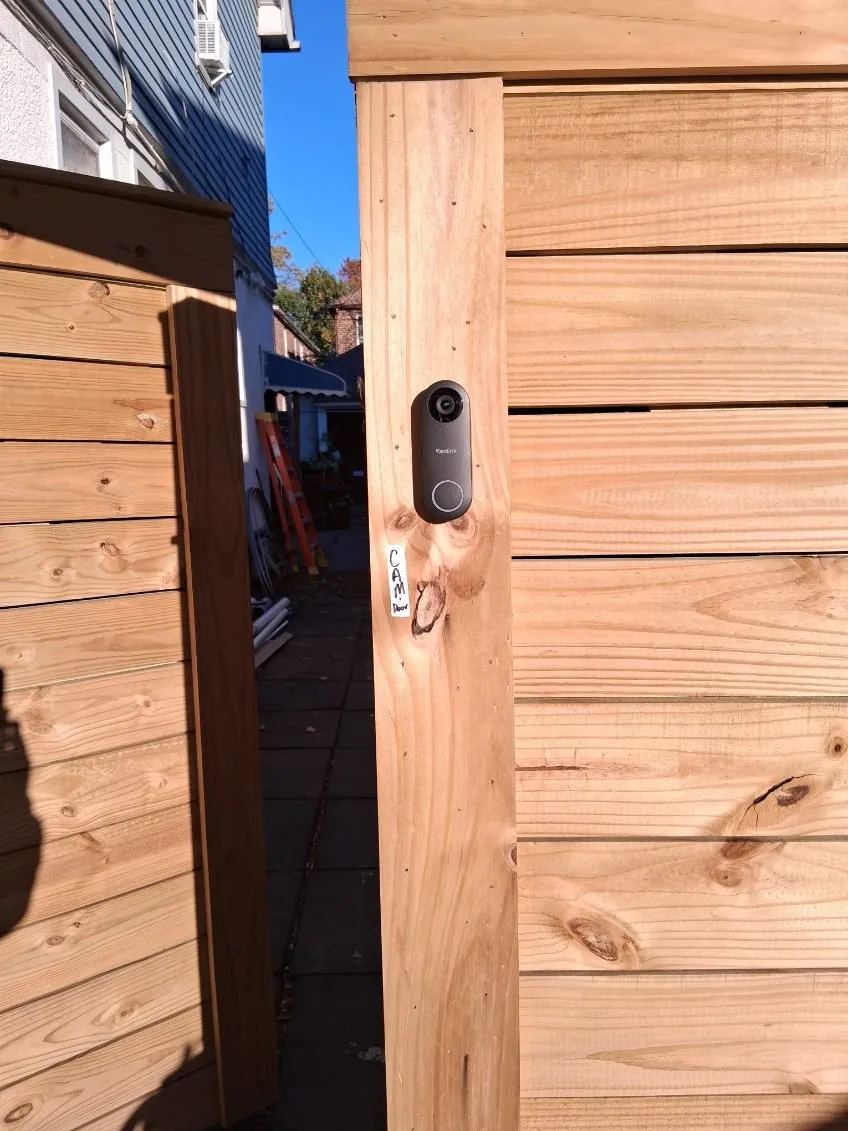
Start with who answers. In a house where each apartment has its own door, the cleanest setup is a wired video doorbell at each door, a chime inside each unit and the tenant's phone ringing as well. Nothing runs between floors, nothing is shared, and when one tenant moves out only that doorbell's account needs to change. Where both apartments share one front door and an inside stair, a two-button video station on the door frame does the same job and releases the door from either floor. We size it to the house rather than borrowing an apartment-building panel, which would cost more and give a tenant more to break.
Then decide who owns the accounts. Doorbells and cameras are registered to an email address, and that address controls everything later: who gets alerts, who can see recordings, who can hand access to a new tenant. For a house your office manages, the owner account should sit with the management company or the owner, never with a tenant or the installer, and the tenant should be added as a user who can be removed. That one choice prevents most of the lockouts we are later called to undo.
Finally, decide what the owner sees. Most owners want the outside of the property covered: the driveway, the side path, the garage door and the backyard gate. Most tenants do not want the owner watching their own front door. Current camera apps let us split the two, so the owner or manager sees the exterior cameras and each tenant sees only the doorbell for their own apartment. Building it that way from the start avoids the uncomfortable conversation that follows when a tenant discovers the landlord can see who visits them.
Three- and four-family houses are where the shape begins to change. Once three families live independently in a building, it is a multiple dwelling under state law, the shared front door becomes the building entrance, and the city's rules for entrance doors and smart access start to matter. Those buildings usually move up to a small video entry panel with a button per apartment and a release for the street door, which is the territory of our intercom installation work on Staten Island. The same office login can still run the houses and the small buildings side by side.

Above the house level, Staten Island's apartment stock is mostly low and spread out. A garden complex can have eight or ten small buildings around a lot, each with its own front door, its own handful of apartments and its own aging buzzer. The equipment is rarely exotic. What wears it out is the setting: doors that face open lots and take the wind, frames that shift on settled foundations, and cable runs between buildings that were buried or stapled along a fence decades ago.
Most repairs start the same way. A tenant reports that the buzzer does nothing, or the door clicks but does not open, or one floor can hear the visitor and cannot answer. The $250 service call finds the failed piece, and the published Staten Island ranges cover nearly everything we find: an apartment station from $250 to $525, a door release relay or button from $250 to $475, a 24-volt transformer from $325 to $650, an electric strike replaced and aligned from $450 to $950, lobby panel work from $650 to $1,800, and riser repair from $850 to $2,400 (door buzzer repair on Staten Island). Older audio systems that keep failing are handled on our Staten Island intercom repair page, which also explains when a repair stops making sense.
When the answer is replacement, the published starting point for a building-wide intercom in a five- to twenty-unit Staten Island building is $1,200 to $4,500 and up, depending on the number of apartments and the system chosen. Garden complexes change the arithmetic because the count that matters is entrances, not apartments: ten small buildings with six apartments each need ten panels, not one. We price each entrance on the walk-through and show where a single platform across all of them saves the office time, since one login then covers every door on the property.
Some managers we work with also run co-op or condo buildings for boards. Those buildings bring board approval, shareholder or owner notices and alteration paperwork into the job, so we have written separate guides for each: the Staten Island co-op security systems guide, the Staten Island condo security systems guide, a decision guide for boards weighing a co-op board intercom upgrade, and the companion piece on condo intercom replacement. A rental owner can skip all of that and decide in one conversation.

Keys are the hidden cost in a house-heavy portfolio. Every move-out means a locksmith or a lost afternoon, and every set of keys handed to a contractor, an aide or a dog walker is a set you never fully get back. Electronic entry ends most of that. A keypad deadbolt on a shared door or a reader on a laundry room lets the office issue and cancel access from a screen, and the record shows which code or fob opened which door and when.
Choosing between codes and fobs depends on the door. Codes suit doors that many people use occasionally: the side door of a two-family where a cleaner comes weekly, a storage room, a rental office back door. Fobs suit doors that residents use daily, because a fob cannot be shared by shouting it across a parking lot. For the gates and side doors of garden complexes we often combine them, with fobs for tenants and timed codes for vendors. Pricing on the Staten Island access control page runs from $1,500 to $2,000 for a pedestrian gate keypad and $4,000 to $7,000 for a combined vehicle and pedestrian gate system, with larger projects quoted after a survey (access control installation on Staten Island).
The law draws its line at the same place it did for intercoms. New York City's Tenant Data Privacy Law covers "smart access systems" such as fobs, apps and biometric readers in class A multiple dwellings. It requires a written privacy policy and tenants' consent before their data is used, bars selling it, sets deadlines for deleting it, and bars owners from requiring tenants to use smart access to get into their own apartment (Local Law 63 of 2021; HPD summary). A rented two-family house is not a multiple dwelling, but the three-, four- and six-family buildings in the same portfolio usually are. We set up every system so the office can produce a clear record of what is collected, and we keep a physical key option on apartment doors. Whether a given building is covered, and what its policy should say, is a question for the owner's counsel.
The Island's elevator buildings are few, mostly postwar, with a small number of new rentals going up near the ferry. Where an owner wants the cars restricted to residents, a reader in the cab starts from $1,650 per car for card, fob or code on Staten Island, and from $2,750 per car for face, fingerprint or iris readers, with the elevator contractor's connection billed by that contractor (elevator access control on Staten Island). We do the reader, the cable and the programming; only a licensed elevator agency touches the controller.

On Staten Island the car is part of the lease. Garden complexes rent parking rows, two-family houses come with a shared driveway, and many older houses have a detached garage at the back of the lot that the owner keeps for storage. That makes vehicle crime a landlord's problem in a way it rarely is in Manhattan. SILive reported in July 2026 that vehicle thefts on the Island were up roughly 47 percent for the year, "with 163 incidents this year through July 19 compared to 111 incidents during the same time period last year," citing NYPD CompStat (SILive, Maura Grunlund, July 24, 2026).
Cameras do not stop a determined thief, and we say so. What they do well on a rental lot is narrower and still worth the money: they show which car came in and when, they give the police and the insurer something to work with, they push opportunists toward the lot next door, and they settle the daily disputes over who scraped whose bumper or who dumped a mattress by the dumpster. Getting that value depends on placement. A lot camera needs to see faces and plates at the entrance, where cars slow down, not a wide panorama of parked roofs from forty feet up.
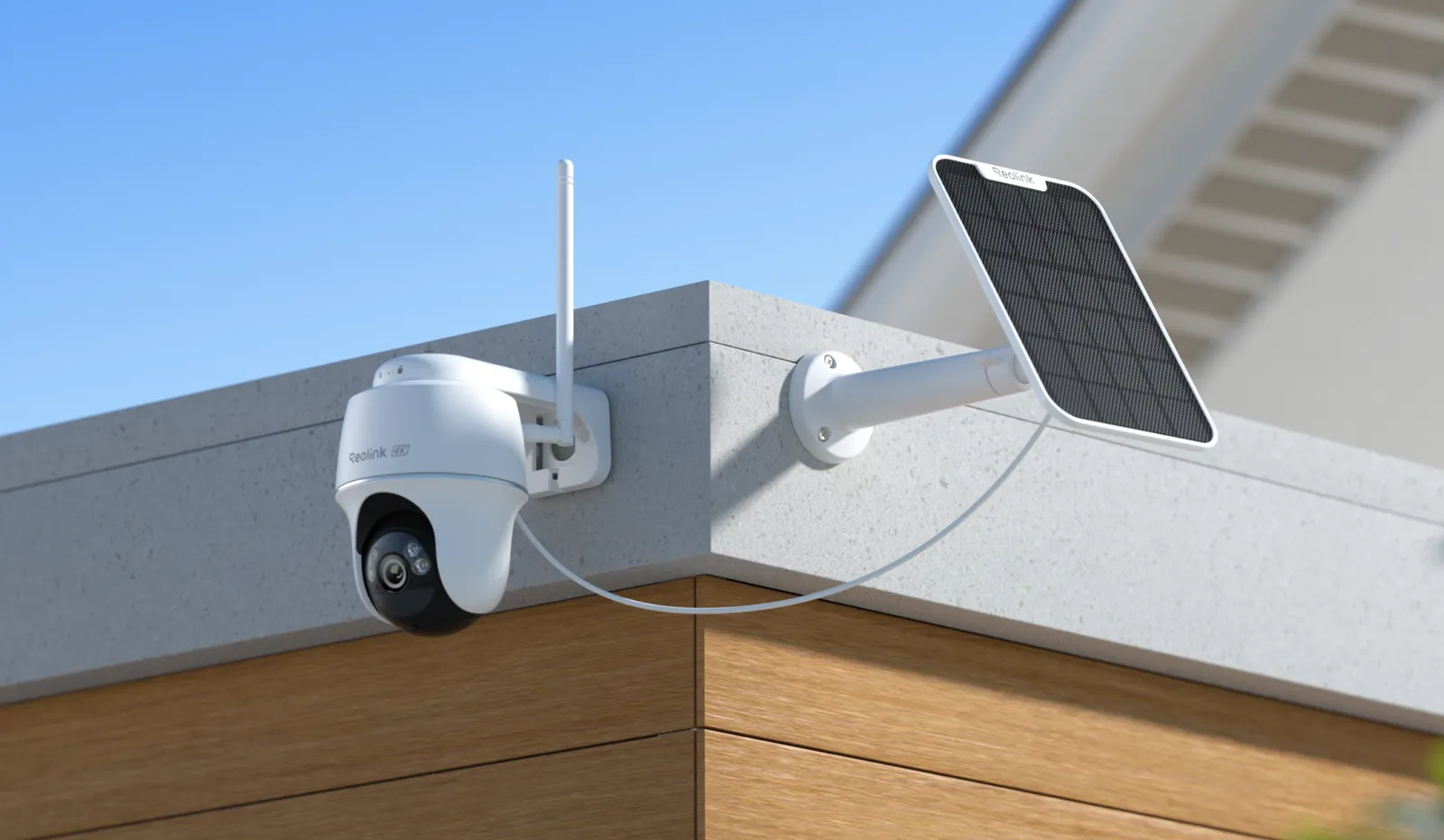
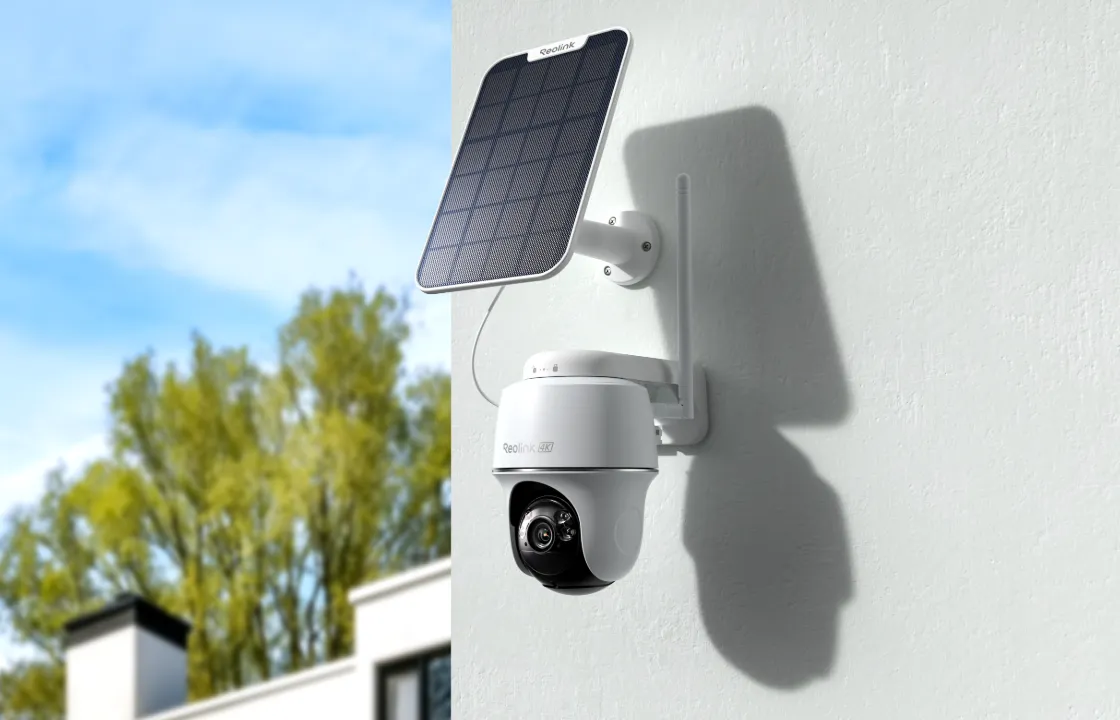
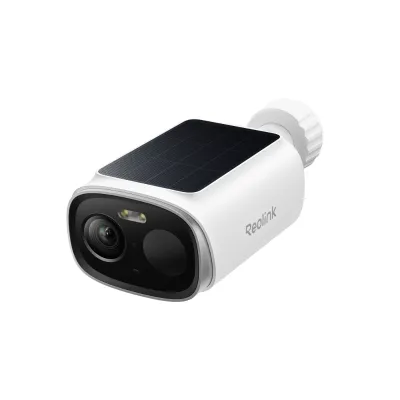
Detached garages are the hard case. They usually have no network connection and sometimes no reliable power, and trenching a cable across a yard can cost more than the cameras. Three options cover most of them. A wireless bridge links the garage to the house's network with a pair of small antennas. A solar-charged camera covers the garage door with no cable at all, at the cost of shorter recordings and dependence on the sun. Where there is no internet anywhere on the property, a cellular camera sends alerts over a data plan the owner pays. We put each option in writing with its limits so the owner can choose.
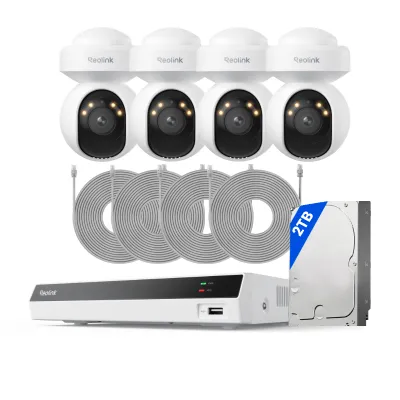
For the camera side of an apartment property, our apartment building security camera installation page for Staten Island covers lot and entrance coverage in depth. Boards that hire a manager have their own versions in co-op security camera installation on Staten Island and condo security camera installation on Staten Island, and general camera work for any property is on our Staten Island security camera installation page. Installed four-camera systems on the Island start at $999 on the borough's camera price list.

Staten Island remembers Sandy for good reason. The U.S. Army Corps of Engineers, describing the seawall now being built from Fort Wadsworth to Oakwood Beach, notes that "Sandy resulted in 24 deaths on Staten Island, more than any other borough," and that the project will protect "nearly 7,300 residential and commercial properties" (USACE North Atlantic Division, October 7, 2024). For a property manager the lesson is not dramatic. It is about where the transformers, recorders and network switches end up.
In older houses and walk-ups, the low-voltage equipment tends to live in the basement because that is where the electrical panel and the phone line come in. In a flood-prone block that is the worst place for it. When we replace or add equipment in an East or South Shore property, we move the recorder, the intercom power supply and the network switch above the likely water line where the building allows: a first-floor closet, a utility room shelf, a locked box high on a garage wall. The cable path changes a little; the risk changes a lot.
Wind and salt do slower damage. Doorbells and panels on the side of a house that faces the bay take rain driven sideways into every seam, and cheap outdoor connectors corrode within a few seasons. We use weather-rated boxes for every outdoor splice, mount cameras under eaves where the house allows, and choose stainless or sealed hardware on the most exposed walls. Battery backup on the entry system and the recorder keeps doors working and footage recording through the short outages that follow most storms; anything longer depends on the building's own generator, which is your electrician's work.
Many houses on the East Shore were raised after the storm, which leaves a long stair between the ground and the front door. On those houses the doorbell often belongs at the bottom of the stair or the gate, with the release and the chime up at the door, and cable has to cross the gap between the old ground level and the new one. We plan that on the walk-through rather than discovering it on install day.

The North Shore is where Staten Island looks most like the rest of the city. St. George, Tompkinsville and Stapleton hold older apartment houses near the ferry, large Victorian houses split into several apartments, and a growing number of new rental buildings. The City Council approved the Bay Street Corridor rezoning in June 2019, covering about 20 blocks of the North Shore and projected to bring around 1,800 new homes, about 1,300 of them income-targeted (City Limits, June 26, 2019).
That mix gives North Shore managers two kinds of work that rarely meet elsewhere on the Island. The converted Victorians behave like houses with too many doorbells: wiring snakes through original plaster, and the entry is a porch that was never designed for a panel. The newer buildings arrive with cloud-managed entry, a package room, elevator readers and a manufacturer subscription someone has to keep paying. A manager who runs both needs a vendor comfortable inside a 120-year-old staircase and in front of a programming screen on the same afternoon.
Foot traffic is the other North Shore difference. Buildings within a few blocks of the ferry and Bay Street see a steady stream of people who are not visiting anyone inside, which makes the street door the weak point. A self-closing door that actually latches, an entry panel set inside a vestibule rather than flush on the sidewalk, and a camera looking down at the door rather than out at the street do more here than any extra device.
Burglar alarms matter more in a house-based portfolio than in a doorman building. A vacant two-family between tenants, a rental office with files and keys, or a garage full of an owner's tools are each a better fit for an alarm than for more cameras. We install wired and wireless intrusion systems and connect them to central-station monitoring, which costs $30 a month with a keypad only or $45 a month with the phone app (alarm installation on Staten Island). Owners who inherited an alarm on someone else's contract can have it taken over, reprogrammed or replaced after a service call shows what is in the panel.
Every camera, reader and modern panel rides on cable, and cable is where Staten Island jobs differ most from apartment towers. Runs go between a house and a detached garage, between garden buildings across a lot, and up the outside of raised houses. Inside, we fish through frame walls rather than chasing masonry. Network cabling for these systems is published at $150 to $300 per drop on the Island (structured cabling installation on Staten Island). The city does not require an electrical permit for signaling and data wiring under 50 volts, outside certain life-safety systems (NYC Admin Code §28-105.4.7), which is why that side is ours and the 120-volt side is the electrician's.
Fire alarm systems are a separate trade with separate approvals. In multifamily and mixed-use buildings where code requires one, we handle the work only within our fire alarm scope, starting from engineered drawings and the approvals they need, and we quote it per building. The process is laid out on our Staten Island fire alarm installation page. Locks and readers on doors that are part of an exit path also have to release correctly when the alarm sounds or the power fails, which is why fire alarm and access control get planned together even when different contractors do them.

Before any product is chosen, the building type settles most of the scope. These are the property types that fill Staten Island management portfolios, and what each one asks of a security system.
Up-and-down apartments with separate doors, vinyl or aluminum siding and a driveway to a garage. Doorbells per door, exterior cameras on the siding and a recorder on the first floor.
Shared party walls and a garage under the upper unit. The lower apartment's entrance is often at the side or rear, which is where cameras and lighting are thinnest.
Large old houses cut into several apartments, with plaster walls, deep porches and doorbells added one tenant at a time. Small entry panels and careful wire fishing.
Several low buildings around a parking lot, each with its own entrance. Many small doors, a gate or two, and cameras that have to reach across open asphalt.
The few large rental buildings, mostly on the North and East Shores: a lobby, a mailroom, elevator cars and a staffed or semi-staffed front door.
Corner and avenue buildings with retail at street level. Separate store and residential systems, with the shared rear door or cellar as the line between them.
Frame houses are the easiest to wire and the easiest to wire badly. Cable fishes through stud bays without opening plaster, but every hole in the siding is a path for water, so exterior penetrations get a sealed box or a drip loop, and cameras mount on blocks made for the siding profile rather than straight through a vinyl panel that will crack in the first cold snap. Semi-attached houses add a party wall we do not cross; each side of the building gets its own equipment, even when one owner holds both.
Victorian conversions reward patience. Original plaster on lath cracks if it is drilled carelessly, porch ceilings are often beadboard over a void, and the best cable path is usually an old chase or the back of a closet. A small surface-mount panel on the porch post, with stations or phones answering in each apartment, keeps the facade intact. Garden complexes are the opposite problem: the walls are simple, but the distances are long. Cable between buildings runs in conduit or overhead on a messenger wire, or the link goes wireless, and the recorder sits in the rental office or a central building rather than in each basement.
Elevator buildings look like their counterparts in the other boroughs, with a lobby panel, a package area and readers in the cars, but they are often the only large building in the portfolio, and the office staff who run the houses may have little experience with a building-wide platform. We set those up with simpler permissions and a short walk-through for whoever answers the phones. In mixed-use buildings, the store keeps its own alarm and cameras, the residential entrance gets its own, and the shared doors are wired so neither side can lock the other out.

Many Staten Island management firms also run storefront strips and small office buildings alongside their rentals, and the same vendor file can cover them. The commercial stock here follows the main avenues rather than clustering downtown, so a commercial portfolio is spread out much like a residential one.
Commercial tenants usually want their own alarm and their own cameras inside their space, while the landlord is responsible for the shared entrance, the lot and the exterior. We draw that line in writing on every job so there is no argument later about whose camera should have caught what. Commercial camera work in depth, including retail and office layouts, is on our Staten Island camera pages linked above.

A management office with forty houses does not want forty separate vendor relationships for doorbells, locks and cameras. We register with management companies the same way any trade does: a W-9 and your vendor forms up front, a master service agreement if your firm uses one, and a certificate of insurance naming the owners and the management company once a job is awarded rather than with every quote. We do not claim to sit on any firm's approved-vendor list until that firm puts us there.
After that, work comes in however your office already operates. Some managers send a work order per address, some forward the tenant's text with a photo, and some prefer a monthly list of everything that needs attention. Each address gets its own invoice under the owning entity's name, which matters on Staten Island where owners often hold each house in a separate LLC. Repair invoices list what was found and what was replaced, so your office has a record of each property's equipment over time.
For a new portfolio, we suggest starting with one property, the one that generates the most complaints, and judging us on it before adding the rest. Larger firms that manage across boroughs can use one vendor record for all of it, including buildings in the other four boroughs.
A repair starts with the $250 service call, which covers the diagnosis and simple fixes and is credited toward the repair if it turns out bigger. We book within 2 hours of your request, schedule seven days a week, and favor early-day arrival windows so a tenant is not waiting all afternoon. Visits are scheduled first come, first served once paid. AI receptionists answer calls and texts at any hour, and a person responds between 8 a.m. and 8 p.m.; that is not the same as a technician on the way at midnight, and we will not pretend it is.
For managers who want the equipment looked at before it fails, we offer maintenance agreements for a group of properties. The terms and price are set after we walk the properties, because a portfolio of two-family houses with doorbells needs a very different visit from a garden complex with gates and twenty cameras. We do not publish package prices for maintenance, we do not sell guaranteed response times, and we do not run a monitoring center for video.
Our labor carries the 30-day warranty listed on our site, with one-year and longer coverage available as an add-on at purchase. Manufacturer warranties on equipment are the manufacturer's. Damage from lightning, power surges and storms is repaired as a service call, not under warranty, which is one more reason to put surge protection and battery backup on equipment near the shore.
Two times of year account for most of the equipment trouble we see on Staten Island: late summer into fall, when coastal storms arrive, and the first hard freeze, when doors shrink and batteries fade. A short list for each lets a manager schedule checks before the calls start.

A two-family house is not a multiple dwelling, because state law starts that category at three families living independently. That keeps it outside the Multiple Dwelling Law's entrance-door and intercom section and outside the city's Tenant Data Privacy Law, which covers class A multiple dwellings. The city's Housing Maintenance Code still applies to rented houses, the apartment doors still need working locks, and HPD registration applies when the owner and the owner's family do not live there. A three-family building crosses into multiple-dwelling territory, which is why we treat the three-family houses in a portfolio as small buildings rather than as houses. For any specific property, the owner's attorney has the final word.
Three things, usually. The owner's personal doorbell and camera accounts should move to the management company or a business email the owner controls, so the outgoing household is not still receiving alerts from the new tenants' door. The downstairs apartment, which the owner may have treated as part of their own home, needs its own doorbell or button and its own lock on any interior door to the basement or the stair. And the owner should decide what exterior coverage they keep, since cameras that once watched the owner's own driveway now watch a tenant's comings and goings. A single visit usually covers all three.
Yes on the doorbell, usually yes on the camera. A side or rear entrance down a few steps is where visitors get lost, deliveries get left and lighting is poorest. A wired doorbell at that door gives the tenant their own ring and video. A camera covering the path to the door, angled so it sees the walkway rather than into the apartment's windows, helps the owner without intruding. Whether that apartment is a legal unit is a separate question about the building's certificate of occupancy, which the owner should settle before we start, not something security equipment can resolve.
On shared doors, the most common answer is a keypad deadbolt or a keypad with a fob reader: the office issues a code at move-in and deletes it at move-out, and the log shows when each code was used. On a tenant's own apartment door, we keep a key cylinder as well, and in multiple dwellings the city bars owners from making smart access the only way into an apartment. For houses where the owner wants to stay entirely with keys, a lock with interchangeable cores lets the office swap the core at turnover in minutes instead of calling a locksmith.
That is the owner's policy decision, but there are good reasons to provide one instead. Tenant-installed doorbells are often battery units stuck to the trim, they leave holes and adhesive when the tenant moves, and they sometimes look straight at the neighbor's door or the shared driveway. A wired doorbell that the owner provides and the tenant uses gives the tenant what they wanted, stays with the house, and lets the office remove the old tenant's access on move-out. Many owners write that into the lease.
It can, so we aim and mask it carefully. Most cameras let us black out parts of the frame, so the camera records the shared driveway and the owner's garage door while the neighbor's windows and yard are hidden in the recording. Pointing a camera into a neighbor's home invites complaints and, depending on the facts, legal trouble, and audio recording raises separate issues under New York law. We show the owner the actual view on a phone before we leave.
Yes, with a trade-off for each method. A point-to-point wireless bridge carries the network from the nearest building to the garage row over a pair of small antennas, and a camera there can run on power over Ethernet if there is any outlet at the garage, or on a solar kit if there is none. Solar cameras record on motion rather than all the time and depend on daylight, which is short in December. Cellular cameras work anywhere with a signal but need a monthly data plan. On the walk-through we test the signal and the line of sight before recommending one.
They can show when a car arrived and left, capture the faces and plates of people entering through the lot's one or two entrances, and give the police and insurers usable video. They also make the lot a less attractive target than one with nothing on the poles. They cannot stop a thief who is already inside a car. The best results come from cameras placed where vehicles slow down at the entrance, good lighting, and a recorder kept long enough that a tenant who notices damage on Monday can still find Friday night.
For tenants, fobs. A fob cannot be passed around by text, it is cancelled in one click when someone moves, and readers handle cold and wet weather well. Codes are better for the people who come occasionally: the cleaning service, the exterminator, a home health aide. Many garden complexes end up with both on the same reader, fobs for residents and time-limited codes for vendors, so the office never has to hand out a fob that might not come back.
If someone is not reliably charging them, yes. Batteries lose capacity in the cold, and a camera that records on every passing car drains faster still. Wiring a frame house is usually straightforward because cable fishes through the stud bays without opening walls, and a wired camera records continuously and never needs a ladder visit to recharge. Where wiring truly is not possible, a small solar panel on the battery camera solves most of the problem on a wall that gets sun.
Usually either. The monitoring contract is between the previous owner and their alarm company, so the cancellation or transfer is theirs or yours to handle with that company. The panel itself often can be reprogrammed once someone has the installer code, and if no one does, many panels can be reset by a technician. A service call tells you whether the panel, sensors and siren are worth keeping. If they are, we connect it to our central station; if not, we replace it.
Inside the vestibule, if the building has one and the outer door can stay unlocked during the day. A panel set back from the sidewalk is out of the weather, harder to damage and less inviting to people passing by. Where the outer door has to stay locked, the panel goes on the frame of that door instead, with a camera above it looking down at the step. Flush sidewalk-facing panels near the ferry and busy avenues take more abuse and cost more to keep running.
Start with access, not hardware. Find out who has keys, codes and fobs, and who holds the logins to the doorbells, cameras and alarm, because those are the items that let a former tenant or contractor back in. Next, confirm that every exterior door closes and latches on its own. Then check whether the cameras are actually recording and how far back the footage goes. Our first visit to a newly managed property covers all three and leaves the office with a written list of what is installed and who controls it.
Separate, in most rentals. A shared alarm means one tenant's code arms and disarms the other's home, and a false alarm downstairs wakes the household upstairs. Two small systems, each with its own keypad or app and its own monitoring if the tenant wants it, avoid that. The owner can still have a contact on the shared basement or garage door reporting to their own phone. When the house is vacant between tenants, one system covering the whole building is often the better choice.
We quote a single unbranded system by default and name brands and models only when you ask, and then we name every brand we carry. Whatever the brand, the categories below are what a Staten Island property ends up with.
One per apartment door on houses, ringing an indoor chime and the tenant's phone, powered from a low-voltage transformer.
Two to twenty buttons or a short directory for three- to twenty-unit buildings, answering on stations or phones.
Weather-rated units for gates, side doors, laundry and storage rooms, managed from an office login.
The hardware that actually holds or releases the door, matched to the frame and the egress rules.
Turrets and bullets for doors, paths and driveways, with built-in infrared or spotlights where yards are dark.
For parking lots and garden-complex walkways, where one camera has to cover a wide area and still zoom on a plate.
For detached garages, fences and far corners of lots with no cable path and no network.
Network video recorders sized to the camera count, kept on a first floor or higher where flooding is a risk.
Door and window contacts, motion sensors, sirens and cellular communicators for houses, offices and vacant units.
A recorder in each house keeps footage on site with no monthly fee, and the office views it through an app. Cloud recording stores clips off site, which protects them if the recorder is stolen or flooded, but it carries a per-camera subscription paid to the platform. For most Staten Island rental houses we recommend local recording with the recorder placed high and locked, and cloud backup only for the cameras that matter most, such as a lot entrance. Either way, the office, not a tenant or a former super, holds the main login.
Ask a search assistant how to secure rental property and you tend to get an answer written for an apartment tower or for a single homeowner. Staten Island portfolios are neither. Here are the claims we hear repeated most often, and how they hold up on the Island.
Guides written for multifamily owners treat a lobby intercom as the starting point for every property. On Staten Island, where tens of thousands of rentals are two-family houses with a separate door for each apartment, that advice sells hardware nobody needs.
A house with two front doors is served better by two wired doorbells, each ringing its own apartment. A lobby-style panel there adds cost, a shared device that fails for both tenants at once, and often a subscription.
The building intercom becomes the right tool when three or more apartments share one entrance, which is also where state law starts treating the building as a multiple dwelling. We draw that line per address on the walk-through.
Consumer reviews love battery cameras because they install in minutes. For one homeowner who charges them, they are fine. For a management office with thirty houses, every battery is a future site visit.
Cold weather shortens battery life, busy driveways drain them faster, and nobody on the tenant's side is responsible for recharging a landlord's camera. The result is a camera that was dead the night something happened.
We wire cameras wherever a frame house allows, which is most of the time, and keep battery or solar units for the spots where cable truly cannot go.
Some articles imply that New York City requires cameras in rental buildings. The requirements we work with are about doors and entry: self-closing, self-locking entrance doors and intercoms in many multiple dwellings, working locks on apartment doors, and rules about data from smart access systems.
Cameras are a choice the owner makes for safety, evidence and insurance reasons. Once installed, they raise their own questions about placement in common areas, audio and who may see the footage.
We help owners make that choice for each property and keep cameras out of places where tenants expect privacy. Legal questions about a specific building go to the owner's counsel.
Insurance marketing and some AI answers suggest a security system pays for itself through lower premiums. Whether an insurer offers any credit, and for what equipment, is up to that insurer and that policy.
Monitored burglar alarms are more often recognized by insurers than cameras are, and some carriers ask for a monitoring certificate. Cameras are valued mainly for the evidence they produce after a loss.
We will not promise a discount. If an owner's carrier lists specific requirements, send them to us and we will tell you what meets them and what it costs.
Many search answers blur the difference between an app that sends alerts and a staffed monitoring center. They are not the same, and neither comes free.
Our burglar alarms can be connected to a central station for $30 a month with a keypad only or $45 a month with the phone app. Camera alerts go to the people the office chooses; nobody watches the video live unless a separate monitoring service is hired.
For most rental houses, an alarm on central-station monitoring plus cameras for evidence is the honest combination. We do not offer monitored video and will not imply that we do.
An outdoor rating on a camera or doorbell means it resists rain and dust. It does not mean the recorder, the transformer or the network switch in the basement will survive standing water.
When surge water reaches a basement, a camera on the outside wall can come through untouched while the equipment that powers and records it does not. The weak point is where the support gear sits, not the cameras.
Moving that gear above the likely water line, adding battery backup and sealing outdoor splices costs far less than replacing a building's system after the next storm.
For a homeowner's own door, that is often true. For a landlord's property, the work touches tenants' doors, egress hardware and, in multiple dwellings, entry rules and tenant data.
New York requires a license to install, service or maintain security systems for others, and an unlicensed installer leaves the owner with no recourse and often no record of what was done or who holds the accounts.
A licensed contractor who documents each device and hands the logins to the office is the difference between a doorbell that works and a portfolio the owner actually controls.
Read us the addresses or text a photo of the doorbell, panel or lot that is giving you trouble. We will tell you what to fix now and what can wait.
A rough list is enough: addresses or neighborhoods, how many apartments each, and what is failing or planned. Repairs start with the $250 service call; new systems start with a free walk-through. Prefer to talk? Call or text (347) 934-8335.
Got it. We will be in touch by phone or text to set up the first Staten Island visit.
Seven steps from the first message to the property record. A simple repair goes from step two straight to step seven.
Addresses or neighborhoods, house or building, apartment count, who has keys, and what is failing or planned.
We confirm a day and a two-hour arrival window, any day of the week, early in the day where possible. A breakdown is the $250 visit; new work is a free assessment.
Every exterior door, the basement and utility space, the driveway, lot and garage, any elevator, and where support equipment can sit above flood level.
One scope and price for each property, with electrical work, elevator work and any platform subscription shown separately.
Pick us and the insurance certificate goes out naming the owners you list. Parts are ordered when the deposit lands; anything special-order gets a date only after it reaches us.
We keep doors working while we change them, then test every doorbell, station, code, fob and camera with whoever represents the owner.
Logins transferred to the office, a list of devices and locations, and the same number to call for service.
On a rented two-family we have not seen before, we walk the outside before we touch a doorbell. The driveway tells us where cameras will earn their keep, the side of the house tells us whether the lower apartment has its own door, and the back of the lot tells us whether there is a garage we will be asked about next month. Then we go to the basement, because that is where the transformer, the phone line and the old alarm panel usually live, and on the East and South Shores it is where the water came in during the last big storm.
The doorbell problem that got us called is usually simple: a transformer that has failed, a wire chewed at the porch, a button full of water. The useful part of the visit is what we write down while we are there. Who owns the doorbell accounts, whether the door latches without a push, which camera angles the owner actually needs, and where a recorder could sit above the floor. A manager who gets that record for each house stops guessing about the next call.
Most of our work on houses is outside or in common spaces, but anything inside an apartment needs the tenant's cooperation and, in buildings covered by the city's access rule, written notice. That rule calls for at least a week's written notice before repairs or improvements, 24 hours before an inspection, and limits access to 9 a.m. to 5 p.m. on weekdays unless the tenant agrees otherwise, with emergencies handled differently (28 RCNY §25-101). We give the office the dates and the apartments we need so the notice goes out on time.
Technicians arrive inside the agreed window, never early, and work with whoever the office names to let them in. In houses that usually means the tenant; in garden complexes it is often a maintenance worker with keys. We keep at least one way in working at every entrance while we change hardware, so no tenant is shut out mid-job.
Tenants get a short explanation of how to answer the door, add the doorbell to their phone or use a new code, and the office gets the admin side. Tenants who have trouble later call the office, which calls us, so requests come through the people who manage the property rather than straight to our technicians.
Crews cross the Verrazzano from Brooklyn to reach every corner of the Island. The six places below are landmarks that explain the property mix a manager deals with here. We name them for geography only; we never list client properties.
The North Shore's front door, ringed by older apartment houses, offices and new rentals where foot traffic past street doors is heaviest.
The corridor rezoned in 2019 for new housing, mixing Victorian conversions, storefront buildings and new mid-rise rentals.
Long commercial strips with apartments over stores and two-family houses on the side streets.
The Mid-Island retail spine, with large parking lots and the townhouse and garden communities around Heartland Village and New Springville.
East Shore mixed-use blocks and the dense two-family streets between Hylan and the beach.
The low-lying stretch between Fort Wadsworth and Oakwood Beach that the new seawall is meant to protect, home to many raised and rebuilt houses.
We also serve Mariners Harbor, Elm Park, West Brighton, Westerleigh, Graniteville, Bulls Head, Grasmere, Concord, Dongan Hills, Grant City, Oakwood, Great Kills, Eltingville, Annadale, Huguenot, Rossville, Charleston and Tottenville.
Before a technician sets foot on a property, you already know two figures. Anything broken starts at $250 for the visit, which pays for finding the fault and handling simple fixes and counts toward the repair if it is bigger. Looking at new or replacement equipment is free, and the written price is specific to that address. Beyond those, our Staten Island service pages publish ranges for the work managers order most, and this table repeats them.
| Work | Staten Island price |
|---|---|
| Service call (diagnosis and simple fixes) | $250, credited toward a larger repair |
| Apartment station replacement | $250 to $525 |
| Door release relay or button | $250 to $475 |
| 24V transformer replacement | $325 to $650 |
| Electric strike replaced and aligned | $450 to $950 |
| Entry panel repair or faceplate | $650 to $1,800 |
| Riser or house wiring repair | $850 to $2,400 |
| Building intercom, 5 to 20 units | $1,200 to $4,500 and up |
| Pedestrian gate keypad | $1,500 to $2,000 |
| Vehicle and pedestrian gate access | $4,000 to $7,000 |
| Elevator reader, card, fob or code | From $1,650 per car, plus the elevator contractor's work |
| Installed four-camera system | Starting at $999 |
| Network cable for cameras and readers | $150 to $300 per drop |
| Alarm central-station monitoring | $30 a month keypad-only, $45 a month with the app |
| Doorbells, cameras or systems for a specific property | Written quote after a free on-site assessment |
| Maintenance agreement | Quoted per portfolio after a site survey |
Sources: repair ranges from the Staten Island door buzzer repair page; intercom, access control, elevator, cabling and alarm figures from the Staten Island service pages linked above; the camera figure from the Staten Island camera price list.
Financing is available through Wisetack, subject to approval.
Full terms — including 50% deposit, one-year parts-only warranty on Abstract Enterprises Security Systems-supplied products, and the late-fee schedule — are set out in the service agreement.
Labor is covered for the 30 days stated on our website; owners who want a year or more of labor coverage can buy it with the job.
We do not sell boxed packages at a fixed price, because no two properties on a Staten Island list are alike. Most owners and managers start in one of three ways.
Send us to the property with the dead doorbell or the door that will not latch. The $250 visit tells you what failed and what it costs to fix, and lets you judge our work.
Bring the houses onto one doorbell and camera platform, each priced separately, so the office manages every property from one login.
Cameras on the lot entrances and garage rows, and alarms on vacant units, assessed on site and priced in writing.
Doorbells or cameras already sitting in the owner's garage? Text a photo of the box labels; installation labor gets priced on that call, and the date is set when the deposit clears. Anything the owner supplied is warrantied by whoever made it.
Keypad and app locks for rented houses, vacant units and the rental office.
New buzzers and doorbell systems for houses and small buildings on the Island.
Camera equipment supplied with installation or on its own.
Published ranges for entry panels, stations and intercom repairs, borough by borough.
Two video entry platforms compared for managers weighing an upgrade.
Tell us which houses and buildings you run; a written plan for each comes back to your office.
Our Brooklyn office at 1282 Troy Avenue dispatches every Staten Island job, and our technicians cover the whole Island, from St. George to Tottenville. The prices on our Staten Island service pages are set for work in the borough, so the quote you receive is the price you pay for the job as scoped.
Yes. A self-managing owner gets the same service as a management company: a $250 visit for anything broken, a free walk-through for anything new, and a written price per house. Many of our Staten Island customers own a single two-family and call us when the doorbell or a camera stops working.
Yes. We use mounting blocks shaped for the siding profile, so the device sits on a flat, sealed surface instead of a ridge, and every cable that passes through the wall gets a drip loop and sealant. Fastening straight through a vinyl panel tends to crack it in cold weather and lets water behind the siding, which is the problem the blocks prevent.
Yes. On a raised house the front door can sit a full story above the walk, so we often put the doorbell or call button at the bottom of the stair or the gate, with the chime and door release up at the apartment. Cable has to cross from the new foundation to the old ground level, and we plan that route on the walk-through.
Yes. A management office holds keys, fobs and tenant files, which makes it one of the better places in a portfolio for a reader, a camera at the door and an alarm. Staff get their own credentials, and the office can see who entered after hours.
Yes. Current camera and doorbell apps allow separate users with separate permissions. We set the owner or the management office as the account holder with access to the exterior cameras, and add each tenant as a user who sees only the doorbell for their own apartment. When a tenant moves out, the office removes that user.
Yes. Cameras that record to a recorder or hub inside the house work with no monthly fee, and the office still views them from a phone. Cloud storage, cellular data for cameras with no internet, and alarm central-station monitoring are the items that carry monthly charges, and we list them separately in every quote.
Usually. Most wired doorbells can ring a second chime or a plug-in chime on another floor, and the tenant's phone can ring as well, which many tenants with hearing loss set to vibrate. We confirm the doorbell model on the service call and price the add-on there.
Yes. Small jobs are most of what rented houses need. The $250 service call covers the visit and diagnosis, simple fixes are done on the spot, and if a part has to be replaced you get the price before we install it.
We do not do electrical work, so new light fixtures and circuits belong to your electrician. On our side, many cameras have built-in infrared or a spotlight that switches on with motion, and those often cover a dark side path or garage apron without a new fixture. Where a lot needs more light than a camera can provide, we tell you where your electrician should add it.
Plenty of Staten Island management firms also run buildings across the bridge. The five-borough overview is our property management security guide for New York City, and every service we offer is listed on the Abstract Enterprises Security Systems home page. Borough pages for the rest of the city cover rental portfolios very different from the Island's: Brooklyn property management security for walk-ups, brownstones and rent-stabilized buildings, Manhattan property management security for doorman and landmarked buildings, property management security in Queens for garden apartments and new towers, and Bronx property management security for large regulated buildings. Outside the city, managers can turn to property management security on Long Island and property management security in the Hudson Valley. County pages are still being written for Nassau, Suffolk, Westchester, Rockland, Orange, Putnam, Dutchess and Ulster, along with a Staten Island guide for owners and investors on apartment building security systems.