Managing rentals in Poughkeepsie, Beacon, Fishkill or Wappingers Falls? One licensed low-voltage contractor for every Dutchess address on your list: (845) 640-3835
Property management security in Dutchess County begins with a $250 service call: a licensed technician goes to the rental where the street door will not release, the fob reader stopped reading, a camera went dark after a storm or an alarm keeps bringing the police, finds the fault and fixes the simple ones on that visit. The county's rental stock runs from pre-1940 two- and three-family houses in the City of Poughkeepsie and converted factory-era buildings in Beacon to the garden complexes along Route 9 in the Town of Poughkeepsie, Wappinger and Fishkill, and to the houses near Marist and Bard that change tenants every academic year; we keep every one of them on a single vendor record answered at one number.
Short answer for a Dutchess manager: you need one contractor who can repair whatever is failing at a single address this week and plan the next building without forcing a portfolio platform onto a two-family house. Every repair starts with the $250 service call. Our Dutchess service pages already publish the rest: $250–$525 for an apartment intercom station, $450–$950 for an electric strike with alignment, $1,200–$3,500 for a video intercom in a four- to eight-unit building, $1,900–$6,000 for one door or gate on a keypad or fob reader, and four-camera systems with a recorder starting at $1,299. Whole complexes and lists of rentals are priced property by property after a survey.
Last updated November 27, 2026 by Abstract Enterprises Security Systems, NYS license #12000287431 · Sources: U.S. Census Bureau American Community Survey 2019–2023 (tables B25003, B25024, B25034, B25064); Dutchess County Department of Planning and Development, 2024 Rental Housing Survey; City of Beacon Code Chapter 173 Article II and Housing Resources page; City of Poughkeepsie Code Chapter 6 Article I; Dutchess County Department of Behavioral and Community Health Rental Registry Program; NYS Association of Realtors Good Cause summary; NYS Multiple Residence Law §3; Dutchess County Executive storm release (July 2026)
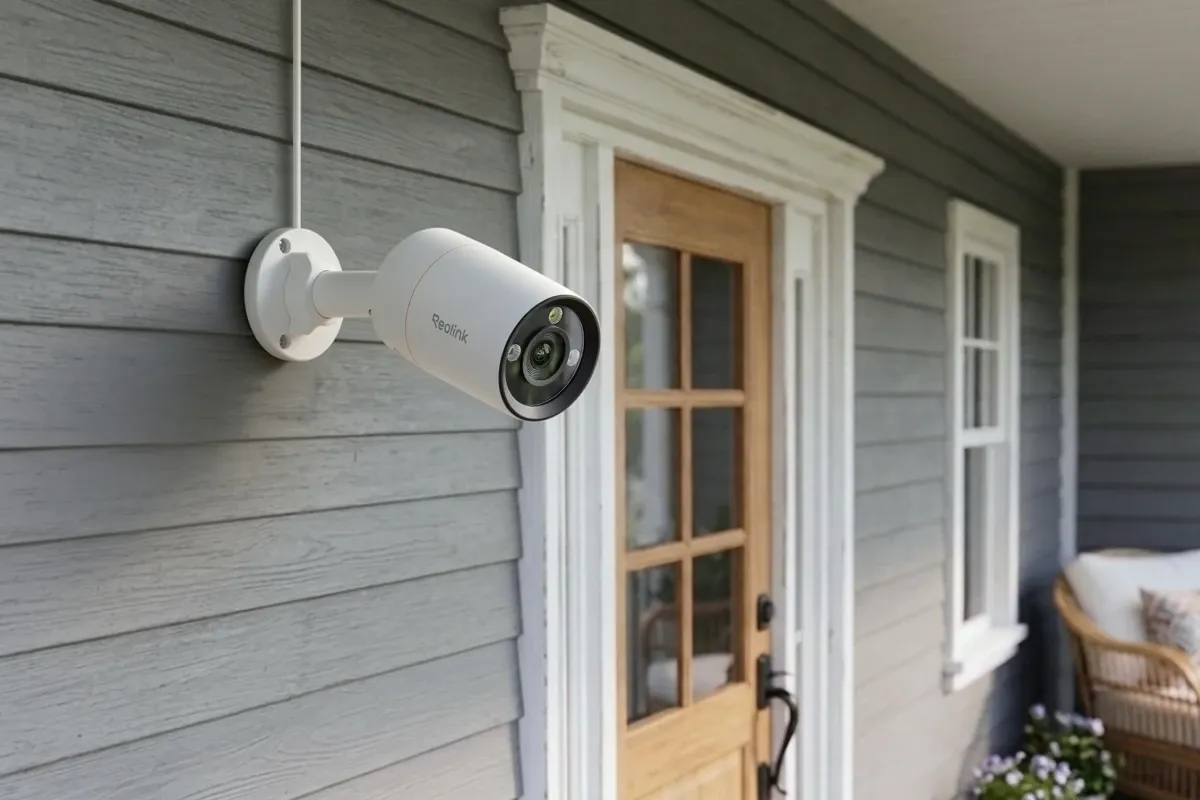
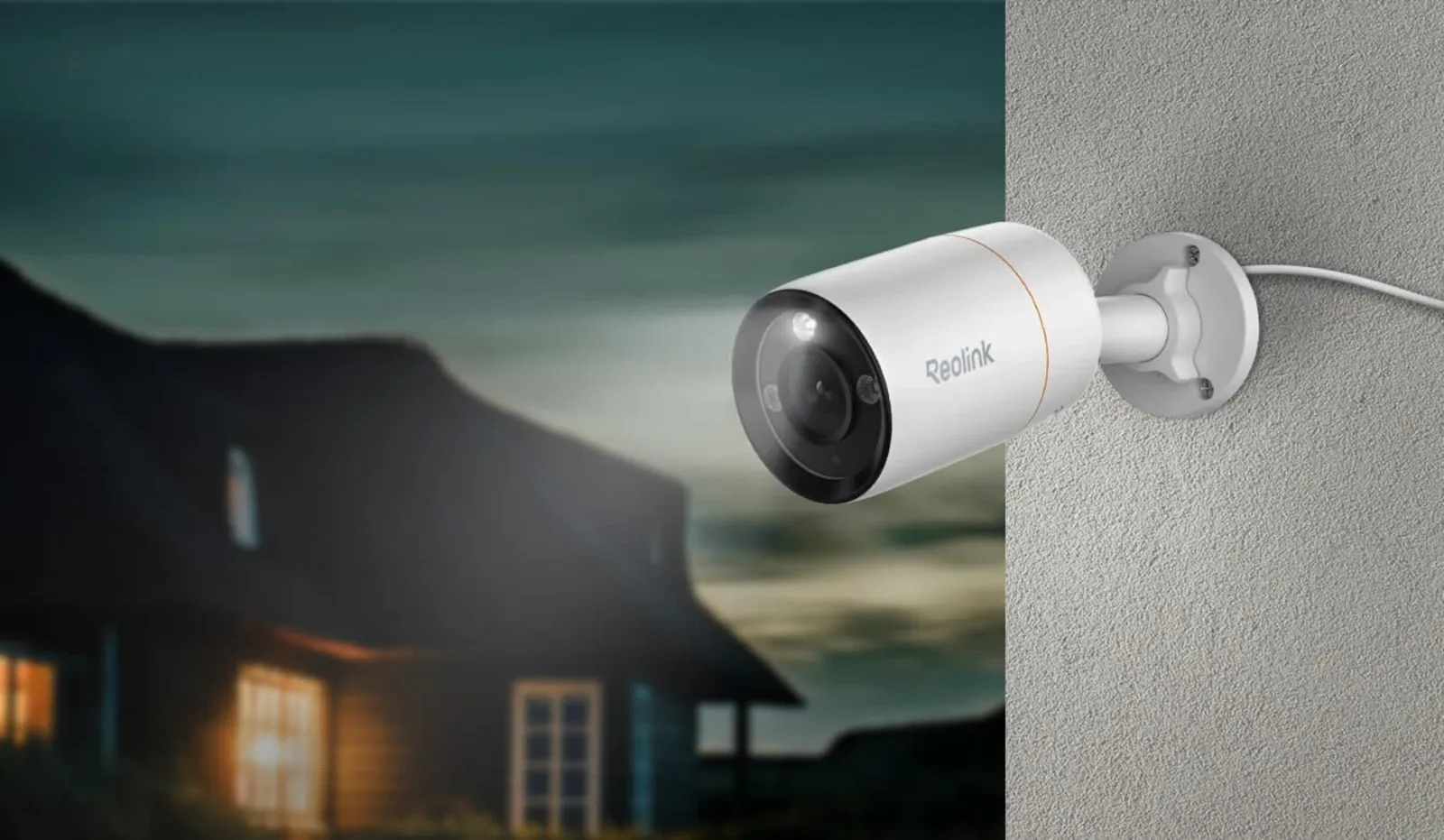
Manufacturer product photo (Reolink, an authorized partner): a white bullet camera mounted on gray siding beside a front door. On a two- or three-family house the camera belongs on the owner's wall, aimed at the shared entry and the walk, not into anyone's window.
Dutchess Rental Security Request
One building or the whole Dutchess list
✅
Request Sent!
Your Dutchess request is in. Expect a phone call or a text from our scheduling desk.
25+
Years in the Trade
$250
Service Call
4.7★
201 Google Reviews
1
Vendor Record per Portfolio
Licensed NYS low-voltage contractor · Crews leave from 460 E Fordham Rd in the Bronx · Dutchess line (845) 640-3835
The County
What Makes Dutchess Rentals Different to Secure
Dutchess is not a county of towers, and it is not a county of only houses either. The Census Bureau's American Community Survey for 2019 through 2023 counts 115,184 occupied homes in the county and 35,900 of them rented, close to one household in three. That is a far larger renting share than its neighbors to the south, and the renters are concentrated. In the City of Poughkeepsie the same survey counts 8,174 renter households out of 13,442, about three in every five homes. In the City of Beacon it is 2,562 of 6,320, a little over two in five. Anyone who manages apartments in this county ends up spending most of the week in those two cities and along the Route 9 corridor between them.
The buildings are old where the renters are. Of the 14,254 housing units in the City of Poughkeepsie, 5,603 were built in 1939 or earlier, roughly two in five; Beacon's share is almost identical, 2,617 of 6,658. Countywide the figure is 22,056 of 122,636, about 18 percent. Those older city units are mostly small buildings: Poughkeepsie has 2,302 homes in two-unit structures and 2,757 in structures of three or four units, against 1,727 in buildings of fifty or more. A rental portfolio here is therefore heavy on two-family and three-family houses, small walk-ups with a single street door and a stair, and a handful of larger elevator buildings downtown. The wiring in them was put in by different people across several decades, and very little of it is documented.
The newer half of the market is the apartment complex. Each year the Dutchess County Department of Planning and Development surveys complexes of twenty or more units, and its 2024 Rental Housing Survey heard back from 89 of the 149 complexes it contacted, covering 10,128 apartments. Of the market-rate units counted, the Town of Poughkeepsie held 2,177, the Town of Fishkill 1,830, the Town of Wappinger 1,395, the City of Poughkeepsie 950 and Hyde Park 673. Those are the garden complexes and mid-rise communities that line Route 9 and sit back from Route 52 and Route 9D: many entrances, a leasing office, a clubhouse or pool, a maintenance garage, parking lots and mailbox kiosks. The Town of Fishkill's comprehensive plan update counts six market-rate complexes in that town alone, providing 1,791 apartments.
Those complexes are full. The same county survey put the 2024 vacancy rate in market-rate complexes at 1.6 percent, 125 vacant units out of 8,028, and notes that the county has stayed below the five percent mark housing experts treat as healthy for more than twenty-five years. By municipality it reported 0.0 percent in Beacon, 0.7 percent in Wappinger, 1.0 percent in Fishkill, 2.0 percent in the Town of Poughkeepsie and 2.1 percent in the City. For a security contractor that has a practical meaning: there is almost never an empty building to work in. Entry systems get replaced while every apartment is occupied, door hardware gets changed between the last tenant's move-out and the next tenant's move-in, and a failed lobby door affects real people the same evening.
Turnover follows the academic calendar in parts of the county. Marist University's main campus sits on Route 9 in the Town of Poughkeepsie, and the university tells its graduate students that they live off campus, in complexes and in private homes throughout Poughkeepsie. Bard College says most of its off-campus students choose Red Hook, Tivoli or Rhinebeck. Vassar is the exception: its Common Data Set reports 99 percent of students in college-owned or affiliated housing, so Vassar students are a small part of the private rental market. Where students do rent, codes, fobs and app accounts change hands in late spring and again before fall classes, and that is when a manager most needs a contractor who can reset a building quickly.
The rules are local, and they are unusually specific. Beacon requires every non-owner-occupied rental to carry a sworn landlord registration statement and, for owners living more than fifteen miles away, a named managing agent who lives within that radius. The City of Poughkeepsie requires owners or managers of rental properties with four or more units to file a sworn vacancy statement with the Building Department every February. Pre-1980 rental houses with two or more units in the 12601 ZIP code must be registered for lead safety. Good Cause eviction protections were adopted by the City of Poughkeepsie in 2024, by Beacon in August 2024 and by the Town of Poughkeepsie in April 2025. None of this is our law to apply, and nothing on this page is legal advice, but each rule changes how and when we schedule work, so we plan around all of them and cite where each one comes from.
On the technical side, these are Multiple Residence Law buildings, not Multiple Dwelling Law buildings. Section 3 of the state's Multiple Residence Law applies it to every town and village and to cities of fewer than 325,000 people, so the New York City intercom and tenant-data rules that dominate city pages do not apply here. Code questions go to the city, town or village building department. As for who shows up: the company is owned by a technician who has worked on entry, camera and alarm systems since 2000 and has run the business since 2002, every job is done under New York State low-voltage license #12000287431, and Dutchess requests come in on one direct line, (845) 640-3835.
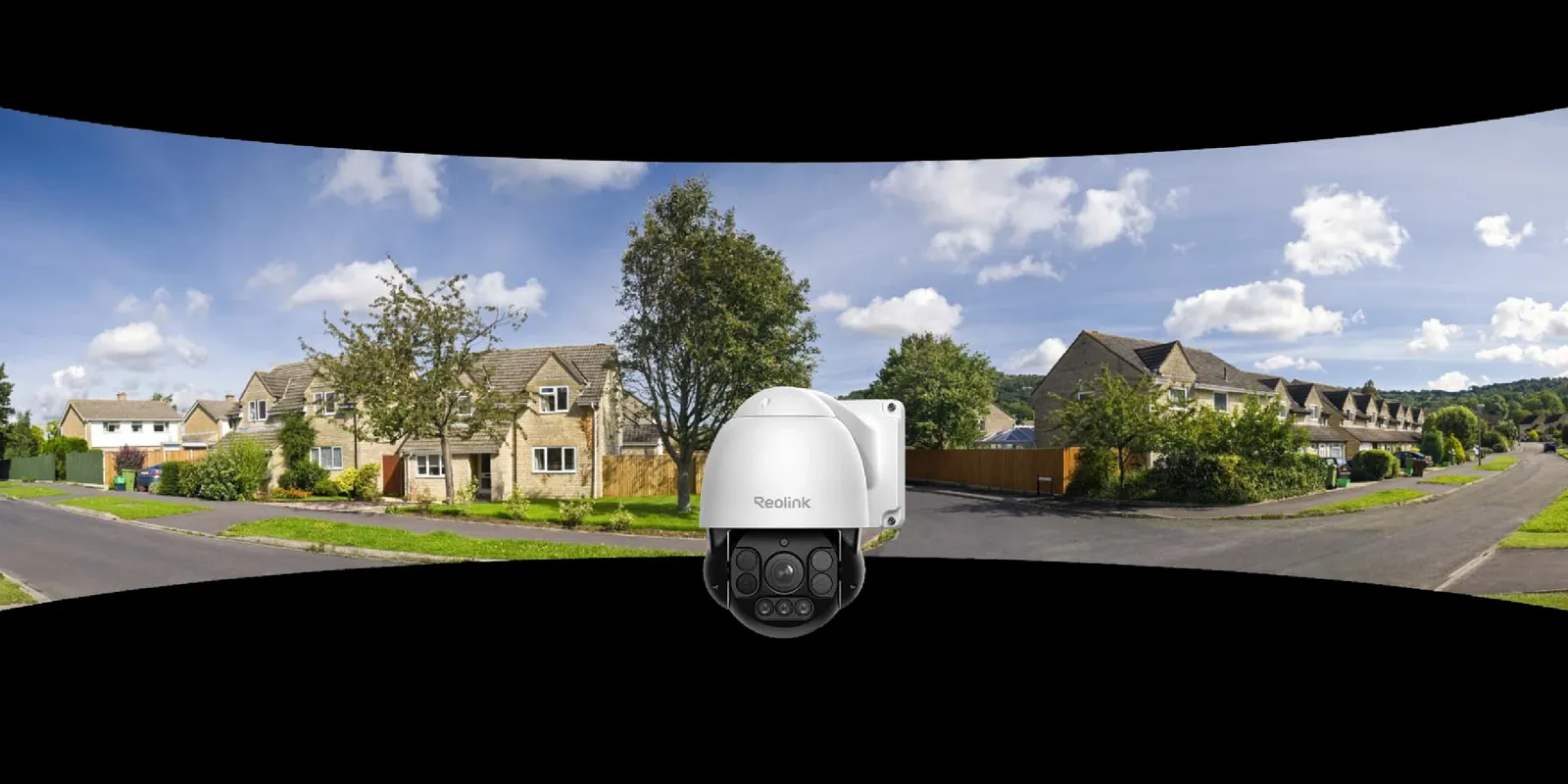
Manufacturer product photo (Reolink, an authorized partner): a pan-tilt dome camera set against a wide street view of houses. On a garden complex a camera like this suits a long parking row or a mailbox kiosk; on a block of rental houses it is usually the wrong tool, because it sweeps across neighbors' property.
Dutchess facts that shape a rental security plan
A renting county with renting cities. 35,900 of 115,184 occupied homes countywide are rented; 8,174 of 13,442 in the City of Poughkeepsie and 2,562 of 6,320 in Beacon (ACS 2019–2023, table B25003).
Old city stock. 5,603 of the City of Poughkeepsie's 14,254 units and 2,617 of Beacon's 6,658 were built in 1939 or earlier (table B25034).
Houses split into apartments outnumber big buildings. Add the county's duplex homes (7,441) to those in three- and four-family structures (9,135) and the total is roughly four times the 4,118 homes in fifty-plus-unit buildings (table B25024).
Complexes are full. Market-rate complexes of twenty or more units ran at 1.6 percent vacancy in 2024, and the county has stayed under five percent for over twenty-five years (Dutchess County 2024 Rental Housing Survey).
Rents keep rising. The same survey found average two-bedroom rents up 11.1 percent between 2023 and 2024, and median gross rent in the ACS is $1,522 countywide, $1,675 in Beacon and $1,370 in the City of Poughkeepsie.
Beacon names its managing agents. City Code Chapter 173 Article II requires a sworn landlord registration statement for non-owner-occupied rentals and a managing agent within a fifteen-mile radius when the owner lives farther away.
Poughkeepsie counts its vacancies. City Code Chapter 6 requires a sworn statement each February for rental properties with four or more units, with fines of $500 to $2,000 per unit for not filing.
Storm outages are long. After the July 4, 2026 storm the County Executive reported Central Hudson at over 33,000 outages and NYSEG at over 7,400 across Dutchess, worst in the City and Town of Poughkeepsie, East Fishkill, LaGrange, Beekman, Union Vale and Pawling.
Place
What the numbers say
What a rental list holds there
Where the security work concentrates
City of Poughkeepsie
8,174 renter households; 950 surveyed complex units at 2.1% vacancy
Two- and three-family houses, walk-ups, downtown elevator buildings, subsidized complexes
Street doors, old buzzer wiring, lead-safe drilling, vacancy filings, package theft
Town of Poughkeepsie
2,177 surveyed complex units, the most of any municipality, at 2.0% vacancy
673 surveyed complex units in Hyde Park; Bard's off-campus students mostly in Red Hook, Tivoli and Rhinebeck
Small complexes, village apartments, student houses, rented homes
Keypads and doorbells per entrance, code resets each summer
What breaks most often at Dutchess rentals
The calls sort into a short, predictable list. At the top is the street door of an older city building: a strike that no longer meets the latch because the frame has settled, a release button corroded by salt, a transformer in a basement that finally quit, or an intercom pair broken somewhere inside a wall that has been painted over a dozen times. Next come fob readers at complexes, usually a controller that lost power in an outage and came back with a corrupted schedule, or a reader whose cable was cut by a landscaping crew. Third is cameras that stop recording without anyone noticing until something happens, typically because a hard drive failed or the recorder lost its network address after the power came back. Fourth is alarms in vacant units and leasing offices that call the police for nothing, which in Beacon and the Village of Fishkill puts the alarm permit at risk. Last, and most avoidable, is the login nobody can find because a previous manager set the system up on a personal email. Every one of them starts with the $250 service call, and most are closed on the first visit.
Who we answer to on a Dutchess rental
The owner or the managing office authorizes everything: quotes, appointments, changes and invoices. That may be a management firm in the Town of Poughkeepsie handling a hundred units for a dozen owners, the leasing office of a Fishkill complex, or a landlord who owns two houses on the North Side of Poughkeepsie. When a tenant calls us directly, we point them back to the office, and nothing is booked with a tenant on our own.
The managing agent of record matters more in Dutchess than in most counties, because Beacon's registration statement and Poughkeepsie's vacant-building registration both ask for a named responsible person. We put that person's name on the property's file with us, so the contact a code inspector sees and the contact our office calls are the same.
The superintendent or maintenance lead is usually the person who meets the technician. At a complex that is the maintenance supervisor with a shop in a garage building; at a small house it may be the owner's handyman. We give that person their own credential and app access, limited to what they need, and leave a short written guide by the equipment.
Tenants deal with the system for a few seconds a day, at the door and on their phones. We design for the oldest and least technical tenant in the building, not the most enthusiastic one, and their complaints go back through the office so the work stays authorized and on one record.
What We Install and Repair
Property Management Security Services in Dutchess County, System by System
Each part below covers one system: how it tends to fail in Dutchess rental buildings, how we handle it for a landlord or a managing office, and which Dutchess service page carries the detail and the published prices. Associations have their own pages for condo security systems in Dutchess County and co-op security systems in Dutchess County, written for boards; this page is written for the people who rent apartments and houses to tenants and for the firms that manage them for owners.
Street doors, buzzers and intercoms in older city buildings
The most common Dutchess entry call comes from a three-family house or a small walk-up in the City of Poughkeepsie or on the streets off Beacon's Main Street: tenants upstairs press the button and the front door does not open, or one apartment can hear the caller but the caller cannot hear them. In buildings this size the fault is almost always local. The low-voltage transformer in the basement has failed or been unplugged by someone who needed the outlet, a push button at the door has corroded, a tenant replaced their apartment station with something from a hardware store, or the latch and strike have drifted apart as the house settled. We test the wire pairs before recommending anything. If the old wiring tests clean, the repair stays small and the building keeps the system it has.
Where the wiring has failed or the building wants video, the choice is between replacing the stations on the existing pairs, which many two-wire systems allow, and moving to a panel that calls tenants' phones. A phone-calling panel is attractive in a building of young commuters who take the train from Poughkeepsie or Beacon; it is a poor fit for a building of long-term tenants with flip phones or poor reception in a basement apartment. We say which is which before the owner spends money. Repairs are covered on our door buzzer repair page for Dutchess County and our intercom repair page for Dutchess County; the buzzer page publishes $250–$525 to replace an apartment station, $250–$475 for a door release relay or button, $325–$650 for a transformer, $450–$950 for a strike with alignment, $650–$1,800 for a lobby panel or faceplate and $850–$2,400 for riser work. New systems are on our intercom installation page for Dutchess County, which publishes $1,200–$3,500 for a video intercom in a four- to eight-unit building and $2,500–$8,000 and up for app-connected systems in larger buildings. A first-time buzzer system for a house that never had one is on the door buzzer installation page for Dutchess County.
Strikes, locks and the door itself
An entry system is only as good as the door it releases. In Poughkeepsie's older housing, front doors are often original wood in frames that have moved, or replacement steel doors set into openings that were never square. Before we put a new strike or electric lock on a door like that, we check the gap at the latch, the hinge screws and the closer, because a strike that has to fight a sagging door will burn out in a season. Sometimes the right fix is a carpenter first and a strike second, and we say so. Exit safety does not change: a door on a path of egress must still open from inside with one motion, without a key, code or card, and an electric lock that holds a door on a required exit is released by the fire alarm where the code calls for it.
Apartment-door locks are a separate matter. The state property maintenance code has its own rule about deadbolts on rented units that open from inside without a key, and that is locksmith and owner territory, not entry-system work; we leave the tenant's own door to the locksmith the owner uses. Smart locks on the front door of a single-family rental or a two-family house are different, and we install them often; see our smart lock installation page for Dutchess County. One legal point applies everywhere in the state: changing a tenant's entrance lock without giving the tenant a key is unlawful under Real Property Actions and Proceedings Law section 768, so a lock change at an occupied unit happens only with a new key or code handed to the tenant at the time of the change.
Fobs, keypads and access control for complexes
Garden complexes along Route 9 in the Town of Poughkeepsie, in Wappinger and in Fishkill were mostly built with keyed building doors, and many have since added fob readers to the main entrances, the clubhouse, the pool gate, the laundry rooms and the maintenance garage, one at a time, often from different vendors. The result is a manager who carries three apps and a box of blank fobs. Our first job at a complex like that is to inventory every controlled door, every controller and every platform, and then to decide with the owner which doors go onto one system and in what order. Not every door needs a reader. Some are better as a keyed door with a good closer and a door contact that reports when it is propped.
Credentials are where the money goes over time. Fobs get lost by students and long-term tenants alike, keypad codes get shared, and phone credentials depend on a tenant keeping the app. We help the office pick the mix that costs least to run for its own tenants, set up the leasing staff to issue and cancel credentials themselves, and make sure every credential is tied to a named person and a unit so a single lost fob can be cancelled without rekeying a building. Our access control installation page for Dutchess County publishes $1,900–$6,000 for a single door or gate on a keypad, fob reader or gate controller and $5,000–$18,000 for a multi-door property. Elevator buildings downtown can add car control from the elevator access control page for Dutchess County, which starts at $2,295 per car for card or fob control and $3,825 per car for biometric readers.
Cameras for rental buildings (the short version)
Cameras at a rental do three jobs: they show who came through the shared doors, they record the parking lot, mailboxes, trash area and package spots, and they protect the owner's own spaces, such as a boiler room, a storage cage or a vacant apartment between tenants. They never point into an apartment, a window or a neighbor's yard, and they do not go in bathrooms or anywhere else New York's General Business Law section 395-b forbids a viewing device. Package theft is a real reason to add them here: the Dutchess County Sheriff's Office described a December 2025 case in which a package was taken from a front porch on Parker Avenue in the City of Poughkeepsie and the victim's doorbell camera footage helped officers find the suspect, and News 12 Hudson Valley reported two arrests in December 2024 after porch thefts on South Hamilton Street.
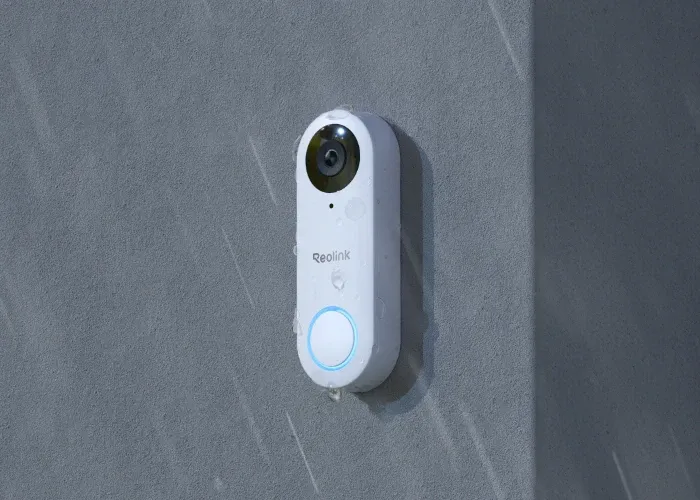
Manufacturer product photo (Reolink, an authorized partner): a white wired video doorbell on a gray wall in the rain. At a two-family rental, each household gets its own doorbell and its own account, so neither tenant sees the other's visitors.
Alarms for vacant units, leasing offices and town permits
Most occupied apartments do not need a building alarm, but three spaces at a typical Dutchess rental do: the vacant unit between tenants, the leasing or management office, and the owner's storage or mechanical rooms. Alarms in this county come with local paperwork. Beacon's alarm chapter requires every alarm user to get a permit from the Police Department and sets out a false-alarm schedule that can end in revocation; the Village of Fishkill revokes a permit after ten avoidable alarms in a permit year; the Town of East Fishkill requires a separate registration for each alarm site. We set the alarm up so the permit stays in the owner's name, program entry delays that match how staff actually move through the office, and choose sensors that do not trip on a heater cycling in an empty apartment. Central-station monitoring is $30 a month keypad-only or $45 a month with the phone app, as published on our alarm installation page for Dutchess County.
Fire alarm systems in rental buildings
Larger rental buildings and complexes have fire alarm systems that the building department and the fire marshal inspect, and the City of Poughkeepsie's own code refers to the fire department's inspection cycle for rental properties. Our entry and access work ties into those systems wherever an electric lock must release on alarm. New or replacement fire alarm systems are priced per building from approved drawings; see our fire alarm installation page for Dutchess County.
Cabling, outbuildings and wireless links
Complexes are campuses: a leasing office in one building, cameras on four others, a gate at the entrance road and a maintenance garage at the back. Each device needs a path back to a switch, and in a complex that means conduit under a lot, cable in an attic run between buildings, or a point-to-point wireless link where trenching is impractical. Digging needs a call to the one-call center first; under the state's Code Rule 753 the notice has to go in at least two and not more than ten working days before excavation. Copper Ethernet runs are limited to about a hundred meters between active devices, so long runs get a switch partway or fiber. Network drops are priced on our structured cabling installation page for Dutchess County, which publishes $150–$300 per connection point. Signaling and data wiring is low-voltage work, while the Town of Poughkeepsie's 2026 electrical inspections law covers wiring for light, heat and power; any new outlet or circuit a device needs is done by the owner's licensed electrician.
Power, storms and surge protection
The July 4, 2026 storm left more than 33,000 Central Hudson outages and more than 7,400 NYSEG outages across the county at once. Entry systems handle an outage in one of two ways: the door fails locked, which strands tenants who have no key, or it fails unlocked, which leaves a building open for hours. Neither is acceptable for long. We put battery backup on door controllers, network switches and recorders, size it to the number of hours the owner wants, and add surge protection on outdoor cable runs and on the incoming line so the equipment survives the moment the power returns. When a complex has a standby generator, we tell the office which security loads belong on it.
Who owns the logins
A surprising share of Dutchess rental systems are run from an app on someone's personal phone: a former super, a previous owner, a tenant who set up the doorbell. When that person leaves, so does control of the building. Every system we install or take over is registered to an account the owner controls, with the managing office as an administrator and staff as limited users. When a property is sold or the management contract changes, the account changes hands with the keys, and nothing depends on one person's email address.
Staffed services we do not sell
We install, repair and maintain equipment. We do not sell guard patrols, remote doormen, live video watching or anything else that puts a person on duty at a property. Alarm monitoring through a central station is the one exception, and it is limited to alarm signals. If a property needs patrols, the owner should hire a licensed guard company; we will make sure the cameras and doors give that company what it needs.
Rental Types
Property Management Security for the Kinds of Rentals Dutchess Actually Has
A manager based on Route 9 can send a technician to a three-family house on the North Side of Poughkeepsie, a two-hundred-unit garden complex in Wappinger, a loft building in Beacon and a student house in Red Hook in the same week, and each needs a different answer for the door, the wiring and the cameras. These are the types we see most.
City two- and three-family houses
Pre-1940 frame and brick houses in the City of Poughkeepsie with a shared front door, a shared stair and a basement full of old wire.
Downtown walk-ups and elevator buildings
Mixed-use buildings over storefronts and a few larger elevator buildings near Main Street and the train station.
Route 9 garden complexes
Low brick buildings spread across a hillside site, every one with its own doors, sharing one office and one pool.
Fishkill and Wappinger communities
Large market-rate complexes near I-84 and Route 9 with amenity buildings, gates and maintenance garages.
Beacon buildings old and new
Main Street walk-ups, conversions of industrial buildings and newer apartments near the station.
Student houses
Group leases near Marist's Route 9 campus and in the villages north of it, all emptying in May and refilling in August.
River-town and village rentals
Apartments in Hyde Park, Rhinebeck, Wappingers Falls and Fishkill village, often in buildings shared with a business.
Subsidized and senior buildings
Tax credit and inclusionary complexes with staffed offices by day and quiet hallways at night.
City two- and three-family houses: one front door, several households
The City of Poughkeepsie's 2,302 homes in two-unit buildings and 2,757 in buildings of three or four units are the backbone of many Dutchess portfolios. The typical one has a front porch, a single street door into a shared hall, a stair, and a basement where the old bell transformer sits next to the boiler. The security plan is about three things. First, the front door has to close and latch on its own, because a shared door that sticks open is the easiest way into every apartment. Second, each household needs its own way to answer the door, which on a house this size usually means a two- or three-button call station with a strike, or a separate doorbell for each unit. Third, any camera goes on the owner's wall, aimed at the porch, the walk and the mailboxes. Many of these houses are pre-1980, so drilling into painted trim follows lead-safe practice, a point we cover with the owner before the visit.
Downtown walk-ups and elevator buildings
Poughkeepsie's Main Street and the blocks around it hold apartments over shops, reached by a narrow street door between storefronts, plus a smaller number of elevator buildings that the census counts among the city's 1,727 homes in buildings of fifty or more units. In a walk-up the street door is the whole problem: it takes deliveries, it sits between two businesses, and it is used at all hours. A slim call panel with a camera, a strong closer and a strike tied to the panel usually solves it. In elevator buildings, the lobby is the control point, and the decisions are the panel, the mail and package area, the elevator car and the service doors at the back. Those buildings often have a fire alarm system as well, so electric locks are coordinated with it.
Route 9 garden complexes in the Town of Poughkeepsie
The county survey's 2,177 market-rate units in the Town of Poughkeepsie make it the largest single place for complex work. These communities were laid out before fobs existed, with keyed entrances on every building, and a manager inherits whatever previous owners added. The work there is less about any one door and more about order: which doors go onto one system first, where the controllers live, how the cabling crosses the lots, and how the office issues and cancels credentials. The leasing office usually becomes the hub, with a small rack, the camera recorder and the access server in one locked closet. Mailbox kiosks and package rooms get cameras; dumpster enclosures often do too.
Fishkill and Wappinger communities
Between them, the Town of Fishkill and the Town of Wappinger held 3,225 of the market-rate units in the 2024 survey, at vacancy rates of 1.0 and 0.7 percent. The complexes here tend to be larger and newer, with clubhouses, fitness rooms, pools, garages and gated entrances. The amenity doors carry most of the access traffic and most of the complaints, because they are the doors tenants use for themselves rather than the doors visitors use. We set amenity doors to schedules the office can change, connect pool gates to the season, and keep the leasing office able to see the gate and the main entrance from the front desk.
Beacon buildings, old and new
Beacon's rental market is the tightest in the county; the survey recorded no vacancies at all among its surveyed complexes, and the city's average surveyed two-bedroom rent was $3,373. The rental stock is a mix of nineteenth-century walk-ups along Main Street, conversions of the city's old industrial buildings, and newer apartment buildings near the train. Exterior changes in Beacon's historic overlay go through the Planning Board, but the city's historic preservation chapter excludes minor, accessory, utility or security-related changes that do not substantially detract from the historic property, so a discreet panel or camera is normally not a design-review project. Beacon's landlord registration rules, covered in the next section, also shape how we keep the vendor file.
Student houses near Marist and Bard
Student rentals have one defining event: the whole house changes at once. Graduate students at Marist are told to find housing off campus, and Bard reports that most of its off-campus students live in Red Hook, Tivoli or Rhinebeck. When a lease group leaves in May and a new one arrives in August, every code, fob and app account must be cleared and reissued, and the doorbell or smart lock must be moved out of the last group's phones. We set these houses up so the owner can do most of that from the app, and we book a reset visit for the gap between leases when a house has a shared entry panel. Because student houses are often older single-family homes with several bedrooms rented separately, we also keep cameras strictly to the exterior and the shared front door.
River-town and village rentals
Hyde Park, Rhinebeck, Wappingers Falls and the Village of Fishkill have small apartment buildings and apartments over businesses that look more like Main Street walk-ups than complexes. These are usually two to eight units, with a single entrance and a shared basement. The work is the same as in the city, but the travel is longer and the buildings are farther apart, so we group visits by town and keep spare parts for the systems we know are installed there.
Subsidized and senior buildings
The county survey separately lists tax credit and inclusionary complexes, from small buildings of a few dozen units to towers of more than a hundred. Their offices are staffed by day, and their tenants include many older residents. Entry panels need large buttons and a way to reach tenants without smartphones, the lobby camera covers the mail and the front desk, and the doors used by staff and vendors get their own credentials and logs so the office can see who entered after hours.
How the rental type changes the job
Rental type
The door that matters most
Usual first fix
What we avoid
City two- or three-family house
The shared front door
Closer, strike and a call button per unit
Cameras that see into a neighbor's windows
Downtown walk-up
The street door between storefronts
Slim panel with a camera and a stronger closer
Phone-only entry for long-term tenants
Route 9 garden complex
Every building entrance plus the office
Inventory, then one platform door by door
Three apps for one complex
Fishkill or Wappinger community
Amenity doors and the gate
Schedules the office controls
Readers on doors that only need a contact
Beacon walk-up or conversion
The street door and the stair
Discreet hardware that suits the facade
Loud boxes on a historic front
Student house
The front door lock and doorbell
Owner-controlled codes reset at every lease
Interior cameras in shared living space
Subsidized or senior building
The lobby panel and staff doors
Large-button panel with in-unit stations
Smartphone-only credentials
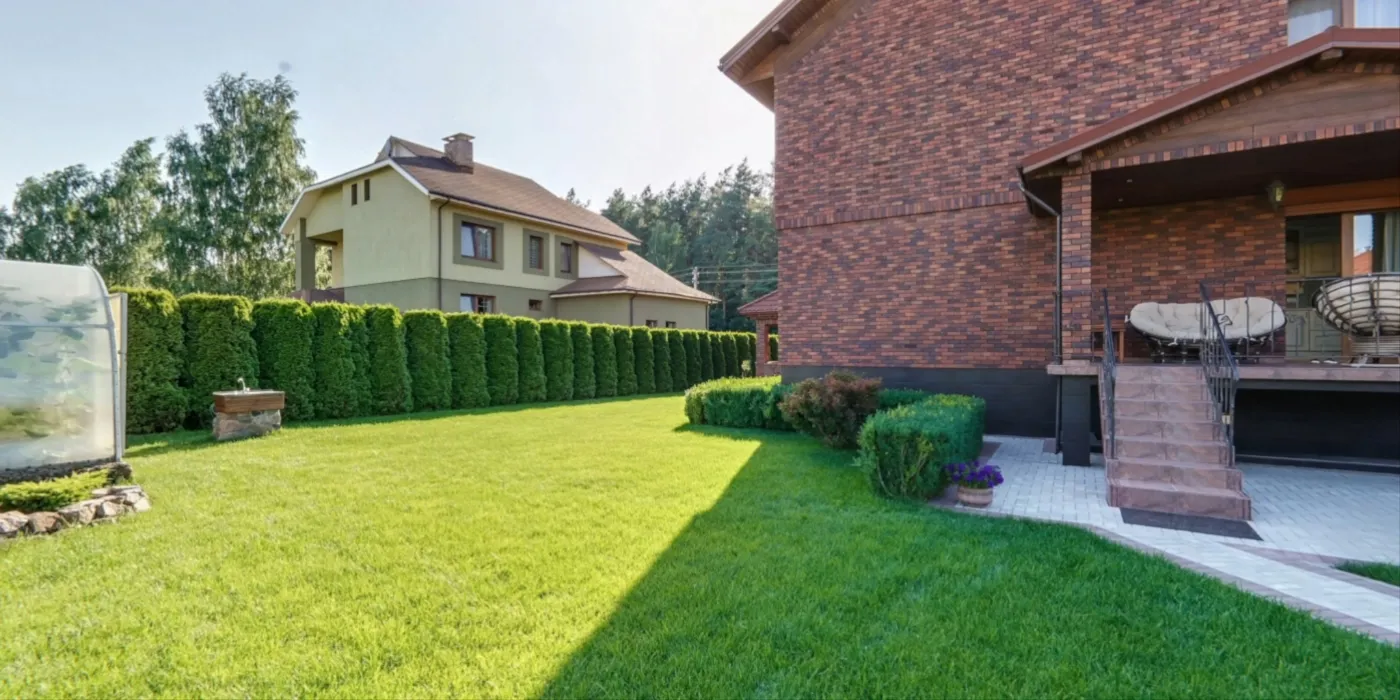
Manufacturer sample view (Reolink, an authorized partner): a wide daytime camera image of a lawn, a hedge and a brick house with a porch. A wide view like this is useful at a rental house's side yard or a complex courtyard; we narrow it or mask it where the frame would take in a neighbor's porch.
Working With Us
How Dutchess Landlords and Managing Agents Work With Us
Getting us set up as a vendor
Management firms usually need a W-9, contact details for scheduling and billing, and a certificate of insurance once a job is awarded. We return the vendor paperwork promptly, issue the insurance certificate naming whoever the firm requires after award, and accept work orders by email or through the firm's portal. Each property gets its own scope and its own invoice under the owner's entity, which keeps an owner's books clean when one office manages buildings for many owners.
Beacon's registration statement and the managing agent
Chapter 173, Article II of the Beacon City Code requires the owner of any non-owner-occupied property to file a sworn Landlord Registration Statement with the Building Department. The statement names the owner and, when the owner does not live within a fifteen-mile radius of the city, a managing agent who does: a natural person at least eighteen years old, responsible for the maintenance and operation of the property, who consents in writing to the designation. Changes in ownership or managing agent must be filed within fifteen days, a copy of the statement is attached to tenants' leases, and the permit fee is paid once every three years. None of that is our filing to make. What it means for us is that the person Beacon has on record and the person who authorizes our work should be the same, so we ask for the managing agent's name when a Beacon building goes on our list and update it when the office tells us it changed.
Poughkeepsie's February vacancy statement
In the City of Poughkeepsie, the owner or manager identified as the responsible party for a rental property with four or more units must file a sworn statement with the Building Department by February 20 each year, using February 1 as the baseline date. It lists the total units, each unit's size, the number of people living in each, and which units are vacant, whether they are available to rent and why not. Not filing carries fines of $500 to $2,000 per unit, and the code ties the statement to inspections, including the fire department's cycle. A unit held off the market for door or entry work is a unit the office has to explain, so we schedule larger entry projects in Poughkeepsie buildings so that no apartment sits unrentable longer than necessary, and we put the work dates on the invoice in case the office needs them.
Vacant and foreclosed buildings in the City of Poughkeepsie
The same chapter of the city code requires an owner to register a vacant structure within thirty days, to register a foreclosed or foreclosing property, to renew that registration every six months while it stays vacant, to hold a vacant property permit that lasts six months between inspections, and to post a $5,000 cash bond. An owner who does not live in Dutchess County must name the third party who manages the property. For a building in that state, the security job is simple and urgent: doors that lock, openings that stay closed, an alarm with sensors on the ground floor and basement, and a camera or two that the owner can check from a distance. We do the equipment; securing windows and doors with boards is a carpentry job for the owner's contractor.
Lead-safe registry days
The Dutchess County Department of Behavioral and Community Health runs the state's rental registry in the City of Poughkeepsie: residential rental properties with two or more units in the 12601 ZIP code, built before 1980, must register and obtain a lead safety certificate. Each unit is inspected, with a visual check for deteriorated paint and bare soil and dust-wipe sampling, and the certificate is renewed every three years. Two things follow for us. We avoid scheduling noisy drilling in a unit just before its lead inspection, and when we must disturb painted surfaces in a pre-1980 building we keep the work small, contained and cleaned up, and tell the owner beforehand so any lead-safe requirements are met.
Good Cause and getting into apartments
The City of Poughkeepsie opted into New York's Good Cause eviction law in July 2024, Beacon in August 2024 and the Town of Poughkeepsie in April 2025. Beacon's summary of its law lists an unreasonable refusal of access for necessary repairs among the grounds a landlord may rely on. We stay well away from disputes between landlords and tenants: our part is to make entry requests easy to grant. When work needs us inside apartments, the office sends the notice its lease requires, we work in arrival windows the office can share with tenants, a technician never enters an apartment without the office's say-so, and we document what was done in each unit so the office has a clean record.
Turnovers, lost fobs and the end of the academic year
In a county with complexes this full, the time between one tenant and the next is short, and that gap is when door and credential work is easiest. Tell us the move-out date and we will plan the visit for that window, so the new tenant gets fresh codes, a working buzzer and a door that locks on the first day. Where student leases end together, as they do near Marist and Bard, we book a block of resets for the weeks after classes end and before the next group arrives.
Taking over a system someone else installed
Many of our Dutchess calls start with a building the manager just took on. We inventory what is there, recover or reset administrator access where the owner can prove ownership, document every controller, recorder and panel, and tell the owner which pieces are worth keeping. If a system is still under contract with another provider, we say so and leave the decision to the owner. Our first visit to a building we have never seen is a $250 service call when something is failing; a full survey for an upgrade is quoted separately.
Repair or replace: how we advise an owner
An owner gets three honest answers from us: fix it, because the system is sound and the part is available; fix it now and budget to replace it, because parts are drying up; or replace it, because repairs will cost more than a new system over the next few years. We put that answer in writing for each property, with the reason, so an owner with several buildings can compare them side by side.
Records an owner can use
Every property on our list gets a short record: the systems installed, their locations, the controller and recorder models, who holds administrator access, and what was done on each visit. The office receives it after the first visit and after any change. When a building is sold or management changes, that record and the account transfer go with the keys.
Footage and door logs when something happens
When there is an incident at a property, the office needs footage and door logs quickly and in a form the police or an insurer can use. We set recorders to keep video for the number of days the owner chooses, show the office staff how to export a clip, and set access systems to keep their event logs. Requests for footage come from the owner or the office, not from tenants or third parties directly.
Bids, scopes and quotes
A larger project gets a written scope for each building. Equipment, installation and any subscription appear as separate lines, and if existing wire might fail its test, the cost of replacing it is named up front rather than discovered on install day. Equipment is ordered after the deposit, and special-order parts get a date only once the supplier confirms shipment.
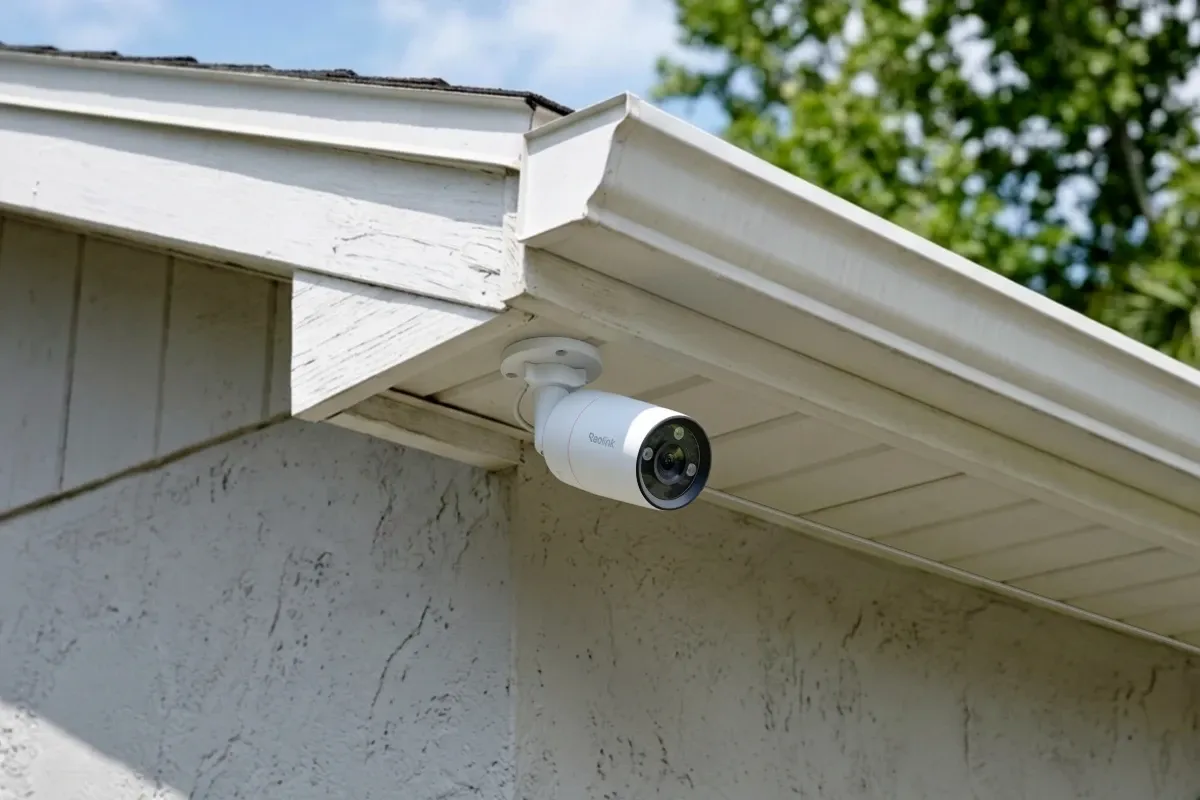
Manufacturer product photo (Reolink, an authorized partner): a bullet camera tucked under a roof eave. Up under the overhang, a camera on a rental building stays out of reach, out of the worst rain and clear of snow sliding off the roof.
Rules a Dutchess landlord should keep in view
NYS Multiple Residence Law §3: applies to all towns and villages and to cities under 325,000 people, which covers every Dutchess municipality.
Beacon City Code Chapter 173, Article II: sworn landlord registration statement for non-owner-occupied rentals; managing agent within fifteen miles when the owner lives farther away; changes within fifteen days.
City of Poughkeepsie Code Chapter 6, Article I: February 20 vacancy statement for rentals of four or more units; vacant and foreclosed property registration, six-month permits and a $5,000 cash bond.
Public Health Law §1377 rental registry: City of Poughkeepsie, 12601, two or more units, built before 1980; lead safety certificate renewed every three years.
Good Cause eviction: adopted by the City of Poughkeepsie (July 2024), Beacon (August 2024) and the Town of Poughkeepsie (April 2025).
Emergency Tenant Protection Act: the City of Poughkeepsie adopted it in June 2024, and a Dutchess County Supreme Court ruling voided the adoption in November 2024.
Local alarm laws: Beacon Chapter 77 permits; Village of Fishkill revocation at ten avoidable alarms a permit year; Town of East Fishkill registration per alarm site.
Real Property Law §235-b and RPAPL §768: the warranty of habitability, and the rule that a tenant's entrance lock is never changed without supplying a key.
General Business Law §69-m and §395-b: state licensing of security and fire alarm installers, and the ban on viewing devices in bathrooms and similar rooms.
Questions We Get
Property Management Security in Dutchess County: Questions Answered
City houses and Poughkeepsie buildings
Our 1920s three-family house in the City of Poughkeepsie has painted wood trim around the front door. Do lead-safe rules change how a new call station gets mounted?
They change how we work, not whether we can. In a pre-1980 rental we assume painted surfaces may contain lead. A call station and a strike disturb very little paint, and we keep it that way: the station goes on a backing plate or the least-painted face of the frame, the few holes are drilled with the dust contained, and the area is cleaned before we leave. If the job grows into replacing a door or a frame, that becomes renovation work, and the owner should bring in a contractor certified for lead-safe renovation before it starts.
Our three-family house has no room in the front hall for a call panel. Can the buttons go out on the porch?
Yes, and on many Poughkeepsie houses the porch post or the wall beside the outer door is the better spot, because visitors stand there anyway. We use a weather-rated station with a hood, bring the cable up inside the post or through a short conduit, and keep the strike on the door that actually locks. A video station on the porch also gives tenants a view of the steps, which is where packages usually wait.
The City of Poughkeepsie fire department inspects our building on its cycle. Should we have the door hardware checked before the inspection?
It is a sensible time for a service call. Inspectors look at exits, and an electric lock or a mag lock on an exit door that does not release properly is the kind of thing that turns into a violation. We test each electrified door's release from inside, its release on loss of power and, where it is tied in, its release from the fire alarm, and we fix closers that keep doors from latching. Book it a few weeks ahead so parts can arrive if something needs replacing.
We file the City of Poughkeepsie's vacancy statement every February. Will an entry-system project leave apartments off the market?
It should not. Entry and access work happens in occupied buildings all the time, and nothing about a new panel or new apartment stations requires an apartment to sit empty. We schedule work inside units around the tenants, keep each unit's visit short, and finish one floor before moving to the next. If the office wants work dates for its records, they go on the invoice.
Beacon buildings
Our Beacon building's registration lists a managing agent who is leaving the company. Does anything on the security system need to change?
Almost certainly. The departing agent probably holds an administrator login to the entry system, the cameras and possibly the alarm, and may be the alarm permit contact and the central station's first call. We move administrator rights to the owner's account and the new agent, remove the old agent's access, update the call list at the monitoring station, and give the office a record of who now controls what. The owner files the change with the city; Beacon's code gives fifteen days for that.
Our Beacon conversion has tall original factory windows on the ground floor. Do those need alarm sensors?
If any of them open, or if they are glass someone could break to get in, they belong on the alarm in owner-controlled areas such as a lobby, a storage room or a vacant commercial space. Opening windows get contacts; fixed panes get glass-break detectors placed where they can hear the whole wall. Windows inside tenants' apartments are the tenants' business, and we do not put building sensors in occupied units.
Beacon's alarm law calls for the central station to try a phone callback before police are sent. How does that work for an empty apartment with nobody to answer?
The callback goes to the people on the alarm's call list, not to the apartment. For a vacant unit or an office we set the list to the managing agent, the super and the owner, in the order the office wants, and test it so the station reaches someone who can answer. A clear call list and an alarm without nuisance trips are the two things that keep a Beacon permit in good standing.
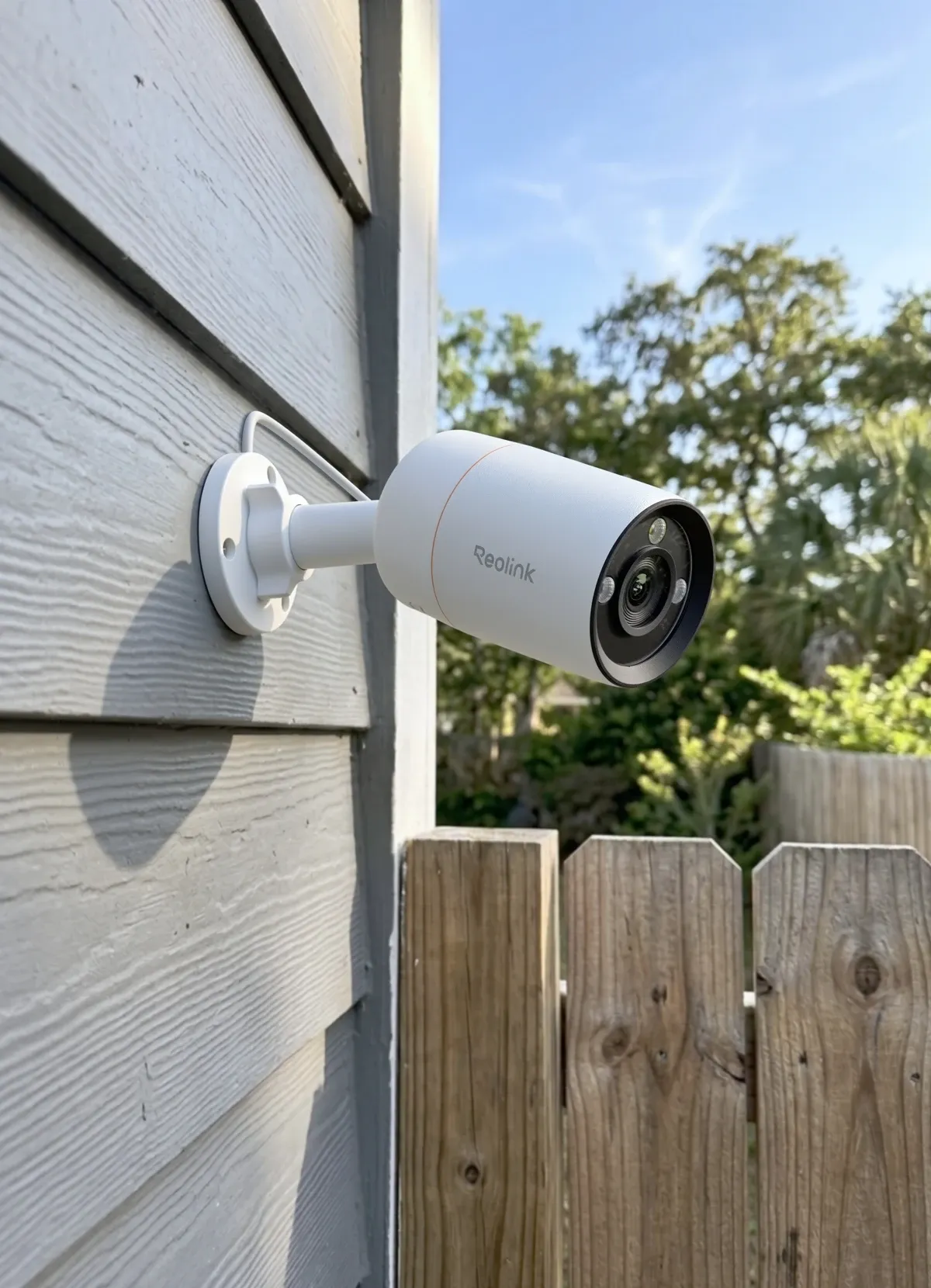
Manufacturer product photo (Reolink, an authorized partner): a bullet camera on clapboard siding above a wood fence. On a two-family house, a camera at the side yard gate covers the path to the rear entrance and the trash cans without looking over the fence into the neighbor's yard.
Complexes along Route 9
Our Wappinger complex added fob readers from three different companies over ten years. Can they be brought onto one system without replacing every reader?
Often a good part of them can. Many readers speak a common wiring standard, so the reader on the door can stay and only the controller behind it changes. Where a reader uses a closed format or the fobs themselves are incompatible, that door gets a new reader. We survey every door, tell the office which readers stay and which go, and plan the switch building by building so tenants carry old and new fobs for as short a time as possible.
Residents reserve our Fishkill clubhouse for parties. Can a reservation open the door only for that resident's time slot?
Yes, with most current access platforms. The office gives the resident's credential temporary access to the clubhouse door for the reserved hours, or issues a one-time code that works only then, and the door returns to its normal schedule afterward. The log shows when the door opened, which helps if there is a dispute about damage.
Our complex receives packages for a few hundred apartments. Where do cameras do the most good around the package room?
One camera inside the package room covering the shelves and the door, one at the exterior door where carriers enter, and, if the room uses a code or a reader, a log of every entry. That combination answers the two common questions, who brought it and who took it. A camera that sees a face at the door is worth more than three that see the tops of heads.
After the July 2026 storm our complex's entrance gate sat open for most of a day. How do we make sure it fails the right way next time?
Decide first what the right way is. A vehicle gate that must let emergency vehicles in is often set to open on power loss, and the answer then is enough battery backup to keep it closed and working through an ordinary outage. Pedestrian doors on access control are set fail-secure or fail-safe according to the fire and building codes for that door. We review each controlled door and gate with the office, add or resize backup where it falls short, and write down how each one behaves without power.
Student rentals and turnovers
Our house near Marist is rented by the bedroom, and each bedroom door has its own lock. Do those locks belong on the same system as the front door?
Usually not. The front door is shared, so it belongs on a system the owner manages, with a code or credential for every tenant. A bedroom door is each tenant's private space, and its lock is closer to an apartment-door lock than to building access: the tenant should hold the only key or code, apart from the owner's emergency access under the lease. We keep bedroom locks independent and keyed or coded per tenant, and we never connect them to an app the other housemates can see.
Student tenants in our Red Hook house keep adding friends to the doorbell app. Can the owner limit who gets added?
Yes. The doorbell and any cameras should sit in the owner's account, with each tenant invited as a limited user who can see live video and answer the door but cannot invite anyone else or change settings. If the house already runs on a tenant's account, we move it to the owner's during a visit and re-invite the tenants with the right permissions.
Smaller river-town buildings
Our Hyde Park building has an apartment over a pizza shop. Should the shop's alarm and the apartment entry share any equipment?
Keep them separate. The shop's alarm belongs to the shop and its alarm company, with its own codes and call list, and the apartment's entry belongs to the owner and the tenant. Sharing a panel or a power supply means a problem in one becomes a problem in both and makes it unclear who is responsible. The one thing they should share is a clear separation at the stair door, so the shop's staff cannot reach the apartment and the tenant cannot reach the shop.
Equipment
Property Management Security Equipment for Dutchess Rentals
Entry panels and stations
Two- and three-button stations for city houses, slim video panels for walk-up doors, directory panels for complexes, and in-unit stations for tenants without smartphones.
Doorbells
Wired video doorbells for single-family and two-family rentals, each in its own account so households never share visitors.
Electrified hardware
Strikes, electric locks, exit devices, closers, door contacts and request-to-exit sensors, matched to the door and its exit rules.
Credentials
Whatever opens the door, fob, card, PIN or phone, belongs to one person and one unit, so losing it costs one deletion.
Cameras and recorders
Eyeball turrets under porch roofs, bullets on gable ends, two-lens models for long parking rows, all feeding a recorder behind a locked door.
Alarm parts
An empty apartment, a leasing office or a locked storage cage gets its own zone, with its own entry delay and its own call list.
Network gear
One powered cable per camera or reader, its own switch and its own internet path, with a radio pair where a lot separates two buildings.
Power protection
Enough stored power for the hours the owner picks, plus arrestors on every outdoor run that could carry a strike back inside.
Partner brands
Lorex, Luminys and Reolink, our authorized partner brands, plus whatever brand a building already runs when it is worth keeping.
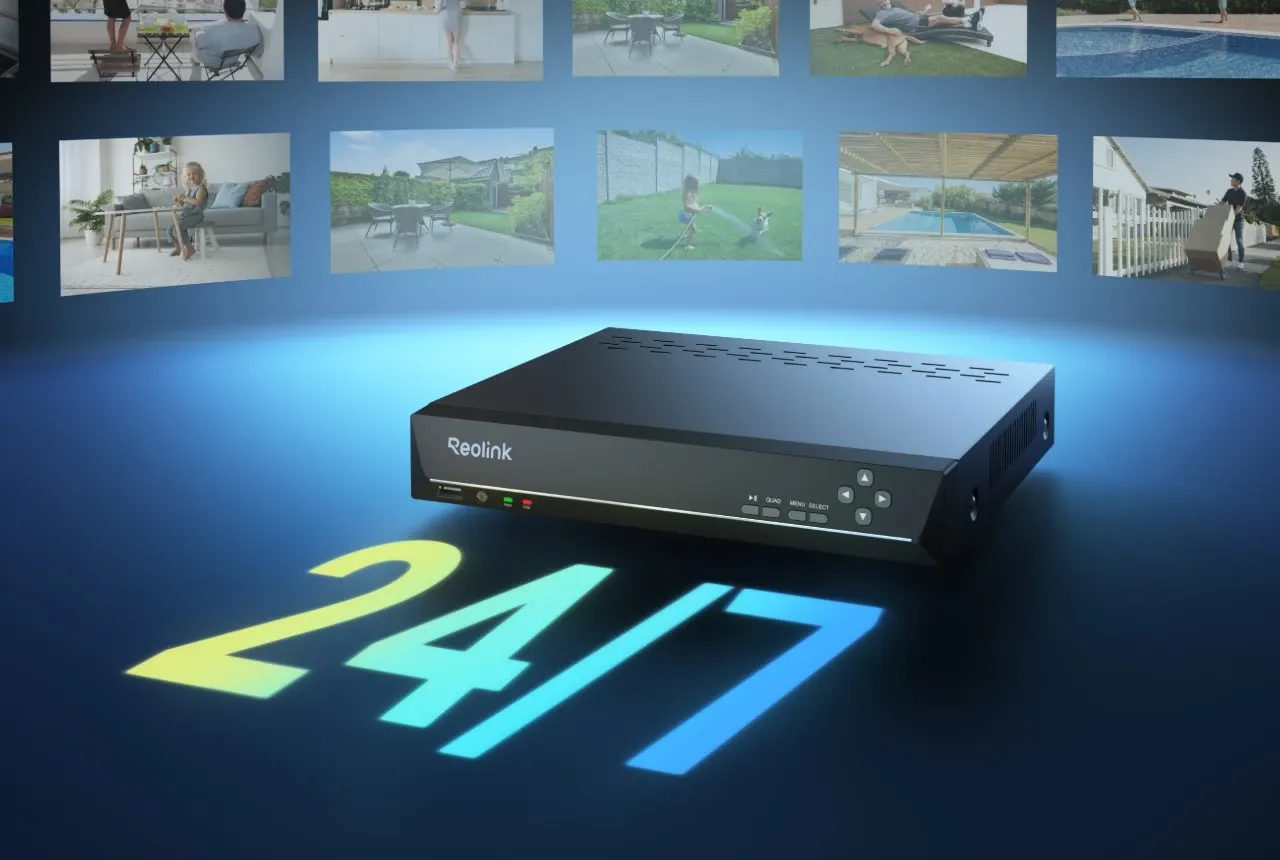
Manufacturer product photo (Reolink, an authorized partner): a network video recorder in front of a wall of camera images. At a complex the recorder lives in the leasing office's locked closet or a locked utility room, never in a hallway where anyone can unplug it.
Choosing between the usual options
Decision
Option A
Option B
What usually decides it in Dutchess
Buttons per unit vs video panel
Buttons: simple, cheap, easy to repair
Video panel: tenants see the caller
Building size and how many packages arrive at the door.
In-unit stations vs phone calling
Stations: work for every tenant
Phone calling: no wiring to each unit
Who the tenants are and how good reception is inside.
Fobs vs phone credentials
Fobs: fast, no app required
Phone: nothing to lose, easy to cancel
How often credentials are lost and how many students turn over.
One recorder vs one per building
One: a single place to search
Per building: no long runs between buildings
Distance between buildings and the cabling path.
Trench vs wireless link
Trench or conduit: no line of sight needed
Radio link: no digging across a lot
Whether the lot is being repaved anyway.
Every Dutchess Address on One Vendor Record
A North Side three-family, a Route 9 garden complex, a Beacon walk-up. Send us your list: the failing door gets a service call, and the rest are surveyed and priced one property at a time.
What Search Summaries Get Wrong About Rental Security in Dutchess County
It is common now for an owner to forward us a paragraph produced by an AI tool before the first visit. Those paragraphs tend to describe Manhattan apartment law or a suburban single-family home, and Dutchess fits neither. Six of them come up again and again.
1. "Rental buildings in New York follow the city's intercom and tenant-data laws"
Those laws are New York City laws. Dutchess buildings fall under the state's Multiple Residence Law, which section 3 applies to all towns and villages and to cities of fewer than 325,000 people, and the city's Tenant Data Privacy Act is a New York City local law for class A multiple dwellings in the five boroughs. We still treat tenant credential data carefully everywhere, but the rules quoted in city articles are not the rules in Poughkeepsie or Beacon.
2. "The City of Poughkeepsie has rent stabilization"
The Common Council voted in June 2024 to adopt the Emergency Tenant Protection Act, and state housing officials record that a Dutchess County Supreme Court ruling voided that adoption in November 2024. Good Cause eviction protections, which are a different law, were adopted by the city in July 2024. Owners should confirm their current obligations with counsel.
3. "An apartment intercom costs $1,200 to $8,500"
That range comes from national cost guides such as HomeAdvisor and mixes single-family houses with apartment buildings. A Dutchess repair starts with a $250 service call, and our Dutchess pages publish $1,200–$3,500 for a video intercom in a four- to eight-unit building and more for larger app-connected systems. A three-family house rarely needs a building-sized system at all.
4. "Any electrician can install the alarm and cameras"
Security and fire alarm installers are licensed by the state under General Business Law section 69-m, a separate license from a municipal electrical license. Local electrical rules, such as the Town of Poughkeepsie's 2026 inspections law, govern wiring for light, heat and power. A typical project needs both trades for different pieces: the electrician for a new outlet or circuit, and a licensed security contractor for the system itself.
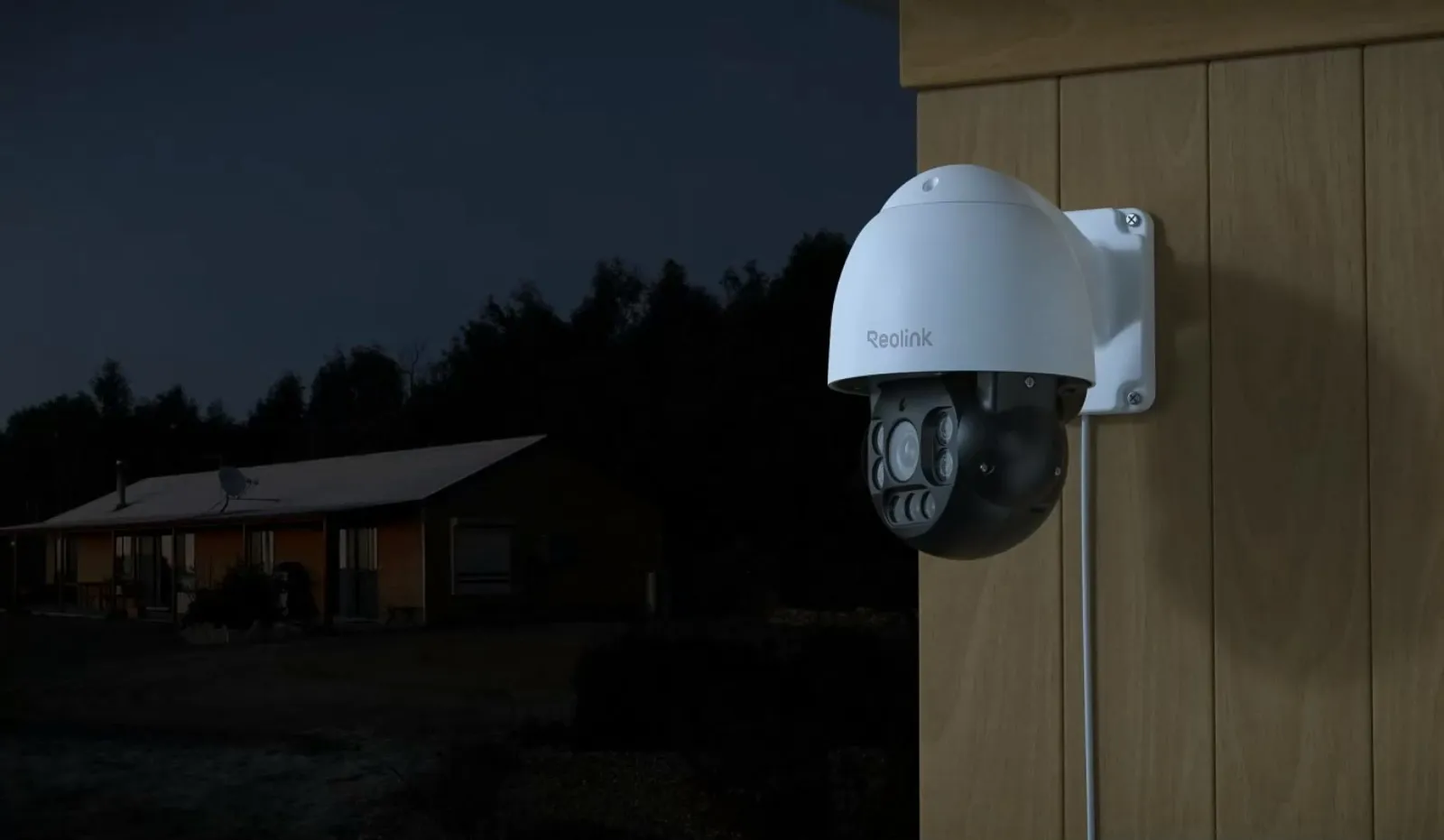
Manufacturer product photo (Reolink, an authorized partner): a pan-tilt dome camera on a wood wall at night. A camera that moves is useful over a large lot, but it records only where it is pointing; at a rental entrance we prefer fixed cameras that never look away from the door.
5. "Outages are short, so battery backup is optional"
On July 4, 2026 Central Hudson reported more than 33,000 outages and NYSEG more than 7,400 across the county, with the worst damage in the City and Town of Poughkeepsie. A door controller without backup either locks tenants out or leaves the building open for the length of the outage. Backup decides which.
6. "Only short-term rentals need paperwork in Beacon"
Short-term rentals in Beacon do need a permit and must be the host's primary residence, but the city's landlord registration chapter covers ordinary non-owner-occupied rentals too, with a sworn statement and a local managing agent for distant owners. Our part is narrow: we keep the agent and owner on the property's file consistent with what the owner has filed.
Get In Touch
Request a Property Management Security Quote in Dutchess County
Start with the city, town or village, since that is how we plan the trip north. For each property, tell us how many buildings, units and entrances it has, which systems are installed if you know, and what keeps failing. Phone photos of the front door, the panel, the recorder and the basement equipment save a great deal of back-and-forth. If it is one dead buzzer at one house, send only that. Prefer to talk it through? Call (845) 640-3835.
✅
Request Sent!
Your Dutchess request is in. Expect a phone call or a text from our scheduling desk.
How It Works
How a Dutchess Rental Security Job Runs From First Call to Handover
1
The office calls or writes
Send the address, the city or town, the symptom and the name of whoever holds the keys. The visit is set in a two-hour arrival window.
2
Service call or survey
A repair is a $250 visit. A new system, or an entire portfolio, starts with our technician tracing doors, basement equipment and cable paths at each address.
3
A scope per property
Each building is written up on its own, with equipment, installation and subscriptions split out and any possible rewiring cost named before the owner signs.
4
Approval and deposit
The firm gets our W-9 with its vendor forms and an insurance certificate once the job is awarded. Nothing is ordered until the deposit arrives.
5
Tenant notice
The office sends whatever notice the lease requires for work inside apartments, and we confirm the dates before anyone arrives.
6
Install beside the old system
The new panel, readers or cameras are mounted and proven while tenants still use the old ones, then the switch is made in a single short window.
7
Handover and record
The owner holds the master login, staff get their own limited accounts, every box is labeled and the office receives the building's written record.
Manufacturer product photo (Reolink, an authorized partner): a bullet camera on a pale wall at dusk, a house with lit windows behind it. Dusk is when a rental's entry lighting and the camera's night mode have to agree; we check both on any outdoor camera we install.
Field notes: the basement of a Poughkeepsie three-family
The answer to most entry problems in an old city house is in the basement. We look for the bell transformer, usually screwed to a joist near the panel or the boiler, and check whether it is the original or a replacement someone wired in later. We trace the pairs that leave it, often a bundle of cloth-covered and newer plastic-jacketed wire running up a chase or inside a wall cavity, and check each apartment's pair for shorts and breaks. Then we look at what else lives down there: a camera recorder on a shelf beside the water heater, a router a tenant installed, an alarm panel nobody has the code for. Within an hour the owner knows whether the problem is the device, the wire, the power or the door, and the scope says so.
Field notes: a complex after a storm
After a big outage, complexes call with a familiar pattern. Some cameras came back and some did not, because the ones on a switch without backup booted before the recorder did and never reconnected. One building's readers work and another's do not, because its controller rebooted with a stale clock and the schedules are off by hours. The gate is stuck open or closed. We work through the site in that order of risk: doors first, gate second, cameras last, and we leave the office a note on what failed, why and what would prevent it next time, usually backup sized properly and surge protection where the cable leaves the building.
Coverage Area
Property Management Security Across Dutchess Cities, Towns and Villages
The cards describe each area's rental stock in general terms; they do not describe any client, and our list of properties stays private.
City of Poughkeepsie
Three in five homes rented, two in five built before 1940: two- and three-family houses, downtown walk-ups and elevator buildings, and the lead registry in 12601.
Town of Poughkeepsie
The most surveyed complex units in the county, along Route 9 and near Marist, plus rented condos and houses.
City of Beacon
The tightest rental market in the county, Main Street walk-ups, industrial conversions, newer buildings near the station and a landlord registration law.
Fishkill and the Village of Fishkill
Large market-rate complexes near I-84 and Route 9, and a village alarm law that revokes permits after repeated avoidable alarms.
Wappinger and Wappingers Falls
Complexes off Route 9 and 9D with some of the lowest vacancy in the county, and village apartments near the falls.
Hyde Park
Smaller complexes and apartments along Route 9 north of the city, with older buildings over storefronts.
Rhinebeck, Red Hook and Tivoli
Village apartments, rented houses and the off-campus housing where most Bard students who live off campus choose to rent.
East Fishkill, LaGrange and the eastern towns
Rented houses and small buildings, alarm registrations per site in East Fishkill, and the areas hardest hit in the July 2026 storm.
How the work changes across the county
In the City of Poughkeepsie the work is closest to city work: street doors, old buzzer wiring, small walk-ups and a few elevator buildings, with lead-safe practice in pre-1980 houses and the February paperwork in the background. Along Route 9 through the Town of Poughkeepsie, Wappinger and Fishkill it is complexes: many entrances, amenity doors, lots, package rooms and the leasing office as the hub. In Beacon it is tight-market buildings where every unit is occupied, careful hardware on old facades and a vendor file that matches the city's landlord registration. In the northern river towns it is smaller buildings and student houses that change hands each year. In the eastern towns it is rented houses on longer drives, where outage protection and remote checks matter most. Every one of them is on the same vendor record and the same number, (845) 640-3835.
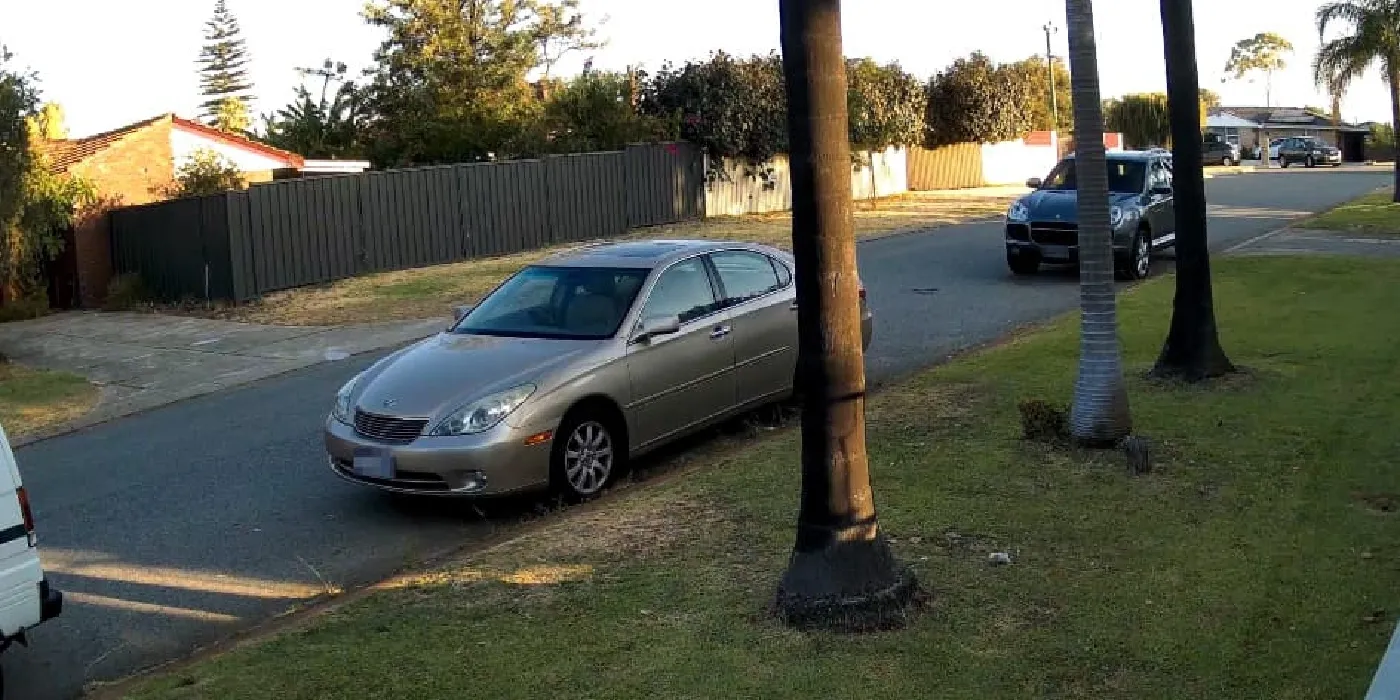
Manufacturer sample view (Reolink, an authorized partner): a camera image of cars parked at a curb. On a city rental block, a view like this records the street parking in front of the owner's house; it says nothing about a car's owner, and we do not aim cameras across the street into other homes.
Pricing
Property Management Security Cost in Dutchess County
Every figure in this table is already published on one of our Dutchess service pages. What it leaves out is a single number for a whole property, a complex or a list of buildings, because those depend on what the survey finds behind the walls and in the basement.
Work
Published price
Where it is published
Service call (diagnosis and simple repairs)
$250
Dutchess repair pages
Apartment intercom station replacement
$250–$525
Door buzzer repair, Dutchess County
Door release relay or push button
$250–$475
Door buzzer repair, Dutchess County
Low-voltage transformer
$325–$650
Door buzzer repair, Dutchess County
Electric strike replacement with alignment
$450–$950
Door buzzer repair, Dutchess County
Lobby panel repair or faceplate
$650–$1,800
Door buzzer repair, Dutchess County
Riser repair
$850–$2,400
Door buzzer repair, Dutchess County
Video intercom, four to eight units
$1,200–$3,500
Intercom installation, Dutchess County
Multi-unit building intercom
$1,200–$5,000
Intercom installation, Dutchess County
App-connected intercom, larger buildings
$2,500–$8,000+
Intercom installation, Dutchess County
Single door or gate: keypad, fob reader or gate controller
$1,900–$6,000
Access control installation, Dutchess County
Multi-door property
$5,000–$18,000
Access control installation, Dutchess County
Elevator car control, card or fob
From $2,295 per car
Elevator access control, Dutchess County
Elevator car control, biometric
From $3,825 per car
Elevator access control, Dutchess County
Four-camera system with recorder
Starting at $1,299
Security camera pricing, Dutchess County
Network or camera cable drop
$150–$300 per connection point
Structured cabling, Dutchess County
Alarm central-station monitoring
$30/month keypad; $45/month with app
Alarm installation, Dutchess County
Fire alarm systems
Priced per building from approved drawings
—
Ongoing service for a list of properties
Quoted per list after the survey
—
What moves a Dutchess quote up or down
Six things explain most of the difference between two quotes for buildings that look alike from the street. The first is the condition of the existing wire: an old house whose pairs test clean keeps its wiring, while one with broken pairs inside plaster walls needs new cable, and the route for it decides the labor. The second is the door, because a strike on a frame that has moved needs carpentry or a new frame before it will last. The third is the number of controlled doors at a complex, each with its own reader, lock, power and cable. The fourth is distance between buildings and whether cable can ride an existing path or needs a trench or a radio link. The fifth is the recurring fee some platforms charge per door, per unit or per month, which we list separately so the owner can compare the five-year cost, not only the install. The sixth is backup: a building that wants its doors and cameras to ride through a long outage needs larger batteries than one that only needs a few minutes.
Budgeting across a portfolio
Few owners can or should upgrade every building at once. After a survey, the office can sort its properties into three groups: doors that do not lock and alarms that keep bringing the police, which get fixed first; equipment with no parts left, which gets scheduled for replacement; and buildings with a turnover coming, where the work is easiest when units are empty. Each year's budget pays for the next group, and service calls cover everything else in between. Some owners would rather pay for a project over time. Financing is available through Wisetack, subject to approval.
Full terms — including 50% deposit, one-year parts-only warranty on Abstract Enterprises Security Systems-supplied products, and the late-fee schedule — are set out in the service agreement.
Ways to Start
Property Management Security Packages & Pricing for Dutchess Properties
A repair at one property
$250 service call, Beacon to Red Hook. One visit to diagnose a dead buzzer, a reader or a dark camera; parts and bigger repairs get a written price before any work goes past the diagnosis.
One building brought current
Quoted from a site visit. One address taken from patched-together equipment to a system the owner controls, written so it can be approved without reference to any other building.
A portfolio plan
Quoted once we know the list. A written record for each building, the riskiest doors fixed first, apps consolidated year by year, and trips planned town by town.
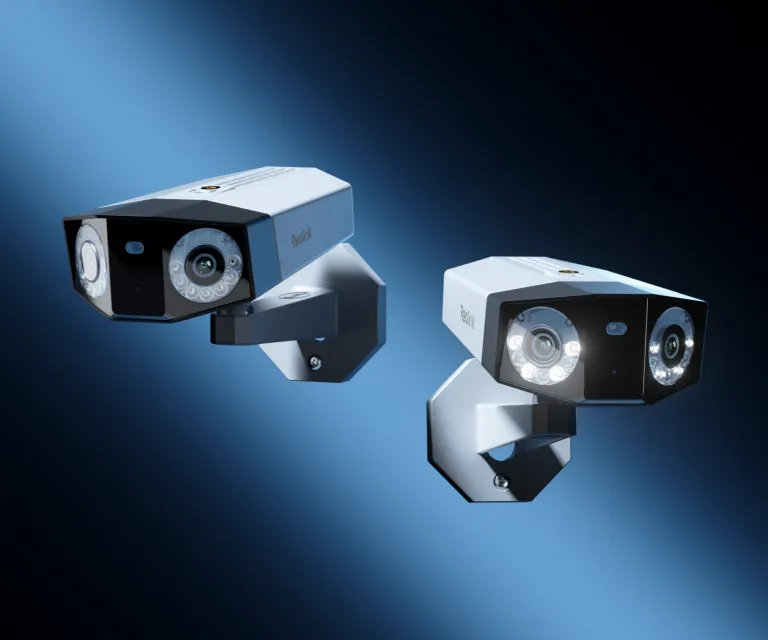
Manufacturer product photo (Reolink, an authorized partner): two dual-lens cameras. A wide two-lens camera can cover a long row of parking or a building's whole front from one mount, which on a garden complex can mean fewer cameras and fewer cable runs.
When the owner already bought the equipment
Some owners arrive with a doorbell, a smart lock or a camera kit already bought. We can install it. Send the make, the model and the address by text or email, and we reply with a labor price; the date is held once the deposit is in. We do not do walk-throughs for owner-supplied equipment, and how that equipment performs is between the owner and its manufacturer.
Special-order parts
Some entry panels, readers and replacement stations are built to order or ship from overseas. When a part is special order, the owner hears that before the deposit, the part is ordered after the deposit, and the install date is set only once the part is in hand. We do not promise a date for a part we do not yet have.
A Lease Ending Soon?
The week an apartment sits empty is the cheapest week to fix its station, its door and its codes. Give us the lease dates and we will aim for that window.
Our guide to repair-or-replace decisions, scopes and bids, useful to managers who also serve boards; condo boards have a condo intercom replacement guide.
FAQ
Dutchess County Property Management Security FAQ
Can you give our office a list of every fob and code that works at a building?
+
Yes, for any access system we install or take over. The office gets a list of every active credential at the building, with the person and unit each belongs to and the doors it opens, and can export it again at any time from the platform. Credentials that belong to no one on the current rent roll are the first ones to cancel.
Can tenants at our complex open the entrance gate from their phones?
+
Yes, if the gate is on an access platform that supports phone credentials. The tenant's app works like a fob, the office cancels it when the lease ends, and the log shows whose phone opened the gate. We keep a keypad or reader at the gate as well, because not every tenant or visitor has the app, and emergency access is planned with the local fire department's requirements in mind.
Do you install cameras in the parking garage under a downtown Poughkeepsie building?
+
Yes. Garages are one of the places cameras do the most good: the entrance and exit, the stairs and elevator lobby, and the rows where tenants park. Garages are dark, damp and full of concrete, so we use cameras rated for low light and moisture, run cable in conduit, and place each camera so headlights do not wash it out.
How do you keep an entry panel working in an unheated vestibule through a Dutchess winter?
+
We choose a panel rated for the cold it will see, mount it out of the path of drips and slush, and protect the cable entry so water cannot run down it into the electronics. Power supplies and controllers stay indoors where it is warm. A panel that fogs or freezes is usually a sealing or placement problem, and we fix the cause rather than replacing the panel each spring.
Can the leasing office see who is at a building door and talk to them from the front desk?
+
Yes. Most current video entry panels can call a desk station or a computer at the office as well as tenants, so staff can see and speak to a visitor at any building and release the door if they choose. At a complex with many buildings, the office usually takes the calls during business hours and tenants take them otherwise.
Can one call panel serve two small buildings that share a walkway?
+
It can, if the two buildings are close and the cable can reach the second door. One panel at the shared walkway gate lists the apartments in both buildings and releases the right door, or the gate if there is one. Where the buildings belong to different owners, we keep the systems separate so each owner controls its own.
Can a panel show the directory in large print for older tenants and their visitors?
+
Yes. Many directory panels let the office set the text size and the order of the list, and physical button panels can be labeled in large type. In buildings with many older tenants we also put the call buttons at a comfortable height and choose stations inside apartments with large, clearly marked buttons.
Can a camera read license plates at our complex entrance?
+
A plate-reading camera can, as an add-on to a camera system. It needs a narrow, well-lit view of the lane where cars slow down, and it reads plates reliably only within that view. We tell the owner what it can and cannot capture before it is bought, and we leave decisions about how plate records are used and kept to the owner and their counsel.
Can the system tell the office which fob opened a door?
+
Yes. An access control system logs each credential that opens a controlled door, with the time and the door. That is why every fob or code should be issued to a named tenant or staff member rather than handed out from a box. The office decides who can see the log and how long it is kept.
Can tenants view the building's cameras from their own phones?
+
Tenants should not get access to the recorder. If an owner wants tenants to see something, such as the view of the package area or the front door, we set up a limited view of that one camera for tenants, with no playback, so nobody can review other people's comings and goings.
Wherever the property sits, the first step is the same: one call to (845) 640-3835 for Dutchess buildings, a $250 service call when something is failing, and a written scope before any larger work begins. Requests can also start at our quote request page.