One Button Per Household · Sealed Wall Penetrations · Same System Across a Row of Buildings · Written Price Before Ordering · Brooklyn Rate
Door buzzer installation in Spring Creek is mostly work on young buildings. Almost all the housing between Flatlands Avenue and the Belt Parkway went up after 1970, and most of the housing south of Flatlands went up after 2006: factory-built Nehemiah rowhouses, a row of three-family houses on Vandalia Avenue from 2008, fifty eight-apartment octets finished in 2018 and 2023, elevator buildings along Elton, Erskine and Fountain, and an Alafia campus still being built. Each kind of building asks a different question of an entry system. Below is how we answer them and where each lands on our Brooklyn price list.
Reviewed and updated November 11, 2026, against NYC MapPLUTO building records for ZIP 11239 (building class, year built, floors and units, queried November 11, 2026); Monadnock Development's page on the Nehemiah Spring Creek octets; New York YIMBY's December 2025 report on Alafia's first phase; NYC HDC's announcement of the three Gateway Elton phases and Hudson Companies' Gateway III project page; NYREJ's August 2020 report on Spring Creek Gardens and CityRealty's building page for 902 Drew Street; A&S Magazine's 2013 report on the Spring Creek Towers retrofit and the National Apartment Association's 2021 profile of the complex; HPD's 2026 Design Guidelines for New Construction; Passipedia and SIGA on Passive House airtightness; Architectural Record's 2011 and The Architect's Newspaper's reports on the Nehemiah houses and Gorlin Architects' project page; City Limits' 2011 report on Nehemiah buyers and New York YIMBY's 2016 report on Phase 4A; Wikipedia's Spring Creek and Gateway Center entries; New York's Multiple Dwelling Law §50-a; Habitat Magazine's May 2017 buzzer report; the Swiftlane, ButterflyMX and HomeAdvisor cost guides; a Brownstoner forum thread and an r/AskNYC thread from Brooklyn owners and tenants; Allegion's fail-safe guide; the building code's sensor-release and accessible-entry provisions; and the 2010 ADA Standards. · Abstract Enterprises Security Systems, NYS license #12000287431 · crews dispatched from our Troy Avenue office in Brooklyn

Owner-operated since 2002 · Thousands of jobs completed · Booked within 2 hours
Quick answer: door buzzer installation in Spring Creek runs $400 to $900 on our Brooklyn list for an audio station and a new door release on a one-family rowhouse or a single door, $700 to $1,800 for a video station with indoor stations or phone answering for a two- or three-family house, and from about $2,500 to past $10,000 for an entry system in an eight-unit octet or one of the neighborhood's elevator buildings. The price covers the door station, the indoor stations or app setup, the power supply, the electric strike or approved lock, the cable and the labor. It is fixed in writing once we have seen the door, the route the cable can take and the place the power supply will live. Anything that depends on a test, such as a cable pair the builder left in the wall that may or may not be usable, is named and priced before you order. Send a photo of the front door and whatever is mounted beside it to (347) 934-8335 or on WhatsApp, and we reply with the range that fits, usually within two hours during working hours.
Spring Creek sits in the southeast corner of East New York, between Flatlands Avenue, Fountain Avenue, the Belt Parkway and Jamaica Bay, on land that was mostly marsh and landfill until the 1970s. That history matters to a buzzer installer for one plain reason: there is almost no old housing stock here. A door buzzer job in Park Slope or Bed-Stuy usually means fighting a hundred-year-old bell board. A job in Spring Creek usually means one of three things instead: adding a buzzer to a house that was built with nothing more than a doorbell, finishing or extending an entry system in a building that is only a few years old, or planning the system for a building that is still going up.
The building records show how lopsided the stock is. In the city's MapPLUTO data for ZIP 11239, which covers Spring Creek and also takes in Spring Creek Towers, there are 308 lots classed as one-family attached houses, 152 classed as two-family houses holding 304 homes, 19 three-family houses and 50 walk-up apartment buildings. Every one of those 50 walk-ups holds exactly eight apartments on four floors. They are the Nehemiah octets, built by one developer in two waves, in 2018 along Vandalia Avenue and in 2023 on Vandalia Avenue and Gateway Drive. Beside them stand 15 newer elevator buildings with stores, holding 2,208 apartments, and the seven Spring Creek Towers lots with close to ten thousand.
So the questions people bring us are new-building questions. An owner of a two-family Nehemiah house who has started renting the second floor wants the tenant to have a button and a release of their own. An owner in the 2008 row of three-family houses on Vandalia Avenue wants three buttons instead of one. A management office with twenty identical octets wants one system it can support, not twenty different ones. A developer on the Alafia campus needs a system that suits a Passive House wall and the security plan the city now asks for. And a store or clinic in one of the new ground floors wants its own door handled without touching the residential lobby above it.
None of these buildings has decades of cable in its walls. The builder's cable is usually in better shape than anything in a prewar walk-up, but steel studs, concrete floors and sealed outside walls limit where new cable can go, so the route has to be found before a price is fixed.

Where this page applies. Spring Creek runs from Flatlands Avenue south to the Belt Parkway and Jamaica Bay, between Fountain Avenue on the east and Schenck Avenue, Gateway Drive and Hendrix Creek on the west, with Elton, Erskine, Vandalia, Schroeders, Locke and Seaview among its working streets. This page covers the houses, the octets, the elevator buildings and the shops in that area. Spring Creek Towers has its own management and its own engineering staff, and we mention it only where it helps explain the neighborhood. For the blocks north of Flatlands Avenue, see our New Lots door buzzer installation page; for the rest of the borough, our door buzzer installation in Brooklyn page.
Because Spring Creek's buildings are young, a lot of calls about "putting in a new buzzer" are really calls about a builder's system that has stopped doing what the building needs. The panel may still work but the tenant list has outgrown it. The release may still click but the door has stopped latching. The phone answering may have lapsed when nobody renewed an account after the building changed hands. Before anyone talks about a new system, we sort the problem into one of three kinds.
If one part has failed on a system that is otherwise sound and still made, such as a station, a strike, a supply or a cable pair, that is a repair, starting with the $250 service call when it must be tested in person, with the $250 applied toward the work. If the system works but no longer fits, for example because the building wants a second entrance, a bigger directory or phone answering, that is an extension, usually low in the matching range because the panel and most of the cable stay. If parts are no longer sold, or the system was a consumer product never meant for several households, it is a replacement, the subject of most of this page. We tell you which kind of job you have before quoting.
Every service below is priced from the same Brooklyn door buzzer list. The number of households sets the size of the system, the door and its frame decide which release it can take, and in Spring Creek the construction of the building, from factory-built steel modules to sealed Passive House walls, decides much of the labor.
For a Nehemiah two-family house where the owner lives on one floor and rents the other: a two-button station at the front door, an indoor station for each household, and a release each household can work without involving the other.
A slim station at the raised front door, a release in the frame and an indoor station on the upper floor, for houses that came with a doorbell and nothing else.
Three buttons, three indoor stations or phone entries, and one street door release, for the four-floor, three-unit houses built in 2008.
An eight-button or directory panel at the shared street door, a station or app entry in every apartment, and a release with free exit, sized so the same design can be repeated across a row of identical buildings.
Directory or code panels for buildings of 50 to 450 apartments, with a second panel where one entrance draws a crowd, management-office and front-desk calling, and a controller on a protected circuit.
Rough-in, sleeves and penetrations planned with the general contractor and the envelope consultant, then panels, stations and programming before the residents move in.
For owners who work away from home or rent the whole house out: the door rings a phone, and the owner can talk to the visitor and release the door from anywhere with signal.
A bell, a video station or a code keypad at a store's rear door or a clinic's side entrance, kept separate from the residential lobby and its directory.
Adding an entrance, a parking-side door, a management station or phone answering to a system that is a few years old and still made, without tearing it out.

For an entry system, Spring Creek's housing falls into six kinds of property. They differ in how many households share the door, in what the builder left in the walls, and in who has the authority to approve the work. The cards give the short version; the notes below them give the detail.
The largest group by lot count: 308 attached one-family lots in the ZIP. One household, one front door up a stoop, and a rear door toward the parking alley.
152 lots with two homes each. Often an owner on one floor and a tenant on the other, sharing one front door and one bell.
Four-floor, three-unit houses in a row on Vandalia Avenue, mostly owner-occupied, each with three households behind one street door.
Fifty four-floor buildings of exactly eight apartments, built in 2018 and 2023 and still held by Nehemiah housing development fund companies.
Gateway Elton, the Fountain Seaview buildings, 911 Erskine Street, 890 Erskine Street, the Council Towers and others, from 29 to 451 apartments.
Passive House towers on the former Brooklyn Developmental Center land, with supportive apartments, a clinic and retail, and more phases due through the end of the decade.
The Nehemiah houses south of Flatlands Avenue were built in a factory at the Brooklyn Navy Yard from steel-framed modules with concrete floors, trucked to the site and stacked two, three or four high, according to Architectural Record's 2011 report and Gorlin Architects' project page. Each house has a raised front door reached by a stoop and parking along a rear alley inside the block. Where a house still has nothing but a doorbell, in a three- or four-story stack the chime at the bottom does not carry well to the top. A courier who gets no answer leaves the parcel on the stoop or takes it away.
The installation is small: a slim station on the door casing, a strike or a lockset that can be released, and an indoor station on the floor the household uses in the evening. The awkward part is the route, because steel studs, concrete floors and module joints stop a fish tape. We look for the builder's paths first, such as the doorbell's wire to its transformer and the electrician's chases between modules; when they test well, the job stays at the low end of the range.
On our list a house like this lands in the $400 to $900 audio range, or $700 to $1,800 with video, phone answering or a second indoor station. A second station, keypad or button at the rear door, the one many households use coming in from the car, is priced as its own line.
MapPLUTO counts 152 two-family lots in the ZIP, and the 2016 phase that New York YIMBY described on Schroeders Avenue, Jerome Street and Walker Street was sold as one- and two-family homes. City Limits reported in 2011 that buyers had to join a homeowners' association. In many of these houses the owner lives on one floor and rents the other, and the tenant shares the front door and the doorbell. Every visitor for the tenant rings the owner's chime; every delivery for the owner wakes the tenant.
The installation gives each household its own button at the door, its own indoor station or phone entry, and the ability to release the door without asking the other. If the rental unit has its own entrance at the side or rear, it gets its own station there instead. We also ask the owner a practical question before quoting: should the owner be able to see who visits the tenant? Most owners say no once they think about it, and the system is set so each household only sees and hears its own calls.
A two-button audio system on usable cable can land in the $400 to $900 range; video for both households, phone answering or new cable to the upper floor moves it into $700 to $1,800. Check the homeowners' association's rules about the front of the house before booking.
MapPLUTO lists a run of four-floor, three-unit houses at 533 to 556 Vandalia Avenue, every one built in 2008, and nearly all now owned by individual households rather than the developer. Three units is below the eight-apartment line in the state's intercom rule, so nothing obliges the owner to have a buzzer. But a building with three households and one street door works badly without one: guests ring the wrong bell, packages go to whoever opens the door, and tenants on the top floor walk down three flights to let someone in.
The system here is a three-button station at the street door, a station or phone entry for each unit, and a release at the street door that any unit can trigger. If there is a second shared door inside the entrance, it can be released as well. The cable route usually follows whatever the builder used for the original bells, and because these houses are now eighteen years old we test those pairs before relying on them.
Most of these jobs land in the $700 to $1,800 range: three stations, three releases or one shared release, and some new cable. An audio-only system on good pairs can come in within $400 to $900. If the owner wants a code keypad at the street door so tenants stop losing keys, that is quoted as its own line.
The octets are the clearest example of what makes Spring Creek different. MapPLUTO lists 50 of them in the ZIP, every one four floors and eight apartments. Monadnock Development describes phases 4B-1 and 4B-2 as 20 eight-unit buildings each, built with Nehemiah HDFC, and says "the design of these octets maintains the low to mid-rise character of the Spring Creek neighborhood." The 2018 buildings stand at 475 to 510 Vandalia Avenue; the 2023 buildings stand further along Vandalia Avenue and at 71 to 93 Gateway Drive.
Eight apartments is exactly the number in Multiple Dwelling Law §50-a, so these buildings carry the full intercom requirement: a self-locking main door, voice communication from each apartment, and a way for each apartment to release the door. They were built with entry systems for that reason. The installation work we see in octets is therefore extension and standardization: adding phone answering, putting a second door on the system, replacing a panel that has failed in one building and should match the other nineteen, or bringing a row of buildings onto one model so the management office stocks one set of spare parts.
An octet system sits at the bottom of our multi-unit range, from about $2,500, rising with video in every apartment, a second door, or new riser cable. When a management office wants the same work done in several buildings, we quote one building in full and then quote the repeat, which is usually less per building because the design, the programming template and the ordering are done once. More on that in the section on octets below.
MapPLUTO lists 15 elevator buildings with stores in the ZIP, with 2,208 apartments between them, plus elevator buildings of other classes. They range from 1149 Elton Street, recorded with 29 apartments, to 894 Fountain Avenue with 422 and 6 Vital Avenue with 451. NYC HDC's announcement of the Gateway Elton phases lists ground-floor commercial, community and Pre-K space in the first phase and three ground-floor retail spaces in the third, and every one of these buildings separates a residential lobby from shops at street level.
Installation in a building this size is planned around the lobby. One panel may be enough for fifty apartments; for four hundred it can become a queue at the evening rush, and a second panel or a code-entry option for residents is worth pricing. The controller and power supply belong on a protected circuit with battery backup, and the panel should reach the management office and, where there is one, the front desk. Gateway Elton III's HDC announcement describes cogeneration with battery backup in the building's plans; where a building has a standby source like that, we ask the building engineer which circuit the entry system can be fed from.
These buildings start in the middle of our multi-unit range and commonly pass $10,000. A new panel on a sound existing riser costs far less than new stations in every apartment, and we price both.
Alafia is the largest project in Spring Creek's recent history. New York YIMBY reported in December 2025 that its first phase opened with 576 apartments in buildings C1, C2 and C3 between Fountain Avenue, Schroeders Walk, Seaview Avenue and Erskine Street, including 132 apartments for formerly homeless residents, people with intellectual and developmental disabilities, and seniors, along with 7,800 square feet of retail, 15,000 square feet of medical space for One Brooklyn Health and a social services suite. The same report put the master plan at 2,400 homes in six phases, with Phase Two expected in fall 2027, and said all residential buildings follow Passive House design.
Entry work in a building like this is decided long before anyone mounts a panel. The door station sits in an outside wall whose airtightness is tested, and every cable that passes through that wall has to be planned with the envelope consultant and sealed. The front desk and the social services staff usually need to be reached before any apartment rings. Residents with disabilities need a panel within reach and readable. And the shops and the clinic need their own doors, kept apart from the residential lobby, which is what HPD's 2026 Design Guidelines ask a security plan to show.
Projects like these are priced to drawings, but a large entry system starts from about $2,500 and rises well past $10,000. We work for developers and general contractors under the same license, and as the installer who extends the system after opening.
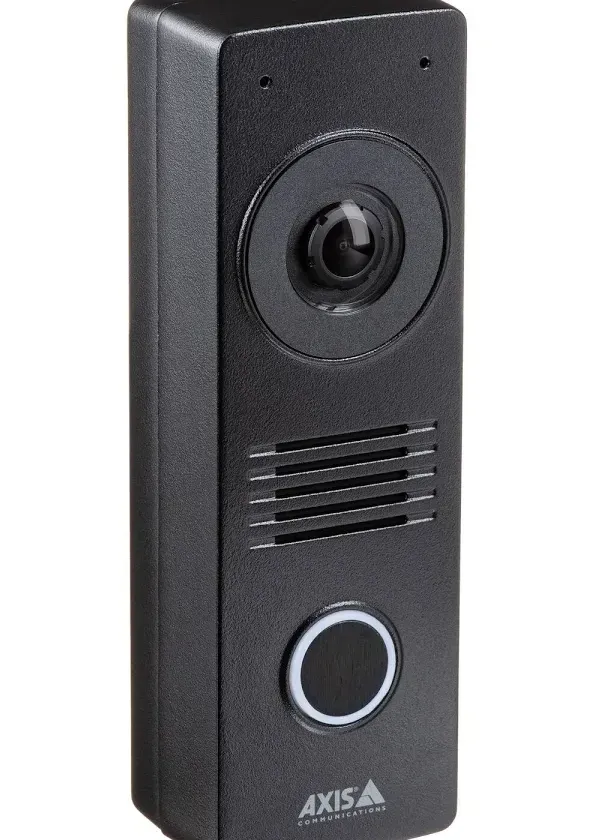
This is how our technician spends the first part of a visit to a Spring Creek property, before anything is quoted. It is our standard method rather than a story about one job.
First, the record. Before the visit we look up the lot in the city's building data: the building class, the number of units and the year built. In Spring Creek that tells us a great deal. A C1 lot with eight units built in 2018 or 2023 is an octet with a builder's intercom already required by law. A C0 lot with three units built in 2008 is one of the Vandalia Avenue three-family houses, probably with three separate bells. A B-class lot is a two-family house, which may or may not have a second bell at all.
Second, the builder's path. On site the technician looks for the route the original electrician used: where the doorbell transformer or the intercom supply sits, where cable rises between floors, and whether a spare pair or an empty conduit was left. In factory-built houses the route between modules is often a short vertical chase near the stair. In octets and elevator buildings it is a riser closet or a telecom room. If the builder left a usable path, the job is shorter and cheaper, and we say so on the quote.
Third, the far apartment. The technician rings the existing bell or intercom from the street and listens at the unit farthest from the door. In a house, that is the top floor. In an octet, it is the fourth floor at the back. What works there tells us whether the old cable is worth keeping.
Fourth, the doors people really use. We walk around to the rear or parking side and ask who comes in which way. In Spring Creek the answer is often that the household uses the alley door and visitors use the front, and the system should know that.

New York's Multiple Dwelling Law §50-a says that every class A multiple dwelling erected or converted after January 1, 1968 with eight or more apartments must have a self-locking main entrance door and "shall also be equipped with an intercommunication system" that lets each apartment talk to the door and release it. Older buildings have to add one if tenants of a majority of the apartments ask in writing. The law applies in cities of 325,000 or more, which includes New York City.
Run Spring Creek's buildings through that rule and the answers are unusually tidy. Every octet was erected after 1968 and holds exactly eight apartments, so every octet is covered. Every elevator building from Gateway Elton on is covered. The three-family houses on Vandalia Avenue, the two-family Nehemiah houses and the one-family rowhouses are not, because they are below eight apartments. A Brooklyn tenant put the gap plainly in an r/AskNYC thread about a four-unit building: the landlord "isn't required to put in a buzzer system or a self-locking front door."
Being below the line only means the decision belongs to the owner, and the reasons are practical: tenants who let in their own visitors, deliveries that reach the right household, and a front door nobody props. Being above it means the system is not optional, and a failed system exposes the building to tenant complaints and HPD violations until it is fixed.
None of this is legal advice. If your building has open violations, or you are not sure how the city classifies it, the classification in the city's records is the place to start, and we can look it up with you before quoting.
Few Brooklyn neighborhoods have so many buildings that are the same. Monadnock built twenty octets in each of phases 4B-1 and 4B-2, and the 2023 phase on Vandalia Avenue and Gateway Drive added more. For a management office, that repetition is an advantage only if the entry systems repeat too. Twenty buildings with twenty different panels mean twenty sets of spare parts, twenty programming manuals and twenty different answers when a tenant calls. Twenty buildings with the same panel mean one spare in the office and one set of instructions for the super.
Across a row we work in three stages: a full survey of the first building, from which we write one design with one panel, one station, one strike and one directory format; a short survey of each other building to confirm it matches, with any exception priced as its own line; and installation in the order the management office chooses, usually starting with the building with the most complaints.
Standardization brings three practical gains. The directory looks the same at every door, which helps couriers, home-health aides and visitors who come to more than one building. Codes, if the system uses them, follow the same logic in every building, so a super covering several buildings does not need a notebook. And the management office keeps one or two spare stations and one spare power supply rather than a shelf of different parts.
It also shapes the price. The first building carries the cost of the design and the programming template. The repeats carry mainly hardware and labor. When we quote a row, we show the first building and the repeat as separate figures so the office can see exactly what each additional building costs and can phase the work over more than one budget year if it needs to.
Spring Creek will keep getting new buildings for years. New York YIMBY's December 2025 report put Alafia's master plan at 2,400 homes across six phases, with Phase Two expected in fall 2027, and the city's building data already shows a 425-apartment building on Erskine Street recorded with a 2025 date. For an entry-system installer, new construction is a different job from a retrofit, and in Spring Creek two things make it more demanding than usual.
The wall. A Passive House building is designed and tested to be very nearly airtight. Passipedia gives the certification limit as "an n50-value smaller than or equal to 0.6 h-1," and warns that leaks found late in the airtight layer often "can no longer be remedied." A door station is a box in an outside wall with cable passing through it into the building. If that cable is pulled through an unsealed hole, it becomes the kind of leak an envelope consultant hunts for in a blower-door test. SIGA's guidance on wire penetrations makes the point bluntly: unsealed cable holes "leak air like a sieve," and "Electricians aren't paid to detail your WRB." On a Passive House job we ask for the station location and the penetration detail at the drawing stage, use a sleeve or airtight grommet for each cable, tape the membrane around it, and set the box so water runs away from the opening. We do not drill a new hole through a finished outside wall without the envelope consultant's agreement.
The plan. HPD's 2026 Design Guidelines for New Construction ask affordable projects that mix residential and other uses to submit a security plan. They list "controlled-access doors with key fob, card reader, or intercom systems at all shared thresholds" among acceptable measures, require the residential lobby to be "restricted exclusively to residential use," and call for a parcel room with "security measures (cameras, controlled access), climate control, and notification system." The plan "must address both day-to-day operations and emergency egress conditions." In practice that means the entry system is not just the panel at the front door. It is the panel, the release, the free-exit device on the inside, the way the door unlocks in a fire alarm, the parcel-room door and the line between the residential side and the shops.
How we fit into a new building: we review the low-voltage drawings and the door hardware schedule, mark every door the entry system controls, confirm the rough-in boxes and conduit, coordinate the release and the fire-alarm interface with the door hardware supplier and the fire-alarm contractor, and then install and program the panels and stations once the walls are closed and the doors are hung. We test from every door and every apartment before the residents arrive and hand the management office a written record of every code, every station and every cable.

Spring Creek's businesses sit in a handful of places: the Gateway Center malls, the separate shops along Erskine Street, the ground floors of the newer apartment buildings, the Alafia retail and clinic space, Flatlands Avenue on the northern edge, and the industrial and public sites to the east. A buzzer at a business door usually does one of three jobs: lets staff see and admit a delivery at a back door, controls a side entrance that is not staffed all day, or separates a store from the apartments above it.
Wikipedia lists 51 stores across the two malls at 501 Gateway Drive, with the southern half opened in 2002 and the northern half from 2014. Large anchors bring their own systems; the smaller tenants and the offices behind them are the ones that call us for a receiving-door station.
The restaurants and stores along Erskine Street that are not part of the mall itself. A video station at the staff door lets the kitchen see who is knocking before anyone opens it.
Gateway Elton's first phase included commercial, community and Pre-K space, and its third phase three retail spaces. Each needs its own door kept separate from the residential lobby.
7,800 square feet of retail and 15,000 square feet of medical space for One Brooklyn Health in the first phase, where a staff entrance and a controlled after-hours door are typical needs.
Stores, offices and houses of worship along the northern edge, often in older buildings than the ones to the south, where a side door needs a bell or a station for staff.
Wikipedia lists a USPS processing center at 1050 Forbell Street, the MTA's Spring Creek Depot and Sanitation facilities. Those run their own security, but contractors and tenants of nearby industrial buildings call about gate and office-door stations.
A door on an exit route can be fitted with a release, but it cannot stop people leaving. The building code's provisions for electrically locked egress doors require a sensor or a release on the inside, a manual "push to exit" device mounted 40 to 48 inches above the floor within 5 feet of the door, release on loss of power to the lock, and unlocking when the fire alarm or sprinkler system activates. Electromagnetic locks, as Allegion's guide on fail-safe and fail-secure hardware notes, "are only available fail safe," which is why many store doors use an electric strike instead.
Two more rules come up in Spring Creek. Where a business shares a building with apartments, neither side's panel should be able to open the other's door. And where the public uses the station, its operable parts belong within the 2010 ADA Standards' reach range of 15 to 48 inches; building codes based on the International Building Code also require two-way entry systems provided to gain admittance to a building to be accessible.

Architectural Record described the Nehemiah houses as steel-framed modules with fiber cement siding, and the Architect's Newspaper named the siding as HardiPlank. Fiber cement is hard and brittle, and it is not something a station should hang from by itself. We fasten the station to the door casing where there is solid trim, or to a mounting block that is screwed through the siding into the steel framing behind it with self-drilling screws made for light-gauge steel. We find the steel with a magnet and a small test hole, so the screws land in metal rather than in empty cavity.
The cable hole goes through the block, not through a bare cut in the siding, and it slopes slightly downward toward the outside. The block is sealed to the siding along its top and sides and left open at the bottom so any water that gets behind it drains out. Many stations come with a surface-mount back box that does the same job; when they do, we use it.
Yes. Gorlin Architects' description of Nehemiah Spring Creek puts the parking along rear alleys inside each block, with the houses opening directly onto the sidewalk in front, and in practice the alley door is the one many households use most. A keypad or a keypad-and-station combination at that door, paired with a strike or an electrified lockset, lets the household come in with a code while visitors still ring at the front.
Each member of the household gets their own code, so a code can be changed for one person without changing everyone's. The keypad is mounted where it is lit, sheltered from rain if possible, and at a height everyone in the house can reach. The door still has a key cylinder for the day a battery or a power supply fails.
Usually yes, as long as the panel is chosen for the cable that both phases have, not for the newer phase alone. Buildings finished five years apart by the same developer often use different entry systems, because the builder bought whatever was current at the time. The first job is to find out what each phase actually has: the panel maker, the type of cable from the panel to the apartments, the power supply and the strike.
If both phases have usable two-wire or multi-pair cable to every apartment, a panel and station family that works on that cable can go into both. If one phase was built with network cable to every apartment and the other was not, a system that can run on either, or a panel that talks to apartments over the existing pairs while offering phone answering through the internet, keeps the office on one model.
Yes, on most current systems. The super can be given access through a management account or a phone app that is not listed in any building's directory, so visitors cannot ring him from the panel, but he can open a door when a tenant locked out calls him or when a contractor arrives. Every door opening done that way is usually logged with the account that did it.
On a wired system without remote access, a small management station in the super's office can do the same for buildings that share a cable route back to it, but across a row of separate buildings remote access is the practical choice.
HPD's 2026 Design Guidelines for New Construction say the security plan must show how residential access is controlled and must "address both day-to-day operations and emergency egress conditions." The entry-system installer usually supplies four parts of that: a door-by-door list of what each controlled door has (panel, reader, keypad, release, free-exit device), how each door unlocks during a fire alarm or a power loss, who can admit visitors at each door and from where, and how the parcel room is reached and by whom.
The architect and the owner write the plan itself and decide policy, such as whether the front desk admits all visitors or whether residents admit their own. The door hardware supplier specifies the locks and closers, and the fire-alarm contractor specifies the release from the fire-alarm panel. We make sure the entry system's part agrees with theirs and fill in the details only we know, such as which panel calls which station.
Before anyone drills, talk to the owner's representative and, if the building still has one on call, the envelope or Passive House consultant who oversaw the airtightness test. A new hole through the outside wall changes the airtight layer that the test certified, and the people responsible for that layer will want to know how it will be sealed. If the building is still under the contractor's warranty, the general contractor should also be told, because work on the envelope may affect what the warranty covers.
Often the station does not need a new hole at all. It can move a short distance along the existing conduit, or the old penetration can be reused with a cover plate fitted over the old location. We look for that answer first.
Sometimes. A few makers sell panels that work with other makers' apartment stations over the same cable, and some current systems offer an interface that connects to older stations. Whether that works depends on how the old system signals the apartments, which we find by testing the riser and reading the panel's wiring.
If it works, replacing the panel alone is the cheapest way to restore a working entrance. If it does not, the options are new apartment stations on the old riser, which keeps the cable and changes the stations, or a panel that rings tenants' phones through the internet or a cellular line and leaves the old stations disconnected. The second option avoids work inside every apartment but depends on every tenant being reachable by phone.
Yes, and that separation is what the building should want too. The clinic's door gets its own station, ringing the clinic's front desk, and its own release, wired to the clinic and nowhere else. The residential panel and its apartment stations have no connection to the clinic's door, and the clinic's station has no connection to the residential lobby.
If the building's management wants to be able to open the clinic door in an emergency, that is done through a management account, not through the residential directory. The door still has free exit on the inside and unlocks in a fire alarm.
Yes. A video station at the rear door with phone answering will ring a manager's phone, show the driver and let the manager talk to them. Whether the manager also opens the door remotely is the store's decision. Many stores prefer to tell the driver to wait or to come back, rather than letting anyone into an empty store.
The station needs power and an internet or cellular connection at the rear of the store, and the rear door needs a release if it is to be opened remotely. If the door is a steel door in a steel frame, we choose a strike that fits it.

Quotes default to our own non-branded system, sized to the building in front of us. If you want a particular brand, or a management office already standardizes on one, tell us and we will price that instead. The equipment below covers nearly every Spring Creek job we are asked about.
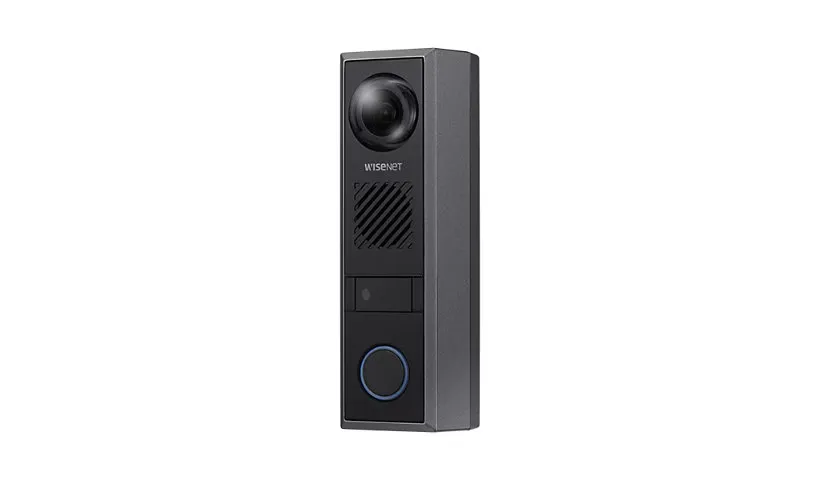
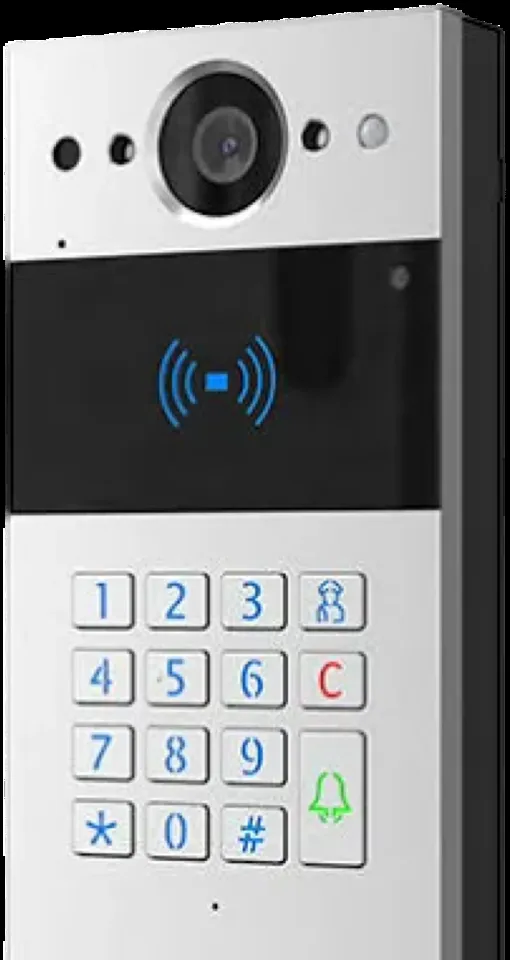
For one-family rowhouses: a narrow station that fits a door casing, with a camera that sees a visitor standing on the stoop.
For two-family houses and the 2008 three-family row: one button per household, each ringing only its own station or phone.
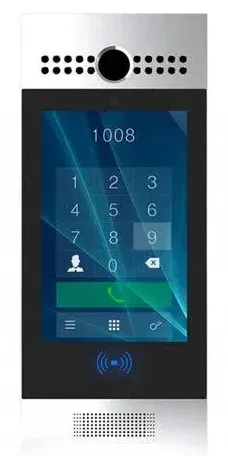
For octets: a button per apartment, or a keypad and directory, with a code option for residents and a camera for tenants to see who is calling.
For elevator buildings: a scrolling directory or code entry, front-desk and management calling, and a second panel where one entrance draws a crowd.
Hands-free or handset stations for each apartment or floor, wired back to the panel and powered from the system supply.
The door rings a phone, with video on most systems, for owners who work away, tenants who prefer it, and stores answering a rear door before opening.
Code keypads, card or fob readers for alley doors, garage doors into a courtyard building and staff entrances.
Releases that stay locked if power is lost, with the lever always free for anyone leaving, sized to steel frames or residential door casings.
Supplies and controllers on a protected circuit, with battery backup so the panel and release keep working through a short outage.

| What matters | Builder's doorbell and chime | Wired stations, one per household or apartment | Phone or app answering |
|---|---|---|---|
| Heard on the top floor of a three- or four-module house | Often not | Yes, a station rings on that floor | Wherever the phone is |
| Rings only the household being visited | No, one bell for the house | Yes, one button each | Yes, one entry each |
| Release the street door from upstairs | No | Yes | Yes, if wired to a strike |
| Meets the intercom rule in an octet | No | Yes | Only if every apartment can still talk to the door and release it |
| Needs internet at the property | No | No | Yes, or a cellular connection |
| What a power outage does | Bell dead until power returns | Runs on battery backup for a time | Needs the router or cellular unit on backup too |
| Monthly fees | None | None | Sometimes a software or line charge |
| Brooklyn list range | Not a buzzer | $400–$900 audio, $700–$1,800 video for a house; octets and larger buildings from about $2,500 | $700–$1,800 for a house; buildings from about $2,500 |
National alarm companies and doorbell brands are designed around one household. ADT sells monitored security with an installer visit; Ring and SimpliSafe sell video doorbells that a homeowner can fit to existing doorbell wiring or run on a battery. For a one-family Nehemiah rowhouse where the household simply wants to see the stoop on a phone, a good video doorbell can be enough, and if that is all your house needs we will say so.
Where those products stop is the shared door. A video doorbell does not give a two-family house two buttons that each ring only their own household, does not release a strike from the second floor, and does not satisfy the state's intercom rule in an eight-apartment octet. Habitat Magazine quoted Dan Arnold of Academy Mailbox on where demand is heading: "A lot of our calls now are people who want to abandon the hard-wired intercom units in their apartments." That trend is real, but where the law requires every apartment to reach the door, phone answering has to be added to a system that still works for every tenant.
A local low-voltage installer fits the system to the number of households, the door and the building, quotes it in writing and is reachable by phone afterward. On a Brownstoner thread about a three-family's smart buzzer, one reply put the trade line plainly: "Hardwired systems must be installed by a low voltage electrician." That is our work, under NYS license #12000287431.
AI summaries of door buzzer installation draw on national cost guides from Angi's HomeAdvisor, vendor blogs and generic how-to articles. They are useful as a starting point and often wrong in the details that matter on a Spring Creek block. These are the claims we hear most often, and what the buildings here actually show.
HomeAdvisor's guide says exactly that, with a range from $1,500 to $15,000, and adds that wireless systems run $150 to $1,500 and hard-wired systems $1,000 to $15,000. Swiftlane's apartment buzzer guide offers a different shape: $150 to $250 for a straightforward repair, $1,000 to $3,000 per door for a like-for-like audio replacement and $1,500 to $5,000 per door for a smart video upgrade.
An average hides the spread that matters here. A two-button audio system for a Nehemiah two-family is a few hundred dollars of work; an octet with video in every apartment is in the thousands; a directory panel for a 400-apartment building is far beyond either.
What moves the price here is the number of households, whether the builder's cable can be reused, the door and frame, and whether the building's walls or security plan add work. Our Brooklyn list is set around those things, and we place each job on it in writing.
A building finished in 2018 or 2023 does have an entry system; the law requires one in every octet. But "has a system" and "has the system the building needs" are different things. A builder chooses equipment for the opening day, not for the next decade of tenant turnover, management changes and new demands like phone answering.
In Spring Creek much of the work in new buildings comes after opening: a second door on the system, a front desk connected, phone answering added, or one building's panel replaced to match the rest of a row.
There is also the simple fact that the newest buildings are still under construction. Alafia's second phase was expected in fall 2027 when New York YIMBY reported on its first, and someone has to install and program those systems before the residents arrive.
Multiple Dwelling Law §50-a requires an intercom in class A multiple dwellings erected or converted after January 1, 1968 with eight or more apartments, and in older ones when tenants of a majority of the apartments ask for it in writing. That is not every building.
In Spring Creek the line falls neatly between building types. The octets, with exactly eight apartments, are covered; so are the elevator buildings. The three-family houses on Vandalia Avenue, the two-family Nehemiah houses and the rowhouses are not. An owner of a three-family house is not legally obliged to have a buzzer, though most find the house runs better with one.
The practical consequence runs both ways. A small-house owner can choose freely and spend as little or as much as suits them. An octet's owner cannot let the system lapse, and any change, such as moving to phone answering, has to keep every apartment's ability to talk to the door and release it.
Doorbell brands market to one household. A video doorbell on a Nehemiah two-family rings one account, on one phone or one set of phones. To give the tenant their own button, their own notifications and their own release, the doorbell would need a second account and a release it cannot drive.
Owners who try it end up either with the owner's phone ringing for every visitor to the tenant, or with the tenant on the owner's account seeing every visitor the owner gets. Neither lets the tenant open the street door without coming downstairs.
A two-button station with an indoor station or phone entry for each household solves all three problems, and it is in the same $400 to $900 or $700 to $1,800 ranges as many careful doorbell installs once a chime upgrade and a release are added.
Generic installation guides treat the hole through the outside wall as a detail. In most of Brooklyn, a neat hole and a bead of sealant is acceptable. In a Passive House building it is not, because the wall's airtightness is designed, tested and certified, and a caulked cable hole is exactly the kind of leak the test looks for.
SIGA's guide to wire penetrations ranks caulk or silicone around the wire as the least effective method and recommends wrapping each wire with tape to form a fin and a drip edge, plus a weep loop where there is a rainscreen gap. Passipedia notes that leaks in the airtight layer found after construction "can no longer be remedied" in many cases. Both point to the same rule: plan the penetration before the wall closes.
For Spring Creek's fiber cement-clad houses, the point is weather rather than airtightness, but the answer is similar: a mounting block sealed at the top and sides, a hole that slopes outward, and no bare cut in the siding.
Cellular and app-based entry systems do remove the cable between the panel and the apartments, because calls go to tenants' phones. ButterflyMX says its intercom "requires no building wiring" for that reason. What they do not remove is the wiring at the door: power for the panel, a release in the frame, and a free-exit device on the inside.
Habitat Magazine's 2017 report noted that many smartphone-compatible systems "rely on internet cables, often requiring new wiring at the building entrance." Either way, the door end of the job does not disappear.
In an octet, app answering is a useful addition, but it is not a substitute for a system that lets every apartment reach the door, including tenants without smartphones or with phones that run out of charge. We usually install it alongside wired stations, not instead of them.
The equipment is a one-time purchase. Some systems, though, carry ongoing charges. Swiftlane's cost guide notes that software subscriptions commonly add $5 to $15 per unit per month, or $30 to $100 per door per month, and ButterflyMX's apartment buzzer guide says that telephone, cellular, cloud and administration fees may continue.
For a two-family house those charges are small. For a management office with twenty octets, a per-unit fee is multiplied by 160 apartments every month, and over ten years it can exceed the equipment cost.
Wired systems without cloud features have no monthly fee. Where phone answering is wanted, we price both a no-subscription option and a cloud option where one exists, and show the ongoing charge separately so the owner can compare.

Send a photo of the street door and whatever is mounted beside it, a photo of the mailboxes or meters in the entrance, and one of wherever the old bell transformer or intercom supply is mounted, along with how many households or apartments the building has and which doors people use. A technician will tell you which approach fits and where it falls on our Brooklyn ranges. Call or text (347) 934-8335, send photos on WhatsApp, or fill in the form below.
We count every household or apartment the system must reach and every door people use, including the alley or parking-side door, the garage door into a courtyard building and any staff entrance.
We check the building class, the number of units and the year built. In Spring Creek that tells us whether the intercom rule applies and, often, which builder's system to expect.
We locate the builder's cable route, from module chases in a rowhouse to the riser closet in an octet, and choose a protected circuit for the supply and controller.
We make sure the door closes and latches on its own and choose the strike or lock that suits its frame, with free exit for anyone leaving.
We place the job on the Brooklyn list and name every possible extra, such as a cable pair that may fail its test or a new outlet, before anything is ordered.
Once you approve, we order the equipment, agree work days with the owner or management office, and give residents written notice of any apartment visits.
We mount the station, seal every penetration through the outside wall, fit the release, run and conceal the cable and label every pair at the supply.
We ring every apartment from outside, release the door from every station or phone, check the door relatches, and leave a written record of stations, codes and cable.

The two-part mall at 501 Gateway Drive, opened in 2002 and extended from 2014, built on the site of the old Milford Street landfill.
A 407-acre state park on the capped Pennsylvania and Fountain Avenue landfills, with an entrance at 950 Fountain Avenue.
The new Passive House development on the former Brooklyn Developmental Center land between Fountain Avenue, Seaview Avenue and Erskine Street.
The rows of four-story, eight-apartment Nehemiah buildings finished in 2018 and 2023, continuing onto Gateway Drive.
The 1988 complex at 902 Drew Street, with 260 apartments in the building CityRealty lists and 581 across the complex.
The Postal Service plant at 1050 Forbell Street, opened in 1991 in the industrial blocks on Spring Creek's eastern side.
We also serve New Lots, Canarsie, City Line, Cypress Hills and Flatlands, and every other neighborhood on our door buzzer installation in Brooklyn page.
Spring Creek is billed at our standard Brooklyn rate, with no travel premium. The final figure follows photos and a walkthrough, because the number of households, the state of the builder's cable, the door and frame, and any envelope or security-plan requirements drive the total far more than the brand on the panel.
| Job | Typical Spring Creek property | Brooklyn range |
|---|---|---|
| Audio station or replacement with electric strike release, existing cable reused where it tests well | One-family Nehemiah rowhouses, a single alley door, a two-family house on good existing cable | $400–$900 |
| Video door station with indoor stations or phone answering | Two-family houses with a rental floor, the 2008 three-family houses on Vandalia Avenue, a store's rear door | $700–$1,800 |
| Multi-unit entry system, audio or video by apartment count, with optional code or card entry | The octets, Spring Creek Gardens, the Council Towers, Gateway Elton and the newer elevator buildings | from $2,500 to $10,000+ |
| In-person diagnosis of an existing system, booked online | Any property where the builder's system must be tested before quoting | $250, applied toward the work |
| Monthly subscription | Any property choosing a wired, no-subscription system | $0 |
What moves a Spring Creek job inside its range is easy to predict. First the households: a one-family house with one indoor station stays low, while a three-family house with video for every unit and phone answering for the owner moves up. Then the cable: builder's cable that tests sound costs nothing extra, while a new run between modules or up an octet's stair adds labor. Then the wall: a sealed penetration through a Passive House wall or a mounting block on fiber cement siding takes more time than a hole in brick. Then the door: a frame that needs a different strike or a closer that needs replacing before a release will work. For a row of octets, the first building carries the design and programming; the repeats cost less each. If the job also adds a camera over the entrance, installing it on the same visit usually saves $200 to $400 in labor compared with a separate trip. Anything that depends on a test is named on the quote with its price before you approve.
Full terms — including 50% deposit, one-year parts-only warranty on AESS-supplied products, and the late-fee schedule — are set out in the service agreement.Tell us the street, how many households share the front door, every door people use and what is mounted at the door now, and we will tell you which Brooklyn range fits and what would move it. Management offices with several buildings can send one photo set per building type. Call or text (347) 934-8335, send photos on WhatsApp, or fill in the form.
Three typical Spring Creek jobs, each placed inside the matching range on our Brooklyn list. The exact figure comes from the photos and the walkthrough.
A slim audio station on the door casing or a sealed mounting block, a fail-secure strike or released lockset, an indoor station on the top floor, and a battery-backed supply where the builder's transformer was.
A two- or three-button video station, one indoor station per household, phone answering for the owner, and new cable between modules or floors where the builder's cable will not do.
An eight-button, directory or code panel at the street door, apartment stations or phone answering, a release with free exit and a supply on a protected circuit, rising toward $10,000 or more with apartments, doors and video.
Bring your own equipment. If you have already bought a door station or intercom kit, we can install it as labor-only work, quoted flat once we have seen the door, the frame and the cable route through the house or building. Tell us the make and model, and we will say before the visit whether it can reach every household, release your door and, in an octet, still meet the intercom rule. Equipment you supply is covered by its maker's warranty, not ours.
First buzzers, a button and release for a rental floor, alley-door keypads and phone answering. Request a quote
Panels, apartment stations, row-wide standardization and systems for buildings under construction. Call (347) 934-8335
The same list in every neighborhood. Brooklyn door buzzer installation
Every borough's buildings and rules. NYC door buzzer installation
At the bottom of the multi-unit range, from about $2,500. The low end is a new eight-button or directory panel with a release on cable that tests sound, keeping working apartment stations. The figure rises with video stations in all eight apartments, phone answering, a second controlled door or new cable up the stairwell. Repeat buildings in the same row usually cost less than the first.
Most land in the $700 to $1,800 range, with a three-button video station, an indoor station or phone entry for each unit and a release at the street door. An audio-only system on bell cable that tests well can come in within the $400 to $900 range. A code keypad for tenants, or new cable to the top floor, is priced as its own line.
Check your association's rules before booking. City Limits reported that Nehemiah buyers had to join a homeowners' association, and associations often have rules about what goes on the outside of a house. We can give you the station's size, color and mounting position in writing to show the association, and we will mount it wherever the association is comfortable with, including on the door trim alone.
Yes, as labor-only work quoted flat after we have seen the door and the cable route. Send the make and model first. We will tell you whether it can ring the floors you need, drive a release in your door and mount on your siding or trim. Equipment you supply carries its maker's warranty rather than ours.
For a house, the owner or an adult the owner trusts, plus the tenant if their floor gets a station. For an octet or larger building, the super or another staff member with keys to the riser closet, the electrical room and any apartments that need a station, and someone from the management office reachable by phone to approve changes. We confirm the list in writing before the work day.
Yes. This page covers everything from Flatlands Avenue south to the Belt Parkway between Fountain Avenue and the Gateway Drive side, including Spring Creek Gardens on Drew Street, the Council Towers buildings on Vandalia and Pennsylvania Avenues, the Nehemiah blocks, Gateway Elton, the Erskine Street and Fountain Avenue buildings and the Alafia campus, all at our Brooklyn rate.
Yes. On a raised stoop the visitor stands on the top step, close to the door, so the station is mounted at a height that frames a standing adult's face from there, and a model with a wide-angle lens covers people of different heights. If you also want to see who is approaching from the sidewalk, a separate camera is the better tool, and it can be installed on the same visit.
No. Spring Creek is billed at our standard Brooklyn rate with no travel premium. Differences in price come from the building itself, such as steel framing, sealed walls or the number of apartments, not from the neighborhood.
For most households, yes, because seeing the visitor lets you decide before going to the door, and most video stations also offer phone answering. If the household only ever needs to know that someone is at the door and to open it from upstairs, audio within the $400 to $900 range does that well and costs less. We price both so you can choose.
It can. If the original installer's or the maker's warranty is still running, ask what it requires before anyone else works on the system, because some warranties end when a different company changes the equipment. Send us the warranty terms and we will plan the work so it does not cancel coverage you still have, or wait until it runs out if that makes more sense.
Yes. We quote the first building in full and each repeat building as its own line, so the office can approve some or all of them, and we schedule the buildings in the order the office chooses. Each building's line shows exactly what it includes, which makes it easy to split the work across budget years or funding sources.
Yes. We remove the old panel and any equipment the new system replaces, disconnect cable that is no longer used and cover the old opening with a trim plate or the new panel's back box where the sizes allow. We do not patch or paint walls; if the old opening is larger than any plate can cover, we say so on the quote so you can arrange finishing work.
Door Buzzer Installation Brooklyn NY | Brownstones & Condos · Door Buzzer Installation NYC | Apartment & Building Entry · Door Buzzer Installation Manhattan NY | Apartments & Co-ops · Door Buzzer Installation Queens NY | Co-ops & Apartments · Door Buzzer Installation Bronx NY | Co-ops & Apartments · Door Buzzer Installation Staten Island NY | Homes & Apts · Door Buzzer Installation Long Island NY | Nassau & Suffolk · Door Buzzer Installation Hudson Valley NY | Apartments · Door Buzzer Installation Nassau County NY | Homes & Co-ops · Door Buzzer Installation Suffolk County NY | Homes · Door Buzzer Installation Westchester County NY | Co-ops · Door Buzzer Installation Rockland County NY | Homes & Apts · Door Buzzer Installation Orange County NY | Homes & Farms · Door Buzzer Installation Putnam County NY | Lake Homes · Door Buzzer Installation Dutchess County NY | Homes · Door Buzzer Installation Ulster County NY | Kingston
Door Buzzer Installation Bath Beach Brooklyn NY · Door Buzzer Installation Bay Ridge Brooklyn NY · Door Buzzer Installation Bedford-Stuyvesant Brooklyn NY · Door Buzzer Installation Bensonhurst Brooklyn NY · Door Buzzer Installation Bergen Beach Brooklyn NY · Door Buzzer Installation Beverley Square Brooklyn NY · Door Buzzer Installation Boerum Hill Brooklyn NY · Door Buzzer Installation Brooklyn Navy Yard, Brooklyn NY · Door Buzzer Installation Brooklyn NY | Brownstones & Condos · Door Buzzer Installation Brownsville Brooklyn NY · Door Buzzer Installation Bushwick Brooklyn NY · Door Buzzer Installation Cadman Plaza Brooklyn NY · Door Buzzer Installation Canarsie Brooklyn NY · Door Buzzer Installation Carroll Gardens Brooklyn NY · Door Buzzer Installation City Line Brooklyn NY · Door Buzzer Installation Clinton Hill Brooklyn NY · Door Buzzer Installation Cobble Hill Brooklyn NY · Door Buzzer Installation Columbia Street Waterfront Brooklyn · Door Buzzer Installation Coney Island Brooklyn NY · Door Buzzer Installation Crown Heights Brooklyn NY · Door Buzzer Installation Cypress Hills Brooklyn NY · Door Buzzer Installation Ditmas Park Brooklyn NY · Door Buzzer Installation Downtown Brooklyn NY · Door Buzzer Installation DUMBO Brooklyn NY | Loft Entry
Access Control Installation Spring Creek Brooklyn NY · Door Buzzer Repair Spring Creek Brooklyn NY | Elton to Vital · TV Installation Spring Creek Brooklyn · Fire Alarm Installation Spring Creek Brooklyn NY · Alarm Installation Spring Creek Brooklyn NY | Modular Homes · Structured Cabling Installation Spring Creek Brooklyn NY · Intercom Installation Spring Creek Brooklyn NY · Security Camera Installation Spring Creek Brooklyn NY
Send a photo of the street door, the entrance and wherever the old bell transformer or intercom supply is mounted, with the street, how many households share the door and every door people use, and we will tell you which system fits, whether the builder's cable can stay and where it falls on our Brooklyn ranges. Call or text (347) 934-8335, message us on WhatsApp, or use the request form. Licensed under NYS license #12000287431, rated 4.7★ across 201 Google Reviews, with same-day estimates on most weekdays.