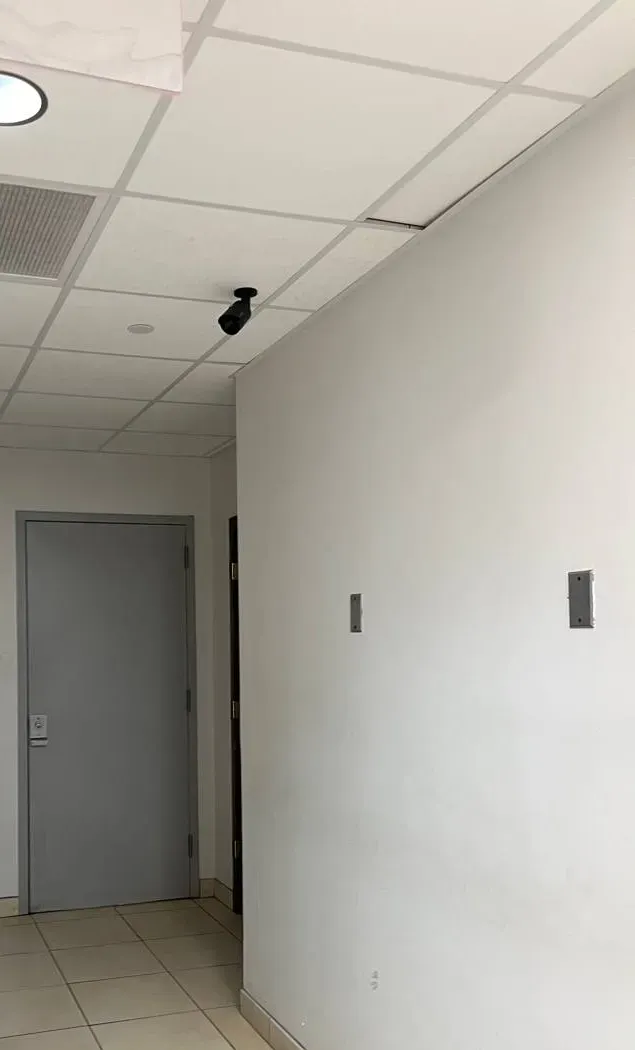
Heard on Every Level · A Button for Every Household · Power Kept Off the Basement Floor
Door buzzer installation in Mill Basin is mostly house work: a one-family or two-family home from the 1950s to the 2000s, often on several levels, with a front door, a driveway or garage door and a back door toward the water. We fit a door station, an electric release and an answering station wherever the household actually spends its time, so the door can be answered and opened without a trip down the stairs, and we price the whole job from our Brooklyn list before anything is ordered.
Reviewed and updated November 11, 2026, against Brick Underground's Mill Basin buyer's guide; Homes.com's Mill Basin neighborhood data; the Community Board 18 page on Mill Island and Mill Basin; listing records for Fillmore Gardens Cooperative on Pearson Street; News 12 Brooklyn's December 2, 2024 report on Mill Basin package theft and its June 2026 report on an attempted break-in on Mayfair Drive South; Brooklyn Paper's June 2020 report on Mill Basin's private patrol and the New York Times' 1983 report on the same patrol; Brooklyn Paper's report on Sandy on Mill Island; First Street's Mill Basin flood data; the Mill Basin Civic Association's November 2025 meeting notice; New York's Multiple Dwelling Law §50-a and the Attorney General's tenants' rights guide; Habitat Magazine's May 2017 report on buzzer systems; a Brownstoner forum thread on electric strikes; Allegion's fail-safe and fail-secure guide; the building code's sensor-release provisions; Aiphone's GT Series pages; the HomeAdvisor and Swiftlane cost guides; ButterflyMX's call box guide; and the 2010 ADA Standards. · Abstract Enterprises Security Systems, NYS license #12000287431 · crews dispatched from our Troy Avenue office in Brooklyn

Owner-operated since 2002 · Thousands of jobs completed · Booked within 2 hours
Quick answer: door buzzer installation in Mill Basin runs $400 to $900 on our Brooklyn list for an audio buzzer with a new electric door release at one entrance of a one-family house, $700 to $1,800 for a video door station with indoor monitors on more than one level or phone answering, which is where most split-levels, larger detached houses and two-family houses land, and from about $2,500 to past $10,000 for a directory or button system that calls every apartment off a shared entrance, such as a garden co-op building. Each price includes the door station, the answering stations, the low-voltage power supply, the electric strike or a lock made for your door, the cable and the labor. It is fixed in writing after a walkthrough or a good set of photos, and anything that depends on a test, such as an old bell wire that may not carry video or a door that has to be adjusted before it will latch, is named and priced before you approve. Mill Basin is billed at the Brooklyn rate with no travel premium. Send photos of the front door and whatever is mounted beside it to (347) 934-8335 or on WhatsApp, and we reply with the range that fits, usually within two hours during working hours.
Most of the door buzzers we install in Brooklyn go into apartment buildings, where the job is a lobby panel and a station in every apartment. Mill Basin turns that around. Brick Underground's guide to the neighborhood describes housing that is mostly single-family, with about 30 percent two-family houses, and notes that two-family houses are the only rental option inside the community itself. So the typical Mill Basin request is not "the building needs an intercom." It is "we cannot hear the door from the kitchen," "my mother upstairs cannot get down the stairs to let the aide in," or "the tenant downstairs keeps getting our deliveries." Those are house problems, and they are solved with different equipment and a different plan than a lobby.
The houses themselves set the plan. Homes.com puts the median year built in Mill Basin at 1960, and a local broker quoted there says "Mill Basin homes were built in the '60s and '70s." The streets mix early postwar ranches and split-levels, brick colonials of the 1980s and large newer houses on the water, and Homes.com notes that many homes have driveways and attached garages. That mix means most houses have more than one door that people really use, and many have three or four levels: a garage and den at grade, a living floor a few steps up, bedrooms above, and a finished basement below. A single chime in the front hall, which is what most of these houses were built with, cannot be heard across that many half-floors, and it cannot open anything.
Two-family houses add a second layer. On Mill Island, the section of the neighborhood that borders Jamaica Bay, Community Board 18 describes development in the 1960s of detached and semi-detached one- and two-family homes. In a two-family, each household needs its own button, its own answering station and, usually, its own way of releasing the door it uses, without the owner's family hearing every visitor who comes for the tenant. Getting that separation right is most of the design work in a Mill Basin two-family, and it is the part a store-bought video doorbell does not do.

Then there is the front door itself. Mill Basin residents talk about safety at the door more than most Brooklyn neighborhoods do. Brooklyn Paper reported in June 2020 that hundreds of Mill Basin families had pledged to pay for a private security patrol themselves, citing vehicle break-ins and drug dealing; the New York Times wrote about the neighborhood's private patrol as far back as 1983. In June 2026, News 12 Brooklyn reported an attempted break-in at a home on Mayfair Drive South, where police said two people tried to force their way inside. And in December 2024 News 12 reported that Mill Basin residents were having packages sent to a shipping store in the neighborhood rather than to their porches. A door buzzer does not replace a patrol or a camera system, but it changes the most ordinary moment of the day: instead of opening the door to find out who is there, the household sees and talks to the visitor first, from wherever it happens to be, and decides whether to release the door at all.
Finally, the water. Nearly every Mill Basin property sits close to Jamaica Bay or the Mill Basin inlet, and First Street counts 3,136 properties in the neighborhood, 98.8 percent of the total, with some risk of flooding over the next 30 years. Brooklyn Paper reported that Sandy flooded basements on Mill Island. For a buzzer, that is mainly a question of where the small pieces go: the power supply, the transformer and any network equipment belong above the basement floor, not on it. We plan that on every Mill Basin job, but it is a detail of the installation, not the reason for it.
Where this page applies. It covers Mill Basin from Avenue U to the inlet, Mill Island along Jamaica Bay, and Old Mill Basin north of Avenue U toward Avenue N, including the streets around National Drive, Mayfair Drive, Whitman Drive, Gaylord Drive, Bassett Avenue, Pearson Street, Kansas Place and Montana Place and the numbered East 50s and 60s streets. For the whole borough, see our door buzzer installation in Brooklyn page, and for the whole city our NYC door buzzer installation page.
When a Mill Basin homeowner calls about "a new buzzer," the house is usually in one of three situations. In the first, there is only a doorbell: a button by the door, a transformer somewhere in the basement or a closet, and a chime in the front hall. Nothing in the house can talk to the visitor or open the door. In the second, there is an old two-household audio buzzer, often put in when the house was split into two apartments, with a talk-listen-door station on each floor, and some of it still works. In the third, someone has already added a video doorbell from a big-box store, and the household likes seeing the visitor but still has to walk down to the door to let anyone in.
Each one is priced differently, so we sort out which one the house is in before we quote. Photos of the button, the chime and anything mounted on the walls inside, sent to (347) 934-8335 or on WhatsApp, usually tell us. In the first situation the job is a new system, and the useful question is whether the existing bell wire can be reused for part of it. In the second, an old audio system that is only failing in one place, such as a worn release or one dead station, may be worth repairing, and we will say so. In the third, the video doorbell can often stay where it is as a camera while a proper door station and release go in, or it can be replaced by a station that does both jobs.
The reason to look first is that old house wiring varies more than people expect. Bell wire in a house built around 1960 is thin, and it was run for a chime that draws almost nothing. Some modern stations can use those two conductors; others need more. Aiphone, describing its two-wire GT Series, says it "offers the advantage of using existing wire and infrastructure" and, in its upgrade guide, "If the existing wires are in good condition, they can be reused." The phrase that matters is "in good condition." We test before we promise, and if the old wire might fail, the cost of running new cable is on the quote as a named line, not a surprise on installation day.
Every service below is priced from the same Brooklyn door buzzer list shown in the pricing section, and every one includes the door hardware that actually opens the door. A buzzer that rings but cannot release anything is only a doorbell.
A door station at the front door, an electric strike in the frame, a power supply and one or more answering stations, for houses that have only ever had a bell button and a chime in the front hall.
Indoor stations or monitors placed on each half-floor of a split-level, on every stop of a house with an elevator, or in the kitchen, the primary bedroom and the finished basement of a colonial, so nobody has to run for the door.
A two-button station for a Mill Island or Old Mill Basin two-family, with each button ringing only its own household and each household able to release only the door it uses.
A second station or keypad at the door the family actually uses, often the side door off the driveway or the door between the attached garage and the house, on the same answering stations as the front.
Video stations answered on wall monitors, on phones or both, so a visitor can be seen and spoken to from the back of the house, from the yard or from across town before anyone decides to open the door.
Small button or code stations for each entrance of a two-story garden co-op building, wired to the apartments off that entrance, with the superintendent or board able to manage codes.
Fail-secure strikes fitted to wood and steel frames, and for wide custom doors, pivot doors or doors with multipoint locks, an electrified lock made for that door rather than a strike forced into the wrong frame.
Low-voltage power supplies with battery backup, mounted in a utility closet, garage wall or upper-floor closet rather than on the basement floor, with the release and the stations both covered during an outage.
Buzzers for storefronts and offices on Avenue U, Flatbush Avenue and Mill Avenue: a delivery or staff door, a practice's front door released from the desk, or a second-floor office reached by a street-level door.

Six kinds of property account for almost every buzzer we are asked to install in Mill Basin. Each one has a different problem at the door, and each needs a different plan for where the cable runs and where people answer.
Houses of the 1950s and 1960s with the front door on a landing between levels, a garage and den at grade and bedrooms up a short flight, where a single hall chime never reaches every floor.
The 1960s houses along the bay where two households share a front entrance or have two doors side by side, each needing its own button and its own release.
Center-hall houses with a formal front door the family rarely uses, an attached garage and a back door to the yard, where the real entrance and the visitor's entrance are different doors.
Houses built since the 1990s on lots like those on National Drive, with wide custom doors, several levels, sometimes an elevator, and long cable runs from the front door to the rooms people live in.
Developments such as the Bay Front Estates at Mill Basin, which Brick Underground describes as a gated community of 34 detached houses opened in 2005, where each house's own front door still needs its own buzzer.
Fillmore Gardens' two-story walk-up buildings on Pearson Street and the East 50s streets, where each entrance serves a few upper and lower apartments and a resident superintendent looks after the doors.
A split-level is the hardest house in Brooklyn to hear a doorbell in. The front door opens onto a landing; a short flight goes up to the bedrooms, another goes down to a den or garage, and the kitchen and living room sit on a third level at the back. The original chime, usually mounted in the hall near the door, is loud on the landing and faint everywhere else. That is why so many Mill Basin split-level owners tell us they have missed deliveries while they were home.
The fix is an answering station on each level the family uses, not a louder chime. In practice that is usually three stations: kitchen, upstairs hall and den or basement. Because split-levels have short vertical distances and many interior partitions, cable can often travel up or down inside one wall cavity and across one ceiling, which keeps the job near the low end of its range. The door station itself goes on the brick or siding beside the front door at a height a visitor standing on the top step can reach, and the electric strike goes into the existing frame, which in most houses of this age is wood and takes a strike well.
The 1960s two-family houses on Mill Island come in two common layouts. In one, both households share a front door and a small vestibule, with the upstairs apartment reached by an inside stair. In the other, semi-detached houses have two doors side by side or one at the front and one at the side. Either way, the system has to keep the households apart: the upstairs button rings only upstairs, the downstairs button rings only downstairs, and each household's release opens only the door its visitors come through.
For a shared front door, that usually means a two-button station at the door and one or more stations in each apartment, all on one power supply. For separate doors, it can be two single-button stations or one station placed where both doors can be seen. We ask early whose meter the power supply will run on and who will manage any phone answering, because those two questions decide where the equipment goes and whose account it sits on. Where the owner rents out one apartment, the tenant gets a station that works on its own and, if wanted, phone answering on the tenant's own phone, so the owner's family is never in the middle.
Many of the brick colonials built in the 1980s have a handsome center front door that guests are expected to use and a side or garage door that the family actually uses every day. Couriers, contractors and friends tend to go to whichever one they see first from the driveway. A buzzer plan for one of these houses starts by asking which door visitors really come to and which one the household wants them to use.
The common answer is a station at each, both ringing the same answering stations, with a different tone or a camera picture so the household knows which door it is. The release can go on both or only on the one the household wants to open remotely. Brick veneer on these houses is solid enough for a surface-mounted station on plastic or metal anchors in the mortar joint, and the cable can usually come through the rim joist into the basement or through the garage wall, both of which keep visible conduit to a few inches.
The houses that have replaced older homes along the water, which StreetEasy describes as luxurious waterfront houses with private docks, bring three changes. The front door is often wide, tall and custom, sometimes a pivot door or a door with a multipoint lock, which cannot take an ordinary strike. The house has four or more levels, sometimes with an elevator, so answering stations multiply. And the distance from the front door to the rooms where people spend time, often the back of the house facing the water, can be long.
For these houses we start with the door hardware. If the door's own lock can be had in an electrified version from its maker, that is usually the right release; if not, we look at a motorized lock built for that door type before anything else. Then we lay out stations by where the family lives: kitchen and family room at the back, primary bedroom, any home office, the garage entry and, if wanted, a covered outdoor station on the back patio. Newer houses often already have network cable to the front door from construction, and a station that runs on that cable is usually the cleanest choice.
In a gated development, visitors first deal with whatever the association runs at its gate. That system belongs to the association, and we do not connect to it or change it without the association's written approval. What we install is the house's own door: a station at the front door, a release and answering stations inside, exactly as for any other detached house.
The one thing to settle early is whether the association has rules about what may be mounted on house fronts or how equipment must look. If it does, we work from those rules and can supply product cut sheets showing size and finish for the owner to submit. Otherwise these installations are among the simplest in the neighborhood: newer construction, accessible wiring paths and one household per door.
Fillmore Gardens is a different kind of job from anything south of Avenue U. The co-op is listed as 340 units in two-story walk-up buildings around courtyards, with listings describing upper and lower units, a resident superintendent and a parking area in the back. Instead of one lobby panel for hundreds of apartments, a complex like this has many small entrances, each serving a handful of homes.
That makes the right system modular. Each entrance gets a compact button or code station wired to the apartments behind it, with its own release, and the entrances can either run independently or share a controller so the superintendent or the board can manage codes and directories in one place. Because the work touches common doors, it is ordered by the board or its managing agent, and we price it entrance by entrance so the board can phase it if it wants to. Whether a particular building there is covered by the state's intercom rules depends on how it is classified and how many apartments it has, which the board's managing agent or counsel can confirm; the rules section below explains what the law says.

This is how our technician spends the first half hour at a Mill Basin house, before anything is priced. None of it is complicated, but skipping any of it is how buzzer jobs go wrong.
First, the bell. If there is a working doorbell, the technician presses it and then walks the house while someone else keeps pressing, noting every room where it can and cannot be heard. In a split-level or a large colonial this walk usually settles the number of answering stations on its own, and it tells the household something it already suspected but never measured. The technician then finds the transformer and the chime, because those show where the old bell wire runs and whether it can be part of the new system.
Second, the doors. Every door a visitor might come to is opened, closed and locked several times. The technician is looking for a door that closes and latches by itself without being pushed, because an electric release only helps if the door shuts behind the visitor. Doors that have dropped and rub, closers that have weakened, and latches that do not reach the strike are all common in houses of this age, and each one is noted with what it would cost to fix.
Third, down. The technician goes to the basement or the lowest level and looks for where the power supply can live. In Mill Basin, that is rarely the basement floor. A utility closet on the ground floor, a garage wall or a closet near the front door are the usual answers, and the cable plan is drawn from that point to the door and to every station. Only then does the technician price the job.

Mill Basin has spent decades organizing around safety in a way few Brooklyn neighborhoods have. The New York Times reported in 1983 that the private patrol here cost $96,000 a year for around-the-clock coverage. In June 2020, Brooklyn Paper reported that hundreds of families had pledged support for a new private patrol, with organizers aiming for 1,200 families at about $500 a year each. The Mill Basin Civic Association's general meetings, such as its November 18, 2025 meeting at the Thomas Jefferson Club on Avenue T, list the NYPD's 63rd Precinct alongside community leaders. People here think about who is on their block.
The front door is where that concern becomes practical, and News 12's two Mill Basin stories show both sides of it. In December 2024, it reported that residents were sending packages to Outside the Box Shipping in Mill Basin, which was taking in about 100 packages a day, because porch cameras alone were not stopping thefts. One resident told the station: "I've seen some come up, look at the camera, and put their head down. They're getting smarter." In June 2026, it reported that two people had tried to force their way into a home on Mayfair Drive South. A camera records what happens; it does not decide what happens next.
A door buzzer with video and a release puts the decision in the household's hands at the moment it matters. The visitor rings, the household sees and hears them on a station in whatever room it is in, or on a phone, and talks to them through a closed, locked door. A courier can be told where to leave a box, or let into a vestibule or garage entry the household chooses. A contractor who is expected can be let in without anyone walking to the door. Anyone the household does not want to deal with gets an answer, or none, without the door ever being opened. That is the whole point of the release: the door stays locked until someone inside chooses otherwise.

Three choices on a Mill Basin job make the biggest difference here. The station's camera should be aimed and set so a face is visible at the height and distance a visitor actually stands, which on a house with front steps is often lower and farther out than the installer first assumes. The release should be a fail-secure strike, so the door stays locked if the power fails, unless there is a code reason for a different device. And the door has to close and latch by itself every time, which is why we check and adjust the closer or hinges before the electric hardware goes in. A release on a door that does not latch is an open door.
What a buzzer does not do is replace the other layers. It is not an alarm and it is not monitored. Many Mill Basin households pair it with cameras at the driveway and the back of the house, and some with an alarm system. We install those too, and installing them together means one crew and one visit, which on our Brooklyn list typically saves $200 to $400 in labor, but none of them is required for the buzzer to work.
Every door buzzer depends on a few small boxes that nobody looks at: a low-voltage power supply, sometimes a separate transformer for the release, sometimes a controller or network switch. In most of Brooklyn they go on a basement wall next to the electrical panel. In Mill Basin, where First Street counts almost every property as having some flood risk over the next 30 years and Brooklyn Paper reported that Sandy flooded basements on Mill Island, that habit is worth breaking.
Our default on a Mill Basin house is to mount the power equipment above the basement floor: in a ground-floor utility closet, on a garage wall high enough to stay dry, or in a closet near the front door, which also shortens the run to the door. If the only practical place is the basement, it goes as high on the wall as it will reach and is never set on the floor or on top of a water heater or boiler. The outlet it plugs into has to be a building outlet, not an extension cord, and if no outlet exists where the supply belongs, a licensed electrician adds one before we install, priced on the quote as a separate line.
A battery backup goes with the power supply on every installation. It keeps the stations and the release working through a short outage and gives the household time to decide what to do in a long one. Because we fit fail-secure strikes by default, the door stays locked when power is lost, and it still opens from inside with the handle, as every egress door must.
None of this is legal advice for a particular property. A co-op board or building owner with a question about its obligations should ask its managing agent or attorney; our part is installing a system that meets whatever applies.
Brick Underground describes Mill Basin as a largely residential community, and its businesses are concentrated on a few roads at its edges, where Homes.com and other guides place the shopping and restaurants. Commercial buzzer work here is usually a single door: a delivery or staff entrance, a medical or professional practice's front door, or the street-level door to an office upstairs.
The neighborhood's northern edge and main commercial road, with Mill Basin Plaza at 5700 Avenue U, anchored by Walgreens and Home Depot according to Brick Underground, and storefronts and offices along the avenue.
The western approach and the road to the Belt Parkway, with Kings Plaza at Avenue U, where shops and offices need delivery and staff doors that stay locked.
Where Homes.com says most of the neighborhood's restaurants are, many of them small enough that one person handles the front and the back door at once.
Old Mill Basin's blocks near the Thomas Jefferson Club at 5809 Avenue T, where community spaces and small offices need doors that open on a schedule.
The mall that opened in 1970 on the south side of Avenue U between Flatbush Avenue and East 58th Street, and the marina behind it, with back-of-house and staff doors.
Owners who see clients in a ground-floor office of their own house, where the client door needs to ring the office during working hours and the household the rest of the time.
The commonest business request in Mill Basin is a delivery or staff door that stays locked but can be opened from inside without someone walking back to it. The answer is a station at the door with a camera and a call button, answered at the counter, the desk or the office, and a release that opens the door for a set number of seconds and relocks it. For a practice, the release button often goes at the front desk so staff can see each visitor before letting them in. For an office upstairs from a shop, the street door gets the station and the office gets the answering unit, so the shop downstairs is never the doorman.

On every level where someone actually spends time, and usually not on the landing itself. In most Mill Basin split-levels that means one station in the kitchen or family room, one in the upstairs hall outside the bedrooms, and one in the den or finished basement below. The landing is where the old chime sits, and it is the one spot you can already hear the door from.
Each station rings, shows or speaks to the visitor, and has its own release button, so whoever is nearest answers and opens. Because the levels of a split-level are only half a flight apart, the cable usually runs inside one or two wall cavities rather than through many rooms, which keeps this kind of job toward the lower end of the video range on our Brooklyn list.
If the house also has a door from the garage or den level to the driveway, that door can get its own small station on the same system, so a visitor at either door rings all three answering stations.
Yes. Most multi-station systems handle that easily; the limit is usually the number of stations the power supply and controller are rated for, and four or five is well within what house systems are built for. We usually place a station beside the elevator door on each level, because that is the spot everyone passes, plus one in the kitchen if it is not next to the elevator.
The one thing we do not do is put a station inside the elevator cab itself. That involves the elevator's own wiring and its service contractor, and it is a separate project. A station at each landing does the same job for the household without touching the elevator.
Sometimes, and it is worth checking, because those old systems were wired to many rooms and their cable is already inside the walls. The wire is usually a multi-conductor cable run from a master unit to speakers in several rooms, and a modern two-wire station may be able to use two of those conductors to each room, after testing.
We test each run for continuity and shorts before relying on it. If the runs to the rooms you want are sound, the new stations can go into or near the old speaker openings, which saves patching. If some runs have failed, we price new cable only for those. The old master unit and any speakers you do not reuse can be removed and the openings covered, or left in place if you prefer.
Usually, but not with an ordinary electric strike. A pivot door turns on pins near one edge and often has no conventional frame for a strike, and a multipoint lock throws bolts at several points at once, so releasing one latch does not open the door. The release has to work with the door's own locking system.
The first place to look is the door's maker or its lock's maker, many of whom offer a motorized or electrified version of the same lock that accepts a signal from a door station. If that exists, it is the cleanest answer. If it does not, there are motorized locks designed for pivot and multipoint doors. We identify the door and lock from photos before quoting, and the release is priced as its own line, since it can be the biggest single cost on these houses.
Not if the right strike is fitted properly. A good fail-secure strike installed into a sound frame holds the latch as firmly as the plate it replaces, and the door's deadbolt, which a buzzer installation leaves alone, still does most of the work against forced entry when the house is locked up for the night.
Where strikes go wrong is a cheap strike in a weak or split frame, or a strike installed with short screws into soft trim. We fit strikes rated for the door, anchor them with long screws into the framing, and point out any frame damage before installing. The buzzer is for releasing the door to someone you have chosen to let in, during the day, not for leaving the house protected only by its latch.
With a mounting meant to stay put. Many consumer video doorbells snap onto a bracket so they can be removed for charging, which also makes them easy to pull off. A wired door station is fixed to a back box or plate with screws, often tamper-resistant screws that need a special bit, and the cable enters from behind rather than hanging loose.
On brick we anchor into the masonry, and on siding into the framing behind it, not into the siding alone. Metal-faced stations stand up to being pried far better than plastic ones. No station is impossible to remove with enough effort, but a station that takes tools and time to steal, and that records the person trying, is much less tempting than one that comes off in a second.
Yes, and phone answering is what makes it work. When a door station rings your phone as well as the stations inside, you can answer and speak through the station from anywhere, and the visitor hears the same voice whether you are in the kitchen or at Kings Plaza. You decide whether to release the door, give an instruction or end the call.
Two settings help. The station's ring can be set so the household's indoor stations do not chime loudly enough to be heard from outside, and the station can be set not to show any status lights that suggest whether someone has answered. Phone answering does need internet or cellular service at the house; the indoor stations work without it.
Not directly. A door buzzer is a household system: it calls the household's stations and phones, and we do not connect it to any patrol's dispatch. What some households do instead is share a picture from the door station's app with the patrol by phone or message when they want someone to come by, which is entirely the household's choice.
If you want alerts to go to someone outside the house automatically, that is a job for a monitored alarm or a camera system with notifications, which we can install alongside the buzzer. The buzzer's job stays simple: let the household see, talk and decide.
It can, if the household wants that door to be releasable. Many Mill Basin houses have an attached garage with a side man-door, or a small entry between the garage and the house. A station at that door, or a release on it answered from your phone, lets you see the courier, open that door for a few seconds and watch it relock, with the box inside rather than on the steps.
The important part is that the door you release leads only to the garage or entry, not into the living space, and that the inner door into the house stays locked. We set the release time short, check that the door latches behind the courier, and, if the garage has a camera, aim it at the drop spot. Whether to release a door to strangers at all is the household's decision; some prefer to use the station only to tell the courier where to leave the box.
Every entrance needs its own station, because each door is where visitors stand. But the entrances can share one controller and one management login, which is usually the better arrangement for a large garden complex like those in Old Mill Basin. The superintendent or the board can then change a code, update a directory or check a fault for any entrance from one place.
The alternative, fully separate systems at each entrance, is simpler to install and has no single point of failure, but every change has to be made at each door. We price both for a board and explain the trade-off. Either way, each station calls only the apartments behind its own entrance.
Yes. The side door gets its own station, and its calls can be sent only to the office station and the office phone during set hours, then to the household's stations after hours or on weekends, if the system you choose supports scheduled call routing, which many do. The front door keeps ringing the household as usual.
The office station gets its own release button, so you can let a client in without the rest of the house hearing anything. If the office is in a two-family where the second apartment belongs to a tenant, the office station is kept completely separate from the tenant's.
It will run on the generator if its outlet is on a circuit the generator carries, which is worth confirming with whoever installed the generator. Many standby generators carry the whole house; some carry only selected circuits. We plug the power supply into a circuit you confirm is covered.
It still gets a battery. A standby generator takes a short time to start and transfer, and a battery keeps the stations and the release working through that gap and through any problem with the generator itself. The battery is small and is part of every installation's price.
Usually the door, then the number of levels, then the cable route. A wood door in a wood frame that already latches well takes a standard strike quickly; a wide custom door, a pivot door or a door with a multipoint lock may need a motorized lock that costs more than the rest of the job. A door that needs a new closer or has to be rehung adds its own line.
Each answering station adds equipment and a cable run, so a three-level split-level costs more than a one-floor ranch. And the route matters: an open basement ceiling or a garage wall makes cable easy, while a finished house with no unfinished space means fishing through walls. A one-family house with one door and one or two stations usually stays in the $400 to $900 audio range or the low end of the $700 to $1,800 video range; multi-level houses with a second door move up within the video range.
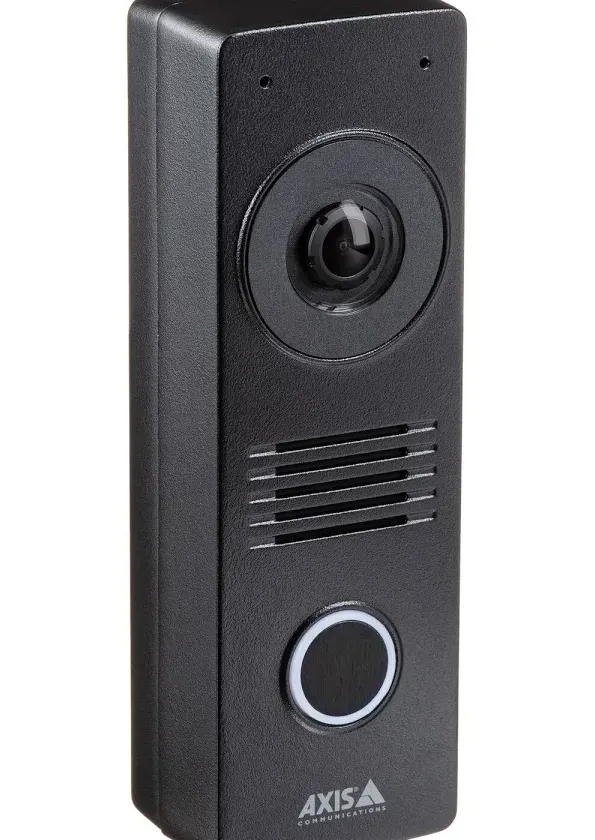
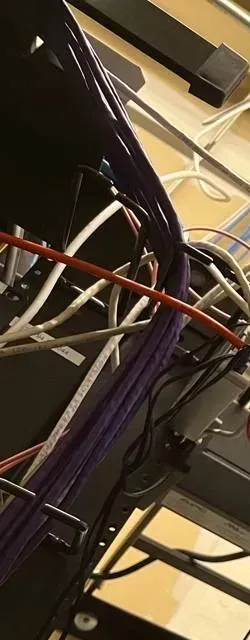
We quote a reliable non-branded system by default and install any brand you ask for by name. What matters more than the brand in a Mill Basin house is matching the equipment to the number of levels, the number of households and the door hardware.
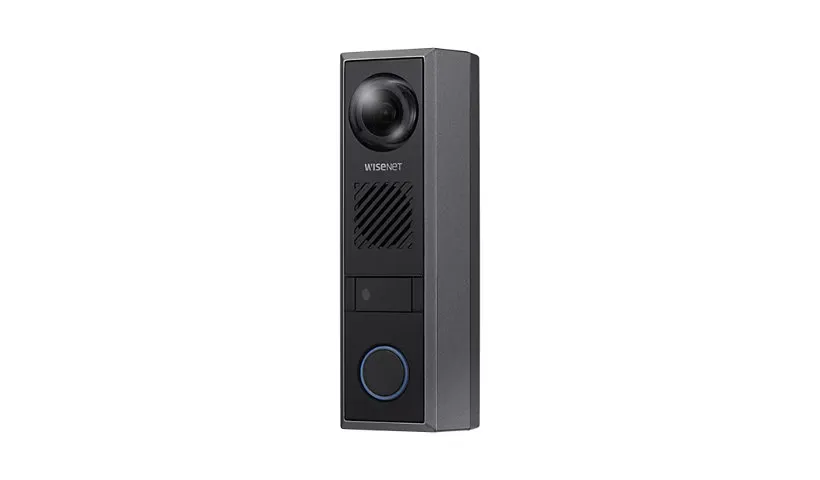
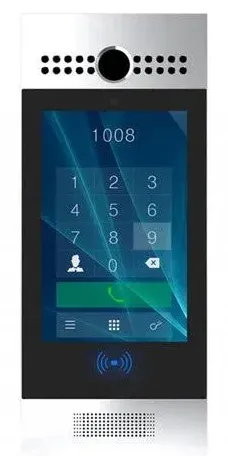
One camera, one speaker and one lit call button for the front door of a one-family house, answered on monitors inside and, if wanted, on phones.
A station with a button for each household of a two-family, each button wired to only that household's answering stations and release.
Wall monitors with a screen and release button for the kitchen and main rooms, and smaller audio stations for bedrooms and basements where a picture is less important.
Systems that carry voice, video, power and release over a single pair, the type most likely to reuse old bell or intercom wire in a 1950s or 1960s house after testing.
Stations powered and connected over network cable, the natural choice for newer houses that already have cable to the front door from construction.
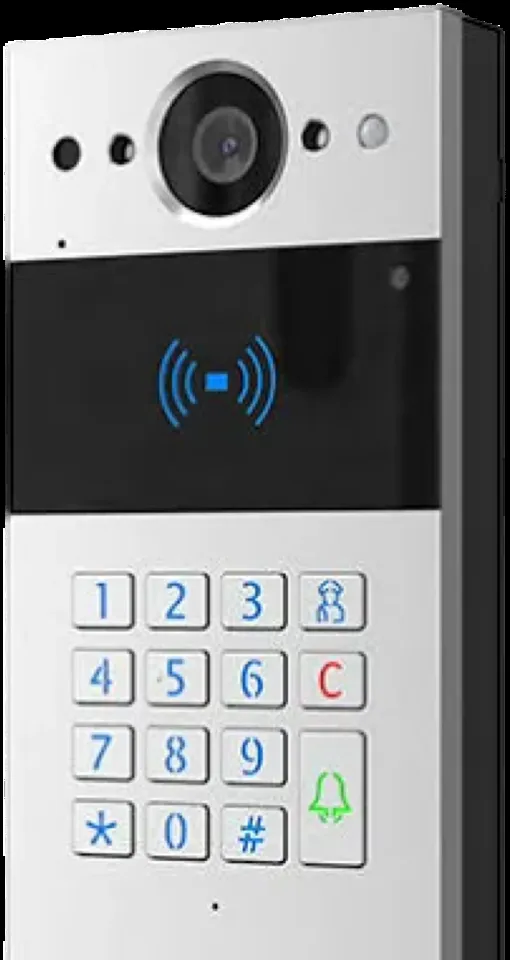
One housing with a camera, keypad, card reader and call button for the side or garage door the family uses, so family members never need a key there.
Compact panels for garden co-op entrances that call each apartment behind the door by button or code, managed by the superintendent or board.
Strikes for wood and steel frames, and for wide, pivot or multipoint doors, a motorized or electrified lock made for that door.
Low-voltage supplies with standby batteries, mounted above the basement floor, sized to run every station and the release together.
| What matters | Audio buzzer with release | Video station with indoor monitors | Video station with phone answering |
|---|---|---|---|
| Typical Mill Basin fit | One-floor ranch, a single side or office door, a tight budget | Split-levels, colonials and two-families with people on several floors | Households often out, owners who travel, couriers to manage remotely |
| Seeing the visitor | No, voice only | Yes, on each monitor | Yes, on monitors and phones |
| Answering away from home | No | No | Yes |
| Needs internet | No | No | Yes, for the phone part only |
| Reuses old bell wire | Often, after testing | Sometimes, with two-wire equipment | Sometimes, with two-wire equipment |
| Monthly fees | None | None | None on the systems we recommend; some brands charge |
| Brooklyn list range | $400–$900 | $700–$1,800 | $700–$1,800 for a house; from about $2,500 for a co-op entrance system |
Nearly every Mill Basin household we talk to already owns something from a national brand: a video doorbell, an alarm keypad, or both. A consumer video doorbell is a good product for what it does. It rings a phone, shows the porch and records clips. What it does not do out of the box is open the door, ring a station on each floor of a split-level, or give a tenant in a two-family a separate button that never rings the owner. ADT and SimpliSafe sell monitored alarm systems, and their strength is intrusion monitoring, not door entry.
A local licensed installer does the part a boxed product leaves to the homeowner: picking a release that suits the actual door, fitting it so the door latches every time, placing answering stations where the family lives, keeping two households apart, and putting the power somewhere dry with a battery behind it. Many households keep their existing doorbell camera as an extra camera and add a door station and release beside it. That combination is often the best of both.

Ask an AI assistant or a search summary about putting a buzzer on a house in Mill Basin and the answer will usually be assembled from national cost guides, intercom vendor blogs and apartment-building advice. Some of it is right. Some of it does not fit houses on several levels near Jamaica Bay. Here are seven claims we hear repeated and what actually applies.
That range comes from HomeAdvisor's national cost guide, which says "Installing an intercom system costs an average of $2,500" and puts most projects "between $1,500 and $15,000." It covers everything from whole-house room-to-room systems to large commercial projects, across the whole country.
For the job most Mill Basin households actually want, a station at the front door, a release and answering stations on a few floors, the national range is too high at the bottom and far too high at the top. On our Brooklyn list, an audio buzzer with a release at one door is $400 to $900, and a video system for a house or a small two-family is $700 to $1,800.
Where a Mill Basin job does climb is the door hardware on large custom houses and the number of entrances in a garden co-op. Those are specific, quotable costs, and we price them as named lines rather than as a wide national band.
HomeAdvisor says "Wireless systems are the best option if you want to DIY" and prices them from $150 to $1,500. For a room-to-room intercom with no door release, that can be true.
A door buzzer is different, because the release at the door needs power and a reliable signal every single time. A battery-powered wireless station that misses a press, or a release that depends on a weak radio link through brick and several floors, is the kind of system that ends up unused. In a split-level or a large colonial, the station at the door and the release are wired; the answering side can sometimes use phones over Wi-Fi.
So the honest answer is "partly wireless." The parts that open the door are wired and battery-backed; the parts that let you answer from anywhere can use the network.
AI summaries often state New York City's intercom rule as if it applied to every home. Multiple Dwelling Law §50-a covers class A multiple dwellings, and the requirement for an intercom with a remote release applies to buildings built or converted after 1968 with eight or more apartments, or older ones where tenants of a majority of apartments ask in writing.
A Mill Basin one-family or two-family house is not a multiple dwelling. No law requires it to have a buzzer, and no inspector will ask for one. Owners put them in because they want to answer the door from upstairs, keep a tenant's visitors separate or see a courier before opening.
Larger buildings, including garden co-ops, are a different matter, and their boards should check how the rule applies to their buildings. But for most of this neighborhood, the right frame is convenience and control, not compliance.
Bell wire in a house built around 1960 was run to carry a small current to one chime, and it was often stapled, spliced and painted over in the decades since. Some modern two-wire stations can use it, and Aiphone notes that "If the existing wires are in good condition, they can be reused."
"In good condition" is the test, and it has to be done, not assumed. A pair that rings a chime can still be too damaged or too thin to carry video and power to a station. Older houses that were split into two-families also often have bell wire spliced in ways nobody wrote down.
We test each pair before quoting it as reusable. If a run might fail, the cost of a new one is on the quote before you approve, so there is no change in price on installation day.
In most houses that is the default, and electrically it is fine; a low-voltage supply needs a building outlet and nothing more. In Mill Basin, the electrical panel is often in a basement in a neighborhood where First Street counts 98.8 percent of properties as having some flood risk over the next 30 years.
A power supply on the basement wall is the first part to fail in a flooded basement, and when it fails the door station goes dark and the release stops working. That is why we mount it on a ground-floor or garage wall when we can, and as high as possible when we cannot.
The outlet still matters. It must be a real building outlet, not an extension cord, and if one has to be added, a licensed electrician does that part.
A smart lock lets you unlock the door from an app, and many Mill Basin households already have one. What it does not do by itself is let you see and talk to the visitor first, ring stations on every floor, or give a tenant a separate button.
Some smart locks can be released by a door station, and some cannot without the lock maker's add-on. We check the model before promising anything. Where the two can work together, the station handles the visitor and the smart lock handles the household's own codes.
Where they cannot, the usual answer is an electric strike for remote release while the smart deadbolt keeps its job for locking up at night.
Swiftlane's cost guide says software subscriptions "commonly add $5 to $15 per unit per month, or $30 to $100 per door per month." For a house that is one unit, so the monthly figure looks small.
Over ten years, even a small monthly fee adds up to more than many house systems cost to install, and if the subscription lapses, some app-based stations stop working at the door. For a garden co-op with hundreds of apartments, per-unit fees grow quickly.
Many good systems have no subscription at all, and our default recommendation for a Mill Basin house is one of them, with phone answering included. If you prefer a subscription brand, we install it and tell you the fee before you choose.
Send photos of the front door, the wall beside it, the chime and any old intercom stations inside, and tell us how many levels the house has and who lives on each. We reply with the range that fits and what, if anything, needs a closer look. Call or text (347) 934-8335, send photos on WhatsApp, or fill in the form below.
Photos of the front door, the driveway or garage door and any side or back door, and a list of every level and room where the door needs to be heard and answered.
Which household, tenant, office or co-op apartment each button calls, and who is allowed to release each door, settled before anything is designed.
Each door is opened, closed and locked repeatedly to confirm it latches by itself, and the strike or the right electrified lock for that door is chosen.
Old bell or intercom wire is tested where it exists, the route to every station is planned, and the power supply is placed above the basement floor.
Door station, answering stations, door hardware, power, cable and labor, with every possible extra named and priced, approved before anything is ordered.
The closer or hinges are adjusted so the door relatches, the strike or lock goes in, and the battery-backed power supply is mounted and connected.
The door station and every answering station are mounted, cable is run and labeled at both ends, and buttons, phone answering and release time are set.
Every station is called from every door, answered and released, the door is checked to relock behind each visitor, and the household is shown how to use and manage it.

The shopping center that opened in 1970 on the south side of Avenue U between Flatbush Avenue and East 58th Street, with its marina on the inlet behind it.
The shopping center at 5700 Avenue U, anchored by Walgreens and Home Depot, at the neighborhood's northern edge.
The waterfront street best known for Mill Basin's large houses on the inlet, many with their own docks.
The garden co-op at 2012 Pearson Street in Old Mill Basin, listed as built in 1952 with 340 units in two-story buildings around courtyards.
The neighborhood park with baseball diamonds, basketball courts and a seasonal pool, according to Homes.com.
The salt marsh with Kings Plaza to its north and the Jamaica Bay Wildlife Refuge to its south, one of the last pieces of the wetland that once covered the area.
We also serve Bergen Beach across the inlet and Canarsie to the east at the same Brooklyn rate, along with Marine Park, Flatlands and Georgetown. See our door buzzer installation in Brooklyn page for the whole borough, and door buzzer installation in Queens for homes across Jamaica Bay.
Mill Basin is billed at our Brooklyn rate, with no premium for being at the far end of Flatbush Avenue. These are the published Brooklyn ranges; your price inside a range comes from the walkthrough or your photos and is fixed in writing before anything is ordered.
| Job | Typical Mill Basin property | Brooklyn range |
|---|---|---|
| Audio buzzer or replacement with electric strike release, existing wiring reused where it tests sound | One-floor ranch, a single side door, a home office or shop door | $400–$900 |
| Video door station with indoor monitors or smartphone door release | Split-level, colonial, larger detached house or two-family | $700–$1,800 |
| Directory, code or button panel with every apartment wired, audio or video | Garden co-op entrances, larger buildings | $2,500–$10,000+ |
| Service call booked online | Diagnosis of an existing buzzer or intercom before choosing repair or replacement | $250, applied toward the work |
| Monthly fee on a wired system | Any property choosing the no-subscription option | $0 |
What moves a Mill Basin job inside its range is predictable. First the door: a wood door that latches well takes a standard strike, while a wide custom door, a pivot door or a multipoint lock may need an electrified lock that is priced as its own line. Then the levels: each answering station adds equipment and a cable run. Then the route: open basement or garage ceilings make cable easy; a fully finished house means more time. A second door, such as the side door off the driveway, adds a station and, if wanted, a release. Anything that depends on a test, such as old bell wire that might not carry video, is named on the quote with its price before you approve. Installing cameras or an alarm on the same visit typically saves $200 to $400 in labor.

Tell us the street, whether it is a one-family or two-family, how many levels, which doors visitors use and what is at the door now. Photos of the door and the chime are the fastest way to an exact number. Call or text (347) 934-8335, send photos on WhatsApp, or fill in the form.
Three typical Mill Basin jobs, each placed inside the matching range on our Brooklyn list. Your exact price comes from your own door and floor plan.
An audio station at the front or side door of a one-floor ranch or a home office, a fail-secure strike in the existing frame, a battery-backed power supply and one or two answering stations, reusing the old bell wire where it tests sound.
A video station at the front door, monitors on each level of a split-level or colonial or in each apartment of a two-family, phone answering if wanted, and the release, closer adjustment and power that make it work.
Button or code stations at each shared entrance, stations in the apartments behind each door, releases, power and an optional shared controller for the superintendent or board, priced entrance by entrance.
Bring your own equipment. If you have already bought a door station, video intercom or electrified lock, we can install it for a labor-only price quoted flat after we see the equipment and the door. We check that it can actually release your door before we agree to install it, and the warranty on customer-supplied equipment stays with its maker.
First buzzers, every-level answering, separate buttons for each household and releases for custom doors. Request a quote
Garden co-op entrances, practice and office doors, and delivery doors. Call (347) 934-8335
The same list in every neighborhood. Brooklyn door buzzer installation
Every borough's homes and buildings. NYC door buzzer installation
It needs one ordinary building outlet near wherever the power supply is mounted. Most Mill Basin houses already have one in the garage, a utility closet or the basement. If there is none where the supply should go, a licensed electrician adds it, because we do low-voltage work only. We tell you this before pricing, and the outlet is listed as its own line so nothing changes on installation day.
Very often, yes. Many current door stations run on a single network cable that carries both data and power, so a cable already sitting behind the front door trim saves most of the work. We test the cable and find where its other end comes out, usually a closet or a network cabinet, then choose a station made for that kind of connection. If the cable was damaged during construction, we say so before quoting.
Yes, some door stations include a fingerprint reader or face recognition alongside the camera and call button, and they can release the same strike the buzzer uses. They suit the door the family uses every day, such as the side or garage door. We explain where the fingerprints or face data are stored, on the station or in an app account, so you can choose with that in mind, and a code or card stays available as a backup.
Yes, because a door that rubs may not swing shut and latch on its own, and an electric strike only helps when the latch reaches it. Often the fix is tightening or replacing the hinge screws with longer ones into the framing, or adjusting the closer. We check this on the walkthrough and price the adjustment on the quote. If the frame itself has moved too far, we tell you before anything is ordered.
Usually not in a way we would recommend. Sliding doors lock with a hook latch in the frame that is not designed for an electric strike, and the few motorized slider locks available need the door to be in good alignment. For a back entrance that visitors use, a hinged door with a strike is more reliable. If you want a station at the back of the house, it can be placed at the slider so guests can call, while the release stays on a hinged door.
Some indoor monitors have a second output that can be wired to the garage door opener's wall-button terminals, so pressing a key on the monitor works like pressing the button in the garage. Whether that is wise depends on what is in the garage and whether its inner door to the house stays locked. We connect only to the opener's low-voltage button terminals, never to its power wiring, and only where the opener supports it.
Clear access to the front door, to each spot where an answering station goes, to the place chosen for the power supply, and to the basement or garage ceiling where the cable will run. Move pets to a closed room, have the Wi-Fi name and password ready if you chose phone answering, and decide who will be shown how to manage the system at the end. Arrival is always within a two-hour window that we confirm with you in advance.
No. Mill Basin is priced at our standard Brooklyn rate, the same as every other Brooklyn neighborhood, and our crews come from our Troy Avenue office in Brooklyn. The ranges on this page are the ones that apply to your house. The only added costs are the named lines on your written quote, such as an electrified lock for a custom door or new cable where old wire fails its test.
Yes, if the model you choose offers a flush-mount box and the wall cavity is deep enough. Flush mounting is easiest while the wall is open during a renovation, when the box can be fixed to the studs and the cable dropped in. In a finished wall it is still possible but means cutting a neat opening. Surface-mount monitors are thin enough that many people choose them for finished walls instead.
On the wired systems we recommend, yes. The door station rings the indoor stations and the release works over the system's own cable, with no internet involved. What stops during an internet outage is only the phone answering. Some app-only door stations do stop working entirely without internet, which is one reason we pair phone answering with wired indoor stations rather than replacing them.
A good strike in a house is used far less than one on a busy apartment lobby, so a properly fitted one usually lasts many years. What shortens its life is a door that slams, sags or does not line up, because the latch then drags across the strike every time. That is why we adjust the closer and hinges first. If a strike we supplied fails, the warranty terms on your service agreement apply, and any later visit starts with checking the door alignment.
Door Buzzer Installation Brooklyn NY | Brownstones & Condos · Door Buzzer Installation NYC | Apartment & Building Entry · Door Buzzer Installation Manhattan NY | Apartments & Co-ops · Door Buzzer Installation Queens NY | Co-ops & Apartments · Door Buzzer Installation Bronx NY | Co-ops & Apartments · Door Buzzer Installation Staten Island NY | Homes & Apts · Door Buzzer Installation Long Island NY | Nassau & Suffolk · Door Buzzer Installation Hudson Valley NY | Apartments · Door Buzzer Installation Nassau County NY | Homes & Co-ops · Door Buzzer Installation Suffolk County NY | Homes · Door Buzzer Installation Westchester County NY | Co-ops · Door Buzzer Installation Rockland County NY | Homes & Apts · Door Buzzer Installation Orange County NY | Homes & Farms · Door Buzzer Installation Putnam County NY | Lake Homes · Door Buzzer Installation Dutchess County NY | Homes · Door Buzzer Installation Ulster County NY | Kingston
Door Buzzer Installation Bath Beach Brooklyn NY · Door Buzzer Installation Bay Ridge Brooklyn NY · Door Buzzer Installation Bedford-Stuyvesant Brooklyn NY · Door Buzzer Installation Bensonhurst Brooklyn NY · Door Buzzer Installation Bergen Beach Brooklyn NY · Door Buzzer Installation Beverley Square Brooklyn NY · Door Buzzer Installation Boerum Hill Brooklyn NY · Door Buzzer Installation Brooklyn Navy Yard, Brooklyn NY · Door Buzzer Installation Brooklyn NY | Brownstones & Condos · Door Buzzer Installation Brownsville Brooklyn NY · Door Buzzer Installation Bushwick Brooklyn NY · Door Buzzer Installation Cadman Plaza Brooklyn NY · Door Buzzer Installation Canarsie Brooklyn NY · Door Buzzer Installation Carroll Gardens Brooklyn NY · Door Buzzer Installation City Line Brooklyn NY · Door Buzzer Installation Clinton Hill Brooklyn NY · Door Buzzer Installation Cobble Hill Brooklyn NY · Door Buzzer Installation Columbia Street Waterfront Brooklyn · Door Buzzer Installation Coney Island Brooklyn NY · Door Buzzer Installation Crown Heights Brooklyn NY · Door Buzzer Installation Cypress Hills Brooklyn NY · Door Buzzer Installation Ditmas Park Brooklyn NY · Door Buzzer Installation Downtown Brooklyn NY · Door Buzzer Installation DUMBO Brooklyn NY | Loft Entry
Fire Alarm Installation Mill Basin NY · Alarm Installation Mill Basin NY · Intercom Installation Mill Basin Brooklyn NY | Gate & Dock · Structured Cabling Installation Mill Basin NY · TV Installation Mill Basin Brooklyn · Security Camera Installation Mill Basin Brooklyn NY · Access Control Installation Mill Basin Brooklyn NY · Door Buzzer Repair Mill Basin Brooklyn NY
Send a photo of your front door and whatever is mounted beside it, tell us how many levels the house has and who lives on each, and we will reply with the range that fits and what the door needs. Call or text (347) 934-8335, message us on WhatsApp, or use the request form. Licensed under NYS license #12000287431, rated 4.7★ across 201 Google Reviews, and owner-operated since 2002.