What are you looking for?
About Us Contact Us Careers Get a Free Quote (800) 486-0943
Pick a service
✅ Got Your Own System?
🎬 Home TheatreQuote 🎶 AV SoundQuote 🔑 Access ControlQuote
Now pick your area
Pick your area
Long Island
Hudson Valley
Services available
Pricing & Tools
Pick a service for pricing
🚪 Intercom Pricing 🔔 Buzzer Repair Pricing
Calculators
📹 Camera System Calculator 🚨 Alarm Calculator ⚡ Cabling Quote Builder ✅ Got Your Own System?
Select your area
A 1920s walk-up whose apartments keep getting cited one at a time, a 1960s co-op lobby panel past its parts life, or a two-family that has never had a buzzer? Homecrest door buzzer installation line: (347) 934-8335
Home › Door Buzzer Installation Brooklyn › Homecrest
1920s Walk-Ups on Ocean Parkway and Homecrest Avenue · Six-Story Elevator Co-ops · Two-Families and One-Story Rows · Shops on Kings Highway and Avenue U

Door Buzzer
Installation in
Homecrest

Every Apartment Line Tested · Door Side Installed First · Written Price Before Ordering · Brooklyn Rate

Door buzzer installation in Homecrest is mostly a whole-building job, not a panel swap. In the city's housing records for Homecrest and the eastern edge of Gravesend, intercom violations are written against single apartments: of the 35 HPD intercom violations issued in that area since January 2023, 14 landed on one building, one apartment station at a time, from the first floor to the sixth. A building that fails that way needs every line traced and tested from the cellar to the apartment, not another station hung on a tired pair. So we install the door side first, test each apartment's line, fit the new stations where households actually answer, and hand the owner a test sheet for every unit, in the 1920s walk-ups on Ocean Parkway and Homecrest Avenue, the six-story elevator co-ops on the East 12th to East 14th Street blocks, the two-families and one-story rows south of Avenue U, and the shop buildings on Kings Highway, Avenue U and Coney Island Avenue.

Reviewed and updated November 11, 2026, against NYC Open Data's HPD housing maintenance code violations for the Gravesend (East)-Homecrest neighborhood tabulation area (intercom and self-closing door violations, pulled November 11, 2026); NYC 311 service requests with bell, buzzer and intercom descriptors in Brooklyn Community Board 15; Openigloo's building records for 2039 Homecrest Avenue and 1777 Ocean Parkway; Epicenter NYC's list of the community districts in the city's basement and cellar legalization pilot; HPD's lead-safe work practices guidance; New York's Multiple Dwelling Law §50-a; ButterflyMX's October 2026 guide to repairing or replacing a small building's buzzer and its guide to intercom repair in New York City; Brick Underground's NYC intercom guide; Aiphone's GT Series pages; Allegion's fail-safe and fail-secure guide; the HomeAdvisor and Swiftlane cost guides; the 2010 ADA Standards; and Wikipedia's Homecrest and Neck Road station articles. · Abstract Enterprises Security Systems, NYS license #12000287431 · crews dispatched from our Troy Avenue office in Brooklyn

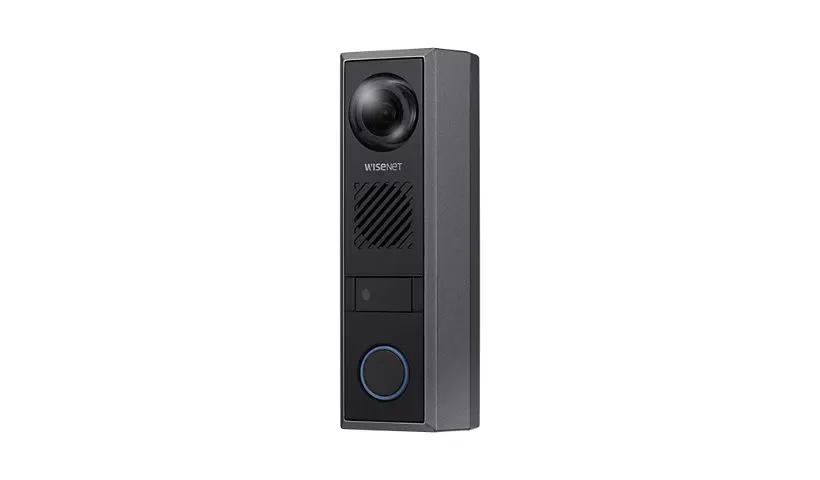
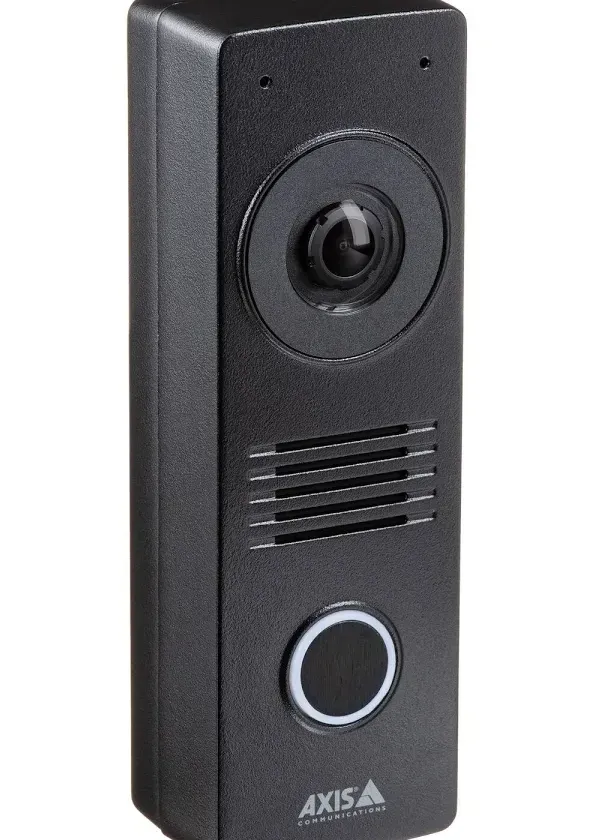
Homecrest, Brooklyn door buzzer installation: black rectangular video door station with a camera, speaker grille and round lit call button
A photo from the AESS job library, not taken in Homecrest: a black rectangular video door station with a camera, a speaker grille and one round call button that lights up. A single-button station of this size suits the side entrance of a Homecrest two-family, the separate door of a cellar apartment under the front steps, or the street door beside a Kings Highway storefront that leads to one office upstairs.
Homecrest Buzzer Request
Walk-up, elevator co-op, condo, two-family, one-story row or a store with apartments above: tell us the address, how many apartments the door has to reach and who controls the building, and a technician calls back with the range

✅
Request Sent!
Thank you. A technician will call you about the Homecrest address, usually within two hours during working hours.
25+
Years Experience
✓
Same-Day Estimates
100%
Licensed & Insured
4.7★
201 Google Reviews

Owner-operated since 2002 · Thousands of jobs completed · Booked within 2 hours

Quick answer: door buzzer installation in Homecrest runs $400 to $900 on our Brooklyn list for an audio buzzer with a new door release on a two-family, a one-story row house or a single store door, $700 to $1,800 for a video door station with indoor monitors or phone answering on a house or a very small building, and from about $2,500 to past $10,000 for a full entry system with a lobby panel and a station or app answering for every apartment in a walk-up or elevator co-op. Each price covers the door station, the answering units, the power supply, the electric strike or approved lock, the cable and the labor, and it is fixed in writing after a walkthrough, with any possible extra, such as an apartment line that might fail its test or a lobby closer that has to be replaced before the release can work, named and priced before you order. Homecrest is billed at the Brooklyn rate. Send photos of the lobby panel and one apartment station to (347) 934-8335 or on WhatsApp, and we reply with the range that fits, usually within two hours of your message during working hours.

  • Looking at your photos and quoting a new system costs nothing. If an existing system has to be diagnosed in person first, that is the $250 service call booked online, and the $250 is applied toward the work.
  • All work falls under New York State license #12000287431. We install low-voltage entry equipment; if the panel's power supply needs a new 120-volt outlet or circuit, a licensed electrician does that part, and you know before the job is priced.
  • We work for whoever controls the door: the owner, the managing agent, a co-op or condo board or, for a store or office, the tenant with the landlord's written approval.
The Neighborhood

Why Homecrest Properties Need Door Buzzer Installation

Homecrest sits in the south of Brooklyn, in Community District 15, between Kings Highway to the north and Avenue X to the south, with Coney Island Avenue on the west and Ocean Avenue on the east, by Wikipedia's reckoning; other guides draw it smaller, ending at Avenue U, or push the western edge to Ocean Parkway. Whichever map you use, the housing is unusually mixed for such a small area. Apartment buildings rose along the numbered streets from East 12th to East 16th, the B and Q trains run along East 16th Street with stops at Kings Highway, Avenue U and Neck Road, and the blocks south of Avenue V turn into bungalows and rows of one-story brick houses that share backyards and driveways. Kings Highway is the big shopping street; Avenue U and Coney Island Avenue carry the rest of the stores, with a growing Chinese commercial strip by the Avenue U station.

For anyone who installs entry systems, that mix sorts into a few very different jobs. The rent-stabilized walk-ups from the 1920s, such as the four-story, 20-apartment building at 2039 Homecrest Avenue built in 1927 or the six-story, 75-apartment building at 1777 Ocean Parkway built in 1926, have bell wire that has been in the walls for a century. The six-story elevator co-ops of around 1960 on East 13th and East 14th Streets have lobby panels and apartment stations from the same era, often with live-in supers who know where every line runs. The condos on Ocean Avenue came with whatever their developer chose. And the houses, from the renovated two-families to the one-story rows, frequently have nothing more than a doorbell, or a buzzer that only rings in the downstairs hall.

What the apartment buildings share is the way their systems fail. HPD, the city's housing agency, writes an intercom violation against the apartment where the station does not work, naming the room: the foyer, the kitchen, the private hallway, a basement or cellar unit. In the city's records for Homecrest together with eastern Gravesend, the same address shows up again and again, a different apartment each time. That is what a system looks like when its stations, its pairs and its power supply are all wearing out at once, and it is why we treat most Homecrest building jobs as installations with a test of every line, not as station-by-station repairs.

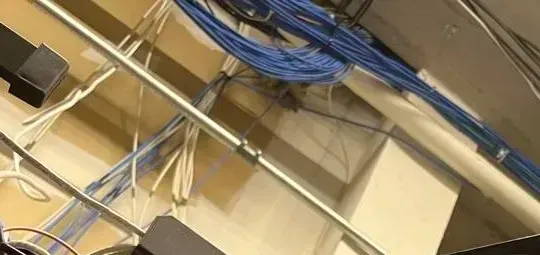
Homecrest, Brooklyn door buzzer installation: bundles of blue low-voltage cable laid over a ceiling beam and a metal pipe in an open ceiling
A photo from the AESS job library, not taken in Homecrest: bundles of blue low-voltage cable laid over a ceiling beam and a metal pipe in an open ceiling. In a Homecrest walk-up or elevator co-op, the cellar ceiling is where the old intercom pairs leave the panel for each riser, and where new cable usually runs when a line fails its test and has to be replaced.

The tenants' side of the record points the same way. Brooklyn Community Board 15, which takes in Homecrest along with Sheepshead Bay, Gravesend, Manhattan Beach and neighboring areas, logged 68 bell, buzzer and intercom complaints through 311 in 2026 up to November 11, after 69 in 2025; those are the two highest yearly counts since at least 2020, when there were 34. Only 6 of those 68 ended with HPD issuing a violation. Thirty-seven closed because an inspector could not get in or could not complete the inspection, and 19 closed because the system worked when the inspector tried it. For an owner, that means the official record understates the problem; for an installer, it means the job has to find the faults the inspector never saw.

Homecrest's houses bring their own reasons to install. A two-family where the tenant upstairs walks down two flights every time the bell rings, a one-story row whose only practical entrance for a cellar tenant is a side or rear door, a renovated house much larger than the one it replaced with the front door now a long way from the kitchen: each needs a buzzer sized to the household, with a release on the door and an answering point where people really are. Most of those jobs sit at the bottom of our Brooklyn list, and none of them needs a monthly subscription.

Seven facts from the city's records that shape a Homecrest buzzer installation

  • Intercom violations come in apartment-sized pieces. HPD wrote 35 intercom violations in the Gravesend (East)-Homecrest area from January 2023 to November 11, 2026: 14 in 2023, 5 in 2024, 13 in 2025 and 3 so far in 2026.
  • One address carries 14 of the 35. A single Ocean Parkway building was cited for apartments from the first story to the sixth across four sections, three times in 2026 alone, the latest on November 6.
  • Stations are cited where people live in the apartment. The violation text places them in foyers, kitchens and private hallways, and in one case in "the 2nd room from north."
  • Cellar and basement units are on the record. A Gravesend Neck Road building was cited in 2023 and twice in November 2025 for intercoms in a basement apartment and a cellar apartment.
  • Doors are cited far more often than buzzers. The same area logged 378 self-closing door violations in 2025 and 289 in 2026 through November 11, roughly 25 door violations for every intercom violation since 2023.
  • Most 311 buzzer complaints never reach a violation. Of 68 Community Board 15 complaints in 2026, 37 closed without a completed inspection and 6 produced a violation.
  • The old walk-ups are old. Openigloo lists 2039 Homecrest Avenue as built in 1927 with 20 rent-stabilized apartments and 1777 Ocean Parkway as built in 1926 with 75.

Where this page applies. It covers Homecrest from Kings Highway south to Avenue X and from Coney Island Avenue east to Ocean Avenue, and the Ocean Parkway buildings just to the west that the city counts in the same area. ZIP code 11229 covers most of it, with 11223 on the Ocean Parkway side. The neighborhood is served by the 61st Precinct on Coney Island Avenue and by Community Board 15. For the rest of the borough, see our door buzzer installation in Brooklyn page.

Repair or Replace in Homecrest

Need Repair in Homecrest? One Dead Station, a Failing Line or a Worn-Out System: Telling Them Apart Before You Buy Anything

Owners usually call us about one apartment. A tenant on the fourth floor cannot hear the lobby, or the release in 3C has stopped working, or the panel downstairs rings the wrong door. Sometimes that really is one station, and a repair is the right answer. ButterflyMX's October 2026 guide to small-building buzzers puts it well: repair "when the fault appears localized, compatible parts are available, and the rest of the system still does what the building needs," and "do not replace a system based on age alone." A sound 1960s audio system with one broken station can be worth keeping.

The same guide lists when replacement becomes the better spend: "when service calls keep coming back, parts are no longer supportable, inspected wiring cannot support the desired equipment, or the property needs functions the existing system cannot provide." In Homecrest, the first of those shows up in the HPD record before it shows up anywhere else. If the building's violation history lists several different apartments over two or three years, each one fixed and then followed by another, the stations are not the only thing wearing out. The power supply, the pairs in the riser or the panel's own electronics are usually failing underneath.

We sort it out with three questions before quoting. How many different apartments have failed in the last few years? Can parts still be bought for the panel and stations on the wall? And when the lines are tested from the cellar, how many pairs are sound? Photos of the lobby panel, the power supply and one apartment station, sent to (347) 934-8335 or on WhatsApp, usually answer the first two. The third needs a technician with a tester in the cellar, which is part of the walkthrough for a new installation, or the $250 service call when the owner wants a diagnosis before deciding.

If the answer is a repair, our Brooklyn door buzzer team handles that too, and we will say so plainly rather than sell a system. This page is about installing: a full replacement for a building whose system has run out of life, a first buzzer for a house that never had one, a new door for a cellar apartment, or a separate system for a store or office.

What We Install

Door Buzzer Installation Services in Homecrest

Every service below is priced from the same Brooklyn door buzzer list. The number of apartments sets the size of the system; the condition of each line, the number of doors residents use and the state of the lobby door decide where in its range a Homecrest job lands.

Whole-building replacements

New lobby panel, power supply and apartment stations for walk-ups and elevator buildings whose violation record shows failures moving from apartment to apartment, with every line tested and the sound pairs reused.

Line-by-line rewiring

New cable for the risers or individual apartment lines that fail their test, run through the cellar ceiling and up existing chases, so a whole section of the building stops going quiet one unit at a time.

Apartment stations in the right room

Stations placed in the foyer, kitchen or hallway where the household can hear and reach them, with old recessed boxes covered by trim plates and extension chimes for long apartments.

Cellar and basement apartment doors

A button on the lobby panel for a cellar unit reached from inside, or its own small station and release at a separate door under the front steps or down a side passage.

First buzzers for houses

Two- and three-button stations with an answering unit on each floor and a strike on the front or side door, for two-families and one-story rows that have only ever had a doorbell.

Video and phone answering

Video door stations answered on wall monitors, on residents' phones or both, for co-op boards that want to see the lobby and owners who want to answer while away from the house.

Lobby doors, strikes and closers

Fail-secure electric strikes fitted to aluminum, steel and wood frames, and closers set so the lobby door relatches after every visitor, because the door is cited far more often than the buzzer.

Store and office entrances

Buzzers for shops, medical and professional offices and restaurants on Kings Highway, Avenue U and Coney Island Avenue, kept separate from the apartments' entry system upstairs.

Records for owners and boards

A dated test sheet showing every apartment called, answered and released, a wiring record of each line, and resident instructions, so the next violation or board meeting starts from facts.

Homecrest, Brooklyn door buzzer installation: slim dark grey wired doorbell with a camera lens, speaker slots and a round push button
A photo from the AESS job library, not taken in Homecrest: a slim dark grey wired doorbell with a camera lens, speaker slots and a round push button. A narrow unit like this fits the slim brick pier beside the door of a one-story row house south of Avenue V, and when it is wired to a station inside and a strike on the door it becomes a real buzzer rather than a doorbell.
Building Specialists

Door Buzzer Installation for Homecrest's Architecture

Six kinds of building make up nearly every buzzer installation we plan in Homecrest. They differ in where the old wire runs, how many doors people use, who has to approve the work and how the cable can reach each household without opening finished walls.

Rent-stabilized walk-ups of the 1920s

Four- to six-story brick buildings on Ocean Parkway, Homecrest Avenue and the numbered streets, with bell pairs nearly a century old running up the public stair and stations in foyers and kitchens.

Mid-century elevator co-ops

Six-story buildings of around 1960 on East 13th and East 14th Streets with sixty-odd apartments, a lobby panel from the original build or a later swap, and a live-in super who knows every quirk.

Condos on Ocean Avenue

Eight-story buildings from 2006 onward with networked panels chosen by the developer, small boards and owners who want to know what they actually own before spending on it.

Two-families on the side streets

Brick and frame two-family houses, many renovated and enlarged, where one front door serves two households and the bell rings only downstairs.

One-story rows and bungalows

The blocks south of Avenue V, where single-story brick houses share backyards and driveways and a cellar or rear unit may have its own door.

Shop buildings on the avenues

Two- and three-story buildings on Kings Highway, Avenue U, Coney Island Avenue and Neck Road with stores at street level and apartments or offices above a narrow side door.

Walk-ups of the 1920s: a hundred-year-old pair and a station that has been painted over five times

Homecrest's oldest apartment buildings went up in the 1920s. Their entry systems have been replaced more than once, but the wire usually has not. Each apartment's pair runs from a terminal block in the cellar, up a chase beside the stair or behind the public hall wall, to a box in the apartment's foyer or kitchen. Over the decades the boxes have been reused for every new generation of station, and the stations themselves have been painted over along with the walls they hang on.

That gives a walk-up two kinds of fault at once. Some lines are electrically bad: cracked insulation where the pair passes a radiator riser, a splice in a ceiling that somebody made with tape, a pair cut during a kitchen renovation and twisted back together. Others are fine electrically, but the station's speaker is under layers of paint and the household cannot hear it. HPD records both as a broken intercom. Telling them apart takes a pair test from the cellar to each apartment, which is the first thing we do on every walk-up installation, and it decides how many lines can be reused.

Where pairs pass, a two-wire system runs on them; Aiphone describes its GT Series as built for "new builds and retrofit projects" and notes the advantage of "using existing wire and infrastructure." Where they fail, new cable goes up the same chase or, if that is blocked, up a painted raceway in the public hall, which is far cheaper than opening plaster in every apartment. In buildings this old, the written price names each failing line separately, so the owner sees exactly what the new cable is for.

One more point applies to the walk-ups in particular. HPD's guidance on lead-safe work says that in buildings put up before 1978, work that disturbs 2 square feet or more of paint in a single room should follow lead-safe work practices. Mounting a station over an existing box disturbs very little paint, and we plan walk-up jobs to stay that way, with surface raceway rather than channels cut into old plaster. Where a job would cross that line, the owner knows beforehand, and that part of the work goes to a contractor with the right certification.

Mid-century elevator co-ops: sixty apartments, one panel, and a board that wants the whole picture

The six-story elevator buildings of around 1960 are the co-ops most Homecrest shareholders live in. Brick Underground's neighborhood guide describes examples on East 13th and East 14th Streets with 64 and 66 apartments, elevators, live-in supers and, in one case, an upgraded lobby and security system. Their intercoms usually date from either the original construction or a replacement in the 1980s or 1990s, and the apartment stations are often recessed into the foyer wall in a metal box sized for the original handset.

In these buildings the decision belongs to the board, and the board needs more than a price. It needs to know how many lines pass their test, what the new apartment stations will look like over the old recessed boxes, how long the lobby will be without a working panel (it should never be without one) and what the system will cost to keep running. We give the board a line-by-line test result, a sample of the station and trim plate, a schedule that installs the lobby side first, and a quote that shows any subscription beside the hardware, so the vote is about the building and not about guesses.

The live-in super matters too. We walk the building with the super before quoting, and leave the labeled wiring record afterward, because the super is the first person a tenant calls when a station stops working.

Condos on Ocean Avenue: the system came with the building

The condominiums along Ocean Avenue, such as the eight-story building from 2006 and the eight-story, 16-apartment building that opened in 2019, came with modern panels picked by their developers. Their problems are rarely wiring. They are accounts and contracts: the admin login belongs to someone who no longer manages the building, the app subscription renews without anyone reviewing it, or the panel's maker has moved on to a new model.

Two-families on the side streets: one door, two households, one bell in the wrong place

Homecrest's side streets are full of two-family houses, many of them renovated or rebuilt much larger than the houses they replaced. The usual entry problem is simple: a single bell by the front door that rings in the downstairs hall, so whoever lives upstairs either hears every visitor for both apartments or hears nothing at all, and either way walks down to open the door.

The fix is a two-button station at the door, an answering unit with a release key on each floor, a fail-secure strike in the door frame and a small battery-backed power supply in the cellar. Each button rings only its own household, each household opens the door for its own visitors, and the door locks again behind them. This is the bottom of our Brooklyn list, $400 to $900 for audio or $700 to $1,800 for video, depending on the station and how the cable reaches the second floor.

One-story rows and bungalows: the side door and the shared driveway

South of Avenue V the houses get lower and closer together. Rows of one-story brick houses share community backyards and driveways, and bungalows sit on narrow lots. In these houses, the front door is rarely the problem. The question is the second door: a side or rear door onto the shared driveway that a cellar tenant, a relative or the household itself uses every day.

Anything mounted for that door goes on the house's own wall or door frame, never on the shared ground or a neighbor's fence, unless every owner who shares it has agreed in writing. A single-button station by the side door, an answering unit inside, and a strike on the door frame cover it; if the front door also needs a station, both can ring the same indoor unit with different tones.

Shop buildings on the avenues: two systems that should never meet

On Kings Highway, Avenue U, Coney Island Avenue and Neck Road, the typical building has a store on the ground floor and two or four apartments, or an office, above a narrow door beside the shopfront. The apartments need a small entry system of their own; the store may want a buzzer at its side or rear door for deliveries. We keep the two completely separate, with their own panels, power and releases, so nobody in the store can open the apartments' door and no tenant can let a stranger into the store.

HPD treats the apartments' side of these buildings exactly as it treats a walk-up: in 2023 it wrote a class B violation for the "building entrance intercom at public hall, 1st story" of a Kings Highway building. The fact that a store occupies most of the frontage does not change the duty to the apartments upstairs.

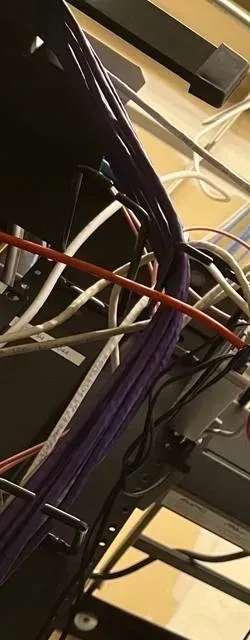
Homecrest, Brooklyn door buzzer installation: purple, white and red cable bundles dropping down beside a black equipment rack
A photo from the AESS job library, not taken in Homecrest: purple, white and red cable bundles dropping down beside a black equipment rack. In a Homecrest elevator co-op, this is the kind of tidy, labeled termination we build in the cellar or the super's equipment room, so each apartment line can be found and tested again years later without tracing it from scratch.
Field Notes

Field Notes: Start at the Terminal Block, Call Every Apartment Twice, and Read the Violations Before the Walls

These notes describe how our technicians approach an installation in a Homecrest apartment building. They are our standard method for buildings like these, not the story of a particular address.

Read the violations first. Before the visit, we look up the building's HPD record with the owner or the board and write down every apartment that has been cited for its intercom in the past few years, with the room the inspector named. A list like A2, C21, C61, D4, D35 tells us before we arrive whether failures cluster in one section of the building, one riser or one floor, or scatter across all of them. Clustered failures point at a riser or a section of cable; scattered ones point at the power supply or the panel.

Start at the terminal block. In the cellar, the technician finds where the old system's pairs land, usually a terminal block near the power supply or behind the lobby panel, and checks the power supply's output under load. A tired transformer can make a whole building's stations weak and intermittent, which looks like a dozen separate faults. Then each pair is tested from the block toward its apartment, and every result is written on a sheet: sound, noisy, open or shorted.

Call every apartment twice. Once with the old system, from the lobby, to hear what residents hear; once at the end of the job, from the sidewalk side of the door, with someone watching the door relock after each release. The first call often finds things nobody reported, such as an apartment whose station rings but whose release does nothing, or two apartments that ring each other because their buttons were crossed decades ago.

Everything found on that walk goes on the written price: the lines that need new cable, the power supply that has to be replaced, the lobby closer that needs adjusting, the recessed boxes that need trim plates. Nothing on that list is left for installation day.

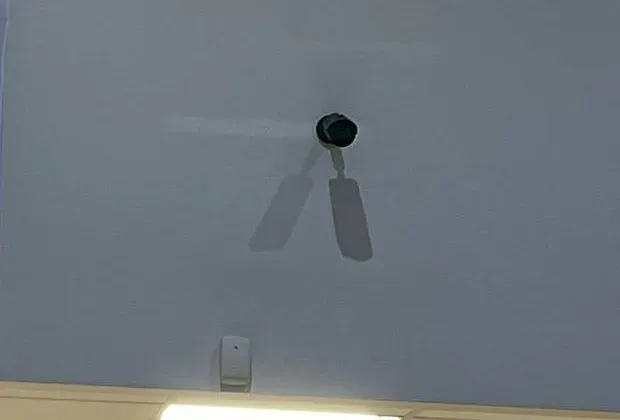
Homecrest, Brooklyn door buzzer installation: small black camera mounted high on a pale wall casting two shadows, with a small white wall device below
A photo from the AESS job library, not taken in Homecrest: a small black camera mounted high on a pale wall, casting two shadows, with a small white wall device below it. In a Homecrest elevator co-op lobby, a camera placed like this one can watch the inside of the vestibule door while the door station's own camera shows the visitor's face.
The Pattern in the Record

Fourteen Notices at One Address: How Homecrest Buildings Fail One Apartment at a Time, and Why a Full Installation Ends the Cycle

HPD's violation records for the Gravesend (East)-Homecrest area tell a story that anyone who has managed an older building will recognize. Between January 2023 and November 11, 2026, inspectors wrote 35 intercom violations in the area. Fourteen of them were at one building on Ocean Parkway. They were not 14 copies of one complaint. They named apartment A2, then A52, then A55, B5, C2, C21, C61, D4, D21, D35 and D54, across four sections and six stories, and some apartments more than once. The most recent, dated November 6, 2026, orders the owner to "properly repair or replace the broken or defective return bell buzzer intercom system from the building entrance door to the apartment wall panel."

Read the statuses beside those violations and the cycle becomes clear. Several are marked closed or dismissed: an apartment's station was fixed, or the inspector found it working on the return visit. Then another apartment was cited a few months later. The owner was not ignoring the system; it was being repaired one apartment at a time while the rest of it kept aging. That is the most expensive way to own an old intercom, because every repair is a separate visit, a separate violation and a separate tenant left without a working station while it waits.

Other buildings in the area show the same shape on a smaller scale. A Gravesend Neck Road building was cited three times between 2023 and 2025, for a basement apartment and then a cellar apartment. An East 13th Street building was cited twice in 2024 for the same second-floor apartment, first for a station that did "not return buzzer" and then for an "inoperative intercom system." Statuses elsewhere include "not complied with" for buildings on Coney Island Avenue and East 13th Street, and "first no access to re-inspect" where the inspector could not get back in.

What actually fails in a building that fails this way

When failures move around a building, four things are usually wearing out together. The power supply loses capacity and the stations farthest from it go weak first. The pairs in the risers develop faults where they pass hot pipes, damp walls or old splices. The panel's call buttons and relays wear unevenly, so some apartments ring and others do not. And the apartment stations themselves, many decades old, fail one by one. Replacing a station fixes only the last of those four, which is why the next violation arrives somewhere else.

ButterflyMX's repair guide lists the symptoms that go with each part: "Continuous buzzing may indicate a stuck button or another entry-panel issue"; "No audio or one-way audio may point to an apartment station, audio path, connection, or shared-equipment fault"; "Static, humming, or intermittent calls may indicate wiring or interference problems"; and "A door that does not release may involve a relay, power supply, electric strike, magnetic lock, or the door hardware itself." A building whose tenants report all of those in different apartments is a building where the shared parts are failing.

How a full installation breaks the cycle

A full installation replaces the shared parts and tests every line once, together. The new lobby panel and power supply go in first. Every pair is tested from the cellar; the sound ones carry the new system and the failing ones get new cable. Every apartment gets a new station, mounted where the household answers. At the end, every apartment is called from the street side of the door and released while the door is watched relocking, and the results go on a dated test sheet with the apartment numbers HPD uses.

That sheet is what changes the owner's position. When the next tenant complaint comes in, the owner can show that the station was installed and tested on a given date and that every other apartment passed with it, and the managing agent knows to look at that one station rather than the whole building. When a co-op board budgets for the following year, it is budgeting for a system with a known start date rather than for a stream of repair calls.

Compared with the repairs it replaces, it is often the better use of the money. A building of sixty-odd apartments sits inside our $2,500 to $10,000-plus building range, and where it lands depends mostly on how many lines pass their test and whether residents want video. Against several years of single-station visits, each with its own violation and its own wait, the full installation is usually the cheaper path, and it is the only one that ends with every apartment working at the same time.

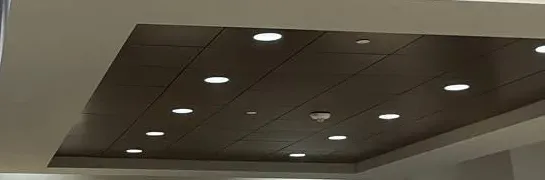
Homecrest, Brooklyn door buzzer installation: dark recessed ceiling panel with round downlights and a small round device framed by a lighter ceiling
A photo from the AESS job library, not taken in Homecrest: a dark recessed ceiling panel with round downlights and a small round device, framed by a lighter ceiling. Renovated lobbies in Homecrest co-ops often have finished ceilings like this one, so we plan the new lobby panel's cable to come up from the cellar through the wall rather than across a ceiling the board has just paid to redo.
Cellar and Basement Units

The Apartment Below the Lobby: Putting Homecrest's Cellar and Basement Units on the Entry System

Every few blocks in Homecrest there is a building or a house with someone living below the first floor. Sometimes it is a legal basement apartment in a walk-up, lettered like the others; sometimes it is a cellar unit whose legal status is less clear; sometimes it is a relative living in the finished lower floor of a two-family. The entry system has usually treated them as an afterthought, with a button added to the panel years after it was installed, wired by whoever was handy.

HPD does not treat them as an afterthought. In the area's records, a Gravesend Neck Road building was cited for a broken "bell, buzzer, intercom system" in the private hallway of its basement apartment in 2023, again for that basement apartment's foyer in November 2025, and for a cellar apartment's foyer two weeks later. The housing maintenance code duty to keep the intercom working follows the apartment where people live.

There is a local wrinkle that owners should know. New York's basement and cellar legalization pilot under Local Law 126 of 2024 covers 15 community districts, and in Brooklyn those are districts 4, 10, 11 and 17, according to Epicenter NYC's list. Community District 15, which includes Homecrest, is not one of them. That means a Homecrest owner with a cellar unit cannot use that program, and whatever the unit's status, the question of whether it may be occupied is between the owner, the Buildings Department and the owner's own advisers. It is not a question we answer or a decision a buzzer installation makes.

What we do with a cellar or basement unit on installation day

We install for the apartments the owner lists in writing. If a basement apartment is on the list, it gets the same treatment as every other unit: a tested line, a station where the household answers and a button or directory entry on the lobby panel. If the unit has its own entrance under the front steps or along a side passage, that door can get its own small station and strike, ringing only that apartment, so its visitors do not have to come through the main lobby at all.

Cellar apartments bring two practical issues. The walls are often foundation walls, so the station is mounted on a backbox fixed with masonry anchors and the cable is run on the surface in raceway rather than chased into concrete. And the space can be damp, so the station and its connections are kept off the floor, away from the boiler and laundry area, and sealed where the cable enters. Both are named on the quote.

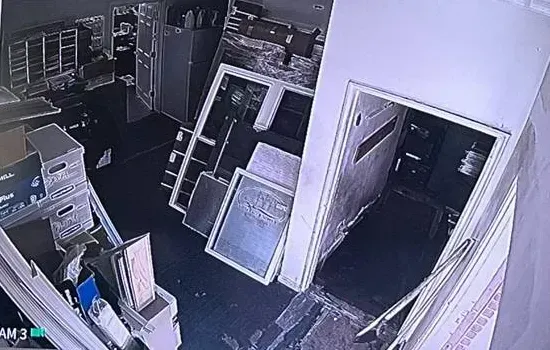
Homecrest, Brooklyn door buzzer installation: black-and-white night camera view of a cluttered room with an open doorway into a dark back room
A photo from the AESS job library, not taken in Homecrest: a black-and-white night camera view of a cluttered room with an open doorway into a dark back room. Homecrest cellars often look like this, with storage, a boiler room and a passage behind, and the route for a basement apartment's buzzer cable has to be planned around them before the station goes up.
The Rules

Which Homecrest Buildings Must Have a Buzzer, What It Has to Do, and How Doors and Paint Come Into It

Homecrest's housing runs from one-story houses that no entry rule touches to co-ops with more than a hundred apartments. These are the rules that decide what an installation has to deliver, in plain terms. They are not legal advice; an owner facing a violation or a tenant dispute should talk to their own lawyer or managing agent.

Larger buildings need a talk-and-release system. New York's Multiple Dwelling Law §50-a says that every Class A multiple dwelling erected or converted after January 1, 1968, with eight or more apartments, must have a self-locking main entrance door and an intercommunication system that lets a resident talk with a visitor and release the door from the apartment. For older buildings, which in Homecrest means nearly all the 1920s walk-ups and the elevator co-ops of around 1960, the owner must install the door and the intercom when the tenants of a majority of the apartments request it in writing, starting within 90 days and finishing within six months.

Once there is a system, it has to work. Every violation in the area's record cites the city's housing maintenance code, section 27-2005, which puts the duty to keep the building's systems in good repair on the owner. That applies to each apartment's station, which is why HPD writes violations apartment by apartment. One 2024 violation in the area cites a "tele communication intercom system from the building's vestibule to tenant's tele devices," a reminder that a system which answers on residents' phones carries the same duty as one with wall stations.

Video is a choice, not a requirement. ButterflyMX's guide to New York intercom law notes that the statute "does not, by itself, require video, mobile access, or remote management." Voice and remote release are the legal core. Video is worth paying for in many Homecrest lobbies, but it should be chosen on its merits.

Violations come with deadlines. The same guide sets out HPD's correction periods: 90 days for a class A violation, 30 days for class B and 24 hours for most class C. Nearly all the intercom violations in the area's recent record are class A or class B. An owner planning a full installation to clear a class B violation should tell us its date at the first contact, so the walkthrough, the equipment order and the installation can be scheduled inside it.

The door matters more than the buzzer. Self-closing door violations outnumber intercom violations in the Gravesend (East)-Homecrest area by about 25 to 1 since 2023: 361 in 2023, 344 in 2024, 378 in 2025 and 289 in 2026 through November 11. A new buzzer on a lobby door that does not shut and latch by itself is a release for a door that was already open, so every building installation we quote includes a check of the closer, the latch and the strike.

Everyone must be able to get out. A buzzer-controlled door still opens from inside without a key, a code or special knowledge. With an electric strike, Allegion notes, people inside leave by turning the lever whether the strike is fail safe or fail secure. Magnetic locks are different: they hold the door only while powered, so the building code requires a release sensor on the inside, a push-to-exit button and release on power loss and fire alarm activation.

Buttons within reach. The 2010 ADA Standards set the high forward reach at 48 inches and the low at 15 inches, and require operable parts to sit within those ranges. We mount lobby panels with their buttons inside that band, which also suits residents and visitors who use wheelchairs or walkers.

Commercial Door Buzzer Installation

Business Door Buzzer Installation in Homecrest

Homecrest's businesses line its avenues, and most of them share a building with apartments. That shapes every commercial buzzer job here: the store or office gets an entry setup that suits its hours and its deliveries, and the apartments' door beside it stays on a separate system that the business cannot open.

Kings Highway

The neighborhood's main shopping street along its northern edge, with stores at street level, offices on the floors above and residential doors set between storefronts near the Kings Highway station.

Avenue U by the station

A mix of Chinese, Uzbek, Russian and Caribbean shops and eateries around the Avenue U stop, where early deliveries and staff doors at the back matter as much as the front.

Coney Island Avenue

The western edge, a commercial avenue of shops and mixed buildings, with the 61st Precinct station house and the Homecrest Library on the stretch south of Avenue V.

Neck Road

A local commercial street crossing the neighborhood under the Neck Road station, with small stores and offices at street level and apartments above.

Upstairs offices

Doctors, dentists, tax preparers and agencies on the second floors of avenue buildings, where patients and clients climb a stair from a street door that has to stay locked.

Schools and congregations

Schools, yeshivas and houses of worship on the side streets and avenues, with doors used on fixed schedules by families, staff and visitors.

For a store with apartments above, the usual job is a buzzer at the side or rear door that deliveries use, answered at the register or on the owner's phone, with its own strike and power. The apartments' entry system is left alone, or replaced as a separate job, and the two never share buttons, relays or a power supply. Where they share a cellar, they share only the route, with each cable labeled for its own system.

For an upstairs office, the job is a station at the street door that calls the front desk, a release button at the desk and a strike or, on narrow aluminum doors, an approved lock that suits the frame. If the office shares its street door with apartments, the panel gets a clearly separate button for the office and the office's release opens only that door. For a medical or dental practice, a camera on the door station lets staff see who is waiting before they release.

Rules for Homecrest business entrances

  • Free exit at all times. Every business door with a buzzer, code or reader must still open from inside without a key or code. A lever or push bar on the inside, with a strike in the frame, keeps exit simple.
  • Sensor release for magnetic locks. Where a magnetic lock is the only option, the building code calls for a release sensor on the egress side, a push-to-exit button mounted 40 to 48 inches above the floor within 5 feet of the door, and release on power loss and fire alarm activation.
  • Fire doors stay latched. Allegion notes that fire doors need fail-secure strikes so they stay latched in a fire. Stair doors in mixed buildings are often rated, and we check the label before choosing hardware.
  • Accessible reach. Buttons, keypads and readers on public doors stay between 15 and 48 inches above the floor, inside the 2010 ADA Standards' reach ranges.
  • Landlord approval in writing. A commercial tenant needs the landlord's written approval before work on a street or shared door, and we ask for it before scheduling.
  • Separate systems in mixed buildings. A store's or office's buzzer and the apartments' entry system are kept apart so neither can release the other's door.

If a business also wants a camera on its entrance, it can go in on the same visit and be priced with the buzzer; customers who combine the two typically save $200 to $400 in labor.

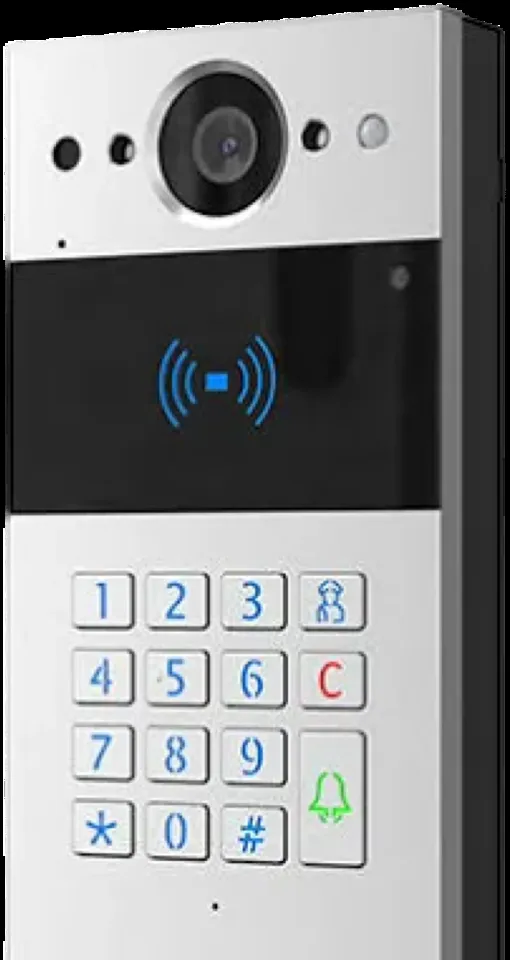
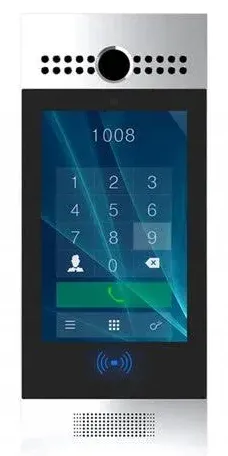
Homecrest, Brooklyn door buzzer installation: silver and black keypad door station with a camera lens at the top, a blue card-reader symbol, a numeric keypad and a green bell key
A photo from the AESS job library, not taken in Homecrest: a silver and black keypad door station with a camera lens at the top, a blue card-reader symbol, a numeric keypad and a green bell key. A unit like this suits the street door of an upstairs office on Kings Highway, where staff enter with a code or card and patients press the bell to reach the front desk.
Your Questions Answered

Door Buzzer Installation in Homecrest: Questions Answered

Questions Homecrest owners, co-op boards and residents bring to us, plus ones raised in ButterflyMX's repair guide, Brick Underground's intercom guide and the city's own records, answered for the buildings here.

Reading a building's record

HPD has cited three different apartments in our building for dead intercoms within a year. Does that point to the stations, the wiring or the panel?

Usually to something the apartments share. Three separate stations failing in a year can happen by chance in a building with sixty old stations, but if the three are in different lines and on different floors, the first suspects are the power supply and the panel, and the second is the wiring in the risers. A tired power supply makes the farthest stations go weak first; a failing panel drops some calls and not others.

We check in that order: the power supply's output under load, the panel's call circuits, then each pair from the cellar. If the shared parts test well and only those three stations are bad, a repair makes sense. If the shared parts are failing, replacing stations one at a time will keep producing violations, and a full installation is the better plan.

Tenants' 311 complaints keep closing with no violation because the intercom happened to work when HPD came. How do you find a fault that comes and goes?

By testing under the conditions in which it fails. Intermittent faults in old buildings usually come from three places: a power supply that sags when several stations are in use, a pair with damaged insulation that shorts when the wall is damp or the heating pipes are hot, and a loose connection in a splice or terminal block. Each can pass a quick test on a dry afternoon.

We load the power supply, test each pair with a meter rather than just listening, check the terminal block for corrosion and loose screws, and ask the tenants who complained when it fails. If the pattern is weather or heat, the suspect is the cable; if it is busy times, it is the power. The finding goes on the written price, and the full installation replaces or retests the part responsible.

HPD cited the intercom in our building's cellar apartment. Does a new system have to include that unit?

If people live in the apartment and it is on your list, the new system should include it, with a tested line, a station in the apartment and a button or directory entry on the panel. HPD writes intercom violations against occupied apartments, including basement and cellar units, as the Gravesend Neck Road citations in the area's record show.

Whether the unit may be occupied is a separate question for the owner and the Buildings Department, and Homecrest's community district is outside the city's basement legalization pilot. We install for the apartments the owner lists in writing; if the owner later takes a unit out of use, we remove its button and mark its line out of service.

Inside the apartments

The old stations in our 1960s co-op sit in recessed metal boxes in the foyer walls. Will the new stations cover those openings cleanly?

Yes, with a trim plate sized to the old box. Modern stations are usually smaller than the handsets those boxes were built for, so a new station mounted directly would leave part of the opening visible. A painted or matching trim plate covers the box, the station mounts on the plate, and the cable comes through the old opening, so no new hole is cut in the wall.

Where boards prefer a surface mount slightly to one side, the old box gets a blank cover and the station sits beside it on the same line. We bring a sample station and trim plate to the board before the order, so shareholders know exactly what will hang in their foyers.

Years of repainting have covered the speaker on our apartment stations. Could paint be the reason tenants cannot hear the lobby?

It can be part of it. A station whose speaker grille is filled with paint sounds muffled even when the line and the panel are fine, and in Homecrest walk-ups some stations have been painted over with every new tenant. But painted stations are also old stations, and usually the line and the power behind them are aging too.

The test tells you which. If the line tests sound and the voice is clear at the station's terminals but muffled at the speaker, the station is the problem. If the signal is weak at the terminals, the cause is upstream. In a full installation every station is replaced anyway, and we ask painters to mask the new ones afterward.

Can every apartment's station be checked once a month without anyone knocking on doors?

On many current systems, yes. Two-wire and networked systems can report which stations are connected and responding, and app-based systems log which residents' devices are active. The super or managing agent can review that list monthly and catch a disconnected station before a tenant complains or an inspector arrives.

On a plain audio system there is no such report, so the check is a quick call to each apartment from the lobby, which a super can do in an afternoon. Either way, we set up the check and show the super how to read it as part of the hand-over.

Houses south of Avenue U

The only rear door of our one-story row house opens onto the driveway behind the block that all the houses share. Can visitors ring at that door?

Yes, as long as everything is mounted on your own house. A single-button station on your door frame or the wall beside it, a strike on the door and an answering unit inside cover it, and the cable runs inside your house. Nothing goes on the shared driveway, a neighbor's fence or a common post unless every owner who shares the ground has agreed in writing.

If the front door also has a station, both can ring the same indoor unit with different tones, so you know which door to open. The job sits at the bottom of our Brooklyn list, $400 to $900 for audio.

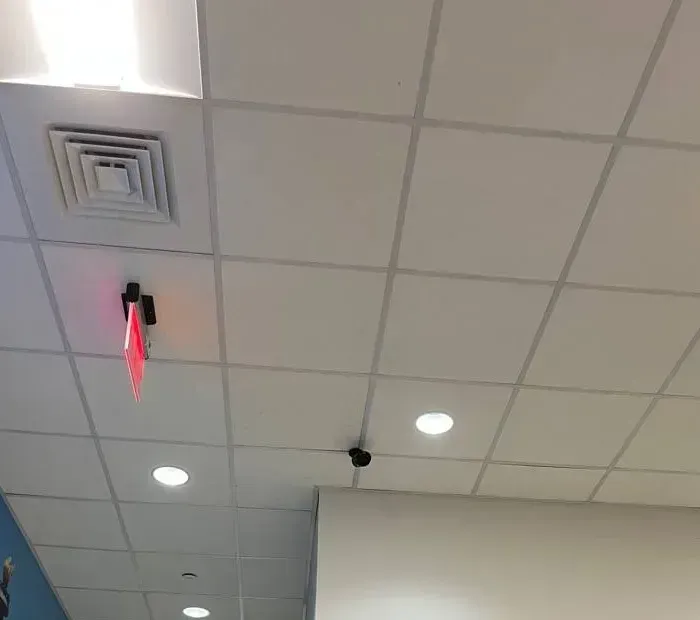
Homecrest, Brooklyn door buzzer installation: drop ceiling with a lit red exit sign, an air diffuser, round recessed lights and a small black camera
A photo from the AESS job library, not taken in Homecrest: a drop ceiling with a lit red exit sign, an air diffuser, round recessed lights and a small black camera. Upstairs offices on Kings Highway often have ceilings like this one, and a drop ceiling makes it easy to bring the door station's cable from the stair to the front desk without opening walls.
Equipment

Types of Door Buzzer Systems We Install

We quote a reliable non-branded system by default and install a named brand when an owner or board asks for one. What matters more than the brand in Homecrest is how the system handles old lines, how many apartments it can serve and what it costs to keep running.

Lobby button panels

Weather-resistant audio or video panels with one labeled button per apartment, for walk-ups of 6 to 30 units where residents know the panel and visitors read apartment numbers.

Directory and code panels

Scrolling directories or dial-code panels for elevator co-ops of 60 apartments or more, where a button board would cover the lobby wall and codes can change without a new faceplate.

Two-wire video systems

Panels and apartment monitors that carry voice, video, power and release over one pair, often the old one, so a 1920s walk-up can get video without new cable to every apartment.

Audio apartment stations

Hands-free or handset stations with a release key, for shareholders and tenants who want the simplest possible unit and for buildings keeping costs at the bottom of the range.

Phone and app answering

Panels that call residents' phones alone or alongside wall stations, for condo owners who travel and households who want to answer from work.

House stations

One- to three-button door stations with an answering unit on each floor for two-families, rows and bungalows, with a second station or chime at the back of large houses.

Electric strikes

Fail-secure strikes sized for aluminum storefront frames, hollow metal and wood, so the lobby or front door stays locked during a power cut and opens from inside by the lever.

Closers and lobby door hardware

Closers set so the door finishes its swing and latches every time, plus latch and hinge work, because self-closing door violations here outnumber intercom violations about 25 to 1.

Power supplies and line labels

Battery-backed power supplies on an owner-controlled circuit in the cellar, with each apartment line labeled at the terminal block so the next test takes minutes, not a day.

Button panel, two-wire video or app answering: which fits a Homecrest building?

What mattersAudio button panelTwo-wire videoApp or phone answering
Typical Homecrest fitTwo-families, rows and small walk-ups watching the budget1920s walk-ups and 1960s co-ops whose pairs mostly passOcean Avenue condos and owners who are often away
How residents answerAudio station with release keyWall monitor, often with an app optionPhone, sometimes a wall station too
Needs internetNoNo, except for the app optionYes, or a cellular connection
Uses the old pairsUsually, after testingUsually, after testingOnly for panel power and release
Shows which stations are workingNo, test by callingOn many systemsYes, by active devices
Monthly feesNoneNone unless the app service chargesOften per unit or per door
Brooklyn list range$400–$900 small; from about $2,500 for a building$700–$1,800 small; from about $2,500 for a building$700–$1,800 small; from about $2,500 for a building

ADT, Ring and SimpliSafe next to a local installer for a Homecrest building

The national names come up in nearly every conversation, so here is the plain comparison. Ring sells video doorbells and cameras that a household fits itself; on a single-family house with no tenants, a Ring doorbell can be a reasonable choice, but it has no door release, does not give each household in a two-family its own button and cannot serve a 20-apartment walk-up. SimpliSafe sells self-installed alarm systems, and ADT sells professionally installed, monitored security, mostly alarms and cameras. None of the three is built around a lobby panel that calls each apartment and releases the street door, which is what a Homecrest building needs and what HPD inspects.

What a local installer adds is the work at the building: the line-by-line test, the new cable where a pair fails, the strike and closer on the lobby door, a station in each apartment where the household answers, a written price with every possible add-on named before ordering, and a test sheet at the end that the owner can show a tenant, a board or an inspector. Our wired systems come with a $0 monthly fee option, and where a building chooses an app system with a subscription, the subscription is shown on the quote beside the hardware.

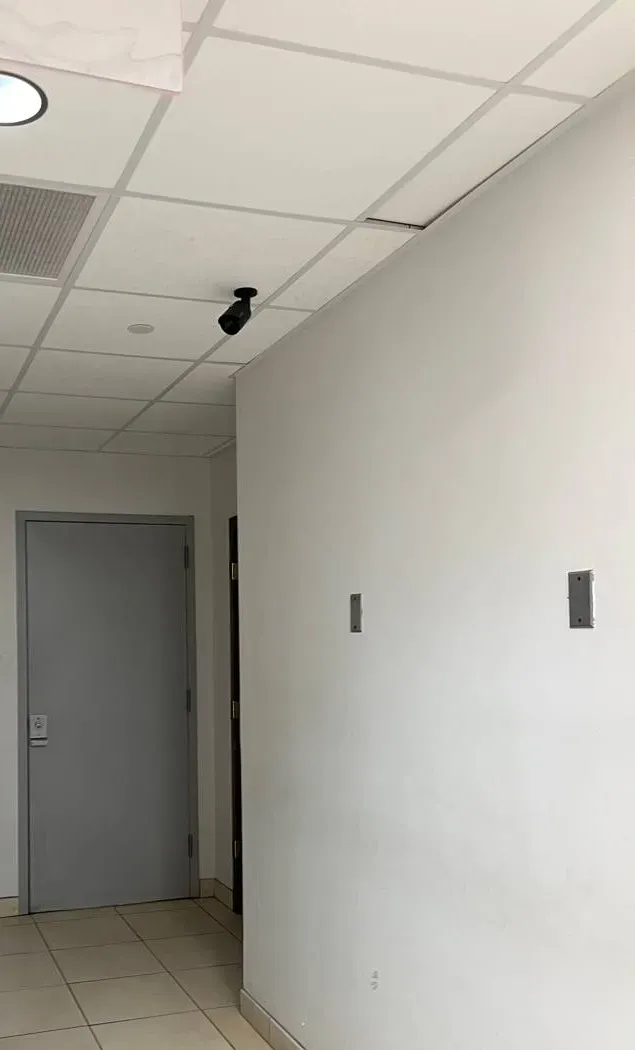
Homecrest, Brooklyn door buzzer installation: tiled corridor with white walls and small wall plates ending at a grey steel door with a lever handle under a drop ceiling with a small camera
A photo from the AESS job library, not taken in Homecrest: a tiled corridor with white walls and small wall plates ending at a grey steel door with a lever handle, under a drop ceiling with a small camera. The rear or cellar doors of Homecrest elevator co-ops often look like this, and a steel door with a lever takes a fail-secure strike while anyone inside can still leave by turning the handle.
AI Overview Reality Check

What AI Gets Wrong About Door Buzzer Installation in Homecrest

Search engines and chat assistants answer buzzer questions with summaries drawn from national cost guides and vendor blogs. Parts of those summaries help; parts of them do not fit a 1920s walk-up on Ocean Parkway or a 1960s co-op on East 14th Street. Below are seven common claims, where they come from and what the field and the city's own records show. We have not quoted any AI-generated answer word for word; the claims come from the published sources those answers lean on.

"Fix the apartment that is broken; the rest of the system is fine"

This is the instinct behind most repair calls, and ButterflyMX's guide supports it in the right case: repair "when the fault appears localized."

The HPD record for the Gravesend (East)-Homecrest area shows how often the fault is not localized. One building collected 14 intercom violations between 2023 and November 2026, each for a different apartment or the same one again, across four sections and six floors. Each repair closed one violation and the next one opened somewhere else.

The useful test is not whether one apartment is broken but whether failures move around the building. If they do, the shared parts, the power supply, the panel and the risers, are the problem, and a full installation with every line tested is usually a better spend than years of single-station visits.

"A small building's intercom replacement costs about $1,500 to $2,500"

ButterflyMX's own guide quotes that range from one of its earlier articles and a separate Swiftlane figure of $2,200 to $5,000 or more for a small single-entrance project, and is careful to call both planning references rather than quotes.

In Homecrest, "small building" covers a lot of ground. A two-family house is a $400 to $900 audio job or a $700 to $1,800 video job on our Brooklyn list. A 20-apartment 1927 walk-up is a building system starting around $2,500, and a 75-apartment walk-up of 1926 is well up that range, mostly because of the number of lines to test and stations to fit.

ButterflyMX itself names the real drivers: "controlled entrances, door hardware, wiring condition, and system type often drive the apartment intercom replacement cost more directly" than apartment count. That matches what we see. Two buildings of the same size can be thousands apart because one has sound pairs and a good lobby door and the other has neither.

"The average intercom installation costs $2,500"

HomeAdvisor's national guide gives that average, with a range of $1,500 to $15,000 and an estimate of one to two hours of labor per station.

The per-station figure is the part worth keeping. In a 60-apartment co-op, an hour or two per station plus the lobby, the power and the testing adds up to several days of work, which is why the building lands well above a national average built mostly from houses.

The national average says nothing about the door. In this area, where self-closing door violations outnumber intercom violations about 25 to 1, the closer and strike on the lobby door are often part of the job and part of the price.

"Old buzzer wiring is obsolete and should be replaced"

Summaries often assume decades-old bell wire has to go.

Brick Underground's NYC intercom guide says older systems may be outdated while the core wiring is typically fine, and Aiphone's upgrade guidance says "if the existing wires are in good condition, they can be reused." In a Homecrest walk-up, reusing sound pairs avoids opening plaster in apartments where paint may be decades old.

The key word is "good condition," which only a test can establish. A century-old pair can be perfect or can short every time the radiator riser beside it gets hot. We test each one, reuse the sound ones and price new cable only for the ones that fail.

"Replacing a building's intercom takes a day or two"

Brick Underground puts a replacement at about a day for five apartments and about two days for 100 units.

The hours of work can fit that, but the calendar rarely does in an occupied Homecrest building. A technician has to get into every apartment, and the city's own 311 record for Community Board 15 shows how hard that is: in 2026, 37 of 68 buzzer complaints closed because HPD's inspector could not get in or could not complete the inspection.

So we plan the access as part of the job: written notice to residents with dates and two-hour arrival windows, the lobby side installed first so the door always works, a second pass for apartments missed on the first, and a list for the owner of any unit still outstanding.

"Phone-based intercoms take the building out of the old rules"

Vendor pages present app and phone answering as a modern replacement for wall stations, and some owners take that to mean the old repair duties no longer apply.

The duty follows the system, whatever it is. In 2024, HPD wrote a violation in this area for a "tele communication intercom system from the building's vestibule to tenant's tele devices." A phone-based system that stops reaching an apartment is a broken intercom in that apartment.

App answering also adds a running cost. Swiftlane's guide puts subscriptions at "$5 to $15 per unit per month, or $30 to $100 per door per month." For a 20-apartment walk-up, that line belongs on the quote next to the hardware, and we put it there.

"A buzzer is a buzzer, the door is someone else's problem"

Most summaries describe panels, stations and apps and stop at the door frame.

The record says the door is the bigger problem here. Inspectors wrote 378 self-closing door violations in the Gravesend (East)-Homecrest area in 2025 and 289 in 2026 through November 11, against 13 and 3 intercom violations in those years. A release on a door that does not latch opens a door that was already open.

Allegion's guidance adds the other half: a fail-secure strike keeps the door locked during a power cut, while a fail-safe one or a magnetic lock releases it. For a Homecrest lobby door, a sound closer and a fail-secure strike are usually the right pair, and both are on our checklist for every building installation.
Not Sure Whether It Is One Station, One Line or the Whole System? Speak to a Tech

Send a photo of the lobby panel, the power supply in the cellar and one apartment station, with the address, the number of apartments and any HPD violation numbers, to (347) 934-8335 or on WhatsApp. A technician will tell you which part most likely needs work and whether a repair, a partial rewire or a full installation makes sense, before anyone visits. Or use the request form and we will call you back.

Get In Touch

Request a Free Quote

✅
Request Sent!
Thank you. A technician will call you about the Homecrest address, usually within two hours during working hours.
How It Works

Our Installation Process

1. Send photos and the apartment list

Photos of the street door, the lobby or vestibule panel, the cellar wiring point and one apartment station, plus a list of every apartment, cellar unit, office or store the system has to reach.

2. Read the building's HPD record together

We go through the building's intercom and door violations with the owner or board, apartment by apartment, so the pattern of failures shapes the plan instead of the last complaint.

3. Check the door before the electronics

The street and vestibule doors are closed again and again to confirm they shut, latch and lock on their own, and the frame is checked for the strike, because the door is cited far more often than the buzzer.

4. Trace and test every line

Each apartment's pair is traced from the cellar or riser to its station and tested; sound lines are marked for reuse and failing ones are named with their cost.

5. Agree the written price and the access plan

Panel, stations, door hardware, power, cable and labor on one written price with every possible extra named, alongside dated notice wording and a plan for reaching every apartment.

6. Install the door side first

The strike, power supply and new lobby panel go in before any old apartment station comes off the wall, so the building is never left with a door nobody can answer.

7. Fit the apartment stations and label everything

Stations go where each household answers, recessed boxes get trim plates, and every button, pair and station is labeled with the apartment number HPD uses.

8. Call every apartment from the sidewalk and hand over

Every apartment is called, answers, talks and releases while the door is watched relocking; the owner receives the dated test sheet, the wiring record and resident instructions.

Homecrest, Brooklyn door buzzer installation: touchscreen entry panel showing a dial pad with a four-digit apartment code entered, a camera above and a card-reader symbol below
A photo from the AESS job library, not taken in Homecrest: a touchscreen entry panel showing a dial pad with a four-digit apartment code entered, a camera above and a card-reader symbol below. A dial-code panel like this suits a Homecrest elevator co-op with sixty or more apartments, where a full button board would crowd the lobby wall, and in step 8 every code is called from the sidewalk.
Coverage Area

Door Buzzer Installation Near Homecrest's Landmarks

Kings Highway station

The B and Q stop between East 15th and East 16th Streets on the Midwood border, at the head of the Kings Highway shopping blocks and their upstairs offices.

Avenue U station

The Brighton Line stop at the heart of the Avenue U shopping strip, surrounded by store buildings with apartments over narrow side doors.

Neck Road station

The embankment station on Gravesend Neck Road between East 15th and East 16th Streets, opened in 1907, beside the remains of an old Long Island Rail Road station.

Homecrest Library

The Brooklyn Public Library branch at 2525 Coney Island Avenue, south of Avenue V, near the one-story rows and bungalows of southern Homecrest.

Kelly Memorial Park

The park on Avenue S between East 13th and East 14th Streets, in the middle of the elevator co-op and walk-up blocks.

61st Precinct

The station house at 2575 Coney Island Avenue, serving Homecrest along with Gravesend, Sheepshead Bay and neighboring areas.

We also serve Bensonhurst, Coney Island, Fiske Terrace and Flatlands at the same Brooklyn rate, along with Midwood, Gravesend and Sheepshead Bay on Homecrest's borders. See our door buzzer installation in Brooklyn page for the whole borough, and door buzzer installation across New York City for the other boroughs.

Pricing

Door Buzzer Installation Cost in Homecrest

Homecrest is billed at our Brooklyn rate. Final pricing follows a walkthrough, because the number of apartments, the result of the line tests, the number of doors residents use and the state of the lobby door drive the total far more than the brand on the panel.

JobTypical Homecrest propertyBrooklyn range
Audio buzzer or replacement with electric strike release, existing wiring reused where it tests wellTwo-family house, one-story row, a cellar unit's own door, a store's delivery door$400–$900
Video door station with indoor monitors or smartphone door releaseRenovated two-family, a large house with a back kitchen, an upstairs office$700–$1,800
Lobby panel with every apartment wired or on app answering, audio or video by apartment count, optional fob integration1920s walk-up, 1960s elevator co-op, Ocean Avenue condo$2,500–$10,000+
Service call booked onlineDiagnosis of an existing system before deciding to repair or replace$250, applied toward the work
Monthly fee on a wired systemAny building choosing the no-subscription option$0
Buzzer and entrance camera on the same visitCo-op lobbies, walk-up vestibules and business doorsTypically saves $200–$400 in labor

What moves a Homecrest job inside its range is predictable. First the lines: a walk-up whose pairs mostly pass stays toward the bottom of the building range, while a building that needs new cable up several risers moves up. Then the door: a lobby closer that has to be replaced, a strike that has to move, an aluminum frame that needs a different release. Then the choices: video instead of audio, phone answering, a directory panel instead of buttons, trim plates over old recessed boxes, a separate door for a cellar unit. Anything that depends on a test, such as a line that might fail or a cellular signal that might be weak in the lobby, is named on the quote with its price before you approve, so nothing new appears on installation day.

Full terms — including 50% deposit, one-year parts-only warranty on AESS-supplied products, and the late-fee schedule — are set out in the service agreement.

Find Out Which Range Your Homecrest Building Falls In

Tell us the address, the number of apartments, whether HPD has cited any of them and whether the lobby door closes and latches on its own, and we will tell you which of the three Brooklyn ranges fits and what would move it up or down. Call or text (347) 934-8335, send photos on WhatsApp, or fill in the form.

Shop Our Systems

Door Buzzer Installation Packages & Pricing

Three typical Homecrest jobs, each placed inside the matching range on our Brooklyn list. The exact figure comes from the walkthrough and the line tests.

House buzzer: $400–$900

An audio station with a button for each household at a two-family or one-story row, an answering unit and release on each floor or at the back kitchen, a fail-secure strike in a sound frame, a closer that shuts the door behind every visitor and a battery-backed power supply in the cellar.

Video house or office entry: $700–$1,800

A video door station for a renovated two-family, a large house or an upstairs office on Kings Highway, with monitors or phone answering for each household or the front desk, the strike sized to the door and the cable routed through the cellar rather than finished rooms.

Building system: from about $2,500

A button, directory or code panel in the lobby, a station or app answering for every apartment including any basement unit, every line tested and the failing ones rewired, trim plates over old boxes, the lobby strike and closer, owner-controlled power and a dated test sheet, rising toward $10,000 or more with apartment count, rewiring and video.

Bring your own equipment. If you or your board have already bought a panel, a video kit or apartment stations, we can install them as labor-only work, quoted flat once we have tested the lines and seen the doors. Tell us the make and model when you write, and we will tell you before the visit whether it can reach every apartment and release your door, or whether it is really only a doorbell.

Complete Services

Every Door Buzzer Service in Homecrest

Walk-ups and co-ops

Whole-building replacements, line testing and rewiring, apartment stations, lobby strikes and closers. Request a quote

Houses, rows and stores

First buzzers, cellar-unit doors, back-kitchen stations and separate store and office systems. Call (347) 934-8335

Across Brooklyn

The same list in every neighborhood. Brooklyn door buzzer installation

Across New York City

Every borough's buildings and rules. NYC door buzzer installation

FAQ

Homecrest Door Buzzer Installation FAQ

Does a building-wide buzzer replacement in a Homecrest co-op need an alteration agreement from each shareholder?
+

Usually not. A building-wide replacement is common-system work authorized by the board, and the managing agent sets the contractor rules, insurance and notice. Shareholders still have to let the technician in, so the board's notice to residents carries the dates, the two-hour arrival windows and who to call to arrange key access.

How is a station mounted on the damp foundation wall of a cellar apartment?
+

On a backbox fixed with masonry anchors, with the cable in surface raceway rather than cut into the concrete, sealed where it enters the box and kept well above the floor. We place it away from the boiler and laundry area, where the household can reach it, and the extra materials are named on the quote.

Can drilling in the public halls set off the building's smoke detectors?
+

Dust from drilling masonry can trigger a nearby smoke detector, so we cover the detectors in the work area while we drill and uncover them before we leave that floor. If the building has a monitored fire alarm, the managing agent or super puts it on test with the monitoring company first, and we check that it is back in service at the end of the day.

Does the electric strike run off the same power supply as the intercom?
+

Sometimes, but on building systems we usually give the strike its own supply or a dedicated output. A strike draws a burst of current each time it releases, and on a shared, undersized supply that can make stations crackle or drop calls. Separate, battery-backed power keeps both steady and lets each be tested on its own.

Our intercom's transformer is plugged into an outlet on one apartment's circuit. Can it be moved?
+

Yes, and it should be. A building's entry system should run from a circuit the owner controls, usually in the cellar, so it does not go dead when one tenant's breaker trips or an apartment's power is cut off. If a new outlet is needed there, a licensed electrician installs it, and that is named on the price before the job.

Can an apartment station be mounted on the back of the apartment's entry door instead of the wall?
+

We avoid it. A station on a door needs a flexible cable loop through the hinge side, and the loop wears out from the door swinging thousands of times. The wall beside the door, or a kitchen or hallway wall where the household hears it, is far more reliable and is where HPD inspectors expect to find it.

Is the elevator's emergency phone part of the buzzer system?
+

No. The emergency phone in an elevator cab is part of the elevator and is installed and serviced by the elevator contractor under elevator rules. We do not connect the lobby panel to it or work on it. If a board wants the elevator phone looked at during an intercom project, the managing agent arranges that with the elevator company.

Will the lobby ceiling have to be opened to run the new panel's cable?
+

Rarely. In most Homecrest buildings the panel's cable comes up from the cellar through the wall behind the panel or beside the door frame, using the old route where it is sound. We look for that route at the walkthrough and only propose working in the ceiling if there is no other way, with any patching named on the quote.

How much paint does swapping an apartment station disturb in a prewar walk-up?
+

Very little, usually a few square inches around the old box. HPD's guidance points owners of buildings from before 1978 to lead-safe work practices when 2 square feet or more of paint in a room is disturbed, and we plan station swaps and surface raceway to stay well below that. If a job would need more, you know before it is priced.

Can the terminal block in our cellar be locked so nobody unplugs or rewires the system?
+

Yes. We mount the power supply and the terminal block in a lockable cabinet on an owner-controlled circuit, with a label showing who installed it and how to reach us. Only the super or managing agent holds the key, which stops the usual problem of a contractor working on something else unplugging the intercom to free an outlet.

Can the new panel list apartments the way HPD's records name them, including basement and cellar units?
+

Yes. We label buttons, directory entries and stations with the same apartment designations used in the building's registration and HPD's records, so a violation, a complaint and a station always refer to the same unit. Basement and cellar apartments get their own labels rather than a handwritten tag added later.

What happens to the old lobby panel and apartment stations once the new system works?
+

They come off the wall after every apartment has passed its test on the new system, never before. The old panel opening is covered by the new panel or a trim plate, old apartment boxes get trim plates or blank covers, and we take the old equipment away unless the board wants to keep any of it.

More Door Buzzer Installation near Homecrest

Door Buzzer Installation Brooklyn NY | Brownstones & Condos · Door Buzzer Installation NYC | Apartment & Building Entry · Door Buzzer Installation Manhattan NY | Apartments & Co-ops · Door Buzzer Installation Queens NY | Co-ops & Apartments · Door Buzzer Installation Bronx NY | Co-ops & Apartments · Door Buzzer Installation Staten Island NY | Homes & Apts · Door Buzzer Installation Long Island NY | Nassau & Suffolk · Door Buzzer Installation Hudson Valley NY | Apartments · Door Buzzer Installation Nassau County NY | Homes & Co-ops · Door Buzzer Installation Suffolk County NY | Homes · Door Buzzer Installation Westchester County NY | Co-ops · Door Buzzer Installation Rockland County NY | Homes & Apts · Door Buzzer Installation Orange County NY | Homes & Farms · Door Buzzer Installation Putnam County NY | Lake Homes · Door Buzzer Installation Dutchess County NY | Homes · Door Buzzer Installation Ulster County NY | Kingston

Door Buzzer Installation Bath Beach Brooklyn NY · Door Buzzer Installation Bay Ridge Brooklyn NY · Door Buzzer Installation Bedford-Stuyvesant Brooklyn NY · Door Buzzer Installation Bensonhurst Brooklyn NY · Door Buzzer Installation Bergen Beach Brooklyn NY · Door Buzzer Installation Beverley Square Brooklyn NY · Door Buzzer Installation Boerum Hill Brooklyn NY · Door Buzzer Installation Brooklyn Navy Yard, Brooklyn NY · Door Buzzer Installation Brooklyn NY | Brownstones & Condos · Door Buzzer Installation Brownsville Brooklyn NY · Door Buzzer Installation Bushwick Brooklyn NY · Door Buzzer Installation Cadman Plaza Brooklyn NY · Door Buzzer Installation Canarsie Brooklyn NY · Door Buzzer Installation Carroll Gardens Brooklyn NY · Door Buzzer Installation City Line Brooklyn NY · Door Buzzer Installation Clinton Hill Brooklyn NY · Door Buzzer Installation Cobble Hill Brooklyn NY · Door Buzzer Installation Columbia Street Waterfront Brooklyn · Door Buzzer Installation Coney Island Brooklyn NY · Door Buzzer Installation Crown Heights Brooklyn NY · Door Buzzer Installation Cypress Hills Brooklyn NY · Door Buzzer Installation Ditmas Park Brooklyn NY · Door Buzzer Installation Downtown Brooklyn NY · Door Buzzer Installation DUMBO Brooklyn NY | Loft Entry

Other services in Homecrest

Intercom Installation Homecrest Brooklyn NY | AESS · Fire Alarm Installation Homecrest Brooklyn NY · Structured Cabling Installation Homecrest Brooklyn NY · Access Control Installation Homecrest Brooklyn NY · Alarm Installation Homecrest Brooklyn NY · TV Installation Homecrest Brooklyn · Door Buzzer Repair Homecrest Brooklyn NY | Keyed Entry · Security Camera Installation Homecrest Brooklyn NY

Ready for a Homecrest Building Where Every Apartment Answers on the Same Day and the Lobby Door Locks Behind Every Visitor?

Send a photo of your lobby panel or front door, with the address, the number of apartments and any HPD violations, and we will tell you which system fits and where it falls on our Brooklyn ranges. Call or text (347) 934-8335, message us on WhatsApp, or use the request form. Licensed under NYS license #12000287431, rated 4.7★ across 201 Google Reviews, with same-day estimates on most days.