What are you looking for?
About Us Contact Us Careers Get a Free Quote (800) 486-0943
Pick a service
✅ Got Your Own System?
🎬 Home TheatreQuote 🎶 AV SoundQuote 🔑 Access ControlQuote
Now pick your area
Pick your area
Long Island
Hudson Valley
Services available
Pricing & Tools
Pick a service for pricing
🚪 Intercom Pricing 🔔 Buzzer Repair Pricing
Calculators
📹 Camera System Calculator 🚨 Alarm Calculator ⚡ Cabling Quote Builder ✅ Got Your Own System?
Select your area
A tenant on the top floor of your house who walks down every time the bell rings, a porch door with nothing but a 1910 push button, or an Ocean Avenue lobby whose intercom calls the wrong apartment? Fiske Terrace door buzzer installation line: (347) 934-8335
Home › Door Buzzer Installation Brooklyn › Fiske Terrace
Porch Houses With a Rented Floor · Side Doors Off the Driveway · Prewar Co-op Lobbies on Ocean Avenue · Store-and-Apartment Buildings on Avenue H

Door Buzzer
Installation in
Fiske Terrace

Station Placed Inside the Door Opening · Every Household Called From the Walk · Written Price Before Ordering · Brooklyn Rate

Door buzzer installation in Fiske Terrace is mostly a job for houses, not apartment towers: a door station on the porch or beside the side door, an answering station or phone for each household, an electric release in the frame and a closer that shuts the door behind every visitor. Inside the Fiske Terrace–Midwood Park Historic District, the Landmarks Preservation Commission's guidance says intercom panels and doorbells "must be installed within or adjacent to a door opening," with one intercom panel per door opening at staff level and no more than about ten inches of visible conduit, so we plan the station around those rules before choosing equipment. On the neighborhood's edges the work changes: prewar co-op lobbies on Ocean Avenue, the six-story co-op at 800 East 17th Street, and store-and-apartment buildings on Avenue H by the station. Below is how each kind of job is planned and where it sits on our Brooklyn price list.

Reviewed and updated November 11, 2026, against the Landmarks Preservation Commission's Permit Guidebook chapter on health and safety equipment and its 2008 designation report for the Fiske Terrace–Midwood Park Historic District; New York's Multiple Dwelling Law §50-a; Habitat Magazine's February 2024 article on intercom duties and its May 2017 report on new buzzer systems; Brick Underground's NYC intercom repair guide; ButterflyMX's guide to New York intercom law; building listings for 800 East 17th Street and 1256 Ocean Avenue on Compass, 1212 Ocean Avenue on CityRealty and 1280 Ocean Avenue on StreetEasy; HPD records for 1280 Ocean Avenue as summarized by Lucid Rents; Brownstoner's June 2026 profile of 1710 Avenue H and its forum threads on buzzers for multi-family houses; Patch's 2012 report on the Fiske Terrace association's meeting with the 70th Precinct; News 12's July 2025 report from a Flatbush building with broken entrance locks; Security Sales' report on the Park Vanderbilt co-op's intercom upgrade; Allegion's fail-safe and fail-secure guide; the building code's sensor-release provisions; the HomeAdvisor and Swiftlane cost guides; and the 2010 ADA Standards. · Abstract Enterprises Security Systems, NYS license #12000287431 · crews dispatched from our Troy Avenue office in Brooklyn

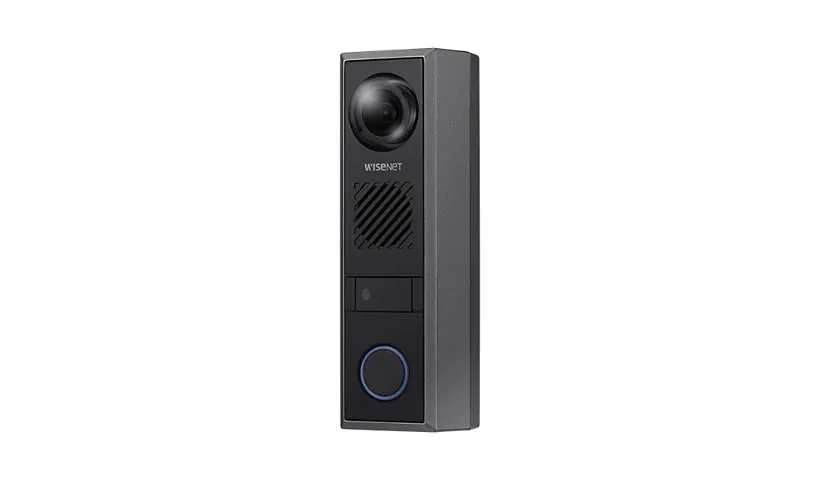
Door buzzer installation for Fiske Terrace, Brooklyn homes: black rectangular video door station with a camera, speaker grille and round lit call button
A photo from the AESS job library, not taken in Fiske Terrace: a black rectangular video door station with a camera, a speaker grille and one round call button that lights up. A slim single-button station like this is the size that fits beside the front door of a one-family Fiske Terrace house under its porch roof, where the Landmarks guidance wants the panel kept next to the door opening rather than out on the porch post or the facade.
Fiske Terrace Buzzer Request
House with a tenant, one-family house, co-op or rental lobby, or a store with apartments above: tell us the address, how many households the door has to reach and which door visitors use, and a technician calls back with the range

✅
Request Sent!
Thank you. A technician will call you about the Fiske Terrace address, usually within two hours during working hours.
25+
Years Experience
✓
Same-Day Estimates
100%
Licensed & Insured
4.7★
201 Google Reviews

Owner-operated since 2002 · Thousands of jobs completed · Booked within 2 hours

Quick answer: door buzzer installation in Fiske Terrace runs $400 to $900 on our Brooklyn list for an audio station with a door release at a one- or two-family house, $700 to $1,800 for a video door station with indoor monitors or phone answering for a house with tenants or a store with a few apartments above, and from about $2,500 to past $10,000 for a full lobby system in one of the co-op or rental buildings along Ocean Avenue, Avenue H or East 17th Street. Each price covers the door station, the answering units, the power supply, the electric strike, the cable and the labor, and it is fixed in writing after a walkthrough, with any possible extra, such as an old bell wire that might fail its test, a closer that has to be replaced, or a Landmarks permit drawing for a district house, named and priced before you order. Fiske Terrace is billed at the Brooklyn rate. Send photos of the door and whatever is on the wall beside it to (347) 934-8335 or on WhatsApp, and we reply with the range that fits, usually within two hours of your message during working hours.

  • Looking at your photos and quoting a new system costs nothing. If an existing lobby system has to be diagnosed in person first, that is the $250 service call booked online, and the $250 is applied toward the work.
  • All work falls under New York State license #12000287431. We install low-voltage entry equipment; if the door needs a new 120-volt outlet or circuit for its power supply, a licensed electrician does that part, and you know before the job is priced.
  • We work for whoever controls the door: the homeowner, the co-op board or its managing agent, the landlord of a rental building or, for a shop or office, the tenant with the owner's written approval.
The Neighborhood

Why Fiske Terrace Properties Need Door Buzzer Installation

Fiske Terrace is a few blocks of freestanding houses on the southern edge of Flatbush, between Foster Avenue to the north, Ocean Avenue to the east, the Bay Ridge freight line's cut to the south and the Brighton line's B and Q tracks to the west. Most of it lies inside the Fiske Terrace–Midwood Park Historic District, which the Landmarks Preservation Commission designated on March 18, 2008, and which its report counts at roughly 250 houses built mostly between 1905 and 1914. Around those blocks sit a different set of buildings: six-story prewar co-ops facing Ocean Avenue, the single apartment house inside the district at 800 East 17th Street, and two- and three-story store-and-apartment buildings on Avenue H near the station.

That split matters more for a buzzer than for almost any other service. In an apartment building the question is how to replace or extend an entry system that already exists. In a Fiske Terrace house there usually is no entry system, only a push button for a bell that was wired when the house was new, or a store-bought video doorbell somebody added later. Everything works while one family lives in the house and someone is always downstairs. It stops working when the top floor is rented, when an older parent moves into a ground-floor room and cannot get to the door quickly, when the family that answered the door at the porch now comes and goes by the side door off the driveway, or when a home office means visitors arrive at hours when nobody is near the front of the house.

The question homeowners put to us is rarely "which intercom brand?" It is closer to the one a Brooklyn owner asked on the Brownstoner forum about a multi-family house: the upstairs households want to "see who is at the door," and the first wired quote they got, which the owner later put at "more like $3,000," felt like too much. Another owner on the same forum had a three-unit house whose buzzer "works only sporadically, and each unit is experiencing the same problems," and was quoted $2,000 to replace it. Both are fair questions, and both have answers that depend on the door, the wire and how many households need their own button, not on a national average.

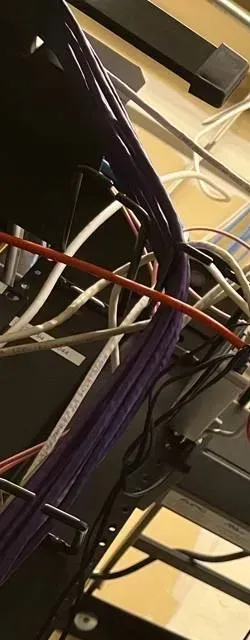
Fiske Terrace, Brooklyn door buzzer installation wiring: purple, white and red cable bundles dropping down beside a black equipment rack
A photo from the AESS job library, not taken in Fiske Terrace: purple, white and red cable bundles dropping down beside a black equipment rack. In a Fiske Terrace house the equivalent spot is usually a corner of the cellar near the internet equipment, and in the Ocean Avenue co-ops it is a closet or the super's room; either way, the entry system's power supply belongs there, on a circuit the owner controls.

The co-op and rental buildings on the edges have the opposite problem. They already have entry systems, many of them old. Compass lists both 800 East 17th Street, a 27-unit co-op of 1936, and 1256 Ocean Avenue, a 26-unit rental of 2014 with a full-time doorman, as having a "Voice Intercom," and neither listing mentions video. CityRealty puts 1212 Ocean Avenue, between Glenwood Road and Avenue H, at 48 apartments in a six-story co-op built in 1925, and StreetEasy lists 1280 Ocean Avenue as a six-story, 66-unit elevator co-op of 1935, a building Columbia University's digital library catalogs under the name "Fiske Terrace Apartments." Buildings of that age and size usually have an audio intercom running over wire that went in decades ago, and a board that has to decide whether to repair it, extend it or replace it.

Security worries are part of the picture, though not the whole of it. In 2012, a string of break-ins led the Fiske Terrace association to ask the 70th Precinct for a meeting; Patch reported co-president Nancy Berenbaum saying the break-ins "brought the issue to the forefront." In July 2025, News 12 reported from an unnamed Flatbush apartment building where tenants blamed intrusions on "broken locks at the building's entrances," and its crew got in through the "repaired front entrance" with keys from the news van. A buzzer does not replace a good lock. What it does is let a household answer the door without opening it, which is the point for an older resident alone in the house, for a tenant on the third floor, and for a lobby whose door should never be left on the latch for a delivery.

Six facts that shape a Fiske Terrace buzzer installation

  • Most addresses are landmarked houses. The Landmarks Preservation Commission designated the Fiske Terrace–Midwood Park Historic District on March 18, 2008; its report counts about 250 houses, most built and occupied by 1914.
  • The panel goes at the door. The Commission's guidance says intercom panels and doorbells "must be installed within or adjacent to a door opening," or on a fence or wall in front of the entranceway, with a staff-level limit of "one intercom panel" per door opening.
  • Cable has to hide. The same guidance asks for conduit concealed behind the installation, allows "a maximum of approximately ten inches of visible conduit" where that is impossible, and bars attachment "through cast iron or on any decorative surfaces."
  • The apartment buildings are prewar and mid-sized. 800 East 17th Street has 27 units (1936), 1212 Ocean Avenue 48 (1925) and 1280 Ocean Avenue 66 (1935), per Compass, CityRealty and StreetEasy.
  • The intercom law starts at eight units. Multiple Dwelling Law §50-a requires a self-locking main door and a talk-and-release intercom in apartment buildings of eight or more units built or converted after 1968, and in older ones when tenants of a majority of apartments ask in writing. A Fiske Terrace house with one rented floor is far below that line.
  • Doors fail before intercoms. 1280 Ocean Avenue's HPD record shows 74 door-and-lock violations, including a Class C self-closing door order in June 2026, per Lucid Rents. We plan the closer and the latch before the buzzer.

Where this page applies. It covers Fiske Terrace from Foster Avenue south to the Bay Ridge freight cut and from the Brighton line east to Ocean Avenue, including the Midwood Park blocks north of Glenwood Road that share the historic district, the courts and malls on Glenwood Road and East 17th Street, the apartment buildings facing Ocean Avenue, 800 East 17th Street, and the Avenue H buildings near the station. For the rest of the borough see our door buzzer installation in Brooklyn page, and for the whole city our NYC door buzzer installation page.

Repair or Replace in Fiske Terrace

Need Repair in Fiske Terrace? A Dead Bell Button, a Lobby Intercom That Calls the Wrong Floor, or a Release That Hums and Does Nothing

Plenty of calls that start as "we want a buzzer" in Fiske Terrace turn out to be something else. In a house, the old bell circuit may still be in the walls, with a transformer in the cellar that has quietly burned out, and the household wants it working again with a way to answer from upstairs. In an Ocean Avenue co-op, the lobby panel may be fine while one riser pair has failed, so three apartments in a line can no longer hear the door. In a store-and-apartment building on Avenue H, the release may hum when pressed but the strike never lets go, because the door has dropped on its hinges and the latch bolt is jammed against the plate.

We sort those apart before quoting. Photos of the door from outside and inside, the old button or panel, and any indoor station you can reach, sent to (347) 934-8335 or on WhatsApp, usually show which kind of job it is. Where an existing lobby system has to be tested in person, that is the $250 service call booked online, and the $250 goes toward whichever path you choose. You get a repair price and a replacement price where both are realistic, with a plain recommendation, and we will not tell a board to replace a system that one part would fix.

What We Install

Door Buzzer Installation Services in Fiske Terrace

Every service below is priced from the same Brooklyn door buzzer list. In Fiske Terrace the number of households sets the size of the system, the door and its frame decide what release it can take, the historic district decides where the station may sit and how the cable may reach it, and the route from the porch to the cellar and up to each floor decides most of the labor.

First buzzers for porch houses

A door station beside the porch door, a release in the frame and an answering station on each floor, for houses that have had nothing but a bell button since they were built.

Rented-floor stations

A second button and an indoor station or phone answering for a tenant on the top floor or in a basement unit, so they can see or hear a visitor and let them in without coming down.

Side and driveway doors

A station at the side or kitchen door that the household and regular visitors actually use, calling the same indoor stations as the front door and releasing only that door.

Video and phone answering

Video door stations answered on wall monitors, on phones or both, for households that cannot see the porch from upstairs or that want to answer the door from work.

Co-op and rental lobby systems

Button or directory panels, apartment stations and lobby door releases for the prewar elevator buildings on Ocean Avenue and East 17th Street, reusing riser wire where it tests sound.

Store and apartment separation

Two systems for a building with a shop on the ground floor and apartments above, so the store's delivery buzzer never rings a tenant and the store can never open the apartments' door.

Door releases and closers

Electric strikes fitted to old wood frames and newer steel ones, closers set or replaced so the door relatches, and battery-backed power on a circuit the owner controls.

Landmark-ready station plans

Station placement, finish, fastening and cable route drawn up for a district house, with the manufacturer's cut sheet the Landmarks Preservation Commission asks for when a permit is needed.

Home office and practice doors

A buzzer for a home office, studio or practice in a house or storefront, answered at a desk or on a phone, so the door can stay locked while visitors are still let in on time.

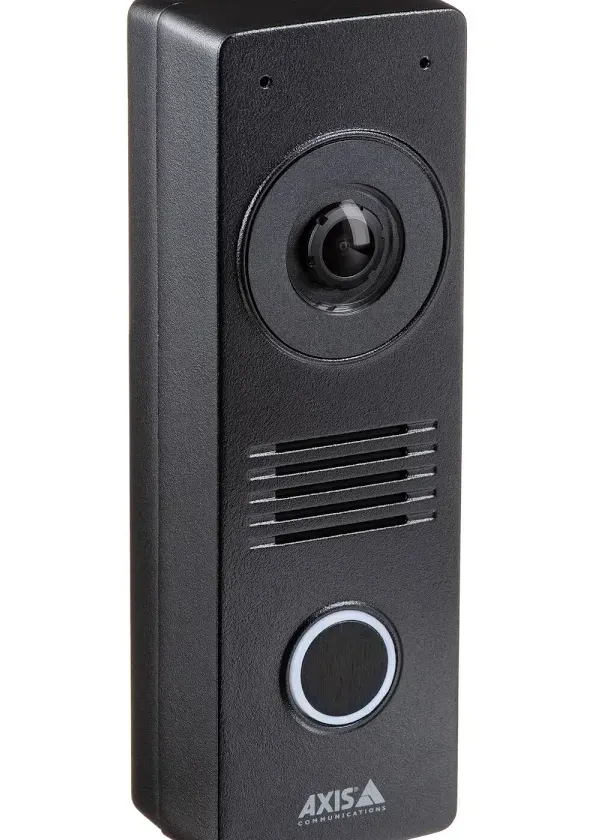
Slim wired doorbell station for a door buzzer installation in Fiske Terrace, Brooklyn: dark grey unit with a camera lens, speaker slots and a round push button
A photo from the AESS job library, not taken in Fiske Terrace: a slim dark grey wired doorbell with a camera lens, speaker slots and a round push button. A station this narrow can sit on the flat trim beside a Fiske Terrace porch door without touching the door's glass or the decorative casing, which is exactly where the Landmarks guidance wants small equipment kept.
Building Specialists

Door Buzzer Installation for Fiske Terrace's Architecture

Six kinds of entrance account for almost every buzzer job we plan in and around Fiske Terrace. What sets them apart for a buzzer is not the style of the house but where the visitor stands, how far that spot is from each household, what the door and frame are made of, and who has to approve the work. Each has a mistake we see when the job is rushed.

The front door under a porch roof

The classic district entrance: a wood door with glass, set back under a porch roof several steps above the walk, with a bell button on the casing that may be original.

The side door off the driveway

The kitchen or side entrance at the end of a concrete driveway, where the household, the delivery driver and regular visitors really arrive, often with no bell at all.

The house with a separate tenant entrance

Houses where a rented floor or a basement unit has its own door, at the side, the rear or under the porch, needing its own button and its own release.

The prewar co-op lobby

Six-story elevator buildings of the 1920s and 1930s facing Ocean Avenue and on East 17th Street, with a vestibule, a lobby door and an audio intercom on old riser wire.

The newer doorman rental

The 2014 elevator building at 1256 Ocean Avenue, listed with a full-time doorman and a voice intercom, where the desk and the panel have to work together.

The store with apartments above

Two- and three-story buildings on Avenue H near the station, such as the 1931 building at 1608 Avenue H, classed as two-family with a store, with a residential door beside the shop.

The front door under a porch roof: keep the station at the door, not out at the steps

Most Fiske Terrace houses are entered from a porch. The visitor climbs a few steps, crosses the porch floor and stands at a wood door that usually has a glass panel, framed by a casing that may be the original millwork. The first instinct of many owners is to put the new station at the top of the steps or on a porch post, so the visitor rings before reaching the door. Inside the historic district, that is usually the wrong place. The Landmarks Preservation Commission's guidance says intercom panels and doorbells "must be installed within or adjacent to a door opening," and allows one on a fence or wall "in front of the entranceway" only as the alternative where a door position does not work.

So we start at the door. On most porch doors there is a flat stretch of casing or wall on the latch side, between the door and the window beside it, where a slim station can sit at a comfortable height without touching the glass or the decorative trim. The guidance asks that equipment attach at "mortar joints, plain masonry, wood, or metalwork," not "on any decorative surfaces," and that intercom finishes be neutral and discreet; on painted wood casing, a dark or painted station mounted with small screws into plain wood fits both. The cable comes through the wall behind the station into the front hall, then down to the cellar, so nothing runs across the porch ceiling or down the face of a column.

The side door off the driveway: the entrance nobody designed for visitors

In a neighborhood of concrete driveways and freestanding garages, the front door is often the formal entrance and the side door is the real one. The family comes home by car and walks in through the kitchen. The grocery delivery and the plumber come up the driveway because that is where the car is parked. A grandparent who lives in a ground-floor room can hear the side door but not the front. Yet the side door almost never has a bell, because when the house was built, visitors were expected to use the porch.

A buzzer installation that ignores the side door leaves half the problem unsolved. We usually put a second, smaller station there, calling the same indoor stations as the front, with a different chime so the household knows which door to go to, and its own release if the side door has a frame that can take one. Side doors are often more exposed than front doors, without a porch roof over them, so the station there is chosen for weather, and its height is set for someone who may be carrying bags. If the side door is an older wood door that has been patched where previous locks were changed, we check the frame carefully before choosing a strike.

The house with a separate tenant entrance: two households, two buttons, two doors

Some Fiske Terrace owners rent a top floor; others have a garden or basement unit with its own door. When the tenant shares the front door, a two-button station and an answering unit on each floor is usually enough. When the tenant has their own entrance, at the side, under the porch or at the back of the house, the job becomes two small systems: each door has its own station and its own release, and neither household can open the other's door. A tenant in a basement unit should not be able to buzz a stranger into the owner's front hall, and an owner should not have a button that opens the tenant's door without them.

The cable work is usually modest, because frame houses with full cellars give a clear path from either door down to a single power supply and up through a closet or an interior wall. What takes thought is the handover. A tenant who moves out should not leave with the means to open a door, so phone-answering accounts are set up so the owner can remove a household and add the next one, and any code is changed at move-out. An owner on BiggerPockets asked exactly that about a shared smart doorbell in a duplex: how to make sure a former tenant loses access. A system set up properly from the start answers the question before it is asked.

The prewar co-op lobby: old riser wire, a vestibule and a board that has to vote

The apartment buildings around Fiske Terrace's edges were mostly built in the 1920s and 1930s: 1212 Ocean Avenue in 1925, 1280 Ocean Avenue in 1935, and 800 East 17th Street, the one apartment house inside the historic district, in 1936. They are six-story elevator buildings of between 27 and 66 apartments, entered through a vestibule and a lobby door, and those that list an intercom list an audio one. Their entry systems have usually been replaced at least once, often reusing riser wire that runs up a shaft or a line of closets from the cellar to the top floor.

The first job in a building like this is a riser test. Every apartment's pair is traced from the lobby panel or the cellar terminal to the apartment and tested before we design anything. Where the pairs are sound, a two-wire system can run over them, and Aiphone's upgrade guidance says plainly that "If the existing wires are in good condition, they can be reused." The Park Vanderbilt, a 148-unit Park Slope co-op, replaced its audio intercom with video over the old cable, except for two units, and its installer told Security Sales it saved $20,000 on the job. Where pairs have failed, we replace those lines, and the written price names how many we expect to reuse and how many we expect to replace.

The newer doorman rental: a desk, a panel and a door that must work when the desk is empty

1256 Ocean Avenue is the exception among the nearby apartment buildings: an eight-story, 26-unit rental built in 2014, listed on Compass with a full-time doorman, an elevator and a voice intercom. A building like this was built after 1968 with more than eight units, so the intercom duty in Multiple Dwelling Law §50-a applies to it directly. In practice, the doorman handles most visitors, and the intercom matters when the doorman steps away, takes a package upstairs or has a break.

For a building with a desk, the entry system is designed so the desk and the panel never fight. A visitor at the outer door can call the desk first and, if nobody answers within a set time, reach the apartment directly. The doorman can release the lobby door from the desk, and residents can release it from their apartments. If the building wants video, the desk station shows the same picture residents see. The point is that the door is never left propped because the desk is empty.

The store with apartments above: a shop door, an apartment door and one narrow frontage

Avenue H near the station has a short run of small mixed buildings, such as 1608 Avenue H, a three-story building of 1931 that StreetEasy classes as "Primarily Two Family with Store or Office." The LPC designation report records that in 1916 residents opposed a store-and-flats row on Avenue H between East 16th and East 17th Streets, and that a block of stores with apartments on Foster Avenue around 1910 prompted the Midwood Park entrance posts. Store-and-apartment buildings have been part of the neighborhood's edges ever since, and they need a different entry plan from the houses behind them.

The residential door in a building like this is usually narrow and sits beside the shop's door. The apartments' station goes at that door, calls only the apartments, and releases only that door, on a power supply that does not go dark when the shop closes. If the shop wants a buzzer for its own delivery door, it gets a separate station answered at the counter. The two systems may share a cellar, but they never share a release, so no shop employee can let someone up the apartments' stair and no tenant can open the store.

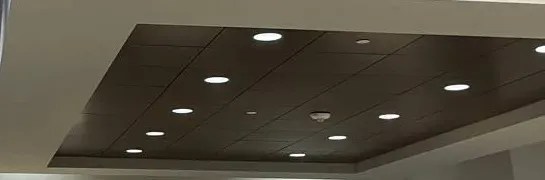
Fiske Terrace, Brooklyn lobby door buzzer installation: dark recessed ceiling panel with round downlights and a small round device framed by a lighter ceiling
A photo from the AESS job library, not taken in Fiske Terrace: a dark recessed ceiling panel with round downlights and a small round device set into a lighter surrounding ceiling. Finished lobby ceilings like this one are found in renovated prewar co-ops and newer buildings along Ocean Avenue, and they are why cable in those lobbies runs above the ceiling or inside the walls rather than across them.
Field Notes

Field Notes: Ring From Where the Visitor Stands, Listen From the Farthest Bedroom, Then Find the Old Bell Wire in the Cellar

These notes describe how our technicians approach a buzzer installation at a house like the ones in Fiske Terrace. They are our standard practice, not a story about one address.

Ring from where the visitor stands. The technician starts outside, at the front walk, and walks the visitor's route: up the porch steps or along the driveway to the side door. Where does a stranger naturally stop? Where does a delivery driver leave a parcel? Which door does the household itself use most? The answers decide which doors get a station, and the porch door's station goes where the visitor's hand and face naturally are, inside the door opening, not where the old bell button happened to be drilled a century ago.

Listen from the farthest bedroom. Next, the technician goes to the place in the house farthest from the door that someone will want to answer from, usually a top-floor bedroom or a rented attic floor, and asks someone at the door to knock and call out. If it cannot be heard, the indoor station belongs there, or a second chime does. In houses with a tenant upstairs, this step also settles where the tenant's station goes: near their own door, not at the far end of their floor.

Find the old bell wire. Last, the technician goes to the cellar and looks for the old doorbell transformer and the wire from the front door. In many houses it is still there, often thin bell wire run when the house was built or rewired. It is tested, but it is rarely reused for a modern station; at best it is a pull string for new cable through a wall that would otherwise need opening. The power supply's location is chosen on an owner-controlled circuit, and if there is no outlet nearby, a licensed electrician adds one.

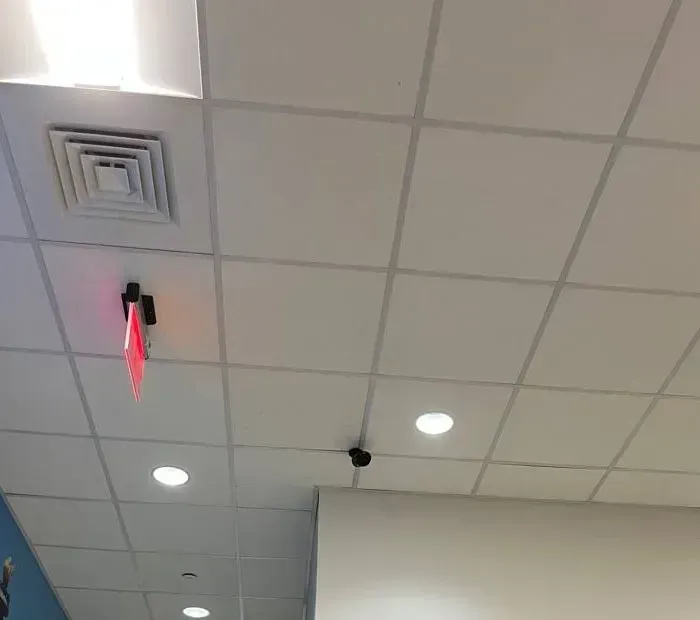
Corridor ceiling seen during a door buzzer installation survey in Fiske Terrace, Brooklyn: drop ceiling with a lit red exit sign, an air diffuser, round recessed lights and a small black camera
A photo from the AESS job library, not taken in Fiske Terrace: a drop ceiling with a lit red exit sign, an air diffuser, round recessed lights and a small black camera. Corridors like this one belong to the apartment buildings at the neighborhood's edges rather than its houses, and the exit sign is a reminder that any door a buzzer locks still has to let everyone out freely.
The Landmark Line

One Panel Per Door Opening and Ten Inches of Conduit: Installing a Buzzer on a House Inside the Fiske Terrace–Midwood Park Historic District

Almost every house in Fiske Terrace sits inside a historic district, and a door station is one of the few pieces of security equipment that has to go on the outside of the house. That makes the Landmarks Preservation Commission part of nearly every first-time buzzer installation here. The good news is that the Commission's rules for small equipment are clear, and a well-planned station fits inside them without a hearing. The rules are set out in the Commission's Permit Guidebook chapter on health and safety equipment, which covers light fixtures, intercoms, security cameras and mailboxes together.

Where the station may go. The guidance says light fixtures, intercom panels and doorbells "must be installed within or adjacent to a door opening." An intercom may also be mounted "on a fence or wall in front of the entranceway." Equipment generally cannot go on or in front of a primary facade "unless no other option exists," and when it must, it should sit somewhere discreet, such as beneath a band course, under a stoop, behind an areaway wall or fence, or behind plantings. For a porch house, that points to the door opening under the porch roof as the natural place.

How much may go there. At staff level, the Commission allows "a maximum of two light fixtures and one intercom panel" per door opening. That is a real constraint for a house with a tenant. A two-household house should not get two separate panels side by side at the porch door; it should get one panel with two buttons. If the tenant has a separate door, that door opening can have its own panel.

How it is fastened. Equipment must attach at "mortar joints, plain masonry, wood, or metalwork," and attachment "through cast iron or on any decorative surfaces" is not allowed. On most porch doors that means plain painted casing or the wall beside it, not a carved bracket, a leaded glass sidelight or a decorative panel. We use the smallest fasteners that hold the station securely and place them where the holes could be filled and painted if the station were ever removed.

How the cable gets in. Conduit should be concealed by running it through the wall behind the installation. Where that is not possible, staff may approve "a maximum of approximately ten inches of visible conduit," painted to match the background. In practice, we bring the cable straight through the wall behind the station into the front hall, so no conduit is visible at all. On a stucco or brick wall, we drill at a mortar joint or in plain material, never through decorative work.

What the station looks like. The design, size and finish must be "compatible with the architecture of the building," with intercoms neutral and discreet. A small dark or painted station beside a painted wood door meets that; a large brushed-steel apartment panel does not. If the owner wants a camera at the door as well, the Commission's camera rules apply separately: no more than two security cameras per 25 feet of street frontage for small buildings, dome-type and finished to match. Most door stations include their own camera, which often means no separate camera is needed at the door.

What a permit application needs. Applications are filed through the Commission's Portico system, usually with color photos and comparative drawings. Manufacturer cut sheets are required for intercoms, and elevation drawings are required except for "in-kind replacement of existing light fixtures, intercoms, security cameras, and mailboxes." Ordinary maintenance and repair, such as replacing a failed station with the same kind, need no permit. A new station where there has only been a bell button, or a different station in a different spot, is new work. We prepare the cut sheet, photos and a marked-up drawing showing the station position, the fasteners and the cable route, and the owner or their expediter files it.

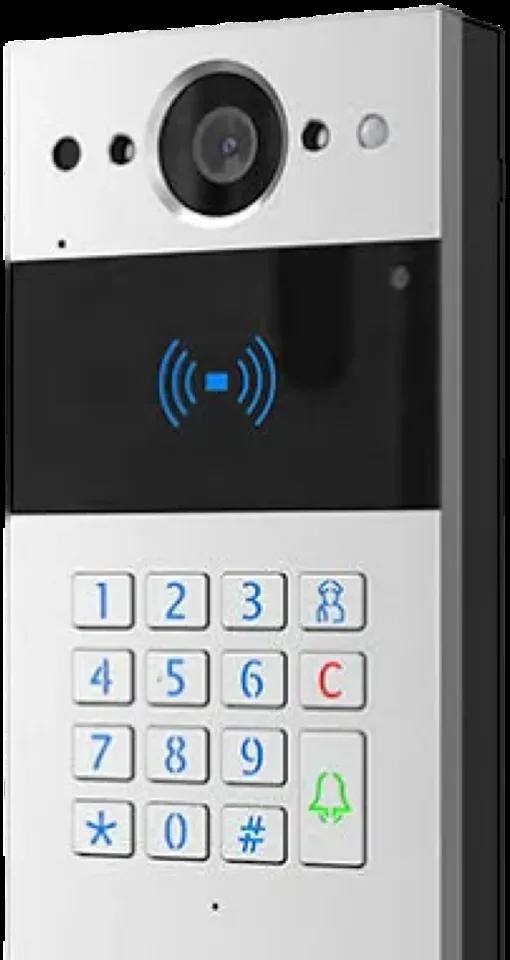
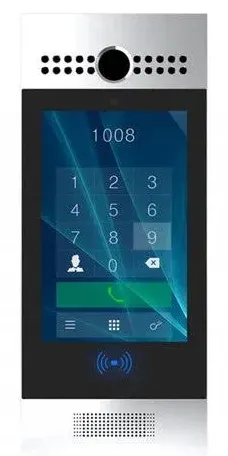
Keypad entry station considered for a door buzzer installation in Fiske Terrace, Brooklyn: silver and black unit with a camera lens at the top, a blue card-reader symbol, a numeric keypad and a green bell key
A photo from the AESS job library, not taken in Fiske Terrace: a silver and black keypad door station with a camera lens at the top, a blue card-reader symbol, a numeric keypad and a green bell key. A unit like this suits the street door of an Ocean Avenue co-op far better than a porch door inside the historic district, where the Commission's guidance speaks only of intercom panels and doorbells and a keypad is worth raising with staff before it is ordered.
Installation Day

One Visit for a House, a Planned Schedule for a Lobby: How Installation Day Works From the Porch to the Top Floor

The size of the job decides how installation day runs. For a one- or two-household house, it is usually a single visit, with the household at home. For a co-op or rental building, it is a schedule built around getting into every apartment, and that schedule is the thing most likely to stretch a job if it is not planned.

A house in one visit. At a house, the technician arrives within a two-hour window agreed in advance and starts in the cellar: the power supply goes on its circuit and the cable route up through the house is opened. Then the door: the strike goes into the frame and the closer is set. Then the station outside and the answering units inside. The front door is out of service for a short stretch while the strike goes in, and we plan that for a time when someone is home. By the end of the visit, every household has been called from the door, has talked with the technician on the porch, has released the door and has watched it relock.

A lobby on a schedule. A full building installation needs the technician inside every apartment at least once. Brick Underground's NYC intercom guide estimates a five-apartment building can be done in about a day and a 100-unit building in about two, and those figures hold only if the installer can get into the apartments when planned. For a co-op of 27 to 66 apartments, that means written notice from the managing agent with dates, two-hour arrival windows and a description of what the technician will do inside each unit; a first pass through every apartment and a second, shorter pass for those missed; and, where shareholders agree, key access through the super with someone present.

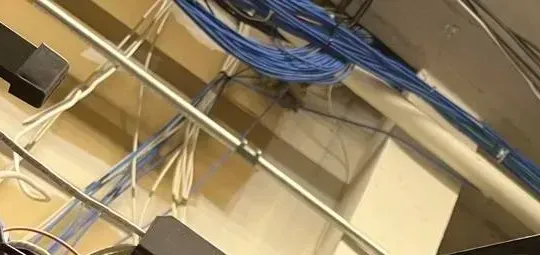
Cable route for a door buzzer installation in Fiske Terrace, Brooklyn: bundles of blue low-voltage cable laid over a ceiling beam and a metal pipe in an open ceiling
A photo from the AESS job library, not taken in Fiske Terrace: bundles of blue low-voltage cable laid over a ceiling beam and a metal pipe in an open ceiling. In a Fiske Terrace house the same kind of route usually runs along the cellar joists from below the front hall to the power supply, which is why the cellar work can be finished before the technician needs to be at the door.
The Rules

Which Fiske Terrace Buildings the Intercom Law Covers, and What Every Door With a Buzzer Still Has to Do

Houses are outside the intercom mandate. New York's Multiple Dwelling Law applies in cities of 325,000 people or more, which covers all of New York City, and its §50-a sets the intercom duty at buildings with eight or more apartments. ButterflyMX's guide to New York intercom law notes that buildings with fewer than eight units are "not generally" covered. A Fiske Terrace house with a rented top floor or a basement apartment is far below that line. A buzzer there is a choice the owner makes for the household's comfort and safety, not a legal requirement.

Larger buildings need a talk-and-release system. Under §50-a, every class A multiple dwelling built or converted after January 1, 1968 with eight or more apartments must have a self-locking main entrance door and an intercommunication system that lets tenants talk with a visitor and release the door. 1256 Ocean Avenue, built in 2014 with 26 units, falls squarely in that group. For buildings of that size built before 1968, such as the prewar co-ops on Ocean Avenue and 800 East 17th Street, the owner has to install the door and the system when tenants occupying a majority of the apartments ask or consent in writing; the work must start within 90 days and finish within six months.

A working intercom is treated as essential. Habitat Magazine's February 2024 article on intercom duties notes that the city's housing maintenance code requires a "functioning intercom" where one is required, and that courts have treated intercoms as an essential service under the warranty of habitability. Nancy Kourland of Lasser Law Group put it directly for co-ops: "As a result, the co-op has a legal obligation to repair or replace the intercom." For a board weighing a repair against a replacement, that is the starting point: the system has to work.

Everyone must be able to get out. A door with a buzzer still has to let people leave without a key, code or special knowledge. With an electric strike that is automatic: Allegion's guide notes that with a strike "you can exit by turning the lever" whether the strike is fail-safe or fail-secure. That is why strikes are our default on residential doors. Magnetic locks hold the whole door and fall under the building code's sensor-release provisions: a sensor on the egress side, a manual release marked "PUSH TO EXIT" 40 to 48 inches above the floor within five feet of the door, unlocking when power is lost and when a fire alarm or sprinkler activates, and hardware listed to UL 294. We rarely recommend them for a house or a co-op lobby.

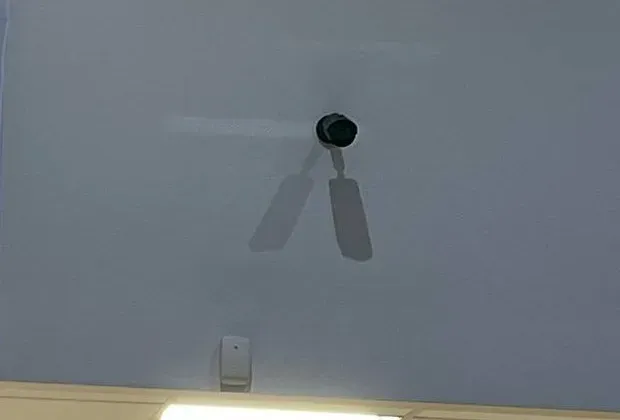
Entrance hardware check during a door buzzer installation in Fiske Terrace, Brooklyn: small black camera mounted high on a pale wall casting two shadows, with a small white wall device below
A photo from the AESS job library, not taken in Fiske Terrace: a small black camera mounted high on a pale wall, casting two shadows, with a small white wall device below it. In an Ocean Avenue co-op vestibule, equipment like this often already watches the door, and a new entry system can be planned around it rather than adding a second camera at the same spot.
Commercial Door Buzzer Installation

Business Door Buzzer Installation in Fiske Terrace

Fiske Terrace itself is almost all houses, so its business doors sit on the edges: the short commercial stretches of Avenue H near the station and of Foster Avenue, the ground floors and management offices of the apartment buildings on Ocean Avenue, and the occasional office or practice run from a house or a storefront. Their entry needs are small, but in each one a door that should stay locked still has to open for the right visitor without someone walking to it.

Avenue H beside the station house

Small mixed buildings near the Avenue H stop on the Q, some classed as two-family with a store, where the apartments' door and the shop's door share a narrow frontage.

Foster Avenue's northern edge

The avenue along the district's northern boundary, where stores with apartments above have stood since the early 1900s and residential doors sit beside shopfronts.

Ocean Avenue ground floors

The lobbies, super's offices and service doors of the co-op and rental buildings facing Ocean Avenue, where staff and deliveries need a door that is not the residents' front door.

The Avenue H co-op across from the district

1710 Avenue H, a 37-unit elevator co-op of about 1937 by Max E. Ungarleider, whose stone entrance with an arched door needs a station placed with care.

Offices and practices in houses

A home office, studio, tutoring room or professional practice in a Fiske Terrace house, where clients should reach the office door without ringing the family's bell.

For a store with apartments above, the usual job is a buzzer at the back or side door that deliveries use, answered at the counter or on the manager's phone, kept entirely separate from the residential system on its own power and its own station. Staff can see or hear who is there and release the door without leaving it propped, and nothing they press can open the apartments' door.

For 1710 Avenue H and buildings like it, the challenge is the entrance itself. Brownstoner's June 2026 profile describes "an elaborate entrance with crenellated top and arched door, and rustic stone details." Brownstoner notes the building is just across the street from Fiske Terrace and the historic district, so the Commission's rules may not apply, but the stone still should not be drilled through its face. On an entrance like that, the station goes on plain material at the door opening or inside the vestibule, fixed at mortar joints, with the cable brought in through the frame.

Rules that apply to Fiske Terrace business entry installations

  • Free exit at all times. Every business door with a buzzer must still open from inside without a key or code. An electric strike keeps the inside lever working, so it is our default.
  • Accessible reach. Buttons and stations on doors the public uses stay between 15 and 48 inches above the floor, inside the 2010 ADA Standards' reach range.
  • Landmarks for district houses. A practice or office in a house inside the historic district follows the Commission's small-equipment rules for its station: at the door opening, one panel per opening, fastened to plain material.
  • Owner approval in writing. A shop or office tenant gets the building owner's written approval before work on a shared door starts.

If a business also wants a camera on its entrance, it can go in on the same visit and be priced with the buzzer; customers who combine the two typically save $200 to $400 in labor.

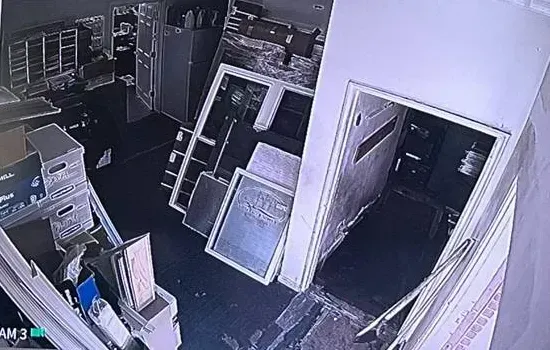
Back-room door view behind a shop considered for a door buzzer installation in Fiske Terrace, Brooklyn: black-and-white night camera view of a cluttered room with an open doorway into a dark back room
A photo from the AESS job library, not taken in Fiske Terrace: a black-and-white night camera view of a cluttered room with an open doorway into a dark back room. Back rooms like this one behind small Avenue H and Foster Avenue shops usually lead to the delivery door, which is where a separate shop buzzer, kept apart from the apartments' system, does the most good.
Your Questions Answered

Door Buzzer Installation in Fiske Terrace: Questions Answered

Questions Fiske Terrace homeowners, co-op shareholders and Avenue H building owners bring to us, along with ones raised in Brownstoner and BiggerPockets threads about buzzers for multi-family houses, answered for the houses and buildings here.

Old houses and the fittings they came with

Our house is one of a series of similar houses put up by the same builder around 1906. If the neighbors' houses share our plan, can one buzzer layout simply be copied from house to house?

Partly. The Landmarks Preservation Commission's designation report notes that the T.B. Ackerson Company built Fiske Terrace houses in series of ten to twenty, and that the builders avoided putting identical houses side by side. So two houses on the same block may share a floor plan, a stair position and a cellar layout, which helps: once we know where the cable can run in one, we have a good first guess for the other.

What cannot be copied is everything that changed in the century since. One house has a finished attic with a tenant; the next is still a one-family. One has had its porch enclosed; another has a new side entrance. One owner rewired in the 1970s and left a clear chase from the cellar; the neighbor's walls were closed up with plaster that has never been opened. Each house still gets its own walk, its own wire test and its own written price, even if the design looks familiar.

Our porch door is original, with a large glass panel set in narrow wood stiles. Is there enough solid wood in the frame for an electric release?

Usually, because the electric strike goes in the frame, not the door. The door's glass and narrow stiles matter for the lock, but the strike replaces the metal plate in the jamb that the latch bolt catches on, and the jamb of an old porch door is usually solid wood. We check its depth and condition where the strike would go, and choose a strike body that fits without cutting away so much wood that the frame is weakened.

Two things can complicate it. If the latch bolt does not line up with the plate any more, because the door has dropped on its hinges or the frame has moved, the door has to be adjusted first, or the strike will not release reliably. And if the jamb has been patched many times where older locks were changed, there may not be enough sound wood left; in that case we say so before quoting, and a carpenter can splice in new wood before the strike goes in.

Households, tenants and phones

Two roommates rent our top floor and each wants the front door to ring their own phone. Can one button reach both, and what happens when one of them moves out?

Yes. With a station that supports phone answering, one button can ring several phones at once, and whoever answers first talks to the visitor and releases the door. This solves the problem tenants raised on a Brownstoner thread about phone-dialing intercoms, where only one roommate's phone rang and the other was left out. An indoor station on the top floor can ring at the same time, for anyone who is home without a phone in hand.

When one roommate moves out, the owner removes that person's phone from the account and adds the replacement. That is the reason we set up the account in the owner's name, not a tenant's, with each household's phones as users the owner controls. An owner on BiggerPockets asked how to make sure a former tenant loses access to a shared smart doorbell; with the account in the owner's hands, the answer is a two-minute change on the day they leave.

Our tenant tutors students at home, and her students come to the side door. Can they ring her without ringing our family?

Yes. The side door gets its own station, and its button rings only the tenant's indoor station or phone. The front door's station rings the family. Each station releases only its own door, so a student at the side door can be let in by the tenant without the family's front hall being opened, and a visitor for the family never ends up at the tenant's stair.

If both households sometimes use both doors, each station can carry two buttons, one for each household, labeled clearly. What matters is that every button rings the household it says it rings, and every release opens only the door it belongs to.

The apartment buildings at the edges

We live at 800 East 17th Street, the one apartment house inside the historic district. Does a new lobby panel there need Landmarks approval like the houses around us?

It depends on where the panel goes. The Commission's designation report names 800 East 17th Street, a six-story building of 1936 at the northwest corner of Wellington Court and East 17th Street, as the only apartment house in the district, so the building is subject to the Commission's rules for exterior work. A panel mounted outside the entrance is exterior work and follows the same small-equipment rules as the houses: at the door opening, one panel per opening at staff level, fastened to plain material, with concealed cable.

A like-for-like replacement of an existing intercom panel is ordinary repair or in-kind replacement, which the guidebook treats more lightly; the Commission exempts in-kind replacement of intercoms from elevation drawings. A panel inside the vestibule, entirely indoors, generally needs no Landmarks permit unless the work also needs a Department of Buildings permit or affects the exterior. We check with the board or managing agent which of those the building's plan is before ordering, and prepare the cut sheet and photos if a filing is needed.

Our Ocean Avenue co-op has just received an HPD order about the lobby door's self-closing hardware. Should the intercom replacement wait until the door is fixed, or be done together?

Fix the door first, or at least at the same time. A self-closing door violation is about the door, its closer and its hinges, and it has its own correction deadline; the class is printed on the notice. An intercom replacement does not clear it, and a new strike on a door that does not close and latch by itself will not work reliably. 1280 Ocean Avenue's June 2026 Class C order for a self-closing condition shows that this is not a hypothetical for buildings here.

In practice, we often do both in one plan. The closer is adjusted or replaced and the hinges are fixed so the door shuts and latches every time, then the new strike goes into a frame that holds the latch properly, then the new panel goes up. If the board has already hired someone for the door, we coordinate with them so the strike and closer work together.

The intercom riser in our 1930s co-op runs through a stack of apartment closets, and some shareholders have built shelving over the junction boxes. How do you test and work on it?

With notice and patience. Riser junction boxes in closets are common in prewar buildings, and a shelf or a cabinet built over one is common too. Before the riser test, the managing agent tells the shareholders in that line which closet the technician needs to reach and asks them to clear access to the box. Where a shelf cannot be moved, we work around it if we can reach the box; if we cannot, that line's test waits for the second pass.

The test itself is done pair by pair from the cellar or lobby terminal to each apartment. Each pair is marked reusable or not, and the result is a list the board can see: which lines passed, which failed, and which could not be reached. That list decides whether a two-wire system can run on the old riser and how many new runs the job needs.

Shops and mixed buildings on Avenue H and Foster Avenue

We bought a store-and-apartment building on Avenue H where the shop's bell and the apartments' buzzer run off the same transformer in the cellar. Can they be separated?

Yes, and they should be. A single transformer feeding both means that if the shop's bell shorts, or someone switches off the circuit it is on, the apartments lose their buzzer too. It also means the shop's wiring and the apartments' wiring meet at one point, which is where cross-wiring happens: a shop button that releases the residential door is a mistake we see in mixed buildings more often than owners expect.

The fix is two power supplies on two circuits, both under the owner's control, with the apartments' system on its own. The shop's bell or buzzer stays on the shop's supply, and the two sets of wires are traced, labeled and separated at the cellar so nobody can confuse them later. If the apartments' system is old, this is often the moment to replace it with a station that calls each apartment and a strike sized for the residential door.
Equipment

Types of Door Buzzer Systems We Install

The equipment below covers nearly every Fiske Terrace job, from a one-button porch station to a 66-apartment lobby. Quotes default to our own non-branded system; if you want a particular brand, ask and we will price it.

Single-button porch stations

Slim audio or video stations sized for the casing beside a porch or side door, for one-family houses where one household answers.

Two- and three-button house stations

One panel with a labeled button per household, so a house with a tenant stays within the Landmarks limit of one intercom panel per door opening.

Indoor audio handsets

Simple talk-and-release stations for households that want a button on the wall rather than a screen or an app.

Video monitors

Wall screens on each floor that show the porch or side door, for households that cannot see the door from upstairs.

Phone answering

Stations that ring residents' phones, alone or with an indoor station, for households that are often out or roommates who each want the call.

Lobby button and directory panels

Panels for the co-op and rental buildings on Ocean Avenue, East 17th Street and Avenue H, wired to apartment stations over tested riser pairs.

Fail-secure electric strikes

Strikes that hold the latch when power is off and release on command, fitted to old wood jambs and to steel lobby frames.

Door closers

Closers adjusted or replaced so the door swings shut and catches the latch every time, sized for the weight of the door.

Battery-backed power supplies

Low-voltage supplies on an owner-controlled circuit in the cellar or a closet, with battery backup so a short outage does not silence the door.

Store-bought video doorbell, wired house buzzer or phone-answering station: which fits a Fiske Terrace house?

What mattersStore-bought video doorbellWired house buzzerPhone-answering station
Lets someone upstairs open the doorNo, someone still walks downYes, from each indoor stationYes, from the phone or an indoor station
Separate button per householdOne button for the whole houseYes, on one panelYes, on one panel
Needs Wi-Fi at the doorYesNoYes, or a cellular link
Works when the internet is downUsually notYesIndoor stations yes; phones no
Fits the Landmarks one-panel ruleOne per household quickly breaks itYesYes
Brooklyn list rangeNot something we install as a buzzer$400–$900 audio; $700–$1,800 video$700–$1,800

Ring, SimpliSafe or ADT, or a licensed local installer, for a Fiske Terrace door

The national names come up often. Ring sells video doorbells that a household installs itself; one can make sense for a single family's door, but it has no door release, so it cannot let a tenant on the top floor open the porch door. SimpliSafe sells self-installed alarm systems and ADT sells professionally installed and monitored security, mostly alarms and cameras; neither is built around a station that calls each household and releases the door. At a Fiske Terrace house, the work that matters is the strike in an old jamb, the closer, the station placed within the Landmarks rules, and the cable from the porch to the cellar, and that is work a local licensed installer does on site.

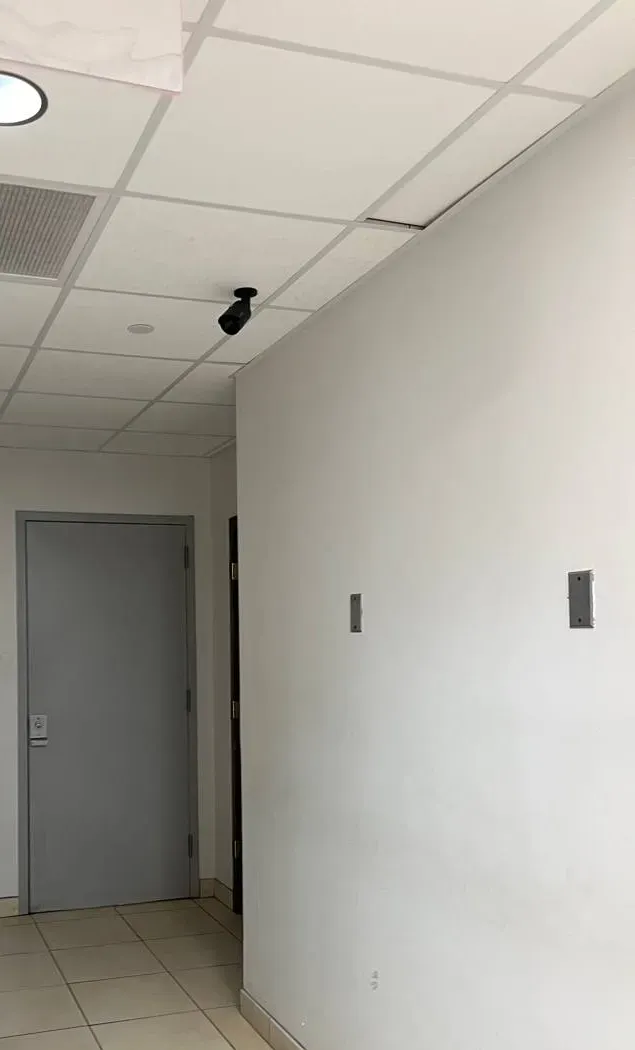
Steel corridor door of the kind fitted with a buzzer release in Fiske Terrace, Brooklyn apartment buildings: tiled corridor with white walls and small wall plates ending at a grey steel door with a lever handle under a drop ceiling with a small camera
A photo from the AESS job library, not taken in Fiske Terrace: a tiled corridor with white walls and small wall plates ending at a grey steel door with a lever handle, under a drop ceiling with a small camera. Steel doors like this one are found at the service and cellar entrances of the apartment buildings along Ocean Avenue, and a lever-handle door takes an electric strike while anyone inside can still leave by turning the lever.
AI Overview Reality Check

What AI Gets Wrong About Door Buzzer Installation in Fiske Terrace

Ask a search engine about buzzer installation and you get confident summaries built from national cost guides and vendor blogs. Some of it is useful; some of it does not fit a hundred-year-old porch house or a prewar co-op at all. Here are seven common claims, where they come from, and what we see in the field. We have not quoted any AI-generated answer word for word; the claims below come from the published guides those answers draw on.

"A whole-house intercom costs $1,000 to $1,500 to install"

HomeAdvisor's intercom cost guide gives that range for installing a five-room whole-house system, within an overall average of $2,500.

A whole-house intercom, with speakers in every room, is not what most Fiske Terrace households are asking for. They want a station at the door and a way to answer and release from each floor or each household. That is a smaller job, and a two-household audio buzzer sits at the bottom of our Brooklyn list, $400 to $900.

Where the figure does fit is a large house whose family wants room-to-room calling as well. Then the indoor stations multiply, and the price moves into the video range or above, depending on how many rooms and floors are included.

"Each station takes one to two hours to install"

The same HomeAdvisor guide estimates one to two hours of labor per intercom station.

Mounting a station can take that long. The time at a Fiske Terrace house goes elsewhere: finding a cable path from the porch through a plaster wall to the cellar, fitting a strike into an old jamb, adjusting a closer, and, inside the district, preparing a station drawing and cut sheet for the Landmarks Preservation Commission.

So we do not price by station hours. We price the job after a walk, with the cable route, the door work and any Landmarks preparation each listed, so you can see where the time goes.

"A video doorbell does the same job as a buzzer"

Retail guides often treat a smart video doorbell as the modern replacement for a buzzer, and one Brownstoner forum reply described wiring a doorbell camera with plug-in chimes for about $40.

A video doorbell shows who is at the door and lets you talk to them. It does not release the door. In a one-family house where someone is always downstairs, that may be enough. In a house with a tenant on the top floor, or an older resident who cannot get to the door quickly, it leaves the real problem untouched: someone still has to walk down and open it.

A buzzer adds the release, a button per household and, with a closer, a door that locks again behind the visitor. That difference is the whole job.

"Smartphone intercoms need new internet cabling at the entrance"

Habitat Magazine's 2017 report on new buzzer systems noted that many smartphone systems rely on internet cabling, often requiring new wiring at the building entrance.

For a co-op on Ocean Avenue, that is not always so. Many current two-wire systems carry video over the old intercom pair and add phone answering through a gateway in the cellar, which keeps the riser in use. The Park Vanderbilt co-op in Park Slope replaced its audio system with video and reused the old cable except for two units, which its installer said saved $20,000.

Whether that works in a given building depends on the riser test. We test first, then recommend the system that fits the wire the building actually has.

"Software subscriptions add $5 to $15 per unit per month"

Swiftlane's apartment intercom cost guide gives that range for app-based systems, or $30 to $100 per door per month.

For a 48-apartment co-op like 1212 Ocean Avenue, $5 to $15 per unit works out to $240 to $720 a month, every month. Some boards decide that is worth it for phone answering and remote management; others do not.

It is not a requirement. A wired system with indoor stations has a $0 monthly fee option, and phone answering can be limited to the households that want it. Any subscription is shown on the quote, beside the hardware, before a board votes.

"Fail-safe locks are the safer choice"

The words make it sound that way, and some summaries recommend fail-safe hardware because it unlocks when power is lost.

Allegion's guide explains the difference: "Fail safe products are unlocked when power is removed," while "Fail secure products are locked when power is removed," and with an electric strike "you can exit by turning the lever" either way. For a porch door or a lobby door, a fail-safe strike means the door opens to anyone during a power cut, which is the opposite of what a household wants.

So our default on residential doors is a fail-secure strike with a battery-backed power supply. People can always leave by the lever; nobody gets in during an outage without a key.

"A virtual doorman is the modern replacement for an intercom"

Habitat's 2017 report quoted Nicholas Silvers of Tavros Capital putting a virtual doorman, an off-site call center, at about $15,000 a year for a 28-unit building, and noted that smartphone systems are usually more cost-effective.

A virtual doorman can suit some buildings, but it is a service on top of an entry system, not a substitute for one; the remote attendant still needs a panel at the door and a release. For a co-op of 27 to 66 apartments, a figure like $15,000 a year is a large commitment next to a one-time installation.

The buildings near Fiske Terrace that list an intercom list a voice intercom, and the one with a doorman, 1256 Ocean Avenue, lists both. That combination, a working panel and a desk that can answer it, is usually the right model.

Not Sure Whether Your Porch Door, Your Old Bell Wire or Your Lobby Riser Can Take a New Buzzer? Speak to a Tech

Send a photo of the door from outside and inside, the old bell button or lobby panel, and any indoor station you can reach, with the address and the number of households, to (347) 934-8335 or on WhatsApp. A technician will tell you which part most likely needs work, whether a Landmarks filing is likely, and whether a repair, an extension or a new system makes sense, before anyone visits. Or use the request form and we will call you back.

Get In Touch

Request a Free Quote

✅
Request Sent!
Thank you. A technician will call you about the Fiske Terrace address, usually within two hours during working hours.
How It Works

Our Installation Process

1. Send photos and say who uses which door

Photos of the porch door from the walk and from inside, any old bell button or lobby panel, and the side door if people use it, with the number of households and who owns or manages the property.

2. Check the landmark status and who signs

Whether the address is inside the historic district and needs a Landmarks filing for the outside station, and whether the homeowner, co-op board or managing agent authorizes the work.

3. Walk the doors and pick the station spot

Each door is closed again and again to see that it shuts and latches, the jamb is checked for a strike, and the station spot is chosen inside or beside the door opening.

4. Map the cable route and the power

The path from the door to every household through the cellar, a closet or a riser is found, old wire is tested pair by pair, and an owner-controlled circuit is chosen for the power supply.

5. Price the job in writing

Station, answering units, strike, closer work, power, cable, labor and any Landmarks preparation on one written price, with every possible add-on named before ordering.

6. Prepare the door and the power

The closer is set so the door relatches, the strike goes into the frame, and the battery-backed supply goes in, with a licensed electrician for any new 120-volt outlet.

7. Install, label and program

Cable is run or reused, the door station and indoor stations or phone accounts go in, and every button, wire and station is labeled with its household.

8. Test from the front walk and hand over

Every household is called from the door, talks, releases and watches the door relock; the owner gets the wiring record, the test sheet and instructions for each household.

Code-entry panel option for a door buzzer installation in Fiske Terrace, Brooklyn: touchscreen entry panel showing a dial pad with a four-digit apartment code entered, a camera above and a card-reader symbol below
A photo from the AESS job library, not taken in Fiske Terrace: a touchscreen entry panel showing a dial pad with a four-digit apartment code entered, a camera above and a card-reader symbol below. A dial-code panel like this one suits the lobby of a 48- or 66-apartment co-op on Ocean Avenue, where a row of buttons would be long, and step 8 checks every apartment's code from the sidewalk.
Coverage Area

Door Buzzer Installation Near Fiske Terrace's Landmarks

Avenue H station house

The wood-framed station house on the Q line, built in 1906 as the Fiske Terrace sales office and designated a landmark in 2004.

Fiske Terrace–Midwood Park Historic District

About 250 freestanding houses designated by the Landmarks Preservation Commission on March 18, 2008, where every outside door station follows its rules.

Glenwood Road and East 17th Street malls

The planted center strips that run down these two streets, a feature of the original plan and a reminder of how wide and set back the houses are.

Midwood Park entrance posts

The posts of about 1910 at Foster Avenue, still standing at East 17th, 18th and 19th Streets on the district's northern edge.

The Bay Ridge freight cut

The former Manhattan Beach railroad line along the southern edge, freight-only since passenger service stopped in 1924, where several streets dead-end.

70th Precinct station house

154 Lawrence Avenue, the precinct that covers Fiske Terrace along with Midwood, Ditmas Park and Prospect Park South.

We also serve Ditmas Park, Beverley Square and East Flatbush at the same Brooklyn rate, along with Midwood and the rest of Flatbush. See our door buzzer installation in Brooklyn page for the whole borough.

Pricing

Door Buzzer Installation Cost in Fiske Terrace

Fiske Terrace is billed at our Brooklyn rate, with no premium for district houses beyond any Landmarks preparation the job needs, which is listed on its own line. Final pricing follows a walkthrough, because the number of households, the doors people use, the cable route and the condition of the door drive the total far more than the brand on the station.

JobTypical Fiske Terrace propertyBrooklyn range
Audio buzzer with electric strike release, existing wiring reused where it tests wellOne-family house, or a house with one tenant sharing the porch door$400–$900
Video door station with indoor monitors or smartphone door releaseHouse with a rented floor or separate tenant entrance, store with a few apartments above$700–$1,800
Directory or button panel with every apartment wired, audio or video by unit count, optional fob integrationCo-op or rental buildings on Ocean Avenue, East 17th Street and Avenue H$2,500–$10,000+
Service call booked onlineDiagnosis of an existing lobby or house system before deciding to repair or replace$250, applied toward the work
Monthly fee on a wired systemAny house or building choosing the no-subscription option$0
Buzzer and entrance camera on the same visitPorch doors, lobby vestibules and shop doorsTypically saves $200–$400 in labor

What moves a job inside its range is predictable here. First the households and doors: a second station at the side door, or a separate tenant entrance with its own release, adds a station, a strike and cable. Then the route: a clear path from the porch wall to an open cellar keeps a house near the bottom, while a finished cellar ceiling or plaster walls with no chase push it up; in a co-op, the share of riser pairs that pass the test decides most of the price. Then the extras: video instead of audio, phone answering, a closer that has to be replaced, and Landmarks preparation for a district house. Anything that depends on a test is named on the quote with its price before you approve, so nothing new appears on installation day.

Full terms — including 50% deposit, one-year parts-only warranty on AESS-supplied products, and the late-fee schedule — are set out in the service agreement.

Find Out Which Range Your Fiske Terrace House or Building Falls In

Tell us the address, the number of households, which doors visitors use and whether the house is inside the historic district, and we will tell you which of the three Brooklyn ranges fits and what would move it up or down. Call or text (347) 934-8335, send photos on WhatsApp, or fill in the form.

Shop Our Systems

Door Buzzer Installation Packages & Pricing

Three typical Fiske Terrace jobs, each placed inside the matching range on our Brooklyn list. The exact figure comes from the walkthrough.

Porch house buzzer: $400–$900

An audio station with a button for each household at the porch door, an answering station on each floor, a fail-secure strike in the jamb, a closer that pulls the door shut and a battery-backed supply in the cellar.

House with a tenant, video: $700–$1,800

A video station at the porch door, a second at the side or tenant door where needed, monitors or phone answering for each household, strikes sized for each door and the old bell wire tested or replaced.

Co-op or rental lobby system: from about $2,500

A button or dial-code panel at the lobby door, stations or phone answering for every apartment, riser pairs tested and reused where sound, strike and closer work and owner-controlled power, rising toward $10,000 or more with unit count and new cable.

Bring your own equipment. If you have already bought a door station or intercom kit, we can install it as labor-only work, quoted flat once we have seen the doors, the frames and the cable path. Tell us the make and model when you write, and we will tell you before the visit whether it can reach every household and release your door, or whether it is really only a doorbell.

Complete Services

Every Door Buzzer Service in Fiske Terrace

Houses and tenants

First buzzers, tenant stations, side-door stations, strikes, closers and Landmarks station plans. Request a quote

Lobbies and shops

Co-op and rental lobby systems, riser tests and separate shop systems on Avenue H. Call (347) 934-8335

Across Brooklyn

The same list in every neighborhood. Brooklyn door buzzer installation

Across New York City

Every borough's buildings and rules. NYC door buzzer installation

FAQ

Fiske Terrace Door Buzzer Installation FAQ

Does adding a second station at the side door double the price of the job?
+

No. The power supply, the indoor stations and most of the cable route are shared, so a second door adds its own station, its own strike if it needs a release, and the cable from that door to the cellar. On a house, that usually keeps the job in the same Brooklyn range or moves it from the audio range into the video range, and the written price shows the second door as its own line.

Will the electric strike show from the porch once it is installed?
+

Barely. The strike sits in the jamb where the old strike plate was, so from the porch you see a metal faceplate on the edge of the frame, only when the door is open. Nothing is added to the face of the door or the casing, and the wire runs inside the jamb and the wall.

Can a district house avoid drilling through the wall by using a wireless door station?
+

Sometimes, but a wireless station still has to be fastened to the house, still needs power, and still needs a release in the frame, which is wired. It also depends on Wi-Fi or a cellular signal reaching the porch. A small hole straight through plain material behind a wired station is usually the more reliable choice and is what the Landmarks guidance expects for concealed cable.

Can the indoor station on our top floor also call the kitchen, like a house intercom?
+

Many indoor stations can call each other as well as answer the door, so the top floor can call the kitchen and the kitchen can call back. It works best inside one household; between an owner and a tenant, most people prefer stations that only answer the door. Tell us if you want it, and we choose stations that support it.

What happens to the store-bought video doorbell already on our door when the buzzer goes in?
+

Usually it comes off, because the new door station has its own camera and the Landmarks limit is one intercom panel per door opening. If you want to keep it somewhere else, we can remount it, and we fill the old screw holes in the casing. If you would rather keep it and add only a release, we will tell you honestly whether that combination will work.

Is the Midwood Park part of the historic district handled any differently from the Fiske Terrace blocks?
+

No. The Commission designated Fiske Terrace and Midwood Park together as one district, so a house north of Glenwood Road follows the same small-equipment rules as one south of it. The houses differ in builder and style, which can change the cable route, but not the Landmarks process.

Our porch has a hook-latched screen door in summer. Does it stop the buzzer from working?
+

It can. If the screen door is hooked shut from inside, a visitor who has been buzzed in still cannot get past it. Households either leave the screen door unhooked during the day or move the station and release decision to whichever door actually locks. We look at both doors during the walk and point it out before quoting.

Can our co-op keep its existing apartment stations and replace only the lobby panel?
+

Sometimes, if the new panel is compatible with the apartment stations and the riser tests well. That is often cheaper but leaves the building with mixed-age equipment. We price both options where both are realistic, so the board can compare a panel-only replacement with a full one.

Will a two-wire video system in our co-op show as clear a picture on the top floor as on the second?
+

Yes, if the riser pairs pass their test and the system is rated for the building's cable lengths. Six-story buildings are well within the range of current two-wire systems. Where one line tests weak, that apartment gets a new run, and every apartment's picture is checked from the lobby before handover.

How soon after we approve the written price can installation start?
+

Equipment is ordered once the price is approved, and the visit is booked when it arrives. For a house outside a permit question, that is usually a short wait; for a district house needing a Landmarks permit for the outside station, the indoor work can go first and the station follows the permit. Special-order equipment is flagged on the quote before you approve.

Can our tenant have a simple audio handset while our family has a video monitor?
+

Yes. Most systems mix indoor stations, so one household can have a talk-and-release handset and the other a video monitor or phone answering, all from the same door station. Each household chooses, and the price reflects the stations chosen.

Do the door station and the indoor stations have to come from the same manufacturer?
+

For a wired system, yes in practice, because door stations and indoor stations from different makers rarely talk to each other. Phone answering is the exception, since it runs through the maker's own app. We quote one matched system by default and name any limits before you approve.

More Door Buzzer Installation near Fiske Terrace

Door Buzzer Installation Brooklyn NY | Brownstones & Condos · Door Buzzer Installation NYC | Apartment & Building Entry · Door Buzzer Installation Manhattan NY | Apartments & Co-ops · Door Buzzer Installation Queens NY | Co-ops & Apartments · Door Buzzer Installation Bronx NY | Co-ops & Apartments · Door Buzzer Installation Staten Island NY | Homes & Apts · Door Buzzer Installation Long Island NY | Nassau & Suffolk · Door Buzzer Installation Hudson Valley NY | Apartments · Door Buzzer Installation Nassau County NY | Homes & Co-ops · Door Buzzer Installation Suffolk County NY | Homes · Door Buzzer Installation Westchester County NY | Co-ops · Door Buzzer Installation Rockland County NY | Homes & Apts · Door Buzzer Installation Orange County NY | Homes & Farms · Door Buzzer Installation Putnam County NY | Lake Homes · Door Buzzer Installation Dutchess County NY | Homes · Door Buzzer Installation Ulster County NY | Kingston

Door Buzzer Installation Bath Beach Brooklyn NY · Door Buzzer Installation Bay Ridge Brooklyn NY · Door Buzzer Installation Bedford-Stuyvesant Brooklyn NY · Door Buzzer Installation Bensonhurst Brooklyn NY · Door Buzzer Installation Bergen Beach Brooklyn NY · Door Buzzer Installation Beverley Square Brooklyn NY · Door Buzzer Installation Boerum Hill Brooklyn NY · Door Buzzer Installation Brooklyn Navy Yard, Brooklyn NY · Door Buzzer Installation Brooklyn NY | Brownstones & Condos · Door Buzzer Installation Brownsville Brooklyn NY · Door Buzzer Installation Bushwick Brooklyn NY · Door Buzzer Installation Cadman Plaza Brooklyn NY · Door Buzzer Installation Canarsie Brooklyn NY · Door Buzzer Installation Carroll Gardens Brooklyn NY · Door Buzzer Installation City Line Brooklyn NY · Door Buzzer Installation Clinton Hill Brooklyn NY · Door Buzzer Installation Cobble Hill Brooklyn NY · Door Buzzer Installation Columbia Street Waterfront Brooklyn · Door Buzzer Installation Coney Island Brooklyn NY · Door Buzzer Installation Crown Heights Brooklyn NY · Door Buzzer Installation Cypress Hills Brooklyn NY · Door Buzzer Installation Ditmas Park Brooklyn NY · Door Buzzer Installation Downtown Brooklyn NY · Door Buzzer Installation DUMBO Brooklyn NY | Loft Entry

Other services in Fiske Terrace

Security Camera Installation Fiske Terrace Brooklyn NY · Door Buzzer Repair Fiske Terrace Brooklyn NY · Fire Alarm Installation Fiske Terrace Brooklyn NY · Access Control Installation Fiske Terrace Brooklyn NY · Structured Cabling Installation Fiske Terrace Brooklyn NY · TV Installation Fiske Terrace Brooklyn · Intercom Installation Fiske Terrace Brooklyn NY · Alarm Installation Fiske Terrace Brooklyn NY | Porch Houses

Ready for a Fiske Terrace Door You Can Answer From Any Floor and That Locks Again Behind Every Visitor?

Send a photo of your door and whatever is beside it now, with the address, the number of households and which doors visitors use, and we will tell you which system fits and where it falls on our Brooklyn ranges. Call or text (347) 934-8335, message us on WhatsApp, or use the request form. Licensed under NYS license #12000287431, rated 4.7★ across 201 Google Reviews, with same-day estimates on most weekdays.