A frame row on 20th Street, a walk-up facing the cemetery on Fifth Avenue, a building with open intercom violations on 30th Street or a new lobby on Fourth Avenue? Greenwood Heights door buzzer installation line: (347) 934-8335
Wood-Frame Worker Rows · Brick and Brownstone Rows · Fifth Avenue Walk-Ups Facing Green-Wood · Post-Rezoning Fourth Avenue Buildings · Side Streets Between Third and Fourth
Door Buzzer Installation in Greenwood Heights
Street Door Fixed Before Electronics · Every Pair Metered · Every Household Gets Its Own Button · Written Price Before Ordering · Brooklyn Rate
Door buzzer installation in Greenwood Heights means three different jobs on the same few blocks: a first talking system for a two- or three-family frame house built as worker housing more than a century ago, a replacement for a walk-up whose old intercom keeps getting written up by HPD, and a lobby panel for one of the large buildings that went up on Fourth Avenue after the 2005 rezoning. We counted 26 HPD intercom violations on the neighborhood's streets since January 2023, 13 of them still open. Below is how we plan each kind of door here and where it falls on our Brooklyn price list.
Every job is priced from our Brooklyn door buzzer list, and the full figure, including any extra that depends on a cable test, is agreed in writing before anything is ordered
Rated 4.7★ across 201 Google Reviews
Reviewed and updated November 12, 2026, against NYC Open Data's HPD Housing Maintenance Code Violations dataset (violations mentioning an intercom, ZIP codes 11232 and 11215, filtered to 18th through 38th Streets and Fourth Avenue frontage, queried November 12, 2026); New York's Multiple Dwelling Law §50-a and the Buildings Department rule 1 RCNY §42-01; Habitat Magazine's February 2024 column "A Working Intercom Isn't an Amenity"; Brick Underground's 2019 NYC intercom repair guide; Brownstoner's 2014 Building of the Day on 18th Street and its forum thread on video doorbells for multi-family houses; the Department of City Planning's 2005 South Park Slope rezoning summary; the Brooklyn Eagle's 2020 walk along the cemetery's Fifth Avenue edge; Forgotten New York's walk around Green-Wood; New York YIMBY, NYREJ and PincusCo on new Fourth Avenue buildings; Wikipedia's articles on Greenwood Heights, Green-Wood Cemetery and Industry City; the HomeAdvisor, Swiftlane and ButterflyMX cost and product guides; Allegion's fail-safe and fail-secure guide; and the 2010 ADA Standards. · Abstract Enterprises Security Systems, NYS license #12000287431 · crews dispatched from our Troy Avenue office in Brooklyn
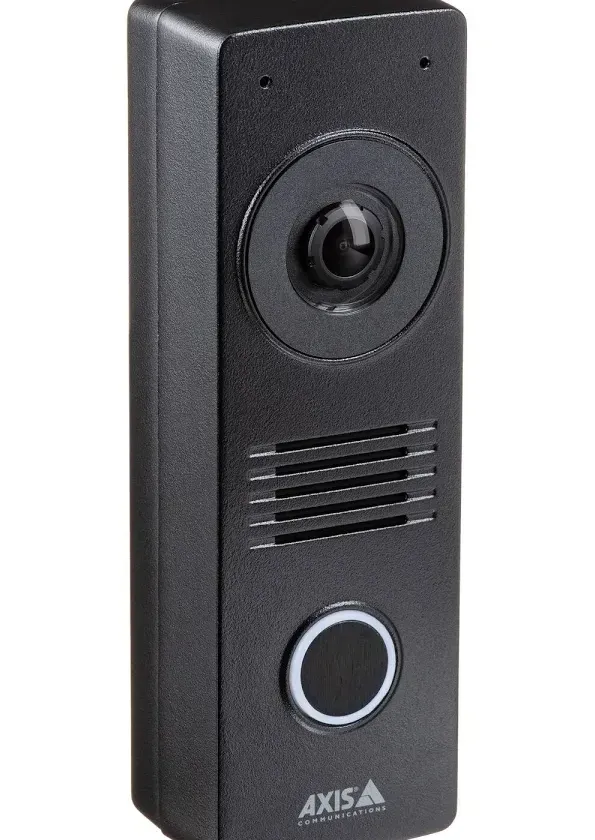
From the AESS job library, not photographed in Greenwood Heights: a black rectangular video door station with a camera, a speaker grille and a single round call button that lights up. On a one-household frame house up a stoop on one of the side streets between Fourth and Fifth Avenues, a single-button station like this replaces a bare bell push, lets the family see who is waiting and gives a courier a lit target after dark.
Greenwood Heights Buzzer Request
Frame row, brick row, Fifth Avenue walk-up, side-street building or Fourth Avenue lobby: tell us the street, how many households the system has to reach and what is on the door today, and a technician calls back with the range
✅
Request Sent!
Thank you. A technician will call you about the Greenwood Heights address, usually within two hours during working hours.
25+
Years Experience
✓
Same-Day Estimates
100%
Licensed & Insured
4.7★
201 Google Reviews
Owner-operated since 2002 · Thousands of jobs completed · Booked within 2 hours
Quick answer: door buzzer installation in Greenwood Heights costs $400 to $900 on our Brooklyn list for an audio door station and a new release at a one- or two-household frame or brick house, $700 to $1,800 for a video door station with indoor stations or phone answering at a three- or four-household row or a small walk-up over a Fifth Avenue store, and from about $2,500 to past $10,000 for a full entry system in a larger walk-up or one of the newer Fourth Avenue buildings. That price covers the door station, a station or phone connection for each household, the electric release in the street door's frame and a battery-backed power supply, installed and tested from the sidewalk to every apartment. Text photos of the stoop, the bell plate and the cellar to (347) 934-8335 or send them on WhatsApp, and we reply with the range that fits, usually within two hours during working hours.
Quoting a new system from your photos is free. If an existing system has to be tested in person before we can price it, that is our $250 service call booked online, and the $250 goes toward the work.
All work is done under New York State license #12000287431. Equipment is ordered only after the written price is approved and the deposit is paid.
We take instructions from whoever controls the street door: the owner who lives on the parlor floor, a family that holds a few buildings, a condo board, a managing agent, or a shop tenant with the landlord's written approval.
The Neighborhood
Why Greenwood Heights Properties Need Door Buzzer Installation
Greenwood Heights sits between the Prospect Expressway and 39th Street, from the Gowanus Canal and the harbor edge east toward Eighth Avenue, with Green-Wood Cemetery taking up most of its southeastern side. Developers named it partly after the cemetery, and for decades the blocks were simply counted as part of Sunset Park or South Slope. Mail here mostly goes to ZIP code 11232, though the northern blocks near the expressway use 11215, which is one reason city records for the neighborhood have to be read street by street.
For a door buzzer, the housing is what matters. The Department of City Planning described the area's side streets, when it rezoned them in 2005, as rows of two- to four-story houses built in the late 1800s and early 1900s as worker housing, with three- and four-story mixed buildings along Fifth Avenue and large lots of one-story warehouses and commercial buildings on the Fourth Avenue edge. Brownstoner's architecture writer Suzanne Spellen put it more plainly in 2014: "Greenwood Heights is better known for its wood framed houses, both restored and covered with aluminum siding." Most of those houses hold one, two or three households behind a single street door. Many still have the bell pushes they were wired with generations ago, and many have an audio system that a previous owner put in and nobody has touched since.
The rezoning also allowed something the side streets never had: tall buildings on Fourth Avenue. The R8A district on the avenue, with inclusionary housing, has brought buildings like the 14-story, 187-unit rental at 737 Fourth Avenue, and in April 2026 Community Board 7 was pressing the developer of the 214-unit St. Rocco's project for more large affordable apartments. Those buildings need a lobby panel, a directory or code entry and a way for hundreds of households to answer, which is a different job from the three-button panel on a frame house a block away.
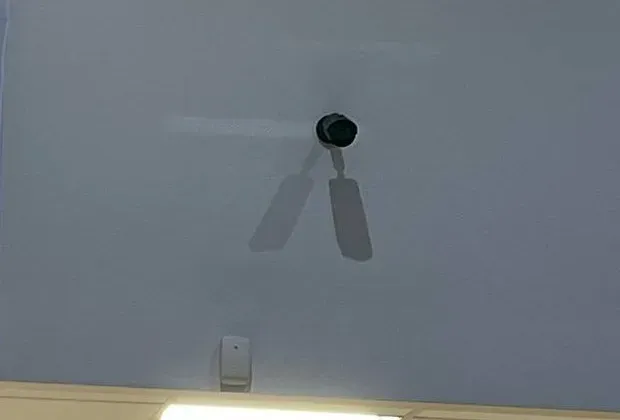
From the AESS job library, not photographed in Greenwood Heights: a small black camera mounted high on a pale wall, throwing two shadows, with a small white device fixed below it. In the vestibule of a walk-up over a Fifth Avenue store, a camera placed this high shows who actually stepped through the street door after someone upstairs pressed release, which a talk-only buzzer can never tell an owner.
The city's housing records show where the trouble is now. When we pulled every HPD violation since January 2023 that mentions an intercom at addresses on 18th through 38th Streets and the Fourth Avenue frontage between them, we found 26, written against buildings of every size from a three-family on 23rd Street to a walk-up on 29th Street with apartments on the fourth floor. Thirteen were still open in November 2026. One building on 18th Street accounts for nine of them by itself. Three neighboring buildings on one block of 30th Street account for six more, every one still open. That is not a neighborhood without buzzers; it is a neighborhood whose buzzers are wearing out.
The people answering the door matter too. Greenwood Heights is home to older Polish and Italian families who have held the same houses for decades, to younger owners who bought and restored frame houses, to tenants in the walk-ups on Fifth Avenue and to new renters in the Fourth Avenue buildings. A dead return buzzer means the same thing to all of them: walking down the stoop stairs for every delivery, or pressing release without knowing who is outside. Daniel Vasquez of Paragon Security and Locksmith, quoted in Brick Underground's intercom repair guide, summed up what most of them ask for now: "They want a camera to see in front of the door before allowing someone in."
Six facts that shape a buzzer job in Greenwood Heights
The violations are at house scale. Of the 26 intercom violations we found on these streets since January 2023, 21 named an apartment on the first three stories or the building as a whole; the other five were on a fourth floor, and none were higher.
Half are still open. 13 of the 26 were open when we checked on November 12, 2026, including all six on the one block of 30th Street.
One building can dominate the record. A single 18th Street building was cited eight times in 2023 alone, across five different apartments and once for the system "at building front to all apartments," and once more in 2024.
The worst streets in the ZIP code are just south. Across all of 11232 since 2023, 39th, 41st and 43rd Streets drew the most intercom violations, six each, on the Sunset Park blocks past the cemetery's southern edge.
The housing is mostly frame and small. City Planning's 2005 rezoning covered 50 blocks of two- to four-story rowhouses built as worker housing, set R5B and R6B on the midblocks and R8A with inclusionary housing on Fourth Avenue.
The law draws its line at eight apartments. Multiple Dwelling Law §50-a requires self-closing, self-locking doors and an intercom in class A buildings of eight or more apartments erected or converted after 1968; most Greenwood Heights houses are smaller and put one in by choice.
Where this page applies. We use Greenwood Heights for the blocks from the Prospect Expressway south to 39th Street and from the canal and Third Avenue east to the cemetery and Eighth Avenue, including the Fifth Avenue frontage facing Green-Wood and the Fourth Avenue buildings north of 39th Street. The whole area is billed at our standard Brooklyn rate. For the rest of the borough see our door buzzer installation in Brooklyn page, and for the brownstone blocks just north of the expressway our Park Slope door buzzer installation page.
Install or Repair in Greenwood Heights
Need Repair in Greenwood Heights? How We Decide Between One More Fix and a New System
Plenty of installation work here starts as a phone call about a repair. A tenant on the second floor has complained, an inspector has written up the return buzzer in the kitchen, and the owner wants to know whether one visit will clear it. Brick Underground's repair guide gives the honest starting point: the faults in most building intercoms sit in a handful of places, the base unit at the entrance, the station in the apartment, the door strike or the power supply in the cellar or the lobby ceiling. A burned-out transformer, a strike whose screws have pulled out of a soft frame, or a single handset with a cut cord is a repair, and we price it as a repair.
The record on these blocks shows when it stops being one. The 18th Street building that was cited eight times in a single year, across five apartments, is the clearest example of a system where each repair cleared one violation and the next one followed within weeks. The three buildings on one block of 30th Street that have carried open violations since 2023 and 2025 are another kind of warning: when an order to repair has sat open that long, the owner is usually being told the parts are gone or the cable is bad. In both cases a new door station and power supply on pairs that test sound, or a new system on new cable where they do not, is what ends the cycle. Our technician tells you which it is only after metering every pair, and if a repair is genuinely all your building needs, our Brooklyn door buzzer team will price it that way and nothing more.
If you are not sure, the cheapest first step is a set of photos. A picture of the panel at the door, one of the bell transformer or power supply in the cellar and one of a station inside an apartment usually tells us the age and make of the system, which in turn tells us whether parts still exist for it.
What We Install
Door Buzzer Installation Services in Greenwood Heights
Each of these comes from the same Brooklyn door buzzer list. The number of households sets the size of the system, the condition of the street door decides what release it can take, and the walls decide most of the labor: a hollow frame wall lets cable climb in an afternoon, while a brick row or a finished Fourth Avenue lobby needs the route planned before anything is drilled.
First talking systems for frame rows
A door station with one button and a speaker for each household, a station in each apartment and a release in the street door frame, for frame houses on the side streets that have only ever had bell pushes.
Video for houses that already talk
A camera door station and video stations or phone answering added to an audio system that still works, keeping any old pairs that meter sound.
Replacements for cited systems
New door stations, apartment stations and power for walk-ups whose HPD record shows the same intercom written up again and again, with a test sheet the owner can file when correcting.
Street door releases and closers
Fail-secure electric strikes cut into sound frames, closers set so the door shuts on its own and can still be pushed open, and latch work on doors that have been shaved and rehung over the years.
Residents' doors on Fifth Avenue
A separate panel, release and power supply for the apartments' door beside a storefront, kept apart from the shop's own door, gate and alarm.
Lobby panels for newer buildings
Directory, code or app-connected panels for the larger buildings on Fourth Avenue, with stations or phone answering for every apartment and the side-street service and parking doors brought onto the same plan.
Phone answering for owners who live elsewhere
Door stations that also ring the owner's or residents' phones, for families who hold a house in Greenwood Heights but live in another borough or another state.
Shop, office and workshop buzz-in doors
Buzz-in doors with the release at the counter or the desk for stores on Fifth Avenue and workshops and small manufacturers on the blocks between Third and Fourth Avenues.
Yard, cellar and side doors
Second entrances under the stoop or at the back of the lot, either brought onto the system with their own release or set to lock from outside and open from inside.
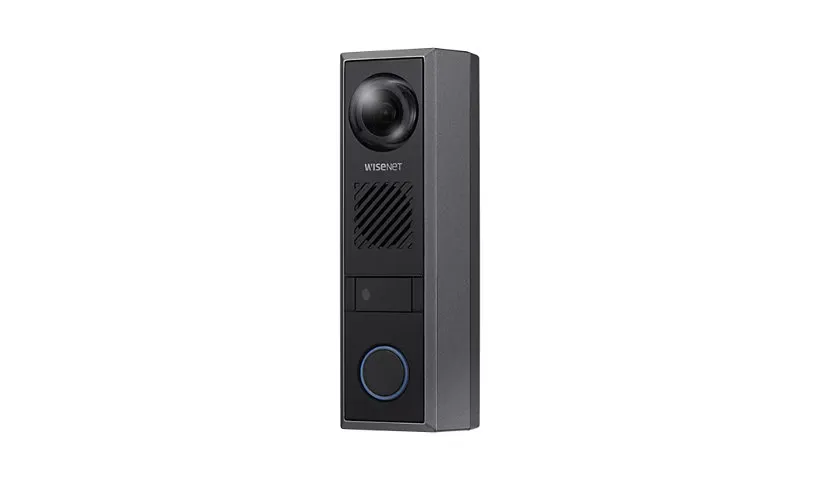
From the AESS job library, not photographed in Greenwood Heights: a slim dark grey wired doorbell with a camera lens, speaker slots and a round push button. On the narrow wooden casing of a frame house door, often the only solid surface between the siding and the door itself, a slim wired unit like this fits where a wide multi-button panel would hang over the edge, and being wired it never needs a battery changed in January.
Building Specialists
Door Buzzer Installation for Greenwood Heights's Architecture
Six kinds of building account for nearly every door we are asked about here. They differ in the things that decide a buzzer job: how many households share the door, what the walls are made of, where the cellar is and who can reach it, and what more than a century of use has done to the street door and its frame.
Wood-frame worker rows
Two- to four-story frame houses from the late 1800s and early 1900s on the side streets, some restored to clapboard and trim and many under aluminum or vinyl siding, with hollow walls and narrow door casings.
Brick and brownstone rows
Masonry rows mixed in with the frame houses, such as the red-brick rowhouses on 27th Street between Fourth and Fifth Avenues, with solid walls and a stoop or a low entrance under a cornice.
Fifth Avenue walk-ups
Three- and four-story mixed buildings along Fifth Avenue, many facing the cemetery fence between 24th and 34th Streets, with a residents' door squeezed beside a storefront and one long stair.
The 1922 courts
Roosevelt Court and Woodrow Court near 30th Street and Fifth Avenue, rows of houses built in 1922 that face each other across a shared walk, with their back yards toward the cemetery.
Fourth Avenue buildings since the rezoning
Large rental and condo buildings on the R8A avenue frontage, with a staffed or unstaffed lobby, hundreds of households and service and parking entrances that usually face the side streets.
Mixed buildings between Third and Fourth
Older houses and newer small buildings on the industrial blocks near the canal, some with manufacturing or storage on the ground floor and apartments above, like the three-story building with manufacturing space and parking filed for 21st Street in 2026.
Wood-frame worker rows: easy walls, tired doors
Brownstoner's 2014 look at 207A to 209 18th Street, a pair of Queen Anne rowhouses built before 1888, noted that on the 1888 maps "wood framed row houses dominated both sides of the block." That is the building we see most. In a frame house the stud bays run from the cellar to the attic, so a new cable can usually be dropped or fished inside a wall from the cellar to each floor with only small openings at the top and bottom. That is why a first talking system in a two- or three-family frame house so often lands in the lower half of our ranges.
The difficult part is the street door. Frame houses settle, doors get planed and rehung to keep them closing, and the wood around the latch has often been patched after decades of replaced locks. An electric strike needs sound wood to hold its screws and a door that meets its frame squarely so the latch drops into the strike every time. Where the frame cannot give that, a reinforcing plate or frame repair comes first, and it is named on the quote before you approve, never found on installation day.
Siding changes how the door station is fastened. On a house under aluminum or vinyl, the panel goes on the door casing or on a solid backing block set behind the siding, not on the siding itself, which flexes with every change in temperature and would work the screws loose within a winter. On a restored clapboard front, we choose a slim station and a mounting spot that puts the fewest holes in new trim.
Brick and brownstone rows: the cable route is the price
The masonry rows mixed in among the frame houses look similar from the street but behave differently once a drill comes out. Solid brick party walls and plaster on brick inside mean new cable cannot simply be fished. If the house has an old multi-pair bell cable running up a closet, a chase or the stair hall, and its pairs test sound from the cellar to each floor, a new system can reuse it, which saves both money and dust. If not, the route is planned with the owner floor by floor, through closets, beside the stair or in a slim raceway painted to match.
Many brick rows here also have a vestibule with an inner door. The release normally goes on whichever door closes and latches best, and the mailboxes are kept where the carrier can reach them, which we settle at the walkthrough rather than assume.
Fifth Avenue walk-ups: two front doors that must never share a system
The Brooklyn Eagle's 2020 walk along Fifth Avenue described the stretch from 24th to 34th Street as cemetery on one side and Greenwood Heights homes on the other, including siding-covered rowhouses such as 822 Fifth Avenue at 34th Street. The mixed buildings along that frontage put a narrow residents' door beside a shop. That door gets its own panel, its own release and its own power supply, separate from anything the store uses, so a shop renovation or a change of tenant never leaves the apartments without a working door. The panel has to sit where a roll-down gate, a sign or a sidewalk display can never cover it, and its cable climbs the residents' stair rather than passing through the store.
The 1922 courts: the door is not on the street
Forgotten New York's walk around Green-Wood described Roosevelt and Woodrow Courts, built in 1922, as rows of houses that seem "turned away from the cemetery," their back yards facing the fence. Their front doors face a shared walk instead of a street. For a buzzer, that means the station has to be where a courier coming in from Fifth Avenue or 30th Street will look for it, clearly numbered, with a camera aimed down the walk rather than straight out at the house opposite. We decide the spot standing where a delivery driver would stand.
Fourth Avenue buildings: lobby, side street and garage
The newer buildings on Fourth Avenue are a different scale of job: a lobby panel with a directory or code entry, stations or phone answering for every apartment, and often a package room, a parking entrance and a service door. On the stretch of the avenue north of 24th Street, the Department of City Planning's 2011 Fourth Avenue rules generally limit curb cuts to the side streets, so on those blocks the secondary doors usually face a numbered side street rather than the avenue; farther south we check each building's plans before assuming where they are. We plan them together on one system so the building's staff or managing agent manages one directory, not three.
Mixed buildings between Third and Fourth: workshop below, homes above
The blocks closer to the canal still carry warehouses, workshops and small manufacturers, and new buildings like the one filed in 2026 for 156 21st Street mix manufacturing space and parking with other uses. Where people live above a business, the residents' door and the business door are planned as two systems that share nothing but a wall, and the residents' station sits where the noise of a loading dock or a roll-up door does not drown out a visitor's voice.
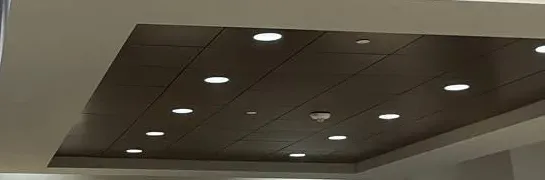
From the AESS job library, not photographed in Greenwood Heights: a dark recessed ceiling panel with round downlights and a small round device set into it, inside a lighter ceiling. In a finished lobby in one of the newer Fourth Avenue buildings, a ceiling like this is where cable runs between the entrance panel and the riser, and getting the route right before the ceiling closes costs far less than opening it afterward.
Field Notes
Field Notes: What Our Technician Looks at on a Greenwood Heights Stoop Before Anything Is Priced
On a Greenwood Heights walkthrough our technician does four things before any equipment is mentioned. They take roughly half an hour on a frame house and longer on a walk-up, and they decide most of the price. This is our standing practice on every door here, not one particular job.
The stoop and the door come first. The technician climbs the stoop the way a visitor does, notes where a panel can be fastened to something solid, and checks whether the light at the door is enough to see a face at night. Then the door is opened fully, let go and watched. It should swing shut, latch on the first try and not bounce back. A frame house door that has to be pulled shut, or one that has been shaved so thin it rattles in the frame, is noted before anything electronic.
Next, the households. The technician counts bell pushes, mailboxes and apartment doors, and asks who actually lives where. A house listed as a two-family may have a third household on the top floor or in the garden level, and every household that gets visitors needs its own button.
Then the cellar. On a frame house the old bell transformer and the wiring usually start there, sometimes beside a newer phone or cable TV run that crosses the same joists. Each pair to the floors is traced and metered, and the result goes on the quote: kept, or replaced. Last, the record: the technician compares what the building's HPD violations say with what the meter shows, because an apartment cited three times usually points straight at its own run.
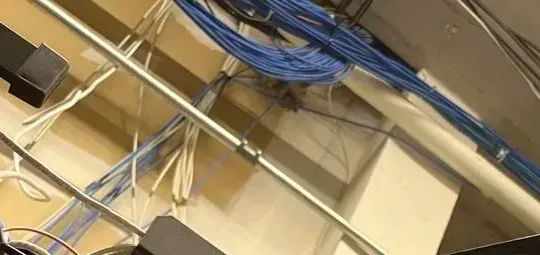
From the AESS job library, not photographed in Greenwood Heights: bundles of blue low-voltage cable laid over a ceiling beam beside a metal pipe in an open ceiling. In the cellar of a Greenwood Heights frame row, the joists overhead are where old bell wire, phone lines and cable TV runs cross one another, which is why every pair is traced and metered before any of it is reused.
The City's Record
What 26 Intercom Violations Since 2023 Say About Greenwood Heights Doors
NYC Open Data publishes every violation HPD writes under the Housing Maintenance Code, with the address, the apartment, the story, the date and the inspector's own description. Because Greenwood Heights is split between two ZIP codes and shares 11232 with Sunset Park, we did not count the whole ZIP. We pulled every violation since January 1, 2023 whose description mentions an intercom, in ZIP codes 11232 and 11215, and kept only the addresses on 18th through 38th Streets and on Fourth Avenue between them. That left 26 violations: 11 in 2023, 2 in 2024, 8 in 2025 and 5 in 2026 through early November. Thirteen were still open on November 12, 2026.
They cluster. One building on 18th Street, on the 11215 side, accounts for nine. Inspectors wrote it up in January 2023, twice in September 2023, once more that September for the intercom "at building front to all apartments," three times in October 2023 and again in May 2024, across apartments on the first, second and third floors. Every one of those has since been closed or dismissed, which tells you the owner kept repairing, and the repairs kept failing, for well over a year. On 30th Street, three neighboring buildings in 11232 carry six violations written between October 2023 and December 2025, and all six were still open when we looked. On 29th Street, one building has three open violations for its fourth-floor apartments, from September 2025, May 2026 and July 2026.
The inspectors' wording says what failed. They write that the "return buzzer" is broken, meaning the button in the apartment no longer opens the street door; that the "bell buzzer" is defective, meaning the apartment no longer rings; that the system is broken "from building front entrance" to a particular apartment; or, as on a 23rd Street building in October 2026, that the "bell, buzzer and return intercom system" is defective "in the entire apartment." One 29th Street violation describes the system as running "from building front entrance to tenant phone," a reminder that some older buildings here still answer the door on wall-mounted handsets. Every one of the 26 is an order under § 27-2005 of the Housing Maintenance Code, the owner's duty to keep what exists in good repair.
The record also shows what the neighborhood is not. Across all of ZIP 11232 since 2023, the streets with the most intercom violations were 39th, 41st and 43rd Streets, six each, on the Sunset Park blocks south of the cemetery's edge, where larger walk-ups are more common. Greenwood Heights' own violations come from smaller buildings: 21 of the 26 named an apartment on the first three stories or the building as a whole, and the five others were fourth-floor apartments in the 29th and 30th Street walk-ups.
How we use the record on a Greenwood Heights job
Before the visit. We look up the building's intercom and door violations, so the technician arrives knowing which apartments have failed and how often.
When choosing repair or replacement. One violation for one station is usually a repair. The same apartment cited again within months, or several apartments cited within a year, points to the cable, the power or the whole system, and the quote says so.
When scheduling. An open violation has a correction period. Where the equipment allows, we plan the installation date inside it, and we tell you if a special-order part makes that impossible.
At handover. We leave a written test sheet listing every apartment, what was tested and the result. Certifying the correction to HPD is the owner's or managing agent's job; the test sheet is what they certify with.
What the record cannot show is how many frame houses here have no talking system at all. A building of fewer than eight apartments is not required to have an intercom, so its absence draws no violation. Those houses only appear in the data after something is installed and later breaks, which is why we put as much care into how a first system is built in a frame house as into replacing a failed one on 30th Street.
The Door Comes First
A Greenwood Heights Street Door Has to Shut, Latch and Open From Inside Before It Gets a Release
Every entry system is two systems. One is electronic: the panel, the stations, the cable and the power. The other is mechanical: the door, its hinges, its closer, its latch and the strike in its frame. Owners shop for the first. Most of the failures we find at street doors in Greenwood Heights are in the second, and on a frame house more than a century old the second needs the most attention.
What the city expects of an entrance door
Where the rules apply, meaning class A multiple dwellings of eight or more apartments, Multiple Dwelling Law §50-a and the Buildings Department rule 1 RCNY §42-01 require automatic self-closing and self-locking doors at the entrances, a door that can be opened from inside without a key, and a bell or speaking device for each apartment with a return buzzer that releases the lock. The rule also sets heights: push buttons no more than six feet above the floor and the speaking device between four and five feet. Most Greenwood Heights houses are below the eight-apartment line, so these are not legal requirements for them, but they are a sound standard for any street door, and we build to them as a matter of course.
Inside, Local Law 111 of 2018 required doors to interior corridors and stairs in residential buildings to be self-closing, and HPD expects those doors kept in working order. A release must never stop any door from closing on its own.
What that means on installation day
Before a strike is cut into the frame, the door has to swing freely, close from any position and latch without help. If the closer is worn, too weak or so strong that a visitor cannot push the door once buzzed in, it is adjusted or replaced. If the latch misses its keeper because the door has dropped on its hinges, the hinges are tightened or the door rehung. Only then does the release go in, so the electronic half has a mechanical half it can rely on.
On residential street doors we use fail-secure electric strikes. Allegion's guide explains the difference: fail-safe products unlock when power is removed and fail-secure products stay locked, and with an electric strike a person inside can always leave by turning the lever, whichever type it is. A fail-secure strike keeps the house locked through a power cut and never traps anyone inside. Magnetic locks, which Allegion notes are only available fail-safe, are a last resort on a street door and come with the release devices and signage the building code requires.
The same thinking applies while the work is going on. When the old panel and strike come off, the street door is never left unlocked and unattended. Either the old lock stays working until the new release is tested, or a crew member stays at the door until it is.
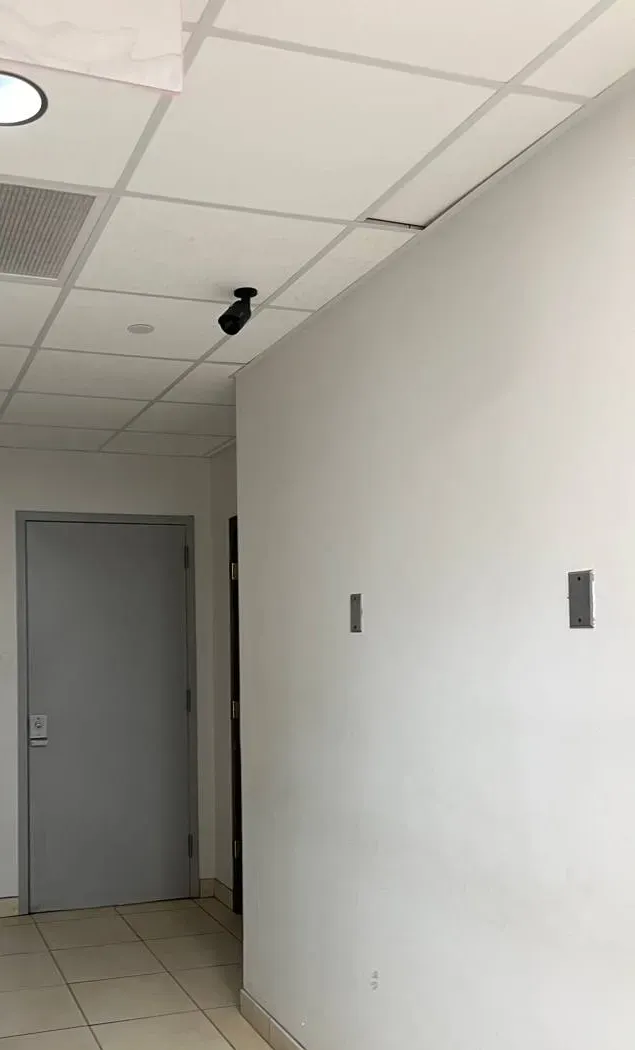
From the AESS job library, not photographed in Greenwood Heights: a tiled corridor with white walls and small wall plates ending at a grey steel door with a lever handle, under a drop ceiling with a small camera. In a Fourth Avenue building's service corridor, a lever on the inside of a door like this is what lets anyone leave without a key, and it is what we keep working on every door we fit with a release.
Rules and Responsibilities
Which Greenwood Heights Buildings Must Have an Intercom, Who Has to Keep It Working and Who Decides
Eight or more apartments: required. Multiple Dwelling Law §50-a requires class A multiple dwellings of eight or more apartments erected or converted after January 1, 1968 to have self-locking entrance doors and an intercommunication system allowing voice communication with each apartment and remote release of the door.
Older buildings of eight or more: on tenants' request. For buildings put up before 1968, §50-a ties the duty to a written request or consent from tenants occupying a majority of the apartments, with installation to begin within 90 days and finish within six months. If your building falls in this group, ask HPD or your lawyer how it applies to you.
A working intercom is treated as essential. Habitat Magazine's February 2024 column, drawing on lawyers who handle co-op disputes, noted that courts have treated intercoms as essential services and that a broken one can breach the warranty of habitability. As one of them, Nancy Kourland of Lasser Law Group, put it about a co-op with a failed system: "the co-op has a legal obligation to repair or replace the intercom."
Anything that exists must be maintained. All 26 violations we read for Greenwood Heights were written under § 27-2005, the owner's general duty to keep the building in good repair. A three-family with a buzzer is cited for a broken one just as a larger building is.
Small houses are the owner's choice. A one-, two- or three-family frame house with no buzzer draws no violation. Most first systems we install here go in because owners and tenants want them.
Conversions count. Adding apartments that bring a building to eight or more brings the door and intercom requirements with it, so a conversion is the moment to plan the entry system, not after.
Tenants can complain; owners decide the work. Habitat's column lists a letter to the board, a 311 complaint and an HP proceeding in Housing Court as tenants' routes. The installation itself is ordered by whoever controls the building, and we take instructions from the owner, the board or the managing agent.
None of this is legal advice for a particular building. If you are unsure which rules apply to yours, HPD, the Buildings Department or your own lawyer can tell you. What we do is install a system that meets those rules where they apply and leave a written record of what was installed and tested.
Commercial Door Buzzer Installation
Business Door Buzzer Installation in Greenwood Heights
Business doors in Greenwood Heights fall into two groups. On the avenues, shops share their buildings with apartments, so the store's door and the residents' door are planned together and kept on separate systems. On the blocks toward the canal, workshops, warehouses and small manufacturers want a door that lets a delivery or a client in without leaving the floor. The corridors below are where those requests come from.
Fifth Avenue facing the cemetery
The stretch from 24th to 34th Street with Green-Wood's fence on one side and three- and four-story mixed buildings on the other. Stores here want a buzz-in door or a stockroom release, and the apartments above want their own panel beside the shop.
Fifth Avenue at the main gate
The blocks around 25th Street and Fifth Avenue, opposite the cemetery's main entrance and the Green-House visitor center that opened there in April 2026, where shops and offices see steady foot traffic.
Fourth Avenue
The rezoned avenue, where new buildings put commercial space on the ground floor and older one-story commercial buildings remain. Ground-floor tenants need their own entry; the building's lobby needs its directory.
Third Avenue and the canal blocks
Warehouses, workshops and light manufacturing between Third and Fourth Avenues, with roll-up doors beside steel man doors and long distances between the entrance and the office.
Toward Industry City
The blocks heading south toward the Industry City complex between 32nd and 41st Streets, home to hundreds of tenants, where suppliers and small firms on the surrounding streets buzz in visitors and drivers.
Seventh Avenue and the eastern edge
The quieter eastern blocks near Seventh Avenue and 23rd Street, where offices and practices in converted houses want the release at a desk and the door locked behind every visitor.
The commonest business request here is a buzz-in door for a store or office that wants to see who is outside before opening, with the release at the counter. The second is a delivery or loading door at the back or side of a workshop, answered from inside so nobody has to leave a machine or a register. Both are usually single-door jobs at the bottom of our list. When the business shares a building with apartments, its system stays completely separate from the residents' so a driver buzzed into a stockroom never ends up on the residential stair. If your business is closer to the brownstone blocks north of the expressway, our Park Slope door buzzer installation page covers those doors.
Rules that apply to business entry installations in Greenwood Heights
Anyone inside can always get out. A business door with a buzzer, code or reader still opens from inside with one motion and no key. With an electric strike, the lever or push bar on the inside works whatever the release is doing.
Controls within reach. The 2010 ADA Standards set the high forward reach at 48 inches maximum and the low at 15 inches minimum for operable parts, so the button a customer presses and the release a receptionist uses go inside that range wherever a business serves the public.
Tenants need the landlord's written approval. A shop or workshop that rents its space orders a door buzzer only with the owner's written permission, and its cable stays clear of the residents' system.
Magnetic locks come as a package. Where a door cannot take a strike, a magnetic lock comes with a sensor and a push-to-exit release on the egress side, power-loss unlocking and a fire alarm connection where the code requires one, and we say so before anyone chooses it.
Roll-up doors are not entry doors. On the canal blocks we put the buzzer on the man door beside a roll-up door, never on the roll-up itself, so the release controls a door that latches.
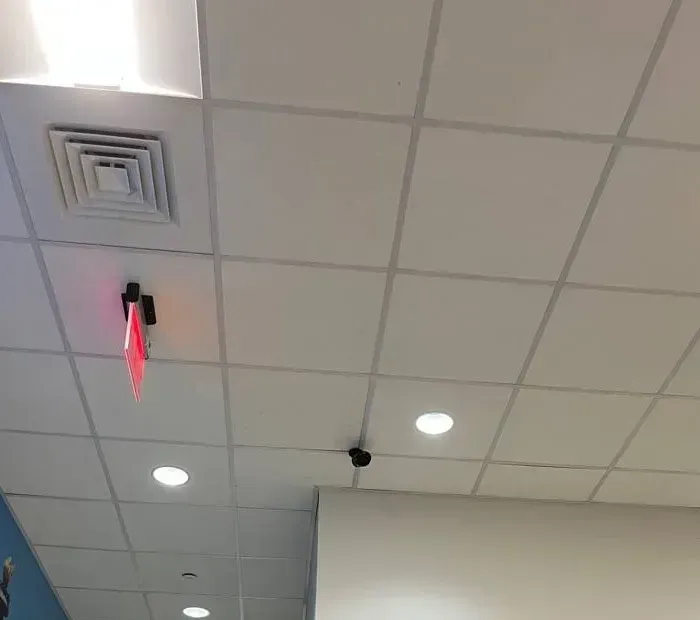
From the AESS job library, not photographed in Greenwood Heights: a drop ceiling with a lit red exit sign, an air diffuser, round recessed lights and a small black camera. In an office on Fourth Avenue or a store on Fifth Avenue, the exit sign marks a door that must always open from inside, so any release we add to it locks against visitors without ever locking anyone in.
Your Questions Answered
Door Buzzer Installation in Greenwood Heights: Questions Answered
Frame houses built as worker housing
Our wood-frame row on 20th Street went up before 1900 and still has three households behind one door. Is a house that old worth wiring, or is wireless the sensible choice?
Wiring is usually the better and cheaper choice in a frame house of that age. The stud bays in a wood-frame row run from the cellar to the attic, so a new cable to each floor can generally be fished inside the walls with a few small openings at the top and bottom. Wired stations get their power from one supply in the cellar, never need batteries and do not depend on a radio signal getting through floors, plaster and lath.
The electric release in the street door is wired whatever the stations are, because it needs dependable power. Wireless earns its place where a run truly cannot be made, such as a studio at the back of the yard. For three households, a wired audio system usually sits in our $400 to $900 range and a video system in the $700 to $1,800 range, with the door and the cable test deciding where.
Our 1880s frame house's street door has been planed and rehung so often that it barely meets the frame. What has to happen before a release can go in?
The door has to be made to close and latch on its own first. That can mean resetting or replacing worn hinges so the door hangs square, shimming or rebuilding the frame on the latch side so there is sound wood for the strike's screws, and fitting or adjusting a closer. A door that has lost wood from repeated planing sometimes needs a reinforcing plate or a new strike jamb section.
We name every one of those items on the quote, with its price, before you approve. If the door itself is too far gone to take a strike reliably, we tell you that too, and the release waits until a carpenter has replaced or rebuilt it, because a buzzer on a door that drifts open protects nothing.
Our parents have lived in our house since the 1970s and read Polish more easily than English. Can the new system be set up so they can use it without help?
Yes, and it is mostly a matter of choosing simple equipment and labeling it clearly. For residents who want nothing complicated, an audio or video station with one talk button and one door button, marked with symbols rather than words, is easier than any app. Directory labels at the door can carry the family name, the apartment number or both, and labels inside can be printed in whatever wording the family prefers.
At handover the technician shows each household how to answer, talk and release, standing at their own station, and the family keeps the test sheet. If a younger relative wants calls on a phone as well, phone answering can be added alongside the station without changing how the parents use theirs.
What the city record shows on these blocks
Three buildings next to each other on our block of 30th Street all have intercom violations open at the same time. Is that a problem with the block or with each building?
Almost always with each building. Intercoms are not connected between houses, so three open violations side by side usually mean three systems of a similar age, installed around the same time and wearing out together, often under owners who have been told the same thing about parts. The violations on that block run from October 2023 to December 2025 and include apartments on the second, third and fourth floors, which is the pattern of old systems, not of one shared fault.
Each building gets its own system, door station and power supply, priced on its own quote. Where neighboring owners want the work done in the same week, we can schedule it that way, and choosing the same equipment for adjoining buildings means one set of spare parts and one way of managing them.
The violation for our 29th Street walk-up describes the intercom as running to a "tenant phone." Can a new system keep a handset on the wall, or does everyone have to move to cell phones?
A new system can keep a wall handset or a wall station in every apartment, and in a building with older tenants we usually recommend it. Wired systems ring a station on the wall of each apartment; most can also ring residents' phones as an option. Nobody has to use an app if they do not want to.
The "tenant phone" wording in an HPD violation usually describes an older system in which each apartment answers on a phone-style handset. The violations at that building are on the fourth floor, cited three times between September 2025 and July 2026, which points at the runs to that floor. A new installation meters those runs first and replaces the ones that fail.
The avenues and the newer buildings
Our walk-up on Fifth Avenue faces the Green-Wood fence, and the sidewalk is almost empty after the cemetery gates close. Where should the door station and its camera point?
At the person standing at the door, from slightly above, with enough light on their face. On a quiet frontage like that the camera's job is to show residents upstairs exactly who is ringing, so the station goes beside the residents' door at a height where its lens sees a face rather than the top of a hat, and the doorway light is checked at night as well as during the day.
A station's camera is not a surveillance camera for the avenue, and we do not aim it across the street at the cemetery. If the building also wants the sidewalk or the vestibule recorded, a separate camera does that job, and installing it on the same visit usually saves $200 to $400 in labor compared with a second trip.
We rent in one of the newer Fourth Avenue buildings and the lobby panel only rings our phones. Can our apartment get a wall station as well?
That depends on the system the building has and on the owner or board, because the lobby panel and its directory belong to the building, not to one apartment. Many app-based lobby panels can ring an indoor station as well as phones, if the station is compatible and a cable or network connection reaches the apartment. Some cannot.
The request has to come from the building's management, who can ask us to look at the panel and price stations for the apartments that want them. If you rent, raise it with management first; we take instructions from whoever controls the lobby.
Our Fourth Avenue building includes affordable apartments under the inclusionary housing rules. Do those households get the same entry stations as everyone else?
In every system we install, yes: one lobby panel serves every apartment, and each apartment gets the same station or phone answering the building has chosen. We would advise any owner against splitting apartments onto different grades of station, since a building's entry system is one system, wired, powered and maintained as one.
Any requirements tied to the building's affordable housing agreement are a matter for its owner and the agencies involved. Our part is to install the same equipment in every apartment, to the same standard, and to leave a test sheet that shows every unit working on the same day.
Repair, replace and installation day
A Brooklyn locksmith told Brick Underground that "a lot of times it's user error." How do we know whether our dead buzzer is that, or something that needs a technician?
If more than one household has the same problem, or the problem comes and goes with the weather, it is almost never user error. Brick Underground's guide quotes Pete Carmello of Lock and Tech on user error and Daniel Vasquez of Paragon Security and Locksmith on the other common cause: "It's all in the wire connections." Faults sit in the entrance panel, an apartment station, the door strike or the power supply.
What helps us most is a short description: which apartments are affected, whether the bell, the talk or the release has failed, when it started, and photos of the panel and a station. From that we can tell you whether it sounds like a repair or a replacement. Diagnosing a system in person is our $250 service call booked online, and the $250 is applied toward the work.
On installation day, is our street door left unlocked while the old panel and strike are out?
No. The old lock stays working while the new cable and stations go in, and the old strike comes out only when the new one is ready to fit. While the frame is open, a crew member stays at the door. Brick Underground's guide reports an installer's estimate that a five-apartment building can be finished in a day, and most Greenwood Heights houses are in that range or smaller, so the door is usually back on a working release the same afternoon.
Larger buildings are done in stages, with the lobby panel switched over last so residents keep a working way to buzz in until the new one is tested. We tell you the plan for the door in writing before installation day.
Our house is on Roosevelt Court, and the front doors face the shared walk rather than a street. How does a courier find the right panel?
By putting the panel where a stranger walking in from the street will see it, numbered large enough to read from the walk. On the 1922 courts that usually means the station goes on the door casing or the wall beside it, facing down the walk toward the entrance from 30th Street or Fifth Avenue, with the house number on or beside the station and a light that comes on after dark.
Because the houses across the walk are close, the camera is aimed at the visitor's position on your own steps rather than across at a neighbor's door, and the speaker volume is set at handover so a visitor can hear without the whole court hearing too.
What would a video system for a three-household frame house on one of the side streets near the cemetery come to on your Brooklyn list?
Usually within our $700 to $1,800 video range: a video door station with three buttons, a video or audio station in each apartment, a fail-secure release in the street door frame and a battery-backed power supply. Audio only, with the same release and power, sits in the $400 to $900 range. Phone answering for an owner who lives elsewhere can be added inside the same range.
Where it lands depends on three things: whether the old bell pairs test sound or the runs have to be replaced, how much work the street door needs before it can take a strike, and whether the house is under siding or restored clapboard. Each is checked at the walkthrough and named on the written quote before you approve.
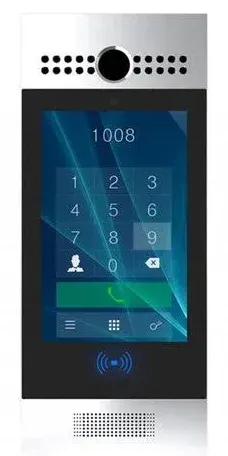
From the AESS job library, not photographed in Greenwood Heights: a touchscreen entry panel showing a dial pad with a four-digit apartment code entered, a camera above and a card-reader symbol below. A panel like this suits the lobbies of the larger Fourth Avenue buildings, where a row of buttons for hundreds of apartments would run the height of the wall and a code or directory search is quicker for visitors.
Equipment
Types of Door Buzzer Systems We Install
By default we quote a reliable non-branded system, and we install a named brand when an owner asks for one; the intercom makers we work with include Aiphone, ButterflyMX, 2N, Akuvox, Comelit and DoorBird. These are the kinds of equipment that come up most at Greenwood Heights doors, and where each one fits.
Single-button video stations
One button, one camera and a speaker for one-household frame houses and the 1922 court houses, slim enough for a narrow wooden casing.
Two- to four-button panels
Audio or video panels with a button and a label for each household, for the two-, three- and four-family rows that make up most of the side streets.
Directory and code panels
Scrolling directories, search or code entry with a camera, for Fourth Avenue lobbies and the larger walk-ups.
Two-wire systems
Audio and video carried over one pair per apartment, the usual answer in brick rows and walk-ups where an old riser meters sound.
Apartment audio stations
Plain talk-and-release stations for households that want a voice and a door button and nothing to learn.
Apartment video stations
Wall stations with a screen and a release button, so residents see the visitor before they open.
Phone answering
Door stations that ring residents' and owners' phones, alone or alongside a wall station, for families who manage a house from elsewhere.
Fail-secure electric strikes
Releases cut into the frame that stay locked through a power cut and never stop anyone leaving from inside.
Battery-backed power supplies
Dedicated low-voltage power with battery backup, mounted in the cellar or a common closet where the owner or super can reach it.
Bell pushes, audio talk-back or video: what each gives a Greenwood Heights household
Question
Bell pushes and release
Audio talk-back
Video stations or phone answering
Does the household know who is ringing?
No
By voice
By voice and picture
Meets the city's minimum where it applies
With a return buzzer per apartment
Yes
Yes
Usable without a smartphone
Yes
Yes
Yes with wall stations; phones optional
Can reuse old bell pairs in a frame or brick row
Usually
Often
Often, with two-wire systems
Needs internet at the house
No
No
Only for phone answering
Monthly charge
None
None
None for wired stations; some phone services charge
Where it sits on our Brooklyn list
Within $400–$900 for a small house
$400–$900 small; from $2,500 for a larger building
$700–$1,800 small; from $2,500 for a larger building
ADT, Ring and SimpliSafe compared with a local installer at a Greenwood Heights door
Store-bought doorbells come up in almost every conversation about a front door here, and for a one-family house a doorbell camera may be all anyone needs. A Brownstoner forum member with a two-apartment house described the usual workaround: a doorbell camera wired into the foyer with plug-in chimes, because "the original doorbell wiring was too old." It rings phones and chimes. It does not release the street door, it gives one button instead of one per household, and it rings only the people who set up the account. Alarm companies such as ADT and SimpliSafe build around alarms rather than multi-household entry. A two- or three-family frame house needs a button and a station for each household and a release in the door, which is the job we do, and where an owner also wants a camera over the stoop we put it in on the same visit.
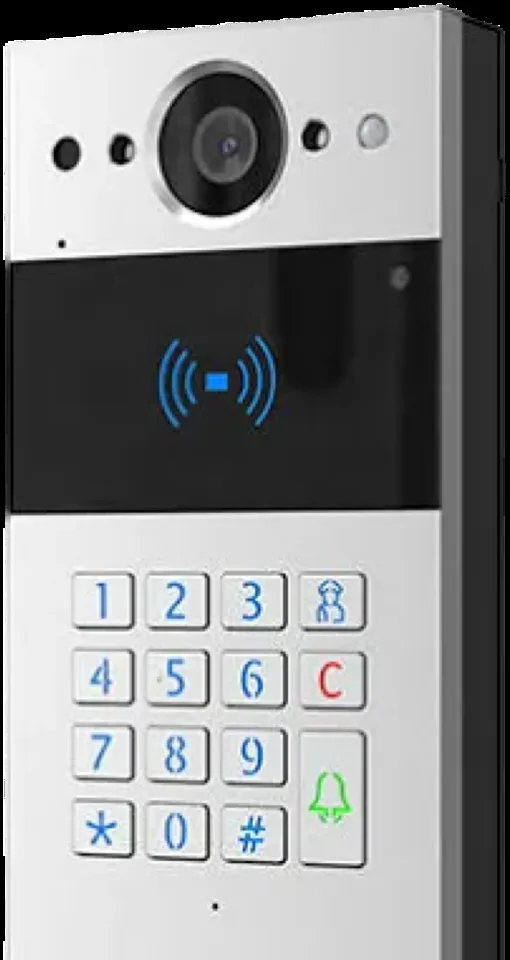
From the AESS job library, not photographed in Greenwood Heights: a silver and black keypad door station with a camera lens at the top, a blue card-reader symbol, a numeric keypad and a green bell key. At the side-street service or parking door of a Fourth Avenue building, a keypad station like this lets staff and residents in with a code or card while visitors still ring from the front.
AI Overview Reality Check
What AI Gets Wrong About Door Buzzer Installation in Greenwood Heights
Search summaries and AI assistants answer buzzer questions with figures lifted from national cost guides and from the blogs of companies that sell entry systems. Some of those figures are fair for the places they were written about. Here are seven that come up again and again, each traced to where it comes from and set against what we actually find on the frame rows, Fifth Avenue walk-ups and Fourth Avenue lobbies of Greenwood Heights.
"An intercom installation runs anywhere from $1,500 to $15,000"
HomeAdvisor's intercom cost page gives that spread, with hard-wired systems at $1,000 to $15,000 and wireless at $150 to $1,500. It is a national range that mixes room-to-room house intercoms with apartment entry systems.
For most Greenwood Heights houses the bottom of that range is too high. A two-family frame house with a sound door and usable bell pairs often lands inside our $400 to $900 audio range, and a three-family with video inside $700 to $1,800. The top of the range belongs to big buildings, not to the side streets.
Where the wide range is useful is as a warning: what separates a $1,500 job from a $15,000 one is the number of apartments and the cable, which is exactly what our walkthrough measures before we give a figure.
"Modern video entry costs $1,000 to $5,000 or more per entry door"
Swiftlane's apartment intercom cost guide prices modern IP or video systems that way, per door. Swiftlane sells cloud entry systems, and its examples are generic apartment buildings.
Per door is the wrong unit for a frame row with one door and three households. The cost there follows the households and the condition of the cable and the door. Per door makes more sense at a Fourth Avenue building with a lobby, a parking entrance and a service door, but even there the side doors often need a keypad or a release on the same system, not a second full panel.
So the right question for a Greenwood Heights owner is not how many doors, but how many households, how many floors and what is in the walls.
"Wireless is the way to go if you plan to do it yourself"
HomeAdvisor says wireless systems are the best option if you want to DIY, and for a one-family house with a doorbell that is a fair statement.
A street door shared by several households is different. The release in the frame needs wired power whatever the stations are, and the stations have to work through floors, plaster and, in the brick rows, solid masonry. In a frame house, where new cable climbs easily inside the walls, a wired system often costs little more than a wireless one and lasts far longer without batteries.
We use wireless where a run genuinely cannot be made and say so on the quote. For the main system, wiring is what keeps it out of the violation record.
"Each intercom station takes only an hour or two to install"
HomeAdvisor gives that time per station for a whole-house system. Brick Underground's repair guide reports installers estimating about a day for a five-apartment building and about two days for a hundred units.
The station itself is quick. What takes time in Greenwood Heights is everything around it: making a planed, rehung frame house door latch reliably, fitting a strike into a patched jamb, fishing cable past fire blocking in old stud bays, or finding a route through a brick row without opening finished walls.
That is why we price after a walkthrough rather than per station, and why the quote lists door work and cable work as their own lines.
"A cellular intercom needs no building wiring at all"
ButterflyMX describes its intercom as one that "requires no building wiring," and cellular call boxes do avoid running a network cable to the door.
They still need power at the door and a release in the frame, and both are wired. They also ring only residents who have the app and a phone, so the older households on the side streets, or anyone who wants a station on the kitchen wall, need something else as well.
For some Fourth Avenue lobbies an app-based panel makes sense. For a three-family frame house, a wired system with no subscription is usually simpler and cheaper over a few years.
"Most intercom problems are just user error"
The line comes from a Brooklyn locksmith quoted in Brick Underground's repair guide, and it is true that some service calls end with a button that was not held long enough.
The violation record for these blocks tells a different story. Nine violations at one 18th Street building in little more than a year, six open violations across three neighboring buildings on 30th Street, and three for the fourth floor of a 29th Street walk-up are not people pressing buttons wrong. They are cable, power and systems at the end of their life.
When one household has an occasional problem, a check of how the station is being used is the right first step. When several households, or the same apartment again and again, have it, the system needs to be tested.
"Subscriptions only add a few dollars per apartment"
Swiftlane's guide says software subscriptions commonly add $5 to $15 per unit per month, or $30 to $100 per door per month. For a single apartment that sounds small.
Multiplied out, it is not. At those rates a Fourth Avenue building with 187 apartments would be paying hundreds to thousands of dollars every month, indefinitely, and a three-family house would pay a monthly bill for a door that a wired system answers for nothing after installation.
We show any subscription as its own line on the quote, next to the wired alternative, so an owner or board can compare the cost over five or ten years rather than the first month.
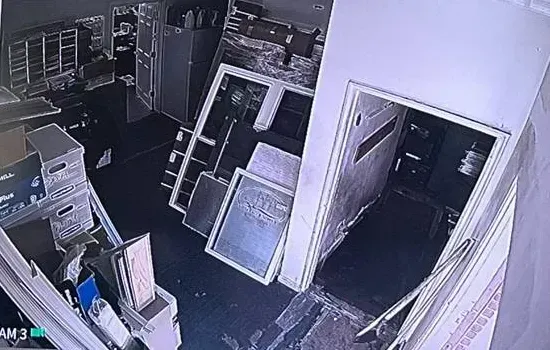
From the AESS job library, not photographed in Greenwood Heights: a black-and-white night camera view of a cluttered room with an open doorway into a dark back room. A storeroom like this behind a Fifth Avenue shop or a workshop between Third and Fourth Avenues is often where the delivery door opens, and it is the door national cost guides forget when they price a building by its front entrance.
Frame Row With Only Bell Pushes, or a Walk-Up With Open HPD Violations? Speak to a Tech
Send the address, a photo of the street door and the bell plate, and tell us how many households live behind the door. We will tell you whether it looks like a repair, a new panel on old cable or a new system, and where it sits on our Brooklyn ranges. Call or text (347) 934-8335, send photos on WhatsApp, or fill in the form below.
Get In Touch
Request a Free Quote
✅
Request Sent!
Thank you. A technician will call you about the Greenwood Heights address, usually within two hours during working hours.
How It Works
Our Installation Process
1. Look up the building and read your photos
Before anyone visits, the office reads your photos of the street door, bell plate and cellar and looks up the building's HPD intercom violations, so apartments that have failed before are planned for from the start.
2. Count the households and the doors
On site the technician counts every household that gets visitors and every door people use, from the stoop or sidewalk door to the yard, cellar, service and parking doors.
3. Make sure the street door closes and latches
The door is opened, released and watched. Hinges, closer, latch and frame problems on a planed or rehung door are written down and priced before any electronics.
4. Test the old cable and plan the new route
Every existing pair is metered from the cellar or riser to each apartment. Sound pairs stay; failed runs are planned as new cable, hidden in stud bays, closets or a painted raceway.
5. Write the price
The quote comes from our Brooklyn list, line by line, with any extra that depends on a test named and priced before you approve, so nothing new appears on installation day.
6. Order and schedule
Equipment is ordered after the deposit. Stock items are booked right away and special-order stations once they arrive, always in a two-hour arrival window.
7. Install, hide and label
The release, power supply, door station and apartment stations go in, the street door stays locked or attended while the old panel is out, and both ends of every run are labeled.
8. Test from the sidewalk and hand over
Standing where visitors stand, the technician calls each apartment, talks, releases and watches the door relatch, then leaves a written test sheet.
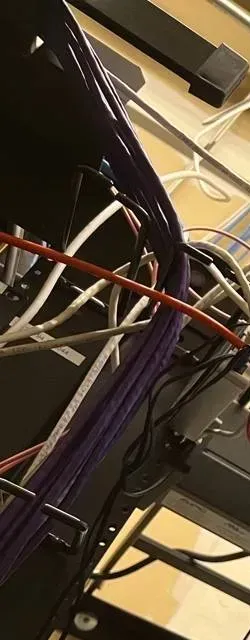
From the AESS job library, not photographed in Greenwood Heights: purple, white and red cable bundles dropping down beside a black equipment rack. In the equipment room of a Fourth Avenue building, the point where every apartment's cable meets the controller and power supply is where labels at both ends save the next technician hours of tracing.
Coverage Area
Door Buzzer Installation Near Greenwood Heights's Landmarks
Green-Wood Cemetery main entrance
The gate at 25th Street and Fifth Avenue into the 478-acre cemetery founded in 1838, a National Historic Landmark; the walk-ups and rowhouses facing it along Fifth Avenue are a large share of our work here.
The Green-House at Green-Wood
The cemetery's visitor center across from the main arch, built around the restored 1895 Weir Greenhouse and opened in April 2026, beside the mixed buildings at Fifth Avenue and 25th Street.
25th Street station
The R train stop on Fourth Avenue that serves the middle of the neighborhood, surrounded by the new Fourth Avenue buildings and the side streets of frame houses that run toward the cemetery.
72nd Precinct station house
The precinct at 830 Fourth Avenue that serves Greenwood Heights and Sunset Park, on the stretch of the avenue where older commercial buildings sit beside new residential towers.
Jackie Gleason Bus Depot
The 919,000-square-foot depot at 871 Fifth Avenue at 36th Street, dedicated in 1988 on the site of the old Union Depot, at the southern end of the Fifth Avenue frontage.
Industry City
The complex of warehouses and lofts between 32nd and 41st Streets with hundreds of tenants, whose surrounding blocks hold the workshops and suppliers that ask us for buzz-in doors.
Door Buzzer Installation Cost in Greenwood Heights
Greenwood Heights is billed at our standard Brooklyn rate, on the 11232 and 11215 sides alike. The final figure follows photos and a walkthrough, because the number of households, the state of the street door, the old cable and the walls decide the total far more than the brand on the panel.
Job
Typical Greenwood Heights property
Brooklyn range
Audio door station or replacement with a new release, reusing cable that tests sound
One- and two-household frame or brick rows, the 1922 court houses, a single shop or office door
$400–$900
Video door station with indoor stations or phone answering
Three- and four-household rows, small walk-ups over Fifth Avenue stores
$700–$1,800
Multi-unit entry system, audio or video by apartment count, button, directory or code panel
Larger walk-ups, buildings with several entrances, Fourth Avenue lobbies
from $2,500 to $10,000+
In-person diagnosis of an existing system, booked online
Any building where the old system has to be tested before quoting
$250, applied toward the work
Monthly subscription
Any building that chooses a wired system
$0
What moves a Greenwood Heights job within its range is easy to predict. First the households: a two-family sits near the bottom of each range, a four-household row near the top of the video range, and each apartment beyond that adds to a multi-unit system. Then the cable: pairs that meter sound cost nothing extra, a failed run inside a frame wall is quick to replace, and a new route through a brick row or a finished lobby takes longer. Then the door: a planed or rehung frame house door that needs hinges, a closer or a rebuilt strike jamb before it can take a release, or yard and cellar doors brought up to the street door's standard. If the job also adds a camera over the stoop or the vestibule, doing it on the same visit usually saves $200 to $400 in labor compared with a separate trip. Anything that depends on a test is named on the quote with its price before you approve, because once equipment has been ordered it cannot be returned.
Full terms — including 50% deposit, one-year parts-only warranty on AESS-supplied products, and the late-fee schedule — are set out in the service agreement.
See Where Your Greenwood Heights Door Lands on the List
Tell us the street, how many households live behind the door and what is on it today, and send a photo of the door and the bell plate. We reply with the range, what would move it and whether the old cable is worth testing first. Call or text (347) 934-8335, send photos on WhatsApp, or fill in the form.
Shop Our Systems
Door Buzzer Installation Packages & Pricing
Three typical Greenwood Heights jobs, each placed in its range on our Brooklyn list. Your exact figure follows the walkthrough.
Frame or court house audio: $400–$900
An audio door station, a station for each of one or two households, a fail-secure release in the street door frame and a battery-backed power supply, for a frame or brick row, a house on one of the 1922 courts or a single shop door, reusing old pairs where they test sound.
Side-street row video: $700–$1,800
A video door station with a button per household, video or audio stations in each apartment, phone answering for owners who want it and the door work to make the street door close and latch on its own, for three- and four-household rows and small Fifth Avenue walk-ups.
Walk-up or Fourth Avenue lobby: from about $2,500
A button, directory or code panel at the main door, stations or phone answering in every apartment on tested or new cable, service, parking and yard doors on the same plan, and a written test sheet, for larger walk-ups and the newer buildings on the avenue.
Bring your own equipment. If you have already bought a door station or an intercom kit, we can install it as labor-only work. Send us the make and model and photos of the door and the building, and we quote the labor by phone or text. We do not do walk-throughs on customer-supplied equipment, and the equipment itself, including any wireless signal it relies on, is covered by its maker rather than by us; our workmanship on the installation is ours to stand behind.
Complete Services
Every Door Buzzer Service in Greenwood Heights
Frame rows and court houses
First talking systems, video at the stoop and the door work that makes an old street door close and lock. Request a quote
Walk-ups and Fourth Avenue buildings
Replacements for systems HPD keeps citing, riser testing, lobby and directory panels, and side-street doors. Call (347) 934-8335
Some maps put our block in Sunset Park and our mail goes to 11232. Is the house still billed at your standard Brooklyn rate?
+
Yes. Whether your block is called Greenwood Heights, South Slope or Sunset Park, and whether the mail says 11232 or 11215, the job is priced from the same Brooklyn door buzzer list with no travel or parking surcharge. What we need is the street and cross street so the technician can find the door and look up the building's record.
Can we pay the deposit and the balance by card, and does that cost extra?
+
Yes. The invoice comes with a pay link, and you can pay by card through it or by Zelle. Card payments carry a 3 percent card fee, which is shown as its own line on the invoice so you can see it before you pay; Zelle has no fee. We do not take payment by mailed check.
Once we approve the price and the equipment is ordered, can we still change our minds?
+
Not on the equipment. Door stations, apartment stations and releases are ordered for your building after the deposit, and once ordered they cannot be returned or refunded. That is why the walkthrough names every possible extra, such as a cable run that might fail its test or a door frame that might need rebuilding, with its price before you approve, so the decision is made with all the numbers in front of you.
If the job before ours finishes early, will the technician show up ahead of our window?
+
No. Every visit is booked in a two-hour arrival window, and the technician arrives inside that window, never before it, so whoever is letting the crew in is not caught off guard. You get a confirmation when the visit is booked and a message when the technician is on the way.
Which photos should we send before anyone comes out?
+
Four usually tell us most of what we need: the street door from the sidewalk with the stoop in view, a close-up of the bell plate or panel, the latch side of the door frame with the door open, and whatever is in the cellar where the bell wiring or power supply starts. A photo of one apartment's station helps if there is one. Add the number of households and whether any of them has failed recently.
Does the new system need an electrical outlet, and do you do that electrical work?
+
The system runs on low voltage from its own power supply, which plugs into an ordinary outlet in the cellar or a common closet. We do the low-voltage work only and do not do electrical work. If there is no outlet where the power supply needs to go, we tell you at the walkthrough so a licensed electrician can add one before installation day.
Will you install a specific brand such as Aiphone, ButterflyMX or DoorBird if we ask for it?
+
Yes. We quote a reliable non-branded system by default, and when an owner or board asks for a named brand we quote that instead or alongside it. The makers we install include Aiphone, ButterflyMX, 2N, Akuvox, Comelit and DoorBird. Some models are special order and ship from overseas, and if yours is one of them we say so before the deposit and book the installation once it arrives.
Our managing agent needs a certificate of insurance before any contractor works in the building. Can you provide one?
+
Yes. Once the job is awarded, send us the managing agent's insurance requirements, including anyone who has to be named, and our broker issues the certificate to match. We are licensed and insured, and the certificate goes to the agent before the crew arrives.
Will someone show the older residents how to use their new stations?
+
Yes. At handover the technician goes to each household that is home, shows them how to answer a call, talk to the visitor and release the door from their own station, and has them try it with someone at the street door. The owner keeps the test sheet listing every apartment, and any household that was out can be shown the same steps by the owner or by calling us.
Can the old buzzer keep working until the new system is switched on?
+
Usually, yes. New cable and apartment stations go in while the old system stays connected, and the changeover happens at the end, once the new door station, release and power supply are ready. Where the old system shares cable that the new one reuses, there is a short gap on installation day, and the street door stays locked or attended during it.
More Door Buzzer Installation near Greenwood Heights
Ready for a Greenwood Heights Street Door That Latches Every Time and Lets Every Household Answer?
Send a photo of the street door and the bell plate, or just tell us the street and how many households live behind it, and we reply with the range on our Brooklyn list and the next step. Call or text (347) 934-8335, message us on WhatsApp, or use the request form. Licensed under NYS license #12000287431, rated 4.7★ across 201 Google Reviews, with same-day estimates on most weekdays.