Any Brand, Any Installer · Footage Copied First · Landmark-Careful Remounts · Written Price Before Parts
Security camera repair in Vinegar Hill starts with our $150 Brooklyn service call, which pays for the on-site diagnosis and comes off the repair if you go ahead. On our published Brooklyn list most single faults run $150 to $700, and a new recorder or a rewire of several cameras runs $700 to $1,500. We fix systems other companies put in: the door camera on a Greek Revival row house on Front Street, the camera on the old shop frame of a Hudson Avenue house, the yard camera on a rear house hidden behind the front one, the garage and lobby cameras of a Front Street condo, and the counter camera of a shop or restaurant. Requests are booked within 2 hours, visits come in two-hour arrival windows, and you hear the cause and get a written price before any part is replaced.
Reviewed and updated November 12, 2026, against the Landmarks Preservation Commission's 1997 Vinegar Hill Historic District designation report and its permit guidebook chapter on safety equipment; Con Edison's June 2025 notice on voltage reduction in northwest Brooklyn; New York YIMBY on the Brooklyn Clean Energy Hub; DNAinfo on the Con Edison plant fires and on Farragut Houses repairs; NYCHA's 2023 security upgrade announcement and the NYC Comptroller's 2018 report on NYCHA entrance doors; NYC Open Data DOB permit records for Hudson Avenue; First Street's flood profile for the neighborhood; NYPD CompStat for the 84th Precinct; Brownstoner, CityRealty and Compass on the area's houses and condos; Brick Underground and FirstService Residential on landlords, boards and footage; HomeAdvisor's Brooklyn cost page; and the NYC Administrative Code on low-voltage wiring. · Abstract Enterprises Security Systems, NYS license #12000287431 · crews dispatched from our Troy Avenue office in Brooklyn

Owner-operated since 2002 · Thousands of jobs completed · Booked within 2 hours
Security camera repair in Vinegar Hill is mostly about three things that wear a system down quietly: power that dims instead of failing, grit from the big neighbors, and old houses that keep being opened up and closed again. In June 2025 Con Edison named Vinegar Hill among the northwest Brooklyn neighborhoods where it lowered voltage by 8 percent while crews repaired equipment. The old Hudson Avenue generating station next door has been coming down since early 2024 to make way for a substation that is not due to finish until 2029. And the city's permit records show the landmarked houses on Hudson Avenue getting new ceilings, kitchens, bathrooms and heat pumps. Each of those leaves a typical mark on a camera system: a recorder that restarts on a brownout and loses its drive, a dome that films over until faces are soft, a cable closed up behind new plaster. Send a photo of the recorder screen to (347) 934-8335 or on WhatsApp, and we will tell you which of these it looks like and what that repair costs on our Brooklyn list before you book.
Vinegar Hill is one of the smallest neighborhoods in Brooklyn: roughly six blocks between DUMBO and the Brooklyn Navy Yard, running from the waterfront to Front Street and from the Yard to Bridge Street, with Farragut Houses to the south toward the expressway. Its core is the Vinegar Hill Historic District, designated by the Landmarks Preservation Commission in January 1997, which takes in small groups of brick Greek Revival row houses on Front Street, Gold Street and Hudson Avenue, a mid-1850s firehouse and part of a 1908 factory. Hudson Avenue, Plymouth, Water and Front Streets are still paved in Belgian block. That is the background. What matters for a camera repair is narrower: what keeps knocking these particular systems out of service, and how to fix them so they stay fixed.
The first answer is power, and specifically power that sags rather than stops. On June 23, 2025, Con Edison asked about 68,000 customers in parts or all of Dumbo, Vinegar Hill, Brooklyn Heights, Downtown Brooklyn and neighboring areas to conserve energy, and said it had "reduced voltage by 8 percent in the area to protect equipment and maintain service as crews make repairs." Lights dim, refrigerators keep running, and most people forget it by the next morning. Camera equipment does not always forget. A recorder's power supply that is already old can drop out and restart when the voltage sags, sometimes several times in an evening; a battery backup with a tired battery can click over, fail to carry the load and let everything behind it reboot; and a hard drive that is restarted mid-write enough times will eventually mark sectors bad. The camera system looks fine the next day. The gap shows up weeks later in playback.
The second answer is the neighborhood's large neighbors. New York YIMBY reported in January 2024 that demolition was underway at the Hudson Avenue Generating Station for Con Edison's Brooklyn Clean Energy Hub, a transmission substation on the site bounded by Marshall Street, Hudson Avenue, Gold Street and Con Edison's Farragut Station, with barges used to limit truck traffic and completion aimed for 2029. Years of demolition and building next to a residential block mean fine dust settling on everything outdoors, including the clear domes and lens covers of street-facing cameras. Dust film does not kill a camera; it softens the picture a little more each week, scatters infrared light at night into a grey haze, and makes the camera's motion detection less reliable. Owners usually notice when a clip they need turns out to be unreadable. The plant has a history beyond dust, too: DNAinfo reported a small fire there in May 2013 and, in April 2012, a loud noise and a huge cloud of black smoke, after which Brook Stanton of the Vinegar Hill Neighborhood Association said, "There was a lot of smoke damage to nearby homes."

The third answer is the houses themselves. The designation report describes houses built from the early 1800s through the 1870s, many with stores on the ground floor, and notes that newcomers in the 1970s "converted most of the storefronts to residential use, especially along Hudson Avenue." Brownstoner described 50 Hudson Avenue as typical of the older buildings: three stories of brick, two floors of apartments over a storefront. Those houses are still being worked on. City permit records show 69 Hudson Avenue receiving an interior renovation with new ceiling finishes, kitchen and bathroom (a permit issued in December 2024 with an estimated cost of $268,000), floor joists sistered and a rear yard deck in January 2025, and a heat pump split air conditioning system in March 2025; 59 Hudson Avenue took a permit for a new bathroom on its second, third and fourth floors. Every one of those jobs opens walls and ceilings that camera cables pass through, moves outlets the recorder may have depended on, and puts a new electrical load on circuits the cameras share. The calls that follow are among the most common repairs we see in older Brooklyn houses: "two cameras died during the renovation, and nobody touched them."
There is a fourth thread that is easy to miss: water below ground. First Street's flood profile for Vinegar Hill rates the neighborhood's 30-year flood risk as moderate and counts 25 properties at risk, 28.1 percent of the total. In houses whose recorders live on cellar shelves, and in the handful with a sub-cellar below that, a recorder or power box that sits low can be lost to a single wet night, and damp alone shortens the life of drives and connectors. Many Vinegar Hill repairs end with the recorder moved higher or upstairs, not because it failed, but so that the next failure is not caused by where it sat.
Why bother, on streets this quiet? Wikipedia calls Vinegar Hill a "very quiet neighborhood where its residents know one another," and the Belgian-block side streets see few passers-by after dark. That quiet is the reason a working camera counts for more here than on a busy avenue: when something happens on Plymouth Street at two in the morning, there may be no one to see it but the cameras. The 84th Precinct, which covers Brooklyn Heights, Boerum Hill, part of Downtown Brooklyn, DUMBO and Vinegar Hill, reported 143 burglaries in 2026 through November 1, down from 195 at the same point in 2025. The trend is good. The point is that a camera that stopped recording three weeks ago helps no one when the precinct asks. Many owners pair a camera repair with a check of the door buzzer or video intercom at the same door, since on these houses both systems share the entrance.
Where this page applies. It covers Vinegar Hill from the Con Edison site and the Navy Yard fence south to Farragut Houses and the York Street side, and from Bridge Street east to the Yard, including Front, Water, Plymouth, Gold, Evans, Little, John and Bridge Streets and Hudson Avenue. The blocks west of Bridge Street are on our DUMBO security camera repair page, buildings inside the Yard are on our Brooklyn Navy Yard camera repair page, and the rest of the borough starts from our main Brooklyn security camera repair page. Vinegar Hill is billed at the standard Brooklyn rate.
Urgent calls from Vinegar Hill come in a few familiar shapes. Someone needs a clip from a particular night, after a car was entered on a Belgian-block street or a package went from a doorstep, and the recorder turns out to have stopped saving days earlier, or saved only in short pieces. A street camera that was sharp a year ago now shows a grey, glowing blur after dark. Or a renovation has just finished, the painters have gone, and two of the six cameras show "no video." In a rear house, a camera that used to come and go now stays gone.
If footage from a certain day matters, do not restart, unplug or reset the recorder. Recorders overwrite their oldest video when the drive fills, so time is already running, and a restart can wipe the event log that shows when recording stopped or a camera dropped. As one New York repair firm puts it, "If an incident recording is potentially important, tell us before anyone resets the recorder." Text us the date and time you need, which camera should have it, and a photo of the recorder screen. The visit is planned so the clip is copied before anything else is touched.
For everything else the route is short. The $150 Brooklyn service call books a two-hour arrival window. The technician finds the fault, tells you what failed and why, and writes down the price from our Brooklyn list before any part is replaced. Most single-fault repairs are finished on the same visit, and each camera is checked in daylight and in low light before we leave, with a recorded clip played back to prove the recorder is saving what the camera sees.
Every repair below is priced from our Brooklyn camera repair list. The service call pays for finding the fault; the repair itself is priced by what failed, how many cameras it reaches and how hard each cable is to get at, whether that is a door camera on a Front Street row or a garage camera under a Gold Street condo.
Recorders that restart when the lights dim, PoE switch ports that stopped powering a camera, tired battery backups and plug-in supplies that failed after a sag or a cut. We test every part in the power chain and size any backup to the real load.
Domes and lens covers filmed over by construction dust or soot, cameras whose infrared now lights up the grit on their own cover, and housings where dust has got inside. Cleaned, resealed or replaced, and fitted with a hood where it helps.
Cables nailed, cut or closed up behind new ceilings, junction boxes buried in plaster, outlets moved and recorders unplugged by trades. We trace the break with a tone probe and fix it with as little opening as possible.
DVRs and NVRs that stopped saving, beep, freeze or report a disk error, and drives worn by years of nonstop recording and repeated restarts. We copy what can be copied, replace what failed, and confirm playback before we go.
Cameras on a rear house or yard wall that reach the recorder by a long cable across the lot, a wireless link, or power from a separate meter. We find which part of the link is failing and make it dependable.
Dead facade cameras on the historic district's rows replaced in the same position, on the same anchors, at a similar size, with cable kept tight to a mortar joint, so the repair stays a repair under the LPC guidebook.
Recorders and power boxes on low shelves or floors in damp cellars, moved up or upstairs, with network cable run to the router so the phone app connects reliably from two levels below the street.
Apps that stopped connecting after a router change, forgotten admin passwords, and old owners, tenants or developers still on the account. We recover access, remove old users and set logins for the right people.
Clips for the 84th Precinct, an insurer, a landlord or a court, exported in the recorder's own format with its timestamps, plus a short lesson so you can export the next one yourself.
The same dead camera is a different repair on each kind of Vinegar Hill building, because the mounting surface, the cable path, the recorder's hiding place and the person who signs off all change from one to the next. These are the buildings we plan for.
Greek Revival row houses of the 1830s to 1850s inside the historic district, some with iron grilles on the basement and first-floor windows and cast-iron fences. Cameras go over the door or under the cornice, and cable drops to a cellar recorder.
Brick and frame houses whose ground floors were stores until the 1970s, with old shopfront frames, bulkheads and display openings still in place. Cameras are often fixed to that old woodwork.
Wood-frame houses such as 51, 53, 55 and 70 Hudson Avenue, some with brick fronts and clapboard sides. Cables go through wood, and water and movement come with it.
A front house on the street and a second, smaller house behind it, like the 1906 rear house at 51 Hudson that the designation report says is "not visible from the street." The rear camera's power and signal travel the length of the lot.
Buildings from the early 2000s on, such as Commodore's Court at 85 Hudson Avenue and The Vista at 206 Front Street, with garages, intercoms and a board or managing agent who owns the system.
The converted 1850s firehouse at 225–227 Front Street, the six-story 1908 factory at 231–233 Front Street and loft buildings toward Bridge Street, with thick masonry, deep floors and long cable runs.
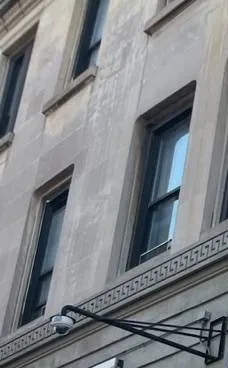
On the Greek Revival rows the front camera usually sits just above the door, under the cornice, or on the brick beside the doorway, with its cable dropping straight through the front wall to a recorder on a cellar shelf. When that camera dies, the repair is mostly about putting the new one back exactly where the old one was. The LPC's permit guidebook treats ordinary maintenance and repair of safety equipment as work that needs no permit, and its rules for new or moved equipment ask that cameras be fixed at mortar joints, plain masonry, wood or metalwork, never drilled through cast iron or decorative surfaces, with only about ten inches of visible conduit. We reuse the existing anchors where they are sound, and if one has pulled loose from old soft mortar, we reset it in the same joint rather than drilling fresh brick.
The iron on these houses matters at night. The designation report notes security grilles on the basement and first-story windows of 237 and 239 Front Street, original cast-iron fences and gates, and a wrought-iron gate under the stoop. A camera whose infrared lights up bars a foot from its lens will wash out its whole night picture. Turning down the camera's own infrared, moving it a few inches, or adding a separate small illuminator aimed past the iron usually fixes it without a new camera.
Brownstoner noted that Vinegar Hill's storefronts survive "in varying degrees of original authenticity." On the houses that kept their old shop fronts, the obvious place for a door camera was the wooden frame or fascia over the former shop window, and many installers took it. Wood that has been painted, rained on and dried for well over a century can be soft in exactly the spot where the screws went in, so a camera mounted there slowly tilts, picks up vibration from passing trucks on the Belgian block, and eventually hangs by its cable. When we repair one, we check the wood first. If it is sound, the new camera goes back on it with longer screws into solid wood behind; if it is not, we talk through the two honest options: a small repair to the woodwork by your carpenter before the camera goes back, or a move to the adjacent brick, which on a landmarked house is a change of position and not simply a repair.
The former shop floor also changes where the recorder sits. Where the old store's back room became a kitchen, the recorder often lives in a cupboard beside the refrigerator or on top of a cabinet, sharing an outlet with appliances. That is a common reason for a recorder that restarts whenever the compressor kicks on, and moving it to its own outlet is part of the repair.
The designation report describes 51 Hudson Avenue as a wood-frame clapboard house of about 1840–47 by a carpenter and shipbuilder, 53 Hudson as wood-frame behind a brick front, 55 Hudson as wood-frame with a brick facade and an exposed clapboard side wall, and 70 Hudson as clapboard above a stucco base. On houses like these, a camera on the side or rear is screwed through clapboard into wood, and its cable goes in through a hole beside it. If that hole was not sealed and the cable was not given a drip loop, rain follows the cable into the wall and into the connector, and the camera fails months later with green corrosion inside. Clapboard also moves with the seasons, enough to loosen a mount over a few winters. We seal what we open, add a mounting block where the boards are thin, and replace taped connectors with weatherproof ones.
Several Vinegar Hill lots hold two buildings: the house on the street and a second one behind it. The designation report describes a rear house of about 1860–67 behind 204 Front Street and a two-story brick rear house built at 51 Hudson in 1906. Cameras on a rear house, or on the yard wall between the two, reach the recorder in the front house one of three ways: a cable buried or strung across the yard, a wireless link between the buildings, or a camera powered from the rear house's own circuits and sending video over the network. Each has its own way of failing. A cable across a yard gets cut by a gardener's spade or chewed; a wireless link fades when leaves fill in or a new fence goes up; and a camera powered from the rear house goes dark every time that house's power is switched off for work or a breaker trips. We test the link end to end and fix the weak part, which is often cheaper than replacing the camera that gets the blame.

The newer buildings are small by city standards. CityRealty describes The Vista on Vinegar Hill at 206 Front Street as a seven-story, 35-unit condominium completed in 2005, with a part-time doorman, video intercom, bike room, planted courtyard and a private garage on the lower level. Compass lists Commodore's Court at 85 Hudson Avenue as a five-story building of about ten units, built in 2002, with an elevator and voice intercom, and a rental listing at 68 Gold Street mentions an elevator, video intercom and private parking. Their camera systems tend to cover the lobby, the mailboxes, the garage ramp and the bike room, recorded on one box in a locked room. The hardware is often fine; what fails is the chain of people. The developer's installer set it up, the original board member who knew the password moved away, and the managing agent has never logged in. Many repairs in these buildings begin with getting the board back into its own system.
Footage in a building raises questions a house does not. FirstService Residential's guidance for New York co-ops and condos says footage is generally kept 30 to 90 days depending on the building, that access is usually limited to the property manager or a security provider, and that residents should not get copies without board and counsel approval. When we repair a building system, we set users and permissions to match what the board has decided, and we leave the decision itself to the board.
The designation report records the former Constitution Engine Co. No. 7 at 225–227 Front Street, decommissioned and converted to residential use in 1976, with a replacement wood garage door and a roof stairway bulkhead, and the six-story Benjamin Moore factory building of 1908 at 231–233 Front Street, designed by William B. Tubby. Converted industrial buildings like these have masonry walls far thicker than a row house, deep floor plates and cable runs that wander through old shafts. Wi-Fi rarely gets through those walls, so most working systems are wired, and the usual repair is finding where along a long run the signal or power drops. A cable tester and tone probe find it faster than opening anything, and the repair is a splice or a short new section along the existing path.
This is the working method our technicians use on the most common Vinegar Hill call, written as practice rather than a story about any one house. The owner says, "The cameras keep going down." Before we book, we ask three things. First, when did it start, and did anything happen around then: an evening when the lights dimmed, a power cut, work on the house, a contractor in the cellar? Second, where does the recorder sit, and what else is plugged in near it? Third, is the picture bad, or is it missing? A picture that is soft or grey points to the lens, the dome or the light; a picture that is missing points to power, cable or the recorder.
Those three answers sort most calls before anyone climbs a ladder. A system that started dropping after a dim evening and whose recorder shares a power strip with a refrigerator is a power repair, and we bring a supply, a tested backup and a spare drive. A camera that went missing during a kitchen renovation is a cable trace, and we bring the tone probe and the splice kit. A street-facing camera whose picture has slowly gone grey on a block near the Con Edison site is a cleaning and sealing job, and sometimes a hood. We also ask for a photo of the recorder's event log, if you can reach it, because the log often says in plain words "power failure," "video loss" or "disk error" at the time the trouble began. None of this costs anything, and it means the technician arrives with the right part, or tells you before the visit that no part is needed.
A clean outage is simple: everything goes off, and when power returns, everything starts again. A voltage reduction is messier. With supply lowered by several percent, a healthy recorder power supply usually rides through, but an old one running near its limit may drop out and come back, over and over, as the voltage wanders. Multi-camera power boxes for older coax systems behave the same way: their outputs fall, the cameras at the far end of long cables lose power first, and their pictures roll or vanish. PoE switches can shed the cameras that draw the most, typically the ones with infrared or heaters, while keeping the rest. And a battery backup with an old battery may switch over at the first sag, find it cannot carry the load, and let everything behind it restart anyway, which is worse than no backup at all.
The marks this leaves are specific. The recorder's log shows a run of restarts on one evening. The hard drive, interrupted mid-write several times, starts to report errors weeks later. One or two cameras on the longest runs come back unstable. After an event like Con Edison's June 2025 voltage reduction, we check each of those: the recorder's supply under load, the drive's health, the camera power box's outputs at the far end of the run, and the backup's battery with a real load test rather than its own green light. We then set the backup to tell the recorder to shut down cleanly on a long event, so the drive is never cut off mid-write again.
Dust from demolition and building settles on everything near the site, and a clear camera dome is a perfect collector. The change is gradual enough that nobody notices from day to day: the picture gets a little softer, edges lose detail, and at night the camera's own infrared bounces off the film on its cover and lights up a grey haze in front of the lens. Rain can wash some of it away, so the picture improves for a day and then slides again. Owners often read that as a camera that comes and goes. The fix is a proper cleaning of the dome or cover with the right materials, a check that dust has not got inside the housing through a failed seal, and on the most exposed cameras a hood or a slightly different angle so the cover catches less. Where a dome has been scratched by being wiped dry with grit on it, the cover itself is replaced.

When a house is renovated, camera cables meet every trade. Ceilings come down and go back up; the cable that ran across the old ceiling gets a drywall screw through it, or the junction box where two cables were joined is plastered over. An electrician moves the outlet the recorder plugged into. A plumber shuts off a circuit for a day, and the recorder comes back with the wrong date. A carpenter sisters the floor joists, as the permit for 69 Hudson Avenue describes, and the cable stapled to the old joist is pinched by the new one. None of the trades did anything wrong by their own lights; they simply did not know the cable was there. We trace a dead run with a tone probe from the recorder end, find the point where signal stops, and open only that spot. If the old path is now buried for good, we run a new one along a route that will stay accessible.
A renovation also adds new electrical loads. A heat pump system, like the one permitted at 69 Hudson Avenue in March 2025, has a compressor and fans that start and stop through the day. If the cameras or recorder share a circuit with any of that, each start can cause a brief dip that shows up as cameras blinking off. Putting the camera system on its own outlet, behind a properly sized backup, solves it.
Recorders are usually put wherever the cables met, which in a row house is the cellar. In older Vinegar Hill houses that can mean a stone or brick cellar that stays damp all summer, and in a few cases a sub-cellar below it; the designation report records a sub-cellar at 67 Hudson Avenue with a doorway to a tunnel under the street. Damp corrodes connectors and drive contacts, and a recorder on the floor is one bad storm from a total loss. A good repair moves the recorder and its power box onto a high shelf or upstairs, extends the cables to reach, and runs a network cable to the router so the phone app connects reliably rather than over weak Wi-Fi from deep underground.
The cameras that fail most often on Vinegar Hill lots are the ones farthest from the recorder. A coax camera on a rear house loses picture quality over a long run, more so if the run has a splice in the yard. A network camera on a long Ethernet run near its length limit works until a connector oxidizes. A wireless link between front and rear houses fades when something grows or is built in its path. We test each section of the link separately, because replacing the camera at the end of a failing link changes nothing.
Farragut Houses, NYCHA's ten 13- and 14-story buildings south of the historic district, has its own camera system. NYCHA installed cameras there as one of eleven Brooklyn developments in 2014, and in November 2023 named Farragut among 23 campuses receiving more than $24.1 million in safety and security upgrades, which across the campuses included new CCTV cameras, layered access control, entrance renovations and lighting. Those cameras belong to NYCHA and are repaired through NYCHA; a private company cannot work on them. Records show how stretched that repair system can be: DNAinfo reported 4,034 unanswered repair requests at Farragut in February 2013, and the NYC Comptroller's auditors found 8 of 10 front entrance doors open on a visit in August 2018. What we can help Farragut residents with is their own equipment inside their own apartment, such as an indoor camera on a shelf facing their own apartment door, within whatever rules their lease and NYCHA set.
Vinegar Hill has very little retail, and that shapes its business camera work. Vinegar Hill House opened at 72 Hudson Avenue in 2008, a 41-seat restaurant that Wikipedia describes as the area's first eatery since a 1970s diner, and Cafe Gitane followed next door at 70 Hudson in 2018. Around them are studios and small offices in former shops and lofts, construction and utility work on the Con Edison site, and the Navy Yard's businesses just past the gate. For a business here, the camera that matters is often the one watching a door on a quiet street after closing, when nobody else is around to notice it being forced.
The old main street of the neighborhood, with its restaurants and café, former shop floors and Belgian-block paving. Dining-room cameras in low light, kitchen cameras in steam, and door cameras on landmarked fronts.
Brick rows, the converted firehouse and the former Benjamin Moore factory, with offices, studios and workshops in some ground floors. Long cable runs through thick walls and facade cameras that must go back where they were.
Cobbled side streets toward the Con Edison site and DUMBO, where a single camera on a quiet block may be the only witness to a break-in after hours. Dust on domes is the steady complaint.
The side of the neighborhood that faces the substation construction, the Farragut Station and the trucks that serve them. Street cameras there need regular cleaning and firm mounts.
Larger converted and newer buildings at the DUMBO edge, with garages, lobbies and tenant suites on one recorder, where the landlord, the board and the tenants each own a piece of the system.
Businesses on the Vinegar Hill side of the Yard fence, near the Sands Street gate. Work inside the Yard itself follows the Yard's own tenant rules, covered on our Navy Yard page.

A small restaurant's cameras live in three very different places. In the dining room they face dim, warm light at night and bright windows during lunch, so a camera set up for one fails the other. In the kitchen, steam and grease film the dome within weeks. At the door, the camera faces the street and, on Hudson Avenue, a landmarked front. The repair there usually combines a clean, a camera with better low-light performance for the dining room, a hooded or easily cleaned camera for the kitchen, and a door camera put back exactly where it was. We also check where the recorder sits; in small restaurants it often ends up in the cellar beside compressors, which brings back the shared-circuit problem.
Studios and small offices in the lofts and former shops usually have a handful of indoor cameras and one at the door, recorded on a small box or a cloud service. Because they are empty at night on quiet streets, what they need most is a system that warns someone when a camera goes offline or the door camera sees a person after hours, rather than one that only records. A repair there includes setting those alerts to go to a phone someone answers.
Construction sites and contractors' yards near the Con Edison project have their own security arrangements, usually through the contractor. Where a business or homeowner nearby wants their own cameras to cover a gate or a stretch of street the site's traffic uses, we can repair and re-aim what is there; we do not work on the utility's or the contractor's systems without their direct request.
Companies that install or service security and CCTV systems for others in New York need a license from the Department of State; we work under NYS license #12000287431. Under the NYC Administrative Code, an electrical permit is not required for wiring designed to operate at less than 50 volts, which covers camera and network cabling, though any new outlet or circuit for the recorder is electrician's work. Employers who use cameras around staff should know New York's rules on notice of electronic monitoring and on recording in private spaces such as restrooms and changing rooms, and get advice on them. On the historic district's fronts, a facade camera replaced in the same place is ordinary repair under the LPC guidebook; a new or moved one is not. We are not your lawyer; we tell you where a repair touches one of these rules so you can decide before work starts.
It can go back on the frame if the wood a little deeper in is still sound, and we check that with a probe before anything is mounted. Longer screws into solid wood, or a small mounting plate that spreads the load over a wider area, usually hold well. If the frame is rotten through, the honest choice is a woodwork repair by your carpenter first, then the camera, or a move onto the brick beside it. On a house inside the historic district, putting the camera back where it was is a repair; moving it to new brick is a change of position, and the LPC guidebook's rules on attachment and spacing apply, so we would discuss that with you before drilling.
Not necessarily; the recorder is reporting exactly what happened. The cameras lost power when the rear house did, so the recorder saw no video from them. The real question is whether you want those cameras to keep working when the rear house is shut off for work or a breaker trips. If you do, the cameras can be powered from the front house instead, over the same network cable using PoE from a switch next to the recorder, which also puts both houses' cameras behind one battery backup. If the cable between the houses cannot carry power, a small backup in the rear house does the same job. We test which arrangement your existing cable allows before suggesting either.
The recorder works fine two levels down; it is its connection to the internet that suffers. If it reaches the router over Wi-Fi, two floors of brick, stone and earth leave very little signal, and the app times out. A network cable from the recorder up to the router, or to a small switch near it, fixes the connection completely. While we are down there, we look at the conditions: a sub-cellar that stays damp is hard on drives and connectors, and moving the recorder up a level, with longer camera cables, can be the better repair.
Usually not. A splice or junction box buried behind new drywall or plaster is still there, and the fault is often a screw through the cable near it or a connector crushed when the board went up. We put a tone on each dead cable at the recorder and follow it with a probe to the point where the signal stops, then open only that spot, typically a hole a few inches across that your contractor can patch. If the buried joint turns out to be the problem, we move it into a small access panel or run a new length of cable so there is no hidden joint in the future.
Probably not. The unit's fan spinning and its warm exhaust rising past the lens both look like motion to a camera, and the heat haze makes the picture ripple, especially at night under infrared. We can mask the unit out of the camera's detection area, switch to person detection if the camera supports it, and if the shimmer is in the part of the view you care about, raise or shift the camera a little so it looks past the exhaust rather than through it. If the camera shares a circuit with the unit and blinks off when the compressor starts, we move it onto its own outlet as well.
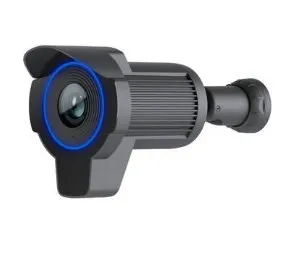
That pattern is dust film on the camera's cover. Fine dust settles on the dome or front glass, softening the picture gradually, and rain rinses some of it off, so it improves briefly and then slides back. At night the camera's infrared bounces off the film and adds a glowing haze. The fix is a proper cleaning with materials that do not scratch the cover, a check that the housing seal has not let dust inside, and for a camera that faces the site directly, a hood or a hooded bullet camera whose flat glass is easier to keep clear. Because the construction is expected to continue until about 2029, a cleaning every few months is cheaper than waiting until the picture is unusable.
A click when the lights dim is normal: the backup is switching to battery or correcting the voltage. Constant beeping, a beep that will not stop, or a recorder that restarts anyway when the lights dim are signs that the battery is worn or the backup is too small for what is plugged into it. Most backup batteries need replacing every few years. We load-test the backup with the recorder, switch and power box connected, replace the battery or the unit if it cannot carry them, and connect the backup to the recorder so a long event ends in a clean shutdown instead of a hard cut.

Yes. Most recorders and their apps can send camera-loss, drive and recording alerts to more than one person, and many can do it on a schedule. A common setup is alerts to the desk screen while it is staffed and to two or three board members or the managing agent outside those hours, with the managing agent getting everything by email as a record. We set it up the way the board decides, test each alert by unplugging a camera, and show the desk and the board what the alert looks like so nobody dismisses it as a glitch.

The board, or whoever your bylaws name to act for the condominium, authorizes it; the system belongs to the building, not to the owner who used to run it. We ask for that authorization in writing, then reset the recorder's admin access using the manufacturer's recovery method, which for many models means a code request tied to the recorder's serial number. Where that is not possible, a factory reset clears the password at the cost of the settings, which we then rebuild. We set at least two board members as administrators so the system never again depends on one person.
Usually a repair. A wide camera at the end of a long corridor in a converted industrial building spreads its picture over the whole hall, so a face forty feet away is a few pixels. Replacing it with a varifocal camera and zooming in on the stretch that matters, usually the elevator and stair doors, or adding one camera at the midpoint, solves it without touching the recorder. We check the recorder's free channels first so you know whether an extra camera fits the current system.

Yes. The motion zone that was drawn tightly around your door is a setting, not a limit of the camera. The simplest fix is continuous recording on the street camera at a sensible quality, with motion events marked on the timeline so they are easy to find. A typical drive holds well over a week of continuous recording from a handful of cameras; we size the drive and the stream together so you keep at least that. If you prefer motion recording, we redraw the zones to include the sidewalk and the street and tune the sensitivity so a person or car crossing triggers it but blowing leaves do not.
A picture that jumps with traffic almost always means the mount or the wall behind it is passing on the vibration, and a little play in a bracket becomes a lot of movement at the lens. We tighten or replace the bracket, check that its anchors are set firmly in a mortar joint rather than crumbling brick, and if the camera sits on a long arm, shorten the arm or brace it. Turning on the camera's digital stabilization, where it has one, smooths what is left. A shaking picture also fires false motion alerts, so a steadier mount usually quiets the phone too.
We repair equipment from any manufacturer and any installer. These are the kinds we meet most in Vinegar Hill's houses, condos, lofts and shops, and what usually goes wrong with each.
Older systems in many row houses, wired to a DVR in the cellar and powered by a multi-camera box that is the first thing to fail when the voltage sags. Often upgraded to higher resolution on the same cable.
Standard in the condos and lofts, powered and connected over one cable from a PoE switch or NVR. Faults are usually a switch port, a crushed connector, or an address change after a router swap.
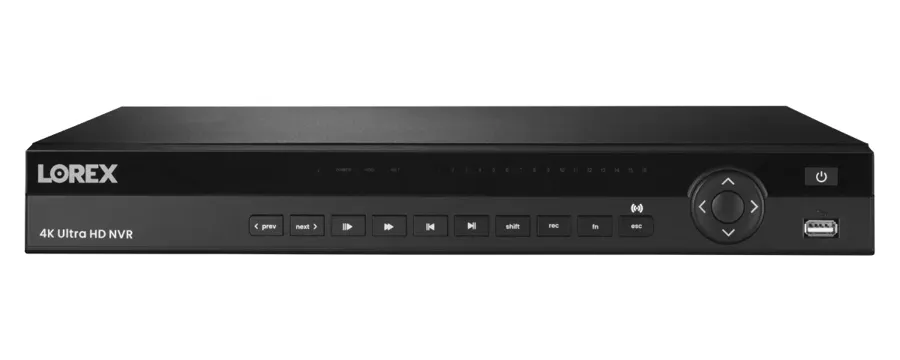
The box that keeps the video. Drives wear out, repeated restarts damage them, and firmware updates can break phone viewing. Hybrid recorders let a house keep coax cameras while adding network ones.
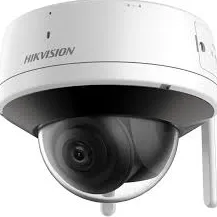
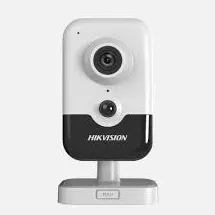
Outdoor cameras on facades and yard walls. Domes collect dust and soot; hooded bullets shed more of it. Seals, covers and mounts are what we replace most.
Cameras whose lens zooms after mounting, for long loft corridors, garage ramps and doors seen from across a yard.
Motorized cameras in shops, garages and loft lobbies. Motors, saved positions and fogged domes are the usual repairs.
Consumer cameras in apartments, rear houses and yards. Signal through thick old walls, batteries in winter and app accounts in someone else's name are the common faults.
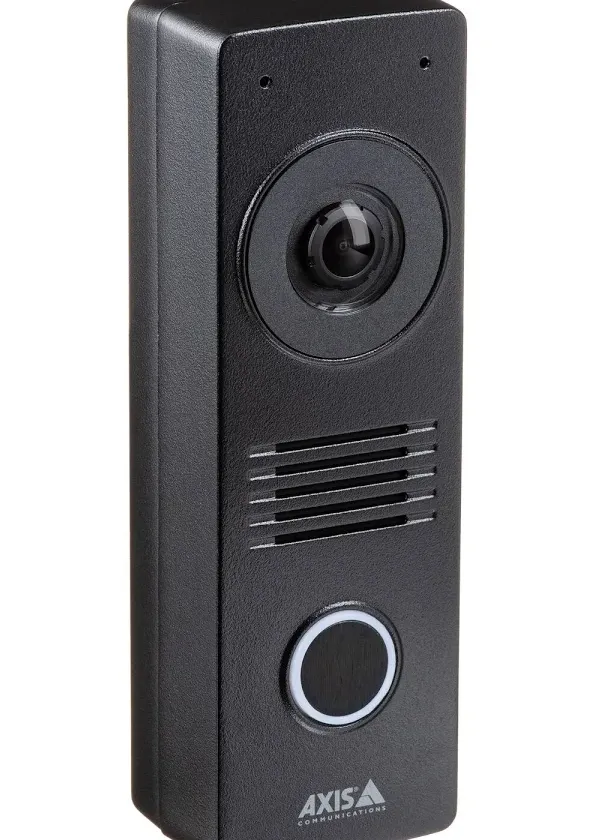
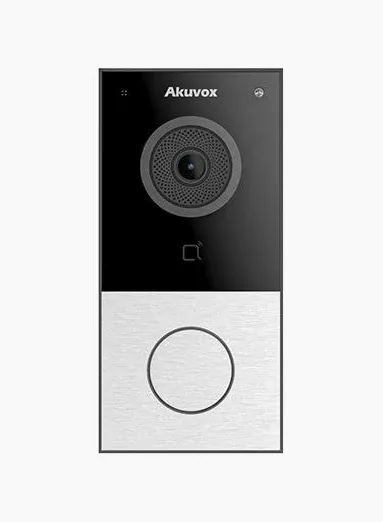
Intercom stations with cameras at condo entrances and house doors, recorded by the main system in some buildings and not in others.
The parts that power everything and suffer first when power dims or cuts out. Tested under load on every power-related call.


Owners with Ring, Arlo, Nest or SimpliSafe cameras often ask whether to call the brand or us. For a sealed consumer camera that has died outright, the brand's warranty or a replacement is usually cheaper; there is nothing inside to repair. What a brand cannot do is come to the house and see that the camera is on a rear house beyond the reach of the Wi-Fi, that its dome is filmed with dust, or that its battery drains because the heat pump's fan wakes it all day. For wired systems with a recorder, a licensed local repair is the normal route, since those brands generally sell through installers and do not send technicians. ADT and similar monitored services repair their own equipment under their contracts, so check yours before calling anyone. If you own Hikvision or Dahua equipment, recent FCC actions concern new authorizations; a proceeding on older devices "explicitly would not affect continued use or operation of already-purchased communications equipment," so a working system of either brand can be repaired.
| Situation | Usually best handled by |
|---|---|
| Sealed consumer camera dead, still under warranty | The brand's warranty |
| Consumer camera works, but reach, dust, alerts or battery are the problem | A local visit |
| Wired cameras with a DVR or NVR | A licensed local repair |
| Cameras under a monitoring company's contract | That company first |
| Condo or loft building system | A licensed repair approved by the board or managing agent |
| Farragut Houses common-area cameras | NYCHA |

Search summaries and home-service sites such as Angi, HomeAdvisor and Fixr give general advice about fixing cameras. Some of it holds everywhere. Some of it misses how systems fail on these particular blocks. Here are the claims we hear most, and what we find on Vinegar Hill repairs.
Outages matter, but in this part of Brooklyn the quieter risk is a voltage reduction. Con Edison's June 2025 notice named Vinegar Hill among neighborhoods where it lowered voltage by 8 percent while crews made repairs. Nothing goes dark, so nobody checks the cameras afterward.
Old recorder supplies and multi-camera power boxes can drop out and restart repeatedly through a sag, and each hard restart is another chance to damage the drive. The result is often a recorder that looks fine but has gaps in its recordings from that evening on.
After any dim evening, a two-minute check of yesterday's playback tells you more than the live view. On a repair we read the recorder's log for restarts and load-test the supply and backup.
For a camera indoors, often true. For a dome facing a demolition and construction site, wiping it dry can drag grit across the plastic and leave fine scratches that scatter light permanently, especially at night under infrared.
The right sequence is to rinse loose grit off first, clean with a lens-safe solution, and check the housing seal so dust has not got inside, where no amount of wiping helps.
If a dome is already scratched, the cover is replaced, at $30 to $80 for the part plus labor on our Brooklyn list, or the camera is swapped for a hooded bullet that is easier to keep clean.
On a Vinegar Hill lot the camera that shows no video is often at the far end of a long link: across a yard to a rear house, through a renovation's new ceiling, or on a rear house's own electricity. The camera itself is frequently fine.
Replacing it without testing the power, the cable and the connection at each end means paying for a new camera that shows exactly the same "no video" screen.
We test in order from the outlet to the phone, so the part that failed is the part that gets replaced, and nothing else.
A restart clears some software faults. On a recorder whose drive has been weakened by repeated brownout restarts, it can make things worse: some recorders come back asking to format a drive they can no longer read, and the log that would show when recording stopped can be lost.
If you need footage, leave the recorder running and call. If you do not, one restart is fine to try, but photograph the screen first.
If the fault returns after a restart, that is the recorder pointing at its drive or its power, and that is when it should be looked at.
It will not. As one New York repair firm states, "Installing or formatting a new hard drive does not recover footage previously lost because of a failed drive." A new drive records from the moment it goes in.
What sometimes can be saved is video still on the old drive. That is why we copy what can be read from a failing drive before replacing it, and why the old drive is handed back to you rather than thrown away.
The real protection is alerts: a recorder that tells someone within hours when its drive starts failing loses days, not weeks.
Not for a repair. The LPC's permit guidebook treats ordinary maintenance and repair of health, safety and utility equipment as work that needs no permit, and a dead camera replaced in the same place is that kind of work.
The guidebook's rules apply to new or moved equipment: cameras well spaced, no more than two per 25 feet of frontage on a small building, fixed at mortar joints or plain surfaces and never through cast iron or decorative elements, with little visible conduit.
The Department of Buildings is not involved either: the NYC Administrative Code says no electrical permit is required for wiring designed to operate under 50 volts.
That range describes one consumer camera in an easy spot. HomeAdvisor's Brooklyn page puts the average surveillance camera install or repair at $1,416, with a typical range of $680 to $2,145 across job sizes, and published NYC diagnostic calls run $150 to $250 before parts.
On our Brooklyn list, a setting or connector fix is covered by the $150 service call or runs $150 to $350, a single camera replacement $250 to $600, and a recorder replacement $700 to $1,500. You see your number in writing first.
The expensive repairs are the ones done twice, such as a camera replaced when the backup was the problem. Testing in order avoids that.
Send a photo of the recorder screen, the camera's picture by day and by night, and anything that changed before the trouble began. Many Vinegar Hill "broken camera" calls turn out to be dust, a worn backup or a cable behind new plaster, and we would rather tell you that before you buy anything.
Prefer to talk to someone who works on cameras every day? Message a technician on WhatsApp.
Give us the street and the kind of building first: a brick row on Front or Gold Street, a Hudson Avenue house that once had a shop on the ground floor, a frame house, a lot with a rear house, a condo, a loft or a business. Then tell us how many cameras you have, which ones are out, where the recorder lives (closet, cellar, sub-cellar, rear house, telecom room or back office), and what happened just before the trouble started. If a clip from a certain date has to be kept, say so in the first line, and we will plan to copy it before anything is touched. For anything urgent, call (347) 934-8335.
A photo of the recorder screen or the app, the Vinegar Hill address and the type of building, by text, WhatsApp or the form. Add anything that changed before the fault: renovation work, an evening when the lights dimmed, dust from the work on the Con Edison site, or a power cut in the rear house.
House owner, tenant, condo board, managing agent or shop. We settle who approves the price, who holds the recorder login, and who can open the cellar, the sub-cellar, the rear house or the telecom room on the day, before anything is booked.
The $150 Brooklyn service call books a two-hour arrival window and is credited to the repair if you go ahead with it. Requests are booked within 2 hours of reaching us, and the technician arrives inside the window, not before it.
If a clip is needed for the 84th Precinct, an insurer or a landlord, it goes onto a USB drive with the recorder's own timestamps before anything is restarted, unplugged or swapped. A drive that sounds or reads as failing is copied first and tested second.
Outlet and battery backup, then the power box or PoE switch, then the recorder and its drive, then each cable, joint and camera, then the network and the app. Working in that order keeps a good camera from being replaced when the backup was the real culprit.
You hear what failed and why it failed, and you get a written price from the Brooklyn list before any part is replaced. When more than one thing is wrong, each fault gets its own line, so you can decide what to fix now and what can wait.
Only the failed part is repaired or replaced. Mounts go back into mortar joints or sound wood, every cable entry is sealed, and each camera is checked live and in playback, in daylight and in low light, before the technician packs up.
Cables and channels are labeled, camera-loss, drive and power alerts are sent to the right phones, the recorder clock is set to sync on its own, and you are shown how to find a clip and export it without help.
The Federal-style house at Evans and Little Streets, dated to 1805–06 in different sources, built for the Navy Yard's commandant and in private hands since the 1960s.
A building put up around 1869–76 by the grocer John Shutte, home since 2008 to the restaurant that was the area's first new eatery since a 1970s diner.
The 1855–56 firehouse at 225–227 Front Street, decommissioned, sold and turned into a residence in 1976, with a replacement wooden garage door on the old bay.
The six-story building at 231–233 Front Street designed by William B. Tubby, part of which sits inside the historic district designated in 1997.
The former generating station between Marshall Street, Hudson Avenue and Gold Street, being cleared for the Brooklyn Clean Energy Hub substation, with completion aimed for 2029.
The NYCHA campus of ten 13- and 14-story buildings south of the historic blocks, opened in 1952 and listed in 2023 among the campuses getting new CCTV and access upgrades.
We also serve the blocks around Vinegar Hill, including DUMBO, Fulton Ferry, Brooklyn Heights, Downtown Brooklyn and the Navy Yard, at the same Brooklyn rate. Our Fulton Ferry camera repair page covers the landing below the bridges, our Downtown Brooklyn page covers the towers past Flatbush Avenue Extension, and owners anywhere in the borough can begin with AESS security camera repair in Brooklyn.
Vinegar Hill is billed at our standard Brooklyn rate, with no travel markup. Each repair begins with the $150 service call, which pays for the on-site diagnosis and is credited to the repair if you go ahead. The ranges below are copied from our list of Brooklyn security camera repair prices. Your own number is written down on the visit, once the fault has been found, and no part is replaced until you have agreed to it. NYC sales tax of 8.875% applies.
| Repair | Brooklyn price |
|---|---|
| Service call: diagnosis on site and a written price | $150, credited to the repair |
| Motion, alert, recording or login settings, no parts | Usually within the $150 service call |
| Clean and check for a dusty or hazy picture | $80 |
| Connector reterminate or PoE port swap | $150–$350 |
| Power supply repair | $150–$400 |
| Dome or front cover replacement | $30–$80 part, plus labor |
| Hard drive swap | $200–$450 |
| Indoor camera repair | $200–$450 |
| Single camera replacement on a working system | $250–$600 |
| Outdoor camera body replacement with weatherproofing | $250–$600 |
| Night picture repair | $250–$650 |
| DVR not working, including drive and labor | $300–$700 |
| NVR not recording | $400–$900 |
| Vandalized camera, per camera, plus cable repair | $400–$900 |
| Pan-tilt (PTZ) camera repair | $450–$1,200 |
| Hybrid recorder swap, coax and IP | $700–$1,200 |
| DVR or NVR replacement with drive and setup | $700–$1,500 |
| Full rewire or whole-house system overhaul | From $1,500 |
| Lightning or surge damage, by system size | $700–$3,500 |
| Annual maintenance visit | $250–$800 |
Three things tend to move a Vinegar Hill price inside those ranges. Distance is the first: a camera on a rear house that sits behind the front house, or at the far end of a long loft corridor, means a longer cable test and sometimes a longer ladder carry through the house. Old fabric is the second: a camera that has to go back into the same mortar joint on a landmarked Greek Revival front, or onto a frame house's soft clapboard, takes more care than a new hole in plain brick. Access is the third: a recorder in a sub-cellar, a locked condo telecom room or a tenant's apartment adds time to arrange. Power events also tend to break more than one part at once, so a repair after an evening of dimming lights is often priced across two or three lines. Whatever the case, you see every line before work starts.
The repair is done under NYS license #12000287431, and the terms that come with it are below.
Full terms — including 50% deposit, one-year parts-only warranty on AESS-supplied products, and the late-fee schedule — are set out in the service agreement.Most Vinegar Hill repairs fall into one of three shapes, each priced from the same Brooklyn list.
One problem, one visit: a dusty street camera cleaned and checked, a corroded joint at the facade reterminated, a worn battery backup or power box replaced, a failing drive swapped, or lost logins recovered. The usual case for one brick row house, one frame house or one small shop on Hudson Avenue.
The recorder or several runs at once: a DVR or NVR replaced, coax cameras moved onto a hybrid recorder, the link to a rear house rebuilt, or cameras rewired after a renovation closed up the ceilings. Common for lots with two houses, small condos and loft buildings.
Every camera checked in daylight and low light, domes cleaned of construction grit, joints and supplies tested, the drive's health read, the backup battery tested, alerts confirmed and one clip exported to prove it works. Single homes sit at the lower end, buildings and businesses higher.
Already bought the part? If you have a replacement camera or recorder on hand, we fit it at labor-only rates. Send the exact model and we quote the labor by phone or text, and the visit is booked once it is paid. Parts you supply go in as supplied: we cannot stand behind equipment we did not provide, and if a model will not talk to your recorder or app, we say so before the visit rather than after.
Dark cameras, dusty domes, flaring night pictures, rubbed or corroded cables and runs lost behind new plaster. Request a repair
DVRs, NVRs, PoE switches, power boxes and battery backups in closets, cellars, sub-cellars and telecom rooms. Brooklyn security camera repair
Every figure used on this page, in one place. Camera repair prices in Brooklyn
For owners and agents with buildings in more than one borough. NYC camera repair
Yes, and it should be. Several houses on the landmarked blocks have their fire escapes on the street front, and a cable tied to the rails gets stepped on, rubbed and frozen into the paint until the jacket wears through. On the repair we cut back to sound cable, then route the run either inside the house to the cellar or down a plain line of masonry with small clips in the mortar joints and a short, painted cover where it enters the wall. If the copper inside has corroded, that stretch is replaced rather than taped. The new route is priced on its own line before we start.
Usually, yes. Wet stone acts like a mirror, so a camera aimed low across the street sees a row of bright spots where the lamps reflect, and its exposure drops until everything else goes dark or streaks. We start with the aim and the settings: tilting the view so the shiny patch is a smaller part of the frame, turning on the backlight and wide dynamic range modes, and lowering the camera's own infrared, which also bounces off the wet surface. That work is normally covered by the service call. If the camera simply cannot handle the contrast, we price a replacement that copes better in low light.
It does set a limit. The Landmarks Preservation Commission's permit guidebook says cameras should be well spaced, with no more than two per 25 feet of frontage on a small building, attached at mortar joints or plain surfaces and not through decorative work, with very little visible conduit. A camera replaced in the same spot is ordinary repair, but a second camera is new work, so it has to meet those rules, and it is worth checking with the Commission before it goes up. Most Vinegar Hill houses are narrow enough that two cameras is the practical maximum on the front.
Yes, and an open ceiling is the cheapest moment to do it. Recent permits on landmarked Hudson Avenue houses have included new ceiling finishes and joist work, and once that framing is exposed a cable can be pulled straight through instead of fished blind later. We measure each run, replace any old or spliced cable with a single continuous length, leave a labeled loop where it meets the camera, and test every camera before the ceiling is closed. Tell us the contractor's schedule so the cable work lands after the framing and before the drywall goes up.
Three things. After the 2012 incident at the plant, Brook Stanton of the Vinegar Hill Neighborhood Association said there was a lot of smoke damage to nearby homes, and smoke leaves a film on domes and lenses that looks like ordinary haze but does not wipe off with water. First, the outdoor cameras should be cleaned properly and their pictures checked by day and at night. Second, if the power dipped or cut during the event, the recorder, drive and battery backup should be tested. Third, export any footage from that night before it is recorded over, in case an insurer asks for it.
Often, yes, if the cellar camera can see down into that level. More often the sub-cellar needs its own camera, because the stair and the change in height block the view. A space that far down is dark and damp, so we use a camera with good infrared, mount it on dry masonry away from any wet wall, and seal the cable where it passes between levels. If the doorway is the reason you want the camera, aim it so the whole opening fills a good part of the frame, which makes any movement there easy to see in playback.
Yes. The Brooklyn Paper reported that 2010 break-in: the owner was out for about 11 hours, and the thief forced in the window air conditioner. Re-aiming a working camera so it takes in the back windows as well as the yard is usually a short job covered by the service call. If one camera cannot see both without making everything too small to recognize, the better answer is a second camera or a wider lens, priced separately. We also set motion zones around the window units so you get an alert for someone at the window, not for every cat on the yard wall.
Yes, within limits. Most housings come in white, black or grey, and a darker housing set into a mortar joint already disappears against old brick from the sidewalk. The body of a camera can be painted to match, but the lens window, the dome and the infrared ring must stay clean, or the picture and night vision suffer. Discreet, painted equipment and very little visible conduit are what the Landmarks Commission's guidance asks for on these fronts, so blending in also keeps the repair in line with the district's rules.
Yes. Most recorders let you add a separate user who can watch only the cameras you choose, live only, with no playback, no export and no access to settings. We set that user up on the repair visit, limited to the street or stoop camera, and show you how to switch it off when you are home. Never share your own login: a separate user can be removed in seconds, and the recorder's log shows who looked and when.
Yes, as a separate view. Some of the small condos built in Vinegar Hill since 2002 have a voice intercom, and the door camera there records to the building's own recorder. After the repair, we can give each apartment a view-only user for that one camera, so residents can open the app and see who is at the door. It will not pop up when someone rings, because the camera is not wired to the intercom. If the board wants the picture to arrive with the ring, that is an intercom upgrade, which we price separately.
Security Camera Repair Brooklyn | Same-Day | Brownstone Pros · Security Camera Repair NYC | Same-Day | Abstract Enterprises · Security Camera Repair Manhattan | Same-Day | Co-op COI · Security Camera Repair Queens | Same-Day | Driveway Pros · Security Camera Repair Bronx | Same-Day | Home Base · Security Camera Repair Staten Island | Same-Day | Sandy Zone · Security Camera Repair Long Island | Nassau & Suffolk · Security Camera Repair Hudson Valley | Westchester to Ulster · Security Camera Repair Nassau County | Same-Day · Security Camera Repair Suffolk County | Hamptons + East End · Security Camera Repair Westchester County | Same-Day · Security Camera Repair Rockland County NY | Nyack, Suffern · Security Camera Repair Orange County | Newburgh, Goshen · Security Camera Repair Putnam County NY | Carmel, Mahopac · Security Camera Repair Dutchess County | Poughkeepsie · Security Camera Repair Ulster County | Kingston Woodstock
Security Camera Repair Bath Beach Brooklyn NY · Security Camera Repair Bay Ridge Brooklyn NY | AESS · Security Camera Repair Bedford-Stuyvesant Brooklyn NY · Security Camera Repair Bensonhurst Brooklyn NY | AESS · Security Camera Repair Bergen Beach Brooklyn NY · Security Camera Repair Beverley Square Brooklyn NY · Security Camera Repair Boerum Hill Brooklyn NY · Security Camera Repair Borough Park Brooklyn NY · Security Camera Repair Brighton Beach Brooklyn NY · Security Camera Repair Brooklyn Chinatown Brooklyn NY · Security Camera Repair Brooklyn Heights, Brooklyn NY · Security Camera Repair Brooklyn Navy Yard, Brooklyn NY · Security Camera Repair Brownsville Brooklyn NY | AESS · Security Camera Repair Bushwick Brooklyn NY | AESS · Security Camera Repair Cadman Plaza Brooklyn NY · Security Camera Repair Canarsie Brooklyn NY | AESS · Security Camera Repair Carroll Gardens Brooklyn NY · Security Camera Repair City Line, Brooklyn NY | Any Brand · Security Camera Repair Clinton Hill Brooklyn NY | AESS · Security Camera Repair Cobble Hill Brooklyn NY | AESS · Security Camera Repair Columbia Street Waterfront Brooklyn · Security Camera Repair Coney Island Brooklyn NY · Security Camera Repair Crown Heights Brooklyn NY | AESS · Security Camera Repair Cypress Hills Brooklyn NY | AESS
TV Installation Vinegar Hill Brooklyn · Access Control Installation Vinegar Hill Brooklyn NY · Door Buzzer Installation Vinegar Hill Brooklyn NY · Alarm Installation Vinegar Hill Brooklyn NY | Quiet Blocks · Fire Alarm Installation Vinegar Hill Brooklyn NY · Intercom Installation Vinegar Hill Brooklyn NY · Structured Cabling Installation Vinegar Hill Brooklyn NY · Security Camera Installation Vinegar Hill Brooklyn NY · Door Buzzer Repair Vinegar Hill Brooklyn NY
Send a photo of the recorder screen, the address and the date of any footage you need kept. We book within 2 hours, give you a two-hour arrival window, copy your footage before anything is touched, and write down the price of the repair before any part is replaced.
Rather send photos first? Message a technician on WhatsApp.