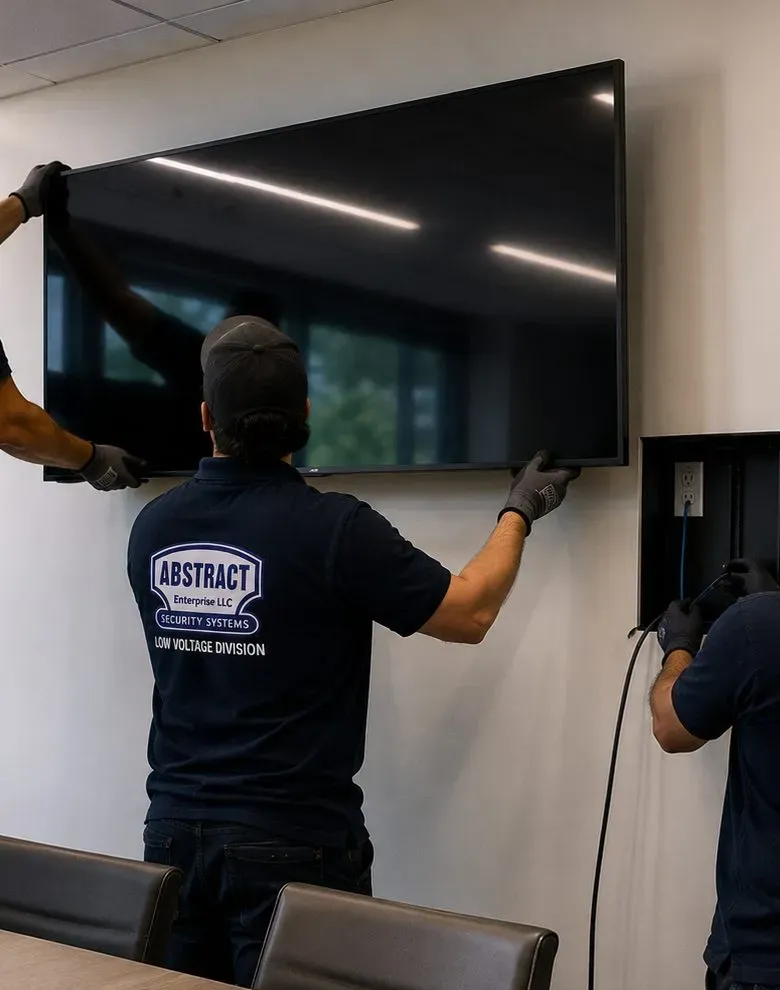
House, Yard & Deck Planned as One System · Gear Kept Above Flood Level · Wired Where It Matters · Staten Island Price List
Tottenville is where the island, the city and the state all run out of land, and most of the people who live here own the house they live in. That changes what a Sonos job looks like. Instead of asking a landlord about one soundbar, we are usually planning a whole lot: an Arc Ultra in a 1990s family room, ceiling speakers in an 1880s parlour, a pair on a deck that catches the wind off Raritan Bay, something in the finished basement, and, in houses rebuilt and raised after Sandy, a dry place for the Amp and the router. We map the house, the yard and the network first, then price the work from the published Staten Island list.
Reviewed and updated November 1, 2026 by Anwar Timothy, licensed low-voltage installer (NYS #12000287431) · Sources: Wikipedia, LPC designation reports and permit pages, NYC Build It Back testimony, the Governor's Living Breakwaters release, Forgotten New York, Point2 census summaries, CBS New York and Sonos support pages · Tottenville jobs booked through our Brooklyn office at 1282 Troy Ave

Owner-operated since 2002 · Thousands of jobs completed · Booked within 2 hours
Sonos installation in Tottenville, Staten Island starts at $125 to join, name and tune the Sonos products you already own, with a soundbar fixed under the TV at $129 or set on the console at $79, and ceiling, deck and yard zones quoted in writing after we have seen the house. Every figure comes from the published Staten Island list, there is no toll or mileage line, and requests are booked within two hours. Call (347) 934-8335 or use the form.
Tottenville is the last neighbourhood in New York in every direction that counts. Wikipedia places it as the southernmost neighbourhood in both the city and the state and the westernmost in the city, with the Arthur Kill along its western and northern edges and Raritan Bay and the New York Bight to the south. Water on three sides, about two and a half square miles of land, and a single ZIP code, 10307. The Staten Island Railway has ended here since June 2, 1860, and Wikipedia gives the run to St. George as fourteen miles and about forty-two minutes. Across the Kill, the Outerbridge Crossing has tied the neighbourhood to Perth Amboy and New Jersey since 1928. People who live here tend to describe it as a small town at the end of a long line, and the housing bears that out.
The numbers explain why a Sonos job here looks so different from one in a Manhattan co-op or a St. George rental. American Community Survey estimates summarised by Point2 count roughly 5,412 homes in Tottenville, with 51.6 percent of them detached single-family houses, 24.4 percent in two-unit buildings and 19.8 percent single-family attached. About 82.9 percent are owner-occupied. The median home was built in 1989. In practice that means the person who calls us is usually the person who owns the walls, the yard, the deck and the basement, and the conversation starts with how far the music should go rather than who has to approve a bracket.
The neighbourhood was built in two bursts more than a century apart. The first was the village of oystermen and shipbuilders. The Landmarks Preservation Commission's history of Main Street calls Tottenville "the Town the Oyster Built" and says the oyster trade reached its golden age by the 1880s; shipbuilding began in the 1840s and the last yard closed in 1930. That era left Greek Revival, Gothic Revival, Italianate, Second Empire, Queen Anne and Colonial Revival houses on and around Main Street, Amboy Road, Bentley Street, Hopping Avenue, Satterlee Street and Yetman Avenue, many of them later wrapped in aluminium or vinyl siding. Point2's figures put about 20.4 percent of the housing in the "built 1939 or earlier" bracket. The second burst came in the 1990s, when, by Wikipedia's account, the land south-east of Hylan Boulevard, until then nearly uninhabited, filled with new houses. Point2 counts 17.2 percent of homes from the 1980s, 22.9 percent from the 1990s and 15.2 percent from the 2000s. A 2006 Cooperator article quoted a local broker describing narrow bungalows being replaced by "Florida Style" centre-hall colonials with stucco and brick fronts. Between the two, mid-century ranches and split-levels fill the streets further inland, and newer two-family and multi-family houses have gone up on former lots along Amboy Road.
For a Sonos installer those are two very different sets of walls. A village house usually means plaster on wood lath, deep floor framing, tall rooms, a cellar with low clearance and an attic reachable through a hatch, and an owner who wants music without the house looking modernised. A 1990s or 2000s colonial means drywall, roomy attics, an attached garage, a basement that has often been finished, a family room open to the kitchen and a router wherever the cable company happened to bring the line in. Both are owner-occupied, both have yards, and both usually end up with more Sonos zones than a city apartment ever would. The planning question is the same in each: how does the music get from the room where the TV sits to the deck, the basement and the bedrooms without a single speaker losing its connection?
Then there is the water. Time magazine's account of the weeks after Hurricane Sandy described Tottenville as flanked by water on three sides and battered by the storm, and the Staten Island Advance reported that a gigantic wave tore through the end of Yetman Avenue near Billop Avenue. City testimony to the Council lists Tottenville among the Build It Back neighbourhoods; citywide that programme rebuilt and elevated almost 1,400 homes to current flood-protection rules, and its designs often moved mechanical systems up and out of harm's way. Living Breakwaters, completed offshore in September 2024, now places eight partially submerged breakwaters along about 2,400 feet of shoreline to cut the waves reaching buildings and roads to below three feet. None of that removes the need to think about height. In a raised or rebuilt house, the level that floods is the last place for a Sonos Amp, a Port, a router or a network switch, and we plan every shore-block job around that before we discuss speakers.
Finally, the rhythm of the week. A forty-two-minute train to the ferry, an express bus to Manhattan or a drive over the Outerbridge into New Jersey means many households are out early and home late. They want music that starts when they press play, survives the internet provider swapping the router, and does not need a phone call every time someone moves a speaker. That is why we lean on wired connections wherever a house allows, write down every setting we change, and keep the number of things that can drift to a minimum.
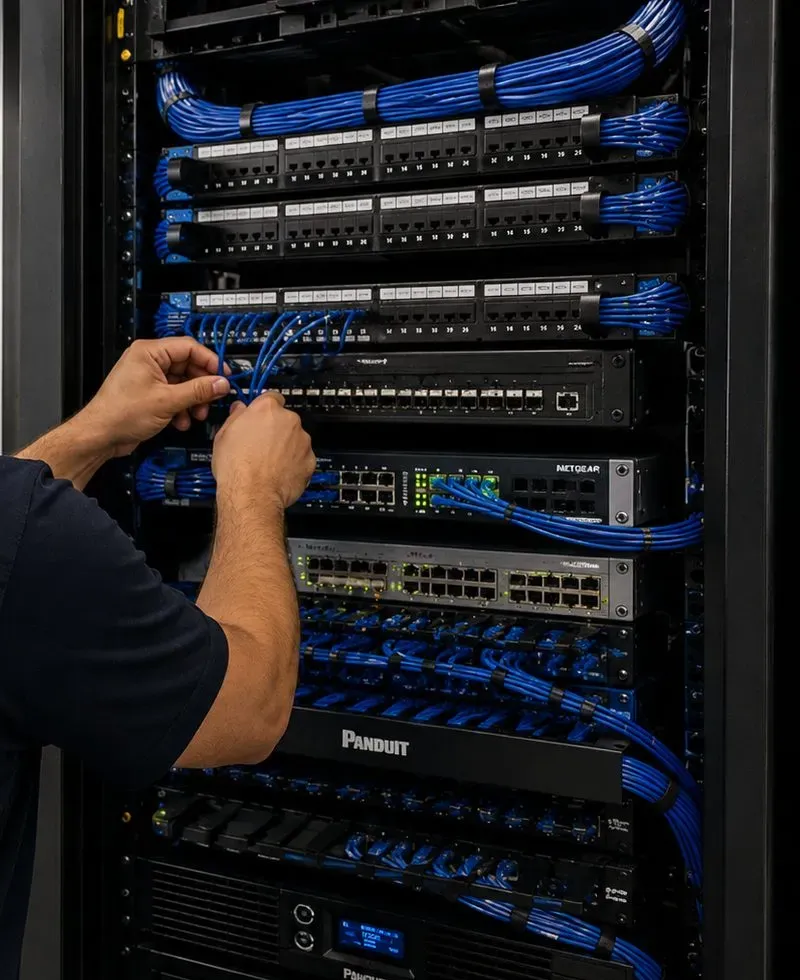
A Sonos visit here often turns into a network visit as well. In a long colonial with the router at one end and the family room at the other, or a village house with brick chimneys in the middle, the honest first step is sometimes a wired access point or a cable run to one Sonos product, and the same licensed crew handles both on the same day.

After a power cut, a storm or an internet provider's visit, the usual Tottenville call is a speaker missing from the app, a deck pair that plays one evening and vanishes the next, or a soundbar that no longer follows the TV. The speakers are rarely broken. Far more often the router changed, a product reset itself, or the far end of the house was always on the edge of the Wi-Fi. Ring (347) 934-8335 and the request is booked within two hours. A setup-only visit on Staten Island is $225 for the first hour, and most of these are back to normal within an hour or two on site.
These are the Sonos jobs Tottenville owners and businesses book most. Each card names the part of the house or lot that usually decides how the work is done, because on a detached lot the hard part is rarely the speaker itself.
An Arc Ultra, Beam or Ray under the TV, a Sub and two rear speakers, set up in the open family rooms of 1990s and 2000s colonials where the sofa often floats in the middle of the floor and the kitchen is part of the same space.
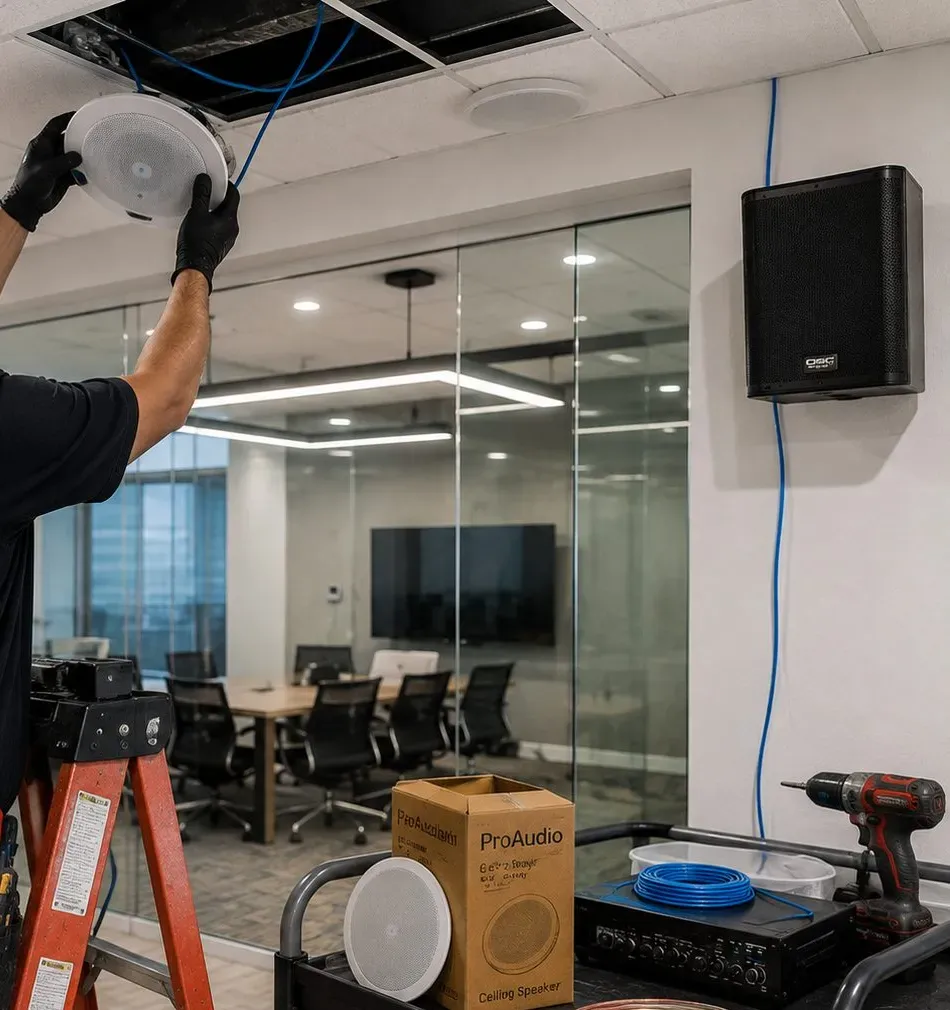
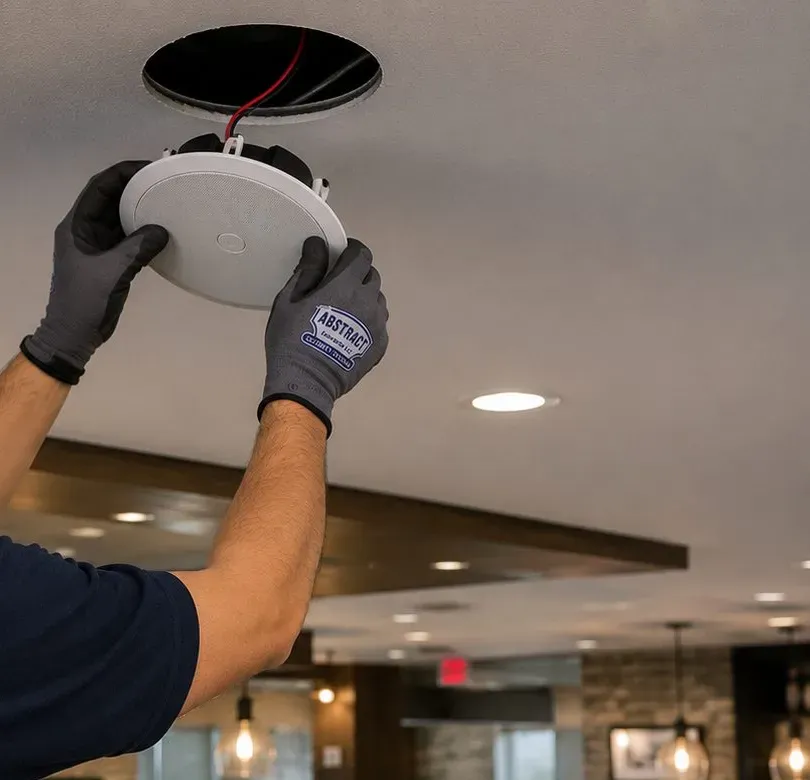
Sonos architectural speakers cut into kitchen, dining and bedroom ceilings, wired back to a Sonos Amp in a closet or basement. Newer houses with open attics are the easy case; village houses with plaster ceilings take more care.
Outdoor speakers under the eave or deck roof on proper backing, driven by an Amp kept indoors, for the decks and back yards that most Tottenville houses have and most city apartments do not.
Finished basements in colonials and split-level dens with low ceilings, set up for TV, games and workouts, with the network and power planned so nothing important sits on the floor.
Equipment placement and cable routes in houses lifted or rebuilt after Sandy, where living space starts a storey up and the ground level is for parking, storage and flood vents.
Wireless Era speakers and a soundbar first, ceiling speakers only where an attic or floor above gives a path, in houses from the oyster and shipbuilding years where owners want the rooms left looking their age.
One Sonos product cabled to the router, a wired access point at the far end of a long house, or a mesh system set up the way Sonos supports, before a single new speaker goes in.
Background music zones, volume limits and schedules for businesses on Main Street, Page Avenue, Amboy Road and Ellis Street, from a counter in a strip centre to a dining room by the water.
Sorting out basements full of old stereo gear, routers and half-connected Sonos products, bringing a system onto a new router, or taking over a setup someone else started.

Walk from the station up Main Street, along Amboy Road and then south-east across Hylan Boulevard and you pass through most of Tottenville's building history in about twenty minutes. The house descriptions below come from Forgotten New York, the Landmarks Preservation Commission, Wikipedia, the Cooperator and real-estate surveys; the Sonos notes are our working practice, not claims about any particular address.
Mid-nineteenth-century houses built for oystermen, ship joiners and shipbuilders, some on deep lots set back from the street. Expect plaster on lath, solid timber framing, small rooms off a centre or side hall and a cellar with stone or brick foundations. Wireless speakers and a console soundbar are usually the first move.
Steep-gabled cottages of the 1880s like those Forgotten New York found on Hopping Avenue. Sloped upper ceilings and small attics limit in-ceiling speakers upstairs; downstairs rooms with a cellar beneath are easier to reach from below.
Mansard roofs, towers, bays and wraparound porches from the late oyster era. Curved and angled walls make placement tricky and porches invite outdoor music; most of these houses are privately owned and not landmarked, so the porch question is the owner's alone.
Simpler, squarer houses of the early twentieth century, often with a full attic and basement. These are the friendliest of the old houses for an Amp in the basement and ceiling speakers on the floor below the attic.
Inland houses from the postwar decades, single-storey or stepped. Ranches give attic access to every ceiling; split-levels put the den half below ground, where Wi-Fi is weakest and a wired product pays off.
The houses that filled the land south-east of Hylan Boulevard: drywall on wood studs, open attics, attached garages, family rooms off the kitchen, often a two-storey entry. The natural home for a full Sonos system, because almost every ceiling and wall can be reached.
Centre-hall houses with stucco or brick fronts that replaced narrow bungalows. Inside they behave like any newer colonial; outside, the front facade is a poor place for speakers and the rear deck or patio is the usual outdoor zone.
Newer two-family houses on former lots along Amboy Road and condominium communities such as Surfside Village and The Captain's Quarters. Separate households, separate networks and sometimes an association that controls the outside of the building.
Houses on the streets nearest the water that were lifted or replaced after Sandy, with living space a storey up, parking and storage below and mechanical systems moved higher. Equipment height is the first design decision, not the last.
Old plaster on lath. In the village houses we treat every ceiling as fragile until proven otherwise. Sonos's own in-ceiling manual asks installers to run an obstruction survey with a stud finder before cutting, looking for joists, conduit, pipes, ducts and air returns, and to drill a small pilot hole and probe with a length of wire if in doubt. On plaster that survey matters twice over, because a stud finder reads lath and old repairs as well as framing. We score the plaster before the saw goes in and choose a speaker size the ceiling can take: the six-inch Sonos ceiling speaker needs an opening about 8.25 inches across and about 4.73 inches of depth, the eight-inch about 10.125 inches across and 5.32 inches deep, and the mounting dogs grip ceilings up to roughly 1-1/4 inches thick with their caps on or 1-7/8 inches with them off. Thick old plaster on lath can push that limit, which is one reason we look before we promise.
Drywall in the newer colonials. A 1990s house is the opposite case. Ceilings are thin, joists are regular, and an open attic above the second floor makes bedroom speakers straightforward. The first-floor ceilings sit under the upstairs floor, so cable usually travels through the basement and up inside an interior wall or a closet. We check for recessed lights, bath fans and ductwork in the joist bays before marking a speaker position, and we keep a stereo pair between about six and ten feet apart, the spacing Sonos gives in its manual, so the sound images properly over the kitchen island or the dining table.
Stucco, brick and siding outside. Outdoor speakers want solid fixing and shelter. CertainTeed's installation guidance for vinyl siding says external fixtures must be attached to solid backing such as exterior-grade plywood and never directly to the siding, which has to stay free to expand and contract. On stucco and brick we fix into the structure behind with anchors suited to the material, and we prefer an underside of an eave or deck roof to a bare wall in the sun and spray. The older houses wrapped in aluminium siding get the same treatment as vinyl: find the framing, add a mounting block, keep the siding free.
Houses on stilts. In a raised house the living floors behave like any other house, but the run from a deck or a parking level back to the equipment has to stay above the level that floods, and nothing belongs in a breakaway wall or near a flood vent. We look at where the builder moved the electrical panel and mechanicals and follow the same logic: equipment up, cable routes high, nothing on the ground level that would not survive getting wet.
| Tottenville house type | Where the Amp or wired product usually goes | Hardest part of the job |
|---|---|---|
| Village house, before 1940 | A dry corner of the cellar if it stays dry, otherwise a ground-floor closet | Finding a route through plaster and old framing without opening finished walls |
| Ranch | Hall closet or basement, with cable through the attic | Very little; attic access reaches most ceilings |
| Split-level | Den level near the router, or a closet on the main level | Wi-Fi reaching the half-below-ground den |
| 1980s–2000s colonial | Basement utility area or a closet near where the internet arrives | Router at one end of the house and the music at the other |
| Two-family | Each household's own space, on its own network | Keeping two systems from seeing each other |
| Raised or rebuilt shore house | A closet on the first living floor, never the ground level | Getting cable to a deck or yard without crossing the flood-prone level |

In a city apartment, a Sonos system is usually one room, maybe two. In Tottenville it is often six or seven zones spread across two storeys, a basement, a deck and a yard, sometimes a detached garage or a pool area. That is a different design problem. Each zone has to have a reliable path back to the network, a sensible place for its equipment, and volume that suits the people around it, from the bedrooms upstairs to the house next door. Here is how we think about the pieces.
Sonos publishes a short list of network setups it will not work with, and three of them come up in detached houses all the time: wireless range extenders, guest networks and Ethernet over power lines. It also says that when a mesh system is used with a wired Sonos setup, the Sonos product must be cabled to the primary mesh unit. In a long colonial where the router sits by the front door or in the garage and the family room, deck and kitchen are at the back, the reliable answer is nearly always one Sonos product cabled to the router or to the main mesh node, and sometimes a wired access point at the far end. We check the signal in every room that will get a speaker before we sell anyone a speaker.
Building materials matter too. Sonos's own guide to wireless interference rates wood, glass and synthetic materials as low obstructions, brick and water as medium, plaster and concrete as high and metal as very high. A Tottenville village house with plaster walls and a brick chimney stack in the middle can be harder for Wi-Fi than a bigger, newer house with drywall. A raised house with a concrete or block ground level and a steel beam under the floor can block signal between the deck and the living room. The same guide asks for Sonos products to sit at least 18 inches from other electronics, and names cordless phones, baby monitors, wireless cameras and microwaves in use among the common interference sources.
Every passive speaker in a ceiling, wall or yard needs an Amp, and every Amp needs a home with power, ventilation and a cable path to the speakers. In the newer colonials the basement utility area or a closet near the router is the usual answer. In the village houses the cellar is only an option if it stays dry and has headroom; otherwise a ground-floor closet takes the job. In raised houses the equipment goes on the first living floor. Sonos's guide for the Port, the box that feeds Sonos into an existing stereo, asks for at least two inches of clear space around it on a shelf and for it to be kept away from heat, and the Amp deserves the same respect. A closed cabinet beside a boiler is not a home.
A detached house solves the party-wall problem that dominates apartment work, but it brings others. Bedrooms over a family room hear a Sub through the floor. A deck faces somebody else's yard, and in the newer streets south-east of Hylan the houses are close enough for that to matter on a summer evening. A two-family house has one household above the other. We place Subs on the ground floor away from the stair, set volume limits on outdoor zones and bedroom speakers, and aim deck speakers at the seating rather than across the fence. These are settings that cost nothing on the day and save a lot of awkwardness later.
Owners rarely do the whole lot at once. The common pattern is a soundbar first, ceiling speakers in the kitchen a year later, and the deck the summer after that. So the first visit is where we decide where the Amp location will be, which closet the future cable will come down, and whether a run to the back of the house is worth pulling while the basement ceiling is still open. A system planned that way grows in single visits rather than reworks. Sonos's system requirements allow up to 32 products in one system, which is more than any Tottenville house we can imagine will need; the limit is always the network and the routes, never the count.
One more point on the yard. Not every outdoor space needs a fixed speaker. A battery speaker such as a Move 2 or Roam 2 can carry music to the far end of a yard, a beach towel or a neighbour's barbecue and come back inside when the evening ends. For many Tottenville households a fixed pair on the deck plus one portable is the most useful combination, and it keeps the number of holes in the house to a minimum.
In a raised house the ground level, whether open, enclosed for parking or used for storage, is the part of the building designed to take water. We never put an Amp, a Port, a router, a switch or a power strip for any of them down there, and we do not run speaker or network cable along its walls if there is a route higher up. If the internet line arrives at ground level, the router goes upstairs and the provider's cable comes up to it. That is the same logic the builders used for the electrical panel and the heating plant, and it is our working rule on every shore-block job, not a judgment on any particular house.
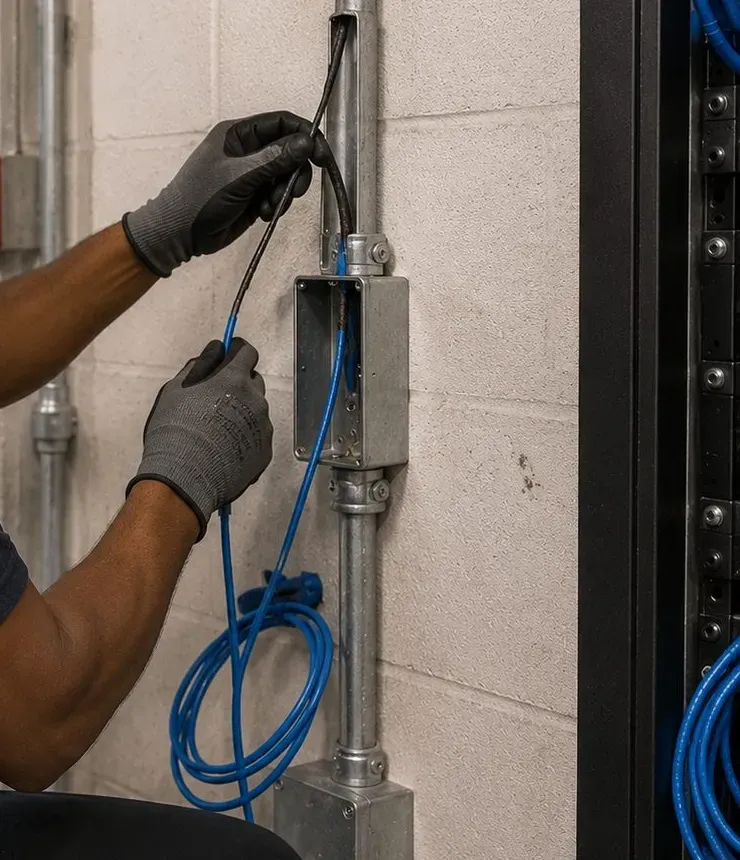
Raised houses often have a deck at the first living floor, sometimes over the parking space. Cable from an Amp inside to speakers under that deck's roof can usually travel inside the floor framing of the living level, emerge through a sealed opening close to the speaker, and never touch the ground floor. Where that is not possible, we look at the soffits and the underside of the deck structure itself, staying clear of anything designed to break away or let water through. If the only route crosses the flood-prone level, we say so and suggest a battery speaker for that part of the deck instead.
The new foundations, block walls and steel beams that hold a raised house up are exactly the materials Sonos's interference guide rates as high or very high obstructions. A deck on the far side of a block wall from the router can be a dead zone even when the living room is fine. We test it before we promise anything. Often the cleanest fix is a wired access point or a cabled Sonos product near the deck door, so the outdoor zone does not depend on signal crossing the structure.
Every Sonos product needs mains power and the network to play together. When the power goes, so does the system, and when it returns the products have to find the router again. We set the house up so that recovery is simple: the router and the wired Sonos product on the same protected circuit or surge strip, the Amp in a ventilated spot that comes back cleanly, and room names and groups written on the handover sheet so anyone in the house can check that everything has reappeared. Whether a particular house needs whole-house surge protection or a dedicated circuit is a question for its electrician, and we say so in the quote.

Tottenville has a strong preservation culture and a long list of admired houses, but the way the city protects them here is different from neighbourhoods such as St. George or Park Slope. As Forgotten New York put it after a 2025 walk, Tottenville has no landmarked residential districts. What it has are individually designated buildings: the James L. Bedell House on Amboy Road, a Second Empire house designated in 2005 over its owner's objection; the De Hart House at 134 Main Street, built in 1849; the Rutan-Journeay House, the first on Amboy Road at number 7647; the George Cunningham Store at 173 Main Street; the Tottenville branch library at 7430 Amboy Road, designated in 1995; and the Conference House, with much of Conference House Park also covered by its own designations, including the Aakawaxung Munahanung Archaeological Site. The Preservation League of Staten Island has also given awards to several private houses on Bentley Street, Brighton Street, Wood Avenue and Amboy Road, which is an honour rather than a regulation.
So for the great majority of Tottenville owners, Landmarks rules simply do not apply to a Sonos job. The house is not designated, there is no district, and the owner decides what goes inside and outside. For the handful of owners of an individually designated house, the Commission's own permits page says an LPC permit is needed for interior work only when the work requires a permit from the Department of Buildings, when interior work affects the exterior, or when the interior itself has been designated. The Commission's permit-types page gives HVAC louvres and vents as examples of interior work that affects the exterior. Ceiling and wall speakers wired at low voltage inside the house sit comfortably on the interior side of that line in our reading; anything fixed to the outside, and any cable that passes through an exterior wall, is the kind of work that would need the owner to apply first.
The low-voltage rule helps in every house, landmarked or not. NYC Administrative Code section 28-105.4.7 says no electrical permit is required for wiring designed to operate below 50 volts for signalling, communication, alarm and data circuits when it is done by a licensed electrician, special electrician or qualified person. Speaker cable from a Sonos Amp and network cable to a Sonos product are low-voltage. New outlets and circuits are not, and those always go to a licensed electrician.
Tottenville's businesses sit in two places that grew a century apart. Until the 2000s, Wikipedia notes, commerce was largely confined to the Main Street corridor in the heart of the old village; since then a second core has grown at the north end along Page Avenue and west of Amboy Road. The customers are neighbours, commuters coming off the train and drivers coming off the Outerbridge, and the music a business plays has to suit short visits, families and staff who hear the same playlist all day. These are the corridors we serve.
The old commercial spine, with the 123rd Precinct at 116 Main Street, the post office at 228, the Masonic Hall, the landmarked George Cunningham Store at 173 and local shops such as Herbert's Army & Navy and Sips + Maker. Narrow frame and masonry storefronts, many with apartments above.
The newer core at the north end. Tottenville Commons at 230–260 Page Avenue, built in 2001, counts CVS, McDonald's, Capital One, Sherwin-Williams and Top Tomato among its tenants, and a mixed-use retail building at 280 Page Avenue changed hands in September 2026. Strip-centre units with drop ceilings and landlord rules.
Tottenville Square at 7001 Amboy Road, anchored by Walgreens, where a 2013 project added a 20,000-square-foot building to a 45,000-square-foot centre first built in 1963. Further along Amboy Road, offices, practices and services occupy converted houses.
Restaurants and businesses near the water and the station, where dining rooms often look out over the Kill and the bay. Rooms with large windows and hard surfaces, and summer evenings when doors stay open.
The corridor running north past the Arthur Kill station, opened in January 2017, toward Charleston and Bricktown Centre with its Target and Home Depot. Larger commercial units and the occasional warehouse-style space.
The last stretch of the boulevard before it ends at Conference House Park, with businesses and home offices scattered among the houses. Many are converted residential buildings with a reception room at the front.
Zones by how the room is used. A pharmacy counter, a cafรฉ queue, a salon waiting area and a restaurant's bar all want different levels. We split each space into Sonos rooms or groups so the counter can be livelier than the seating, and so a back office or treatment room never gets music meant for the front. Ceiling speakers on an Amp suit the drop ceilings of the Page Avenue strip centres; in older Main Street storefronts with plaster or tin ceilings we often use Era 100s on brackets or shelves instead.
Limits and schedules set once. Each product gets a maximum volume so the room cannot be turned past what suits it, and Sonos alarms can start a chosen station or playlist at a set time on chosen days. We leave a one-page sheet by the register that lists the limits, the schedule and how to change a playlist, so the person opening and the person closing do the same thing.
Music the business is entitled to play. Personal streaming accounts are generally licensed for personal, non-commercial use, as our Bronx research recorded from Spotify's terms. We sign the system into a business music service the owner chooses, on the system itself rather than on an employee's phone, so the music does not leave when that employee does.

These are questions Tottenville owners and businesses bring to us that the rest of our Sonos pages do not already answer, grouped by the part of the job they belong to.
We could not find one. The Landmarks Preservation Commission protects individual buildings in Tottenville, such as the Bedell House, the De Hart House, the Rutan-Journeay House, the Cunningham Store and the library, and Forgotten New York noted in 2026 that the neighbourhood has no landmarked residential district. The "Historic Tottenville" wording appears on a real-estate blog and does not match any Commission designation we could find. If your own house is not individually designated, Landmarks rules do not touch a Sonos job inside or outside it. We check the city's designation map with you during the first call so there is no doubt.
They need an amplifier. Sonos describes its architectural ceiling speakers as passive, 8-ohm speakers optimised for use with the Sonos Amp, and says one Amp reliably powers up to three pairs, six speakers in all, when wired in parallel. The speakers themselves have no power, no Wi-Fi and no controls; the Amp provides all three and joins them to the rest of your system. That is why every ceiling or deck zone on a Tottenville quote shows an Amp location as well as speaker positions, and why the Amp needs a ventilated home with an outlet near where the speaker cables can gather.
For a single speaker on a shelf, often nothing, and we will tell you so. The value shows up in the parts the app cannot do: fixing a soundbar to the right framing, cutting ceiling openings without damaging plaster, getting cable from a basement Amp to a deck, deciding which product should be cabled to the router so a seven-zone house stays stable, and tuning each room with Trueplay, which Sonos says requires an iPhone or iPad for most of its products. Sonos's own guides say in-ceiling speakers require special installation and often a professional installer. In a Tottenville house with a yard and a basement, those jobs tend to come with the system.
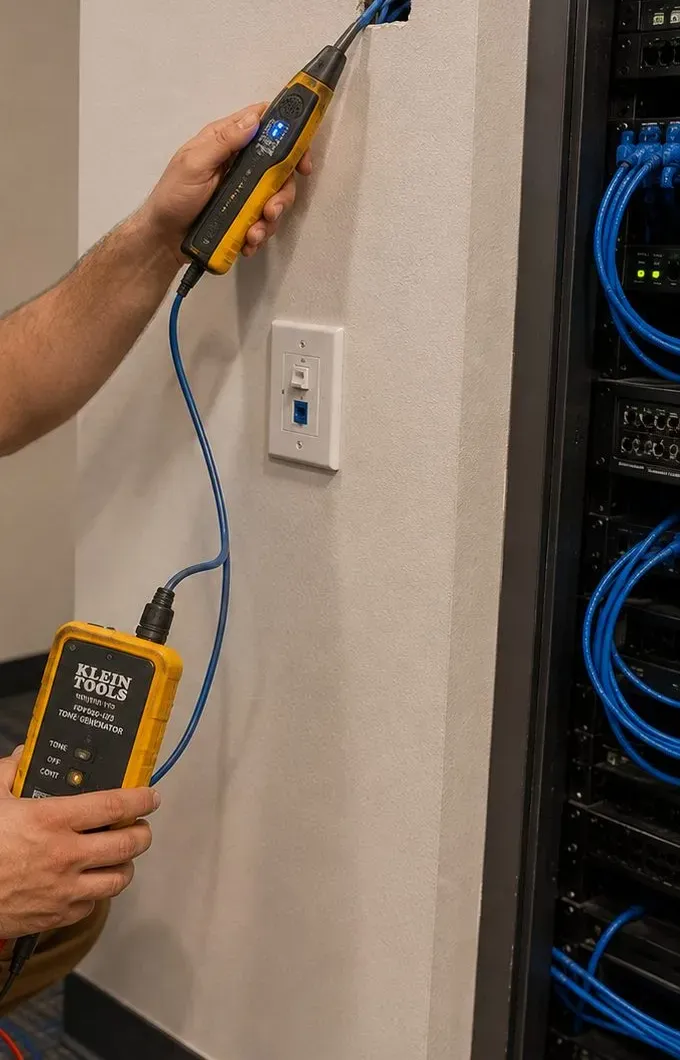
Yes, and it is one of the more satisfying visits we do. We trace every cable with a tone generator and probe, label what each one does, remove what is dead, and decide which router stays; two routers on one network is a common cause of Sonos products losing each other. The old stereo can stay and play Sonos through a Port, which Sonos lists with analogue and digital outputs and a 12-volt trigger to wake an amplifier, or it can go. A Staten Island Yelp reviewer described exactly this kind of basement tangle being solved, and it usually fits inside a $225 first-hour setup visit plus whatever time the cables demand.
Sonos alarms can start a chosen room or group with a set playlist or station at a set time and volume on chosen days, so a radio station in the kitchen from six to nine in the evening is easy to arrange and easy to switch off in the app. Treat it as one small part of making a house look occupied, not as security. CBS New York reported a Tottenville burglary near George and Stephen Streets in which the suspects got into the garage using an opener left in an unlocked car in the driveway; no speaker schedule would have changed that. Locks, lighting and an alarm do the real work, and we can talk about those separately.
Into the structure, under shelter, with the manufacturer's bracket. We fix brackets through mounting blocks or solid backing into framing, never into vinyl or aluminium siding alone, following siding makers' guidance that fixtures need solid backing. We prefer the underside of an eave or deck roof to a bare wall, because it cuts both wind-driven rain and direct sun, and we angle speakers down toward the seating so they can be played at lower volume. After a big storm, check that the brackets have not shifted; if one has, it is a short visit to re-fix, not a new installation.
It can, with a caveat about timing. Sonos plays TV sound in sync through its soundbars, which take audio from the TV over HDMI or optical; a projector or streaming stick sending audio to a Sonos speaker over Wi-Fi or Bluetooth can drift out of step with the picture. The tidy outdoor setup is a soundbar or a portable speaker that the projector's source feeds directly, placed near the screen, with the deck speakers left for music. We test the lip sync on the night of the install and leave notes on the delay setting, if the source device has one.
For a typical finished basement, a pair of Era speakers on wall brackets or a pair of ceiling speakers on an Amp, placed away from the treadmill and weights so nothing drops on them, and paired as stereo. The Era 300's Sonos wall mount is rated for stud mounting only, not plain drywall, so we fix it into framing. Basements are where Wi-Fi is weakest, so one product cabled to the network is worth it here. And because a basement gym sits under living space, a volume limit and keeping the Sub, if any, off the wall shared with the stairwell will keep early workouts from waking the house.

The Sonos range is the same in Tottenville as anywhere else. What changes is how much of it a house can use, because a detached house with a yard opens up products that a studio apartment never needs. Product facts below come from Sonos's own pages as recorded in our silo research.
On the console ($79 to place and connect) or on the wall under the TV ($129). Arc Ultra is about 46.38 inches wide and detects when it is wall-mounted, adjusting its EQ to tame bass from the wall; Beam is about 25.63 inches. Sonos asks for at least four inches between Arc Ultra and the TV above.
Wireless bass that pairs with a soundbar. Sonos allows a corner, a wall or a spot behind or under furniture, with the front opening clear and at least an inch of space above when under furniture. In colonials we keep it off the floor area directly below a bedroom.
Self-powered speakers for kitchens, bedrooms, offices and as rear surrounds. The Era 300 wall mount swivels 15 degrees each way and is for studs only. Village-house owners who want no new holes often start here.
The heart of any ceiling, wall or deck zone. Reviewers measured about 125 watts per channel into 8 ohms; Sonos says it reliably powers up to three pairs of its architectural speakers in parallel. Lives in a closet or basement, never on a flood-prone level.
Feeds Sonos into an existing amplifier or receiver, with analogue line out that can be fixed, variable or pass-through, digital coax out and a 12-volt trigger. Needs two inches clear on a shelf and distance from heat.
Battery speakers rated IP56 and IP67. For the far end of a yard, the beach and the decks of raised houses where a cable route would cross the flood-prone level.

| Tottenville situation | What we usually fit | Why |
|---|---|---|
| 1990s colonial family room | Arc Ultra on the wall, Sub on the ground floor, two Era 100s as rears | Full home theatre in the room the family actually uses |
| Open kitchen and dining area | Two pairs of ceiling speakers on one Amp in the basement | Even music without speakers on counters |
| Village house front room | Beam on the console, a pair of Era 100s, ceiling speakers only where an attic gives access | Music without opening old plaster |
| Deck facing the bay | Outdoor speakers under the eave on an indoor Amp, plus a Roam 2 | Sheltered fixed zone and a portable for the yard |
| Raised shore house | Amp and router on the living floor, deck speakers wired through the floor framing | Equipment and cable kept off the flood-prone level |
| Strip-centre shop on Page Avenue | Ceiling speakers in two zones, limits set, business music account | Even background music, front louder than back office |
Google's AI Overview could not be viewed from our build environment, so we do not quote it here. What we can test are the claims that national cost guides such as Angi, HomeAdvisor and Fixr, product forums and marketing copy publish, because those are the sources answer engines tend to repeat. None of them knows whether your house was built for an oysterman in 1850 or raised on new piers in 2016.
General advice treats the outside of a house as one surface. In Tottenville it is several: vinyl and aluminium siding on old and new houses alike, stucco and brick on the newer colonials, block on the rebuilt foundations of shore houses.
Siding manufacturers are explicit that fixtures must go on solid backing such as exterior-grade plywood and never directly onto vinyl siding, because the siding moves with temperature. A speaker bracket screwed straight into siding will eventually work loose, and on a deck that takes the wind off the bay it will do so sooner.
The better rule is structure first, shelter second. We find the framing, add a mounting block where siding is involved, and choose the underside of an eave or a deck roof over a bare wall wherever the layout allows.
This is the most repeated tip for weak Wi-Fi, and half of it is wrong for Sonos. Sonos lists wireless range extenders and Ethernet over power lines among the setups it does not support, alongside guest networks.
Mesh systems can work, but Sonos says that when one Sonos product is wired, it must be cabled to the primary mesh unit, not a satellite. In a long colonial whose router sits in the garage, the satellite in the family room is exactly where people want to plug the soundbar in.
In Tottenville's village houses the problem is often the walls themselves; Sonos's own guide rates plaster as a high obstruction and brick as medium. A cable to one product, or a wired access point, solves what no booster can.
Generic home-audio advice sends the Amp, the receiver and the router to the basement as a matter of course. In a Tottenville colonial with a dry, finished basement that is often right.
In a house on the streets nearest the water, it can be the worst possible choice. Build It Back designs often moved mechanical systems up to protect them, and the same logic applies to a Sonos Amp, a Port and the network gear they depend on. A flood-prone ground level is no place for any of them.
Even in the old village, a cellar with stone walls and a history of damp is a poor home for electronics. We look at the space before we decide, and we say so plainly if a closet upstairs is the better answer.
At least one real-estate blog describes a "Historic Tottenville" with conservation guidelines, and that kind of claim gets repeated. We found no Landmarks Preservation Commission historic district covering Tottenville's residential streets, and Forgotten New York says plainly that there is none.
What exists are individually designated buildings, from the Bedell House on Amboy Road to the Cunningham Store on Main Street. For those, the Commission's rules cover exterior work and interior work only when it needs a Buildings Department permit or affects the exterior.
For everyone else, the owner decides. That is a real difference from neighbourhoods such as St. George, and it is why a deck speaker in Tottenville is usually a one-visit job.
The fear is understandable, and in some buildings it is justified. In most Tottenville houses it is not.
Ranches and colonials have open attics over the top floor, so bedroom and upper-floor speakers are cut from below with cable dropped from above. First-floor ceilings are reached from the basement and through interior walls or closets. The opening for the speaker is often the only opening, and the speaker covers it.
The village houses take more care: plaster on lath, solid framing and fewer open voids. Sonos's own manual calls for an obstruction survey and a probe through a pilot hole when in doubt, and we follow it. Where the route cannot be found without damage, we say so and recommend Era speakers instead.
Some out-of-area installers build a travel line or an island markup into their pricing, and one competitor runs Staten Island neighbourhood pages from a facility in Fairfield, New Jersey. Answer engines then generalise that into "expect to pay extra on Staten Island."
Our Staten Island list has no toll, travel or mileage line. Where the borough's costs differ from Brooklyn's, the difference is already in the published figures, for example the $225 first hour for a setup-only visit.
What actually moves a Tottenville bill is the house: the number of zones, the route to the deck, whether a cable is needed to the router. Those are on the written quote before anyone arrives.
Many households put new gadgets on a guest network to keep them apart from laptops, and some advice encourages it. Sonos lists guest networks and networks with a log-in page among its unsupported setups.
It also requires the phone running the app to be on the same network as the speakers, and says routers that only provide 5 GHz are not supported, since all its products support 2.4 GHz. A two-family house where the upstairs tenant uses a guest network on the owner's router is a common Tottenville trap.
The fix is usually simple: one main network for the Sonos system and the phones that control it, and a separate router, not a guest network, for a second household.
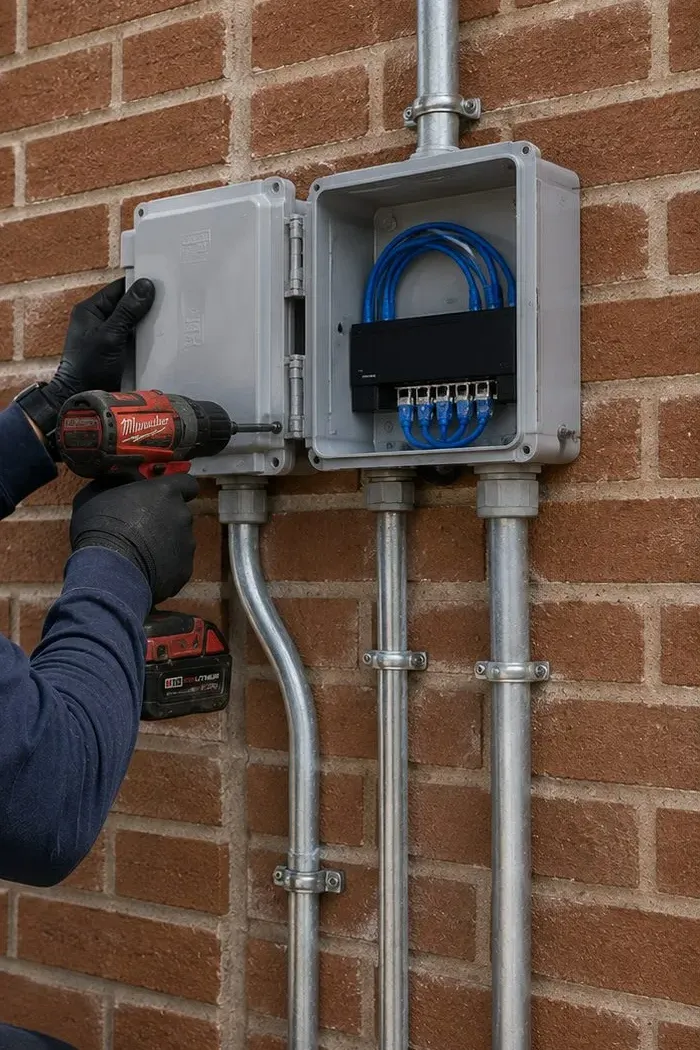
Tell us the street, the kind of house, where the router sits and which rooms and outdoor spaces want music. We'll come back with the route, the equipment locations and the figure from the Staten Island list.
Four answers let us write the figure: the kind of house and roughly when it was built, where the internet comes in, which rooms and outdoor spaces want music, and the Sonos products you own or plan to buy. Mention if the house was raised or rebuilt after Sandy. The written figure comes back the same business day, or call (347) 934-8335 to talk it through.
Your Tottenville details are with us. Someone from the Staten Island desk will phone or email a written figure today; if the music has stopped altogether, ring (347) 934-8335 now rather than wait for our reply.
Eight steps, the same for a Beam on a console in a Hopping Avenue cottage and a seven-zone system in a colonial south-east of Hylan. The first three happen before anyone arrives, and in a house with a yard and a basement they decide how smoothly the day goes.
Call or send the form with the street, the kind of house, which rooms and outdoor spaces want music, and the Sonos products you already own or plan to buy.
A photo of the TV wall, one of each room from the doorway, one of where the internet comes in and one of any deck or yard wall lets us plan routes before the visit.
We reply with a written figure built from the Staten Island price lines, with anything that needs a walkthrough listed separately and nothing added on the day without your agreement.
Requests are booked within two hours; you choose an arrival window that suits the household.
On arrival we test the Wi-Fi in each room, find joists and studs, trace a cable path through attics, basements and closets, and note the flood-safe level in raised or rebuilt houses before choosing where the Amp and router live.
Brackets go into framing or solid blocking, ceiling openings are cut at the speaker positions, outdoor speakers sit under shelter on proper backing, and one Sonos product is cabled to the router where the house allows.
Every product is joined into one Sonos system, rooms are named the way the household talks, Trueplay is run with windows shut, and volume limits and any schedules are set.
We photograph every bracket, route and connection, leave a one-page sheet of room names, limits and schedules, and note anything that needs an electrician.
Trueplay deserves a word of its own. Sonos says it measures how sound reflects off the walls, furnishings and other surfaces of a room, takes about three minutes a room and needs the room as quiet as possible. Most Sonos products can only be tuned from an iPhone or iPad; Arc Ultra, Era 100 and Era 300 also offer a quick mode that works from Android. If your household is Android-only, we tune from our own iPhone and note it on the sheet, so you know to call if a speaker moves and needs tuning again.

Our Tottenville jobs run from the station and the waterfront up through the old village to Page Avenue and south-east across Hylan Boulevard to the shore. Most callers place themselves by one of these six landmarks.
The stone house of about 1680 where the failed peace conference of September 11, 1776 took place, at the end of Hylan Boulevard, in a 265-acre park with the Biddle, Ward and Rutan-Beckett houses and the marker for the southernmost point of New York State.
The branch Carrère and Hastings designed for the first public library on Staten Island, opened in 1904 and designated a city landmark in 1995.
The southern end of the Staten Island Railway since 1860, about 42 minutes from St. George, and the Arthur Kill station on Arthur Kill Road that opened in January 2017.
Two individually designated houses on Amboy Road: the Second Empire Bedell House, designated in 2005, and the Rutan-Journeay House of 1848 at 7647 Amboy.
The old village's commercial street, with the landmarked George Cunningham Store at 173, the De Hart House of 1849 at 134, the 123rd Precinct, the post office and the Masonic Hall.
The newer commercial core, with Tottenville Commons at 230–260 Page Avenue and Tottenville Square at 7001 Amboy Road where the two roads meet.
We also install in Charleston, Richmond Valley, Pleasant Plains and Prince's Bay just to the north and east, in Great Kills further up the South Shore and on Todt Hill in the middle of the island, with every borough job listed on our Staten Island Sonos installation page.
Every price below is a line from the AESS Staten Island list. Staten Island runs at 1.10 times the Brooklyn base in our pricing model, and that difference is already built into the published figures, so there is no separate island, toll or mileage charge on a Tottenville invoice. Work that cannot be priced without seeing the house, such as ceiling speakers in old plaster, a deck zone or a long run to the back of a colonial, is quoted in writing after a walkthrough, and nothing is added on the day without your agreement.
| Line | Staten Island price | Where it comes up in Tottenville |
|---|---|---|
| Sonos setup | $125 | Every product joined into one system, rooms named, music services added, Trueplay where supported, limits and schedules set |
| Soundbar placed on a console | $79 | Village-house front rooms where the owner wants no new holes, and any TV on a stand |
| Soundbar wall-mounted under the TV | $129 | Family rooms in colonials, ranches and raised houses |
| Sanus soundbar bracket | $84.99 | When the bar came without a bracket, or the supplied one is too light for the wall |
| In-wall concealment with in-wall power and cable kit | $169 | Hiding the TV's power and the bar's cable inside the wall in a newer house |
| Cable run up to 25 ft | $99 | Usually the network cable from the router to the soundbar or one Sonos product |
| Full home theater hookup | $350 | Soundbar, Sub, rear speakers and sources connected and set up as one system |
| Setup-only visit, first hour | $225 | Router swaps, storm and outage recoveries, regrouping, basement tidy-ups |
| Ceiling, wall and deck zones on an Amp | Quoted at walkthrough | Depends on framing, attic and basement access and the route to the deck |
| Longer runs, access points, Amp locations | Quoted at walkthrough | Depends on the length of the house and where the internet arrives |
Each figure below is plain arithmetic on the published lines above. Treat them as worked examples rather than fixed packages; your quote will show the same lines for your house.
| Example | Lines | Total |
|---|---|---|
| Village front room: Beam on the console, system set up | $79 console placement + $125 Sonos setup | $204 |
| Village front room with the Beam cabled to the router | $79 + $99 cable run + $125 setup | $303 |
| Colonial family room: bar on the wall on a Sanus bracket | $129 + $84.99 bracket + $125 setup | $338.99 |
| Colonial family room with hidden wiring | $129 + $84.99 + $169 in-wall kit + $125 setup | $507.99 |
| Full theatre with bar, Sub and rears, wiring hidden | $350 hookup + $129 + $84.99 + $169 | $732.99 |

Most first Tottenville bookings fit one of the three cards below. None is a promotion; each simply totals lines from the published Staten Island list, and the quote for your house will show the same arithmetic.
$204
For a village house where the owner wants music without a single new hole: the soundbar placed and connected on the console ($79), and every Sonos product in the house joined, named and tuned as one system ($125).
$338.99
The soundbar fixed under the TV ($129) on a Sanus bracket ($84.99), with the full system setup, room names, Trueplay and limits for the bedrooms above ($125). Add a $99 cable run if the router is out of reach.
$732.99
The $350 full home theater hookup for bar, Sub and rears, the bar on the wall ($129) with its Sanus bracket ($84.99), and the $169 in-wall kit so no power or cable shows below the TV.
Supply your own bracket, whether Sonos's own or a third-party mount rated for your bar, and we charge for the work: the $129 wall-mount line, and $125 when system setup is part of the visit. Any warranty on your bracket stays with its maker. If the wall cannot safely take it, you hear that before anything is drilled, and the $84.99 Sanus bracket is the alternative.
Ceiling speakers on an Amp and outdoor zones are priced zone by zone after a walkthrough, because the route from the Amp to the speakers is what decides the work. The quote lists each zone separately, so you can book the family room now, the kitchen ceiling later and the deck in spring.

Send a photo of the TV wall, one of the room from the doorway and one of where your internet comes in. The figure, built from the Staten Island list, usually comes back the same day.
Everything below is part of our Sonos work in Tottenville and is charged from the Staten Island list. A crew already on site, with routes traced and the network mapped, can usually add the next item for less than a separate visit would cost.
Our borough-wide Sonos page and the parent of this one, covering every neighbourhood from St. George to the South Shore.
Ray, Beam or Arc Ultra under the TV, with a Sub and rear speakers joined wirelessly and tuned.
Kitchen, dining and bedroom zones, cut and wired from attics and basements.
Outdoor zones on indoor Amps, fixed to framing and kept under shelter.
A cable run to one product, a wired access point or a mesh system set up the way Sonos supports.
Keeping a favourite amplifier or receiver and feeding Sonos into it.
Tracing, labelling and removing old cables, routers and dead gear.
Bringing every room back onto the network after a power cut or router change.
Shops, offices and restaurants on Main Street, Page Avenue and Amboy Road.
Our neighbouring South Shore page, for houses around the harbour.
The North Shore page, written around rentals and the historic district.
The city-wide hub for every borough page.
It may sit a little wider than the screen. Sonos gives the Arc Ultra a width of about 46.38 inches, and a 50-inch TV measured diagonally is usually around 44 inches across, so the bar can overhang slightly on each side. Many owners do not mind; others prefer the Beam, which is about 25.63 inches wide and suits a smaller screen better. If you choose the Arc Ultra, Sonos asks for at least four inches between the bar and the TV above it, and we plan the wall-mount height around that gap.
Only briefly, if at all. Setting up Sonos products does not take the internet away from the rest of the house. The interruptions come when we cable a product to the router, move the router to a better spot or replace it, and each of those usually means a few minutes offline. We ask about video calls when we book and schedule any router work around them, and we tell you before anything is unplugged.
It can, with two checks. The speaker needs an outlet within reach of its cable, which above cabinets often means a new receptacle from an electrician. And it needs air around it and distance from heat, so a spot above the oven or a range hood is a poor choice. Sound from up there spreads across the room well, but the buttons are out of reach, so you will control it from the app or by voice. Keep it well away from the microwave too.
A passing shower should not harm it. Sonos rates the Move 2 at IP56, which covers dust and strong jets of water, and the smaller Roam 2 at IP67, which covers brief immersion. Neither rating means the speaker should live outdoors, so bring it in after the rain, let it dry before charging and do not leave it standing in a puddle. For music that stays out all season, fixed outdoor speakers on an Amp are the better tool.
It does not have to be beside the bar. The Sub connects wirelessly, and Sonos's own guide allows a corner, a wall or a spot behind, under or next to furniture, as long as the front opening stays clear. Low bass is hard to locate by ear, so a Sub on the far side of the room often sounds just as good. Trueplay sets the Sub's phase automatically after it moves. In a colonial, the one spot we avoid is directly below a bedroom.
It could. Sonos lists microwaves in use among the common sources of wireless interference and asks for its products to sit at least 18 inches from other electronics. A microwave running can upset the Wi-Fi a nearby speaker depends on, which matches dropouts that only happen while food is heating. Moving the speaker a few feet away, or cabling one Sonos product elsewhere in the house so the system leans less on that signal, usually ends it.
It can. Sonos names cordless and DECT phones, baby monitors, wireless cameras and smart-home hubs among the devices that interfere with its products, and the router is the busiest point in the network. Giving the phone base its own spot a few feet away from the router and any wired Sonos product costs nothing and is one of the first things we try when a system drops out without an obvious cause.
They can stay connected. Outdoor speakers on a Sonos Amp have no power of their own; the Amp lives indoors, and the speakers are simply silent when nothing is playing to them. If the Amp powers only the deck and you would rather it disappear from the app until spring, unplug the Amp and the room vanishes until it is plugged back in. Battery speakers are different and should come indoors for the cold months.
Not automatically. Sonos does not track where people are in the house and move the music with them. What works instead is grouping the rooms you move between so the same music plays in all of them, which takes a tap in the app, or carrying a Move 2 or Roam 2 from room to room. For most households a saved group covering the kitchen, family room and deck does the job.
Not on their own. A Sonos system has no sensors and does not know what a garage door is doing. Some smart-home platforms that support Sonos can play an alert through a speaker when a connected garage controller or door sensor reports a change, but that depends entirely on the platform and the devices you already have. We can tell you on the phone whether your setup supports it; we do not install garage door controllers.
It plays music as well. Every Sonos soundbar is also a full Sonos speaker, so the Ray can stream your music services from the app, join a group with the kitchen or the deck, and run an alarm in the morning. When the TV turns on, it switches to the TV's sound. Setting it up as part of the whole system is covered by the $125 setup line.
This page sits under our Staten Island Sonos installation page, which in turn sits under the Sonos Installation NYC page.
Sonos Installation Staten Island NY | Deck & Indoor ยท Sonos Installation NYC | Ceiling Speakers & Setup ยท Sonos Installation Manhattan NY | Small-Space Audio ยท Sonos Installation Brooklyn | Rowhouse, Garden & Setup ยท Sonos Installation Queens NY | Speakers, Amp & Setup ยท Sonos Installation Bronx NY | Renters, Co-ops & Houses ยท Sonos Installation Long Island | Multiroom & Home Theater ยท Sonos Installation Hudson Valley | Barns & Old Houses ยท Sonos Installation Nassau County NY | Raised & Slab Homes ยท Sonos Installation Suffolk County | Ranches to Hamptons ยท Sonos Installation Westchester County NY | Pre-Wire & Co-ops ยท Sonos Installation Rockland County NY | Split-Levels ยท Sonos Installation Orange County NY | Speakers & Setup ยท Sonos Installation Putnam County NY | Lake & Deck Audio ยท Sonos Installation Dutchess County NY | Old-House Audio ยท Sonos Installation Ulster County NY | Stone & Hi-Fi Homes
Sonos Installation Great Kills Staten Island NY | Pre-Wire ยท Sonos Installation Grymes Hill Staten Island NY | Views ยท Sonos Installation St. George Staten Island NY | Permits ยท Sonos Installation Todt Hill Staten Island NY | Estates
Smart Lock Installation Tottenville Staten Island NY ยท Cat6 Repair Tottenville Staten Island NY | Retrofit Runs ยท Soundbar Installation Tottenville, Staten Island NY