Camera over the stoop of a frame row gone dark after the last outage, a Wyckoff Avenue shop recorder that stopped saving, or a loft corridor camera that shows only blur? Wyckoff Heights camera repair line, booked within 2 hours: (347) 934-8335
Wood-Frame Rows and Brick Flats on Both Sides of the County Line · Storefront Buildings on Wyckoff, Myrtle and Knickerbocker · Factory Lofts North of Starr Street · Offices Around the Hospital
Security Camera Repair in Wyckoff Heights
Any Brand, Any Installer · Footage Saved Before Anything Is Touched · Brooklyn and Queens Sides of the Avenue · Written Price Before Parts
Security camera repair in Wyckoff Heights starts with our $150 Brooklyn service call, which pays for the on-site diagnosis and is credited to the repair when you go ahead. On our published Brooklyn list most single faults cost $150 to $700, and a replacement recorder or several rewired cameras run $700 to $1,500. We repair systems that other companies put in: the camera over the stoop of a wood-frame three-family on Stanhope Street, the cellar recorder in a brick flat building on Himrod Street, the counter cameras of a shop on Knickerbocker Avenue, the corridor cameras of a loft conversion on upper Wyckoff Avenue, and the suite cameras of an office near the hospital on DeKalb Avenue. Requests are booked within 2 hours, visits come in two-hour arrival windows, and you get the cause and a written price before any part is replaced.
Every price on this page comes from our published Brooklyn camera repair list, and your own price is put in writing before work starts
Rated 4.7★ across 201 Google Reviews
Reviewed and updated November 12, 2026, against HPD intercom violation and complaint records for ZIP 11237 (NYC Open Data, 2021–2026); News 12 Brooklyn on the August 2025 manhole fire on Irving Avenue and the February 2026 break-ins on Myrtle Avenue; BK Reader on the February 2026 Con Edison shutdown in Bushwick; QNS on the Cypress Avenue package theft and 104th Precinct burglary figures; Wikipedia on Wyckoff Heights and the Myrtle–Wyckoff Avenues station; Forgotten NY and Urban Omnibus on the Brooklyn–Queens line along Wyckoff Avenue; StreetEasy on the Wy 101 Lofts conversion; New York YIMBY on the new buildings near the DeKalb Avenue L; Wyckoff Heights Medical Center's own address list; the Landmarks Preservation Commission's permit guidebook; Brick Underground on tenants, landlords and footage; Reolink on why cameras drop offline; HomeAdvisor's Brooklyn cost page; and the New York Department of State on installer licensing. · Abstract Enterprises Security Systems, NYS license #12000287431 · crews dispatched from our Troy Avenue office in Brooklyn
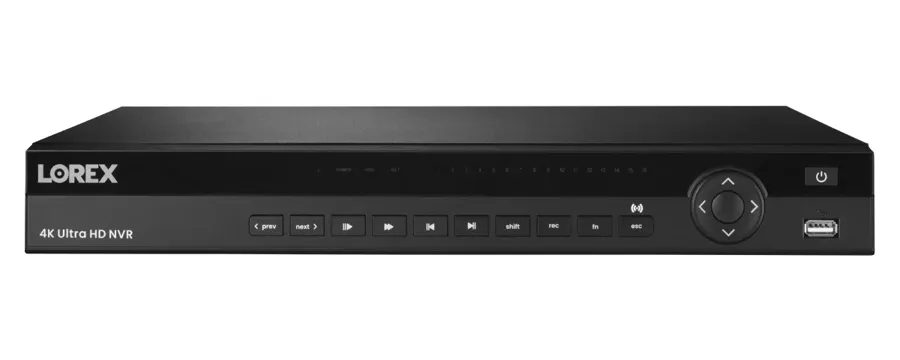
A product photo from the AESS job library, not taken in Wyckoff Heights: a 16-channel desktop network video recorder. In a frame three-family on the Brooklyn side this box usually sits on a cellar shelf near the gas meters or on top of the internet modem in a hall closet; in a brick flat building it is often in the cellar beside the boiler room; in a Wyckoff Avenue storefront it lives under the counter or in the back office. Most of our Wyckoff Heights repairs begin at this box, because it stores the video, keeps a log of which camera dropped and when, and decides how good the saved picture is.
Wyckoff Heights Camera Repair Request
Frame row, brick flat building, loft, new building, shop or office: send the address and what the screen shows, and a technician calls back with the next step
✅
Request Sent!
Thank you. A technician will contact you about the Wyckoff Heights camera repair, usually within 2 hours.
25+
Years Experience
✓
Same-Day Estimates
100%
Licensed & Insured
4.7★
201 Google Reviews
Owner-operated since 2002 · Thousands of jobs completed · Booked within 2 hours
Security camera repair in Wyckoff Heights usually comes down to one of three things: power, the recorder, or the cable path through an old building. The north end of the neighborhood has lost power twice in recent memory, once in August 2025 when a manhole fire on Irving Avenue at Jefferson Street cut about 240 customers, and again in February 2026 when Con Edison shut parts of Bushwick off on purpose to head off a longer outage. Recorders that run every hour of every day wear out their drives. And the cable to a camera on a wood-frame row house travels a very different route from the cable on a masonry flat building or a converted factory. Send a photo of your recorder screen to (347) 934-8335 or on WhatsApp, and we will tell you which of the three it looks like before anyone comes out.
Looking at your photo costs nothing. The $150 service call covers the on-site diagnosis and is credited to the repair if you go ahead.
We work under New York State license #12000287431, the license the Department of State requires of companies that install or service security systems for other people.
We repair any brand and any installer's system, on the Brooklyn side of Wyckoff Avenue and on the Queens side, at the same Brooklyn price.
The Neighborhood
Why Wyckoff Heights Properties Need Security Camera Repair
Wyckoff Heights is the narrow band of blocks around Wyckoff Avenue where Bushwick in Brooklyn meets southwest Ridgewood in Queens. Its mail runs through two ZIP codes, 11237 on the Brooklyn side and 11385 on the Queens side, and the county line itself runs down the middle of Wyckoff Avenue between Gates Avenue and Eldert Street. Even the name is soft at the edges: Forgotten NY wondered in 2008 whether "Wyckoff Heights" was mostly a label the hospital gave the area. For a camera owner none of that is trivia. It decides which precinct asks for your footage, which address belongs on your recorder, and which rules apply if your building is on a landmarked block.
The buildings matter more. Wikipedia's history of the neighborhood says the first houses were attached wood-frame rows built for three and six families, that later building on both sides of the line was masonry, and that the last large tracts were filled in the 1940s with attached single-family houses that have alleys and garages at the back. Add the storefront buildings along Wyckoff, Myrtle and Knickerbocker Avenues, the factory buildings that Forgotten NY described between Flushing Avenue and Starr Street, and the new buildings rising between Wyckoff and Irving Avenues near the DeKalb Avenue L, and you have six very different places for a recorder to live and a cable to run. A dead camera on a frame house is often water in a connector behind the siding; the same symptom in a brick flat building is more often a cable pinched where it passes through a cellar wall; in a loft it can be a run so long the camera starves for power.
Then there is power. On August 7, 2025, News 12 Brooklyn reported a manhole fire in front of 18 Irving Avenue, at Jefferson Street, that left about 240 customers dark at its peak. One witness told the station, "The lights started flickering then there was a very loud pop outside and everything just went dark." In February 2026 BK Reader reported hundreds of Bushwick customers losing power after Con Edison said, "We had to shut off power temporarily to prevent more extended outages." When the lights come back, a recorder can come back with a wrong clock, a damaged drive or a switch port that no longer powers its camera, and many owners do not notice until they look for a clip.
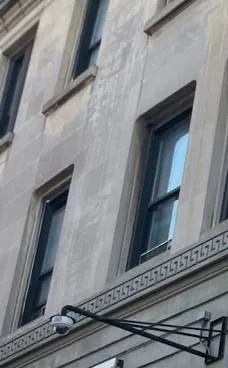
A photo from the AESS job library, not taken in Wyckoff Heights: a bullet camera held out from a pale stone facade on a long steel arm, under a carved Greek-key band. Most of the later building on both sides of Wyckoff Avenue is masonry, much of it designed by the Louis Berger firm, which the Landmarks Preservation Commission credits with more than 5,000 buildings across Ridgewood and Bushwick. When a camera like this fails on a facade with carved or pressed trim, the replacement goes back into the same plain masonry or mortar joint rather than through the ornament, and the arm is checked for rust at the bolts before a new camera is hung on it.
Footage matters here for the same reasons it matters across Brooklyn. In February 2026 News 12 reported that armed men walked through the front doors of two apartments in a building on Myrtle Avenue near Stockholm Street just after 2:15 a.m.; the report did not mention any video. A few blocks into Queens, QNS reported in January 2024 that a man broke the lock on the front door of a building on Cypress Avenue around 2 p.m. and went through packages inside. At the north end, the Brooklyn Post reported in 2018 that the surveillance video from a cafe on Flushing Avenue showed a burglar walking across the empty floor after he broke the rear door glass. None of those stories is about camera repair. Each one is a reminder that a camera is only worth what it saved on the night you need it.
So a repair in Wyckoff Heights is not only "make the dark camera light up again." It is finding out why it went dark, whether anything else failed at the same moment, whether the recorder is actually saving what you see live, and whether a clip can be exported cleanly for whichever precinct or insurer asks for it.
What the county line, the buildings and the grid do to a camera system here
Two boroughs, two precincts. The Brooklyn side is the 83rd Precinct, whose station house is at 480 Knickerbocker Avenue; the Queens side is the 104th Precinct on Catalpa Avenue. A camera on a corner of Wyckoff Avenue can easily record events on both sides of the line.
Some buildings carry two addresses. Urban Omnibus wrote in 2015 that a building at Irving Avenue and Eldert Street is sliced by the border and that some houses along the line display two addresses. Whatever address is typed into your recorder ends up on every clip you export.
Doors and entries are a steady source of city violations. HPD records 138 intercom violations in ZIP 11237 from January 2023 to early November 2026, and 123 of them are on the first three floors, which points to low walk-ups and small multi-family houses rather than towers. Many of the same buildings have a camera over the door that shares its power or its cable path with the intercom.
Landmark districts sit on the Queens side. The Stockholm Street, Ridgewood North, Ridgewood South and Central Ridgewood historic districts are all in Queens; we found no historic district on the Brooklyn side of Wyckoff Heights. That changes where a replacement camera may go on a landmarked facade, not whether a repair needs a permit.
The north end is power-sensitive. The 2025 Irving Avenue manhole fire and the 2026 shutdown both hit the Bushwick side, and both left recorders and PoE switches to restart on their own.
Repair is priced by the fault. HomeAdvisor's Brooklyn page puts the average surveillance camera install or repair at $1,416 with a typical range of $680 to $2,145. On our Brooklyn list most single repairs come in far below that, because a repair is a diagnosis and a part, not a new system.
Where this page applies. It covers the Brooklyn side of Wyckoff Heights, roughly the blocks from Flushing Avenue down toward Cypress Avenue on the Bushwick side of Wyckoff Avenue, and we serve the Queens blocks across the avenue at the same Brooklyn price. Owners further into Bushwick can use our Bushwick security camera repair page, owners deeper into Queens our Ridgewood camera repair page, and the rest of the borough is on our main Brooklyn security camera repair page.
Urgent Repair in Wyckoff Heights
Need Repair in Wyckoff Heights? A Recorder That Never Came Back After the Irving Avenue Outage, a Shop Camera That Stopped Saving, or a Clip a Detective Needs Tomorrow
Urgent calls from Wyckoff Heights tend to fall into three groups. The first is the outage: the power on the block came back, but one or more cameras did not, or the recorder came back with the wrong date, or it now beeps every few minutes. The second is the store or office that went to pull a clip after a shoplifting or a broken window and found the recorder had stopped saving days or weeks earlier. The third is a request from the 83rd or the 104th Precinct, an insurer or a landlord for footage from a particular night, on a system nobody in the building knows how to work.
If footage from a particular day matters, do not restart, unplug or reset the recorder, and do not pull the drive out. Leave it running and tell us when you call. Most recorders write over their oldest video first, so the clock is already running on that clip, but a restart or a factory reset can make things worse, and a drive taken out of a recorder is hard to read anywhere else. On the visit the first job is to export what you need, with the recorder's own player and a note of how far its clock is off, before any part is touched.
For everything else the path is short. The $150 Brooklyn service call is booked within 2 hours of your request and given a two-hour arrival window. The technician finds the cause, tells you what it is, and writes a price for each fault before anything is replaced. Small faults such as a setting, a login or a reseated connector are often fixed inside that first visit; a part that has to be ordered is fitted on a second one.
What We Install
Security Camera Repair Services in Wyckoff Heights
Each repair below is priced from our Brooklyn camera repair list, whichever side of Wyckoff Avenue the building stands on. We work on systems from any manufacturer and any installer, including systems whose installer has closed or stopped answering the phone.
Outage and restart recovery
Recorders that came back after the Irving Avenue fire or the February shutdown with a wrong clock, lost settings or a drive the recorder no longer recognizes, and PoE switch ports or power supplies that stopped feeding one camera while the rest returned.
Dead camera tracing
One camera or several dark at once, traced in order: outlet and backup, supply or switch port, cable and connectors, then the camera itself. On a frame house the fault is often at the siding; on a brick building, at the cellar wall.
Recorder and drive repair
DVRs and NVRs that stopped saving, beep, restart in a loop, or show a drive warning. Worn drives are replaced with surveillance-rated drives, the recording schedule is restored and the clock is set to keep itself right.
Cable and connector repair
Coax and network cables chewed in a cellar, cut during siding or roof work, pinched under a door frame, or corroded at the connector where water runs down the outside of a frame row house.
Picture and night repair
Blur, rolling lines, fog inside the dome, infrared bouncing off a nearby wall or awning, a night picture that went dark after a street lamp died, and color that flips to black and white all night.
Lost passwords and takeovers
Systems bought with a building, left by a former tenant, or set up by an installer who is gone. We recover access without wiping the video where the recorder allows it, and hand the new logins to the owner.
Phone viewing repair
Apps that stopped connecting after an internet provider change, a new router, or a firmware update, and cameras that record on the recorder but show offline on every phone in the family.
Shop and office systems
Counter, aisle, stockroom and back-door cameras on Wyckoff, Myrtle and Knickerbocker Avenues, and suite cameras in offices on DeKalb and Myrtle Avenues near the hospital, repaired around opening hours where we can.
Footage export for incidents
Clips saved for the 83rd or the 104th Precinct, an insurer or a landlord, exported with the recorder's own player, with the clock offset noted so the times can be matched to the incident.
Building Specialists
Security Camera Repair for Wyckoff Heights's Architecture
The same dead camera means a different repair on each kind of Wyckoff Heights building. Where the recorder lives, how the cable leaves the building and who has to approve the work all change with the walls.
Wood-frame three- and six-families
The neighborhood's oldest stock: attached frame rows, some now under aluminum or vinyl siding, with a camera over the stoop, one at the rear yard, and a recorder on a cellar shelf shared by every household.
Brick flat buildings
Masonry buildings of three or four stories often with two apartments a floor, a hall camera on each landing in some, a door camera at the vestibule, and the recorder in the cellar near the boiler.
Attached houses with rear garages
The 1940s houses with alleys and garages at the back, where the camera owners care most about is often the one over the garage door, not the front.
Storefront buildings
Shops on the ground floor with apartments above on Wyckoff, Myrtle and Knickerbocker Avenues, where the store's cameras and the building's hallway cameras may share a cellar, a circuit or even a recorder.
Loft conversions at the north end
Former factory buildings between Flushing Avenue and Starr Street, such as the Wy 101 Lofts conversion at 101 Wyckoff Avenue, with high ceilings, long corridors and long cable runs.
New buildings near the DeKalb Avenue L
Recent and coming buildings between Wyckoff and Irving Avenues with network cameras, a video intercom or a virtual doorman, and a camera system whose installer may still be under contract.
Wood-frame three- and six-families: the siding hides the cable
Wikipedia's account of the neighborhood says its first buildings were attached wood-frame rows built for three and six families. Plenty of frame houses like these have since been covered in aluminum or vinyl siding, and the camera cables on these houses tend to follow the easiest route: out of the cellar window, up the face of the house, and behind or along the siding to the camera over the stoop or the yard. That route works until water runs down the cable and into the connector, or a siding crew cuts it, or the cable rubs through where the siding moves with the seasons.
So on a frame house the first place we look for a dark or flickering camera is the cable's path on the outside, not the camera. A connector that has taken on water can be cut back and redone with a weatherproof fitting and a drip loop below it so water falls away instead of following the cable in. Where the cable enters the house through the frame wall, we seal the hole so the repair does not leave a new path for water or drafts. If the cable has to be replaced, we price both options: the same surface route, or a route that runs inside a hollow bay, which is often possible in a frame wall but takes longer.
Frame houses with several households also tend to have one recorder for everyone. When that recorder is in a cellar room only the owner can open, the repair has to be booked with the owner, even if it is a tenant who noticed the problem.
Brick flat buildings: the cellar wall is the choke point
The masonry buildings on both sides of Wyckoff Avenue were often built in rows to the same design; the Landmarks Preservation Commission credits the Louis Berger firm with more than 5,000 buildings in Ridgewood and Bushwick. In these buildings the cable to a vestibule or hall camera usually comes up from the cellar, where it passes through a hole in a thick wall or a floor beside a pipe. That passage is where we find a lot of damage: a cable pinched by a later pipe repair, chewed by mice where it crosses a beam, or cut by a contractor who did not know what it was.
Wi-Fi cameras have a harder time in these buildings than in frame houses. Reolink's own list of reasons cameras drop offline includes thick walls weakening the signal, and a camera on the back of a brick building talking to a router at the front can fail every evening when the network gets busy. Sometimes the fix is a small access point near the camera; sometimes it is a wired run.
Attached houses with rear garages: the back of the house is the front
The neighborhood's last big building wave, in the 1940s, produced attached single-family houses with alleys and garages at the rear. For many of these owners the camera that matters is the one over the garage, because that is where the car is and where the family comes and goes. That camera usually sits at the end of the longest cable run in the house, through the garage ceiling and back to a recorder in the basement or a closet.
The alley also tends to be dark. A camera that switches to infrared in an unlit alley can see only a short distance, and its picture may wash out completely if it is aimed close to a garage door or a wall. Part of a repair here is deciding whether the camera needs replacing at all, or whether it needs to be re-aimed, its infrared turned down, or a light added on the alley side so it can stay in color.
Storefront buildings: two owners, one cellar
Forgotten NY describes Wyckoff Avenue near Myrtle as lined with apartment buildings from the 1910s or earlier with businesses on the ground floor, and a listing for 195 Wyckoff Avenue describes four apartments above one ground-floor store. In these buildings the store often has its own cameras and recorder, while the landlord has a camera at the residential door and sometimes in the hallway. The two systems may share a cellar, a power circuit or a network, and when one owner changes something the other system can stop working.
Before we touch anything in a storefront building we confirm whose equipment each camera is. A store tenant can book the repair of the store's cameras; the landlord books the building's. If the fault is in something they share, such as a circuit or a cable tray, we explain it to both sides in writing so nobody has to guess who pays for what.
Loft conversions at the north end: long runs, starved cameras
The stretch of Wyckoff Avenue from Flushing Avenue to Starr Street was largely industrial when Forgotten NY walked it in 2008, with lofts used by artists and musicians. StreetEasy lists Wy 101 Lofts, at 101 Wyckoff Avenue, as a pre-war factory converted into 32 condominium units with 12-foot ceilings. Converted buildings like these have long corridors and long cable runs, and the farthest cameras are the ones that fail first: a camera powered over a network cable at the far end of a long run can start, then drop as soon as its infrared comes on and it draws more power.
The ceilings change the work too. A camera on a 12-foot ceiling or on a beam above a stair needs a taller ladder or a platform, and a board or managing agent usually wants to know when the work will happen in a shared corridor. We give the date and the two-hour window in writing so it can be posted.
New buildings near the DeKalb Avenue L: the contract comes first
New York YIMBY reported in June 2026 on three new residential projects between Wyckoff and Irving Avenues near the DeKalb Avenue station, adding nearly 150 apartments, one of them at 316 Stockholm Street. Newer buildings in the area already advertise video intercoms, and one listing on Wyckoff Avenue offers a "virtual doorman" and smart locks. In buildings like these the cameras are usually network cameras on a recorder in a telecom room, sometimes tied into the intercom or door service's own app.
When a camera fails in a new building, the first question is whether the original installer's warranty or service contract still covers it. If it does, the building should use it. If the contract has run out or the installer does not answer, we can take the system over, but we ask the board or managing agent for the recorder's admin login and any network details first, and we leave everything we change written down.
Field Notes
Field Notes: Why We Ask Wyckoff Heights Owners Which Side of the Avenue They Are On
This is how our technicians approach a first call from Wyckoff Heights. Before we talk about the camera, we ask for the address with its cross street and which side of Wyckoff Avenue the building is on. It is not a trick question. The answer tells us which precinct is likely to ask for footage, which address the recorder should carry on its screen and on every exported clip, and whether a facade might fall inside one of the Queens-side historic districts. It also tells us something about the building: a frame row, a brick flat building, a 1940s house with a garage behind it, or a loft.
Then we ask for a photo of the recorder's screen with every camera showing, and the recorder's own information page if you can reach it. Those two photos usually tell us whether the problem is one camera, the recorder, the drive or the network, and whether the clock is right. With that, the technician who comes out already knows whether to bring a drive, a supply, connectors for coax or for network cable, and what ladder the building needs. On a block where a cellar door has to be opened by a super or the owner, it also tells us who needs to be there.
Fault by Fault
Restarts After an Outage, Water Behind Siding, Worn Drives, Wrong Clocks and Lost Logins: How Wyckoff Heights Camera Systems Fail
Restarts after an outage: what does not come back with the lights
When the power drops and returns, most recorders restart on their own and most cameras follow. What does not always come back is the part that was weakest before the outage: a drive near the end of its life that does not spin up, a PoE switch port that no longer delivers power, a small plug-in supply that failed when the voltage jumped, or a camera whose settings reset to factory defaults and now asks for a new password. During the July 2026 heat wave Con Edison said it had reduced voltage in parts of the city to protect its system; low voltage can make a recorder or switch behave oddly without ever shutting it off.
After an outage we check each piece in turn rather than replacing the obvious one. If one camera came back and its neighbor on the same switch did not, the port is a suspect; if every camera on the recorder is fine but nothing has been saved since the outage, the drive is. And we always check the clock, because a recorder that lost its time setting will stamp every clip with a date that no longer matches the event.
Water behind siding: the slow failure on a frame row
On a frame house a camera that dies after rain, works on dry days and gets worse every winter almost always has water in a connector or a cable that has cracked where it bends. Siding makes this hard to see, because the cable may run behind the panels for part of its route. The cure is to cut back to clean cable, fit a weatherproof connector, form a drip loop so water falls off the cable before it reaches the connector, and seal the hole where the cable enters the house.
If the water got inside the camera itself, which shows as fog behind the dome or the lens, the seal has failed and drying it out rarely lasts. Replacing the camera with a same-type unit is usually cheaper than trying to save it, and we will say so.
Worn drives: the part that works every minute
A recorder writing four, eight or sixteen cameras around the clock wears its drive out faster than a computer does. Drives built for this work are rated for it; a desktop drive put into a recorder to save money tends to fail early. A thread on r/SecurityCamera put it plainly: "Western digital purple or seagate Skyhawks are good. regular HDDs will fail." The first sign is often a recorder that beeps, shows an exclamation mark on the drive, or has gaps in its timeline.
The hard truth is that a new drive does not bring back video from a drive that has already failed. A New York camera company, Impera Security, says the same on its repair page: "Installing or formatting a new hard drive does not recover footage previously lost because of a failed drive." So if the recorder is already warning about its drive and you have footage you need, call before the drive gets worse.
Wrong clocks: when the time on the clip does not match the night
A recorder keeps its own clock, and that clock drifts, resets after an outage, or never learned about daylight saving time. A clip stamped 1:40 a.m. for an event that happened at 2:15 a.m. is still footage, but someone has to explain the difference to the detective or the insurer, and a wildly wrong date can make a clip harder to use. Part of every repair we do is setting the recorder to take its time from the internet automatically and confirming the time zone, so the next clip carries the right time.
Lost logins: the system nobody can open
Wyckoff Heights buildings change hands, tenants move, and small installers close. We often meet recorders whose password belongs to someone long gone. Many recorders can be reset in a way that keeps the video; some can only be reset to factory settings, which may also clear the recording settings or worse. We find out which kind you have before we do anything, and if footage matters we export it first. When we are done, the owner gets the admin login and decides who else gets one.
Commercial Security Camera Repair
Business Security Camera Repair in Wyckoff Heights
Wyckoff Heights businesses are strung along a handful of avenues, plus the offices that cluster around the hospital. Each strip has its own pattern of camera failures, and each is repaired at the Brooklyn rate, on either side of the line.
Wyckoff Avenue
The avenue that is also the county line, with storefronts under older apartment buildings near Myrtle, the post office at number 86, the hospital at Stockholm Street, and lofts and workshops toward Flushing Avenue.
Myrtle Avenue and the transit hub
The Myrtle–Wyckoff Avenues station on the L and M sits right on the border, and the Myrtle Avenue business improvement district runs from Wyckoff Avenue east to Fresh Pond Road. Busy sidewalks around the station mean cameras that see a crowd for much of the day.
Knickerbocker Avenue
One of Bushwick's main commercial streets, running past Maria Hernandez Park, where a typical shop has a counter camera, an aisle camera and one on the back door.
Irving Avenue
Corner stores, money transfer and service businesses at the Linden Street end, and buildings near Jefferson Street at the north end that lost power in the August 2025 manhole fire.
DeKalb and Myrtle near the hospital
Wyckoff Heights Medical Center lists offices at 1411 and 1419 Myrtle Avenue and a Medical Arts Building at 1610 DeKalb Avenue, along with its main address at 374 Stockholm Street. Medical offices are spread across those buildings.
Flushing Avenue and the north end
The edge of the old industrial strip, with cafes, studios, workshops and converted buildings. In 2018 a Flushing Avenue cafe's own video showed a burglar crossing its empty floor after breaking the rear door glass.
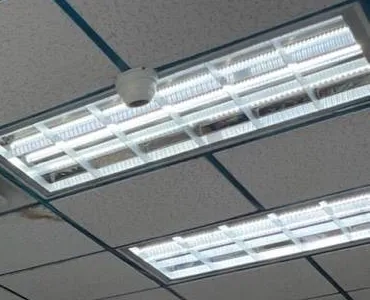
A photo from the AESS job library, not taken in Wyckoff Heights: a small white dome on acoustic ceiling tiles next to a long louvered light. This is how most aisle and register cameras look in the groceries and shops along Knickerbocker and Myrtle Avenues. A dome this close to a bright fixture can turn the faces below it into dark shapes; moving it one tile over, or changing its exposure setting, is often the whole repair.
Groceries, phone stores and pharmacies: the aisle that matters
In a store, the camera that pays for itself is the one over the aisle or the register where things go missing, and it is usually the one that has been knocked, covered or blocked. New shelving can hide half the view; a promotional sign can sit right in front of the lens; a dome can be pushed out of line by a ladder. Neighbors on r/Bushwick have posted warnings to businesses near Wyckoff Avenue and Linden Street after a shoplifting incident. When a store calls us after one, we check not only that the cameras work, but that the camera over that aisle actually sees hands and faces at the shelf height where the theft happened, and that the recorder is saving that camera at full quality.
We also check that the store can get a clip out without us. Most owners only discover they cannot export video on the day they need it. We show the manager how it is done on their own recorder and leave written steps by the recorder.
Restaurants, cafes and bars: grease, steam and late doors
Kitchen and back-door cameras collect grease and steam, which slowly fogs the dome and blurs the picture, and many restaurants on these avenues close late, when the rear door and the trash area are dark. A dome that has gone hazy from grease can often be cleaned or have just its cover replaced; a camera at the back door that fails every night when its infrared comes on may be bouncing that light off a wall or awning a few feet away. Cleaning, re-aiming and resetting are cheaper than replacing, and we try them first.
Medical and professional offices near the hospital
Offices in the medical buildings around Wyckoff Heights Medical Center tend to have cameras at the entrance, the reception desk and the corridor, often on a small recorder in a back closet, sometimes alongside the building's own lobby cameras. Repairs here are planned around patient hours, done quietly, and never involve showing recordings to anyone other than the person who manages the office. If a recorder must be restarted, we agree the time with the office manager first.
Rules that touch a commercial camera repair
In New York, companies that install or service security systems for others need a license from the Department of State, and state rules include closed-circuit television used to detect intrusion, theft or movement. An owner, or the owner's own employee, working on the owner's own property does not need that license, but anyone you hire does. We work under license #12000287431. New York's Civil Rights Law also requires employers who monitor employees electronically to give them written notice and post it where it can be seen; a repair is a good time to check that the notice is still up. If your business is registered with the NYPD's camera program, which the city says costs businesses nothing, tell us, so we can make sure the camera you registered is still pointed where you said it was.
Your Questions Answered
Security Camera Repair in Wyckoff Heights: Questions Answered
Life on the borough line
Our house is one of the Cypress Avenue houses turned sideways to the street, so the camera over our door looks into a side yard and never sees the avenue. Can a repair give us a view of the avenue without adding a second recorder?
Usually, yes. Urban Omnibus noted in 2015 that houses along Cypress Avenue were built turned ninety degrees, with their sides facing the street, so the camera an installer put "over the front door" often watches a yard or a gate instead of the sidewalk. If your recorder has a free channel, a second camera can be added at the corner of the house facing the avenue and wired back to the same recorder; if all channels are used, a camera with two lenses can sometimes replace the one at the door and cover both the gate and the street.
What decides it is where the cable can go. On a frame house we can often run a new cable from the cellar inside the side wall; on masonry we look for an existing path first. Either way you get the options and prices in writing before anything is drilled.
Our store's camera faces the plaza at the Myrtle–Wyckoff station, and the crowd coming off the trains sets off motion alerts every few minutes all day. Can the camera ignore the plaza and still warn us about our own door?
Yes. The fix is in the settings rather than the hardware: we draw the motion or person-detection area tightly around your doorway and the stretch of sidewalk in front of it, and exclude the plaza, the street and the station stairs. Newer cameras can also be told to alert only on people who cross a line or stay in an area, rather than on any movement.
Recording is a separate setting from alerts. We usually keep the camera recording the whole view all day, because the plaza is exactly where a person you need to identify may have come from, while sending you an alert only for the door.
Power trouble at the north end
Since the August 2025 manhole fire on Irving Avenue our recorder runs, but it beeps every few minutes and shows a warning on the hard drive. Is the video from before the outage still on it?
Possibly, and the sooner it is looked at the better. A beep with a drive warning usually means the recorder thinks the drive is failing or cannot be written, which can follow a hard power loss. Some of what was recorded before may still be readable while the drive is still working; once it fails completely, a new drive will not bring that video back.
Do not format or swap the drive yourself. On the visit we first try to export anything you need from before the outage, then test the drive and the recorder's power supply, and only then replace the drive. If a clip matters for an insurance claim, tell us what time it is from so we try that first.
During the July 2026 heat wave Con Edison lowered the voltage, and since then the camera at the far end of our building only stays on during the day. At night it keeps rebooting. Did the low voltage damage it?
It may have, but the pattern points at power. A camera draws more power at night when its infrared lights come on. If the power supply or switch feeding it has weakened, or the cable to the far end is long and thin, the camera may have just enough power by day and not enough at night, so it restarts. Low voltage during a heat wave can push a supply that was already marginal over the edge.
We measure the power at the camera end, day setting and night setting, and test the supply or switch port. Often the repair is a new supply or a move to a port with more power, not a new camera.
Frame rows, brick flats and garages
Our wood-frame six-family is getting new siding, and the contractor wants to know what to do with the camera cables running up the front. Should the cameras be taken down before the siding goes on?
Ideally, yes, or at least have the cables marked and protected. Siding crews often cut or bury cables they do not recognize, and a camera remounted on new siding needs a proper mounting block so the screws do not let water in behind the panels. If we take the cameras down before the work and put them back after, the cables can be rerouted behind the new siding where they are safer from weather and hands.
Tell us the siding schedule. We take each camera down, label each cable, cap the connectors, and come back when the siding is on to remount and test, then check the night picture against the new surface, which can reflect infrared differently from the old one.
The camera over our rear garage door looks down the alley behind our 1940s attached house, and at night it shows only a white glare and black. The camera is not old. What is wrong?
Most likely the camera's infrared is bouncing off something close to it, such as the garage door, the alley wall or the underside of a gutter, and the bright reflection makes the camera close its exposure so the rest of the picture goes black. In an unlit alley there is nothing else for the camera to see by, so its own light is doing all the work.
The repair is usually re-aiming the camera away from the nearby surface, turning down its infrared, or adding a light on the alley side so the camera can stay in color. A new camera only helps if this one has a fault of its own, and we test for that before suggesting one.
In our brick flat building, the cable to the second-floor hall camera passes through the cellar ceiling next to a water pipe that was just replaced, and the camera has been dead since the plumber left. Can the plumber's work have done it?
Very possibly. In these buildings the camera cables often share a hole or a path with pipes through the cellar ceiling, and a plumber cutting out and replacing a pipe can crush, nick or cut a cable beside it. Heat from soldering can also melt a cable jacket. If the camera went dark the same day the plumbing work was done, that path is the first place we look.
We trace and test the cable from the recorder to the camera, find the damage, and either splice it properly or replace the damaged run. You get a written note of what we found and where, with photos, which helps if you want to raise it with the plumber.
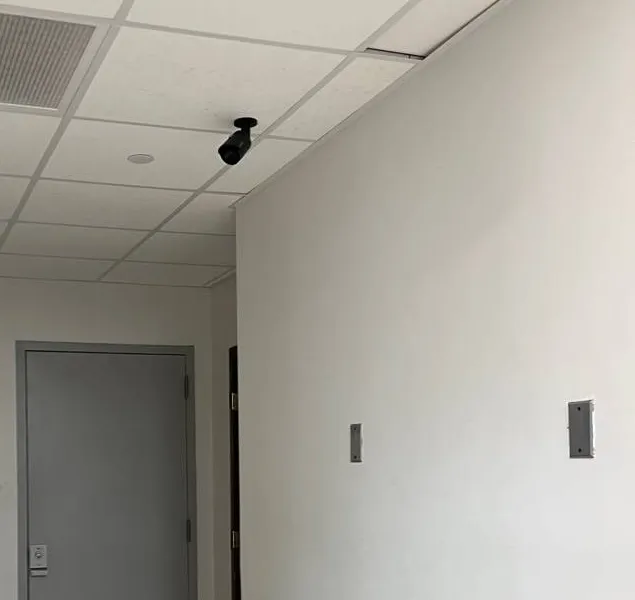
A photo from the AESS job library, not taken in Wyckoff Heights: a small bullet camera hanging from a drop-ceiling grid and aimed down a short corridor at a grey steel service door. Back corridors like this one, leading to a rear door or a loading entrance, are common in the storefronts along Knickerbocker and Wyckoff Avenues and in the medical buildings around the hospital. A camera aimed this way catches the face of anyone who comes in through the door, as long as the light at the door is not brighter than the light in the corridor.
Lofts, new buildings and smart entry
Our new building near the DeKalb Avenue L has a virtual doorman, and the lobby cameras show up inside that company's app. When one stops working, do we call them or you?
Call them first. If the cameras are part of a virtual doorman or smart-entry service, the service usually owns or manages the cameras and has the logins, and working on them without the service can break your contract or the connection. Ask whether the camera is theirs and covered, and how long the repair will take.
If the camera turns out to be the building's own, connected to the service only for viewing, or the service says the camera is not their responsibility, we can repair it. We will need the board's or managing agent's approval and the network details, and we coordinate with the service so the camera comes back in their app.
The cameras in our loft conversion sit on the same network as the residents' internet, and every time the building's router updates overnight, half the cameras drop off until someone restarts them. Can the cameras be separated?
Yes, and it is usually worth doing. Cameras that share a network with residents' phones, laptops and televisions compete for bandwidth and are exposed to every change made to that network. Moving the cameras onto their own switch, or their own section of the network, with fixed addresses, means a router update or a resident's new device no longer knocks them out. Reolink lists two devices sharing one network address among the common reasons cameras drop offline, and fixed addresses prevent that.
We plan the change with whoever manages the building's network, do it at a quiet hour, and leave a written map of which camera has which address.
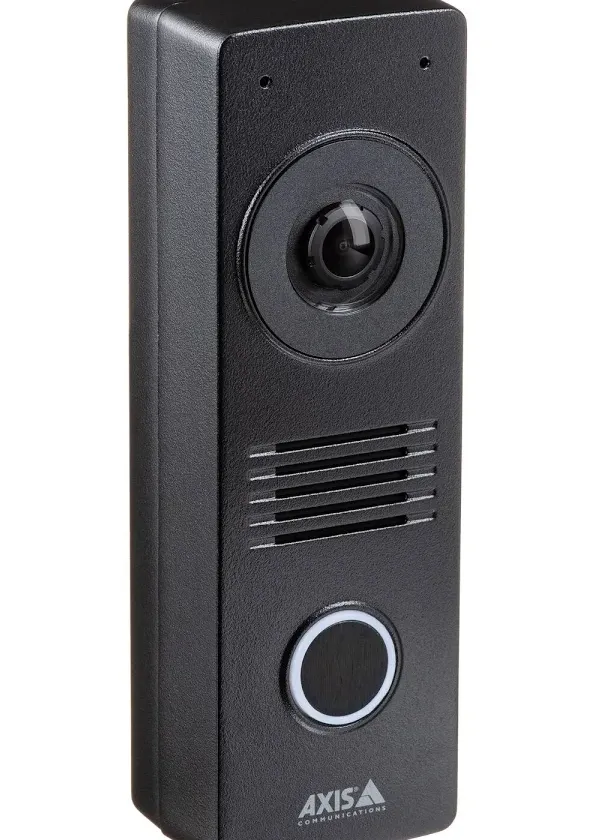
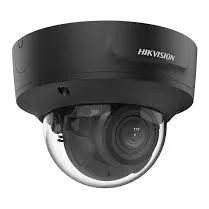
A product photo from the AESS job library, not taken in Wyckoff Heights: a video intercom door station with a built-in camera, a speaker grille and a lit call button. Stations like this one are what the newer buildings near the DeKalb Avenue L and along Wyckoff Avenue advertise as a video intercom. When its picture goes black or blurred, the fault can be the camera inside the station, the cable behind it, or the app or screen that shows it, and we test each before anything is replaced.A product photo from the AESS job library, not taken in Wyckoff Heights: a black varifocal dome, whose lens can be zoomed after it is mounted. In the long corridors of the converted factory buildings at the north end of Wyckoff Avenue, a dome like this can be zoomed in from the far end so a face at the other end of the hall is large enough to recognize.
Shops and offices around the hospital
Our office is in one of the medical buildings near the hospital. The landlord owns the hallway cameras and we own the ones inside our suite. When ours went dark, can you repair them without touching the landlord's system?
Yes, as long as the two systems are really separate. We first confirm which cameras, cables and recorder are yours, often by tracing the cables back to your closet rather than the building's. If your cameras and the landlord's share a network switch or a power supply, we tell you and the building's manager before anything is changed, so neither system is affected by the other's repair.
We work around your patient hours, show recordings only to the person who manages the office, and give you a written note of what was found and fixed for your records.
The clip of a shoplifter we gave the 83rd Precinct from our Knickerbocker Avenue store would not play on their computer. What should we do differently next time?
Many recorders save video in their own format, which needs the manufacturer's player. When you export, choose the option that includes the player, or a common format such as MP4 if your recorder offers it, and copy the clip to a fresh USB drive rather than sending it from a phone app, which can shrink it. Write down the camera name, the time on the clip and how far the recorder's clock differs from your phone.
On a repair visit we set up the export options on your recorder, test a clip on an ordinary computer, and leave the steps written by the recorder, so the next clip plays on the detective's computer the first time.
Equipment
Types of Security Cameras and Recorders We Repair
We repair whatever is already on the building. In Wyckoff Heights that ranges from twenty-year-old coax systems in frame houses to network cameras in the new buildings near the L, and plenty of mixed systems in between.
Coax and HD-over-coax cameras
The older systems in many frame rows and brick buildings, wired with coaxial cable to a DVR. The cable can often carry a sharper camera than the one on it today, which saves rewiring through old walls.
Network (IP) cameras
Standard in the loft conversions and newer buildings, and in most shop systems installed in the last decade. One network cable carries power and video, so a bad switch port or a long run shows up first here.
DVRs, NVRs and hybrid recorders
The box that stores the video. Drives wear out, clocks drift, settings reset after outages, and older models stop working with phone apps. A hybrid recorder can take both coax and network cameras.
Varifocal domes and bullets
Cameras whose zoom can be set after mounting. The right setting for a long loft corridor or a deep shop aisle is often the whole repair when faces are too small to recognize.
Door and vestibule cameras
Cameras that have to see a face in a dark vestibule against a bright street behind it. They need a sensor built for that contrast, aimed and set carefully.
Pan-tilt and 360-degree cameras
Motorized or fisheye cameras on corners, roofs, parking areas and large stores. Motors, presets and the way the recorder handles a fisheye view all need checking.
Wi-Fi, battery and cube cameras
Consumer cameras on stoops, in apartments, in back yards and in small offices. Signal through brick, batteries in the cold and app logins are the usual faults.
Video door stations
Intercom stations with built-in cameras at the doors of newer buildings and many renovated walk-ups. We repair the camera side and coordinate with intercom repair where both have failed.
PoE switches, supplies and battery backups
The parts that power everything, and the parts most likely to fail when the power on the block drops and returns. We test them first after an outage.
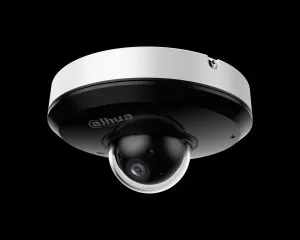
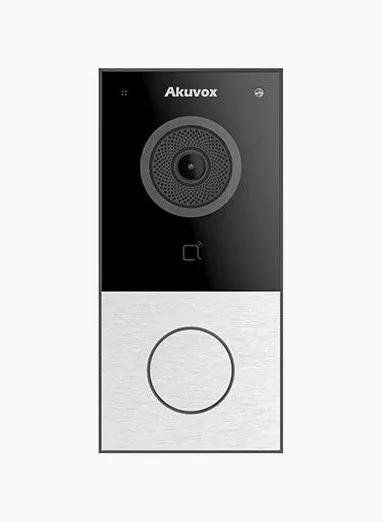
A product photo from the AESS job library, not taken in Wyckoff Heights: a small pan-tilt dome with a white housing over a black lens dome. Cameras like this one turn and zoom from the app, and are used inside larger shops on Myrtle and Knickerbocker Avenues and in garages and yards. When one stops turning or loses its preset positions, the motor, the power and the recorder's settings are each checked in turn.A product photo from the AESS job library, not taken in Wyckoff Heights: a slim video door station with a lens at the top and one round call button. This size of station fits the narrow door frames of the frame two- and three-families on the Brooklyn side. When its picture fails, the cable behind it often shares a path with the old bell wiring, and both are tested.
National brands versus a local licensed repair
Owners with Ring, Arlo, Nest, Wyze, Eufy or SimpliSafe cameras often ask whether a local company can help at all. For a sealed consumer camera that has failed inside its warranty, the brand's own warranty is usually the cheapest fix. Where a local visit helps is everything around the camera: a camera that cannot hold its Wi-Fi through brick, one placed where glare or rain ruins it, a battery that dies in the cold, or a system with several brands that nobody has set up to work together. Since January 2024 Ring no longer lets police ask owners for video through its app, and News 12 reported that "Law enforcement agencies can still access videos using a search warrant," so the owner still decides what to share, and how to export it matters.
What is wrong
Who should usually handle it
A sealed consumer camera has died and is still under the brand's warranty
The brand, under its warranty
A consumer camera works but its Wi-Fi, battery, placement or glare does not
A local visit
Wired cameras on a DVR or NVR in a house, flat building or shop
A licensed local repair company
Cameras that belong to a monitoring or smart-entry service
That service first, under its contract
A condo, co-op or rental building's common cameras
A licensed repair approved by the board, owner or managing agent
Owners with Hikvision or Dahua recorders sometimes ask whether federal rules mean their system has to come out. Security Info Watch's April 2026 report on the FCC's Covered List rulemaking quoted the proceeding as one that "explicitly would not affect continued use or operation of already-purchased communications equipment." In practice we keep repairing these systems, and we tell you plainly if a part is no longer available.
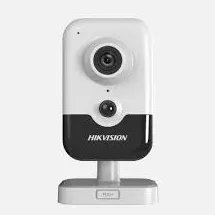
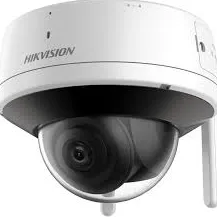
A product photo from the AESS job library, not taken in Wyckoff Heights: a small white indoor cube camera. Tenants in the walk-ups and lofts often use one like this inside an apartment door or a front window. Most faults are Wi-Fi or app logins rather than the camera itself, and we check those before suggesting a new one.A product photo from the AESS job library, not taken in Wyckoff Heights: a Wi-Fi dome with an external antenna. Cameras like this are often put on the back of a brick building or over a rear garage because running cable there looked hard. When the signal fades through masonry, the fix can be turning or replacing the antenna, adding an access point nearby, or finally running the cable.
AI Overview Reality Check
What AI Gets Wrong About Security Camera Repair in Wyckoff Heights
Search summaries and directory sites such as Angi, HomeAdvisor and Fixr answer camera repair questions in general terms, written for a suburban house with two cameras. Here are seven common claims and how they hold up on the blocks around Wyckoff Avenue.
"Your address tells the police which precinct to call"
For most of the city, that is true. In Wyckoff Heights it is only half the story. The county line runs down the middle of Wyckoff Avenue, so a camera on the Brooklyn side of the street may record an event on the Queens sidewalk across from it, and the detective who comes asking may be from the 104th Precinct rather than the 83rd, or the other way around.
Urban Omnibus also noted that some houses along the border show two addresses, and that at least one building near Irving Avenue and Eldert Street is cut by the line itself. If your recorder carries the wrong address, or no address, every clip you hand over starts with a question.
So on a repair we make sure the recorder shows the address you actually use, the cross street, and a clear name for each camera, such as "front door, Wyckoff Avenue side." When a detective asks for "the camera that sees the corner," you will know which one it is.
"Wireless cameras are the easy fix for an older building"
They can be in a frame house, where the walls are wood and Wi-Fi passes through them fairly well. In a brick flat building or a converted factory, Wi-Fi is often the reason the camera keeps dropping. Reolink lists thick walls weakening the signal among the main reasons its cameras go offline.
Wireless cameras still need power, so "wireless" often means a battery that must be charged or a plug-in adapter in a window. Batteries lose capacity in the cold, and adapters get unplugged by whoever needs the outlet.
In masonry buildings, we often recommend keeping a wired camera and repairing the cable rather than replacing it with Wi-Fi. Where Wi-Fi is the only practical choice, a small access point closer to the camera is usually a better fix than a new camera.
"After a power outage, just restart everything"
A restart can clear a stuck recorder. But after the Irving Avenue manhole fire or the February 2026 shutdown, a restart is also the moment a weak drive stops spinning, and once a recorder has been reset to factory settings, the clock and recording schedule may be gone.
If footage from before the outage matters, do not restart, reset or reformat anything. Call first and let the clip be exported. If the system is simply dark, check the outlet and any battery backup, then call.
And if the same camera fails after every outage, the outage is not the cause. It is the test that the weakest part keeps failing, and that part needs replacing.
"Battery backups keep cameras recording through any outage"
A small battery backup can keep a recorder running through a flicker or a short cut. It will not usually carry a recorder, a PoE switch and several cameras for hours, and in the August 2025 fire, one Irving Avenue address was still without power the following evening.
The realistic goal for a house or small shop is to ride out the short blips that cause most damage, and to shut down cleanly in a longer outage rather than crash. That protects the drive and the settings.
After a long outage, the repair is checking what did not come back and fixing it, and making sure the recorder's own health alerts reach your phone so the next problem shows up in days, not when you need a clip.
"Any handyman or electrician can fix a camera system"
In New York, companies that install or service security systems for other people need a license from the Department of State, and the rules cover closed-circuit television used to detect intrusion or theft. An owner or the owner's own employee can work on the owner's own property, but anyone you hire should be licensed.
The skills are different too. Most Wyckoff Heights camera repairs are recorder settings, drives, network addresses, power over network cable and connector work, not house wiring. An electrician can fix the outlet the recorder plugs into; the camera system itself is low-voltage work.
If a handyman or a relative has already been in, tell us what was changed. It saves time and often explains the fault.
"Landmark rules mean a permit for any camera work in Ridgewood"
Not for a repair. The Landmarks Preservation Commission's permit guidebook says a permit is not required for "ordinary maintenance, repair, and retrofitting of health, safety, and utility equipment." Replacing a failed camera with a similar one in the same place on a building in the Stockholm Street or Central Ridgewood districts is ordinary repair.
What the guidebook governs is new or moved equipment: cameras attached at mortar joints, plain masonry, wood or metalwork rather than through cast iron or decorative surfaces, no more than two cameras per 25 feet of frontage on a small building, and only about ten inches of visible conduit.
On the Brooklyn side of Wyckoff Heights we found no historic district at all, so these rules usually do not apply there. If you are not sure which side of the line your lot is on, we check before moving anything.
"Camera repair costs $100 to $300"
That figure fits a single consumer camera on a suburban house. HomeAdvisor's Brooklyn page puts the average surveillance camera install or repair job at $1,416, with a typical range of $680 to $2,145, but that average mixes repairs with new systems.
On our Brooklyn list a setting or connector fix can sit within the $150 service call, a single camera replacement on a working system runs $250 to $600, and a new recorder with drive and setup runs $700 to $1,500. Most Wyckoff Heights repairs fall in the lower part of that spread.
The expensive repairs are the ones done twice: a camera replaced when the real fault was a weak supply, or a drive replaced without checking why it failed. A proper diagnosis is what keeps the price down.
Talk to a Technician Before You Restart, Reset or Replace Anything
Send a photo of the recorder's screen, the address with the cross street, and which side of Wyckoff Avenue you are on. A technician will tell you whether it looks like a camera, a cable, a drive or the power, and whether there is any footage you should protect first.
Tell us the address and cross street, the kind of building, how many cameras there are, which ones are out, and where the recorder is. If you need a clip saved, tell us the date and time. We reply with the next step and book the visit, usually within 2 hours. You can also call (347) 934-8335.
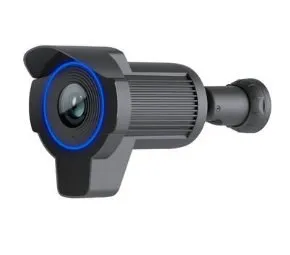
A product photo from the AESS job library, not taken in Wyckoff Heights: a black bullet camera with a long hood and a blue-lit ring around the lens. The hood keeps rain and low sun off the glass, which matters on the stoops of frame rows facing open streets. When the picture on a camera like this gets worse each year, it is often a dirty or scratched front glass rather than a dying camera.
✅
Request Sent!
Thank you. A technician will contact you about the Wyckoff Heights camera repair, usually within 2 hours.
How It Works
Our Repair Process
1. Send a photo of the recorder screen and the address
A photo showing every camera, plus the address and cross street, tells us the building type and whether one camera, the recorder or the network is at fault before the visit.
2. Tell us which side of the avenue and who owns the system
Brooklyn side or Queens side, and owner, tenant, board, store or landlord. The person who owns the cameras approves the work and gets the logins.
3. Book the service call in a two-hour window
The $150 Brooklyn service call is booked within 2 hours of your request, in a two-hour arrival window, and credited to the repair.
4. Save the footage that matters first
Any clip you need is exported to USB with the recorder's own player, and the clock offset is written down, before anything is restarted or replaced.
5. Test from the outlet to the phone
Outlet and backup, supply or PoE switch, each cable and connector, recorder and drive, network and app, tested in that order so the real fault is found.
6. Explain the cause and write the price
You hear what failed and why, and get a written price for each fault on its own line, before any part is ordered.
7. Repair, seal and test by day and by night
Parts are replaced, holes in siding, brick or ceilings are sealed, and each camera is checked in daylight and low light, on the saved recording as well as live.
8. Name channels, set alerts and show the export
Cameras are named by street and door, camera-loss and drive alerts go to your phone, and you are shown how to export a clip yourself.
Coverage Area
Security Camera Repair Near Wyckoff Heights's Landmarks
Wyckoff Heights Medical Center
The hospital at Wyckoff Avenue and Stockholm Street, founded as the German Hospital of Brooklyn and renamed in 1918, with its emergency department open around the clock and offices on Myrtle and DeKalb Avenues.
Myrtle–Wyckoff Avenues station
The L and M transfer that sits right on the Brooklyn–Queens line, with a public plaza at street level and the Myrtle Avenue business district running east from it.
Maria Hernandez Park
The park between Knickerbocker and Irving Avenues and Starr and Suydam Streets, announced in 1890 as a park for Wyckoff Heights and now Bushwick's largest community park.
Wyckoff Heights Post Office
The post office at 86 Wyckoff Avenue, opened in 1951, which still gives the Brooklyn side of the neighborhood its ZIP code, 11237.
Former Wyckoff Heights Presbyterian Church
The church at Harman Street and St. Nicholas Avenue, founded in 1895, rebuilt after a 1928 fire and now the Ridgewood Pentecostal Church.
Stockholm Street Historic District
The first of the four landmark districts on the Queens side, designated in 2000, where a moved or new camera follows the Landmarks Preservation Commission's rules.
Wyckoff Heights is billed at our standard Brooklyn rate on both sides of Wyckoff Avenue. Every figure below comes from our published Brooklyn list, which you can read in full on our page of Brooklyn security camera repair prices; your own price is written down on the visit, after the fault is found and before anything is replaced.
Repair in Wyckoff Heights
Price on our Brooklyn list
Service call with on-site diagnosis and a written price
$150, credited to the repair if you go ahead
Motion zones, alerts, clock or app settings, no parts needed
Usually covered by the $150 service call
Cleaning and checking a hazy or blurred camera
$80
Re-terminating a connector or moving a camera to a new PoE port
$150–$350
Replacing a camera power supply
$150–$400
Replacing a worn recorder drive
$200–$450
Repairing an indoor camera in a home or office
$200–$450
One camera swapped on a system that otherwise works
$250–$600
Outdoor camera body swapped and re-weatherproofed
$250–$600
Fixing a poor or failed night picture
$250–$650
A DVR that stopped working, drive and labor included
$300–$700
An NVR that stopped recording
$400–$900
A pan-tilt (PTZ) camera repair
$450–$1,200
Swapping to a hybrid recorder for coax and network cameras
$700–$1,200
New DVR or NVR with drive and full setup
$700–$1,500
Damage from lightning or a power surge, by system size
$700–$3,500
Yearly maintenance visit
$250–$800
Three things move a Wyckoff Heights price within those ranges. The first is the building: a camera on the face of a frame row behind siding, under the cornice of a four-story brick building, or on a 12-foot loft ceiling takes more ladder time and more care than one beside a door. The second is how many parts failed at once, which is why repairs after an outage often cost more than a single dead camera; the drive, a switch port and a supply can all fail in the same event. The third is access: a recorder in a locked cellar room, a super's office or a telecom closet adds time to arrange. Whatever the case, you see the number before work starts, and if there is more than one fault, each is priced on its own line.
Full terms — including 50% deposit, one-year parts-only warranty on AESS-supplied products, and the late-fee schedule — are set out in the service agreement.
Shop Our Systems
Security Camera Repair Packages & Pricing
Most Wyckoff Heights repairs fall into one of three groups, each priced from our Brooklyn list.
Single-issue repair: $150–$700
One fault on one visit: a water-logged connector behind siding redone, a camera moved off a weak switch port, a supply replaced after an outage, a worn drive swapped, a lost login recovered, or a motion zone redrawn around a doorway. Typical for a frame row, a 1940s house with a rear garage, or a small shop on Knickerbocker Avenue.
Major system repair: $700–$1,500
The recorder or several cable runs: a DVR or NVR replaced after an outage or old age, coax cameras moved onto a hybrid recorder, cameras rewired after siding or plumbing work, or a loft's cameras moved onto their own network. Typical for a brick flat building, a storefront with apartments above, or a loft's common areas.
Annual maintenance: $250–$800
Every camera checked by day and at night, domes and lenses cleaned, connectors and supplies tested, drive health read, the clock and alerts confirmed, and a test clip exported. Homes start at $250, commercial properties at $400, and owners with several buildings run $500 to $800.
Bring your own equipment. If you have already bought a replacement camera or recorder, we can fit it at labor-only rates. Send us the exact model and we quote the labor by phone or text, and the visit is booked once it is paid. Equipment you supply is installed as supplied: we cannot stand behind parts we did not provide, and if a model will not work with your recorder or app, we will tell you before we start rather than after.
Complete Services
Every Security Camera Repair Service in Wyckoff Heights
Camera, cable and picture repair
Dark cameras, water behind siding, cables cut during building work, poor night pictures and glare in alleys and vestibules. Request a repair
Is a camera repair on the Queens side of Wyckoff Avenue booked through the same line and on the same schedule as one on the Brooklyn side?
+
Yes. Call or text the same Brooklyn line for either side of the avenue. The request is booked within 2 hours, the visit gets a two-hour arrival window, and the technician comes from the same Brooklyn crew. The price is the same Brooklyn list for both sides of the county line.
We bought a frame two-family on Grove Street and the recorder in the cellar still shows the previous owner's name and email. Can you transfer it to us?
+
Yes. We reset the admin account to you, remove the previous owner's email and phone app access, change the passwords, and put the cameras on your own phone. Where the recorder allows it we do this without erasing the video; if it does not, we tell you first so you can decide whether any old footage needs saving.
Our camera system was put in by the contractor who renovated our brick building, and he has stopped answering. Do we need his paperwork before you can work on it?
+
No. Paperwork, a wiring diagram or the old logins help, but we work on systems with none of them. We identify the recorder and cameras on site, trace each cable, recover access, and leave you with a written list of what is installed and where it runs, so the next repair does not start from nothing.
How do we know a camera repair company is licensed in New York before letting it into our building?
+
Ask for the company's New York State Department of State license number, which companies that install or service security systems for others must hold, and check it with the Department of State. Ours is license #12000287431. Also ask for proof of insurance if your building's managing agent or board requires it before work begins.
Can you repair a camera that runs on its own app and is not connected to any recorder, such as a single stoop camera on a frame house?
+
Yes. Standalone cameras usually fail at the Wi-Fi, the power or the app login rather than the camera itself. We check the signal at the mounting spot, the power source and the account, and fix what is wrong. If the camera itself has failed and is a sealed consumer model under warranty, we will tell you the brand's warranty is the cheaper route.
Our cameras record to a cloud account instead of a box in the cellar. Does a repair change what we pay that cloud service each month?
+
No. A repair does not change your cloud plan or sign you up for anything. We fix the camera, the network or the connection to the cloud service and leave your account as it is. If a camera turns out to be on a plan you are paying for but not using, we point it out so you can decide.
Can a repaired system send us an alert when a camera goes dark or the hard drive starts to fail, instead of us finding out weeks later?
+
On most recorders, yes. We switch on the recorder's own alerts for video loss, drive errors and recording stops, and send them to the owner's phone or email. We then test each alert by unplugging a camera and checking that the message arrives, so you know it works before you need it.
The tenant upstairs in our three-family wants to look at the backyard camera too. Can she have access without seeing the cameras inside our part of the house?
+
Usually yes. Most recorders let the owner create separate user accounts with access to chosen cameras only, so a tenant can see the yard or the front door and nothing else. We set it up on the owner's instruction, and the owner keeps the only admin login, so the tenant cannot change settings or delete video.
Does a camera repair visit leave holes or marks on our siding or brick?
+
Only where a repair needs a new mounting point or cable route, and we tell you first. If a camera goes back in its old spot, we reuse the existing holes. Any new hole in siding, brick or a ceiling is sealed against water and drafts, and old holes we no longer use are filled where we can reach them.
Is there anything we should not do while we wait for a repair visit?
+
Do not factory reset the recorder, format or remove the hard drive, or unplug the recorder for long periods, especially if you might need footage. Do not open outdoor cameras to look inside, because that can break the seal. If a camera is hanging loose, it is fine to secure it so it does not fall.
Our church hall near Maria Hernandez Park has old cameras that nobody in the congregation knows how to use. Can you repair them and train a volunteer?
+
Yes. We repair the system and spend time at the end of the visit showing the person you choose how to view the cameras, find an event on the timeline and export a clip. We leave simple written steps by the recorder so the knowledge does not leave with one volunteer.
If the repair turns out to cost more than replacing the system, will you tell us?
+
Yes. When parts and labor for an old system come close to the cost of a new one, we say so on the written price and give you both numbers. You decide. Many Wyckoff Heights systems are worth repairing because their cables are fine, and keeping good cables in an old building saves the most money.
Ready to Have Every Camera on Your Wyckoff Heights Building Recording Again, on Both Sides of the Avenue?
Send a photo of your recorder screen, the address and cross street, and which side of Wyckoff Avenue you are on. We book the visit within 2 hours, find the cause, and write the price before anything is replaced.