Any Brand, Any Installer Β· Old Coax DVRs and New Network Systems Β· Footage Copied First Β· Written Price Before Parts
Security camera repair in Weeksville starts with our $150 Brooklyn service call, which pays for the on-site diagnosis and is credited to the repair if you go ahead. On our published Brooklyn list most single faults cost $150 to $700, and a new recorder or several rewired cameras costs $700 to $1,500. We fix systems other people put in: the coax cameras and cellar DVR of a masonry row house on Dean Street, the hallway cameras of a four-story walk-up on Ralph Avenue, the network cameras in the lobby of one of the newer buildings near Atlantic Avenue, and the counter cameras of a store on Utica. Requests are booked within 2 hours, visits come in two-hour arrival windows, and you hear the cause and see a written price before anything is replaced.
Reviewed and updated November 12, 2026, against NYC MapPLUTO lot records for the blocks between Atlantic Avenue, Eastern Parkway, Troy Avenue and Ralph Avenue (NYC Open Data); the NYC Department of Investigation's March 2025 report on NYCHA senior-building cameras and the City Council's April 2025 public housing hearing; NYCHA and HPD documents on Kingsborough Houses and the planned Weeksvillage senior building; Brooklyn Paper on the Weeksville Gardens PACT conversion; Settlement Housing Fund on Weeksville Place and Housing Connect on 1921 Atlantic Avenue; News 12 and Anash.org on Central Brooklyn power outages in 2025; the Department of Small Business Services' Ocean HillβWeeksville commercial district study; Brownstoner on the neighborhood's frame and masonry houses and on Atlantic Avenue; the Landmarks Preservation Commission's permit guidebook; Brick Underground and r/crownheights on footage and neighbors; HomeAdvisor's Brooklyn cost page and published repair guidance on recorder drives; and the New York Department of State on installer licensing. Β· Abstract Enterprises Security Systems, NYS license #12000287431 Β· crews dispatched from our Troy Avenue office in Brooklyn

Owner-operated since 2002 Β· Thousands of jobs completed Β· Booked within 2 hours
Security camera repair in Weeksville means working on three very different generations of camera system, often within one block. The oldest are the coax cameras and DVRs that owners of masonry row houses and frame two-families put up themselves or had a handyman install, often more than a decade ago, recording to a drive that has been running every minute since. The middle generation is the hallway and entrance cameras in the small walk-ups and the public and formerly public housing around Kingsborough and Weeksville Gardens, where somebody other than the resident owns the system. The newest are the network cameras in the buildings that have gone up since 2010 on long-empty lots near Atlantic Avenue and Prospect Place, which are now old enough for their first drives and power supplies to wear out. Each one fails differently and each one has a different person who can approve the repair. Send a photo of the recorder's label and a screenshot of the camera to (347) 934-8335 or on WhatsApp, and we will tell you which kind of system it is, what probably failed, and what that repair costs on our Brooklyn list before you book.
Weeksville began in 1838, when James Weeks, a free Black stevedore from Virginia, bought land in what was then the countryside east of Brooklyn, and by the 1850s it was one of the largest free Black communities in the country. Today it has no official boundary. Most maps fold it into the eastern end of Crown Heights, some older ones into Bedford-Stuyvesant, and the city's commercial district study pairs it with Ocean Hill. For this page we mean, roughly, the blocks from Atlantic Avenue south to Eastern Parkway between Troy Avenue and Ralph Avenue, with the corridors just beyond them. That is the history in brief. For a camera repair, what matters is what got built here afterward and who ended up owning each system.
The city's lot records give a clear picture. Inside those four streets, MapPLUTO lists 2,089 lots with apartments. 1,079 of them are one- and two-family houses holding 2,033 homes; 642 are buildings with three to seven apartments; 220 have eight to nineteen; and 148 have twenty or more, together holding 7,040 apartments. Seventy-four lots with three or more apartments were built in 2010 or later, adding 1,194 homes. In plain terms, about half the lots are owner-run houses where the person with the camera problem is usually the person who paid for the cameras, but most of the apartments are in larger buildings where the cameras belong to a landlord, a co-op, a manager or a housing agency. That split shapes almost every repair call: before we talk about the fault, we have to know whose system it is.
The houses came in layers. Brownstoner's history of the area describes how the original wood-framed houses were replaced by masonry row houses as the street grid pushed east in the 1880s and 1890s, often running straight through older homes. A handful of the frame houses survive, including the four Hunterfly Road houses on Bergen Street, restored again in a $4 million project that finished in February 2026, and a few private ones such as the two-story shingled house at 1718 Dean Street, seventeen feet wide, that one family held from 1897 to 2001. On houses held that long, camera systems tend to be layered too: a coax DVR from one decade, a Wi-Fi doorbell from the next, and a phone app on an account set up by a relative who has since moved away. A repair here often means working out which of those pieces is still connected to what before anything is replaced.

The public housing came next. Kingsborough Houses, finished in 1941 between Ralph and Rochester Avenues and Pacific and Bergen Streets, has 16 six-story buildings and 1,148 apartments, plus a senior Extension added in 1966. Weeksville Gardens, two buildings with 256 apartments between Pacific and Dean Streets and Schenectady and Troy Avenues, opened in 1974 and moved from NYCHA to private management through the city's PACT program in February 2020, followed by a large repair program. Citywide, NYCHA told the City Council in April 2025 that it repairs most cameras in-house and aims to fix a reported camera within 24 to 72 hours, and that spray paint and cracked housings are the most common damage. A month earlier, the Department of Investigation reported that at 44 of 63 NYCHA senior buildings it checked, the cameras could not be viewed remotely, citing "outdated or incompatible software or hardware causing login, connection, and data storage issues." That report did not name Kingsborough, and NYCHA's own cameras are NYCHA's to repair, but its findings describe the same three failures we see in private Weeksville buildings every month: logins that no longer work, recorders that no longer talk to their cameras, and drives that are full or failing.
The newest layer is the one owners often assume is too new to break. Since 2010, buildings have gone up on lots that sat empty for decades: Weeksville Place, eight stories and 45 apartments on Prospect Place at Buffalo Avenue, finished in early 2025; the 199-apartment lottery building at 1921 Atlantic Avenue, whose lottery closed in January 2023; and others closer to Ralph Avenue. A planned 13-story senior building called Weeksvillage on Bergen Street at Kingsborough was shaped by a 2019 community visioning that asked for "video intercom and security cameras" along with better lighting. Buildings like these come with network cameras, a video intercom and a recorder in a locked room. Repair guides put the typical life of a recorder's hard drive at three to five years of nonstop recording, which means the first wave of these buildings is reaching the age when drives, power supplies and the original installer's logins all start to cause trouble, often after the installer's warranty period has ended.
Running through all of this is the power supply. In May 2025 a manhole fire on Albany Avenue cut power to about 200 Con Edison customers in Crown Heights, with a cellar fire in a house on Lincoln Place between Albany and Troy Avenues the same night. During the June 2025 heat wave, Con Edison shut off almost 900 customers temporarily in Central Brooklyn to prevent longer outages and lowered the voltage near 1414 Eastern Parkway. Those reports name Crown Heights and Central Brooklyn rather than particular Weeksville blocks, so we do not claim which houses lost power. What we can say is what happens to camera systems in events like these: a recorder comes back with its clock reset, a PoE switch port no longer powers its camera, or a drive that was already worn stops mounting. Those failures often go unnoticed for weeks, until the day someone needs to play something back.
Where this page applies. It covers the Weeksville blocks from Atlantic Avenue to Eastern Parkway between Troy and Ralph Avenues, including Pacific, Dean, Bergen and St. Marks, Prospect Place, Park Place, Sterling Place and St. Johns Place, the stretches of Utica, Schenectady, Rochester and Buffalo Avenues between them, and the edges of Fulton Street and East New York Avenue that older descriptions of the village include. The blocks to the west are on our Crown Heights security camera repair page, the blocks east of Ralph are on our Ocean Hill and Brownsville pages, and the rest of the borough starts from our main Brooklyn security camera repair page. Weeksville is billed at the standard Brooklyn rate. Owners who are already having a technician out often have the door buzzer or video intercom at the same entrance looked at on the same visit, since on these row houses and walk-ups both systems share one front door.
Urgent calls from Weeksville usually arrive in one of three forms. The first is the empty playback: something happened on the stoop or at the store counter, a detective from the precinct or a neighbor asks for the video, and the recorder shows live pictures but nothing saved for that day, or footage stamped with a date years in the past. The second is the dark hallway: one or several cameras in a walk-up or a newer building have been out for weeks, tenants have complained, and the owner or manager needs them back before the next incident. The third is the locked system: the cameras work, but the person who set them up is gone, the password is unknown, and nobody in the house or the building can see or export anything.
If footage from a particular day matters, do not unplug, restart or reset the recorder. Recorders overwrite their oldest video once the drive fills, so time is already working against you, and a restart can clear the log that shows when a camera dropped or the drive stopped writing. Text us the date and time you need, the camera it should be on, and a photo of the recorder's front or its screen. We plan the visit so the clip is copied before anything else is touched, and we can tell you over the phone whether the recorder is likely to still have it.
For everything else the path is short. The $150 Brooklyn service call books a two-hour arrival window. The technician finds the fault, tells you what failed and why, and writes down the price from our Brooklyn list before any part is replaced. Most single-fault repairs are finished on the same visit, and before we leave we play back a recording from each repaired camera so you can see that it is saving as well as showing a live picture.
Every repair below is priced from our Brooklyn camera repair list. The service call pays for finding the fault; the repair itself is priced by what failed, how many cameras it touches and how hard each cable is to reach, whether that is a stoop camera on a row house on Bergen Street or a corridor camera above a dropped ceiling in a new building on Prospect Place.
Recorders that show a live picture but save nothing, keep only a day or two, or stamp footage with the wrong date. We read the drive's health, the recording schedule and the clock, fix what is wrong, and play back a test clip from every camera before we leave.
Drives worn out by years of nonstop recording, recorders that restart, beep or freeze on start-up, and boxes too old to support current phone apps. We copy what can be copied, then replace the drive or the recorder and carry the camera names and schedules over where the model allows.
Systems that came back wrong after a power cut or a voltage drop: a lost clock, a switch port that no longer powers its camera, a plug-in supply that died, a drive that will not mount. We find every part that did not survive and add protection where it is worth the money.
One camera or several dark at once. Power, switch port, connector, cable, camera and recorder channel are tested in that order, so you pay for the part that failed and not for the three around it.
The BNC connectors, splitter cables and plug-in power adapters of older analog and HD-over-coax systems, which corrode at the facade and come loose in the cellar. Reterminated or replaced along the existing path wherever the old cable still tests good.
Network cameras that drop off the recorder in newer buildings and upgraded houses: failed PoE ports, overloaded switches, address conflicts, firmware that no longer matches the recorder, and cable damaged above a ceiling.
Lost admin passwords, apps tied to the email of a relative, a former super or an installer who has moved on, and phone viewing that stopped after an internet provider change. We recover access, remove old users and give each person who should have access a login of their own.
Fogged or scratched domes, infrared bouncing off a nearby wall, cameras blinded by a bright sidewalk, and night pictures that went to grain when a light nearby changed. We separate a failing camera from a changed scene and fix whichever it turns out to be.
Clips for the 77th Precinct at 127 Utica Avenue, a neighboring precinct, an insurer, a landlord or a court, exported in the recorder's own format with its own timestamps, plus a short lesson so you or your super can do it next time.
The same dead camera is a different repair on each kind of Weeksville building, because the cable path, the mounting surface, the recorder's location and the person who can approve the work all change. These are the buildings that make up most of the neighborhood.
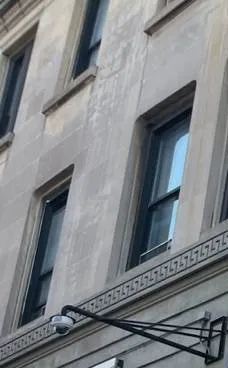
Brick and brownstone rows from the 1880s and 1890s, some with bowed or barrel-vaulted fronts, many split into two or three apartments. Cameras sit over the door or under the cornice, with coax or network cable dropping to a cellar recorder.
A few nineteenth-century frame houses, narrow and shingled or sided, scattered among the masonry. Cameras are screwed into wood, cable goes through the siding, and water follows any hole that was not sealed.
Three- to nineteen-apartment buildings from the early twentieth century, including small co-ops. Hallway, entrance and cellar cameras on one recorder in a locked room, owned by a landlord or a board.
Kingsborough Houses and its senior Extension under NYCHA, and Weeksville Gardens under private PACT management. Building cameras belong to the agency or the manager; residents' own cameras are the part we can repair.
Buildings finished since 2010 on long-vacant lots near Atlantic Avenue, Prospect Place and Ralph Avenue, with network cameras, a video intercom, an elevator and a managing agent.
Congregations on Bergen Street and the avenues, and mixed buildings on Utica and Ralph Avenues with a store below and apartments above, often running two separate camera systems at one doorway.
The typical Weeksville row-house system was bought as a kit or put in by a local installer: four to eight coax cameras, a DVR on a cellar shelf or in a closet, and a plug-in power box with a bundle of thin cables coming out of it. It works for years without anyone touching it, and that is the problem. The drive inside has been writing video every minute of every day, the clock has drifted or reset after a power cut, and the phone app that used to show the cameras was replaced by a new version that no longer talks to the old recorder. When the owner finally needs a clip, the recorder turns out to have stopped saving months ago.
The repair usually begins at the recorder, not at the camera. We read the drive's health and its oldest and newest recordings, check the date and time, and look at the recording schedule. If the drive is failing, it is replaced and the recorder is set to overwrite properly and to send an alert if it stops recording. If the recorder itself is too old for current apps, we explain the choice between a hybrid recorder that keeps the existing coax cameras and adds room for network cameras later, and a straight replacement of the same type. On a house with two or three apartments, we also look at where the system draws its power, because a camera box plugged into a tenant's outlet goes dark the day that tenant's breaker trips or their account closes.
Facade work is the other common cause on these houses. Pointing, cornice repair, new windows and new doors all happen around cameras, and the cable is often cut or pinched in the process. Where the old cable path still works, we reuse it and replace only the damaged section and the connectors; where it does not, we price a new run along the same path and show you the difference before we start.
The frame houses that survive in Weeksville are small. Brownstoner described the shingled house at 1718 Dean Street as about seventeen feet wide and roughly 1,020 square feet over two floors, with the kitchen in a rear extension. On a house like that, every camera is close to a window or a door, and every cable goes through wood or siding. The usual failure is water. If the hole beside a camera was not sealed, or the cable was not given a drip loop below the entry, rain runs along it into the wall and into the connector, and the camera dies months later with green corrosion inside the junction box.
We repair these by checking the wall around the hole as well as the camera, sealing what we open, and replacing corroded connectors with weatherproof ones rather than wrapping old ones in tape. Mounts are fixed into solid framing, not just into siding that moves with the seasons. Where siding is old cement shingle, we work with the existing holes and mounting points rather than drilling new ones, and we tell you before the visit if a repair would need the siding disturbed.
MapPLUTO counts 862 lots inside our outline with three to nineteen apartments, holding 4,868 homes. A walk-up like the four-story, seventeen-unit co-op that StreetEasy lists at 578 Ralph Avenue, built in 1922, typically has a camera at the street door, one in the vestibule or by the mailboxes, one or two on the stairs, and one in the cellar or the back yard, all on a recorder in a locked room. Tenants notice when a camera goes dark; the owner, the board or the super is the one who can let a technician in and approve the bill.
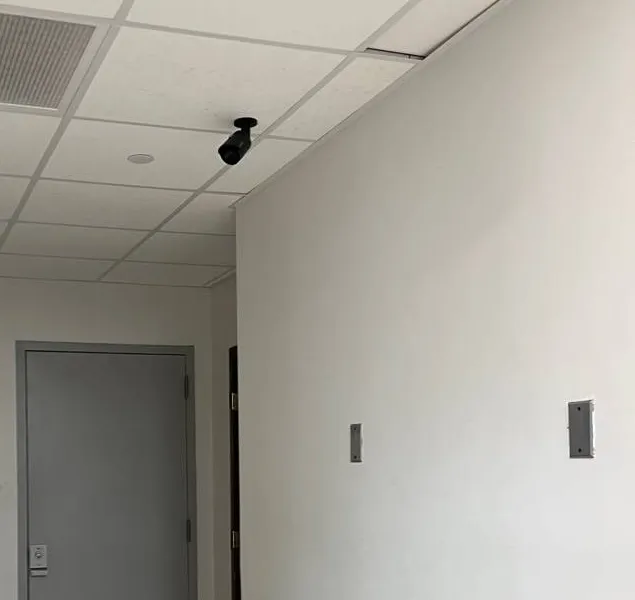
Two things decide most walk-up repairs. The first is the stair run: cameras on upper landings are fed by cable that climbs the stairwell in molding, conduit or the old dumbwaiter shaft, and a fault anywhere on that climb can take out every camera above it. The second is the recorder room: heat from a boiler room next door, a dusty cellar shelf or a closet with no ventilation shortens a recorder's life. We test the run floor by floor, fix the break where it is, and move or ventilate the recorder if heat is the cause. If the building also has an intercom with a camera at the door, we check that the two systems are not fighting over the same power supply.
Kingsborough Houses is a NYCHA development, and NYCHA told the City Council in 2025 that it repairs most of its cameras in-house. Weeksville Gardens has been run by a private manager under PACT since 2020, so its building cameras are the manager's. In both cases, the lobby, elevator, hallway and grounds cameras are not ours to touch, and a private company should not be working on them without the agency's or manager's written direction. What we can repair is the equipment residents own themselves: a doorbell camera or an indoor camera inside an apartment, a small camera facing the apartment door from inside, or the phone app and account behind them.
For residents, the practical help is telling the two apart and pointing the building's problems to the right office. If the building camera by your mailboxes has been dead for weeks, the report goes to the development's management office or, for NYCHA, through its own repair system. If your own camera inside the apartment stopped connecting, it is usually the apartment's Wi-Fi, a changed router password or an app account in someone else's name, and that is a repair we can do in one short visit. NYCHA's resident rules call for written consent before residents mount equipment on building surfaces, so we keep resident cameras on shelves, inside door frames or on removable mounts unless the resident has that consent.
The buildings that have gone up since 2010 tend to have the best equipment on the block and the least documentation. A typical system has network cameras on every floor and at each entrance, PoE switches in a telecom closet, a network video recorder and a video intercom whose screens or phone app show the lobby camera. When the building opened, the installer held the logins and the warranty. A few years later the warranty period has ended, the installer's number rings out, and the managing agent has a dead camera on the fourth floor and no password.
Most of these repairs are not exotic. A PoE switch port fails, a camera's firmware no longer matches the recorder after an update, a drive that has recorded thirty cameras around the clock for four years starts throwing errors, or a camera above a dropped ceiling was knocked loose during a plumbing repair. We work with the managing agent or the board, recover or reset the administrator account with proof of ownership, document which port feeds which camera, and leave the building with its own administrator login rather than a contractor's. If the system is still inside an installer's warranty, we tell you so before we touch anything, because opening it could complicate that claim.
The city's Ocean HillβWeeksville commercial study counted 79 houses of worship, 65 salons and barbershops and 52 delis and bodegas among 560 storefronts on its corridors, and 83% of the merchants it surveyed rent their space. That mix produces a familiar repair call: a store with its own cameras on its own recorder, apartments above with the landlord's cameras on another, and a church or community room sharing a wall with both. When the camera over the shared doorway goes dark, the first question is whose it is.
Congregations bring their own patterns. Berean Missionary Baptist Church on Bergen Street, founded in 1850, uses its 1894 building as a fellowship hall beside the newer church it built in 1961, with a parsonage behind; many congregations here run more than one building and more than one recorder, often set up by volunteers. On church and store repairs we confirm who owns the system and who pays, put the recorder and logins in the organization's name rather than a former volunteer's or a previous tenant's, and schedule around services or business hours.
This is how our technicians handle the most common Weeksville call, written as our working method rather than a story about any one house. Someone says "the cameras stopped working." Before we book, we ask for two pictures: the label on the back or bottom of the recorder, and a screenshot of whatever the screen or the phone app shows right now. The label tells us the brand, the model and the age of the system, and that tells us which generation of system it is. A coax DVR from the early 2010s, a network recorder from a building that opened in 2023, and a Wi-Fi camera with no recorder at all fail in completely different ways and need different parts in the van.
The screenshot tells us the rest. If every camera is dark at once, the fault is usually power, the recorder or the switch, not the cameras. If one camera is dark and the others are fine, it is usually that camera's connector, cable or power. If the live view is fine but the playback is empty, it is the drive, the schedule or the clock. If the app shows nothing but the recorder's own screen in the cellar is fine, it is the network or the login, and that may not need a visit at all. Sorting this out costs nothing, and it means the technician arrives with the right drive, supply or camera, or tells you before the visit that no part is needed.
A recorder's hard drive works harder than any other part of a camera system. It writes video from every camera, all day and all night, and on most systems it starts overwriting the oldest video the moment it is full. Repair guides commonly put the replacement point for a recorder drive at three to five years, depending on how much it records, and forum veterans report DVRs as a whole lasting five to seven years, often with only the drive dying.
In Weeksville this shows up two ways. Row-house systems installed a decade ago are often on their original drive, with no alert set to say it has stopped writing. And the first wave of newer buildings is reaching three to five years of service with dozens of cameras recording to one recorder. The symptoms are the same in both: playback with gaps, a recorder that beeps or restarts, a "disk error" or "HDD abnormal" message, or a system that seems fine until someone asks for last Tuesday. The fix is a surveillance-rated drive of the right size, a check that the recorder overwrites properly, and an alert that tells someone the next time it stops.
The Department of Investigation's 2025 report on NYCHA senior-building cameras is a useful warning for every building owner: at 44 of 63 buildings, the cameras could not be viewed remotely, mostly because software and hardware were outdated or incompatible, causing login, connection and storage problems. Private systems strand themselves the same way. A phone app is replaced by a new version that will not connect to an older recorder. An internet provider swaps the router, and the recorder's network settings no longer fit. The admin password belongs to an installer who has closed shop, a relative who moved south, or a super who left the job.
Recovering access is one of the most common things we do in Weeksville, and one of the cheapest when it goes smoothly. With proof that you own or manage the property, most recorders can be reset or recovered through the manufacturer's process without losing recorded video, though some models erase settings or footage in a reset, and we tell you which kind yours is before we start. Afterward, the owner gets the administrator login, each family member, tenant leader or staff member who should see the cameras gets an ordinary account, and anyone who should no longer have access is removed.
Crown Heights and Central Brooklyn lost power several times in 2025, from the May manhole fire on Albany Avenue to the June heat-wave shutoffs and voltage reductions, and News 12 reported that winter snowmelt mixed with road salt can seep into underground electrical equipment. Camera systems take power events badly. A recorder that loses power while writing can corrupt its drive. A PoE switch hit by a surge on the way back can lose individual ports. Plug-in camera supplies are often the cheapest part in the system and the first to die. A recorder that starts up before the switch or the router can come back unable to find half its cameras.
The repair is a methodical walk through each piece: confirm the recorder's clock and drive state, test each switch port and supply under load, and only then look at cameras. Where outages are a pattern, we price a small battery backup sized for the recorder and the switch, and a surge-protected power strip for the supplies, so the system rides through a short cut and shuts down cleanly in a long one. We do not promise a battery will run a whole system through a long outage, because most small backups will not.
On masonry fronts and frame walls alike, water gets into camera systems at three places: the camera housing if its seal has aged, the connector where the camera's pigtail meets the cable, and the hole where the cable enters the wall. A fogged lens, a picture that rolls or flickers in wet weather, or a camera that drops out every rainstorm and comes back a day later all point here. Taping a corroded connector buys a few weeks. We cut back to clean cable, fit weatherproof connectors, house the joint in a sealed box where possible, and seal the wall entry with a drip loop below it.
Weeksville's businesses sit on a handful of avenues around the residential blocks, and most of them rent. The Department of Small Business Services' Ocean HillβWeeksville study, based on fieldwork from September 2023 to June 2024, counted 560 storefronts on its corridors, found 11.3% of them vacant, and reported that 83% of merchants rent their space. Safety was raised by 42% of the merchants and 48% of the shoppers it surveyed. For a store owner, that combination decides most repairs: the camera that matters is the one over the counter or the door, the recorder is often in a basement the landlord controls, and the system may have been left behind by the last tenant.
The neighborhood's main shopping street, with groceries, delis, salons, takeout counters and pharmacies under apartments, and the 77th Precinct station house at 127 Utica Avenue near its northern end. Counter cameras, door cameras behind storefront glass and basement recorders are the usual calls.
The eastern edge of Weeksville and one of the study's main corridors, where storefront churches, barbershops and bodegas share blocks with walk-ups. Two systems at one doorway, the store's and the landlord's, are common here.
The avenue runs under the elevated railroad east of Brooklyn Avenue, lined with tire shops, repair shops and garages in one- and two-story buildings. Cameras face roll-down gates and open bays, and the newer apartment buildings near Ralph Avenue add lobby systems to the mix.
The study corridor along Weeksville's northern edge, where manhole fires cut power to rows of businesses in June 2026. Outage recovery, dead power supplies and recorders that came back with the wrong clock are what we see from this stretch.
Small warehouses, congregations and community spaces between the avenues. CBS New York reported four men carrying TVs out of a warehouse on Bergen Street in Crown Heights at 4:50 a.m., a reminder that a loading-door camera has to work at the darkest hour.

The study counted 52 delis and bodegas on its corridors. In most of them the system is small: four to eight cameras, a recorder under the counter or in the basement, and a screen by the register. The repair calls follow a pattern. The counter camera drifts out of position after stock is stacked against it. A drive fills and the recorder quietly stops keeping more than a day or two. A worker unplugs the recorder to free an outlet. The phone app stops connecting after the internet company swaps the router. Each of these is a short fix once it is found, and we finish every store repair by exporting a test clip from the counter camera so the owner knows the footage can actually leave the building if it is needed.
New York's Department of State requires a license for anyone who installs or services security systems for other people; property owners may work on their own. We work under NYS license #12000287431. Low-voltage camera wiring does not need a city electrical permit: Section 28-105.4.7 of the NYC Administrative Code exempts signaling, communication, alarm and data wiring under 50 volts when it is done by a licensed or qualified person. Employers who record staff on camera should know that New York Labor Law Section 203-c requires written notice to employees about electronic monitoring. In buildings with smart-entry systems, the city's Tenant Data Privacy Law (Local Law 63 of 2021) limits how entry data about residents can be used. On landmarks, the rule is narrow here: the Hunterfly Road houses on Bergen Street are the one designated landmark in historic Weeksville, the Crown Heights North III historic district stops at Albany Avenue, west of Troy, and the Landmarks Preservation Commission's guidebook treats ordinary repair of safety equipment on a designated building as work that needs no permit. Most Weeksville blocks sit outside any district, but we check each address before a camera is moved. We are not your lawyer; we tell you where a rule touches the work so you can ask yours.
Ask the neighbor for the date, the rough time and the direction the car came from, then use the recorder's playback search by time on the camera that faces the street, starting fifteen minutes before. Export just that window to a USB stick in the recorder's own format and also as an ordinary video file if the recorder offers one, so it plays on any laptop. You decide what to share: a private neighbor has no right to your recorder, and sending the clip, not your login, keeps the rest of your footage yours. If the case goes to the police, keep the original export, because a detective may want it. A neighbor on r/crownheights who went looking for footage of a hit-and-run wrote that they had tried businesses and buildings in the area but "have not had much luck". Recorders overwrite their oldest video once the drive is full, so if you might have it, look within days.
Neighbors in Crown Heights have asked the same thing online about whether a new pole camera is a Flock plate reader or ordinary CCTV. From a photo we can often say what kind of camera it is, but not who owns it or what it records. A camera on a city pole or on someone else's building belongs to whoever put it there, and we do not service, access or request footage from equipment that is not yours. If you think it caught something you need, the owner is the one to ask, and for a crime the precinct is. What we can do is make sure your own camera covers the curb in front of your house, so you are not depending on someone else's.
Probably not the camera itself. Heat that warps a plastic housing usually softens the seal and the dome as well, so the haze is likely on the inside, and the next rain will fog it further. The bracket, the cable and the connector behind it may be fine and are tested before anything is replaced. A replacement camera in a metal housing, mounted a little higher or to the side of the cans, survives the next incident better. A post in r/crownheights about a man who set fire to a building's trash can ended with the residents saying they "got him on cam", which is the outcome to aim for: before we leave, we make sure the trash area is lit or the camera is set for low light, and that the recorder keeps that camera at full quality overnight.

Very likely. Desktop drives are built to spin up, work for a few hours and rest. A recorder writes video from every camera at once, around the clock, and drives sold for surveillance are designed for that load. An old desktop drive may also already be worn, and a used drive can carry errors the recorder only finds once it fills. The gaps you see are typical of a drive that cannot keep up or is failing. We check the drive's health, replace it with a surveillance-rated drive sized for the number of days you want to keep, set the recorder to overwrite correctly, and switch on a drive-error alert so the next problem shows up on a phone instead of in an empty playback.
It depends on what is failing. NYCHA told the City Council in 2019 that it expects its cameras to last about ten years, and repair guides put a recorder's drive at three to five years, so a ten-year-old system has usually already had its drive changed once or is due. If the cameras still give a usable picture and the recorder still supports a working phone app, repairing as parts fail is normally cheaper. If the recorder can no longer be viewed remotely, has no updates, or cannot record at the quality you need, the recorder is the part to replace, often with a hybrid model that keeps the existing coax cameras. On the visit we test each camera, and you get a written price for both paths so you can decide.
It is earlier than average but not unusual for a building that records many cameras around the clock. Honor Security's guide says recorder drives are "typically the first component to require replacement, often between three and five years depending on recording volume", and thirty cameras writing nonstop is a heavy volume. Before replacing anything we read the drive's health report and check whether the warning is real failure or a full drive set not to overwrite, which some recorders also flag. If the building's installer warranty still applies, we tell the managing agent first. If the drive is failing, it is replaced with a surveillance-rated drive, and we check the closet's ventilation while we are there.
Often it is. When every camera on one building drops at once while the others keep working, the fault is usually shared by that group: the cable that crosses between the buildings, a switch or power supply in the second building, or the connection where the run enters. Cable strung between buildings or run along an outside wall takes the weather, and a nearby lightning strike can damage the equipment at both ends of it. We test the run from each end, check the switch and supply in the sanctuary, and if the cable is the problem we price a replacement in a protected path with surge protection at both ends. Congregations like Berean Missionary Baptist on Bergen Street, which kept its 1894 church as a fellowship hall beside the church it built in 1961, are exactly the kind of campus where this happens.
Who owns the cameras depends on your lease and on who paid for them, and that is a question for the lease, not for us. Whatever the answer, the footage on the drive shows your clients and staff, and it should not be handed to the next tenant. Before you leave, export anything you need to keep, then either take the drive if the equipment is yours, or have the drive wiped and the recorder reset if it stays. We can do the reset, remove your app accounts and phone access, and give the landlord a working system with a fresh administrator login, so nobody's video moves with the keys.

It is a small repair, and you need either the new network name and password or your own internet service. A Wi-Fi camera only knows the network it was set up on, so when the landlord renamed it or changed the password, the camera lost its way in. We reconnect it to the network you are allowed to use and check that the signal through the floor is strong enough not to drop again. If the landlord's network is not reliable for you, a camera on your own service is the lasting fix.
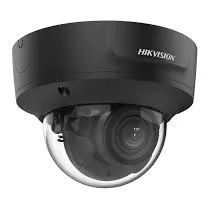
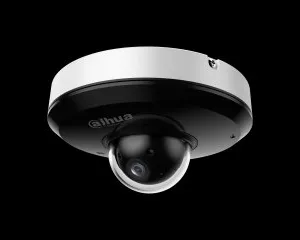
We repair equipment from any maker, put in by anyone. These are the kinds we meet most often in Weeksville houses, walk-ups, new buildings, churches and shops, with the fault each one tends to develop.
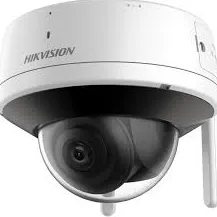
The cameras of most older row-house and storefront systems, on coax to a DVR. Connectors at the facade and the shared power box in the cellar fail long before the cameras do, and many can move to higher resolution on the same cable.
Standard in the buildings finished since 2010 and in upgraded houses, powered over one cable from a PoE switch. Faults are switch ports, firmware that no longer matches the recorder, address changes and cable disturbed above ceilings.
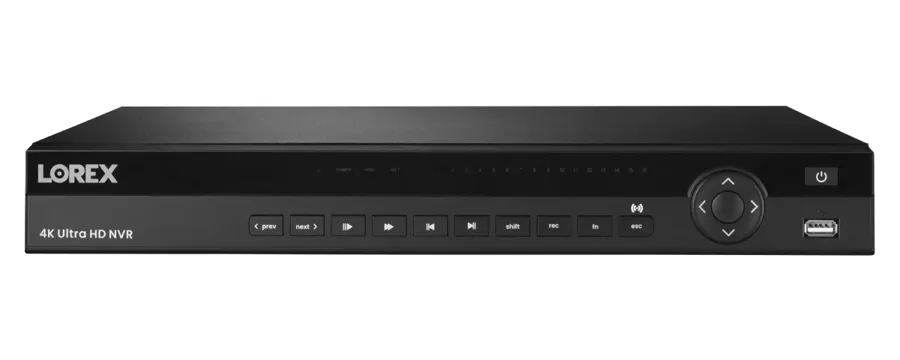
Where the video lives. Drives wear out, clocks reset after outages, and older boxes lose their phone apps. A hybrid recorder lets a house keep working coax cameras and add network ones later.
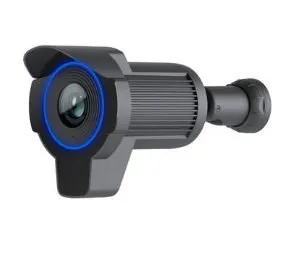
Cameras whose zoom is set after mounting, used to make a face fill more of the frame at a long walk-up hall, a stoop seen from across a front yard or a store aisle.
Motorized and fisheye cameras on church grounds, lots and large store floors. Motors, saved positions and fogged domes are the usual repairs.
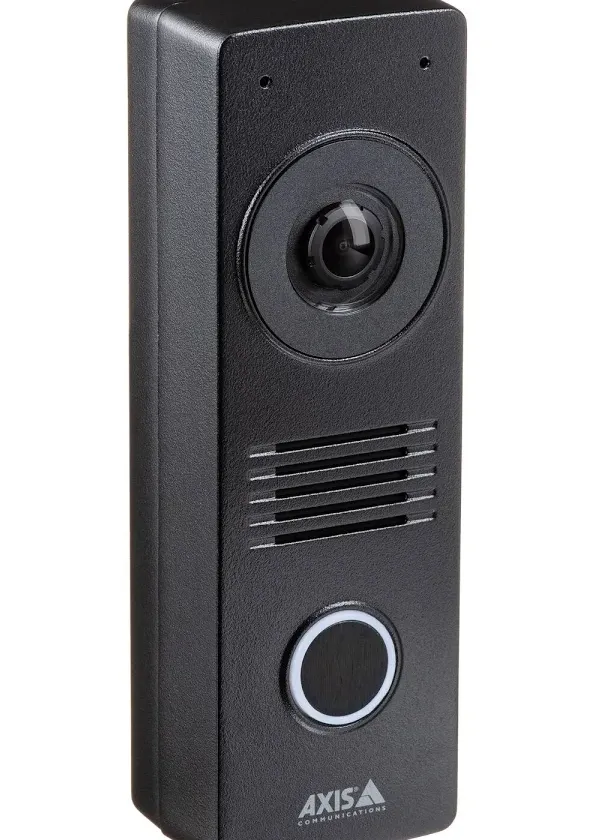
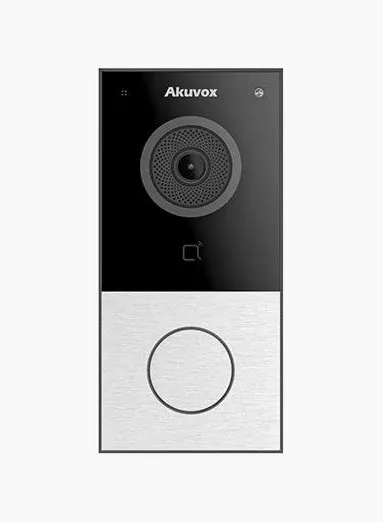
Intercom stations with a built-in camera at lobby and row-house doors. Some feed the recorder and some do not, so we confirm which before promising anyone footage from one.
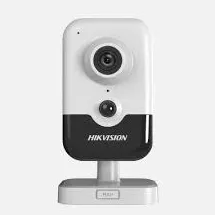
Consumer cameras inside apartments, on shelves facing doors and in back yards. Weak signal through brick, batteries in the cold and accounts in a relative's name are what goes wrong.
The parts that power everything else and the first to fail after an outage or a surge. Tested on every call where several cameras died together.
Common in older Brooklyn installs. The FCC's November 2022 order stops new authorizations of covered equipment but does not affect products already authorized and sold, so existing systems can still be repaired.


Owners with Ring, SimpliSafe, ADT or other consumer and monitored cameras often ask whether to call the brand or us. A sealed consumer camera that has died outright is a warranty or replacement matter; there is nothing inside to repair. A camera under a monitoring company's contract should go to that company first, because the contract may cover it. What a brand's phone support cannot do is stand in a Weeksville cellar and find that the camera power box is plugged into a tenant's outlet, that Wi-Fi does not get through two brick walls to the back yard, or that the recorder has not saved anything since the last outage. That is where a local, licensed visit earns its fee.
| What you have | Who usually fixes it best |
|---|---|
| A sealed Ring or similar camera that has died and is still under warranty | The brand, under its warranty |
| A consumer camera that works but drops off Wi-Fi, drains its battery or sees the wrong thing | A local visit to fix placement, signal or power |
| Cameras under an ADT or other monitoring contract | The monitoring company first, under the contract |
| Wired cameras with a DVR or NVR, any brand, any installer | A licensed local repair company |
| Building cameras in NYCHA or PACT housing | The agency or the building's manager |


Search summaries, chat assistants and home-service sites such as Angi, HomeAdvisor and Fixr repeat a set of general claims about camera repair. Some are fine as general advice. Here are seven we hear from Weeksville callers who read them first, and what our repairs on these blocks actually show.
Cameras can. NYCHA told the City Council in 2019 that it expects its cameras to last about ten years. But a camera system is not one part, and the part that fails first is the recorder's drive, which repair guides put at three to five years of nonstop recording.
That gap matters in Weeksville because so many row-house systems were put in once and never looked at again. The cameras still show a picture, so the owner assumes the system is fine, while the drive behind them stopped saving long ago.
Plan on the cameras lasting and the drive not. Check playback once a month, turn on the recorder's drive alert, and budget for a drive well before the cameras need replacing.
Sometimes. But one repair company's answer to this question puts it plainly: "Running out of storage is the most common reason" cameras stop recording. A full drive that is not set to overwrite looks dead from the outside, and so does a recording schedule that was switched off or a clock that reset after an outage.
Replacing a drive in those cases costs money and leaves the real fault in place. The new drive fills up, and the recorder stops again.
We read the drive's health first, then the overwrite setting, the schedule and the clock. Only a drive that fails its health check gets replaced.
A restart is the instinct, and sometimes it works. But one recovery guide lists what usually goes wrong after an outage: the router, switch and recorder "started in the wrong order", the drive "reports an abnormal state", or the time "was lost". It also warns that "repeated power cycling can worsen storage and power faults."
In Central Brooklyn, where Con Edison shut off almost 900 customers during the June 2025 heat wave and a manhole fire cut power on Albany Avenue that May, owners who pulled the plug three or four times trying to fix a system sometimes turned a recoverable drive into a dead one.
If cameras do not come back, restart once, in order: internet equipment, then the switch, then the recorder. If that does not work, stop and call, especially if you need footage from before the outage.
Reolink's own list of causes for video loss starts with insufficient power and a faulty PoE switch or injector, then long cable runs, loose connectors, infrared or filter faults, a recorder that cannot decode the camera's resolution, and address conflicts. The camera itself is only one item.
On Weeksville row houses, the most common cause is a corroded connector at the facade or a tired multi-camera power box in the cellar. In the newer buildings, it is usually a switch port.
We test in order from power to camera, and we replace the camera last, only once everything in front of it has passed.
The FCC's November 2022 rules stop new equipment authorizations for covered Hikvision and Dahua products. According to the Security Industry Association's summary, they do not affect products already authorized and on the U.S. market.
Many Brooklyn systems run on recorders from these makers or on equipment built from them. Those recorders and cameras can still be repaired, and drives, supplies and cables are not brand-specific.
What changes is what you can buy new to match, so when a matching camera is hard to find, we fit a compatible one that works with the recorder you already have.
Not in general. Brick Underground's answer to a tenant asking how to see footage of a package theft explains that landlords are not obliged to show tenants footage outside a legal process, although attorney Catherine Grad told the outlet: "I don't think that it's such an arduous duty to impose on the landlord."
In Weeksville, where most apartments are in buildings someone else runs, this is a frequent source of frustration. A dead camera is the bigger problem, though: no footage exists to argue about.
What tenants can do is report the dead camera in writing to the owner or manager, and ask that the clip be saved for the police if a crime is reported. What owners can do is keep the cameras working so the question can be answered.
That was true for Ring's Request for Assistance tool, but Ring ended it in January 2024, as News 12 reported. Police can still obtain video with a warrant, and owners can still choose to share it.
So if your doorbell or camera is the only one that saw something on your block, the clip reaches the 77th Precinct or a neighboring precinct because you export and hand it over, not because an app request arrives.
That makes the recorder's settings matter more: enough days kept, the right clock and a camera that actually records the street. Those are the things we check on a repair visit.
A picture of the recorder's label and a screenshot of what the screen or app shows right now tell us most of what is wrong. Many Weeksville calls turn out to be a full drive, a reset clock or a changed router password, and we would rather say so before you spend anything.
Rather show than tell? Send the photos to a technician on WhatsApp.
Give us the address and the kind of building, the number of cameras and which ones are out, where the recorder sits, and who owns the system. If you are a tenant, a board member or a church officer, say so, and tell us who can approve the repair and open the recorder room. If you need footage from a particular day, put the date and time in the message and we will plan the visit around copying it first. For anything urgent, call (347) 934-8335.

Text or WhatsApp the model sticker on the recorder and a screenshot of what you see now, with the Weeksville address and the kind of building. That tells us which generation of system it is and which parts to bring.
Owner, tenant, co-op or condo board, store, congregation or manager. We confirm who approves and pays for the repair, who holds the login, and who can open the cellar, closet or telecom room.
The $150 Brooklyn service call books a two-hour arrival window and is credited to the repair if you go ahead. Requests are booked within 2 hours.
If a date matters, that clip is exported in the recorder's own format before anything is unplugged, restarted or replaced. A drive that looks like it is failing is copied first and tested second.
Outlet and backup, power supply or PoE switch, recorder and drive, connector, cable and camera, then the network and the phone app, in that order, so only the failed part is priced.
You hear what failed and why in plain words, and get a written price from our Brooklyn list before any part is replaced. Separate faults get separate lines.
The repair is made, holes in masonry, siding or ceilings are sealed, each camera is checked in daylight and low light, and a saved recording is played back, not just the live view.
Old users are removed, the right people get their own logins, offline and drive alerts go to their phones, the clock syncs itself, and cables and channels are labeled for next time.
The four nineteenth-century frame houses at 1698β1708 Bergen Street, a city landmark since 1970, restored again in a $4 million project finished in February 2026.
The museum and cultural center at 158 Buffalo Avenue, on Bergen Street at Dr. Joan Maynard Way, whose newer building opened beside the historic houses in 2014.
NYCHA's 1941 development of 16 six-story buildings and 1,148 apartments between Ralph and Rochester Avenues and Pacific and Bergen Streets, with a senior Extension from 1966.
The congregation at 1635 Bergen Street, founded in 1850, with its 1894 church kept as a fellowship hall beside the church it built in 1961.
The small city playground of 0.29 acres, opened in 1935, whose sign tells the story of James Weeks and the village.
The public school at 1580 Dean Street that carries the village's name and the history of its Colored School No. 2.
We also serve the neighborhoods around Weeksville at the same Brooklyn rate, including Crown Heights, Bedford-Stuyvesant, Ocean Hill and Brownsville. Our Bedford-Stuyvesant camera repair page covers the blocks north of Atlantic Avenue, our Crown Heights repair page covers the blocks west of Troy Avenue, and owners anywhere in the borough can start from Abstract Enterprises' Brooklyn security camera repair page.
Weeksville is billed at our standard Brooklyn rate. Every repair starts with the $150 service call, which covers the on-site diagnosis and is credited to the repair if you go ahead. The figures below come from our published list of Brooklyn security camera repair prices. Your own price is written down on the visit once the fault is found, and nothing is replaced until you agree to it.
| Repair | Brooklyn price |
|---|---|
| Service call: on-site diagnosis and written repair price | $150, credited to the repair |
| Motion, alert and recording settings with no parts | Usually within the $150 service call |
| Connector reterminate or PoE port swap | $150β$350 |
| Power supply repair | $150β$400 |
| Hard drive swap | $200β$450 |
| Indoor camera repair | $200β$450 |
| Single camera replacement on a working system | $250β$600 |
| Night picture repair | $250β$650 |
| DVR not working, including drive and labor | $300β$700 |
| NVR not recording | $400β$900 |
| Vandalized camera, per camera, plus cable repair | $400β$900 |
| Hybrid recorder swap, coax and IP | $700β$1,200 |
| DVR or NVR replacement with drive and setup | $700β$1,500 |
| Lightning or surge damage, depending on system size | $700β$3,500 |
| Annual maintenance visit | $250β$800 |
Three things move a Weeksville price inside those ranges. The first is how many parts failed together: after an outage, a drive, a switch port and a supply can all go at once, and each is priced on its own line. The second is the cable path: a stoop camera on a two-story frame house is a short ladder job, while a run that climbs a four-story walk-up stairwell or crosses between two church buildings takes longer to test and replace. The third is access and paperwork: a recorder in a locked cellar, a telecom room that only the managing agent can open, or a system whose ownership has to be confirmed before a password reset. Whatever the case, you see the number before work starts.
Full terms β including 50% deposit, one-year parts-only warranty on AESS-supplied products, and the late-fee schedule β are set out in the service agreement.Most Weeksville repairs fall into one of three shapes, priced from our Brooklyn list.
One fault on one visit: a worn drive replaced and set to overwrite, a corroded facade connector rebuilt, a power box or PoE port replaced after an outage, a camera replaced, or a stranded login recovered. Typical for a row house, a frame house, a renter's own cameras or a small store.
The recorder or several runs: a DVR or NVR replaced, coax cameras moved onto a hybrid recorder, or a walk-up stairwell run rewired. Typical for a walk-up, a store with apartments above, a church with two buildings or a newer building's common areas.
Every camera checked in daylight and low light, lenses and domes cleaned, connectors and supplies tested, drive health read, alerts confirmed and a test clip exported. Homes start at $250, commercial properties at $400, and owners or managers with several buildings run $500 to $800.
Bring your own equipment. If you have already bought a replacement camera, drive or recorder, we can fit it at labor-only rates. Send us the exact model number and we quote the labor by phone or text; the visit is booked once it is paid. Equipment you supply is installed as supplied: we cannot vouch for parts we did not provide, and if a model will not work with your recorder or app, we tell you before the visit rather than after.
Dark cameras, hazy domes, washed-out night pictures and connectors that drink rain at the facade. Request a Weeksville repair
DVRs, NVRs, switches, supplies and backups in cellars, closets, telecom rooms and under counters. Security camera repair in Brooklyn
Every repair price behind the numbers on this page. Brooklyn camera repair prices
Managing agents and congregations with properties beyond Brooklyn. NYC security camera repair
The blocks toward Broadway and the el. Ocean Hill camera repair
The blocks around Pitkin Avenue. Brownsville camera repair
Weeksville has no official boundary. We use the blocks from Atlantic Avenue to Eastern Parkway between Troy and Ralph Avenues, plus the edges of Fulton Street and East New York Avenue that older descriptions of the village include. The price does not change at any of those lines. Weeksville, Bedford-Stuyvesant, Crown Heights, Ocean Hill and Brownsville are all billed at the same Brooklyn rate, starting with the same $150 service call.
Usually, yes. A recorder beside a boiler or on a damp cellar shelf wears out faster, and one upstairs is easier to check. Moving it means extending or rerouting the camera cables to the new spot, or moving only the recorder and leaving the power and switch where the cables already meet. We price the move as its own line, so you can see whether it is worth doing now or on a later visit.
Yes, at labor-only rates. Send us the drive's exact model and capacity first, because a desktop or laptop drive, or one larger than the recorder supports, can cause the same gaps you are trying to fix. If the drive suits the recorder, we fit it, set the recorder to overwrite properly and turn on the drive alert. A drive you supply carries its maker's warranty, not ours.
Often, yes. Many recorders let you lock a recording or a time range so it is skipped when the drive overwrites, usually from the playback screen. If yours has that option, lock the clip now, then export it. If you cannot find it, call us right away and leave the recorder running; unplugging it does not stop the clock on overwriting once it restarts, and a restart can make things worse on a failing drive.
Yes. A footage export visit is booked as the $150 Brooklyn service call. The technician finds the time range, exports it in the recorder's own format with its timestamps and, where the recorder allows, as an ordinary video file too, and shows you how to do it yourself next time. If something on the system turns out to be failing, you get a written price, but nothing is repaired unless you ask.
Yes. Many cameras use a ball mount that can be shoved out of position with a hand or a broom. Replacing it with a dome whose angle is locked inside a housing that needs a tool to open, mounting it higher, and turning on the recorder's tamper or scene-change alert so someone hears about it the moment it is moved usually ends the problem. The alert also tells you when it happened, which helps if you need to find who did it.
Whoever has legal authority over the house while the estate is settled, usually the executor or administrator, or a family member they authorize in writing. We ask who that is when you book, because resetting a recorder's password requires showing that you have the right to control the system. If several relatives share the house, we set the system up so the person with authority holds the main login and the others get their own ordinary accounts.
Only what has to change, and we tell you in advance. Replacing a drive or a camera normally leaves the app, the logins and the lobby screen as they were. Replacing the recorder, resetting a lost password or removing old accounts means some people have to sign in again, so we list who will be affected and give the owner or manager the new logins to hand out before we leave.
Not the price, but it changes the first half hour. Systems put up by a relative or a handyman rarely have labels, drawings or a record of passwords, and cables are sometimes joined with tape or run through outlets. We trace each cable to its camera, replace unsafe joints, label everything, and leave you a simple list of which camera is on which channel, so the next repair starts from a known system.
Yes. Each fault is priced on its own line, and you decide which to fix now. If a replacement camera is needed, we pick one that works with your current recorder, so it can stay when you replace the rest. We will tell you honestly if the recorder itself is the weak link, because putting new cameras on a recorder that is about to fail is money that will have to be spent twice.
Security Camera Repair Brooklyn | Same-Day | Brownstone Pros Β· Security Camera Repair NYC | Same-Day | Abstract Enterprises Β· Security Camera Repair Manhattan | Same-Day | Co-op COI Β· Security Camera Repair Queens | Same-Day | Driveway Pros Β· Security Camera Repair Bronx | Same-Day | Home Base Β· Security Camera Repair Staten Island | Same-Day | Sandy Zone Β· Security Camera Repair Long Island | Nassau & Suffolk Β· Security Camera Repair Hudson Valley | Westchester to Ulster Β· Security Camera Repair Nassau County | Same-Day Β· Security Camera Repair Suffolk County | Hamptons + East End Β· Security Camera Repair Westchester County | Same-Day Β· Security Camera Repair Rockland County NY | Nyack, Suffern Β· Security Camera Repair Orange County | Newburgh, Goshen Β· Security Camera Repair Putnam County NY | Carmel, Mahopac Β· Security Camera Repair Dutchess County | Poughkeepsie Β· Security Camera Repair Ulster County | Kingston Woodstock
Security Camera Repair Bath Beach Brooklyn NY Β· Security Camera Repair Bay Ridge Brooklyn NY | AESS Β· Security Camera Repair Bedford-Stuyvesant Brooklyn NY Β· Security Camera Repair Bensonhurst Brooklyn NY | AESS Β· Security Camera Repair Bergen Beach Brooklyn NY Β· Security Camera Repair Beverley Square Brooklyn NY Β· Security Camera Repair Boerum Hill Brooklyn NY Β· Security Camera Repair Borough Park Brooklyn NY Β· Security Camera Repair Brighton Beach Brooklyn NY Β· Security Camera Repair Brooklyn Chinatown Brooklyn NY Β· Security Camera Repair Brooklyn Heights, Brooklyn NY Β· Security Camera Repair Brooklyn Navy Yard, Brooklyn NY Β· Security Camera Repair Brownsville Brooklyn NY | AESS Β· Security Camera Repair Bushwick Brooklyn NY | AESS Β· Security Camera Repair Cadman Plaza Brooklyn NY Β· Security Camera Repair Canarsie Brooklyn NY | AESS Β· Security Camera Repair Carroll Gardens Brooklyn NY Β· Security Camera Repair City Line, Brooklyn NY | Any Brand Β· Security Camera Repair Clinton Hill Brooklyn NY | AESS Β· Security Camera Repair Cobble Hill Brooklyn NY | AESS Β· Security Camera Repair Columbia Street Waterfront Brooklyn Β· Security Camera Repair Coney Island Brooklyn NY Β· Security Camera Repair Crown Heights Brooklyn NY | AESS Β· Security Camera Repair Cypress Hills Brooklyn NY | AESS
Structured Cabling Installation Weeksville Brooklyn NY Β· Door Buzzer Installation Weeksville Brooklyn NY Β· TV Installation Weeksville Brooklyn Β· Access Control Installation Weeksville Brooklyn NY Β· Intercom Installation Weeksville Brooklyn NY | AESS Β· Fire Alarm Installation Weeksville Brooklyn NY Β· Security Camera Installation Weeksville Brooklyn NY Β· Door Buzzer Repair Weeksville Brooklyn NY | Intercom Repair Β· Alarm Installation Weeksville Brooklyn NY | Frame Houses
Send a photo of the recorder's label, a screenshot of the screen, the address and the date of any footage you need. We book within 2 hours, give you a two-hour arrival window, copy your footage first and write down the repair price before any part is replaced.
Prefer to send photos? Message a technician on WhatsApp.