Hidden Wiring in Wood Walls · Nothing Drilled Through Old Siding · Smoke and Heat on the Same Panel · A Code for Every Generation
Weeksville began in 1838, when James Weeks, a freed stevedore from Virginia, bought land in what was then the Ninth Ward of Brooklyn, and it grew into a village of Black landowners. What is left of that village is mostly small: four wood-frame houses on the old line of Hunterfly Road, preserved because neighbors refused to let them be cleared, and a scattering of 19th-century frame and brick houses on Dean, Bergen, Pacific and St. Marks that families have kept for generations. One two-story frame house on Dean Street, seventeen feet wide with fish-scale shingles, stayed with the same family from 1897 to 2001. An alarm for a house like that has two jobs. It has to keep people out, and it has to go in without leaving scars on a house somebody intends to hand down. This page explains how we do both, and how the same thinking carries over to the Kingsborough apartments, the new buildings on Atlantic Avenue, and the churches and shops in between.
Reviewed and updated October 22, 2026, against Wikipedia’s articles on Weeksville and on the Kingsborough Houses; Brownstoner’s Weeksville history (2016), its tour of the Hunterfly Road house interiors (2018), its listing of 1718 Dean Street (2018), its Building of the Day on Berean Missionary Baptist Church (2014), its Atlantic Avenue history (2025), its report on the Weeksvillage senior building (2023) and its notice of the July 2026 deed-theft program at Weeksville Heritage Center; the Heritage Center’s tour page; NYC Parks’ Weeksville Playground history; the New York Housing Conference page on Weeksville Place; NYC Housing Connect’s listing for 1921 Atlantic Avenue; the NYU Furman Center profile of Community District 8; the New York State Department of Labor and New York City rules on asbestos; the EPA lead renovation rule; NYC Administrative Code § 24-238; and HPD’s detector rules · Anwar Timothy, NYS license #12000287431 · crews sent from our Troy Avenue office in Brooklyn

Four answers let us price a Weeksville job before anyone visits. What is the house made of: wood frame with shingles or clapboard, wood frame hidden under later siding, brick or brownstone, or a modern building of concrete and block? How many floors are lived in, and is there a cellar or a one-story kitchen addition at the back? How many people will need their own way to arm and disarm, from grandparents who will never open an app to grandchildren who will never touch a keypad? And is any part of the outside covered in old cement shingles that nobody wants disturbed? Text those four answers, with a photo of the front door and one of the back of the house, to (347) 934-8335. You will usually get a same-day reply with a rough list of devices and the line on our Brooklyn price list the job is likely to fall on.
Weeksville is one of the few Brooklyn neighborhoods whose name comes from a person who bought land there to build a community. Wikipedia’s article on it tells the story in a few lines: in 1838, eleven years after slavery finally ended in New York State, James Weeks bought a plot from Henry C. Thompson, a free Black land investor, who had bought it in 1835 from a grocer named Edward Copland, who had bought it from an heir of the Lefferts family. By the 1850s more than 500 people lived there, almost two in five of them born in the South, and nearly a third of the men over 21 owned land. That mattered for more than pride. Under the state constitution of the time a Black man had to own property worth $250 to vote. Weeksville had its own churches, a school (Colored School No. 2, now P.S. 243), an old-age home, an orphanage, a newspaper and a baseball team, and during the Draft Riots of 1863 it took in Black New Yorkers fleeing Manhattan.
The village was absorbed rather than demolished all at once. Brownstoner’s history of Weeksville, by Suzanne Spellen, describes the street grid pushing east in the 1880s, “often running through homes and farm stands,” the cemetery lost to Eastern Parkway, and wood-framed houses replaced by masonry row houses. Her later history of Atlantic Avenue adds that the 1904 Sanborn maps still show “a plethora of attractive wood-framed row houses” along the avenue, “especially the further east one traveled,” under the elevated railroad. Most are gone. The ones that remain are the reason this page exists: an alarm on a small 19th-century frame house is a different job from an alarm in a limestone row house or a new apartment, and Weeksville has all three within a few blocks.
The best-known survivors are the Hunterfly Road houses, found in 1968 when the historian James Hurley and a local pilot, Joseph Haynes, flew over the area looking for traces of the old village. According to the Weeksville Heritage Center, the city was then preparing to clear the blocks for new housing; a grassroots campaign led by Hurley, Dewey Harley, Dolores McCullough, Patricia Johnson and later Joan Maynard saved them instead. The houses became city landmarks in 1970. Brownstoner reports that they were vandalized in the 1980s; Wikipedia records that a $3 million restoration reopened them to the public in 2005. The Heritage Center says the houses have been continuously inhabited; one was home to three generations of the Johnson family in the early 1900s, and another to the Williams family from 1923 to 1968, long enough that a Williams was still living there when the village was rediscovered.
That pattern of long ownership is not only a museum story. When Brownstoner wrote up 1718 Dean Street for sale in 2018, it described a 19th-century two-story wood-frame house “in the Weeksville part of Crown Heights” with fish-scale shingles, a bracketed cornice and a historic double door, seventeen feet wide, about 1,020 square feet over two stories, with the kitchen in an extension at the back. A 1975 deed recorded that a family named Stockett had bought it in 1897; they held it until 2001. The writer also noted the rear siding and hoped it was not asbestos. For an alarm installer, that short listing is a checklist: a narrow front with a double door, plaster walls inside a wood frame, a one-story addition with its own door to the yard, and an outside skin that should not be drilled until somebody knows what it is made of.
The rest of Weeksville’s housing is newer and larger. The New York City Housing Authority’s Kingsborough Houses, finished in 1941 on the blocks between Ralph and Rochester Avenues and Pacific and Bergen Streets, hold 1,148 apartments in sixteen six-story buildings, with a senior extension added in 1966. On formerly vacant city lots, nonprofit builders have added affordable buildings such as Weeksville Place on Prospect Place between Ralph and Buffalo Avenues, and a 13-story senior building called Weeksvillage is planned on Kingsborough land on Bergen Street. On Atlantic Avenue near Ralph, a building listed by the city as 1921 Atlantic Avenue added 199 lottery apartments. Across Community District 8 as a whole, the NYU Furman Center counts 6,149 new units in buildings of four or more apartments between 2010 and 2025, and a homeownership rate of 19.3 percent in 2024, well under the citywide 32.7 percent.
So a Weeksville alarm request can be for almost anything: a frame house held by the same family for decades, a brick row house split into floors, a rented apartment at Kingsborough or in a new building, a church that owns three buildings side by side on Bergen Street, a shop on Utica or Ralph Avenue, a tire or repair business under the Long Island Rail Road viaduct on Atlantic. What links them is a question owners ask us more here than in most neighborhoods: will the installation change the place? The answer we design to is no. Devices go where they can come off later without damage, wires go inside walls only where the walls are hollow and the route is clean, nothing is fixed to an outside surface that might hold asbestos, and the system is set up so that the next person to inherit the house, or the next tenant to take the apartment, can take it over without starting again.
One more thing belongs in this introduction because it was on the neighborhood’s calendar this summer. On July 9, 2026, Weeksville Heritage Center hosted a public evening called “The Power of the Story: Neighbors Share How Brooklyn Fought Deed Theft,” with firsthand accounts from owners who fought to keep their property. An alarm cannot stop someone from forging a deed; that happens in a records office, not at the front door. What it can do is keep an accurate, time-stamped record of who came through the door and when, which is worth having in a house that several relatives hold an interest in. We say more about that below, and we point owners to the city’s free Notice of Recorded Document service, which emails you when a deed or mortgage is recorded against your property.

Plenty of Weeksville calls are not for a new system. A house that has stayed in one family tends to keep its alarm, too, and the alarm outlives the people who set it up. We are called to keypads that beep for a trouble condition nobody can read, to contacts that let go of a wooden door after a humid summer, and to cellar panels that still try to call a central station over a phone line the family cancelled years ago. Call or text (347) 934-8335 with the brand printed on the panel door, what the keypad says, and a photo. Many faults are fixed in one to two hours on site, and some are sorted out over the phone before anyone drives over.
For 19th-century wood-frame houses, with wiring fished inside hollow walls where the route is clean, wireless devices where it is not, and nothing fixed to shingles or old siding. The kitchen addition and the cellar are treated as entrances in their own right.
For the brick and brownstone houses that replaced the frame houses, usually two or three floors over a cellar. Panels hide in the cellar or a closet, keypads go at the doors people really use, and floors lived in by different relatives can arm separately.
A wood-frame house is built of material that burns. We add monitored smoke, heat and carbon monoxide detectors to the burglar alarm, so one panel reports both a broken window and a fire to your phone and, if you choose, to a central station.
For Kingsborough tenants and residents of the new buildings on Atlantic Avenue and Prospect Place: wireless, removable, built around your own front door, and set up so it can leave with you.
For congregations and community groups that own more than one building, run food pantries and evening programs, and hand keys to many volunteers. Each building or room group can arm on its own schedule.
For corner stores and salons on Utica and Ralph Avenues and repair and tire businesses on Atlantic Avenue: roll-down gates, back doors, cellar trapdoors and the office where cash is kept overnight.
Every service on this page can be combined. The most common Weeksville request is a whole-house alarm for a two-floor frame or brick house with smoke, heat and CO on the same panel, a code for each adult in the family and a simple fob for anyone who does not want a code. Many owners also add a camera at the back door later; a panel set up today can take one when you are ready.
Six kinds of building make up most of what we are asked to protect in Weeksville. The material of the walls decides more about the installation than the size of the building does.
One or two stories, often under twenty feet wide, with wood walls, plaster inside, a double front door and an addition at the back. The 1718 Dean Street house Brownstoner described in 2018 is typical. Walls are hollow between studs, so wiring can usually run inside them without opening anything.
Many frame houses were covered with asbestos-cement shingles, aluminum or vinyl in the 20th century. The wall inside is the same, but the outside cannot be drilled casually. We keep every device indoors and ask about the siding before the visit.
The brick and brownstone houses Brownstoner says replaced the village’s frame houses from the 1880s on. Party walls are solid, so wiring follows the cellar ceiling, closets and old gas or bell runs, and upper floors are usually wireless.
Sixteen six-story buildings from 1941 on landscaped grounds, plus the 1966 senior extension. NYCHA’s resident handbook requires written consent from the property management office before tenants add fixtures, so we plan wireless, removable devices around the apartment door.
Weeksville Place on Prospect Place, the 199-apartment building on Atlantic Avenue near Ralph, and the planned Weeksvillage on Bergen Street. The Housing Connect listing for the Atlantic Avenue building names an elevator, a gym and a rooftop terrace. In buildings like these the alarm’s job is the apartment door and anything reachable from the ground floor.
From Berean Missionary Baptist Church’s 1894 sanctuary on Bergen Street to storefront congregations and mixed-use corners on Utica Avenue. Large doors, rooms used at different hours, and often more than one building under one owner.
The same opening is handled differently depending on what surrounds it. A front door in a frame house gets a contact recessed into the hinge-side jamb, drilled from inside the door frame where the wood is thick, with the cable dropped down the stud bay to the cellar. In a brownstone, the same door usually gets a surface contact on the head of the frame, because the jamb is set into solid masonry and the cable has nowhere to go. In a Kingsborough or new-building apartment the door is the landlord’s, so the contact is wireless and fixed with adhesive that comes off cleanly. A cellar window in a frame house is reached from the cellar side and wired straight to the panel; in a row house it is often protected by a glass-break detector covering the whole cellar instead of a contact on each small sash.
Kitchen additions deserve their own sentence, because they are where frame houses are weakest. An extension built on later is often one story, lightly framed, with a door and a window facing the yard. We put a contact on that door, a contact or glass-break on the window, and a motion detector in the kitchen aimed away from the stove and the window, so that an entry from the yard is caught at the first opening rather than when someone reaches the main house.

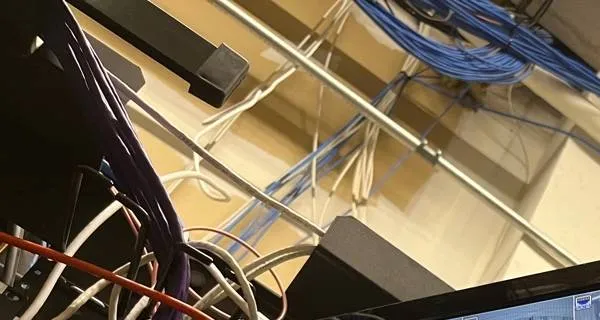
The oldest Weeksville houses are built the way small American houses were built for most of the 19th century: a timber frame of upright studs, covered on the outside with boards and shingles and on the inside with lath and plaster. Between each pair of studs is an empty bay, often running from the cellar to the roof. For an alarm installer that hollow is an advantage. In a brick row house, a wire that has to climb from the cellar to the second floor needs a closet, a chase or a surface raceway. In a frame house it can often drop straight down inside the wall from a small hole behind the door frame to the cellar ceiling, where the panel is.
That is why we usually recommend hardwired door and window contacts for the ground floor of a frame house, even though wireless devices are quicker to fit. A wired contact has no battery to replace, cannot be knocked off a door that sticks in August, and sits inside the frame where nobody sees it. The work is quiet. The technician lifts a section of floorboard in a closet or works from the cellar, drills up through the bottom plate into the stud bay, feeds a fish tape or a weighted line up to the opening, and pulls the cable down. At the door or window, the only visible sign is a contact the size of a pencil eraser set flush into the jamb.
Not every bay is open. Over a century a frame house collects obstacles: fire blocking added during a renovation, a horizontal brace, an old gas pipe, a bay packed with insulation, a wall that was opened and closed again with new studs. Before drilling, we check the bay with a stud finder and an inspection camera where the route is unclear, and if a bay is blocked we do not force it. That opening gets a wireless contact instead, chosen to match the wired ones on the same panel. Most frame houses end up as hybrids: wired on the ground floor and in the cellar, where routes are short and the risk is highest, wireless upstairs, where cable runs would mean opening finished plaster.
Plaster is the second reason for care. Lime plaster on wood lath cracks around a careless drill bit, and a crack in a 19th-century parlor ceiling is a repair that costs more than the alarm. Our technicians drill plaster slowly with a sharp bit, use tape on the surface to stop chipping, and avoid ceilings entirely unless the owner agrees and there is no other route. Where a device has to sit on a wall, we choose a spot on woodwork that has been painted many times already, such as the inside of a door frame or a baseboard, rather than on original plaster or wallpaper.
The cellar is where the system lives. The panel goes on a dry wall away from the boiler, with its battery off the floor, and the cellar door or bulkhead is wired first, because in an old house the cellar is often the easiest way in. If the cellar is damp, we mount the panel higher, add a water sensor near the lowest point, and route cables along joists rather than across the floor. The keypad goes inside the door the family actually uses. In many Weeksville frame houses that is the side or back door through the kitchen addition, not the double door at the front.
The finished house should look the way it did before. When an owner walks the rooms with the technician at the end of the job, the parlor should show nothing but a keypad by the door they chose and one or two small motion detectors in corners. The contacts are in the jambs, the cables are in the walls, and the panel is in the cellar. If someone in the family later decides to restore a door or strip a frame, the wired contact is easy to pull and refit, and we leave a note in the panel box of where every cable runs.
The outside of a Weeksville frame house is often several houses deep. The original skin may be clapboard or the fish-scale shingles Brownstoner admired on Dean Street. Over it, at some point in the 20th century, many owners nailed on asbestos-cement shingles, and later still aluminum or vinyl. When Brownstoner’s writer looked at the rear of 1718 Dean Street he hoped the siding was not asbestos. We take the same attitude at the start of every frame-house visit: until someone knows what a gray, brittle, slightly textured shingle is made of, it does not get drilled.
The rules here are not ours. The New York State Department of Labor says that workers or contractors who disturb asbestos-containing material “in any way” must be certified and licensed, and that it is often best to leave material in good condition alone. New York City’s asbestos rules, in Title 15 of the city’s rules, apply to all asbestos abatement in the five boroughs, and the city requires a survey by a certified investigator before alterations that could disturb it. Fixing a siren or a motion light to a wall is a small job, but it is still drilling. Our practice is simple: no alarm device goes on an exterior surface that might contain asbestos. The siren goes inside, outdoor lights stay on the circuits they are already on, and if an owner wants a camera outside, it goes on wood trim, a soffit or a fence post that is clearly not cement siding.
Paint is the second issue. Most Weeksville houses were built long before 1978, so there is a good chance of lead paint under the newer coats on trim, doors and windows. The federal EPA’s renovation rule does not cover minor repair and maintenance that disturbs six square feet or less of paint per room inside, or twenty square feet or less outside, and an alarm installation is far smaller than that. We still work as if the paint were leaded: drilling into trim is done slowly, with a vacuum nozzle at the bit, and the dust is wiped up before the technician leaves the room. Children and pets are kept out of the work area while the drilling happens.
Old wood also moves. A solid 19th-century front door swells in a humid August and shrinks in a dry February, sometimes by enough to change the gap between a contact and its magnet. That is one reason we prefer recessed contacts in frame houses, set into the jamb and the edge of the door so that the gap does not change much as the door moves sideways, and why we use wider-gap contacts on doors we know are loose. We also ask owners to tell us if a door begins to show as open when it is closed during the first season; adjusting a contact is a short visit.
In a brick row house the walls themselves will not burn. In a wood-frame house they will, and the hollow stud bays that make wiring easy can also carry fire from the cellar to the roof. That is why we suggest that every frame-house alarm include smoke and heat detectors connected to the same panel as the burglary sensors, so that a fire in the cellar at 3 a.m. reaches the family’s phones and, with monitoring, a central station that calls the fire department. A battery smoke alarm on the ceiling is still needed and still required; a monitored detector adds a way for someone outside the house to know.
Placement follows the house. A smoke detector goes in each hall outside the bedrooms and on each floor; a heat detector, which reacts to temperature rather than smoke, goes near the boiler in the cellar and in the kitchen addition, where cooking would set a smoke detector off. Carbon monoxide detectors go near the sleeping areas. HPD’s detector rules require smoke detectors in each apartment of a multiple dwelling, and carbon monoxide detectors within fifteen feet of the entrance to each sleeping room; in one- and two-family houses that are not owner-occupied and have gas or other fuel-burning appliances, the city also requires carbon monoxide and natural-gas detectors. Owners of two-family houses with a rented floor should check those rules for the tenant’s apartment.
Attached frame houses add one more consideration. Where two frame houses share a wall, a fire next door can reach yours through the wall. A monitored heat detector in the attic space along a shared wall, where there is access, is one of the few ways to know that early. We discuss it on the visit rather than add it by default, because many attics in small Weeksville houses are no more than a crawl space under the roof.
The Weeksville Heritage Center’s tour describes the 1900s house on Hunterfly Road as home to three generations of one family. Plenty of Weeksville households still look like that: grandparents on the parlor floor, a son or daughter’s family upstairs, a grandchild in the basement room, a cousin with a key from years ago. An alarm in a house like that fails in predictable ways. A code shared by everyone is soon known by people who no longer live there. A grandparent who does not use an app is locked out of the system that is meant to protect them. When the person who set the alarm up dies or moves away, nobody else knows the master code or which company holds the account.
We set these houses up with a household roster rather than a single code. Every person who lives in the house gets their own code, named in the panel, so that the history shows who armed and disarmed. People who find codes difficult get a key fob that arms and disarms with one button, or a keypad with large lit keys placed at the height they use. Relatives who live elsewhere can be given alerts on their phones without the ability to disarm. Visitors who come every week, such as a home aide or a cleaner, get a code that works only during their hours. Two people in the family, not one, hold the master code and the account details.
The panel also needs to survive a change of hands. We write down, on paper and by email, the master code holder, the brand and model of the panel, the monitoring company and its account number, every zone with its location, and where the cables run. We suggest the family keep that sheet with the house papers. If the house passes to the next generation, the new owner can take over the account, change every code in a single visit, and keep the equipment, instead of paying for a new system because nobody can get into the old one.
Older relatives deserve their own planning. Across Community District 8, the NYU Furman Center counts 12.7 percent of residents aged 65 or older and 38.1 percent of households made up of one person, and in a family house the person at home during the day is often the oldest one. For them we keep things physical: a keypad mounted at shoulder height by the door they use, with large lit keys and a clear message such as “front door open” rather than a zone number; a fob on the house keys; a panic button on the panel or a pendant that sends an alert to the family’s phones; and a short entry delay that does not rush them, because they disarm with the fob from the porch. The rest of the family can watch from the app. Nothing about this needs the grandparent to learn anything new.
Finally, the alarm history. Most panels we install keep a log of arming, disarming and alarms, and the app keeps a longer one. In a house several relatives have an interest in, that record can settle ordinary questions, such as whether the back door was left open, and it gives a plain timeline if something goes wrong. It is not a substitute for the steps the city offers against deed fraud. The New York City Department of Finance runs a free Notice of Recorded Document service that emails or mails you when a deed, mortgage or other document is recorded against your property; owners who came to the Heritage Center’s program in July heard about tools like it from advocates. We recommend signing up for it alongside any alarm.
A large share of Weeksville lives in apartments rather than houses. Kingsborough Houses alone has 1,148 apartments in sixteen six-story buildings, finished in 1941 on grounds landscaped by Gilmore Clarke, with a senior extension added in 1966. When the city asked Kingsborough residents in 2023 what they wanted from new building on the campus, Brownstoner reported that safety, security and pedestrian access were on the list, alongside affordable homes for seniors. The 13-story Weeksvillage building planned for Bergen Street will add 200 apartments for seniors, 35 of them for local NYCHA residents.
For a tenant, an alarm is a smaller job than in a house, and it has a rule attached. NYCHA’s 2024 resident handbook says residents may not alter their apartments or add fixtures without prior written consent from the property management office. We design Kingsborough systems to need as little consent as possible: a wireless panel that sits on a shelf and plugs into an outlet, a contact on the apartment door fixed with adhesive that releases cleanly, a motion detector on a table or bracket, and a cellular connection that does not depend on the building. Tenants should still ask management before anything is fixed to a door or wall, and we can provide a description of every device to include with the request.
The new buildings are a different case. Weeksville Place, built by Settlement Housing Fund on a formerly vacant city lot on Prospect Place between Ralph and Buffalo Avenues, has 45 apartments for seniors, individuals and families, with a community room and a rear yard for gardening. The building the city lists as 1921 Atlantic Avenue (its own listing also gives 1911) added 199 lottery apartments with an elevator, a gym and a rooftop terrace. Buildings like these usually control their street doors and have modern windows; the apartment alarm’s job is the apartment door, any window reachable from the ground or a terrace, and a way to know at work that the door has opened. Leases vary, so we ask tenants to check theirs, and we fit everything so that it comes off when you move.

Weeksville’s businesses sit mostly on its edges and corners: the avenues that cross it from north to south, Atlantic Avenue along the old railroad, and Fulton Street at the old northern line. In between are congregations, some in buildings older than anything else on the block, and community spaces that open for evening programs and stay dark most of the day. Each of the six groups below has a typical weak point, and the alarm is planned around it.
Wikipedia lists Utica among Crown Heights’ commercial streets, and the 77th Precinct’s station house is on it, at number 127. Corner stores, salons and take-out counters here often have a cellar reached through a hatch or a trapdoor behind the counter. That opening gets its own contact, and the cellar its own zone.
The old eastern line of the village and of the 77th Precinct. Near Atlantic, Brownstoner notes tall new apartment buildings going up on and near Ralph. Any shop with apartments over it needs a siren loud enough to matter and short enough not to keep the floors above awake.
Brownstoner’s history of the avenue describes one- and two-story buildings full of tire shops, repair shops and garages east of where the Long Island Rail Road comes out of its tunnel. Roll-up doors, customers’ cars inside, and back walls on side streets are the issues here.
Wikipedia gives Fulton Street as the old village’s northern boundary. The city’s 2023–2024 study of the Ocean Hill–Weeksville commercial district counted 560 storefronts on its corridors, with houses of worship and salons and barbershops among the most common uses, and found that 83 percent of merchants rent.
Berean Missionary Baptist Church, founded in 1850, built its English Gothic church at 1635 Bergen Street in 1894, added a new sanctuary next door in 1961 and kept the old one as a fellowship hall, with a parsonage from the 1920s. One owner, several buildings, many key holders.
Weeksville Heritage Center runs tours of the Hunterfly Road houses, a modern building and a market garden on one site. Smaller groups across the neighborhood run food pantries, after-school programs and meetings in rooms used a few hours a week, which suits schedules and per-room arming.
Garages and repair shops on Atlantic Avenue are the hardest of these to alarm well, because a roll-up door is wide, the work bays are big open spaces, and a car cooling down overnight or a cat can fool a cheap motion detector. We put a heavy-duty contact on each roll-up door and a shock sensor on the pedestrian door, use dual-technology motion detectors aimed at the routes a person would walk rather than across the bays, and put the office, where keys and cash are kept, on its own zone that can stay armed while the shop is open. The undated CBS report of four men carrying televisions out of a warehouse on Bergen Street in Crown Heights at 4:50 on a Sunday morning (the photo is dated 2019) is the kind of incident this is meant for: a business entered when nobody is expected until Monday.
For congregations the questions are mostly organizational. Who opens the building on Sunday morning, on Wednesday night for Bible study, on Saturday for the food pantry? Who has a key, and who should have one? Which rooms hold anything of value: the office, the sound equipment, the kitchen? We answer those with areas and schedules, so that the sanctuary can be open for choir practice while the office and the fellowship hall stay armed, and each volunteer has a code that can be removed when they step away from the role.

No. We do not drill, cut or fix anything to siding that might contain asbestos, and gray cement shingles of that kind often do. Under New York State Department of Labor rules, anyone who disturbs asbestos-containing material in any way has to be certified and licensed for asbestos work, and our alarm technicians are not asbestos contractors. The good news is that an alarm almost never needs to go on the outside of a house. The sensors that matter, on doors and windows, are fitted from inside, and the siren goes inside too.
If you want something outside, such as a camera covering the yard door or a motion light, we look for a surface that is clearly not cement siding: the wood trim around the door, a soffit, a fence post, a wall of the kitchen addition that is clad in something else. If there is no such surface, the honest answer is to put the camera inside a window looking out. If you plan to have the siding tested or removed, tell us; it is easy to add an outdoor device later, once a certified contractor has dealt with the shingles.
It will if it is chosen and placed for a door that moves. A door that swells and shrinks mostly moves sideways in its frame, closing and opening the gap at the latch side. We put the contact in the hinge-side half of the head jamb or recess it into the top of the door, where the movement is smallest, and on doors we know are loose we use a wide-gap contact that tolerates more space between the switch and the magnet before it reports the door as open.
The first year is the test. If the keypad shows the front door as open when it is shut, in the dampest or driest month, call us and we will adjust or change the contact; it is a short visit. The fix that does not work is weatherstripping the door so hard that it binds; a door that has to be forced shut will eventually be left on the latch, and then the contact is no help at all.
Smaller than most people expect. For a house of that size we usually suggest: contacts on the front door, the kitchen door to the yard and the cellar door; contacts on any window that can be reached from the ground, the yard or the roof of the addition; one motion detector in the parlor and one in the kitchen; a glass-break detector if the addition has a large window; one keypad at the door the family uses most; and the panel with a cellular communicator in the cellar. Add smoke and heat detectors and you have a complete system in roughly fifteen devices.
What drives the count up is not the floor area but the number of openings people can reach. A second-floor window above the flat roof of the addition counts; one thirty feet above a sidewalk with no ledge usually does not. On the visit we walk the outside first, mark every reachable opening, and only then decide what goes inside. On our Brooklyn list a basic residential system starts at $600 and complete home protection at $2,500; most small frame houses land between the two, depending on how many doors and windows are reachable and whether fire detection is included.
It can, if the panel is not in the keypad and is set up to report the entry immediately. Many all-in-one alarm units put the brain of the system in the keypad by the door, so smashing it during the entry countdown can stop the alarm before it reports. The systems we install keep the panel and its cellular communicator out of sight, usually in the cellar, and the keypad is only a remote control. On panels that offer it, we also turn on an option that sends a pending-alarm signal to the monitoring station the moment an entry door opens, and treats it as a real alarm if the correct code does not follow within the delay, whatever happens to the keypad.
Two other choices help. Keep the entry delay as short as your household can live with, typically twenty to thirty seconds, so that a person breaking in has little time. And if an older relative needs longer to reach the keypad, give them a fob that disarms from the porch instead of lengthening the delay for everyone.
For an apartment above the ground floor, with windows that open only a few inches and no balcony or fire escape outside them, the apartment door is the opening that matters. We would put a contact on the door, a motion detector covering the entry hall and living room, and stop there, rather than paying for contacts on windows nobody can climb through. A terrace door or a window onto a setback roof is different and should be covered like a door.
If you are on the ground floor, or a window faces a yard or a lower roof, add contacts or a glass-break detector for those. And check your lease before anything is fixed to the door or wall; the devices we use can be fixed with adhesive that releases cleanly when you move.
Usually one panel, divided into three areas, if the buildings are close enough for a single system to reach and one board is responsible for all of them. Each building then arms and disarms on its own, with its own codes and schedule: the parsonage family controls the parsonage, the sexton controls the sanctuaries, and the food pantry volunteers can open the hall on Saturday morning without touching the rest. One monitoring account and one service visit cover everything, which keeps the cost down.
Separate systems make more sense when the buildings are far apart, when one of them is leased to another group, or when the parsonage family wants its alarm entirely private from the church board. Berean Missionary Baptist Church on Bergen Street, with its 1894 church kept as a fellowship hall beside the 1961 sanctuary and a 1920s parsonage, is the kind of campus where we would look at both options on the visit and write down the trade-offs.
Yes, and it deserves more attention than it usually gets, because the cellar of a corner building often connects to the cellars or yards next door, or has an old sidewalk hatch to the street. We fit a contact to the trapdoor itself, usually a heavy-duty recessed contact set into the floor frame so it does not catch feet or stock, and put a motion detector or glass-break in the cellar as a second layer. The sidewalk hatch, if there is one, gets its own contact.
The trapdoor and cellar go on their own zone, which can stay armed during business hours if the cellar is only used for deliveries. Staff then get a short chime at the counter whenever the trapdoor opens, and an alert goes to the owner if it opens after closing.
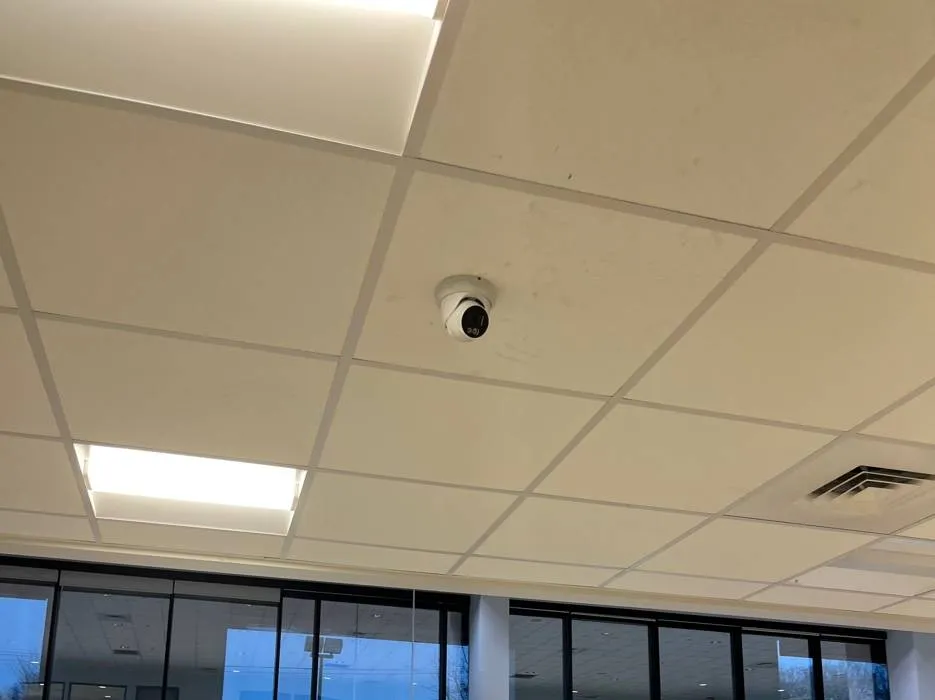
Panels that take wired contacts on the ground floor and wireless devices upstairs on the same system, which is how most frame and row houses end up. A cellular communicator replaces the landline dialer.
Small contacts set into the door or window frame, invisible when closed, wired inside the wall. Wide-gap versions for old wood doors that move with the seasons.
For upper floors, blocked stud bays, apartments and anyone who may move. Battery life is reported to the app well before a battery runs out.
Motion detectors in the parlor and kitchen, aimed away from radiators and stoves; glass-break detectors for big kitchen-addition windows and cellars with many small sashes.
Monitored smoke and carbon monoxide near bedrooms, heat detectors near the boiler and in the kitchen, and a water sensor at the low point of the cellar.
Large-key keypads for older relatives, one-button fobs for anyone who dislikes codes, and the app for everyone who wants it, each user named in the history.


| DIY kit (Ring, SimpliSafe and similar) | National dealer (ADT and similar) | AESS local installation | |
|---|---|---|---|
| Wiring inside the walls | Not offered; everything is stick-on and battery powered | Varies by dealer and package | Offered where the stud bays are open, mixed with wireless where they are not |
| Where the brain of the system sits | Often in a base station on a shelf | Varies | Panel hidden in the cellar or a closet; keypads are remote controls |
| Outside devices on old siding | Your choice, often fixed with screws | Varies | Nothing on siding that may contain asbestos |
| Fire detection on the same panel | Usually available as add-ons | Usually available | Recommended in every frame house |
| Contract | None; monitoring optional | Often a multi-year monitoring agreement | No long-term contract; monitoring month to month from $19.99, or none |
| Who installs | You | Their technician | Our technician, under NYS license #12000287431 |
The table describes the general models, not any single product.
Google’s AI Overview, its People Also Ask boxes and Answer the Public could not be opened from the environment where this page was built, so nothing below is quoted from them. The claims are general advice that cost guides, kit makers and AI-written summaries tend to repeat about home alarms. Each is checked against what the Weeksville sources show and what we see on installations.
Wireless is the better choice for a plaster-walled brownstone with no route for a cable, for an apartment, and for anyone who may move. It is not automatically the better choice for a small wood-frame house.
A frame house has hollow stud bays that often run straight from the cellar to the roof, so wired contacts on the ground floor can be installed without opening a wall, and they never need batteries or fall off a door that swells in summer.
Most of the frame houses we see end up hybrid: wired where the walls allow, wireless where they do not. The decision is made bay by bay, not by a rule of thumb about old houses.
A visible siren box or camera can deter, and on a brick shop on Utica Avenue we often fit one. On a 19th-century frame house it depends on what the outside is made of.
Many frame houses here were re-clad in the 20th century, and some cladding of that period contains asbestos. Brownstoner’s writer wondered exactly that about the rear siding of 1718 Dean Street. New York State rules say only certified, licensed workers may disturb asbestos-containing material.
An indoor siren is loud enough to drive most intruders out, and a camera can look out through a window. Keeping the outside of the house untouched is usually the right call.
It is quick, but in an old house it can affect the house if done carelessly: cracked lime plaster around a drill hole, chipped paint on original trim, adhesive pads that pull finish off a door.
Most Weeksville houses were built long before 1978, so old paint may contain lead. The EPA’s renovation rule exempts small jobs, and an alarm is a small job, but that is a reason for care, not carelessness. We drill slowly, collect the dust at the bit and clean up before leaving each room.
The test of a good installation in a house like this is that, a year later, the family has forgotten where the devices are.
The NYU Furman Center puts the serious crime rate for Community District 8, which includes Weeksville, at 11.9 per 1,000 residents in 2025, slightly below the citywide 12.3. Property crime in the district was 5.9 per 1,000.
Those figures do not make an alarm unnecessary; they show that the reason for one here is ordinary. Houses are empty during working hours, older relatives live alone (38.1 percent of households in the district are single-person), and a frame house can catch fire.
That is why so many Weeksville alarms we design include fire detection and a household roster, not just door contacts.
They can, with the landlord’s rules in mind. NYCHA’s resident handbook requires written consent before fixtures are added to an apartment, and private leases vary.
A wireless system that sits on a shelf, a door contact fixed with clean-release adhesive and a cellular connection that does not touch the building’s wiring can protect a Kingsborough apartment or a new apartment on Atlantic Avenue with very little that counts as a fixture.
Kingsborough residents themselves listed safety and security among their priorities when the city asked them in 2023 about new building on the campus, according to Brownstoner. An apartment alarm is one small part of that.
An alarm protects against someone coming through a door or window. It cannot protect a house from being stolen on paper.
In July 2026 Weeksville Heritage Center hosted a public evening on deed theft, with owners who fought to keep their homes and advocates explaining the tools available. Deed fraud happens through forged documents filed with the city, not through the front door.
The city’s Department of Finance offers a free Notice of Recorded Document service that tells you when a document is recorded against your property. We recommend it to every homeowner who asks us about an alarm, especially in houses that several relatives hold an interest in.
Some sites quote permit fees for alarm installation. We found no New York City permit requirement for installing a residential burglar alarm, and we do not add a permit fee to any Weeksville quote.
What New York does require is that the company doing the work be licensed by the Department of State, and that an audible burglar alarm on a building stop by itself within fifteen minutes (Administrative Code § 24-238).
Ask any installer for the state license number before they start. Ours is #12000287431.
Two photos and a line about what the siding is made of tell us most of what we need. Text them to (347) 934-8335 or use the form below; we reply the same day with a first device list and a Brooklyn-list price range.
A frame house on Dean Street, a row house on St. Marks, an apartment at Kingsborough, a church on Bergen Street or a shop on Utica: a few lines are enough, and the written price follows one visit. Rather talk it through? Call (347) 934-8335.
Got it. One of our technicians will read your note about the house and ring you back before close of business. A siren going off right now that you cannot silence? Do not wait for that call: dial (347) 934-8335.
You send a photo of the front door and one of the back of the house, and tell us the building material, the floors in use, who needs a code and what the siding is.
On the visit the technician walks around the house, marks every door and window a person could reach, and identifies the siding before anything is drilled.
Inside, each wall that would carry a cable is checked for an open stud bay; blocked bays and finished plaster get wireless devices instead.
The quote lists every device, whether it is wired or wireless, and which items are optional, such as fire detection, cameras and monitoring.
The panel and cellular communicator go in the cellar, wired contacts are fished from below, and dust is collected at the drill as we go.
Each person gets a named code, fob or app access; older relatives get the simplest method; two people hold the master code.
Every sensor is tested with you, the siren is checked to stop inside fifteen minutes, and you get the zone list, cable notes and account details on paper and by email.
At the end of the job you get one sheet, on paper and by email, that the next person in the family can pick up and understand: the panel brand and model and where it is; the monitoring company and account number, if you chose monitoring; every zone by number with its location; which contacts are wired and which are wireless; where each cable runs inside the walls; the names on the user list; and the two people who hold the master code.
The four Hunterfly Road houses off Bergen Street between Buffalo and Rochester Avenues, city landmarks since 1970, with a 19,000-square-foot building finished in 2014. Guided tours run Tuesday to Saturday and must be booked 48 hours ahead.
NYCHA’s 1941 campus between Ralph and Rochester Avenues and Pacific and Bergen Streets, sixteen six-story buildings around grounds by Gilmore Clarke. Its WPA frieze by Richmond Barthé, “Green Pastures: The Walls of Jericho,” was fully restored in 2025.
At 1635 Bergen Street between Utica and Rochester Avenues. The 1894 English Gothic church, which Brownstoner describes as built entirely by African Americans, stands beside the 1961 sanctuary and a 1920s parsonage.
The Department of Education lists it at 1580 Dean Street. It traces its history to Colored School No. 2, which Wikipedia names among the village’s institutions; Columbia’s Writ Large project places the original school site at 1658 Dean Street.
A 0.29-acre NYC Parks playground named for the village. Its historical sign places the Heritage Center at Bergen Street and Buffalo Avenue, the stretch of Buffalo co-named Dr. Joan Maynard Way after the preservationist who led the fight for the Hunterfly Road houses.
The northern edge in Brownstoner’s account of the village, where the Long Island Rail Road runs on its elevated structure above a strip of garages, tire shops and, increasingly, new apartment buildings near Ralph Avenue.
We also serve the neighborhoods around Weeksville from the same Troy Avenue office, each with its own page: alarm installation in Crown Heights, Bedford-Stuyvesant, Stuyvesant Heights, Ocean Hill, Brownsville and East Flatbush.

A Weeksville address is priced on the Brooklyn list, which is the company’s base list; Brooklyn’s area multiplier is 1.00. Nothing is added for an old house, a frame house or a landmark-adjacent block. What moves the price is how many openings people can reach, whether fire detection is included, how much can be wired inside open walls, and how many people need their own access. Every figure below is AESS’s published Brooklyn alarm price before sales tax. Jobs under $500 are paid in full; above that, half is paid as a deposit once the visit has fixed the price in writing, and the balance when the system is working.
| Item | Brooklyn price | Typical Weeksville use |
|---|---|---|
| Basic residential system: panel, 4–6 door/window sensors, 1 motion detector, keypad, cellular communicator, monitoring setup | from $600 | An apartment at Kingsborough or in a new building, or one floor of a row house |
| Wireless system, typical range | $600 – $1,200 | Apartments and any house where the walls should not be opened |
| Complete home protection: more sensors, glass-break, smoke and CO, sirens, app, camera-ready | from $2,500 | A whole frame or row house with the cellar, the kitchen addition and fire detection |
| Custom hardwired system, full-property coverage | $2,000 – $6,000 | Frame houses with open stud bays, or houses being renovated with walls open |
| Panel replacement on existing wiring: panel, cellular communicator, keypad, programming | $800 – $1,500 | Old cellar panels in long-held family houses, still dialing over a phone line |
| Per-unit setup for landlords: door sensor, motion detector, monitoring | $400 – $800 per unit | An owner protecting a rented floor in a two-family |
| Commercial alarm, standard small business | $1,500 – $3,000 | Shops on Utica and Ralph, garages on Atlantic, churches and community rooms |
| Adding cameras to a business alarm | $1,000 – $2,500 | A yard, a garage bay or a church office |
| Installing a customer-supplied kit | $200 – $400 | A kit you already bought, placed properly and set up for the household |
| Central station monitoring through our partners | from $19.99/month | Optional and month to month; most often chosen when fire detection is on the panel |
| Service visit outside warranty | $195/hr, 3-hr minimum ($585) | Old systems from other companies, moved sensors, added zones |
One visit, one written figure, every device listed as wired or wireless. Call or text (347) 934-8335, or speak to a technician through the form.
A cellular panel with battery backup; a contact on your front door; contacts on up to three reachable windows; one motion detector inside the door; a keypad or fob; the app for every adult. Wireless and removable, for Kingsborough, the new buildings or one floor of a family house.
Hybrid panel in the cellar; wired contacts on the front, yard and cellar doors and ground-floor windows; wireless contacts upstairs; motion in the parlor and kitchen; glass-break for the addition; monitored smoke, heat and CO; indoor siren; a household roster with a code or fob for each person; the handover sheet.
A commercial panel on its own cellular line; contacts on every entrance, roll-up door and trapdoor; motion and glass-break where they count; separate areas for each building or room group; schedules and opening and closing reports; siren inside the city limit. Cameras add $1,000 to $2,500.
If you already own a kit, we install it for $200 to $400 on our Brooklyn list: devices placed on the openings that matter, mounted so they come off old woodwork cleanly, set up with a code for each person and tested with you. The kit’s own manufacturer warranty stays with the kit. If, once we are there, we find a blocked route or an opening the kit cannot cover, we tell you before adding anything.


Yard, cellar-door and shop cameras that send a clip with each alarm, through security camera installation in Weeksville.
Keypads, electric strikes and smart locks for church and shop doors, through Weeksville access control.
Door stations for two- and three-family houses and small buildings, through intercom installation in Weeksville.
Fire alarm systems for churches, halls and buildings that need more than residential detectors, through Weeksville fire alarm installation.
Old door buzzers and bells in row houses split into floors, through door buzzer repair in Weeksville.
Network cabling in Weeksville for offices and community rooms, and TV mounting in Weeksville without damaging old walls.
This is how our technicians are asked to survey a frame house in Weeksville. It describes our method, not a particular job. The survey starts outside, before anyone talks about doors and windows. The technician walks the full outline of the house, front, sides and back, and looks at the skin: wood, cement shingle, aluminum, vinyl, brick. Anything gray, hard and brittle is noted as possible asbestos and marked on the sketch as a surface nothing will be fixed to.
Next, the reachable openings: every window a person could get to from the ground, the yard, a fence, the roof of the kitchen addition or a neighbor’s lower roof, and every door, including the cellar door and any bulkhead. Then inside, starting in the cellar. Where are the joists, where are the stud bays above each door, which bays are blocked, where is the boiler, where does the floor get wet after rain? Only after that does the conversation turn to who lives in the house, who needs a code and who will never use an app.
By the time the technician sits down with the owner to write the price, the device list has already been decided by the house itself, and the family’s part is to decide how they want to live with it.

Complete home protection, which includes more sensors, glass-break, smoke and carbon monoxide detection, sirens and the app, starts at $2,500 on our Brooklyn list. A small two-story frame house with a cellar and a kitchen addition usually falls at or a little above that figure, depending on how many windows can be reached and how much is wired inside open walls. A fully hardwired system is $2,000 to $6,000. Monitoring is optional from $19.99 a month, and sales tax is added. The written price follows one visit.
All of them. Wikipedia describes the old village as running from Fulton Street to East New York Avenue between Ralph and Troy Avenues, Brownstoner draws the northern line at Atlantic Avenue, and many residents simply say Crown Heights. We serve every one of those blocks from our Troy Avenue office at the same Brooklyn prices, including Kingsborough Houses, the Bergen Street and Dean Street blocks around the Heritage Center, and Atlantic Avenue near Ralph. Neighboring Crown Heights, Bedford-Stuyvesant, Ocean Hill and Brownsville each have their own page.
No. Because we keep alarm devices inside a frame house and fix nothing to the siding, a re-siding project does not touch the alarm. The only exceptions are an outdoor camera or light, which can be added after the new siding is on, and any window that is being replaced at the same time, whose contact will be moved to the new frame. If old cement shingles are being removed, make sure the contractor is certified for asbestos work; that is a separate trade from ours.
Yes. Most of the work in a frame house happens in the cellar and at the doors on the ground floor. In her room, a window contact or smoke detector can be wireless, fitted in a few minutes with no drilling, at a time that suits her. Any drilling elsewhere is done with dust collected at the bit, and we can bring a panic button she can keep by the bed that alerts the family’s phones. Tell us her routine when you book and we will plan the day around it.
We do not offer a payment plan on the equipment. Jobs under $500 are paid in full, and larger jobs are paid half as a deposit once the visit has fixed the price in writing and half when the system is working. What you can do is start smaller, for example by protecting the doors and the cellar first, and add upstairs windows, fire detection or cameras later on the same panel. Monitoring, if you choose it, is the only monthly charge, from $19.99 a month, with no long-term contract.
Weeksville is one of the neighborhood pages filed beneath our Brooklyn alarm installation page, and Brooklyn in turn is one borough on the New York City alarm installation hub. No two of these pages share their research; the links below lead to the borough, county and regional pages and to the blocks that border Weeksville.
Alarm installation in NYC (hub) · Brooklyn · Manhattan · Queens · the Bronx · Staten Island
Alarm installation on Long Island (hub) · Nassau County · Suffolk County
Alarm installation in the Hudson Valley (hub) · Westchester · Rockland · Orange County · Putnam · Dutchess · Ulster
Crown Heights · Bedford-Stuyvesant · Stuyvesant Heights · Ocean Hill · Brownsville · East Flatbush · Prospect Lefferts Gardens · Remsen Village
Weeksville cameras · Weeksville door access · Weeksville intercoms · Weeksville fire alarms · Weeksville cabling · Weeksville buzzer repair · Weeksville TV mounting
Across the borough, Abstract Enterprises Security Systems also installs door access systems in Brooklyn and network cabling for Brooklyn offices and community spaces. Before any company touches your alarm, ask for its state license and insurance; ours are on the about page.
We read or searched every item in this list during October 2026. A fact on this page appears only if one of these sources states it, and the note after each link says what we took from it.
Where sources disagree, the page says so: Wikipedia puts the old village’s northern edge at Fulton Street and Brownstoner at Atlantic Avenue; the Housing Connect listing gives both 1911 and 1921 Atlantic Avenue; the Department of Education and Columbia’s Writ Large give different Dean Street addresses for the school and its original site; and the Hunterfly Road houses were dated to the 1830s when landmarked but to the 1840s–1880s in later assessments. Community District 8 figures describe the whole district, not Weeksville alone. Google’s AI Overview, People Also Ask, related searches, Answer the Public, Bing and DuckDuckGo suggestions, Yelp reviews and the full text of Reddit threads about Weeksville could not be opened from the build environment, so nothing on this page is drawn from them.
Ring (347) 934-8335 and read us the name on the panel door and the message on the keypad screen; with that we can usually bring the replacement part on the first trip. Repairs are booked the same day anywhere between Atlantic Avenue and Eastern Parkway.
The Weeksville line, (347) 934-8335, reaches the technicians who do the work, by call or text; photos of a door, a cellar or a stretch of siding can also come by WhatsApp. Quotes, service agreements and invoices are issued by Abstract Enterprises Security Systems at 1282 Troy Ave, Brooklyn, NY 11203.
Check us before you call: 201 Google reviews average 4.7★, and the state alarm installer license our work runs under is #12000287431. A church board, a landlord or a co-owner can be named on our insurance certificate, which we email before the first visit.
Full terms — including 50% deposit, the 30-day warranty and optional paid extended warranty, and the late-fee schedule — are set out in the service agreement. See our warranty page.
Revision log, October 22, 2026: rebuilt from scratch around Weeksville’s surviving frame houses and long-held family homes: wiring hidden in wood walls, nothing fixed to old siding, fire detection on the same panel, and a household roster that can be handed down, with sections for the Kingsborough and new-building apartments and the congregations and shops. Prices are the published Brooklyn base figures.
Rebuilt neighborhood alarm installation pages: Tremont, Bronx alarm installation · Vinegar Hill, Brooklyn alarm installation