Ring It · Release It · Make the Door Lock Again
Door buzzer repair in Weeksville means getting two things working again at every street door: the call that reaches each household, and the release that household sends back to unlock the door. Most buildings on the blocks around Bergen Street, Dean Street, St. Marks Avenue and Prospect Place are brick rows and small walk-ups divided long after their first bell went in, so we find stations dragging the line down, pairs cut in renovations, tired cellar transformers and strikes that hum while the door stays shut. We test the call, the voice and the release one at a time, follow the failing pair to the place it actually breaks, and write the price down before any part goes in.
Reviewed and updated November 11, 2026 by Abstract Enterprises Security Systems, NYS license #12000287431 · Sources: the NYC Department of Small Business Services' Neighborhood 360° commercial district needs assessment for Ocean Hill–Weeksville; NYU Furman Center's Community District 8 profile (May 2026); the NY Attorney General's Residential Tenants' Rights Guide; the text of HPD's rule on entrance doors, locks and intercommunication systems (28 RCNY § 25-151); HPD's self-closing door guidance and June 2022 maintenance bulletin; NYC 311; NYCHA's design guidelines for layered access control and its September 2025 PACT plan for Ocean Hill and Stuyvesant Gardens; the Landmarks Preservation Commission's permit guidebook and Bedford-Stuyvesant designation report; the Weeksville Heritage Center; Village Preservation (2019), Creative Time, 6sqft, Atlas Obscura and Wikipedia on Weeksville's history; Brownstoner (2016, 2018, 2023, 2025 and 2026); NYC Housing Connect; the New York Housing Conference; the Mayor's Office (February 2026); NYC Parks; Swiftlane (2026), HomeAdvisor, ButterflyMX, Connextivity and Allegion · Dispatched from 1282 Troy Ave, Brooklyn

Owner-operated since 2002 · Thousands of jobs completed · Booked within 2 hours
Door buzzer repair in Weeksville starts with a $250 service call that includes on-site diagnosis, and the repair is then priced in writing from our Brooklyn list before any part is installed. In the converted row houses and walk-ups that make up most of our calls here, the usual culprits are one apartment station shorting a shared line, a pair cut or crossed during renovation, a transformer that can no longer hold the strike, or a strike and closer that have drifted out of line with the frame. Most single faults are finished on the first visit. We book within 2 hours of your request into a 2-hour arrival window early in the day, and we don't promise same-day repairs.
Weeksville is a neighborhood of shared front doors, and a shared front door is only as good as the buzzer that lets each household answer it. The name belongs to the free Black community that James Weeks, a longshoreman from Virginia, began when he bought land here in 1838, and that had grown past 520 residents by 1855, according to 6sqft. The original village of wood houses is almost entirely gone. What stands on its blocks today, between Crown Heights, Bedford-Stuyvesant and Ocean Hill, is mostly the city that replaced it: brick row houses, prewar walk-ups, public housing, churches, small shops on the avenues, and a growing number of new apartment buildings on lots that stood empty for years. Nearly every one of those buildings has one street door shared by several households, and nearly every one depends on a button, a pair of wires and a release that have to work for each of them.
The row houses explain most of the calls. Brownstoner's 2016 history of the neighborhood puts it plainly: "Wood-framed houses were replaced by masonry row houses," and Village Preservation's 2019 account describes the same turnover. Houses like these were built for one family and one bell. Over the decades many were split into two, three or more apartments, and the buzzer was added or extended each time a unit was created, usually by whoever happened to be doing the work. That history is our inference from the building stock rather than a documented count, but it matches what we find when we open a Weeksville cellar: pairs spliced onto older pairs, stations from three different makers on one line, a release wired to some floors and not others, and a transformer sized for one chime now trying to hold a strike for five apartments.
The newer buildings have different problems. On Prospect Place between Ralph and Buffalo Avenues, the New York Housing Conference describes Weeksville Place, an eight-story building with 45 apartments on what had been a vacant city-owned lot. On Atlantic Avenue, NYC Housing Connect listed 199 newly built lottery apartments at 1921 Atlantic Avenue. And Brownstoner reported in 2023 on plans for Weeksvillage, a 13-story building with 200 apartments for seniors beside the Kingsborough Houses on Bergen Street. Buildings like these have electronic panels, a manager who approves repairs, and dozens of households who lose the door at once when the panel fails.
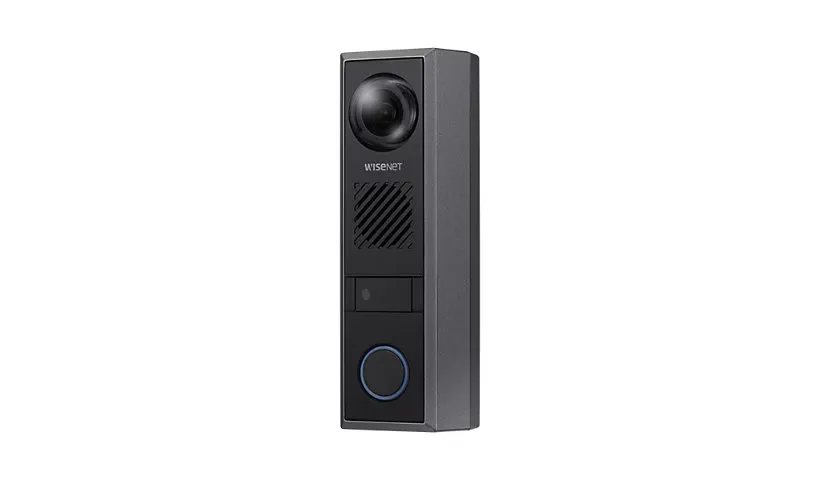
Then there are the doors on the avenues. The city's study of the Ocean Hill–Weeksville commercial district counted 560 storefronts along Ralph Avenue, Rockaway Avenue, Broadway and Fulton Street, and found that 83 percent of the merchants rent. On those corridors the residents' door often sits beside, or behind, a store that belongs to a different person from the landlord, which makes "who orders the repair" the first question of the visit. Owners who want the doorway watched often pair the repair with a camera over the entrance.

A street door that won't lock goes to the top of our list, then a door nobody can buzz open, then a building where one or more apartments have stopped ringing. Call (347) 934-8335 and tell us four things: which apartments fail and which still work, what the visitor at the door and the resident upstairs each hear when the button is pressed, whether the release works from some apartments and not others, and what changed shortly before it stopped, such as renovation upstairs, a new street door, a power cut or an HPD inspection. We book within 2 hours of your request into a 2-hour arrival window early in the day. We don't promise same-day or emergency door buzzer repair, because the right parts have to be on the van and the right people have to be home to open apartments and the cellar, but a clear description lets us bring them, and any price beyond the $250 service call is written down before we begin.
The city's own rule is the most useful checklist we know for deciding when a buzzer repair is actually done. HPD's rule on entrance doors, locks and intercommunication systems, section 25-151 of Title 28 of the Rules of the City of New York, describes the minimum equipment in two parts: a bell or buzzer system, or a speaking and listening device, that lets a visitor reach the apartment, and a return buzzer mechanism that lets the apartment release the door lock. The same rule says a self-locking entrance door has to be readily openable from the inside without a key. Read together, those three lines describe the whole job. A visitor has to be able to reach the right household. That household has to be able to let the visitor in. And nobody inside should ever need a key to get out.
Most of the buzzer complaints we hear in Weeksville are a failure of one of those functions while the others still work, which is exactly why they confuse owners. Picture a tenant on the third floor of a converted row house on Dean Street hears the ring perfectly and presses the door button, and nothing happens at the street, so she walks down two flights. That is a working call and a broken return buzzer. Or a first-floor tenant in a walk-up presses release and hears the strike buzz at the street, but the visitor still can't push the door open, because the latch is binding on a keeper that has shifted. That is a working return buzzer and a door that defeats it. Each sounds like "the buzzer is broken" on the phone, and each has a different fix.
So we test them separately, in the same order, on every visit. First the call: we press each button at the street with someone in each apartment, note which household actually answers, and listen for voice both ways where the system has it. Then the return buzzer: each household presses release while a second person pushes and pulls the street door, because a strike that releases under no load can still fail with a visitor leaning on the door. Then the exit: we open the door from the inside with the lever or knob and confirm no key, button or code is needed to leave, and that the door closes and locks again on its own afterward. Only when all three pass for every household do we call the repair finished.
HPD writes buzzer defects under section 27-2005 of the Housing Maintenance Code, the owner's general duty to keep a building in repair, with wording such as "properly repair or replace the broken or defective bell buzzer intercom system from the building entrance door to panel." An order written that way covers the whole path, and a repair that fixes the ring at one apartment but leaves its release dead has not corrected it. When an owner sends us an HPD order, we repair to its wording, test the same functions at the neighboring apartments on the same line, and leave a record that uses the order's language, so whoever certifies the correction can see that each part of it was checked.
On most Weeksville street doors the lock is an electric strike in the frame, and the lever or knob opens the door from the inside whatever the strike is doing. Some doors are different. A storefront-style aluminum door converted to residential use, a gate with a magnetic lock, or a door where someone has added a keyed deadbolt to stop the latch from being slipped can each leave people inside needing a key or a working button to get out. When we find one of those, we fix the exit problem before anything else, because the rule's requirement that the door be openable from the inside without a key is the one that protects people in a fire, and it is not something we leave for the next visit.

When the city's street grid pushed east in the late nineteenth century, Village Preservation notes, the new streets often ran straight through existing Weeksville houses and lots, and the masonry rows that followed are the buildings most of our calls come from today. Brownstoner's 2025 history of Atlantic Avenue describes the same period nearby, with "a plethora of attractive wood-framed row houses" along the avenue east of Nostrand, "especially the further east one traveled," many of them later demolished when the avenue was widened. A brick row house here is usually two or three stories over a cellar, with a stoop or a low entrance, a vestibule with an outer and an inner door, and, by now, anywhere from one to six households behind it.
Buzzers in these houses were rarely designed as a system. A bell went in for the original family. When the house was divided, someone added a second button and ran a pair up the stairwell or along the cellar ceiling to the new apartment. When another unit was created, the pattern repeated, often with a different brand of station because the old one was no longer sold. The result is a system that works until one part changes. A handset from a different maker makes the whole line hum, a plumber nicks a pair on the cellar ceiling, or a renovation closes a splice inside a wall.
Our approach in a divided row is to map before we repair. With someone in each apartment, we press every button at the street and note which household really answers. We test whether each apartment can talk to the street and release the door. Then we follow each pair from the street panel to the transformer and up to its apartment, usually through the cellar and the stair hall, opening the splices we find along the way. Because several apartments often share common conductors, one failing station can silence or weaken all the others, so we ask for access to every household on the line during the visit, not just the one that complained. Once the map is confirmed, every button and every pair is labeled by apartment.
Many Weeksville rows have a vestibule: an outer door at the street or top of the stoop, and an inner door into the hall. Which one the buzzer releases makes a real difference. If the strike is in the inner door and the outer door has started locking on its own, visitors end up trapped between the two. If the strike is in the outer door and the inner door has no lock at all, the vestibule offers no protection. We check both doors on every visit to a vestibule house and recommend one arrangement before anything is changed, and if moving the strike from one door to the other is the right answer, that is priced as its own line, because it is new work rather than repair.
A few wood-frame houses still stand among the rows. Brownstoner's 2018 listing story about 1718 Dean Street described a two-story frame house about seventeen feet wide, held by one family from 1897 to 2001, with fish-scale shingles and a historic double door. Old double doors and soft wood frames are hard on strikes. The two leaves meet at a narrow astragal, the frame moves with the seasons, and the keeper pocket may have been cut and recut by several generations of locks. On a door like that we fit the strike to the existing pocket wherever we can, check the flush bolts on the inactive leaf, and look at how the latch meets the keeper in damp weather and dry weather alike, rather than cutting the frame larger to fit a standard part.

A different kind of call comes from the apartment buildings that have gone up in and around Weeksville in the last decade or so. The New York Housing Conference describes Weeksville Place as an eight-story building with 45 apartments for seniors, individuals and families, built under HPD's Neighborhood Construction Program on a formerly vacant city-owned lot on Prospect Place between Ralph and Buffalo Avenues; 26 of its apartments are set aside for extremely low- and very low-income seniors. NYC Housing Connect listed 199 new lottery units at the 1921 Atlantic Apartments. And Brownstoner's 2023 report on Weeksvillage describes a planned 13-story building of 200 apartments, 156 of them studios, with 60 set aside for formerly homeless seniors and 35 for local NYCHA residents, on open space beside Kingsborough's senior building on Bergen Street.
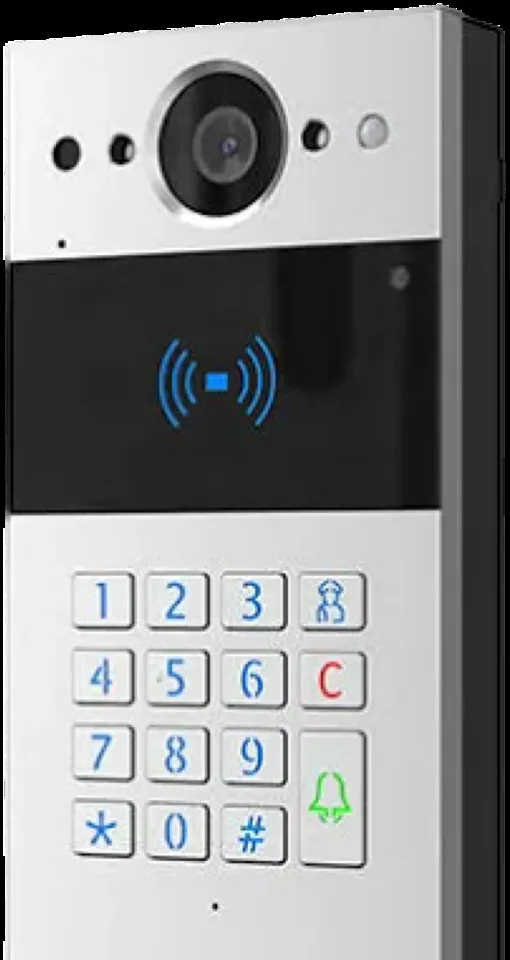
Buildings like these were built after 1968 and have far more than eight apartments, so under the NY Attorney General's Tenants' Rights Guide they must have self-closing, self-locking entrance doors and a two-way voice intercom that lets residents buzz the door open. They are also built with a very different kind of system from a row house. The entry panel is usually electronic, often with a camera, a directory and sometimes a keypad or card reader; it may call apartment stations, residents' phones or both; it depends on a power supply, a network connection and an administrator account; and its strike or magnetic lock is often controlled through a separate relay or access controller. When something fails, everyone in the building loses the door at once, and the cause can be any of those layers.
So a repair in a newer building starts with the layer that failed, not the box on the wall. We check whether the panel has power and how its supply behaves under load, whether it is still on the network and reaching its service, whether the directory and the apartment settings are intact, and whether the relay is actually firing the lock. Only then do we look at the strike, the closer and the latch, because a working release on a door that binds in its frame looks exactly like a broken app from the lobby. Where a panel is a networked one, we need the management company's administrator, or the login, to change any settings, and we never change credentials without the manager's written approval.
Several of the new buildings near Weeksville are built wholly or partly for seniors, and Brownstoner reported that residents who helped plan Weeksvillage asked for affordability and accessibility for seniors and for improved "safety, security, and pedestrian access." At a door used by older residents, two settings matter as much as any part: how long the panel rings before giving up, and how long the lock stays released after someone presses the door button. If the door relocks before a resident with a walker reaches the handle, the system is failing even if every part tests good, so where the equipment allows we adjust both and test them with a person walking to the door.
A building only a few years old may still have parts under a maker's warranty or an installer's service contract, and the managing agent should check that before calling anyone. If not, we repair the major panel brands as an independent company rather than a certified dealer, and say plainly when a fault is one the maker should handle.

A buzzer repair that ignores the door is half a repair. In a multiple dwelling, the street door has its own rule, and it is stricter on timing than most owners expect. HPD's guidance on self-closing doors says a defective self-closing door is a class C, immediately hazardous violation that has to be corrected within 14 days of the notice, and that HPD reinspects within 20 days of the correction date. HPD's June 2022 maintenance bulletin explains that Local Laws 62 and 63 of 2022 cut the correction period from 21 days to 14. A street door that won't close and lock on its own and a buzzer that won't release it are two separate conditions, and an inspector can write both on the same visit.
That is why every Weeksville buzzer repair we do on a street door includes the door itself. Before we condemn a strike, we test it with the door pushed and pulled while the release is held, measure the voltage at the strike rather than at the transformer, and look at the latch, keeper, hinges and closer together. In older rows the cause is often the frame rather than the electronics: a jamb that has moved, a hinge whose screws have pulled out of soft wood so the door drops, a keeper painted over until its lip catches the latch, or a closer that has lost its latch speed and leaves the door resting a quarter inch short of the strike. Often the fix is an adjustment rather than a part. A keeper moved a few millimeters, a closer given more latch speed, or a hinge screw replaced with a longer one can bring a perfectly good strike back into service.
Some faults we find here are caused by the door's own history. A street door replaced with a heavier steel or fiberglass door, but with the old strike reused in a pocket cut for the original, often binds from the first day. A door propped for months while the buzzer was dead usually has a bent closer arm. In each case we fix what moved, then the buzzer, and we write both into the record.
A door buzzer not working after a power outage is a common call, and the cause is usually simple once found: a tripped breaker on the circuit that feeds the transformer, a plug-in supply that didn't come back on, or a transformer or panel supply that failed when power returned with a surge. We check the feed first, then the transformer or supply, then the strike and the stations. If a surge damaged anything, the report lists every failed part.
Outages also raise the question of which strike belongs on the door. As Allegion's guide explains, a fail-secure strike stays locked when power is lost, while the lever or knob still lets people out from inside; a fail-safe strike unlocks when power goes. On a residential street door, fail-secure is usually the right choice, because a power cut shouldn't leave a building standing open. A magnetic lock releases when power is cut and needs its own code-compliant way out; if your door has one, we check its exit device first.

The NY Attorney General's Tenants' Rights Guide gives the starting point for private buildings: multiple dwellings built or converted after January 1, 1968 "must have automatic self-closing and self-locking doors at all entrances," and those with eight or more apartments must also have a two-way voice intercom with a buzz-open function. Older multiple dwellings must have self-locking doors, and a two-way intercom if a majority of the apartments ask for one, and the guide notes that the landlord may recover the cost. Most Weeksville rows and walk-ups predate 1968, and one- and two-family houses aren't multiple dwellings at all, so the answer for a given house depends on its legal use and history.
Once a building has a buzzer, keeping it working is part of the owner's general duty of repair. NYC 311's apartment maintenance article lists "doorbells, buzzers, or intercoms that are broken or missing" among the conditions a tenant can report, and HPD's violation records show buzzer defects written in classes A, B and C. Some secondary sources, such as Connextivity's guide to NYC intercom law, say HPD treats a non-functioning intercom as a class B hazardous violation; that is common, but the class on any particular order is the one HPD actually wrote, so read the order itself. We are not lawyers. The practical rule is the same in every private building: if there are tenants and a buzzer, keep the buzzer working, fix the door with it, and keep a dated record.
Kingsborough Houses and Weeksville Gardens belong to NYCHA, and their entrance systems are NYCHA's to maintain. A resident there should report a dead intercom or a street door that won't lock through NYCHA's own repair channels and keep the ticket number; we don't repair NYCHA's building systems at a resident's request, and we don't connect anything of our own to them. NYCHA's design guidelines describe what its layered access control program puts on entry doors: key fobs, direct-call intercoms, new locks and fail-secure electric strikes. Nearby, NYCHA's September 2025 PACT plan for the Ocean Hill and Stuyvesant Gardens developments covers building upgrades and public safety; buildings that move to private management that way are repaired through their new manager.
Only one site in historic Weeksville is individually landmarked: the Hunterfly Road Houses on Bergen Street, designated a New York City landmark in 1970 and run today as a museum. The Bedford-Stuyvesant/Expanded Stuyvesant Heights Historic District sits close by, and the Landmarks Preservation Commission's permit guidebook says ordinary maintenance and repair needs no permit. Its staff can approve an intercom panel within or beside a door opening, no more than one per opening, with a compatible design and no drilling through cast iron or decorative surfaces. Replacing a failed station in the same place is repair; moving a panel or enlarging its opening on a district facade is a question for the Commission first.
A buzzer's low-voltage side is our work under NYS license #12000287431; the line-voltage side is not. The Department of Buildings requires a licensed electrician and a permit for electrical work, so if a repair needs a new circuit, a new outlet for a power supply or work inside an electrical panel, we name that part separately for an electrician and do only the low-voltage side.

These are the repairs Weeksville owners, managing agents, boards, congregations and shopkeepers call us for. Almost all of them are repairs to a system already in the building. Where the right fix would change the system, such as a button for an apartment that never had one, a strike moved from the inner vestibule door to the outer one, or a new pair run past a renovated wall, the written quote says so before anything is approved.
Worn, sticking or loose buttons, cracked label windows and plates that no longer match the apartments behind them, on stoops, vestibules and storefront-side doors.
Buttons that ring the wrong floor, apartments with no release and dead buttons for units that were merged, mapped with someone in each apartment and labeled at both ends.
Dead, humming or mismatched handsets matched to the system already in the building, so one tenant's station stops dragging everyone else's line down.
Strikes that hum and hold, release only when the door is shoved, or were reused in a replacement door, fitted and aligned to wood, steel and double-door frames.
Street doors that drift open, slam past the strike or stop a quarter inch short, adjusted so they close and lock on their own after every release.
Undersized, overheating or failed transformers and intercom supplies in cellars and equipment rooms, measured at rest and with the strike held before they are replaced.
Pairs cut, crossed or buried by plumbing, electrical or gut-renovation work, found with a tone set, spliced in reachable boxes and retested at every apartment.
Entry panels in newer buildings that stopped calling phones, lost the directory or stopped firing the lock, checked from power and network to the relay and the door.
The apartment entrance beside or behind a store on Ralph, Rockaway, Broadway or Fulton, repaired with the landlord's approval and the shop kept open where the door allows.
Every button, station, release, strike and closer tested and written up for an owner answering an HPD order, a buyer before closing or a manager taking over a building.
Atlas Obscura's walk around the Hunterfly Road Houses describes the blocks around them as a mix of NYCHA's Weeksville Gardens, a brick public-housing building, a bodega and the modern Heritage Center, and that mix is a fair picture of the whole neighborhood. We sort them by how many households share one street door, what system is on the wall and who approves a repair. These are the building types we meet most often in Weeksville.
A two- or three-story masonry row with a stoop or low entrance, a vestibule, a bell or two-button plate, and a transformer on the cellar ceiling near the front wall.
The same house split unit by unit over the years, with buttons, pairs and stations added by different hands and a release that may reach only some floors.
A four- or five-story apartment building with a multi-button panel, a riser up the stair hall or a shaft, and apartment handsets of several generations on one system.
A building like Weeksville Place or 1921 Atlantic, with an electronic panel, a directory, phone or app calling, an equipment room and a manager who approves repairs.
A mixed-use building on Ralph, Rockaway, Broadway or Fulton, where the residents' door sits beside the shop and the landlord, not the merchant, owns the system.
One of the few 19th-century frame houses left among the rows, with a soft wood frame, old double doors and a bell that may still run on its original wire.
The one- or two-family row house usually has the simplest system and the most tired parts. A worn button, a transformer that has run for decades on the cellar ceiling, or a splice near the front wall where water gets in under the stoop accounts for most of what we find.
The divided row house is where mapping matters most. Several households hang on shared conductors, a single station of the wrong type can pull the line down, and the button labels often describe a layout that no longer exists. We need access to every apartment on the line during the visit.
The prewar walk-up is a small building system with a long riser. The most common faults are a failed station that loads the riser, a corroded terminal block in the cellar or at the top of the shaft, a panel whose speaker or microphone has worn out, and a strike in a heavy door that the transformer can no longer hold. We tone the pair before quoting riser work, because one bad splice and a riser corroded along its length look identical from the apartment.
The newer elevator building fails in layers: power, network, settings, relay and door. We start with the layer that failed and work outward, and we need the managing agent's approval and, for networked panels, administrator access before changing anything.
The apartments over a store raise the ownership question first. The residents' door is the landlord's, even when the shop tenant is the one who calls, and the repair has to be approved by the owner or the managing agent. We schedule around the store's hours wherever we can.
The surviving frame house needs the lightest touch. We keep to existing holes and pockets, avoid drilling through old siding, check the double door's astragal and flush bolts along with the strike, and look at how the latch meets the keeper as the wood moves.

The city's Neighborhood 360° study names four primary commercial corridors for Ocean Hill–Weeksville: Ralph Avenue, Rockaway Avenue, Broadway and Fulton Street. It counted 560 storefronts along them, including 79 houses of worship, 65 salons and barbers, 63 vacant storefronts and 52 delis and bodegas, and found that 83 percent of the merchants rent. Commercial buzzer work in Weeksville mostly means the doors of those buildings: the residents' entrance beside a store, the release a shop uses to admit customers, and the doors of congregations, schools and cultural sites.
The corridor that runs along Weeksville's eastern side, past Kingsborough and the new buildings on Prospect Place, with apartments over delis, salons and small offices.
One of the study's four corridors toward Ocean Hill, with mixed-use buildings where a single street door often serves several apartments above a storefront.
The corridor along the old village's northern edge, with older commercial buildings and residents' doors that open straight onto a busy sidewalk beside the shops.
The corridor running toward Broadway Junction, where shops sit under apartments and a residents' door is often a narrow entrance between two storefronts.
Not one of the study's four corridors, but the route of auto shops in one- and two-story buildings that Brownstoner describes, and of the new lottery buildings near Ralph Avenue.
Churches such as Berean Missionary Baptist on Bergen Street, storefront congregations on the corridors, and public venues like the Heritage Center on Buffalo Avenue.
Two kinds of Weeksville door raise questions often enough to answer here. The first is the shop's own buzz-in door: a deli, salon or office that keeps its customer door locked and releases it from behind a counter. It is the business's system, not the residents', but it often runs through the same cellar, so we test both and keep them separate in the record. The second is the congregation's door. Brownstoner's 2014 profile of Berean Missionary Baptist Church describes an 1894 church with a newer church next door from 1961, and a congregation like that may have several doors used at different hours. Whatever arrangement a congregation chooses, a person at the door, a schedule on a controller or a door on a mechanical hold-back, we make sure the strike, closer and latch work properly when the door goes back to normal, and that nobody inside can ever be locked in.

What we can describe is the order a technician follows on the job that produces most of our calls here: a brick row house divided into four apartments, where the owner reports that "the top-floor tenant can hear the door but can't open it."
We start at the street. With someone in each apartment, every button is pressed and the answering household noted, voice is tested both ways, and each household presses release while the door is pushed and pulled. If the top floor alone fails to release, the strike, transformer and street panel are probably fine, because the other three apartments open the door with them. So the search narrows to the top floor's release path. We open the station on the top floor and test its door button with a meter; if the button closes but nothing reaches the cellar, the break is in the pair between them. In a divided row that pair usually has a splice from when the apartment was created. We tone the pair from the station, find where the tone stops, and open that point, which in a house renovated more than once is often a junction hidden above a dropped hall ceiling or behind a newer wall. The splice gets cut back to clean copper and remade in a connector inside a box that can be reached again. Then every apartment is retested, the door's close-and-lock checked, the pair labeled at both ends, and the record written with photos of what failed and where.
Owners, families and who can order the work
Not through us without a check. On a first visit to a building we ask who owns it and who is authorized to approve work, and when the person booking is not a resident we know, we ask for something that ties them to the property, such as a managing agent's letter, a recent tax or water bill in the owner's name, or the owner confirming by phone. We don't change locks or hand out codes, and we change panel settings only with written approval from the owner or manager on record. If an owner suspects someone is posing as them, we would rather lose a booking than help, and we keep a dated record of who approved every job.
Book the repair as a no-release fault, which we treat as a priority, and say so when you call. Until the visit, the safest stopgap is a key: give the aide her own key to the street door, or have a downstairs neighbor the family trusts let her in, rather than wedging the door, which leaves the whole house open and strains the closer. When we come, we test his station's door button first, because when the other floors can still release the door, the fault is usually in his station or the pair to it, which is often a single-visit repair.
Walk-ups and the city's rules
Repairing the bells keeps what the building already has working, but it doesn't answer the request. The Attorney General's Tenants' Rights Guide says older multiple dwellings must have a two-way intercom if a majority of the apartments ask for one, and that the landlord may recover the cost. A two-way system with voice and a door release in each apartment is new installation work rather than repair, though it can often use some of the existing wire and the same strike. We can price both, the repair of the bells and the upgrade, so the owner can see each. A lawyer or HPD can tell you how the request should be documented.
Newer and affordable buildings
Usually not. NYCHA handles the intercoms in its own developments. A new building that sets aside apartments for NYCHA residents, as Brownstoner reported Weeksvillage would, is normally owned and managed by its developer or nonprofit sponsor, even when it stands on NYCHA land, so a dead intercom there goes to that building's management office. Your lease or move-in packet should name who to contact. If the manager calls us, we work to their approval; if a repair request goes unanswered, 311 takes the same buzzer complaints from tenants in any privately managed building.
Shops, congregations and shared walls
Most likely, two conductors were connected where they shouldn't be, or a pair was reused, while the electrician was working in the ceiling or the cellar. In older mixed-use buildings the residents' buzzer wire and any bell or chime for the storefront often run side by side, sometimes on the same transformer, and a splice made in a hurry can tie one apartment's call to the store's chime. We trace both circuits from their transformers, separate them, give each its own labeled path and confirm the apartments ring only the apartments. The residents' system is the landlord's, so the landlord approves that part.
Probably one, in the place where the two systems meet. A shop's door release is usually just a button, a relay or transformer and a strike, and if the new one was wired to the residents' release circuit, or the two share a relay contact, every press behind the counter fires both strikes. That leaves the residents' door open to anyone, so treat it as urgent. We separate the two circuits so each button fires only its own strike, test both doors, and record which equipment belongs to the shop and which to the building.
Wood-frame survivors
Yes, if the jamb behind it is sound and the strike is fastened into solid material rather than into wood that has been drilled and redrilled. We look at how much of the jamb is left around the pocket, set longer screws into the framing behind the trim where the house allows, and, where the old pocket has been chewed out by earlier locks, fill and recut it so the strike sits flush instead of rocking. We also check the latch's engagement and the door's hinges, because a sagging door levers the strike every time it is pushed. If the jamb itself is split or rotted, the carpentry is named separately.

These are the parts we repair and replace at Weeksville street doors, in cellars, stair halls, lobbies and apartments. We repair and troubleshoot most brands found in Brooklyn buildings, including Aiphone, Akuvox, DoorBird, Comelit, Siedle, TekTone, Lee Dan and ButterflyMX, as an independent company rather than a certified dealer for those makers.
Single buttons, multi-button plates and label windows on stoops, vestibules and doors beside storefronts, refitted in the existing openings wherever possible.
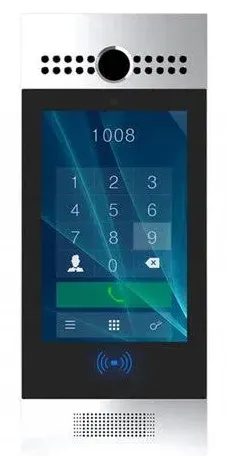
Audio and video panels, speaker and microphone modules, keypads and electronic directories at walk-ups and newer elevator buildings.
Talk-door-listen handsets, hands-free stations and video monitors chosen to suit the system already on the line, so one station can't pull the others down.
Fail-secure and fail-safe strikes sized to existing pockets in wood jambs, steel frames and old double doors, with keepers aligned to the latch.
16- and 24-volt bell transformers and building intercom supplies, replaced when undersized, overheating or failed, and tested with the strike held.
Gel-filled connectors, reachable junction boxes and labeled terminal blocks in place of taped joints and loose wire on cellar ceilings and in stair halls.
Closers given proper closing and latch speed, latches and keepers realigned, and loose hinge screws replaced so street doors close and lock after every release.
Release relays, access controllers and door-release modules that fire the strike from a panel, keep shop and residents' circuits apart, and set release time.
Plenty of Weeksville households have a battery doorbell camera on the door or an alarm from ADT, Ring or SimpliSafe, and some ask whether those companies can fix the building's buzzer. Usually they can't. They support their own devices, apps and, where it applies, monitoring. None of them traces a shared pair through a divided row house or realigns a strike in a heavy street door. The table shows where the difference lies.
| Question | National doorbell or alarm brand | Abstract Enterprises Security Systems buzzer repair visit |
|---|---|---|
| One apartment can hear but can't release the door | Not covered; their own devices only | That apartment's station and pair tested and traced, the break found and repaired |
| Every apartment on a shared line hums | Not supported | Stations isolated one at a time until the one dragging the line is found |
| Street door buzzes but won't open | Not covered | Strike, keeper, latch and closer checked together and aligned or replaced |
| A pair cut during renovation | Not covered | Pair found with a tone set, spliced in a reachable box and labeled |
| Price | Device purchase or subscription | Brooklyn list: $250 service call, repair priced in writing before parts |

AI answers, national cost sites such as Angi, HomeAdvisor and Fixr, and intercom vendors' blogs are where many Weeksville owners and tenants start, and few of them picture a row house split into four apartments, a walk-up on the edge of Crown Heights or a residents' door beside a deli on Ralph Avenue. Here are seven claims that show up again and again in those sources, and how each holds up on Weeksville's blocks.
That range comes from Swiftlane's 2026 guide to apartment intercom costs, which says minor repairs typically run $150 to $400, and summaries repeat it as though it were a price.
"Minor repair" can mean one loose terminal or a station loading a shared line in a building where four households have added equipment over the years, and a national range doesn't include the door, which here is often part of the fault.
Our Brooklyn list puts the service call at $250 with diagnosis included, single components from $250 to $950, a panel repair at $650 to $1,800 and riser work at $850 to $2,400. The written price after diagnosis is the only number that applies to your building.
Connextivity's guide to NYC intercom law says exactly that, and it is a common way to describe the risk to owners.
HPD's own violation records show buzzer and intercom defects written in classes A, B and C, and the class on any order is the one the inspector wrote for that condition in that building. The street door is a separate matter again: HPD treats a defective self-closing door as a class C, immediately hazardous violation with 14 days to correct.
So read the order itself, not a summary of what orders usually say. We repair to the order's wording and check the door along with the buzzer.
ButterflyMX's summary of NYC intercom law says the rule generally applies to class A multiple dwellings with eight or more units built or converted after January 1, 1968, and adds that older buildings require closer review.
That "closer review" matters a great deal in Weeksville, where most of the row houses and walk-ups are older than 1968. The Attorney General's guide says older multiple dwellings must have a two-way intercom if a majority of the apartments ask for one, and once a building has a buzzer, HPD cites its upkeep under the Housing Maintenance Code's general duty of repair.
The newer buildings on Prospect Place and Atlantic Avenue are clearly inside the eight-unit rule. For a pre-1968 three- or four-family, the honest answer is that a buzzer which exists is expected to work, whatever the threshold says.
ButterflyMX markets its call box as requiring no building wiring, and for the link between the panel and each apartment, that is broadly the point: residents answer on their phones.
But the door doesn't go away. The strike, the closer, the power supply and the wire from the panel to the lock are still there and still fail. In a Weeksville walk-up, those parts are often decades old, and a new panel bolted onto a binding door and a tired transformer inherits both problems.
When a building already has a networked panel and it stops working, we check power, network, account and settings first, then the relay, and the door hardware before blaming the panel.
Swiftlane puts the software for these systems at $5 to $15 per unit per month, and vendors present that fee as the main ongoing cost.
For a 45- or 199-apartment building that fee adds up, and it isn't the only thing to maintain. The panel needs an administrator who keeps the directory current as residents move in and out, a network connection that survives a change of internet provider, and a power supply that holds the lock.
Most of the faults we see on newer panels are in those layers rather than in the panel itself, which is why our repair visit starts with them and why we ask the managing agent for administrator access before we arrive.
HomeAdvisor gives a national average of around $2,500 to install an intercom system, and summaries use that figure to argue that repairing an older one is wasted money.
In a Weeksville row house the comparison rarely works that way. The Furman Center's 2025 median of $700,000 per unit for two-to-four-family buildings in the district tells you how much owners have invested in their halls and plaster, and a replacement that means opening those walls costs far more than any average suggests, while a fault that is one station or one splice costs a fraction of it.
We diagnose first. If the wire is sound and most stations work, repairing the failed part is cheaper and faster. If the riser has corroded through its length, we say so and price the alternatives.
Vendor pages and AI answers often attach "landmark-compliant" language to every Brooklyn neighborhood with a famous history, and Weeksville's history is famous.
The facts are narrower. The Hunterfly Road Houses on Bergen Street are an individual landmark and a museum, and the Bedford-Stuyvesant/Expanded Stuyvesant Heights Historic District lies nearby. The Landmarks Preservation Commission's permit guidebook says ordinary maintenance and repair needs no permit.
So replacing a failed station or strike in place is repair, wherever the building is. Moving a panel to a new spot on a facade inside a district, or cutting a larger opening, is the kind of change to check with the Commission first, and if you are not sure whether your block is inside a district, look the address up before the visit.
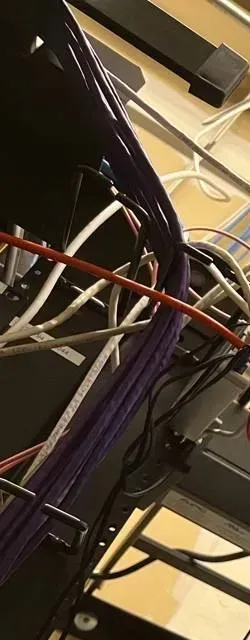
Not sure whether it's a tenant's station, a pair cut during renovation, the transformer or the street door itself? Tell us which apartments ring and which can release the door, what the door does when someone presses release, and what changed before it stopped, and a technician will tell you what kind of visit fits your Weeksville building.
Tell us about the building, which apartments, doors or functions fail, and what changed before they did. If there is more than one problem, list them together and we'll price them as one visit where we can. Say who owns or manages the building, who will open the cellar and the apartments, and include any HPD order or 311 service request number. Prefer to talk? Call (347) 934-8335.
Every Weeksville buzzer job, from one worn button at a row-house stoop to a dead panel in a 45-apartment building, follows the same eight steps.
The street and cross street, how many households share the street door, who owns the building, and what the visitor and each household hear and can do when a button is pressed.
Private owner, NYCHA or managing company; who approves the price; and who will open the cellar and every affected apartment during a 2-hour arrival window booked within 2 hours of your request.
Any HPD order, 311 number or past invoice read first, and the call panel, door, frame, strike and closer photographed before anything is opened.
Each household rung from the street, voice tested both ways, and each release tested while the street door is pushed and pulled, one function at a time.
The transformer or supply measured at rest and with the strike held, then the failing pair traced from the panel through the cellar or riser to the apartment.
The failed part and the fix named and priced from the Brooklyn list, with any electrician, locksmith or carpenter work listed separately, before approval.
The repair made in the existing opening and mounting wherever the parts allow, every splice it touches remade in a reachable box, each pair labeled by apartment.
Calling, talking and release retested from every apartment, the door's close, lock and keyless exit confirmed, and a dated record with photos sent to whoever approved the work.
Weeksville has no official boundary. Wikipedia places the historic village between Fulton Street, East New York Avenue, Ralph Avenue and Troy Avenue, the Heritage Center describes itself as being in Crown Heights, and the city's commercial study uses "Ocean Hill–Weeksville" for the area to the east. We treat all of those blocks as Weeksville and bill them from the same Brooklyn list. These are the reference points our technicians use.
The four Hunterfly Road Houses, wood-frame houses from the 1840s onward, landmarked in 1970; a $4 million restoration begun in fall 2024 was completed in February 2026.
The Weeksville Heritage Center's 19,000-square-foot education and cultural building, completed in 2014, which runs pre-registered tours of the houses and public events.
The NYCHA development built on the site of the 1960s archaeological dig; its entry doors and intercoms are NYCHA's to maintain, and residents report faults to NYCHA.
Weeksville Place, the eight-story, 45-apartment building the New York Housing Conference describes on a formerly vacant city-owned lot.
One of the four primary commercial corridors in the city's Ocean Hill–Weeksville study, lined with shops under apartments along the old village's eastern edge.
The NYPD station house at 127 Utica Avenue, whose precinct, Brooklyn Paper notes, runs from Grand Army Plaza to Ralph Avenue.
Weeksville sits where Crown Heights, Bedford-Stuyvesant and Ocean Hill meet, with Brownsville and East New York a short drive east; we cover all of them from the same Brooklyn office. Nearby pages include door buzzer repair in Crown Heights, Bed-Stuy buzzer repair, Brownsville door buzzer repair and East New York buzzer repair. Every neighborhood in the borough is listed on the Brooklyn door buzzer repair page.
Weeksville is billed from our Brooklyn price list, the same list we use across the borough, whether the building's address reads Crown Heights, Bedford-Stuyvesant or Ocean Hill. Every visit starts with a $250 service call that includes on-site diagnosis, $272.19 with sales tax: we find the failed part and give you the repair price in writing before any parts work begins, and most single-fault repairs are finished on that visit. The ranges below are the Brooklyn list's published component prices; the current list is on our door buzzer repair pricing page. Sales tax of 8.875% applies.
| Repair | Brooklyn price | Where it comes up in Weeksville |
|---|---|---|
| Service call with on-site diagnosis | $250 | Every visit; finding the fault from the street panel through the cellar to each apartment |
| Apartment station replacement | $250 – $525 | A tenant's dead or humming handset in a divided row house, or a station that drags a walk-up's line down |
| Door release relay or button | $250 – $475 | An apartment that can hear the street but can't let the visitor in, or a shop release tangled with the residents' circuit |
| 24V transformer replacement | $325 – $650 | A transformer on a row-house cellar ceiling that can no longer hold the strike for every apartment |
| Electric strike replacement and alignment | $450 – $950 | A strike reused in a heavier replacement door, or one loose in an old wood jamb or double door |
| Lobby panel repair or faceplate | $650 – $1,800 | A worn multi-button plate at a walk-up, or a failing speaker, microphone or panel at a larger building |
| Riser pair repair or re-termination | $850 – $2,400 | A shared line up a walk-up's stair hall or shaft, or a run cut and patched during several renovations |
What moves a price within its range. In Weeksville the biggest factor is access. A splice on an open cellar ceiling is quick to remake; one buried behind plaster in a stair hall that has been renovated twice is not. The number of households on the line and whether older stations can still be matched matter too. All of that is in the written quote before you approve anything.
What we never add quietly. If a fix needs line-voltage work, the electrician's part is named separately. Work by a locksmith on a lock body, a carpenter on a split jamb or sagging door, an internet provider, or another company's camera or alarm system is named as theirs, not folded into ours. Moving a strike from one vestibule door to the other, adding a button for an apartment that never had one, or converting bells to a two-way system is its own line, so you can approve or decline it separately. A 50% deposit applies to scheduled repair work beyond the diagnostic visit, and card payments carry a 3% card fee shown as its own line.
Full terms — including 50% deposit, one-year parts-only warranty on Abstract Enterprises Security Systems-supplied products, and the late-fee schedule — are set out in the service agreement.Most Weeksville calls fall into one of three shapes. The figures come from the Brooklyn list above, and your written quote names the exact parts.
$250
On-site diagnosis from the street button or panel to the transformer and every complaining apartment, with the failed part named and the repair priced in writing. A loose terminal or a single bad splice is often fixed on this visit.
$250 – $950
One failed part replaced and tested: an apartment station, a release button or relay, a transformer, or a strike fitted and aligned to the street door. Typical for a row house or one apartment in a walk-up.
$650 – $2,400
A multi-button plate or entry panel rebuilt, or a shared line traced and re-terminated so every apartment rings and releases again, with each pair labeled and each household retested.
If you have already bought a replacement handset, strike, button or video door station, we can install it on a labor-only basis. We quote that labor by phone or text from the model number and a photo of what is there now, and book the visit once the deposit is in. We check first that the part suits the system it is joining and the door it is going on, because a station from the wrong family can pull down every other apartment on the line. Warranty on customer-supplied equipment stays with its maker. If a part has to be special-ordered from a manufacturer, we tell you before the deposit that its shipping time is outside our control, and we book the installation once it arrives.
The borough page our Weeksville work belongs to: door buzzer repair across Brooklyn.
The service call and every component price on the Brooklyn list: see the full price list.
For owners and managers with buildings in more than one borough: door buzzer repair in NYC.
The row houses and apartment blocks toward Eastern Parkway: Crown Heights buzzer repair.
Brownstone and row-house blocks across Atlantic Avenue: Bedford-Stuyvesant door buzzer repair.
Walk-ups and larger buildings beyond East New York Avenue: door buzzer repair in Brownsville.
No. Weeksville has no official boundary, and we treat the blocks between Crown Heights, Bed-Stuy and Ocean Hill as one area. Every building there is billed from the same Brooklyn list, starting with the $250 service call with on-site diagnosis, and is served by the same technicians from the same Brooklyn office. Give us the street address and the nearest cross street when you book, and the name on the map won't matter.
Often, yes, if both are booked together and the people who open each cellar and apartment are available in the same window. Each building is its own system, so each gets its own diagnosis, its own written price and its own record, and the service call applies to each building. Tell us when you call that there are two buildings, so the window is long enough.
No. The service call is for finding the fault, and knowing that the strike, transformer and stations are sound and the door is the problem is exactly what it buys. Many door faults, such as a keeper out of line, a closer without latch speed or a loose hinge screw, are adjustments we make on that visit. If the jamb is split or the door has dropped badly, the written record says so plainly, so a carpenter can quote the right work instead of guessing.
The $250 service call is paid when the visit is booked, and the repair itself is priced in writing after diagnosis. Small repairs made on the diagnostic visit are paid on completion. Larger scheduled work, such as a riser repair or a panel rebuild, takes a 50% deposit before the parts are ordered and the visit is booked. Card payments carry a 3% card fee, shown on the invoice as its own line, and sales tax of 8.875% applies.
Yes. In older church buildings that grew in stages, each door's button, release and strike may be on its own small system or tied into one, and the labels rarely survive. We press each button with someone at each answering point, fire each release while watching every door, and follow each pair back to its transformer. The result is a written map of which button rings where and which release opens which door, labeled at both ends.
Usually, within reason. A station has to be reachable by the pair that feeds it, so moving it a short distance along the same wall is often simple, while moving it to another room may mean running a new length of wire. Heat and grease near a stove shorten a station's life, so a move of even a few feet is worth it. We price the replacement and the move as separate lines, and the move is new work rather than repair.
Most common strikes come on the van, so the door is usually repaired on the same visit. When the door needs a strike that has to be ordered, we leave it locking properly on its latch, so residents use keys and visitors are let in by hand until the part arrives, rather than leaving it unlocked or wedged. We tell you before the deposit when a part is a special order and that its shipping time is outside our control, and we book the install once it is in.
Make the wire easy to see and hard to mistake. After a repair we label each buzzer pair at the transformer and at the splice boxes on the cellar ceiling, and the record includes photos of where the pairs run. Show those photos to the next contractor before work starts, and ask them to mark any wire they have to move.
Usually. A quiet strike may simply be a quiet model, but it can also mean the strike isn't getting enough voltage or the latch is binding, so the door doesn't move when it unlocks. We measure the voltage at the strike, check the latch and keeper, and look at whether the release time is long enough for a visitor to react. Where the strike is working properly but is hard to hear, a louder strike or a signal at the door can be added as its own line.
Yes. Every repair leaves a dated record with the system type, the stations and strike we found, where the transformer and main splices are, which pairs serve which apartments, and photos of each. We keep those records with the building's account, so on the next call the technician arrives knowing the layout and the parts most likely needed. Send us the building list and the contact for each, and we will match each record to the right address.
Door Buzzer Repair Brooklyn NY · Door Buzzer Repair NYC · Door Buzzer Repair Manhattan NY · Door Buzzer Repair Queens NY · Door Buzzer Repair Bronx NY · Door Buzzer Repair Staten Island NY · Door Buzzer Repair Long Island NY · Door Buzzer Repair Hudson Valley NY · Door Buzzer Repair Nassau County NY · Door Buzzer Repair Suffolk County NY · Door Buzzer Repair Westchester County | 6 Cities Same-Day · Door Buzzer Repair Rockland County NY · Door Buzzer Repair Orange County NY · Door Buzzer Repair Putnam County NY · Door Buzzer Repair Dutchess County NY · Door Buzzer Repair Ulster County NY
Door Buzzer Repair Bath Beach Brooklyn NY | Doors to Towers · Door Buzzer Repair Bay Ridge Brooklyn NY | Lobby & Strike · Door Buzzer Repair Bedford Stuyvesant Brooklyn NY · Door Buzzer Repair in Bensonhurst, Brooklyn NY · Door Buzzer Repair Bergen Beach Brooklyn NY · Door Buzzer Repair Beverley Square Brooklyn NY | Porches · Door Buzzer Repair Boerum Hill Brooklyn NY · Door Buzzer Repair Borough Park, Brooklyn NY | Walk-Ups · Door Buzzer Repair Brighton Beach Brooklyn NY · Door Buzzer Repair Brooklyn Chinatown NY | Shop-Side Doors · Door Buzzer Repair Brooklyn Heights NY | Co-ops & Rows · Door Buzzer Repair Brooklyn Navy Yard NY | Suite Doors · Door Buzzer Repair Brownsville Brooklyn NY · Door Buzzer Repair Bushwick Brooklyn NY · Door Buzzer Repair Cadman Plaza Brooklyn NY | Co-op Towers · Door Buzzer Repair Canarsie Brooklyn NY | Apartment Doors · Door Buzzer Repair Carroll Gardens Brooklyn NY · Door Buzzer Repair City Line Brooklyn NY | Abstract Enterprises Security Systems · Door Buzzer Repair Clinton Hill Brooklyn NY | Stoop Doors · Door Buzzer Repair Cobble Hill Brooklyn NY · Door Buzzer Repair Columbia Street Waterfront Brooklyn NY · Door Buzzer Repair Coney Island Brooklyn NY · Door Buzzer Repair Crown Heights Brooklyn NY · Door Buzzer Repair Cypress Hills Brooklyn NY
Structured Cabling Installation Weeksville Brooklyn NY · Door Buzzer Installation Weeksville Brooklyn NY · TV Installation Weeksville Brooklyn · Access Control Installation Weeksville Brooklyn NY · Intercom Installation Weeksville Brooklyn NY | Abstract Enterprises Security Systems · Fire Alarm Installation Weeksville Brooklyn NY · Security Camera Installation Weeksville Brooklyn NY · Alarm Installation Weeksville Brooklyn NY | Frame Houses
Whether it is a divided row house where the top floor can hear the door but can't open it, a walk-up whose whole line hums since a new handset went in, a residents' door beside a store on Ralph or Rockaway Avenue that unlocks when it shouldn't, or an app panel in a newer building that stopped calling anyone, the first step is the same: tell us which apartments ring, which can release the door, and what the door does when someone presses release. We book within 2 hours of your request, test the call, the voice, the return buzzer and the keyless exit separately from the street to the cellar, and put the repair price in writing before any part goes in. Licensed under NYS license #12000287431 and rated 4.7★ across 201 Google Reviews.