A cellar recorder serving three households that stopped saving, a loft camera that dropped off the building network, or a shop camera that caught the break-in too dark to use? Sunset Park camera repair line, booked within 2 hours: (347) 934-8335
Bayed Row Houses East of Fourth Avenue · Shops on Fourth, Fifth and Seventh Avenues · Third Avenue Under the Expressway · Industry City, Bush Terminal, Liberty View and the Army Terminal
Security Camera Repair in Sunset Park
Any Brand, Any Installer · Houses With Many Households · Lofts on Someone Else's Network · Footage Copied Before Anything Is Touched
Security camera repair in Sunset Park starts with our $150 Brooklyn service call, which pays for the on-site diagnosis and is credited to the repair if you go ahead. On our published Brooklyn list, most single faults come to $150 to $700, and a new recorder or rewiring several cameras comes to $700 to $1,500. We fix systems other people put in: the cellar recorder of a row house in the 40s or 50s that may now serve three or four households, the door and register cameras of a store on Fifth Avenue, the sidewalk camera of a shop on Third Avenue in the shade of the Gowanus Expressway, and the cameras of a workshop or studio inside a concrete building west of Second Avenue. Requests are booked within 2 hours, visits get a two-hour arrival window, and you hear the cause and see a written price before a single part is changed.
Every price on this page comes from our published Brooklyn camera repair list, and your own price is written down before work begins
Rated 4.7★ across 201 Google Reviews
Reviewed and updated November 12, 2026, against Con Edison's June 24, 2025 and July 3, 2026 voltage-reduction notices for southwest Brooklyn and News 12's June 2025 outage reporting; the Landmarks Preservation Commission's 2019 Sunset Park designations and its permit guidebook; the Fifth Avenue Committee's 2020 Sunset Park Housing Report and Community Board 7's district profile; NYCEDC on the Sunset Park District, the Brooklyn Eagle on Industry City and the Sandy repairs on 36th Street, the Mann Report on the Brooklyn Army Terminal and Elevator World on Liberty View; Patch, CBS New York, News 12 and the Brooklyn Eagle on local burglaries; a Brownstoner forum thread about cameras in a Sunset Park house and a Sunset Park electrician's Yelp review; Brick Underground on tenants and footage; HomeAdvisor's Brooklyn cost page; and the New York Department of State on installer licensing. · Abstract Enterprises Security Systems, NYS license #12000287431 · crews dispatched from our Troy Avenue office in Brooklyn
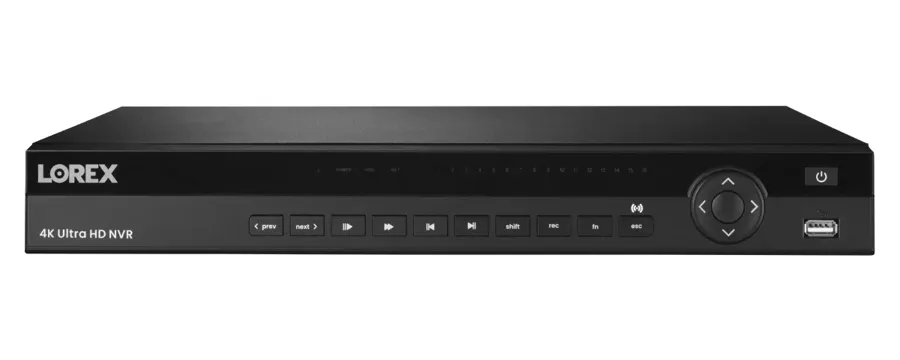
A product photo from the AESS job library, not taken in Sunset Park: a 16-channel desktop network video recorder. In a Sunset Park row house this box usually sits on a cellar shelf near the meters, often in a part of the cellar that is now someone's storage or someone's apartment. In a Fifth Avenue store it lives under the counter or in the basement, and in an Industry City or Army Terminal suite it is in a closet beside the network jack the building provides. Sixteen channels is common on houses that started with four cameras and added more as each household asked for its own view, and the recorder is where most of our repairs begin, because it keeps the footage and the log of what stopped and when.
Sunset Park Camera Repair Request
Row house, walk-up, avenue shop, workshop or loft suite: tell us the address and what the screen shows, and a technician calls back with the next step
✅
Request Sent!
Thank you. A technician will contact you about the Sunset Park address shortly.
25+
Years Experience
✓
Same-Day Estimates
100%
Licensed & Insured
4.7★
201 Google Reviews
Owner-operated since 2002 · Thousands of jobs completed · Booked within 2 hours
Security camera repair in Sunset Park is really two kinds of job, and Third Avenue is roughly where one ends and the other begins. East of it, on the blocks of bayed row houses that run up the hill toward the park and on to Eighth and Ninth Avenues, a camera system is usually a homeowner's recorder in a cellar that now has to serve several households, a tenant or two, and whoever moved in last. Its faults are about power from whichever outlet was nearest, cable pushed along old moldings and through Formstone or vinyl siding, logins handed from one relative to another, and a recorder nobody checks until the day something is missing. West of it, below the Gowanus Expressway and out to the piers, a camera system is usually a business's cameras inside a large concrete building it does not own: Industry City, the Bush Terminal buildings, Liberty View at 850 Third Avenue or the Brooklyn Army Terminal. There, the faults are about the landlord's network, cable that has to stay in surface raceway because the concrete cannot be cut, long runs across deep floors, freight elevators and building rules. The avenue shops in between share a little of both. Send a photo of the recorder screen to (347) 934-8335 or on WhatsApp and we will tell you which kind of fault it looks like, and what that repair costs on our Brooklyn list, before you book anything.
Looking at your photos costs nothing. The $150 service call covers the on-site diagnosis and is credited to the repair if you go ahead.
We work under New York State license #12000287431, the state license for companies that install or service security and CCTV systems for other people.
We repair any brand and any installer's system, and we tell you plainly when an old camera or recorder is not worth paying to fix.
The Neighborhood
Why Sunset Park Properties Need Security Camera Repair
Sunset Park runs from the Green-Wood Cemetery edge and Greenwood Heights in the north down to Bay Ridge, and from the harbor east to Borough Park. Community Board 7 describes it as split by the Gowanus Expressway, with the industrial area mainly west of Third Avenue and the shopping strips on Fifth and Seventh Avenues; Eighth Avenue is the spine of Brooklyn's largest Chinatown. Most of the houses are two stories over a basement with a bay window on the front, built mainly between 1892 and 1910, and most were built as two-family homes. That is the context. What matters for a camera repair is who uses each system, where its recorder and power actually are, and whose rules apply to the cable.
Start with the houses. When the Hamilton Brothers finished their row on 50th Street around 1903, the Landmarks Preservation Commission's designation report notes, the south side held "25 two-family houses," each "Containing a separate second-floor apartment that could be rented out." That plan, an owner downstairs and a rent-paying household upstairs, is still the basic shape of the neighborhood. What has changed is how many people now live inside it. The Fifth Avenue Committee's 2020 Sunset Park Housing Report calls Sunset Park the "4th most overcrowded neighborhood in NYC," puts homeownership at 28.1 percent, says more than half of the district's 45,903 homes were built before 1939, and reports an increase in illegal basement apartments. Community Board 7 calls the district's housing the "second oldest housing stock in NYC."
Put a camera system into that house and it stops being one family's gadget. The recorder was bought by the owner and put on the cellar shelf when the cellar was storage. The cameras were added one at a time, as each floor asked to see the front door or the yard. Some are powered from the owner's outlets and some from whatever socket was closest on the day, which may now be inside a tenant's apartment. The app login was shared with a son, a tenant, a cousin who set it up and has since moved. Most of the repair calls we get from these blocks are some version of that history catching up: a recorder in a room the owner can no longer walk into freely, cameras that go dark when someone else's breaker trips, a drive that filled and stopped saving months ago because nobody whose phone gets the alerts still lives there.
Then there is the cable itself. In a 2011 Brownstoner forum thread, an owner of a private house in Sunset Park asked how to get cameras in without the wiring showing, and was told that coax for a wired system is "a bit too thick to be hidden around moldings," so it has to go through ceilings or walls. Plenty of installers never took that advice. On these houses we find coax and power cable stapled along baseboards and door casings, pushed through the window frames of the parlor bay, and run down the outside of the front through Formstone or vinyl siding that has since let water into every hole. That kind of cable fails slowly, at the staples and the bends, and usually first at the connector where it meets the camera.
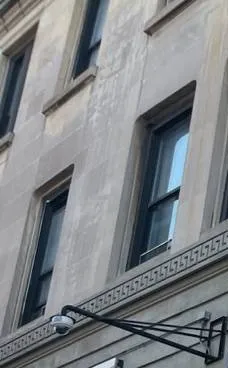
A photo from the AESS job library, not taken in Sunset Park: a bullet camera on a long black steel arm below a carved Greek-key band on a pale stone facade with tall sash windows. Sunset Park's historic districts include limestone and brownstone fronts with carved bands like this, on 44th Street and in the rows between 54th and 59th Streets. When a camera on a front like that is repaired, the new one goes back on the same arm and the same anchors, and nothing is drilled into the carving.
West of Third Avenue the picture is completely different. NYCEDC describes the Sunset Park District as 200 acres of waterfront with four big industrial campuses: the Brooklyn Army Terminal, the South Brooklyn Marine Terminal, MADE Bush Terminal and the Brooklyn Wholesale Meat Market. Next to them is Industry City, which the Brooklyn Eagle described in April 2025 as a 35-acre, 6-million-square-foot complex of 16 buildings with more than 650 businesses. The Army Terminal, by the Mann Report's count in January 2026, is 59 acres and 4.1 million square feet with more than 100 businesses, and leases suites from 1,500 square feet. Liberty View at 850 Third Avenue is an eight-story, 1.3-million-square-foot former Navy warehouse from 1916. A camera repair in one of these buildings is a tenant's job in a landlord's building: concrete you may not cut, a network you do not control, a loading dock you share and an elevator you have to book.
Running through the middle of it all is the power. On June 24, 2025, Con Edison reduced voltage by 8 percent for 105,800 customers in southwest Brooklyn, naming Sunset Park, "to protect equipment and maintain service as crews make repairs." News 12 reported Sunset Park among the hardest-hit neighborhoods the next day and summed it up this way: "In some cases, the power isn't fully out—but it's running lower than usual." On July 3, 2026, Con Edison did it again for an area of 106,000 customers that again listed Sunset Park. A recorder, a network switch and a strip of plug-in camera adapters do not like low voltage. Some ride through it, some reboot over and over, and some come back with a drive the recorder no longer recognizes. Those are repair calls, and they often surface weeks later.
Finally, footage gets asked for here. In June 2019, Patch reported that two men cut the locks on the front gates of a supermarket at 5101 Sixth Avenue around 4 a.m., and "The two thieves were caught on surveillance video removing the locks on the front gates." In 2017, CBS New York reported a pair who broke into businesses closed for the night, every one between 2:30 and 5 a.m. In June 2024, News 12 reported two men forcing their way into a business on Second Avenue near 41st Street and taking $8,000 from a desk, and in June 2026 a man forced the front door of a home at 53rd Street and Eighth Avenue and took $10,000. Each of those stories ends with someone asking what a camera recorded. A repair in Sunset Park is about making sure the answer is a usable clip, not a dark tile or a drive that stopped writing in the spring. Many owners pair the repair with a look at the buzzer or video intercom on the same street door, because in these houses one doorway often carries both.
Six Sunset Park facts that shape a camera repair
Most systems serve more than one household. Most row houses were built two-family, homeownership is 28.1 percent, and the Fifth Avenue Committee ranks Sunset Park the fourth most overcrowded neighborhood in the city. Who owns the recorder, who pays for the repair and who is allowed to see which camera are questions we settle before we touch anything.
The housing is old, and so is the wiring around it. More than half of Community Board 7's 45,903 homes were built before 1939. Camera cable shares walls, cellars and outlets with wiring that was never planned for it.
Four historic districts were designated in 2019. Sunset Park South (54th to 59th Streets between Fourth and Fifth Avenues), the 50th Street row, Central Sunset Park (47th and 48th Streets and Sixth Avenue from 47th to 49th) and Sunset Park North on 44th Street. Inside them, a camera replaced in kind is ordinary repair; a moved or added one is not.
The waterfront is concrete and shared. Industry City alone has 16 buildings and more than 650 businesses. A Sunset Park electrician wrote on Yelp that in one building "It was not allowed to cut the concrete to recess the wiring in this building and we had to install electrical wiremold." Camera cable follows the same rule.
Low voltage, not only outages, hits recorders. Con Edison cut voltage by 8 percent across areas that included Sunset Park on June 24, 2025 and again on July 3, 2026. Brownouts reboot recorders and switches without ever making the evening news.
Water reached the low blocks. The Brooklyn Eagle reported in 2017 that Hurricane Sandy did $50 million in damage to Industry City buildings on 36th Street between Second and Third Avenues, followed by about $21 million in flood-resilience work. Where a recorder sits on a low floor near the water still matters.
Where this page applies. It covers Sunset Park from about 36th Street south to 65th Street, and from the waterfront and First Avenue east past Eighth Avenue toward Borough Park, including Fourth, Fifth, Sixth, Seventh and Eighth Avenues, Third Avenue under the expressway, and the Industry City, Bush Terminal, Liberty View and Army Terminal buildings. The storefront blocks of Eighth Avenue have their own page, security camera repair in Brooklyn Chinatown, the blocks north toward Green-Wood are on our Greenwood Heights camera repair page, and the rest of the borough starts from our Brooklyn security camera repair page. Sunset Park is billed at the standard Brooklyn rate.
Same-Day Repair in Sunset Park
Need Repair in Sunset Park? A Recorder Nobody Has Checked Since Spring, a Loft Camera Lost on the Building Network, or a Break-In Caught Too Dark to Use
Urgent calls from Sunset Park tend to come in three forms. The first is the house that finds out its recorder stopped saving only when somebody needs it: a package or a bike is gone, a tenant asks to see the hallway, and the playback for that afternoon is empty, or it stops weeks earlier with a disk error nobody saw. The second is the business west of Third Avenue whose cameras vanished from the phone overnight because the building changed something on its network, a switch was swapped in the riser, or the internet in the suite was moved to a different provider. The third is the shop owner on Fourth or Fifth Avenue who was broken into before opening and has a clip of a shape at the back door but no face.
If footage from a particular day matters, leave the recorder running and do not unplug it, restart it or press reset. Recorders write over their oldest video once the drive is full, so the clock is already running, and a restart can wipe the log that tells us when a camera dropped or the drive stopped writing. If the recorder sits in a part of the house that belongs to a tenant, ask them not to touch it either. Text us the date and time you need, the camera it should be on and a photo of the recorder's front or its screen, and we plan the visit so that clip is copied first.
For everything else, the path is short. The $150 Brooklyn service call books a two-hour arrival window. The technician finds the fault, tells you what failed and why, and writes the price down from our Brooklyn list before any part is replaced. Most single-fault repairs on houses and shops here are finished on the same visit. In the waterfront buildings, the part of the job that takes longest is usually arranging access, a loading-dock slot or a freight elevator and sometimes an insurance certificate for building management, so tell us the building and the suite when you call and we start that the same day.
What We Install
Security Camera Repair Services in Sunset Park
Each repair below is priced from our Brooklyn camera repair list. The service call pays for finding the fault; the repair is priced by what failed, how many cameras it touches and how hard each cable is to reach, whether that is a stoop camera on a bayed row house on 55th Street, a sidewalk camera on a Fifth Avenue awning or a dock camera on the third floor of a waterfront building.
Shared-house system repair
Recorders and cameras that serve an owner and one or more tenant households. We sort out which cameras belong to whom, move the system's power onto the owner's side, give each household the views it should have and nothing more, and fix what is broken.
Recorder and hard drive repair
DVRs and NVRs that stopped saving, beep, restart, or show a disk error, and drives worn out by years of recording around the clock. We copy what can be saved, replace the drive or the recorder, and prove playback before we leave.
Brownout and outage recovery
Recorders that lost their settings or clock during a voltage reduction, switch ports that no longer power a camera, and plug-in adapters that failed on the return of power. We check every link in the chain, not just the one camera that is dark.
Cable, connector and raceway repair
Coax cracked at the staples along old moldings, connectors corroded where cable comes through siding or Formstone, and surface raceway crushed on a loading dock. Rerouted out of sight where the house allows it, replaced in raceway where the concrete does not.
Building-network camera repair
Cameras in a loft or a suite that run on the network jacks the building provides. We find whether the fault is your camera, your recorder, your switch or the building's network, and work with building IT when it is theirs.
Dark and backlit picture repair
Cameras that show a shape instead of a face at a back door before dawn, under an expressway deck at noon, or at a shop door facing a bright avenue. Re-aimed, reset, given a better lens or light, or replaced with a camera made for the view.
Dead camera diagnosis
One camera or several dark at once: outlet, adapter or supply, switch port, connector, cable, camera or recorder channel, tested in that order so you pay for the part that failed and not the three beside it.
Phone access and logins
Apps that stopped connecting after a provider change, recorders whose admin password left with a relative or a former tenant, and old users still on the account. We recover access, remove people who should not be there and set up the right ones.
Footage export for incidents
Clips for the 72nd Precinct, an insurer, a landlord, a building manager or a court, exported in the recorder's own format with its timestamps intact, plus a short lesson so you can do it yourself next time.
Building Specialists
Security Camera Repair for Sunset Park's Architecture
A dead camera is a different repair on each kind of Sunset Park building, because the cable path, the surface it is fixed to, the room the recorder is in and the person who has to say yes all change from one to the next. These are the six we meet most.
Bayed two-family row houses
Two stories over a basement with a full-height bay, built mostly between 1892 and 1910, many now under Formstone or vinyl siding. Cameras over the stoop and the yard, a recorder in the cellar, cable along the inside walls.
Houses divided into several apartments
Row houses where the original two homes are now three, four or more households. One recorder, many users, power drawn from several apartments, and a cellar that is no longer simply the owner's.
Landmarked rows
Houses inside the four 2019 historic districts, with limestone, brick and brownstone fronts and L-shaped stone stoops. A replacement camera goes back in the same place, into a joint, not the stone.
Walk-ups over avenue shops
Three- and four-story buildings on Fourth, Fifth and Seventh Avenues with a store at street level and apartments above, usually with a store system and a landlord system sharing one doorway.
Third Avenue under the expressway
Warehouses, industrial buildings and shops along Third Avenue beneath the Gowanus Expressway deck, where the light, the traffic and the roll-up doors decide what a camera can see.
Waterfront industrial buildings
Industry City, the Bush Terminal buildings, Liberty View and the Army Terminal: concrete floors, deep spans, building-run networks, shared docks and freight elevators, with each tenant's cameras inside a landlord's building.
Bayed two-family row houses: the cable is the weak point
On a typical Sunset Park row house, the camera over the stoop looks down the steps toward the sidewalk, a second camera watches the yard from the back of the parlor floor or the rear extension, and both run to a recorder on a cellar shelf. The cameras themselves tend to be fine for years. The cable is what fails. If it was run inside, it often goes along a baseboard or a door casing and down through a hole by the radiator pipe, held with staples that bite into the jacket a little more every time a door bangs. If it was run outside, it comes down the front through Formstone or siding and in through the foundation, and every hole it passes through is a place for water to follow it. When we repair one of these houses, we test the run end to end before blaming the camera, replace the connector at the camera with a sealed one rather than taping the old one, and where we can, move the cable off the outside of the front and into the hollow behind the bay or through the cellar ceiling.
Formstone and vinyl siding each need their own method. Formstone is a cement coating over the brick, and a camera screwed only into the coating can work loose as the coating cracks around the anchors. The repair is to anchor through it into the masonry behind, or move the mount to a solid band like a window head or a lintel. Vinyl siding is hollow, so a camera fixed to it alone will sag and twist in the wind; the right fix is a mounting block that sits on the siding but is screwed into the wall behind. Either way, the hole the cable uses gets sealed with a drip loop below it, so the next rainstorm runs off instead of in.
Houses divided into several apartments: one recorder, many keys
Many Sunset Park houses that were built for two households now hold more. The Fifth Avenue Committee's housing report found an increase in illegal basement apartments, and in November 2026 ABC7 reported that a house on 58th Street where six people died in a fire had complaints on file that its basement had been made into an apartment and its two upper floors divided into three apartments each. We are a camera company, not inspectors, and we do not ask who lives where. But a camera system in a house like that has to be repaired with the house as it actually is. The recorder may now be in a room someone sleeps in. Cameras may be powered from outlets in three different apartments, so one tenant turning off a power strip takes the hallway camera down. The internet the recorder uses may belong to someone who is about to move out.
So a repair in a divided house starts with a short list. Whose recorder is it, and who is paying? Which outlets feed which cameras? Whose internet is it using? Who can see which camera on their phone, and who should? Then we fix the fault and, where the owner agrees, put the system's power on one outlet the owner controls, move the recorder somewhere the owner can reach without knocking on a tenant's door, give each household access only to the shared door and its own views, and remove users who no longer live there. We do not add load to a crowded power strip or run cable through a window that has to stay clear, and we will tell an owner plainly if the cellar power we find is not something a camera system should be plugged into. Wiring work on outlets themselves is for a licensed electrician; we do not do electrical work.
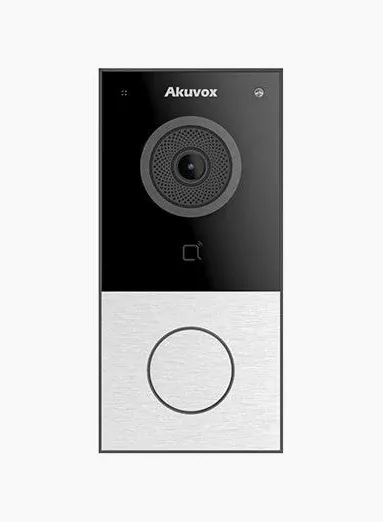
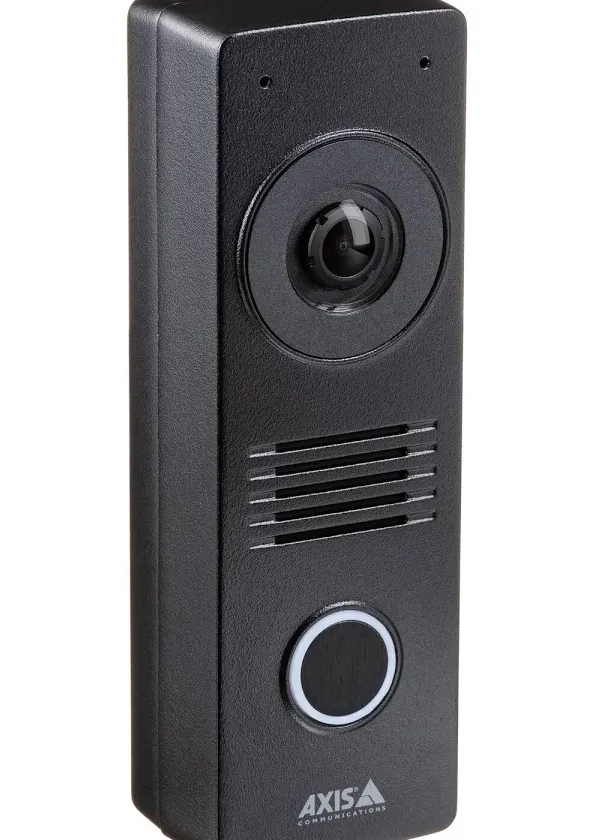
A product photo from the AESS job library, not taken in Sunset Park: a slim video door station with a camera lens at the top and a large round call button. On a two-family or a divided row house in Sunset Park, a station like this beside the street door is often the only camera every household uses. Whether its picture is also saved on the cellar recorder depends entirely on how it was connected, so we check that before telling anyone their door is being recorded.
Landmarked rows: back in the same joint
The Landmarks Preservation Commission designated four Sunset Park historic districts on June 18, 2019: Sunset Park South, roughly 285 buildings on 54th to 59th Streets between Fourth and Fifth Avenues; the 50th Street row of 50 houses; Central Sunset Park, about 148 buildings on 47th and 48th Streets and Sixth Avenue; and Sunset Park North, about 56 buildings on the south side of 44th Street. The 50th Street report notes that "nearly all retain their massive L-shaped stone stoops." On those blocks a front camera is something the Commission cares about. Its permit guidebook treats "Ordinary maintenance, repair, and retrofitting of health, safety, and utility equipment" as work that needs no permit, while new equipment is expected to be small, well spaced, attached at mortar joints, plain masonry, wood or metal and never through decorative surfaces, with only about ten inches of visible conduit. In practice that means a repair puts a camera of about the same size back in the same position on the same anchors, and keeps the cable tight in a joint. If the right fix is a new spot or an extra camera, we tell you it is a different kind of job before anything is drilled.
Walk-ups over avenue shops: two systems at one door
On Fourth, Fifth and Seventh Avenues the usual building has a store at street level and two or three floors of apartments above, reached through a narrow street door next to the shop window. The store often has its own cameras, bought by the tenant and recorded under the counter or in the back. The landlord may have a separate camera on the residential door and in the stair hall, recorded on another box in the cellar. Sometimes one camera even feeds both. When one of them fails, nobody is sure whose it is, and the store owner and the landlord each assume the other will call. We start these repairs by tracing which camera goes to which recorder and who owns each, label everything at both ends, and only then fix what is broken, so the next call does not start from zero.
Third Avenue under the expressway: daylight that never arrives
The Gowanus Expressway was built over Third Avenue in 1941 on the old elevated railway's structure and widened to six lanes in the 1960s, and it carries well over 100,000 cars and trucks a day. Underneath it, the sidewalks along Third Avenue sit in shade for most of the day, with bright strips of sun only where the deck ends at the cross streets. That light is hard on cameras. A camera that decides by light level when to switch to night mode may stay in black and white well into the morning, flip back and forth whenever a truck's shadow passes, or expose for the sunlit cross street and leave the sidewalk in front of the shop nearly black. Roll-up doors make it worse: open, they let a wall of daylight into a dim garage; shut, they leave a camera looking at a blank steel face. Most Third Avenue picture complaints we see are fixed with settings, an angle, a lens or a light of the owner's own, not with a new system.
Waterfront industrial buildings: a tenant in a landlord's building
In Industry City, the Bush Terminal buildings, Liberty View and the Army Terminal, a business's camera system lives inside a building it does not control. The floors and ceilings are concrete, and as one Sunset Park electrician put it in a Yelp review, "It was not allowed to cut the concrete to recess the wiring in this building and we had to install electrical wiremold." Camera cable on those floors runs in surface raceway or in a ceiling tray, which means a damaged run is usually reachable but a new route needs the landlord's approval. Many suites get their network from the building: Industry City's carrier room is run by DataVerge at 882 Third Avenue, which describes a campus fiber network to tenant suites. Floors can be very deep, so a camera at the dock end may be a long way from the recorder at the office end. And every visit involves the building: a loading-dock or freight-elevator slot, sign-in at security, sometimes a certificate of insurance. We plan for all of that when you book, so the visit is spent on the cameras.
Field Notes
Field Notes: The Question We Ask Before Every Sunset Park Repair
This is how our technicians approach most Sunset Park calls, written as our working method rather than a story about any one property. Before we talk about cameras, we ask who else uses the system. On the house blocks the answer is rarely "just us." It is the owner and an upstairs tenant, or three apartments and a basement, or a store and the family above it. On the waterfront it is the business, the landlord's network team and building security. That one question changes the whole visit. It tells us whose permission we need, whose apartment or closet the recorder and power might be in, whose internet the recorder relies on, and whose phone should get the alert the next time something fails.
The second thing we ask for is a photo of the recorder itself, or of its screen, not only of the app. The app shows what the phone can reach today. The recorder shows whether it is saving, whether its drive is healthy, and which cameras it lost and when. About half the time that photo tells us whether the fault is in the house, in the building's network or in the recorder before anyone gets in a van. It costs nothing, and it means the technician arrives with the right part and the right keys, or tells you before the visit that no part is needed.
Fault by Fault
Brownouts, Borrowed Outlets, Silent Drives, Building Networks and Pre-Dawn Doors: How Sunset Park Camera Systems Go Wrong
Brownouts: when the power is low rather than off
An outage is obvious. A voltage reduction is not. When Con Edison lowered voltage by 8 percent across parts of southwest Brooklyn including Sunset Park in June 2025, and again in July 2026, most households noticed only dim lights and slower air conditioners. Camera equipment notices more. A recorder's power supply that is already old may drop out at the bottom of a dip and restart, and a recorder that restarts many times in an afternoon can come back with a drive it reports as abnormal. Small plug-in adapters for coax cameras run hot and fail. A network switch powering several cameras can shut ports off when its input sags, so the cameras farthest down the list go dark first. A technical guide from Security Wholesalers lists the usual aftermath plainly: devices "started in the wrong order," a drive that "reports an abnormal state," "Time/NTP was lost," and it warns that "Repeated power cycling can worsen storage and power faults." After a brownout we check every one of those, not only the camera that is dark, and we size any battery backup for what it actually has to carry and set it to shut the recorder down cleanly rather than let it bounce.
Borrowed outlets: when someone else's switch is your camera's power
In a house where several households share one system, the cameras are often powered from whichever outlet was closest when each was added. One plugs into an adapter behind the owner's couch, one into a socket in the tenant's hallway, one into the cellar outlet that shares a circuit with the washer. Each of those is a way for someone who has no idea the camera exists to switch it off: a tenant unplugs a power strip to vacuum, a breaker in the other apartment trips, an outlet is controlled by a wall switch somebody turns off at night. The camera looks broken; it is simply unpowered. The repair is to bring every camera's power back to one place the owner controls, ideally a single supply or a PoE switch beside the recorder, so the system lives or dies on one outlet, and that outlet sits on a backup.
Silent drives: the warning nobody received
A recorder writing four or eight cameras around the clock wears its drive out, and when the drive starts to fail the recorder may still show live video while saving nothing, or saving in fragments. Many recorders can warn about it with a beep, an email or a push alert. In Sunset Park's shared houses, those warnings tend to go to the person who set the system up, and that person is often no longer there: a relative who moved, a tenant who left, an installer's email address. The recorder on the cellar shelf beeps into an empty room. A drive swap is one of the cheapest repairs on our list. The important part is to copy what can be copied first, then send the recorder's health alerts to phones that belong to people who live in the house now, and test them in front of you so you know what one looks like.
Building networks: the change you were never told about
In a waterfront building, a tenant's cameras and recorder often sit on a network the landlord or a building provider runs. That network changes: a switch in the riser is replaced, addresses are handed out differently, a security setting is tightened, the internet in the suite moves to another provider. None of those is aimed at your cameras, but any of them can break them. The usual symptoms are cameras that show on the recorder in the office but not on phones outside it, a recorder that cannot find cameras on the far side of the floor, or a whole system that vanished on a Monday morning. The repair is mostly detective work, done with a laptop on the recorder and a tester on the cable. When the fault is on the building's side, we write down exactly what we need, an open port, a fixed address, a cable patched in the closet, and pass it to building IT in their language, so the fix does not bounce back and forth for a week.
Pre-dawn doors: the camera that sees the break-in and not the burglar
Business break-ins in the local reports cluster before dawn and at the back: the 2017 pair whose burglaries all fell between 2:30 and 5 a.m., the supermarket gate cut around 4 a.m. in 2019. That is the hardest light a camera faces. A back door or a gate in an alley or a rear yard has no street lamp, so the camera depends on its own infrared, which lights the first few feet and the nearest wall and leaves a face at the door as a grey smear. A camera aimed down a long alley at the door shows that someone was there, never who. The repairs that change that are not expensive: a camera lower and closer to the door, aimed across it at face height; a small light of your own on a motion sensor; infrared turned down and a separate illuminator added so the frame does not wash out; and recording set to full quality at night on the cameras that matter. We test those at night, or by covering the lens and lighting the scene the way the back of the building looks at 4 a.m.
Commercial Security Camera Repair
Business Security Camera Repair in Sunset Park
Sunset Park's businesses sit on the avenues that run the length of the neighborhood and in the big buildings along the water. The Brooklyn Eagle counted about 500 businesses on the two-mile stretch of Fifth Avenue from 38th to 64th Street in 2014, and quoted the business district's director: "Fifth Avenue is our Main Street in Sunset Park." Industry City passed 650 businesses in 2025, and the Army Terminal has more than 100. The cameras those businesses rely on fail in different ways depending on which of these streets they are on.
Fifth Avenue
The main shopping street from 38th to 64th Street, with stores, restaurants and groceries under apartments. Door, register and aisle cameras, and back-door cameras in narrow rear halls and yards.
Fourth Avenue
Ground-floor shops in mixed-use buildings along a wide, busy avenue with R stations at 45th, 53rd and 59th Streets. Sidewalk cameras behind front windows, and cellar recorders reached through sidewalk doors.
Seventh Avenue
The second shopping strip Community Board 7 names, with corner stores, services and offices above them. Systems here are often small: a few cameras on one recorder in a back room.
Third Avenue
Industrial buildings, warehouses and shops beneath the Gowanus Expressway. Roll-up doors, lots behind fences, and cameras fighting the deck's shade all day.
Industry City and Bush Terminal
Sixteen buildings between about 32nd and 51st Streets with more than 650 businesses: makers, studios, offices, food and storage. Tenant cameras on building networks, in concrete, along long corridors.
Liberty View and the Army Terminal
The 1916 warehouse at 850 Third Avenue and the Army Terminal from 58th to 65th Streets, with suites from 1,500 square feet up. Deep floors, freight docks and strict building rules for contractors.
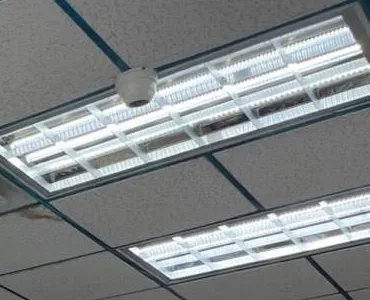
A photo from the AESS job library, not taken in Sunset Park: a small white dome camera on grey acoustic ceiling tiles beside a long louvered fluorescent light panel. In a Fifth Avenue store or a waterfront office, this is the camera over a register, an aisle or a reception desk. Its picture is often ruined not by age but by what happened around it: a new light panel next to the dome, a taller display under it, or a ceiling tile replaced at an angle.
Fifth and Fourth Avenue stores: the back of the shop matters most
Avenue stores usually have their best camera at the front door and their worst at the back, which is the wrong way round for the break-ins that get reported here. The front camera faces the avenue in daylight and shows customers well. The back door opens onto a narrow yard, an alley or a hall shared with the apartments upstairs, and its camera is often an afterthought: wide, high, lit only by its own infrared, recorded at reduced quality to save drive space. We look at the back first. Moving that camera closer to the door and lower, adding light, and recording it at full quality overnight are usually the most useful repair a store owner can buy. Inside, we check the register camera against the current layout, because counters move and displays get taller, and we confirm how many days the recorder keeps, because shrinkage is often discovered days after it happened.
Store recorders also tend to share the building's troubles. In a cellar reached through steel doors in the sidewalk, a recorder sits near the compressors, the water heater and whatever the landlord stores. In a back room it shares a power strip with a microwave and a phone charger. When the power sags, those are the recorders that restart. Moving the recorder off the floor, onto its own outlet and a correctly sized backup, is part of most store repairs we do on these avenues.
For a business inside Industry City, Bush Terminal, Liberty View or the Army Terminal, the first job on a repair is drawing the line between what belongs to the tenant and what belongs to the building. The camera and the recorder are usually yours. The cable may be yours inside your suite and the building's in the corridor and the risers. The network port in the wall is almost always theirs. The building may also have its own cameras in the lobbies, docks and corridors, which you do not control and generally cannot access without going through building management. We trace the fault across that line, fix the part that is yours, and hand building management a clear note of anything that is theirs. We also follow each building's contractor rules, booking the freight elevator or dock, signing in, and sending a certificate of insurance when management asks for one.
Rules that touch a commercial camera repair
In New York, companies that install or service security and CCTV systems for others need a license from the Department of State; we work under NYS license #12000287431. An owner who installs cameras on their own property does not need the license, but most landlords and building managers ask for a licensed company anyway. Employers who watch staff on camera should know that New York Labor Law Section 203-c bars video recording in restrooms, locker rooms and changing rooms, and that state law also requires private employers to give notice before monitoring employees electronically. On landmarked blocks, a facade camera replaced in the same place is ordinary repair under the LPC guidebook, while a moved or added one is not. And the NYPD's retail-theft program that lets businesses link their cameras to the police is free and opt-in: "none of this is mandatory." We are not your lawyer; we point out where a repair touches one of these rules so you can decide before work begins.
Your Questions Answered
Security Camera Repair in Sunset Park: Questions Answered
Row houses and the people in them
Whoever wired our 1900s row house ran the camera coax along the parlor moldings, and our painter wants it gone before he starts. Can the cable be moved out of sight without losing the cameras?
Usually, yes, and it is a good moment to do it. Coax is thick and stiff, which is why it ends up stapled along trim, but it can almost always be rerouted through the cellar ceiling and up inside a wall cavity or the hollow behind the bay, coming out only where the camera is. On many houses it is simpler to replace the old coax with one thinner network cable and switch those cameras to network models, which also improves the picture. Either way we test the cameras before the painter covers anything, and the old staples and holes are left ready for him to fill.
Our house was built as an owner's duplex with a rented top floor, and the top-floor tenant is moving out next month. What should change on the camera system before the new tenant arrives?
Three things. Remove the departing tenant's app access and change any shared password they knew, including the recorder's admin login if they ever had it. Check whether any camera, adapter or the recorder's internet runs through their apartment, because when their electric or internet account closes, that part of the system goes dark. And decide what the new tenant should see: normally the shared street door and stoop, not your yard or your hallway. We can do all three on one visit and leave a short written list of who has access to what.
Our front is vinyl siding, and the stoop camera's mount has pulled loose from it and droops after every windy night. Can a camera be fixed solidly to siding?
Not to the siding alone; vinyl is hollow and flexes. The repair is a mounting block made for siding, which fits the profile of the panels and is screwed through into the sheathing or masonry behind, with the camera fixed to the block. The cable goes through the block, so the hole is covered and sealed instead of open to rain. On a house where the siding hides old brick, we anchor into the brick. If the camera has been swinging for a while, we also check its connector and the cable at the hole, because constant movement is what breaks them.
Our house has three apartments with three separate internet accounts. Which one should the camera recorder be connected to?
Ideally the owner's, or a small account the owner keeps just for the building, because the recorder needs an internet connection that will not disappear when a tenant moves or stops paying a bill. The recorder records without internet, but phone viewing and alerts stop the moment that connection goes. If the only option is a tenant's router, we connect it with a cable rather than Wi-Fi, give it a fixed address on that router, and write down what to do when the tenant's provider swaps equipment. Many owners decide during the repair that the few dollars a month for their own line is worth it.
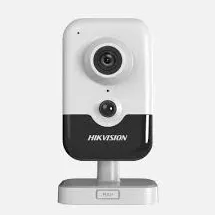
A product photo from the AESS job library, not taken in Sunset Park: a white indoor cube camera. In many Sunset Park households, a camera like this often sits on a shelf in a grandparent's room or a child's play area, on its own app, separate from the house's main recorder. Who can see it is as important as whether it works.
We use a small indoor camera to keep an eye on an elderly parent during the day, and it shows up on the same app as the house cameras that the tenants can see. Can her room be kept private?
Yes. On most recorders and apps you can create separate users and give each one only the cameras they should see, so tenants get the street door and the stoop and family members get her room. If the camera is a separate consumer model on its own app, it may simply need to be removed from the shared account and kept on a family account. We set the permissions on the visit and check each login from a phone, so nobody is surprised later by what a tenant can see.
The avenues
Someone pried our store's back door at about 4 a.m. The camera recorded the whole thing, but the face is too dark to make out. Can the back door camera be fixed for next time?
Usually, and without a new system. A back-door camera mounted high and far from the door lights only the first few feet with its infrared, so at 4 a.m. a person at the lock is a grey shape. Moving it lower and closer, aimed across the door at face height, adding a motion-sensor light of your own, and turning down the camera's infrared if it bounces off a nearby wall usually solves it. We also set that camera to record at full quality overnight and check the clip at night before we sign off. Keep the clip you have; we can export it properly for the precinct.
We want a phone alert when the back door camera sees someone between 2 and 5 in the morning, but not when the bread delivery arrives at 6. Can alerts follow a schedule?
Yes. Most recorders and apps let you set when a camera sends alerts, separate from when it records, and many can be set to alert only on a person rather than any movement, which cuts out cats, headlights and blowing trash. We set the back-door alert for the hours the shop is closed and empty, keep recording around the clock, and test it by walking past the door so you see what the alert looks like on your phone. If the delivery time changes, the schedule is a two-minute change you can make yourself.
Our church on Fifth Avenue has cameras in the sanctuary, the hall and the office, and the volunteer who set them up has moved away. Who should hold the logins?
The organization, not a person. We recover access to the recorder, create an admin login held by the church itself, written down and kept with its records, and separate everyday logins for the people who actually check the cameras, each with only the views they need. The volunteer's old account comes off. For a nonprofit or a congregation that changes volunteers often, we also suggest that two people know the admin password, so the system never again depends on one person's phone.
West of Third Avenue
Our shop is on Third Avenue under the Gowanus Expressway, and at noon on a sunny day the sidewalk camera is still in black-and-white night mode. Why won't it switch back to color?
Because under the deck it is not bright enough for the camera to believe it is day. Most cameras switch modes based on how much light their sensor sees, and the sidewalk under the expressway stays shaded even at midday. The fix is to set the camera to switch on a schedule instead of on light level, adjust the point at which it changes modes, or add a light so the scene is bright enough for color. If the camera faces the bright cross street at the end of the deck, re-aiming it at your own frontage helps as well. This is almost always a setting, not a fault.
Our studio's cameras plug into the network jacks in our Industry City suite. Since the building changed something on its network, we can see them on the office Wi-Fi but not from home. Who fixes that?
Often both sides, in a small way each. If the cameras work inside the office, they and the recorder are fine; what broke is the path from the outside world to your recorder, which runs through the building's network. We check the recorder's settings and the app's connection method first, because some systems only need their cloud connection re-registered after a network change. If the building's side now blocks that connection, we write down exactly what is needed and give it to building IT, rather than guessing at settings on equipment that is not yours.
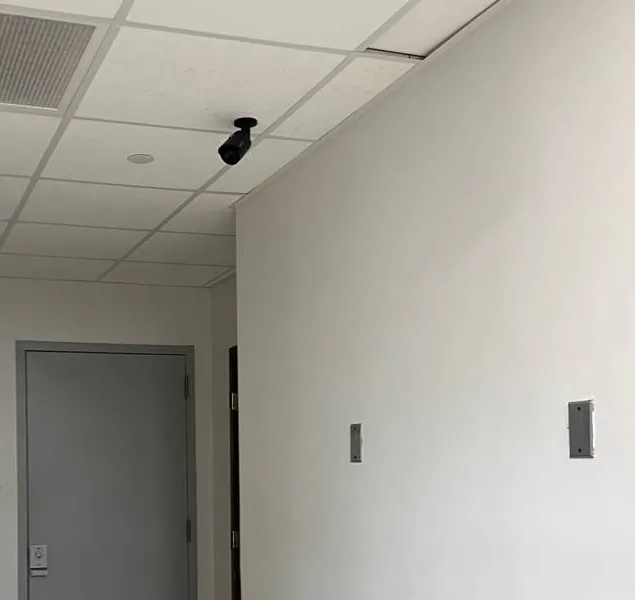
A photo from the AESS job library, not taken in Sunset Park: a small black bullet camera hanging from a white ceiling-tile grid, aimed down a short corridor at a grey steel service door. In an Industry City, Liberty View or Army Terminal suite, this is the camera on the corridor to the freight door or the stair, usually wired back along a ceiling grid or raceway to a recorder in the office closet.
Building rules in our Third Avenue industrial building don't allow cutting the concrete, so our camera cables run in surface raceway. A hand truck smashed the raceway near the dock and two cameras died. Does all of it have to come out?
No. We open the raceway where it was hit, test the cables inside it and replace only the damaged length, splicing or re-terminating where it is sound on either side, then close it with a new section of raceway. If the dock area keeps getting hit, the lasting fix is to raise that stretch higher on the wall or run it in steel, and we will ask building management before changing the route. The two cameras are tested at the recorder before we leave, along with every other camera on that run.
Our business is on a low ground floor near the water, and the recorder sits on a shelf a foot off the floor. Since Sandy did $50 million in damage to buildings on 36th Street, where should we put it?
As high as the space allows, ideally above the height water reached in your building during Sandy and away from outside walls, with its backup and switch beside it. If the suite has an upper floor or a mezzanine, that is better still. We also suggest copying important clips off the recorder regularly, or adding a second copy off-site, so a flooded back room does not take the footage with it. Moving the recorder during a repair is usually a short cable extension; the cameras do not need to change.
Our manufacturing floor runs all day, and the cameras sit near the ceiling above machines. How do you reach them without stopping production?
We plan the visit with you around the floor: ladder or lift positions marked out of the machines' paths, work on one camera at a time, and the cameras over running equipment done during a break, a changeover or before the shift starts. Most camera work is quiet and quick once access is planned, and a camera replaced in the same mount needs no more than a few minutes at height. If a camera cannot be reached safely while a machine runs, we say so and schedule that one for a quiet time rather than take a chance.
Equipment
Types of Security Cameras and Recorders We Repair
We repair equipment from any manufacturer and any installer. These are the kinds we meet most in Sunset Park's houses, avenue stores and waterfront suites, and what usually goes wrong with each.
Coax and HD-over-coax cameras
The older systems on many row houses, wired to a DVR in the cellar, with power from a multi-camera supply or a handful of plug-in adapters. Connectors and adapters fail first; the cable can often be reused for higher resolution.
Network (IP) cameras
Standard in newer store systems and in waterfront suites, powered and connected by one cable to a PoE switch or an NVR. Faults are a switch port, a connector, a password or a network change.
DVRs, NVRs and hybrid recorders
The box that keeps the video. Drives wear out, settings vanish in brownouts, updates break phone viewing. A hybrid recorder lets a house keep its coax cameras while adding network ones.
Varifocal cameras
Cameras whose lens can be zoomed after mounting: the answer for deep loft floors, long store aisles and back doors where a face has to fill more of the frame.
Pan-tilt cameras
Motorized cameras on yards, lots and large floors. Motors, saved positions and cameras left parked facing the wrong way are what we fix most.
Wi-Fi and battery cameras
Consumer cameras on stoops, in apartments and in yards. Signal through brick, winter batteries and accounts owned by someone who moved are the usual problems.
Video door stations
Intercom stations with a camera at row-house and walk-up street doors, sometimes recorded by the main system, sometimes not. We check which before promising footage from one.
PoE switches and supplies
The parts that power everything and suffer most when the voltage sags. Checked on every brownout call and replaced with properly sized parts.
Battery backups
Small units that keep a recorder alive through a flicker and shut it down cleanly in a long outage, if they are sized and set up to. Many we find are dead or never connected.
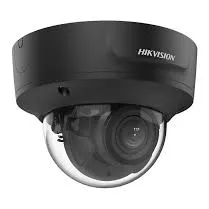
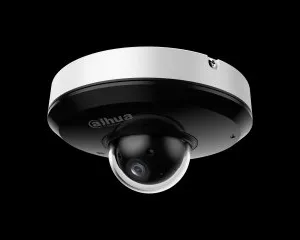
A product photo from the AESS job library, not taken in Sunset Park: a black varifocal dome camera. On the deep floors of the Bush Terminal buildings or the Army Terminal, a fixed wide lens makes everything past the middle of the room too small to read; a varifocal dome zoomed to the dock door or the aisle that matters is the usual repair.A product photo from the AESS job library, not taken in Sunset Park: a mini pan-tilt dome camera with a white housing over a black lens dome. Behind a fence off Third Avenue or on a waterfront loading area, a camera like this can be swung from a phone to look at a gate or a truck. We often find it parked pointing at the wrong spot since the last time someone moved it, so we set a home position it returns to on its own.
National brands versus a local licensed repair
Owners with Ring, Arlo, Nest, Wyze or SimpliSafe cameras often ask whether to call the brand or us. For a sealed consumer camera that has died, the brand's warranty or a replacement is usually cheaper; there is nothing inside to repair. What the brand cannot do is come to the house and see that the Wi-Fi does not reach the yard through two brick walls, that the camera is plugged into a tenant's outlet, or that it is mounted on siding that flexes. For wired systems with a recorder, a licensed local repair is the normal route; those brands generally sell through installers and do not send technicians. ADT and similar monitored services repair their own equipment under contract, so check that contract first if your cameras came with one.
Situation
Who usually handles it best
Sealed consumer camera dead, still under warranty
The manufacturer
Consumer camera works but Wi-Fi, power or mounting is the problem
A local technician's visit
Wired cameras on a DVR or NVR
A licensed local repair company
Cameras under a monitoring contract
The monitoring company, under that contract
Tenant cameras on a building's network
A licensed repair, coordinated with building IT
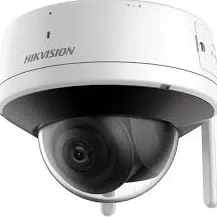
A product photo from the AESS job library, not taken in Sunset Park: a Wi-Fi dome camera with an external antenna. On a Sunset Park row house the yard camera is usually several brick walls away from the router in a front apartment, and the router may belong to a tenant. The antenna's direction, an access point near the back of the house, or a cable instead of Wi-Fi usually matters more than the camera.
AI Overview Reality Check
What AI Gets Wrong About Security Camera Repair in Sunset Park
Search summaries and home-service sites such as Angi, HomeAdvisor and Fixr give general advice about camera repair. Some of it holds everywhere. Some of it misses how systems fail in Sunset Park's divided houses and waterfront buildings. These are the claims we hear most, and what we find on the job.
"A security camera system belongs to the homeowner"
On paper, usually. In practice, a Sunset Park camera system often has several users, power from several apartments and an internet connection that belongs to a tenant. Advice that assumes one household at one router misses most of what goes wrong here.
When a tenant moves out, an account closes, a breaker trips in another apartment or a password leaves with a relative, the system fails in ways that look like broken hardware and are not.
So our first questions are about people, not parts: who uses it, whose outlets and internet it depends on, and who should get its alerts.
"If the power didn't go out, the cameras are fine"
Con Edison's voltage reductions in June 2025 and July 2026 named Sunset Park, and News 12 described power "running lower than usual" rather than out. Low voltage restarts aging recorder supplies and switches without anyone noticing.
A recorder that restarts repeatedly can lose its clock, its settings or its grip on the drive. The live view looks fine; the recording has gaps.
After any period of dim lights, play back a random hour from that day. If it is missing, call before the next brownout makes it worse.
"Wireless cameras avoid all the wiring trouble"
They avoid running a data cable, but they still need power and a signal. In a brick row house, the yard is often several walls from the router, and the router may be a tenant's.
In the waterfront buildings, concrete floors and dozens of neighboring networks make Wi-Fi less reliable still, which is why most tenants there end up on cable.
Wireless is a fine answer for a camera inside an apartment. For a back door or a dock, a cable is usually the cheaper repair in the long run.
"If you can see the camera live, it is recording"
The live view comes straight from the camera; the recording depends on the drive. A worn drive can stop saving while live video carries on, and the warning may go to someone who no longer lives in the house.
Recorders can also be set to save a lower-quality stream, or only on motion, so the clip you need is blurry or starts too late.
The only real test is playback. On every repair we check a recorded clip, not just the live picture, and set alerts to current phones.
"Any handyman or electrician can fix a camera system"
In New York, companies that install or service security and CCTV systems for others are licensed by the Department of State. An electrician fixes the outlet; the cameras, cable, recorder and network are low-voltage work.
The tools differ too. Most faults are found with a cable tester, a PoE tester, the recorder's logs and a laptop on the network, not a meter on house wiring.
If someone has already worked on it, tell us what was changed. A well-meant fix often moves the problem rather than solving it.
"Landmark rules make any camera work a permit job"
Not for a repair. The LPC's guidebook treats "Ordinary maintenance, repair, and retrofitting of health, safety, and utility equipment" as work that needs no permit, and that covers replacing a dead camera in the same place on the four 2019 districts' blocks.
What the guidebook governs is new or moved equipment: well spaced, at mortar joints or plain masonry, never on decorative surfaces, with very little visible conduit.
So a repair on 44th Street or between 54th and 59th Streets is usually simple. A new position is a different job, and we say so first.
"Camera repair costs about $100 to $300"
That describes one consumer camera somewhere simple. HomeAdvisor's Brooklyn page puts the average surveillance camera install or repair at $1,416, with a typical range of $680 to $2,145 across job sizes.
On our Brooklyn list, a setting or connector fix runs from within the $150 service call to $350, a single camera replacement $250 to $600, and a recorder replacement $700 to $1,500. The fault sets the price, and you see it in writing first.
The expensive repair is the one done twice: a camera replaced when the drive was failing, or a drive replaced when a brownout-damaged supply was killing it. Testing in order prevents that.
Talk to a Technician Before You Replace a Camera That Only Lost Its Power or Its Network
Send a photo of the recorder screen and the camera you are worried about. Many Sunset Park "dead camera" calls turn out to be an outlet in someone else's apartment, a building network change or a drive that stopped saving, and we would rather tell you that before you buy anything.
Give us the block and the cross street, the kind of building, how many cameras the system has and which ones are wrong. Tell us where the recorder lives, whose outlet and whose internet it uses, and whether the trouble started after a power dip, a tenant change, a renovation or a change to a building network. If a clip from a particular night has to be kept, put the date and rough time in the message, and we will plan the visit around copying it before anything is touched. For anything urgent, call (347) 934-8335.
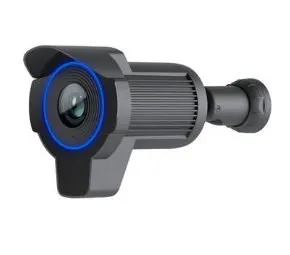
A product photo from the AESS job library, not taken in Sunset Park: a black bullet camera with a long hood and a blue-lit ring around the lens. A deep hood like this keeps rain, dripping fire-escape water and low sun off the glass, which matters on the back walls of Sunset Park row houses and over the rear doors of avenue stores, where most of the trouble we are asked to record happens before dawn.
✅
Request Sent!
Thank you. A technician will be in touch about your Sunset Park address shortly.
How It Works
Our Installation Process for a Sunset Park Camera Repair
1. Text us the screen, the camera and the block
A photo of the recorder screen or the phone app, a photo of the camera that is wrong, the address and whether the building is east or west of Third Avenue. Tell us any date whose footage has to be kept, and whether the trouble began after a power dip, a tenant moving or work on the building.
2. Settle who owns it and who opens the doors
Owner, landlord, tenant, board or business. We confirm who approves the work, who holds the recorder login, whose apartment or cellar the recorder sits in, and, in a waterfront building, who controls the network closet and the freight elevator.
3. Reserve a two-hour window with the $150 call
The $150 Brooklyn service call holds a two-hour arrival window and is credited to the repair if you go ahead. Requests are booked within 2 hours. A back-door night problem is easier to judge late in the day, so we try to book those visits for the afternoon.
4. Save the clips before anything is touched
Any clip you need is exported to a USB drive with the recorder's own date and time before a cable, drive or setting changes. If the drive already shows warnings, copying comes first and testing second, because a failing drive can stop reading at any time.
5. Work down the chain from outlet to app
The outlet and whoever controls it, the battery backup, the supply or PoE switch, the recorder and its drive, then each cable, connector and camera, then your network, the building's network if there is one, and finally the app. The part that failed is the part that gets replaced.
6. Explain the fault and put each price in writing
You hear what failed and why, in plain terms, and get a written price from the Brooklyn list before a single part is changed. When there is more than one fault, each gets its own line, so you can fix the urgent one today and plan the rest.
7. Fix it and prove it in recorded playback
Parts go in, openings in brick, siding, raceway or ceiling tile are closed up, and every camera is checked live and then in saved playback, in bright light and in low light, so you know the recorder is keeping what the camera sees.
8. Label everything and hand over the keys
Cables and channels are labeled, camera-loss and drive alerts go to the phones that should get them, old users are deleted, the clock is set to keep itself right, and you or your manager are shown how to find and export a clip without calling anyone.
Coverage Area
Security Camera Repair Near Sunset Park's Landmarks
Sunset Park (the park)
The 24.5-acre hilltop park between Fifth and Seventh Avenues from 41st to 44th Street, with harbor views and a 1936 WPA pool whose bathhouse and pool became a city landmark in 2007.
Industry City
The 35-acre, 16-building complex between roughly 32nd and 41st Streets west of Third Avenue, home to more than 650 businesses, where Sandy did about $50 million in damage on 36th Street.
Brooklyn Army Terminal
A 59-acre, 4.1 million square foot campus on the waterfront with more than 100 businesses, floorplates up to 200,000 square feet and suites starting at 1,500 square feet.
Liberty View Industrial Plaza
The eight-story, 1.3 million square foot former Navy supply warehouse at 850 Third Avenue, built in 1916 and brought back into use after its 22 elevators were replaced.
72nd Precinct
The station house at 830 Fourth Avenue that covers Sunset Park and Windsor Terrace, where detectives working a case on these blocks ask owners for exported video.
50th Street Historic District
One of the four Sunset Park historic districts designated on June 18, 2019, including Hamilton Brothers two-family houses built with a separate second-floor apartment to rent out.
Sunset Park is billed at our standard Brooklyn rate, with no surcharge for the waterfront campuses or the blocks under the expressway. Every repair starts with the $150 service call, which pays for the on-site diagnosis and is credited to the repair if you go ahead. The ranges below come from our published Brooklyn security camera repair price list. Your own number is written down on the visit once the fault is found, and nothing is replaced until you say yes.
Repair
Brooklyn price
Service call: on-site diagnosis and a written repair price
$150, credited to the repair
Settings, alerts, schedules, logins or app access with no parts
Usually within the $150 service call
Clean and check for a hazy or grimy picture
$80
Dome or front cover replacement
$30–$80 part, plus labor
Connector reterminated or PoE port swapped
$150–$350
Power supply repair, including fuses on multi-channel supplies
$150–$400
Hard drive swap
$200–$450
Indoor camera repair
$200–$450
Single camera replaced on a working system
$250–$600
Outdoor camera body replaced and weatherproofed
$250–$600
DVR not working, including drive and labor
$300–$700
NVR not recording
$400–$900
Vandalized camera, per camera, plus any cable repair
$400–$900
Pan-tilt (PTZ) camera repair
$450–$1,200
Hybrid recorder swap for coax and network cameras
$700–$1,200
DVR or NVR replacement with drive and setup
$700–$1,500
Lightning or surge damage, depending on system size
$700–$3,500
Annual maintenance visit, home to multi-building
$250–$800
What moves a Sunset Park price inside those ranges is usually one of four things. The first is who else is involved: a recorder plugged into a downstairs tenant's outlet, sitting in a cellar room someone rents, or wired through a landlord's network closet takes time to arrange and sometimes a second person on site. The second is the surface: a camera on a vinyl-sided bay is quick to reach, a camera on a landmarked limestone front needs care to go back into the same joint, and a run inside concrete raceway in a Third Avenue warehouse means unscrewing and refitting covers rather than pulling cable through a ceiling. The third is height, from a stoop camera at shoulder level to a camera at the top of a two-story warehouse wall over a working floor. The fourth is how many parts failed together, which is why brownout and outage repairs often cost more than one dead camera: a drive, a supply and a switch port can all be hurt by the same evening of low voltage. Whatever the case, you see the price before anything is replaced.
Online cost guides average every kind of camera job together, installs and repairs alike, so their figures run higher than a typical single repair. Most of what we are called to fix in Sunset Park lands at the low end of our list: a power problem, a connector, a drive or a setting. The repairs that reach the top of the list are recorders lost after a power event and systems rewired after a renovation, and we tell you before the work which kind yours is.
Full terms — including 50% deposit, one-year parts-only warranty on AESS-supplied products, and the late-fee schedule — are set out in the service agreement.
Not Sure Whether It Is the Camera, the Outlet or the Network?
Call or text and tell us what the screen shows. A technician who works on Sunset Park systems every week can usually tell from two photos whether the problem is a dead camera, a recorder that stopped saving or a power or network change somewhere else in the building, and whether it can wait until morning.
Most Sunset Park repairs fall into one of three shapes. Each is priced from the same Brooklyn list as the table above.
Single-fault repair: $150–$700
One problem, one visit. A back door camera reset for low light, a corroded connector at a row house facade replaced, a supply or PoE port changed after a voltage dip, a worn drive swapped, or a forgotten login recovered and the old users cleared out. Typical for a two-family house, a small walk-up or a single store on Fifth Avenue.
Whole-system repair: $700–$1,500
The recorder, or several runs at once. A DVR or NVR replaced after a brownout or old age, coax cameras moved onto a hybrid recorder so new network cameras can be added later, or several cameras re-run after a renovation cut the old cable. Typical for a house split into several apartments, a store with apartments above, or a warehouse floor.
Yearly checkup: $250–$800
Every camera checked in bright and low light, domes and lenses cleaned of street and traffic grime, connectors and supplies tested, drive health read, the battery backup tested, alerts confirmed and a test clip exported. Homes start at the low end; stores, warehouses and owners with several buildings sit higher.
Bring your own equipment. If you have already bought a replacement camera, recorder or drive, we can fit it at labor-only rates. Send us the exact model, we quote the labor by phone or text, and the visit is booked once it is paid. Equipment you supply is fitted as supplied: we cannot stand behind parts we did not provide, and if a model will not work with your recorder or app, we tell you before we start. Many Sunset Park owners who look after a two-family house and a parent's house nearby also pair a repair with camera repair at their other Brooklyn property on the same trip.
A product photo from the AESS job library, not taken in Sunset Park: a black video intercom door station with a camera, a speaker grille and a lit call button. In houses divided into several apartments and in walk-ups over avenue shops, the street door camera is often the one built into a panel like this, and when the picture dies but the buzzer still works, the repair can be the door station, its cable or the recorder channel it feeds.
Complete Services
Every Security Camera Repair Service in Sunset Park
Camera, picture and cable repair
Dark cameras, unreadable back doors, black-and-white pictures at noon under the expressway, crushed raceway and cables cut during renovations. Request a repair
Owners, managing agents and businesses with buildings in more than one borough. NYC security camera repair
FAQ
Sunset Park Security Camera Repair FAQ
The NYPD has offered stores a free live video link from their own cameras. If our shop wanted to sign up, would the system need repairs first?
+
Possibly. The NYPD's retail-theft program is free and opt-in, and the department has said none of it is mandatory. We cannot tell you whether it is offered through the 72nd Precinct, so ask the precinct directly. What we can do is make sure the system is worth linking: every camera recording, the recorder's clock correct, a stable internet connection, and the door and register cameras clear enough to show a face. A link to a camera that records shadows helps nobody, so fix the picture first.
When Con Edison asks the neighborhood to cut back during a voltage reduction, should we switch the camera system off to protect it?
+
Usually not. Con Edison cut voltage by 8 percent across southwest Brooklyn, naming Sunset Park, in June 2025 and again in July 2026, and asked customers to avoid washers, dryers and microwaves, not small electronics. A recorder and cameras draw little power, and switching them off and on repeatedly can make storage and power faults worse. The better protection is a battery backup that steadies the voltage and keeps the system running, so it never has to restart in the wrong order. If something already failed during one of those weeks, that is a normal repair visit.
We heard Dahua and Hikvision were banned. Is it still legal to keep our Dahua recorder and have it repaired?
+
Yes, as far as owning and fixing an existing system goes. In November 2022 the FCC barred new equipment authorizations for Hikvision and Dahua, which affects new models coming to market, and Dahua said the order does not affect products already authorized. We repair both brands every week. What can change is the supply of matching parts for an older model, so if an exact replacement camera or board is not available, we find a compatible one and tell you before anything is ordered. This is practical guidance, not legal advice.
The cameras in our Fifth Avenue store were put in by the landlord, but we run the store. Who decides who can watch and copy the video?
+
Whoever owns the system, which here is the landlord, unless your lease says otherwise. Landlords are generally not obliged to show tenants footage outside a legal process, so if you need to see your own sales floor, get access in writing, either a viewing login on the landlord's recorder or permission for a separate system inside the store. We work for whoever owns and approves the system, and we will not give a tenant access to a landlord's recorder without the landlord's approval, even when the tenant is paying for the visit.
Power tools were taken from a Sunset Park building through an unlocked basement window. Our cameras watch the stoop and the yard but not our cellar windows. Can a repair visit change that?
+
Often, yes. The Brooklyn Eagle reported that case in December 2019, about $2,730 in tools taken through a basement window at a building near 41st Street and Seventh Avenue. Cellar windows on Sunset Park row houses sit low, under the stoop or along the areaway, and most cameras are aimed too high to see them. On a repair visit we can often re-aim an existing camera to take in the areaway, or price one added camera if that is the only way to see the window. Any change is priced in writing first.
If the house internet goes down, does our camera system stop recording?
+
It depends on the kind of system. A wired system with a recorder in the house keeps recording to its own drive when the internet drops; what stops is viewing from your phone and the alerts, which return when the connection does. Wi-Fi cameras that save only to a cloud account may record nothing during the outage unless they have a memory card inside. On a repair visit we tell you which kind you have, and if your cameras depend on the cloud alone, we can show you how to keep a local copy.
Over the years different people added cameras of three different brands to our house. Can they all be repaired and run on one recorder?
+
In most cases. Network cameras from different makers can usually be paired to one recorder through a shared standard called ONVIF, though some features, such as the maker's own person detection, may not carry over. Older coax cameras come in several high-definition formats, and the recorder has to support each one. We test every camera on the recorder you have, re-pair the ones that dropped off, and tell you which cameras are worth keeping and which would cost more to keep alive than to replace.
Our camera faces Third Avenue truck traffic under the expressway, and a grey film builds up on the dome within weeks. Is that a repair, and how often does it need cleaning?
+
The Gowanus Expressway carries well over 100,000 cars and trucks a day, and cameras near it gather road grime faster than cameras on a side street. A clean and check is $80 on our Brooklyn list, and on those blocks every three to six months is a sensible starting point. Angling the camera down slightly, fitting a hood, or moving it a little further from the roadway can stretch that out. If the dome has turned cloudy rather than dirty, cleaning will not help, and a replacement cover is the fix.
Our warehouse floor in a waterfront building runs the length of a block, and the cameras at the far end are the ones that keep dropping. Could the distance be the cause?
+
Quite possibly. Standard network cable is rated for about 100 meters, roughly 328 feet, from the switch to the camera, and on floors as large as those at the Brooklyn Army Terminal, where floorplates reach 200,000 square feet, a single run from one closet can go past that. Beyond the limit, cameras drop out, restart or lose power over the cable. The usual repair is a small switch or extender part way along, or fiber for the long stretch, and we measure the run before recommending either.
Our Wi-Fi camera on the back of the house keeps dropping off because the router is at the front, two brick walls away. What is the fix?
+
Sunset Park row houses are long and narrow, and the brick and plaster walls between the front parlor and the back of the house absorb a lot of Wi-Fi signal. The most reliable fix is a cable to the camera, either straight to it or to a small wired access point near the back. Where a cable run is hard, a wired camera replacing the Wi-Fi one on the same cable path is often similar in cost. We test the signal on the visit and price both options so you can choose.
Ready to Have Your Sunset Park Cameras Recording Every Door Again?
Send a photo of the recorder screen, the address and the date of any footage you need kept. We book within 2 hours, give you a two-hour arrival window, copy your footage before anything is touched, and write down the repair price before any part is replaced.