What are you looking for?
About Us Contact Us Careers Get a Free Quote (800) 486-0943
Pick a service
✅ Got Your Own System?
🎬 Home TheatreQuote 🎶 AV SoundQuote 🔑 Access ControlQuote
Now pick your area
Pick your area
Long Island
Hudson Valley
Services available
Pricing & Tools
Pick a service for pricing
🚪 Intercom Pricing 🔔 Buzzer Repair Pricing
Calculators
📹 Camera System Calculator 🚨 Alarm Calculator ⚡ Cabling Quote Builder ✅ Got Your Own System?
Select your area
Found out after Shabbos that a camera had been dark all along, a lobby clip that shows a hood instead of a face, or a recorder that stopped saving and told nobody? South Williamsburg camera repair line, booked within 2 hours: (347) 934-8335
Home › Security Camera Repair Brooklyn › South Williamsburg
Brick Walk-Ups on Lee and Bedford Avenues · Family-Size Condos · Shuls and Yeshivas · Kent Avenue Towers · Shops Under the Broadway El

Security Camera
Repair in
South Williamsburg

Any Brand, Any Installer · Built to Run Unwatched Through Shabbos and Yom Tov · Footage Copied First · Written Price Before Parts

Security camera repair in South Williamsburg starts with our $150 Brooklyn service call, which pays for the on-site diagnosis and is credited to the repair if you go ahead. On our published Brooklyn list most single faults cost $150 to $700, and a new recorder or rewiring several cameras costs $700 to $1,500. We fix systems other companies put in: the stoop camera on a brick walk-up off Lee Avenue, the lobby and mailroom cameras of a newer family-size condo, the hallway cameras of a Kent Avenue tower, the cameras watching a shul or yeshiva entrance, and the counter cameras of a shop under the Broadway el. Requests are booked within 2 hours, visits come in two-hour arrival windows, and you hear the cause and get a written price before any part is replaced.

Reviewed and updated November 12, 2026, against reporting from JFeed, Hoodline and Yeshiva World News on the September 2026 Williamsburg burglaries and the Shomrim alerts that followed; Williamsburg 365, CBS New York and Israel National News on lobby, mailroom and buzz-in thefts in Williamsburg buildings; DNAinfo's report on 90th Precinct burglaries and the precinct's advice on camera placement; News 12 on the February 2026 Montrose Avenue manhole fire; New York YIMBY, CityRealty and 6sqft on new South Williamsburg buildings; BK Reader and Wikipedia on the NYCHA PACT conversions; Southside United HDFC on its Los Sures buildings; the Governor's office on the 2026 Securing Communities Against Hate Crimes grants; the Landmarks Preservation Commission's designation reports and permit guidebook; Brick Underground and a 2015 DHCR decision on tenants, landlords and building cameras; Dinonline and Peninei Halakha on electric doors and video monitors on Shabbat; Reolink's guide to video loss; HomeAdvisor's Brooklyn cost page; and the New York Department of State on installer licensing. · Abstract Enterprises Security Systems, NYS license #12000287431 · crews dispatched from our Troy Avenue office in Brooklyn

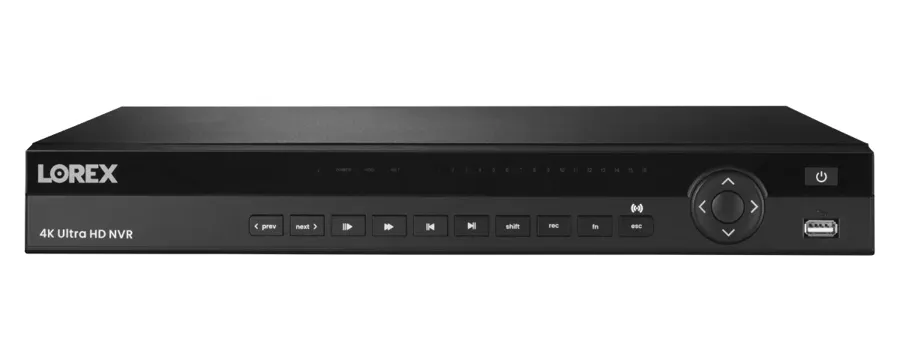
South Williamsburg, Brooklyn security camera repair: product photo of a 16-channel desktop network video recorder
A product photo from the AESS job library, not taken in South Williamsburg: a 16-channel desktop network video recorder. In a South Williamsburg walk-up this box usually sits in a cellar beside the meters or on a shelf in the super's closet; in a newer condo it is in a locked meter or telecom room; in a Lee Avenue store it is under the counter or in the back. Most repairs start here, because the recorder is the part that keeps the video, logs when a camera dropped, and decides whether anyone is told. Over a twenty-five-hour Shabbos, nobody is looking at it, so it has to look after itself.
South Williamsburg Camera Repair Request
Walk-up, condo, tower, shul, yeshiva or store: send the address and what the screen shows, and a technician calls back with the next step

✅
Request Sent!
Thank you. A technician will contact you about the South Williamsburg address shortly.
25+
Years Experience
✓
Same-Day Estimates
100%
Licensed & Insured
4.7★
201 Google Reviews

Owner-operated since 2002 · Thousands of jobs completed · Booked within 2 hours

Security camera repair in South Williamsburg has to solve a problem most camera guides never mention: for about twenty-five hours every week, and for two or three days at a stretch over Yom Tov, many households here will not open an app, check a screen or restart a recorder. A camera that dies on a Friday afternoon is often found on Saturday night, after the hours it was needed. The September 2026 burglaries that Williamsburg Shomrim warned about happened in the early morning, while families slept, and reports describe the man testing front doors, back entrances, ground-floor windows and porches. Package and mailroom thefts in Williamsburg buildings have been reported on Saturday nights right after Shabbos. So a good repair here does more than make a dark camera light up again. It gets each camera to show a face rather than a hood or a glowing blur, gets the recorder to keep that picture without anyone tending it, and makes sure the right person hears about a failure in time to act. Send a photo of the recorder screen and the camera's picture to (347) 934-8335 or on WhatsApp, and we will tell you what kind of fault it looks like and what that repair costs on our Brooklyn list before you book.

  • Looking at your photos costs nothing. The $150 service call covers the on-site diagnosis and is credited to the repair if you go ahead.
  • We work under New York State license #12000287431, the license the Department of State requires of companies that install or service security and CCTV systems for others.
  • We repair any brand and any installer's system, and we tell you plainly when an old camera or recorder is not worth fixing.
The Neighborhood

Why South Williamsburg Properties Need Security Camera Repair

South Williamsburg is usually drawn as the part of Williamsburg south of Division Avenue, with Broadway on its northeast side, Flushing Avenue on the south and the East River on the west, though local writers and older maps put the lines in slightly different places. It sits in Community District 1 and is patrolled by the 90th Precinct, whose station house is at 211 Union Avenue. Most of it is home to one of the largest Hasidic communities in the country, centered on Lee and Bedford Avenues, alongside the long-established Puerto Rican community of Los Sures closer to the Williamsburg Bridge. That is the background. For a camera repair, what matters is how the buildings are used, when people are home, and who is, and is not, looking at the cameras.

Start with the weekly rhythm. Commercial life on Lee Avenue slows almost to a stop from Friday evening until Saturday night, and many residents do not use phones, screens or electrical switches during that time. A rabbinic source, Peninei Halakha, goes further about video: it says an observant Jew should not stand where his image will be captured on a monitor or press an intercom button to be let in. We do not rule on any of this; residents and their rabbis decide what they will and will not do. But it shapes the repair. A system that relies on someone noticing a dark tile on the phone, hearing a beep from the cellar or restarting a frozen recorder will, on these blocks, regularly go a day or more without anyone noticing. The repair has to make the system dependable on its own, and send its warnings to someone who can act on them before candle-lighting or after Havdalah, rather than during.

Then look at what the cameras are for. In September 2026, JFeed and Hoodline reported an intruder slipping into an occupied home near Hooper Street around 5 a.m. on a Shabbat morning, about a month after two Hooper Street homes were burglarized. Shomrim described the suspect moving systematically through neighborhood streets, testing doors and windows, and Yeshiva World News reported that he returned over Shabbos and entered several homes in the early hours. Rabbis ruled that calling 911 during an apparent break-in on Shabbat is required, as a matter of saving life. Camera footage from those hours, if it shows a face, is what Shomrim and the 90th Precinct ask neighbors for afterward. Early-morning darkness, a porch light on a timer, and a camera whose infrared turns a face into a white patch at close range are exactly the conditions under which many systems fail.

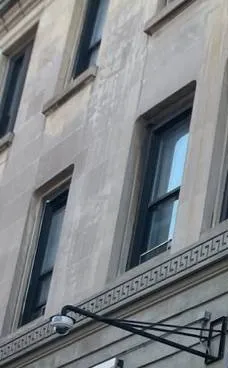
South Williamsburg, Brooklyn facade camera repair: bullet camera on a long black steel wall arm below a carved Greek-key band on a pale stone facade with tall sash windows
A photo from the AESS job library, not taken in South Williamsburg: a bullet camera on a long black steel arm below a carved Greek-key band on a pale stone facade with tall sash windows. Along Broadway, the old savings banks and the stone-trimmed buildings near them have exactly this kind of carved band, and an arm like this is how a camera reaches past it to see the sidewalk. When we replace one, we put it back on the same anchors in the mortar, never into the carving.

The buildings add their own problems. Toward Bedford and Lee Avenues the older stock is brick walk-ups and modest row houses, many with a single recorder in the cellar and cameras added one at a time by whoever was around. Newer buildings have gone up on empty lots across the neighborhood: New York YIMBY reported permits for a six-story building at 293 Wallabout Street, between Harrison and Throop Avenues, in November 2025, and a seven-story mixed-use building at 170 Williamsburg Street East near the Marcy Avenue station in May 2026, and a lottery opened in April 2026 for 45 apartments at 100 South 9th Street. CityRealty lists a four-apartment walk-up condo at 217 Lee Avenue built in 2024. Buildings like these often have network cameras and a video intercom put in by the developer's electrician, with the passwords and the cloud account held by someone who has since moved on. Along Kent Avenue, Williamsburg Wharf alone is five 22-story buildings at 464 to 484 Kent Avenue, with camera systems many times the size of a walk-up's.

Public and nonprofit housing is a large share of the neighborhood too. BK Reader's count of the NYCHA developments converted under the PACT program lists Independence Towers at 744 apartments, Williams Plaza at 577 and Berry Street–South 9th Street at 150, and Wikipedia notes that Williams Plaza's conversion included work to improve its security systems. Southside United HDFC, the Los Sures housing group founded in 1972, says it has rehabilitated or built more than 5,000 units in more than 340 buildings and co-ops. In those buildings, the camera system belongs to the management company or the co-op, and a tenant who wants a dead camera fixed has to go through them. We work for the owner or the board, and we tell residents honestly who has to approve a repair before anything is touched.

Finally, the institutions. South Williamsburg has a dense network of shuls, yeshivas, schools and community buildings, and many of them have added cameras over the years. In September 2026 the Governor's office announced a record $70 million in Securing Communities Against Hate Crimes grants to 290 nonprofits, 147 of them in New York City totaling $35,792,289, and reported that anti-Jewish hate crimes recorded by the NYPD were up 8 percent through August 30, 229 against 212 the year before. "As the Holiday season approaches, our schools, synagogues, and institutions are feeling more vulnerable than ever," Rabbi Yeruchim Silber of Agudath Israel said in that release. A school or shul that has cameras already needs them to work on the day something happens, and to produce a clip a detective can use. Many of our institutional repairs are exactly that: a system nobody has checked since it was installed, with half its cameras recording nothing useful.

Six South Williamsburg facts that shape a camera repair

  • Systems go unwatched for a full day every week. Lee Avenue's shops slow to a stop over Shabbat, and many households do not check screens or apps from Friday evening to Saturday night. Alerts, recording schedules and recovery after a power blip have to work without a person, and warnings have to reach someone before or after those hours.
  • The burglaries people talk about happened before dawn. The September 2026 reports describe early-morning entries while families slept, by a man testing doors, rear entrances, windows and porches. Night pictures at close range, rear and side coverage, and lights that stay on are where repairs here usually focus.
  • The 90th Precinct has given specific camera advice. In 2015, when DNAinfo reported nearly 170 burglaries in the precinct in the first half of the year, up 31 percent, officers advised mounting cameras low and angled up, because a ceiling camera is easily beaten by a hooded sweatshirt, and leaving lights on, because infrared night vision distorts faces.
  • Lobbies and mailrooms are targets. Williamsburg 365 reported packages stolen from a building at Bedford and Willoughby on a Saturday night after Shabbos and a break-in on South Ninth Street toward morning; CBS New York reported a thief walking into mailrooms on Bedford Avenue and Kent Avenue, and a package taken from a building near Broadway and Hooper Street.
  • A lot of new and converted housing. New condos on Wallabout Street, Williamsburg Street East and Lee Avenue, the 1,146-unit plan for the former Pfizer sites near Flushing Avenue, the Kent Avenue towers, and the PACT and Los Sures buildings all have different owners, different installers and different people holding the logins.
  • Repair is priced by the fault. HomeAdvisor's Brooklyn page puts the average surveillance camera install or repair at $1,416, with a typical range of $680 to $2,145 across all job sizes; most single repairs on our Brooklyn list fall between $150 and $700.

Where this page applies. It covers South Williamsburg from Division Avenue south to Flushing Avenue and from Broadway west to the river, including Lee, Bedford, Marcy, Wythe and Kent Avenues, Rodney, Ross, Wilson, Taylor, Clymer, Hooper, Hewes, Keap and Rutledge Streets, the blocks around the Hewes Street and Marcy Avenue stations, and the Los Sures streets near the bridge plaza. The blocks east of Broadway toward Bushwick are on our East Williamsburg security camera repair page, the blocks south of Flushing Avenue are on our Bedford-Stuyvesant camera repair page, and the rest of the borough is on our main Brooklyn security camera repair page. South Williamsburg is billed at the standard Brooklyn rate.

Urgent Repair in South Williamsburg

Need Repair in South Williamsburg? A Break-In Before Dawn, a Lobby Theft After Shabbos, or a Recorder Nobody Knew Had Stopped

Urgent calls from South Williamsburg tend to arrive in three shapes. The first follows a break-in or an attempt: a neighbor or Shomrim asks what your camera saw on the porch, the side alley or the back door at four or five in the morning, and the clip is a grey smear, a white glow where the face should be, or nothing at all because the camera that faces that way has been dark for months. The second follows a theft from the lobby or mailroom, often noticed on Saturday night once the building is moving again, when a board member goes to look and finds that the camera over the parcel shelf shows only the tops of heads, or that the recorder overwrote the hours in question while nobody was watching. The third is quieter: someone checks the system for an ordinary reason and discovers that the recorder stopped saving video weeks ago, or that half the cameras have been showing "no signal" since a power blip, and nobody was told.

If you need footage from a particular day, leave the recorder running and do not unplug it, restart it or press anything that says format or initialize. Recorders overwrite their oldest video once the drive is full, so the clock is already running, and a restart can also wipe the log that shows when a camera dropped or the drive stopped writing. If the hours you need fall over Shabbos or Yom Tov and you will not touch the system until afterward, that is fine: tell us on Saturday night or the morning after, with the date and approximate time you need, the camera it should be on, and a photo of the recorder's screen or front panel. We plan the visit so that clip is copied first, before any cable, drive or setting is changed.

For everything else the path is short. The $150 Brooklyn service call books a two-hour arrival window, and requests are booked within 2 hours. On Fridays we book visits early in the day, so no repair is left half-finished going into Shabbos. The technician finds the fault, tells you what failed and why, and writes down the price from our Brooklyn list before any part is replaced. Most single-fault repairs are finished on that visit, with the camera checked in daylight and in darkness before we leave, and the recorder's own alerts tested so you know they reach the person who will act on them.

What We Install

Security Camera Repair Services in South Williamsburg

Every repair below is priced from our Brooklyn camera repair list. The service call pays for finding the fault; the repair is priced by what failed, how many cameras it touches and how hard each cable is to reach, whether that is a porch camera on a brick walk-up on Rodney Street or a hallway camera on the eighteenth floor of a Kent Avenue tower.

Unattended recording repair

Recorders that stopped saving, froze, or came back from a power blip without their cameras, and nobody knew until after Shabbos. We fix the cause, set the recorder to recover on its own, and point its health alerts at someone who will see them in time.

Face capture at close range

Porch, stoop and door cameras whose night picture turns a face into a white glow, and ceiling cameras that see only hoods and hat brims. We re-aim, lower, reset the infrared, or replace the camera with one that controls its own light.

Lobby and mailroom cameras

Cameras over parcel shelves, mailboxes and street doors that miss the moment that matters, or record at a quality too low to use. We fix the view, the saved stream and the retention so a Saturday-night theft can still be looked up days later.

Recorder and hard drive repair

DVRs and NVRs that beep, restart, show a disk error or keep only a few days. We copy what can be copied, replace the drive or recorder, and confirm playback before we leave.

Outage and surge recovery

Recorders that lost their clock or settings, PoE switch ports that stopped powering a camera, and plug-in supplies that died when the power came back. Every part in the chain is checked, not just the one that looks dead.

Cable and connector repair

Connectors corroded at the facade, cables cut during a renovation, a balcony job or work next door, and runs crushed under a window or a door frame, repaired along the existing path wherever it can be reused.

Phone, login and access repair

Apps that stopped connecting after an internet change or a phone filter update, one shared password that locked a whole family out, and accounts held by a developer or a former manager. We recover access and give each person their own login.

Institutional systems

Shuls, yeshivas, schools and community buildings with cameras added floor by floor over years. We find which cameras actually record, fix the ones that matter most, and leave a written list the board or administrator can keep.

Footage export for incidents

Clips for the 90th Precinct, an insurer, a landlord or a court, exported in the recorder's original format with its own timestamps, plus a short lesson so someone in the household or office can do it next time.

Building Specialists

Security Camera Repair for South Williamsburg's Architecture

The same dead camera is a different job on each kind of South Williamsburg building, because the cable route, the surface it is mounted on, where the recorder lives and who approves the work all change from one to the next. These are the buildings we see most.

Brick walk-ups and row houses

Three- and four-story brick buildings and modest row houses toward Bedford and Lee Avenues, often with a stoop or a short stair, a cellar recorder and cameras added one at a time by different people.

Family-size condos

Newer walk-up and elevator condos built for large households, often with staggered front balconies, a video intercom, network cameras and a developer who held the logins.

Kent Avenue and waterfront towers

High-rise buildings such as the five 22-story towers of Williamsburg Wharf, with dozens or hundreds of cameras, a front desk, a managing agent and contractor rules.

PACT and public housing towers

Independence Towers, Williams Plaza and Berry Street–South 9th Street, now run by private management under PACT, where the camera system belongs to the manager, not the tenants.

Los Sures co-ops and rentals

Rehabilitated tenements and small co-ops near the bridge plaza, many managed by nonprofit housing groups, with older coax systems and tight repair budgets.

Shuls, yeshivas and schools

Converted factories, purpose-built school buildings and storefront shuls, with cameras on entrances, halls and street fronts, and recorders in an office that may be locked over Shabbos and Yom Tov.

Brick walk-ups and row houses: one recorder, many hands

A typical older building toward Lee Avenue has a recorder on a cellar shelf or in a hallway closet and four to eight cameras: one over the street door, one over the stoop or porch, one in the hall, one or two at the back and perhaps one on a side alley. They were rarely installed at the same time. A first set went up years ago on coax cable to a DVR; later someone added a Wi-Fi camera at the back because pulling cable through the brick was hard; later still a family member put a doorbell camera on the front door with its own app. When something fails, the owner often does not know which camera is on which box. We begin these repairs by mapping every camera to its recorder or app, labeling cables and channels, and only then fixing what is broken, so the next call does not start from nothing.

Brick also shapes the repair itself. Cable on these buildings runs along mortar joints, through a hole beside a window or down from the cornice, and every hole that was not sealed is a path for water into the connector. Many "dead camera" calls on old brick turn out to be a corroded connector a foot from the camera, which is a much cheaper fix than a new camera. And because the September 2026 reports describe someone testing rear entrances and ground-floor windows, we look hard at the back and side cameras on these buildings, which are the ones most likely to have been neglected.

Family-size condos: the developer's system, the board's problem

The condo buildings that have gone up on Wallabout Street, Williamsburg Street East, Lee Avenue and the side streets in recent years are often designed for large households, with front balconies stacked so each one is open to the sky. Their camera systems are usually network cameras on a PoE switch in a meter or telecom room, a recorder beside it, and a video intercom at the street door. The hardware is generally fine. What goes wrong is ownership: the developer's electrician set it up, the recorder's admin password went with him, the cloud account is in a sponsor's email, and the board that took over the building has no way in. A repair in these buildings starts with getting the board into its own system, documented, with separate logins for each person who needs one.

Small condos have a second issue. In a four-unit building like the walk-up condo CityRealty lists at 217 Lee Avenue, there may be no shared recorder at all, only each owner's doorbell camera on its own app. That works until something happens in the shared hall or at the street door and nobody's camera covered it. We can fix what each owner has and, if the owners agree, put the shared spaces on one small recorder they all can reach.

Kent Avenue and waterfront towers: scale and contractor rules

A tower system is large, and large systems fail quietly. With a hundred or more cameras on a desk monitor, nobody notices one dark tile on the twelfth floor or a stairwell camera that has been pointing at a wall since a painter knocked it. These buildings are also concrete and steel, so cable runs are stable but a dead hallway camera is reached through a ceiling access panel or the fixture opening, not a new hole. Work follows the building's contractor rules: insurance certificate, freight elevator booking, sign-in at the desk, and sometimes a set work window. A tower repair often begins with a camera-by-camera audit: which ones are recording, at what quality, for how long, and which have died without anyone noticing.

PACT and public housing towers: who has to say yes

Independence Towers is six 21-story buildings between Clymer and Wilson Streets, completed in 1965; Taylor–Wythe Houses, completed in 1974, are five buildings of 8 to 13 stories with 525 apartments. Since the PACT conversions, the cameras in the converted developments belong to the private management, and repairs go through them. A tenant cannot hire us to work on the building's hallway or lobby cameras, and we will not touch a building system without the manager's approval. What residents can do is report the dead camera to management in writing and keep a copy. Inside your own apartment, a camera you own is yours to have repaired, and we are glad to help with that.

Los Sures co-ops and rentals: old cable, careful budgets

Many of the buildings near the bridge plaza were rehabilitated decades ago by Southside United HDFC and similar groups, and some of their camera systems date from that era: coax cable, a DVR, a separate multi-camera power supply in a box on the cellar wall. That power supply is often the first part to fail, and when it goes, every camera goes dark at once. Coax can usually be kept: a hybrid recorder or higher-resolution coax cameras give a much better picture on the same cable. For co-op boards and nonprofit managers watching every dollar, we price each fault on its own line, so the most important cameras can be fixed now and the rest scheduled.

Shuls, yeshivas and schools: busy days, locked offices

Institutional buildings here range from converted factories to purpose-built schools and small storefront shuls. A circa-1910 six-story building that the Central United Talmudical Academy bought in 2007 to turn into a school is one example the Brooklyn Eagle has written about. Their cameras tend to grow floor by floor, with recorders in an office that may be locked over Shabbos and Yom Tov, and logins held by a volunteer, a parent or a former administrator. We schedule around classes, davening and holidays, work through whoever the board or principal names, and keep cameras covering children, staff areas or the sanctuary pointed only where the institution's own rules allow. Afterward we leave a written list of every camera, what it covers and whether it records, which is also what a security grant application or an insurer tends to ask for.

Field Notes

Field Notes: What We Check First on a Saturday-Night Call

This is the order our technicians work through when a South Williamsburg household or board calls after Shabbos to say something happened and the cameras may not have caught it. It is our working method, not a story about any one building. First, we ask whether the recorder is still running and tell them to leave it alone. Second, we ask for the date and time window and which camera should have seen it, and we ask them to read us, or send a photo of, what the recorder shows for that camera now: live picture, "no signal," or a frozen frame. Third, we ask whether the power or the internet went out during Shabbos, because a building that lost power at 2 a.m. may have a recorder that restarted without its drive, or a camera that never came back.

On site, the first job is always the clip. If the drive is healthy, we export the hours asked for in the recorder's own format before anything else. If the drive is failing, we copy what we can before testing anything. Only then do we look at why the picture was poor or missing, and what to change so it does not happen again: the angle, the light, the infrared, the recording schedule, the alerts, or the power. Most of the time the answer is not a new system. It is a setting nobody revisited, a camera mounted too high, a porch light on a timer, or a recorder whose warnings were going to an email address nobody reads.

Fault by Fault

Unwatched Hours, Hooded Faces, Glowing Infrared, Lobby Thefts and Power Blips: How South Williamsburg Camera Systems Go Wrong

Unwatched hours: a system that has to look after itself

Most camera advice assumes someone glances at the app every day and will notice a black tile. In a household that keeps Shabbos, there is a predictable gap of about twenty-five hours every week, longer over a two- or three-day Yom Tov, when nobody will. A camera that fails at three on Friday afternoon is first noticed on Saturday night. A recorder that freezes during a power dip at midnight sits frozen until someone looks. A drive that fills and stops overwriting, because of a setting, simply stops recording. None of this is a reason to change how anyone keeps Shabbos. It is a reason to repair the system so it needs no one during those hours.

In practice that means four things. The recorder is set to overwrite its oldest video automatically, so a full drive never stops it. It is set to restart and resume recording by itself after a power loss, and we test that by pulling its plug in front of you. Its health alerts, for video loss on any camera, a drive error or recording stopped, go to someone who will see them before candle-lighting, so a failure on Thursday or Friday morning can still be fixed before Shabbos. And the system's power is protected well enough to ride through the short dips that make recorders freeze. Whether alerts arrive during Shabbos at all, and on whose phone, is the household's decision; we set it up the way you ask.

Hooded faces: why a ceiling camera loses to a sweatshirt

When DNAinfo reported a rise in burglaries in the 90th Precinct in 2015, officers gave advice that still holds: mount cameras low and angled upward, because a camera on the ceiling looking down is easily beaten by a hooded sweatshirt. A camera high over a door, looking straight down, sees the top of a hood, a hat brim or the crown of a head. That is the most common reason a clip from a South Williamsburg lobby, stoop or porch shows that someone was there but not who. The fix is usually position rather than a new camera: lower and to one side, looking across the doorway at face height, or a second small camera at the door looking outward at people as they arrive. On a brick facade that is often a short extension along a mortar joint; in a lobby, a small camera beside the intercom panel or the mailboxes.

Hats are a particular case here. Brims shade the face from above as much as a hood does, so a camera looking down at a doorway sees brims, not faces, for a large share of the people walking through. That is not a fault of the camera; it is the wrong height. When we re-aim a door camera in this neighborhood, we test with someone standing where visitors stand, and check that the face, not the hat, fills the frame.

Glowing infrared: when night vision erases the face

The same 2015 advice said to leave lights on, because infrared night vision distorts faces. It does, in a specific way: at close range, a camera's own infrared lights the nearest object most strongly, and a face a few feet from a porch or door camera can turn into a bright white patch with no features. Pale walls, glass and metal railings close to the lens make it worse by bouncing the light back. A camera that looks fine on a quiet street can be useless for exactly the early-morning moment the September 2026 reports describe, when someone is at your door in the dark.

There are three repairs, in order of cost. First, settings: many cameras have a "smart" infrared mode that dims the light when something is close, and it is often switched off. Second, light: a small fixture over the door that stays on all night, set before Shabbos if needed, lets a color camera see a face with no infrared at all. Third, the camera: a model built for low light with its own visible light, or one that manages its infrared well, replaces a cheap one that does neither. We test at night, or simulate it by covering the scene, before we call the repair done.

Lobby and mailroom thefts: the clip that has to exist days later

Williamsburg 365 reported packages stolen from a building at Bedford and Willoughby over a single Saturday night after Shabbos, and a building on South Ninth Street broken into toward morning; CBS New York reported a woman on an e-bike walking through main entrances into the mailrooms of a Bedford Avenue building and then a Kent Avenue building. In buildings where deliveries pile up from Friday afternoon until Saturday night, the lobby and mailroom cameras carry a lot of weight, and they fail in a few predictable ways. The camera looks down at the shelf and sees backs. The recorder saves a low-quality stream to stretch the drive, so a face at the shelf is a few blurry pixels. The recorder keeps only four or five days, so by the time the board meets about a missing package the hours are gone. Or the camera records only on motion, with a sensitivity set so the first seconds of each visit are lost.

We fix those one at a time: move or add a camera so it sees faces at the shelf and the street door, record the lobby and mailroom cameras at full quality around the clock, and size the drive so at least two weeks are kept, longer if the building wants it. On recorders that allow it, we also show the board how to mark and protect a clip so it is not overwritten while a theft is being looked into.

Buzzed-in strangers: the camera that should see the panel

In 2023, Israel National News reported Williamsburg Shomrim saying a robber had probably gotten into a building by ringing several apartments from the lobby until a resident buzzed him in, and Shomrim warned people never to buzz in strangers. When that happens, the camera that matters is the one that sees the person at the intercom panel and the street door at the same moment, before they reach the stairs. In many buildings that view is missing: the lobby camera looks at the mailboxes or the elevator, and the intercom's own camera shows a picture to whoever answers but records nothing. Part of a lobby repair here is checking whether the intercom station's camera is recorded at all, and if not, whether it can be, or whether a separate camera should cover the panel.

Power blips and outages: what does not come back

North Brooklyn's underground electrical system has its share of trouble. In February 2026, News 12 reported a manhole fire at 101 Montrose Avenue, just east of the neighborhood, that left 535 Con Edison customers without power, with the utility blaming snow and road salt seeping into its underground equipment. When power fails and returns, a recorder can come back with its drive unmounted, its clock reset or its cameras unassigned; a PoE switch can lose a port; a small camera supply can die outright. The live view may look normal on most cameras, so the first sign is often a gap in playback found days later. After any outage, we check every part in the chain, set the recorder's clock to sync on its own, and size a battery backup to carry the recorder and switch through short drops and shut the recorder down cleanly on a long one.

Video loss: the usual suspects

Reolink's guide to video loss lists the causes most technicians would: an insufficient power supply, power spikes and interference, weak Wi-Fi or low bandwidth, a faulty infrared cut filter, signal-type mismatches between camera and recorder, cable and wiring problems, hardware or firmware faults, and IP address conflicts. On South Williamsburg buildings the first three and the cable problems account for most of what we find. Wi-Fi cameras at the back of a brick walk-up are a long way through masonry from the router in the front apartment. Multi-camera power supplies in old Los Sures cellars run hot for years and then fail. And every renovation, balcony job and new building next door is a chance for a cable to be cut, crushed or disconnected.

Commercial Security Camera Repair

Business Security Camera Repair in South Williamsburg

South Williamsburg's businesses are concentrated on a few streets, and many of them close for Shabbos and the holidays, which leaves a store or office empty and unwatched for a full day or more every week. The 90th Precinct's 2015 burglary rise was driven by commercial break-ins, with burglars entering through roofs overnight or breaking gates and locks, and in September 2026 Hoodline reported the NYPD looking for two suspects tied to 19 commercial burglaries across Brooklyn between August 3 and September 10, with Williamsburg among the neighborhoods hit. For a business here, the camera that matters most is often the one watching an empty store at 3 a.m. on a Saturday.

Lee Avenue shops

The neighborhood's main commercial street, lined with kosher grocers, Judaica shops and bakeries, many with apartments above. Counter and aisle cameras, cameras behind front windows facing the sidewalk, and back-room recorders in tight spaces.

Bedford Avenue south of Division

Shops, offices and community buildings mixed into residential blocks. Facade cameras on older brick, often sharing a doorway with the apartments upstairs and their separate system.

Broadway under the el

Stores and services under the elevated J, M and Z tracks between the bridge plaza and Flushing Avenue, where the structure overhead throws deep shade on storefront cameras by day.

Division Avenue and the bridge plaza

The neighborhood's northern edge, where the blocks change direction and odd-shaped corner lots leave camera views with blind angles.

Flushing Avenue and the Broadway Triangle

The southern edge, where the City Council's 2017 rezoning of the former Pfizer sites planned 1,146 apartments with ground-floor commercial space. New storefronts on building systems the landlord controls.

Kent and Wythe Avenues

The waterfront strip, where former factories and warehouses sit beside glass towers and converted lofts. Ground-floor retail in big buildings whose network the landlord or condo controls.

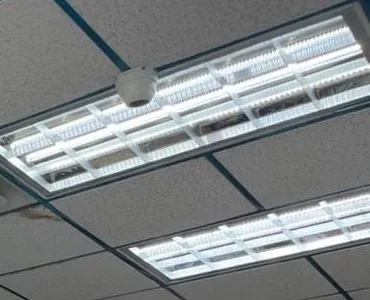
South Williamsburg, Brooklyn store camera repair: small white dome camera on grey acoustic ceiling tiles beside a long louvered fluorescent light panel
A photo from the AESS job library, not taken in South Williamsburg: a small white dome camera on grey acoustic ceiling tiles beside a long louvered fluorescent light panel. In a Lee Avenue grocery or Judaica shop this is the camera over an aisle or a register. When the store is closed for Shabbos with the lights off, it is also the camera that has to see a dark room, which is where a dome mounted right beside a light panel by day often turns out to be in the wrong spot by night.

Stores closed for Shabbos: dark rooms and nobody watching

A store that is busy six days a week and empty for the seventh has two different camera jobs. By day, the cameras watch customers, registers and aisles under bright lights. When the store is closed and dark from Friday afternoon to Saturday night, the same cameras have to see an empty room in darkness, with every view lit only by their own infrared or by whatever light is left on. Many store systems are set up and checked only during business hours. The repair visit, for a store, includes checking every camera with the lights off, the gate down and the recorder recording the way it will overnight, and making sure the back door, the roof hatch or skylight, and the cellar door, which is how the 2015 precinct report said many commercial burglars got in, are covered.

Bakeries, food stores and kitchens: steam, heat and flour

Kosher bakeries and food stores are a fixture of Lee and Bedford Avenues, and their cameras live in harder conditions than a clothing store's. Steam and grease soften the picture on a dome within weeks, flour settles on lenses and inside recorder vents, and ovens running from before dawn heat the back room where the recorder often sits. Repairs here usually combine a clean, a better position away from the ovens and steam, a camera housing rated for the environment, and moving the recorder somewhere cooler and off the floor.

Rules that touch a commercial camera repair

Companies that install or service security and CCTV systems for others in New York need a Department of State license; we work under NYS license #12000287431. There is no law in New York City requiring a business to register its cameras with the police: a 2019 State Senate bill that would have created a mandatory camera registry never became law. The NYPD's Connect New York pilot, announced in May 2024, lets businesses that choose to share their camera feeds with the police do so, but it is voluntary. Employers who watch staff should know that New York Labor Law Section 203-c bars video recording in restrooms, locker rooms and changing rooms. Two buildings at the neighborhood's northern edge, the Williamsburgh Savings Bank at 175 Broadway and the Kings County Savings Bank at 135 Broadway, are individual city landmarks, and work on their facades follows the Landmarks Preservation Commission's rules; we found no historic district covering the rest of South Williamsburg. We are not your lawyer; we tell you where a repair touches one of these rules so you can decide before work begins.

Your Questions Answered

Security Camera Repair in South Williamsburg: Questions Answered

These are the questions South Williamsburg owners, boards, tenants and gabbaim bring to us about cameras that already exist and have stopped doing their job. Each answer is what we would tell you on the phone before a visit.

Shabbos, Yom Tov and the hours nobody checks

We put the porch light on a Shabbos clock that switches it off around midnight. From then until morning, the porch camera's picture of our door is a grey blur. Is the camera failing?

Probably not. While the lamp is on, the camera sees in color by the lamp's light. When the clock cuts it, the camera has to switch to its own infrared, refocus, and light the porch from a few feet away, which is the situation where faces wash out or turn to mush. The 90th Precinct's advice in 2015 was simply to leave lights on, and the September 2026 entries that Shomrim warned about happened in the early morning, after many timers have already turned porch lights off. The cheapest repair is often the clock setting: keep a low, warm fixture on until daylight. On the camera side, we set its day and night switching so it does not flip back and forth at midnight, and tune or replace it so the dark-hours picture is usable. How the light is set before Shabbos is your decision; we make the camera work with whatever you choose.

Most of the adults in our house carry kosher flip phones that cannot run a camera app. How will anyone know that a camera or the recorder has stopped?

A resident blog about life in South Williamsburg notes how many flip phones there are in the neighborhood, so this is a common setup, and it changes how a repair is finished. There are several ways to get a warning without an app. A small screen beside the recorder or in the kitchen can show every camera at once, so a black square is obvious at a glance. The recorder's built-in buzzer can be turned on for video loss and drive errors, if the recorder sits somewhere it will be heard. Its email alerts can go to a computer in the house or the office, or to a relative or managing agent who uses a smartphone. Some setups can pass an email alert on as an ordinary text message, depending on the phone carrier; we test what actually reaches your phone instead of promising it. Whichever you pick, a quick look at the screen on Thursday leaves time to call before Friday.

Our shul's lobby has a screen that shows the entrance cameras. Some members have asked that it not show their picture on Shabbos. Can the screen go dark on a schedule while the cameras keep recording?

Yes. The screen and the recording are separate: the recorder saves video whether a monitor is attached or not. A screen can be powered through a timer set before Shabbos, put to sleep by its own schedule, or fed from a recorder output that only shows chosen cameras. We set it up, switch the screen off in front of the gabbai, and then play back the same minutes to show that nothing was lost. Peninei Halakha, a rabbinic work, discusses standing where one's image appears on a monitor, and whether recording itself is acceptable on Shabbos is a question for your rav, not for a camera company. We will configure the system the way the shul decides and write down how it is set, so the next person who touches it does not undo it by accident.

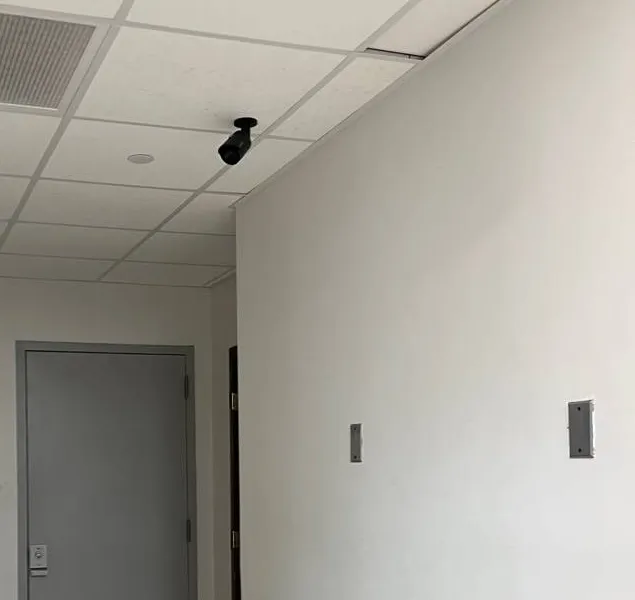
South Williamsburg, Brooklyn yeshiva corridor camera repair: small black bullet camera hanging from a white ceiling-tile grid, aimed down a short corridor at a grey steel service door
A photo from the AESS job library, not taken in South Williamsburg: a small black bullet camera hanging from a white ceiling-tile grid, aimed down a short corridor at a grey steel service door. In a South Williamsburg yeshiva or a shul with a side entrance, this is the camera on the back door that sees a visitor for only a second or two, so we check that it saves every frame at full quality, and that its recorder keeps those seconds for longer than a three-day Yom Tov.

Our yeshiva's recorder is in the principal's office, which stays locked through a three-day Yom Tov. If something happens on the first night, will the video still be there when the office opens?

Only if the drive keeps more days than the office is closed, plus the time it takes someone to realize they need the video. Many school systems put in years ago were set to keep a few days at reduced quality, which is barely enough. We check how many days the recorder actually holds at the quality that shows a face, and size the drive and recording settings so the entrances and halls keep at least two to three weeks. A locked office is a good place for a recorder, because a thief cannot carry it away, but a closed room in summer with the air conditioning off can overheat it, so we check its ventilation as well. If the school wants a second safeguard, the most important cameras can also record to a second recorder in another room or to an off-site copy, so one failure does not lose everything.

Tenants, landlords and building systems

Our building used to show the lobby camera on a channel on every apartment's TV. After the cable company rewired the building, the channel disappeared. Can it be brought back?

Often, yes. Older buildings sent the lobby camera into the building's TV cable through a small device called a modulator, so it appeared as one more channel. When a provider rewires the risers, that device is frequently disconnected or bypassed, and the camera itself is still working. The repair is to find the modulator, reconnect it to the building's distribution, and check the channel in a few apartments. This has come up before in New York: in a 2015 decision reported by landlordvtenant.com, the state housing agency upheld rent reductions after a building's vestibule camera feed to tenants' TVs stopped because the cable from the camera had been disconnected, noting the service had been provided for 19 years. That was one building's case, not a rule for every one, and we work for the owner. Where few tenants still watch cable TV, the owner may prefer to put the lobby view on apartment intercom screens instead.

Our landlord is having the hallway cameras repaired, and some tenants feel watched. What are the limits on where building cameras can point?

Courts in New York have generally allowed cameras in a building's shared spaces: in Otero v. Houston St. Owners Corp., decided in 2012, tenants' privacy claims over hallway cameras were dismissed. That does not mean anything goes. On every building repair we aim hallway, stair and lobby cameras at the common areas they are meant to cover, and we do not aim a camera so that it looks into an apartment when its door opens, through a window, or into a private room. If an existing camera does that, we tell the owner and recommend re-aiming or masking that part of the picture before we leave. We are not your lawyer, and a tenant with a specific complaint should take it to the owner, the managing agent or legal help; what we can do is make sure the cameras we repair cover the hallway and nothing more.

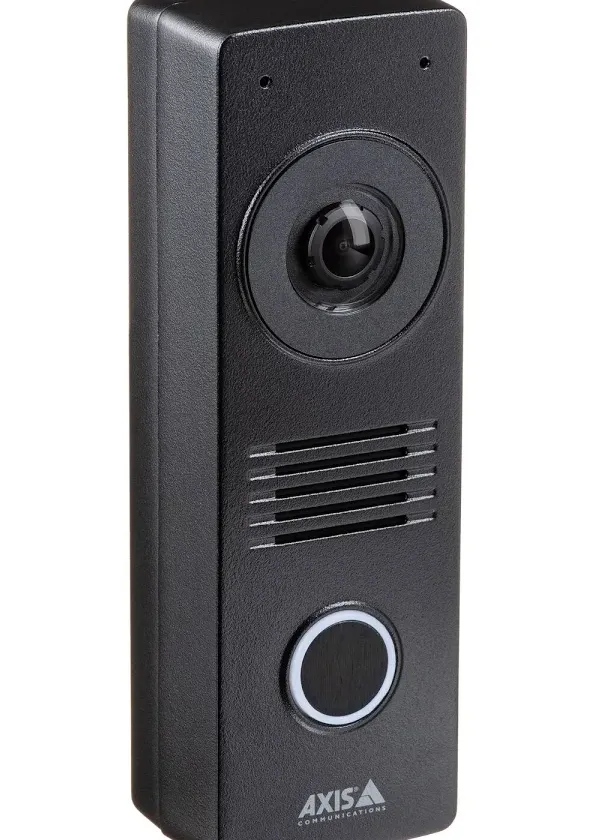
South Williamsburg, Brooklyn condo entrance camera repair: black video intercom door station with a camera, speaker grille and lit call button, product photo
A product photo from the AESS job library, not taken in South Williamsburg: a black video intercom door station with a camera, a speaker grille and a lit call button. Newer South Williamsburg condos, like the small walk-up condo listed at 217 Lee Avenue, often have a station like this at the street door. Its camera shows the visitor to whoever answers, but whether it records anywhere depends on how it was connected, which is the first thing we check after a theft at the door.

The balconies stacked above our building's street door keep the entrance in shadow all day. The door camera shows visitors as dark shapes against the bright sidewalk, even at noon. What fixes that?

Many newer South Williamsburg buildings have deep balconies stacked or staggered up the front, built so each family's sukkah is open to the sky, and the door underneath sits in shade while the sidewalk beyond it is in full sun. A camera mounted in that shade and aimed outward exposes for the bright street and turns faces into silhouettes. There are three fixes, usually combined. First, the camera's wide dynamic range and backlight settings, which are often off or set low. Second, the angle: a camera on the side wall looking across the entrance, or one by the door looking back in toward the building, sees faces against the dark doorway instead of the bright street. Third, light under the balcony slab, which evens out the scene day and night. If the camera cannot handle the contrast at all, replacing it with one built for backlit entrances is the last step, not the first.

The cable for our door camera runs up the doorframe right beside the mezuzah. If the camera is replaced, will the technician need to move the mezuzah?

No. Our technicians do not remove or handle a mezuzah. If the new camera needs a different cable route, we take it along the other side of the frame, above the lintel or through the wall beside the door, and we point out exactly where we plan to drill before we start, so you can say if it is too close. If other work on the door really does require the mezuzah to come off, that is for the family, a sofer or your rav to handle before we arrive and to put back afterward. In our experience the question almost never arises on a camera repair, because a camera at the doorway can usually be reached from the outer face of the wall without touching the doorpost at all.

The street, the season and the neighbors

Every fall the lulav and esrog stalls set up on the sidewalk in front of our Lee Avenue store. For two weeks the storefront camera sees only the back of a stall and sends an alert every few seconds. What can we do?

Brooklyn Magazine has reported that Lee Avenue is closed to traffic each fall for lulav and esrog stalls, so this is a seasonal problem rather than a broken camera. For those weeks, the motion zone can be redrawn to cover only the door and the strip of sidewalk the stall leaves clear, and alerts can be limited to people at the door instead of any movement. A varifocal camera can be zoomed over the top of the stall to the entrance, and a small indoor camera just behind the front window keeps the doorway covered whatever stands outside. Keep the storefront camera recording around the clock during the season, because crowded sidewalks are when things go missing. We save the normal settings as a preset, so after Sukkos they can be restored in a minute instead of being rebuilt.

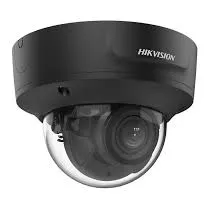
South Williamsburg, Brooklyn storefront camera repair: black varifocal dome camera, product photo
A product photo from the AESS job library, not taken in South Williamsburg: a black varifocal dome camera. Its lens can be zoomed after mounting, which lets a Lee Avenue or Bedford Avenue storefront camera be pointed past a seasonal stall or a delivery truck to the doorway itself, and set back to its usual view afterward.

After the Hooper Street break-ins, Shomrim asked everyone on our block to check their cameras for one early-morning window. How do we find the right minutes without watching hours of video?

Use the recorder's playback timeline rather than watching from the start. Most recorders mark recorded motion as colored blocks on the timeline, so you can jump straight to the moments when something moved on the camera facing the street. Many also let you draw a box over part of the picture, the sidewalk in front of your door for example, and search only for motion inside it. Play those stretches at four or eight times speed, then slow down when someone appears. Once you have it, export only those minutes. If your timeline shows no marks at all, the camera may be recording without motion detection or detection may be switched off, and that is something we fix and then teach on the visit. Whether you hand the clip to Shomrim or to the 90th Precinct is up to you as the owner.

A new building is going up on the lot next to ours, and the contractor's sidewalk shed now covers the view from our front camera. Is there a temporary fix?

New York YIMBY has reported new buildings filed in South Williamsburg on Wallabout Street and Williamsburg Street East, and each one brings a shed and months of work. Under a shed the sidewalk is dark by day and lit by the shed's own lamps at night, so a camera aimed over the top sees plywood. The usual temporary fix is to re-aim or lower the camera so it looks along the covered walkway toward your own door, adjust its settings for the darker scene, and add a small camera at the door if the shed hides the approach completely. We photograph the original position first, so the camera can go back exactly where it was when the shed comes down. We do not attach anything to a contractor's shed without the contractor's permission, and if the work next door has disturbed your cable, take photos before anything is repaired.

Equipment

Types of Security Cameras and Recorders We Repair

Brand does not decide whether we take the job; we repair equipment from any maker, put in by any installer or by the owner. This is the equipment we find most often in South Williamsburg walk-ups, condos, towers, shuls and stores, and the fault each kind tends to develop here.

Analog and HD-over-coax cameras

The first generation of cameras on many older walk-ups and Los Sures buildings, wired with coax to a DVR in the cellar. The multi-camera power box usually fails before the cameras do, and the same cable can often carry a sharper camera.

Network (IP) cameras on PoE

The usual setup in condos built in the last ten years and in Kent Avenue towers, one cable per camera to a switch in a meter or telecom room. Faults are a switch port, a crushed run, a changed address or a lost admin password.

DVRs, NVRs and hybrid recorders

The box that stores everything and, over a Shabbos, the only thing watching. Worn drives, frozen software after a power dip, overwrite turned off, and recorders that never resumed after a restart.

Varifocal cameras

Domes and bullets whose lens zooms after mounting. Our usual answer for a face that is too small: a long yeshiva corridor, a deep store aisle, or a door seen from across a wide lobby.

Low-light and color-night cameras

Cameras that keep a face in color with very little light, often with a small built-in light of their own. A common replacement for porch and door cameras whose infrared turns a close face white.

Pan-tilt and fisheye cameras

Moving or 360-degree cameras in large shul halls, school yards and bigger store floors. Worn motors, lost preset positions and domes fogged from inside are what we usually fix.

Wi-Fi, cube and battery cameras

Consumer cameras on shelves, back porches and apartment doors. Through two or three brick walls the signal is the weak point, and the app account often belongs to whoever bought the camera.

Video intercom door stations

Street-door panels with a camera built in, standard in many newer condos. Some record to the building system, many only show a picture to the person answering; we check which before promising any footage.

Switches, power supplies and battery backups

The quiet parts that fail during and after a power event. Checked on every outage call, replaced with the right capacity, and set so the recorder shuts down cleanly instead of crashing.

South Williamsburg, Brooklyn shul hall camera repair: mini pan-tilt dome camera with a white housing over a black lens dome, product photo
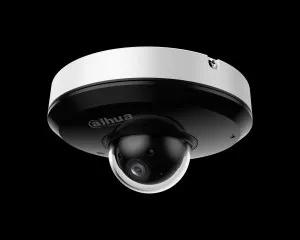
A product photo from the AESS job library, not taken in South Williamsburg: a mini pan-tilt dome camera with a white housing over a black lens dome. In a South Williamsburg shul, school hall or large store, one of these can be turned to an entrance, a coat area or a register from the recorder. The repair we do most is restoring its saved positions, because after someone moves it for one look, it often stays pointed at the wrong place for weeks with nobody checking.
South Williamsburg, Brooklyn walk-up door station camera repair: slim video door station with a camera lens at the top and a large round call button, product photo
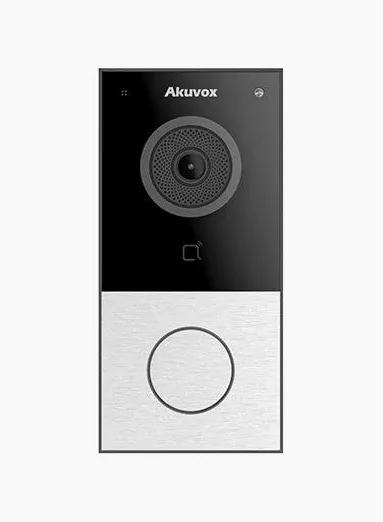
A product photo from the AESS job library, not taken in South Williamsburg: a slim video door station with a camera lens at the top and a large round call button. On a South Williamsburg walk-up or small condo, a station like this sits beside the street door and is often the only camera that looks a visitor in the face. When a building asks us for footage of someone who was buzzed in, the first question is whether this camera was ever connected to a recorder.

Ring, SimpliSafe, ADT or a local licensed repair?

Many South Williamsburg homes have a mix: a recorder-based system from an installer, plus a doorbell or Wi-Fi camera bought later. When one of the store-bought cameras stops, owners ask whether to contact the brand or call us. Here is how we answer. A sealed consumer camera that is simply dead is a warranty or replacement item; opening it is rarely worth the labor. A consumer camera that works but shows the wrong thing, loses its signal at the back of the building, drains its battery, or is tied to an account nobody can reach is a problem a visit solves, because the cause is the building, not the camera. A wired system with a DVR or NVR is local repair work, because the companies that make those systems sell through installers and do not send technicians. Cameras under a monitoring contract with ADT or a similar company should go to that company first, under the contract you already pay for. We will say which applies to you before you pay us for anything.

What you haveWho should look at it first
A Ring, SimpliSafe or similar camera that will not power on and is still under warrantyThe brand, through its warranty
A consumer camera that works but has signal, placement, battery or account problemsA local technician on site
Wired cameras recording to a DVR or NVR in the cellar, office or back roomA licensed local repair company
Cameras that came with ADT or another monitoring contractThe monitoring company, under that contract
A condo, co-op, PACT or managed building systemA licensed company approved by the board or manager
A shul, yeshiva or school system with no one assigned to itA licensed company working through the person the board names
South Williamsburg, Brooklyn apartment camera repair: white indoor cube camera, product photo
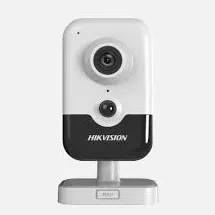
A product photo from the AESS job library, not taken in South Williamsburg: a white indoor cube camera. In South Williamsburg apartments we find these on a shelf facing the front door or looking out at a balcony. When one stops connecting, the cause is usually the home's Wi-Fi, a filter or router change, or an app account registered to a relative, and the camera itself is fine.
South Williamsburg, Brooklyn rear yard Wi-Fi camera repair: Wi-Fi dome camera with an external antenna, product photo
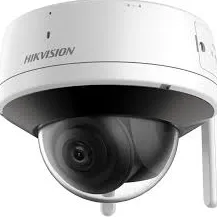
A product photo from the AESS job library, not taken in South Williamsburg: a Wi-Fi dome camera with an external antenna. At the back of a brick walk-up off Bedford or Lee Avenue, the router is usually in a front apartment, several masonry walls away, so the antenna's direction or a small access point near the rear matters more than the camera. The rear of the building is also where the September 2026 reports describe doors and windows being tested.
AI Overview Reality Check

What AI Gets Wrong About Security Camera Repair in South Williamsburg

Search summaries, chatbots and home-service directories such as Angi, HomeAdvisor and Fixr give camera advice written for an average suburban house. Some of it holds anywhere. Some of it fails on these blocks, where systems run unwatched every week, buildings are brick or concrete, and the burglaries people talk about happen before dawn. These are the general claims we see most often, and what South Williamsburg repairs actually show.

"Check your camera app every day and you will spot problems early"

The advice assumes someone opens an app daily. In many South Williamsburg households, nobody looks from Friday afternoon to Saturday night, and some adults carry phones that cannot run a camera app at all. A plan built on daily checking leaves a predictable gap every week, and a longer one over Yom Tov.

The repair has to replace the daily glance. That means a recorder that overwrites, restarts and resumes by itself, alerts sent to someone who will see them before Shabbos, and a screen in the house where a dead camera shows as a black square without anyone opening anything.

We test those things on the visit, including pulling the recorder's power, because a system that has to run alone for twenty-five hours should be proven to do it before we leave.

"Mount cameras high, out of reach, for the widest view"

High mounts do protect a camera and do show more of a yard. But the 90th Precinct's own advice, reported by DNAinfo in 2015, was to mount cameras low and angled upward, because a camera on the ceiling is easily beaten by a hooded sweatshirt.

On these blocks the problem is wider than hoods. Many men wear hats with brims, and a camera looking down at a doorway records brims rather than faces for a large share of the people walking through, whether they are neighbors or not.

The answer is usually two cameras with two jobs: one high for the overall scene and for tamper resistance, and one at about face height near the door, looking at people as they approach. Most of our "the camera saw nothing useful" repairs are really height repairs.

"Night vision lets you see clearly in total darkness"

Infrared night vision lets a camera see shapes and movement in the dark. It does not guarantee a recognizable face, and the same 2015 precinct advice warned that infrared distorts faces, which is why officers told owners to leave lights on.

The worst case is close range. A porch or door camera's infrared lights the nearest surface hardest, so a face a few feet away can become a white patch, especially next to pale walls, glass doors or metal railings that bounce the light back into the lens.

The early-morning entries reported in September 2026 are exactly that scene: someone at a door in the dark. A light left on, a camera that dims its infrared at close range, or a low-light color camera fixes it. A brighter infrared camera usually makes it worse.

"Your landlord has to keep the building's cameras working and give you the footage"

Not as a general rule. In a Brick Underground column about a Williamsburg renter's stolen packages, attorney Jennifer Rozen explained that city buildings are not required to have working cameras, and that landlords are not required to share footage outside a legal process.

There are exceptions that depend on the building's history. In the 2015 DHCR decision about a vestibule camera feed that had been provided to tenants for 19 years, rent reductions were upheld when it stopped, because it had become a service the landlord was required to maintain.

For a repair company, that means we take instructions from the owner or the board, not from a tenant about a building system. For a tenant, it means a written request to the owner, and a police report after a theft, is the path to footage; the police can request it.

"Just switch to wireless cameras and skip the wiring"

Wireless cameras are fine in the right spot, and we install and repair plenty of them. But Wi-Fi does not pass well through several brick walls, and the back of a walk-up is often too far from the router in the front apartment for a steady signal.

There is also the question of who can see them. Wireless consumer cameras are built around a smartphone app and a cloud account. In homes with flip phones or filtered internet, that app may not run, may be blocked, or may be on one relative's phone only.

Where a cable already exists, repairing the wired camera is usually more dependable and costs less over time than replacing it with a wireless one. Where it does not, an access point at the rear of the building often fixes the Wi-Fi camera that is already there.

"Businesses in New York City have to register their cameras with the police"

There is no such requirement. A 2019 State Senate bill, S487, would have created a mandatory camera registry, and it never became law, so no store on Lee Avenue or Broadway has to register its system.

What does exist is voluntary. In May 2024 the NYPD announced its Connect New York pilot, which lets businesses that choose to share their camera feeds with their precinct do so. Whether to take part is the owner's decision.

A repair can make either choice workable: cameras that record clearly, a recorder with its clock right, and someone on staff who knows how to export a clip when the 90th Precinct asks. That matters more than any registration.

"Camera repair averages about $1,400 in Brooklyn"

HomeAdvisor's Brooklyn page does put the average surveillance camera install or repair at $1,416, with a typical range of $680 to $2,145 and a low-to-high range of $160 to $3,500. Those figures mix new installations with repairs of every size.

A repair is priced by the fault. On our published Brooklyn list, the service call is $150 and is credited to the repair, a connector or PoE port fix runs $150 to $350, a single camera replacement $250 to $600, and a recorder replacement with a drive $700 to $1,500.

What makes a repair expensive is doing it twice: a camera replaced when the power supply was the cause, or a new recorder put on a line that keeps browning out. We test in order so the part that failed is the part you pay for.
Before You Pay for New Cameras, Send Us One Day Shot and One Night Shot

A daytime still and a night still from the camera that worries you, plus a photo of the recorder screen, tell us most of what we need. Many South Williamsburg calls that start as "the camera is broken" turn out to be a porch light on a timer, a camera mounted too high, or a recorder that stopped overwriting, and we would rather tell you that before you buy anything.

Would you rather send the photos first? WhatsApp them to a technician.

Get In Touch

Request a Free Quote

Give us the address and the kind of building, how many cameras there are, which ones are out, and where the recorder is kept. Tell us whether the trouble is by day, after dark or only after the porch light goes off, and whether it began after a power outage or work on the building. If you need video from a particular date, including hours over Shabbos or Yom Tov, put the date and time in the message so we copy it first. Boards, managing agents and shul offices can send one request for several buildings. For anything urgent, call (347) 934-8335.

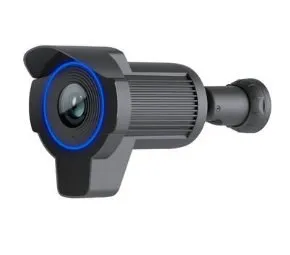
South Williamsburg, Brooklyn porch camera repair: black bullet camera with a long hood and a blue-lit ring around the lens, product photo
A product photo from the AESS job library, not taken in South Williamsburg: a black bullet camera with a long hood and a blue-lit ring around the lens. The hood shades the lens from a bright sky or a lamp overhead, and on a South Williamsburg porch, side alley or rear yard a camera like this is a common replacement when the old one washed out by day or flared at night.

✅
Request Sent!
Thank you. A technician will contact you about the South Williamsburg address shortly.
How It Works

Our Repair Process

1. Send photos of the recorder and the camera picture

Text or WhatsApp a photo of the recorder screen or app, a still from the camera you are worried about by day and after dark, the South Williamsburg address and the kind of building. Add any date whose video must be kept, even if it falls over Shabbos.

2. Confirm who owns and approves the system

Owner, landlord, condo board, HDFC or PACT manager, shul, school or store. We confirm who approves the work, who holds the recorder login and who can open the cellar, meter room or office before anything is booked.

3. Book the service call

The $150 Brooklyn service call books a two-hour arrival window and is credited to the repair if you go ahead. Requests are booked within 2 hours, and Friday visits are booked early in the day so nothing is left open going into Shabbos.

4. Save the clip before anything is touched

Video you need is exported to a USB drive in the recorder's own format, with its own timestamps, before a cable, drive or setting is changed. If a drive sounds or tests as failing, we copy first and diagnose second.

5. Test the chain from the outlet to the app

Outlet and backup, power supply or PoE switch, recorder and drive, each cable and connector, each camera, then the network, the filter or router and the app, in that order, so a good part is never replaced to cover for a bad one.

6. Explain the fault and put the price in writing

You hear what failed and why, and you get a written price from our Brooklyn list before any part is replaced. When there is more than one fault, each one gets its own line, so a board or a family can decide what to fix now.

7. Repair and test by day and by night

Parts are replaced, openings in brick, ceilings and frames are sealed, and each camera is checked with the lights on and with the scene dark, the way it will be after the porch light goes off. Saved video is confirmed in playback, not just the live view.

8. Label everything, route the alerts, hand over the logins

Cables and channels are labeled, health alerts go to people who will actually see them, each person gets a separate login, old users are removed, and someone in the house or office is shown how to find and export a clip.

Coverage Area

Security Camera Repair Near South Williamsburg's Landmarks

Williamsburgh Savings Bank

The domed bank at 175 Broadway, designated a city landmark in 1966, at the neighborhood's northern edge where the stone-trimmed buildings along Broadway begin.

Kings County Savings Bank

The French Second Empire bank at 135 Broadway on the corner of Bedford Avenue, also a 1966 landmark, now home to the Williamsburg Art and Historical Center.

47th Regiment Armory

The Marcy Avenue armory at 355 Marcy Avenue, filling a full block and now rented for community events and film shoots.

Independence Towers

Six 21-story buildings between Clymer and Wilson Streets, Wythe Place and Bedford Avenue, completed in 1965 and converted under PACT starting in 2020.

Hewes Street station

The J and M stop over Broadway, opened on June 25, 1888, by the Union Elevated Railroad, on Broadway at Hewes Street.

Marcy Avenue station

The J, M and Z platform over Broadway, opened the same day in 1888, near the site at 170 Williamsburg Street East where a seven-story building was filed in 2026.

We also serve the neighborhoods that border South Williamsburg, at the same Brooklyn rate. Our East Williamsburg camera repair page covers the blocks east of Broadway, the Bedford-Stuyvesant camera repair page covers the blocks south of Flushing Avenue, where the community has been expanding in recent years, the Brooklyn Navy Yard repair page covers the waterfront to the southwest, and the Greenpoint camera repair page covers North Brooklyn above Williamsburg. Anywhere else in the borough, start from Abstract Enterprises' security camera repair in Brooklyn.

Pricing

Security Camera Repair Cost in South Williamsburg

South Williamsburg is billed at our standard Brooklyn rate, with no neighborhood surcharge. Every repair begins with the $150 service call, which pays for the on-site diagnosis and is credited to the repair if you go ahead. The ranges below are taken from our published Brooklyn security camera repair prices. Your own price is written down on the visit, once the fault has been found, and no part is replaced until you approve it.

RepairBrooklyn price
Service call, on-site diagnosis and written price$150, credited to the repair
Motion, alert, schedule or day-night settings, no partsUsually within the $150 service call
Lens and dome clean and check (bakery film, dust, grime)$80
Replacement dome or front cover$30–$80 part, plus labor
Connector reterminated or PoE switch port replaced$150–$350
Camera power supply repair or replacement$150–$400
Recorder hard drive replaced$200–$450
Indoor camera repair in a home or office$200–$450
One camera replaced on a working system$250–$600
Outdoor camera body replaced and weatherproofed$250–$600
Night picture repair, including infrared problems$250–$650
DVR not working, drive and labor included$300–$700
NVR not recording$400–$900
Vandalized camera, per camera, plus cable repair$400–$900
Pan-tilt camera repair$450–$1,200
Hybrid recorder for coax and network cameras$700–$1,200
DVR or NVR replaced, with drive and setup$700–$1,500
Yearly maintenance visit$250–$800

Within those ranges, three things move a South Williamsburg price. Height and reach come first: a camera under the cornice of a four-story walk-up, above a stacked balcony or in a tower's double-height lobby needs more ladder and setup time than one beside a door. The second is how many parts failed together, which is why a repair after a power event often costs more than a single dead camera, because a drive, a switch port and a supply can all go at once. The third is access: a recorder in a locked school office, a PACT management room or a tenant's cellar takes time to arrange, and a tower's contractor rules add steps before work can start. Whatever the job, you see the number before we start, and each fault is priced on its own line.

Full terms — including 50% deposit, one-year parts-only warranty on AESS-supplied products, and the late-fee schedule — are set out in the service agreement.
Shop Our Systems

Security Camera Repair Packages & Pricing

Most South Williamsburg repairs fall into one of three shapes, each priced from our Brooklyn list.

Single-fault repair: $150–$700

One problem fixed on one visit: a porch camera reset for the dark hours after the Shabbos clock turns the light off, a corroded connector replaced on a brick facade, a dead switch port or power supply after an outage, a worn drive swapped, or a lost login recovered. Typical for a walk-up, a small condo or a single store.

Recorder or multi-camera repair: $700–$1,500

The recorder, or several cameras at once: a DVR or NVR replaced after years of running unwatched, an old coax system moved to a hybrid recorder, or several runs repaired after a renovation or a balcony job. Typical for a larger walk-up, a building with a store below, or a shul's halls and entrances.

Yearly check: $250–$800

Every camera checked with the lights on and in darkness, lenses and domes cleaned, connectors and supplies tested, drive health read, days of retention confirmed, alerts tested and a sample clip exported. Homes start at $250, commercial properties at $400, and owners or managers with several buildings run $500 to $800.

Bring your own equipment. If you have already bought a replacement camera, doorbell or recorder, we can fit it at labor-only rates. Send us the exact model numbers and we quote the labor by phone or text, and the visit is booked once it is paid. Equipment you supply is installed as supplied: we cannot stand behind parts we did not provide, and a wireless camera you supply depends on your own Wi-Fi signal. If a model will not work with your recorder or your phone, we tell you before the visit, not after.

Complete Services

Every Security Camera Repair Service in South Williamsburg

Cameras, faces and night pictures

Dark cameras, hooded and brimmed faces, porch cameras that go grey after the light goes off, glare under stacked balconies and corroded facade connectors. Ask for a repair

Recorders, drives and outages

DVRs and NVRs in cellars, meter rooms, school offices and back rooms, plus the switches, supplies and backups that keep them alive. Brooklyn security camera repair

The Brooklyn price list

Every range quoted on this page, in one place, for owners and boards who want to budget first. Brooklyn camera repair price list

Buildings in more than one borough

Managing agents, nonprofits and institutions with properties across the city. Security camera repair across NYC

FAQ

South Williamsburg Security Camera Repair FAQ

Our recorder sits in the cellar room we close off as a Pesach kitchen for most of the year. Is that a bad place for it?
+

It can be. A recorder needs air around it and someone able to reach it, and a room that is sealed and packed for eleven months often gives it neither. Boxes stacked against the vents let it overheat, and if a camera fails or the police ask for video, nobody wants to open the room in the middle of the year. On a repair we can move the recorder to a ventilated shelf or cabinet elsewhere in the cellar, extend the cables to reach it, and label where it went, so it stays reachable all year without disturbing the room.

Since our home internet filter was installed, the camera app on the one smartphone in the house will not connect. Is the camera system broken?
+

Usually not. Internet filters work by blocking services they do not recognize, and a camera app's connection to its cloud service is often one of the things blocked. The cameras keep recording to the recorder the whole time; only the remote view stops. The repair is to find which addresses the app needs and have them allowed by whoever manages the filter, or to set up viewing on the home network only. We test the app on site after the change and leave written notes of what was allowed, so the next filter update does not quietly undo it.

We would rather our cameras not be connected to the internet at all. Can a repaired system record and be watched only inside the building?
+

Yes. A recorder does not need the internet to record. We can disconnect it from the router, turn off its cloud and remote features, and connect a monitor where the family or the office can see the cameras locally. The trade-offs are that nobody can check the cameras from outside the building and alerts cannot go out by email or app, so a quick look at the monitor before Shabbos becomes the health check. Footage is exported to a USB drive on the spot when someone needs a clip.

Our indoor camera looks out the front window, and on Friday night the candles on the table beside it make the picture of the street glare. Can that be fixed?
+

Yes. What the camera sees is the candlelight reflecting off the inside of the glass, which on a dark street outshines everything beyond the window. The fix is to bring the camera right up to the glass with a soft shroud around the lens, so no light from the room reaches the pane in front of it, and to switch off its own infrared, which reflects the same way. A light outside over the door helps the street picture too. None of it requires moving the candles.

During the break-ins a camera was pulled right off the front of our house. Is replacing a stolen camera covered by the warranty?
+

No. Warranties on camera equipment cover parts that fail in normal use, and theft and physical damage are excluded, so a stolen camera is replaced at the normal price on our Brooklyn list. If you plan to claim it on your insurance, keep the police report number and photograph the mount before we start, and we will note on the invoice that the camera was missing. We usually replace it with a camera on a sturdier, tamper-resistant mount, and check that another camera covers the spot where the thief stood.

If our cameras are mounted low enough to see faces, won't someone just knock them down? How do you balance that?
+

With two cameras rather than one compromise. A camera high on the facade, out of reach, records the whole approach and anyone who tampers with the lower camera. A second camera at about face height near the door, in a vandal-resistant dome or a recessed housing, records faces. If someone hits the low camera, the high one has recorded who did it. On a brick walk-up both can usually share the cable route that is already there.

Neighbors on our street want Shomrim to be able to watch our street-facing cameras live. Can a repaired system be shared like that?
+

Technically, yes, and whether to do it is the owner's decision. If you choose to, we give the volunteer group its own login that can see only the street-facing cameras, cannot see indoor or rear cameras, and cannot delete or change anything, so it can be switched off in a minute if you change your mind. We do not share any camera without the owner's approval, and in a building with several owners or a board, all of them should agree first.

With a big family, our front door opens dozens of times an hour on a Sunday, and the door camera sends so many alerts that we have stopped reading them. What can be done?
+

Keep the recording and change the alerts. The door camera should go on recording everything, but its alerts can be limited to the hours when the house is asleep, to people rather than any movement, or switched off for that camera altogether while the rear and side cameras keep alerting around the clock, since those are the doors and windows nobody should be using at night. Health alerts, for a dead camera or a failing drive, stay on all the time, because those are the ones you cannot afford to ignore.

Our board wants recordings deleted automatically after a set number of days, so residents are not filmed and stored forever. Can the recorder do that?
+

Yes. Most recorders let you set a maximum number of days to keep, after which older video is erased even if the drive has room. We set it to the number the board chooses and confirm it in playback. When choosing, keep in mind that a theft is often discovered days later, and that a building which keeps too little video has nothing to give the police. Two to four weeks is a common choice, and individual clips can still be exported and kept when there is an incident.

Our camera system was put in by someone in the community who did it on the side and left no paperwork. Can you still work on it?
+

Yes, and it is one of the most common situations we meet. We start by mapping the system: which cameras feed which recorder, what model each part is, where the power comes from and which logins exist. That map, with labels on the cables and channels, becomes the paperwork you never had. Anything unsafe, such as cameras powered from an extension cord out a window, is pointed out and priced separately, and everything else is repaired as it stands.

More Security Camera Repair near South Williamsburg

Security Camera Repair Brooklyn | Same-Day | Brownstone Pros · Security Camera Repair NYC | Same-Day | Abstract Enterprises · Security Camera Repair Manhattan | Same-Day | Co-op COI · Security Camera Repair Queens | Same-Day | Driveway Pros · Security Camera Repair Bronx | Same-Day | Home Base · Security Camera Repair Staten Island | Same-Day | Sandy Zone · Security Camera Repair Long Island | Nassau & Suffolk · Security Camera Repair Hudson Valley | Westchester to Ulster · Security Camera Repair Nassau County | Same-Day · Security Camera Repair Suffolk County | Hamptons + East End · Security Camera Repair Westchester County | Same-Day · Security Camera Repair Rockland County NY | Nyack, Suffern · Security Camera Repair Orange County | Newburgh, Goshen · Security Camera Repair Putnam County NY | Carmel, Mahopac · Security Camera Repair Dutchess County | Poughkeepsie · Security Camera Repair Ulster County | Kingston Woodstock

Security Camera Repair Bath Beach Brooklyn NY · Security Camera Repair Bay Ridge Brooklyn NY | AESS · Security Camera Repair Bedford-Stuyvesant Brooklyn NY · Security Camera Repair Bensonhurst Brooklyn NY | AESS · Security Camera Repair Bergen Beach Brooklyn NY · Security Camera Repair Beverley Square Brooklyn NY · Security Camera Repair Boerum Hill Brooklyn NY · Security Camera Repair Borough Park Brooklyn NY · Security Camera Repair Brighton Beach Brooklyn NY · Security Camera Repair Brooklyn Chinatown Brooklyn NY · Security Camera Repair Brooklyn Heights, Brooklyn NY · Security Camera Repair Brooklyn Navy Yard, Brooklyn NY · Security Camera Repair Brownsville Brooklyn NY | AESS · Security Camera Repair Bushwick Brooklyn NY | AESS · Security Camera Repair Cadman Plaza Brooklyn NY · Security Camera Repair Canarsie Brooklyn NY | AESS · Security Camera Repair Carroll Gardens Brooklyn NY · Security Camera Repair City Line, Brooklyn NY | Any Brand · Security Camera Repair Clinton Hill Brooklyn NY | AESS · Security Camera Repair Columbia Street Waterfront Brooklyn · Security Camera Repair Coney Island Brooklyn NY · Security Camera Repair Crown Heights Brooklyn NY | AESS · Security Camera Repair Cypress Hills Brooklyn NY | AESS · Security Camera Repair Ditmas Park Brooklyn NY | AESS

Other services in South Williamsburg

Access Control Installation South Williamsburg Brooklyn NY · Security Camera Installation South Williamsburg Brooklyn NY · Fire Alarm Installation South Williamsburg Brooklyn NY · TV Installation South Williamsburg Brooklyn · Door Buzzer Repair South Williamsburg Brooklyn NY · Intercom Installation South Williamsburg, Brooklyn NY · Structured Cabling South Williamsburg Brooklyn NY · Alarm Installation South Williamsburg Brooklyn NY · Door Buzzer Installation South Williamsburg Brooklyn NY

Ready for South Williamsburg Cameras That Keep Working When Nobody Is Watching?

Send a day photo and a night photo of the camera, the address, and the date of any video you need, including hours over Shabbos or Yom Tov. We book within 2 hours, give you a two-hour arrival window, copy your footage first, and write the repair price down before any part is replaced.

Prefer to send photos? Message a technician on WhatsApp.