Any Brand, Any Installer · Footage Saved Before Repairs · Visits Planned Around Shabbos and Yom Tov · Brooklyn Rate
Security camera repair in Midwood starts with our $150 Brooklyn service call, which pays for the on-site diagnosis and is credited to the repair when you go ahead. On our published Brooklyn list most single faults run $150 to $700, and replacing a recorder or rewiring several cameras runs $700 to $1,500. We fix systems other people installed: porch and driveway cameras on a detached house in Midwood Park, the shared cameras of a two-family off Avenue M, the lobby and cellar cameras of a 1920s co-op on Ocean Avenue, and the counter cameras of a grocery on Coney Island Avenue. Requests are booked within 2 hours, visits come in two-hour arrival windows, and you get a written price before any part is replaced.
Reviewed and updated November 12, 2026, against CBS New York's June 30, 2025 report on the attempted robbery and shots fired at the Midwood Station Post Office on Coney Island Avenue near Avenue J; ABC7's December 2022 report on the NYPD surveillance video of an armed robbery at a Coney Island Avenue grocery; News 12 Brooklyn's April 2025 report on the electronics theft at 1401 Kings Highway and its August 14, 2025 report on the evening outage that cut service to more than 5,600 Con Edison customers in the Midwood area; the Brooklyn Paper's May 2012 report on the Agudath Israel camera program outside Midwood and Borough Park synagogues and schools; the NYPD's 70th Precinct page; the Department of City Planning's 2006 Midwood rezoning summary; the Historic Districts Council on the Fiske Terrace–Midwood Park Historic District; chapter 11 of the Landmarks Preservation Commission permit guidebook; Bisnow's Midwood neighborhood profile; Brownstoner on 1710 Avenue H; CityRealty on 1947 Ocean Avenue; Brick Underground on landlords and building footage; HomeAdvisor's Brooklyn cost page; New York Labor Law §203-c; and the New York Department of State on security and CCTV installer licensing. · Abstract Enterprises Security Systems, NYS license #12000287431 · crews dispatched from our Troy Avenue office in Brooklyn

Owner-operated since 2002 · Thousands of jobs completed · Booked within 2 hours
Security camera repair in Midwood is mostly about systems that quietly stopped doing their job long before anyone needed them. A family comes home after a long weekend or a Yom Tov, a package is missing from the porch, a car on the block was opened overnight, a store finds the register short, and only then does someone open the app and see that the camera that mattered has been dark, blurry or not saving for weeks. So the first thing we do on every Midwood visit is copy whatever footage the recorder still holds. Only then do we look for the cause. On a detached or semidetached house it is usually a power supply or PoE switch that did not survive an outage, a connector at the camera that let in water, a hard drive worn out on a damp cellar shelf, or a cable cut by a roofer, a siding crew or a tree. In apartment buildings, shuls, schools and stores, add drives that overwrite too soon, cameras someone can reach and turn away, and logins that left with a former super, relative or installer. Send a photo of the recorder screen to (347) 934-8335 or on WhatsApp, and we will tell you the likely fault and what that repair costs on our Brooklyn list before you book anything.
Midwood is a neighborhood of houses first. When the Department of City Planning rezoned about 80 blocks of it in 2006, between Avenue H, Ocean Avenue, Kings Highway and Coney Island Avenue, it described the area as mostly two- and three-story detached and semidetached houses, with attached row houses on some blocks and apartment buildings of four to eight stories gathered along Avenue K, Ocean Avenue, Kings Highway and parts of Avenue N. That mix decides almost everything about how cameras fail here. A detached house has four sides, a porch, a side drive and often a garage at the back of the lot, so its cameras are spread out and its cables are long. A semidetached house shares a wall and a driveway line with the neighbor. An elevator building has a lobby, a cellar, a courtyard or rear yard, and one recorder that a super or managing agent may or may not check. The storefronts on Avenue J, Avenue M, Kings Highway and Coney Island Avenue each have a small recorder in a back room or under a counter.
What these properties have in common is that the cameras are expected to work without anyone watching them. In observant households and in the many stores on Avenues J and M that close from Friday evening through Saturday, nobody opens a camera app for a full day every week, and for two or three days in a row around the holidays. Bisnow's profile of the neighborhood noted that most shops on those avenues close Friday evening and all of Saturday for the Sabbath. That is exactly when a recorder that has stopped saving, a drive that has filled and frozen, or a camera knocked off its aim goes unnoticed. A system that sends no warning when it fails can be dark for a long time before someone needs it, and we see that pattern in Midwood more than almost anywhere else in Brooklyn.
The other pattern is that footage gets asked for. When a gunman tried to rob the Midwood Station Post Office on Coney Island Avenue near Avenue J at about 1:15 on the afternoon of June 30, 2025, video from the scene captured the sound of the shots and the suspect running off, CBS New York reported. In December 2022 the NYPD released surveillance video of an armed man taking $6,000 from the register of a grocery on Coney Island Avenue, according to ABC7. In March 2025 a thief walked through an unlocked door at 1401 Kings Highway and left with about $5,600 in laptops and electronics, News 12 Brooklyn reported. Each time, the police, an insurer or a neighbor asks the stores and houses nearby what their cameras saw, and each time some of those cameras turn out to be dark, pointed at the wrong spot or recording at a resolution that shows a shape and not a face.
Midwood also has a long history of community cameras and patrols. The Flatbush Shomrim Safety Patrol began in 1991 as Brooklyn Midwood Shomrim, and in 2012 the Brooklyn Paper reported that Agudath Israel of America had been given $1 million to put surveillance cameras outside synagogues and schools in Midwood and Borough Park. Those programs depend on private cameras too: patrols and detectives work from whatever the houses and stores on a block recorded. A private camera that is quietly broken is a gap in that coverage, and it is usually a cheap gap to close, because most failures we find are in a connector, a power supply, a drive or a setting rather than in the camera itself.

Many Midwood owners who call about a camera repair also ask us to look at the front-door buzzer or the intercom in the same visit, especially in two-family houses and small co-ops where the door, the lock and the camera all cover the same entrance. If yours needs it, mention it when you book, so the technician brings the parts for both.
Urgent camera calls from Midwood come in three kinds. The first comes after something happened: a car on the block was opened, a package left the porch, the post office or a store on the avenue was robbed and the police are asking for video, or the register came up short. The owner needs a clip saved now, before the recorder writes over it. The second comes after a power cut or a storm: the lights came back and some of the cameras did not, the recorder is beeping, or the phone app says the device is offline. The third comes after a weekend or a holiday when nobody was watching: the family returns, checks the system for the first time in days, and finds that a camera or the whole recorder stopped at some point and nobody knows when.
Whatever the kind, do not restart, reset or unplug the recorder until the footage you need is copied; many recorders keep only days or a couple of weeks before they write over the oldest hours. After that, a photo of the recorder screen with the camera tiles showing, and a photo of the power supply or switch it plugs into, tells us most of what we need. A row of tiles that all went dark at once points to the power or the switch; a single dark tile points to that camera, its connector or its cable; a screen that says the disk is abnormal or unformatted points to the drive. With that in hand we book the visit within 2 hours of your request, in a two-hour arrival window, and bring the likely parts. If your house observes Shabbos or the store closes early on Friday, tell us, and we will plan the visit for a time that works.
Each repair below is priced from our Brooklyn camera repair list. The service call pays for the diagnosis; the repair is priced by what failed, how many cameras it affects and how hard the cable is to reach, whether that is a porch camera on a Midwood Park house, a camera on the back of a detached garage at the end of a long drive, or a roof camera on a six-story co-op on Ocean Avenue.
One tile with no picture, tested at the camera, along its cable and at the recorder, so only the failed part is replaced. On Midwood houses the cause is very often the connector or the plug-in power at the camera end, which costs far less than a new camera.
Systems that came back wrong after a power cut or a downed line: recorders stuck on a start-up or setup screen, PoE switches with dead ports, power supplies with blown channels, and cameras that lost their settings when the power returned all at once.
DVRs and NVRs on cellar shelves, in closets, in detached garages and in super's offices that beep, run hot, restart, report an abnormal disk or keep far fewer days than they should. We test the drive's health before deciding whether to replace it or the recorder.
Cameras that see the porch floor instead of the walk, the side of the car instead of the person at the door, or the garage door instead of the gap between the garage and the fence. We re-aim, re-lens or move them where the existing cable allows.
Runs chewed by squirrels, pulled down by branches, cut by roofers, gutter crews, siding installers or a plumber in the cellar, and connectors corroded under a porch roof or behind a gutter. We repair the section that failed instead of re-running the whole house.
Apps that lost the recorder after a new router, accounts tied to a grown child's phone or a former tenant's email, and recorders whose admin password nobody remembers. We restore access without a factory reset whenever the recorder allows it.
Clips copied to USB with their original timestamps for the 70th Precinct, an insurer, a co-op board, a shul office or a landlord, with the recorder's clock checked so the time on the clip matches the event.
Recorder settings that warn the right phone or email when a camera loses video, the drive fails or the recorder goes offline, so a system that dies on a Friday night is not discovered the following week.

Six kinds of property make up nearly every camera repair call we get from Midwood. Each fails in its own way, each decides where the recorder ended up and how the cables run, and each has its own answer to the question of who has to agree before the work starts.
Frame and stucco houses in Midwood Park, Fiske Terrace and the blocks around them, many from before the First World War, with deep porches, side drives and garages at the back of the lot. Cameras sit under porch roofs, at the eaves and on the garage, and cables are long.
Pairs of houses sharing one wall, common on the blocks toward Coney Island Avenue and Avenue M, with a driveway on the open side and a shared line at the back. Cameras on each half often look across the same space.
Houses with a rental floor or a basement apartment, where one system covers the doors and yard for two or three households. The recorder, the internet and the login often belong to whoever installed the system years ago.
Four- to eight-story apartment houses and co-ops along Ocean Avenue, Avenue H, Avenue K, Kings Highway and parts of Avenue N, with lobbies, courtyards, cellars, laundry rooms and a super's office.
Two- and three-story buildings on Avenue J, Avenue M, Kings Highway and Coney Island Avenue with a store at street level and apartments above, and two or three camera systems sharing one cellar.
Houses of worship, schools and community spaces with cameras at entrances, side doors and yards, systems often set up by a volunteer, and recorders in an office that is locked for a full day every week.
A detached Midwood house is the hardest kind of property to cover and the easiest to understand once you walk around it. The front has a porch with a roof, columns and a railing; the side has a driveway that runs past the house to a garage at the back of the lot; the back has a yard, a deck or a rear porch, and a fence line shared with three or four neighbors. Cameras usually went up in four places: under the front porch roof, at the corner of the house over the driveway, on the garage, and at the back door. The recorder ended up wherever the internet modem was, which in most houses means a cellar shelf, an upstairs closet or a corner of the den.
That layout makes the cables long. A camera on the garage may be sixty or eighty feet of cable from the recorder, running out of the cellar, along the side of the house, across the driveway on an overhead wire or under it in a pipe, and up the garage wall. Any one of those stretches can fail. The overhead run sags and chafes against a branch; the pipe under the drive fills with water; the cable at the eave is chewed by squirrels. On these houses we test each run in sections before we suggest replacing anything, because the cheapest fix is almost always to replace one damaged stretch and its connectors rather than the whole run.
Inside the Fiske Terrace–Midwood Park Historic District, the Landmarks Preservation Commission's guidebook says ordinary maintenance and repair of safety equipment needs no permit, and an in-kind replacement needs manufacturer cut sheets but no elevation drawings. Its rules ask that security cameras be well spaced, attached at mortar joints, plain masonry, wood or metalwork rather than decorative surfaces, and kept small and painted to blend, with no more than about two cameras per 25 feet of street frontage on a small building. When a repair would move a camera to a new spot on a facade or change its look, we tell you before the work, so you can decide whether to keep it in place or apply first.
On a semidetached block, two houses share a party wall and usually a line at the back of the lot, and each has its own driveway on the open side. When both owners have cameras, the cameras on the shared side often look across the same strip of yard, and at night their infrared lights shine into each other's lenses. A camera that turns milky after dark, flickers between color and black-and-white, or shows a bright glare where the neighbor's camera sits is usually reacting to that light rather than failing. The repair is a matter of aim, infrared settings or a small shield, and it costs much less than a new camera.
Because most Midwood renters live in multifamily houses rather than large buildings, many of the systems we repair cover two or three households. The owner lives on one floor, a tenant or a married child on another, and the cameras watch a shared front door, a side entrance to the basement unit, the driveway and the yard. The recorder is typically on the owner's side of the cellar, the internet account is in the owner's name, and the phone app is on whoever set it up. When a camera dies, the first question is not technical: it is who is allowed to approve the repair, who should see which cameras afterward, and who holds the admin password.
We sort that out before the visit. The owner approves and pays for the repair on a shared system unless the lease or the family says otherwise. After the repair we can give a tenant or a relative a viewer login limited to the cameras that cover their own door, keep the cameras that watch the owner's areas private, and make sure the admin login and the drive alerts go to the person responsible for the building. Brick Underground has reported that landlords are not obligated to show tenants footage outside a legal process and that city buildings are not required to have working cameras at all, so how footage is shared in a two-family house is a choice the owner should make on purpose, and we set the system up to match it.

The apartment houses along Ocean Avenue, Avenue H, Avenue K and Kings Highway are mostly older elevator buildings, many of them co-ops. 1947 Ocean Avenue, between Avenues N and O, is a 1927 co-op of six floors and 77 apartments; 1710 Avenue H is a six-story, 37-unit building from about 1937 with an elaborate entrance under a crenellated top. Buildings like these usually have cameras in the vestibule and lobby, at the elevator, in the cellar corridor, the laundry room and the back door, and sometimes on the roof bulkhead or in a courtyard. The recorder is in the super's office or a cellar room, and the cables run through old plaster, conduit and the gaps beside steam risers.
The faults we find in these buildings follow the building. Cellar connectors corrode from leaks and condensation. Cables beside the boiler room get brittle with heat. Lobby cameras that were installed in the 2000s record at a resolution that shows who came in but not their face. The recorder's drive was never replaced and is near the end of its life. And the person who set the system up, often a former super or a board member who has since moved, took the admin password with them. Before any work we confirm who on the board or at the managing agent approves it, ask for access to the super's office and the cellar, and plan the visit so the cameras that matter most are back first.
On Avenue J, Avenue M, Kings Highway and Coney Island Avenue the typical building has a store at street level and one or two apartments above. The store has its own cameras and recorder; the landlord may have a separate system for the apartment entrance and the back yard; and a previous tenant may have left a third set of cables that run nowhere. They often share the same cellar, the same power panel and sometimes the same ceiling space. When one system is repaired, renovated or removed, the others can lose power or a cable without anyone noticing until a camera goes dark.
Houses of worship and schools in Midwood often have more cameras than their offices have people to watch them. Systems were set up by a volunteer, a congregant's company or a grant program; the recorder sits in an office that is locked from Friday afternoon until Saturday night and for several days over the holidays; and nobody checks the screen until something happens. In 2012 the Brooklyn Paper reported a $1 million grant to Agudath Israel of America for cameras outside synagogues and schools in Midwood and Borough Park, with police allowed to view the feeds and access limited to authorized officials. Many institutional systems still carry that kind of arrangement, with outside parties who expect to see the cameras.
For these buildings we focus on three things: that the recorder warns someone by email or text when a camera or drive fails, so a failure on Friday is known before the next weekday; that the recorder can restart itself after a power cut without someone pressing a button; and that the logins and any outside viewing access are written down and in the institution's own name rather than a volunteer's. We confirm before the visit who at the shul or school approves the work and whether any outside viewers need to be told.

These notes describe the working order our technicians follow on a detached or semidetached Midwood house, or a small multifamily, when several cameras are out and nobody is sure why. It is a method, not a single job story, and it is built around the way these houses are laid out.
Start at the recorder, not the ladder. We read the recorder's event log before touching anything outside. It shows when each camera lost video, whether the drive reported errors, and whether the power was interrupted. If four cameras dropped at 7:05 on the same evening, the fault is upstream of all four, usually the power supply or the PoE switch. If one camera has been dropping for weeks at random hours, the fault is at that camera or along its cable. That reading alone often cuts the job in half.
Save the footage next. Any clip the owner needs is exported to USB with its original timestamps before the recorder is restarted or updated. Then we check the recorder's clock against the phone network time, because a clip that is an hour off is a problem for a detective or an insurer.
Follow the power. Outlet, surge strip, battery backup, power supply or switch. On Midwood houses the battery backup is often a small unit bought years ago whose battery no longer holds, so the recorder goes down the moment the power flickers. We test it under load rather than trusting the green light.
Walk the runs in sections. Cellar to the wall penetration, the wall to the eave or porch roof, the eave to the camera, and for the garage, the stretch across or under the driveway. A cable tester at each break shows which stretch failed. We look for squirrel damage at the gutters, crushed cable where a gate or a garage door closes, and water in the pipe under the drive.

Five causes explain most of the camera failures we find on Midwood houses, buildings, shuls and stores. Knowing which one you have is the difference between a short visit at the service call price and a quote for new equipment.
In most neighborhoods a dead camera is noticed within a day or two because someone glances at the app. In Midwood, a large share of homes and businesses deliberately do not touch their phones or screens for a full day each week, and for longer runs over the holidays. That is a good reason to have cameras, because the house or the store is unattended in the sense that nobody is looking, but it also means a recorder that stops saving on a Thursday night may not be noticed until the following week.
The fix is not more watching; it is a system that reports its own health. Most recorders made in the last decade can send an email or a push notification when a camera loses video, when the drive fails or fills, or when the recorder goes offline. Those alerts are usually switched off from the factory or pointed at an email nobody reads. We turn them on, send them to the right person, and test them before we leave. Many households prefer the alerts to arrive by email so they can be read after Shabbos ends, and that is easy to set.
The August 13, 2025 outage is a good example of the kind of power event that hurts camera systems. More than 5,600 customers in the Midwood area lost service just after 7 p.m. when weather brought down lines, and power came back by 10:37 p.m., according to News 12 Brooklyn. Three hours is longer than most small battery backups last with a recorder, a PoE switch and a modem plugged in. When the battery ran out, the recorder shut down hard, and when the power returned, every camera, switch and recorder on the block started at the same moment.
That restart is where damage tends to happen. A PoE switch that was already marginal loses a port. A power supply with a weak channel fails to bring one camera back. A recorder that shut down mid-write comes back with a drive it reports as abnormal or asks to be initialized. And a camera that relied on the router for its address cannot find the recorder because the router came back later. The symptoms look like several separate failures, but they usually trace to one or two parts. We test the power side first, then the drive, then the network, and we do not let anyone initialize a drive until we know whether its footage is still needed.
Detached houses mean long cables. The camera on a garage at the back of the lot, the camera at the driveway gate and the camera on the back fence each run a long way from the recorder, often outdoors for part of the route. Long runs fail in predictable places: where the cable leaves the house and is exposed to sun, where it crosses the driveway overhead or underground, where it passes a gutter or a downspout that drips on it, and where it enters the camera's connector. Network cameras on long runs can also suffer from a power budget that is fine in summer and marginal in winter, when cameras switch on their heaters or infrared.
Many Midwood systems were installed to cover as much as possible with as few cameras as possible. A porch camera sees the porch, the walk, the lawn and the sidewalk; a driveway camera sees the whole drive and part of the street; a store camera sees the whole sales floor. When something happens, the footage shows that someone was there but not who they were, because at that width a face is a handful of pixels. The robbery footage the NYPD released from the Coney Island Avenue grocery in 2022 showed the suspect at the register demanding money, which is the kind of tight, purposeful view that helps.
A surprising number of Midwood calls are not about hardware at all. The cameras are recording, but the app is on the phone of a son who moved to another state, a tenant who left, or a volunteer who no longer belongs to the shul. The recorder's password was set by an installer who closed his business. The email the account is registered to no longer exists. The family can see a picture on the monitor in the den but cannot export a clip, change a setting or add a new phone.
Most recorders can be recovered without wiping the footage, using the manufacturer's reset process with proof of ownership, a local reset code or the recorder's own security questions. A factory reset is a last resort, because it can erase settings and, on some models, recordings. Once we are in, we set a new admin password, put the account in the owner's or the institution's own email, give everyone else a viewer login, and write the details down for you.
Midwood's businesses are mostly small and owner-run: bakeries, bagel shops, kosher restaurants and groceries on Avenues J and M, pharmacies and electronics stores on Kings Highway, auto businesses and markets along Coney Island Avenue, medical and professional offices on the side streets, and schools and shuls throughout. Their systems are usually one recorder and four to sixteen cameras, and when something happens the owner needs the footage that day while the repair has to fit around opening hours and the weekly closing.
One of the main shopping streets named in the 2006 rezoning, with bakeries, food stores and restaurants, many closed Friday evening through Saturday. Cameras here watch counters, cases and back doors onto delivery alleys.
A long commercial strip with food shops, services and offices under apartments. Many stores share cellars and rear yards with the building above, which complicates camera cabling.
The neighborhood's southern commercial spine, with electronics, clothing and pharmacy storefronts and apartment buildings. The March 2025 theft at 1401 Kings Highway came through a door that had been left unlocked.
The western edge, with groceries, auto businesses, check cashers and the Midwood Station Post Office near Avenue J. Two of the incidents on this page, in 2022 and 2025, happened on this avenue.
Mostly apartment buildings and co-ops, with a few ground-floor offices and services. Building cameras here cover lobbies, courtyards and garages more than storefronts.
The blocks near the campus on the neighborhood's northern edge, with food counters, copy shops and services that see students all day and close early on some evenings.

The incidents on Coney Island Avenue and Kings Highway show what store cameras are actually asked to do. In the grocery robbery, the useful footage was a clear view of the person at the register. In the post office incident, video from the scene captured the sound of the shots and the suspect running. In the Kings Highway theft, the question was how the thief got in, through a door that had been left unlocked. A store system that works has a tight view of the counter and register, a view of the front door that shows faces as people enter rather than their backs as they leave, a view of the back or side door, and a recorder that keeps enough days to cover a theft found at the next inventory.
State licensing. The New York Department of State licenses companies that install, service or maintain security and fire alarm systems, and state rules extend that to a closed-circuit television system used to detect or monitor intrusion, theft or movement. An owner, or the owner's own employee, may install a system on the owner's own property without that license; a company working for you needs it. Our work is done under NYS license #12000287431.
Cameras where employees work. New York Labor Law §203-c requires employers who monitor employees electronically to give notice and obtain written acknowledgment. If a repair adds or re-aims a camera that watches a stock room, a kitchen or an office where staff work, the store should make sure its notice and acknowledgments are in place. We are not lawyers, and this is not legal advice; we simply point out when a repair changes what a camera sees.
These are situations Midwood homeowners, families, co-op boards, shul offices and store owners describe when they call. Each answer is written for the houses, buildings and storefronts here.
Yes, in most cases. Many floodlight cameras let the light and the recording be set separately, so the camera keeps recording on infrared or by streetlight while the floodlight stays off, or comes on only on a fixed schedule rather than on motion. Some households prefer a plain light on a timer that is already on before Shabbos, with the camera set to record continuously, so nothing anyone does changes the light. Which setup suits your family is your choice; our part is to make sure the camera still produces a usable night picture under whichever lighting you pick, and we check that after dark before we finish.
Four things. First, that every camera is actually saving to the drive, which you can confirm by playing back last night's recording on each one, not just looking at the live view. Second, that the drive has space and the recorder's overwrite setting will keep at least the whole time you are away plus a few days. Third, that the battery backup can carry the recorder, switch and modem through a short power cut, and that the recorder restarts by itself if the power goes off longer. Fourth, that failure alerts go to an email someone will read after the holiday. If you want, we do this as a checkup visit in the week before, and it takes far less time than repairing a system after a missed break-in.
On most current doorbells and door stations, yes. The indoor chime can usually be silenced on a schedule or by a setting, and notifications can be paused for set hours while the camera continues to record visitors and motion to the recorder or the cloud. Some older wired doorbells ring a mechanical chime directly and can only be silenced by adding a switch or a small module at the chime. We check which kind you have and set the schedule so the doorbell's video is still saved for every visitor.
No. A camera behind glass picks up any bright light near the window as glare, and a row of flames a foot or two from the lens is a strong source. It will clear when the menorah is no longer lit. If that camera is your only view of the front, the better fix for the eight nights is to adjust its exposure for the window, or to rely on an outdoor camera that is not behind the glass. If the glare stays after Chanukah, the cause is something else, such as the camera's own infrared reflecting in the window, and that is a setting or a mounting change.
Usually not. We first test the cable at both ends to confirm it is the cable and not the connector or the camera. If it has failed behind the siding, the usual repair is to run a new cable on a different route, through the cellar and up inside a closet or along a corner trim, rather than opening the siding. Where a short section must be reached, one or two siding panels can often be unclipped and refitted without damage. We tell you which route we propose and what it costs before any work.
The first choice is the same bracket and the same anchors, if the new camera's base fits them, which it often does with an adapter plate. If it does not, we look for plain stone, a mortar joint or the door frame rather than the carved surround, and on many entrances a camera can move inside the vestibule and look out through the door. We show the board the options before drilling anything new.
It is quite possible. In shared cellars, cables from different systems often run together, and a technician removing or re-routing one store's cables can cut, unplug or borrow a cable or a power supply channel that belonged to the building. We trace the lobby camera's cable from the camera back to your recorder and label it, find where it was disturbed, and repair it. Our written notes describe what we found, which helps if you need to raise it with the store or its contractor.
Every door into the store, including the back and side doors, should be covered by a camera that shows the door itself and the person at it. That often means adding a view of a side or rear door that was never covered, or moving an existing camera so the door is in frame rather than at the edge. A door contact on the alarm or a recorder event when the door opens can add a time stamp. Once the repair is done, we give you a written note of what each camera now covers, which is useful to an insurer.

We repair whatever is on the property, whoever installed it. These are the kinds of equipment we find on Midwood houses, apartment buildings, shuls and stores, and the faults each one tends to develop here.
Cameras with round BNC connectors, from old analog models to HD versions, still common on houses wired in the 2000s and 2010s. Typical faults: corroded connectors under porch roofs, failed channels on a central power supply, and rolling lines from a cable run beside power wiring.
Cameras powered and connected through one network cable, standard on newer systems in houses, co-ops and stores. Typical faults: a failed PoE switch port, a long run that cannot carry enough power in winter, and cameras that lost their address after a router change.
The box that holds the footage, on a cellar shelf, in a closet, in a detached garage or in a super's office. Typical faults: worn hard drives, overheating in closed cabinets, a frozen start-up after an outage, and lost admin passwords.
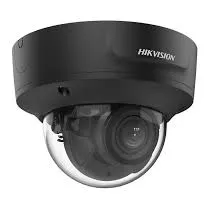
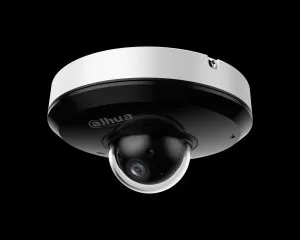
Cameras with an adjustable lens, common in lobbies, on driveways and at store doors. Typical faults: a view set too wide to identify anyone, focus that drifted, and a scratched or fogged dome bubble that can be replaced on its own.
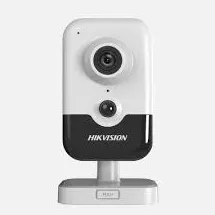
Plug-in and battery cameras inside windows, on shelves and in back yards. Typical faults: weak Wi-Fi to the garage or the back of a deep lot, batteries that drain fast in cold weather, and glare when the camera sits behind glass.
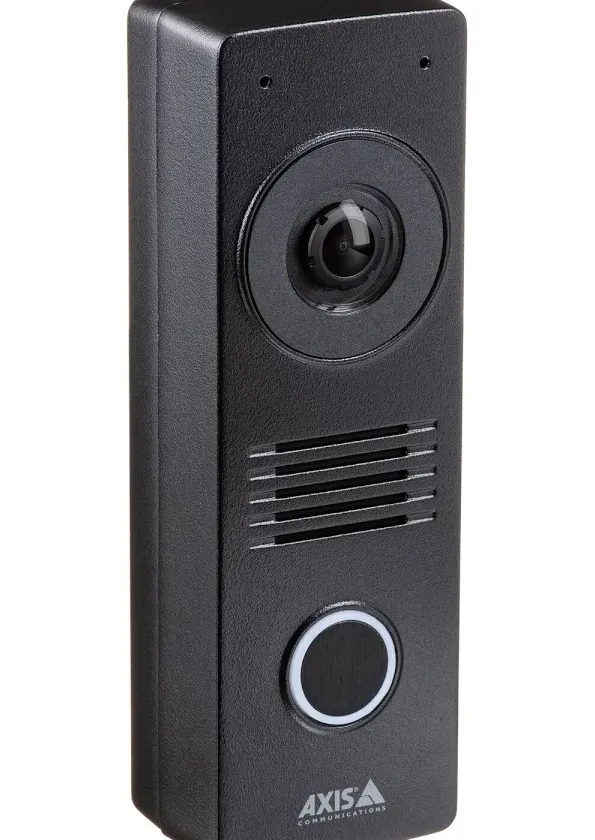
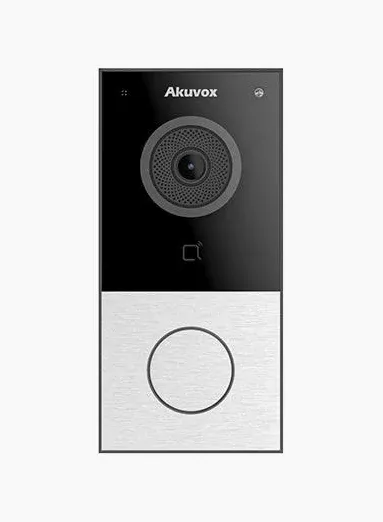
Doorbells and intercom stations with their own camera at the front door or the building entrance. Typical faults: a weak transformer or power supply, a dead indoor chime, and video that reaches one app but not the recorder.
The switches that power network cameras, often on a cellar shelf with no battery backup. Typical faults: dead ports after a surge, a power budget exceeded by one added camera, and overheating in a closed space.
Central power boxes, plug-in adapters and UPS units. Typical faults: blown channel fuses, adapters that fail in heat, and backup batteries that show a green light but hold almost no charge.


Some Midwood households and stores have cameras from national alarm companies or consumer brands and wonder who should fix them. The table shows how the options usually compare for a repair.
| Question | ADT or a similar alarm company | Ring or SimpliSafe camera | AESS local repair |
|---|---|---|---|
| Who owns the equipment | Depends on the contract | You own it | You own it, and we repair it |
| Recorder on a cellar shelf | Its own panels and recorders | No local recorder; clips go to the cloud | DVRs, NVRs and hybrids, drives and footage export |
| Mixed brands on one house | Usually only its own | Support covers its own devices | Any brand, any installer |
| Garage at the back of the lot | Depends on its wiring | Wi-Fi reach and battery life | Wired or bridged runs tested in sections |
| Licensed technician on site | Varies by dealer | Remote support | Yes, NYS license #12000287431 |
| Price before work | Varies | Replacement device price | $150 service call, then a written repair price |
These claims turn up in AI-generated answers, help forums and national cost sites. Each is partly true somewhere; here is how it holds up on Midwood houses, buildings and stores.
Wireless is often suggested as the cure for a failed cable. On a Midwood frame house the Wi-Fi may well reach the porch, but the garage at the back of a deep lot, a camera on the far side of a brick semidetached wall, or a camera in a co-op cellar is a different story.
Wireless cameras still need power at the camera, so a battery to charge or an outlet nearby. They also add load to a home network that is already carrying phones, laptops and televisions, and they depend on the router, which is the first thing to go down in an outage.
Where a wired camera has failed, the cause is usually one damaged stretch of cable or one connector, and repairing it keeps a camera that records to the local drive with no dependence on Wi-Fi. We suggest wireless where a cable genuinely cannot reach, and we test the signal at the spot before you buy anything.
Some answers treat every camera job inside a historic district as a permit matter. For the Fiske Terrace–Midwood Park Historic District, that overstates it.
The Landmarks Preservation Commission's own guidebook says ordinary maintenance, repair and retrofitting of safety equipment needs no permit, and that an in-kind replacement is handled with manufacturer cut sheets rather than drawings. New locations, new conduit on a facade or a camera that changes the look of the house are where its rules on spacing, mounting surface and visible conduit apply.
So a dead porch camera replaced with a similar one in the same spot is a repair. Moving it to a new spot on the front, or adding cameras to the facade, is something to plan with the Commission's rules in mind, and we tell you which case you are in before the work.
Because cameras run on low voltage, some answers assume a power cut simply pauses them. The cameras themselves usually survive, but the equipment that powers and records them takes the hit.
When more than 5,600 Midwood-area customers lost power for about three hours on the evening of August 13, 2025, any small battery backup on a block like that would have run out, and every recorder, switch and power supply restarted at once when service returned. That restart is when weak ports, weak channels and tired drives fail.
After an outage, the right check is the power side first and the drive second, and nobody should initialize a drive the recorder reports as new until its footage has been considered. That check is usually a short visit.
Cloud doorbells are convenient and they do record visitors at the front door. They do not cover the side drive, the garage, the back door or the yard, and they depend on the house internet and a subscription to keep clips.
Access to their footage has also changed. In January 2024 Ring ended the tool police used to request doorbell video from users, though law enforcement can still obtain video with a warrant. A local recorder keeps footage in the house under the owner's control, and the owner decides what to hand over when asked.
Most Midwood houses we work on have both: a doorbell at the front and wired cameras elsewhere. We repair both and can show the doorbell's camera alongside the others where the brands allow.
Cost sites publish averages that mix installation and repair. HomeAdvisor's Brooklyn page puts the average for surveillance camera installation or repair at $1,416, with a typical range of $680 to $2,145 and a full range of $160 to $3,500.
That number blends whole new systems with small fixes. A repair in Midwood is usually much smaller: a connector, a power supply, a drive or a setting. On our Brooklyn list most single faults fall between $150 and $700, and only recorder replacements and multi-camera rewires reach $700 to $1,500.
The real driver is what failed, which the service call finds. That is why the diagnosis comes first and the price is written down before anything is replaced.
Midwood has had community cameras outside synagogues and schools since the program the Brooklyn Paper reported in 2012, and patrols that work closely with the precinct. It is tempting to conclude that the block is already covered.
Community cameras cover the spots they were placed for, usually entrances to institutions and corners, not your porch, driveway or back door. And patrols and detectives depend heavily on private footage: Wikipedia's account of the Flatbush Shomrim, which began as Brooklyn Midwood Shomrim, describes a case where police identified a suspect's car from surveillance videos before volunteers found it.
Your camera is the one that sees your door. If it is dark, nobody else's camera fills that gap, which is why a repair is usually worth more than it costs.
Motion-only recording is often recommended to stretch a small drive. It does save space, but on many Midwood systems it also loses the moments that matter.
Motion sensing on cheaper cameras starts late, misses people approaching slowly at the edge of the frame, and can be fooled by headlights, porch lights and trees. On a house or a shul that nobody checks for a full day, a missed trigger is not noticed until it is needed.
A larger drive is usually inexpensive, and continuous recording with motion marked on the timeline gives both: every minute saved, and the events easy to find. We set the recording mode to suit the drive and the days you need.
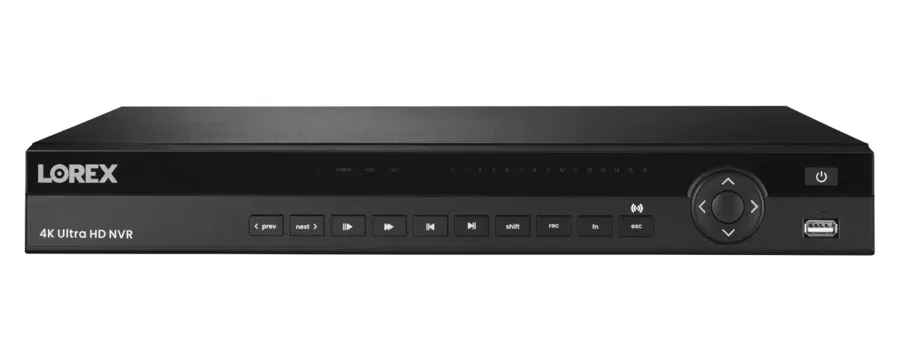
If you are not sure whether the fault is the camera, the cable, the recorder, the network or the power, a short call or a photo can save you money and footage. Call now at (347) 934-8335, send a fast quote request, or send a photo of the recorder screen to a technician on WhatsApp. Same-day estimates are available on most days, and requests are booked within 2 hours.
Tell us the address, the type of property, how many cameras there are, which ones are out and where the recorder sits. If you need footage from a particular date, say so and we will plan the visit around saving it. If your household or business observes Shabbos, or the store closes early on Fridays, mention it and we will schedule around it. Photos of the recorder screen, the dark cameras and the power supply help us bring the right parts. For anything urgent, call (347) 934-8335 now.

A photo of the recorder screen or phone app with the dark cameras, the Midwood address, and any date of footage you need kept. Most faults can be narrowed down from that before anyone visits.
Homeowner, co-op or condo board, managing agent, shul or school office, or store owner: we confirm who approves the repair and who holds the logins, so the visit is not held up on the day.
The $150 Brooklyn service call books the visit in a two-hour arrival window, planned around Shabbos, Yom Tov and store hours, and is credited to the repair if you go ahead.
Any clip that matters is exported to USB with its original timestamps before the recorder is restarted, updated or opened, and the recorder's clock is checked against network time.
Outlet and battery backup, power supply or PoE switch, every cable and connector in sections, the recorder and its drive, the network and the app, in that order.
You hear what failed and why, and get a written, itemized price before any part is replaced. If a part is not worth repairing, we say so.
The failed part is repaired or replaced, and every camera is checked for picture, night image and actual recording on the drive, not just a live view.
Cables are labeled at the recorder, logins go to the right person, alerts for lost video and drive errors are switched on, and you get a written record of the system.
The district of suburban houses built between 1890 and 1930, designated on March 18, 2008, where camera repairs follow the Landmarks guidebook.
The CUNY campus on Midwood's northern edge, with student rentals and food counters on the blocks around it.
The post office on Coney Island Avenue near Avenue J, where an attempted robbery in June 2025 was captured on video.
A 1927 six-floor co-op with 77 apartments between Avenues N and O, typical of the elevator buildings along the avenue.
A six-story, 37-unit elevator building from about 1937 with an elaborate arched and crenellated entrance.
The two commercial corridors named in the 2006 rezoning, lined with bakeries, food stores and kosher restaurants.
We also serve the neighborhoods around Midwood, including Flatbush, Ditmas Park, Fiske Terrace, Flatlands and Gravesend, at the same Brooklyn rate. Our Fiske Terrace security camera repair page covers the neighboring houses of that section, our Flatbush camera repair page covers the blocks to the north, our Gravesend camera repair page covers the neighborhood to the south, and the whole borough is on our Brooklyn security camera repair page.
Midwood is billed at our Brooklyn rate. Every repair starts with the $150 service call, which covers the on-site diagnosis and is credited to the repair if you go ahead. The figures below come from our published list of Brooklyn security camera repair prices; your exact price is written down on the visit, once we know what failed.
| Repair | Brooklyn price |
|---|---|
| Service call: on-site diagnosis and written repair price | $150, credited to the repair |
| Motion, alert, recording schedule, app or login settings with no parts | Usually within the $150 service call |
| Clean and check for a blurry picture | $80 |
| Connector reterminate or PoE port swap | $150–$350 |
| Power supply repair | $150–$400 |
| Dome bubble or front cover replacement | $30–$80 part plus labor |
| Indoor camera repair | $200–$450 |
| Hard drive swap, by capacity | $200–$450 |
| Single camera replacement on a working system | $250–$600 |
| Night vision camera repair | $250–$650 |
| DVR not working, including drive and labor | $300–$700 |
| NVR not recording, by model | $400–$900 |
| Vandalized camera, per camera plus cable repair | $400–$900 |
| PTZ camera repair | $450–$1,200 |
| Hybrid recorder swap, channels reconfigured and footage migrated | $700–$1,200 |
| DVR or NVR replacement with hard drive | $700–$1,500 |
| Lightning-damaged system, by size | $700–$3,500 |
| Annual clean and check | $250 residential, $400 commercial, $500–$800 multi-property |
Three things move a Midwood repair price up or down. The first is reach. A camera under a porch roof or on the first-floor corner of the house is a short ladder job; a camera at the eave of a three-story frame house, on a garage behind a fence, or on the roof bulkhead of a six-story co-op takes longer and sometimes a second person. The second is the cable. A connector at the camera end is a small fix, a damaged stretch of a long garage or gate run is priced by the section, and a run that has to be rerouted around siding, plaster or a finished cellar is priced by the route. The third is the recorder. Replacing a drive is straightforward; replacing a recorder, untangling two systems that share a cellar, or recovering a recorder whose password nobody has adds setup and tracing time. If the price changes on site, you hear the new number before the work continues. Bundling the camera repair with intercom, alarm or cabling work on the same visit saves $200 to $400 in labor on our Brooklyn list.
Full terms — including 50% deposit, one-year parts-only warranty on AESS-supplied products, and the late-fee schedule — are set out in the service agreement.Three ways Midwood repairs usually come together, priced from our Brooklyn list.
One fault, one visit: a corroded porch-roof connector replaced, a power supply or switch port replaced after an outage, a drive swapped, a camera re-aimed or re-zoomed to show faces at the door, or a lost login recovered. This is where most Midwood calls land, and many settings-only fixes are done within the service call.
The recorder or the wiring: a DVR or NVR replaced with a new drive and every camera reconfigured, an old coax system given a new recorder with a phone app, two systems in a shared cellar separated and labeled, or several long garage and gate runs repaired after storm or construction damage.
Every camera checked by day and after dark, lenses cleaned, connectors and power tested, the drive's health read, backup batteries tested under load, failure alerts confirmed and a footage export tested. Many households book it in the weeks before the fall holidays or before a long trip. Residences start at $250, commercial properties at $400, and owners with several buildings run $500 to $800.
Bring your own equipment. If you have already bought a replacement camera, doorbell or recorder, we can fit it at labor-only rates. Tell us the exact model and we quote the labor by phone or text, and the visit is booked once it is paid. Your own equipment is installed as supplied: we cannot vouch for parts we did not supply, and if a model will not work with your recorder, will struggle on Wi-Fi to the garage, or cannot handle the lighting where it is going, we tell you before the visit.
Dark cameras, corroded porch-roof connectors, long garage and gate runs, and cables cut by siding, gutter or cellar work. Request a repair
DVRs, NVRs and hybrids on cellar shelves, in closets, garages and super's offices, including systems that came back wrong after a power cut. Call (347) 934-8335
Failure alerts set for the right person, automatic restarts after an outage, and logins moved into the owner's or institution's own name. Send a screenshot on WhatsApp
Every Brooklyn neighborhood at the same rate, with the same process. Brooklyn security camera repair
The full list behind every number on this page. Security camera repair prices in Brooklyn
Owners and managing agents with buildings in more than one borough. NYC security camera repair
The NYPD's own page lists the 70th Precinct as home to Midwood, along with Fiske Terrace, Ditmas Park and Prospect Park South, so detectives canvassing for video on most Midwood blocks come from there. What matters on your side is that the clip carries the right date and time, because an investigator lines it up with other cameras and with the report. We check the recorder's clock against network time on every visit, export clips with their original timestamps, and keep the original on the recorder untouched.
Most store repairs fit best early on a weekday morning before you open, or on a Sunday, and we plan the visit around your hours rather than asking you to close. Tell us when you book which days and hours work, and if a camera has to come down or the recorder has to restart, we do that part when the fewest customers are in the store. The visit comes in a two-hour arrival window, so you know when to expect the technician.
Yes. These are mostly prewar and postwar co-ops and rentals with cameras in the vestibule, lobby, elevator, cellar corridor, laundry room and back door, and a recorder in the super's office or a cellar room. Before the visit we confirm who on the board or at the managing agent approves the work, arrange access to the cellar and the super's office, and plan so the entrance cameras come back first. We give the board a written note of what was found and what was repaired.
Three things help most: the name of the person who can approve the repair and sign off on the price, access to the room where the recorder sits and to any locked doors or roof hatches near the cameras, and whatever logins or notes the volunteer or installer who set the system up left behind. If outside parties such as a patrol or a community program view the cameras, tell us, so we keep that access working or tell you before anything changes. Weekday mornings and school breaks are usually the easiest times to work.
It can be either, and we handle both. If the door station's own camera module has failed, or its video does not reach the recorder, that is a camera repair. If the picture is fine at the station but does not reach the apartment monitors or the phone app, the fault is in the intercom side, its power supply or its wiring. We test both on the same visit and quote the part that actually failed, so you do not pay for an intercom replacement when the camera module is the problem, or the other way round.
Usually not. HomeAdvisor's Brooklyn figure covers both installation and repair, so it includes new systems, and its typical range runs $680 to $2,145. Most Midwood repairs are one failed part: a connector, a power supply, a switch port, a drive or a setting. On our Brooklyn list most single faults cost $150 to $700, and only recorder replacements and multi-camera rewires reach $700 to $1,500. The service call finds which case you are in, and the price is written down before work.
On most recorders made in the last decade, yes. Many have a maintenance setting that restarts the recorder automatically at a set day and hour, and almost all can be set to power back on by themselves after a power cut. We set both where the model allows, pick an hour when nobody is likely to need the cameras, and confirm the recorder comes back with every camera recording. Combined with failure alerts by email, it means a frozen recorder fixes itself or at least tells someone.
Yes. Offices like these usually have cameras at the street door, the waiting room, the front desk and a back or staff entrance, with a recorder in a closet or the office manager's room. We work before or after patient hours where possible, avoid pointing any camera at exam or treatment areas, and leave logins with the practice owner or manager. If the repair changes what a camera sees where staff work, we mention it so the office can update its employee notice.
Usually the people who own and live in the house, with the son as a second administrator or a viewer if the family wants him to keep helping. We put the admin account in an email the owners control, set a new password they keep, and give every other family member a viewer login so nobody can change settings by accident. That way, if the son changes phones or loses access, the parents are not locked out of their own system, and the recorder's failure alerts go to someone in the house.
Yes, at the same Brooklyn rate as the rest of the neighborhood. Around the campus we see houses rented to students, small apartment buildings and food counters and copy shops that are busy all day. For rented houses, the main work is usually logins and Wi-Fi changes when tenants turn over, plus the usual dark cameras and full drives. For stores, it is counter and door views that show faces during the busy hours.
Security Camera Repair Brooklyn | Same-Day | Brownstone Pros · Security Camera Repair NYC | Same-Day | Abstract Enterprises · Security Camera Repair Manhattan | Same-Day | Co-op COI · Security Camera Repair Queens | Same-Day | Driveway Pros · Security Camera Repair Bronx | Same-Day | Home Base · Security Camera Repair Staten Island | Same-Day | Sandy Zone · Security Camera Repair Long Island | Nassau & Suffolk · Security Camera Repair Hudson Valley | Westchester to Ulster · Security Camera Repair Nassau County | Same-Day · Security Camera Repair Suffolk County | Hamptons + East End · Security Camera Repair Westchester County | Same-Day · Security Camera Repair Rockland County NY | Nyack, Suffern · Security Camera Repair Orange County | Newburgh, Goshen · Security Camera Repair Putnam County NY | Carmel, Mahopac · Security Camera Repair Dutchess County | Poughkeepsie · Security Camera Repair Ulster County | Kingston Woodstock
Security Camera Repair Bath Beach Brooklyn NY · Security Camera Repair Bay Ridge Brooklyn NY | AESS · Security Camera Repair Bedford-Stuyvesant Brooklyn NY · Security Camera Repair Bensonhurst Brooklyn NY | AESS · Security Camera Repair Bergen Beach Brooklyn NY · Security Camera Repair Beverley Square Brooklyn NY · Security Camera Repair Boerum Hill Brooklyn NY · Security Camera Repair Borough Park Brooklyn NY · Security Camera Repair Brighton Beach Brooklyn NY · Security Camera Repair Brooklyn Chinatown Brooklyn NY · Security Camera Repair Brooklyn Heights, Brooklyn NY · Security Camera Repair Brooklyn Navy Yard, Brooklyn NY · Security Camera Repair Brownsville Brooklyn NY | AESS · Security Camera Repair Bushwick Brooklyn NY | AESS · Security Camera Repair Cadman Plaza Brooklyn NY · Security Camera Repair Coney Island Brooklyn NY · Security Camera Repair Crown Heights Brooklyn NY | AESS · Security Camera Repair Cypress Hills Brooklyn NY | AESS · Security Camera Repair Ditmas Park Brooklyn NY | AESS · Security Camera Repair Downtown Brooklyn NY | AESS · Security Camera Repair DUMBO Brooklyn NY | AESS · Security Camera Repair Dyker Heights Brooklyn NY | AESS · Security Camera Repair East Flatbush Brooklyn NY · Security Camera Repair East Williamsburg Brooklyn NY
Fire Alarm Installation Midwood Brooklyn NY · Intercom Installation Midwood Brooklyn NY · Alarm Installation Midwood Brooklyn NY · Structured Cabling Installation Midwood Brooklyn NY · Access Control Installation Midwood Brooklyn NY · Door Buzzer Repair Midwood Brooklyn NY | Lobby & Two-Family · Door Buzzer Installation Midwood Brooklyn NY | Two-Families · TV Installation Midwood Brooklyn · Network Cable Repair Midwood, Brooklyn NY | Same-Day Quote · Security Camera Installation Midwood Brooklyn NY
Send a photo of the recorder screen or the dark camera, the address, and the date of any footage you need. We book within 2 hours, give you a two-hour arrival window planned around Shabbos, Yom Tov and your store hours, save your footage first, and write down the repair price before any part is replaced.
Prefer to send photos? Message a technician on WhatsApp.