Any Brand, Any Installer · Front Stoop and Rear Alley Both Tested · Footage Copied First · Written Price Before Parts
Security camera repair in Spring Creek starts with our $150 Brooklyn service call, which covers the on-site diagnosis and is credited to the repair if you go ahead. On our published Brooklyn list most single faults cost $150 to $700, and a new recorder or rewiring several cameras costs $700 to $1,500. We fix systems other companies put in: the stoop and alley cameras on a steel-framed Nehemiah house, the hallway cameras of an eight-unit octet on Vandalia Avenue, the lobby and parcel-room cameras of a newer building on Elton or Erskine Street, and the counter and lot cameras of a store near Gateway Center. Requests are booked within 2 hours, visits come in two-hour arrival windows, and you hear the cause and get a written price before any part is replaced.
Reviewed and updated November 12, 2026, against NYC MapPLUTO building records for ZIP 11239 (NYC Open Data); Architectural Record, Gorlin Architects and City Limits on the Nehemiah Spring Creek houses; Monadnock Development, NYC HDC, Hudson Companies, CAMBA Housing Ventures, 6sqft and New York YIMBY on the octets, the Gateway Elton buildings, the senior building on Schroeders Avenue and the Alafia campus; ABC7 and CBS New York on outages at Spring Creek Towers, and A&S Magazine on its camera network; CBS New York on an early-2026 home invasion near Vandalia and Fountain Avenues; the NYPD's 75th Precinct CompStat report; HPD's 2026 design guidelines for new construction; Passipedia on Passive House airtightness; Brick Underground and News 12 on footage, landlords and police; HomeAdvisor's Brooklyn cost page; and the New York Department of State on installer licensing. · Abstract Enterprises Security Systems, NYS license #12000287431 · crews dispatched from our Troy Avenue office in Brooklyn

Owner-operated since 2002 · Thousands of jobs completed · Booked within 2 hours
Security camera repair in Spring Creek usually means fixing a fairly new system that was put on a very unusual kind of building. Almost nothing here is old. The Nehemiah houses were built from steel-framed factory modules starting in 2006, the eight-unit octets on Vandalia Avenue and Gateway Drive went up between 2018 and 2023, and most of the elevator buildings on Elton Street, Erskine Street, Fountain Avenue and Vital Avenue were finished after 2011. So the calls we get are rarely about rotted coax in a hundred-year-old wall. They are about wireless cameras that cannot get a signal through steel and concrete, brackets that pulled out of fiber cement siding, rear-alley cameras that were never set up for a lane full of parked cars, systems in new rental buildings whose logins left with the original installer, and recorders that came back wrong after a power cut. Send a photo of the picture to (347) 934-8335 or on WhatsApp, tell us which side of the building the camera faces, and we will tell you what the fault looks like and what that repair costs on our Brooklyn list before you book.
Spring Creek is the low, flat corner of East New York between Flatlands Avenue and the Belt Parkway, with Jamaica Bay and Shirley Chisholm State Park along its southern edge and ZIP code 11239 covering most of it. For decades much of this ground was landfill and marsh. Today it holds Gateway Center, the Nehemiah Spring Creek houses, a growing cluster of affordable rental buildings, the Alafia campus on the old Brooklyn Developmental Center grounds, an industrial strip that includes the Postal Service's Brooklyn processing center and an MTA bus depot, and, in most definitions of the neighborhood, the 46 towers of Spring Creek Towers, still widely called Starrett City. That is the backdrop. For a camera repair, what matters is how these buildings are put together and who controls the camera system in each one.
Start with the city's own building records. MapPLUTO, the city's lot-by-lot database, lists 308 one-family attached houses in ZIP 11239, 152 two-family lots and 19 three-family lots. It also lists 50 walk-up apartment lots holding 400 apartments, and every one of those is an eight-unit, four-floor building: the octets. Fifteen lots are elevator apartment buildings with stores, holding 2,208 apartments between them, and the seven Spring Creek Towers lots hold 9,970 more. In other words, a camera repair here is one of three very different jobs: a privately owned house where the family decides everything, a mid-size or large rental building where a managing company holds the recorder and the passwords, or a complex the size of a small town with its own public safety department.
The houses are the most unusual part of it. Architectural Record described the Nehemiah homes as built from 20-by-40-foot modules with steel frames, fiber cement siding, concrete floors and steel-stud roofs, made at the Brooklyn Navy Yard and stacked two, three or four high on site. Gorlin Architects, which designed them, notes that the houses open straight onto the sidewalk with stoops up to a raised front door, and that parking runs along rear alleys inside each block. For cameras, each of those details matters. Steel and concrete are hard on Wi-Fi. Fiber cement is a different surface from brick or wood when a bracket has to be re-anchored. And every house has two faces that need watching, the stoop on the street and the parking spot and back door on the alley, which the original installer often treated as an afterthought.

The rental buildings bring a different set of problems. Gateway Elton I, completed in 2012, is four five- and six-story buildings with 197 apartments, managed by Related and powered partly by a 214,000-watt solar array. The later Gateway phases on Vandalia Avenue, Schroeders Avenue, Elton Street and Locke Street added hundreds more apartments, and NYC HDC noted that Gateway III was planned with cogeneration and battery backup. The Alafia buildings on Erskine Street, the first of which opened in late 2025, are designed to Passive House standards. HPD's 2026 design guidelines for new construction call for parcel rooms with "security measures (cameras, controlled access)", so the newest buildings tend to have more cameras, not fewer. What they share is that the hardware is modern but the system belongs to the building, and a dead camera outside an apartment door is a conversation with management before it is a repair.
Power is the third thread. Spring Creek Towers makes its own electricity at a power plant on Elmira Loop, and that plant has failed more than once: a site-wide outage in April 2015 after a failure at the plant, a 2017 outage that had firefighters rescuing people from elevators, and an October 2023 outage that CBS New York reported hit almost all of the 46 buildings and about 15,000 residents. "This is not an unusual occurrence for this complex," an FDNY deputy chief told ABC7 in 2017. "We come here once a year for a power problem." Outside the Towers, the newer buildings mix grid power with solar and, in some cases, on-site generation and batteries. Every time power drops and comes back hard, some recorders lose their settings, some switch ports stop powering a camera, and some drives stop recording without saying so. Those faults are a steady share of our work in this part of Brooklyn.
Footage also matters here. Amnesty International's 2021 survey of surveillance cameras found East New York, the larger area Spring Creek belongs to, the most surveilled neighborhood of the three boroughs it studied, with 577 cameras counted at intersections. Those are mostly public and police cameras; they rarely show a back door or a hallway. When something happens close to home, the footage people reach for is their own. In early 2026 CBS New York reported an armed home invasion at a building near Vandalia and Fountain Avenues, where a neighbor said his doorbell camera sent him an alert with what could be a picture of one of the suspects. Police in the 75th Precinct, whose CompStat report for the week ending September 13, 2026 showed year-to-date burglaries down to 124 from 167 a year earlier, routinely ask residents for video after incidents like that. A camera that has been dark for months, or a recorder that has been saving nothing, is discovered at exactly that moment.
So a camera repair in Spring Creek is less about age and more about fit: making sure each camera can actually reach the recorder through steel and concrete, that the alley side is covered as well as the street side, that the building's or the household's system is in the hands of the people who need it, and that it survives the next power cut. Many owners pair the repair with a look at the video doorbell or intercom at the same entrance, because on these stoops and lobby doors the two systems share the doorway.
Where this page applies. It covers Spring Creek from Flatlands Avenue south to the Belt Parkway, including the Nehemiah blocks around Schroeders Avenue, Vandalia Avenue, Elton Street, Jerome Street, Walker Street and Gateway Drive, the rental buildings on Elton, Erskine, Fountain and Vital Avenues and Schroeders Walk, Spring Creek Gardens on Drew Street, the Alafia campus, the stores around Gateway Center and the industrial blocks toward Fountain Avenue and Forbell Street. North of Flatlands Avenue, our New Lots security camera repair page takes over, and the rest of the borough is on our main Brooklyn security camera repair page. Spring Creek is billed at the standard Brooklyn rate.
Urgent calls from Spring Creek tend to arrive in three forms. The first is the alley: a car broken into in its own parking spot behind the house, a package left at the back door and gone, or a stranger trying back doors along the lane, and the owner discovers that the rear camera has been offline for weeks because it was a wireless model that never held a signal through the steel wall. The second is the building: a tenant or a board member needs footage from a hallway or a parcel room, and it turns out nobody in the building has the login, the installer is gone, and the managing company has to be found before anyone can look. The third is power: the lights went out, came back, and everything looked normal on the live view, but the recorder stopped writing to its drive, or the clock reset, or one switch port died.
If footage from a particular day matters, leave the recorder running and do not unplug, restart or reset it. Recorders overwrite their oldest video once the drive is full, so time is already running out, and a restart can also wipe the log that shows when a camera dropped or the drive stopped writing. Text us the date and time you need, the camera it should be on and a photo of the recorder's screen or front panel. We plan the visit so that the clip is copied before anything else is touched. In a managed building, tell the managing company the same day, in writing, so the building's own recorder is not overwritten while the request goes through the office.
For everything else the path is short. The $150 Brooklyn service call books a two-hour arrival window. The technician finds the fault, tells you what failed and why, and writes down the price from our Brooklyn list before any part is replaced. Most single-fault repairs are finished on the same visit. Before we leave, each repaired camera is checked in daylight and in low light, and on a Nehemiah house that means checking both the street side and the alley side.
Every repair below is priced from our Brooklyn camera repair list. The service call pays for finding the fault; the repair is priced by what failed, how many cameras it touches and how hard each run is to reach, whether that is an alley camera on the top module of a three-story house or a hallway dome in a nine-story building on Erskine Street.
Wi-Fi and battery cameras that drop off, lag or drain because the signal has to cross steel framing and concrete module floors. We measure the signal where the camera is, move the access point or the camera, or bring it onto a cable where that is the only reliable fix.
Rear cameras that lost their aim, fill with infrared glare off parked cars, or only show the roof of your own car. Re-aimed, re-anchored, reset and tested at night with the alley as it really looks after people come home.
Cameras that sag or pulled loose from fiber cement siding or a steel-stud wall. We re-anchor into what is actually behind the siding, seal every opening we make and set the view again.
DVRs and NVRs that stopped saving, beep, restart or show a disk error. We copy what can be copied, replace the drive or recorder and confirm playback before we go.
Recorders that lost their settings or clock, PoE ports that no longer power a camera, and supplies that died when power came back, whether from the grid, the Towers' own plant or a building's solar and battery switchover.
One camera or several dark at once: power, switch port, connector, cable, camera or recorder channel, tested in order so you pay for the part that failed and not the ones around it.
Managed buildings whose recorder, cloud account or network settings still sit with the original installer. We work with the managing company to get the building into its own system, reset credentials and document what is there.
Apps that stopped connecting after an internet change, alerts that go to the wrong phone or nowhere, and households where a previous owner or installer is still on the account.
Clips for the precinct, an insurer, a managing company or a court, exported in the recorder's original format with its own timestamps, plus a short lesson so you can do it yourself next time.
A dead camera is a different repair on each kind of Spring Creek building, because the wall it hangs on, the path its cable takes, the place the recorder lives and the person who approves the work all change. These are the buildings we meet most.
One-, two- and three-family houses built from steel-framed modules with concrete floors and fiber cement siding, stacked two to four high, with a stoop on the street and a parking spot on the rear alley.
A row of three-unit, four-floor houses built in 2008 at 533 to 556 Vandalia Avenue, mostly owned by individual families, where one recorder often serves three households.
Four-floor buildings of eight apartments on Vandalia Avenue and Gateway Drive, built 2018 to 2023, usually with a small entry camera system run by the owner or a managing company.
The Gateway Elton buildings and the later Gateway phases, five to eight stories, with lobbies, community rooms, laundry rooms, solar on the roofs and recorders in locked equipment rooms.
Nine- to fifteen-story buildings with hundreds of apartments each, parcel rooms, enclosed parking and, at Alafia, airtight Passive House walls.
Spring Creek Towers, with its own power plant and public safety department, and Spring Creek Gardens on Drew Street, with an attended lobby. Camera work there runs through management.
From the sidewalk a Nehemiah house looks like any newer Brooklyn row house, with a stoop, a raised door and colored siding. Underneath, it is a stack of steel-framed boxes. Architectural Record's description of the system is specific: 20-by-40-foot modules with steel frames, concrete floors and steel-stud roofs, clad in fiber cement siding, built in a factory at the Navy Yard and set on site by crane, two, three or four modules high. That construction is solid and square, which is good for cameras, but it changes three things about a repair.
First, radio signals. A Wi-Fi camera on the back wall of the top module is often separated from a router in the ground-floor front room by two concrete floors and several steel-framed walls. Many owners bought wireless or battery cameras because they did not want to drill, and those are the cameras we find offline most often in these houses. Before we replace one, we measure the signal at the camera's position with the router where it really sits. If the signal is weak, the fix is usually an access point closer to the camera, a different position for the router, or a single cable run to the camera, not a different brand of wireless camera.
Second, fastening. Behind the fiber cement there is no wood stud to bite into, only steel studs or the module's frame. A camera bracket screwed into siding alone, or into a hollow space between steel studs, loosens over a few winters, especially on a long arm. Third, the paths for cable. Inside the house, cable usually runs through the steel studs' knockouts and the gaps where modules meet, and the original installer may have taken a route that is now behind finished walls. We trace before we cut, and where a hidden run has failed we look for a route that reuses an existing path rather than opening walls. AESS does not patch or paint walls, so we plan repairs to avoid making holes that need it.
MapPLUTO shows a row of three-unit, four-floor houses built in 2008 at 533 to 556 Vandalia Avenue, most of them owned by individual families. In a house like that the owner usually lives on one floor and rents the other two, and the camera system was installed once for the whole building: a few cameras on the stoop, the alley and the hall, recorded on one box in the owner's apartment or a shared closet. When the tenant on the top floor moves out and their Wi-Fi router leaves with them, or someone unplugs the recorder to free an outlet, part of the system goes down. The repair often includes moving the recorder and its power onto the owner's own circuit and internet, and setting up logins so each household sees only what the owner chooses to share.
The octets are a building type Spring Creek has more of than almost any neighborhood: eight apartments over four floors, repeated on block after block of Vandalia Avenue and Gateway Drive. Monadnock Development, which built two phases of them, described the goal as a design that "maintains the low to mid-rise character of the Spring Creek neighborhood." Camera systems in these buildings are small, typically a camera at the front door, one or two in the hall or stair, and one at the rear, recorded in a utility closet. Nobody lives on site to notice when one goes dark. We usually work for the owner or the managing company, confirm who holds the recorder login before the visit, and leave the building with alerts that go to whoever is responsible, so a dead camera is noticed in days rather than when a tenant asks for footage.
The Gateway Elton buildings and the later Gateway phases are where most of Spring Creek's mid-size camera systems live: network cameras in lobbies, corridors, laundry rooms, community rooms and rear doors, on PoE switches feeding a recorder in a locked equipment room. CAMBA Housing Ventures lists Gateway Elton I with a 214,000-watt solar system, and Hudson Companies notes that solar powers the common areas and elevators at Gateway III. That is good for the building's energy bills, but it means the camera equipment can sit on circuits that switch between sources, and a cheap power supply or an unprotected switch can restart each time. When we repair a system in one of these buildings, we look at what the recorder and switches are plugged into as well as at the cameras, and we work through the managing company for access and approval.
The tallest new buildings, such as 911 Erskine Street with 267 apartments, 894 Fountain Avenue with 422 and 6 Vital Avenue with 451, have the largest systems in the neighborhood outside the Towers, often with dozens of cameras, garage coverage and parcel rooms built to HPD's guidelines. At Alafia, New York YIMBY reported that all the residential buildings were designed to Passive House standards. Passive House buildings are tested for airtightness, and Passipedia notes that the certification limit is an air change rate of 0.6 per hour at test pressure, with leaks found late in construction described as ones that "can no longer be remedied." For a camera repair, that means no casual new holes through an exterior wall: a replacement goes back on the existing penetration, any new opening is approved by the building first and sealed to its specification, and we document what we did.
Spring Creek Towers is in a category of its own. Wikipedia notes that its security is handled by its own private force, the Spring Creek Towers Department of Public Safety, and A&S Magazine reported in 2013 that a $2 million Honeywell retrofit across all 46 towers added a passive optical network carrying video surveillance. Cameras in lobbies, garages, grounds and hallways there are the complex's system, and repairs to it are arranged by management. What we fix for residents is their own equipment: a doorbell camera or an indoor camera in an apartment, and the Wi-Fi it depends on. Spring Creek Gardens, the gated rental complex at 902 Drew Street built in the late 1980s, likewise has an attended lobby and its own building systems. For both, the first question is always whose camera it is.
This is how our technicians approach the most common Spring Creek house call, written as our working method rather than a story about any one address. The owner says a camera "keeps going offline." Before anything else, we ask which side of the house it is on and where the router is. On a Nehemiah house those two answers predict a lot. A camera on the street side, one floor from a router in the front room, usually has a real fault: a failing power adapter, a bad connector, a camera that has simply died. A camera on the alley side of the top module, with the router on the ground floor at the front, often has nothing wrong with it except that it is trying to talk through two concrete floors and a run of steel framing.
So we ask for two more things before booking: a screenshot of the camera's signal strength in its app, if the app shows one, and a photo of where the router sits. If the signal is weak and the camera is otherwise fine, the visit is planned around fixing the signal, not replacing the camera. If the signal is strong and the camera still drops, the visit is planned around power, cable and the camera itself. Either way the technician arrives with the right parts, and you do not pay for a new camera that would have dropped off in the same spot.
Wi-Fi travels well through drywall and wood and badly through metal and concrete. A modular house with steel frames and concrete floors between every level is close to a worst case for a router in one corner trying to reach a camera in the opposite corner two floors up. The symptoms are easy to misread: the camera works for a while after a restart, then drops; it records in pieces; the live view freezes while recorded clips look fine; a battery camera's charge falls far faster than the box promised, because it keeps reconnecting. Owners often replace the camera with another wireless model and get the same result.
A good repair starts by measuring rather than guessing. We check the signal at the camera, at the router and at points between, look at which band the camera is using and whether the router is set to keep it, and see whether a mesh point or a wired access point near the back of the house solves it. Where a camera matters, such as the one watching your parking spot, we often recommend running one cable to it and making it a wired camera, because no wireless setting beats a cable through steel. That is a short, contained job on most houses, along the existing alley-side wall.
Rear alleys inside the Nehemiah blocks are where cars park overnight, and a camera aimed at a parking spot often has a car roof, a windshield or a bumper a few feet below it. At night, a camera using its own infrared lights up the nearest shiny surface far more than anything beyond it. The result is a white blob where the car is and darkness everywhere else, and when a neighbor pulls in, headlights flood the frame and the exposure takes seconds to recover. Owners describe this as "the alley camera is useless at night."
The repair is usually positional. Raising or lowering the camera a little, changing the angle so it looks along the alley rather than straight down at the car, turning down its built-in infrared and adding a separate light aimed away from parked cars, and setting the camera's exposure to recover faster after a bright flash all help. A camera with stronger wide dynamic range or a model designed for low light without infrared can be the right replacement where the current one cannot be tuned. We test in the dark with cars actually parked where they park.
Outages are the obvious power problem, and Spring Creek has had plenty, especially at Spring Creek Towers, where the complex's own plant has failed repeatedly. The less obvious one is the brief dip when a building moves between sources: grid to generator, solar to grid, or onto and off a battery system. Lights barely flicker, but a recorder on a basic power strip can reboot, a PoE switch can drop every camera for a minute, and a recorder that reboots several times a week wears its drive and sometimes corrupts its settings. In a managed building, the first sign is often a gap in footage nobody can explain.
After a power event we check every part in the chain: the recorder's drive and settings, its clock, each switch port, each camera supply and any battery backup. Where restarts keep happening, we size a backup to the actual load so the recorder and switch ride through short dips and shut down cleanly in a long outage instead of crashing. We also set the recorder to sync its clock automatically, because a clock reset after an outage is one of the most common reasons footage times stop matching what really happened.
A recorder writing several cameras around the clock wears out its hard drive. When the drive begins to fail, live view keeps working, so the screen on the closet shelf looks fine, while the recorder saves little or nothing. Many recorders can warn about drive errors, missing recordings and lost cameras, but only if someone set up those alerts and sent them to a phone that someone actually reads. In octets and smaller rentals with no one on site, a dead drive can go unnoticed for months. A drive replacement is one of our most common and least expensive repairs; the important parts are copying anything recoverable first and setting alerts so the next drive does not fail in silence.
Because so much of Spring Creek was built in the last fifteen years by development teams, many buildings' camera systems were set up by an installer working for the developer. Passwords, cloud accounts and the email address that receives alerts may still belong to that installer or a former property manager. When management changes, or a building passes from construction into regular operation, the system keeps running but nobody can change a setting, add a user or export a clip. Recovering access is a repair in its own right: we work with the managing company to prove ownership, reset what has to be reset without losing stored footage where that is possible, and leave a written record of the logins, the network settings and the equipment list in the building's hands.
Spring Creek's businesses are concentrated in a few places: the two halves of Gateway Center and the stores around it, ground-floor retail and community space in the newer rental buildings, the medical and retail space at Alafia, and the industrial blocks near the Belt Parkway and Fountain Avenue. Each kind of business has a different reason to need footage and a different person who controls the system.
Gateway Center's south half opened in 2002 with Target, Home Depot, Best Buy and BJ's, and its north half followed from 2014 with JCPenney, TJ Maxx, ShopRite and Aldi. National chains generally run their own security programs; we work for the smaller tenants and service businesses around them.
The Erskine Street shops beside Gateway Center, which are not part of the mall itself, include restaurants such as Five Guys, Red Crab and Dallas BBQ. Counter, kitchen-door and lot-facing cameras in late-hour restaurants are typical repair work.
Ground-floor commercial space in the Gateway Elton buildings, about 70,000 square feet of retail and community space across the three Gateway phases according to Hudson Companies, where a tenant's cameras often share a building's network.
About 7,800 square feet of ground-floor retail and 15,000 square feet of medical space for One Brooklyn Health in Alafia's first phase, where cameras have to respect patient privacy and building rules.
The neighborhood's northern boundary, facing the Flatlands Fairfield Industrial Park across the avenue, where yards, gates and loading doors need cameras that can read a plate and a face.
The Postal Service's Brooklyn processing and distribution center at 1050 Forbell Street, the MTA's Spring Creek bus depot, Sanitation facilities and the 26th Ward wastewater plant, with smaller contractors and suppliers around them. We work for private tenants and suppliers, not the agencies.

For a store near Gateway Center, the footage that matters most is usually at the register, the entrance and the edge of the parking lot. The lot is big and bright at night under its own lighting, and a camera inside a front window looking out at it fights reflections from the glass and the contrast between a lit sidewalk and a dark aisle. Repairs often combine moving an indoor camera tight to the glass with a shroud, adjusting its exposure for the lot rather than the store interior, and making sure the recorder keeps enough days to look up a problem found at the end of the week. In restaurants, kitchen and back-door cameras collect grease and steam, so a cleaning schedule and a camera rated for the space matter more than resolution.
Much of the industrial strip works through the night, with trucks moving in and out of gates long before stores open. Owners there cannot take the whole camera system down for a repair, and their cameras face headlights, rain and diesel grime. We plan these repairs camera by camera so the rest of the system keeps recording, schedule around shift changes where we can, and choose replacements built for outdoor yards: housings that shed water, lenses that can be zoomed to a gate, and settings that capture a moving vehicle rather than a blur.
In New York, companies that install or service security and CCTV systems for others need a license from the Department of State; we work under NYS license #12000287431. Employers who watch staff by camera should know that New York Labor Law Section 203-c bars video recording in restrooms, locker rooms and changing rooms. Medical tenants have their own privacy obligations for waiting rooms and treatment areas. Tenants in managed buildings and shopping centers usually need the landlord's or center's approval before anything on the building is changed, and the center or building may have its own contractor rules. We are not your lawyer; we tell you where a repair touches one of these rules so you can decide before work starts.
Very often, yes. Steel framing and concrete floors weaken Wi-Fi far more than wood and drywall, and a camera at the back of the top module may be on the other side of two floors and several steel walls from a front-room router. The test is simple: look at the signal strength the camera's app reports, then carry a phone to the camera's position and check the Wi-Fi bars there. If both are weak and the camera works fine when the router is brought closer for a few minutes, the camera is healthy and the signal is the fault. The fix is an access point near the back of the house, a better router position, or a cable to that one camera.

Not the siding alone. Fiber cement is a cladding, not a structural surface, and behind it a Nehemiah house has steel studs or the module frame rather than wood. A bracket held only by the siding, or by screws into a hollow gap, works loose, especially on a long arm. We locate the steel behind the siding and fasten with screws made for light-gauge steel, or use a mounting block that spreads the load and seals against the siding. Every opening is sealed again, and the camera's view is reset once it is solid. If the old holes are in the wrong place for a sound mount, we tell you before drilling new ones.
Check your association's rules before the visit, because they differ. City Limits reported that Nehemiah buyers had to join a homeowners' association, and associations commonly regulate exterior changes. A replacement in the same position and of similar size is usually treated more lightly than a new or moved camera, but that is the association's call, not ours. Tell us what the rules say and we can choose a replacement of similar size and color for the same mount, or give you the model and a photo to submit if approval is needed.
It depends on how you live in the house. On the Nehemiah blocks the stoop faces the sidewalk and the front door, while the rear alley holds your parking spot and, for many families, the door you actually use every day. If you park in the alley and deliveries come to the front, the front camera covers packages and visitors and the rear covers the car and the back door. We usually suggest fixing whichever camera watches the door that is used less, because that is the one nobody would notice being tried. Tell us how your household uses each door and we will price both so you can decide.
It can, which is why it should not be done casually. Passive House buildings are tested for airtightness, and every penetration through the exterior wall is part of that sealed layer. The safest repair reuses the existing penetration: the new camera goes on the old opening, and the cable follows the old path. If a new opening is truly needed, the building's management, and usually its engineer or the developer's team, decides where and how it is sealed. We do not drill through an exterior wall in an airtight building without that approval, and we seal to the building's specification and record what was done.

It could. When a building's power moves between solar, battery and grid, the lights barely blink, but a recorder or PoE switch on a basic power strip can see a short dip and restart. Repeated restarts wear the drive and leave gaps in the footage. We check the recorder's event log against the times of the restarts, test the supply the equipment is on, and if the pattern points to power, fit a backup sized to the recorder and switch so they ride through the switchover. Because the power system is the building's, we share what we find with the managing company and its engineer.
The building's camera system belongs to the owner, and the managing company decides who has access and when footage is released. Brick Underground has reported that landlords generally are not obligated to show tenants footage outside a legal process, although attorney Catherine Grad told it, about reviewing footage when theft keeps happening, "I don't think that it's such an arduous duty to impose on the landlord." If something happens at your door, ask management in writing, quickly, to save the clip, and if it is a crime, tell the police, who can request it. We repair building systems for management; we cannot release a building's footage to a tenant.
It depends on whose camera it is. Cameras in the lobbies, garages, grounds and hallways are the complex's system, run by management and its public safety department, so report those to management. A camera you bought for your own apartment, such as a doorbell-style camera or an indoor camera facing your door, is yours, and we can repair it. After an outage, the usual causes are a camera that did not reconnect to a router that restarted, a dead plug-in power adapter, or a router that came back with different settings. We check those in order, and we do not touch any of the complex's own wiring or equipment.

Yes, in most systems. Each camera can usually be taken off, tested and replaced while the recorder keeps recording the others. The parts that affect everything are the recorder, the drive and the main switch, and when those have to be replaced we plan the work so that downtime is short, schedule it for your slowest hours, and, where it is possible, keep a temporary recorder running on the cameras that matter most. Tell us when your trucks are busiest and which gates cannot go unwatched, and we plan the order of work around that.
First, do not restart the recorder. Open playback on the recorder itself, not the phone app, pick the camera that faces the street and go to the date and time the police gave you. If there is video, write down the camera name and the exact times, and compare the recorder's clock with your phone's clock so you can tell the detective how far off it is. If there is no video, check whether other days are missing too, which points to a drive or recording-schedule problem. Then call us: we can export what exists in its original format with its timestamps, and then repair whatever stopped it recording.
We repair systems from any manufacturer and any installer. These are the kinds of equipment we meet most in Spring Creek's houses, rental buildings and stores, and what usually goes wrong with each.
The most common cameras on Nehemiah houses, chosen to avoid drilling. Signal through steel and concrete, battery drain from constant reconnecting, and app accounts tied to someone else are the usual faults.
Standard in the newer rental buildings and in many house systems added later, powered and connected by one cable to a PoE switch or NVR. Faults are usually a switch port, a connector, a password or an address change after a network update.
The box that keeps the video, in a ground-floor closet, an equipment room or a stockroom. Drives wear out, outages and switchovers scramble settings, and firmware updates can break phone viewing.
Cameras whose lens can be zoomed after mounting. The answer for long corridors, parcel rooms, yard gates and alley cameras that need to see a specific spot.
Cameras built for scenes with bright lights and dark corners: alleys with headlights, store windows facing lit lots, lobbies with glass doors. Common replacements where a standard camera cannot be tuned.
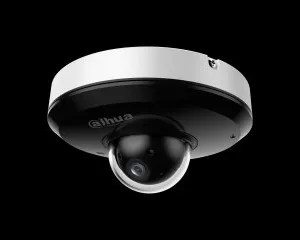
Motorized or fisheye cameras over store floors, yards and lots. Motors, presets and condensation inside the dome are what we fix most often.
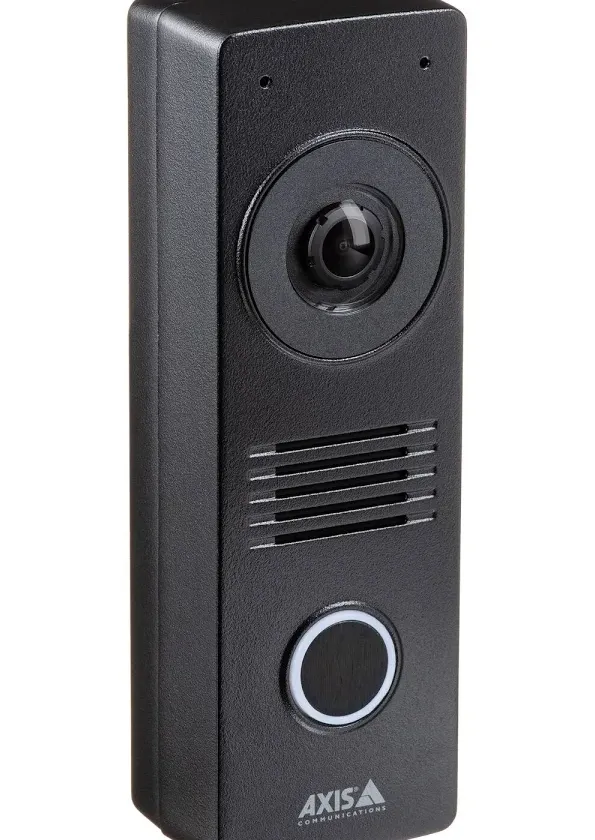
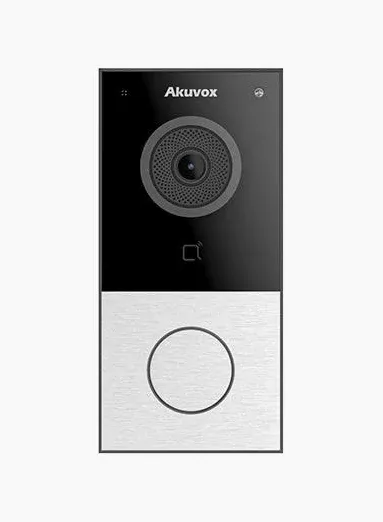
Doorbell cameras on Nehemiah stoops and apartment doors, and lobby stations in the newer buildings. Some are recorded by the main system, some only by their own app; we check which before promising footage.
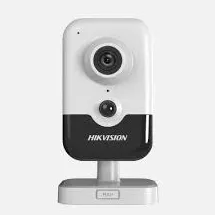
Small cameras inside apartments and shops, usually on Wi-Fi. When they stop connecting, the cause is almost always the network or the account, not the camera.
The parts that power everything and suffer most when power misbehaves. Checked on every outage-related call and sized properly when replaced.


Owners with Ring, Arlo, Nest, Wyze, Blink or SimpliSafe cameras often ask whether to call the brand or us. For a sealed consumer camera that has failed outright and is still under warranty, the brand's replacement is usually the cheaper path; there is nothing inside to repair. What the brands cannot do is come to a Nehemiah house and find that the camera is fine and the steel walls are the problem, that the alley camera's infrared is bouncing off a car roof, or that the battery drains because the camera keeps losing and finding the router. That is where a visit pays for itself. For wired systems with a recorder, a licensed local repair is the normal route, because the brands that sell them generally do not send technicians. ADT and similar monitored services repair their own equipment under their contracts; if your cameras came with one, check the contract before calling anyone else. In a managed building, the building's own contractor or management decides first. We will tell you honestly which of these fits your case.
| Situation in Spring Creek | Usually best handled by |
|---|---|
| Sealed consumer camera dead, still under warranty | The brand's warranty |
| Wireless camera that works but keeps dropping inside a steel-framed house | A local visit to fix the signal or add a cable |
| Wired cameras with a DVR or NVR on a house or octet | A licensed local repair |
| Cameras under a monitoring company's contract | That company first, under its contract |
| Lobby, hallway or garage cameras in a managed rental building or Spring Creek Towers | Management, which may bring in a licensed repair company |
| Camera you own inside your apartment | You, with a local repair if the brand cannot help |

Search summaries and home-service sites such as Angi, HomeAdvisor and Fixr give general advice about camera repair. Much of it is sound anywhere. Some of it misses how cameras fail in a neighborhood of steel-framed houses, managed rental buildings and a complex that makes its own power. Here are the claims we hear repeated most often, and what we find on Spring Creek repairs.
On a wood-frame house that is often true. In a Nehemiah house built from steel-framed modules with concrete floors, wireless cameras are the ones we find offline most often, because the signal has to get through materials that block it far more than wood and drywall do.
The cost of a wireless camera that keeps dropping is not only the camera. It is the night it was offline when the car in the alley was broken into, and the second wireless camera bought to replace a first one that was never broken.
The right answer depends on where the camera sits. A front camera one floor from the router may be fine on Wi-Fi. A rear camera on the top module usually needs an access point nearby or a single cable, and we measure before recommending either.
The hardware in Spring Creek's newer buildings is modern, but drives still wear out under round-the-clock recording, power supplies still fail, and power switchovers in buildings with solar and batteries still reboot recorders that are not protected.
The most common problem in newer buildings is not a broken part at all. It is that the logins, cloud account and alert email still belong to the installer who set the system up for the developer, so nobody in the building can manage it.
A building that is only a few years old can have a camera system that is perfectly healthy and completely unusable by the people who own it. Fixing that is a repair, and it is one of the first things we check.
A small backup carries a recorder through a flicker or a few minutes. It does not carry a recorder, a switch and a dozen cameras through an outage that lasts hours, like the October 2023 outage that CBS New York reported reached almost all 46 buildings at Spring Creek Towers.
The realistic goal for most systems is to ride through short dips without rebooting, shut the recorder down cleanly during a long outage so the drive is not damaged, and restart properly when power returns. That takes a backup sized to the real load and set to signal the recorder.
After any outage, the repair is checking what did not come back: a drive that will not mount, a switch port that stopped powering its camera, a clock reset to a factory date. We check each one instead of assuming that a working live view means the system is recording.
Sometimes they do. On an alley camera in Spring Creek, a bad night picture is more often the scene: a car parked a few feet below the lens reflecting the camera's own infrared back at it, or headlights flooding the frame each time a neighbor parks.
A quick test is to look at the night picture on a night when the spot under the camera is empty. If the picture is fine then, the LEDs are working and the problem is reflection.
Replacing the camera does not fix reflection. Changing its angle, turning down its infrared and adding a separate light aimed away from parked cars does.
In New York, companies that install or service security and CCTV systems for other people are licensed by the Department of State. An electrician can fix the outlet a recorder plugs into; the cameras, cable, recorder and network are low-voltage work.
The tools are different too. Most Spring Creek camera faults are found with a signal meter, a cable tester, a PoE tester and the recorder's logs, not with a voltage meter on the house wiring. On a steel-framed house, knowing what the bracket can safely be fastened to matters as much.
If someone has already tried a fix, tell us what was changed. It saves time, and well-meant fixes often move a problem rather than solve it.
In Spring Creek's managed rental buildings and at Spring Creek Towers, the camera system belongs to the owner and is run by management, and at the Towers by its own public safety department. A repair company working for a tenant cannot open the equipment room or change the building's system.
What tenants can do is report the dead camera to management in writing, and ask the same day for any footage they need to be saved, so the building's recorder does not overwrite it while the request goes through the office.
Tenants can hire us for equipment they own inside their apartment, and building managers hire us for the building's system. Knowing which is which saves everyone a wasted visit.
That range describes a single consumer camera somewhere simple. HomeAdvisor's Brooklyn page puts the average surveillance camera install or repair at $1,416, with a typical range of $680 to $2,145 across all job sizes.
On our Brooklyn list, a setting or connector fix can fall within the $150 service call or run $150 to $350, a single camera replacement $250 to $600, and a recorder replacement $700 to $1,500. The fault decides the price, and you see it in writing first.
The expensive repairs are the ones done twice: a wireless camera replaced when the walls were the problem, or a drive replaced when the power was killing it. Testing in order is how we avoid that.
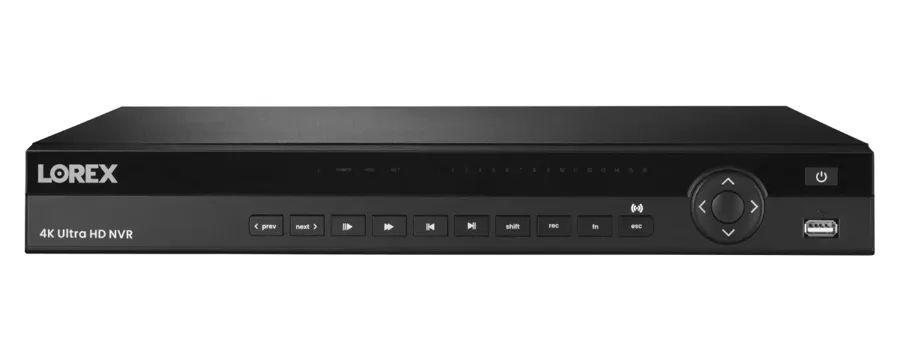
Send a photo of the camera's picture, its signal strength if the app shows it, and where your router or recorder sits. Many Spring Creek "broken camera" calls turn out to be a weak signal through steel, infrared bouncing off a parked car or a recorder that rebooted during a power switchover, and we would rather tell you that before you buy anything.
Prefer to talk to someone who works on cameras every day? Message a technician on WhatsApp.
Tell us the address, the kind of building, how many cameras there are, which ones are out and where the recorder sits. Say whether the camera faces the street or the alley, whether it is wired or wireless, and whether the trouble started after a power outage. If the cameras belong to a building, tell us who manages it. If you need footage from a particular date, put it in the message and we will plan the visit around copying it first. For anything urgent, call (347) 934-8335.

A photo of the recorder screen or the app showing the camera that worries you, the Spring Creek address, the kind of building, and whether the camera faces the street side or the rear alley, by text, WhatsApp or the form. Mention any date whose footage has to be kept.
Homeowner, homeowners' association, managing company, store tenant or shopping center. We confirm who approves the work, who holds the recorder login, and who can open the closet, equipment room or stockroom before we book.
The $150 Brooklyn service call books a two-hour arrival window and is credited to the repair if you go ahead. Requests are booked within 2 hours. In a managed building we coordinate the visit with the office.
Clips you need are exported to USB with the recorder's own timestamps before a cable, drive or setting is changed. If a drive looks like it is failing, we copy first and test second.
Outlet, backup and supply, PoE switch, recorder and drive, then each cable, connector and camera, then the network, the Wi-Fi signal at the camera and the app, in that order, so the part that failed is the part that gets replaced.
You hear what failed and why, and get a written price from the Brooklyn list before any part is replaced. If there is more than one fault, each is priced on its own line so you can choose what to do now.
Parts are replaced, every opening in fiber cement siding, airtight walls or ceilings is sealed again, and each camera is checked in daylight and in low light, with recorded playback confirmed, not just the live view.
Cables and channels are labeled, camera-loss and drive alerts go to the right phones, old users are removed, the clock is set to sync, and you or the building's manager are shown how to find and export a clip.
The 407-acre state park on capped former landfills along Jamaica Bay, open 8 a.m. to dusk, with entrances at 950 Fountain Avenue and 1750 Pennsylvania Avenue and about ten miles of trails.
The Brooklyn Public Library's single-story, 7,500-square-foot branch, opened in the summer of 1977 near the Nehemiah houses.
The school campus at Flatlands Avenue and Elton Street, opened in fall 2012, on the northern edge of the Nehemiah blocks.
The cogeneration plant at 165 Elmira Loop, opened in 1973, which supplies electricity, heat and hot water to Spring Creek Towers and whose failures have darkened the complex more than once.
The bus depot in the neighborhood's industrial strip, one of several city facilities near the Belt Parkway along with Sanitation and the 26th Ward wastewater plant.
A 0.96-acre city playground rebuilt in 2019 with a rain garden, at the neighborhood's northern side.
We also serve the neighborhoods around Spring Creek, including New Lots, Flatlands, Cypress Hills and Brownsville, at the same Brooklyn rate. Our New Lots camera repair page covers the blocks north of Flatlands Avenue, our Flatlands page covers the area to the west, our Cypress Hills security camera repair page covers the northern edge of East New York, and owners anywhere in the borough can start from Abstract Enterprises' Brooklyn security camera repair page.
Spring Creek pays the same Brooklyn rate as the rest of the borough, whether the camera is on a Nehemiah house off Vandalia Avenue, in an octet on Gateway Drive or over a store door near the mall. The visit starts with the $150 service call, which pays for the on-site diagnosis and comes off the repair bill if you go ahead. Every figure in this table is taken from our published Brooklyn security camera repair price list. Your own number is written down once the technician has found the fault, and no part is swapped until you say yes.
| What gets fixed | Brooklyn list price |
|---|---|
| Service call with on-site diagnosis and a written price | $150, credited if you go ahead |
| Motion, alert, glare or login settings, no parts needed | Usually covered by the $150 service call |
| Lens clean and check for a hazy picture | $80 |
| New connector on a cable end, or a PoE port swapped | $150–$350 |
| Camera power supply repair | $150–$400 |
| Replacement dome or front cover | $30–$80 for the part, plus labor |
| Recorder hard drive replaced | $200–$450 |
| Indoor camera repair | $200–$450 |
| One camera replaced on a system that otherwise works | $250–$600 |
| Outdoor camera body replaced and resealed | $250–$600 |
| Night vision repair | $250–$650 |
| DVR repair, drive and labor included | $300–$700 |
| NVR that has stopped recording | $400–$900 |
| Vandalized camera, per camera, plus any cable repair | $400–$900 |
| PTZ (pan-tilt-zoom) camera repair | $450–$1,200 |
| Hybrid recorder for coax and network cameras | $700–$1,200 |
| New DVR or NVR with drive and setup | $700–$1,500 |
| Lightning or power surge damage, by system size | $700–$3,500 |
| Yearly maintenance visit | $250–$800 |
Where a Spring Creek job lands inside those ranges comes down to three things we see over and over. Height and wall come first: a camera on the back of a third or fourth module of a Nehemiah house, high on an octet, or over a big-box loading door takes longer to reach than one beside a stoop, and a fastener that has to hold in fiber cement over steel takes more care than a screw into wood. Then comes the number of parts that failed together. When the Starrett City plant or a building's own power switches over, a drive, a switch port and a supply can all fail in the same second, so an outage call is often priced higher than a single dead camera. Last is access: a recorder in a managed building's locked equipment room, or a camera that can only be reached from an alley full of parked cars, adds time to arrange. Whatever the case, the price is on paper before work starts, and each fault gets its own line so you can choose what to fix now and what can wait.
Full terms — including 50% deposit, one-year parts-only warranty on AESS-supplied products, and the late-fee schedule — are set out in the service agreement.
Most Spring Creek repairs fall into one of three shapes. Each is priced from the Brooklyn list above, and the written price on the visit is the one you pay.
One problem fixed on one visit. An alley camera that drifted off the parking spot is re-anchored and re-aimed, a Wi-Fi camera on a top module is given a path back to the router, a connector that let water in is replaced, a supply or a switch port is changed after an outage, or a worn drive is swapped. This is the usual job for a Nehemiah house, a Vandalia Avenue three-family or a small shop.
The recorder, or several cameras at once. A DVR or NVR is replaced after a power event or old age, coax cameras are moved onto a hybrid recorder, or several runs are replaced after a renovation or a storm. This is the common job for an octet's common areas, a store with stock rooms and a lot to watch, or a mid-rise rental's ground floor.
Every camera looked at in daylight and after dark, domes and lenses cleaned, connectors and supplies tested, drive health read, alerts and phone access checked, and a test clip exported to prove playback works. Homes start at $250, commercial properties at $400, and owners or managers with several buildings run $500 to $800.
Already bought the replacement? If you picked up a camera or recorder yourself, we fit it at labor-only rates. Send the exact model, and we quote the labor by phone or text; the visit is booked once it is paid. Equipment you supply goes in as supplied, so its parts and its compatibility are on the maker, not on us. If a model will not talk to your recorder or your app, we say so before the ladder comes out.
Dead or drifting alley cameras, stoop cameras that lost the picture, and Wi-Fi cameras that cannot reach the router through steel and concrete. Ask for a repair
DVRs, NVRs, PoE switches, supplies and backups in closets, stockrooms and building equipment rooms. Brooklyn security camera repair
Every repair price behind the numbers on this page, in one place. Brooklyn camera repair prices
Managers and landlords with property in more than one borough. Security camera repair across NYC
We work for whoever controls the camera system and can approve the repair. Many national chains at a mall like Gateway Center send their cameras to their own contracted vendors, and in that case the store manager usually cannot hire anyone else. Independent stores, franchise owners, restaurants on the strip outside the mall and the smaller tenants who own their own systems can book us directly. If you are not sure who owns the cameras over your door, ask your landlord or your district office before you book, so the visit is not wasted.
New York Labor Law 203-c bars employers from recording in restrooms, locker rooms and changing rooms, so a camera can watch the corridor or the door leading to those rooms but never the inside. When we move or replace a camera at a depot, warehouse or distribution business, we aim it so the frame stops at the doorway and check the view on the monitor with you before we leave. If a camera already sees inside one of those rooms, we will point it out and move it as part of the repair.
We seal every opening we leave behind so water and air cannot get in through the siding, including the hole where the cable came through the wall. We do not patch or paint siding or walls, so if you want the spot to disappear completely, that last cosmetic step belongs to your own contractor or, on a Nehemiah house, to whatever your homeowners' association allows. Often the better choice is to reuse the same opening for the new camera, so there is nothing new to hide.
Not necessarily. Cameras on the same system often fail for different reasons: the one facing the alley takes more weather, the one at the end of the longest cable gets the least power, and the one on the cheapest connector lets water in first. On the visit we test the power and the connections of the cameras that still work, not only the dead one, and tell you if any of them show the same weakness. That way you can plan the next repair instead of being surprised by it.
Check the account first. Many doorbells and Wi-Fi cameras only keep recorded clips while a paid cloud plan is active, and the live view keeps working after the plan lapses, which makes it look like a fault. If the plan is current and clips are still missing, the cause can be a full memory card, a weak signal at the door or a setting that changed after an update, and those are things we fix on a visit. If the camera has a slot for local storage or can record to a recorder, we can also set it up so your video does not depend on a subscription.
It can for a short time, so it helps to plan it. The ladder for an alley-side camera has to stand at the back wall of your house, which on most Nehemiah blocks means in or next to a parking spot. Tell us when you book whether the spot is yours and whether a neighbor's car usually sits beside it, and let your neighbors know the arrival window. Most single-camera alley repairs need the ladder in place for well under the length of the visit, and we move it if someone needs to pull out.
Often, yes. If the old cable runs through an open path between the modules, we can use it to pull the new one through the same route, so no new opening is needed through a concrete floor or a steel wall. If the old cable is stuck or was fastened along the way, we look for another way up, such as an existing opening near the pipes or the electric. Where no hidden route exists, the cable has to run on the outside of the house or along a wall, and we tell you exactly where it will show and get your OK before we start.
Call or text us and send a photo of what the screen shows. If a part we supplied has failed, it is handled under the warranty terms on your invoice. If the cause is something new, such as a power event, a changed router, a camera that was knocked or a cable that was cut, we explain what happened and price that fix on its own. Free tech support by phone or text often settles it without a visit, especially when the problem is the app or the network rather than the camera.
Yes, and it should be. A courtyard built over an enclosed garage, like the ones in some of the newer Erskine Street buildings, has a waterproof layer under the paving, and a hole through it can leak into the garage below. We mount courtyard cameras on the building walls, on existing poles or fixtures, or on weighted bases, and run cable through existing paths. If an old camera was fastened straight into the deck, we work with the building's management on how it comes out before anyone touches it.
We do not do electrical work, so the outlet itself is a job for a licensed electrician. What we can change is how the camera gets its power. In many cases a wired camera can take power through its own cable from a PoE switch or the recorder inside the house, so it no longer depends on the outdoor outlet at all. If that is possible on your system, it is priced as part of the camera repair, and the alley camera keeps recording through the next storm.
Security Camera Repair Brooklyn | Same-Day | Brownstone Pros · Security Camera Repair NYC | Same-Day | Abstract Enterprises · Security Camera Repair Manhattan | Same-Day | Co-op COI · Security Camera Repair Queens | Same-Day | Driveway Pros · Security Camera Repair Bronx | Same-Day | Home Base · Security Camera Repair Staten Island | Same-Day | Sandy Zone · Security Camera Repair Long Island | Nassau & Suffolk · Security Camera Repair Hudson Valley | Westchester to Ulster · Security Camera Repair Nassau County | Same-Day · Security Camera Repair Suffolk County | Hamptons + East End · Security Camera Repair Westchester County | Same-Day · Security Camera Repair Rockland County NY | Nyack, Suffern · Security Camera Repair Orange County | Newburgh, Goshen · Security Camera Repair Putnam County NY | Carmel, Mahopac · Security Camera Repair Dutchess County | Poughkeepsie · Security Camera Repair Ulster County | Kingston Woodstock
Security Camera Repair Bath Beach Brooklyn NY · Security Camera Repair Bay Ridge Brooklyn NY | AESS · Security Camera Repair Bedford-Stuyvesant Brooklyn NY · Security Camera Repair Bensonhurst Brooklyn NY | AESS · Security Camera Repair Bergen Beach Brooklyn NY · Security Camera Repair Beverley Square Brooklyn NY · Security Camera Repair Boerum Hill Brooklyn NY · Security Camera Repair Borough Park Brooklyn NY · Security Camera Repair Brighton Beach Brooklyn NY · Security Camera Repair Brooklyn Chinatown Brooklyn NY · Security Camera Repair Brooklyn Heights, Brooklyn NY · Security Camera Repair Brooklyn Navy Yard, Brooklyn NY · Security Camera Repair Brownsville Brooklyn NY | AESS · Security Camera Repair Bushwick Brooklyn NY | AESS · Security Camera Repair Cadman Plaza Brooklyn NY · Security Camera Repair Canarsie Brooklyn NY | AESS · Security Camera Repair Carroll Gardens Brooklyn NY · Security Camera Repair City Line, Brooklyn NY | Any Brand · Security Camera Repair Clinton Hill Brooklyn NY | AESS · Security Camera Repair Coney Island Brooklyn NY · Security Camera Repair Crown Heights Brooklyn NY | AESS · Security Camera Repair Cypress Hills Brooklyn NY | AESS · Security Camera Repair Ditmas Park Brooklyn NY | AESS · Security Camera Repair Downtown Brooklyn NY | AESS
Access Control Installation Spring Creek Brooklyn NY · Door Buzzer Repair Spring Creek Brooklyn NY | Elton to Vital · TV Installation Spring Creek Brooklyn · Fire Alarm Installation Spring Creek Brooklyn NY · Door Buzzer Installation Spring Creek Brooklyn NY · Alarm Installation Spring Creek Brooklyn NY | Modular Homes · Structured Cabling Installation Spring Creek Brooklyn NY · Intercom Installation Spring Creek Brooklyn NY · Security Camera Installation Spring Creek Brooklyn NY
Send a photo of the recorder screen or the app, the address, which side of the house or building the camera faces, and the date of any footage you need kept. We book within 2 hours, give you a two-hour arrival window, copy your footage before anything is changed, and put the repair price in writing before a single part is replaced. AESS is owner-operated since 2002 and holds NYS license #12000287431.
Would rather send photos? Text a technician on WhatsApp.