Any Brand, Any Installer · Footage Saved Before Anything Is Touched · Written Price Before Parts · Families Who Watch From Out of Town Welcome
Security camera repair in Madison starts with our $150 Brooklyn service call, which covers the on-site diagnosis and is credited to the repair if you go ahead. On our published Brooklyn list most single faults cost $150 to $700, and a recorder replacement or a rewire of several cameras runs $700 to $1,500. We fix systems other people put in: the four-corner cameras on a detached stucco house off Avenue R, the porch and side-door cameras on a two-family near Quentin Road, the lobby cameras of an elevator building on Ocean Avenue or Kings Highway, and the counter camera in a shop on Avenue U or Nostrand Avenue. Requests are booked within 2 hours, visits come in two-hour arrival windows, and you hear what failed before any part is replaced, even if you are the son or daughter checking a parent's cameras from another state.
Reviewed and updated November 12, 2026, against News 12 Brooklyn's July 31, 2026 report on the arrest after the July 21 assault near Kings Highway and Ocean Avenue, for which police released images a day later; the security camera footage NY1 and PIX11 shared of a gunpoint robbery at East 21st Street and Avenue U; a Sheepshead Bay community post on a lobby package theft caught on a building camera; an r/AskNYC thread on lobby cameras and package thieves; NYC Small Business Services' directory entry for the Kings Highway Business Improvement District and Crain's New York on the BID's added streetlamps; Con Edison's outage reporting pages; the Department of City Planning's 2010 profile of Brooklyn Community District 15; Wikipedia's articles on Sheepshead Bay, James Madison High School, the Kingsway Jewish Center and the Wyckoff-Bennett Homestead, and Untapped New York and City Neighborhoods on Madison's streets and houses Also cited: Brick Underground on building footage, New York Labor Law §203-c and the Department of State's installer licensing. · Abstract Enterprises Security Systems, NYS license #12000287431 · crews dispatched from our Troy Avenue office in Brooklyn

Owner-operated since 2002 · Thousands of jobs completed · Booked within 2 hours
Security camera repair in Madison usually means getting a house or building's existing system to save video again, and making sure the person who depends on it can tell, without help, that it still works. A lot of the cameras in this part of Brooklyn are watched by someone who is not standing in front of them: a son in New Jersey checking his father's porch, a daughter on Long Island who set up her mother's recorder years ago, four siblings sharing one login, a landlord who lives upstairs and a tenant who lives down. So the call often starts with "the app still shows the porch, but there was nothing on it the night we needed." The common causes on Madison houses are a recorder that was switched off or lost its drive, a power supply or PoE switch that died in a storm or a surge, a cable cut when a window, a roof or a driveway was redone, infrared that bounces off a neighbor's wall in a narrow side alley, and logins scattered across too many phones. In apartment buildings and shops, add drives that overwrite too soon and cameras aimed at a sidewalk too wide to show a face. Send a photo of the recorder screen to (347) 934-8335 or on WhatsApp, and we will tell you the likely fault and what that kind of repair costs on our Brooklyn list before you book.
Madison is the quiet residential square between Kings Highway on the north and Avenue U on the south, with Ocean Avenue on the west and Nostrand Avenue on the east, in ZIP code 11229. Wikipedia calls it "a purely residential subsection" of Sheepshead Bay and notes that it takes its name from James Madison High School on Bedford Avenue. Untapped New York dates the start of its development to 1877; the City Neighborhoods guide says most of what stands today went up between 1910 and 1930. Inside that square the streets are numbered East 21st through East 29th, crossed by Quentin Road and Avenues R, S and T, and the houses are a mix the guide describes as detached brick and stucco homes with driveways and gardens, two-story brick houses, two-family brick houses, limestone row houses and low apartment houses, with larger elevator buildings along Kings Highway and Ocean Avenue. The shops sit on the edges: Kings Highway, Avenue U, Nostrand Avenue and Ocean Avenue.
That layout shapes the camera calls we get. A detached Madison house has four sides to watch, a driveway along one of them, often a garage set back at the rear of the lot, and a narrow alley on the other side where the next house stands a few feet away. Cameras went up on many of these houses one or two at a time over fifteen years, frequently put in by a relative, a neighbor or whoever the family knew, and they were wired the way the house allowed: through a window frame, along a fence, under a driveway to the garage. Two-families add a second household's outlets, routers and phones. The faults that follow are rarely a mystery once someone looks: a cable cut when the windows or the driveway were replaced, a power supply plugged into an outlet on the tenant's meter, a recorder in a bedroom that somebody switches off at night because its light and fan bother them.
The second thing that shapes the calls is who lives here and who watches. The Department of City Planning's profile of Community District 15, which takes in Madison along with Sheepshead Bay, Manhattan Beach and neighboring areas, counted 26,319 residents aged 65 and over in 2010, 16.5 percent of the district, and 8,459 householders 65 or older living alone. In practice, that means a great many Madison cameras belong to an older parent and are looked after by a grown child somewhere else. The parent sees a screen in the kitchen or the den; the child sees an app. When the screen turns blue after a power blink, the parent calls the child, the child talks the parent through it by phone, and the system may sit half-working for weeks. A repair here is as much about making the system simple for the person in the house, and honest for the person outside it, as it is about replacing a part.

The third is that what happens on Madison's edges gets looked at on camera afterward. On July 21, 2026, just after 8 a.m., a 64-year-old man was pushed to the ground near Kings Highway and Ocean Avenue by an attacker shouting anti-Jewish remarks, News 12 Brooklyn reported; "police released images of the alleged attacker a day after the incident," and an arrest followed just over a week later. Security camera footage that NY1 and PIX11 shared shows a man walking up to a victim at East 21st Street and Avenue U, pulling a gun and taking $8,300. In buildings, the pattern is the same at a smaller scale: a Sheepshead Bay community post about a lobby package theft noted that the building's own camera "captures the person leaving," and on r/AskNYC a tenant wrote that "the biggest thing that got the report traction was that my super pulled the video of someone breaking into the lobby and stealing packages." In each case the useful picture came from a camera somebody had kept working, close to where it happened.
Where this page applies. It covers Madison from Kings Highway down to Avenue U and from Ocean Avenue across to Nostrand Avenue, including the blocks around James Madison High School and the apartment buildings along Kings Highway and Ocean Avenue. For the rest of the borough, see our main Brooklyn security camera repair page. The price follows the fault, not the ZIP code.
Urgent Madison calls come in three kinds. The first is the family call: a parent's camera screen has been blank or showing a menu for days, the adult child who manages it cannot fix it by phone, and something has happened, or might have, at the house. The second is the edge-of-the-neighborhood call: a shop on Kings Highway, Avenue U or Nostrand Avenue had an incident on its sidewalk or at its counter, a detective or a neighbor has asked for video, and the owner is not sure the camera that faces the street was recording. The third is the slow discovery: a building's super or a homeowner checks playback for an ordinary reason and finds a camera has shown nothing for months.
If you need footage from a particular day, the most useful thing you can do before we arrive is nothing. Leave the recorder running; do not unplug it, restart it, or let anyone press reset, because most recorders overwrite their oldest video once the drive fills, and a restart can bury the log that shows when a camera dropped. If the recorder is at a parent's house, ask them not to touch it and tell us so when you book. Call (347) 934-8335 with the date and time window, and saving that footage becomes the first task of the visit. Exports go to USB with the recorder's original timestamps, and we note the recorder's clock against the real time so the clip holds up later.
For everything else the path is the same: the $150 service call books a two-hour arrival window, the technician finds the cause, and you get a written price before any part is replaced. If you are out of town, we can call you from the house, show you what we found by photo or video, and take your approval by text. Requests are booked within 2 hours. We do not promise the repair itself the same day, because some parts have to be ordered, but most single-camera, power and drive faults are fixed on the first visit when the part is on the truck.
Each repair below is priced from our Brooklyn camera repair list. The service call pays for finding the fault; the repair is priced by what failed, how many cameras it affects and how hard the run is to reach, whether that is a side-alley camera on a detached house off Avenue S or a roof camera on a six-story building on Ocean Avenue.
A camera with no picture, tested at the camera, along its cable and at the recorder, so only the failed part is replaced. On Madison houses it is often the plug-in power at the camera end or a cable cut during other work, both far cheaper than a new camera.
Parents' systems that an adult child manages remotely: a screen in the house that returns to the cameras on its own after a power blink, a login for each person who watches, and alerts that go to the people who can act on them.
Detached-house cameras that see a white wall or pure black in the narrow space between houses at night. Usually an infrared and exposure problem fixed with settings, a different lens angle or a small light, not new cameras.
Cameras on a garage at the back of the lot fed by a cable under the driveway, along a fence or through the air. We find where the run failed, repair it on a protected route, and seal the far end.
Cameras that go dark when the downstairs tenant's breaker trips or router changes. We move power and network onto the owner's side where practical and label what feeds what.
DVRs and NVRs in bedrooms, hall closets, basements and super's offices that beep, run hot, keep only days of video or get switched off. Drives tested and replaced by type and capacity, footage copied off first.
Apartment building cameras on Kings Highway and Ocean Avenue that stopped, moved or never covered the room that now matters, such as a new package room. Relocated, re-aimed and put on the building's battery backup.
Shop cameras on Kings Highway, Avenue U, Nostrand Avenue and Ocean Avenue that show the sidewalk too wide to see a face, glare at night, or a counter from the wrong angle. Re-aimed, re-zoomed and tested at the hours the shop is open.
Clips copied to USB with original timestamps, in a format the person receiving it can open, with a note of any difference between the recorder clock and the real time, for detectives, insurers, boards and landlords.

Six kinds of property make up nearly all the camera repair calls we take from Madison. Each one fails in its own way, and each decides where the recorder ends up, how cables reach the cameras, and who has to agree before the work begins.
Free-standing houses with a driveway on one side, a narrow passage on the other, a yard behind and often a garage at the back of the lot. Four sides to watch, and long runs to the far corners and the garage.
An owner on one floor, a tenant or relatives on the other, a shared front door or porch and a basement entrance. Camera power and internet often come from whichever apartment was easiest when the system went in.
Attached houses with a stoop or small porch, a front window bay and party walls on both sides. Only the front and the back can be watched, and cable routes are limited to the facade, the cellar and the window frames.
Smaller houses on the inner blocks, often with one or two cameras added by the family over time, Wi-Fi cameras inside windows and a recorder on a bookshelf or in a bedroom.
Larger prewar and postwar apartment houses and co-ops with lobbies, mailrooms, elevators, laundry rooms, basement corridors and sometimes a garage, and a recorder in the super's office.
Walk-ups on the inner blocks and two- or three-story buildings on the avenues with a shop below and apartments above, where the store's cameras and the building's cameras may share a cellar.
The free-standing brick and stucco houses on Madison's inner blocks are where most of our residential camera calls come from, and the camera layout on them is nearly always the same: one camera over the front door or porch, one on the driveway side looking back toward the garage or the gate, one in the narrow passage on the other side, and one or two at the back covering the yard and the rear door. The recorder sits in the basement or a closet. The front and back cameras usually work well enough. It is the sides and the rear garage that fail.
The narrow side passage between two detached houses is the hardest place to put a camera on the whole property. The neighbor's wall is three or four feet away, so the camera's infrared lights bounce straight back off it at night and the picture turns white, or the camera dims its infrared to compensate and the far end of the passage goes black. In daylight the passage is in shade while the street at its end is bright, so a person walking in from the sidewalk is a dark silhouette. Most of this is fixed in settings: lowering infrared power, switching to a smart infrared mode that dims only the near part, adjusting exposure toward the shadow, or aiming the camera along the passage rather than across it. Where the passage has no light at all, a small motion light does more than any camera upgrade.
The garage at the back is the other weak point. When it has a camera, the cable has to cross the yard or the driveway, and installers did that in three ways: through the air from the house, along the fence, or in a trench under the driveway. Aerial runs get pulled down by branches and wind; fence runs get cut by landscapers and fence repairs; and buried runs get cut when the driveway is dug up and repaved, sometimes years later, by a crew who never knew the cable was there. A repair starts by testing the run end to end from the recorder, then fixing it on the most protected route available. Where no new route is practical, a wireless bridge between the house and the garage can carry a wired camera's signal across the yard.
Madison's two-family brick houses often have one camera system for the whole house, put in by the owner or the owner's family, but powered and connected wherever it was convenient. We regularly find the recorder plugged into an outlet on the downstairs tenant's electric meter, the cameras connected through the tenant's internet router, or a power supply in the shared basement on a circuit that belongs to one apartment. The system then works until that apartment's breaker trips, its router is replaced by the internet company, or the tenant moves out and the service is cancelled, and the whole house goes dark with it.

The bigger apartment buildings on Madison's edges have camera systems that grew in layers. A first set of coax cameras went into the lobby, the elevator and the basement; later a network camera was added at the side door, a Wi-Fi camera in the laundry room, and in the last few years, as buildings turned a storage room or part of the lobby into a package room, a new room with no camera at all. The recorder sits in the super's office, and the person who knew which tile is which camera may have retired. Typical faults are drives full and overwriting within days, cameras that were never connected to anything, a PoE switch with a dead port, and a lobby camera that shares a power supply or a circuit with the intercom, so that both fail on the same night.
The repair starts with an inventory: every camera, whether it records, where it is powered, and how many days the drive really keeps. We then fix what is broken and move what is badly placed. Package rooms are the current gap in many buildings, and the r/AskNYC tenant whose super "pulled the video of someone breaking into the lobby and stealing packages" describes why boards care. Often an existing camera that watches a low-value spot can be moved to cover the package room door and shelves instead of buying a new one. Board and managing-agent decisions, such as how long to keep video and who may export it, should be written down; Brick Underground has noted that landlords generally are not required to show tenants footage outside a legal process, and that city buildings are not required to have working cameras at all.
These notes describe how our technicians work through a typical Madison house where an older owner lives with the cameras and a family member manages them from elsewhere. It is our working order, not a story about one address.
Call the person who watches, from the house. Before touching anything, the technician phones whoever manages the system, often an adult son or daughter, so they can say which camera worried them and when, and so the person at home is not left to explain the app.
Save before diagnosing. If anyone needs a clip from a recent day, it is exported first, before any restart, and the recorder's clock is noted against the real time.

Find where the recorder actually lives, and why it gets switched off. In a parent's house the recorder is often in a bedroom or a den, where its fan, its blue light or its beeping bothers someone at night. If it keeps being turned off, the fix is to move it, quiet it or cover its lights, not to tell the owner to leave it alone.
Make the screen in the house foolproof. The monitor or television the parent watches is set to come back to the camera view by itself after a power blink, with nothing to press, and the cameras that matter most are given the largest tiles.
Price before parts, and leave two records. The cause and the written price come before any part is replaced. At the end, the person at home gets a one-page note of what to do if the screen changes, and the family member gets the logins, a list of cameras and the alerts set up on their own phone.
Four causes account for many of the camera failures we find on Madison houses, buildings and storefronts. Knowing which one you have is the difference between a short visit and a new system.
When the person who understands the system lives somewhere else, small faults go unfixed for a long time. A recorder shows a setup wizard after a power cut, and the parent closes it and sees a blank screen. An app update logs everyone out, and only one sibling knows the password. A drive fails, the recorder keeps showing live pictures, and nobody notices that playback is empty. None of that is a broken camera. The repair is to make failures visible to the right person: alerts for video loss and drive errors sent to the family member's phone, a recorder set to return to live view on its own, and a short written note in the house.
The passage between two detached Madison houses is narrow, walled in and dark, with a bright sidewalk at one end. A standard infrared camera there sees its own light reflected off the neighbor's wall and washes out, or darkens the whole frame trying to cope. The fixes are settings first: smart infrared, lower infrared power, exposure weighted to the passage, wide dynamic range for the bright end, and an aim along the length of the alley. A small light switched by motion or a dusk sensor often solves what no camera setting can.

Madison houses are a century old, and most are on their second or third set of windows, roofs and driveways. Every one of those jobs is a chance to cut a camera cable without anyone noticing until the picture is gone: window installers through the old frame, roofers under the eave, fence crews along the property line, paving crews under the driveway to the garage. When a camera dies within weeks of a home improvement job, we start our search wherever that crew worked. The repair is a new run on a route that does not depend on the part that gets replaced, and labels at both ends so the next crew knows it is there.
On Kings Highway, Avenue U, Ocean Avenue and Nostrand Avenue, cameras face changing light: brighter streetlamps like the fixtures the Kings Highway BID added near Sgt. Joyce Kilmer Square, headlights from buses pulling into stops, and the glass of a shop's own door and window. A camera that was well set for the street two years ago can be washed out, glared or reflecting the store's interior today. These are repaired with exposure and backlight settings, a hood, a small change of angle, or by moving the camera out from behind the glass.
Madison itself is almost entirely houses, so its businesses line the four streets that frame it. They are mostly small and owner-run: groceries, bakeries and pharmacies, salons and barbers, clothing and shoe stores, restaurants, medical and professional offices, and on the side streets, synagogues, schools and community spaces. A typical system is one recorder in a back room, under a counter or in the cellar with four to sixteen cameras, and when something happens at the door or on the sidewalk, the owner needs the video that same day.
Madison's main shopping street, inside the Kings Highway BID, which covers 28 block faces and has run from 905 Kings Highway since 1990. Busy sidewalks and storefronts with apartments above; the July 2026 assault near Kings Highway and Ocean Avenue was followed by police releasing images the next day.
A long commercial street shared with the neighborhoods to the south, with groceries, offices and restaurants and the firehouse of Engine 254 and Ladder 153 at 901 Avenue U. Footage of the gunpoint robbery at East 21st Street and Avenue U came from a security camera on the block.
Shops and offices running north to Kings Highway, near the Kingsway Jewish Center at 2810 Nostrand Avenue. Many storefronts have cellars reached through sidewalk doors, where recorders sit close to the floor.
Elevator apartment buildings and ground-floor businesses, with the Kings Highway branch library at 2115 Ocean Avenue. Building lobby cameras and shop cameras often face the same sidewalk.
The school at 3787 Bedford Avenue, established in 1925, brings crowds of students at arrival and dismissal, and nearby shops and houses see the heaviest foot traffic of the inner blocks at those hours.
Houses of worship and community buildings on the side streets, whose cameras watch entrances, sidewalks and yards around the clock and are usually looked after by a custodian or a volunteer rather than an IT department.

The incidents that made the news on Madison's borders happened outside: on the sidewalk at East 21st Street and Avenue U, and near the corner of Kings Highway and Ocean Avenue on a weekday morning. When something like that happens near a store, the owner is often asked whether their outside camera saw it, and the answer depends less on the camera's resolution than on its aim. A camera set wide enough to show half a block makes every passer-by a few pixels tall; a camera narrowed to the stretch in front of the door shows faces. Most storefronts need one of each: a wide view that shows what happened and a tight view that shows who. When a store has only one outdoor camera, a repair can narrow it to the doorway and curb where a face is readable, and leave the wide view to a second camera or to the neighbors.
State licensing. The New York Department of State licenses companies that install or service security systems, and its rules cover closed-circuit television used to watch for intrusion, theft or movement. An owner can work on their own system, or have an employee do it, without a license; a company working on someone else's system needs one. AESS works under NYS license #12000287431.
Cameras that watch staff. New York Labor Law §203-c requires employers who monitor employees electronically, including by video, to give written notice and get acknowledgment. If a repair moves a camera onto a stock room, a register or a back office where employees work, the notice should be updated.
Footage requests. Detectives may ask for a copy of a clip; a USB copy with original timestamps usually satisfies the request without the recorder leaving the store. Ring ended its tool for police requests through its app in January 2024, and law enforcement can still obtain video with a warrant. Whether to give a clip to a neighbor, a business group or a patrol is the owner's decision.
Landmarks. We found no historic district covering Madison's blocks. The Wyckoff-Bennett Homestead at 1669 East 22nd Street is a National Historic Landmark and a private home, and the Kingsway Jewish Center is on the National Register; if you are not sure whether your building is designated by the city, ask before the visit and we will check.
These are the situations Madison homeowners, their families, co-op boards, supers and shop owners describe when they call. Each answer is written for the houses, buildings and storefronts here.
Yes, and it is one of the most useful things a repair can do in a parent's house. A blue screen or a menu usually means the recorder or the television lost its video source after a power blink, or the recorder restarted into a setup screen. We set the recorder to boot straight to the live camera view without a login, turn off the setup wizard, and set the television or monitor to wake on the right input automatically. Where the screen is a television she also watches, we can give the cameras a dedicated small monitor instead, or use the television's input settings so it returns to the cameras when she presses a single labeled button. We also put the recorder and the screen on a small battery backup so short flickers never reach them. At the end she gets a one-page note with a picture of what the screen should look like, and you get alerts on your own phone if a camera or the drive stops, so you hear about a problem before she does.
Yes. A shared login means that when anyone changes the password, everyone is locked out, that the recorder cannot tell you who exported or deleted a clip, and that if one phone is lost or sold, the whole system is exposed until someone notices. Most recorders and camera apps allow several user accounts, each with its own password and its own permissions. We set up one account for each of you, give the person who manages the system administrator rights, give the others viewing and playback, and keep the master password written down in one safe place. Alerts can go to one person or all of you; most families pick one or two people to receive them so four phones are not buzzing at once. If one of you has an old phone that should no longer see the cameras, we remove it.
Usually not. In a passage only a few feet wide, the camera's infrared lights hit the neighbor's wall and bounce straight back, so the picture whites out near the camera; when the camera tries to correct for that, the far end goes black. In daytime the opposite happens: the alley is shaded and the street at its end is bright, so anyone walking in looks like a dark shape. We fix most of it with settings, by switching on smart infrared, lowering infrared strength, weighting exposure toward the alley and turning on wide dynamic range, and by aiming the camera along the passage instead of across it. If the alley has no light at all, a small motion or dusk light mounted high often does more than any camera change. We test it after dark before we leave, because that is the only way to know it worked.
Almost certainly not. On many Madison row houses, the front camera's cable was brought inside through the old window frame, and window installers cut whatever crosses the frame when they take it out. The camera is usually fine; there is a short tail of cable outside and another inside with the new, sealed frame between them. We test the camera to confirm it is alive, then bring a new cable in on a route that does not depend on the window, usually through a mortar joint beside the frame, through the cellar ceiling under the stoop, or along the inside of the bay. On a limestone front we use mortar joints, not the stone itself. If the windows on the back of the house were done at the same time, we check the yard camera too, since it often has the same problem.
Usually, yes. We trace which outlet and which meter each part of the system uses, the recorder, the power supply or PoE switch, the internet router, and then move them to an outlet on the owner's circuit, adding a dedicated outlet through an electrician if the owner's side has none in a sensible place. AESS does not do electrical work itself, so where a new circuit is needed we tell you what to ask your electrician for and finish the camera work once it is in. We also check whether the cameras reach the internet through the tenant's router; if they do, the same thing will happen the day the tenant changes providers or moves out, and we move the recorder onto your own connection. Everything is labeled so the next person can see what is powered from where.
Probably not. In many buildings the lobby cameras and the intercom share a power supply, a circuit, a battery backup or a wiring closet, and a single failure there takes out both. A surge, a tripped breaker, a dead backup battery or water in the closet are the usual causes. We check the shared parts first, because fixing one item may bring both systems back, and then test each system on its own. AESS repairs intercoms and door buzzers as well as cameras, so both can be handled on the same visit with one appointment and one set of findings for the board. If the two systems turn out to have separate faults, you get separate prices for each.
Often one can be moved. Most building systems have at least one camera on a spot that matters less than it used to, such as a second view of the same corridor or a storage area nobody uses. If its cable can reach the package room, or a short extension can, moving it costs less than adding a camera and a new run. The camera should go high, where nobody can reach or turn it, and see the door and the shelves, so it records both who comes in and what they take. We also check how many days the recorder keeps, because package thefts are often discovered days later; a drive that overwrites in four days can lose the evidence before a tenant reports it.
In most cases, yes. A camera's resolution is spread across whatever it sees, so a view of half a block gives each face only a handful of pixels, enough to show that someone walked by but not who. Narrowing the view to your doorway and the curb in front of it, by re-aiming or zooming a varifocal camera, puts far more pixels on each person. The trade-off is that you see less of the street. Many shops on Avenue U and Kings Highway end up with one camera tight on the door for faces and one wide for what happened, and if you have only one outdoor camera, the tight view is usually the more useful one to keep. We set it, then walk past it ourselves and check the recording to confirm a face is readable at the distance that matters.
The light, not the camera. Brighter fixtures, like the streetlamps the Kings Highway BID added around Sgt. Joyce Kilmer Square, change the exposure a camera set itself for, and a lamp now inside the camera's view makes it darken everything else to cope. We adjust backlight and wide dynamic range, set the camera's exposure for the doorway rather than the whole scene, and if the lamp itself sits in the frame, tilt the camera a few degrees or fit a hood so the lamp falls outside it. Sometimes the new light helps: a camera that used to switch to black and white infrared may now stay in color all night, which we set on purpose once we see the street's real lighting.
Very likely. A cellar under sidewalk doors gets damp air every time the doors open, water running down the stairs in heavy rain, and in summer, heat with no ventilation. Hard drives and power supplies wear out fastest in exactly those conditions. Before replacing the recorder a third time, we check whether the drive or the power supply failed, copy any footage you need, and then move the recorder up into the store or onto a high, ventilated shelf, with a battery backup. If the cables from the street-facing cameras pass the sidewalk doors, we check them for water as well, and seal or reroute them.
Sometimes, but more often it is the circuit. If the recorder, a camera power supply or the PoE switch shares a circuit with a window air conditioner, the breaker can trip, or the voltage can sag enough for a supply to shut down, whenever the air conditioner starts. Cameras on that supply go dark while the rest keep working, which is why only half drop. We measure the circuit, move the camera equipment off the air conditioner's circuit, and put it on a battery backup that smooths brief sags. If a recorder or switch is in a hot attic or a closet without air, we also check its temperature and move it. A camera in direct afternoon sun that shuts itself down from heat is rarer, and we can tell the two apart on site.
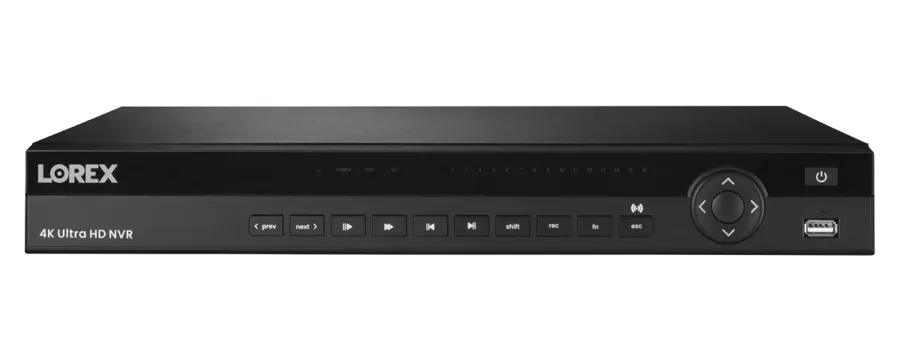
We repair whatever is on the building, whoever put it there. These are the kinds of equipment we find on Madison houses, apartment buildings and shops, and the faults each one tends to develop here.
Cameras with round BNC connectors, common on houses and buildings wired fifteen or more years ago. Typical faults: water in connectors at the eaves, failed plug-in adapters, worn infrared and cables cut during window or roof work.
Cameras that get power and data through one cable from a PoE switch or the recorder. Typical faults: dead switch ports after a surge, cameras on the tenant's network, address conflicts after a new router.
The box that holds the footage, in a basement, closet, bedroom, super's office or back room. Typical faults: worn drives, settings lost after an outage, boot to a setup screen, and boxes switched off because of their noise or light.
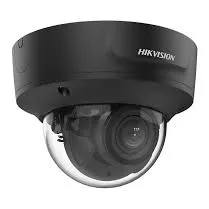
Cameras with adjustable zoom, common in lobbies, on driveways and over storefronts. Typical faults: views too wide to recognize anyone, focus that drifted after a knock, and covers clouded by sun.
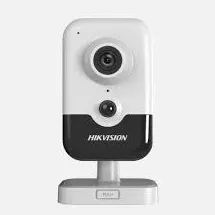
Cameras inside windows, on shelves and in back yards. Typical faults: weak signal through brick and plaster, accounts tied to a relative's email, router changes, and batteries nobody charges.
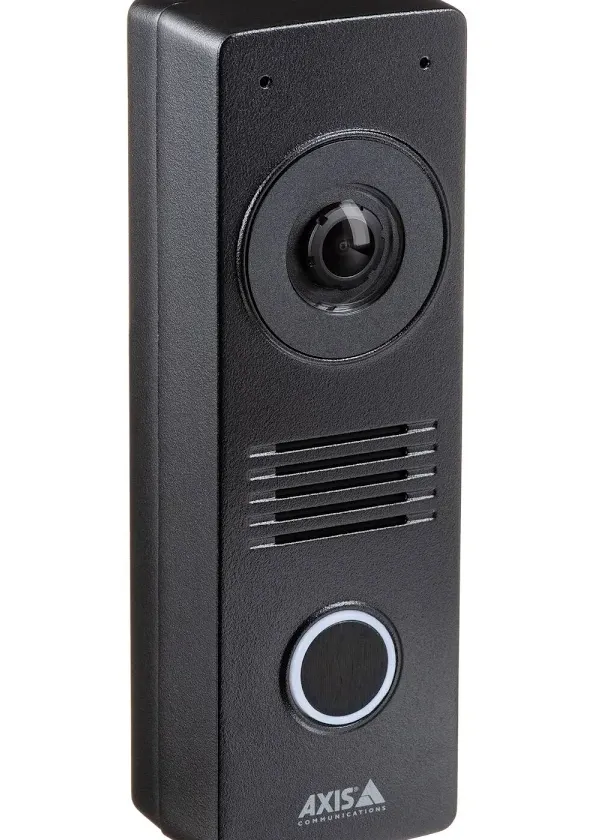
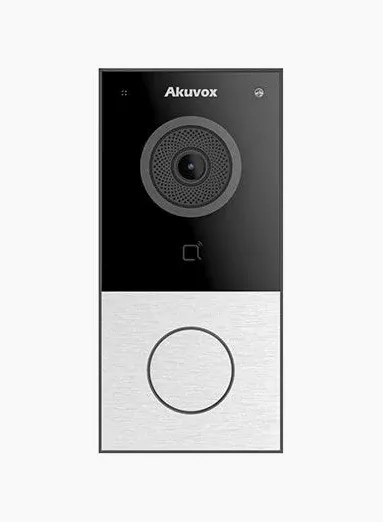
Door stations and video doorbells at the front or shared door, often on their own app. Typical faults: video reaching one household and not the other, night glare from a porch light, and a doorbell transformer too weak to run them.
Switches that power network cameras, and bridges that carry a garage camera's signal across the yard. Typical faults: dead ports, overloaded power budgets, and bridges knocked out of alignment.
Central power boxes, plug-in adapters and UPS units. Typical faults: blown channel fuses, supplies on a circuit shared with an air conditioner, and backup batteries that died years ago.


Some Madison households have cameras from a national alarm company or a consumer brand mixed in with a wired system, and wonder who should fix what. The table shows how the choices usually compare for a repair.
| Question | ADT or similar alarm company | Ring or SimpliSafe camera | AESS local repair |
|---|---|---|---|
| Who owns the equipment | Depends on the contract; some is leased | You own it | You own it, and we repair it |
| A parent at home and a child managing remotely | Account rules set by the company | Shared users in the app | Separate logins, a screen in the house that needs no pressing, alerts to the right phone |
| Local recorder and drive | Its own equipment | No local recorder; clips go to the cloud | DVR, NVR and hybrid recorders, drives and footage export |
| Other brands on the same house | Usually only its own | Support covers its own devices | Any brand, any installer, including a relative's setup |
| Licensed technician on site | Varies by dealer | Remote support | Yes, NYS license #12000287431 |
| Price before work | Varies | Replacement device price | $150 service call, then a written repair price |
These claims turn up in AI-generated answers, help forums and national repair guides. Each is partly true somewhere, and each leads Madison owners, and the families who help them, toward the wrong repair or a lost clip.
Quick answers often treat a live picture as proof that everything works. Open the app, see the porch, and you are covered.
Live view and recording are separate jobs. A recorder can stream every camera live while its drive is failed, full, unmounted or set to record nothing, and a Wi-Fi camera can stream straight to an app without ever reaching the recorder. For an adult child checking a parent's house from another state, live view is the only thing they see, which is exactly why months can pass before anyone notices that nothing has been saved.
The test is playback. On every repair we play back each camera from the previous night, confirm how many days the drive really keeps, and set alerts for lost video and drive errors to go to the person who will act on them.
Answers about unreadable faces often recommend a higher-resolution camera as the first step.
On Madison's edges the problem is usually the view, not the sensor. A camera on Avenue U or Kings Highway set to cover half a block spreads even a 4K image so thin that a face at the door is a smudge, while a lower-resolution camera narrowed to the doorway shows it clearly. Slow shutter settings blur anyone walking, and glare from new streetlamps or bus headlights does the rest.
Narrow the view, fix the shutter and the exposure, and test it with a person walking at the real distance. Only if that is not enough is a new camera worth the money.
Night-vision advice tends to assume a camera looking out over an open yard or street.
A camera in the narrow alley between two detached houses, or behind a storm door or shop window, is a different case. Infrared reflects off a wall a few feet away and whites out the picture, or bounces off glass and shows the camera's own lights. Those are among the most common night complaints we get from Madison houses, and neither is a failing camera.
Smart infrared, lower infrared power, a different aim, moving the camera out from behind glass, or a small light usually fix it. We test at night before we call the repair done.

Password answers often go straight to the reset button or a reset code from the maker.
On many recorders a reset erases the camera settings, the recording schedule and the network setup, and on some it makes existing footage hard to reach. In a Madison house where the system was set up by a relative who is no longer around, or where four siblings shared one login, the footage on the drive is often the very reason for the call. Some makers also require proof of ownership before issuing a reset code.
Try the routes that keep the settings first, and copy any footage that matters before a reset. We check what your recorder's maker allows and tell you before anything is erased.
Outage advice often says to plug the recorder into a UPS and stop worrying.
A small computer UPS may carry a recorder for minutes, not hours, and it does nothing for cameras on a separate power supply or on adapters plugged into other outlets, which in a Madison two-family can be on another household's meter. A backup whose battery died years ago carries nothing at all. Con Edison's own outage pages say reported outages can take up to 30 minutes just to appear on its map.
Put the recorder, the switch and the internet box on one backup sized for all three, check its battery every year, and use it to ride through brief flickers and shut the recorder down cleanly in a long outage.
Some answers suggest that public cameras on busy corners make a private camera less important.
When police released images the day after the July 2026 assault near Kings Highway and Ocean Avenue, and when footage of the robbery at East 21st Street and Avenue U circulated, the useful pictures came from cameras close to where it happened. A camera somewhere on a corner does not see your porch, your side door, your building's package room or your counter, and you cannot open it yourself.
The camera that shows a face at your door is yours, and it only helps if it was recording and aimed at the door.
Some answers suggest that anyone handy, or the relative who is good with technology, can fix a camera system, since the parts are all online.
An owner can work on their own system, and New York's licensing rules allow it. A company doing it for someone else needs a license from the Department of State, because the state treats CCTV used to watch for intrusion, theft or movement as a security system. More practically, the hard part of most Madison repairs is not swapping a camera: it is working out whether the fault is the camera, a cable cut by a window crew, a circuit on the wrong meter or a recorder in the wrong room, and not wiping the footage in the process.
Find the cause first. The $150 service call tells you what failed and what will work with your system, and the written price lets you compare our part against one you buy yourself. We also fit customer-supplied equipment at labor-only rates.
If you are not sure whether the problem is the camera, the cable, the recorder, the power or the phone, a short call or a photo can save money and footage, and it helps us tell a parent at home what not to touch. Call now at (347) 934-8335, send a fast quote request, or send a photo of the recorder screen to a tech on WhatsApp. Same-day estimates are available on most days, and requests are booked within 2 hours.
Tell us the address, the type of property, how many cameras there are, which ones are out and where the recorder sits. If you manage the system for a parent or a building from somewhere else, give us your number and the number of whoever will be at the property. If you need footage from a specific date, say so and we will plan the visit around saving it. Photos of the recorder screen, the dark cameras and the power supply help us bring the right parts. For anything urgent, call (347) 934-8335 now.

A photo of the recorder or app screen, the Madison address and the type of property, by text, WhatsApp or the form, plus the name of whoever watches the cameras, even if they live elsewhere.
Homeowner, adult child, co-op board, managing agent or shop owner: we confirm who owns the system, who holds the login and who says yes to the price, so nothing stalls on the day.
The $150 Brooklyn service call books a two-hour arrival window and is credited to the repair if you go ahead.
Clips that matter are copied to USB with their original timestamps before anything is restarted or unplugged, and the recorder's clock is checked against the real time.
Breaker and outlet, battery backup, power supply or PoE switch, cables and connectors, recorder and drive, then each phone that views the system, camera by camera.
You hear what failed and why, by phone or photo if you are away, and get a written, itemized price before any part is replaced. If the price changes on site, you hear it first.
The failed part is repaired or replaced, and every camera is checked for picture and recording in daylight and under the real night lighting of the alley, the driveway or the street.
Cables are labeled, each viewer gets their own login, the screen in the house returns to the cameras by itself, and alerts for lost video and drive errors are turned on.
The school at 3787 Bedford Avenue, established in 1925, that gave the neighborhood its name; Wikipedia files it under Midwood.
The Brooklyn Public Library branch at 2115 Ocean Avenue, at its site since 1954 and described as the first branch library the City built in Brooklyn.
The Art Deco synagogue at 2810 Nostrand Avenue, completed in 1951 with stained glass by Adolph Gottlieb and listed on the National Register in 2010.
The Dutch Colonial farmhouse at 1669 East 22nd Street, built around 1766, a National Historic Landmark since 1976 and still a private home.
The small square on the Kings Highway corridor where the Kings Highway BID added streetlamp fixtures to improve safety.
The FDNY firehouse at 901 Avenue U on the neighborhood's southern edge.
We also serve the neighborhoods around Madison, including Gravesend, Flatlands, Gerritsen Beach and the blocks of Midwood to the north, at the same Brooklyn rate. Our Gravesend security camera repair page covers the blocks west of Ocean Parkway, our Flatlands security camera repair page covers the area to the east, our Gerritsen Beach security camera repair page covers the waterfront to the south, and the whole borough is on our Brooklyn security camera repair page.
Madison is billed at our Brooklyn rate. Every repair starts with the $150 service call, which covers the on-site diagnosis and is credited to the repair if you go ahead. The figures below come from our published list of Brooklyn security camera repair prices; your exact price is written down on the visit, once we know what failed.
| Repair | Brooklyn price |
|---|---|
| Service call, on-site diagnosis and written repair price | $150, credited to the repair |
| Motion, alert, app, user or screen settings with no parts | Usually within the $150 service call |
| Clean and check for a blurry picture | $80 |
| Connector reterminate or PoE port swap | $150–$350 |
| Power supply repair | $150–$400 |
| Dome or front cover replacement | $30–$80 part plus labor |
| Indoor camera repair | $200–$450 |
| Hard drive swap, by capacity | $200–$450 |
| Single camera replacement on a working system | $250–$600 |
| Night vision camera repair | $250–$650 |
| DVR not working, including drive and labor | $300–$700 |
| NVR not recording, by model | $400–$900 |
| Vandalized camera, per camera plus cable repair | $400–$900 |
| PTZ camera repair | $450–$1,200 |
| Hybrid recorder swap, channels reconfigured | $700–$1,200 |
| DVR/NVR replacement with drive, or multi-camera wiring repair | $700–$1,500 |
| Full rewire or whole-building overhaul | From $1,500 |
Three things move a Madison repair within those ranges. The first is reach: a camera under the eaves of a detached house, at the back of a deep lot on a garage, or on the roof of an Ocean Avenue building takes more ladder work than one over a front door. The second is the run: one connector at the camera is a small job, while a cable cut under a repaved driveway or through a replaced window frame is priced by the length and the route of the new run. The third is untangling: a system spread across two households' outlets and routers, or several apps a relative set up over the years, takes time to trace before anything is fixed. If the price changes on site, you hear the new number before the work goes on. Bundling the camera repair with intercom, door buzzer, alarm or cabling work on the same visit saves $200 to $400 in labor on our Brooklyn list.
Full terms — including 50% deposit, one-year parts-only warranty on AESS-supplied products, and the late-fee schedule — are set out in the service agreement.Three ways Madison repairs usually come together, priced from our Brooklyn list.
One fault, one visit: a cable cut by a window or paving crew replaced, a power supply moved off the tenant's circuit, a worn drive swapped, a side-alley night picture fixed, or a parent's screen set to need no pressing. Typical for a detached house, a two-family or a shop with one camera or one recorder problem.
The recorder or the wiring: a DVR or NVR replaced with a new drive and the cameras reconfigured, several apps brought together on one recorder, or several runs replaced after a renovation. Typical for a larger house, a co-op lobby system or a store whose cellar recorder has failed again.
Every camera checked by day and after dark, lenses cleaned, connectors and power tested, the drive's health read, backup batteries checked, user logins and alerts confirmed and a test export made. Residences start at $250, commercial properties at $400, and owners with several buildings run $500 to $800.
Bring your own equipment. If you or a family member have already bought a replacement camera or recorder, we can fit it at labor-only rates. Tell us the exact model and we quote the labor by phone or text, and the visit is booked once it is paid. Your own equipment is installed as supplied: we cannot vouch for parts we did not supply, and if a model will not work with your recorder, will struggle on Wi-Fi through brick and plaster, or cannot handle the lighting where it is going, we tell you before the visit.
Dark cameras, runs cut by window, roof and paving work, and connectors full of water at the eaves. Request a repair
DVRs, NVRs and hybrids in basements, closets, bedrooms and cellars, including systems split across two households' power. Brooklyn security camera repair
The full list behind every number on this page. Security camera repair prices in Brooklyn
Families and managing agents with properties in more than one borough. NYC security camera repair
That is daylight saving time. Many recorders either have the change switched off, are set to the wrong time zone, or have their own schedule that does not match the current rules, so the clock stays an hour off until someone fixes it by hand. We set the correct New York time zone, turn on automatic daylight saving, and where the recorder reaches the internet, set it to take its time from a time server so it stays right on its own. A clock that is an hour off can confuse anyone trying to match your footage to an event, so it is worth fixing even if nothing else is wrong.
Usually not. Many recorders only read USB sticks formatted a certain way, struggle with very large sticks, or cannot power some sticks from their front port, and a clip that is too long for the stick's format can stop partway. We test with a stick we know works, check the format and the port, and set the export to split long clips into pieces. If the port itself has failed, there is usually a second one at the back, and we show you which to use next time.
Many recorders save clips in their own format by default, which needs the maker's player. Most can also export as a standard MP4 or AVI file that opens on any computer, sometimes as a separate option in the export menu. We set your recorder to export in a standard format, show you where the option is, and if a format with the original timestamps embedded is needed, export both. Keep the original copy as it came off the recorder and hand over a copy.
No. If the old cable ran in a trench under the driveway and the paving crew cut it, we test to confirm that is where it failed, then run a new cable on a different route, usually along the side fence or the wall of the house in protected cable. Where no route along the edge works, a pair of wireless bridges can carry the garage camera's signal across the yard while it stays wired at the garage end. Either way, the new driveway stays as it is.
Infrared lights behind glass reflect straight back into the lens, so a camera behind a storm door or a window sees itself at night. The choices are to move the camera outside the glass, to press a camera with a rubber shroud flat against the glass so the light cannot bounce back, or to turn off its infrared and rely on a porch light. We check which works with your door and your camera and test it after dark before we leave.
It is not a good long-term setup. A cord pinched in a window frame wears through, the window cannot close properly, and an outdoor plug left in the weather is a common cause of tripped circuits and dead cameras. We replace it with proper low-voltage camera wiring from a power supply or PoE switch inside, brought through the wall on a sealed entry. If a new outdoor outlet is needed, that is electrician's work, and we tell you exactly what to ask for.
Sometimes, with changes. We can clean or replace a noisy fan, cover or turn down the front lights, and turn off the beeps for minor alerts. If it is still too much, the better fix is to move the recorder to a hall closet, the basement or another room, and run a cable to a small screen in his room if he likes to look at the cameras. A recorder that gets switched off every night records nothing at night, which is usually when it matters most.
Often it is. Many old houses still have the original doorbell transformer, which was sized for a mechanical chime, not a video doorbell with a camera and Wi-Fi. When the button is pressed, the chime draws power and the doorbell drops out. We check the transformer's output, replace it with one rated for the doorbell, and confirm the chime and the doorbell work together.
No. A reset often returns a camera to its factory orientation, and a camera that was mounted upside down under an eave or flipped to look the right way will then show the picture flipped or mirrored. It is a setting in the camera or the recorder. We set the rotation and mirror, then check that the camera's privacy masks and motion zones still sit where they should, since those can move with it.
Yes. We arrange the visit with whoever holds the keys, usually a custodian, an administrator or a volunteer, in a two-hour arrival window that suits the building's schedule. We need access to the recorder and to each camera's location. At the end, the login and the alert settings go to the office or the person the board names, not only to whoever happened to be there that day, so the building is not dependent on one volunteer's phone.
Security Camera Repair Brooklyn | Same-Day | Brownstone Pros · Security Camera Repair NYC | Same-Day | Abstract Enterprises · Security Camera Repair Manhattan | Same-Day | Co-op COI · Security Camera Repair Queens | Same-Day | Driveway Pros · Security Camera Repair Bronx | Same-Day | Home Base · Security Camera Repair Staten Island | Same-Day | Sandy Zone · Security Camera Repair Long Island | Nassau & Suffolk · Security Camera Repair Hudson Valley | Westchester to Ulster · Security Camera Repair Nassau County | Same-Day · Security Camera Repair Suffolk County | Hamptons + East End · Security Camera Repair Westchester County | Same-Day · Security Camera Repair Rockland County NY | Nyack, Suffern · Security Camera Repair Orange County | Newburgh, Goshen · Security Camera Repair Putnam County NY | Carmel, Mahopac · Security Camera Repair Dutchess County | Poughkeepsie · Security Camera Repair Ulster County | Kingston Woodstock
Security Camera Repair Bath Beach Brooklyn NY · Security Camera Repair Bay Ridge Brooklyn NY | AESS · Security Camera Repair Bedford-Stuyvesant Brooklyn NY · Security Camera Repair Bensonhurst Brooklyn NY | AESS · Security Camera Repair Bergen Beach Brooklyn NY · Security Camera Repair Beverley Square Brooklyn NY · Security Camera Repair Boerum Hill Brooklyn NY · Security Camera Repair Borough Park Brooklyn NY · Security Camera Repair Brighton Beach Brooklyn NY · Security Camera Repair Brooklyn Chinatown Brooklyn NY · Security Camera Repair Brooklyn Heights, Brooklyn NY · Security Camera Repair Brooklyn Navy Yard, Brooklyn NY · Security Camera Repair Brownsville Brooklyn NY | AESS · Security Camera Repair Bushwick Brooklyn NY | AESS · Security Camera Repair Cadman Plaza Brooklyn NY · Security Camera Repair Coney Island Brooklyn NY · Security Camera Repair Crown Heights Brooklyn NY | AESS · Security Camera Repair Cypress Hills Brooklyn NY | AESS · Security Camera Repair Ditmas Park Brooklyn NY | AESS · Security Camera Repair Downtown Brooklyn NY | AESS · Security Camera Repair DUMBO Brooklyn NY | AESS · Security Camera Repair Dyker Heights Brooklyn NY | AESS · Security Camera Repair East Flatbush Brooklyn NY · Security Camera Repair East Williamsburg Brooklyn NY
Structured Cabling Installation Madison Brooklyn NY · Security Camera Installation Madison Brooklyn NY · Fire Alarm Installation Madison Brooklyn NY · TV Installation Madison Brooklyn · Door Buzzer Installation Madison Brooklyn NY | Apartments · Intercom Installation Madison Brooklyn NY · Access Control Installation Madison Brooklyn NY · Alarm Installation Madison Brooklyn NY | Home by Day · Door Buzzer Repair Madison Brooklyn NY | Co-ops & Houses
Send a photo of the recorder screen or the dark camera, the address, and the date of any footage you need, and tell us who else should hear from us if you are managing the system for someone. We book within 2 hours, give you a two-hour arrival window, save your footage first, and write down the repair price before any part is replaced.
Prefer to send photos? Message a technician on WhatsApp.