Every Entrance Counted · A Credential Per Person · Lobbies Without a Doorman · Brooklyn Base Pricing
Access control installation in Madison, Brooklyn usually starts with a building that has more entrances than its residents remember: a six-story co-op from the 1930s on Kings Highway or Ocean Avenue with a lobby, a side-street door, a cellar stair and a garage, and no doorman on any of them. We count every door first, give each shareholder, tenant, porter and aide a credential of their own, and make sure every door still opens from inside, with or without power.
Reviewed and updated November 12, 2026, against Wikipedia’s Sheepshead Bay article and its section on Madison, Wikipedia’s articles on Kings Highway, James Madison High School, Kingsway Jewish Center and the Wyckoff-Bennett Homestead, City Neighborhoods’ Madison profile, Untapped Cities’ December 2022 Sheepshead Bay feature, the NYC Department of City Planning’s Community District 15 profile, building listings from CityRealty, StreetEasy and Openigloo, a CommercialCafe office listing on Ocean Avenue, HPD’s Tenant Data Privacy Law page, Multiple Dwelling Law section 50-a, the NYC Building Code, CBS New York’s April 2025 report on the Queensbridge fob rollout, amNY’s 2019 report on keyless entry, Brick Underground’s 2018 report on fobs in rent-stabilized buildings, and published NYC cost guides from ButterflyMX and Streamline Telecom · Abstract Enterprises Security Systems, NYS license #12000287431 · technicians leave from our office at 1282 Troy Ave, Brooklyn

Owner-operated since 2002 · Thousands of jobs completed · Booked within 2 hours
Quick answer: Madison is priced on our Brooklyn base list, the same as the rest of the borough. A single controlled door with a reader or keypad, an electric strike, the wiring and ten fobs is $1,500 to $2,500; a keypad on a service, side or back door is $1,500 to $2,000; a video entry panel with fob access that replaces an old buzzer is $1,500 to $3,000; a co-op’s lobby, side-street, cellar and garage doors on one cloud-managed system run $4,000 to $15,000, and a full building system $15,000 to $40,000. A visit is booked within two hours of your call, and the price is put in writing after it.
Madison is a neighborhood of doors that nobody stands behind. Wikipedia describes it as "a purely residential subsection of Sheepshead Bay, located just south of Midwood," named for James Madison High School and bounded by Kings Highway to the north, Avenue U to the south, Ocean Avenue to the west and Nostrand Avenue to the east, all in ZIP code 11229 and Brooklyn Community District 15. City Neighborhoods, a neighborhood guide, draws the eastern edge a little further out, at Gerritsen Avenue; we mention both because callers use both. Inside those lines there are no office towers and very few lobbies with a doorman. The listings we checked for the big apartment buildings on Kings Highway and Ocean Avenue either give no doorman at all or list the doorman as "None." What there is, block after block, is a front door that dozens or hundreds of people open with keys of their own, and that is the reason building owners and boards here call us.
The houses explain part of it. City Neighborhoods describes Madison’s side streets as a mix of two-story brick homes, detached brick and stucco houses with driveways, lawns and gardens, two-family brick houses, limestone row houses and modest single-family homes, most of them built between 1910 and 1930 in Neo-Renaissance, Tudor Revival and Colonial styles. Untapped Cities places the start of development earlier, calling Madison one of Brooklyn’s last neighborhoods to be built up, beginning in 1877; both dates appear in the sources, so we give both. Either way, a large share of these houses have been in the same families for a long time. The city’s planners counted 43.1 percent of Community District 15’s households as owner-occupied in 2010, and 26,319 residents, 16.5 percent of the district, were 65 or older. A house that has had a tenant upstairs, an aide on weekdays and grown children visiting on weekends has handed out a lot of keys.
The apartment buildings explain the rest. City Neighborhoods notes "larger apartment buildings on Kings Highway and Ocean Avenue," and the building records bear that out: six-story elevator buildings put up, most of them, between the late 1920s and the 1950s. CityRealty lists the co-op at 2425 Kings Highway as built in 1932 with six floors and 137 apartments, and gives its doorman as "None"; it lists 2301 Kings Highway, between East 23rd and East 24th Streets, as a 1936 pre-war co-op of 96 apartments with an elevator; 2705 Kings Highway, near East 28th Street, as a 1950 co-op of 108 apartments; and 2282 Ocean Avenue, between Avenue R and Avenue S, as a 1938 co-op of 36 apartments with an elevator. Openigloo, which files these blocks under Madison, lists 2232 Ocean Avenue as a 72-unit, six-floor building from 1927 with rent-stabilized apartments, and 2306 Ocean Avenue as a 72-unit building from 1935. Wikipedia’s article on Kings Highway sums up the stretch along Madison’s northern edge in one line: "East of Ocean Avenue, the street is largely residential."
Those buildings share a pattern that matters more for access control than any crime figure. They were built in an era when a building had staff, and many of them were laid out with more than one way in: a main lobby on the avenue, a door on the side street, a stair down to the cellar and the laundry, a service passage for garbage, and, in some of the post-war buildings, a garage. CityRealty records several of these co-ops under more than one street number. It gives 2301 Kings Highway alternate addresses at 1552 to 1558 East 24th Street and 1561 and 1563 East 23rd Street, and 2425 Kings Highway an alternate address at 1511 East 24th Street. Over the decades the staff thinned out and the keys multiplied. A board that wants to know who can get into its building tonight has to start by finding every door, not just the one with the name on the awning.
Residents notice when that work has not been done. On Openigloo, a former tenant of 2306 Ocean Avenue wrote, more than three years ago, that "packages get lost all the time" and that there were "No working cameras in the building just a decoration." Those are one person’s comments about one building, and the same page shows only three open, non-hazardous HPD violations there, so we do not treat them as a verdict. They do describe what an unmanaged entrance feels like from the inside, and what most of the Madison boards and owners who call us are trying to fix.

Most Madison boards that call about the lobby end up asking about the side-street and cellar doors, and most house owners who call about the front door ask about the driveway side door next. Both are covered below, and both are priced from the same Brooklyn list. Owners who already have cameras usually pair them with the readers, so the recorder shows who tapped in at each door.
Not every call is a new system. If the fob reader at an Ocean Avenue lobby has stopped answering, a Kings Highway co-op’s side-street door releases for a fob but never locks again, the keypad on a house’s driveway door has stopped taking codes, or the entry panel lost its connection after a building changed internet providers, ring (347) 934-8335 and tell us what the door is doing, or send a short video of it opening and closing. A visit is booked within two hours of the call. In the prewar buildings the cause is very often mechanical: a heavy lobby door whose closer has worn out and no longer pulls it into the latch, a hinge that has dropped so the latch misses the strike, or a frame that has been painted so many times the strike lip no longer clears. In newer installations it is more often a power supply sharing a circuit with the laundry, a backup battery at the end of its life, or an administrator login that belonged to a board member who has since sold and moved. We work on systems other companies installed as well as our own, and we say plainly when a part is not worth repairing.
These are the jobs we are asked for most often between Kings Highway and Avenue U. Every one of them can start with a single door and grow onto the same controller later, so a co-op can begin with its lobby and add the side-street door next year, and a house can begin with the door the family actually uses.
Fobs, codes and phone keys for the main lobby of a six-story prewar or post-war co-op, with a video station that calls shareholders’ phones and keeps a mechanical key at the door for emergencies.
Readers on the second and third doors of buildings recorded under several street numbers, or a decision, made with the board, that a door should become exit-only, with the hardware and signage the code expects.
The stair down from the lobby, the laundry room, the storage room and the bike room on the same fobs as the street door, each with its own list and hours so a visitor’s code never reaches the cellar.
Personnel doors from the garage into the building, and an open command to the garage door operator where its own safety devices allow, so only holders of a space can drive or walk in.
Keypads and readers on the side door off the driveway, the front door, the basement apartment’s door and the gate across the drive, on one controller with codes per family member and tenant.
Street doors that buzz patients in from the front desk, staff codes for early arrivals, and shorter lists for supply rooms and record rooms in the medical and professional suites on Ocean Avenue and Kings Highway.
Doors that follow a service schedule, codes for each group that uses a room, a single command that locks every outside door, and arrangements for members who do not use electronics on Shabbat.
Staff doors, back doors and cellar doors for stores on Avenue U, Nostrand Avenue and Kings Highway, kept separate from the residents’ door when the family or tenants live upstairs.
Systems left by a previous board, a former managing agent or another installer: an inventory of what can be kept, new administrator accounts for the people who run the building now, and a written plan for the rest.
The building decides the hardware. These are the six kinds of property we meet most often in Madison, with what each one usually needs at the door.
Six-story buildings on Kings Highway and Ocean Avenue with a single elevator, a lobby a few steps above the sidewalk, and often a second entrance on a side street. A reader and station at the lobby, readers or exit-only conversions at the other doors, and a controller in the cellar.
Larger buildings of a hundred apartments or more, some with indoor parking. Steel-and-glass lobby doors, a garage with its own door into the building, and more shareholders to enroll than a prewar walk-in lobby ever saw.
Prewar elevator buildings owned by a landlord, some with rent-stabilized apartments. The same lobby hardware as a co-op, planned around the state’s rules for stabilized tenants and the city’s privacy law before the first fob is ordered.
One-family houses with a driveway to the side and a garage at the back, where the family comes and goes through the side door far more than the front. A keypad or reader on the side door, a strike in the jamb, and room on the controller for the gate.
An owner on one floor and a tenant on the other, sometimes a basement apartment with its own door. Separate credentials per household on the shared door, and the tenant’s own door kept under the tenant’s control.
Stores on Avenue U, Nostrand Avenue and Kings Highway with apartments or offices above. A residents’ door never tied to the shop’s hours, the shop’s doors on the shop’s own list, and one controller split between them.
| Property | Typical entrance | Usual lock | Usual credential | Where the controller goes |
|---|---|---|---|---|
| Prewar elevator co-op | Heavy wood or metal-and-glass lobby door, inner vestibule door, side-street door | Fail-secure strike in the frame; strike or exit hardware on the side door | Fobs, phone keys, video calls to each apartment | Cellar room near the riser, locked, off the floor |
| Post-war co-op with garage | Steel-and-glass lobby doors, garage personnel door, overhead door | Strike or electrified exit device; relay to the garage operator | Fobs, cards, phone keys; garage list kept separately | Telecom or meter room, networked |
| Ocean Avenue rental | Lobby door, vestibule door, cellar and yard doors | Fail-secure strike; self-closing hardware checked first | Fobs free to lawful occupants, codes for staff | Locked cellar closet the super can reach |
| Detached house | Side door off the driveway, front door, gate | Strike in a wood jamb, or a keypad lock where wiring is hard | Personal codes, fobs, phone keys | Basement wall near the stair |
| Two-family brick house | Shared front door, basement apartment door | Strike on the shared door; tenant’s door mechanical | Codes per household, fobs | Basement, on the owner’s side |
| Mixed building on Avenue U or Nostrand | Residents’ door beside the shopfront, shop back door, cellar | Strikes on both, shop door on its own schedule | Fobs for residents, codes for staff | Locked cellar space split by tenant |
The prewar co-ops are solid buildings, and that cuts both ways. Their walls are brick and terra cotta under plaster, their lobbies are often finished in marble, stone or terrazzo, and their lobby doors are heavy, sometimes original, sometimes replaced in the 1960s or 1970s with a metal-and-glass door in the old opening. There is rarely a hollow wall to drop a cable through. The usual route is up from the cellar: through the floor under the door frame, inside the frame itself where it is hollow metal, or through a ceiling space in the vestibule, rather than across a finished lobby wall. We look for the old intercom riser and the conduit that fed the original lobby lights, because those paths often still have room in them. Where nothing hidden exists, a slim metal raceway painted to match the frame is better than a channel cut into marble, and we say which we intend before work starts.
The houses are easier to wire and easier to get wrong. A detached brick or stucco house usually has a wood-framed interior wall beside the side door and an open basement below, so the cable can drop straight down. The risk is the door. A side door that has been used thousands of times a year by a whole family has a worn latch, a loose strike plate and often a frame that has shifted, and an electric strike only holds if the latch meets it squarely every time. We probe the jamb, check the latch, and fix the door before any electronics go on. On two-family houses with a basement apartment, the door under the porch or at the side often has a step down and a drain in front of it, so the reader goes on the frame at a height that keeps it above splash and snow. In the mixed buildings on Avenue U and Nostrand Avenue, the shop doors are aluminum storefront doors with narrow stiles, and their locks usually go into the frame header or the exit device rather than the door edge.

The first thing we ask a Madison board is a question most boards have never been asked: how many doors lead into your building? The answer is almost never one. A six-story co-op on Kings Highway or Ocean Avenue usually has a lobby on the avenue and an inner vestibule door behind it, and then a list of other openings that grew up over ninety years: a side-street door that residents of the back wing use, a door from the courtyard or the rear yard, a stair down to the cellar from outside, a service passage where the garbage goes out, a laundry room with its own exterior door, a fire escape that ends at a gate, and, in some post-war buildings, a garage with a door into the cellar. When CityRealty lists 2301 Kings Highway under four East 24th Street numbers and two East 23rd Street numbers as well as its avenue address, that is a clue that the building was planned with more than one way in. Whether those doors still open today is something only a walk around the building will tell.
We do that walk on the first visit, before anyone talks about readers. For each opening we write down what it is, who uses it, how it is locked now, who holds its keys, and whether it is an exit that must always open from inside. Some doors are obvious candidates for a reader: the lobby, of course, and the side-street door if residents of one wing use it every day. Some are better turned into exit-only doors, with no outside handle and a strike that never releases, because nobody needs to enter there and every extra entrance is one more door to watch. Some, like a cellar areaway used only by the oil delivery or the boiler contractor, are better on a keypad code that works only for those vendors, on the days they come. And a few, like a fire escape gate, are not ours to lock at all.
The door count changes the budget more than anything else. A 36-apartment co-op with a lobby and one rear door may need only one or two controlled doors and fit inside the single-door or video-panel lines of our Brooklyn list. A 137-apartment building with a lobby, two side-street doors, a cellar stair, a laundry door and a package room is a multi-door system in the $4,000 to $15,000 range, or a full building system above that if the board wants every common door covered. Boards that know the count before they ask for a price get prices they can compare, and they do not discover in the middle of installation that the side-street door the porters prop open every morning was never on the plan.
The list becomes part of the written plan and stays with the board after installation. When a future board asks why the courtyard door has no outside reader, the answer is on paper.

A Madison lobby has to do on its own what a doorman would do in Manhattan. It has to let residents in quickly, keep strangers out without being rude to them, send visitors to the right apartment, take in deliveries without letting couriers wander, and record enough to answer a board’s questions after something goes wrong, without recording more than the city allows. In the prewar buildings it has to do all that through a door that was hung when the building was new and has been pulled open millions of times since.
Kings Highway shapes that job in a particular way. East of Ocean Avenue the road is "largely residential," as Wikipedia puts it, but it is still a wide, busy avenue with buses on it, and the lobbies of the big co-ops open straight onto its sidewalk. A building there sees a constant flow of people passing its door and waiting near it, most of whom have no interest in it. The door’s job is simply to close and lock behind every resident, every time, so that nobody can follow a shareholder in by accident or design. That is a mechanical problem before it is an electronic one. A closer that brings the door shut in three seconds, a latch that catches every time, and a strike that holds are worth more than any reader, and they are the first things we check.
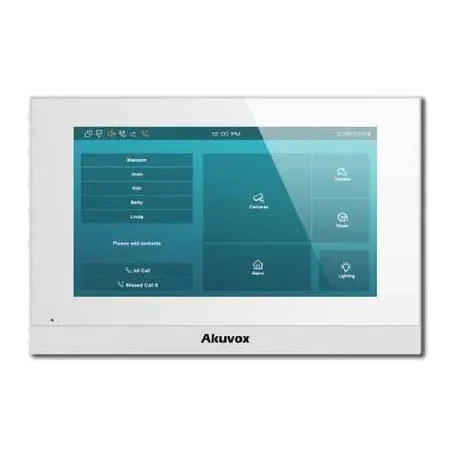
Inside, the single elevator sets the pace. In a six-story building with one car, a visitor buzzed in from the lobby may wait several minutes to go up, and a resident on the sixth floor who comes down to let an aide in loses ten minutes doing it. A video station that rings the resident’s own phone or an indoor screen, with a door release they can press from the apartment, saves that trip. We leave the elevator itself alone in almost every Madison job: the lobby door, not the elevator cab, is where control starts, and the elevator keeps running the way its own contractor set it up.
The packages complaint on Openigloo is a common one in buildings with no staff, and access control can help with part of it. A courier who rings the panel can be released into the vestibule only, or into a package room or closet off the lobby, with a code that works for that one door during delivery hours. The rest of the building stays locked to him. What access control cannot do is stop a resident from holding the door for someone who looks like they belong, or stop someone who already has a key from taking a parcel that is not theirs. For those, a camera over the package area and a log of who opened its door are the tools, and we usually recommend both together.
Many Madison co-ops are run by a managing agent with an office elsewhere and a super or porter who covers the building, and sometimes several buildings, on a schedule. Each of them needs a different kind of access. The super needs a credential that opens every common door, including the boiler room and the roof, and nothing inside any apartment. A porter on the morning shift may need the lobby, the cellar and the garbage passage, but only during the shift. The managing agent needs to add and remove shareholders from a computer in the office, without being able to open a door from there. We set those up as separate roles, so that when a porter leaves, one credential is switched off and the building is exactly as secure as it was the day before.
Not every big building on Madison’s western edge is a co-op. Openigloo lists 2232 Ocean Avenue as a 72-unit rental from 1927 with rent-stabilized apartments, managed by a property management company, and shows 127 open HPD violations over the past ten years there, 1.76 per unit against a city average of 0.81. The categories it names include smoke detectors, lighting in the stairways and missing peepholes, not intercoms or locks, so we draw no conclusion about that building’s doors. The point is a general one. In an older rental with a long list of open violations, the money for a new entry system competes with repairs the city has already ordered, and the owner should know whether the street door itself is on that list before ordering fobs.
Rent-stabilized buildings also have their own rules for any change to the way tenants get in. Brick Underground reported in 2018 that state housing regulators had ruled that fobs must be provided free to all lawful occupants, with a capped fee for lost replacements, and that an owner could not use a fob rollout to collect new identification from tenants. The city’s Tenant Data Privacy Law, Local Law 63 of 2021, applies on top of that to any multiple dwelling that uses smart access. In practice that means the rollout plan for an Ocean Avenue rental is written before the hardware is ordered: who gets fobs, how many, what the tenants are told in writing, what is recorded and for how long, and how the mechanical key stays available.
At street level, the same avenue holds medical and professional offices. CommercialCafe lists a 3,000-square-foot first-floor medical office at 2269 Ocean Avenue, filed under Madison, as fully built out and ready to lease. Practices like that need a different kind of door from the lobby beside them. The front desk wants to see and release patients from behind the counter; doctors and staff who arrive before the desk opens want to let themselves in; cleaners and the after-hours answering service need limited access; and a supply room, a medication cabinet or a file room behind the treatment area may need its own shorter list. Where the suite has a door into the building’s lobby or hallway, that door belongs to the building as much as to the practice, and the landlord and the practice should agree in writing who controls it before anything is installed.
Ground-floor suites on Ocean Avenue and Kings Highway turn over, and the departing practice often leaves its door hardware behind. A new tenant moving in should ask three questions before the lease is signed: whether the reader and controller belong to the landlord, to the old practice or to an installer’s service contract; whether anyone from the previous practice still holds a working credential; and whether the system’s administrator login can be handed over or must be reset. We survey left-behind systems as takeovers, list what can be reused, wipe the old user list, and give the new practice its own login. Often the strike, the cable and the controller are fine, and only the credentials and the reader need to change.

On the side streets between Ocean and Nostrand, the door that matters is rarely the front door. City Neighborhoods describes detached brick and stucco houses with driveways, lawns and gardens, and in houses like that the family parks in the drive and goes in through the side door, which opens into the kitchen or a back hall a few steps from the car. The front door, with its porch and its bell, is for visitors and the mail. When a Madison family asks for "a keypad on the house," the side door is almost always where it should go first.
That door has its own needs. It is used many times a day, often with full hands, so a code on a lit keypad or a fob tapped from a key ring is quicker than a key. It is usually the door children come home through, so each child can have their own code and the parents can see from the log that they got in. It may also be the door the aide, the cleaner or a relative uses, each with a code that works only on their days. And because it faces the driveway rather than the street, it is the door a stranger can stand at without being seen from the sidewalk, which is why we fit a door position contact that reports it when it has been left unlatched, and why many owners add a camera that covers it.
Where there is a gate across the driveway, it can join the same controller. A pedestrian gate with an electric lock and a keypad is a modest addition; a motorized vehicle gate needs its operator’s own safety devices, photo eyes and edges, in charge of closing, and we connect a reader to it only as an open command. Garages at the back of the lot, the detached kind many of these houses have, are usually left on their own openers unless the owner wants the garage’s side door on a code as well.
In the two-family brick houses, the front door is often shared and the basement apartment, where there is one, has its own door under the porch or at the side. The owner holds the administrator account; the tenant household gets its own credentials for the shared door and, if it wants, can add and remove its own guests inside limits the owner sets. The tenant’s apartment door stays under the tenant’s control, on an ordinary lock unless the tenant asks for something else, because no landlord should be able to open a tenant’s home from an app. A house with two households is not a multiple dwelling under the city’s privacy law, which HPD describes as applying to multiple dwellings; a house with a third household is, and then the written privacy policy, consent and data limits apply in full.

Two facts about Madison shape how we set up credentials here. The first is age: the city’s planners counted 26,319 residents of Community District 15 aged 65 or older in 2010, and 8,459 householders of that age living alone. The second is observance: Untapped Cities notes several synagogues and Jewish community centers in the neighborhood, and amNY’s 2019 report on keyless entry recorded tenants’ concerns, in other buildings, about Sabbath observance for residents who do not use electricity on Saturdays. Neither fact is a reason to avoid access control. Both are reasons to make sure the system never depends on a phone.
For older residents, the simplest credential is often a fob on the key ring they already carry, tapped against the reader the same way they used to turn a key. A keypad with large, lit buttons and a code they chose themselves works for others. A shareholder who never wants to touch either can keep a mechanical key, because every system we install keeps a keyed cylinder at each controlled door, and amNY reported that the Department of Buildings requires a key-based way in. On the answering side, the door station can ring an indoor screen or a landline rather than a smartphone, and the family member who manages the account can do it from their own phone across town.
For residents who keep Shabbat, the question is how they get into the building from Friday evening to Saturday night without operating anything electric. We do not decide what is permitted; that belongs to the resident and their rabbi. What we can do is give the building options to choose from: a mechanical key path that always works, a door set to a scheduled mode by the system itself rather than by a person, or another arrangement the community’s own authorities approve. Whatever the board chooses, the rest of the building’s security stays as it was, and the choice is written into the plan so the porter and the next board know how the door is meant to behave.
An entry system in a New York City building touches several sets of rules at once, and which ones apply depends mostly on how many households live behind the door and whether the door is an exit. None of them make access control hard to install in Madison. All of them shape how it is set up.
Multiple Dwelling Law section 50-a requires automatic self-closing and self-locking entrance doors in class A multiple dwellings built or converted after January 1, 1968, kept locked except when an attendant is on duty, and an intercom with voice and a remote door release in buildings of eight or more apartments. Buildings older than that, which includes most of the prewar co-ops and rentals on Kings Highway and Ocean Avenue, must install them when a majority of tenants ask in writing. Roof doors must be self-closing but must not be self-locking. In practice, any lobby we work on in Madison is set up to meet the newer standard whatever its age, because a door that does not lock itself is the problem the board is trying to solve.
HPD’s summary of Local Law 63 of 2021 says owners of multiple dwellings that use smart access, which covers fobs, key cards, apps and biometrics, must get tenants’ consent, give them a written privacy and data-retention policy, collect only the minimum data, destroy authentication data within 90 days unless it is anonymized, never sell it, and may not require smart access for anyone to enter their own apartment. Every co-op and rental building in Madison is inside that law; a two-family house is not, and a three-family house is. We set retention to the shortest period the board or owner is comfortable with and provide policy text they can hand out.
In buildings with stabilized apartments, state housing regulators have ruled, as Brick Underground reported in 2018, that fobs must be free to all lawful occupants, lost-fob fees capped, and no new identification collected as a condition of getting one. Changes to how stabilized tenants enter their building can also come before the state agency. We plan those rollouts around the rules before ordering hardware.
The NYC Building Code allows electrically locked egress doors only on conditions: a sensor on the inside, unlocking when power fails and when a fire alarm or sprinkler system activates, and a manual PUSH TO EXIT button near the door that unlocks it for at least 30 seconds. A magnetic lock needs release hardware in the door that works with one hand. A lobby door whose inside lever or panic bar always opens it mechanically, fitted with a fail-secure electric strike, needs none of that, which is why it is the usual choice on Madison lobbies and side doors. Controllers and locks on exit doors should be listed to UL 294, and we keep the listings in the job file.
The city’s electrical code treats signaling, alarm, communication and data wiring under 50 volts as low-voltage work outside its permit requirements; the 120-volt outlet a power supply plugs into is ordinary electrical work for a licensed electrician. New York State licenses the installation of security systems through the Department of State. Abstract Enterprises Security Systems does the low-voltage side under New York State license #12000287431, and where an outlet is needed we mark it on the plan so your electrician can add it before installation day.
Madison itself is almost entirely residential, so its businesses sit on the streets that frame it. Wikipedia lists Avenue U, Ocean Avenue and Nostrand Avenue among the main shopping streets of the wider Sheepshead Bay area, City Neighborhoods describes bakeries, groceries and small businesses on Kings Highway and Nostrand Avenue, and the ground floors of the Ocean Avenue buildings hold practices and offices. Each edge has its own kind of door.
Stores and restaurants in low mixed buildings, many with an apartment or office upstairs reached by a stair door beside or behind the shop. Staff codes for the back and cellar doors, and the residents’ stair kept on its own list.
Groceries, bakeries and service businesses, and congregations such as Kingsway Jewish Center at 2810 Nostrand Avenue, which Wikipedia places on the Midwood side. Delivery doors that open early for staff, and community buildings with doors on a service calendar.
Medical and professional suites at the base of six-story buildings, like the 3,000-square-foot first-floor office CommercialCafe lists at 2269 Ocean Avenue. Front-desk release, staff schedules, and shorter lists for supply and record rooms.
A business improvement district along part of the road, and, east of Ocean Avenue, a largely residential stretch of co-ops with a few ground-floor offices. Offices that share a lobby wall with a co-op, and doors that must never be on a daytime unlock schedule.
James Madison High School at 3787 Bedford Avenue, established in 1925, and the small offices and services on the blocks around it. A busy sidewalk at the start and end of the school day, and doors that should lock behind every person.
The family that runs the store downstairs and lives above it. One controller for the whole building, the shop on its own partition, and the family’s stair door never tied to the shop’s opening hours.
The difference between a shop on Avenue U and a practice on Ocean Avenue is who arrives first. In a family store the owner or a relative usually opens and closes, and the job is mostly about the back door and the cellar: who has a key, whether it gets locked at night, and whether a delivery driver can drop goods inside without walking onto the sales floor. In a practice, the first person in might be any of several doctors, nurses or front-desk staff, and the log answers the question every office manager eventually asks: who was in the suite, and when. A personal code or fob per person, valid during that person’s hours and nowhere else, replaces the spare key in the desk drawer.
Inner doors follow the same logic. A supply room, a medication cabinet room, a record room or a cash office can each have a reader with a shorter list. In our experience, a back room that opens only for the two or three people who need it, with a record of every opening, does more for shrinkage and disputes than a camera nobody reviews.

Walk the outside of the building with the super and a copy of the key ring, and write down every opening you pass: the lobby, any door on each side street, gates into a courtyard or rear yard, stairs or areaways down to the cellar, the laundry’s outside door, a garbage passage, a garage, and where each fire escape ends. Then walk the inside and match each opening to a key on the ring. Doors without a key on the ring are the ones to worry about, because someone else has one or the door is never locked.
We do the same walk on our first visit and turn it into a door list: what each door is, who uses it, what it must do in an emergency and how it closes today. Multiple street numbers do not always mean multiple working entrances; some side doors were sealed decades ago. The list tells the board which doors need readers, which should become exit-only and which can stay as they are, and that is what the price is based on.
Usually not. In a six-story building the control point is the lobby door: once someone is through it, the elevator carries them the way it always has. A reader at the street door and another at the inner vestibule door, a station that calls each apartment, and a release residents can press from upstairs cover what most Madison co-ops want, and none of it touches the elevator machine, its controller or its cab.
The elevator contractor needs to be part of the conversation only if the board wants the elevator itself to respond to credentials, for example limiting a visitor to one floor, or if a reader would go inside the cab. That is unusual in a building of this size and adds cost and coordination. We would rather spend that money on the side-street and cellar doors, where an uncontrolled entrance undoes everything the lobby reader achieves.
Yes. The gate gets an electric lock and a door position contact, and the porter gets a credential that does two things: it opens the gate, and, on the evenings and hours the board sets, it can hold the gate unlocked for a fixed period, say forty-five minutes, after which the gate relocks by itself whether or not he remembers. A held-open alert goes to the super if the gate is still standing open after that window, so a wedge left in the gate does not go unnoticed until morning.
The same approach suits the cellar door the porter uses to bring the cans up, and the recycling area if it has a door. Every hold-open is logged, so the board can see that the gate was open on Tuesday from 8:10 to 8:55 p.m. and closed afterward, without anyone checking by hand. If the gate is also an exit from the courtyard, it keeps its inside handle or push bar so people can always get out.
They can be done by themselves, and for many smaller buildings that is the right scope. A video station with a fob reader at the lobby, which sits on the $1,500 to $3,000 video-panel line of our Brooklyn list, and a keypad or reader on the rear or cellar door, on the $1,500 to $2,000 keypad line or the single-door line, cover the doors that matter in a building of that size. The controller we fit has room for more doors, so a laundry room or a package closet can be added later without starting again.
A full building system, $15,000 to $40,000 on the list, makes sense when a building has many common doors, a garage, separate wings or a board that wants every door reporting to one place. A 36-apartment prewar co-op rarely needs all of that on day one. The door list from the first visit tells you which side of that line you are on.
The door, in most buildings, as long as it closes and locks by itself. Cameras record what happens after someone is already inside; a street door that latches every time and opens only for residents, with couriers released to the vestibule or a package area rather than the hallways, cuts down the number of people who are inside without a reason. If the lobby door is often found unlatched or propped, a reader alone will not solve that, and the first spending should go on the closer, the hinges and the latch.
Once the door is sound, cameras earn their keep, especially one over the package area and one at the lobby door that the system can link to each fob event. In an older rental, also check whether the entrance door is already the subject of an open violation, and remember that in a stabilized building tenants’ fobs must be free and the rollout should follow the state’s rules before any hardware is ordered.
Ask who owns the reader, the controller and the lock, whether they are on any service or cloud contract, and who holds the administrator login. Ask for a list of every credential that was enrolled, or, more realistically, a commitment that the old user list will be wiped before your first day. Ask whether the door between the suite and the building’s lobby or hallway, if there is one, is controlled by the landlord’s system or the suite’s, because that door decides whether your patients can wander into the building.
We can survey what was left behind before you sign. Often the strike, the cable and the controller are sound and only the credentials, the reader and the login need to change, which is far cheaper than a new installation. If the system is tied to a cloud account that the old practice still pays for, it may need replacing; we say so in writing so it can be part of the lease negotiation.
A record room is one of the best uses of an inner reader. Put on the list only the people whose work requires the charts: usually the physicians, the office manager and the staff who file. Cleaners, temporary staff and visiting vendors stay off it, and if a cleaner must enter, a code limited to the cleaning hours does the job. The reader keeps a record of each opening, so if a chart goes missing the question of who was in the room has an answer.
The room’s door should be on a fail-secure lock, so it stays locked if the power fails, with an inside lever that always lets people out. Keep the room’s mechanical key with one person. The entry records belong to the practice, not to the building, and how long they are kept is the practice’s decision; we set the retention period it chooses.
The keypad itself does not change the house’s legal status; the number of households does. A one-family house with a lawful basement apartment is a two-family house, and the city’s Tenant Data Privacy Law, which HPD describes as applying to multiple dwellings, does not reach it. A house with a third household is a multiple dwelling for that purpose, and then consent, a written privacy policy and data limits apply. Either way, the principles are good practice: tell your tenant what the keypad records, keep only what you need, and never make an app the only way in.
What does matter on that door is its role as the apartment’s way out. A door under a porch is often the only exit from a basement unit, so its lock must always open from inside without a key or code. We use a fail-secure strike or a keypad lock with a mechanical inside lever, and the tenant controls their own guests’ codes inside limits you set.
Yes, with a little care in how it is set up. Both openings go on one controller. The simplest arrangement is that a family member’s code or fob opens the gate, and the same credential opens the side door when it is presented there a few seconds later. A second option is that a code at the gate releases the gate and, after a delay, unlocks the side door for a short time, but we prefer not to unlock a door nobody has reached yet, so the first arrangement is our usual choice.
Each person still has their own credential, so the log shows who came in, and the aide or cleaner can have a code that opens the gate and the side door on their days only. If the gate is motorized for cars, its operator’s own photo eyes and edges stay in charge of closing; our reader only sends an open command, the same as the button in the house.
Give the person covering a credential of their own, valid only for the dates the rabbi is away. A gabbai, a board member or the caretaker can get a code or fob that opens the doors they need for those dates, and it stops working on its own when the rabbi returns. Nobody copies a key, and nobody has to remember to take one back. If the shul’s doors follow a schedule for services, the schedule keeps running in his absence, and the person covering only needs to deal with the exceptions.
The rabbi, or whoever administers the system, can issue that temporary credential from a phone before leaving. For members who do not use electronics on Shabbat, the arrangements the congregation has chosen stay in place; we set the system up around the community’s own decisions and do not make them for it.
Treat it as the family’s front door, not as a shop door. The stair door gets its own lock and list, holding only the family and anyone they choose, and it is never on the shop’s opening schedule. Staff who need to reach a stock room upstairs get a credential for that room only. The shop’s street door, back door and cellar door are on the shop’s list and hours. One controller can hold both, split so that a staff member’s code never opens the stair.
Because the stair is also the family’s way out, its lock must open from the apartment side at all times without a key, and in a fire it must not trap anyone upstairs. A fail-secure strike with a mechanical lever on the stair side does that. If the apartment also has its own door to the sidewalk, that door goes on the family’s list as well, so the family can come and go without passing through the shop after closing.
Strikes for the heavy frames of prewar lobby doors, the wood jambs of house side doors and the steel frames of cellar and service doors, so a door stays locked in a power cut while its inside lever always opens it.
Panic hardware with an electric latch release for the steel-and-glass lobby doors of post-war co-ops and the storefront-style doors of ground-floor practices, where a strike cannot go in a narrow frame.
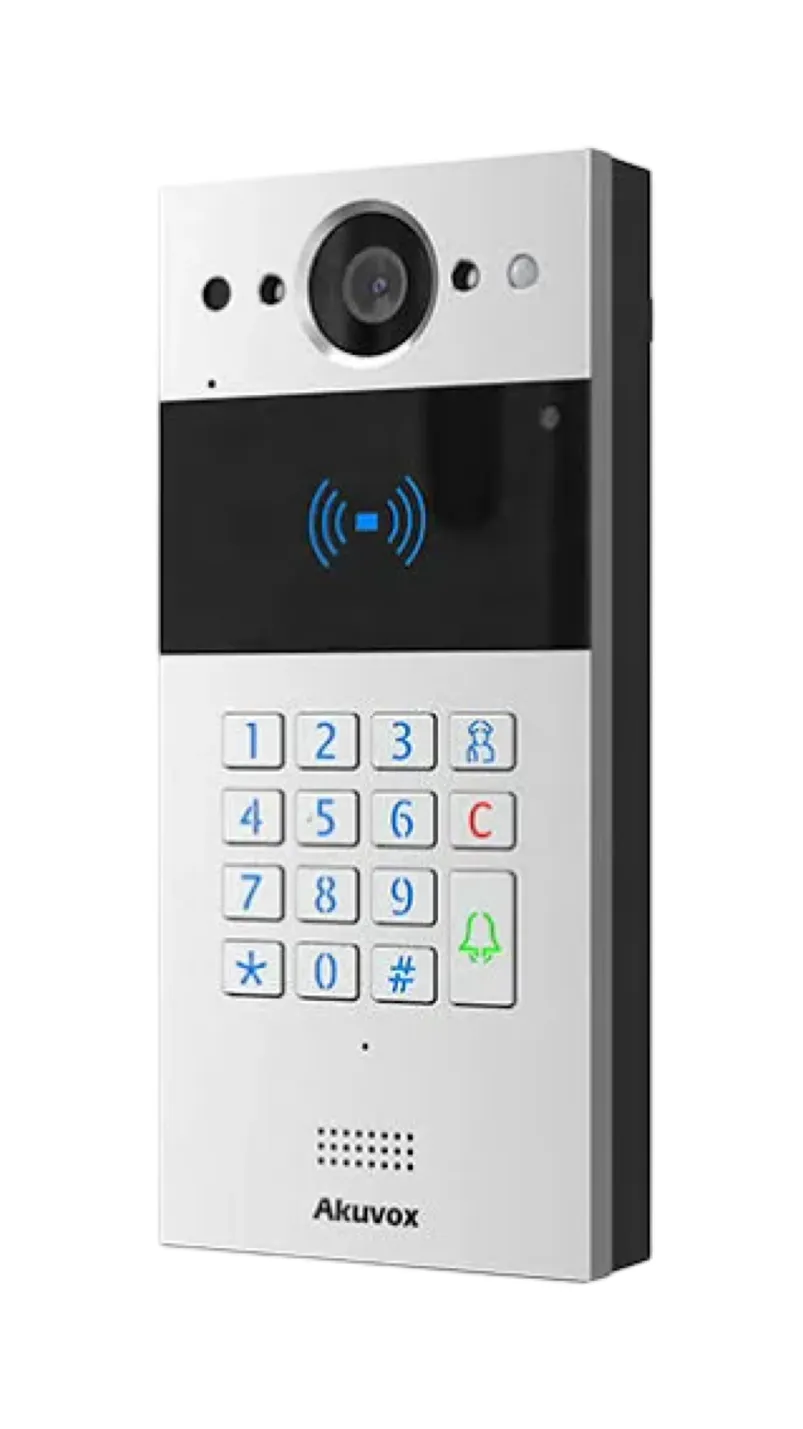
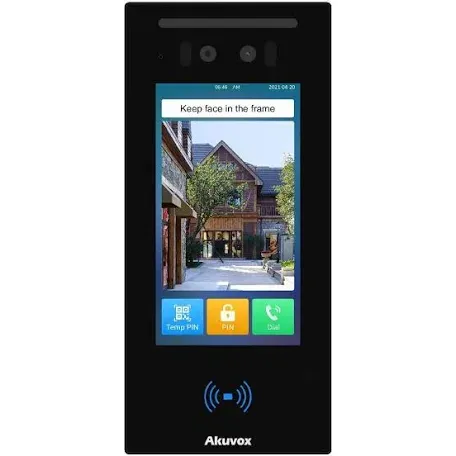
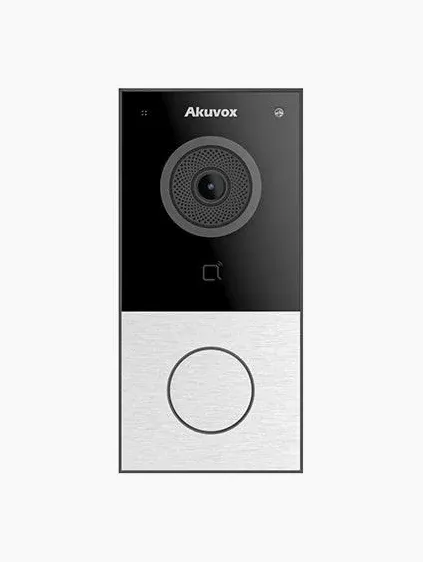
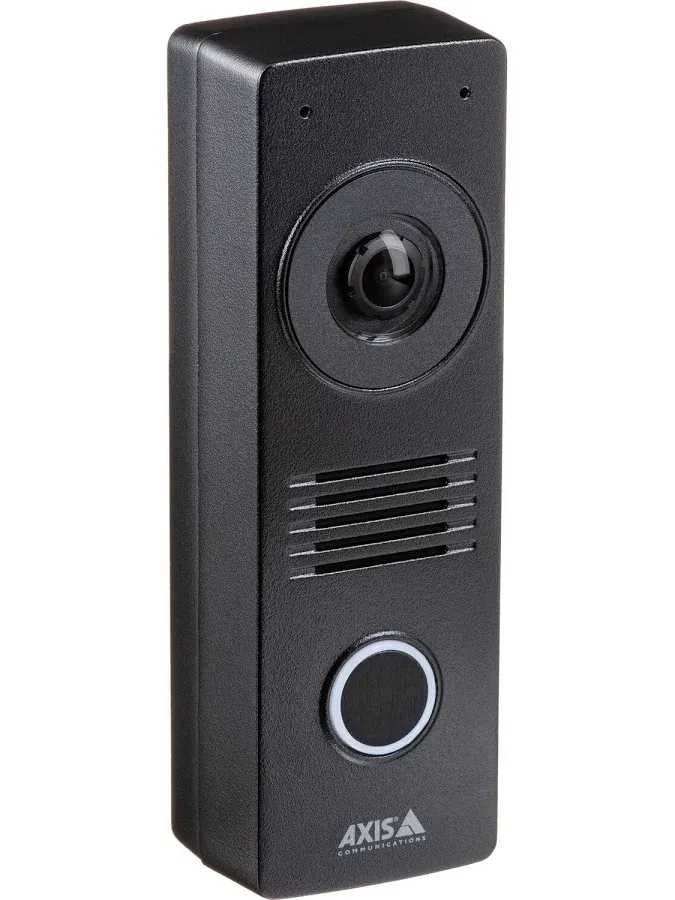
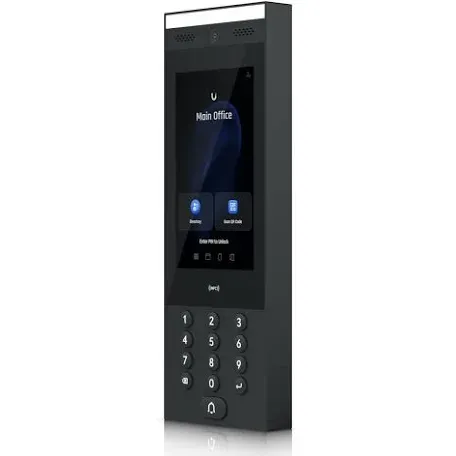
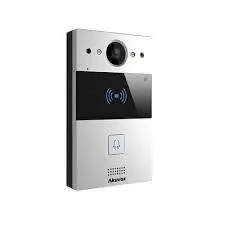
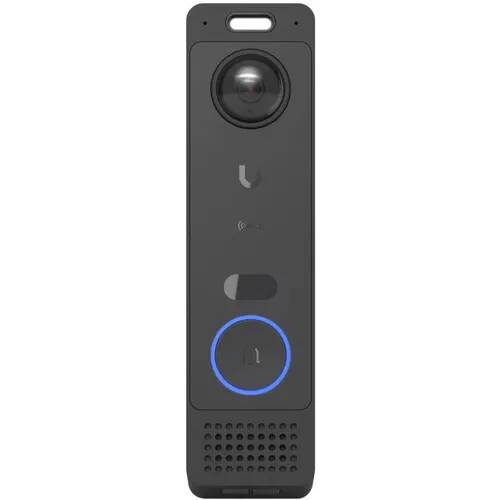
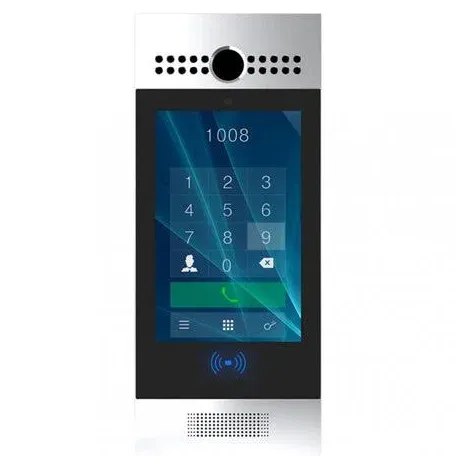
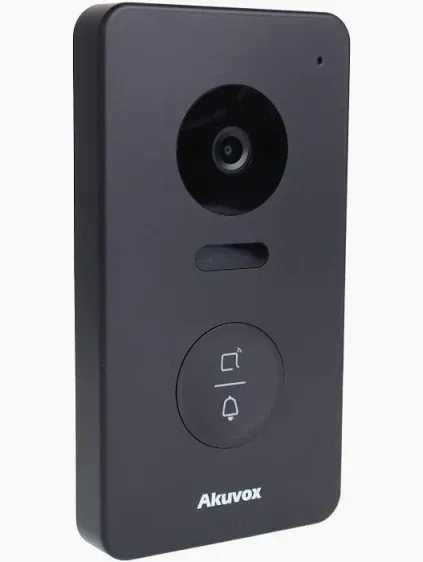
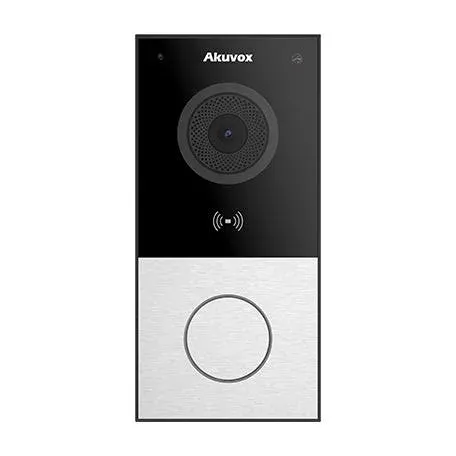
Stations with cameras, keypads and searchable directories that call shareholders’ phones, indoor screens or landlines, from slim one-button units for a side door to touchscreens for a hundred-apartment lobby.
Readers rated for outdoor use and fobs or cards that cannot be copied with a cheap cloner, replacing the old 125 kHz fobs many buildings bought years ago.
Lit, vandal-resistant keypads for side doors, cellar doors and gates, and battery keypad locks for doors where no cable can reach, with a code per person.
Electric locks for pedestrian gates and relays that send an open command to a gate or garage operator, always alongside the operator’s own photo eyes and edges.
Door position contacts that report a door held open or forced, request-to-exit sensors, and push-to-exit buttons where the Building Code calls for them.
Battery-backed controllers that keep every door working without the internet, with separate roles for the board, the managing agent, the super, porters, practices and tenant households.

Many Madison owners already have one of these, and each solves part of the problem. A battery smart lock gives one house door codes, but it rarely knows whether the door is actually shut and it lives in one person’s app. A national alarm company’s panel reports a break-in but does not decide who gets in. A cloud intercom sold on a subscription can be a good lobby panel, but if the building stops paying, the door may stop calling apartments. An installed system starts with a door that closes and latches, keeps the list of people in the building’s hands, and works when the internet does not.
| Question | National alarm plan (ADT and similar) | DIY smart lock or doorbell (Ring and similar) | Cloud subscription intercom | Abstract Enterprises Security Systems installed system |
|---|---|---|---|---|
| A credential per shareholder, tenant or staff member | Codes for the alarm, not the door | Codes on one lock | Yes | Yes, with roles, schedules and end dates |
| Side-street, cellar and garage doors on one system | No | No | Sometimes, per added door | Yes |
| Knows the door is actually shut | Alarm contact only | Usually not | Depends on the installer | Yes, door position contact |
| Works with no internet | Panel yes, door no | Partly, on batteries | Often not | Yes, controller on site with battery |
| Monthly fee | Usually a contract | Often a cloud plan | Usually per unit or per door | None for a local system; cloud optional |
These are generalizations repeated in quick online answers, consumer articles and national cost guides from sites such as Angi, HomeAdvisor and Fixr, and in vendor guides written for New York City. Each is set against what a Madison door actually needs. Where we quote a specific source, we name it; otherwise we do not pin a claim on any one of them.
Quick answers tend to picture a lobby and a reader beside it. That is the start of a Madison job, not the whole of it.
The prewar and post-war co-ops on Kings Highway and Ocean Avenue were built with side-street doors, cellar stairs, courtyard gates, laundry doors and, in some cases, garages, and CityRealty records several of them under more than one street number. Every uncontrolled entrance is a way around the reader.
We count the doors first, decide with the board which get readers and which become exit-only, and price from that list.
ButterflyMX’s NYC guide puts installation at "roughly $500 to $5,000 per door" and says fobs "usually cost between $1 – $5 per fob." Those numbers are not wrong as a range, but the bottom of it is a device, not a working door.
A press release from Streamline Telecom, another New York installer, prices a "Standard single-door system, fully installed" at $3,000 to $6,000 and lists "Concrete, steel, or landmark building constraints" among the things that raise it. A ninety-year-old lobby with marble walls and a heavy door is exactly that kind of constraint.
Our Brooklyn list prices the installed door, labor and ten fobs included, at $1,500 to $2,500 for a single controlled door, and puts the figure in writing after we have seen the frame and the route for the cable.
Rollouts are where fob systems most often fail, and the failures are public. CBS New York reported in April 2025 that at Queensbridge Houses in Queens, residents said the new fobs did not work while the old keys no longer did, doors jammed and were taped open, and 78 building-door complaints were filed in one month on the north side alone.
NYCHA told the station that "Layered access fobs and door systems are objectively safer than traditional keys and locks." That is true only when the door underneath closes, latches and releases reliably, and when residents are not left without a working way in on the day of the switch.
On a Madison co-op we fix the closer and the latch before the reader goes on, keep the mechanical key working through the changeover, and hand out fobs before the old keys stop mattering, not after.
App entry is popular in new buildings, and generic answers often present it as the modern replacement for keys.
In New York City it cannot be the only way in. amNY reported that the Department of Buildings requires a key-based way in, with fobs, cards and metal keys all counting, and HPD’s summary of the Tenant Data Privacy Law says owners of multiple dwellings may not require smart access for anyone to enter their own apartment.
In a neighborhood where many residents are older and some do not use electronics on Shabbat, we set up apps beside fobs, codes and mechanical keys, never in place of them.
Maglocks are simple to mount on almost any door, so quick answers often suggest them for everything. A magnetic lock is fail-safe by nature: it releases when it loses power.
On a lobby door, that means the building is open to the street in every power cut, and the Building Code then requires an inside sensor, release on fire alarm or sprinkler activation, a push-to-exit button and release hardware in the door. Before choosing one, ask whether the building even has a fire alarm system for it to release on.
A fail-secure strike in the frame, with the inside lever or panic bar always opening the door mechanically, is usually the better choice here, and we keep magnetic locks for the doors where nothing else will work.
Answers about access control lean toward offices and large apartment complexes, which leaves owners of a two-family house or a 36-apartment co-op thinking a good lock is all they need.
A good lock controls who has a key, not who has had one. A Madison house that has had tenants, aides, cleaners and visiting relatives for decades, or a small co-op whose shareholders have changed many times, has the same problem as an office, just smaller.
One controlled door with a credential per person is the smallest version of the fix, and it is on the same Brooklyn list line as a small office door.
Subscription lobby panels are heavily marketed, and buildings without a doorman are often told the panel covers all their needs.
A panel at the lobby calls apartments and releases the door. It does not usually control the side-street door, the cellar stair, the laundry, the garbage gate or the garage, and if the subscription lapses, some panels lose their calling or their app.
We treat a cloud service as an optional layer on top of a system the building owns, with a controller on site that keeps every door working whatever happens to the subscription.
Send a photo of each entrance from outside and inside, tell us how many apartments or people use each one and whether there is a side-street door, a cellar stair or a garage, and a technician will call back, normally within two hours during business hours.
A co-op on Kings Highway, a rental on Ocean Avenue, a detached house on East 26th Street or a shop on Avenue U: describe it in a few lines, and a written price from the Brooklyn list follows the visit. Prefer the phone? (347) 934-8335.
Received. A technician will phone you about the Madison property, normally within two hours during business hours. A lobby door that will not lock at all? Call (347) 934-8335.
The same eight steps cover a two-family house and a hundred-apartment co-op. What changes in Madison is the second step, where the walk around the building often finds more entrances than the board expected.
You send each entrance from outside and inside and tell us who uses it: shareholders, tenants, staff, porters, aides, vendors or congregants.
A technician walks the whole building, side-street doors, service passages, cellar stairs, garage and roof included, and records how each is opened today.
Each device and where it goes, what every door does in a power cut and in a fire, the schedules, and the price from the Brooklyn list.
Closers, hinges, latches and frames corrected so every controlled door shuts and locks by itself before any electronics go on.
Controller and battery in a dry, locked room; cable inside walls, ceilings, frames or conduit; a dedicated outlet from your electrician if needed.
A code, fob or phone key per person, porter, vendor, aide and congregation schedules, and end dates for tenants, contractors and temporary staff.
Each door opened from outside and inside on battery and with power removed, and held-open and forced-door alerts confirmed on your phone.
An administrator login for the board, owner or office, a one-page guide for residents, and a follow-up call after the first weeks to adjust schedules and closers.

When an apartment changes hands, switch off the departing household’s fobs and codes on the day of the closing or the move-out, and enroll the new household on the same day. Once a season, open the user list and remove anyone who no longer needs to get in: the porter who left, the aide whose client moved, the contractor who finished. Let the lobby door and the side-street door close by themselves a few times and check they latch without a push. Look at the battery status and at any held-open alerts that have been piling up. A list kept current is the whole point of the system.
Callers give directions by these places, so we list them: "a block from the high school," "across from the library on Ocean Avenue," "near the firehouse on Avenue U." None of them is a customer of ours, and each belongs to its own owner or agency.
The public high school at 3787 Bedford Avenue, established in 1925, which gave the neighborhood its name; Wikipedia counts Bernie Sanders, Chuck Schumer and Judy Sheindlin among its graduates.
The Brooklyn Public Library branch at 2115 Ocean Avenue, which began in 1910 as an unstaffed deposit station, has stood on its site since 1954 and was the first branch library the City built in Brooklyn (Wikipedia).
The Art Deco synagogue at 2810 Nostrand Avenue, completed in 1951 with stained glass by Adolph Gottlieb and listed on the National Register in 2010; Wikipedia places it in Midwood.
The Dutch Colonial farmhouse at 1669 East 22nd Street, built about 1766 and a National Historic Landmark since 1976, still a private home (Wikipedia).
The FDNY firehouse at 901 Avenue U, on the neighborhood’s southern edge, listed in Wikipedia’s Sheepshead Bay article.
The large city park just east of Madison that City Neighborhoods names as the neighborhood’s nearby green space, across Nostrand Avenue.
We also serve the neighborhoods around Madison, including Midwood, Homecrest, Sheepshead Bay and Marine Park, and further afield access control in Flatlands, Bergen Beach, Brighton Beach and Flatbush. Each of those pages is written for its own streets and buildings.
Madison pays the Brooklyn base list, the same as the rest of the borough, whether the job is a house on East 22nd Street or a co-op on Kings Highway. At the bottom of its range a controlled door includes the reader or keypad, the strike, the cable and ten programmed fobs. Sales tax is added, the figure is fixed in writing after the visit, and larger jobs start with a deposit.
| Item | Brooklyn price | Typical Madison use |
|---|---|---|
| Single controlled door: reader or keypad, electric strike, wiring, 10 fobs | $1,500 – $2,500 | A house’s side door off the driveway, or the lobby of a small co-op |
| Keypad on a personnel or service door | $1,500 – $2,000 | A co-op’s cellar or garbage door, a basement apartment door, a shop’s back door |
| Video intercom panel with fob access, replacing a buzzer | $1,500 – $3,000 | The lobby of a 36-apartment prewar co-op, or a two-family house’s shared door |
| Card readers on several office doors in a shared building | $4,000 – $12,000 | A practice’s street door, staff door, supply room and record room on Ocean Avenue |
| Multi-door building system with cloud management | $4,000 – $15,000 | A co-op’s lobby, side-street door, cellar stair, laundry and garbage gate |
| Full building system | $15,000 – $40,000 | Every common door of a hundred-apartment co-op, including the garage |
| Service visit outside warranty | $195/hr, 3-hr minimum ($585) | Changes on site, and systems another installer put in |

Tell us how many entrances, how many apartments or people, and which doors the porters and vendors use, send a photo of each, and the price comes back in writing after one visit.
One controlled door on a detached or two-family house: a fail-secure strike in the jamb, a keypad, reader or small station beside the side door, cable to the basement, a battery-backed controller with room for the gate or the front door later, and ten fobs or phone keys for the family and a tenant.
A video station with a fob reader at the lobby of a smaller prewar co-op or rental, a directory or keypad to call each apartment, calls to phones, indoor screens or landlines, the old bell column retired and a mechanical key kept at the door.
Several doors on one cloud-managed system: the lobby, the side-street door, the cellar stair, the laundry and the garbage gate of a Kings Highway or Ocean Avenue co-op, with roles for the board, agent, super and porters.
If you already bought a keypad lock, a station or a reader, or a previous board left spare hardware in the cellar, we can install it labor-only, as long as it is a listed product that suits the door. We check the model first and tell you plainly if it will not work, for example a strike too deep for an old jamb, a lock that cannot fit a narrow steel-and-glass frame, or a keypad not rated for an exposed side door. Labor-only work is quoted on the same Brooklyn rates, and the hardware warranty stays with whoever sold it.
Co-op lobbies, side-street and cellar doors, rental buildings, house side doors and gates, practices, congregations and shops, priced on the Brooklyn list.
Moving a building from uncounted keys or copyable 125 kHz fobs to personal credentials and encrypted fobs, reusing sound strikes and cable.
Dead readers, strikes the latch now misses, panels that lost their network, and systems left by a former board, agent or installer.
Stations and directory panels that let shareholders, tenants and practices see and speak to visitors before releasing the door.
Driveway gates, garage personnel doors, garbage passages and cellar doors on the same system as the front door.
Elsewhere in the borough, start with access control installation for Brooklyn; for buildings in other boroughs, see access control installation across NYC.
The usual pairing in a Madison co-op is the lobby reader with a camera over the package area and one at the side-street door. On a house it is the side-door keypad with a camera covering the driveway. Booked together, the cable for both goes in on the same visit.
This describes how we approach a Madison building, not a particular customer. When a board asks for a lobby reader, we ask for twenty minutes to walk the outside of the building before we talk about anything else, and we bring the super’s key ring. In a prewar building that walk almost always turns up a door the request did not mention: a side-street entrance the back-wing residents use, a cellar areaway the oil company opens, a laundry door to the yard, a gate at the end of the garbage passage. Then we try each one. Does it close by itself? Does it latch? Is there a key for it on the ring?
That walk decides more of the plan than any product sheet. A reader on the lobby while the side door swings free only records who used the front. A door that does not latch gets fixed first. A door nobody needs to enter becomes exit-only. The best access system in a Madison co-op is the one that leaves no door off the list.
Usually two lines of the list added together. A video panel with fob access at the lobby, replacing the old bell column, is $1,500 to $3,000, and a keypad or reader on the rear or cellar door is $1,500 to $2,000 on the keypad line, or $1,500 to $2,500 if it gets a full reader and strike. Where both doors share one controller, the board pays for that controller once. The exact figure is written after the visit, once we have seen the frames and the cable route.
The door’s own inside hardware. We fit a fail-secure electric strike in the frame and keep a lever or panic bar on the inside that always opens the door mechanically, with or without power, so nobody depends on a signal to get out. Because nothing has to release electrically, the absence of a building fire alarm does not matter for that door. If a magnetic lock were used instead, the Building Code would require a sensor, a push-to-exit button and release on fire alarm, which is one reason we avoid them on these lobbies.
No. The controller in the cellar holds the list of credentials and makes every decision on site, so fobs, codes and the mechanical key keep working with no internet at all. What pauses is the remote part: changes from the managing agent’s office, phone keys that check in over the network, and alerts. Once the new router is in, the controller is reconnected, and we can do that remotely or on a short visit.
Usually yes. Low-voltage cable for a reader, a strike and a door contact can run a long way along a cellar ceiling, and a dry, locked room is a better home for the controller and its battery than a damp spot close to the door. We check the length and the route on the visit, and in a very long building we may put a small door module near the lobby that reports back to the main controller.
Plan them together. The cable route is easiest while the floor is up or the ceiling is open, so we prefer to run cable and fit back boxes during the renovation and mount the readers and station once the painters are done. If the board wants fobs sooner, the hardware can go in now on a surface route and be tidied into the new finishes later, but that costs more overall.
Yes. The system can give a board member a role that shows the roster, which apartment has how many fobs and codes, and lets them add or cancel credentials, without access to the entry history. The history can be limited to one or two people, or switched to the shortest retention the board chooses, which fits the city’s rule that buildings collect only what they need.
Yes. Alerts are set per door and per person. A side-street door standing open for more than a few minutes can text the super and the board president, a forced door can go to the managing agent as well, and shareholders hear nothing unless they ask to. The alert names the door the way the building names it, so nobody has to guess which entrance it means.
Yes. If an existing intercom company services the apartments’ handsets, we coordinate where our station connects and who owns which part, and we put that split in writing. Elevator work is rarely needed for a lobby job in a building of this size, but if the board wants the elevator to respond to credentials, the elevator contractor does that part and we supply the reader signal.
Not if the right one is chosen and placed well. We use metal-housed, vandal-resistant readers rated for outdoor use, mounted on the frame rather than the glass and at a height that is easy to reach but not in the line of someone leaning on the door. The strike and the cable are inside the frame, out of reach, so even a reader that is struck hard does not unlock the door.
Usually from below. We look for a route up from the cellar through the floor under the door frame, inside a hollow metal frame, through the old intercom riser or along a vestibule ceiling, so the marble and terrazzo are not cut. Where no hidden path exists, a slim metal raceway painted to match the frame is the fallback, and we show you where it would run before any work starts.
Where sources disagree or fall short, we say so. Wikipedia and City Neighborhoods draw Madison’s eastern edge at different streets, and Untapped Cities and City Neighborhoods give different starting dates for its development. Listing sites file the same Kings Highway and Ocean Avenue buildings under Madison, Midwood or no neighborhood at all; we use them only for a building’s size, age and listed features. Openigloo’s violation counts cover ten years and do not say whether any concern a door. We could not reach the city’s open data for intercom or door complaints in 11229, found no Madison Reddit threads or local reviews about entry systems, and found no published count of Madison buildings with fob entry, so we give none.
Access Control Installation Brooklyn, NY | Fob & Card · Access Control Installation NYC | Key Fob, Card & Keypad · Access Control Installation Manhattan NY | Card Reader · Access Control Installation Queens NY | Card Reader · Access Control Installation Bronx NY | Card Reader · Access Control Installation Staten Island NY · Access Control Installation Long Island NY · Access Control Installation Hudson Valley NY · Access Control Installation Nassau County | Licensed · Access Control Installation Suffolk County NY · Access Control Installation Westchester County NY · Access Control Installation Rockland County NY · Access Control Installation Orange County NY · Access Control Installation Putnam County NY · Access Control Installation Dutchess County NY · Access Control Installation Ulster County NY
Access Control Installation Bath Beach Brooklyn NY · Access Control Installation Bay Ridge Brooklyn NY · Access Control Installation Bedford Stuyvesant Brooklyn NY · Access Control Installation Bensonhurst Brooklyn NY · Access Control Installation Bergen Beach Brooklyn NY · Access Control Installation Beverley Square Brooklyn NY · Access Control Installation Boerum Hill Brooklyn NY · Access Control Installation Borough Park Brooklyn NY · Access Control Installation Brighton Beach Brooklyn · Access Control Installation Brooklyn Chinatown Brooklyn NY · Access Control Installation Brooklyn Heights, Brooklyn NY · Access Control Installation Brooklyn Navy Yard Brooklyn NY · Access Control Installation Brownsville Brooklyn NY · Access Control Installation Bushwick Brooklyn NY · Access Control Installation Cadman Plaza Brooklyn NY · Access Control Installation Canarsie Brooklyn NY · Access Control Installation Carroll Gardens Brooklyn NY · Access Control Installation City Line Brooklyn NY · Access Control Installation Clinton Hill Brooklyn NY · Cobble Hill Access Control Installation | Brooklyn NY · Access Control Columbia Street Waterfront Brooklyn NY · Access Control Installation Coney Island Brooklyn NY · Access Control Installation Crown Heights Brooklyn NY · Access Control Installation Cypress Hills Brooklyn NY
Security Camera Repair Madison Brooklyn NY | Abstract Enterprises Security Systems · Structured Cabling Installation Madison Brooklyn NY · Security Camera Installation Madison Brooklyn NY · Fire Alarm Installation Madison Brooklyn NY · TV Installation Madison Brooklyn · Door Buzzer Installation Madison Brooklyn NY | Apartments · Intercom Installation Madison Brooklyn NY · Alarm Installation Madison Brooklyn NY | Home by Day · Door Buzzer Repair Madison Brooklyn NY | Co-ops & Houses
A strike the latch now misses, a reader that lost its controller, or a co-op side door that unlocks and never locks again rarely needs a whole new system. Ring (347) 934-8335, describe what the door is doing, and a visit is booked within two hours of the call.
The Madison line is (347) 934-8335 for calls and texts; door photos are easiest by WhatsApp. The company behind the work, and behind every quote, schedule and invoice, is Abstract Enterprises Security Systems, owner-operated since 2002 and based at 1282 Troy Ave, Brooklyn, NY 11203.
Customers have rated us 4.7★ across 201 Google reviews. Work is done under New York State license #12000287431; if a co-op board, a managing agent or a landlord needs a certificate of insurance naming them, it is sent before the first visit, and the written price follows the visit.
Revision log, November 12, 2026: this page was rebuilt from scratch around how doors are used in Madison — the prewar and post-war elevator co-ops on Kings Highway and Ocean Avenue with entrances on several streets and no doorman, Ocean Avenue rentals and their ground-floor practices, detached and two-family houses whose families use the side door off the driveway, residents who will not rely on a phone, and the shops on Avenue U, Nostrand Avenue and Kings Highway. Prices are the published Brooklyn base figures.