Own a walk-up in St. George, a garden complex mid-Island or apartments over a store on Forest Avenue? Doors, entry, fobs, alarms and cameras planned as one system for the whole Staten Island building: (347) 934-8335
For Staten Island Landlords & Owners · North Shore Walk-Ups, Garden Complexes, Mixed-Use Rentals, New Waterfront Buildings
Apartment Building Security Systems on Staten Island
Self-Closing Doors · Entry Panel & Stations · Fobs · Cellar & Lot Doors · Cameras · Equipment Space
Apartment building security systems on Staten Island start with a $250 service call for any repair at your building, and a plan for the whole property is priced in writing after we have walked every door. We are a New York State licensed low-voltage contractor working out of our Brooklyn office on Troy Avenue, across the Verrazzano, and we work for the people who own the island's rental buildings: families holding a six-family on the slope above the ferry, investors with a block of garden apartments mid-Island, and owners of the store-and-apartment buildings along Bay Street, Forest Avenue, Victory Boulevard and Port Richmond Avenue.
Quick answer: On Staten Island the weak point of most rental buildings is the door itself, not the intercom: HPD's 2025 violation data shows 903 self-closing door write-ups on the island against 24 that mention an intercom. A working system starts with entrance and hallway doors that close and lock on their own, then an entry panel that reaches every apartment, credentials the owner can cancel, alarms on cellar, rear and lot doors, a few cameras where trouble actually starts, and one locked space for the equipment. Repairs start with the $250 service call, credited toward a bigger job. Staten Island prices already published on our site include $250–$525 for an apartment station, $450–$950 for a strike with the door aligned and four-camera systems from $999. Whole buildings are priced after the walk-through.
Last updated November 27, 2026 by Abstract Enterprises Security Systems, NYS license #12000287431 · Sources: HPD Housing Maintenance Code Violations dataset (NYC Open Data, 2025 inspections, queried November 27, 2026); NYC Independent Budget Office, May 2026; NYS Multiple Dwelling Law §§4 and 50-a; NYC Housing Maintenance Code §§27-2041.1 and 27-2043; HPD self-closing doors and clear-violations pages; NYC Local Law 63 of 2021; NYS HCR; NYC Building Code §1010.1.9.8; NYC Admin. Code §28-105.4.7; CityLand, June 2019; Commercial Observer, January 13, 2026; NYC Economic Development Corporation, May 12, 2025; Office of the Governor, June 5, 2025; NY1, March 23, 2016; Historic Districts Council; SILive.com, July 8, 2026
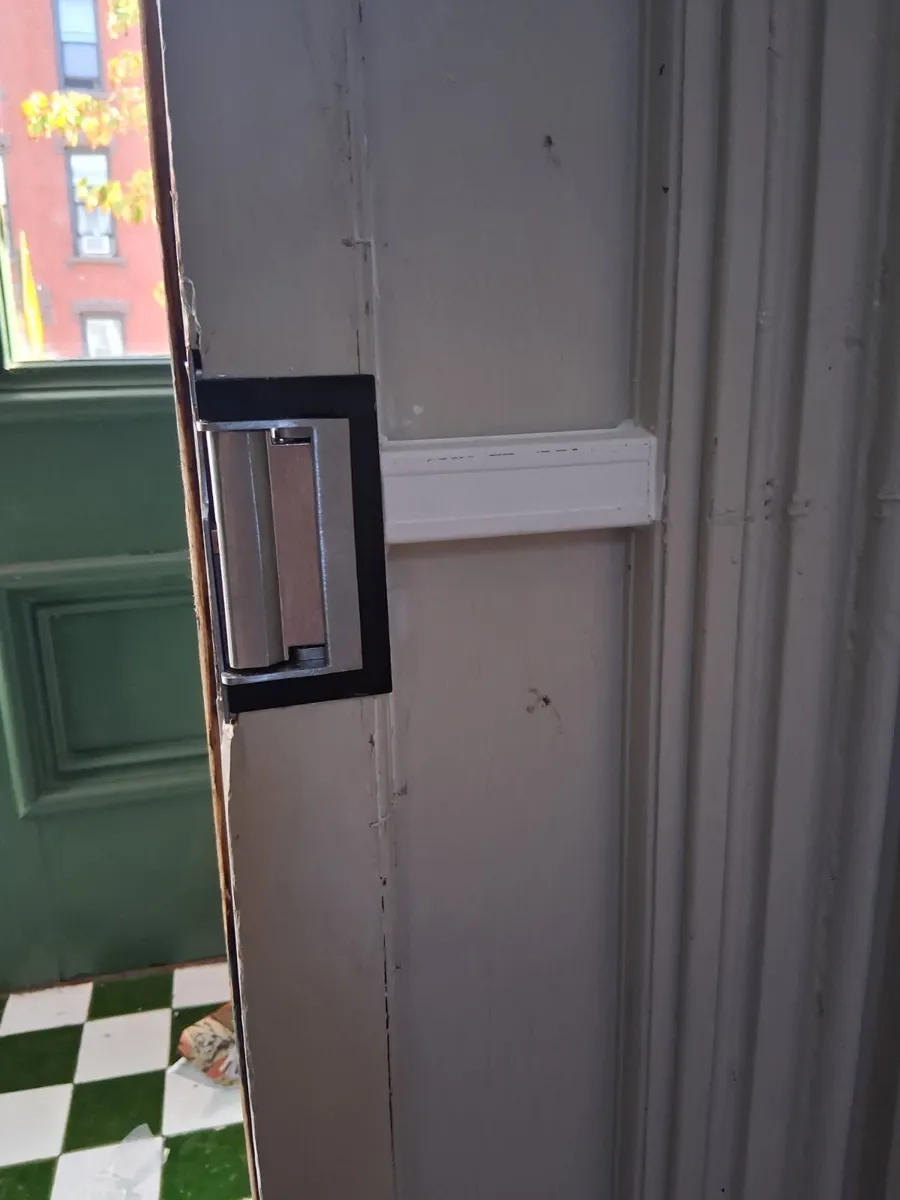
Job photo from our files: a stainless electric strike in a black faceplate fitted to a worn, painted wood door frame, a short white raceway carrying its wire along the frame, and through the open doorway a green door, a green-and-white checkered floor and a brick building across the street. This is the kind of street-door hardware that has to work before anything electronic matters on a Staten Island walk-up.
Staten Island Building Owner Request
The address, how many apartments and what keeps failing
✅
Request Sent!
Thank you. We will contact you to set up the visit.
25+
Years Experience
SI
Every Neighborhood
100%
Licensed & Insured
4.7★
201 Google Reviews
Owner-operated since 2002 · Thousands of jobs completed · Booked within 2 hours
The Neighborhood
Why Staten Island Apartment Buildings Fail at the Door First
Staten Island is the borough people describe as houses and driveways, and most of it is. The commercial real estate trade press said as much this year: in a January 13, 2026 Commercial Observer guide for developers, the land-use lawyer Stuart Saft is quoted saying that “the zoning on Staten Island makes it virtually impossible to build multifamily housing.” The same article notes that large parts of the island are zoned for one- and two-family homes and that rezonings between 1987 and 2003 cut back the areas where townhouses and apartments can go. The apartment buildings that do exist are therefore concentrated and older, and they get much less attention than their counterparts in the other boroughs. That is exactly why so many of them are in the condition we find: a front door that has not latched by itself in years, a hallway door held open with a wedge, an intercom that half the tenants stopped using, and a camera recorder in the cellar nobody can log into.
We pulled the city's own numbers to see where the problems actually are. Counting Housing Maintenance Code violations from HPD inspections in calendar 2025 on NYC Open Data, Staten Island buildings drew 903 violations whose description mentions a self-closing door, every one of them class C, the city's most serious category. In the same year, violations mentioning an intercom came to just 24 for the whole island. The intercom figure is low because most Staten Island rentals are too small for the intercom rule in the Multiple Dwelling Law to reach them; the door figure is high because the self-closing rule reaches every multiple dwelling. For an owner deciding where the first dollar goes, that comparison says more than any product brochure: on this island, the door hardware is the security system's foundation, and everything electronic sits on top of it.
The door violations are not spread evenly. More than half of the 903 came from two North Shore ZIP codes: 10304, which takes in Stapleton, Clifton, Park Hill and Grymes Hill, with 259, and 10301, which covers St. George, Tompkinsville, New Brighton and Sunnyside, with 249. Those are the neighborhoods with the island's densest stock of walk-ups, prewar and postwar elevator buildings and apartments over stores, and they are also where most of the island's new rental construction is going. Mid-Island and the South Shore have fewer buildings of this kind, but garden apartment complexes, converted houses with three or four apartments and mixed-use buildings on New Dorp Lane, Hylan Boulevard and Richmond Avenue all appear in the data.
Rent regulation also looks different here. The NYC Independent Budget Office's May 2026 report on the rent-stabilized stock found about one million stabilized apartments citywide and says that “Staten Island has the fewest, with only 8,200 apartments.” Seventy-two percent of those are in buildings built before 1974. So most Staten Island landlords run market-rate buildings, but the ones who do own a stabilized building, usually a six-family or larger North Shore building from the middle of the last century, carry the state's service rules on top of the city's. A security upgrade in those buildings has to be planned so that no tenant ends up with less than they had.
This page is written for the owner of one Staten Island rental building, or a handful of them, who wants to stop buying security one emergency at a time. Managing agents with larger portfolios will find their version on our page for property management security on Staten Island, and owners who only want cameras should start with apartment building security camera installation on Staten Island. Here we walk the building from the street door to the roof and the parking lot, explain what changes between a converted house, a six-family, an elevator building, a garden complex and a new waterfront rental, and show the Staten Island prices that are already published. The citywide overview lives on our apartment building security systems hub for New York City.
Job photo from our files: a tall white wall under a white drop ceiling with recessed lights and vents, a row of small dark windows along the top of the wall and a lit red exit sign at the far end. Large, plain common spaces like this are where a survey starts by marking which doors lead in and out.
Staten Island facts that shape an owner's security plan
Doors, not intercoms, draw the write-ups. HPD's 2025 inspections produced 903 class C violations on Staten Island that mention a self-closing door and 24 that mention an intercom (HPD Housing Maintenance Code Violations, NYC Open Data, queried November 27, 2026).
Two ZIP codes carry most of the door problems. 10304 (259) and 10301 (249) together account for 508 of the 903 self-closing door violations; 10305 and 10303 follow with 72 each.
Intercom violations cluster on the same shore. Of the 24 intercom write-ups, 10301 and 10306 had six each, 10305 had four, 10302 and 10304 three each and 10310 two.
Fourteen days to fix a door. HPD gives a class C self-closing door violation 14 days for correction, and its penalties schedule shows $250 to $500 plus $250 for each day.
Three families make a multiple dwelling. Multiple Dwelling Law §4 defines a multiple dwelling as a building occupied as the residence of three or more families living independently, which is where the city's lock and door rules start.
Eight apartments is the intercom line. Section 50-a reaches class A buildings with eight or more apartments built or converted after January 1, 1968, requiring entrance doors that close and lock themselves plus a two-way voice intercom and door release for each unit; buildings older than that must install them once the tenants of most apartments put the request in writing.
Regulated units are few. The Independent Budget Office’s May 2026 count puts the island’s stabilized apartments at roughly 8,200, and almost three in four of them are in buildings put up before 1974.
New multifamily supply is small. Commercial Observer, citing the Rent Guidelines Board, put Staten Island's pipeline at the end of 2024 at 1,238 units, against 40,247 in Brooklyn.
Staten Island building
Where security usually fails first
What we fix first
Converted house with three or four apartments
A single front door shared by all units with a residential lockset and no closer
Closer, strike and a call button and release for each apartment
North Shore six-family or small walk-up
Hallway and stair doors that no longer close and latch on their own
Door closers and latch hardware, then the entrance
Prewar or postwar elevator building
Lobby door, rear door and cellar on different keys; aging lobby intercom
One credential for shared doors, panel and riser check
Garden apartment complex
Many small entrances, a parking lot and a laundry building spread across the site
Entrances on one controller, lot and laundry doors on the same fobs
Stores with apartments above
Residential door beside the shop that never locks behind deliveries
Self-locking residential door, separate accounts from the store
Newer waterfront rental
Accounts and logins still in the developer's or installer's name
Account transfer to the owner, fee review, records
Why the door comes before the electronics
An entry panel that works perfectly does nothing if the door it releases never closes. On a Staten Island walk-up, the door at the street often has a closer that leaked its oil years ago, a strike that was bent when somebody forced it, and a latch that does not reach the keeper because the frame has moved. Inside, the hallway doors to the stairs and the cellar have the same problems. Those hallway and stair doors are the ones the 2025 violation numbers point to. A closer, a latch and a properly set strike are not glamorous, but they turn every other piece of equipment from decoration into protection. That is why our first visit to an island building almost always starts at the street door with the owner, before we look at the intercom.
What a Staten Island owner usually inherits
Many island rental buildings have been in one family for decades, and their systems were added one at a time when something broke. A typical inventory reads like a timeline: an audio intercom from the building's first decades, a doorbell kit added for the ground-floor apartment, a battery camera a tenant put up and left behind, a camera recorder the last super installed, and a lockset on the cellar door that every contractor in the last twenty years was given a key to. Nothing is labeled, nothing shares power or a login, and the owner learns how it fits together only when it fails. Our first job is to write all of it down: every door, what locks it, what releases it, what reports when it opens, which cameras record and where, what powers each system and who holds each password.
Who the system has to work for
Resident owners are a big share of the island’s landlords, especially in converted houses and small walk-ups where the owner keeps one floor. They notice every failure first, usually at the dinner table, and they generally prefer hardware that works with a button and a handset rather than an app.
Absentee owners living in New Jersey, another borough or out of state cannot hear a door bang. They need the building to speak up: an alert when the rear door has stood open for twenty minutes, a notice when a camera drops offline, and a way to issue or kill a fob from wherever they are.
The person who looks after the building is rarely a live-in super on the island. More often it is a handyman who drives between several properties. Labels on every device, a one-page guide taped inside the equipment cabinet and the rights to switch off a lost fob himself save him a trip and the owner a phone call.
The tenants range from long-time households in stabilized North Shore buildings to commuters who leave for the ferry before seven and expect a delivery to be safe when they get home. A good system serves both: a handset or a station for the people who want one, phone answering for those who prefer it.
What We Install
Apartment Building Security System Services on Staten Island, Door by Door
The clearest way to plan a Staten Island building is to follow the routes people actually use: the tenant coming home from the ferry, the courier with a cart, the oil or utility worker headed for the cellar, the neighbor's teenager cutting through the parking lot, and the stranger who waits for someone to hold the door. Each stop below says what we check there, what usually goes wrong in island buildings, and which of our Staten Island service pages goes deeper on that piece.
The street door and the vestibule
Island buildings come in two front-door patterns. Older North Shore walk-ups and elevator buildings usually have an outer street door and an inner vestibule door with the mailboxes and the bell panel between them. Converted houses and many small walk-ups have a single door straight into the hall. With two doors, the inner door usually takes all the abuse because the outer one stopped latching long ago; with one door, everything depends on that door's closer and lock. We set the closer so the door pulls shut against the wind off the harbor and the stack effect in the stairwell, fit or replace the strike so the latch actually catches, and make sure the door locks itself every time it closes, which is what §50-a asks of the buildings it covers and what every owner wants anyway. Where the door, the frame or the hinges are past saving, the owner's carpenter or door supplier replaces them and we come back to fit the electric hardware.
The vestibule is also where we decide how visitors announce themselves. A three- or four-apartment house rarely needs a directory panel; a well-made door station with a button per apartment, and a station or phone answering in each unit, is simpler and cheaper to keep running. A building of a dozen or more apartments benefits from a panel with a directory, a keypad and a reader, so tenants, couriers and the super all use the same point. The details of panels and stations for island buildings are on our intercom installation page for Staten Island.
The apartment stations and the riser
Every building intercom depends on the cable that runs from the equipment location to each apartment. In a converted house it may be doorbell wire stapled along the stair; in a North Shore walk-up it usually climbs beside the old gas and water lines; in a postwar elevator building it often shares a chase with the telephone cable. Before we recommend anything, we test that cable from the cellar to each floor. A riser that tests clean lets the owner keep it and spend the money on the panel and stations; a riser with dead or noisy pairs changes the plan to a repair, a new run, or a system that answers on tenants' phones and needs no apartment wiring at all. When an existing system has simply stopped working, the diagnosis and the repair belong on our intercom repair page for Staten Island, and the older two-wire buzzer systems on our Staten Island door buzzer repair page.
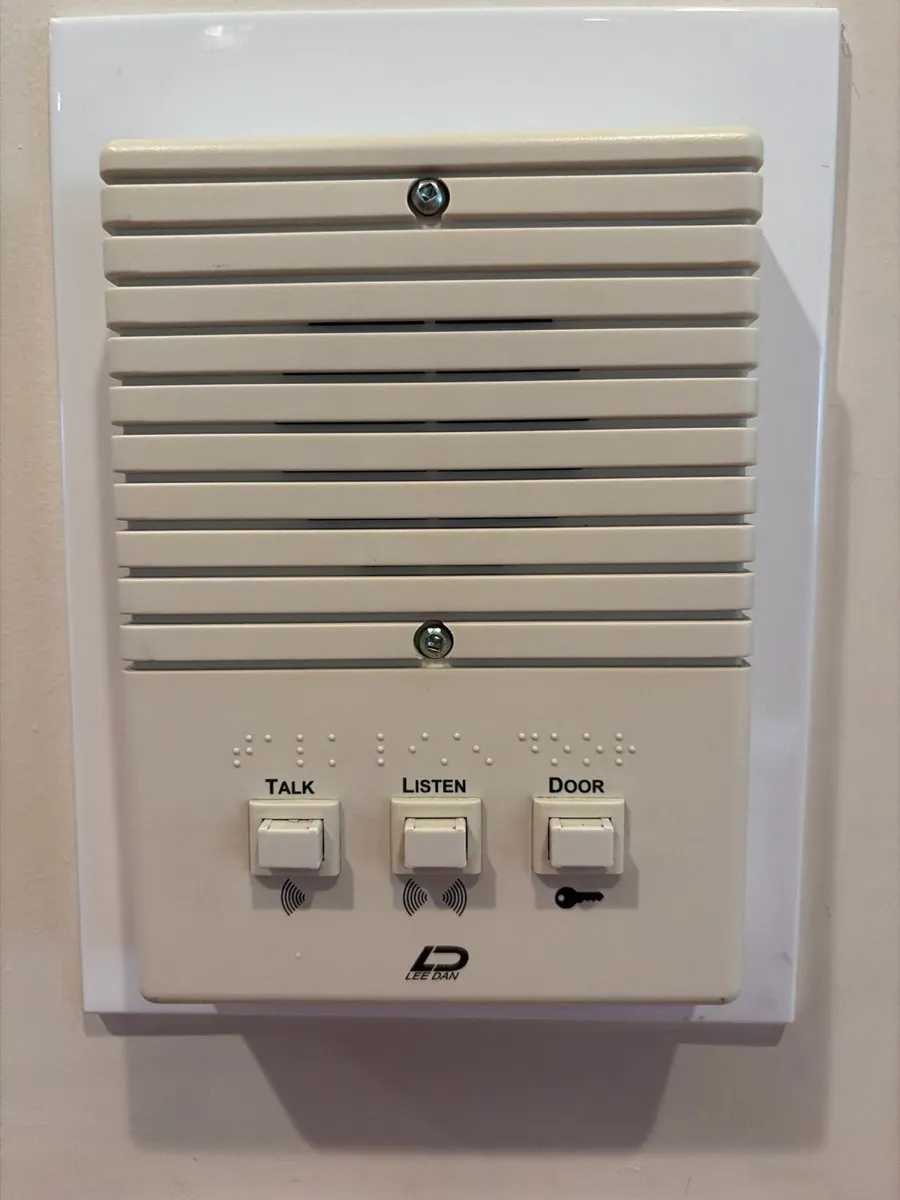
Job photo from our files: a beige audio intercom station mounted on a white wall plate, with a slotted speaker grille and three square buttons labeled Talk, Listen and Door. Stations like this are still what many long-time tenants in North Shore walk-ups use to let visitors in.
Deciding what each unit gets is a separate conversation. Where tenants have been in place for twenty years, the handset by the kitchen door is how they live with the building, and an app is no substitute. Where most leases are new, many handsets have gathered dust. We go down the tenant list with the owner, mark who wants a station, who wants calls on a phone and who wants both, and quote both routes.
Hallway, stair and cellar doors
This is where Staten Island's violation numbers live. Under the Housing Maintenance Code, apartment doors and the doors to public halls must swing closed and latch by themselves, and every apartment entrance door needs a key lock; class A buildings add a heavy-duty latch set, a deadbolt and a chain guard under §27-2043. In practice we find stair doors propped for air in summer, cellar doors with a closer that was disconnected so the super could carry things through, and hallway doors whose latch no longer reaches the strike. We set or replace closers, adjust or replace latches, and where a door needs to stay open for a reason, we use hold-open hardware that releases on its own rather than a wedge. If the owner wants to know when one of these doors is left open, a small contact on the frame reports it to an alarm panel or the access control system. None of this touches the fire alarm unless the building has one; where it does, we coordinate with whoever maintains it.
Fobs and codes for shared doors
Copied keys are the quiet problem in island rentals. Nobody knows how many street-door keys a building has handed out since the last re-key, and re-keying at every move-out adds up quickly. A reader on the street door, the laundry, the storage room and the door out to the lot means a departing tenant’s access ends with one click, and a contractor can be given a code that expires when the job does. Apartment doors stay on mechanical keys. Readers, controllers and keypads for the island, with their published prices, are on our access control installation page for Staten Island.
Electronic credentials come with a city law attached. In class A buildings, Local Law 63 of 2021, the Tenant Data Privacy Act, requires express tenant consent before an owner collects data through smart access, a written policy in plain language, encryption and current firmware, deletion of authentication data within 90 days unless it has been anonymized, and no sale of the data; it also bars making smart access the only way into a tenant’s own unit. We configure the equipment so the owner can comply; drafting the policy is a job for the owner and counsel.
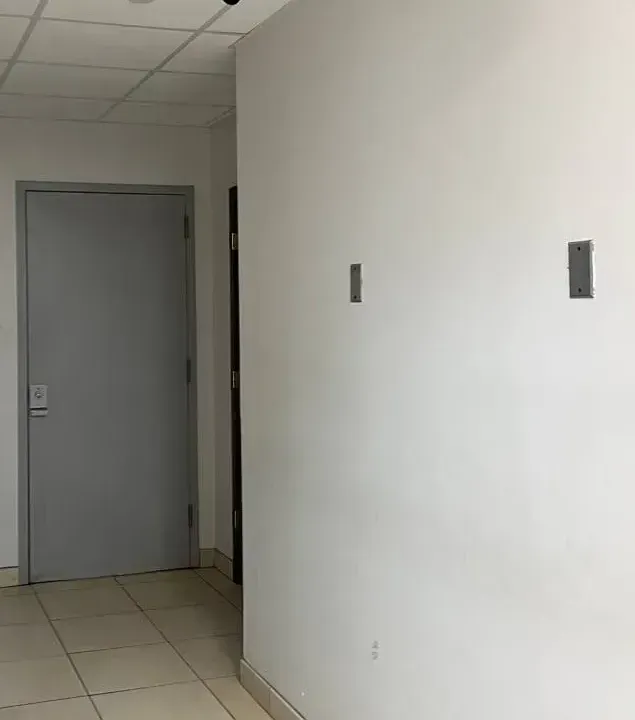
Job photo from our files: a grey steel door with a keypad lever lock at the end of a short hall with beige floor tiles, and two small blank metal plates on the white wall nearby marking where devices are planned. Rear, cellar and storage doors like this are the ones we put on fobs or codes first.
Mailboxes, couriers and packages
Island tenants who commute by ferry, express bus or the Staten Island Railway are out of the building for most of the day, so packages sit in the vestibule or the hall for hours. The answer is rarely a bigger camera. It is fewer packages in the open: a lockable parcel shelf or room inside the second door, courier access that opens only the vestibule and only during the day, and a camera at face height so a tenant who holds the door for a stranger knows the moment is recorded. In smaller buildings a set of parcel lockers in the vestibule can do the same job without a room. We install the door hardware, readers and camera; the owner chooses the lockers or shelving.
The rear door, the yard and the parking lot
Unlike most buildings in the other boroughs, many Staten Island apartment buildings have a parking lot or a driveway, and tenants reach it through a rear or side door. That door is opened more than the front door in some buildings, and it is the one most often left unlatched because the walk around the block is long. The fix is the same as at the front: a closer and a lock that latches every time, a reader so tenants do not need a separate key, a contact that reports when the door is held, and lighting on the door that the owner's electrician installs. A camera aimed at the door and along the lot catches both the approach and the entry. Where the lot has its own gate, it can go on the same fobs.
The cellar, the boiler room and the meter room
Cellars on the North Shore often have their own door to the street or an areaway, used by oil delivery, utility workers and trash staff. Behind it are the boiler, the meters, tools and, in older buildings, copper that attracts thieves. We fit hardware that locks from inside, a contact on an intrusion panel that reports every opening, and a motion sensor for nights and weekends. Where outside workers need routine access, a code or credential that opens only that door, only on the days they come, beats a key that circulates for years. Alarm panels and the central-station monitoring options are on our alarm installation page for Staten Island.
The roof door and the fire escape
Roof doors on the island's walk-ups and elevator buildings are often required exits, and the fire code limits how they can be secured. We use hardware that locks from the roof side, opens freely from inside and sounds a local alarm when used, with a contact that notifies the owner or super. Fire escapes on the rear of older buildings are a different problem: they cannot be locked or blocked, so the protection is at the windows tenants control and in what the cameras see from the yard. We point cameras along the escape and the yard, not into windows.
Cameras where incidents start (the short version)
Cameras on a whole-building plan go where the doors are. In a typical island walk-up that means one at face height in the vestibule, one over the mailboxes or parcel shelf, one on the rear door and the lot, one at the cellar stair, and in bigger buildings one in the laundry and one at the elevator. Five or six cameras is usually plenty here; the money that makes the footage worth having goes into the doors and the lot lighting. Our Staten Island security camera pricing page lists four-camera systems starting at $999, and camera counts, recording time and recorder choices for rental buildings are covered on the apartment building camera page linked above.
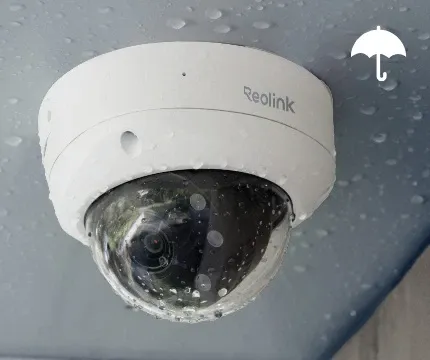
Reolink product photo (we are an authorized Reolink partner): a white Reolink dome camera mounted under a grey overhang, its clear dome and housing covered in raindrops. A weather-rated dome under an entrance canopy is a common choice for island doors that face wind and rain off the harbor.
Elevator readers in the island's taller buildings
Two kinds of island building ask about elevator control: the postwar six-to-twelve-story buildings, where owners want the upper floors or the cellar closed to non-residents at night, and the new waterfront buildings with roof decks and gyms. The reader goes in the cab and the cable runs to the machine room; the final connection inside the controller is made by the building’s licensed elevator company, on a visit the owner schedules with them. Published island pricing for a reader in the cab is on our elevator access control page for Staten Island.
The equipment space
Most island buildings never had a room for low-voltage gear. We find intercom transformers screwed to a cellar joist beside the burner, camera recorders on a shelf among the super’s paint cans and the internet router in a ground-floor tenant’s closet. The fix is a small locked, ventilated cabinet or closet, lifted off the floor and kept away from boiler heat, with a battery backup that holds the door release and the panel through short outages. Cat6 runs, small racks and labeled patching for these systems are on our structured cabling page for Staten Island.
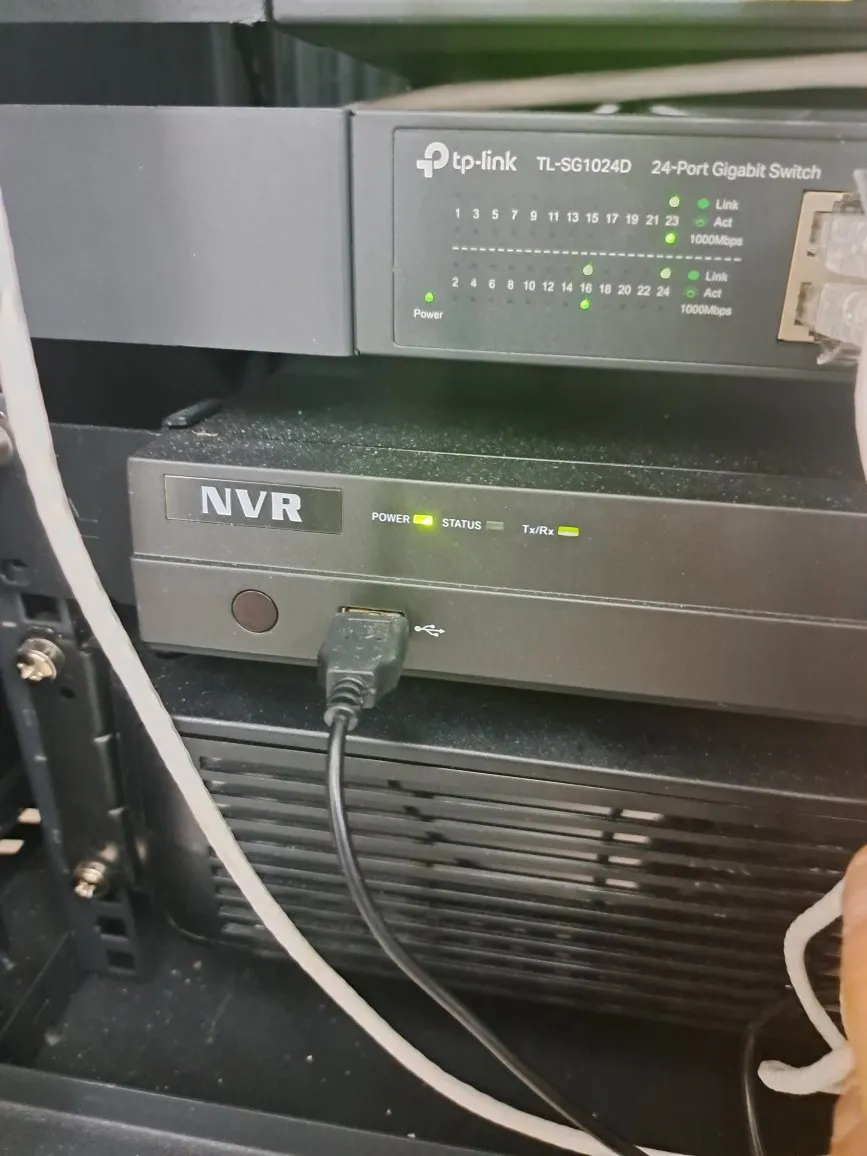
Job photo from our files: a 24-port network switch with green status lights sitting above a black recorder labeled NVR in an equipment rack, a black cable plugged into the recorder front and white cables entering from the side. Keeping the switch, recorder and backup power together in one locked space is the goal for every building.
Fire alarm and what stays separate
A building’s fire alarm has its own designers, filings and inspections, and it sits outside the security work described here; if your building needs that work, see our fire alarm installation page for Staten Island. What we do on every security job is talk to the fire alarm’s service company so that any magnetic or electrified lock on an exit path drops when the power fails or the alarm goes off, which the NYC Building Code’s electrified-lock sections require. We never cut into fire alarm wiring or change its programming.
What we do not sell
Our work is equipment: we install it, and we maintain it for the owner. Nobody from our company sits in a lobby or watches a building’s cameras, we do not run a virtual doorman, and we do not sell security by the month. Central-station monitoring for intrusion alarms is available on the terms printed on our alarm page. Where an owner already pays a remote-attendant company, we install and service the panels, cameras and door hardware that company works through, and connect to it where the equipment allows.
Building Specialists
Security Systems for Staten Island's Rental Building Types
Island rental buildings fall into a few recognizable families, and knowing which one we are in tells us most of what we need: where cable can go, where equipment can sit, which rules matter most and how many tenants rely on a station in the apartment. The cards below are general; the walk-through decides the details.
Converted houses, three or four apartments
Frame or brick houses split into apartments, common in Port Richmond, West Brighton, Stapleton and Rosebank. A multiple dwelling under §4 once three families live there, though usually below the eight-unit line in §50-a.
Six-families and small walk-ups
Brick walk-ups on the slopes above the ferry and along Victory Boulevard and Richmond Terrace, many with a cellar door to the street and a rear yard.
Prewar elevator buildings
Masonry elevator buildings near Borough Hall, on the St. George and Tompkinsville hillsides and around Silver Lake, with lobbies, service corridors and cellar laundries.
Postwar elevator buildings
Six- to twelve-story brick buildings from the middle of the last century, the island's main source of stabilized apartments, often with a parking lot behind.
Garden apartment complexes
Two- and three-story buildings spread across a site, with many small entrances, a laundry building and a lot, on the North Shore and mid-Island.
Stores with apartments above
Mixed-use buildings on Bay Street, Forest Avenue, Victory Boulevard, Port Richmond Avenue, New Dorp Lane and Richmond Avenue, sharing a cellar or rear door with the shop.
New waterfront rentals
Stapleton and St. George buildings finished in the last ten years, usually delivered with a platform intercom, a fob system and amenity spaces the developer picked.
Houses in the St. George/New Brighton Historic District
Later 19th-century houses, some now apartments, in a district designated July 19, 1994, where facade work follows Landmarks Preservation Commission rules.
Converted houses: one door, several households
A Staten Island house that has been divided into three or four apartments usually keeps the original front door, now shared, and sometimes adds a side door for a lower apartment. The front door often still has the residential lockset it had as a one-family house, with no closer, so it stays wherever the last person left it. The work here is small in equipment and big in care: a closer and a strike on the shared door, a call button and release for each apartment wired only to the door that apartment uses, and a station or phone answering in each unit. A small camera at the shared door and one at the side door cover most of what happens. Because the building is a multiple dwelling once three families live there, the Housing Maintenance Code's self-closing and lock rules apply even though the building still looks like a house from the street.
Six-families and small walk-ups on the North Shore
The small brick walk-ups of St. George, Tompkinsville, Stapleton and New Brighton are where most of the island's door violations come from. They tend to have a street door at the top of a few steps, a narrow hall and stair, a cellar door to the sidewalk or the side yard, and a roof door. They rarely need a large system. They need every door to close and lock, a dependable entry point, a contact on the cellar and roof doors, and a few cameras. In buildings with long-time tenants, we keep handsets in the apartments and add phone answering only for the tenants who ask.
Prewar elevator buildings near Borough Hall and the hillsides
The island's older elevator buildings, many of them a short walk uphill from the ferry, were built with lobbies, a service entrance and a cellar laundry. Their original lobby intercoms are often recessed in plaster or stone in sizes no current product matches, so we choose a panel that fits the opening with an adapter plate rather than cutting new masonry. The riser test decides the rest of the budget. Service entrances and cellar laundries are the doors we put on fobs first, because that is where outsiders come and go.
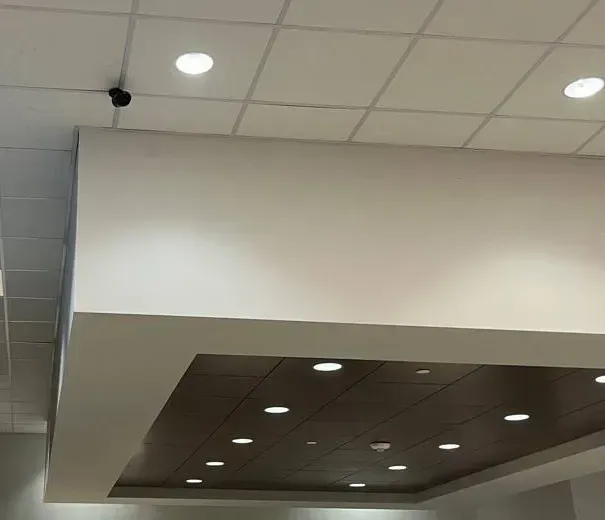
Job photo from our files: a white drop ceiling with a small black camera near the top edge, a white soffit below it and a dark recessed ceiling panel with round downlights. Older elevator-building lobbies often have soffits and bulkheads like this, which decide where a camera and its cable can go.
Postwar elevator buildings and the stabilized stock
Six-story and taller brick buildings from the decades after the war hold most of the island's 8,200 stabilized apartments. They typically have a lobby with a mid-century intercom, a parking lot behind with a rear door, a laundry room in the cellar and an elevator that stops at every level including the cellar. In these buildings the sequence matters: doors first, then a panel that can still ring the existing handsets where tenants want them, then fobs on the lobby, rear and laundry doors, then a reader in the elevator if the owner wants the cellar stop restricted. New York State Homes and Community Renewal says owners of stabilized apartments “are required to maintain all required services and equipment in good working order,” and lists broken door locks among the decreases in service tenants can complain about. We plan changeovers so the front door never stops locking and no tenant loses the way they answer the door.
Garden apartment complexes
Garden complexes spread security across a site rather than up a building. A complex may have a dozen small entrances, each serving a few apartments, plus a laundry building, a maintenance shop, dumpsters and a lot. Running a full video panel at every small entrance is usually unnecessary; a reader with a call button at each entrance, video at the one or two entrances visitors actually use, and the laundry and shop doors on the same fobs give tenants one credential and the owner one place to manage it. Cable between buildings runs underground in conduit or through existing ducts, and where that is impossible, a point-to-point wireless link joins a separate building to the system.
Stores with apartments above
Mixed-use buildings line the island's commercial streets, from Bay Street through Stapleton and Tompkinsville to Forest Avenue, Victory Boulevard, Port Richmond Avenue, New Dorp Lane and Richmond Avenue. The store usually has its own alarm and cameras from its own vendor. The residential side needs its own door that locks behind it, its own entry and credentials and its own recorder, in the owner's account. Where the store and the apartments share a cellar or a rear door, a reader or contact on that door, with separate credentials for the store staff, keeps one tenant's convenience from becoming the other's problem.
New waterfront rentals: inheriting the developer's choices
The North Shore waterfront has seen most of the island's recent rental building. Urby, in Stapleton, opened its first building in 2016 with just over 100 units, and NY1 reported that plans called for 900 units across three buildings. Lighthouse Point opened in St. George in June 2025 with 115 homes, 30 of them affordable, steps from the ferry terminal, according to the Governor's office. The Pearl, at 475 Bay Street, opened in November 2025 as the first project under the Bay Street Corridor plan, and the city chose developers in May 2025 for more than 500 mixed-income units in mass timber on the New Stapleton Waterfront, with construction expected to begin in 2027. Owners who buy or refinance buildings like these rarely face broken hardware. They face systems whose accounts are in someone else's name, monthly platform fees nobody has reviewed and fob software that left with the construction team. The first job is administrative: transfer every account, list every fee, document what is installed.
Houses in the St. George/New Brighton Historic District
The Historic Districts Council describes the St. George/New Brighton district, designated July 19, 1994, as later 19th-century homes in Shingle, Colonial Revival and Italianate styles, many by the Staten Island architect Edward Alfred Sargent. Some are now divided into apartments. In a historic district, an entry panel, a camera or a reader on the facade can need a Landmarks Preservation Commission permit; the commission's permit guidebook allows staff-level permits for intercom panels within or next to the door opening, one per opening, and limits cameras by facade width, while ordinary repair is exempt. We supply cut sheets and mounting details for the filing, keep devices inside the porch or door opening where possible, and install after the permit is in hand.
For Owners & Investors
Owning, Buying and Upgrading a Staten Island Rental Building
The Bay Street corridor and what it means for older buildings nearby
On June 26, 2019, the City Council approved the Bay Street Corridor plan, which rezoned about 14 blocks of Bay Street and two blocks of Canal Street linking St. George, Tompkinsville and Stapleton, according to CityLand's report on the vote. The plan projected 1,300 new affordable homes, including 223 at the former Jersey Street sanitation garage site, 90 of them for seniors. For owners of the older walk-ups and mixed-use buildings along and above Bay Street, the practical effect is competition. Tenants who have toured a new building with a video panel, phone answering and a parcel room start to compare. An owner does not need to match a new building feature for feature, but a front door that locks itself, an entry that rings the tenant's phone, and packages that are not piled on the hall floor go a long way toward keeping good tenants in an older building.
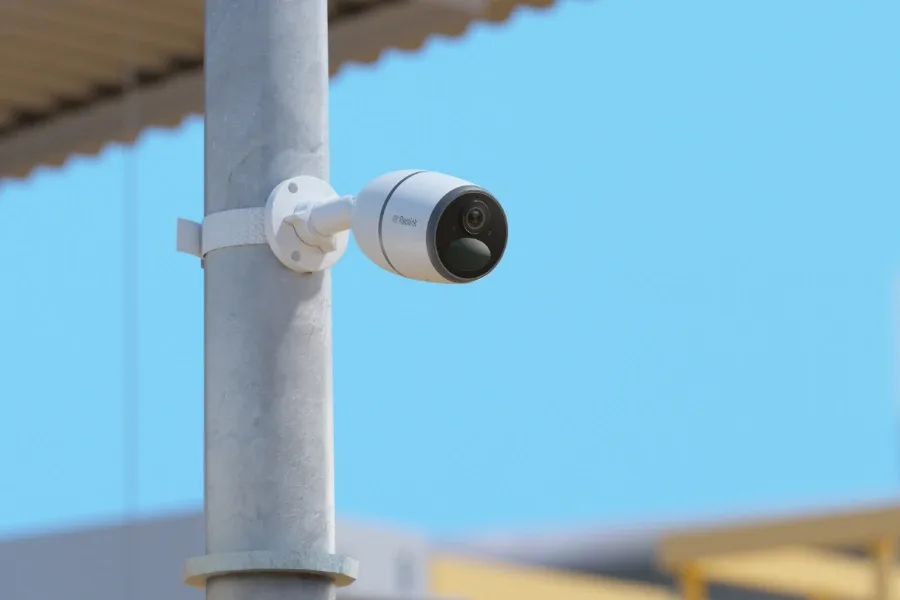
Reolink product photo (we are an authorized Reolink partner): a white Reolink bullet camera fixed with a strap mount to a galvanized pole against a blue sky. Many Staten Island rental buildings have a parking lot behind them, and a pole or a building-wall mount is how a lot gets covered.
Before you close on a building
Island buildings change hands in a few familiar ways: a family sells after decades, an investor buys from another investor, or a developer sells a finished rental. Each leaves different surprises. Ask the seller for the open HPD violations and look at the doors yourself, because the island's most common violation is a door that does not close on its own. Ask what intercom, fob, alarm and camera equipment exists, who installed it and who holds the administrator logins and monitoring account. Ask whether any platform fees or monitoring contracts will transfer to you. On a service call before closing, we can walk the building and give the buyer a written list of what is there, what works and what each opening will need, which is a far better basis for negotiating than a seller's assurance that the building “has cameras.”
The first month after the purchase
Recovering control is easiest in the first few weeks after a purchase, while the seller and the seller’s contractors still return calls. We help the new owner ask for each cloud account, the fob system’s administrator rights, the recorder’s passwords and any monitoring contract to be moved over, and where a manufacturer wants proof of ownership before a reset, we tell the owner which documents to send. Then we change every shared code and void every credential the old owner’s staff carried, which costs almost nothing and closes the biggest gap a sale leaves.
The family building passing to the next generation
Some island calls come from the next generation: a parent has retired or passed away, the tenants now phone the son or daughter, and nobody in the family knows how the old buzzer, the cellar alarm or the cameras were set up. We handle it as a takeover. We list what is there and who has logins, find old service accounts that are still billing, move what we can into the new owner’s name and leave a written record for whoever comes after.
Stabilized buildings: changing the entrance without a gap
With only about 8,200 stabilized apartments on the island, many owners never deal with rent regulation. Those who own a six-family or larger North Shore building from before 1974 often do. HCR expects required services to be maintained, and tenants can file complaints about decreased services apartment by apartment or building-wide. In practice that means the new system goes in next to the old one, tenants keep a way to answer and release the door that does not depend on a smartphone, and the changeover happens on a scheduled day with the owner's notice already out. Any question about how an improvement is treated under the rent laws belongs with HCR and the owner's counsel; we document the work so the owner has the paperwork.
Renovations, turnovers and the right moment to pull cable
Low-voltage wiring is cheapest to fix while walls are open. When an owner plans a gut renovation, a new lobby or an apartment turnover, we mark with the contractor where the panel, readers, door contacts, cameras and equipment cabinet will sit, run the cable before drywall, leave it labeled and coiled, and come back after paint to install devices. An empty apartment on each floor also lets us run a fresh riser without touching occupied units. Any new line-voltage circuit for a power supply or lock belongs to the building’s electrician; we handle the low-voltage side and the door hardware.
Planning the budget over several years
The walk-through ends with a written opening-by-opening list: what each door or system has now, its condition, what we recommend and the price of each line. Owners use it as a multi-year plan. Violations and doors that fail to latch go first. Anything that can no longer be repaired because parts are gone goes second. Systems that work but cost too much each month, such as per-apartment platform fees, are reviewed after that. Owners who set the year’s repairs and rents in winter tend to bring the list to that meeting.
Paperwork for owners and owning entities
Whether the deed is in a person’s name, a family LLC or an investment company, the paperwork is the same: a written scope, our service agreement carrying the full terms, a W-9 if asked, and an invoice that can be paid online. Certificates of insurance naming a lender, insurer or managing agent as additional insured are issued after the job is awarded. If the owner sends work out to bid, our proposal follows the owner’s scope line by line.
Your Questions Answered
Apartment Building Security Systems on Staten Island: Owners' Questions
Doors and violations
HPD cited the hallway and stair doors in our building for not closing on their own. Is that a carpentry job or a security job?
Usually both, in that order. A door that will not close and latch by itself needs its closer, hinges and latch put right, and sometimes the frame trued, before any electronic hardware is worth adding. We set or replace closers and latches on hallway, stair and cellar doors as part of security work, and tell the owner when a door or frame has to be replaced by a carpenter first. HPD lists the self-closing door violation as class C with 14 days to correct; once the doors work, the owner can certify the correction through HPD's process.
What do the 2025 HPD numbers say a Staten Island owner should fix first?
They say doors. The island drew 903 class C self-closing door violations in 2025 and only 24 that mention an intercom, so an owner with a limited budget gets the most protection, and the least exposure to penalties, by making every entrance, hallway, stair and cellar door close and lock on its own. The entry panel, fobs and cameras come next, and they work better on doors that already latch.
Our building's front door opens straight from the sidewalk with no vestibule. Is a second door worth adding?
Often, in buildings of more than a few apartments. A vestibule gives couriers and visitors a place to wait without reaching the hall, keeps the mailboxes and packages behind a locked door, and stops a tailgater at the inner door even when the outer one was held. Building it is carpentry and sometimes needs a permit, so the owner's contractor handles the construction; we wire the entry panel, the strikes and the reader so the two doors work as a pair.
Rules and tenants
Our building has five apartments, so it isn't rent stabilized. Do the state's service rules still matter to us?
The HCR rules on decreased services apply to stabilized apartments, and the 1974 Emergency Tenant Protection Act, as the IBO describes it, extended stabilization to buildings with six or more apartments. A five-unit building is generally outside that, but it is still a multiple dwelling under the city's Housing Maintenance Code, so the self-closing door and lock rules apply in full. Confirm the building's status with HCR or counsel if there is any doubt.
Do tenants need to sign anything before the building switches from keys to fobs?
In a class A building, Local Law 63 of 2021 requires the tenant's express consent before the owner collects their data through a smart access system, and a plain-language policy the tenant can read. Many owners collect that consent with the fob itself. The law also says a tenant cannot be required to use smart access for their own apartment door, so apartment doors stay on keys. The wording of the consent and policy is a question for the owner's counsel.
A tenant with limited mobility can't reach the door before it relocks. What can be changed?
Several things, depending on the system. The release time on the entry can usually be lengthened for the whole door or, on some systems, for a specific tenant's credential; an automatic door operator can be tied to the reader; and an apartment station with a larger display or a visual signal helps a tenant who has trouble hearing the call. We program what the equipment supports. Accommodation requests themselves go through the owner.
The fire escape at the back of our building passes every apartment's windows. Can a camera watch it without looking into apartments?
Yes, by placing the camera in the yard or at a corner so it looks along the escape and the ground below rather than at the windows, and by using the recorder's privacy masking to black out any window that still falls in the frame. The useful footage is of someone reaching the drop ladder or the yard, not of the windows themselves. We also set the camera to record video only.
Island buildings and timing
Our building sits on the St. George slope, with the entrance on one street and the cellar opening at grade on the street below. How should two street-level doors be handled?
Treat the lower door as a second entrance, not a back door. On a hillside lot the cellar or lower-level door is as exposed to the street as the front, and often less watched. It gets the same closer and lock, a contact that reports when it opens and, if tenants or workers use it, a reader on the same controller as the front door so one fob works at both. Only the main entrance needs the visitor panel.
Burglaries on the island jumped during the July 4 week this year. What should an owner check before a holiday weekend?
SILive reported 12 burglaries on Staten Island from June 29 to July 5, 2026, a 33% rise over the same week the year before, at least eight of them at homes. Before a holiday, walk the doors and confirm each one closes and locks, check that the recorder is saving and its clock is right, confirm that alerts reach a phone that someone will be watching, and cancel any contractor codes that are no longer needed.
Our 1960s lobby intercom still works. Is there any reason to replace it before it fails?
Two reasons, neither urgent on its own: parts and planning. When an old panel fails and no replacement board exists, the owner replaces it in a hurry, at whatever price and lead time are available. If the panel works but parts are scarce, it makes sense to test the riser now, budget the replacement for a planned year and keep the old one running until then.
Should our older Stapleton building match the entry systems tenants see in the new waterfront rentals?
Match what tenants notice, not the whole spec sheet. A door that always locks, an entry that can ring a tenant's phone as well as a station, and packages kept off the hall floor are what renters compare. Amenity-floor elevator readers and lobby screens are not needed in a twelve-unit walk-up. We price the items that close the gap and leave the rest out.
Our elevator stops at the cellar, where the laundry and storage are. Can it stop serving the cellar after hours?
Yes. A reader in the car can make the cellar button work only with a credential, or only during the hours the laundry is open, while every other floor stays free. We install the reader and the cable to the machine room, and the building's elevator company makes the connection in the controller. Elevator reader prices on the island start at $1,650 per car.
Many buildings on our block have trash rooms on each floor. Should those doors be on the security system?
Usually not with readers. Floor trash or chute rooms are used by every tenant on the floor all day, so a reader there adds cost and friction without keeping anyone out who is not already inside. What matters is that those doors close and latch by themselves if the code calls for it, and that the building's entrances keep outsiders from reaching the floors at all.
Equipment
Types of Security Equipment for Staten Island Apartment Buildings
Door closers and latch hardware
Closers sized for heavy street doors and drafty stairwells, latch sets and strikes that actually meet, and hold-opens that release on their own.
Door stations and entry panels
Simple call-button stations for converted houses; panels with a name directory, keypad and reader for larger walk-ups and elevator buildings.
Apartment stations and phone answering
Handsets and small screens for tenants who want them, calls to tenants' phones for those who prefer that, often both in one building.
Strikes and magnetic locks
Electric strikes in wood and steel frames, magnetic locks on aluminum and glass doors, wired to release on power loss and fire alarm where required.
Readers, fobs and keypads
Outdoor-rated readers at the street, rear and lot doors, indoor readers at the laundry and storage room, and contractor codes that expire on a date.
Intrusion panels and contacts
Door contacts at the cellar, roof and back entrances, cellar motion detectors and a keypad near the super’s room, with central-station monitoring if the owner wants it.
Cameras and recorders
A few cameras at the doors and the lot, recording to one recorder in a locked space that the owner can check from anywhere.
Cabling, network and backup power
Labeled Cat6 to every device, a PoE switch, battery backup for the door release and a wall cabinet mounted clear of the cellar floor.
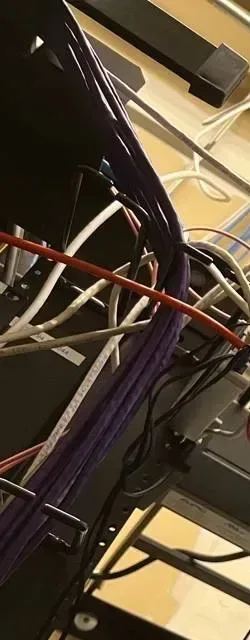
Job photo from our files: bundles of purple, white and red cables coming down from above and feeding into the top of a black equipment rack, held with ties. Cable that arrives in a rack labeled and bundled like this is easier to trace years later when a door or camera fails.
Choosing between the main options in a Staten Island building
Decision
Option A
Option B
What usually decides it on Staten Island
Repair the doors vs add electronics
Doors: closers, latches and strikes first
Electronics: panel, fobs and cameras
Open self-closing door violations and whether the doors latch today.
Stations vs phone answering
Stations: work for every tenant, no app
Phone answering: no apartment wiring
Riser test results and how many long-time tenants want a handset.
Electric strike vs magnetic lock
Strike: suits wood and steel frames, keeps the key working
Mag lock: suits glass and aluminum doors
Door construction, egress rules and any fire alarm tie-in.
Local vs cloud access control
Local: no monthly fee, managed on site
Cloud: owner manages from off the island
Where the owner lives, and what the monthly fee adds up to over the years.
Wired cameras vs battery cameras
Wired: steady power and recording
Battery: quick to place, needs charging
Distance to the lot or a separate building, and winter temperatures.
Partner brands and our own system
Among camera makers, we are an authorized partner for Lorex, Luminys and Reolink, yet the system we quote first for a building is our own unbranded one. If an owner wants a particular camera brand, we install it; entry panels, readers and alarm equipment come from whichever manufacturers fit the building, and we do not claim to be a dealer for any of them. Every quote lists the equipment by model number so owners can compare like with like.
Want Every Door on the Island Building Checked at Once?
Tell us whether it is a converted house, a North Shore walk-up, a garden complex or an elevator building, and which door gives you the most grief. We put every opening on one list and rank it by what to fix first.
What AI Gets Wrong About Apartment Building Security Systems on Staten Island
More and more island owners call after asking a chatbot or reading a search summary first. Those answers come mostly from national buying guides and manufacturers’ blogs, and they seldom reflect how Staten Island rental buildings are built, where the island’s violations come from, or how the city’s rules land here. Here are the claims we hear most, set against the public records and what we see in the buildings.
1. “Staten Island buildings rarely get intercom violations, so the entrance is fine”
The first half is true. HPD's 2025 inspections produced only 24 violations on the island that mention an intercom, far fewer than in any other borough.
The conclusion does not follow. The same inspections produced 903 class C violations for doors that do not close on their own, most of them in North Shore ZIP codes 10304 and 10301. A building can have a perfectly good intercom and a front or hallway door that stands open all day.
The entrance is the door, its closer and its lock first, and the intercom second. On this island the data says to check the hardware before the electronics.
2. “Rent stabilization barely exists on Staten Island, so its rules don't apply”
It is true that the island has the smallest regulated stock in the city: the Independent Budget Office’s May 2026 report counts about 8,200 stabilized apartments here, out of roughly one million citywide.
But 72% of those sit in pre-1974 buildings, which on the island means a concentrated group of North Shore walk-ups and postwar elevator buildings. For the owners of those buildings, HCR's rules on maintaining services, including working door locks, apply in full.
Before changing an entrance in an older six-family or larger building, find out whether it is stabilized, and plan the changeover so no tenant loses a way to answer or open the door.
3. “The new waterfront rentals have raised the standard on the North Shore”
They have raised tenants' expectations. Lighthouse Point, Urby and the first Bay Street Corridor buildings came with modern entry and access systems.
They have not changed the stock most tenants live in. Commercial Observer, citing the Rent Guidelines Board, put the island's whole multifamily pipeline at 1,238 units at the end of 2024. The walk-ups a few blocks uphill from the waterfront are the same buildings they were, with the same doors.
Owners of older buildings near the new ones compete on the basics: a door that locks, an entry that reaches tenants' phones, and packages kept out of sight.
4. “The first thing an island rental building needs is cameras”
Cameras are the most visible security purchase and the easiest to sell online, so search answers often lead with them.
A camera records a door that was left open; it does not close it. In buildings where the door hardware has failed, the footage mostly shows people walking in through a door that should have been locked, and the owner still has the open violation.
Put the money into closers, latches, strikes and a dependable entry first, then add the few cameras that cover the doors, the parcel area and the lot.
5. “Any security wiring needs an electrician and an electrical permit”
Owners hear this and assume an entry or fob project must be filed like an electrical job. The city's Administrative Code, §28-105.4.7, exempts signaling and data wiring under 50 volts from the electrical permit requirement, with life-safety systems treated differently.
Intercoms, readers, door contacts and cameras are low-voltage work. What does need the building's electrician is any new high-voltage circuit: a dedicated outlet for a power supply, or new lighting at a rear door.
Plan both together, so the outlet is in place before the low-voltage work starts, and keep fire alarm work on its own track with its own filings.
6. “All of St. George is landmarked, so nothing can go on the buildings”
St. George does have a historic district, the St. George/New Brighton district designated in 1994, and it covers later 19th-century houses described by the Historic Districts Council.
The district’s boundary takes in only part of the neighborhood. Inside it, the Landmarks Preservation Commission’s permit guidebook lets staff approve an intercom panel set in or beside the door opening, one per opening, and cameras within limits tied to the facade’s width.
Check the address on the commission's map first. If it is in the district, design to the guidebook, file, and install after the permit arrives.
7. “A magnetic lock is always stronger than an electric strike”
Online comparisons often rank magnetic locks first because of their holding force. On a path of egress, though, the NYC Building Code requires an electrified lock to release when power is lost and when the fire alarm activates, which means a magnetic lock is only as secure as the building's power.
On the solid wood and steel street doors common in island walk-ups, an electric strike keeps the mechanical latch in charge of the door and keeps the key working during an outage. Magnetic locks suit aluminum and glass doors where a strike cannot be fitted.
Choose by the door and the egress rules, not by a holding-force number.
Get In Touch
Request an Apartment Building Security Visit on Staten Island
Send the address and neighborhood, how many apartments and entrances the building has, what is on the doors now and which problem keeps coming back. Pictures help us arrive prepared: the street door from inside and out, the hallway and stair doors, the cellar and rear doors, and wherever the equipment is kept. If it is a single repair, the address and what is happening are all we need to book the $250 service call.
✅
Request Sent!
Thank you. We will contact you to set up the visit.
How It Works
How a Staten Island Apartment Building Project Runs
1
Tell us about the building
By phone or the form: the address, the number of apartments, which doors are giving trouble and who can let us into the cellar and onto the roof.
2
Diagnosis or full survey
A single fault is handled on a $250 service call. A whole-building plan starts with a survey: every door tested, the panel and riser checked, and the cellar, rear door, lot and roof walked.
3
Door-by-door proposal
Each opening gets its own line with equipment, labor and any monthly fee; doors that need hardware work before anything else are listed first.
4
Sign-off and ordering
Equipment is ordered after the owner signs and the deposit clears. Items made to order are scheduled once they reach us.
5
Tenant notices and filings
The owner notifies tenants; for an address in the St. George/New Brighton Historic District the owner files with the Landmarks Preservation Commission, and we supply the device sheets.
6
Installation and cutover
Door hardware is corrected first; the new entry runs alongside the old until it is proven, then apartments, readers and back-of-house devices move over floor by floor.
7
Turnover to the owner
Every account is put in the owner's name, a marked-up floor plan shows where each device sits, and the super or handyman is walked through the daily tasks.
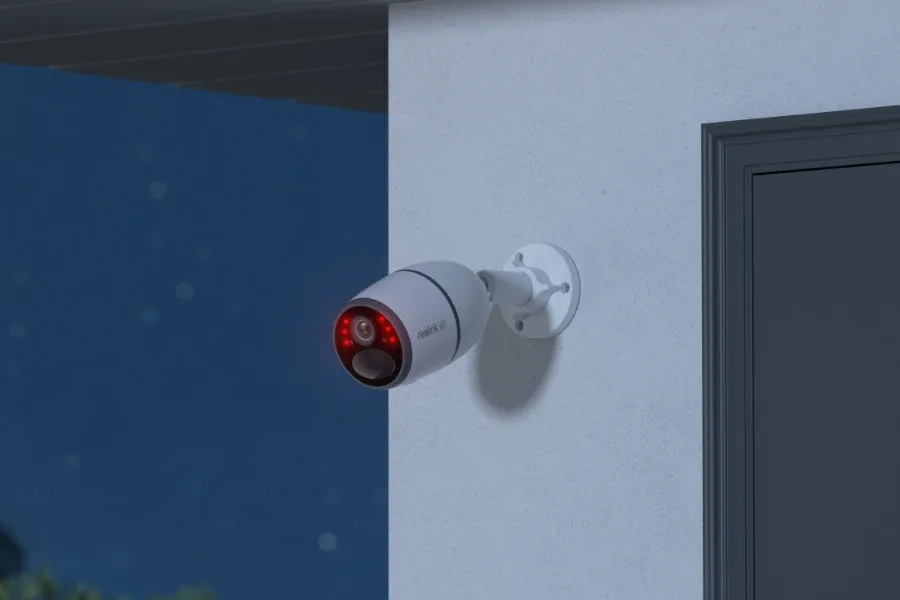
Reolink product photo (we are an authorized Reolink partner): a white Reolink bullet camera on a short wall bracket with its red deterrent lights on, mounted on a pale wall next to a dark door at night. A camera like this at the rear door to a lot covers the approach and the entry together.
Field notes: starting at the street door of a North Shore walk-up
On a walk-up near the ferry, we start outside with the owner and let the street door close by itself. If it stops short, bounces off the strike or drifts open in the wind, that is the first line on the list, before we ring a single apartment. Then we open and release the inner door, walk the hall to the stair door and the cellar door and repeat the test on each, because the island's violation data says that is where the building is most likely to fail. Only then do we go to the panel, the transformer in the cellar and the riser, and finally to the rear door and the roof.
Field notes: a garden complex with a dozen small entrances
On a garden complex, the walk follows the site rather than a stair. We map every entrance, the laundry building, the maintenance shop, the dumpster enclosure and the lot, note which doors visitors actually use and which only tenants use, and look for existing conduit between buildings. The plan usually puts video at the one or two visitor entrances, readers at the rest, all on one controller, and a camera on the lot from a building wall rather than a new pole.
Field notes: switchover day in an occupied building
Cutover day is when every tenant notices the building, so the goal is that nothing dramatic happens. Days before, the new panel is already mounted and powered next to the old one, the directory has been checked against the owner’s list of tenants and fobs have been handed out. On the day, the street door switches first and gets tested from each floor; apartment stations follow floor by floor; the rear, cellar and lot doors come last. The old panel stays on the wall until the new one has handled a full evening of visitors.
How long the work takes
Repairs are usually finished in one visit, or two if a part must be ordered. Setting closers and latches on a building’s doors usually takes a day. A button-station system in a converted house is typically one day on site once equipment is in hand; a new panel on a riser that tested well is about a day, plus time in each apartment that gets a station. Readers on three or four shared doors take a day or two. Garden complexes and elevator buildings are done in phases, and the written plan gives the days for each one. Work is booked first come, first served after the deposit, any day of the week.
Coverage Area
Apartment Building Security Systems Near Staten Island Landmarks
The places below are reference points for where we work on the island, not clients. We never publish the addresses of the Staten Island buildings we work in.
St. George/New Brighton Historic District
Designated July 19, 1994, and described by the Historic Districts Council as later 19th-century homes in Shingle, Colonial Revival and Italianate styles; some now hold apartments, and facade devices there follow Landmarks Preservation Commission rules.
Lighthouse Point, St. George
A $200 million mixed-use project with 115 homes, 30 of them affordable, and about 60,000 square feet of commercial space, completed in June 2025 steps from the St. George Ferry Terminal, according to the Governor's office.
The Bay Street Corridor
About 14 blocks of Bay Street and two of Canal Street rezoned on June 26, 2019 to link St. George, Tompkinsville and Stapleton, with 1,300 affordable homes projected, per CityLand.
Urby, Stapleton
A waterfront rental whose first building opened in March 2016 with just over 100 units; NY1 reported plans for 900 units across three buildings.
New Stapleton Waterfront
Where the city named developers in May 2025 for more than 500 mixed-income homes in mass timber at Front and Canal Streets, with construction expected to start in 2027, according to NYCEDC.
The Pearl, 475 Bay Street
A fully affordable building that opened in November 2025 as the first project under the Bay Street Corridor plan, as Commercial Observer reported in January 2026.
Our technicians are just as often in Mariners Harbor, Port Richmond, West Brighton, Clifton, Rosebank, Grasmere, Dongan Hills, New Dorp, Great Kills and Tottenville.
How rental buildings differ across Staten Island
The North Shore, from St. George and Tompkinsville through Stapleton, Clifton, New Brighton, West Brighton, Port Richmond and Mariners Harbor, holds most of the island's walk-ups, elevator buildings, mixed-use streets and new waterfront rentals, and most of its door violations. Work here is about street doors, hallway doors, risers and inherited accounts.
Mid-Island, around Grymes Hill, Silver Lake, Sunnyside, Castleton Corners, New Springville, Dongan Hills and New Dorp, mixes garden apartment complexes, postwar elevator buildings and mixed-use streets. Multiple entrances, parking lots and laundry buildings are the recurring themes.
The South Shore, from Great Kills and Eltingville to Annadale and Tottenville, is mostly houses, with converted houses and mixed-use buildings on the main commercial streets. Here the jobs are smaller: a shared front door, separate side doors and a few cameras.
Pricing
Apartment Building Security System Cost on Staten Island
Each figure in this table already appears on one of our Staten Island service pages, named in the right-hand column. We don’t put a per-apartment price on whole buildings, because on the island the state of the doors and the riser, and how many tenants need an in-unit station, swing the total far more than the number of units does.
Multi-door access control (lobby, service entrance, basement)
$4,000–$10,000
Access control installation, Staten Island
Elevator reader in the car
Card, fob or code from $1,650 per car; face, fingerprint or iris from $2,750 per car
Elevator access control, Staten Island
Four-camera system
Starting at $999
Security camera pricing, Staten Island
Network cabling
$150–$300 per drop
Structured cabling, Staten Island
Alarm central-station monitoring
$30 a month with keypad; $45 a month with app
Alarm installation, Staten Island
Whole-building plan
Quoted after the walk-through
—
Fire alarm work
Quoted per building; no published price
Fire alarm installation, Staten Island
What moves the cost in a Staten Island building
The doors come first: a building whose doors already close and latch can go straight to the entry and fobs, while one with failing closers and bent strikes needs that hardware work before anything else. Then the riser: if it tests clean, the building keeps it and the intercom work stays modest; if it does not, the plan changes. Then the number of controlled doors, because every reader, strike, contact and camera is its own line. Then the layout: a garden complex spreads the same number of apartments across many more doors than a walk-up, and a parking lot or a separate laundry building adds cable runs. A historic-district address adds filing time, and a stabilized building adds care in how the changeover is staged.
How to read a quote for your building
A quote worth comparing separates equipment, labor and monthly fees; says which existing devices and cables it reuses and what happens if an old cable fails testing, before anything is ordered rather than on installation day; puts software accounts and licenses in the owner’s name; and states the warranty terms and the cost of a later service call. When two quotes for the same island building are far apart, the gap usually comes from different assumptions about the doors and the riser, so ask each contractor what they actually tested.
Spreading the cost
Few island owners do everything at once. A common order is doors and violation items in the first year, entry and fobs in the second, then cameras and any elevator reader once the basics hold. Financing is available through Wisetack, subject to approval.
Full terms — including 50% deposit, one-year parts-only warranty on Abstract Enterprises Security Systems-supplied products, and the late-fee schedule — are set out in the service agreement.
Shop Our Systems
Apartment Building Security Packages & Pricing on Staten Island
Fix what failed
$250 service call. One failure, such as a release that does nothing, a silent station or a buzzing panel, diagnosed at the building; anything larger is priced before work starts, and the $250 is credited.
Doors and entry
Quoted after the walk-through. Street, hall, stair and cellar doors brought back to closing and locking on their own, plus an entry every apartment can answer and an alert for doors left open.
Whole-property plan
Quoted after the walk-through. One survey of the street door, vestibule, halls, cellar, rear door, lot and roof, built out in the sequence and over the years that fit the building’s budget.
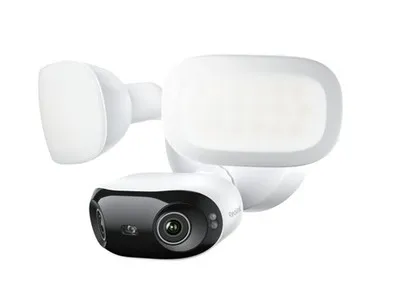
Reolink product photo (we are an authorized Reolink partner): a white floodlight camera with a wide rectangular light panel on an arm above a black wide-angle camera body, shown on a white background. Light and camera in one unit suits a dark rear yard or lot once the owner’s electrician has a powered box in place.
Equipment you already bought: labor-only installs
Already bought the panel, readers or cameras? Send the model numbers and the address. We quote the labor by phone and hold the date with a deposit. Owner-supplied equipment carries its own manufacturer’s warranty, and how it performs, including on Wi-Fi, remains the owner’s responsibility.
Special-order equipment
A few panels and door stations are built to order or come from overseas, and their shipping is outside our control. We flag those before the deposit, place the order only after it is paid, and give an installation date once the item is in our hands.
Maintenance agreements
Owners of one building or several can put their systems on a maintenance agreement covering scheduled checks of doors, panels, readers, recorders and backup batteries. Terms and pricing are quoted per building after the survey; there is no standard published contract price.
Setting Next Year's Budget for an Island Building?
A door-by-door list with a cost on every line turns the yearly budget into a short meeting. Give us the address and the date you need it by.
Staten Island Apartment Building Security Systems FAQ
Do you mount the signs that tell people an area is under video recording?
+
Yes. If the owner wants signs at the entrances, the lot or the laundry, we mount the signs the owner chooses when we install the cameras. Whether a particular sign or wording is required for a building is a question for the owner's counsel; we do not give legal advice on signage.
Do tenants' existing front door keys keep working after a strike or reader is added?
+
Yes, with an electric strike the lock cylinder and its keys keep working, so a tenant can always get in with a key during a power outage. Many owners later re-key the street door once everyone has a fob, so that old copied keys stop working; a locksmith handles the re-keying.
Can the cameras and the entry panel run on the building's existing Wi-Fi?
+
They can share the building's internet line, but we avoid running them on Wi-Fi. Cameras, panels and readers go on wired Cat6 to their own switch, kept apart from any Wi-Fi tenants or a store use, which keeps recording steady and keeps the security devices off a network strangers may know the password to. Wi-Fi is used only where no cable can reach, such as a detached garage.
Can our handyman do part of the work to save money?
+
The carpentry and patching can be his. Rehanging a door, fixing a frame, painting and patching walls after cable runs are all reasonable for a handyman or the owner's contractor. The low-voltage wiring, panels, readers, strikes and programming stay with us, so one licensed company is responsible for how the system works.
Do you work in buildings across the whole island, not just the North Shore?
+
Yes. We work in rental buildings in every Staten Island neighborhood, from St. George and Mariners Harbor to New Dorp, Great Kills and Tottenville. Most of the island's apartment buildings are on the North Shore, so that is where most of our apartment building work is, but garden complexes and mixed-use buildings mid-Island and on the South Shore get the same service.
Will you work alongside the locksmith our building already uses?
+
Yes. The locksmith keeps doing what locksmiths do best: cylinders, keys, re-keying and mechanical locksets. We handle the electric side of the same door, meaning strikes, magnetic locks, readers, exit buttons and their wiring, plus closers where they are part of the electric hardware. When both trades work on one door, we agree in advance who supplies which part so the latch and the strike are matched.
Will you respond to a bid request or a written scope from an owner?
+
Yes. Send the scope, drawings or bid form and we price to it, noting anything we think the scope misses. Our proposal lists equipment, labor and any monthly fees separately, and a certificate of insurance naming the owner's entities is issued once the job is awarded.
Can a new entry panel match our building's brass or bronze hardware?
+
Sometimes, and we say before ordering. Most current panels come in stainless steel or black, and a few makers offer other finishes. Where the building's character matters, we often keep the original brass mailbox bank and surround, fit the new panel on a plate finished to suit, and choose a model whose face sits within the old opening, so the lobby still looks like itself.
Do you install the equipment a virtual doorman service needs?
+
We install and service the entry panels, cameras, readers and door hardware such a service relies on, and we can work alongside a provider the owner has already hired. We do not provide the remote attendant service ourselves or sell security as a monthly managed service.
All Areas Served
Apartment Building Security Systems Across Staten Island and New York City
Everything above applies across Staten Island, from St. George and Mariners Harbor down to Tottenville. For the rules and prices that apply in all five boroughs, see the apartment building security systems overview for New York City. Owners with buildings elsewhere can read our apartment building security pages for Brooklyn, Manhattan, Queens, Long Island, Nassau County and the Hudson Valley. Also live: the Bronx. Still being written: Suffolk County, Westchester County, Rockland County, Orange County, Putnam County, Dutchess County and Ulster County.