Bridge to the barn dropped, gate camera offline since the storm, or the app showing “device unreachable” at the pool house? Westchester line, same day: (914) 877-2578
Yonkers & Mount Vernon Multi-Families · Sound Shore Homes · River Towns · Bedford, Pound Ridge & North Salem Estates
Wireless Camera Installation in Westchester County
Point-to-Point Bridges · Mesh to Pool Houses & Garages · LTE and Solar at Far Gates · Recording Through Outages
Westchester asks more of a wireless camera than almost any county we cover. At the south end, Mount Vernon packs 71,982 people into 4.4 square miles and seven in ten homes sit in multi-unit buildings; at the north end, Bedford zones whole districts at four acres a lot, and the town’s own May 2025 wireless report says its hills block cell signals in pockets even close to a tower. Between those two extremes sit detached garages a few hundred feet from the house, barns behind stone walls and oaks, pool houses down a slope, and gates at the end of driveways where the house Wi‑Fi gave up long ago. Add summer storms that knocked out power to more than 20,000 Con Edison customers on one July night in 2026, with Westchester hit hardest, and the job is clear: get a signal to every building, keep it alive when the grid drops, and make it work the same in January as it does in June.
Reviewed and updated October 18, 2026: Town of Bedford wireless presentation to the Town Board (May 7, 2025), Con Edison storm releases (June and July 2026), NYSEG tariff and Brewster Division storm reporting, NYS Public Service Commission Tropical Storm Isaias interim report, New York State Police public safety alert (January 29, 2025), Census Bureau ACS 2024 figures via Census Reporter, Westchester County Consumer Protection and Parks pages, and village building-department rules in Dobbs Ferry, Irvington and Mount Kisco · Abstract Enterprises Security Systems, NYS license #12000287431 · Westchester visits dispatched from our office on East Fordham Road in the Bronx
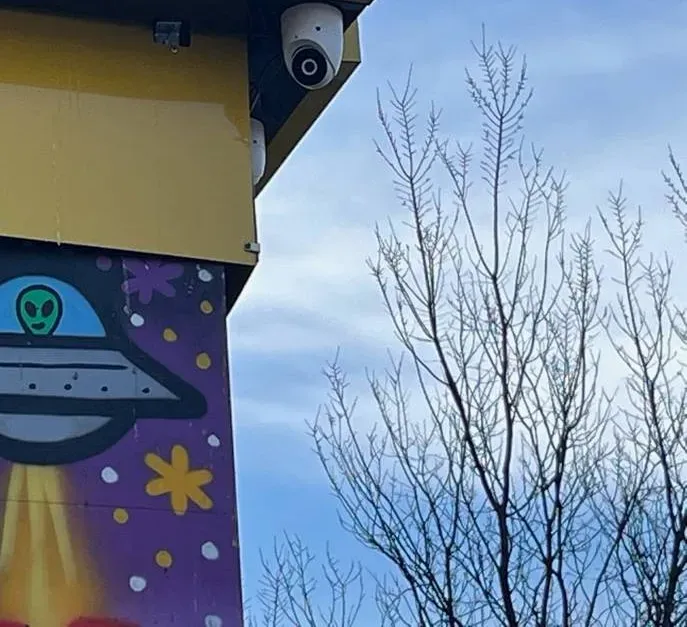
Abstract Enterprises Security Systems reference photo: a white dome camera fixed into the corner under a painted overhang, a second housing just below it, and bare branches against the sky. Leaf-off views like this are when we check sightlines on a Westchester property, because the same branches fill in by late spring.
Westchester Wireless Camera Request
Town, buildings to reach and the distance — we call back the same business day
✅
Request Sent!
A technician will call you back about the Westchester property the same business day.
25+
Years Experience
✓
Same-Day Estimates
100%
Licensed & Insured
4.7★
390+ Google Reviews
Start with a phone video from the back door. Text (914) 877-2578 a slow video panning from the house toward every building or gate you want watched, one photo of the room where your internet modem lives, and one of the electrical panel, with your town or village. If you have a survey map or a site plan from a past renovation, send it — it shows distances and grades to scale, and it lets us sketch a bridge path and a camera plan before anyone drives up the Saw Mill or the Hutch.
A written estimate the day you ask, priced from the Westchester table further down this page
Certificates of insurance sent to your property manager, HOA, landlord or general contractor before we arrive
NYS Department of State security and fire alarm installer license #12000287431 (General Business Law Article 6-D); any new outlet or circuit handled by a Westchester County–licensed electrician where your village or town requires one
The Neighborhood
Why Westchester County Properties Need Wireless Camera Installation
Westchester is two counties wearing one name. The Census Bureau’s 2024 American Community Survey counts 1,006,447 people on 430.8 square miles of land, about 2,336 per square mile on average — but averages hide the shape. Half of the county’s housing units are in multi-unit buildings. Yonkers alone holds 211,062 people at roughly 11,700 per square mile, and Mount Vernon runs past 16,000. Then drive forty minutes north and the lots open up: horse farms, stone walls, long gravel drives, and houses set so far back from the road that the mailbox is out of sight. A wireless camera system that suits a Yonkers two-family is the wrong system for a Pound Ridge property, and the reverse is true too. The first thing we do on any Westchester call is work out which of the two counties you live in.
In the northern towns the problem is distance and ground. The Town of Bedford zones parts of the town at four acres per house; North Salem, Lewisboro and Pound Ridge share the same kind of large-lot, wooded landscape. On those properties the camera list is rarely just the house. It is the detached garage, the barn or stable, the pool house, the guest cottage, the generator shed and the driveway gate — buildings separated from the router by hundreds of feet of lawn, stone wall, mature trees and grade. Wi‑Fi from a living room will not get there. A dedicated wireless bridge, a mesh node with a clear path, or a cellular camera usually will, and choosing between them is most of the design work.
Hills make that choice harder than a tape measure suggests. In a presentation to the Bedford Town Board on May 7, 2025, the town’s wireless working group explained that “hilly terrain obstructs signals,” that a low ridge called Seminary Ridge shadows coverage, and that the top of Indian Hill blocks the signal entirely from the new Bedford Post cell site to Middle Patent Road, upper Long Ridge Road and parts of Route 172. If a carrier’s tower on a mast cannot see past a ridge, a camera bridge mounted on a garage eave will not either. That is why we walk every link on site, and why we confirm cellular signal at the exact spot a gate camera will hang before recommending an LTE unit.
Power is the other half. Most of Westchester is Con Edison territory, but NYSEG’s electric tariff lists Bedford, Lewisboro, North Salem, Pound Ridge, Somers and Yorktown in its service area, and NYSEG’s Brewster Division covers parts of Westchester, Putnam and Dutchess. Both utilities have had long nights here. When Tropical Storm Isaias hit in August 2020, the Public Service Commission recorded peak outages of about 290,000 Con Edison customers and 95,000 NYSEG customers, most of NYSEG’s in the Brewster Division; full restoration took until August 12. On July 4, 2026, Con Edison reported more than 20,000 customers still out after fast-moving storms with gusts up to 60 miles per hour, and said Westchester “experienced the greatest impact,” led by Greenburgh, Yonkers, Elmsford, Dobbs Ferry and Rye. A wireless camera system that goes dark with the house is not watching the house when it matters most.
The burglary picture adds urgency rather than drama. In January 2025 the New York State Police issued a public safety alert to residents of Dutchess, Westchester and Putnam about a series of targeted residential burglaries, and its first recommendation was to install or activate security systems and cameras. ABC7 New York reported that Pelham Manor police warned residents after several break-ins in which, according to the village’s police chief, the intruders went into homes to find car key fobs and drive away with the vehicle. And in June 2024 News 12 Westchester carried a New Jersey police warning that a burglar had used a Wi‑Fi jammer to knock out a homeowner’s cameras and phone; the police advice was to hardwire where you can rather than rely only on Wi‑Fi. We take that advice seriously, which is why the systems on this page record locally and use wired backbones wherever a cable can reasonably go.
Westchester facts behind a wireless camera job
1,006,447 residents on 430.8 square miles of land; 50% of housing units in multi-unit buildings (Census Bureau, ACS 2024 1-year, via Census Reporter)
Mount Vernon: 71,982 people on 4.4 square miles, about 16,389 per square mile, 70% multi-unit; Yonkers: 211,062 people at about 11,722 per square mile (ACS 2024 1-year)
Hilly terrain blocks signals in pockets “even in close proximity to a facility” — Town of Bedford wireless presentation to the Town Board, May 7, 2025
NYSEG serves Bedford, Lewisboro, North Salem, Pound Ridge, Somers and Yorktown (NYSEG electric tariff PSC 120, Section 1); Con Edison serves the rest of the county
About 290,000 Con Edison and 95,000 NYSEG customers out at peak in Tropical Storm Isaias, full restoration August 12, 2020 (NYS PSC interim investigation report)
More than 20,000 Con Edison customers still out on July 5, 2026, with Westchester hardest hit (Con Edison release)
6 cities, 19 towns and 23 villages, each with its own building department and code
Most Westchester owners who add cameras to an outbuilding or a gate also want to know who is at the front door before they open it — which is why many of these jobs pair the wireless system with doorbell camera installation in Westchester County at the main entrance.
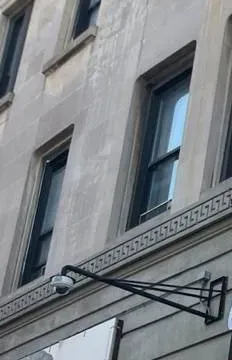
Abstract Enterprises Security Systems reference photo: a dome camera hung from a long steel arm beneath a carved stone band, on the face of an older masonry apartment building. On the walk-up and elevator buildings of Yonkers and Mount Vernon, an arm like this pushes the camera out far enough to look down the sidewalk in both directions.
Repair & Same-Day Help
Westchester Wireless Camera Down? Same-Day Repair
A bridge to the garage that stopped passing traffic after a windstorm, a gate camera that never reconnected when the power came back, a mesh node showing red, or a pool-house camera that only works when someone stands near the router — call or text (914) 877-2578 with a screenshot of the app and a photo of the device that is out. Many Westchester faults are settled over the phone: a bridge knocked a few degrees off aim, a power adapter that tripped a GFCI outlet in a damp garage, a camera that lost its Wi‑Fi password after a router swap. When a visit is needed we book the next open window, and most single faults are fixed within one to two hours of arrival.
Everything beyond the house dropped at once: usually the bridge or the switch feeding it, not the cameras — the first thing we test
One outbuilding camera drops every evening: often a battery that charges by day and runs flat by night, or a link that fades as dew settles on trees
Cameras back, but the timeline has gaps: the recorder or cameras restarted after an outage and lost their clock or their storage schedule; we set them to resync on their own
Service visits are $195 an hour with a three-hour minimum ($585), any brand and any installer’s system.
What We Install
Wireless Camera Installation Services in Westchester County
Every service below starts from the same Westchester question: how does the signal get from where the internet comes in to where the camera has to be, and what keeps it running when the grid is down?
Point-to-point bridges to outbuildings
A pair of directional radios, one on the house and one on the garage, barn or cottage, aimed at each other across the lawn. The far end gets its own small switch, so wired or wireless cameras there behave as if they were plugged in at the house.
Mesh coverage for pool houses and patios
Outdoor-rated mesh nodes placed in a chain with clear paths between them, for the terrace, pool deck, cabana and side yard where cameras and phones both need signal and a single bridge would leave gaps.
Gate and driveway cameras
Cameras at the road end of a long drive, powered from the gate operator, a pole circuit or solar, connected by bridge where the house can see the gate and by cellular where it cannot. Often paired with a second camera aimed down the drive toward the house.
LTE cellular cameras where Wi‑Fi ends
Cameras with their own data connection for gates, far paddocks and sheds out of sight of the house, chosen only after we test carrier signal at the mounting spot — Bedford’s own wireless report shows how a hill can cut service in one spot and not the next.
Solar-powered cameras and links
Panels sized for short December days and positioned clear of the tree canopy, feeding a battery that runs the camera or the remote end of a bridge, for places where trenching power across a lawn or a stone wall makes no sense.
Backup power for the whole chain
Battery backup on the modem, router, recorder, bridges and switches, sized for how long you want to see video during an outage, with automatic restart and generator transfer planned with your electrician.
Local recording without a monthly plan
A network video recorder or base station inside the house that keeps footage on its own drives, so a cloud subscription is optional rather than required and the video survives an internet outage.
Apartment and multi-family systems
Wireless cameras for parking pads, rear yards, side alleys and entrances of two- and three-family houses and small apartment buildings in Yonkers, Mount Vernon, New Rochelle and Port Chester, with separate access for owner and tenants.
Upgrades from consumer battery cameras
Taking over a mix of battery doorbells and app cameras the last owner left behind, keeping what works, replacing what does not, and bringing it all under one recorder and one app you control.
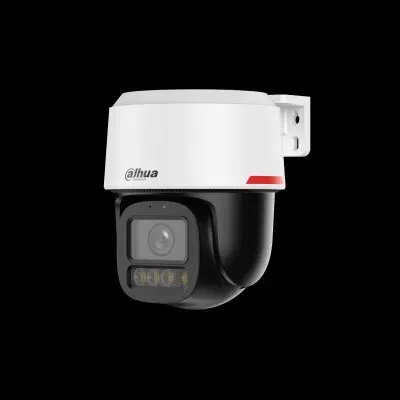
Manufacturer product photo: a compact pan-tilt camera with a white upper housing, a black swivel head and warm-light LEDs beneath the lens. Cameras in this style come in Wi‑Fi and wired versions; one can sweep from a Westchester driveway to the side yard, and the warm light turns night video to color when someone walks into view.
Building Specialists
Wireless Camera Installation for Westchester County’s Architecture
Westchester housing spans more than a century and every price point, and each building type changes where a radio can sit, how power reaches it and how far a signal travels before a wall or a hill stops it.
Estate houses with outbuildings
Main house, detached garage with living space above, barn or stable, pool house and gate, spread across several acres in Bedford, Pound Ridge, North Salem, Lewisboro and Armonk. The design is a small campus network: a bridge or two from the house, switches at each building, and cameras hung where each building faces the drive.
Colonials, Tudors and center-halls on half-acre lots
The Scarsdale, Larchmont, Chappaqua and Rye house with a detached one- or two-car garage at the end of the drive and a deep back yard. Usually a single bridge or one strong mesh node reaches the garage; the work is in power and mounting without marking up the trim.
Two- and three-family houses
The frame and brick multi-families of Yonkers, Mount Vernon, New Rochelle and Port Chester, often with a rear parking pad, a shared side alley and separate entrances. Cameras cover the shared ground; access is split so tenants see their door and the owner sees everything.
Mid-rise apartment and mixed-use buildings
Brick and stone elevator buildings and walk-ups along the county’s main streets, with storefronts below and a parking court or lot behind. Wireless earns its place for the lot and the rear door where pulling cable across a courtyard would mean trenching.
Farms, stables and riding rings
Post-frame barns, run-in sheds and indoor rings in North Salem, Somers and Bedford, with dust, birds, animals and long distances. Cameras go high under eaves, cable is protected from chewing, and the link from the house is built to cross open pasture.
Materials and methods by building type
Bridge radios on houses: mounted on a gable end, chimney bracket or eave pole where they can see the far building over hedges and parked cars, never through a window, with a drip loop on every cable entering the house.
Bridge radios on outbuildings: the far radio on the side facing the house, as high as the roofline allows, feeding a weatherproof enclosure with a small PoE switch and surge protection for the cameras on that building.
Wood siding and trim: mounting blocks behind cameras and radios so fasteners land in framing, not just clapboard or cedar shingle, and holes sealed so water does not follow the screw.
Barns and run-in sheds: cable in conduit wherever horses, rodents or equipment can reach it, sealed connectors because condensation forms inside boxes on cold nights, and cameras set back from dust and spider webs near hay.
Poles at gates: a galvanized pole or a bracket on the gate pier with a lockable enclosure for the battery, LTE router or bridge radio, positioned clear of the snowplow’s path.
Trees deserve their own line. A sightline that is wide open in March can be gone by late May, when maples and oaks leaf out, and it can wobble on a windy day as branches move through it. We plan links on Westchester properties to work leaf-on, not just leaf-off, by raising radios above the canopy line, routing around a tree line through a relay point, or choosing a frequency and antenna that tolerate the path. Owners who want an opened door to sound as well as record often add alarm installation in Westchester to the same project.
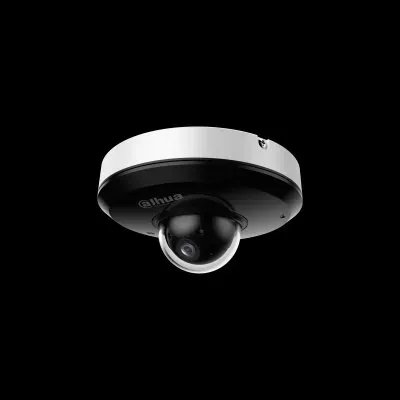
Manufacturer product photo: a small pan-tilt dome with a white base and a clear bubble over a lens that turns and tilts inside. Under a Westchester pool-house overhang or a porch ceiling, one of these can watch the deck, then swing to the gate when an alert fires.
Commercial Wireless Cameras
Business Wireless Camera Installation in Westchester County
Commercial wireless work in Westchester follows the downtowns and the old main roads. These are the places our business calls come from and the reason wireless, rather than a cable run, makes sense in each.
Yonkers: South Broadway, Central Park Avenue and the waterfront
Storefronts with apartments above, auto shops and small industrial buildings with rear lots, where a wireless link carries a camera across a parking court or to a detached shed without trenching through asphalt.
Mount Vernon and New Rochelle downtowns
Mixed-use blocks, houses of worship, small offices and medical practices in converted houses, where owners want cameras on a rear lot or alley that has no conduit to it.
White Plains and the Route 119 / I-287 office belt
Offices, clinics and retail with outdoor parking and detached service buildings; bridges link a guard booth, a maintenance garage or a far lot to the main building’s recorder.
Village main streets
Mamaroneck Avenue, Purchase Street in Rye, Main Street in Mount Kisco, Pleasantville, Katonah and the river villages — boutiques, restaurants and offices with back doors onto shared lots.
Route 22, Route 35 and Route 100 in the north county
Nurseries, landscapers, contractors, farm stands and equestrian businesses with equipment yards and barns spread across acreage, often beyond reliable cell coverage, where bridges and solar do the work.
Compliance callouts for Westchester wireless camera work
State licensing. New York’s Department of State licenses anyone in the business of installing, servicing or maintaining security or fire alarm systems under General Business Law Article 6-D. Abstract Enterprises Security Systems holds license #12000287431. Ask any installer for theirs.
County-licensed electricians. In Westchester, electricians are licensed by the county, and several villages will only accept electrical permit filings from county license holders. A new outlet at a gate, a pole circuit or a dedicated circuit for a head-end goes through a licensed electrician, shown as its own line on our estimate.
Home improvement licensing. Westchester law requires home improvement contractors to hold a county license from the Department of Consumer Protection, which keeps a public license search. Check any contractor working on your house there.
Exterior lighting. Some villages regulate light trespass; Irvington adopted lighting standards in 2020 that define light trespass as light projected onto another property or the public right-of-way. Floodlight cameras are aimed and shielded with that in mind.
Workplace privacy. New York Labor Law §203-c bars video recording in employee restrooms, locker rooms and changing rooms. Those areas are never in view.
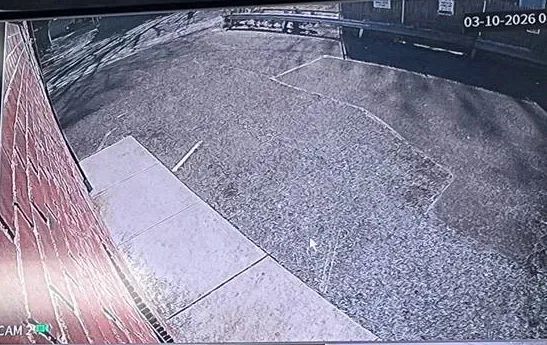
Abstract Enterprises Security Systems reference photo of a recorder screen: one camera looks along the side of a brick building, over the walk and drain grate, out to a paved lot, with the date burned into the corner. A rear lot like this behind a Westchester storefront is a common place where a wireless link saves digging up the pavement.
Your Questions Answered
Wireless Camera Installation in Westchester County: Questions Answered
These are the questions Westchester owners, managers and caretakers ask once a wireless camera project is real. They are grouped by the problem behind them, from the far barn to the village building department, and each one is answered once.
Distance, Bridges and the Far Outbuildings
We have a garage, a barn and a guest cottage in different directions from the house. Does each building need its own pair of radios?
Not necessarily. Where the outbuildings sit within a reasonably narrow arc as seen from one spot on the house, a single wider-beam radio at the house can talk to small radios on each building at once — a point-to-multipoint layout. It means one radio and one mounting point on the main house instead of three, which also keeps the gable end or chimney from collecting hardware. Each outbuilding still gets its own small switch, so cameras out there are wired locally and only the link back to the house is wireless.
Where the buildings lie in opposite directions, or one of them is much farther away than the others, separate point-to-point pairs usually work better, because each link can be aimed and tuned for its own distance. Sometimes the answer is a chain: the house reaches the garage, and the garage, which can see the cottage, passes the signal on. We draw the options on your survey or an aerial view during the walk-through and price the layout with the fewest radios that still leave every link with spare capacity. This is general Abstract Enterprises Security Systems design practice; the right layout always comes from the property itself.
The barn sits below the house, behind a stone wall and a row of old oaks. Can a wireless link reach it without a straight line of sight?
Sometimes, but not by brute force. Radio links need more than a thin line between the two antennas; they need a clear zone around that line, and a stone wall at the bottom of a slope plus a canopy of oaks can block most of it. Turning up the power rarely fixes that. What does work is changing the geometry. We raise one or both radios — a mast on the barn gable, a bracket on the house chimney — so the path clears the wall and the trees. If the ground still blocks it, we add a relay: a third radio on a building or pole that can see both the house and the barn, often a garage or shed partway between, so the signal bends around the obstacle in two straight hops.
The Town of Bedford’s own wireless report shows why we test rather than assume. It describes coverage from a single cell site that is solid in one spot and missing a few hundred yards away because a ridge or a sharp drop sits in between. The same thing happens on a smaller scale on a sloped Westchester lot. If neither height nor a relay will work, the honest answer may be a conduit and a fiber or Cat6 run, or a cellular camera at the barn, and we will say so before you buy radios.
Will a bridge radio on our roof interfere with the neighbors’ Wi‑Fi, or need some kind of license?
The outdoor bridge radios we install for homes run in unlicensed bands, the same general bands home Wi‑Fi uses, so no license is needed for a residential link. Because they are directional, most of their energy goes in a narrow beam toward the other radio rather than spreading across the street. On the dense lots of Yonkers, Mount Vernon or New Rochelle we still choose channels during setup that avoid the networks we can see from the mounting point, which keeps your link clean and avoids crowding anyone else’s.
On larger northern properties interference is rarely the issue; distance and terrain are. Either way, we aim the radios into your own property, not across a neighbor’s house, set transmit power no higher than the link needs, and record the channel and signal figures in your handover pack. If a neighbor ever raises a concern, those figures make it easy to show what the link is doing and to change channel if it helps. This is general Abstract Enterprises Security Systems practice rather than a Westchester rule.
The Gate at the End of a Long Driveway
Our barn is across a town road from the house. Can the camera link go over the road instead of trenching under it?
Usually, yes, and it is one of the clearest cases for wireless. Trenching or boring under a road means a permit from whoever owns it; Mount Kisco’s building-permit instructions, for example, require a driveway, curb cut or street opening permit from the state, county or village depending on the road. A pair of bridge radios, one on the house and one on the barn, crosses the road through the air with no digging, no street opening and no lane closure.
What we check is height and clearance: the beam has to pass above trucks, utility lines and tree limbs along the road, so radios typically go at the roofline on both ends, or on a short mast if a building is low. We also make sure the radios aim at each other and not along the road into other properties. If the barn has no power to run the far radio and its cameras, that power comes from an existing circuit in the barn or from an electrician, priced separately.
Bedford has new cell sites planned near us. Should we wait for them before choosing a gate camera?
We would not wait, but we would plan for them. Bedford’s May 2025 report listed a Route 35 site in Katonah where construction was expected to start, an approved but unbuilt facility at the Bedford Hills water treatment plant with no construction date, and the Bedford Post site carrying Verizon with AT&T expected and T-Mobile anticipated later. It also stressed that the town cannot compel carriers to build, and that hills leave pocket gaps even near a tower.
So we design the gate camera to work today without a new tower — usually by bridge from the house, or with solar and local recording — and leave room for cellular later. If a new site goes live and your carrier’s signal at the gate improves, adding or switching to a cellular connection is a small change rather than a new system. Choosing a camera that only works on a carrier that has not arrived yet is the one decision we steer owners away from.
Storms, Salt Air and the Grid
A falling limb took down the wires to our garage in the last storm. How do you keep a tree from cutting the camera link?
Overhead cable strung between buildings is exactly what storms take out. Con Edison’s July 2026 storm release described heavy rain and gusts of up to 60 miles per hour pushing trees into overhead power lines, and private spans between a house and a garage face the same limbs. A wireless bridge removes that span: there is no cable in the air for a branch to tear down, only two radios fixed firmly to the buildings.
We also look up before we mount. Radios go where a dropped limb is unlikely to strike them, on solid structure rather than a gutter or a dead tree, and the cable from each radio runs down the wall in a protected path into the building. Where a cable between buildings is still the best answer, we run it underground in conduit rather than overhead. After a storm, a slightly knocked radio can usually be re-aimed in minutes, which is far quicker than replacing a torn cable.
Does it matter to the camera design whether our house is on Con Edison or NYSEG?
The cameras do not care, but your planning should. Con Edison serves most of the county; NYSEG’s tariff lists Bedford, Lewisboro, North Salem, Pound Ridge, Somers and Yorktown, and its Brewster Division covers parts of Westchester, Putnam and Dutchess. The northern towns it serves are also the most wooded, most spread out and most likely to have long private drives and overhead lines through trees, so when a storm comes through, restoration to a single long driveway can come after the larger circuits are fixed. Both utilities say the same in their restoration plans: critical facilities first, then the repairs that restore the largest numbers of customers, then smaller groups.
In practice, properties in the NYSEG towns, and estates at the end of long feeders anywhere in the county, are the ones where we most often recommend a generator connection or a larger battery for the camera network. Properties in denser Con Edison areas in the south of the county often need only a few hours of backup to ride through a typical outage. We ask which utility serves you and how long your last outage lasted, because those two answers say more about the backup you need than any spec sheet. As a rule of thumb from our own installs, a battery unit covering the modem, router, bridge radios, switch and recorder carries a typical home system for several hours; getting through a full day or more means larger batteries or putting the camera network on a generator circuit with a small battery to cover the seconds before it starts. Either way, we finish by pulling the plug and watching every device come back on its own.
We live on the water in Rye. Does salt air shorten the life of outdoor cameras and radios?
It can, and the damage usually starts at the small parts: screws, brackets, connector housings and the joints where cable enters a camera. On Sound Shore properties near Playland, the clubs and the marinas, we use stainless or coated mounting hardware, seal every outdoor connection, and mount cameras and radios under eaves or on the lee side of a building where spray and wind-driven rain hit less often.
We also choose housings with appropriate weather ratings and avoid putting exposed connections at the bottom of a drip path. A yearly look at the waterfront-facing cameras — cleaning salt film off lenses and checking seals — costs far less than replacing corroded equipment. This is general Abstract Enterprises Security Systems practice for coastal installs rather than a measured Westchester corrosion rate; we have not seen a published figure we would quote.
Jammers, Interference and the Wi‑Fi You Cannot See
We read that burglars use Wi‑Fi jammers to knock cameras offline. Should we avoid wireless cameras entirely?
No, but you should avoid a system where Wi‑Fi is the only thing holding it together. The 2024 case News 12 Westchester reported from Florham Park described a device that knocked out both the homeowner’s cameras and their phone, and police advised hardwiring where possible. That advice fits the way we already build. Cameras on the house are wired PoE wherever cable can reasonably reach them. Outbuildings are joined by an aimed point-to-point bridge, with wired cameras at the far end, so there is one narrow link rather than many cameras on open Wi‑Fi. Cameras record locally, to the recorder or their own cards, so a camera that loses its connection keeps recording what happens in front of it.
Where a battery Wi‑Fi camera is genuinely the right choice — a rented house, a spot no cable will ever reach — we choose models that keep recording to their own storage when the network drops, and we set the system to alert you when a camera goes offline, not just when it sees motion. A camera that disappears at 2 a.m. is itself a warning. Pair that with an alarm on a cellular or wired path and the jamming trick loses most of its value.
Can the cameras run on a network separate from the one the family, guests and smart-home gadgets use?
Yes, and on a large property we recommend it. A dedicated camera network — its own wireless name or a separate segment on the router, with the bridges and recorder on it — keeps camera video from slowing down work calls and streaming, keeps guests and contractors who get the house Wi‑Fi password away from the cameras, and means that the next time someone replaces the router or changes the family password, the cameras do not all drop off at once.
The recorder still reaches the internet for remote viewing, and your phone app works the same. What changes is that the camera devices cannot be browsed from a guest’s laptop, and a cheap smart plug with weak security cannot be used as a doorway to the cameras. We document the camera network’s name, password and the recorder’s address in the handover pack, so whoever looks after your network next can see exactly what is there.
Yonkers, Mount Vernon and the Southern Cities
We own a three-family house in Mount Vernon with a rear parking pad. Can the owner and the tenants share one camera system without sharing one password?
Yes. The recorder holds every camera, and each person gets their own account with only the views they should have. The owner sees the parking pad, the side alley, the front steps and every entrance. Each tenant can be given the camera at their own entrance and the shared parking area, and nothing that looks into another unit’s door. Accounts can be removed when a tenant moves out without changing anything for anyone else, which is the practical reason not to hand out one shared login.
Mount Vernon’s housing is about 70 percent multi-unit, and on lots this tight the cameras need careful aiming. We set privacy masks so a camera covering your parking pad blacks out a neighbor’s windows or yard, and we keep cameras off the interior of anyone’s apartment. If a tenant asks for footage after a car is damaged, the owner can export the clip from the recorder without handing over access to the whole system.
Our Yonkers building’s parking court is around the back and downhill from the office where the internet comes in. Can one wireless link cover it?
Usually, provided the link starts from the right place. The office router is rarely the best launching point; it sits inside, behind brick, often on the wrong side of the building. We run cable from the office to a short bridge radio on the rear wall or roof edge that can look down into the court, and put the far radio on a light pole, the back of a garage or a fence post with power. From there, cameras at the court entrance, along the parking rows and at the rear door are wired to a small switch, so the only wireless hop is the one across open air.
Yonkers holds about 211,000 people at roughly 11,700 per square mile, and buildings sit close together, so we plan around the neighbors as much as the slope: radios aimed into your court and not across the block, cameras masked off adjacent windows, and mounting that the building’s super can reach for cleaning. Where the court is visible from the roof, a camera up there on the wired network may cover most of it without any bridge at all.
Permits, Electricians and Village Rules
Do we need a building permit to put a camera on a pole at the gate?
It depends on the village or town, and Westchester has 48 of them with their own codes. A camera screwed to an existing gate pier or house wall generally falls within ordinary maintenance in most places. A new freestanding pole with a footing, a new electrical circuit, or anything that disturbs a road shoulder is different, and the rules vary: some building departments want a permit for any new structure in a front yard setback; Mount Kisco’s permit instructions require a separate driveway, curb cut or street opening permit from the state, county or village depending on who owns the road.
We check with your building department before quoting a pole or a trench, and we tell you whether the item needs a permit, who files it and how long it is likely to take. If it does, the electrician or contractor who holds the right license files it, and we schedule the camera work around the approval. The cheapest way to avoid a permit is often a camera on an existing structure plus solar power, which is one more reason solar comes up so often on Westchester gates.
Who wires a new outlet for a camera on the garage — your crew or an electrician?
An electrician. We install, connect and power the low-voltage side: PoE cameras, bridge radios, switches, battery backup units and the cables between them. Anything at line voltage — a new outlet on the garage, a circuit to the gate, a weatherproof receptacle on a pole — goes to an electrician licensed by Westchester County. The villages make that explicit: Dobbs Ferry takes electrical permit applications only from Westchester master license holders, Irvington requires a county-licensed contractor to file electrical work, and Mount Kisco requires all electricians to hold a Westchester County license.
Often no new outlet is needed. PoE carries power and data down one cable, so a garage with a bridge and a small PoE switch can run several cameras from a single existing outlet inside. When a new circuit is unavoidable, we coordinate with your electrician or bring one in, and the estimate shows their scope as a separate line so you can compare.
Estates, Staff and Who Gets Access
House staff live in the apartment over our garage. How do we cover the garage without recording their home?
By treating the apartment as someone’s home, because it is. Cameras on the garage are aimed at the driveway, the garage doors and the approach, not at the apartment entrance, windows or the staff’s private outdoor space, and where a view unavoidably includes them we apply privacy masks so that area is blacked out in live view and recordings. New York Labor Law §203-c already bars video recording in employee restrooms, locker rooms and changing rooms; we go further and keep the living quarters out of view entirely.
We suggest telling staff where the cameras are and what they see, and giving them access to the camera at their own entrance if they want it. Many owners write the camera plan into the staff agreement. It protects everyone: staff know they are not being watched at home, and the owner has a clear record of the driveway and garage if something happens.
We spend winters in Florida. Can we watch the property all season without the bridges or recorder needing a visit?
That is exactly what the system should do, and we build it with an empty house in mind. Remote viewing runs through the recorder’s app over your home internet, and alerts reach your phone wherever you are. The risk for an absentee owner is not the cameras; it is something quietly failing and nobody noticing. So we turn on device-offline alerts for every camera and bridge, set the recorder to report a failed or full drive, and put the router and network gear on battery backup with automatic restart after an outage.
We also suggest a short checklist for whoever checks the house: look at the recorder screen, confirm the time is right, and press a button on the battery unit to see that it is charged. If something does fail while you are away, many faults can be diagnosed remotely from the app, and a single service visit, with the caretaker letting us in, usually fixes it within one to two hours on site.
Taking Over What Is Already There
The previous owner left battery cameras and a base station we have no login for. Can you reuse them?
Often, yes. Most consumer base stations and cameras can be reset to factory settings with a button and re-registered to your account, and the manufacturer’s support line can sometimes release a device tied to the last owner’s account once you show proof of purchase of the house. Recordings already stored under the old account usually do not come with it, so treat a reset as a fresh start rather than a recovery.
Once we have the devices under your control, we assess each one honestly. Cameras with healthy batteries and supported firmware stay. Cameras the maker no longer updates, or that are mounted where they cannot see anything useful, come down. If the base station sits in a closet far from the outbuilding cameras, we move it or extend the network so they stop dropping. The result is one app, one owner and a list of what is installed, which is usually more than the last owner left you.
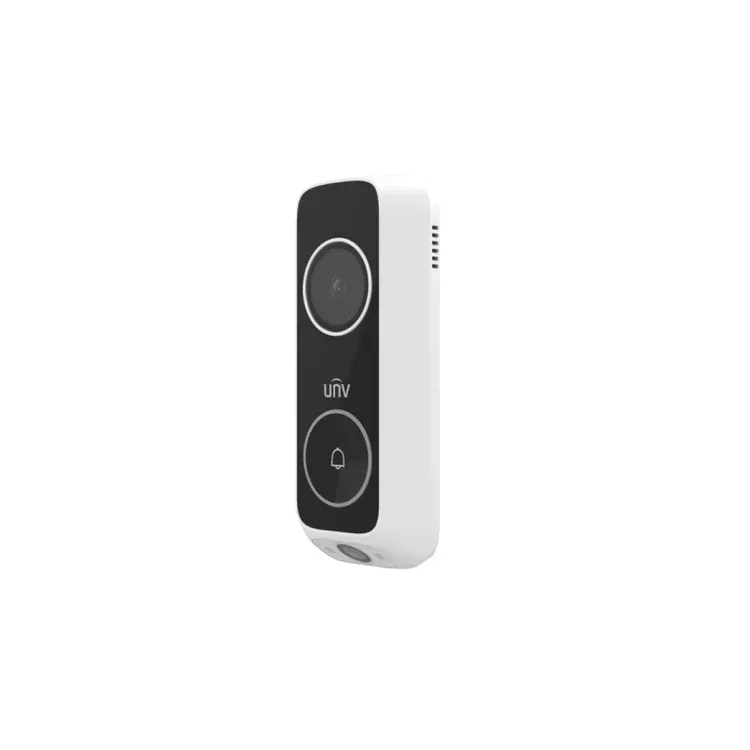
Manufacturer product photo: a slim video doorbell with a black face, a round camera at the top, a bell button below and a second small lens at the base. On a Westchester property with cameras at the garage and gate, the doorbell is the front-door view that ties them together in the same app.
Equipment
Types of Wireless Cameras We Install
We install Hikvision, Dahua, Uniview, Lorex, Ubiquiti, Reolink and Eufy equipment, among others, and we choose by what each position has to do and how it gets power and signal, not by brand.
Wired PoE cameras at the far end of a bridge
The backbone of most estate systems: standard network cameras plugged into a switch in the garage or barn, with the bridge carrying their video to the house. No batteries to charge and no camera Wi‑Fi to jam.
Wi‑Fi cameras with plug-in power
For a porch, a side door or a pool-house corner within reach of good Wi‑Fi and an outlet. Simpler than PoE where pulling cable is awkward, and always paired with local storage.
Solar cameras and solar kits
Cameras with an integrated or separate panel for gates, sheds and paddocks, sized for winter light and mounted to see the southern sky above the trees.
LTE cellular cameras
Cameras with their own SIM for locations out of sight of the house network, chosen by the carrier with the strongest measured signal at the mounting spot.
Pan-tilt and PTZ cameras
For a long driveway, a riding ring or a big lawn, where one camera can sweep, zoom to a vehicle and return to its watch position.
Bridges, mesh nodes and recorders
Outdoor point-to-point radios, mesh access points, PoE switches, network video recorders and battery backup units — the parts nobody photographs and every system depends on.
ADT, Ring and SimpliSafe versus a local installer
National brands are good at what they are built for. Ring and SimpliSafe sell consumer cameras designed to be set up by the owner and run through their own apps, with cloud plans that add stored history and smart features. ADT sells monitored security with professional installation, typically under a service agreement. For a house on a quarter acre with a strong router and the cameras near it, any of them can work well.
Where they struggle is the Westchester property this page is about: a garage 400 feet away, a barn behind a stone wall, a gate out of sight beyond the trees and an outage that lasts a day. None of those problems is solved by a better camera; each is solved by a bridge, a relay, a measured cellular choice, a solar design or a backup plan. That is the work we do. We can install and integrate consumer cameras you already own, and we can build a system that records locally and works with no monthly fee at all. You own the equipment and the administrator password either way.
Manufacturer product photo: a heavy-duty camera with a fixed panoramic lens housing on top and a pan-tilt-zoom dome with illuminators below. On a large Westchester property the panoramic lens keeps the whole field or driveway in view while the zoom lens follows a vehicle toward the house.
AI Overview Reality Check
What AI Gets Wrong About Wireless Camera Installation in Westchester County
Search for wireless cameras and an AI summary will give you confident, tidy answers. Most of them are written for an average suburban house. Here is where they part ways with Westchester properties, and what happens in the field instead.
“Wireless cameras need no wiring at all”
The summary usually means the camera sends video over Wi‑Fi. It skips the fact that every camera needs power, and power means a battery that must be charged, a solar panel that must be sized, or a cable to an outlet.
On a Westchester estate, the honest description of a “wireless” system is a wired system at each building joined by wireless links. Cameras on the house and garage run on PoE cable; the long gaps between buildings are where radios earn their keep.
Owners who expected no wiring are usually relieved once they see why: wired cameras at each building never need charging, are harder to jam and keep working when the Wi‑Fi in the house is busy.
“A Wi‑Fi extender will cover your detached garage”
An indoor extender plugged in near a back window can help a garage 50 feet away. It will not carry several cameras to a garage 300 or 400 feet away across a lawn, and it halves its own throughput by repeating everything it hears.
Across real distances the right tool is an outdoor point-to-point bridge, aimed and mounted outside, with a switch at the far end. Where several outdoor areas need coverage near the house, outdoor mesh nodes with clear paths between them do the job.
The difference shows up the first windy night: the extender-fed camera freezes and drops, while the bridged camera keeps recording at full resolution.
“Outdoor Wi‑Fi cameras reach up to 300 feet”
Range figures on boxes are measured in open air with nothing in the way. A Westchester yard has stone walls, grade changes, parked cars, hedges and mature trees, and in May the trees fill in with leaves that soak up signal.
The Town of Bedford’s 2025 wireless report makes the same point about cell towers: hills create pocket gaps even close to a facility, and coverage is irregular because terrain blocks signals. A garage-mounted camera faces the same physics at smaller scale.
We plan from a measured signal at the mounting spot, in leaf-on conditions where possible, with margin to spare. A number on a box is where the conversation starts, not where it ends.
“5 GHz Wi‑Fi is always the better choice for outdoor cameras”
The faster band sounds like the obvious pick, and indoors, close to the router, it often is. Outdoors, across a lawn or through an exterior wall, the slower 2.4 GHz band usually reaches farther and holds its connection better through siding, brick and leaves.
Many battery and budget Wi‑Fi cameras only speak 2.4 GHz anyway, so a router set to 5 GHz only can leave them unable to connect at all. The right setup on a Westchester property is often a dedicated 2.4 GHz camera network near the house and directional bridges, on their own frequencies, for the long runs.
We choose the band per location from a signal test, not a rule of thumb, and keep the cameras off the network the family uses for streaming and work.
“Add a solar panel and you never have to charge again”
Solar works well when it is sized for the worst month, not the best. Short December days, low sun behind the tree line and a week of overcast weather can drain an undersized battery even though the panel looked generous in summer.
Placement matters as much as size. A panel shaded by oaks for half the day produces a fraction of its rating, and on wooded Westchester lots the sunny spot is often not where the camera wants to be. A separate panel on a short cable solves that.
We size panel and battery for several sunless days, set the camera to use power sensibly and add a low-battery alert so you hear about a problem before the camera goes dark.
“A 4K camera solves the long-distance problem”
More pixels help when the lens is right. A wide 4K camera on a garage still shows a car at the far end of a long driveway as a small shape, because the lens spreads its pixels across the whole yard; a narrower lens aimed where cars slow down tells you far more.
On wireless systems, 4K also has a cost the summaries skip: every 4K stream takes several times the bandwidth of a lower-resolution one, and a bridge or mesh hop shared by six cameras can run out of room, which shows up as stuttering video and gaps in recording.
We match the lens to the distance, set bitrates for what the link can carry with margin, and record full resolution locally while sending lighter streams to your phone.
“National averages tell you what installation should cost here”
Angi, HomeAdvisor and Fixr publish national average costs for camera installation. Those averages are built from typical jobs: a few cameras on one house near the router. They do not price a 400-foot bridge, a relay on a barn, a solar gate camera or a day of backup power.
They also leave out regional labor and travel. Our Westchester prices are our published base table times the 1.25 Westchester factor, and the wireless links, poles, solar and backup appear as separate lines after the walk-through.
The fair comparison is line by line: cameras, links, power and storage, not one total against another. Send us any quote you hold and we will price the same layout for you.
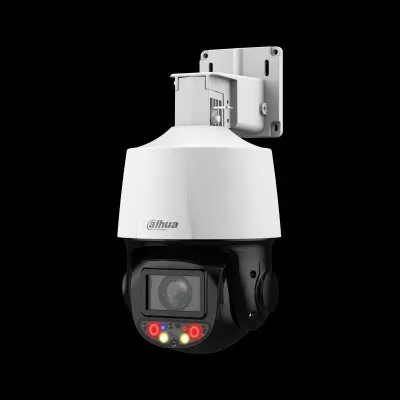
Manufacturer product photo: a white pan-tilt camera hanging from an L-shaped wall bracket, with red and blue lights and warm lights around the lens. At a Westchester driveway gate, flashing lights and a siren on detection tell a visitor the camera has seen them, which the AI summaries rarely mention.
Know How Far the Barn or Gate Is? Get a Westchester Number Today
Send the town, the buildings you want covered, the rough distance from the house to the farthest one, and whether there is power out there. We send back a written range from the Westchester table, with bridges, solar, cellular and backup power shown as their own lines.
For a Westchester County wireless camera quote, tell us the town or village, the buildings and gates you want covered, how far they are from the house and whether they have power. A written price comes back the same business day; to talk first, call (914) 877-2578.
✅
We Got Your Request!
Received. A technician is reading your Westchester property details and will phone you today. If it cannot wait, the Westchester line is (914) 877-2578.
How It Works
Our Installation Process
Seven steps, the same for a Mount Vernon three-family and a North Salem farm. On wireless jobs most of what decides success happens before the first camera goes up: measuring the paths and planning the power.
1. Video, photos and a call
A phone video panning from the house to every building and gate, photos of the modem location and electrical panel, and a call about what you want to see, who will watch, and how long your last outage lasted.
2. Walk the paths, test the signal
Stand where each radio and camera would mount, check sightlines over walls and trees, run a temporary bridge test, and measure cellular signal for each carrier at every gate and far shed.
3. Written design and estimate
A sketch of every camera, bridge, relay and power source, priced from the Westchester table, with bridges, solar, cellular, backup power and any electrician’s work each on its own line.
4. Network backbone first
Bridge radios, relays and mesh nodes mounted and aimed, switches and surge protection installed at each outbuilding, and the camera network separated from the family Wi‑Fi.
5. Mount and aim the cameras
Cameras mounted on blocking or sealed anchors, aimed and zoomed on site, detection zones drawn to ignore the road and swaying branches, and privacy masks set where a view touches a neighbor.
6. Backup power and the pulled-plug test
Battery backup on the modem, router, bridges and recorder, generator transfer checked with your electrician, and every device unplugged and restored to prove it recovers on its own.
7. Handover, logins and a link report
Owner, family and staff accounts, the phone app set up, a printed camera and radio map, recorded link-signal figures for later comparison, and a practice clip export for police.
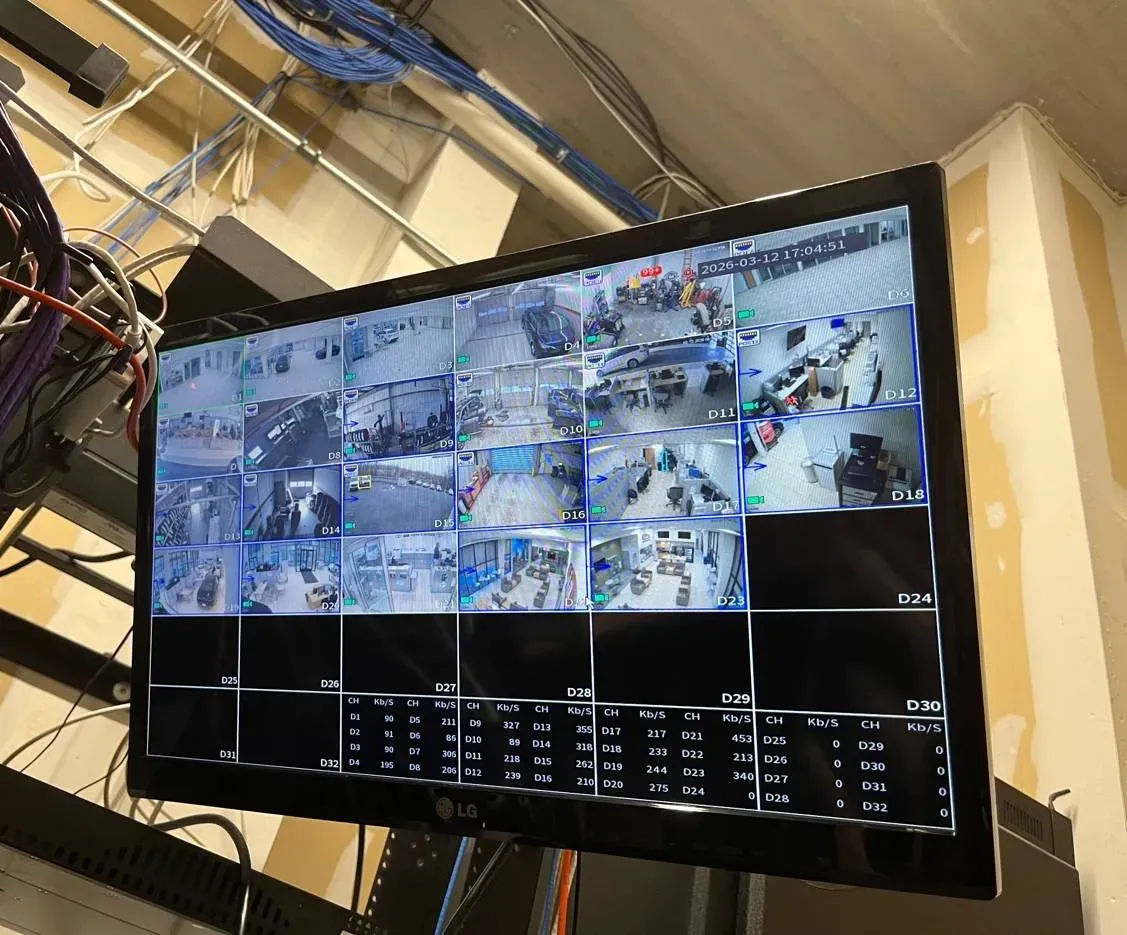
Abstract Enterprises Security Systems reference photo: a monitor showing more than twenty camera tiles and a table of each channel’s bitrate, hanging below bundles of blue and white network cable. Per-camera bitrate is what we watch when cameras share a bridge; on a Westchester estate it tells us whether the link to the barn has room for one more camera.
Coverage Area
Wireless Camera Installation Near Westchester County’s Landmarks
We cover the whole county from the Yonkers line to the Putnam border. These landmarks mark the kinds of ground our wireless crews work across, and why each one shapes the design.
Ward Pound Ridge Reservation, Cross River
At 4,315 acres, the county’s largest park, wooded and hilly, in Pound Ridge and Lewisboro. The private properties that border it share its terrain: long drives, stone walls and trees between every building, the textbook case for bridges and relays.
Indian Hill and Route 172, Bedford
Named in Bedford’s 2025 wireless report as a ridge that blocks the new Bedford Post cell site from Middle Patent Road, upper Long Ridge Road and parts of Route 172. Properties along here are where we test cellular before ever suggesting an LTE gate camera.
Muscoot Farm, Somers
A 777-acre county park and working early-twentieth-century farm near Katonah. Its fields and barns look like many private farms in Somers and North Salem, where cameras watch stables, paddocks and equipment barns far from the house.
Kensico Dam Plaza, Valhalla
A county park at the foot of the Kensico Dam, near the geographic middle of the county. The suburbs around the central part of the county are where half-acre lots and detached garages make up the usual wireless job.
Playland, Rye
A 280-acre county-owned amusement park built in 1928 on Long Island Sound. Around it, Sound Shore homes, clubs and marinas need cameras that tolerate salt air and links that cross open water-side lawns.
Downtown Yonkers and Mount Vernon
The densest ground in the county, with about 211,000 and 72,000 residents. Here the work is parking pads, rear courts, alleys and shared entrances on multi-family and mixed-use buildings.
Wireless Cameras Across Westchester, South to North
The county changes every few miles, and so does the shape of a wireless camera job. This is how the work differs as you drive north.
Yonkers, Mount Vernon and the southern cities
Multi-family houses, walk-ups and mixed-use blocks on tight lots. Distances are short, so the work is aiming and access rather than range: parking pads, rear courts and alleys covered without looking into a neighbor’s windows, and separate accounts for owners and tenants.
New Rochelle, Pelham, Larchmont, Mamaroneck and Rye
The Sound Shore: older houses on modest lots, many with detached garages, plus waterfront clubs and marinas. A single bridge or a strong mesh node usually reaches the garage; near the water, hardware is chosen for salt air and mounted out of spray. The Pelham Manor police warnings ABC7 reported, about intruders entering homes to find car keys, are why driveway and garage coverage comes up first here.
White Plains, Scarsdale, Greenburgh and the central towns
Half-acre to acre lots, colonials and Tudors, and the occasional pool house down a slope. This is where most of our two-building bridge jobs are, and where Con Edison’s June and July 2026 storm releases named the hardest-hit places, so backup power for the network is usually part of the plan.
Bedford, Pound Ridge, Lewisboro, North Salem and Somers
Four-acre zoning, estates, farms and stables, long private drives and NYSEG service. Here a wireless camera system is a small campus network: bridges and relays across pasture and woods, measured cellular at the gates, solar where power does not reach, and serious backup power for long outages.
Pricing
Wireless Camera Installation Cost in Westchester County
These are installed starting prices for Westchester County: our published Brooklyn base table for four-camera packages with two weeks of recording, multiplied by the Westchester area factor of 1.25, which reflects travel time and regional labor cost. Each package covers four cameras, a recorder with storage, mounting, setup and app access. Where your property lands above the starting price depends on how many buildings the signal has to reach, mounting heights, and how long you want the system to run on backup power.
Package (4 cameras + 2 weeks recording)
Westchester installed price
Brooklyn base × 1.25
A Series — 2MP HD
from $1,188
$950 × 1.25
F Series — 5MP 2K
from $1,248
$998 × 1.25
E Series — 4–5MP IP
from $1,446
$1,157 × 1.25
C Series — 8MP 4K DVR
from $1,740
$1,392 × 1.25
D Series — 8MP 4K IP
from $1,740
$1,392 × 1.25
Name brands — Lorex, UniFi, Uniview, Luminys
from $2,074
$1,659 × 1.25
Repair or service visit
$195 an hour, 3-hour minimum ($585)
Same rate everywhere
The IP series (E, D and the name brands) are the ones that pair with bridges and mesh, because network cameras at an outbuilding can ride the same link as the rest of your network. The C Series records over coax to a DVR and suits houses that already have coax runs. What the table does not include, because it varies too much from property to property: point-to-point bridges and relays, mesh nodes, gate poles, solar panels and batteries, cellular cameras and their data plans, battery backup and generator connections, and any electrician’s circuits. Each appears as its own priced line on your written estimate after the walk-through, so you can see exactly what distance, terrain and missing power cost on your property.
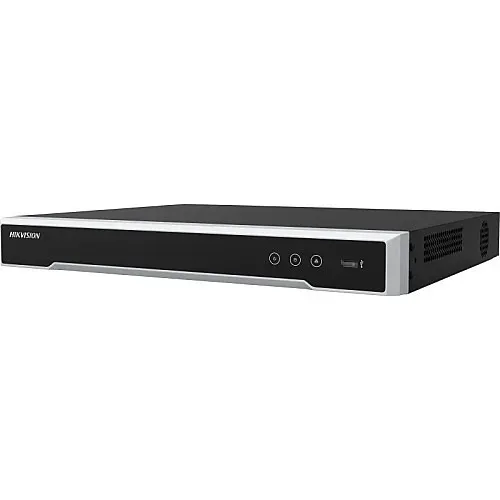
Manufacturer product photo: a slim black network video recorder with a silver front trim, three status lights and a front USB port. In a Westchester house it lives somewhere hidden on the battery backup, recording every camera, bridged or wired, to its own drives with no monthly fee.
Compare Our Westchester Estimate Line by Line
Already holding another quote? Send it. We will price the same layout from the Westchester table and show where the two differ — camera count, bridges, solar, cellular, backup hours and storage days — so you are comparing systems, not totals.
Four E Series 4–5MP IP cameras and a recorder (from $1,446 installed): front door, driveway, back yard and the detached garage. Built for a Westchester house on a half-acre lot, with a bridge or mesh node to the garage quoted as a separate line if the house Wi‑Fi does not reach.
4K Property — from $1,740
Four D Series 8MP 4K IP cameras (from $1,740 installed) for the drive, the garage or pool house, the back of the house and the entrance, with room on the recorder for cameras at the barn or gate later. Add a bridge, mesh, solar or backup power where the property needs it.
Name-Brand Estate Start — from $2,074
Four name-brand cameras — Lorex, UniFi, Uniview or Luminys — from $2,074 installed, as the core of a multi-building system. Most estates add more cameras, bridges to each outbuilding, a gate camera on solar or cellular and a generator-ready backup plan, each priced as its own line.
Bring your own equipment
Already bought cameras, a doorbell or a mesh kit? We install and set up customer-supplied equipment as labor-only work, priced after we see the model list and the property, because the time depends on the hardware and the paths. Our 30-day warranty covers only Abstract Enterprises Security Systems-supplied products, so customer-supplied gear is warrantied by its maker. Details are on the install-your-own-camera-system page.
Every package is owned outright: no monthly fee, no contract, and the recorder’s administrator password belongs to you.
Complete Services
Every Wireless Camera Installation Service in Westchester County
Most Westchester owners who put cameras on a gate also put the gate itself on an intercom or access control in the same project, so a visitor’s call, the gate opening and the video of the car land together on one phone.
Field Notes
Field Notes: Stand Where the Radio Will Stand
This is a method note, not a story. On a Westchester property the first job is not choosing cameras; it is standing where each radio will go and looking back at the house. We put a ladder against the garage or barn where the far radio would mount, climb to that height, and check whether the house is visible over the hedges, the stone wall and the parked cars. If it is not, we look for a higher spot, a different wall, or a third building that can see both ends. Then we look up and note which trees are bare that day and which will be full by June.
After the sightline, we test the signal for real: a temporary link between the two points, a speed test across it, and cellular readings at every gate and far shed for each carrier. Then we find the power — an outlet inside the garage, a circuit at the gate operator, or a sunny patch for a panel. Sightline, signal and power, written down for each building, are what turn a wish list into a system that still works the morning after a storm.
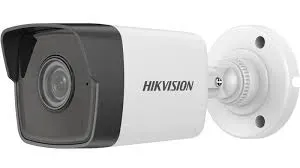
Manufacturer product photo: a white bullet camera with a black sun hood, mounted on a round swivel base. A wired camera like this on the far side of a bridge, plugged into a small switch in a Westchester garage or barn, never needs charging and never joins the house Wi‑Fi.
FAQ
Westchester County Wireless Camera Installation FAQ
Will deer, branches and wind set off alerts all night on cameras watching a wooded lot?
+
Not if the detection is set up properly. We use cameras and recorders that classify people and vehicles rather than reacting to any change in the picture, draw detection zones that leave out swaying branches and the road, and set a minimum size so a deer or a fox crossing the lawn does not count as a person. During the first week we review what triggered alerts and tighten the zones until the alerts you get are ones worth looking at.
Can we get an alert only when someone opens the pool gate, not every time a person walks past it?
+
Yes, in two ways. A camera can be given a line-crossing or entry zone drawn right at the gate opening, so it alerts only when someone passes through it rather than along the fence. For a firmer trigger, a gate contact can be wired to the recorder or alarm so the gate itself sends the alert and the camera bookmarks the clip at that moment. We set the schedule so it can be quiet while the family is using the pool.
Can a camera read the plate of a car coming up a long, dark driveway?
+
A dedicated plate camera can, but an ordinary wide camera will not. Plates are read where the car is slowest and closest, usually at the gate or a bend, with a narrow lens aimed at plate height and a shutter set for motion at night. We pair it with a wide overview camera so you see both the car and the plate in the same moment. Headlights shining straight into the lens are the usual problem, so we angle the camera to catch the rear plate or the car from the side.
Where should the recorder go in a large house so a burglar cannot simply carry it out?
+
Somewhere out of sight and out of the obvious path: a locked closet, a basement utility room or a cabinet in a room nobody would search first, never next to the TV or in the front hall. It needs ventilation, a network connection and a place on the battery backup. For extra protection, clips can also be copied to cloud storage or to a second device in another part of the house, so taking the recorder does not take the evidence with it.
What happens to the footage if someone pulls a camera off the wall and takes it?
+
On a recorder-based system, everything up to the moment the camera was pulled is already on the recorder inside the house, including the face of the person reaching for it. Battery cameras that store only to their own card lose whatever is on that card, which is one reason we prefer a recorder or base station for anything important. We mount cameras high enough that pulling one down takes a ladder, and a camera going offline triggers its own alert.
Can you do the installation while we are away, with our caretaker letting you in?
+
Yes, and many Westchester estate jobs are done that way. We agree the design and estimate with you first, then work with the caretaker or house manager for access, keys and gate codes. You get photos as each part goes in, and the final handover can be done by video call with your phone, so your app and logins are set up before you return. We schedule noisy work, like drilling or ladder work near bedrooms, around anyone staying in the house.
Our north-county internet is slow on upload. Will remote viewing still work?
+
Usually, with the right settings. Remote viewing depends on your upload speed, not your download speed, and rural connections are often weak there. We set each camera to send a smaller secondary stream for remote viewing while recording full resolution locally, so you can watch from your phone without saturating the line. If the line is very slow, we limit remote live view to a few cameras at a time and rely on alerts with short clips.
Police in Pelham Manor warned about intruders hunting for car key fobs. Which cameras matter most if the worry is the car in the driveway?
+
ABC7 reported Pelham Manor police describing break-ins where the intruders went inside to find a key fob and then drove off with the car. For that risk, the cameras that matter most are one covering the door people actually use at night, usually a side or back door rather than the front, one looking along the driveway where cars are parked, and one at the street end of the drive to catch the vehicle leaving. Police advice in that report was to lock cars and hide key fobs and to park in the garage; cameras add the record of who came and went.
How soon can you come out, and what do you need from us first?
+
Send the phone video, the town and a rough distance to the farthest building, and we can usually give you a range the same day and book a walk-through within the week. For the visit we need access to the modem and electrical panel, a ladder-safe path to each outbuilding, gate codes, and someone who knows where power exists at the garage, barn and gate. If you have a survey or site plan, have it on hand.
All Areas Served
Wireless Camera Installation Across the Hudson Valley, New York City and Long Island
Westchester is one of six Hudson Valley counties we cover from the same Bronx office. Each area page below is written for its own buildings and ground.
Every number, place and rule on this page traces to one of these sources, checked in October 2026. Prices come from our own published package table and the Westchester area multiplier.
U.S. Census Bureau, American Community Survey 2024 1-year estimates via Census Reporter: Westchester County (1,006,447 residents; 430.8 square miles of land; 2,336.1 per square mile; 50% multi-unit housing), Mount Vernon (71,982; 4.4 square miles; 16,388.8 per square mile; 70% multi-unit) and Yonkers (211,062; about 11,722 per square mile)
Town of Bedford, “Wireless Presentation to the Bedford Town Board,” May 7, 2025 (hilly terrain blocking signals; Seminary Ridge and Indian Hill; Middle Patent Road, upper Long Ridge Road and Route 172; Bedford Post facility initially Verizon only; carrier-specific antennas; Northern Westchester Wireless Masterplan; signal-measuring apps)
Town of Bedford Zoning Board agenda document for 452 Pound Ridge Road (four acres required in the R-4 Acre District)
NYSEG electric tariff PSC 120, Section 1 (Westchester County towns: Bedford, Lewisboro, North Salem, Pound Ridge, Somers, Yorktown); NYSEG storm release on its Brewster Division (parts of Westchester, Putnam and Dutchess; 86,000 customers)
Con Edison service territory page (all of New York City and Westchester County)
NYS Department of Public Service, Interim Investigation Report on Tropical Storm Isaias (peak outages about 290,000 Con Edison and 95,000 NYSEG; most NYSEG outages in the Brewster Division; full restoration August 12, 2020)
The Journal News / lohud, “8 days after Isaias,” August 12, 2020 (about 350 storm-related Con Edison outages still in Westchester)
Con Edison releases of June 7, 2026 (more than 5,000 Westchester customers out; Bronxville, Mount Vernon, New Rochelle, Pelham Village, Scarsdale, White Plains, Yonkers) and July 5, 2026 (more than 20,000 customers; Westchester greatest impact; Greenburgh, Yonkers, Elmsford, Dobbs Ferry, Rye; gusts up to 60 mph)
New York State Police, “Public Safety Alert: Targeted Residential Burglaries in Hudson Valley Region,” January 29, 2025
ABC7 New York, report on Pelham Manor burglaries and key-fob car thefts (Chief Thomas Atkins)
News 12 Westchester, “Police in New Jersey say burglars are using Wi-Fi jammers to target homes,” June 14, 2024
Westchester County Department of Consumer Protection, Home Improvement Contractors page (county license required; public license search)
Village of Dobbs Ferry Building Department information; Village of Irvington “What Requires a Permit?” and Local Law #3 of 2020 lighting standards; Village/Town of Mount Kisco building permit application instructions (revised June 2025)
Westchester County Parks: Ward Pound Ridge Reservation (4,315 acres, county’s largest park); Muscoot Farm (777 acres); Playland (280 acres, county-owned, built 1928, per its National Register nomination and Wikipedia); Kensico Dam Plaza
NY.gov county municipality listing and Westchester County profile (6 cities, 19 towns, 23 villages)
New York Labor Law §203-c; NYS General Business Law Article 6-D
Google’s People Also Ask, related searches and AI Overview, Answer the Public, Bing and DuckDuckGo suggestions and Yelp reviews could not be retrieved from our research tools for this edition; nothing on the page is drawn from them. Resident discussion on the r/Westchester subreddit was visible only as search-result excerpts and is not quoted.
Barn Link Down, Gate Camera Offline After the Storm? Call the Westchester Line
A bridge that stopped passing video, cameras that never came back after the generator kicked in, a gate camera with a flat battery, or a clip you need for police today — phone or text (914) 877-2578. We book the next open window, and most single faults are fixed within one to two hours of arrival.
Westchester Wireless Cameras From a Licensed, Insured Crew
Abstract Enterprises Security Systems · Bronx office at 460 E Fordham Rd, NY 10458 · Westchester line (914) 877-2578 for calls and texts · property photos and videos welcome on WhatsApp
Rated 4.7★ across 390+ Google reviews · NYS license #12000287431 · written estimates the day you ask · certificates of insurance sent to property managers, HOAs, landlords and general contractors before the visit
Full terms — including 50% deposit, the 30-day warranty and optional paid extended warranty, and the late-fee schedule — are set out in the service agreement. See our warranty page.
Last full revision October 18, 2026. What changed: this Westchester County wireless camera page was rewritten from new research on Bedford’s terrain and cellular gaps, the Con Edison and NYSEG service split, 2020 and 2026 storm outages, State Police and local burglary warnings, village electrical-permit rules and Census housing data, with prices set from our published package base table at the Westchester area multiplier and the standard service rate.