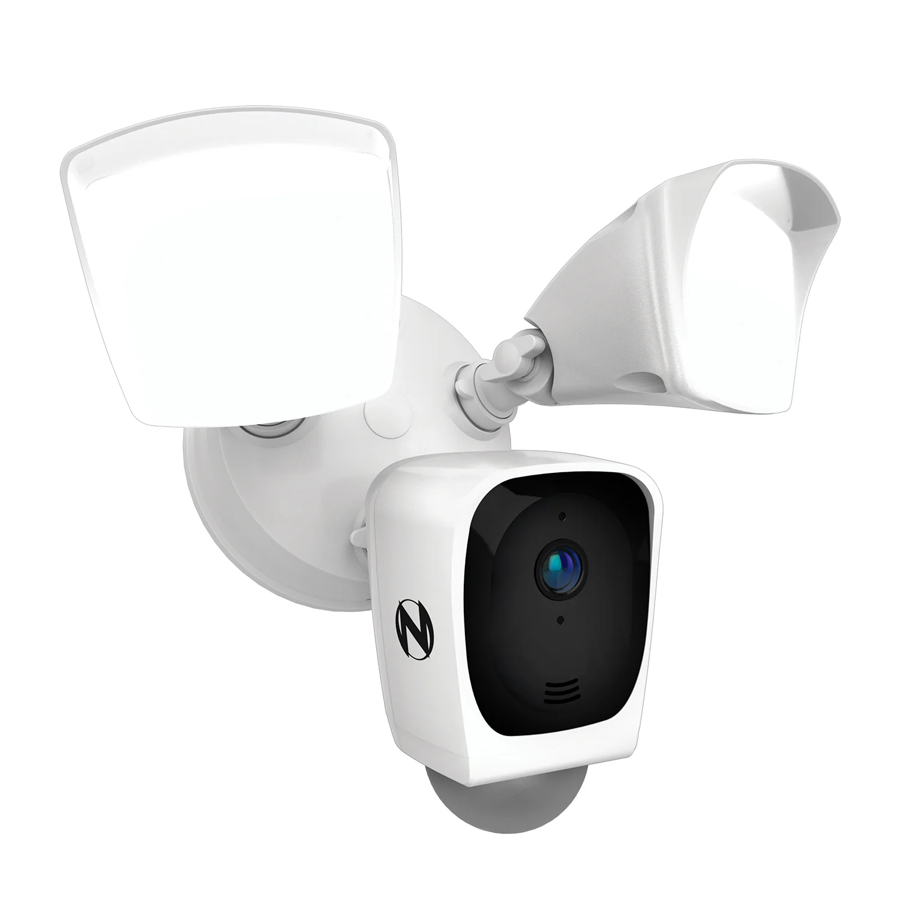
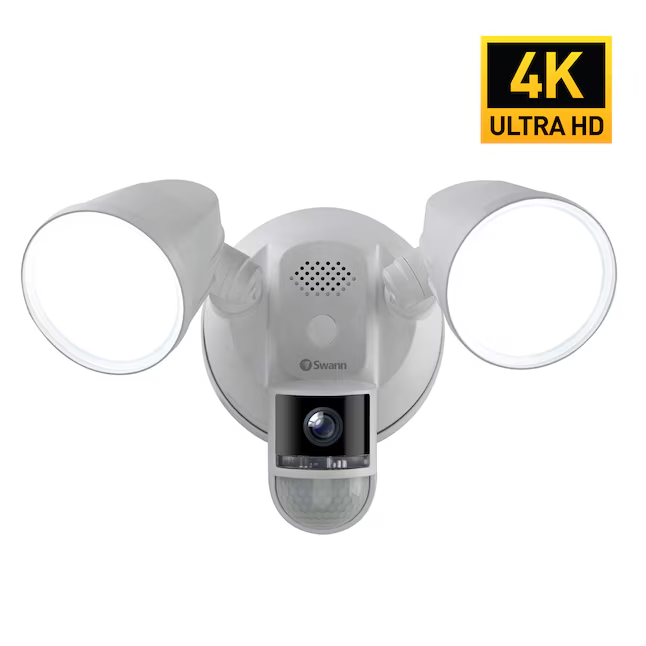
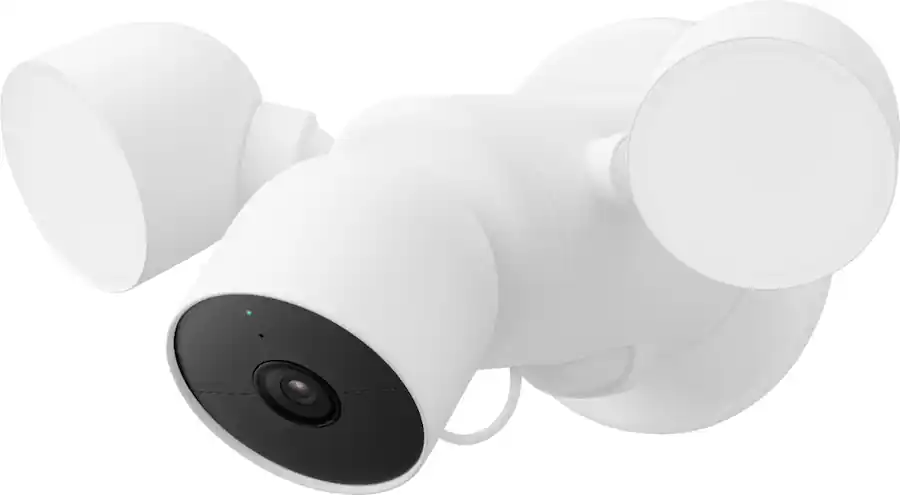
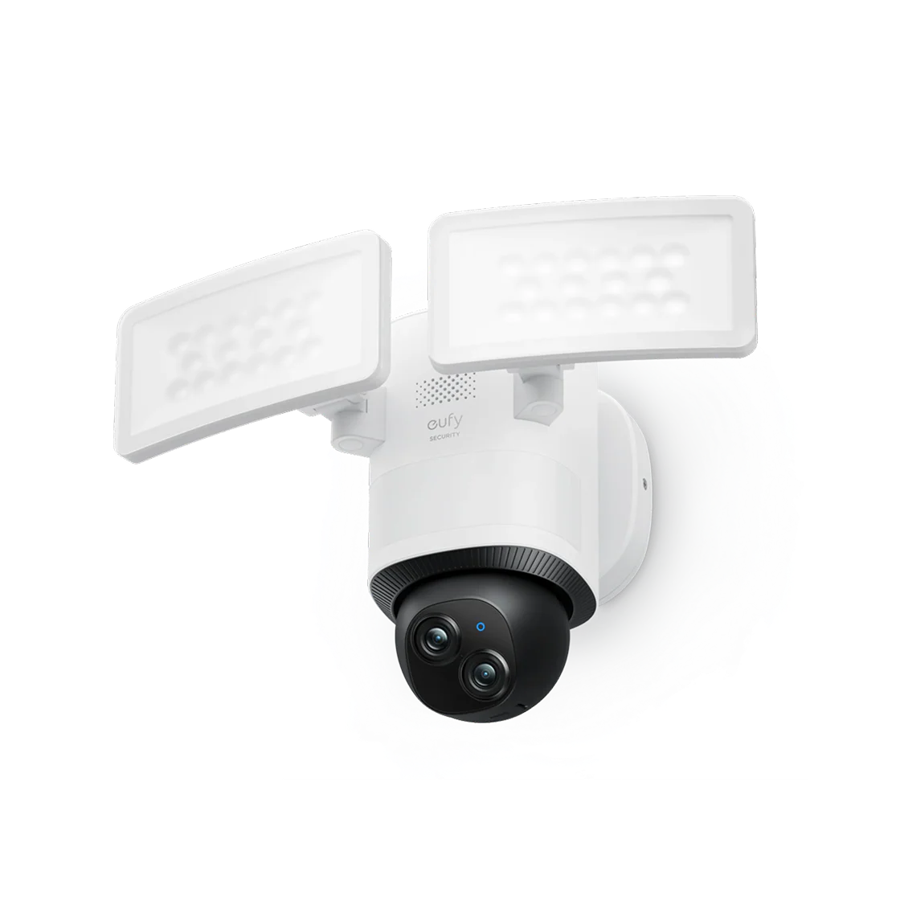
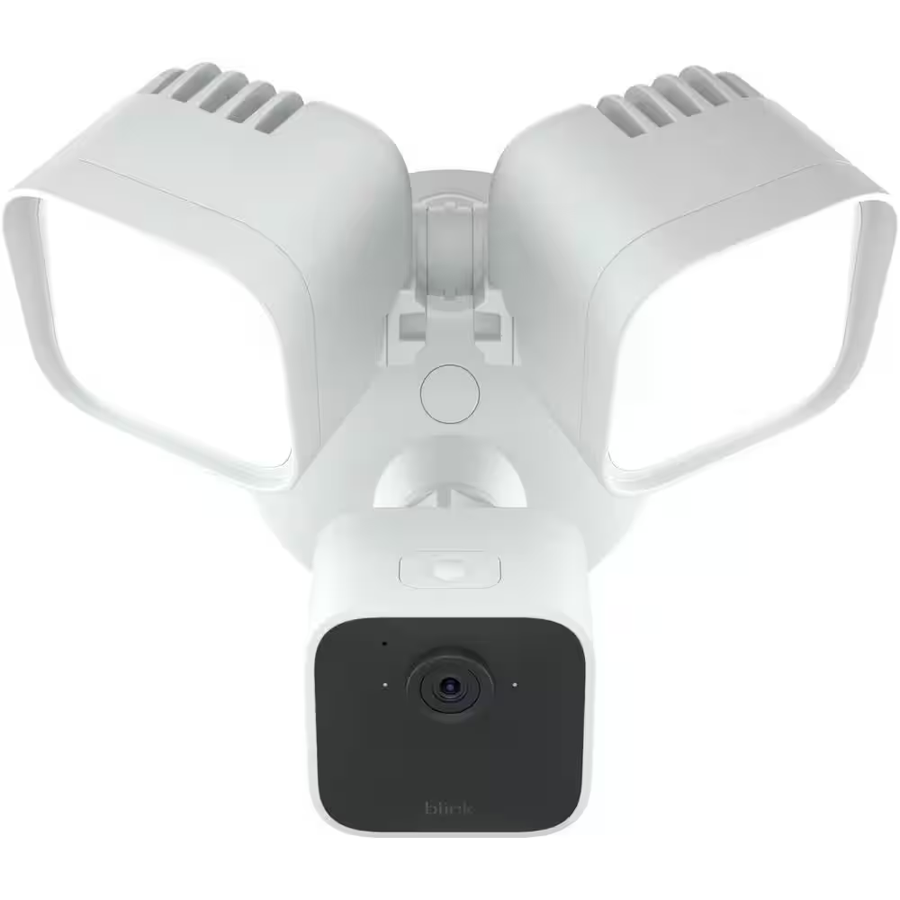
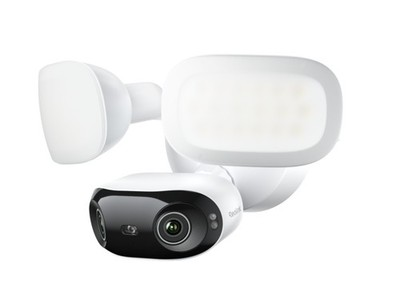
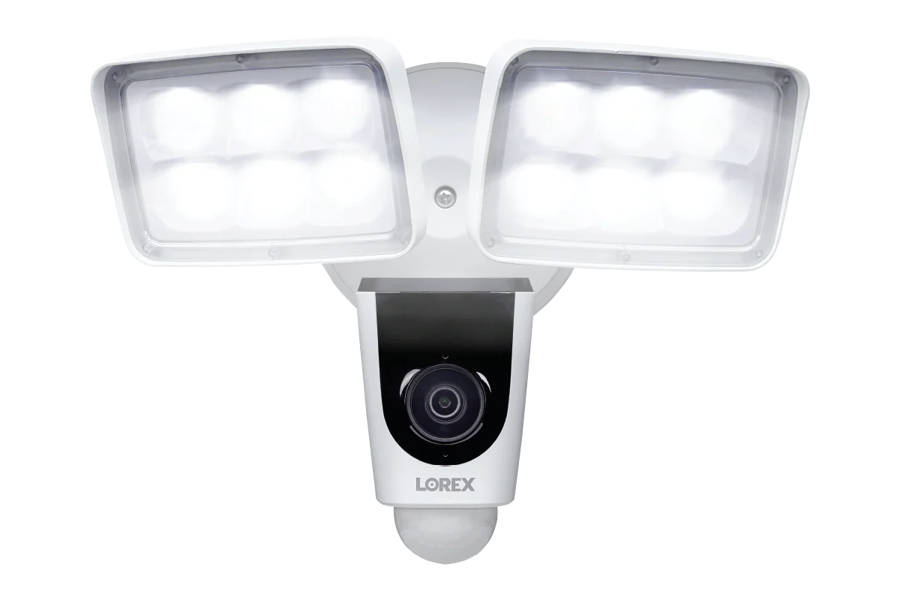
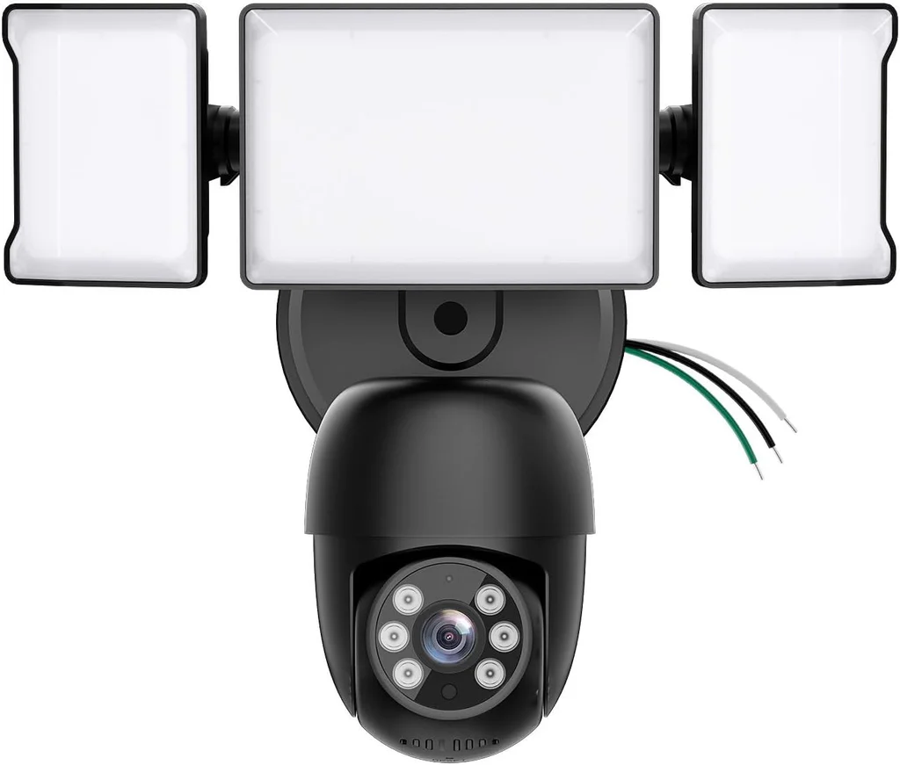
Estates & Suburbs · Long Driveways · Detached Garages · Pool Houses · Wooded Lots · Hudson River Villages · Surge-Protected · Deer-Tuned · Fixture Swap or New Wiring · No Monthly Fees
Professional floodlight camera installation in Westchester County — the motion-activated light-plus-camera-plus-siren combo that lights up a driveway, backyard, pool, or detached garage and records everyone who trips it. Westchester is the most varied floodlight county we cover: pre-war Tudor estates and stone colonials in Scarsdale, Bronxville, and Chappaqua; multi-acre horse properties in Bedford, Armonk, and Pound Ridge; the dense cities of Yonkers, White Plains, New Rochelle, and Mount Vernon; and the historic Hudson River villages of Tarrytown, Sleepy Hollow, Hastings, and Dobbs Ferry. That range changes the job — a wooded Bedford estate wants light at the driveway head, the pool house, and the garage; a Yonkers two-family wants the side door and parking covered; a Tarrytown landmark needs a concealed, color-matched mount the preservation board will accept. We replace an existing exterior fixture in under an hour, or run brand-new wiring and set a UL-listed box out to a pool house, detached garage, or the far end of a long driveway where there’s no power yet — the part most owners hit a wall on. And because the Hudson Valley gets far more thunderstorms than the city, we build in surge protection so a summer storm doesn’t take out the camera. Ring, eufy, Lorex, Reolink, and Nest, with color night vision, a built-in siren, and no monthly fees on local storage. This is our Westchester County floodlight page — part of our Hudson Valley floodlight hub and our Westchester security camera installation; pair it with a doorbell camera at the entry, a full residential camera system, or for a storefront or office our commercial security cameras.
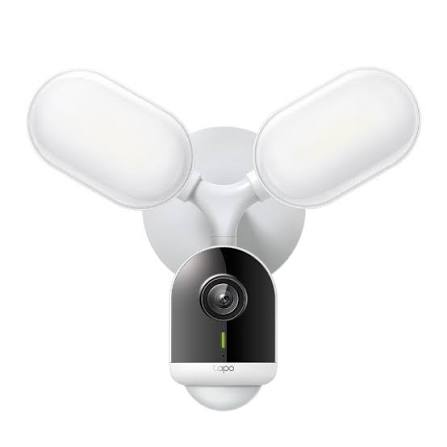
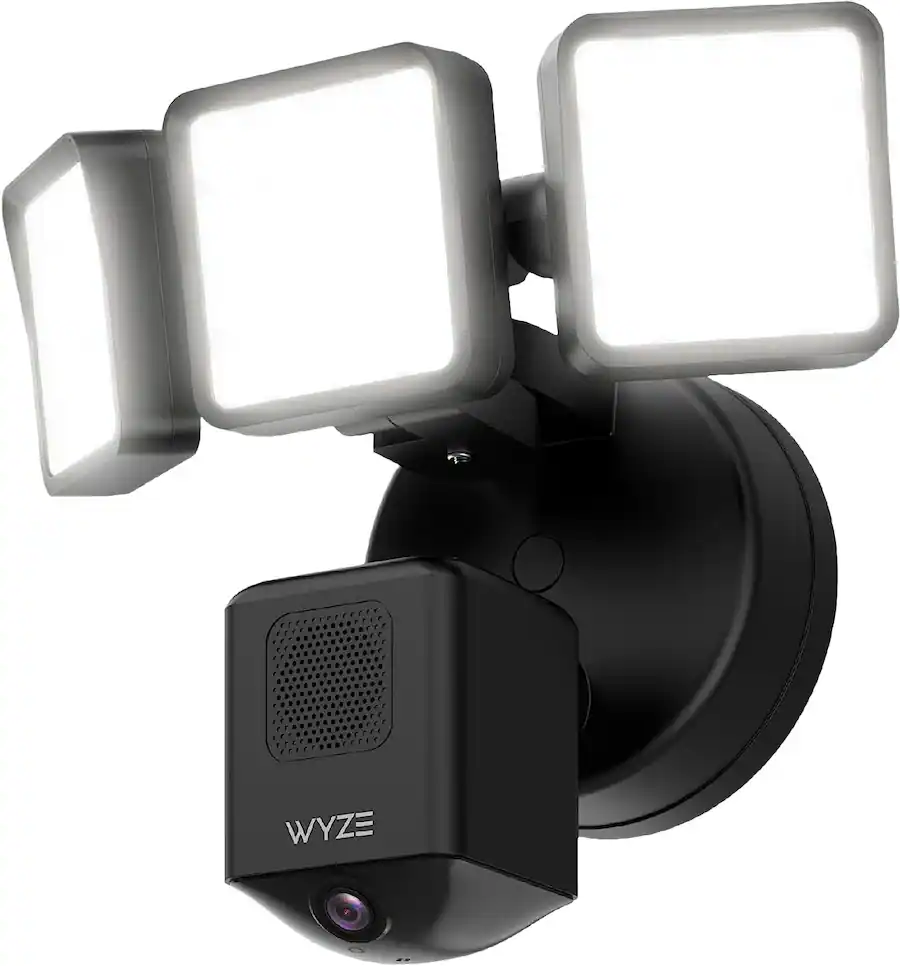
A floodlight camera is three deterrents in one fixture: a bright motion-activated light, a recording camera, and a built-in siren. When a person crosses the driveway, the pool deck, the garage approach, or the back garden, the lights snap on, the camera records in full color, and your phone buzzes — and most would-be intruders leave before the second floodlight finishes warming up. Westchester is the most varied county we wire, which is exactly why a one-size floodlight kit so often disappoints here. South of the parkways you have the dense cities — Yonkers, Mount Vernon, New Rochelle, White Plains — full of two-families, walk-ups, and tight side yards. The famous suburbs — Scarsdale, Bronxville, Larchmont, Chappaqua — are pre-war Tudors and stone colonials on real lots with gardens, pools, and detached garages. North and east you reach the estate country of Bedford, Armonk, and Pound Ridge, multi-acre wooded properties with a main house, a guesthouse, a pool house, and a driveway that runs hundreds of feet from the road. And along the river sit the historic villages — Tarrytown, Sleepy Hollow, Hastings, Dobbs Ferry — where a preservation board has a say in what goes on the front of the house. A floodlight cam earns its place in every one of those, but the right install looks different in each.
The catch — and the reason Westchester owners call us instead of grabbing a kit — is power, weather, and the Hudson Valley’s own quirks. A floodlight camera draws 120–240V hardwired through a junction box — not a battery unit you press onto a wall. Swapping an existing light by the front door or garage is a sub-hour job because the box is already there. But the spot you actually want it — the pool house, a detached garage across a Bedford lot, the head of a long Chappaqua driveway — often has no power, and New York requires a licensed contractor to run that new circuit and set a UL-listed weatherproof box. Two things are genuinely different up here versus the city: the Hudson Valley gets far more thunderstorms, so a summer surge that would never faze a city camera regularly kills unprotected gear — we build in surge protection as standard, not an upsell. And on wooded and estate lots, deer, raccoons, and squirrels are a real problem: deer set off PIR floodlights all night, and rodents chew cable jackets and nest in outdoor enclosures, so we tune the motion hard and use rodent-resistant jacketed cable on the runs that need it.
Every property is different, so we start with where the dark spots and the power are, not a boxed bundle. On a Yonkers two-family it’s the side door, driveway, and parking; on a Bedford estate it’s the driveway head, the pool house, the garage, and the guesthouse. Here’s what we put up.
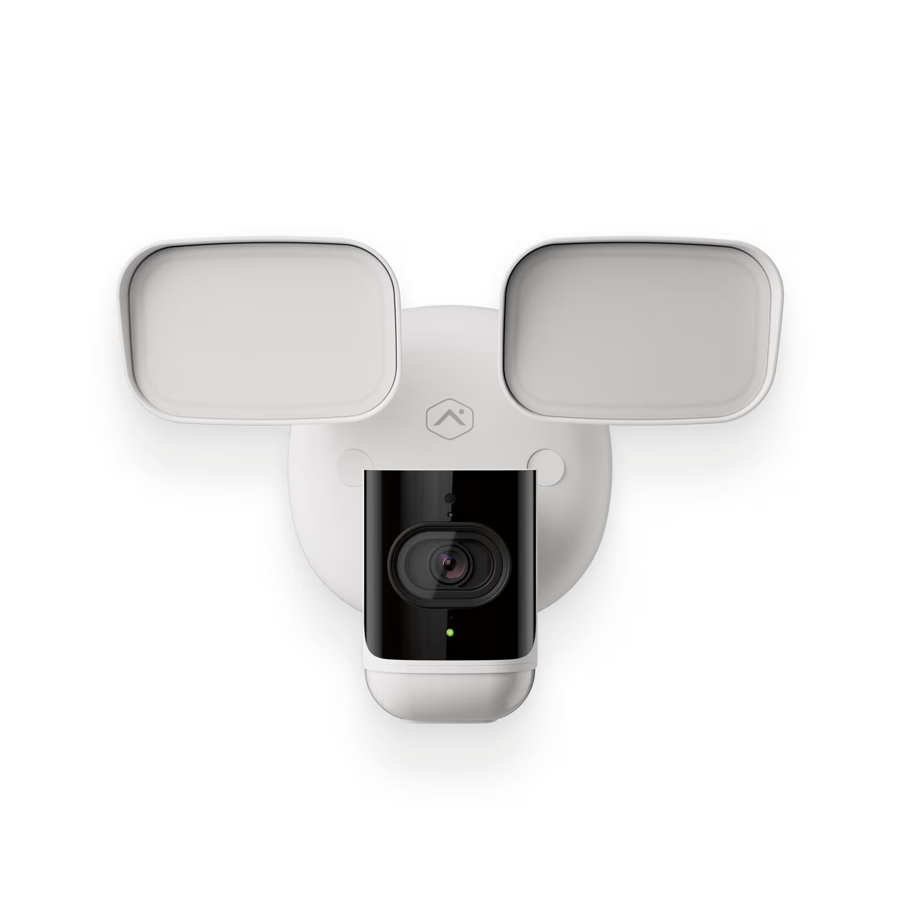
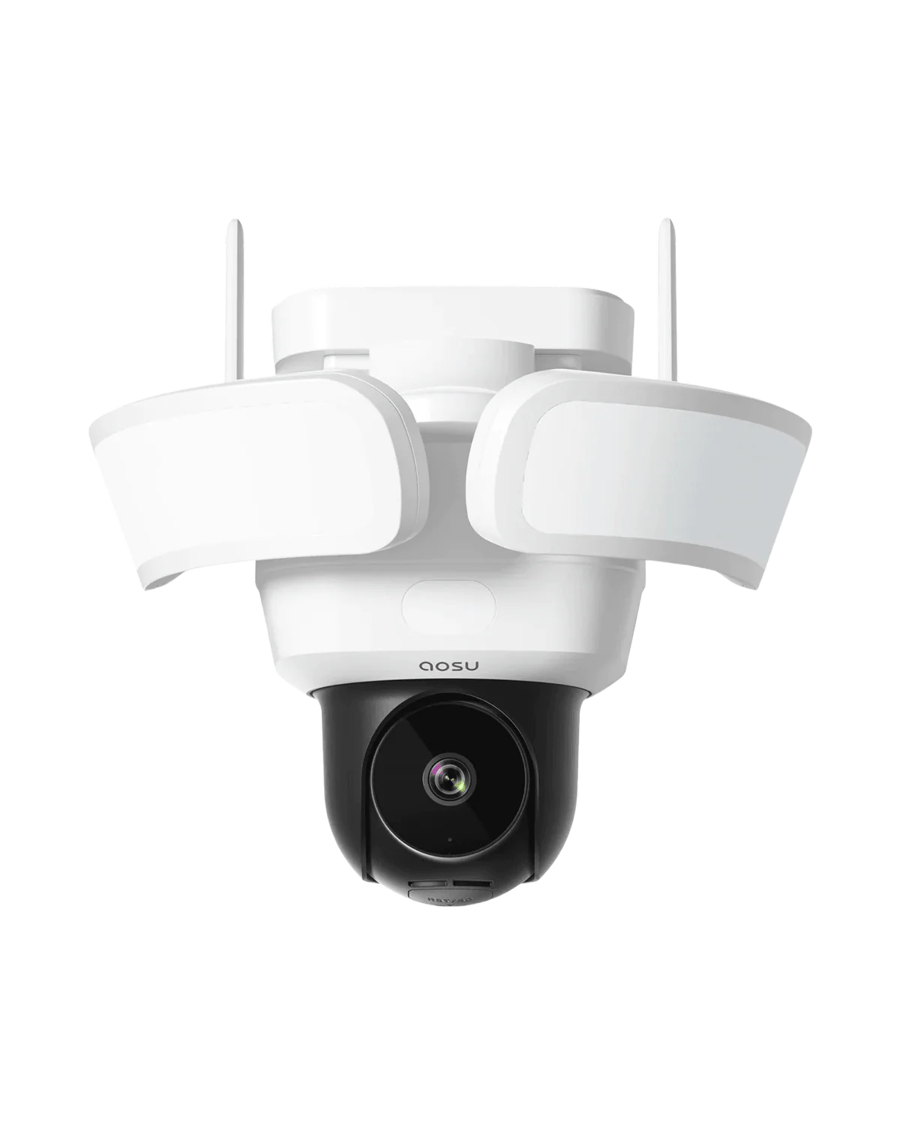
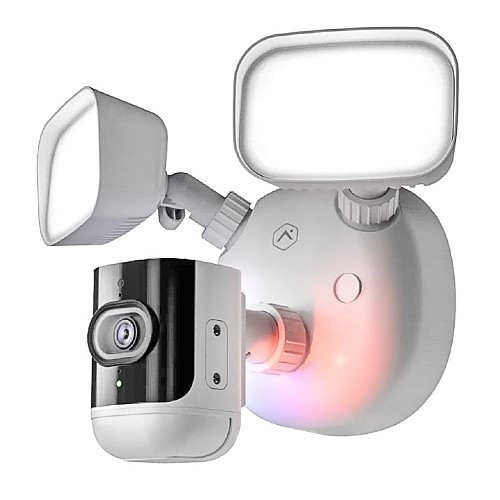
The standard install — a floodlight camera hardwired to your junction box for 24/7 power, no batteries, recording around the clock with the lights on motion.
No power at the pool house, detached garage, or the head of a long driveway? We pull a new circuit, fit a UL-listed box, and finally light the spot that never had it — the long-distance job DIY kits can’t touch.
The Hudson Valley gets far more thunderstorms than the city. We build whole-camera surge protection in as standard so a summer storm doesn’t take out your floodlight cam — an HV necessity, not a luxury.
Main house, guesthouse, gatehouse, pool house, detached garage, perimeter — we light and record the full footprint of a Bedford, Armonk, or Scarsdale estate, aimed and tuned per building.
The floodlight delivers true-color footage after dark instead of gray infrared — a readable face, a real car color, a plate at the end of a long, dark Chappaqua driveway at 2am.
In Tarrytown, Sleepy Hollow, Hastings, and Dobbs Ferry we work to preservation-board rules — concealed mounts, rear-of-building runs, color-matched hardware that the board will sign off on.
A floodlight camera works hardest exactly where a property is darkest and least watched — and in Westchester that ranges from a tight Yonkers side yard to the head of a 300-foot Bedford driveway. These are the spots we wire most often across Westchester.
The signature Westchester estate floodlight spot — light and record a driveway that runs hundreds of feet, often with one cam at the house and one at the road end so a car is lit before it reaches you.
Pool areas and pool houses on suburban and estate lots — a lit, recorded pool deck deters after-hours trespass and adds a safety camera over the water.
Detached garages, sheds, barns, and outbuildings spread across a wooded Westchester lot — the classic long-run new-wiring floodlight job that lights the blind side of the property.
In Yonkers, Mount Vernon, and New Rochelle, the tight side yard, shared driveway, and rear parking of a two-family — the dark pinch points where break-ins start.
Tree-lined property edges on Bedford, Armonk, and Pound Ridge lots — aimed and motion-tuned so the deer and the wind-blown branches don’t trigger it but a person does.
A floodlight over the entry and walkway deters package theft and lights the steps, pairing with a doorbell cam at the door.
You don’t need the jargon to get a good install, but a few terms come up on every Westchester floodlight quote. Here’s what they mean in plain English.
The electrical box behind an exterior fixture a floodlight wires into. By the front door or garage it’s a quick swap; out at a pool house or the head of a long driveway with no power, we run a line and set a UL-listed box.
How bright the floodlight is. Most run 2,000 to 4,000+ lumens — enough to wash a long estate driveway or a pool deck. We angle the panels so the light falls on your own grounds, not the neighbor’s yard or the street.
The floodlight delivers true-color footage at night instead of gray infrared — a readable face, a real car color, and a plate at the end of a long, dark Chappaqua driveway.
Whole-camera protection at the power feed. The Hudson Valley sees far more thunderstorms than the city, and an unprotected floodlight cam is a prime target for a summer surge — standard on our HV installs.
PIR sensors trigger on heat and motion. On a wooded Westchester lot, deer, wildlife, and wind-blown branches set them off all night — radar-motion or on-device person/vehicle AI cuts those false alerts way down.
A 95dB+ alarm in the camera you can trigger on motion or from the app — the difference between quietly recording someone by the pool house and actively driving them off a set-back estate lot.
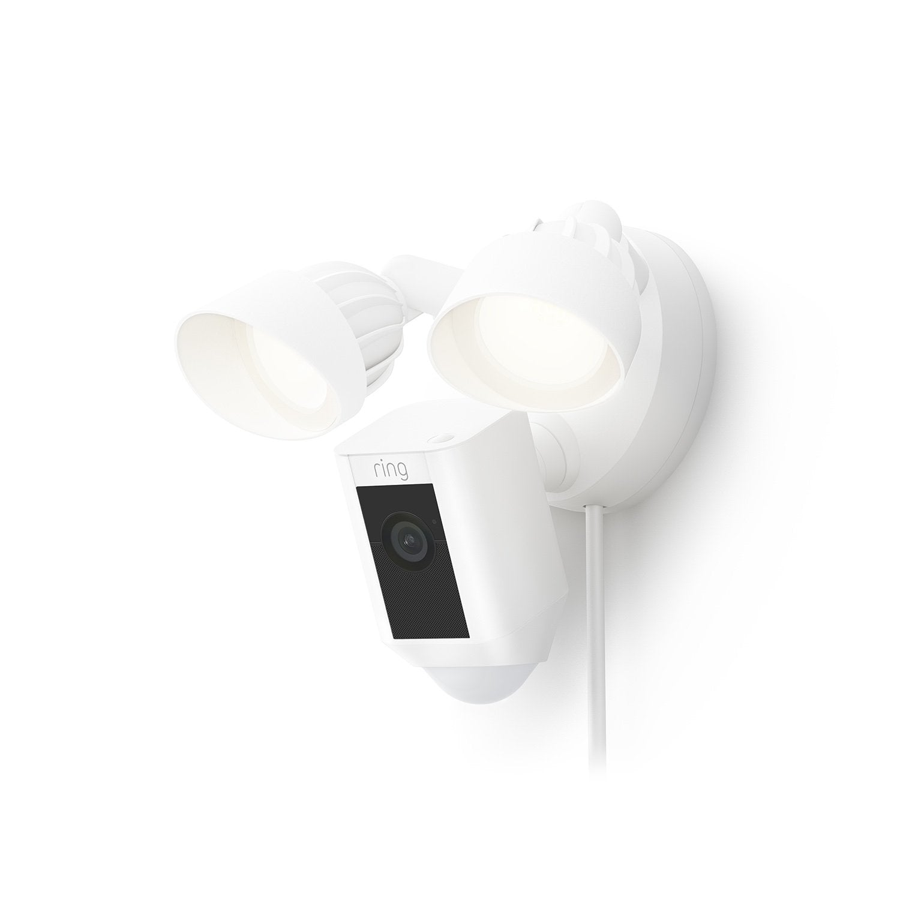
We install the floodlight cameras that hold up through a Hudson Valley winter and a stormy summer, and we’re honest about which ones charge a monthly fee. eufy (Floodlight Cam E340, built-in siren, local storage, no fee) and Lorex (4K and 1080p WiFi floodlight, dual 4,000-lumen panels, no fee) are our go-to no-subscription picks for a driveway, pool, or garden on a Westchester home. Reolink records locally too and is excellent over a wider estate lot, a long driveway, or a wooded perimeter. Ring (Floodlight Cam Pro, 270° view, 110dB siren) and Google Nest (Floodlight Cam) are everywhere up here and easy to live with, but gate AI alerts, smart zones, and video history behind a monthly plan — we install them if you want the ecosystem, but you’ll know the recurring cost first. For a corporate campus, a Central Avenue or downtown White Plains storefront, or an estate that wants 16-plus cameras, we’ll spec a floodlight-equipped Dahua or Hikvision tied into an NVR. On every HV job we add surge protection, and on wooded and estate runs we use rodent-resistant jacketed cable. We earn nothing extra steering you toward a brand — we pick what fits the spot, the lumens, and your budget, change default passwords, and secure the camera so it can’t be hijacked — and we’ll install one you already bought.
Every quote is fixed-price after we see the spot — here are honest ranges so you can budget first. What moves the price most is whether a live feed already reaches the spot you want lit. A swap onto an existing fixture is quick and cheap; running new wiring out to a pool house, a detached garage, or the head of a long driveway is more labor — on the longest estate runs, meaningfully more — but it’s the only way to light the spot that actually needs it. Westchester carries the Hudson Valley travel uplift from our Bronx office (White Plains is about 25 minutes), every install includes surge protection, and camera hardware is on top with no monthly fee on local-storage models.
You have an existing exterior light and junction box by the front door or garage — we swap in a floodlight camera, add surge protection, seal it, and set up the app. Fast, clean, same-day. Includes the Hudson Valley travel uplift.
No power at the pool house, detached garage, or the head of a long driveway — we run a new circuit, set a UL-listed box, and mount the cam. Price scales with the run length.
Several floodlight cams covering the driveway, pool, garage, and garden of a Westchester property, a mix of swaps and new runs, surge-protected throughout.
Floodlight cams wired into a full NVR system with bullet, turret, and PTZ cameras across a main house, guesthouse, pool house, and perimeter — quoted after a walk-through.
We come out to the Westchester property, check whether there’s an existing fixture and box or a new run is needed out to the pool house, garage, or driveway head, measure coverage and run length, plan surge protection and any preservation-board constraints, and hand you a written fixed-price quote.
We swap the existing fixture or run a new circuit — sometimes a long one to a pool house or driveway head — set a UL-listed weatherproof box with surge protection, mount the floodlight cam at the right height, aim the panels, and use rodent-resistant cable where wildlife is a factor.
We power it up, set up live view and alerts on your phone, tune the motion zones so the road, the deer, and wind-blown branches don’t trigger it, test the lights and siren, and walk you through the app.
How much does floodlight camera installation cost in Westchester County?
If there’s already an exterior light and junction box where you want it — usually by the front door or garage — a swap runs $330 to $640 plus the camera, including surge protection and the Hudson Valley travel uplift. If there’s no power there and we run new wiring out to a pool house, detached garage, or driveway head, it’s $640 to $1,900 depending on the run length. We lock in a firm price once we’ve seen the spot.
Why does the price jump for a pool house or the head of a long driveway?
A swap is straightforward — the box and the feed are already in place. A long run means pulling a circuit from the panel and getting it out across the lot to the pool house, garage, or driveway head, setting a weatherproof box, and tying it in to code. On a big estate lot that’s most of the labor, but it’s the only way to light a spot that never had power.
Do I really need surge protection on a floodlight camera up here?
In the Hudson Valley, yes — we treat it as standard, not an upsell. Westchester gets far more thunderstorms than the city, and a summer surge regularly kills unprotected cameras, PoE gear, and recorders. Building whole-camera surge protection in at the feed is cheap insurance against replacing the whole unit after the first storm.
I have a big wooded estate — can you cover the whole property?
Yes — that’s a core Westchester job. On a Bedford, Armonk, or Scarsdale estate we light and record the driveway head, the pool house, the detached garage, the guesthouse, and the perimeter, mixing swaps and new runs, aiming each per building, and tuning the wooded edges so deer and branches don’t trigger it. Estate scope often runs into a full multi-camera NVR system.
Can I just install a floodlight camera myself?
If you’re swapping an existing fixture and comfortable killing the breaker and matching three wires, some Westchester homeowners do. The moment there’s no existing wiring — a pool house, a detached garage, a long driveway head — it’s a licensed job, and a bad outdoor splice on a damp wooded lot is a real shock and water hazard. Most of our calls are people who bought the cam for the pool house or garage and found no power out there.
What about plug-in or solar floodlight cams that need no junction box?
A plug-in like the eufy E340 skips the box but needs an outdoor outlet within reach — rare at a pool house or driveway head on a Westchester lot. Solar floodlight options exist for the most remote estate spots with good sun, though tree cover up here often limits them. For a clean permanent install with full lumens we hardwire, but we’ll always tell you when a plug-in or solar saves you a long run.
How high should a floodlight camera be mounted?
Typically 8 to 10 feet up — tall enough to cover a 30-to-40-foot run of driveway and stay beyond reach, low enough to capture a face and a plate. On a long Westchester estate driveway we’ll set one at the house and one at the road end so the whole length is covered with no gap.
My floodlight triggers all night on deer and branches — can that be fixed?
Yes — on a wooded Westchester lot that’s a PIR sensor firing on deer, wildlife, and wind-blown branches. We crop the motion zones, drop the sensitivity, and use on-device person/vehicle AI or a radar-motion model so your phone only buzzes for real activity, not the herd crossing the yard at dusk.
I live in a Tarrytown or Sleepy Hollow historic district — can you still install one?
Yes — we do this regularly in the river villages. Where a preservation board restricts what goes on the facade, we use concealed mounts, rear-of-building runs, and color-matched hardware so the install meets the rules and stays discreet. We’ll plan that into the quote up front.
Do I need a licensed contractor for a floodlight camera in Westchester?
For a simple swap, not strictly — but any new wiring is a licensed job in New York and should be permitted and to code, especially a long run across an estate lot. We’re NYS licensed #12000287431 and insured, we wire to code, add surge protection, weatherproof it, and warranty the work.
Search “floodlight camera installation cost” and the AI Overview, Angi, HomeAdvisor, and Fixr hand you a flat national number that has little to do with a real Westchester install. Here’s what they leave out.
Angi, HomeAdvisor, and Fixr publish a flat floodlight-install average — around $400 a light — that ignores the single biggest factor in Westchester: whether there’s already power where you want it. A swap by the front door and a new circuit run out to a pool house or the head of an estate driveway are completely different jobs at completely different prices, and a national average hides exactly that.
Almost every “how to install a floodlight camera” guide assumes a single generic suburban house. Westchester is a Yonkers two-family, a Scarsdale Tudor, a Bedford estate, and a Tarrytown landmark all at once — and the right floodlight install for each is different. A generic guide can’t tell you that the estate needs four lights and the landmark needs a concealed one.
Generic floodlight content never warns you that the Hudson Valley gets far more thunderstorms than the city, and that a summer surge regularly kills an unprotected floodlight cam, PoE switch, or recorder. Up here surge protection isn’t a footnote — it decides whether your camera survives its first storm season.
A PIR floodlight on a wooded Westchester estate triggers all night on deer, raccoons, and wind-blown branches, so people mute the alerts and the camera goes useless — and rodents chew unprotected cable jackets and nest in enclosures. Tuned zones, person/vehicle AI, and rodent-resistant cable fix it, but a national guide never warns you.
Ring and Nest floodlight cams paywall AI alerts, smart zones, and video history behind a monthly plan, while eufy, Lorex, and Reolink record locally for free. National results rarely lead with this, and across the several cams a Westchester estate usually wants, that recurring fee adds up fast.
National content assumes one light covers the property. On a Bedford or Chappaqua estate with a 300-foot driveway, one floodlight at the house leaves almost all of it dark — you want one at the house and one at the road end, plus the pool house and garage. A pre-packaged kit and a one-size average can’t price that, which is why walking the lot beats any number quoted blind out here.
A floodlight camera is the highest-impact single device you can put outside a Westchester property — light, camera, and siren in one, exactly where a lot is darkest: the driveway, the pool house, the garage, the wooded edge. But the value is in the install: power run the full distance to the right spot, surge protection built in for the storms, the box sealed and the cable rodent-resistant where it needs to be, the height right, a cam at the road end of a long driveway, the motion tuned off the deer, a concealed mount where a preservation board requires it, and a brand whose monthly-fee story you understand. The smart move isn’t the cheapest sight-unseen quote — it’s a licensed installer who knows Westchester’s many kinds of property.
Easy to live with but a monthly plan unlocks AI alerts, smart zones, and history — a bill forever, times every cam on a big property. We start from no-fee local storage and fit Ring or Nest only when you specifically want that ecosystem.
An electrician can hang a floodlight, but won’t tune the camera, set motion zones off the deer, plan estate coverage, handle a preservation board, or secure the app. We do the wiring and the camera as one job, surge-protected, and stand behind both.
Works only if there’s an outdoor outlet exactly where you want the cam — rare at a Westchester pool house or driveway head — and the cord shows. We hardwire clean and permanent, or recommend solar where tree cover actually allows it.
Two devices, two installs, two failure points. A floodlight cam is light, camera, and siren in one fixture on one feed — less to mount and run power to over a big lot, less to maintain.
Free on-property assessment, fixed price with the travel uplift built in, fixture swap or full new wiring across the lot, surge protection standard, rodent-resistant cable where needed, right mounting height, a cam at the road end of a long driveway, tuned motion off the deer, concealed mounts for historic districts, no-fee local storage, warrantied — licensed NYS #12000287431.
This is our Westchester County floodlight page, part of our Hudson Valley hub. Jump up to the Hudson Valley floodlight hub, see our full Westchester camera service, or add a doorbell cam at the door. Back to our home page for everything we do.
Our Hudson Valley floodlight hub — coverage, pricing, and all six counties.
Hudson Valley Floodlight Hub →Our full Westchester camera service — whole-property NVR systems for homes, estates, and commercial.
Westchester Cameras →Pair the floodlight with a doorbell cam at the entry — the combo that stops Westchester porch theft.
Westchester Doorbell →Build the floodlight into a complete home system on a local NVR for your Westchester property.
Residential Westchester →We run a new circuit out to the pool house and set a weatherproof, surge-protected box, then mount a floodlight cam so the pool deck and the structure finally light up and record.
We put a floodlight cam at the house and a second at the road end so the full 300-foot length is lit and recorded — you see a car turn in before it gets close.
Common on wooded Westchester lots — we crop the zones and switch on person/vehicle AI so you only get alerts that matter, not the herd crossing the yard.
That’s the Hudson Valley surge problem. We re-mount with whole-camera surge protection at the feed so the next thunderstorm doesn’t take it out.
We work to the board’s rules — concealed mounts, rear-of-building runs, color-matched hardware — so the floodlight cam goes up and gets approved.
A common Westchester call — we run the power out to the garage, pool house, or outbuilding, set the box, and mount the cam you already bought, clean and to code.
“Eight-acre place in Bedford — main house, pool house, and a detached garage, with a driveway that runs about 300 feet. They ran power out to the pool house and garage, set one floodlight cam at the house and one at the road end, surge protection on all of it. Tuned so the deer don’t trigger it. No monthly fee.”
— Marcus T., Bedford
“Tudor in Scarsdale, dark side yard and a detached garage. Swapped the front fixture for a Lorex floodlight cam, ran a new line to the garage, color at night is excellent. Clean work, fair price even with the travel up from the Bronx.”
— Helen K., Scarsdale
“Historic house in Sleepy Hollow — the village board is strict about the facade. They used a concealed rear mount and color-matched hardware, got it approved, and I still get a lit, recorded driveway. Knew exactly how to handle the preservation rules.”
— Robert A., Sleepy Hollow
“Two-family in Yonkers — wanted the shared driveway and back parking covered. Two eufy floodlight cams, no subscription, built-in siren, surge-protected. Tuned so the street doesn’t set them off. Professional and quick.”
— Denise M., Yonkers
An eight-acre property in Bedford that shows exactly why the Westchester floodlight job spans so many problems at once. The owner had a main house, a pool house set about 150 feet back, a detached three-car garage, and a driveway that ran close to 300 feet from the road through woods — and after a landscaping trailer was emptied overnight, he wanted the whole footprint lit and recorded. The pool house was the first gap: a structure people gravitate to after dark with no power run to it, so we pulled a new circuit from the panel, ran it out along the tree line in conduit, and set a UL-listed weatherproof box on the pool-house wall, with surge protection at the feed because this is thunderstorm country and the last camera here died in a storm. Then the driveway: one floodlight cam at the house left the long wooded approach black, so we added a second at the road end, and a vehicle turning in is now lit and recorded 300 feet out. Because the lot is heavily wooded and backs onto preserve land, we cropped the motion zones hard and turned on person/vehicle AI so the deer and the wind-blown branches didn’t fire the lights and siren every night, and we ran rodent-resistant jacketed cable on the outdoor runs after seeing where squirrels had chewed the old lines. We set everything for full-color night vision, sealed and surge-protected every box, and put it all on local storage with no monthly fee. The cameras were the easy part — the value was getting power 150 feet out to a dark pool house, covering a 300-foot wooded driveway end to end, and protecting all of it against the next summer storm, which is exactly where a DIY kit leaves a Westchester owner stuck.
Floodlight not coming on, camera offline, lights stuck on, triggering on every deer or branch, dead after a thunderstorm surge, siren not working, or a long run to the pool house or garage that quit? We diagnose and fix floodlight cameras across Westchester County — replace surge-damaged gear and add protection, re-tune runaway motion off the wildlife, re-run a bad circuit across an estate lot, or swap a unit that failed. White Plains is about 25 minutes from our Bronx office.
Westchester County homeowners, estate managers, and businesses find us under many of these searches. Every one points to the same licensed crew — from a single floodlight camera installation on a driveway to a full estate multi-cam build, plus surge protection, historic-village mounting, repair, and service.
A swap onto an existing fixture and junction box — usually by the front door or garage — runs $330 to $640 plus the camera, including surge protection and the Hudson Valley travel uplift. A new-wiring run out to a pool house, detached garage, or driveway head runs $640 to $1,900 depending on the distance. Several cams or a complete estate build is priced once we’ve walked the grounds. No monthly fee on local-storage models.
Yes — that’s the install most Westchester owners actually need. We pull a new circuit from the panel and run it the full distance to the pool house, garage, or driveway head, set a UL-listed surge-protected weatherproof box, and mount the floodlight cam, all to code.
In the Hudson Valley, yes — we treat it as standard. Westchester gets far more thunderstorms than the city, and a summer surge regularly kills unprotected cameras, PoE gear, and recorders. Whole-camera surge protection at the feed is cheap insurance against replacing the unit after the first storm.
Yes — that’s a core Westchester job. On a Bedford, Armonk, or Scarsdale estate we light and record the driveway head, pool house, detached garage, guesthouse, and perimeter, mixing swaps and new runs, tuning the wooded edges off the deer, often as a full multi-camera NVR system.
Almost always on a Westchester estate. One light at the house leaves the road end of a 200-to-300-foot driveway dark. We set one at the house and one at the road end — sometimes a third at the pool house or gate — so the full length is lit and recorded.
Yes — we do this regularly in the river villages. Where a preservation board restricts the facade, we use concealed mounts, rear-of-building runs, and color-matched hardware so the install meets the rules and stays discreet, planned into the quote up front.
Yes — on a wooded Westchester lot that’s a PIR sensor firing on deer, wildlife, and wind-blown branches. We crop the motion zones, drop the sensitivity, and use on-device person/vehicle AI or a radar-motion model so your phone only buzzes for real activity.
eufy, Lorex, and Reolink for no-monthly-fee local storage; Ring and Nest if you want that ecosystem (they charge monthly for AI and history); and Dahua or Hikvision floodlight-equipped cameras on an NVR for a corporate campus, estate, or White Plains storefront. And we’re glad to mount a unit you already own.
eufy, Lorex, and Reolink record to local storage with no recurring fee for basic motion recording. Ring and Nest paywall AI alerts, smart zones, and history behind a plan. We tell you which features are free before you buy — it adds up across the cams a Westchester estate usually wants.
Yes — the floodlight produces true-color footage after dark instead of gray infrared, so you get a real face, car color, and plate at the end of a long, dark Westchester driveway at night.
Yes — models with a built-in 95dB+ siren and two-way audio let you trigger the alarm and speak through the camera. On a dark, set-back estate lot or by a pool house the light coming on is often enough on its own.
Yes — from Yonkers, Mount Vernon, and New Rochelle in the south through White Plains and Scarsdale to the estate country of Bedford and Pound Ridge and the river villages of Tarrytown and Sleepy Hollow. White Plains is about 25 minutes from our Bronx office, so Westchester is our closest, fastest Hudson Valley county.
"Excellent work installing cameras at my building in Brooklyn. Clean wiring, professional team, everything works perfectly on my phone."
"Best security camera company in NYC. Cameras on my brownstone without damaging the brick. Cables completely hidden. 4K picture quality is incredible."