What are you looking for?
About Us Contact Us Careers Get a Free Quote (800) 486-0943
Pick a service
✅ Got Your Own System?
🎬 Home TheatreQuote 🎶 AV SoundQuote 🔑 Access ControlQuote
Now pick your area
Pick your area
Long Island
Hudson Valley
Services available
Pricing & Tools
Pick a service for pricing
🚪 Intercom Pricing 🔔 Buzzer Repair Pricing
Calculators
📹 Camera System Calculator 🚨 Alarm Calculator ⚡ Cabling Quote Builder ✅ Got Your Own System?
Select your area
Weighing ADT, SimpliSafe or a local alarm company? Ask a licensed New York installer that has no ADT or SimpliSafe quota to fill: (800) 486-0943
Home › Best Security Camera Brands › ADT vs SimpliSafe vs Local Installer
Installer Comparison · Contracts, Monitoring and Equipment · Facts From adt.com and simplisafe.com · NYS Licensed Installer

ADT vs SimpliSafe vs a Local Licensed Installer:
Which Alarm Is Better?

Contracts, Monitoring, Installation, Equipment, Apps, Backup and Warranty · Also Searched as SimpliSafe vs ADT · Updated November 2026

ADT vs SimpliSafe vs a local licensed installer has a different winner for each kind of New York home: SimpliSafe for renters and single apartments, because it needs no drilling, no contract and moves with you; ADT for owners staying three years or more who want a technician to install a national-brand system with Google Nest cameras on one app and accept a 36-month contract; and a local licensed installer for brownstones, multi-floor houses, walk-ups, stores and anyone with an old wired alarm worth reusing.

Quick answer: Renting or covering one apartment? Pick SimpliSafe: month-to-month monitoring, peel-and-stick sensors, a 60-day money-back guarantee. Want ADT's own technician and Google Nest cameras, and staying put? ADT's professional install fits, on a 36-month contract with an early-termination charge. Bigger building, a business, or an old wired system? Use a licensed local installer: our basic NYC alarm starts at $600 installed with a panel, 4 to 6 sensors, a motion detector, keypad and cellular backup, and no long-term contract. We book requests within 2 hours.

The three get confused because they are sold side by side, but they are three different ways of buying protection. ADT's main service is a system installed by ADT and paid for through a monitoring contract. SimpliSafe is equipment you buy, put up yourself and monitor month to month if you choose. A local licensed installer designs a system for your particular building and connects it to a monitoring station or your phone. Which one is better depends on whether you rent or own, how long you will stay, how big and old the building is, and who you want to call when something goes wrong. This page answers that question from the point of view of a licensed New York alarm company that sells neither brand and services all three kinds of system. ADT and SimpliSafe facts come from their own websites, checked November 13, 2026; our prices sit in their own section further down.

Reviewed and updated November 13, 2026, against ADT's monitoring plans page, ADT Blu monitoring page, deals page and residential terms and conditions (adt.com/pricing returned "page not found" that day); SimpliSafe's professional monitoring page and homepage; New York General Business Law Article 6-D, section 69-m, and the Department of State's security and fire alarm installer licensing page; and a live search of what ranks for "ADT vs SimpliSafe" (U.S. News, Security.org, SafeHome, CNET, SimpliSafe's own comparison page, Reddit r/simplisafe and r/homesecurity threads, Facebook groups and YouTube comparisons among them). Brand prices are the companies' own published figures on that date, several of them promotional, and are kept in their own section. Our installed prices come from our NYC alarm installation page. Where a company's page did not say something, this page says so instead of guessing. · Checked by the Abstract Enterprises Security Systems team (NYS license #12000287431), Troy Avenue, Brooklyn
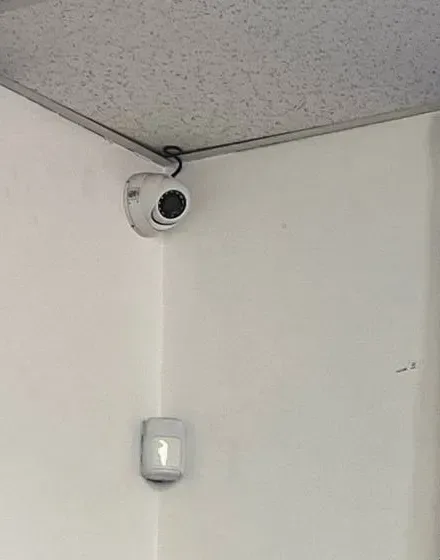
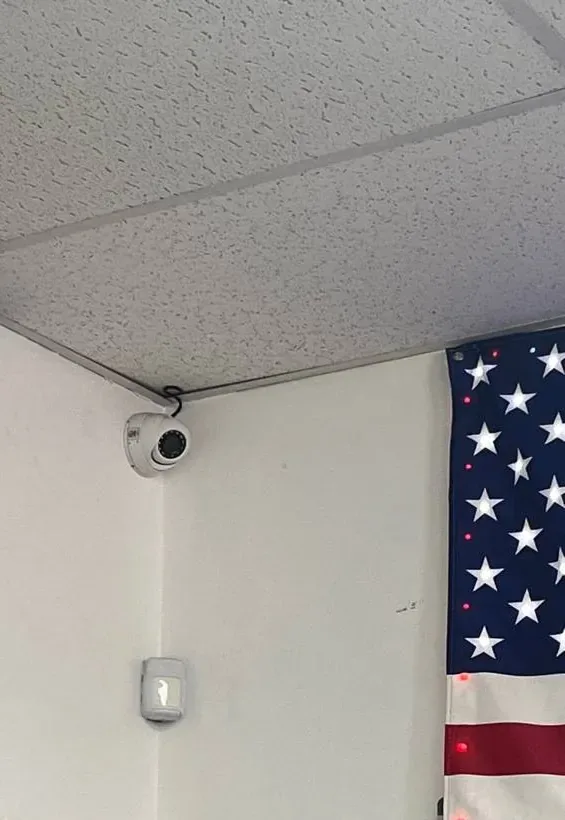
White motion sensor on a wall below a white dome camera in a ceiling corner, ADT vs SimpliSafe NYC comparison
One of our own job photos, not tied to a specific New York address: a white motion sensor sits on a pale wall below a white dome camera tucked into the corner where two walls meet a speckled ceiling, its cable looped along the ceiling edge. A motion sensor in a corner like this one watches the whole room, which is the job a single stick-on sensor on a door cannot do.
ADT, SimpliSafe or Local?
Tell us about the place and what you have now, and a technician calls back with a straight recommendation and, if it fits, an installed price

✅
Request Sent!
Thanks. A licensed alarm technician will call you inside 2 hours on business days.
25+
Years Experience
None
Long-Term Contract Required by Us
100%
Licensed & Insured
4.7★
201 Google Reviews

Owner-operated since 2002 · Thousands of jobs completed · Booked within 2 hours
The short version. These three choices are not three brands of the same product. They are three ways of buying protection. ADT, in its main professionally installed form, sells you a system and a monitoring contract together: a technician puts in the equipment, and you agree to pay for ADT's monitoring for a fixed term. ADT's own terms page, which we read on November 13, 2026, describes that term as a 36-month monitoring contract in most states, with a charge if you leave early. SimpliSafe sells you the equipment outright, ships it to your door, and lets you stick the sensors up yourself; monitoring is a separate subscription that runs month to month and can be cancelled at any time. A local licensed installer is a New York company that designs and installs a system for your particular building, usually on panels sold through professional dealers, and then either connects it to a central monitoring station or hands it over to you to watch from your phone.

So the honest answer to "which is better" depends less on the logos and more on three questions about your situation. First, will you be in this home for at least three years, and are you comfortable signing for that long? Second, is the place a single apartment you can cover with a few stick-on sensors, or a building with several floors, a basement, a back yard, a storefront gate or a stair that a battery sensor will not cover well? Third, when something goes wrong in two years, who do you want to call: a national support line, a website and a box in the mail, or a technician who knows your building and can be there?

We are a licensed New York State alarm installer (license #12000287431) based on Troy Avenue in Brooklyn. We do not sell ADT or SimpliSafe, and we will say so plainly: both are real, established companies whose systems work for millions of households, and for many New York renters SimpliSafe is the right call. We also take over, repair and replace systems that other companies put in, so we see what happens to all three kinds of system years after the sale. Everything on this page about ADT and SimpliSafe comes from their own websites, checked on November 13, 2026, and we tell you where their prices are promotional or where their own pages disagree with each other. Our own installed prices sit in one separate section, away from theirs, because a shelf or sale price and an installed price for a specific building are not the same thing.

Side by Side

ADT vs SimpliSafe vs a Local Licensed Installer in One Table

ADT sells two quite different products under one name, so the table compares ADT's professionally installed service (the one most people mean by "ADT") and notes its do-it-yourself line, ADT Blu, where it differs. On the SimpliSafe side we compared its standard do-it-yourself system with its professional monitoring plans. The third column describes what a licensed local installer like us typically puts in; other local companies will differ, which is exactly why you should ask each one the same questions. Every ADT and SimpliSafe cell comes from the company's own pages. We have deliberately left dollar figures out of this table: brand prices are listed with their dates and conditions in their own section below, and our installed prices are in a separate section further down.

What we comparedADT (Pro Install; ADT Blu noted)SimpliSafeLocal licensed installer (how we work)
What you are buyingA professionally installed system tied to an ADT monitoring plan; ADT Blu is a separate do-it-yourself kit with month-to-month plansEquipment you buy and install yourself, plus an optional monthly monitoring subscriptionA system designed for your building, installed by a licensed technician, with monitoring you can add or drop
EquipmentADT Base, sensors and the ADT+ app, with Google Nest cameras and doorbells on Pro Install; ADT Blu has its own cameras, and ADT says Google Nest Cams do not work with BluSimpliSafe base station, keypad, peel-and-stick entry and motion sensors, water and glass-break sensors, indoor and outdoor cameras and a video doorbellProfessional panels such as Honeywell, DSC, Qolsys, Napco, Bosch and DMP; wired, wireless or a mix of both; cameras and doorbells added where they fit
InstallationADT technician for Pro Install, with a free in-home consultation offered; ADT Blu is self-installed, and ADT says professional installation is not available for itDo it yourself, which SimpliSafe says takes under an hour; paid professional installation is offeredAlways installed and tested by the company; cable can be run inside walls and ceilings where a building calls for it
MonitoringADT's own six U.S. monitoring centers; three Pro Install plans (Secure, Smart, Complete); Alarm Messenger texts to confirm or cancelProfessional monitoring plans (Core, Pro, Pro Plus) plus cheaper basic and self-monitoring options; agents can use cameras to verify alarmsA central monitoring station under contract to the installer, or self-monitoring through the panel's app; can usually be changed later
ContractPro Install: 36-month monitoring contract in ADT's terms (24 months in California), with an early-termination charge; ADT Blu: no long-term contractNo contract; plans billed monthly and cancellable at any time; 60-day money-back guarantee on equipmentVaries by company; we do not require a long-term monitoring contract. Ask every local company for its terms in writing
AppADT+ app: arm and disarm, cameras, smart home, Trusted Neighbor and MySafety on qualifying plansSimpliSafe app: arm, disarm, confirm or cancel alarms, watch cameras, save familiar faces where allowedThe panel maker's or monitoring platform's app (for example Alarm.com, Honeywell or Qolsys apps), set up and handed over by the installer
Smart-home fitStrongest with Google Nest; lights, thermostats and locks through ADT+; ADT Blu works with Google Nest Hub (2nd gen) and Z-Wave devicesAmazon Alexa and Google Assistant voice arming; August smart locks lock and unlock with armingDepends on the panel; many professional panels support Z-Wave locks, lights and thermostats, and the system can be tied to cameras and door access
Backup when Wi-Fi or power failsCellular backup from the ADT Base; 24-hour battery backup on the Base and sensors; Nest cameras keep up to one hour of events locallyBuilt-in network backup and up to 24-hour battery on the base station; cameras need Wi-Fi to stream and recordCellular communicator and standby battery in the panel are standard on our installs; hardwired sensors draw power from the panel
WarrantyADT Blu: 90-day limited warranty; Pro Install: ADT's extended limited warranty (QSP) is a separate monthly purchaseLifetime hardware warranty while you keep an active monitoring subscriptionManufacturer warranty on the parts plus the installer's own written terms (ours are in our service agreement)
When you movePro Install is tied to the contract and the address; ADT describes ADT Blu as something you can take with youYou own it; peel it off and set it up in the new homeWired parts stay with the building; a wireless panel can sometimes move, but it is usually left for the next owner
Best forOwners staying three years or more who want a national brand, a technician to install it and Google Nest cameras on the same appRenters, small apartments and owners who want no contract, a quick setup and the option to cancelBrownstones, multi-floor houses, walk-ups, co-ops, stores and offices; anyone with an old wired system worth reusing; anyone who wants to own the panel and choose the monitoring

Three rows deserve a second look before anyone decides. The contract row is the biggest practical difference: ADT's professionally installed service and SimpliSafe sit at opposite ends, and ADT itself has moved toward the middle with ADT Blu. The installation row hides a real difference in what gets protected; a battery sensor stuck on a door frame and a sensor wired into a basement door are both "a door sensor" on a brochure, but they behave differently after five New York winters. And the warranty row only makes sense alongside the monitoring row: SimpliSafe's lifetime hardware warranty depends on an active monitoring subscription, and ADT's money-back guarantee depends on paying for both its extended warranty plan and monitoring from the day the system goes live. The sections below take each of these in turn.

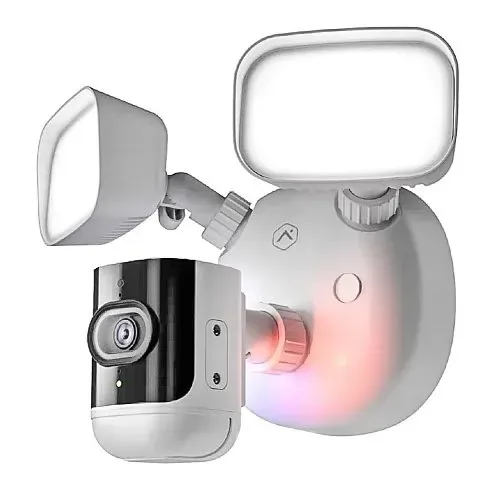
White Alarm.com floodlight camera with two lamp heads and a camera below, product photo, ADT vs SimpliSafe NYC
An Alarm.com product photo of a white floodlight camera: two square lamp heads on arms above a round base with the house-shaped Alarm.com logo, and a black-faced camera below. Alarm.com is the monitoring platform behind many professionally installed panels, including systems we install; this is not ADT or SimpliSafe equipment.
The Decision

Who Should Pick ADT, Who Should Pick SimpliSafe, and Who Should Call a Local Installer

Most people who search "ADT vs SimpliSafe" in New York are not alarm hobbyists. They are a new parent in a Park Slope rental who wants something on the front door, a retired couple in a Canarsie two-family who keep getting ADT mailers, a deli owner in Washington Heights whose old keypad has started beeping, or a co-op board member in Forest Hills asked to "look into alarms" for the storage rooms. Here is how we would steer each kind of person, with the reasons.

Pick SimpliSafe if you rent, or if the space is one apartment

A rental is the clearest case. SimpliSafe's sensors peel and stick, so nothing gets drilled into a landlord's door frame, and you take the system with you when the lease ends. There is no contract to break if you move, and SimpliSafe's monitoring plans are billed month to month. For a one- or two-bedroom apartment with one entry door, a fire escape window and maybe a terrace door, a base station, a keypad, a few entry sensors, one motion sensor and an indoor camera cover the realistic risks. SimpliSafe also offers a water sensor, which in an older building with radiators and a neighbor's bathroom above you is often the most useful sensor in the box. We would not try to talk a renter out of SimpliSafe; it is a good fit, and paying an installer to wire a rental apartment rarely makes sense.

Pick SimpliSafe if you want to try monitoring without committing

Some owners are not sure they want a monitored alarm at all. SimpliSafe lets you start on its basic or self-monitoring options, move up to professional monitoring if you decide you want it, and cancel without a fee. Its 60-day money-back guarantee on equipment also means a system that does not suit your home can go back in the box. That flexibility is worth something, and it is the main reason review sites keep picking SimpliSafe in this comparison.

Pick ADT if you want a national name, a technician, and Google Nest on one app

ADT's professionally installed service suits a homeowner who plans to stay put, who wants someone else to choose sensor locations and put everything in, and who likes the idea of Google Nest cameras and doorbells living in the same ADT+ app as the alarm. ADT runs its own monitoring centers rather than outsourcing them, it has a free in-home consultation, and its Alarm Messenger text system lets you and your contacts confirm or cancel an alarm from a phone. If the 36-month term and an early-termination charge do not worry you, ADT is a reasonable, mainstream choice.

Pick ADT Blu instead of SimpliSafe only if you are already living in Google's world

ADT Blu is ADT's answer to SimpliSafe: self-installed, no long-term contract, plans that can be changed or cancelled. On paper the two are close. ADT says Blu works with Google Nest Hub (2nd gen) and Z-Wave smart-home devices, so if your home already runs on a Nest Hub and Z-Wave lights, Blu may slot in more neatly. Note, though, that ADT's own Blu page says Google Nest Cams are not compatible with Blu systems; the Nest camera integration belongs to ADT's professionally installed service. If you already own Nest cameras and want them in the alarm app, Blu is not the route.

Call a local licensed installer if the building is bigger than one floor of one apartment

A brownstone with a garden-level door, a parlor floor, two upper floors and a roof hatch has a lot of openings, long distances and thick masonry walls between the base station and the far sensors. A two-family house in Queens often has a separate basement entrance, a side alley gate and a detached garage. A walk-up has a vestibule, a cellar, a roof door and perhaps a storefront on the ground floor. These are the buildings where a wired panel, or a professional wireless panel with sensors chosen and placed by someone who has done hundreds of them, earns its keep. They are also the places where an existing wired system is often still sitting in the walls, waiting to be reused.

Call a local licensed installer for a store, office or restaurant

SimpliSafe says plainly that its Active Guard Outdoor Protection is designed for residential use, not commercial use. ADT has a separate small-business line with its own contracts. A store owner in New York usually needs things a consumer kit is not built around: a code for each employee, opening and closing reports, a panic button under the counter, a sensor on the rolling gate or the back door to the yard, glass-break detection on a storefront window, and often a link between the alarm and the camera recorder. A local installer quotes the actual layout, and you can see the hardware before it goes up.

Call a local licensed installer if you already have an old wired alarm

Many New York homes and shops already have a hardwired alarm from a previous owner or a company that has since gone quiet: a beige keypad by the door, a metal box in the basement, wired contacts in the door frames. Very often the wiring and sensors are fine, and only the panel, the keypad or the phone-line communicator is out of date. A licensed installer can often keep the good wiring, replace the panel with a modern one that has a cellular communicator and an app, and reconnect it to a monitoring station. That usually beats tearing everything out to start again with stick-on sensors, and it is not something ADT's or SimpliSafe's websites offer.

Pick none of them yet if you have not walked the property

Before you choose a company, walk your own home or business as a burglar would. Which doors and windows can be reached from the street, the yard, a fire escape or a neighbor's roof? Where would someone go first once inside? Where would water or smoke start? That list, not a brand comparison, decides how many sensors you need and where. Once you have it, any of the three options can be judged on whether it actually covers your list.

Brand Pricing

What ADT and SimpliSafe Publish About Their Pricing

This section lists only what ADT and SimpliSafe say on their own websites, as we read them on November 13, 2026. These are the companies' figures, not ours, and both companies change prices and run sales often. Treat every number here as a snapshot with a date on it, and read the current terms on the brand's own site before you buy. We have not put any of our own prices in this section.

ADT's professionally installed service

ADT's monitoring page lists three monitoring plans for professionally installed systems. Secure Monitoring is for systems without smart-home devices or cameras, Smart Monitoring is for systems with smart-home devices but no cameras, and Complete Monitoring is for systems with cameras; ADT says Complete includes 30 days of stored video clips with Nest Aware. The same page answers "How much does ADT Pro Monitoring cost?" with "Pro Monitoring starts at $49.99 for Pro Install."

The starting figure is not the same on every ADT page. ADT's residential terms page ties one promotion to a "36-month monitoring contract starting at $44.99/mo.", other ADT pages we found mention other starting monthly figures for professionally installed plans, and the deals page advertises "40% off professionally installed Essentials Kit," which "Requires 36-month monitoring contract starting at $49.99/mo." and must be claimed by phone, with a date of December 14, 2026 in the fine print. In other words, ADT's monthly price depends on the plan, the equipment, the offer and the state, and ADT says installation and service charges "vary depending on system configuration, equipment and services selected." The figure that matters is the one in your written contract.

The terms page also lists conditions that apply to its professionally installed offers: enrollment in ADT AutoPay, "Satisfactory credit history required," and, for the 36-month contract, "Upon early termination of 36-month monitoring contract, ADT may charge 75% of the monthly service charges due for the balance of the initial contract term." In California the term is 24 months. That early-termination clause is the single most important line to understand before signing, and we come back to it in the contracts section.

ADT Blu, ADT's do-it-yourself line

ADT Blu's monitoring page lists three plans, each with "No long-term contract. Cancel or switch plans, anytime.": Video Connect at $9.99 a month (cameras only, no professional monitoring), Self-Protect at $14.99 a month (you monitor the system yourself through the ADT+ app) and Pro-Protect at $34.99 a month (ADT's 24/7 professional monitoring, video verification, Alarm Messenger and cellular backup). The page says adding cameras to a system requires an additional $10.00 a month, and professional monitoring of smoke and carbon monoxide devices adds $3 a month. ADT's terms page describes Pro-Protect for Blu kits as running "from $24.99 - $37.99/mo. depending on Kit selected," so again the exact figure depends on what you buy.

The Blu kits were on a 40% discount when we checked, with an expiry date of November 18, 2026: Build My System at $99 (a Base, two door and window sensors, a yard sign and window stickers), Video Essentials at $199, Outdoor Video at $229 and Total Safety at $419. ADT also advertised a free first month of monitoring if the devices are activated in the app within 30 days, and free shipping with free returns within 30 days. These are sale prices with an end date, not standing prices.

SimpliSafe

SimpliSafe prices monitoring by the day and bills it monthly. Its monitoring page lists Core at $1.10 a day (24/7 professional monitoring and dispatch, video verification, unlimited camera recordings with 30-day cloud storage for up to 10 cameras), Pro at $1.66 a day (Core plus overnight Active Guard Outdoor Protection from 8 p.m. to 6 a.m. local time) and Pro Plus at $2.66 a day (Core plus 24/7 Active Guard Outdoor Protection). Each is marked "Free trial. No contract. Cancel any time." Below those, SimpliSafe lists Standard Monitoring at 76 cents a day, which requests police dispatch without camera recording or video verification, and Self Monitoring with Camera Recordings at 33 cents a day.

SimpliSafe's homepage says professional installation starts at $124.99 and that equipment comes with free shipping, free returns and a 60-day money-back guarantee. When we checked, a banner advertised a "Flash Sale" of "60% OFF any new system with professional monitoring" ending that Sunday, so equipment prices on any given day depend on the current promotion. SimpliSafe also offers an Anti-Theft Guarantee on its Pro and Pro Plus plans, up to $500 toward your insurance deductible after a break-in while the system was armed, under its stated conditions.

How to compare the two honestly

Do not compare a monthly price to a daily price, and do not compare a sale price to a standing one. Convert everything to the same period and add it up over the time you expect to stay: equipment, installation, monitoring, any camera or add-on fees, sales tax, and, for a contract, what it would cost to leave early if your plans change. Then ask what each price actually includes. A plan that records camera video and lets agents verify an alarm is not the same service as one that only requests a dispatch. Review sites that rank these companies often earn a fee when you click through, as their own disclosures say; the companies' terms pages are the more reliable source.

Contracts

Contracts and Cancelling: 36 Months, Month to Month, or Your Own Terms

If there is one difference between ADT and SimpliSafe that changes people's lives, it is the contract. It decides what happens when you move, when money gets tight, when a parent goes into care and the house sits empty, or when you simply decide the service is not worth it.

ADT's professionally installed contract

ADT's residential terms describe a 36-month monitoring contract for its professionally installed offers (24 months in California) and say that if you end it early, "ADT may charge 75% of the monthly service charges due for the balance of the initial contract term." Put simply, if you cancel with a year left, ADT may bill you most of that year. That is not unusual in the alarm industry, where a discounted installation is paid back through monitoring, but it is the reason so many forum threads about ADT are about cancelling. Read the contract's term, renewal and cancellation sections before the technician arrives, not after, and ask whether the agreement renews automatically at the end of the term.

The terms also say a satisfactory credit history is required, AutoPay enrollment is required for the promotions we read, and a security deposit may be required. For a homeowner who is certain to stay, none of this is a problem. For someone who might move for work, sell within two years, or who is buying for an elderly relative, it deserves careful thought.

ADT Blu and SimpliSafe: month to month

ADT Blu and SimpliSafe both advertise no long-term contract. SimpliSafe says its plans are billed monthly and can be cancelled at any time, and ADT says Blu plans can be cancelled or switched any time. That makes the equipment the main money at risk, and SimpliSafe's 60-day money-back guarantee and ADT Blu's 30-day free returns cover the first weeks. The trade-off is that you are the installer, and a system you set up is only as good as the places you put the sensors.

A local installer: ask for the paper

Local alarm companies vary widely. Some sign customers to three- or five-year monitoring agreements much like the national brands; others, including us, do not require a long-term monitoring contract. The point is not that local is automatically better; it is that you can see and negotiate the terms with the person who will service the system. Ask any local company four questions in writing: how long is the monitoring agreement, what does it cost to cancel early, does it renew automatically, and who owns the panel and its programming codes if you leave. A good company answers all four without hesitation. If a company will not give you the installer code for a panel you paid for when you end service, that is a reason to keep looking.

What happens if you move

With SimpliSafe, you peel the sensors off and set them up in the new place. ADT describes ADT Blu as something you can take with you. A professionally installed ADT system is tied to a contract and an address, so a move means talking to ADT about transferring or ending service under the contract's terms. A wired system installed by a local company stays with the building; that is a selling point for a house, and the next owner can usually have it reconnected to their own monitoring.

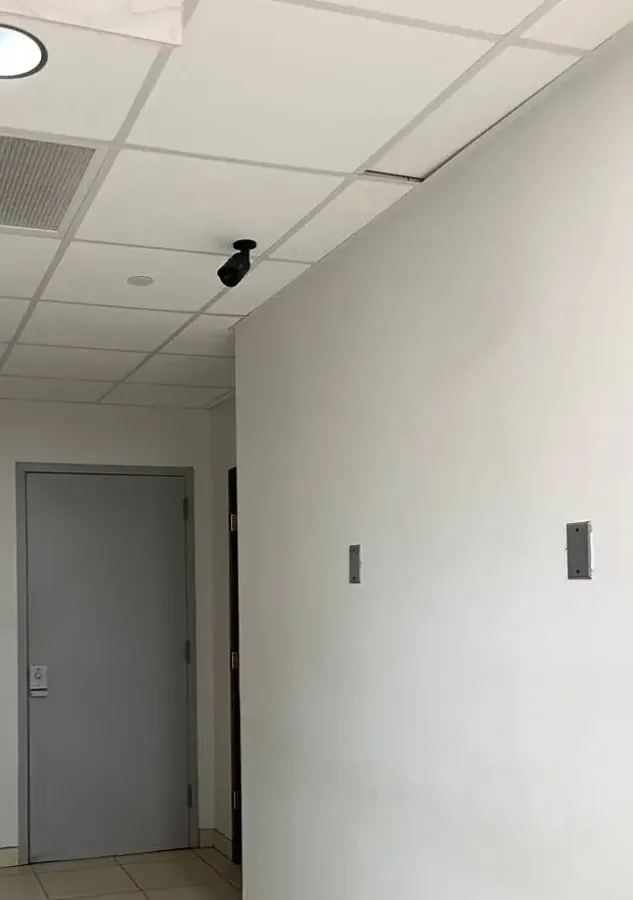
Grey door with a keypad lever lock at the end of a white hallway under a black ceiling camera, ADT vs SimpliSafe NYC
One of our job photos, not from a single New York address: a grey door with a keypad lever lock at the end of a short white hallway, a black camera on the ceiling above and two small plates on the wall. A back or side door like this one is where a contract, a sensor choice and a monitoring plan all get tested, because it is the door nobody watches.
Installation

Installation: A Technician, a Box in the Mail, or Cable in the Walls

How a system goes in decides how well it covers the building, and in New York buildings the differences show up quickly.

ADT Pro Install

With ADT's professionally installed service, an ADT technician installs the system. ADT also offers a free in-home consultation where an ADT Solutions Advisor visits and recommends a system. That is a real advantage over a box in the mail: someone else decides how many sensors you need and where, and someone else takes responsibility for making the equipment talk to the monitoring center. ADT's sites we read did not describe the installation method in detail, such as whether its technicians wire sensors into walls or mount wireless ones, so ask the advisor exactly what will be installed at each door and window, and whether any holes will be drilled.

SimpliSafe and ADT Blu: do it yourself

SimpliSafe says its system needs "no tools, no drilling, no technician visit," with sensors that peel and stick and an app that walks you through setup in under an hour. ADT says much the same about ADT Blu. For an apartment this is genuinely easy. The common mistakes we see with self-installed systems are a motion sensor aimed at a sunny window or a radiator, an entry sensor on a door that sags in summer so the magnet drifts out of range, a base station tucked in a closet where its siren is muffled, and a keypad placed where it can be seen through the front door glass. SimpliSafe also offers a paid professional installation if you would rather not do it yourself; ADT says professional installation is not available for Blu.

A local licensed installer

A licensed installer designs the system around the building before anything goes up. In a brownstone that may mean wired contacts on the garden and parlor doors, wireless sensors on upper-floor windows where running cable would damage plaster, a motion detector covering the stair, a glass-break detector for the parlor windows, and a second keypad on the top floor so nobody walks downstairs past a sleeping alarm. In a store it may mean a contact on the rolling gate, a sensor on the back door, glass-break on the window and a panic button at the register. Cable is run through basements, ceilings and existing chases where possible, and every zone is tested against the monitoring station before the technician leaves.

Old buildings and thick walls

Wireless sensors talk to the base station by radio, and radio struggles through brick, plaster on metal lath, and floors with steel beams. Every major wireless system has a range, and in a narrow, deep New York building the farthest sensor is often at the edge of it. Some systems offer range extenders, and professional panels can usually take additional wireless receivers or wired zones. If you self-install in a large or old building, test each sensor from its final position, with doors closed, before you rely on it.

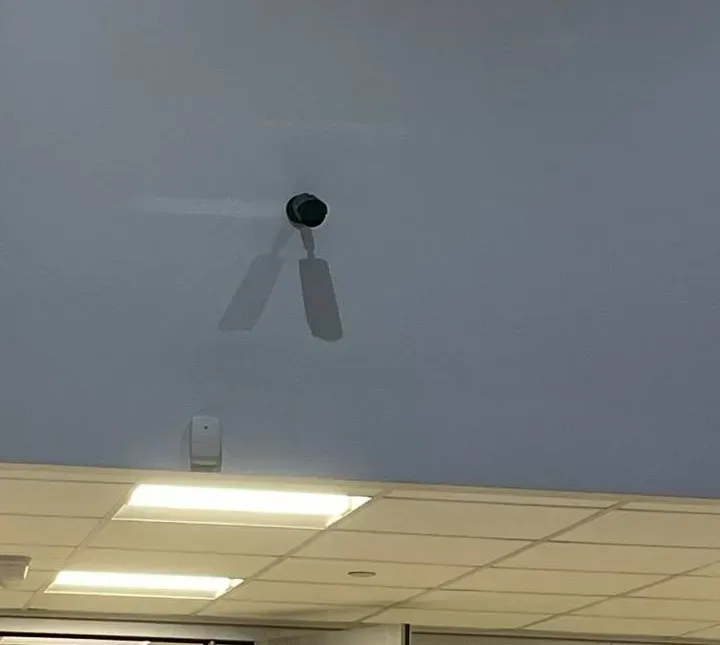
Small white motion sensor on a blue wall below a black camera, drop ceiling lights below, ADT vs SimpliSafe NYC
A photo from one of our jobs, not linked to an address: a small white motion sensor is mounted high on a blue-grey wall, under a black camera on a short arm, with a drop ceiling and bright light panels running beneath. Mounting height and aim are decided on the spot in a professional install; in a do-it-yourself kit they are decided by whoever opens the box.
Equipment

Equipment: What Each Option Actually Puts on Your Walls

An alarm system is a small set of parts: a controller (the base or panel), a way to arm and disarm it (a keypad, a key fob or an app), sensors on the openings, motion detectors inside, a siren, a path to the monitoring station, and, increasingly, cameras. Each option puts those parts together differently.

ADT

ADT's pages describe the ADT Base as the heart of its current systems, with cellular backup and a battery, controlled through the ADT+ app. On professionally installed systems, ADT pairs the alarm with Google Nest cameras and doorbells; ADT's monitoring page says Nest cameras can be used for video verification and that the Complete plan includes 30 days of clips with Nest Aware. ADT Blu has its own line of cameras and kits; the Blu kits we read about include a Base, door and window sensors, a motion sensor, water and temperature sensors, a smoke and carbon monoxide detector, and Blu indoor, outdoor and doorbell cameras, depending on the kit.

SimpliSafe

SimpliSafe builds its own equipment: a base station with a siren and backup, a keypad, entry sensors, motion sensors, glass-break sensors, water sensors, a panic button, indoor and outdoor cameras and a video doorbell. Its sensors run on batteries that SimpliSafe says last up to three to five years depending on placement, use and settings. Its Active Guard service, where agents watch and speak through outdoor cameras, works with the Outdoor Camera (Series 2) and the Video Doorbell (Series 2), up to three cameras in total, and SimpliSafe says the outdoor camera must stay plugged in for the service to work.

A local licensed installer

Local installers mostly use panels sold through professional dealers rather than in stores. Ours most often include Honeywell (Vista and Lyric), DSC (PowerSeries and Neo), Napco, Bosch, DMP and Qolsys IQ panels. These accept hardwired zones, professional wireless sensors, or both, and they can be reprogrammed by any licensed company with the installer code, which matters if you ever change who monitors the system. Hardwired sensors have no batteries to replace. The trade-off is that professional panels are less glossy than consumer kits, and their apps come from the monitoring platform rather than a single consumer brand.

Sensors that matter most in New York

Whatever brand you choose, the same handful of sensors does most of the work here. A contact on every door at street, yard and roof level. A contact or glass-break detector on any window reachable from a fire escape, a low roof, a yard or the sidewalk. A motion detector on the main stair or hallway, so an intruder who comes in through an unprotected window still crosses a beam. A water sensor near the boiler, the water heater and under the kitchen sink. Smoke and carbon monoxide detection that a monitored system can report to the central station when no one is home to hear it.

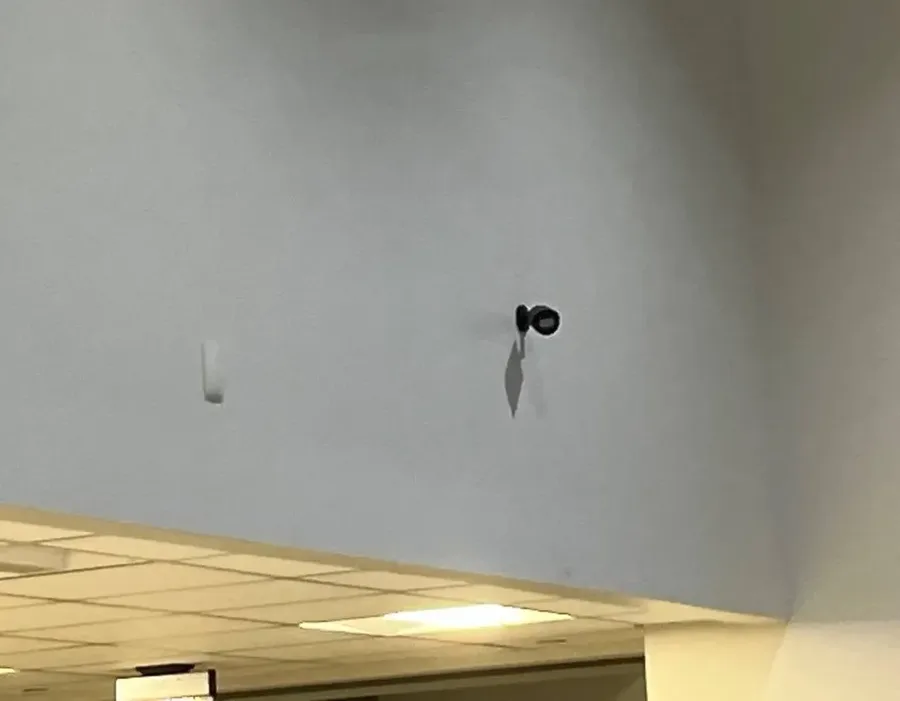
Small white wall sensor beside a black camera above a lowered ceiling, ADT vs SimpliSafe NYC
From our own job files, not a specific New York building: a small white sensor on a pale grey wall to the left of a black camera on a short mount, above a lowered ceiling with light panels. Sensors and cameras placed together on one wall are typical of the professional panels we install, where the alarm and the camera system work as one.
Monitoring

Monitoring: Who Answers When the Alarm Goes Off

Monitoring is the part of an alarm you cannot see and the part that matters most at three in the morning. All three options can be monitored by a staffed station; they differ in who runs it and what tools the operators have.

ADT

ADT says it runs six U.S.-based, company-operated monitoring centers and does not outsource monitoring. When an alarm triggers, ADT's Alarm Messenger sends a secure text to you and your emergency contacts so any of you can confirm or cancel with a tap, and ADT says it uses that information, along with any camera clips you have agreed to share through its Data Lockbox, to request a faster response for confirmed alarms. ADT also says its systems are connected with FirstNet, the public-safety network built with AT&T. On ADT Blu, professional monitoring is only included in the Pro-Protect plan; Video Connect and Self-Protect send alerts only to you.

SimpliSafe

SimpliSafe's agents contact you first by Alarm Text and phone call during an alarm, and you can cancel a false alarm in the app, by text, or by giving your safeword. If you cannot be reached, SimpliSafe says agents treat the alarm as real and contact 911 centers. With its professional plans, agents can use camera video to verify an alarm, which SimpliSafe says gets a faster police response than unverified SimpliSafe alarms. Its Pro and Pro Plus plans add Active Guard Outdoor Protection, in which AI on the outdoor camera or doorbell flags a person and a live agent can watch, speak through the camera, sound its siren or turn on its spotlight while the system is armed during plan hours. SimpliSafe's homepage describes these as live U.S.-based agents.

A local licensed installer

Most local installers do not run their own monitoring center; they contract with a central station that monitors alarms for many dealers. We connect our systems to a UL-listed central station. The operator sees which zone tripped, calls the people on your list, and requests police, fire or medical response. Ask any local company which central station it uses, whether that station is UL-listed, whether it has a backup site, and how you will be told when it receives an alarm. You can also choose self-monitoring through the panel's app, and add or drop central station monitoring later without replacing the panel.

False alarms

Every monitored alarm system lives or dies on false alarms. Two or three in a month and people stop arming it. ADT's text confirmation, SimpliSafe's safeword and video verification, and a central station's call-list procedure all exist for the same reason. On a professionally designed system, the installer's choices matter as much as the station's: pet-immune motion detectors where there is a dog, an entry delay long enough to reach the keypad, sensors kept away from heating vents, and doors adjusted so the magnet stays aligned year round.

Motion sensor and dome camera in an office corner beside a hanging American flag, ADT vs SimpliSafe NYC
From our job photo files, not a specific New York office: a white motion sensor low on the wall and a white dome camera in the ceiling corner above it, with an American flag hanging along the wall to the right. Pairing a motion sensor with a camera in the same corner lets a monitoring operator see what tripped the alarm before calling police.
Cameras

Cameras and Video Verification

Cameras have changed what alarm monitoring can do. A sensor only says a door opened; a camera shows who opened it. Both brands now build monitoring plans around that.

ADT and Google Nest

ADT's professionally installed service uses Google Nest cameras and doorbells, viewed in the ADT+ app. ADT's Complete plan is the one designed for systems with cameras and, by ADT's description, includes 30 days of stored clips with Nest Aware. With your consent, ADT agents can use clips to verify an alarm. Trusted Neighbor, which lets a known person approach your door and be let in automatically, requires the Complete plan, Google's familiar-face detection and a compatible smart lock; ADT notes that familiar-face detection is not available on Nest cameras used in Illinois. ADT Blu uses its own Blu cameras, with a 30-day event history and person, package and vehicle detection on all three Blu plans.

SimpliSafe

SimpliSafe's cameras record to its cloud on the plans that include recordings, with unlimited recordings and 30-day storage for up to ten cameras. Its Smart Alarm Indoor Camera allows agents to see and speak to an intruder during an alarm if you enable that feature. Outdoors, its Active Guard service is the most distinctive thing either brand offers: an agent can talk to someone on your property before they try a door. SimpliSafe says agents only see video during an active alarm or, with select plans, when unusual activity is detected outdoors, and that it will not share footage with police unless required by law. Automatic face matching is not available in Illinois, Texas or Portland, Oregon, according to SimpliSafe.

A local licensed installer

A local installer can tie the alarm to a separate camera system recording on a recorder in the building, so video stays on your premises and is not limited to a cloud plan's camera count. Many professional alarm platforms also support their own cameras and doorbells in the same app; the photos on this page of Alarm.com doorbells and a floodlight camera are examples of that kind of equipment. If you already have a camera recorder, a good installer can usually connect the alarm to it so a tripped zone brings up the right camera.

Privacy in a shared building

In a co-op, condo or rental building, cameras raise questions a single-family house does not. A doorbell camera on an apartment door in a shared hallway, or an outdoor camera that sees a neighbor's windows, can cause trouble with a board or a landlord. Whichever system you choose, aim cameras at your own door and space, use the app's privacy zones where they exist, and check the building's rules first.

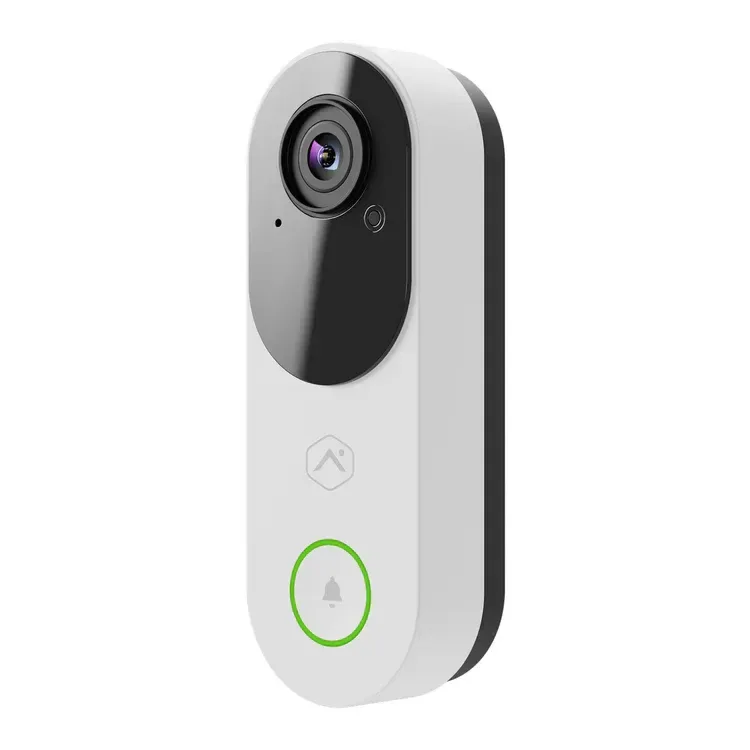
White Alarm.com video doorbell with black camera face and green ring button, ADT vs SimpliSafe NYC
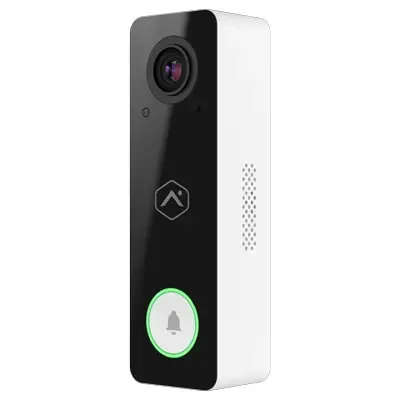
An Alarm.com product photo of a white video doorbell with a black camera face at the top, a small house-shaped logo in the middle and a round button ringed in green light. A doorbell camera on a professional alarm platform shows up in the same app as the alarm, the same idea ADT pursues with Google Nest and SimpliSafe with its own doorbell.
Apps and Smart Home

Apps and Smart-Home Fit

For most people the app is the system: it is how you arm on the way out, check the house from work and let the dog walker in. Each option takes a different approach.

The ADT+ app

ADT's ADT+ app arms and disarms the system, shows Nest or Blu cameras, and controls lights, thermostats and locks on plans that include smart-home features. ADT's Pro Install Secure plan does not include smart-home automation; Smart and Complete do. The app also carries MySafety, a personal safety feature that connects you with ADT's monitoring team when you feel unsafe away from home, available with professional monitoring and an ADT Base, in the United States except Milwaukee, Wisconsin. ADT Blu supports multiple users with their own codes and roles, which is useful for a household or a small office.

The SimpliSafe app

SimpliSafe's app arms and disarms, confirms or cancels alarms, shows camera feeds and recordings, and lets you set which cameras record and when. It works with Amazon Alexa and Google Assistant for voice arming, and with August smart locks so the door locks when you arm and unlocks when you disarm. It is simple and polished, which is a large part of SimpliSafe's appeal.

Professional panel apps

Systems installed by local companies usually run on a monitoring platform's app, such as Alarm.com, or the panel maker's own app. These apps tend to have more settings than consumer ones: schedules by user code, opening and closing reports for a business, rules that turn on lights or lock doors when the alarm arms, and the ability to manage several properties from one login. That is useful for a landlord with three buildings or a store owner who wants to know when an employee disarmed in the morning; it can be more than a renter needs.

Which ecosystem are you already in?

If your home already runs on Google Nest cameras and a Nest Hub, ADT's professionally installed service is built around that. If you use Alexa and an August lock, SimpliSafe fits easily. If you have Z-Wave switches and locks or want the alarm to work with a camera recorder and a building door system, a professional panel installed by a local company is usually the more flexible route.

Outages

When the Wi-Fi or the Power Goes Out

New York buildings lose internet and power more often than people expect: a storm, a utility cut on the block, a router that reboots overnight, or a cable box that a burglar yanks out of the wall. An alarm that depends entirely on home Wi-Fi is weakest exactly when you need it.

All three options can handle this, but you have to choose the right plan or hardware. ADT says its Base sends alarm events over cellular data or cellular SMS if Wi-Fi is down, and that the Base and sensors include 24-hour battery backup; on ADT Blu, the plan comparison lists cellular backup as part of Pro-Protect. SimpliSafe says its monitoring plans include built-in network backup that keeps the system armed and professional monitoring active for up to 24 hours if the internet goes down or the line is cut, and that the base station has a battery of up to 24 hours. Both companies point out that cameras need Wi-Fi to stream and record; ADT adds that Nest cameras store up to one hour of events locally.

On the systems we install, a cellular communicator and a standby battery in the panel are standard, so the panel can reach the central station without the home internet. Hardwired sensors are powered from the panel, so there are no sensor batteries to go flat. If you are taking over an old wired system that still reports over a landline, that is the first thing to upgrade: many old phone lines have been moved to internet phone service, and an old communicator may no longer reach the station at all.

A simple test you can do tonight

Whichever system you have, find out how it behaves without Wi-Fi. Tell your monitoring company you are testing, unplug the router, open a door with the system armed, and see whether the alarm reaches the station. Then plug the router back in. If the test fails, your system is only as reliable as your internet service.

Warranty

Warranty, Guarantees and Who Fixes It Later

An alarm is a ten-year purchase, and the warranty fine print tells you who you will be dealing with for most of that time.

SimpliSafe offers a lifetime hardware warranty for as long as you have an active monitoring subscription: it replaces malfunctioning SimpliSafe equipment and covers shipping. Cancel monitoring and that lifetime coverage depends on SimpliSafe's terms for unmonitored systems, so read them. Repairs mean a replacement part in the mail, which you then install yourself.

ADT lists a 90-day limited warranty on ADT Blu equipment. For professionally installed systems, ADT's terms describe a Quality Service Plan, "ADT's extended limited warranty," as a separate monthly purchase, and say ADT's money-back guarantee applies only if ADT cannot resolve a system problem within the first six months and you have paid continuously for both the Quality Service Plan and professional monitoring from the start. Ask what a service visit costs without the plan.

With a local installer, the panel and sensors carry their manufacturers' warranties, and the installer's own work is covered by its written terms. Ours are in our service agreement. Full terms — including 50% deposit, one-year parts-only warranty on AESS-supplied products, and the late-fee schedule — are set out in the service agreement. The practical difference is the service call: a technician who knows the building can come out, find the failed sensor and replace it the same visit, instead of mailing you a part.

What happens if the company disappears?

Small alarm companies do sometimes close or get bought, and customers are left with a system nobody monitors. The protection against that is owning the panel and getting its codes in writing. A standard professional panel can be taken over and reprogrammed by another licensed company, which is something we do regularly. A consumer system is tied to its own company's service, which is fine for as long as that company keeps it running.

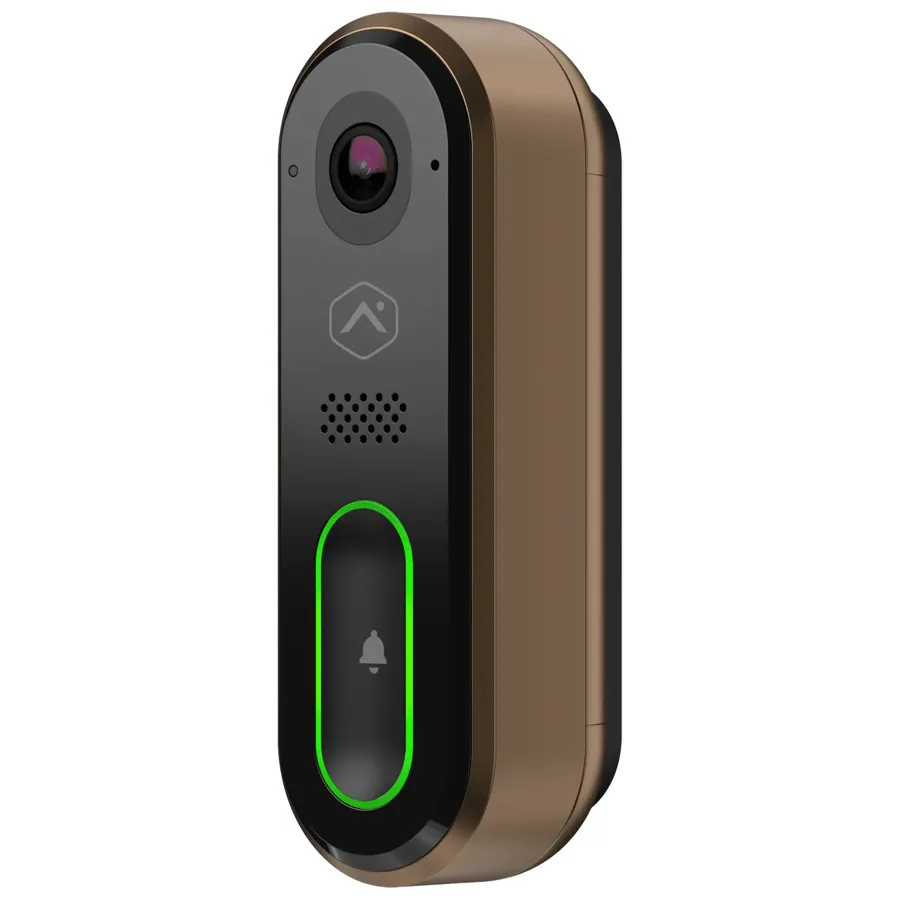
Bronze and black Alarm.com video doorbell with a green lit button, ADT vs SimpliSafe NYC
An Alarm.com product photo of a slim video doorbell with a black face, bronze-colored sides, a camera lens and speaker grille at the top and a long button outlined in green light. A finish like this suits the dark wood and brass of many brownstone and prewar entrances.
The Third Option

A Local Licensed Installer: The Honest Pros and Cons

Comparison sites rarely include the third option, because a local company does not pay an affiliate fee. But in New York, where buildings are older, larger and more varied than the suburban houses most reviews are written around, it is often the right answer. It is not always the right answer, and here is the full picture.

What "licensed" means in New York

New York State requires a license for this work. Under Article 6-D of the General Business Law, section 69-m, since October 1, 1992 no one may engage in the business of installing, servicing or maintaining security or fire alarm systems, or hold themselves out as able to, without a license from the Department of State. The Department of State's Division of Licensing Services issues the license, the term is two years, and the department runs a public licensee search on its website. Our license number is #12000287431. Before you let any company, national or local, install or service an alarm in New York, ask for its license number and look it up.

The advantages

  • A design for your building. The installer walks the property and plans sensors around the openings and paths that matter, including basements, roof doors, yards and storefront gates.
  • Wired where it helps. Hardwired sensors have no batteries and do not depend on radio range through brick and steel.
  • Reuse of what you have. An old wired system can often be kept and upgraded with a new panel, a cellular communicator and an app.
  • You own the panel. A professional panel can be serviced and monitored by any licensed company if you ever want to change.
  • A person who comes back. When a sensor fails or the keypad beeps, the company that installed it knows the building and can send a technician.
  • Business features. Separate user codes, opening and closing reports, panic buttons, and links to cameras and door access.

The disadvantages

  • More money up front. A designed and installed system usually costs more on day one than a do-it-yourself kit, especially when cable is run.
  • Quality varies. Local companies range from excellent to poor, and there is no national brand standing behind a bad one. You have to check the license, the reviews and the terms yourself.
  • Apps can be less polished. Professional platforms have more settings and less gloss than consumer apps.
  • Not portable. A wired system stays with the building, which is good for an owner and pointless for a renter.
  • Scheduling. Installation needs a visit, which takes more planning than a package on the doorstep.
  • Contracts still exist. Some local companies use long monitoring agreements too. Read them.

How to check any local alarm company

Look up the New York State license on the Department of State's licensee search. Ask for proof of insurance. Ask which central station monitors the alarms and whether it is UL-listed. Ask for the monitoring agreement in writing, including the term, renewal and cancellation charges. Ask who owns the panel and whether you will get the installer code at the end of service. Ask for a written quote that lists every device and where it goes. And read the company's recent Google reviews, especially the replies to unhappy customers, which tell you more than the five-star ones.

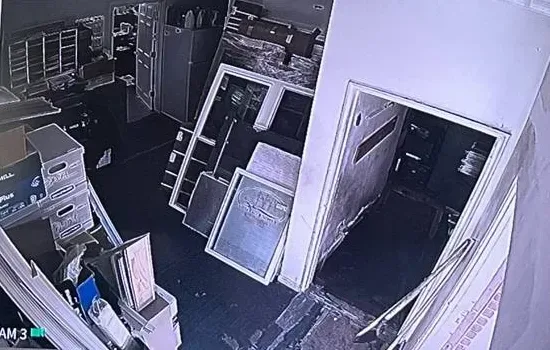
Night camera frame of a back storeroom with shelves and an open door, ADT vs SimpliSafe NYC
A recorded night frame from one of our installed camera systems, not tied to a specific shop: a cluttered back storeroom with shelving, boxes and a white door standing open, seen from a ceiling camera in black and white. When an alarm zone and a camera cover the same back room, the central station can see whether the open door is a break-in or a late delivery.
Our Installed Prices

Local Licensed Installer: Our Installed Alarm Prices in NYC

These are our own installed prices for New York City, taken from our alarm installation in NYC page. They are starting points for real installs, not sale prices, and they cover equipment and labor for the system described. They are not comparable line by line to a retail kit or a monitoring promotion, which is why we keep them on their own here. Exact prices follow a look at the property.

  • Basic residential, from $600: alarm panel installation, 4 to 6 door and window sensors, one motion sensor, a keypad, a cellular communicator, central station monitoring setup, app configuration, and full testing and training. A basic wireless system like this typically runs $600 to $1,200 all-in.
  • Complete home protection, from $2,500: a Honeywell or DSC panel, 10 to 15 door and window sensors, 3 to 4 motion sensors, two glass-break detectors, smoke and carbon monoxide detection, indoor and outdoor sirens, app control and 24/7 central station monitoring, ready to link with cameras.
  • Commercial or business, from $1,500: a commercial-grade panel, 8 to 12 door and window sensors, motion and glass-break detectors, keypads at the entries, and central station monitoring with police dispatch, ready to link with access control and cameras.
  • Hardwired systems with full coverage: $2,000 to $6,000, depending on the number of sensors, the panel and whether cameras are integrated. A typical three-story brownstone runs $2,500 to $5,000 installed.
  • Panel replacement on an existing wired system: $800 to $1,500 for a modern Honeywell or DSC panel, cellular communicator, new keypad and reprogramming.
  • Multi-unit buildings: a basic per-unit setup with door sensors, a motion detector and monitoring runs $400 to $800 per unit installed.
  • Our monitoring: $30 a month keypad-only or $45 a month with the phone app, with no long-term contract.

NYC sales tax (8.875%) applies. Jobs under $500 are paid in full up front, and larger jobs take a 50% deposit, as set out in our service agreement. If you want to rough out a system before calling, our alarm cost calculator walks through the main choices. For borough pages with the same prices, see alarm installation in Brooklyn, Queens, the Bronx, Manhattan and Staten Island.

Why we do not line our prices up against theirs

It would be easy to put our numbers in a column next to ADT's and SimpliSafe's and declare a winner. We do not, for two reasons. The products are not the same: a hardwired system designed for a brownstone and a five-piece kit for an apartment do different jobs. And the brands' prices change week to week with promotions, while ours describe a specific installed scope. The fair comparison is the total cost, over the years you will stay, of a system that actually covers your building. We will happily help you work that out for all three options.

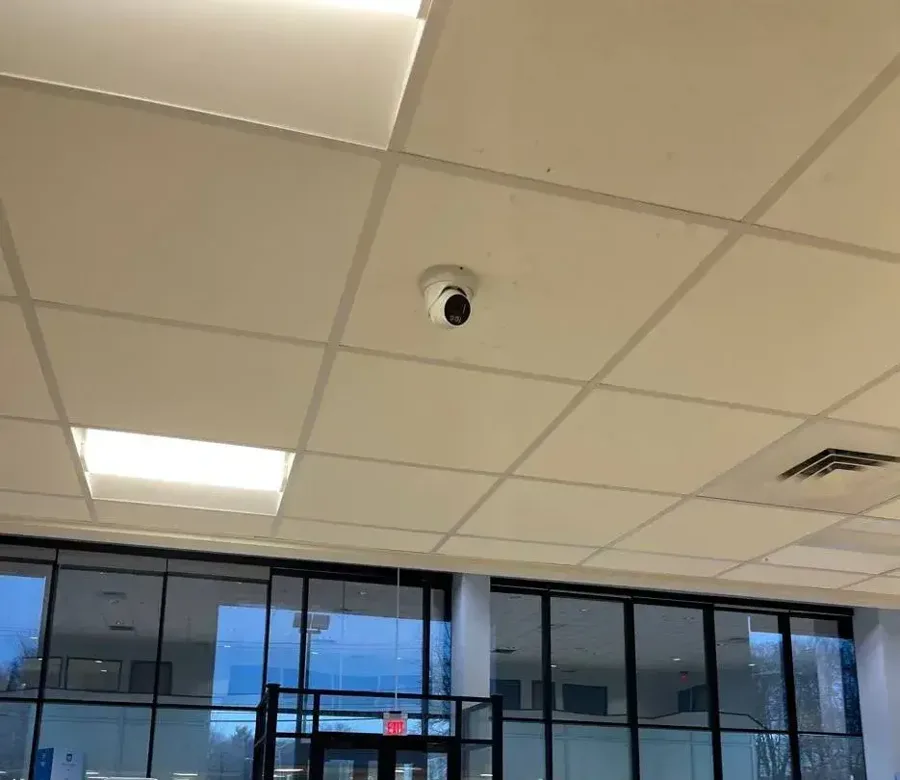
White turret camera in a drop ceiling above a glass entrance wall, ADT vs SimpliSafe NYC
From our own job files, not a specific New York lobby: a small white turret camera in a drop ceiling with a light panel and an air vent, looking toward a tall wall of glass with an entrance door. A glass front like this is where a store or office needs glass-break detection on the alarm, not only a sensor on the door.
By Property

ADT, SimpliSafe or a Local Installer for Each Kind of New York Property

Rental apartments

SimpliSafe, or ADT Blu if you are already in Google's ecosystem. No drilling, no contract, and it moves with you. Put a sensor on the entry door and any window on a fire escape, a motion sensor where someone would have to walk, and a water sensor under the sink. Check the lease about cameras in shared hallways.

Co-op and condo apartments

Often SimpliSafe again, especially for a single apartment. Owners who are renovating sometimes prefer a small professional panel with wired door contacts while the walls are open. Check the building's alteration rules before running cable, and whether the board has its own rules for cameras.

One- and two-family houses

This is the true three-way decision. An owner staying long-term who wants a national brand and Nest cameras will be well served by ADT's professionally installed service, provided the contract is acceptable. A cost-conscious owner who is handy may do well with SimpliSafe. A house with a finished basement, a separate entrance for a second unit, a detached garage or an existing wired system usually gets the most from a local installer.

Brownstones and townhouses

Four floors, a garden door, a parlor floor, a roof hatch, deep rooms and masonry walls. This is where a professional panel with hardwired perimeter sensors and wireless interior devices shines, with keypads on more than one floor. A consumer kit can work in a brownstone, but expect to test range carefully and add extenders.

Walk-ups and small apartment buildings

Landlords usually want the common areas covered: the cellar, the boiler room, the roof door, the vestibule and any vacant unit. A professional panel with zones for each area, reports of who disarmed and when, and links to the building's cameras suits this well. Tenants can still add their own SimpliSafe inside their apartments.

Stores, delis and restaurants

A local installer. Gate and back-door sensors, glass-break on the window, panic buttons, separate employee codes and opening and closing reports are business needs. SimpliSafe says its Active Guard outdoor service is designed for residential use, not commercial use. ADT has a separate small-business offering with its own terms.

Offices and medical suites

Usually a local installer, especially where the alarm needs to work with door access control, so that the first person in disarms it with a card and the last person out arms it. Medical offices also tend to want sensors on medication and record rooms.

Vacant or seasonal properties

An empty house needs professional monitoring, cellular backup, water and temperature sensors near the pipes and boiler, and smoke and carbon monoxide detection reported to the station. Any of the three options can provide that; make sure the plan you choose actually includes professional monitoring and life-safety monitoring, because the cheapest plans of both brands do not.

Switching

Already Have ADT or SimpliSafe? What You Can and Cannot Change

We get a lot of calls from people who already have one of these systems and are unhappy with something: the cost, the contract, a sensor that keeps failing, or a move to a bigger home. Here is what is realistic.

If you have ADT under contract

Start with the contract itself: the start date, the term and the cancellation clause. ADT's terms describe a charge of up to 75% of the remaining monthly charges if a 36-month contract ends early. Near the end of the term the math is very different from near the start. ADT's terms page also says, in the section on reactivated systems, "System remains property of ADT," so before planning to reuse any ADT equipment, ask ADT in writing who owns the equipment in your home under your contract. We do not advise anyone to stop paying a contract; we help people plan a switch for the right time.

If you have SimpliSafe

There is no contract to wait out, so the only question is the equipment. SimpliSafe's equipment is designed to work with SimpliSafe's own base station and app, and its websites do not describe using it with other companies' panels, so we do not promise to reuse SimpliSafe sensors in a professional system. Many people keep SimpliSafe in an apartment and add a professional system when they buy a house.

If you have an old wired system from any company

This is the easiest case. If the wiring and sensors are sound, a licensed installer can often replace the panel, add a cellular communicator and connect it to a new monitoring station, keeping everything in the walls. Send us a photo of the keypad and the panel box; the model number tells us a lot.

If you are moving

Renters with SimpliSafe take it with them. Owners with a professionally installed ADT system need to talk to ADT about the contract. Owners with a wired system usually leave it for the buyer, and a buyer who inherits one should have it inspected and reprogrammed with new codes before relying on it.

Myths

What Reviews and Forums Get Wrong About ADT vs SimpliSafe

We read what ranks for "ADT vs SimpliSafe" and "SimpliSafe vs ADT" before writing this page: national review sites, Reddit threads, Facebook groups and YouTube comparisons. Much of it is fair. Some of it is out of date or missing context.

"ADT always means a three-year contract"

ADT's professionally installed offers in its terms do carry a 36-month contract outside California. But ADT Blu, its do-it-yourself line, has no long-term contract and plans you can cancel or switch at any time. If someone tells you all ADT is contract-only, they are describing the older picture.

"SimpliSafe is free to use without paying anything"

You can own SimpliSafe equipment without a subscription, but SimpliSafe says video recordings and professional monitoring require a paid plan, and its lifetime hardware warranty depends on an active monitoring subscription. A system that only sounds a siren in an empty apartment protects much less than one that calls someone.

"A salesman said SimpliSafe is easy to bypass"

One of the most-read Reddit threads in this search is about exactly that. Any wireless system and any wired system can be defeated by someone who knows it well and has time; what matters is coverage, placement, a siren that is hard to reach, monitoring with backup communication, and an alarm that is actually armed. Be wary of anyone who tries to sell you their system mostly by frightening you about another one.

"Local companies are just old-fashioned"

Professional panels now come with cellular communicators, touchscreen keypads, phone apps, smart-home control and camera integration. What a local installer adds is design and service. The fair criticism is that quality varies widely between companies, so check the license and the terms.

"The cheapest monthly price wins"

The cheapest plans of both brands leave out professional monitoring, camera recordings or video verification. Compare what each plan does when the alarm goes off at night with nobody home, then compare the price.

Have an Alarm Already? Start Here

The quickest way to get a useful answer from us is three photos: the keypad by the door, the metal panel box (usually in a basement, closet or utility room) with its door open, and any sticker with the alarm company's name. Count the doors and windows you want covered and note anything unusual, such as a roof hatch, a basement entrance, a rolling gate or a vacant floor. Send them by text or WhatsApp and we will tell you whether you are looking at a reprogram, a panel upgrade, a takeover of monitoring or a new system. If you are still comparing camera brands as well, see our best security camera brands comparison; for cameras added to an alarm platform, see Alarm.com camera installation in NYC.

Get In Touch

Request a Free Quote

Tell us the address or nearest cross streets, the kind of place, what alarm you have now (if any), which doors and windows matter most, and whether you rent or own. An installer phones you back with a recommendation, which may honestly be "SimpliSafe is fine for you," and an installed price where a professional system fits. Or call us directly at (800) 486-0943.

✅
Request Sent!
Received. One of our licensed installers will phone you inside 2 hours on business days.
Our Process

How We Plan an Alarm Install as a Local Licensed Installer

1. Walk the property

We walk every door, window, stair, basement, roof hatch and yard the owner wants protected and note what can be reached from the street, a fire escape or a neighbor's roof.

2. Read what is there

Any existing keypad, panel, sensor and communicator is identified by its label, and old wiring is tested before anything is reused.

3. Ask about the people

We ask who lives or works there, who needs a code, whether there are pets, and whether the place sits empty for long stretches.

4. Design the zones

Each opening and room gets the right device: wired or wireless contacts, motion, glass-break, water, smoke and carbon monoxide, plus keypads where people actually enter.

5. Quote in writing

The written quote lists every device and where it goes, the monitoring options and their terms, and our installed price, with no long-term contract required.

6. Install and test

The panel, communicator and sensors go in, cable is hidden where the building allows, and every zone is tested against the central station.

7. Set up the app and codes

We set up the app, user codes, entry delays and notifications, and walk the household or staff through arming and cancelling a false alarm.

8. Hand over in writing

The owner gets the codes, the monitoring details, the zone list and our service agreement, so the system stays theirs whoever monitors it later.

Slim Alarm.com video doorbell with black face, white sides and green ring button, ADT vs SimpliSafe NYC
An Alarm.com product photo of a narrow video doorbell with a glossy black face, white sides with speaker slots, a camera at the top and a round button ringed in green. A slim doorbell fits the narrow door frames common on New York row houses, and we mount and connect it as one step of the install.
FAQ

ADT vs SimpliSafe vs Local Installer FAQ

Which is better in New York, ADT, SimpliSafe or a local licensed installer?
+

For a rental or a single apartment, SimpliSafe: no contract, no drilling and it moves with you. For an owner staying three years or more who wants a national brand, a technician and Google Nest cameras, ADT. For a brownstone, multi-floor house, walk-up, store or an existing wired system, a local licensed installer.

Is SimpliSafe vs ADT the same comparison as ADT vs SimpliSafe?
+

Yes. People search the two names in both orders and mean the same thing, so we keep the whole comparison, including the third option of a local licensed installer, on this one page.

Does ADT require a contract?
+

ADT's professionally installed offers require a 36-month monitoring contract in most states (24 months in California), and ADT's terms say it may charge 75% of the remaining monthly charges if you end it early. ADT Blu, its do-it-yourself line, has no long-term contract.

Does SimpliSafe require a contract?
+

No. SimpliSafe says its monitoring plans are billed month to month and can be cancelled at any time, and its equipment comes with a 60-day money-back guarantee, free shipping and free returns.

Can I install SimpliSafe or ADT myself?
+

SimpliSafe is designed for self-installation with peel-and-stick sensors and offers paid professional installation. ADT Blu is self-installed, and ADT says professional installation is not available for it. ADT's main service is installed by an ADT technician.

Who monitors ADT and SimpliSafe alarms?
+

ADT says it runs six company-operated monitoring centers in the United States. SimpliSafe uses its own monitoring agents, who can verify alarms with camera video on its professional plans. Local installers usually contract with a central station; ours is UL-listed.

Do ADT and SimpliSafe keep working if the Wi-Fi goes down?
+

Both describe backup. ADT says its Base sends alarms over cellular if Wi-Fi is down and has 24-hour battery backup. SimpliSafe says its plans include network backup for up to 24 hours. Cameras on both need Wi-Fi to stream and record.

Which works better with Google Nest or Alexa?
+

ADT's professionally installed service is built around Google Nest cameras and doorbells in the ADT+ app; ADT says Nest Cams are not compatible with ADT Blu. SimpliSafe works with Amazon Alexa and Google Assistant for voice arming and with August smart locks.

What warranty do ADT and SimpliSafe give?
+

SimpliSafe gives a lifetime hardware warranty while you keep an active monitoring subscription. ADT lists a 90-day limited warranty on ADT Blu, and sells its extended limited warranty, the Quality Service Plan, separately for professionally installed systems.

Does an alarm installer in New York need a license?
+

Yes. Under Article 6-D of New York's General Business Law, anyone in the business of installing, servicing or maintaining security or fire alarm systems needs a license from the Department of State. Our license is #12000287431; you can check any company on the Department of State's licensee search.

Can a local installer take over my existing alarm?
+

Often, yes. If an existing professional panel and its wiring are sound, we can usually reprogram it or replace just the panel and connect it to our central station. We do not promise to reuse SimpliSafe or ADT equipment, which is designed for those companies' own systems.

What does a local licensed installer cost in NYC?
+

Our basic residential alarm starts at $600 installed, with a panel, 4 to 6 door and window sensors, a motion sensor, keypad and cellular communicator. Complete home protection starts at $2,500, business systems at $1,500, and our monitoring is $30 a month keypad-only or $45 with the app, with no long-term contract.

Should a renter pay a local installer?
+

Usually not. A renter is generally better served by SimpliSafe or ADT Blu, which need no drilling, carry no long-term contract and move with you. A local installer makes sense for owners, landlords and businesses.

Ready to Choose Between ADT, SimpliSafe and a Local Installer?

Tell us whether you rent or own, what the building is like and what you have on the wall now, and we will give you a straight answer: a do-it-yourself kit, a national brand, an upgrade of the system you already have, or a new professional system. Call or text (800) 486-0943, send a WhatsApp photo of your keypad or panel, or fill in the request form. We are a licensed New York State alarm installer (NYS #12000287431), owner-operated since 2002, rated 4.7★ across 201 Google Reviews, and every request is booked within 2 hours.