Ring, Talk and Release Tested Apart · Wire Followed to the Break · Priced Before Parts
Door buzzer repair in New Utrecht covers the old Dutch town center around 18th Avenue and 84th Street and the blocks of Bensonhurst that grew up around it: attached brick two-families built before the Second World War, six-story apartment houses on Bay Parkway, and two-story shop rows with apartments upstairs along New Utrecht Avenue, under the steel of the D train. Each one hides its fault in a different place, from a cellar transformer to a riser to a strike in a door that has been rehung for a century. We test each function on its own, find the failed part, and write the price down before anything is replaced.
Reviewed and updated November 11, 2026 by Abstract Enterprises Security Systems, NYS license #12000287431 · Sources: NeighborhoodScout's New Utrecht housing profile; NYBits building records for 8301, 6801 and 6601 Bay Parkway and 1582 73rd Street; Milton Coste's Bensonhurst market report; the Brooklyn Reporter (2019, 2025); Brooklyn Paper on the New Utrecht Avenue reconstruction (2023) and the Feast of Santa Rosalia; the NYC DOT June 2026 presentation for New Utrecht and 17th Avenues; ABC7 on the May 2022 New Utrecht Avenue fire; Neitzel and colleagues in the American Journal of Public Health (2009) on subway noise; Forgotten New York; Wikipedia on New Utrecht, Bensonhurst, the Reformed Church and the West End line stations; Historical Marker Database; Hoodline (2026); the Brooklyn DA (2024); the NY Attorney General's Tenants' Rights Guide; Multiple Dwelling Law § 50-a; HPD's self-closing door page; NYC 311; the Landmarks Preservation Commission permit guidebook; Habitat Magazine (2024); Deely House on buzzers that ring but don't open; Brownstoner forum threads; Swiftlane, ButterflyMX and HomeAdvisor cost pages; Allegion; the 2010 ADA Standards; the NYC Department of Buildings · Dispatched from 1282 Troy Ave, Brooklyn

Owner-operated since 2002 · Thousands of jobs completed · Booked within 2 hours
Door buzzer repair in New Utrecht starts with a $250 service call that includes on-site diagnosis, and the repair itself is priced in writing from our Brooklyn list before any part is installed. In the attached two-families the usual culprits are a tired bell transformer, a button that lets in water or a release that no longer pulls the strike. In the six-story buildings on Bay Parkway and 86th Street it is more often one riser, one apartment station or the lobby door hardware. Most single faults are fixed on the first visit. We book within 2 hours of your request into a 2-hour arrival window early in the day, and we don't promise same-day repairs.
New Utrecht's front doors are old, rented and shared, which is exactly the mix that wears a buzzer out. NeighborhoodScout's housing profile puts 71.0% of the area's homes in buildings from 1939 or earlier, some much earlier, and says most of them are renter-occupied. That means wiring that has been extended, spliced and patched by several owners, buttons that have faced eighty winters, and a front door that several households, a landlord and sometimes a shop all depend on. When one part in that chain fails, the complaint is always the same, "the buzzer is broken," but the cause can be anywhere between the sidewalk and the top floor.
The name itself takes a little explaining. New Utrecht was one of the six original towns of Kings County, founded by Dutch settlers in the 1650s and absorbed by the City of Brooklyn in 1894. Its old center sits around 18th Avenue and 84th Street, where the Reformed Church still stands, and its oldest roads survive as 18th Avenue, Kings Highway and New Utrecht Avenue, the old plank road. Today most maps file these blocks under Bensonhurst, in Brooklyn Community District 11, split between ZIP codes 11204 and 11214. For a buzzer repair, the history matters less than what came after it: the BMT built an elevated line over New Utrecht Avenue and 86th Street under the Dual Contracts of 1913, the 18th Avenue station opened in 1916, and the farms filled with houses and apartment buildings through the 1920s.
That building boom left three kinds of entrance that we repair over and over. The most common is the attached brick two-family, with one front door or two side by side, a bell circuit in the cellar and a release so the upstairs household can let a visitor in. The second is the prewar apartment house, four to six stories, clustered on Bay Parkway, New Utrecht Avenue and 86th Street, with a lobby panel, a supply in the cellar and risers up every line. The third is the two-story shop row, where the residents' door is squeezed between storefronts and its wire often shares a ceiling, a cellar or a roof space with the businesses below and beside it. Most New Utrecht entrances are one of these three, and each one fails in its own way.
The city's complaint line shows how often those doors stop working. When we counted NYC 311 records on November 11, 2026, ZIP 11214 had 44 service requests filed under the bell, buzzer and intercom category during 2025, and ZIP 11204 had 37. Those ZIPs reach well beyond New Utrecht, so the figures describe the wider area rather than these blocks alone, but each one is a renter who pressed a button, got nothing and told the city. A repair done before an inspector arrives is calmer and usually cheaper than one done after an order is written. Many owners here also have a camera at the entrance from another company, and we keep the two systems clearly separate in every report.

A street door that no longer locks goes to the top of our list, then a door nobody can buzz open, then a building where one or more apartments have stopped ringing. Call (347) 934-8335 and tell us three things: which households fail and which still work, what the visitor and the resident each hear when the button is pressed, and what changed shortly before it stopped, such as street or sidewalk work outside, a fire or leak next door, a renovation upstairs, a new door or closer, or a power cut on the block. We book within 2 hours of your request into a 2-hour arrival window early in the day. We don't promise same-day or emergency door buzzer repair, but a clear description lets us bring the right parts, most single faults are fixed on the first visit, and any price beyond the $250 service call is written down before we begin.
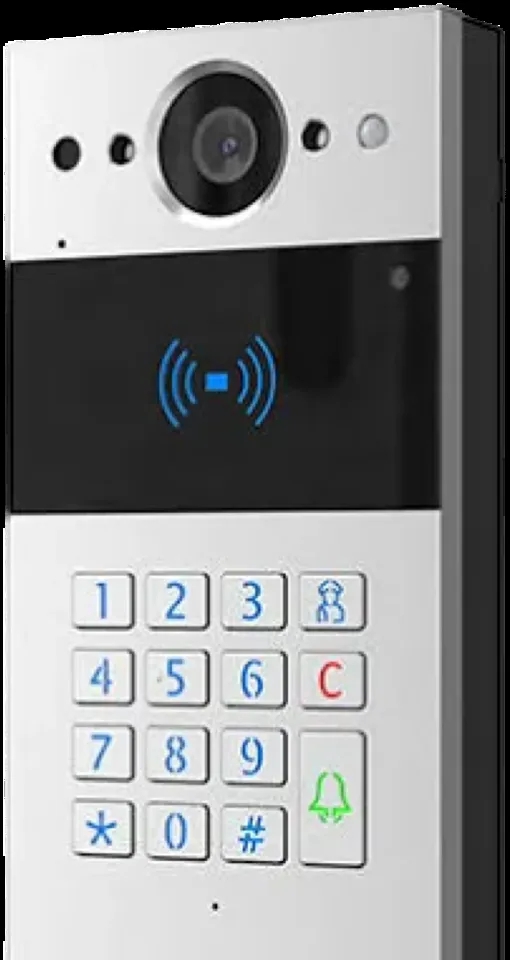
Every buzzer, from a two-button plate on a 17th Avenue two-family to a lobby panel serving eighty apartments on Bay Parkway, does three separate jobs. It rings the household, it carries a voice in both directions if it is a talk-back system, and it releases the street door. Those three jobs run on different parts of the circuit, and they fail independently. A Deely House article on intercom repair puts the most common mix-up plainly: "a buzzer that rings fine but a door that won't open isn't a 'broken intercom,' it's a broken relay." We would widen that slightly, because in New Utrecht the strike, its power or the door itself is just as often to blame as the relay, but the principle is the one we work by. Before anyone talks about replacing a system, we find out which of the three jobs has stopped.
That is why our first question on the phone is not "what brand is it?" but "what exactly happens?" The answer usually narrows the search to one or two parts before a technician leaves the office, which means the right parts are on the truck and the visit is shorter. The table below is the map we use. It is not a do-it-yourself guide, and nobody should open a transformer box or a lobby panel without the owner's authorization, but it shows owners and tenants why a careful description saves time and money.
| What you notice | Where we look first | Typical Brooklyn price after the $250 diagnosis |
|---|---|---|
| The apartment buzzes, the visitor hears the strike hum, but the door stays locked | The strike, its power with the button held, the latch against the keeper, the closer and the hinges | Strike replacement and alignment $450 – $950; often an alignment only |
| Pressing release upstairs does nothing at all, not even a hum | The release button, the door-release relay or module, and the wire down to the door | Door release relay or button $250 – $475 |
| One household's bell or handset never rings, the rest are fine | That household's button, its pair, its station and any splice on the way | Apartment station replacement $250 – $525 |
| A whole vertical line of apartments stopped ringing together | The riser for that line, a junction opened during other work, or a renovation that cut the pair | Riser pair repair or re-termination $850 – $2,400 |
| Nobody in the building gets calls, or everything works weakly | The bell transformer or intercom supply, measured at rest and under load | 24V transformer replacement $325 – $650 |
| Calls come through but there is no sound, one-way sound, hum or static | The lobby speaker and microphone, the amplifier, the handset, and a shared conductor dragged down by one bad station | Lobby panel repair or faceplate $650 – $1,800, or a station $250 – $525 |
| The buzzer keeps sounding, or the door keeps releasing on its own | A stuck button outside, a welded relay, a shorted pair, or water in a button or junction | Usually a button, relay or splice repair; priced on the day |
| It all stopped after a power cut, a leak, a fire or street work | The supply and its fuse or breaker, wet connections, and anything disturbed along the route | Depends on what the event damaged; priced in writing first |
Intermittent faults are the ones that cost owners the most, because they look fine on the day the super checks and fail again that night. In an old building they usually have a physical cause that comes and goes: a splice that opens when the door slams, a supply that sags when two apartments call at once, a strike that binds when the frame swells in damp weather, or a button that only fails once rain has soaked into it. When you tell us when it fails (mornings, wet days, cold snaps, when the train goes by, when the shop downstairs has its lights on), you are giving us the test conditions. We try to reproduce them on the visit rather than leaving with "could not find a fault."

New Utrecht Avenue runs diagonally across the street grid with the West End line overhead, and the buildings on it are mostly low: two- and three-story rows with shops at the sidewalk and apartments above, plus a scattering of larger prewar houses. Forgotten New York's walks along the avenue record the texture, from the old Telephone Building at 71st Street to the stretch near 76th and 77th Streets once nicknamed "Wedding Row" for its bridal shops and catering halls. For a buzzer technician, the avenue presents three problems that the side streets don't: noise at the door, doors that take a beating from crowds and deliveries, and street work that can change the ground a door sits on.
Noise near an elevated line is not a matter of opinion. A 2009 study in the American Journal of Public Health by Neitzel and colleagues measured a mean of 81.1 dBA on New York subway platforms, and the Daily News reported in 2000 that noise outside apartments next to elevated tracks peaked above 100 decibels. A doorway on New Utrecht Avenue is not a platform, but it is close enough that a passing train can swamp a weak speaker. In practice, that means a residents' door under the el exposes faults that a quiet side street would hide. A speaker cone that has lost some of its output, a microphone half blocked by grime, an amplifier running low or a volume setting turned down by a previous repairer can all be tolerable on 82nd Street and useless at the corner of the avenue.
So when tenants over a New Utrecht Avenue shop say "the intercom doesn't work," we test the audio path in both directions, at the street panel and at several apartments, between trains and during them. We measure the supply, because a supply running low makes every speaker weaker, and we check that each handset is matched to the system rather than borrowed from another make. Worn speaker and microphone modules can often be replaced behind the existing faceplate, and many panels have volume or gain settings that can be set properly for a loud location. What we won't do is promise that any panel will be clear while a train is directly overhead. We will tell you honestly how much the repair improves things, and whether a different station design would serve the door better.
The residents' door on a busy avenue does far more work than one on a residential street. It is pushed by delivery carts, propped for moves and stock, slammed by wind funneling under the structure, and opened by everyone coming home from the 62nd Street, 79th Street or 18th Avenue stations. That traffic loosens hinges, wears out closers and knocks the latch out of line with the strike's keeper. The result is a door that buzzes but won't open without a shove, or a door that closes but doesn't quite latch. Neither is an intercom fault, and replacing the panel fixes neither. On every avenue repair we check the closer's speed and latch action, the hinge screws, the gap at the strike side and the strike's mounting, and we adjust or replace the hardware before we touch the electronics.
Brooklyn Paper reported in February 2023 that NYC DOT planned a capital reconstruction of New Utrecht Avenue between 65th and 77th Streets, worth roughly $24 million, to deal with potholes, faded markings and irregular intersections blocked by the el's columns, with construction then set to begin in 2026. A separate DOT presentation to Community Board 11 in June 2026 proposed changes at New Utrecht and 17th Avenues between 78th and 81st Streets, including a new pedestrian island at 79th Street and new signals. DOT describes reconstruction generally as work that goes more than a foot below the surface and usually rebuilds curbs and sidewalks.
For a building on those blocks, that raises a fair question: is it worth fixing a dragging strike now if the sidewalk might be rebuilt in front of the door? Our answer is usually yes. A door that won't lock is a security and code problem today, not after the street work. Most buzzer repairs happen on the door, the frame, the wiring and the equipment inside, none of which the street contractor touches. Where something does run outside the building line, such as a buzzer wire to a gate, a conduit under a step or a button on a post at the curb, we note it in the report and photograph it, so it can be protected or checked after the work. And if a rebuilt sidewalk later changes how the door meets its threshold, that is a short follow-up adjustment, not a new repair from scratch.

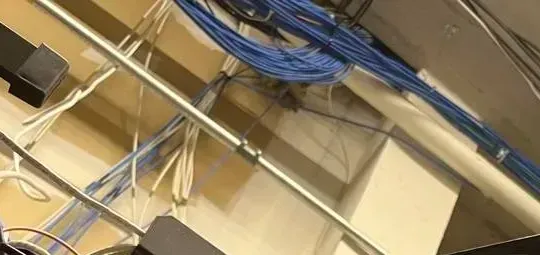
In an attached row, buildings share more than walls. In May 2022, ABC7 reported a three-alarm fire at a restaurant on the bottom floor of a two-story building on New Utrecht Avenue that spread through the ceiling of two adjoining buildings and drew 110 firefighters; nobody was hurt. The report was about fire, not buzzers, but it captures something every technician who works in these rows learns: the space above a ground-floor store is often continuous with, or at least open to, the space next door. Bell wire, intercom cable and strike wire laid in that space decades ago may cross a neighbor's ceiling, pass behind a neighbor's sign band or drop into a neighbor's cellar before it reaches the residents' door.
That shapes repairs in three ways. First, a fault can start in a building you don't own. A shop renovation next door, a new ceiling grid, a sprinkler or HVAC job, or a sign installation can cut or pinch a wire that serves your apartments. Second, reaching the break may mean asking a shopkeeper, a neighboring landlord or both for access, sometimes at hours that suit their business. Third, after a fire or a serious leak in an adjoining building, wiring that looks intact may have been soaked, heated or pulled during the firefighting and clean-up, and it can fail weeks later.
We trace the run from the plate or panel to the transformer or supply, and from there to each apartment, with a tone probe, and we note every place it leaves the building it serves. Where the break is in your own space, we repair it. Where it is in a neighbor's ceiling or cellar, the report says so, with photographs, and the owner decides whether to arrange access or to have us price a new route that stays inside the building. In many attached rows a new route up the inside of the residents' stair or through the building's own cellar costs less over the years than a repair that depends on a neighbor's goodwill every time it fails. We never open a neighbor's ceiling or move their equipment without their permission, and we don't bill one owner for work on another's property.
When an adjoining building has had a fire, a burst pipe or a gut renovation, we test more widely than the complaint suggests. We check the supply and its fuse or breaker, look for moisture and corrosion at every connection we can reach, measure insulation on suspect pairs, and test ringing, talking and release at every household, including the ones that seem fine. Where the owner needs it for an insurer or for a conversation with the neighbor, the written report records what we tested, what failed, where the damage was found and photographs of it. We describe what we find; we do not assign blame for a fire or a leak, which is a matter for the insurers and the owners.

Whether a broken buzzer is an inconvenience or a legal problem depends on the building. New York's rules draw two lines, one by date and one by size, and New Utrecht's housing falls on both sides of each. The NY Attorney General's Tenants' Rights Guide summarizes them: multiple dwellings built or converted after January 1, 1968 "must have automatic self-closing and self-locking doors at all entrances," and those with eight or more apartments must also have a two-way voice intercom that lets a resident buzz the door open. Older multiple dwellings must have self-locking doors, and a two-way intercom "if requested by a majority of all the apartments." The underlying statute is Multiple Dwelling Law § 50-a, which also lets a landlord recover the cost of an intercom installed under it.
Separately from whether a building had to install an intercom, the city's Housing Maintenance Code requires owners to keep the building's facilities in repair, and HPD writes intercom and buzzer faults under section 27-2005 with wording such as "properly repair or replace the broken or defective bell buzzer intercom system." Habitat Magazine's February 2024 article on co-op intercoms reported lawyers' view that a working intercom is an essential service rather than an amenity. Put simply: once a multiple dwelling has a buzzer or intercom, a dead one can be written up, whatever year the building went up.
| Building type | Typical example | What the rules mean for a repair |
|---|---|---|
| Two-family house | Attached brick two-families on the side streets, and two-unit buildings such as 1582 73rd Street | Not a multiple dwelling under the eight-apartment rule; the buzzer is a matter between owner and tenant, and the owner's own safety |
| Three- to seven-apartment building | Small walk-ups and converted houses near the avenues | A multiple dwelling, so self-locking doors apply; the intercom requirement depends on age and on a majority request, but upkeep of an existing system is still owed |
| Prewar building with eight or more apartments | 6601 Bay Parkway (four floors, 21 units), 6801 Bay Parkway (six floors, 83 units), The National at 8301 Bay Parkway (six floors, 94 units) | Built before 1968, but a dead intercom in a building like this is exactly what HPD orders describe; repair is the owner's duty and usually the most urgent kind |
| Newer building with eight or more apartments | Post-1968 buildings, including large projects such as the 243-apartment 8800 Bay Parkway development reported by the Brooklyn Reporter in 2019 | The intercom and self-closing, self-locking doors are required outright; modern or video entry systems are likely, with network and account issues on top of hardware |
| Co-op | Co-op buildings on Bay Parkway, such as the units Compass lists at 8320 Bay Parkway | The corporation maintains the common system; the board approves the repair and a shareholder's own station may be their responsibility under the proprietary lease |
HPD treats a defective self-closing door in a multiple dwelling as a class C, immediately hazardous violation, to be corrected within 14 days of the notice, and says it reinspects within 20 days of the certified correction date. That is why every buzzer repair we do on a building's street or vestibule door includes the closer and the latch. A strike that releases perfectly is no use if the door then drifts open and stays that way. When a building has both a dead intercom and a door that won't close, we put the door first: a door that locks with a dead buzzer is an inconvenience, while a door that won't lock leaves every household exposed.
We are a licensed low-voltage contractor, not lawyers, and a particular building's obligations depend on its legal history and its leases. What we can do is repair to the wording of an order, retest the named apartment and its neighbors on the line, and leave a dated record the owner can certify against. Tenants can report broken or missing doorbells, buzzers and intercoms through 311's Apartment Maintenance complaint.

These are the repairs New Utrecht owners, boards, managing agents, supers, tenants and shopkeepers book us for. Nearly all are repairs to a system already in the building. Where the right fix would change the system, such as a new wire route that avoids a neighbor's ceiling, a new lobby panel or an added button at a second door, the written quote says so before anything is approved.
Weak, humming or undersized transformers on the cellar joists of two-families, sized for every bell, chime and strike on the circuit and mounted away from damp.
Strikes that hum and hold, release only when the door is shoved, or never relock, on avenue doors worn by deliveries and on old wood doors on the side streets.
The upstairs release button, the door-release relay or module and the wire down to the strike, the circuit HPD inspectors call the "return buzzer."
Dead, crackling or mismatched handsets in Bay Parkway rentals and co-ops, matched to the building's system so calls still reach the right apartment.
No sound, one-way sound, hum and static traced to the lobby panel's audio modules, the amplifier or a shared conductor, with extra care at doors under the el.
A vertical line of apartments that went quiet together, traced to a broken splice, a damaged pair or a cut made during a renovation, then repaired or re-terminated.
Dead buttons, broken directory windows and damaged faceplates on prewar lobbies, repaired in the existing opening wherever the parts allow.
The narrow door between storefronts on New Utrecht Avenue, 18th Avenue and 86th Street, with its wire traced through ceilings and cellars it may share with the stores.
Street and vestibule doors that drift, slam or don't latch after a release, adjusted so they close and lock on their own as the city's self-closing rules require.
Systems that failed after a fire or leak next door, a renovation upstairs or street work outside, tested at every household and documented for the owner.
Newer entry panels in post-1968 buildings and renovated lobbies that stopped calling phones or lost video, checked from power and network to the administrator settings.
Repairs to the apartment and route named on an HPD order, neighbors on the same line retested, and whole-building test reports for owners, boards and buyers.
Market reports on the area describe the same stock in different words: six-story prewar apartment buildings, attached brick row houses and two-family homes along wide commercial avenues, and semi-attached brick and stucco one- and two-family houses on the side streets. A buzzer technician sorts those buildings by three questions: how many households share one door, where the power for the bells and the strike comes from, and how the wire gets from the street to each household. These are the types we meet most often here.
The most common house in the area, on narrow lots, with one or two front doors, a short bell plate, a transformer on a cellar joist and a release for the upstairs household.
One- and two-family houses sharing one wall, often with a side door or a basement entrance that has its own button added years after the house was built.
Forgotten New York's attached brick dwellings on 17th Avenue between 81st and 84th Streets, with oriel windows, stoops and ornate railings that the button and wire have to share.
Three- to seven-apartment buildings near the avenues, with a plate of buttons, a strike on the street door and wiring patched floor by floor over the decades.
Four- to six-story walk-ups and early elevator houses from the 1920s and 1930s, with a lobby panel, a cellar supply, a riser up every line and often a vestibule with two doors.
Stores at the sidewalk on New Utrecht Avenue, 18th Avenue and 86th Street, with a few apartments above reached through a narrow residents' door between storefronts.
The attached brick two-family runs on the simplest circuit in the neighborhood and causes some of the most frustrating faults. One small transformer, often installed for a single chime, ends up powering two bells, two buttons and a strike added later so the upstairs household can let a visitor in. When the strike is added to a transformer that was never sized for it, the bells go weak whenever the door releases, or the release works from downstairs and fails from upstairs, where the run is longer. We find the transformer first, which can take a while in a finished cellar, measure it while the strike is held, test each household separately and label every pair at the plate and in the cellar so the next repair takes minutes rather than hours.
The 17th Avenue oriel rows and similar attached houses with stoops bring a particular weakness: buttons and plates mounted on stoop masonry or on the ironwork, with wire running down into the areaway and through the cellar wall. Water and freeze-thaw get into those runs, and a button that works all summer may fail every winter. We seal the entry point, move a corroded splice indoors where we can, and refix a loose plate to solid material rather than to crumbling mortar.
The small walk-up is where audio systems with shared conductors are most common. One bad handset, or one handset from the wrong maker, can drag down every apartment on the line, and a release circuit that has been extended floor by floor can be long, thin and full of old splices. We isolate stations one at a time, measure the supply with the strike held, and inspect the street door, latch and closer together, because in these buildings the door hardware is often older than the intercom.
The prewar Bay Parkway building is a system spread across six floors: panel in the vestibule, supply or amplifier in the cellar, a riser for each line of apartments, a strike in a heavy lobby door and sometimes a second, inner door. When one line goes quiet, its riser is the first suspect; when everyone goes quiet, it is the supply, the panel or the link between them. We test a sample of apartments on every line before deciding where to look, check the door hardware at the start, and in buildings with mixed equipment from several decades of repairs we tell the owner which parts belong to the original system and which were added later.
The two-story shop row puts the residents' door, the bell wire and sometimes the transformer in places the residents don't control. The wire may run through the store's ceiling, the transformer may be fed from the store's electrical panel, and the residents' door may be propped for the store's deliveries. We trace the route, note every place it passes through the business, and write it up so the landlord and the shopkeeper can see who uses, and who damages, which part.

New Utrecht's business doors are almost all on its avenues, and most share a building with apartments. Neighborhood guides name 18th Avenue, also signed as Cristoforo Colombo Boulevard, Bay Parkway and 86th Street as the area's main commercial streets, with New Utrecht Avenue running under the el between them. Neighborhood businesses such as the Villabate Alba bakery on 18th Avenue are part of local coverage, and the old Senate Theatre building stands at 7311 18th Avenue. We describe these streets without naming any business as a client, because we only print what we can document.
Bakeries, cafes, groceries and services with apartments above, from the Feast of Santa Rosalia blocks between 68th and 75th Streets down to the old town center at 84th Street.
Two-story shop rows under the D train, where residents' doors sit between storefronts and wiring often crosses shop ceilings and shared cellars.
Stores and offices beneath the el's other leg, with upper-floor tenants buzzed in through street doors that take heavy daily traffic.
The avenue of six-story prewar buildings, with ground-floor stores, medical offices and building lobbies side by side.
Smaller stores near the avenue's crossing with New Utrecht Avenue, and blocks of attached houses with ground-floor businesses toward 74th Street.
The Reformed Church grounds, schools near the 79th Street station and professional suites whose visitor doors are released from a front desk all day.
An office or clinic over an 18th Avenue store may release its street door a hundred times a day; a two-family's release may work a handful of times. That difference shows up in the parts: front-desk release buttons wear out, strikes run hot from being held open, closers lose their latch speed and the door's hinges sag. Security pressure on the avenues adds to it. Hoodline reported in October 2026 on a gunpoint robbery of a store near 17th Avenue and 74th Street in the NYPD's 62nd Precinct, and in September 2026 on a pair of suspects who hit 19 businesses from Bensonhurst to Williamsburg in five weeks. A buzzer cannot stop a robbery, but a street door that actually latches, and a release that only opens for the person the staff meant to let in, are part of an owner's basic security. When a business door is propped because the buzzer is unreliable, the repair is worth more than the price of the part.
Shops and apartments under one roof cause a particular kind of trouble here. A store may prop the residents' door for deliveries and wear out its closer, a sign installer may screw through the bell wire, or the apartments' transformer may be fed from the store's panel and go dead when the shop shuts its breakers. When we find one of those, the report says so plainly, with photographs, so the landlord and the shopkeeper can settle who pays with the facts in front of them.

We don't publish stories about particular New Utrecht addresses, because we only print what we can document. What we can describe is the order a technician follows at the building type that produces most of the area's calls: an attached brick two-family where the owner says "the upstairs bell is dead and the door won't buzz."
The visit starts outside. We press each button and listen inside for each bell, then have someone upstairs press release while we watch the strike and push the door. That usually splits the problem in two: a ringing fault, a release fault or both. In the cellar we look for the transformer along the joists near the front wall, the boiler or the electrical panel, measure it at rest, then measure it again while the strike is held, because a transformer that reads fine idle can collapse under the strike's load. If the voltage holds, we follow the upstairs pair with a tone probe up the stair or the wall, checking each old splice we can reach. In houses like these the break is often a twisted, taped joint from a past repair, a staple driven through the cable, or a connection behind the stoop button that has corroded through. We repair it, retest both households and the release, label the pairs at the plate and at the transformer, and write down what failed and where, with photographs, so the owner knows whether it was age, weather or someone's earlier work.
Shop rows and doors under the el
Often, yes. We first confirm where the break is by testing from both ends of the run. If it is in your own building, his ceiling never comes into it. If it is in his space, the cleaner long-term fix is usually a new route that stays inside your building, up the residents' stair or through your own cellar, which we price as an alternative so you are never dependent on a neighbor to keep your door working.
We wouldn't wait. A door that doesn't latch is a security problem now and, in a multiple dwelling, a code problem too. The strike, frame, closer and wiring are inside your building line and untouched by street work. If the rebuilt sidewalk later changes how the door meets its threshold, that is a small follow-up adjustment. We photograph anything of yours that runs outside the building line so it can be checked after the work.
Two-families and attached houses
Because the two buttons don't share all of their wire. The upstairs run is longer, often older and usually has more splices, so a corroded joint or a thin conductor drops enough voltage that the strike only sometimes pulls. A transformer running near its limit makes the difference worse. We measure the voltage at the strike with each button held in turn, which shows whether the fault is on the upstairs branch or in the supply they share.
Usually through the button's mounting and the hole the wire takes into the masonry or ironwork. Water gets in behind the plate, freezes and opens the contacts or corrodes the connection, and the wire run down into the areaway can hold water too. We remake the connection, seal the entry, move any outdoor splice indoors where possible and fix the plate to solid material, so the circuit no longer depends on the weather.
Yes. Locating the transformer is part of diagnosis. In houses like these it is usually on a cellar joist near the front wall, by the boiler or near the electrical panel, but finished cellars and old renovations can hide it. If it turns out to be sealed above a finished ceiling, we tell you before opening anything, and any patching would be priced separately and agreed first.
Bay Parkway apartment buildings and co-ops
Every apartment that complained, plus a sample on each line: a low, a middle and a top-floor apartment, and the neighbors directly above and below each complaint. That pattern shows quickly whether the fault belongs to one station, one riser or the whole system. Tenants who never complained are often living with a weak release or faint audio, so the sample matters. A test of every apartment is available as its own line on the quote.
The upper apartments are at the far end of the longest risers, so anything that weakens the signal shows up there first: a supply or amplifier running low, a high-resistance splice partway up, or a worn station on the same conductors loading the line. We measure the supply and test stations at several heights on the same line, which usually shows whether the loss is in the cellar, the riser or the apartments.
It covers ringing, talking and release at every apartment we can enter, the lobby panel's buttons and audio, the supply or amplifier measured at rest and under load, the riser for each line, and the street and vestibule doors with their strikes, latches and closers. The report lists what works, what failed, what is wearing, and which repairs are urgent and which can wait, with prices from our Brooklyn list. It is a separate line on the quote.
Avenue businesses, buyers and timing
Very often that is the cause. A new door hung slightly differently can leave the latch bearing on the strike's keeper, so the strike can't release until the pressure comes off. The closer may also be set too strong. We check the latch against the keeper with the release held, adjust or reposition the strike, and set the closer so the door releases freely and still locks behind the client.
It tells you whether each household can ring, talk and release, whether the transformer or supply has spare capacity, whether the street door latches and locks on its own, and what has been patched. It won't tell you about the future, but it turns "works fine" into a written list you can use in negotiation. The test costs the $250 service call; repair prices for anything found are written down from our Brooklyn list.

These are the parts we repair and replace in New Utrecht cellars, lobbies, stoops and apartments. When a repair needs a new part, we match it to the system and the door already there, and in a building with equipment from several decades we say which parts are original and which were added later.
10-, 16- and 24-volt transformers for two-family bells, chimes and strikes, sized for everything on the circuit and mounted clear of cellar damp.
Supplies and amplifiers for building audio and video systems, checked for hum, low output and heat, and replaced with compatible units.
Fail-secure and fail-safe strikes for wood, steel and aluminum frames, sized to the latch and the existing pocket so an old frame isn't cut larger.
Apartment and front-desk release buttons, door-release relays and modules, and the wire to the strike.
Wall handsets and hands-free stations for rentals and co-ops, chosen to suit the building's wiring so calls keep reaching the right door.
Button panels, audio modules, label windows and faceplates, repaired or matched to the existing opening in prewar lobbies.
Brass, bronze and stainless buttons and short plates for stoops, side doors and residents' doors between shops, sealed against weather.
Multi-pair cable, gel-filled splices and labeled terminal blocks for repairing a riser or rerouting a run away from a neighbor's ceiling.
Closers adjusted or replaced so street and vestibule doors close and latch after every release, even with avenue delivery traffic.
New Utrecht buildings carry equipment from many makers, sometimes several in one lobby. We troubleshoot and repair Aiphone, Lee Dan, Comelit, TekTone, Siedle, Akuvox, DoorBird and ButterflyMX systems, along with older panels whose name has long since worn off. We are an independent repair company, not a certified dealer for those brands, so on a networked panel under a service contract we may need the building's administrator login or the contract holder's cooperation, and where a part has to come from the manufacturer the quote gives an honest lead time.
Plenty of New Utrecht households have a Ring doorbell or an ADT or SimpliSafe alarm, and some ask whether those companies can fix the building's buzzer. They support their own devices, apps and monitoring; none of them sends a technician into a two-family's cellar to load-test a transformer or into a shop ceiling to find a broken pair.
| Question | National doorbell or alarm brand | Abstract Enterprises Security Systems buzzer repair visit |
|---|---|---|
| The cellar transformer or intercom supply | Not covered; device and app support only | Measured at rest and with the strike held, replaced if it fails |
| A wire running through the store next door | Not supported | Traced with a tone probe; repaired or rerouted inside your building |
| Street door strike, latch and closer | Not covered | Tested under power and aligned to the door and frame |
| An HPD order naming the return buzzer | Not covered | Repaired to the order's wording, neighbors on the line retested, record left |
| Price | Device purchase or subscription | Brooklyn list: $250 service call, repair priced in writing before parts |

AI summaries, national cost sites such as Angi, HomeAdvisor and Fixr, and vendor blogs are where many owners and tenants start. They are written for the whole country and tend to picture a suburban house with one chime or a new building with a property manager. New Utrecht is attached two-families, prewar Bay Parkway buildings and shop rows under an elevated line. Here are seven common claims and how they hold up on these blocks.
That range appears in Swiftlane's 2026 apartment intercom cost guide as a national figure for minor repairs. It is a reasonable picture of a loose terminal or a stuck button somewhere in America, and it tells a New Utrecht owner very little.
A tired transformer in a 17th Avenue two-family and a broken riser in a six-story Bay Parkway building are both "intercom repairs." So is a strike in an avenue door that needs realigning after years of delivery carts. They sit at opposite ends of any price list.
Our Brooklyn list puts the service call at $250 with diagnosis included, single components from $250 to $950, lobby panel repair at $650 to $1,800 and riser work at $850 to $2,400. The written price after diagnosis is the only number that applies to your door.
This is the misreading we hear most. The ringing and the release are separate circuits, and the Deely House article quoted above makes the point directly: a buzzer that rings but won't open the door is a release fault, not a broken intercom.
On New Utrecht Avenue the release fault is often not electrical at all. Doors pushed by carts and slammed by wind drop on their hinges, and the latch ends up bearing on the keeper. A working strike can't release a latch under load.
We test the release with the door pushed and pulled, measure the strike's supply while the button is held and check the latch, keeper, hinges and closer before replacing anything. Often the fix is an adjustment.
Vendors who sell new systems often say so. In a neighborhood where 71% of homes are in buildings from 1939 or earlier, an owner could easily believe it. But age alone is not a fault, and most old circuits fail at a few points rather than everywhere.
A replacement in a six-story building usually reuses the risers anyway, because new cable through occupied apartments is the expensive part. A new panel on old wire inherits any splice fault that caused the trouble.
We diagnose first. If the supply, panel and most stations are sound, repairing what failed is cheaper and faster. If parts no longer exist or failures are everywhere, we say so and explain what a replacement involves.
Summaries often say this flatly. The Attorney General's guide is more precise: the voice-intercom requirement applies to multiple dwellings built or converted after January 1, 1968 with eight or more apartments, and to older ones when a majority of apartments request it.
Most of New Utrecht is older than 1968, and many buildings have fewer than eight apartments. A two-family is outside the rule entirely. At the same time, once a multiple dwelling has an intercom, HPD cites its upkeep under the Housing Maintenance Code whatever the building's age.
So the honest answer depends on the building. For the prewar Bay Parkway buildings with eighty or ninety apartments, a dead intercom is a real exposure. For a two-family, it is the owner's choice and the household's safety.
For a single-family house it can be. For an attached two-family with one street door and two households, a single-button doorbell can't tell the visitor which household they are calling, and it doesn't open the door from upstairs.
Battery units also struggle with cold, and a wired unit added to an old bell transformer can leave too little power for the strike. We see the result as bells that work and releases that don't.
If a household wants a video doorbell, we check the transformer and the release circuit so both keep working. Where the building's buzzer is dead, we repair it rather than cover it.
ButterflyMX markets its call box as requiring no building wiring, and app-based panels are a real option in some renovated buildings. Swiftlane puts software for these systems at $5 to $15 per unit per month, on top of internet service, power and someone who holds the administrator account.
They don't remove the door. The strike, the closer and the wire from the panel to the lock are still there, still fail and still need repair. And older residents who rely on a handset by the apartment door can end up worse off with a phone-only system.
When a building already has a networked panel and it stops working, we check power, network and settings before blaming hardware. When an owner asks about switching, we explain the running costs and the door work that comes with it.
Some faults are simple, and a handy owner can tighten a loose button. But the Brownstoner forums have long threads about the opposite, including a 2009 Park Slope case where eleven of twelve apartment intercoms were replaced and the line still failed because one tenant refused access to the twelfth.
Shared-conductor systems, mixed equipment, transformers fed from a store's panel and wires crossing a neighbor's ceiling punish guesswork. A wrong handset or a reversed pair can take down a whole line.
We work under NYS license #12000287431, test each function separately, label what we touch and leave a record, so the next repair, by us or anyone else, starts from facts.
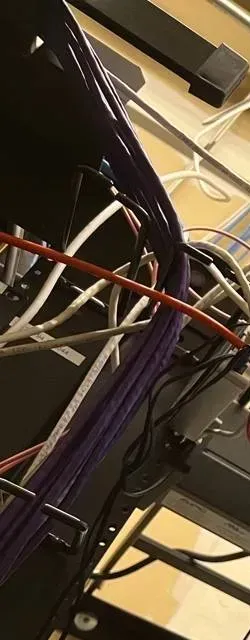
Not sure whether it's the transformer, one riser, a station or the door itself? Tell us which households ring and which don't, whether visitors and residents can hear each other, and what the door does when someone presses release, and a technician will tell you what kind of visit fits your New Utrecht building.
Tell us about the building, which households, doors or functions fail, and what changed before they did. If there is more than one problem, say a dead upstairs bell, a strike that hums and a street door that won't latch, list them together and we'll price them as one visit where we can. If the wire passes through a store or a neighbor's building, or there is an HPD order or a 311 number, include it. Prefer to talk? Call (347) 934-8335.
Every New Utrecht buzzer job, from one quiet stoop button to a dead lobby in a Bay Parkway building, follows the same eight steps.
The street and cross street, the building type, how many households share the door, who approves repairs, and what the visitor and resident each hear and can do.
Booked within 2 hours of your request into a 2-hour arrival window early in the day, with the cellar, any shop the wire crosses and the failing apartments arranged.
HPD order wording, 311 numbers, the last invoice, and photos of the button plate, the door edge and the cellar equipment, read before testing starts.
Each function checked from the street door to the complaining household and back, with the door pushed and pulled while the release is held.
The transformer or supply measured at rest and with the strike held, and the failing pair traced through cellar, hall or shop ceiling to the break.
The failed part and fix priced from the Brooklyn list, with electrician, locksmith or neighbor access listed separately, and approved before work begins.
The repair made, every connection it touches remade and sealed against damp, and each conductor labeled by household at the plate and the supply.
Ringing, talking and release retested wherever we could enter, any we couldn't noted, and a dated, photographed record left for the owner, board or agent.
New Utrecht has no official boundary today, so we use the old town center around 18th Avenue and 84th Street, the avenue under the el and the Bay Parkway blocks as our reference. A cross street plus the nearest of these landmarks gets a technician to the right door fast.
The 1828 church on 18th Avenue between 83rd and 84th Streets, built with stones from its 1700 predecessor, a city landmark since 1966 and reopened in December 2018.
On the church grounds, the sixth pole on the spot marking the first raising of the American flag in New Utrecht after the British left in November 1783.
On 18th Avenue between 81st and 82nd Streets, home of the oldest surviving milestone in the city, on the grounds of the Van Pelt Manor that burned in 1952.
The old town burial ground near 16th Avenue and 84th Street, established in 1654, a quiet reference point for the side streets west of 18th Avenue.
The small park at New Utrecht Avenue and 70th Street, under the el, among the shop rows whose residents' doors we repair.
Where the D's elevated West End line meets the N's open-cut Sea Beach line at New Utrecht Avenue, with 1,200,551 riders in 2025.
New Utrecht's blocks run into Bensonhurst, Bath Beach, Dyker Heights and Borough Park, and we cover all of them from the same Brooklyn office. Our neighboring pages include door buzzer repair in Bensonhurst, Bath Beach buzzer repair, Dyker Heights door buzzer repair and Borough Park buzzer repair. Every neighborhood in the borough is listed on the Brooklyn door buzzer repair page.

New Utrecht is billed from our Brooklyn price list, the same list we use across the borough. Every visit starts with a $250 service call that includes on-site diagnosis, $272.19 with sales tax: we find the failed part and give you the repair price in writing before any parts work begins, and most single-fault repairs are finished on that visit. The ranges below are the published Brooklyn component prices; the current list is on our door buzzer repair pricing page. Sales tax of 8.875% applies.
| Repair | Brooklyn price | Where it comes up in New Utrecht |
|---|---|---|
| Service call with on-site diagnosis | $250 | Every visit, from the stoop button or lobby panel to the cellar and the complaining household |
| Apartment station replacement | $250 – $525 | A dead or mismatched handset in a Bay Parkway rental or co-op, or a small walk-up |
| Door release relay or button | $250 – $475 | An upstairs release in a two-family, a front-desk button in an avenue office, or the "return buzzer" on an HPD order |
| 24V transformer replacement | $325 – $650 | An undersized or failing bell transformer on a two-family's cellar joist |
| Electric strike replacement and alignment | $450 – $950 | A residents' door under the el worn by deliveries, or an old wood street door on a side street |
| Lobby panel repair or faceplate | $650 – $1,800 | Worn buttons, speaker or microphone in a prewar lobby panel, repaired in its opening |
| Riser pair repair or re-termination | $850 – $2,400 | A dead line of apartments in a six-story building, or a run rerouted away from a neighbor's ceiling |
What moves a price within its range. In New Utrecht the biggest factors are where the wire goes and how easy it is to reach: whether the transformer is on an open joist or above a finished ceiling, whether a failed pair can move to a spare conductor or needs a new route, whether the run passes through a store or the building next door, how many apartments on a line need testing, and how much old patchwork has to be untangled first. All of that is in the written quote before you approve anything.
What we never add quietly. Line-voltage work is named separately as the electrician's part. A locksmith's work on a lock body, a carpenter's on a split frame, or anything involving another company's camera or alarm system is named as theirs. A building-wide test is its own line. A 50% deposit applies to scheduled repair work beyond the diagnostic visit, and card payments carry a 3% card fee shown as its own line.
Full terms — including 50% deposit, one-year parts-only warranty on Abstract Enterprises Security Systems-supplied products, and the late-fee schedule — are set out in the service agreement.Most New Utrecht calls fall into one of three shapes. The figures come from the Brooklyn list above, and your written quote names the exact parts.
$250
On-site diagnosis from the stoop button or lobby panel to the transformer or supply and the complaining household, with the failed part named and the repair priced in writing. Small fixes, such as a loose conductor, are often finished on this visit.
$250 – $950
One failed part replaced and tested: a station, a release button or relay, a bell transformer, or a strike aligned to a street door. Typical for a two-family, a small walk-up or one apartment in a larger building.
$650 – $2,400
A lobby panel repaired in its opening, or a dead riser traced and rebuilt so a line of apartments rings again, with every conductor labeled and every apartment on the line retested.
If you have already bought a replacement handset, strike, button or video door station, we can install it on a labor-only basis. We quote that labor by phone or text from the model number and a photo of what is there now, and book the visit once the deposit is in. We check first that the part suits the system it is joining, because a handset built for another system can make calls ring the wrong apartment and a strike at the wrong voltage won't release. Warranty on customer-supplied equipment stays with its maker.
The borough page our New Utrecht work belongs to: door buzzer repair across Brooklyn.
The service call and every component price on the Brooklyn list: see the full price list.
For owners and agents with buildings in several boroughs: door buzzer repair in NYC.
The wider neighborhood that most maps fold New Utrecht into: Bensonhurst buzzer repair.
The house blocks on the western side of the old town: Dyker Heights door buzzer repair.
For owners who also hold property across the bridge: door buzzer repair on Staten Island.
Either works. New Utrecht has no official boundary today and most maps file it under Bensonhurst, in ZIP 11204 or 11214. What we need is the street address and cross street. The price list is the same Brooklyn list either way, and technicians are dispatched from our Brooklyn office at 1282 Troy Ave.
It can be. The Landmarks Preservation Commission requires a permit before work on a designated landmark, and its permit guidebook treats ordinary repair of existing equipment differently from a new panel on the facade. Before any work on a landmarked building, we confirm with the owner what has been approved and keep the repair inside what the rules allow.
Usually only when the complaint is about sound. Then we test the audio between trains and while one passes, which adds some time. Ringing, release and door hardware repairs take the same time under the el as anywhere else in Brooklyn.
It's possible but not where we start. In our experience static on an old building system far more often comes from a wet or corroded splice, a failing station on a shared line or a supply that is running low. We test those first, and only if they are sound do we look at outside interference along the run.
Yes. Large newer projects such as the 243-apartment development planned for 8800 Bay Parkway are where modern video and app-based panels are most likely. We troubleshoot those from power and network to the door hardware and the administrator settings, and we may need the building's login or the service contract holder's help.
It can be. Some systems tolerate mixed stations and some don't, and a mismatched handset can load a shared line, ring the wrong apartment or weaken the release for everyone. We identify each station, test whether the mix works, and replace only the ones that are actually causing trouble.
That depends on the proprietary lease and the house rules, which divide responsibility differently from building to building. The common parts, the lobby panel, supply, risers and street door, are normally the corporation's. We report exactly which part failed and where, so the board and the shareholder can apply their own documents.
Usually, yes. A store release is normally a separate button wired to the same strike, and it can be disconnected or moved to its own door. The landlord decides, since it may be in the store's lease. We trace both circuits first so the apartments' releases keep working.
A buyer's inspector or the buyer will press the buttons, and a dead bell or a door that won't release invites a price conversation larger than the repair. Most two-family faults are single-part repairs on the Brooklyn list, and a dated test record shows the buyer it was fixed properly.
Yes. Most of the systems we repair have no drawings. We map the system as we go, from the panel to the supply and up each line, label each conductor by apartment and leave that map with the owner, so the next repair starts from a record instead of a guess.
Our Google reviews are the best place, currently 4.7 stars across 201 reviews, and our NYS license number, 12000287431, is on every quote. We don't hand out client names or contact details, and we don't publish stories about specific addresses, because we only print what we can document.
Door Buzzer Repair Brooklyn NY · Door Buzzer Repair NYC · Door Buzzer Repair Manhattan NY · Door Buzzer Repair Queens NY · Door Buzzer Repair Bronx NY · Door Buzzer Repair Staten Island NY · Door Buzzer Repair Long Island NY · Door Buzzer Repair Hudson Valley NY · Door Buzzer Repair Nassau County NY · Door Buzzer Repair Suffolk County NY · Door Buzzer Repair Westchester County | 6 Cities Same-Day · Door Buzzer Repair Rockland County NY · Door Buzzer Repair Orange County NY · Door Buzzer Repair Putnam County NY · Door Buzzer Repair Dutchess County NY · Door Buzzer Repair Ulster County NY
Door Buzzer Repair Bath Beach Brooklyn NY | Doors to Towers · Door Buzzer Repair Bay Ridge Brooklyn NY | Lobby & Strike · Door Buzzer Repair Bedford Stuyvesant Brooklyn NY · Door Buzzer Repair Bensonhurst Brooklyn NY · Door Buzzer Repair Bergen Beach Brooklyn NY · Door Buzzer Repair Beverley Square Brooklyn NY | Porches · Door Buzzer Repair Boerum Hill Brooklyn NY · Door Buzzer Repair Borough Park, Brooklyn NY | Walk-Ups · Door Buzzer Repair Brighton Beach Brooklyn NY · Door Buzzer Repair Brooklyn Chinatown NY | Shop-Side Doors · Door Buzzer Repair Brooklyn Heights NY | Co-ops & Rows · Door Buzzer Repair Brooklyn Navy Yard NY | Suite Doors · Door Buzzer Repair Brownsville Brooklyn NY · Door Buzzer Repair Bushwick Brooklyn NY · Door Buzzer Repair Cadman Plaza Brooklyn NY | Co-op Towers · Door Buzzer Repair Canarsie Brooklyn NY | Apartment Doors · Door Buzzer Repair Carroll Gardens Brooklyn NY · Door Buzzer Repair City Line Brooklyn NY | Abstract Enterprises Security Systems · Door Buzzer Repair Clinton Hill Brooklyn NY | Stoop Doors · Door Buzzer Repair Cobble Hill Brooklyn NY · Door Buzzer Repair Columbia Street Waterfront Brooklyn NY · Door Buzzer Repair Coney Island Brooklyn NY · Door Buzzer Repair Crown Heights Brooklyn NY · Door Buzzer Repair Cypress Hills Brooklyn NY
Alarm Installation New Utrecht Brooklyn NY · Security Camera Installation New Utrecht Brooklyn NY · Fire Alarm Installation New Utrecht Brooklyn NY · TV Installation New Utrecht Brooklyn · Door Buzzer Installation New Utrecht Brooklyn NY · Intercom Installation New Utrecht Brooklyn NY · Access Control Installation New Utrecht Brooklyn NY · Structured Cabling Installation New Utrecht Brooklyn NY
Whether it is an upstairs bell in a 17th Avenue two-family, a residents' door between shops on New Utrecht Avenue whose wire crosses the store next door, or a lobby on Bay Parkway that stopped calling the top floors, the first step is the same: tell us which households ring, what the visitor and the resident each hear, and what the door does when someone presses release. We book within 2 hours of your request, test ringing, talking and release separately, and put the repair price in writing before any part goes in. Licensed under NYS license #12000287431 and rated 4.7★ across 201 Google Reviews.