Simplebus · Simplebus 2 · ViP · Ultra Panels · Wi-Fi Monitors · Comelit App
Comelit intercom repair in Manhattan starts with a $250 service call, and Comelit upgrades and new installations are quoted in writing after a site visit. We fix dead lobby panels, failed Comelit power supplies, riser faults, silent apartment monitors, door releases and app answering in walk-ups, prewar co-ops, brownstones and new towers from Inwood to the Battery.
Quick answer: Abstract Enterprises Security Systems repairs, upgrades and installs Comelit intercom systems in Manhattan buildings: Simplebus and Simplebus 2 two-wire systems, ViP IP systems, Ultra entrance panels, Mini Wi-Fi monitors and Comelit app answering. A repair visit is a $250 service call with on-site diagnosis and a written price before parts work. Upgrades usually keep the building's existing two-wire riser, which is where Manhattan buildings save the most. We are not a Comelit dealer and we are not Comelit; we are an independent licensed low-voltage contractor, booked within 2 hours, seven days a week.
Last updated November 28, 2026 by Abstract Enterprises Security Systems, NYS license #12000287431 · Sources: Comelit Group product pages and technical manuals (Ultra, 1406, 6741W, 1456B, 4888C); Comelit Central Park case study; NYC Open Data Housing Maintenance Code Violations (our query, Jan 1–Nov 27, 2026); NYS Multiple Dwelling Law §50-a; NYC Admin. Code §27-2005; LPC Permit Guidebook; NYC HPD Tenant Data Privacy Law page (full links in each section)

Owner-operated since 2002 · Thousands of jobs completed · Booked within 2 hours. Call or text (929) 560-0737 or use the request form.
Walk into enough Manhattan lobbies and you start to recognize the same brushed panels, the same slim white monitors beside apartment doors and the same grey power supply boxes in the cellar. Comelit is an Italian door entry maker that has been building intercoms since 1956, and its systems sit in every kind of Manhattan building: six-story walk-ups on the Lower East Side that were rewired in the 2000s, prewar elevator co-ops on Riverside Drive and Park Avenue, postwar rentals uptown, and glass condominium towers in Midtown. Comelit's own case study for the building it calls the tallest residential building in the world, overlooking Central Park, lists seven 3ONE6 Touch entrance panels, two concierge phones and 179 apartments with Maxi ViP monitors (Comelit Group USA case study). That is one end of the market. The other end is a twelve-apartment tenement on East 6th Street with a two-wire Simplebus panel that has been rained on for fifteen winters.
Both ends call the same kind of contractor when something stops working. Comelit sells through distributors and installers; it does not send its own technicians to a Manhattan building to replace a dead lobby speaker or chase a short on the riser. That work falls to independent low-voltage contractors like Abstract Enterprises Security Systems. To be clear about who we are: we are not a Comelit authorized dealer, distributor or certified installer, and we are not Comelit. We install, repair, program and service Comelit systems, and we source Comelit parts through our suppliers as part of a repair or installation job. Your Comelit app account, the manufacturer's warranty and Comelit's own technical support belong to Comelit. The hardware in your building, the wiring, the power supplies, the door release and the programming are what we fix.
Manhattan makes Comelit work its own kind of job. Buildings are tall and fully occupied, so a riser fault on the ninth floor can mean knocking on twenty doors to find it. Prewar plaster, terra cotta block and marble wainscot make every new cable run a decision, which is one reason two-wire systems suit these buildings so well: Simplebus runs the whole building on two conductors, so an old building could get video without pulling new cable to every apartment. Landmarked facades limit what can be mounted outside. Managing agents want a certificate of insurance before anyone opens a panel. Supers juggle access for a dozen contractors a week. And the residents who live with a broken intercom are often the ones least able to wait: older tenants who cannot walk down five flights for every delivery, parents with strollers, people working from home who miss every package.
The numbers back up how often intercoms fail in Manhattan. We pulled New York City's open Housing Maintenance Code violation data for this page: between January 1 and November 27, 2026, HPD inspectors wrote 1,276 violations in Manhattan whose description mentions an intercom. Of those, 979 were class B (hazardous), 294 were class A and 3 were class C (NYC Open Data, Housing Maintenance Code Violations, our query of the description field). They were not spread evenly. The top ZIP codes were all uptown: 10031 in Hamilton Heights (169), 10027 in Harlem and Morningside Heights (123), 10032 in Washington Heights (110), 10030 and 10039 in Central and northern Harlem (97 each) and 10040 in Hudson Heights and Fort George (86). Not every one of those buildings has a Comelit system, and the data does not record the brand. But it tells you where Manhattan's intercom trouble concentrates, and it matches what we see: the oldest wiring and the hardest-working lobby panels are in the big prewar and New Law apartment houses north of 110th Street.
This page is about one brand in one borough. If your Manhattan building has a different system, or you are not sure what you have, our general intercom repair in Manhattan page covers Aiphone, Mircom, Lee Dan, M&S, ButterflyMX and the rest. If you know it is Comelit, read on: the sections below explain how to tell which Comelit system you have, what usually fails, what a resident or super can safely check first, which upgrades keep the wiring you already paid for, and what drives the price.

Before anyone can price a Comelit repair or upgrade, they have to know which Comelit technology is in the walls. The name on the lobby panel only tells you the brand. What matters is the bus: the way the panel, the power supply and the apartment stations talk to each other. Comelit has used several over the decades, and Manhattan buildings have all of them. A super or managing agent can usually narrow it down in five minutes without opening anything, and a photo of three things gets us most of the way before we arrive: the lobby panel, one apartment station, and the labels on the power supply box in the cellar or the lobby ceiling.
The older Comelit two-wire family. You find it in Manhattan buildings wired from the late 1990s through the 2000s, often with audio-only handsets on the apartment walls and a button panel at the street door. Comelit's own technical manual for its 4888C mixer-power supply describes it receiving an incoming Simplebus 1 signal and supplying a Simplebus Top signal across four outputs (Comelit 4888C manual), which tells you something useful: Comelit designed ways to carry older Simplebus panels forward into newer apartment equipment. That is often the cheapest path for a Manhattan building that wants video without replacing every station on day one.
The digital two-wire bus that most Comelit buildings in Manhattan run today. One pair of wires carries power to the stations, audio, video, the call and the door command. Kits and building systems use dedicated Simplebus 2 power supplies; the datasheet for Comelit's 6741W Mini hands-free Wi-Fi monitor lists it as compatible with Simplebus 2 systems using power supply articles 4888C, 1210/1210A and the 1209 kit supply (Comelit 6741W technical manual). If the label in your cellar says 1209, 1210 or 4888C, you almost certainly have a Simplebus-family system, and the two-wire riser is the backbone of the building.
A video-capable evolution of the Simplebus family that appears in the same technical documents as the 4888C mixer. In practice, a Manhattan building with a Simplebus Top riser is diagnosed the same way as Simplebus 2: power supply first, then the riser, then the station that misbehaves.
ViP is Comelit's IP platform. Panels, monitors and gateways sit on a network rather than on a two-wire bus, and features like app call forwarding, remote name changes and large directories are built around it. Comelit's Ultra entrance panel is available in two-wire or ViP versions (Comelit Ultra product page), and its 1456B multi-apartment gateway, which Comelit's technical manual says can serve up to 200 apartments with up to 15 slave devices per apartment, is a ViP device (Comelit 1456B manual). ViP shows up in newer Manhattan condominiums, gut-renovated rentals and the luxury towers; the Central Park building in Comelit's case study runs Maxi ViP monitors.
| What you see in the building | What it usually means | Where we start |
|---|---|---|
| Button panel at the door, white audio handsets in apartments, grey DIN-rail box in the cellar | Simplebus-family audio system, often from the 2000s | Power supply output, then the riser pair and the panel's audio module |
| Video panel, Comelit monitors with a screen beside apartment doors, power supply labeled 1209, 1210 or 4888C | Simplebus 2 (or Simplebus Top) video system | Bus voltage at the supply and at the failing floor, then the station |
| Touchscreen or digital directory panel, residents answer on the Comelit app, a network switch or gateway in the closet | ViP system, or a two-wire system with an app module added | Network, gateway and app enrollment before hardware |
| Old Comelit panel at the street, a newer non-Comelit system inside | Partial replacement over the years | Map what is connected to what before touching anything |
If you cannot tell, that is normal and it is what the first visit is for. Many Manhattan buildings have been patched by three or four different contractors since the original install, and the label on the lobby panel does not always match what is behind it. A faceplate can hide a module from a different generation, and a riser can carry stations of different ages. The fix starts with an honest map of what is actually there.

Most Comelit repair calls in Manhattan land in one of seven places. Knowing which one usually explains the symptom, and the symptom usually tells a good technician where to put the meter first. A whole-building outage and a single dead apartment are completely different jobs, so the first question we ask a super on the phone is always the same: is it everyone, one line of apartments, one floor, or one unit?
On a two-wire Comelit system the power supply is the heart of the building. If it fails, every station goes dark at once, the panel may show no light at all, and nobody can buzz anyone in. Supplies sit in cellar closets next to boilers, in lobby ceilings, in meter rooms that flood when a water main breaks on Broadway, and occasionally inside a mailbox enclosure. Heat, water, age and power surges take them out. The repair is usually a like-for-like replacement of the supply, programmed or configured to match the system, followed by a check of the bus voltage on the floors farthest from it. In a tall Manhattan building we also check whether the original supply was undersized for what the building added later: a few extra monitors, a camera input, an app module. An overloaded bus fails in confusing ways, with some floors working and others not.
The riser is the pair of wires climbing the building through a chase, a dumbwaiter shaft or a closet stack. In prewar Manhattan buildings it often shares space with old telephone cable, and over the decades it gets nicked by plumbers, painted over, crushed behind a new kitchen cabinet or cut during a renovation in one apartment. A short on a Simplebus riser can take down everything above it, or the whole building. Finding it is a matter of splitting the riser in halves and testing, floor by floor, which means access to junction points and sometimes to apartments. That is why riser work is priced on access and coordination, not parts. Our door buzzer repair in Manhattan page lists the riser re-termination range we charge across the borough, and the same figures apply when the system is Comelit.
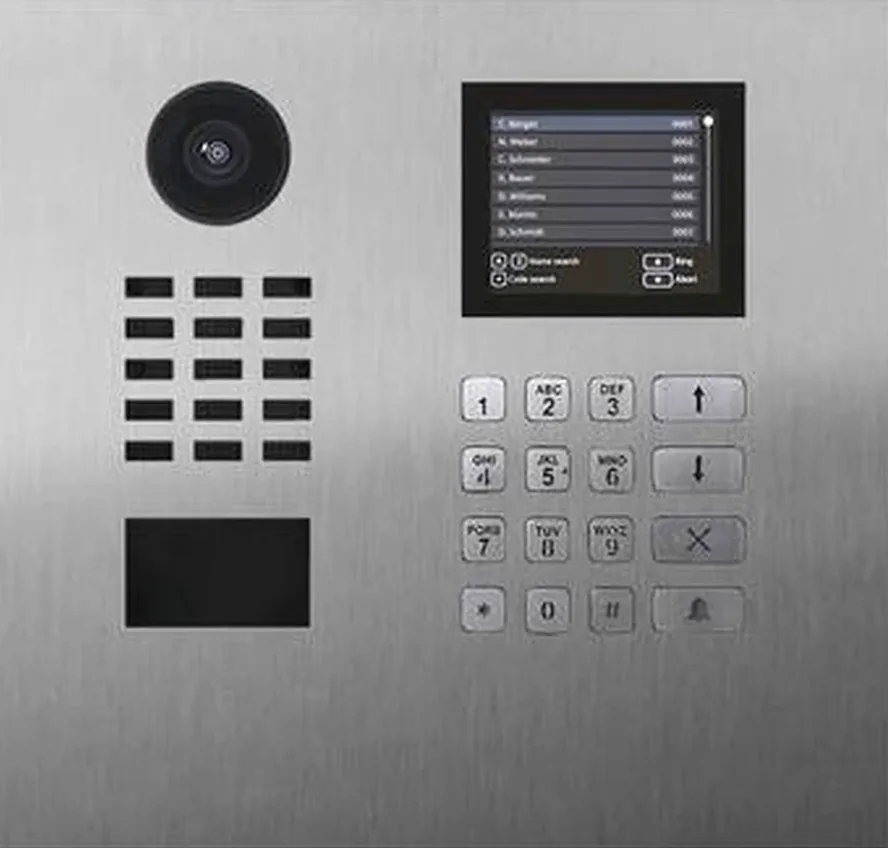
Manhattan entrance panels take a beating. Street-facing panels on a stoop or a sidewalk-level vestibule get driving rain, salt spray from plows on the avenues, summer sun on west-facing doors and a few thousand presses a week. The speaker and microphone go first, then the call buttons, then the camera module on video panels. Comelit designs panels like the Ultra with a die-cast aluminum frame and modules that clip together (Comelit Ultra), which is good news for repair: a failed audio or button module can often be replaced without replacing the whole panel. On older panels where modules are no longer made, the conversation turns to upgrading the panel while keeping the riser and the apartment stations.
"The intercom works but the door doesn't open" is one of the most common calls we get from Manhattan supers, and it is often not the intercom at all. The release command from the Comelit system drives a relay, which drives the electric strike or the magnetic lock on the door. Strikes wear out, doors sag on their hinges, closers get adjusted by someone who should not have, and the latch stops lining up with the strike. In winter, prewar steel and glass vestibule doors shrink and swell. We test the release signal, the relay, the power to the strike and the mechanical alignment, in that order, and we fix the part that failed. Strike replacement with alignment is priced on our door buzzer repair page; we do not run new high-voltage circuits, so if a lock needs a new electrical feed that part belongs to the building's electrician.
One dead unit while the rest of the building works is usually the station itself, its connection to the riser, or the short run of cable between the riser and the apartment. Comelit monitors and handsets can fail from age, a dropped handset, water from the apartment above, or a tenant who unplugged the station during a paint job and put it back on the wrong terminals. On Simplebus 2 the station also carries an address; a replaced or reset station that is not addressed correctly will ring the wrong apartment or not at all. The repair is to test the line at the station, replace or readdress the station, and confirm calls in both directions. Where the original model is discontinued, Comelit makes current stations designed to replace older ones on the same bus; its 6741W Mini Wi-Fi monitor, for example, is documented as compatible with all types of Comelit Simplebus 2 colour video entry systems without masonry work (Comelit 6741W manual).
In buildings where residents answer on their phones, a large share of "my Comelit intercom isn't working" calls are app problems: an enrollment invitation that went to spam, a phone that changed numbers, notification permissions turned off after an operating system update, a Wi-Fi monitor that lost its connection when the tenant replaced their router, or a monitor on a 5 GHz-only network. Comelit's 6741W documentation lists 2.4 GHz Wi-Fi (Comelit 6741W manual). We explain in the next section what a resident can check, and we are honest about where the line falls: the app account, logins and Comelit's servers are Comelit's; the building's gateway, network, monitors and programming are ours.
Digital panels with a name directory, keypads with codes and touchscreen panels all depend on programming. A tenant moves out and their name stays on the screen; a new tenant's apartment rings the old owner; an access code that the previous managing agent set up still works for a former employee. On some Comelit digital panels, names can be managed from a phone using the MyComelit app over Bluetooth Low Energy, according to Comelit's Ultra page (Comelit Ultra). We update directories, reset codes and clean up programming as part of a service call, and we hand the managing agent a written list of what is programmed where.
Some Comelit problems are not hardware faults, and a resident or super can rule them out in a few minutes. None of the checks below involve opening a panel, touching a power supply or working on wiring. We do not publish wiring, programming or power supply testing steps, partly because a mistake on a shared two-wire bus can take down every apartment in the building, and partly because the building's system belongs to the owner or the co-op, not to whoever has a screwdriver. If none of these checks explain the problem, book the visit.
That list is also a fair test of any contractor you call. A technician who asks those questions on the phone is already diagnosing. One who quotes a whole new system before asking whether the problem is one apartment or the building is selling, not fixing. The general Manhattan picture of who owes what when an intercom breaks, and how HPD complaints work, is on our general Manhattan intercom repair page linked above; this page stays on the Comelit-specific side.

Tell us the cross streets, how many apartments are affected and what the lobby panel looks like. We book within 2 hours, seven days a week.
The most expensive part of any intercom job in Manhattan is not the panel. It is opening walls, fishing cable through plaster and occupied apartments, and patching and painting afterward. A Comelit two-wire building has an advantage here: the riser it already has can usually carry a much newer system. That means a board or owner can often get video, phone answering and digital directories without the rewiring bill that makes many Manhattan intercom quotes so large. Habitat magazine's report on a 111-apartment Turtle Bay co-op that replaced a 56-year-old intercom quoted the installer saying rewiring "would have added another 25% and doubled the time for the job" (Habitat, Bricks & Bucks). The same logic applies to a Comelit building: keep the cable if it tests good.
Here are the Comelit upgrade paths we see make sense most often in Manhattan, all of them documented by Comelit itself. Which one fits depends on the system you have, the condition of the riser and what the residents actually want.
Comelit's 1406 is a Simplebus 2 multi-user call forwarding module. Comelit describes it as a single plug-and-play device that turns the two-wire system of an apartment building into a connected system that forwards calls to smartphones, with up to nine apartments managed by one device and two users per apartment, set up by scanning a QR code (Comelit 1406 product page). For a small Manhattan walk-up or brownstone with a working Simplebus 2 system, that can mean residents answer the door from their phone without any new apartment wiring. Larger buildings need more than one module or a different approach, and we tell you which on the visit.
Comelit's 6741W is a hands-free Mini monitor with a 4.3-inch screen and built-in Wi-Fi for Simplebus 2 systems. Its technical manual says it can answer calls from a smartphone or tablet through the Comelit app, locally and remotely, and that replacing an old door entry monitor with it does not require any additional masonry work because it is compatible with all types of Comelit Simplebus 2 colour video entry systems (Comelit 6741W manual). A 6741W/BM version adds a magnetic induction (hearing-loop) audio function, which matters in Manhattan buildings with older residents. Monitors can be replaced building-wide or one apartment at a time, which lets a co-op let shareholders upgrade on their own schedule and budget where the bylaws allow.
The Ultra is Comelit's modular entrance panel, available in two-wire or ViP versions, with a camera Comelit lists at up to 160° by 100° and up to 2 megapixels, dual speakers and an omnidirectional MEMS microphone, and a die-cast aluminum frame in grey, black or white (Comelit Ultra). Because it comes in a two-wire version, a Manhattan building with a working Simplebus 2 riser can often replace a dead or vandalized lobby panel with an Ultra and keep every apartment station. Ultra also offers button, keypad, touchscreen and digital address book modules, so a 6-apartment brownstone and a 120-apartment co-op can both get a panel sized for them.
On Ultra, Comelit says residents can use the Comelit app to generate virtual access keys, either numeric codes or QR codes scanned by the panel's camera, to share with family, friends or guests (Comelit Ultra). In a Manhattan building where the package problem is the security problem, that can replace the habit of leaving the street door propped for a courier. Whether to use it, and for whom, is a building policy decision; we set it up the way the board or owner decides.
For bigger Manhattan buildings that want app answering for everyone, central name management and remote administration, Comelit's ViP platform is the usual answer. The 1456B multi-apartment gateway is documented as serving up to 200 apartments with up to 15 slave devices per apartment (Comelit 1456B manual). Comelit's MyComelit platform, as described on its own site, lets an installer or building administrator change tenant names on digital panels, add and remove tenants by email address, view buildings on a map and get alerts about outages (Comelit). ViP typically needs network cabling or a network path to the panels, so it is a bigger project than a two-wire refresh, and we scope it room by room.
Any Manhattan rental building that adds app-based or keyless entry should know about New York City's Tenant Data Privacy Law, Local Law 63 of 2021. HPD's page on the law explains that owners of multiple dwellings using smart access systems, such as key fobs, apps or biometric readers, must follow rules on what data they collect, including a written privacy policy and express consent, and must destroy authentication data within a set time unless it is anonymized (NYC HPD, Tenant Data Privacy Law). Comelit features like face recognition (listed on the 6741W datasheet) and app enrollment fall squarely into that conversation. We are not lawyers and this is not legal advice; we make sure the owner knows which features collect what, so their attorney can write the policy before we switch anything on.
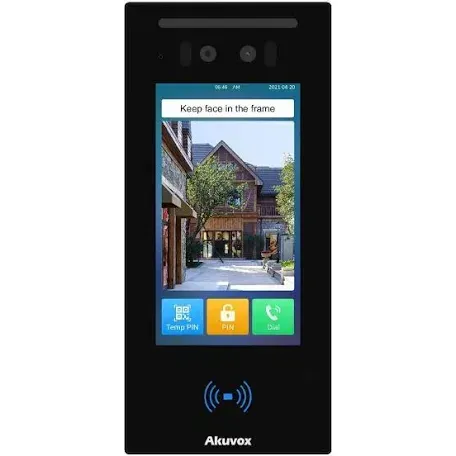
Comelit is one option for each of these jobs, not the only one. When it makes sense, we price an Akuvox or DoorBird alternative beside the Comelit replacement quote so the owner can compare. If the building is choosing a whole new platform, our Akuvox vs ButterflyMX comparison covers two of the most common alternatives in NYC.

Comelit is mostly a repair and upgrade brand in Manhattan, because so many buildings already have it. But we also install new Comelit systems, usually in four situations: a gut renovation where walls are open anyway, a townhouse or brownstone being converted from one family to several apartments or back again, a small commercial or mixed-use building that wants a door station tied to an office or a storefront, and a building replacing a dead system from another brand that has chosen Comelit after comparing quotes. For our full Manhattan installation picture across brands, including audio-only options for small buildings, see intercom installation in Manhattan.
A new Comelit installation starts with the same walk-through as any other: every entrance, the vestibule and inner door, the cellar or electrical room where the power supply or network equipment will live, the riser path, and a sample of apartments. In a townhouse, that also means the garden-level door and any gate under the stoop. We then decide with the owner whether the building should run on Simplebus 2 over a two-wire riser or on ViP over a network, and we write that choice into the scope with the reasons. For a five-apartment brownstone, two-wire is usually simpler and cheaper. For a building that wants app answering for everyone and central administration, ViP usually wins.
Comelit equipment is a special-order item for most jobs. We order after the deposit, and equipment ships on the supplier's schedule. We give an installation date once the equipment is in hand, not before, and we never promise same-day installation. The written quote comes after the site visit, because a Comelit system for a nine-apartment building on Perry Street and one for a 90-apartment building on West End Avenue have very little in common beyond the logo.

A huge share of Manhattan's residential buildings sit in historic districts or are individual landmarks. Greenwich Village, the Upper West Side, the Upper East Side, Hamilton Heights, Mount Morris Park in Harlem, the East Village and Lower East Side, Tribeca and SoHo all have large districts. If your building is one of them, any change to the outside of the building, including a new intercom panel on the facade or the stoop, falls under the Landmarks Preservation Commission. That is not a reason to leave a broken intercom broken. It is a reason to plan where the panel goes.
The LPC's Permit Guidebook spells out the rules staff use to approve intercom panels without a public hearing. In plain terms: the panel must be installed within or adjacent to a door opening, or on a fence or wall in front of the entranceway; there can be a maximum of one intercom panel (and two light fixtures) per door opening; the design, size and finish must be compatible with the architecture, which the guidebook describes as neutral and discreet. Under the general criteria for health, safety and utility equipment, equipment must be attached at mortar joints, plain masonry, wood or metalwork, and not through cast iron or on decorative surfaces; conduit should be concealed through plain masonry behind the installation, and if that is not possible staff may approve roughly ten inches of visible conduit painted to match (LPC Permit Guidebook).
The guidebook's application checklist also tells you something useful about cost and time: comparative drawings of the existing and proposed installation are required except for in-kind replacement of existing intercoms, and manufacturer cut sheets are required for intercoms. Applications are filed through LPC's online portal, Portico. So a like-for-like Comelit panel replacement in the same opening is a much lighter lift than moving the panel or adding a second one.
We are not an expediter and we do not file LPC applications ourselves. What we do is design the intercom work so it fits inside the rules from the start, which keeps approvals simple and stops the expensive mistake of drilling a stone facade twice.

A Comelit intercom in a Manhattan apartment building is not just equipment. In most buildings it is part of how the owner meets legal duties to the people who live there. We explain these rules so owners, boards and tenants understand why a broken system is urgent; for advice on your own building and lease, talk to your attorney. This is general information, not legal advice.
Multiple Dwelling Law §50-a requires class A multiple dwellings erected or converted after January 1, 1968 to have self-closing, self-locking entrance doors and, in buildings with eight or more apartments, an intercommunication system between each apartment and the entrance door with a door release. For older buildings, the same requirements apply when the tenants of a majority of the apartments request them in writing (MDL §50-a). Manhattan's housing stock is old, so many buildings sit on the pre-1968 side of that line; in practice, buildings that have an intercom are expected to keep it working.
The NYC Housing Maintenance Code says the owner of a multiple dwelling shall keep the premises in good repair (Admin. Code §27-2005). HPD inspectors write violations for broken intercoms on tenant complaints, and the 2026 Manhattan data above shows how often: 1,276 intercom-related violations in eleven months, three-quarters of them class B. For an owner, the practical point is simple. A Comelit repair is almost always cheaper than living with an open violation and repeated inspections, and a written diagnosis from a licensed contractor is useful paperwork when you certify a correction.
In a Manhattan co-op the lobby panel, the riser and usually the apartment stations are building systems, so the co-op corporation generally repairs them; the proprietary lease and house rules decide the edge cases, like a shareholder who wants a different monitor than the rest of the building. In a condominium, the declaration and bylaws decide what is a common element. In either, we work with the managing agent day to day and put the scope in writing for the board. Boards weighing a full replacement can read our co-op board intercom upgrade guide.
Much of upper Manhattan's housing is rent-stabilized, and building-wide services matter to those tenants in a specific way: New York's Homes and Community Renewal lets tenants apply for a rent reduction based on a decrease in building-wide services (NYS HCR). That is one more reason a Comelit outage in a stabilized building should be fixed promptly, and why we write clear service records that show what failed and when it was restored.
Comelit intercom work is low-voltage work. Abstract Enterprises Security Systems holds NYS low-voltage license #12000287431. We do not install or alter high-voltage circuits; if a power supply location needs a new outlet or a lock needs a new electrical feed, the building's licensed electrician does that part, and we coordinate the timing.

Manhattan is thirteen miles long, and the kind of Comelit job changes as you move down the island. These are the building types we plan for in each part of the borough, based on the housing stock and the public data, not on any client list; we keep the buildings we work in private.
Big prewar and New Law apartment houses, many of them five and six stories with long corridors and courtyards, and a high share of rent-stabilized apartments. This is where 2026's intercom violations cluster: ZIP 10032 had 110, 10040 had 86, 10034 had 60 and 10033 had 59 by late November. Comelit two-wire systems here tend to be workhorses with long risers, so power supply sizing, riser faults and worn lobby panels are the usual jobs. The Audubon Park Historic District, designated in 2009 with 19 large apartment houses (Historic Districts Council), brings landmark rules to anything mounted on those facades.
ZIP 10031 had more intercom-related violations in 2026 than any other ZIP in Manhattan, 169, and 10027, 10030, 10039, 10035, 10029 and 10037 all appear in the borough's top ten. The stock is a mix of brownstones and row houses, many converted to several apartments, prewar elevator buildings and large postwar complexes. Brownstone conversions are natural candidates for a compact Comelit kit or a 1406 phone-answering module. The Hamilton Heights and Mount Morris Park districts bring landmark rules to the stoop.
Prewar elevator co-ops on Riverside Drive, West End Avenue and Broadway, plus brownstone blocks in the West 70s and 80s. Boards here tend to want video and phone answering without rewiring prewar plaster, which is exactly what a two-wire Comelit upgrade can deliver. Vestibules are common, so new panels usually go inside rather than on the facade.
Full-service doorman co-ops on Park and Fifth Avenues where the intercom mainly connects apartments to the front desk, and walk-up and elevator rentals farther east toward York Avenue. In doorman buildings, Comelit concierge phones and the link to the desk matter as much as the street panel; in the walk-ups east of Third Avenue the jobs look more like uptown, with older two-wire systems and heavy use.
This is where Comelit ViP lives: newer condominium and rental towers with touchscreen panels, concierge stations and apps. Problems here are more often network, gateway, app and programming issues than wiring faults. Hell's Kitchen also has plenty of five-story tenements with small two-wire systems behind the avenue storefronts.
Walk-up tenements, rowhouses and converted lofts, much of it landmarked. The East Village/Lower East Side Historic District alone covered about 330 buildings when the Landmarks Preservation Commission approved it in 2012 (amNY). Small Simplebus systems with street-facing panels that have seen a lot of weather are the classic call, along with apartment monitors replaced one by one as tenants turn over.
Loft conversions with a handful of very large apartments per building, and office-to-residential conversions downtown. Lofts often run a small Comelit system with long cable runs and elevator integration questions; conversions tend to be newer ViP installs where the network side matters most.

A lot of Manhattanites assume a doorman building does not need much of an intercom. In practice, the opposite is true: in a full-service building the intercom is how the front desk reaches every apartment, and the desk uses it dozens of times an hour for deliveries, guests, dog walkers, cleaners and contractors. When it fails, the doorman is reduced to calling residents' cell phones from a list, and the building's whole visitor routine slows down. Comelit's own Central Park case study shows how central the desk is in that kind of building: two concierge phones serving 179 apartments (Comelit).
Doorman buildings also have a particular weakness: the part-time desk. Plenty of Manhattan buildings staff the lobby only part of the day, often the afternoon and evening. For the rest of the day the street panel has to work exactly like a non-doorman building's, ringing apartments directly. A Comelit system in that kind of building is programmed to switch between calling the desk and calling the apartment, and when that switching is set up wrong, visitors at 9 a.m. ring a desk that nobody is sitting at. Checking and correcting that behavior is a common, inexpensive fix on a service call.
Doorman buildings are where Comelit ViP is most common, because a desk that handles hundreds of apartments benefits from a networked system with central administration. That also means more of the faults are on the network side. A switch that lost power, a gateway that needs attention, or a building network that was reconfigured by an internet provider can make a perfectly healthy Comelit panel look dead. We check the network path before we condemn hardware.
Comelit service calls in Manhattan are not spread evenly through the year. They follow the weather and the building's own events, and knowing the pattern helps supers and managing agents prepare.
Street-facing panels on stoops and shallow vestibules take water in sideways rain, and Manhattan's avenues funnel wind straight at some facades. Water behind a faceplate corrodes the speaker, the microphone and the button contacts first. After a storm we often see panels that work intermittently: fine on a dry afternoon, dead the next wet morning. A good repair replaces the damaged module and fixes how the water got in, whether that is a missing gasket, a backbox with no drainage, or a panel mounted where the building's own gutter dumps on it.
Two-wire Comelit power supplies often live in cellar closets beside water meters, boilers and sewer cleanouts. A burst pipe, a backed-up drain or a water main break on the block can soak a supply in minutes. Apartment monitors fail from leaks too, usually from the apartment above during a renovation or an overflowing tub. When a single monitor dies after a leak, the station is replaced and the riser connection checked; when the cellar floods, we check the supply, the riser terminations and anything else at floor level before turning the system back on.
Con Edison outages, work on the building's electrical service and lightning nearby can all hit a Comelit power supply. Some supplies come back by themselves when power returns; others do not, or come back with a damaged output that runs some floors and not others. If the intercom died the same day the lights flickered, tell us; it points straight at the supply.
In January the intercom often gets blamed for a door problem. Steel and glass vestibule doors contract, closers slow down in the cold and stop pulling the door fully shut, and the strike no longer catches. Residents report that the buzzer "doesn't work" when the release is firing perfectly and the door simply is not closing far enough for the latch to engage, or is closing too hard for the strike to let go. We test the release and look at the door as one system.
Every gut renovation in a Manhattan apartment is a risk to a two-wire riser that passes through it. Contractors cut what they do not recognize. Painters take monitors off the wall and rehang them wrong. New kitchens bury junction points behind cabinets. When a Comelit problem starts the week a renovation begins on the fourth floor, that is almost never a coincidence. Managing agents can head this off by adding the intercom riser to the building's alteration agreement checklist, so contractors know it is there and leave it alone.
Most Comelit trouble in Manhattan is preventable or at least predictable. A short yearly look at the system catches the slow failures before residents notice them, and it gives the owner or board a written record of what the building has. We do these as scheduled service visits at our normal rates; we do not sell bundled service plans with invented prices.
That last point matters more every year. Older Comelit equipment eventually goes out of production, and a building that knows its upgrade path in advance can replace a failed part with a compatible current one instead of making an emergency decision about a whole new system. Comelit's documentation for current equipment, such as the 6741W monitor's stated compatibility with Comelit Simplebus 2 colour video systems, is what we use to map those paths. We never promise that a discontinued part can be found; we tell you what we can source and what the current alternative is.
The single most useful thing a super or managing agent can have is a one-page record: which Comelit system the building runs, where the power supply is, where the riser goes, which apartments have which kind of station, who has administrator access to the app or directory, and the date and scope of the last service. It turns a confusing outage into a quick diagnosis for whoever comes next, whether that is us or another contractor. We leave a copy after every Comelit job in Manhattan.
Technicians, managing agents and Comelit's own manuals use words that mean little to the people who live with the system. Here is what they mean in a Manhattan building, so a quote or a service report reads clearly.
If a contractor's quote for your building uses a term that is not on this list and does not explain it, ask. A good Comelit scope for a Manhattan building should be readable by the board member who has never seen the cellar.
Every Comelit repair in Manhattan starts with a $250 service call. The technician tests the system on site, finds the failed part, and gives you the repair price before any parts work begins. If you go ahead, the work is quoted on top of the visit; if the visit itself fixes the problem (a programming change, a reset strike, a monitor readdressed), that is the bill. We do not quote Comelit repairs over the phone, because "the intercom is dead" in a Manhattan building can be a $250 fix or a riser fault on the twelfth floor, and a phone price for either would be a guess.
For common parts and repairs, we use the same Manhattan price ranges published on our door buzzer repair page, so a Comelit building pays what any other building pays for the same work. Those published ranges include: apartment station replacement $250–$525; door release relay or button $250–$475; transformer replacement $325–$650; electric strike replacement with alignment $450–$950; lobby panel repair or faceplate $650–$1,800; and riser pair repair or re-termination $850–$2,400 and up, because riser work in an occupied prewar line is priced on access and coordination rather than parts. New Comelit panels, monitors, gateways and full systems are quoted in writing after the site visit. We do not publish Comelit equipment prices, and we never compare our quote to a retail or online store price, because a store price covers a box, not the cabling, programming, door hardware, testing and warranty that make it work in your building.
Financing is available through Wisetack, subject to approval. Full terms — including 50% deposit, one-year parts-only warranty on Abstract Enterprises Security Systems-supplied products, and the late-fee schedule — are set out in the service agreement. Our labor carries the 30-day warranty listed on our site, longer coverage is a paid add-on, and Comelit's manufacturer warranty is Comelit's, handled under Comelit's terms. More general ranges are on our intercom pricing page.
We install and repair most of the major intercom brands, so we do not have a reason to talk a Manhattan building into or out of Comelit. Here is how we actually think about it on a walk-through.
Keep and repair Comelit when the system is working for most apartments, the failure is a component (a power supply, a panel module, a station, a strike), parts are still available, and the residents are happy with how they answer the door. Replacing a working two-wire system because one piece failed is the most common way Manhattan buildings overspend on intercoms.
Upgrade within Comelit when the riser is sound but the building wants video, phone answering or a digital directory. Because Comelit designs newer panels and monitors to run on its two-wire bus, an upgrade can reuse the most expensive part of the system: the cable already in the walls.
Consider another platform when the riser is failing in many places, the building wants a cloud-managed system with features Comelit does not offer in your configuration, or the board has already standardized on a different brand across its other buildings. In those cases we price the alternatives side by side. Akuvox and ButterflyMX are the two cloud-friendly platforms Manhattan boards ask us about most; our Akuvox vs ButterflyMX page compares them, and DoorBird vs 2N covers two premium door stations for smaller buildings and townhouses.
One honest caution about any switch: a new platform often brings a subscription, a new app for every resident and, for app-based systems, the data-privacy duties described above. None of that is bad, but it belongs in the comparison alongside the equipment price.

Some patterns come up so often in Manhattan that we plan for them before we arrive. Power supplies in cellar closets near boilers and water meters, where heat and leaks shorten their lives. Risers that share a chase with abandoned telephone cable, where the right pair has to be identified before anything is cut. Vestibule doors on prewar buildings that have settled, so a perfectly good strike no longer catches the latch. Lobby panels on west-facing stoops with sun-faded buttons and water behind the faceplate. Monitors that were taken off the wall during a painting job and rehung on the wrong terminals. Directory names that have not been updated in years. And, in the newer towers, app and network problems that look like a hardware failure until someone checks the gateway. None of these are exotic. They are just the reasons Manhattan Comelit calls take a technician who has seen the borough's buildings, not just the brand's catalog.
How building intercoms work across the city's apartment stock.
What the $250 service call covers, and common part ranges.
Intercoms, fobs and cameras planned for co-op boards.
The same building systems, written for condo boards and owners.
For owners of one Manhattan rental building or a few.
Describe the building and get a written plan back.
When every apartment goes quiet at the same moment, the usual suspects are the Comelit power supply or mixer, a short on the two-wire riser, or the lobby panel itself. Water in a cellar closet, a power surge, or a renovation that nicked the riser are common triggers in Manhattan buildings. The $250 service call starts at the supply and works outward until the fault is found, and you get the repair price before any parts work.
Usually it is the station, its address on the bus, or the short cable from the riser to the apartment, not the building system. Who pays depends on your lease, proprietary lease or bylaws. Technically it is a small job: we test the line at the apartment, readdress or replace the monitor, and confirm calls both ways.
Often, yes. Comelit's 1406 module is designed to turn a Simplebus 2 system into one that forwards calls to smartphones, with up to nine apartments and two users per apartment on one device, according to Comelit. Wi-Fi monitors such as the 6741W are another route. Both depend on the existing system being Simplebus 2 and the riser testing good, which we confirm on the visit.
Yes. Abstract Enterprises Security Systems is not a Comelit authorized dealer, distributor or certified installer, and we are not Comelit, but you do not need a dealer to repair a Comelit system. We install, repair, program and service Comelit systems and source Comelit parts through our suppliers as part of a job. Your Comelit app account and Comelit's manufacturer warranty are handled by Comelit.
Yes. The LPC Permit Guidebook lets staff approve an intercom panel within or adjacent to a door opening, or on a fence or wall in front of the entranceway, one panel per opening, attached at mortar joints or plain masonry. In-kind replacements need lighter paperwork than new locations. We plan the panel to fit those rules and supply cut sheets; the building's architect or expediter handles the application.
Not necessarily. App problems often come from an expired enrollment, a changed phone number, notification permissions switched off after a phone update, or a gateway or network issue in the building. Comelit's support page suggests reinstalling the app as a first step. If several residents are affected at once, the building's gateway and network are the place to start, and that part is ours to fix.
Many component repairs, such as a power supply, a station, a panel module or a strike, are finished on the first or second visit once the part is in hand. Riser faults take longer because they need access to closets and sometimes apartments on several floors. Special-order Comelit equipment is ordered after the deposit and scheduled when it arrives; we do not promise same-day repair.
Yes. Upper Manhattan has some of the borough's hardest-working intercoms; in 2026 the ZIP codes with the most intercom-related HPD violations were 10031, 10027 and 10032. We service Comelit two-wire and ViP systems in buildings from Inwood to the Battery, with the same $250 service call everywhere in Manhattan.
It is quoted in writing after the site visit, because the price depends on the panel type, the number of apartments, the mounting surface, landmark rules and whether the existing riser and stations can stay. Our published Manhattan range for lobby panel repair or faceplate work is $650 to $1,800; full replacements with new modules are scoped individually. We can price an Akuvox or DoorBird alternative beside it.
Comelit makes a version of its Mini Wi-Fi monitor, the 6741W/BM, with a magnetic induction audio function for hearing aids, according to Comelit's technical manual. It works on Simplebus 2 systems. We can swap it in for an existing station where the building allows, and test it with the resident.
The repair fixes the condition; clearing the violation is the owner's step with HPD, usually by certifying the correction. We give the owner or managing agent a written record of what failed, what we replaced and the date service was restored, which is the paperwork owners typically keep with their certification. This is general information, not legal advice.
We schedule seven days a week with early-day visits, first come, first served once the service call is paid. Many Manhattan co-ops and condos limit contractor hours or noisy work on weekends, so we follow the building's rules; weekend visits are usually diagnostics and repairs rather than installations.
Often, as long as the strike or maglock is in good condition and suited to the door. Prewar vestibule doors settle, closers get misadjusted and strikes wear, so we test the release, the relay, the power to the lock and the alignment as part of the job. If a lock needs a new high-voltage feed, the building's electrician handles that part.
Often, yes. If the building runs a Comelit two-wire system and the riser tests good, newer Comelit video panels and monitors are designed to run on the same two-wire bus, so the riser can stay. If the existing system is an older Simplebus generation, there may be an intermediate step, which we explain after testing. We quote the whole path in writing after the site visit.
On supported Comelit panels such as the Ultra, residents can create virtual keys, numeric codes or QR codes, in the Comelit app and share them, according to Comelit. Whether couriers get codes, and for how long, is the building's policy. We set it up the way the owner or board decides and show the super how to cancel codes.
Tell your super or managing agent, and check with a neighbor whether their apartment is affected too. Owners, boards, managing agents and supers book the repair with us. A resident can call us as well, but in a multi-apartment building the work on the shared system needs the owner's approval and access to the cellar and riser.
Call or text (929) 560-0737 or use the form on this page. Tell us the cross streets, whether the problem is the whole building, one line, one floor or one apartment, and send a photo of the lobby panel and the power supply label if you can. We book within 2 hours, and the service call is $250.
A straight answer on repair versus upgrade, before anyone opens a wall.
Tell us the cross streets, how many apartments the building has, whether the problem is the whole building or one apartment, and what the lobby panel looks like. Repairs start with the $250 service call; upgrades and new installations get a written quote after the site visit. Prefer to talk? Call or text (929) 560-0737.
Got it. We will call or text to book the Comelit visit for your Manhattan building.
Manhattan is one of the five boroughs where we service Comelit systems. For the citywide picture, start at Comelit intercom service across NYC, or go back to the Abstract Enterprises Security Systems home page. Comelit buildings in the other boroughs can see Comelit intercom in Brooklyn, Comelit intercom in Queens and Comelit intercom in the Bronx. We also service Comelit systems on Staten Island, in Nassau and Suffolk on Long Island, and in Westchester, Rockland, Orange, Putnam, Dutchess and Ulster in the Hudson Valley.