Entrance Panels · Indoor Monitors · Handsets · Door Releases · Comelit App · Upgrades
Comelit intercom repair in Queens starts at $250 for the service call, and a new or replacement Comelit intercom system is priced in writing after a site visit. We work on the Comelit door entry systems already wired into Queens buildings, from two-family houses in Astoria and Ridgewood to garden co-ops in Jackson Heights, postwar elevator buildings on Queens Boulevard and the newer towers in Long Island City and Flushing, and we install new Comelit panels, monitors and app access where a building wants them.
Quick answer: Abstract Enterprises Security Systems repairs, upgrades and installs Comelit intercoms across Queens: lobby and vestibule entrance panels, apartment monitors and handsets, the two-wire Simplebus2 riser, IP (ViP) systems, door releases and strikes, and the Comelit app connection. A repair visit is the $250 service call, and that $250 goes toward the repair if parts or more labor are needed. Replacements and new systems get a written quote after we see the building. We are not Comelit and not a Comelit authorized dealer; we are the low-voltage contractor who fixes and installs the equipment in your building. We book within 2 hours, seven days a week.
Last updated November 28, 2026 by Abstract Enterprises Security Systems, NYS license #12000287431 · Sources: Comelit Group USA product pages and datasheets (Ultra, intercom range, 6721W Mini monitor manual, Le Havre Whitestone case study); NYC HPD 2021 Housing and Vacancy Survey; NYC Building Code §1010.4.4; NYS Multiple Dwelling Law §50-a; NYC Open Data HPD violations (links in each section)

Owner-operated since 2002 · Thousands of jobs completed · Booked within 2 hours. Call or text (347) 434-6392 or use the quote form.
Queens is a big place to keep doors working. The city's 2021 Housing and Vacancy Survey counted 900,400 homes in the borough, a quarter of all the housing in New York City, and found that 263,900 of them, about 29 percent, are in buildings with an elevator (NYC HPD, 2021 NYCHVS Selected Initial Findings). The rest are walk-ups, garden apartments, row houses and the two- and three-family homes that line the side streets of Astoria, Woodside, Maspeth, Ridgewood, Elmhurst and Corona. Almost every one of those buildings with more than a couple of apartments has some kind of door entry system, and a large share of the ones put in or replaced over the last twenty-odd years carry the Comelit name.
The reason is mostly about wire. Older Queens buildings were wired for a buzzer or an audio intercom decades ago, often with a single pair of thin conductors running up a riser to every apartment. Replacing that wiring in an occupied six-story building on 37th Avenue or Yellowstone Boulevard means opening walls in every unit. Comelit's two-wire Simplebus2 system was designed for exactly that problem: its catalog describes the 2-wire system as ideal for a building that wants an audio-video or audio-only intercom "utilizing the existing intercom wires" (Comelit Group USA, General Catalog 2023). In a two-wire system, power and the call and video signals share the same pair. For a Queens board or landlord, that is the difference between a modernization that takes a few days and one that takes a few months.
Comelit's own case studies point to Queens. The company's write-up on the Le Havre complex in Whitestone (spelled "Le Harve" on Comelit's page) describes 32 buildings and 1,024 apartments and says Comelit was chosen "because of the need to use existing cabling while giving the tenants the latest technology including the Comelit App." The project used a digital Ikall Metal entrance panel at each building and Comelit's Mini Wi-Fi two-wire monitor in the apartments (Comelit Group USA, Le Havre Whitestone case study). That job was done by another installer, not by us, and we mention it only because it is a clear, public example of the kind of building and the kind of reasoning we see across north and east Queens: big, spread-out complexes with existing wire, where nobody wants to pull new cable to a thousand apartments.
The same logic shows up in the garden-apartment blocks of Jackson Heights, the courtyard buildings of Kew Gardens and Forest Hills, and the long rows of postwar co-ops along Queens Boulevard in Rego Park. It shows up in reverse in Long Island City and downtown Flushing, where the new towers are wired with network cable from the start and Comelit's IP platform, called ViP, competes with every other IP intercom brand. So a Comelit intercom in Queens can be a twenty-year-old audio handset system, a ten-year-old Simplebus2 video system with color monitors, or a brand-new IP system with a touchscreen directory and phone app. The repair approach is different for each, and the first thing our technician does on a Queens Comelit call is work out which one is on the wall.
There is also a legal reason these systems matter. New York State's Multiple Dwelling Law §50-a requires self-closing, self-locking entrance doors and, in buildings of eight or more apartments erected or converted after January 1, 1968, an intercommunication system that lets each apartment talk to the entrance and release the door (NY Senate, MDL §50-a). The NYC Building Code says the same for new work: buildings with eight or more dwelling units need an intercom at the main entrance lobby door with voice communication between each unit and the person outside (NYC Building Code §1010.4.4). When a Comelit system stops ringing a whole line of apartments, a Queens owner is not just dealing with annoyed residents; they may be dealing with an HPD inspector. NYC Open Data shows 342 HPD housing violations issued in Queens in 2025 whose description mentions an intercom (NYC Open Data, HPD Housing Maintenance Code Violations). Those cover every brand, not just Comelit, but they show how often entry systems in the borough break badly enough for a tenant to call 311.

Comelit is mostly a repair and upgrade brand in Queens. Thousands of buildings already have it, and most of the calls we get start with something that stopped working. So this list starts with repair and ends with new installation. Every item below is something one of our technicians can diagnose and quote on the first visit.
No ring, no picture, a buzzing line, a door that won't release, one riser dead while the rest of the building works. Diagnosed on the $250 service call.
Broken, vandalized or weather-worn lobby and vestibule panels replaced with a compatible Comelit panel, or upgraded to a newer one on the same wire.
Dead apartment monitors, cracked handsets and failed buttons swapped for a compatible unit and programmed to the apartment's code.
The lock side of the system: electric strikes, maglocks and release relays that stop opening the door when an apartment presses the key.
Directory names, apartment codes, a new tenant's monitor, a moved apartment, or a panel that lost its settings after a power problem.
Older Comelit audio buildings moved to video on the existing two-wire riser, apartment by apartment or all at once.
Wi-Fi monitors and IP systems that ring a resident's phone, with virtual keys for guests, where the installed equipment supports it.
New Comelit door entry for a two-family house, a garden co-op, a mixed-use building on a Queens commercial strip or a new IP building.
If the job turns out to be bigger than a Comelit repair, for example a building that wants a different brand entirely or needs the whole riser rewired, we will say so and point you to the right page. Our general intercom repair service in Queens covers every brand, and our intercom installation work in Queens covers new systems from scratch. This page is about Comelit specifically: the equipment, the faults we see on it, and what it costs to keep it running in a Queens building.
When someone calls us about a Comelit intercom not working, the complaint usually falls into one of six patterns. Each one points at a different part of the system, and knowing which pattern you have saves time on the visit. Below is what each symptom tends to mean, what a resident or super can safely check, and where the technician takes over. We don't give wiring or programming instructions before a paid visit, partly because the wrong move on a powered two-wire riser can take out more equipment than it fixes.
If no apartment rings and the entrance panel is dark or silent, the problem is almost always upstream of the apartments: the power supply, the panel itself, or the riser where it leaves the panel. On a Simplebus2 building, everything runs off a central power supply, and when that supply fails or its fuse opens, the whole system goes quiet at once. A building-wide outage after a storm, a power cut or work in the basement points the same way. What a super can do: check that the circuit feeding the intercom equipment hasn't tripped and that nobody unplugged anything in the equipment closet. What the technician does: measure the supply under load, check the panel, and work out whether the supply failed on its own or because something on the line is shorting it.
This is the most common Queens pattern, especially in prewar walk-ups and garden buildings where the riser has been spliced many times over the decades. If the third floor works and the fourth through sixth floors don't, the break or short is usually between the third and fourth floors: a corroded splice in a hallway junction box, a nicked wire behind a radiator, or one apartment's monitor that has failed in a way that drags down everything past it. On a two-wire system, a single shorted monitor can pull the whole line down. Our technician isolates the riser section by section until the faulty piece shows itself. This is also why we need access to the affected apartments on the visit: the fault is often inside one of them.
If the rest of the building is fine and only one unit has a problem, the cause is usually that apartment's monitor or handset, its wiring at the wall box, or its programming. Comelit apartment units are addressed with a user code; on the Mini hands-free monitor, for example, Comelit's manual describes two banks of 8-position DIP switches used for the user code and button programming (Comelit, 6721W Mini hands-free monitor manual). A unit that was swapped by a previous tenant, set to the wrong code, or bumped during painting will ring the wrong apartment or nobody. What a resident can check: the monitor's volume and the privacy (do-not-disturb) setting, which on many Comelit monitors silences the ring entirely. What we do: test the line at the wall, check the address, and replace or re-program the unit.
A constant buzz, hum or crackle on the audio usually means interference or a poor connection somewhere on the line. In Queens we often find it in buildings where the intercom wire shares a conduit or a run with power cables, or where a splice has partially corroded. Comelit itself advises against running system wires in the same duct as 230-volt or higher power cables in its product instructions (Comelit instruction sheet). A Comelit that buzzes on every apartment at once usually has a supply or panel problem; one that buzzes in a single apartment usually has a local wiring fault.
On a Comelit video system, a black screen with working audio can be the camera module in the entrance panel, the video signal on the riser, or the monitor itself. If every apartment lost video at the same time, we look at the panel's camera module and the riser first. If one apartment's screen went black, it is usually that monitor or its connection. Some Comelit monitors also have a brightness control; the Mini hands-free monitor manual lists a brightness control dial on the unit (Comelit manual), so it is worth making sure it hasn't been turned all the way down before calling.
If calls go through and the picture works but the door doesn't unlock, the problem is on the lock side: the electric strike or maglock, the relay that drives it, its own power, or the door hardware itself. In Queens, a lot of these turn out to be mechanical: a door that sags on its hinges so the latch binds against the strike, a closer that slams the door so hard the strike wears out, or a strike that was never the right type for the frame. We check the electrical side and the mechanical side together, because replacing a strike on a misaligned door just means another visit in six months. When the door hardware is part of the picture, our door buzzer and door release repair work in Queens covers the lock side in more depth.
Please don't open the power supply, re-terminate the riser or change DIP switch settings yourself. Beyond the safety issue, a lot of the Queens Comelit calls that cost the most are ones where someone tried a fix and moved a problem from one apartment to the whole line.
Before anyone can quote a Comelit repair or upgrade, they need to know which Comelit platform is installed. Two families cover almost everything we see in Queens: the two-wire Simplebus2 family and the IP-based ViP family. Panels and monitors from different eras look very different, but the platform underneath is what decides which replacement parts will work and what an upgrade can reuse. Here is how we tell them apart on a Queens job, using only what Comelit itself publishes about each line.
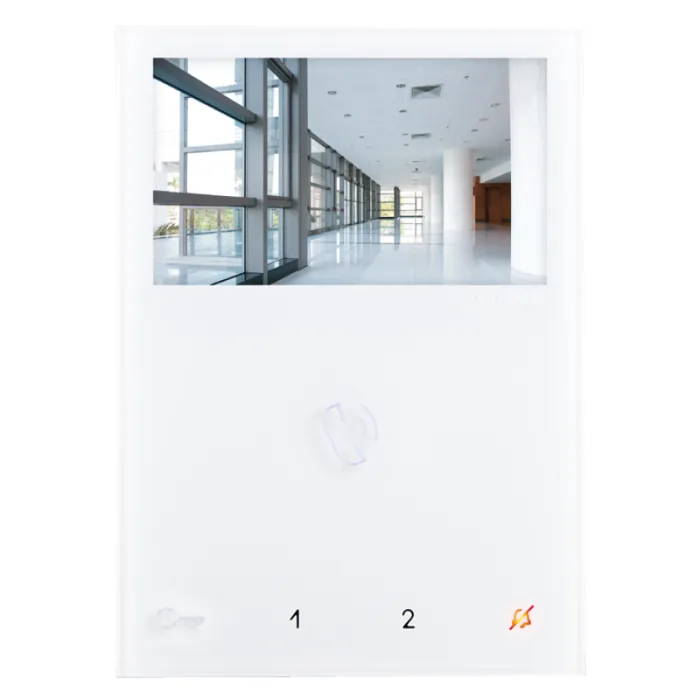
Simplebus2 is Comelit's two-wire system. Power and signals share one pair of conductors from the entrance panel to each apartment, which is why it is so common in Queens retrofits: it can usually run on the pair that a building's old buzzer or audio intercom already used. Comelit publishes Simplebus2 system diagrams for audio and video systems in residential, commercial, industrial and public buildings (Comelit Group, Simplebus2 Audio System diagrams). Apartment equipment on a Simplebus2 building includes audio handsets, hands-free audio units and color monitors. A typical example is the Comelit Mini hands-free monitor, art. 6721W: Comelit's manual describes a wall-mounted, full-duplex hands-free monitor with a 4.3-inch 16:9 color screen, touch buttons for audio, lock release, self-activation, switchboard call and privacy, a door status LED, floor-door call management, and a size of 115 by 160 by 22 millimeters; it also states plainly that the monitor "can only be used in Simplebus2 systems" (Comelit, 6721W manual). A version with a hearing induction loop is listed as 6721W/BM. That one sentence about Simplebus2-only compatibility is the kind of detail that matters on a Queens repair: buy a monitor for the wrong platform, and it won't work no matter how carefully it is installed.
ViP is Comelit's IP door entry platform. The Comelit catalog headlines it as "the internet at the service of door entry technology" (Comelit catalog), and Comelit's datasheet for its master apartment gateway for the ViP system describes an Ethernet port for the ViP riser input plus PoE ports (Comelit, ViP master apartment gateway datasheet). In practice, ViP buildings run on network cable and network switches instead of a two-wire bus. We see ViP mostly in newer Queens construction, especially Long Island City and the downtown Flushing towers, and in buildings that rewired during a gut renovation. A ViP repair looks more like network troubleshooting than classic intercom work: a dead port, a failed PoE switch, a monitor that lost its network settings.
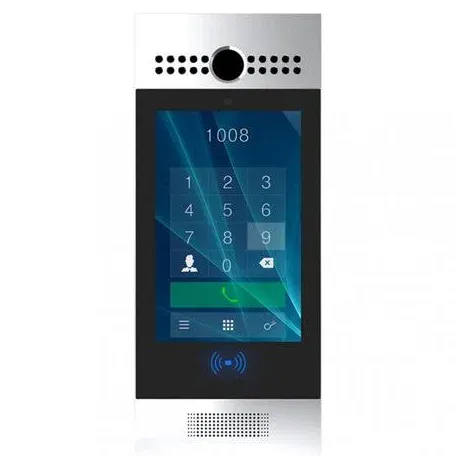
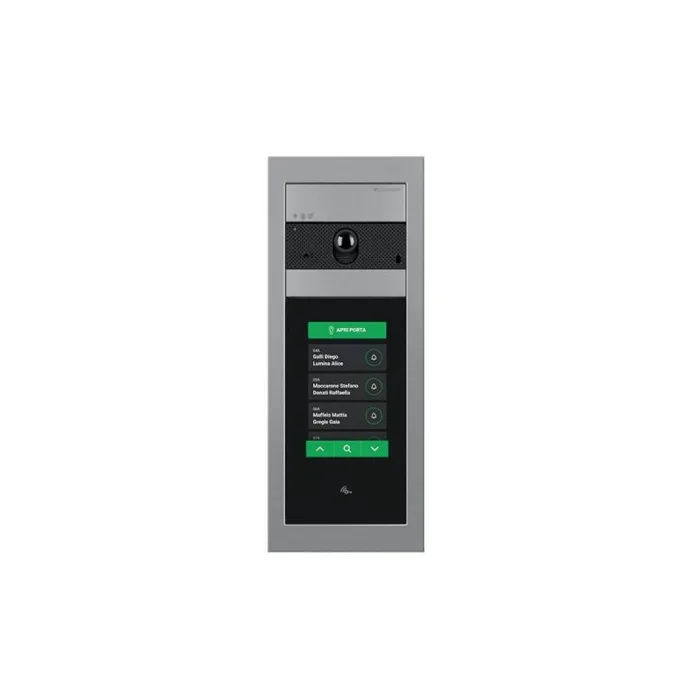
The panel on the front door is where most people first meet Comelit, and in Queens the newer one is often an Ultra. Comelit describes Ultra as "a modular 2-Wire and ViP button panel," built around a 9.5 by 9 centimeter module, with audio or audio-video modules, push-button modules, a keypad version and a touchscreen with a digital address book for "complexes that gather hundreds of apartments." Its camera is listed with a field of view of up to 160 by 100 degrees and resolution of up to 2 megapixels, and the frame is die-cast aluminum chosen for resistance to weathering, chemical corrosion and UV (Comelit Group USA, Ultra). Because Ultra comes in both two-wire and ViP versions, it is the panel we most often suggest when a Queens building wants a new face on the front door without changing the wiring behind it.
Comelit's current US intercom range lists the Icona and People monitors, the 7Top and Sonus units, the Mini Audio handset and Mini Audio hands-free units, People Wi-Fi, and entrance panels including Ultra, 3one6 (in Touch and Sense models), Bello for single-family homes, Quadra, Ciao, the wireless Visto doorbell intercom, the Vandalcom series for high-traffic, vandal-prone entrances, and Area of Refuge emergency panels (Comelit Group USA, intercom range). The Le Havre case study in Whitestone also names the digital Ikall Metal panel and the Mini Wi-Fi monitor. Older Queens buildings will also have Comelit panels and handsets from earlier generations that are no longer in the current range. When a model is discontinued, we look for a current Comelit unit that runs on the same platform, and if none fits, we say so and quote the upgrade instead of promising a part that may not exist.

| What you see in the building | Likely Comelit platform | What it means for a repair |
|---|---|---|
| Two wires at each apartment monitor or handset, older audio or color video units | Simplebus2 (two-wire) | Replacement units must be Simplebus2-compatible; faults are traced along the shared pair |
| Network cable at monitors, a network switch in the equipment room | ViP (IP) | Ports, PoE power and network settings are checked alongside the Comelit units |
| Modular aluminum panel with square modules, keypad or touchscreen directory | Ultra, either two-wire or ViP | The module label and the wiring behind the panel tell us which version |
| Phone rings when someone buzzes, guests get codes or QR keys | Wi-Fi monitor on two-wire, or ViP with the Comelit app | App account issues go to Comelit; building-side connection issues are ours |
| Old audio handsets, push-button brass or steel panel | Earlier Comelit generation | Parts availability decides repair versus a phased upgrade |
A lot of the Comelit work we quote in Queens isn't a repair at all. It is a board, a landlord or a homeowner who has a Comelit system that still works but feels old: audio-only handsets, a cracked push-button panel, a directory nobody can read, and residents asking why they can't answer the door from their phone. Upgrading a Comelit system is often the most cost-effective way to get there, because the expensive part of any intercom job in an occupied building is the wiring, and a two-wire Comelit building can usually keep its wiring.
The most common Queens upgrade is moving a Simplebus2 building from audio handsets to video monitors. On a sound riser, the panel gets a video module or a new video panel, and apartments get Simplebus2 monitors in place of their handsets. Buildings can do it all at once or in phases: the entrance panel first, then apartments as residents opt in or as old handsets fail. Phasing is popular with Queens co-ops, where some shareholders want video right away and others are happy with a handset. The deciding question is the condition of the existing pair. Before quoting, we test the riser at the panel and at a sample of apartments so the proposal says plainly what can be reused. Where a section of riser has been badly spliced or water-damaged, we price replacing that section rather than pretending the whole building is fine.
Many Queens buildings only need a new front door. A push-button panel with faded name cards, missing buttons or a cracked camera window can often be replaced with a modular Comelit panel that runs on the same platform. Comelit's Ultra, for example, is offered in two-wire and ViP versions and can be built with push buttons, a keypad, or a touchscreen with a digital address book (Comelit Ultra). Comelit also says the Ultra touchscreen and digital address book modules support Bluetooth Low Energy and the MyComelit app for managing names in the digital directory, which makes keeping a large Queens building's directory current far less painful than reprinting name cards every time someone moves. A touchscreen directory is a good fit for garden complexes and tall buildings; a short push-button column often still makes more sense for a six-family walk-up in Ridgewood.
The Comelit app lets residents receive calls and open the door from a phone, but only when the installed equipment supports it. Comelit's intercom range page lists app features such as video calls, intercom calling, elevator and gate control, virtual keys for visitors and CCTV viewing (Comelit intercom range). On the Ultra panel, Comelit says the app can generate virtual access keys as numeric codes or as QR codes scanned by the panel's camera module. In the Whitestone case study, Comelit describes its Mini Wi-Fi two-wire monitor as able to receive calls anywhere through the Comelit app and to open the door through Amazon Alexa and Google Home voice commands (Comelit case study). In practice, that means a two-wire Queens building can often add app calling by putting Wi-Fi monitors in the apartments that want it, without rewiring. We set up the building side; each resident's app account is between them and Comelit.
We will also tell you when not to upgrade. If a Queens building's riser is failing in several places, a monitor upgrade just puts new equipment on a bad line. If the board wants features the installed Comelit platform can't support, or the building needs network cable anyway for cameras and access control, an IP system may be the better spend. And if most residents are happy with handsets, replacing every apartment unit is money spent on something nobody asked for. A good Comelit upgrade fixes what people actually complain about, and the walk-through is where we work out what that is.

New Comelit installations in Queens fall into three groups, and each one is planned differently. We install, program and service Comelit equipment and source it through our suppliers as part of the job. We do not run a store or ship parts, and we are not a Comelit authorized dealer or distributor.
Queens has more small multi-family homes than almost anywhere in the city, and many still have a doorbell button and a chime, or a buzzer that hasn't worked in years. For a house, Comelit offers small panels such as Bello, which Comelit describes as designed for single-family homes, and the wireless Visto doorbell intercom (Comelit intercom range), plus kits that pair a small panel with monitors. In a two-family house in Astoria, Middle Village or Bayside, we usually install a two-button panel at the street door, a monitor on each floor, and a strike so each apartment can let in its own visitors. The challenge is rarely the equipment; it is getting wire from the front door to the second floor in a finished house without opening walls. We look for the old bell wire, a basement path and a closet chase before drilling anything.
For a walk-up or a garden building with an existing riser, a Simplebus2 system is usually the default Comelit choice because it reuses the pair. For a garden complex with many separate entrances, each building gets its own panel, and we plan how the buildings connect and where power lives. These jobs need a written scope by building, a schedule for apartment access, and notices to residents, so we work closely with the super and the managing agent. Rental owners can find more on how we handle whole-building work on our page for apartment building security systems in Queens.
In new buildings, Comelit ViP competes with every other IP intercom on features, price and the subscription model. One point Comelit makes about its own products is that its intercoms are available "with a one-time licensing fee," so owners don't face monthly subscriptions (Comelit intercom range). Some owners prefer that model; others prefer a cloud intercom with a monthly fee and a managed app. We help a Queens developer or owner line up the options, and we install the low-voltage side: panels, monitors, network cable to each unit, and the door hardware. Any new high-voltage circuit is for the building's electrician; we connect to it.

Queens is not one kind of building, and a Comelit job in Long Island City has almost nothing in common with one in Bellerose. Here is how the work changes across the borough. These describe neighborhoods and building types we serve, not specific client buildings.
Jackson Heights is where the term "garden apartment" was coined, and its historic district, designated in 1993, is mostly buildings put up between 1914 and 1939 (Historic Districts Council, Jackson Heights). Buildings of that age were wired long before anyone thought about video. Many have several entrances around a garden, each with a panel, and risers that run through basements between entrances. Comelit two-wire systems are common here because they reuse that old pair. The typical problems are corroded basement splices, entrances that were added to the system piecemeal, and landmark rules that limit what a new panel can look like on the street facade. We bring panel finish options for the board to look at before anything is ordered.
The six- to twenty-story postwar buildings along Queens Boulevard, Yellowstone Boulevard and 63rd Drive usually have a single lobby with an outer vestibule door and an inner lobby door, a garage entrance and a service door. Many of these went to Comelit during a modernization in the last two decades. The work here is mostly lobby panels worn by heavy use, monitors failing one by one in long-occupied apartments, and buildings that want to add app access and video to a handset system. Elevator buildings often have a doorman desk or a super's station too, and Comelit systems can include a concierge or switchboard unit; the Mini monitor manual, for example, lists a switchboard call button among its standard functions.
Waterfront towers in Long Island City are the newest buildings in Queens, and many were built with IP intercoms from the start. Where the system is Comelit ViP, the work is network-side as much as intercom-side: switches, PoE budgets, monitor settings, and integration with the building's access control and package rooms. We work alongside the building's IT or low-voltage vendor where one exists, and we keep a written record of what is plugged into which port so the next service call is faster.
Downtown Flushing and the busy corridors of Elmhurst and Corona have a lot of mixed-use buildings: shops on the ground floor, apartments above, and a street door squeezed between storefronts. These entrances take a beating. A Comelit panel at a street door on Main Street or Roosevelt Avenue sees thousands of presses, constant weather and the occasional deliberate damage. Comelit's Vandalcom series is built for exactly that kind of entrance. Many of these buildings also have residents who prefer a directory in more than one language, which a touchscreen directory can handle far better than printed name cards.
The brick two- and three-family houses and six-family walk-ups of western Queens are where we do most of our small Comelit work: a two-button panel replaced, a monitor added on the third floor, a strike that stopped releasing. Owners here often live in the building, so the work is scheduled around them, and they tend to want the simplest reliable fix rather than the most features. A small two-wire Comelit setup is often exactly that.
Eastern Queens has the borough's big garden co-ops and complexes: dozens of low buildings on one property, each with its own front door. These are the projects that look most like the Whitestone case study Comelit publishes. The planning question is always the same: how do buildings connect, where does power live, and can the job be phased by building so the co-op isn't paying for everything in one year?
Near the ocean and Jamaica Bay, salt air and flooding are the enemies of any electronics at a front door. Comelit says its Ultra frame is die-cast aluminum chosen for resistance to weathering, chemical corrosion and UV (Comelit Ultra), but no panel survives standing water, and power supplies and splices in basements are the first things to fail after a flood. On these jobs we put the intercom power and junctions as high as practical and recommend a check after any storm surge or basement flooding.
| Queens building type | Most common Comelit platform | Usual first call |
|---|---|---|
| Prewar garden and courtyard buildings (Jackson Heights, Kew Gardens, Sunnyside) | Simplebus2 two-wire on an old riser | One entrance or one line dead; corroded basement splices |
| Postwar elevator buildings (Forest Hills, Rego Park, Briarwood) | Simplebus2, some ViP after renovations | Worn lobby panel; monitors failing apartment by apartment |
| New towers (Long Island City, downtown Flushing) | ViP IP | Network or PoE faults; app and access control integration |
| Mixed-use street doors (Flushing, Elmhurst, Corona, Jamaica) | Two-wire panels, often vandal-resistant | Damaged or weathered street-door panel |
| Two- to six-family homes (Astoria, Ridgewood, Woodside, Maspeth) | Small two-wire panels and monitors | Strike won't release; monitor dead on one floor |
| Large garden complexes (Whitestone, Bayside, Fresh Meadows, Glen Oaks) | Two-wire per building; Wi-Fi monitors for app calling | Building-by-building upgrade or phased replacement |

People ask us whether Comelit is a good intercom, whether they should replace their Comelit with something else, and how it compares to brands they have seen advertised. We install and repair several brands, so here is an honest view from the installer's side. It is not a ranking, and we don't knock any manufacturer.
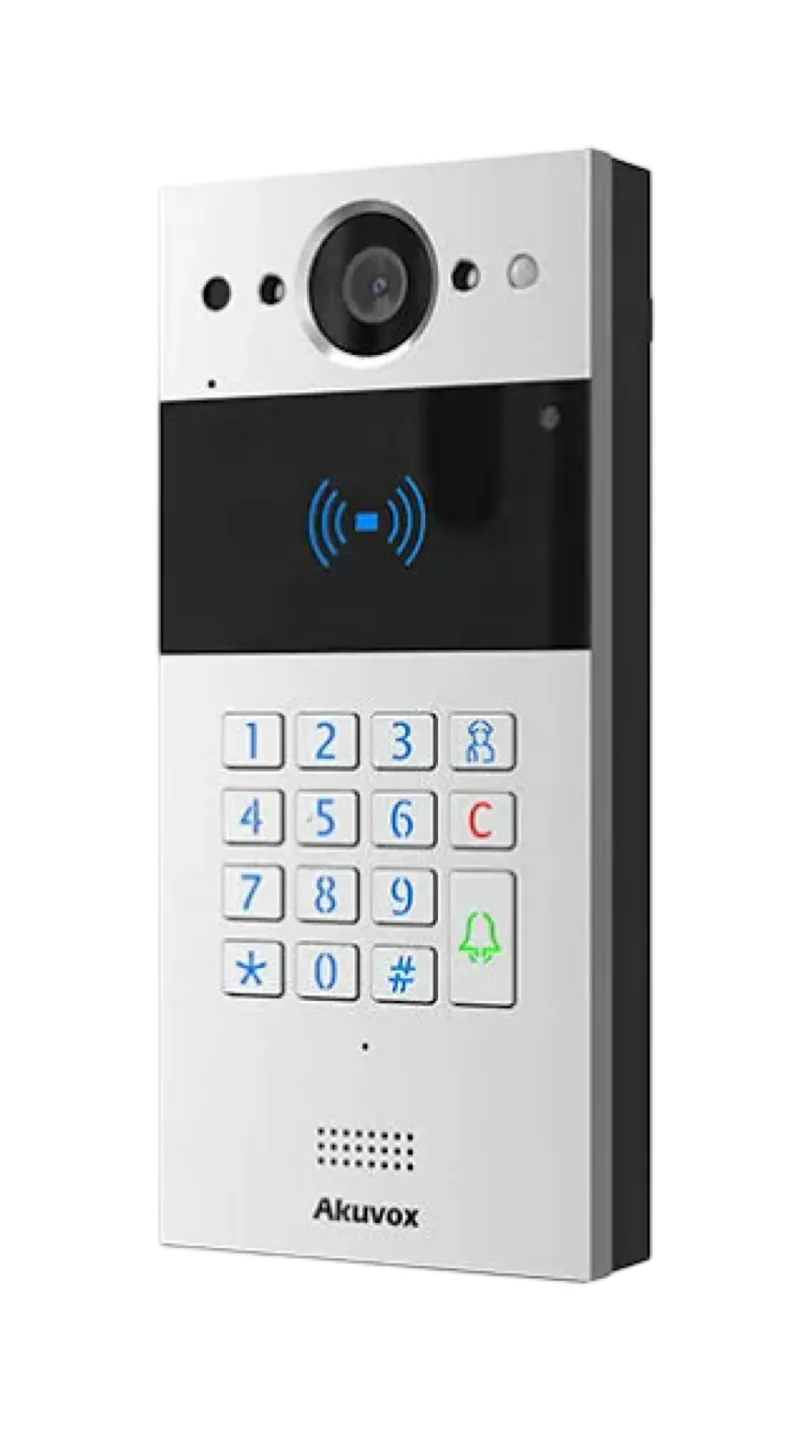
When a Queens building asks us to replace a Comelit system, we can price an Akuvox or DoorBird alternative beside the Comelit quote so the owner sees both on the same scope. For background on how two popular IP brands compare, see our Akuvox vs ButterflyMX comparison. We never compare our installed price to a store's shelf price for a box of equipment; the installed price includes the wiring, the door hardware, programming and the labor warranty, which a shelf price doesn't.

A Comelit intercom rarely works alone. It opens a door, and in many Queens buildings it also ties into fob readers, a gate, an elevator or the building's cameras. We only promise what Comelit documents for the equipment installed, and we split the work clearly between low-voltage (ours) and high-voltage (the building's electrician).
The door release is the part of a Comelit system residents care most about and the part that fails most often for mechanical reasons. We install and replace electric strikes and maglocks, the relays that drive them, and the separate power they need. On a Queens walk-up, a fail-secure strike is usually right for the street door so a power cut doesn't leave it unlocked; on doors that must release for egress or fire alarm reasons, the hardware has to follow the code for that door. We match the strike to the frame and the door's condition, not just to the intercom.
Comelit's Ultra panel is available with a keypad version that can place calls in addition to opening the door with classic codes, and the app can issue virtual keys as numeric or QR codes (Comelit Ultra). For a Queens building, that can replace a stack of physical keys for dog walkers, cleaners and deliveries. We program the codes and show the super or manager how to manage them.
Comelit lists elevator and gate control among its app features. Where a Queens building wants the intercom to call the elevator or open a parking or courtyard gate, we confirm the specific Comelit equipment supports it, and we coordinate with the elevator contractor or gate company for their side of the connection. An elevator controller interface is priced and installed by the elevator company; a gate motor is the gate company's.
Comelit lists CCTV viewing in its resident app among its intercom features. Many Queens buildings already have a camera system from another brand, and the practical question is whether residents or the super need to see a camera from the intercom at all. Often the better answer is to keep the cameras on their own recorder and app, and have the intercom do what it does best. Where a building wants cameras alongside the intercom, our Queens camera crews handle that work separately and we make sure the two systems don't fight over the same cable or power.

A surprising share of Comelit calls in Queens follow the weather. Knowing the pattern helps a super spot a problem early.
Comelit's own instruction sheets say its products don't need maintenance beyond routine cleaning done the way the manual describes, and that repairs to the products themselves are for Comelit while repairs to the system are for qualified technical personnel (Comelit instruction sheet). That matches what we see. The panels and monitors themselves are rarely what wears out first. What wears out is everything around them: the door, the strike, the closer, the power supply, the splices, the seals on an exposed panel, and the wire in a damp basement. Keeping a Queens Comelit system healthy is mostly about those parts.
For larger Queens buildings and complexes, we quote a yearly check as a scheduled visit priced for the property. It is not a maintenance contract with fixed monthly fees; it is a visit you book when it suits the building's calendar, usually in the fall before heating season.

Queens boards and owners rarely want to replace a whole Comelit system in one go. Budgets are set a year ahead, residents need notice, and nobody wants every apartment visited in one week. A phased plan solves that, and it is how most of our larger Queens Comelit projects run.
The first phase is almost always the front door: a new Comelit panel on the existing platform, a new or tested power supply, and any door hardware that needs fixing. That is what visitors and every resident use every day, and it is where the most failures start. On a garden complex, phase one can be the entrances that fail most, rather than all of them.
The riser test from phase one tells us which sections are sound and which aren't. Phase two replaces or re-terminates the bad sections, so the building isn't paying to rewire floors that work. In a Queens walk-up, that might be a single run between two floors; in a garden complex, a basement link between two buildings.
Apartment units come last, and they don't all have to change at once. Many Queens co-ops let shareholders choose a video monitor or a Wi-Fi monitor for app calling, and replace remaining handsets only as they fail. Rental owners often upgrade apartments at turnover. Either way, the new units must match the building's Comelit platform, and we keep a record of which apartment has which unit so future service is quicker.
Co-op boards weighing a bigger intercom decision can also read our intercom upgrade guide for co-op boards, which covers approvals, bids and phasing across brands.
Most of the people who search for help with a Comelit in Queens are residents, not owners. The monitor on your wall is usually part of the building's system, which affects who should fix it and who pays.
If something is wrong with the Comelit in your apartment and you are not sure whether it is yours or the building's, call us and describe it. We will tell you honestly what it sounds like and who usually handles it, before anyone books a visit.
When our technician explains a Comelit fault, a few words come up again and again. Here is what they mean in a Queens building, in plain English, so the conversation on the visit is quicker and the written quote is easier to follow.
If your building's paperwork uses a term that isn't here, ask the technician on the visit. A good repair visit should leave the super understanding what failed and why, not just holding an invoice.
Tell us what the panel looks like, how many apartments are affected and when it started. We will tell you whether it sounds like a repair, a part or an upgrade before anyone comes out.
Tell us the neighborhood, the building, how many apartments are affected and what the Comelit is doing. Repairs start with the $250 service call; replacements and new systems start with a site visit and a written quote. Rather talk? Call or text (347) 434-6392.
Your request is in. Expect a call or text from us to set a time for the visit.
Eight steps from your first call to a working system. A repair usually finishes in step five; an upgrade or new installation goes through all eight.
Tell us the neighborhood, the type of building, how many apartments are affected and what the Comelit panel looks like. A photo of the panel or a monitor label helps.
You get a 2-hour arrival window on any day of the week, usually early in the day. A repair starts as the $250 service call; an upgrade or new system starts with a site visit.
The technician confirms whether the building is on two-wire Simplebus2, IP-based ViP or an older generation, which decides what parts and upgrades will work.
We photograph and label the equipment, test the power supply under load, test the riser and check the door hardware before replacing anything.
Simple faults are fixed on the visit and covered by the $250. Larger repairs, replacements and upgrades get a written quote listing parts and labor.
Once approved, we take the deposit and order equipment. Special-order Comelit items get a date once they arrive from the supplier.
Panels, monitors, handsets, riser sections and strikes are installed, then apartment codes, the directory and any app features are programmed.
Every unit and entrance is tested with the owner or super, and you get a written list of what was installed and where.
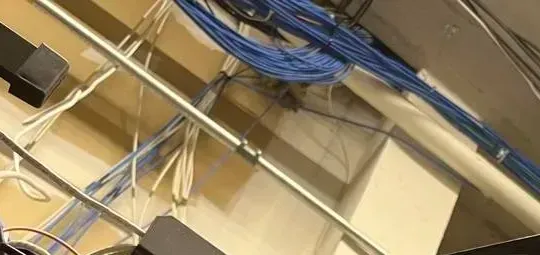
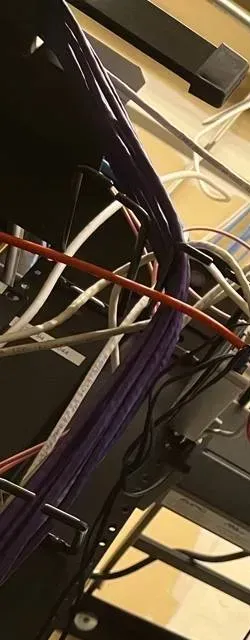
The first stop on almost every Queens Comelit call is the equipment closet or basement corner where the power supply and the riser start. Before touching anything, the technician photographs the terminals and labels anything that isn't already labeled. Old Comelit buildings in Queens have often been worked on by three or four different contractors over the years, and the photo is the only reliable record of how it was left. The cable bundles in the photo on this page are the kind of thing we find: several generations of wire in one place, some live and some long abandoned.
Next comes a test of the supply under load, not just at rest. A tired power supply can show a normal reading with nothing connected and then sag as soon as a few monitors ring at once, which is exactly when residents notice the problem. After that, we test the riser where it leaves the closet and at a point partway up the building. On a Simplebus2 building that one measurement often tells us whether the fault is in the supply, the riser or an apartment.
Then we go to the front door. We let the door close on its own and watch whether it latches. We press the release from an apartment and listen at the strike. If the door is binding, the strike is buzzing without opening, or the closer is slamming the door, the intercom isn't the real problem, and we say so before replacing anything electronic.
The last check is the one people forget: the apartments themselves. If a line is dead from a certain floor up, the culprit is often a single monitor that failed shorted. That is why we ask the super to arrange access to the affected units for the visit. Finding the one bad unit on the first visit is much cheaper than coming back.

No. Abstract Enterprises Security Systems is an independent low-voltage contractor. Comelit Group is the manufacturer, with its own website, US office, app, manuals, datasheets and technical support. If your question is about a Comelit app login, an account, a manual or firmware, Comelit is the right place to ask. If your question is why the intercom in your Queens building isn't ringing, why the door won't open, or why the panel is dead, that is building hardware, wiring, power and programming, and that is what we fix.
No, and we won't claim to be. We install, repair, program and service Comelit systems, and we source Comelit parts through our suppliers as part of a repair or installation. If a building or a bid specifically requires a manufacturer-authorized dealer, we will tell you that up front so you can decide.
We don't hand out wiring diagrams, programming steps or power-supply testing instructions. Comelit publishes its own manuals and diagrams for professional installers, and we don't reproduce them. What we will do on the phone is help you figure out whether the problem is one apartment or the whole building, and what you can safely check, such as monitor volume, the privacy button and the app.
We book within 2 hours of your request, seven days a week, with early-day visits, and work first come, first served once the visit is paid. We don't promise same-day repair or round-the-clock service, because we would rather give you an honest arrival window than a promise we can't keep. Parts that need ordering add time; we tell you when on the first visit.
Comelit's manufacturer warranty is between you and Comelit, under its terms. Our labor carries the 30-day warranty listed on our warranty page, and one-year and longer coverage are available as paid add-ons. We don't process manufacturer warranty claims beyond telling you what we found and giving you our written report.
We supply parts as part of a repair or installation job, not over the counter. If you already bought Comelit equipment, we can quote the labor to install it by phone or text and book it with the deposit.
From the installer's side, the biggest advantage in Queens is the two-wire platform's ability to reuse old risers, and Comelit's one-time licensing approach for its intercom products. The biggest disadvantage is the same as any brand with a long history: older generations are no longer in the current range, so finding a direct replacement for a very old panel or handset isn't always possible. Mixing generations on one riser can also be tricky, which is why we confirm compatibility before ordering.
Our Queens visits are dispatched from our Bronx office at 460 E Fordham Rd, and we cover every neighborhood in the borough. These are some of the places that shape the work; the cards describe areas, not client buildings.
Garden-apartment blocks from 1914 to 1939 around shared interior gardens, with old risers and several entrances per block.
Postwar elevator buildings with outer and inner lobby doors, garages and service doors, many on two-wire Comelit systems.
The borough's newest towers near Gantry Plaza and Court Square, many built with IP intercoms and networked access control.
Dense mixed-use blocks and towers where street-door panels take heavy use and multilingual directories help residents.
Large garden complexes and co-ops with dozens of low buildings, each with its own entrance panel.
Buildings near the ocean and Jamaica Bay, where salt air and flooding shape where intercom power and junctions belong.
We also serve Astoria, Sunnyside, Woodside, Maspeth, Ridgewood, Middle Village, Glendale, Elmhurst, Corona, Kew Gardens, Richmond Hill, Briarwood, Jamaica, Jamaica Estates, Hollis, St. Albans, Springfield Gardens, Little Neck, Douglaston, Bellerose and Glen Oaks.
Comelit work in Queens has two starting points. A repair starts with the $250 service call: the technician diagnoses the problem, and if it is a simple fix, the $250 covers it; if parts or more labor are needed, the $250 goes toward the repair. A replacement, upgrade or new Comelit intercom system starts with a site visit and a written quote. We don't publish Comelit equipment prices or per-apartment package prices, because the equipment is only part of the cost and Queens buildings vary too much for a fixed number to be honest.
| What you need | How it is priced |
|---|---|
| Comelit repair visit and diagnosis | $250 service call, which goes toward the repair if more is needed |
| Apartment station replacement | $250 – $525, as listed on our Queens door buzzer repair page |
| Door release relay or button | $250 – $475 |
| Transformer replacement | $325 – $650 |
| Electric strike replacement and alignment | $450 – $950 |
| Lobby panel repair or faceplate | $650 – $1,800 |
| Riser pair repair or re-termination | $850 – $2,400 |
| Comelit panel replacement, audio-to-video upgrade or new system | Written quote after a site visit |
| Comelit equipment you already bought | Labor quoted by phone or text, installed after the deposit |
Financing is available through Wisetack, subject to approval. Full terms — including 50% deposit, one-year parts-only warranty on Abstract Enterprises Security Systems-supplied products, and the late-fee schedule — are set out in the service agreement. Our labor carries the 30-day warranty listed on our warranty page; one-year and longer coverage are paid add-ons.
We don't sell fixed Comelit packages. Most Queens jobs start in one of three places, and each is priced for the building.
A dead line, a silent panel, a door that won't release. The $250 service call, applied to the repair if more work is needed.
A new Comelit entrance panel, a video module or new monitors on the existing riser. Site visit and written quote.
Audio to video across the building, Wi-Fi monitors for residents who want phone calling, planned by floor or by entrance.
Replacing rather than repairing? Ask us to price a non-Comelit alternative on the same scope. Some Queens buildings choose to stay on Comelit for the wiring savings; others decide a different system fits better. Either way, you see both numbers before deciding.
Repair for every intercom brand in the borough, not just Comelit.
Buzzers, strikes, release buttons and the parts price list for Queens.
New intercom systems of any brand for Queens homes and buildings.
Two popular IP intercom brands compared from the installer's side.
The citywide guide to Comelit repair, upgrades and installation.
Describe the building and the problem and get a plan back.
Yes. We work on Comelit systems in every Queens neighborhood, including Long Island City, Astoria, Jackson Heights, Forest Hills, Flushing, Bayside, Jamaica and the Rockaways. Visits are booked within 2 hours of your request, seven days a week, with early-day arrival windows.
The $250 service call covers the visit and the diagnosis. If the fix is simple, such as a loose connection, a setting or a re-program, the $250 covers it. If parts or more labor are needed, we quote the repair on the spot and the $250 goes toward it.
Usually, if the building is on Comelit's two-wire Simplebus2 platform and the riser tests sound. Comelit designed its 2-wire system to use a building's existing intercom wires. We test the riser at the panel and at a sample of apartments before quoting, and we price replacing any damaged section rather than assuming the whole riser is good.
That pattern usually means a break or short on the riser between the last working floor and the first dead one, often a corroded splice in a hallway box or one apartment unit that has failed and is dragging the line down. Our technician isolates the riser section by section, which is why we ask for access to the affected apartments on the visit.
No. We are an independent NYS-licensed low-voltage contractor. Comelit Group is the manufacturer and handles its own app accounts, manuals, firmware and technical support. We install, repair, program and service Comelit equipment in buildings and source parts through our suppliers as part of the job.
It depends where the problem is. App logins and accounts are Comelit's, so first make sure the app is updated and you can sign in. If the app works but the building's Wi-Fi monitor or IP equipment isn't connecting, or calls never leave the panel, that is building-side equipment and we can diagnose it on a service call.
Yes. We replace individual monitors and handsets with a unit compatible with the building's Comelit platform and program it to the apartment's code. If the original model is discontinued, we look for a current Comelit unit that runs on the same platform; if none fits, we explain the options before ordering anything.
Swapping a panel on a working riser is usually a single visit once the panel is in hand. The longer part is often ordering: some Comelit equipment ships after the deposit on the supplier's schedule, and we give a date once it arrives. We keep the door locked and working on keys or codes during the swap and never leave an entrance unsecured overnight.
Water and power events are among the most common causes of Comelit failures we see in Queens. A flooded power supply or junction should not be reset; it needs to be dried, checked and often replaced. After a blackout or surge, we check the supply, the panel and the system's programming, because any of the three can be affected.
Yes. Small Comelit setups suit Queens two- and three-family homes well: a small panel at the street door, a monitor or handset on each floor, and a strike so each apartment can let in its own visitors. We look for an existing wire path before drilling and quote after seeing the house.
Where the installed equipment supports it, yes. Comelit's Ultra panel comes in a keypad version, and Comelit says its app can issue virtual keys as numeric or QR codes. We confirm what your panel supports, program the codes and show the super or manager how to manage them.
Yes. If a building's riser is failing in several places, it needs network cable anyway, or the board wants features its Comelit platform can't support, we will say so. We can price an Akuvox or DoorBird alternative beside a Comelit replacement on the same scope so you can compare.
In many cases. New York State Multiple Dwelling Law section 50-a requires an intercom with door release in buildings of eight or more apartments erected or converted after January 1, 1968, and the NYC Building Code requires an entrance intercom in buildings with eight or more dwelling units. A dead system can lead to an HPD violation, so owners shouldn't let a building-wide outage sit.
Our labor carries the 30-day warranty shown on our warranty page, and one-year and longer coverage are available as paid add-ons. Comelit's own manufacturer warranty on its equipment is under Comelit's terms. Equipment we supply carries the parts terms set out in our service agreement.
Queens is one of the five boroughs we serve. For the citywide overview, start with our Comelit intercom guide for NYC, or go back to the Abstract Enterprises Security Systems home page. Comelit intercom repair and installation in other boroughs: Comelit intercoms in Manhattan, Comelit intercoms in Brooklyn and Comelit intercoms in the Bronx.