Six Counties · Long Runs · Storm-Proof Recording · NYS Licensed Low-Voltage
Lorex Cameras Installed Across the Hudson Valley
Westchester · Rockland · Orange · Putnam · Dutchess · Ulster · Wired NVR, Wi-Fi and HaLow Systems
North of the city, a Lorex system lives or dies by its recorder. How far each camera sits from that box, whether the box keeps running when Con Edison, Orange & Rockland, Central Hudson or NYSEG drops the power, and what kind of internet carries the picture to your phone decide more than the camera model ever will. This hub explains how we plan, wire and price Lorex systems in all six counties — from a quarter-acre in Yonkers to a farmhouse with a barn outside Rhinebeck — and links to a full page for each county.
Last checked against Lorex’s support pages and county codes on October 18, 2026 · Written and reviewed by Anwar Timothy, NYS license #12000287431 · Upstate Lorex jobs are scheduled from 460 E Fordham Rd in the Bronx
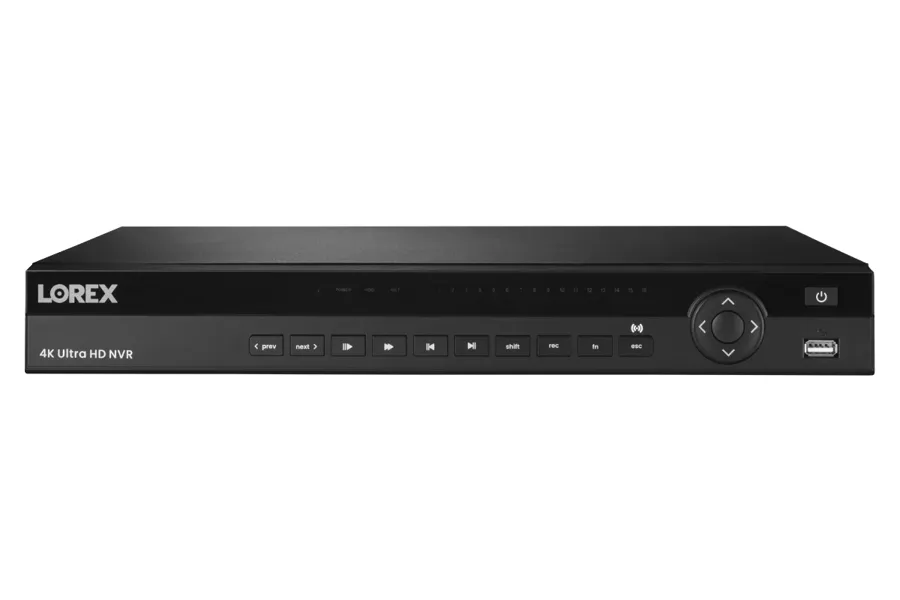
Manufacturer product photo, not an installed unit: the front of a Lorex 4K Ultra HD network video recorder. On a Hudson Valley property this box is the centre of the plan — every wired camera has to reach it, and it has to keep running when the power does not.
Hudson Valley Lorex Quote
Tell us the county, the buildings to cover and your internet type — a written price follows the same business day
✅
Request Sent!
An installer will call back about your Hudson Valley Lorex system the same business day.
25+
Years Experience
✓
Same-Day Estimates
100%
Licensed & Insured
4.7★
201 Google Reviews
Four answers let us price a Hudson Valley Lorex job on the first call: the county, the number of buildings you want watched, the distance in feet from the spot where the recorder will live to the farthest camera, and the kind of internet the house has. Ring (800) 486-0943 with those and we can usually say during the call whether every camera can be wired straight to one recorder, which county figure applies and what the system will cost in writing.
A four-camera wired Lorex system installed from $2,033 in Westchester to $2,299 in Dutchess and Ulster, on our published county multipliers
Recorder, router and network switch set up to ride through outages, and tested by switching the house off at the main breaker
Crews out seven days a week with the last arrival window ending at 8 PM; the low-voltage side of every job — cameras, cable, recorder, network — is carried out under NYS license #12000287431
Why Hudson Valley Properties Need Lorex Camera Installation
Most Lorex systems are sold as a box: a recorder, four or eight cameras and a coil of cable for each. Inside a city lot the box nearly works as sold, because every wall is within a short reach of every other. The Hudson Valley breaks that assumption in three ways at once. The buildings are spread out — a house, a detached garage, a barn or a studio, a gate at the road — so the farthest camera is often far beyond the length of cable in the kit. The power is less steady: four different utilities serve the six counties, and when a nor'easter came through in September 2026, Central Hudson alone reported crews working to restore power to more than 19,000 homes and businesses. And the internet varies from gigabit fibre in the river towns to satellite and fixed wireless in the hills; Ulster County announced in 2025 that state ConnectALL money, matched by Verizon, would finally bring fibre to nearly 1,300 homes, businesses and community buildings that had no broadband at all.
Those three facts change what a good Lorex installation looks like. Lorex's own support page puts the maximum length of Ethernet between a recorder and a camera at 328 feet. On a suburban lot in Rockland or southern Westchester that limit rarely bites. On a five-acre parcel in Putnam or a hillside lot above the Rondout it is the first number we measure, because a camera past it needs a powered switch, a long-range PoE port, a wireless link or a battery camera of a different kind. The recorder also has to sit somewhere that stays dry, cool and powered — not in an unheated barn — and the router it talks through has to survive the same outage. A system that records perfectly until the first storm, then sits dark for three days while you watch an “offline” message from the city, has failed at its only job.
Who is asking matters too. A large share of the calls we get from the upper valley come from people who are not there most of the week: weekend owners, families who inherited a house, people renting a cottage out. A recent r/hudsonvalley thread from second-home owners asking who looks after their houses drew the blunt answer that some simply put up cameras “and hope for the best”. Car break-ins are the commonest complaint in the threads and the papers: Kingston police issued a reminder in September 2026 after a rise in thefts from vehicles parked in driveways, almost all of them unlocked cars tried door by door; a Gardiner, Wallkill and Shawangunk thread swapped advice about cheap cameras and solar motion lights; in March 2026 Tarrytown police charged an Elmsford man over a string of residential burglaries and car thefts. A camera that shows the drive, the cars and the doors clearly at night, and still records after the lights go out, is what those owners are actually buying.
There is one more thing every Lorex buyer in the valley should know before choosing the brand. Lorex was owned by the Chinese camera maker Dahua from 2018 until late 2022, when Dahua sold it to Skywatch, a Taiwan-based company. Since 2025 the attorneys general of Nebraska and Texas, and in October 2026 Iowa, have sued Lorex, alleging that it still relies on Dahua for components and misled buyers about security. Those are allegations, not findings, and Lorex is contesting at least the Nebraska case. Lorex itself tells purchasers bound by the federal NDAA rules not to buy from it. For a homeowner the decision is yours, and we explain the trade-offs plainly; for a town hall, school district or fire company in the valley we recommend a different brand. A Hudson Valley Dahua page and our Hudson Valley commercial camera team cover the alternatives.
Hudson Valley facts that shape a Lorex install
328 feet per cable run. Lorex states that the maximum Ethernet length between a recorder and a camera is 328 ft (100 m); beyond it a PoE switch is added, and the camera needs a power source within the first 300 ft of the extended run.
Which company restores your power depends on the town. Con Edison covers most of Westchester, but Bedford, Lewisboro, North Salem, Pound Ridge and Somers sit in NYSEG territory, as does much of Putnam. Orange & Rockland supplies its two namesake counties, and Central Hudson’s roughly 315,000 electric accounts stretch from the edge of the city suburbs up to the Capital District.
Big storms take out most of a county. Daily Voice counted 34,150 NYSEG accounts in Putnam — out of 38,693 — still dark the morning after Isaias in August 2020. In June 2024, thunderstorms cost Orange & Rockland and Central Hudson some 60,000 customers between them, per the Times Union.
Rural broadband is still being built. Ulster County's $20.8 million ConnectALL award (with a Verizon match, $61.8 million in all) targets nearly 1,300 unserved locations with fibre.
Bears and deer share the driveway. The state DEC's bear range runs through the Catskills to southern Orange and Rockland and down the Taconic Highlands into Putnam; Teatown counted reported Westchester bear sightings rising from two in 2019 to sixteen in 2021.
Lorex's ownership is in court. Texas sued Lorex in February 2026 under its deceptive trade practices law; Nebraska sued in September 2025; Lorex's own 2023 statement tells NDAA-restricted buyers not to purchase its products.
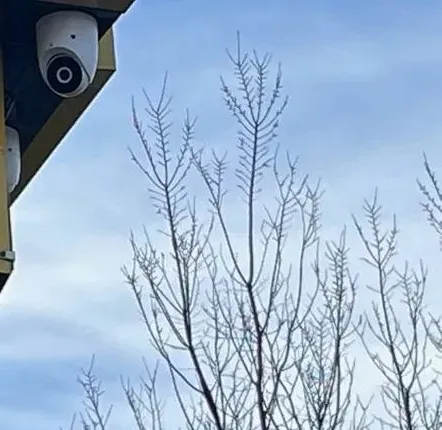
From an AESS job outside the region, cropped and shown only as an example: a white dome camera tucked under an eave, with bare trees beyond. In the valley the leaves that fill those branches each May change both what a camera can see and what makes it alert.
Lorex Dark After a Valley Storm?
The commonest Lorex call we get from the upper valley comes the day after the lights come back. The house has power, but the app shows some cameras offline, the recorder is asking for a password it never used to ask for, or playback shows nothing from the hours of the outage. Phone (800) 486-0943 and we will book the next two-hour window in your county. Most of these systems are recording again within one to two hours of our arrival; the lasting cure — a battery backup on the recorder and router, a corrected network setting, a failed hard drive replaced — may follow on the same visit or a second one. For brands other than Lorex, our Hudson Valley camera repair crew takes the call.
Four things to try before a technician drives out
Restart in order: modem, router, then recorder. After a long outage the recorder often boots before the internet is back and gives up looking for it. Power the modem and router first, wait five minutes, then restart the NVR from its menu or at the plug.
Look at the recorder's screen, not just the app. If the cameras show live on a monitor plugged into the NVR, the cameras are fine and the problem is the internet path. If they are black there too, power or cabling is the issue.
Listen for the hard drive. A recorder that beeps or reports a disk error after a hard power loss may have a damaged drive; note the message exactly.
Check what the generator carried. Many standby generators feed a list of essential circuits; if the network closet or the recorder's outlet was not on that list, the system was dark for the whole outage even though the house was not.
Six Counties
Six Counties, Six Different Lorex Jobs
The same request — “cover the drive, the doors and the garage” — becomes a different job as you move up the river. These are the differences we plan around in each county. Every county has its own full Lorex page with local detail and prices.
Tight lots in Yonkers, Mount Vernon and New Rochelle give way to wooded acreage in Bedford, Pound Ridge and North Salem. Con Edison feeds most of the south, NYSEG much of the north. Electricians must hold a county trade licence, so any new outlet for a recorder or camera is done by one. Lorex work here is usually short runs and careful aim on the south side, long runs to garages and gates up north. Factor 1.25.
Mostly suburban houses close together around Nyack, New City, Pearl River and Spring Valley, with commercial strips on Route 59. Orange & Rockland supplies power. Rockland's Chapter 250 licenses electrical contractors for wiring of 50 volts and up. Lorex jobs here are often clean single-house systems with the recorder in a finished basement, plus strip-mall shops. Factor 1.30.
From the river cities of Newburgh and Middletown to farms around Goshen, Chester and Warwick and warehouses along Route 17 and I-84. Orange & Rockland and Central Hudson split the county. Orange has required a county electrician licence since 2007, revised in 2024. Expect barns, equipment yards and long drives that need long-range PoE or a wireless link. Factor 1.40.
Lake houses around Mahopac and Lake Carmel, wooded lots in Kent and Putnam Valley, the village of Cold Spring on the river. NYSEG serves most of it; Isaias left more than 34,000 NYSEG customers here dark in 2020. Putnam licenses low-voltage technicians and names video surveillance cabling in their scope, so camera cabling here is done by or under a Putnam-licensed technician. Factor 1.45.
Poughkeepsie, Beacon and the Route 9 corridor through Fishkill and Wappingers, then estates and farms around Rhinebeck, Millbrook and Pine Plains. Central Hudson is the main utility. We found no county contractor licence; towns such as Fishkill send electrical work to approved third-party inspectors. Big lots, outbuildings and second homes are the norm north of Poughkeepsie. Factor 1.53.
Kingston's historic districts, New Paltz, Saugerties, Woodstock, and long roads into the Catskills and the Shawangunk Ridge. Central Hudson supplies most of it, and some rural addresses are still waiting for wired broadband. Ulster's electrical licensing law covers signalling and data work. Kingston police reported a rise in car break-ins in driveways in 2026. Factor 1.53.
County
Main utilities
County licence rule we follow
Typical Lorex challenge
Westchester
Con Edison; NYSEG in northern towns
County trade licence for electricians
Neighbour-sensitive aim on small lots; long drives up north
Rockland
Orange & Rockland
Chapter 250 electrical contractor licence (50 V and up)
Basement recorders, strip-mall shops on Route 59
Orange
Orange & Rockland; Central Hudson
County electrician licence (Local Law 8 of 2007, revised 2024)
Barns, yards and gates past 328 feet
Putnam
NYSEG; Central Hudson
Chapter 145: master electrician and low-voltage technician licences
Outages, lake houses, wooded sight lines
Dutchess
Central Hudson
None found at county level; town inspection rules
Estates, outbuildings, second homes
Ulster
Central Hudson
Chapter 185 electrical licensing (includes data and signalling)
Rural internet, hillside lots, historic districts
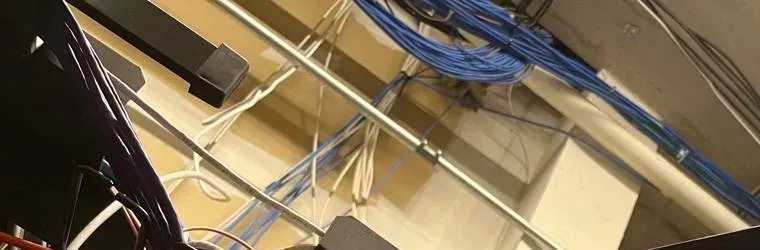
From an AESS job outside the region, cropped to the ceiling and shown only as an example: bundles of blue and white network cable along a ceiling with a metal conduit. Every wired Lorex camera, however far out on the property, ends as one cable like these arriving back at the recorder.
What We Install
Lorex Camera Installation Services in the Hudson Valley
Every job below starts the same way: we find where the recorder should live, then measure outward to each camera. What changes is how the signal gets there and what keeps it powered.
Wired PoE NVR systems
The standard we recommend wherever the cable can reach: Lorex IP cameras each on one network cable carrying power and video back to a Lorex NVR, recording around the clock to the recorder's hard drive. No batteries to charge, no Wi-Fi to drop.
Outbuilding and gate reach
For a barn, a detached garage, a pool house or a gate past the 328-foot limit: a PoE switch in a powered outbuilding, a Lorex ePoE switch for long runs at reduced speed, or a point-to-point wireless bridge between buildings.
Installing kits you already bought
Many valley owners buy a Lorex box at a warehouse store and find the included cable cannot reach the garage. We install your kit as it is, add the longer runs and the outdoor-rated cable it needs, and set up the app on every phone in the family.
Wi-Fi HaLow and battery cameras
Where trenching is not worth it, Lorex's HaLow battery system claims up to 500 feet of range and passage through trees. We test the signal at the exact mounting spots in full leaf before recommending it, and pair it with solar panels where the sun allows.
Outage-proof recording
A battery backup sized for the recorder, the router and the PoE switch; the recorder moved into a conditioned room if it lives in a garage; health alerts so you know from the city if the system stops. Then we cut the power at the main breaker to prove it all comes back by itself.
Second-home and rental setups
Shared app access for a caretaker, notification schedules that suit an empty house, cameras placed to cover arrivals without recording guests' private spaces, and a short written guide left at the property so the next person knows where the recorder is.
Floodlight and doorbell add-ons
A Lorex floodlight camera at the garage or a Lorex video doorbell at the front door, joined to the same app. Line-voltage connections are made by an electrician licensed for your county; the camera side is ours.
Expanding or rescuing older systems
Older Lorex analogue and Fusion systems are not always compatible with newer cameras. We check your recorder against Lorex's compatibility tools, reuse good coax with adapters where it makes sense, and replace only what has to go.
Most valley properties that add a Lorex system also want the gate or barn door to report when it opens; our Hudson Valley alarm installation team pairs sensors with the cameras so a door alert comes with a picture.
Manufacturer product photo, not an installed unit: a Lorex Wi-Fi pan-tilt camera with two external antennas. External antennas help when the router is far away inside the house, but on a big Hudson Valley lot we still measure the signal at the mounting spot before choosing a Wi-Fi camera.
Building Specialists
Lorex Cameras for the Hudson Valley's Architecture
Building stock decides where the recorder goes, how cable gets out of the house and what the cameras can be fixed to. These are the house types we see most across the six counties.
Post-war suburban houses
Capes, colonials, ranches and split-levels in Yonkers, Rockland and lower Dutchess. A basement or attic gives an easy path to the eaves, and every camera is usually within 150 feet of the recorder. The care here is aim: neighbours are close.
River-city masonry
Brick and stone row houses and older commercial blocks in Newburgh, Kingston, Beacon and Peekskill. Thick walls block Wi-Fi, so wired cameras win; drilling goes into mortar joints, and in historic districts any exterior change visible from the street may need review first.
Farmhouses and barns
An old house with a stone foundation, a bank barn, sheds and a long gravel drive. The house is rarely the hard part; reaching the barn and the gate is. Barns often have their own power, which makes them good places for a switch.
Lake and woodland houses
Seasonal and year-round houses around Mahopac, Lake Carmel, Greenwood Lake and the Catskill hollows. Trees, slopes and outages shape everything; a camera that sees the drive in December may see only leaves in July.
Newer subdivisions and estates
Larger houses on one to five acres in northern Westchester, Putnam and Dutchess, often with structured wiring already in the walls. We use the existing network closet when it is sound and run new outdoor cable from there.
Townhouses and condominiums
Associations in Fishkill, Middletown, New City and the I-87 towns. Shared walls and common areas mean the HOA may control what goes on the exterior; we plan cameras that cover your own door, patio and parking space.
Methods that change with the building
Stone foundations and fieldstone walls. We drill mortar joints, not stones, use sleeve anchors sized for the wall, and seal every cable entry so meltwater does not follow the cable inside.
Balloon-framed farmhouses. Open wall cavities from basement to attic make vertical runs easy, but old knob-and-tube wiring sometimes still sits in them; we keep low-voltage cable well clear and tell you if we see it.
Vinyl and fibre-cement siding. Cameras go on mounting blocks so the base sits flat and the junction box hides the cable connection from weather and tampering.
Outbuildings without heat. Cameras are rated for cold; recorders and hard drives are happier indoors. Where a barn holds the switch, it goes in a ventilated enclosure off the floor, away from dust and rodents.
Distance to the router. Lorex itself advises that a Wi-Fi camera far from the router is better off on 2.4 GHz. On masonry and on big lots we prefer a cable or a dedicated link to stretching Wi-Fi.
Owners of larger houses often combine the cameras with a whole-home Hudson Valley camera plan that mixes brands where a particular spot needs something Lorex does not make.
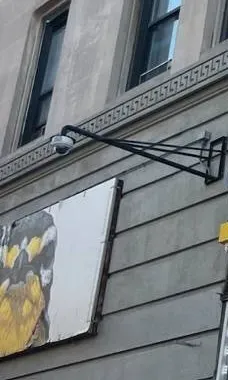
From an AESS job outside the region, shown only as an example: a dome camera held out from a stone facade on a long wall arm. On the brick and stone of Newburgh, Kingston or Beacon an arm like this lets a camera see along the wall without drilling the face of the stone.
Commercial Lorex
Business Lorex Systems in the Hudson Valley
Lorex fits small businesses that want a recorder they own, no monthly fee and a phone app: a deli, a nail salon, a landscaping yard, a farm stand. These are the corridors where we install most of them.
Route 59, Rockland
Strip centres and stand-alone shops from Nanuet through Spring Valley to Suffern. Typical job: four to eight cameras covering the counter, the door and the lot, recorder in the back office.
Central Avenue and Route 9A, Westchester
Dense retail from Yonkers up through Hartsdale and Elmsford. Shops share walls and parking; cameras cover the entrance and register while staying off neighbours' doorways.
Route 9, Dutchess
The Poughkeepsie to Fishkill corridor of plazas, service businesses and auto shops. Lots are wide, so pole and building-corner cameras need longer runs back to the office.
Route 17M and Route 211, Orange
Middletown, Goshen and Chester: contractors' yards, small warehouses and farm businesses with equipment parked outside overnight.
Route 6, Putnam
Brewster, Carmel and Mahopac: small offices, restaurants and marine and auto businesses along a busy road with frequent outages.
Broadway, Kingston and Route 32, Ulster
Kingston's commercial streets and the Route 32 and 9W stretch toward Saugerties and New Paltz: cafés, galleries and student-town shops with glass fronts and late hours.
Compliance callouts for business owners
Public money, public buyers. Lorex's own statement asks buyers restricted by the federal NDAA not to purchase from it. Fire companies, school districts, libraries, town offices and businesses spending federal grant money should choose another brand; our Hudson Valley school camera page covers that work.
County licensing. Westchester, Rockland, Orange, Putnam and Ulster each license electrical work at county level, and Putnam's low-voltage technician licence names video surveillance cabling. New outlets and circuits are done by a county-licensed electrician; camera cabling in Putnam by or under a Putnam-licensed technician.
Third-party inspection. Many towns, Fishkill among them, send electrical inspections to approved independent agencies. If your job needs a new circuit for the recorder or a pole camera, the electrician's permit and inspection come first.
Neighbouring yards. New York's Civil Rights Law section 52-a gives a neighbour a right to sue someone who installs a camera to record their residential backyard without written consent. We aim business cameras at your property, your lot and your door.
Tax credit. New York's Commercial Security Tax Credit lets retailers with 50 or fewer employees claim up to $3,000 per location for security equipment including cameras; ask your accountant whether you qualify.
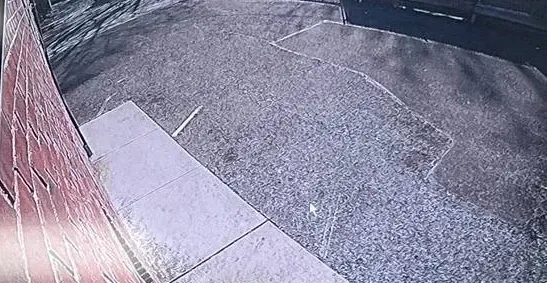
A playback frame from a recorder on an AESS job outside the region, cropped to remove the date and camera label and shown only as an example: a camera looking along a brick wall and walkway to a paved lot. A view down the building line like this is often the most useful camera a small valley shop owns.
Your Questions Answered
Lorex Camera Installation in the Hudson Valley: Questions Answered
These are the questions valley owners actually ask us about Lorex, grouped by the problem behind them. Each answer comes first; the detail follows.
Distance, outbuildings and wiring
How far from the Lorex recorder can a camera sit before the cable run needs help?
328 feet of network cable, measured along the path the cable actually takes. That is Lorex's stated maximum between an NVR and a camera, and it is the Ethernet standard, not a Lorex quirk. The path is always longer than the straight line: up from the basement, along the sill, round the corner of the house and across the lawn can easily double the distance you would pace in a straight line.
Past that point there are three wired options. A PoE switch can be placed part-way — in a garage or barn that has power — to start a fresh 328-foot run. Lorex's own guidance is to use a single extension rather than chaining several. For longer stretches, Lorex sells an 8-port ePoE switch rated to carry power and data 800 metres (about 2,600 feet) at 10 Mbps, or 300 metres at 100 Mbps; the slower speed is enough for one camera's recorded stream but not for many. Or the cable can be swapped for fibre between buildings, which ignores distance and lightning alike but costs more to terminate.
When we quote, we measure the real route with a wheel and allow for the slack loops at each end. If the answer is 290 feet, we say so, because a run that only just fits leaves no room for a camera moved ten feet next spring.
Can a detached barn or garage run on the same Lorex recorder as the house?
Yes, and it is usually the best arrangement: one recorder, one app, one hard drive to check. The cameras on the outbuilding connect back to the house recorder through a cable, a switch in the outbuilding or a wireless bridge, and appear in the app exactly like the cameras on the house.
The alternative — a second recorder in the barn — puts a hard drive in a cold, dusty, unheated space and doubles the boxes to maintain. We only suggest it where the outbuilding is very far away and already has its own internet, such as a separate rental cottage, and even then we prefer to bring its cameras into the main app.
If the barn has power, a small outdoor-rated PoE switch inside it can feed all the barn's cameras from one cable or link back to the house. If it has no power, the cameras there need a long-range PoE run from the house or battery cameras with solar panels.
Buried cable or a wireless link — which is better for reaching an outbuilding?
Buried cable when the ground allows and the building is within reach; a wireless bridge when it does not. A cable in conduit or a direct-burial jacket has no line-of-sight problem, does not care about leaves or snow, and carries power as well as video. Its costs are digging, crossing the driveway and any ledge in the way — and much of the valley sits on rock close to the surface.
A point-to-point wireless bridge is a pair of small radios, one on each building, aimed at each other. It needs a clear view between the two, power at both ends and a test in full leaf, because a link that works in March can fade in June when the maples fill in. When it works it is quick to install and moves no soil.
We often price both and let you choose. On a property with a long gravel drive and a stone wall to cross, the bridge usually wins; on a short lawn between the house and a garage, the cable does.
When does the Lorex Wi-Fi HaLow battery kit make sense on a big lot?
When the camera has no power nearby, the run is too long or too awkward for cable, and a regular Wi-Fi camera would be out of range. Lorex claims its HaLow system reaches up to 500 feet, against about 100 feet for ordinary Wi-Fi, and passes through walls and trees better because it uses a lower frequency.
The trade-offs are the usual ones for battery cameras. They record on motion rather than continuously, the batteries need charging or a solar panel, and cold weather shortens their charge. They suit a gate, a far field, a woodpile or a seasonal dock better than a front door that sees traffic all day.
We test the link at each mounting spot before you buy anything. A manufacturer's range figure is measured in good conditions; a hillside, a stone barn or a dense stand of hemlocks can cut it sharply.
Power, storms and recording
What keeps the Lorex recorder recording through a storm outage?
A battery backup (UPS) that powers the recorder, the network switch and the router together, sized for the hours you want. A wired Lorex system draws its camera power from the recorder or switch, so if those stay on, every wired camera stays on too. Battery cameras keep recording on their own, but they can only send alerts if the router is still alive.
How long is enough depends on your utility and your road. The 2020 Isaias outage left most of Putnam's NYSEG customers dark for days, so no reasonable UPS covers that; it is meant to carry the system through the short and medium cuts that happen several times a year, and through the minutes before a generator takes over. Where there is a standby generator, we make sure the network closet and the recorder's outlet are on its list of circuits.
The cable modem or satellite dish also needs power for remote viewing. If it is on the UPS, you keep seeing the cameras from the city during an outage; if not, the system still records locally and you review it later.
Why do some Lorex cameras stay offline after the power comes back?
Usually because the pieces came back in the wrong order, or one of them did not come back at all. Lorex owners on Reddit describe cameras that drop off after every power or Wi-Fi hiccup, motion detection that stopped after an outage, and wireless cameras that needed re-pairing. The common causes are a recorder that started before the router and gave up, Wi-Fi cameras that lost their network address, and a PoE port or camera that was damaged by a surge.
The fixes we apply are simple: fixed network addresses for each camera and the recorder, the recorder set to retry its connection, everything on the same UPS so it all restarts together, and surge protection on the long outdoor cables. Then we prove it by turning the house off at the main breaker and watching every camera come back without anyone touching it.
If one camera alone fails to return, the problem is usually at that camera: a connector that took water, or a cable crushed under a garage door. We test the run end to end with a cable tester rather than guessing.
Do cold valley nights drain Lorex battery cameras faster?
Yes. Lorex's own troubleshooting guide for its 4K battery camera says cold temperatures affect the battery's capacity and shorten its life, and it rates that camera's battery at four to six months depending on temperature and how often it is triggered. Other Lorex battery models are rated to work down to −4 °F; colder than that, all bets are off.
On a north-facing wall in the Catskill foothills, in January, with deer crossing every night, a battery camera can need charging far sooner than the box suggests. A small solar panel helps where it gets winter sun, which in a valley shaded by a ridge may be very little.
That is why we keep battery cameras for places that truly cannot be wired, and put the cameras that matter most — the drive, the main doors — on cable.
Internet and remote viewing
Can the system be watched from the city when the house runs on Starlink, DSL or a cellular router?
Usually yes, because Lorex's apps connect through Lorex's own servers rather than needing a port opened on your router. That matters with Starlink, which gives most home users an address that cannot be reached from outside. Owners report mixed results on Starlink forums — one rural Lorex user says remote viewing works well, a working farm with thirteen cameras could not get the app to connect — so we test viewing on your phone, on mobile data, before we leave.
Upload speed is the real limit. Lorex lists minimum upload speeds of 2 to 3 Mbps for several of its Wi-Fi cameras and 10 Mbps for best performance on one of its 4K doorbells. A slow DSL line or a busy cellular router will show one camera at a time in lower quality, and that is fine for a quick check. The recorder keeps the full-quality footage at the house either way.
On metered satellite or cellular plans we turn off cloud uploads and continuous remote streams, and keep alerts as still images where the camera allows. Where fibre is arriving — Ulster's ConnectALL build is aimed at roughly 1,300 unserved locations — the recorder simply moves to the new router when it is installed.
Which Lorex app will this system use — Connect, Classic or Pro?
It depends on the recorder and cameras, and Lorex now runs three apps. Lorex Connect is for its newest wired and Wi-Fi products; Lorex Classic, which Lorex says was previously called the Lorex App, works with the Lorex Fusion line and with Google Home and Alexa; Lorex Pro is aimed at business systems and shows up to sixteen cameras at once.
Owners who mix an old Fusion recorder with a new Connect-series doorbell can end up needing two apps, which is the source of a lot of confusion we see. We check every device against Lorex's compatibility tool before buying anything, and where we can, we keep a property on one app.
Lorex says its apps are optimised for the latest two major versions of iOS and Android and that it cannot guarantee tablets. If the family's oldest phone is a few years behind, we check it during the visit.
Rules, licensing and the Lorex lawsuits
Which Hudson Valley counties license the people who run camera cable?
Only Putnam writes camera cabling into a county licence by name. Under Chapter 145, a licensed low-voltage and limited-data communications technician — someone with 8,000 hours of experience who has passed the county exam — may install video surveillance, networking, audio-video and fibre cabling up to 90 volts, beginning at an outlet a licensed electrician put in. Advertising or offering that work in Putnam without the licence is barred.
Westchester requires a county trade licence for electricians; Rockland's Chapter 250 licenses electrical contractors for wiring at 50 volts and up; Orange requires a county electrician licence; Ulster's licensing law includes signalling, communication and data work. We found no county contractor licence in Dutchess, where town rules and inspections apply.
In practice: new outlets and circuits are always done by an electrician licensed for that county, our camera and network work is done under NYS low-voltage license #12000287431, and Putnam camera cabling is done by or under a Putnam-licensed technician. Your written quote says who does each part.
Should a town hall, school district or fire company in the valley choose Lorex?
No, and Lorex itself says so. In a 2023 statement the company wrote that it discloses to purchasers that if they are restricted by the NDAA, they should not purchase from Lorex, and that this disclosure appears on its website and its packaging.
The federal NDAA rules reach agencies and organisations spending federal money, which in the valley includes many school districts, fire districts, libraries and municipalities, and some businesses on federal contracts. Even where the rules do not strictly apply, the state lawsuits make Lorex a hard choice to defend at a public meeting.
For those buyers we install brands without that question attached, and we can usually reuse the cable, mounts and recorder location already in place.
What are the state attorney-general lawsuits against Lorex about, and do they change anything for a homeowner?
They allege that Lorex misled consumers about its ties to Dahua and the security of its cameras. Nebraska sued in September 2025; Texas sued in February 2026, saying Dahua owned Lorex from 2018 until November 24, 2022, when it sold the company to Skywatch one day before an FCC order on Dahua products; Iowa announced its suit in October 2026. They are civil claims under consumer-protection laws, not criminal charges or a federal ban, and Lorex is fighting at least the Nebraska case.
For a homeowner nothing becomes illegal, and Lorex systems keep working. What changes is what you should weigh. If you are uneasy, the practical steps are the same as for any internet-connected camera: no cameras in bedrooms or bathrooms, a strong unique password, two-step login where offered, firmware kept current, and remote access limited to the people who need it.
If you would rather avoid the question entirely, tell us. The cabling, mounts and recorder position we plan for a Lorex system suit most other wired brands, so changing your mind costs the cameras, not the job.
Second homes, wildlife and long driveways
How do you set up a weekend house so you know it is still recording while you are away?
By making the system tell you when it stops, rather than waiting for you to notice. We turn on the recorder's device-offline and disk-error alerts where the model supports them, put the router, recorder and switch on a battery backup, and set one camera to cover the recorder's own location so a missing box is itself on camera.
Then we set notifications for an empty house: people and vehicles on the drive and at the doors, not animals in the yard. A caretaker or neighbour can have their own login with only the cameras and permissions they need.
Finally, a habit: once a month, open playback for a night when you were not there and check that the footage is there. It takes two minutes and is the only test that proves the whole chain is working.
Can Lorex detection tell a deer or a bear from a person on the driveway?
Often, yes. Lorex describes its Smart Motion detection as recognising people, vehicles and animals, and its newer Connect line adds what it calls Smart AI Detect. Set to alert on people and vehicles only, a camera will still record the deer and the bear but stay quiet about them.
It is not perfect at night or at long range. A deer at the edge of the infrared light can be read as a person, and a bear walking upright to a bird feeder sometimes is. We draw detection zones on the drive, paths and doors rather than the tree line, and set the sensitivity after a week of real alerts, not on day one.
The state DEC names bird feeders as the most common thing drawing bears to houses. If you are getting bear alerts every night, moving the feeder is a cheaper fix than any camera setting.
Can a camera at the house read a car arriving at the far end of a long driveway?
It can see the car; reading its plate from the house usually is not realistic. A wide camera covering the whole drive will show that a vehicle arrived, its colour and shape, and the person who got out. A licence plate a few hundred feet away at night is a few pixels and a glare of headlights.
To capture plates, the camera has to be close to where the car must slow — a gate, a narrow bend, the turn-in — and aimed along the road rather than across it, with a zoom lens and settings tuned for moving cars at night. That usually means a camera on a post or outbuilding near the road, which brings back the distance-to-recorder question.
Police licence-plate readers are a different, dedicated product; the Chronicle in Goshen reported local departments crediting them with solving a car theft ring. For a homeowner, one good camera at the gate plus one wide camera at the house covers most of what a plate reader would.
Can the coax from an old analog system be reused for new Lorex IP cameras?
Sometimes. Lorex sells coax-to-Ethernet and retrofit adapters that carry network signals over existing coax, so an old analogue run through a finished wall can be reused for a new IP camera. Whether it is worth it depends on the condition and length of the coax, which in an older valley house may have spent twenty years in a damp crawlspace.
Alternatively, if your old Lorex DVR still works and the cameras are good enough, Lorex's compatibility pages help find replacement analogue cameras that match its recording resolution. That keeps the system running without rewiring, but leaves you on older technology.
We test each old run before deciding. Good coax through a finished wall is worth keeping; corroded coax across an attic is cheaper to replace with new network cable than to troubleshoot.
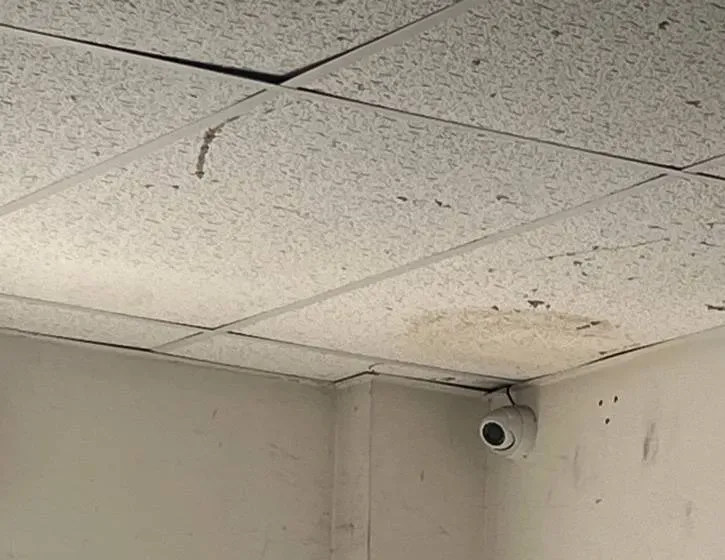
From an AESS job outside the region, cropped to the ceiling corner and shown only as an example: a small turret camera high in the corner of a storage room. Inside a barn or a garage workshop in the valley, a corner mount like this watches the door and the equipment at once.
Equipment
Types of Lorex Equipment We Install
We choose the model after the walk-through, not before. These are the categories we use on Hudson Valley properties and where each one earns its place.
Lorex NVRs
The recorder with a built-in PoE switch that powers and records the wired cameras. We size channels for the cameras you want plus room to add, and hard drive space for the weeks of footage you want to keep.
Wired turret and dome cameras
The workhorses for eaves and porches. Turrets resist the spider webs that cloud bullet cameras' infrared; domes suit commercial ceilings and lower walls where someone might reach.
Bullet and spotlight cameras
Longer reach down a drive or across a field, and a built-in light that switches on with motion — useful where there is no other light and colour footage at night matters.
Varifocal and zoom cameras
Lorex makes motorised varifocal PoE cameras that can be zoomed remotely after mounting. They suit a gate or a road turn-in where the subject is far away and a fixed wide lens would show too little.
PoE and ePoE switches
The extra ports for an outbuilding, and long-range ePoE ports for cameras beyond 328 feet at reduced speed. A switch in a powered barn turns one cable back to the house into four cameras.
HaLow and battery systems
Battery cameras that link to their own recorder over Wi-Fi HaLow, for places with no power and no realistic cable path. Paired with solar panels where the winter sun allows.
Wi-Fi floodlights and doorbells
A Lorex floodlight camera where a light is wanted anyway, and a Lorex video doorbell at the front door. Both connect through your Wi-Fi to the same app.
Battery backup and surge protection
Not Lorex products, but part of every system we install north of the city: a UPS for the recorder, router and switch, and surge protection on long outdoor cable runs.
Lorex versus Ring, SimpliSafe and ADT in the valley
Ring and SimpliSafe sell mostly Wi-Fi and battery cameras that save clips to the cloud on a monthly plan; ADT sells professionally installed systems with monitoring contracts. They are good products in a house with strong Wi-Fi and fast upload. On a valley property where the router is far from the garage, the upload is slow and the power goes out several times a year, a cloud camera can miss exactly the moments that matter, because it needs both Wi-Fi and internet to save anything.
A wired Lorex NVR system records locally, around the clock, whatever the internet is doing, with no monthly fee required. Its weak points are the ones discussed above: the ownership questions, the three-app confusion and the need for someone to plan the cabling properly. We install all of these brands and will tell you plainly when a cloud camera suits your house better.
Manufacturer product photo, not an installed unit: a white Lorex bullet camera with a built-in spotlight on a round wall bracket. A camera like this suits a dark stretch of Hudson Valley driveway where no other light reaches.
AI Overview Reality Check
What AI Gets Wrong About Lorex Installation in the Hudson Valley
We could not open Google's AI Overview from our research tools, so we cannot quote it. What we can test are the claims that AI answers and cost guides repeat about Lorex and camera installation, against what we find on valley properties.
“Professional camera installation costs $590 to $2,040”
That range comes from Angi's 2026 national cost guide, which also puts professional installation at $100 to $200 per camera on top of the cameras themselves. It is a fair national average for a simple suburban job.
It does not describe a property where the farthest camera is 400 feet from the house. Long runs, a switch in a barn, a wireless bridge or trenching across a drive are the costs a national average smooths away, and they are the costs that decide the price north of the city.
Our county figures below are published and fixed for the standard work; anything beyond them is quoted after a walk-through, in writing, before work starts.
“PoE cameras can be up to 300 feet from the recorder”
Close — Lorex states 328 feet, or 100 metres — but the number is for the cable, not the lawn. AI answers tend to treat it as a straight-line distance, which leads people to buy a kit, pace out 250 feet and discover the cable route is 380.
The fix is not exotic: a switch in a building part-way, a long-range ePoE port, fibre or a wireless link. But it has to be planned before the kit is bought, because the recorder's built-in ports cannot stretch.
We also leave headroom. A run planned at 320 feet has nowhere to go if the camera has to move.
“Wireless cameras are easier for big properties”
They are easier to mount. They are not easier to keep working. Ordinary Wi-Fi reaches about 100 feet by Lorex's own comparison, less through stone or brick, and every Wi-Fi camera still needs power from a plug or a battery.
Lorex's HaLow system improves the range to a claimed 500 feet, which genuinely helps on large lots. But battery cameras record on motion, their batteries fade in the cold, and a camera that has to be taken down to charge in February is a camera that is often off.
On valley properties we use wireless where wiring is unreasonable and cable everywhere else.
“You can view your Lorex cameras from anywhere”
Only if the house has working internet with enough upload, and only while the router has power. On a Starlink dish, a DSL line or a cellular router, remote viewing works but slowly, one camera at a time.
Some owners on Starlink forums report it working well with Lorex; others report it failing on large systems. Lorex lists minimum upload speeds of 2 to 3 Mbps for some Wi-Fi cameras and 10 Mbps for best performance on a 4K doorbell, figures many rural connections struggle to deliver at busy times.
The recording at the house does not depend on any of this, which is the main reason we prefer a local recorder for the valley.
“Just download the Lorex app”
There are three: Connect, Classic and Pro, each for a different product line. An AI answer that names one may send you to the wrong store page, and a family with an older Fusion recorder and a newer doorbell may need two.
The Lorex Connect app showed a 2.8-star rating on Google Play when we checked in October 2026, with owners complaining about discontinued recorders. That is worth knowing before you buy a mixed system.
We set up the right app on every phone before we leave, and write down which one it is.
“Lorex is a Canadian company, so there are no security concerns”
Lorex is headquartered in Canada, but it was owned by Dahua from 2018 until the 2022 sale to Skywatch, and several state attorneys general now allege it still relies on Dahua for components. Those claims are unproven and contested; they are also not nothing.
Lorex's own position is that buyers restricted by the NDAA should not purchase its products. That is a clear line for public bodies, and a reasonable question for any homeowner to ask before deciding.
The practical answer is the same for any connected camera: strong passwords, current firmware, cameras kept out of private rooms, and remote access only for the people who need it.
“Cameras keep recording during a power outage”
Wired cameras record only as long as the recorder that powers them has power. Battery cameras keep recording, but cannot alert you if the router is down. The answer is a battery backup, not a feature of the cameras.
The valley's outage record makes this the claim that matters most: Isaias left most of Putnam's NYSEG customers dark, the June 2024 storms cut 60,000 Orange & Rockland and Central Hudson customers, and a September 2026 nor'easter took out more than 19,000 Central Hudson homes and businesses.
An outage is exactly when an empty house is most exposed, so we size the backup and test it with the main breaker off before we hand over.
Plan the Recorder First, Then the Cameras
Tell us the county, the buildings you want covered, the rough distance to the farthest one and your internet type. We will say whether everything can wire back to one Lorex recorder, what keeps it recording in an outage and which county figures apply — before anyone drives up.
To price a valley Lorex system we need the county and town, which buildings and areas you want covered, the rough distance from the house to the farthest camera, your internet type and whether you already own the equipment. A sketch or a few phone photos often replace a site visit. The written total comes back the same business day, or call (800) 486-0943 to go through it.
✅
We Got Your Request!
Thanks — your details are with our Hudson Valley scheduler. Expect a call today about cable lengths, battery backup and your county’s figure. For a system that has stopped recording, ring (800) 486-0943 now.
How It Works
Our Installation Process
Seven steps, the same in every county. The order matters: the recorder's home and its power are settled before a single camera goes up.
1. Choose the recorder's home
We find a dry, conditioned interior spot near the router where the recorder, the switch and a battery backup can live together — usually a basement utility area, an office closet or a network cabinet, rarely a garage.
2. Walk and measure every cable route
From that spot we measure the real cable path to each camera with a wheel, note any run near or past 328 feet, and test Wi-Fi or HaLow signal at every spot that cannot be wired.
3. Check power, outages and internet
We note the utility, the generator and which circuits it carries, the internet type and its upload speed, and how long the system should run on battery when the grid goes down.
4. Confirm the county rules and write the quote
Before any drilling you get a written plan: a camera list with mounting spots, the route or link for every one, the county licence each part of the work falls under, and one total worked out at your county’s factor.
5. Run cable, mount and seal
Cable goes in the walls or in outdoor-rated jacket and conduit, cameras go on mounting blocks or into mortar joints, every entry is sealed, and long outdoor runs get surge protection.
6. Set up the recorder, app and alerts
Fixed network addresses, recording schedules, detection zones on drives and doors, people-and-vehicle alerts, offline alerts, and the right Lorex app on every phone, with shared access for a caretaker if wanted.
7. Prove it with the power off and after dark
We switch the house off at the main breaker, confirm everything restarts on its own, check remote viewing on mobile data, and look at every camera after dark before handing over.
From an AESS job outside the region, shown only as an example: a small black camera and a white sensor on a pale wall. Indoors at a valley weekend house, a camera that can see the recorder's own location tells you if the box itself goes missing.
Coverage Area
Lorex Camera Installation Near the Hudson Valley's Landmarks
Six places that show how different the valley's Lorex jobs are, from river-city masonry to wooded hills.
East End Historic District, Newburgh
Newburgh’s tourism office calls this river-bluff neighbourhood around Washington’s Headquarters New York’s second-largest designated historic site. Its Italianate brick rows are a wired-camera job: Wi-Fi dies in the walls, and anchors go into mortar.
Stockade District, Kingston
Kingston’s oldest quarter, locally designated in 1974 and one of five districts the city protects. Anything new on a street-facing wall goes before the landmarks commission ahead of a building permit, so we favour side walls, rear walls and hidden cable.
Beacon station
The state has chosen a developer to build 265 mixed-income homes on the lot beside the station. New apartment and condo buildings like these bring HOA rules about what owners may mount outside.
Teatown, Westchester
The nature preserve whose count of reported Westchester bear sightings rose from two in 2019 to sixteen in 2021. Northern Westchester owners near woods like these are the ones who need animal-aware alerts.
Village of Cold Spring
Its outdoor lighting code requires full-cutoff fixtures even on single-family houses and motion lights that switch off when motion stops — worth knowing before choosing a Lorex camera with a built-in spotlight.
Village of New Paltz
Its lighting standards ask for fully shielded fixtures and recommend motion-sensor security lighting. Near the college and the Shawangunk Ridge, cameras often pair with a shielded light rather than a bright flood.
Beyond these six, recent Lorex calls have come from all over the valley. Going north county by county: Mount Vernon, Yonkers, New Rochelle, White Plains, Ossining, Mount Kisco, Bedford and Peekskill; Suffern, Spring Valley, Pearl River, Nyack and New City; Monroe, Warwick, Chester, Goshen, Middletown and Newburgh; Brewster, Carmel, Mahopac, Kent and Putnam Valley; Wappingers Falls, Fishkill, Poughkeepsie, Millbrook, Rhinebeck and Pine Plains; and Highland, Ellenville, Woodstock, Saugerties and Kingston.
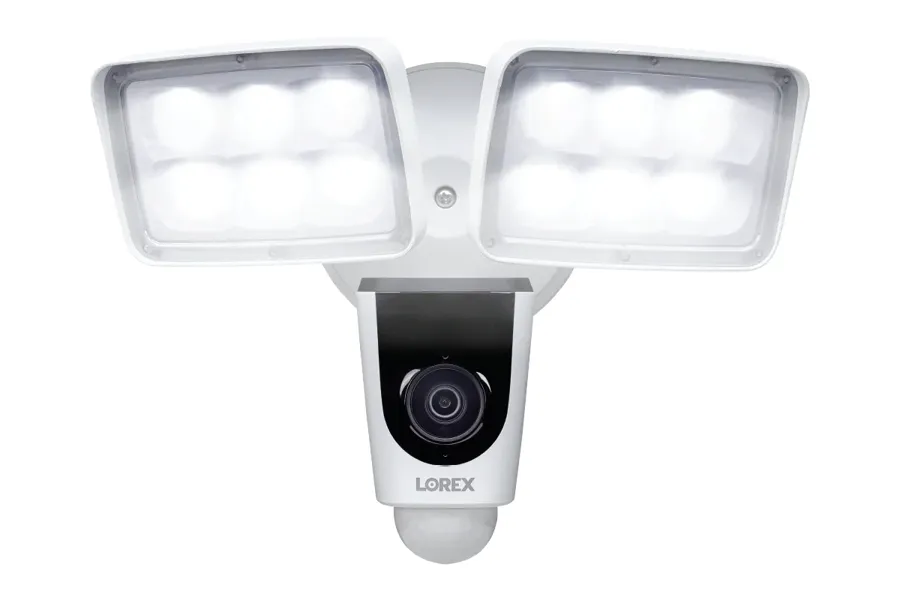
Manufacturer product photo, not an installed unit: a white Lorex floodlight camera with two LED panels, a camera and a motion sensor. In villages with lighting codes such as Cold Spring and New Paltz, a light like this should be aimed down and set to switch off when motion stops.
Pricing
Lorex Camera Installation Cost in the Hudson Valley
Our Lorex prices start from one Brooklyn base and apply a published factor for each county. The cameras and recorder cost the same everywhere; only the labour carries the county factor, which reflects travel time and the larger properties further north. These are the figures for the standard work: a wired camera on a run that fits within one cable length, and a recorder set up indoors.
County
Factor
Labour per wired camera
Recorder setup
4-camera Lorex system, installed
Westchester
1.25
$250
$188
$2,033
Rockland
1.30
$260
$195
$2,080
Orange
1.40
$280
$210
$2,175
Putnam
1.45
$290
$218
$2,223
Dutchess
1.53
$306
$230
$2,299
Ulster
1.53
$306
$230
$2,299
The four-camera figure is a complete Lorex wired system — recorder, four cameras, cabling and setup — installed. Service visits after the installation is finished are billed at $195/hr, 3-hr minimum ($585), the same in every county.
What moves a valley Lorex price up or down
Runs past 328 feet. A switch in an outbuilding, a long-range ePoE port, fibre or a wireless bridge is quoted after we walk the route.
Trenching and crossings. Burying cable across a lawn is one thing; crossing a paved drive or a stone wall is another. We price the path you choose.
Electrical work. A new outlet for the recorder or a pole camera is done and priced by a county-licensed electrician, with any permit and inspection.
Battery backup sizing. A small UPS that carries the system through short cuts costs far less than one meant to last hours.
Height and access. A second-storey gable or a barn peak may need a taller ladder or a lift.
Equipment you already own. If the Lorex kit is already bought, you pay only labour and any extra cable.
To compare individual Lorex models with installed prices, see our Lorex camera installation prices for the Hudson Valley. That calculator groups the counties in pairs; your written quote always uses your own county's factor from the table above.
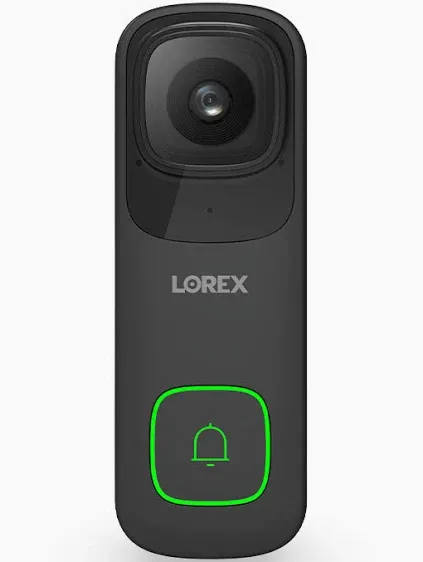
Manufacturer product photo, not an installed unit: a black Lorex video doorbell with a green-lit button. At a Hudson Valley front door it adds a face-height view and a two-way speaker to a system whose wired cameras watch the drive and the yard.
Shop Our Systems
Lorex Packages & Pricing for the Hudson Valley
Three starting points. Each shows the range from Westchester, the lowest factor, to Dutchess and Ulster, the highest; your county's figure sits within it.
House and drive starter
$2,033–$2,299 installed. A wired Lorex NVR with four cameras covering the drive, the front and back doors and the garage, cabling within one cable length of the recorder, app setup on your phones and the power-off restart test. Westchester $2,033 · Rockland $2,080 · Orange $2,175 · Putnam $2,223 · Dutchess and Ulster $2,299.
Add a camera
From $328–$384 per camera, installed. One more wired Lorex camera on an existing recorder with a free channel, cable within reach and the camera added to the app. Westchester from $328 · Rockland $338 · Orange $358 · Putnam $368 · Dutchess and Ulster $384.
New or replacement recorder
From $508–$550 with setup. A Lorex NVR installed in place of a failed or older one, or added to a new system, with existing cameras connected where compatible. Westchester from $508 · Rockland $515 · Orange $530 · Putnam $538 · Dutchess and Ulster $550.
Bought your own Lorex kit? Labour-only pricing
Bring your own equipment and you pay the labour only: $250 per wired camera and $188 for the recorder setup in Westchester; $260 and $195 in Rockland; $280 and $210 in Orange; $290 and $218 in Putnam; $306 and $230 in Dutchess and Ulster. If the kit's cables are too short for your property, we supply outdoor-rated cable for the longer runs and tell you before we start. We are happy to install kits bought at warehouse clubs, online or from Lorex directly; check that the cameras and recorder are from the same Lorex family, or ask us to check the model numbers first.
Anything beyond these starting points — an outbuilding switch, a HaLow kit, a wireless bridge, trenching or electrical work — is priced after a walk-through and set out line by line in the written quote.
Know Your County's Figure Before Anyone Drives Up
A two-minute call is usually enough to say which package fits, whether any camera needs more than one cable length, and what your county's factor makes the total.
Seasonal re-aiming, lens cleaning, drive checks and firmware updates.
Field Notes
Field Notes: Pace It From the Recorder Out
On a Hudson Valley Lorex visit the first thing I look for is not a camera spot. It is the place the recorder will live: dry, inside, near the router, somewhere a battery backup can sit beside it. Owners often point to the garage because that is where the old system was. A garage freezes in January and bakes in July, and a hard drive does not like either.
Once the recorder has a home, I walk outward with a measuring wheel along the path a cable would really take — down to the basement, out through the sill, along the foundation, across the lawn. Every camera gets a number written on the sketch. Anything over about 300 feet gets circled, because that is where the plan changes: a switch in the barn, a long-range port, a link, or a battery camera.
At the end of the job, before I pack up, I switch the house off at the main breaker and wait. When the power comes back, every camera has to reappear on the recorder and in the app on my phone, on mobile data, without anyone touching anything. Then I go out after dark and look at each view. — Anwar Timothy, NYS low-voltage license #12000287431
FAQ
Hudson Valley Lorex Camera Installation FAQ
Can one Lorex recorder serve two buildings that sit on separate electric meters?
+
Yes. The recorder only cares that each camera reaches it by cable, switch or link; which meter powers the outbuilding does not matter to the cameras. What matters is power continuity: if the barn's meter goes out while the house's does not, any cameras powered by a switch in the barn go dark with it. Where that is a risk, we power the barn cameras from the house end over a long-range PoE run, or put a small battery backup on the barn switch. If the second building belongs to a tenant, we also agree in writing whose network and recorder the cameras use.
Can the work be done while we are still in the city and the house is empty?
+
Often, yes. Many of our upper-valley customers live elsewhere during the week. We need a way in — a caretaker, a lockbox or a door code — access to the router and its password, and a phone call at the start and the end of the visit. We send photos of each camera and the recorder location as we go, set up the app on your phone remotely at the end, and run the power-off restart test while you watch the cameras reappear from wherever you are. A walk-through of the plan by video call beforehand avoids surprises.
Will the camera domes fog or ice over in a Hudson Valley winter?
+
Occasionally, and placement decides how often. Cameras under an eave or overhang stay far clearer than ones on an open wall facing the wind. Freezing rain can glaze a lens for a morning, and a camera whose cable entry was not sealed can fog inside as warm, damp air from the wall reaches the cold housing. We mount under cover wherever the view allows, seal every entry, and avoid spots where snow sliding off a roof lands on the camera. Infrared cameras pointed at falling snow also show bright specks at night; that is the light reflecting, not a fault.
Do summer lightning storms put long outdoor camera cables at risk?
+
Yes, long outdoor runs are the part of a camera system most exposed to nearby strikes and power surges. A surge can travel along a network cable and damage the camera, the recorder port or both. On runs between buildings and on cameras mounted on posts or trees we add surge protectors at both ends, bond them to a proper ground, and use outdoor-rated or direct-burial cable. Fibre between buildings avoids the problem entirely, because glass does not conduct. The battery backup on the recorder also smooths the spikes that come when the grid switches back on after a storm.
Can cameras be fixed to a fieldstone or stone-veneer wall without damaging it?
+
Yes. On real stone we drill into the mortar joints rather than the stone itself, use anchors sized for masonry, and bring the cable in through a joint or a sealed sleeve. Mortar is easy to repoint if a camera is ever removed; a cracked stone is not. On thin stone veneer over a frame wall we find the framing behind it or mount on a nearby trim board instead. In historic districts such as Kingston's, where exterior work visible from the street can need review, we can also mount on a side or rear wall, or use a wall arm so the front stays untouched.
What happens to the footage if a burglar takes the recorder?
+
The footage on that recorder goes with it, which is why its location matters. We put the recorder out of sight, away from the front door and the master bedroom where a burglar heads first, in a closet, basement corner or locked cabinet. A camera that sees the recorder's location records anyone who approaches it, and alerts on a phone mean you see the first images while the event is happening. Some Lorex products also offer cloud storage on select models; where the internet is fast enough, clips can be saved off the property as a backup.
Can a caretaker or neighbour see the cameras without our account password?
+
Yes. Lorex's apps include shared users with permissions you control, so a caretaker, a family member or a trusted neighbour can have their own login. You decide which cameras they see and whether they can watch playback or change settings. When the arrangement ends, you remove their access without changing your own password. We set this up during the visit, and recommend that nobody shares the main account login, because that is the one that can change everything, including turning recording off.
Does a camera covering our driveway have to stay off the neighbour's yard?
+
It should. New York's Civil Rights Law section 52-a lets a neighbour sue someone who installs a camera to record their residential backyard without written consent, and a camera that looks into a neighbour's windows or garden starts arguments even where the law does not apply. We aim cameras at your drive, your doors and your yard, use privacy masks to black out parts of the view that cross the line, and avoid recording audio outdoors where neighbours talk. On small lots in the southern counties this is part of every plan.
Will cameras in a horse barn or chicken coop survive the dust and damp?
+
Outdoor-rated Lorex cameras handle damp and cold well; dust and ammonia are the harder part. In a barn we mount cameras high, out of reach of animals and away from hay drop areas, and plan for a lens cleaning a few times a year. The switch or any recorder in a barn goes in a sealed, ventilated enclosure off the floor, with cables protected from rodents. Infrared light bounces off dust in the air at night, so we angle cameras along aisles rather than straight down them. Many owners use the barn cameras mainly to watch foaling or livestock from the house.
How quickly can a crew reach the upper valley, such as Saugerties or Ellenville?
+
We book every Hudson Valley visit in a two-hour arrival window, any day of the week until 8 PM, and the far ends of Ulster and Dutchess are scheduled the same way as the rest. A full installation is planned for a day when the crew can stay until the after-dark check is done, which in the upper valley usually means grouping it with nearby jobs. A repair visit for a system that stopped recording is booked for the next open window in your county. Tell us when you need it, and we will tell you plainly whether we can make it.
All Areas Served
Lorex Cameras Across the Hudson Valley, New York City and Long Island
You are on the Hudson Valley overview. For your own county’s towns, building types and installed prices, open its page below; Lorex work in the five boroughs and on Long Island has pages of its own too.
Not set on Lorex? The Abstract Enterprises Security Systems home page lists every brand and service we offer, from intercoms to fibre, and the company page shows who we are and how we are licensed and insured.
Sources
Where the Hudson Valley Lorex Facts Come From
Every product figure, lawsuit, licensing rule, outage number and local fact on this page can be checked at the links below. AESS prices are our own: the Brooklyn base labour figures from our Lorex price calculator times each county's published factor, with equipment at the same price in every county, plus the standard hourly service rate.
Cameras Offline Since the Last Storm? Call the Valley Line
Whether the recorder stopped after an outage, the barn camera dropped off the app last week, or a new Lorex kit is still in its box in the hall, phone (800) 486-0943. A technician comes in the next open slot for your county, and in most cases the system is recording again within an hour or two of arrival.
Hudson Valley Lorex Systems From a Licensed, Insured Crew
Westchester to Ulster, one number: (800) 486-0943. Sketches, kit photos and model numbers are welcome on WhatsApp (718) 679-0359. Abstract Enterprises Security Systems, 460 E Fordham Rd, Bronx, NY 10458
Rated 4.7★ across 201 Google reviews. Our low-voltage crews work under NYS license #12000287431 and carry full insurance; written quotes go out the same day you ask, whether the house is in Yonkers or at the end of a Catskill road
Warranty and paperwork: each Lorex recorder and camera we supply carries Lorex's own manufacturer warranty, and any wiring done by a county-licensed electrician is covered by that electrician's written terms and the inspection certificate. Full terms — including 50% deposit, one-year parts-only warranty on AESS-supplied products, and the late-fee schedule — are set out in the service agreement. Ask for a copy with your quote if you would like to read it first, and see our warranty page for how claims are handled.
Page reviewed and updated October 18, 2026. Changelog: Hudson Valley Lorex hub rebuilt from new research on Lorex cable limits, long-range PoE and HaLow range, battery behaviour in cold, the three Lorex apps, Lorex ownership and the 2025–2026 state lawsuits, county licensing, utility outages and rural broadband; prices now follow the published county multipliers on the Brooklyn base labour figures.